Metal Metalwork
to
400
1,062
553
1,808
23
6
79
42
28
20
11
8
8
7
4
3
1
1
1
1
134
855
819
29
429
172
48
38
11
22
8
9
10
19
7
5
2
1,837
629
365
357
339
1,502
1,139
611
479
173
1,837
1,827
1,835
17
16
15
5
5
Material: Metal
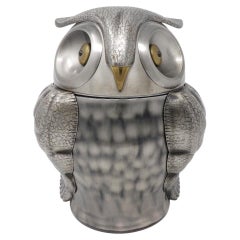
Vintage Owl Shaped Pewtertone Olde Tankardware Ice Bucket
Located in Point Richmond, CA
Vintage Owl Shaped Pewtertone Olde Tankardware Ice Bucket. The charming large ice bucket assembled from magnetic metallic parts in a pewter-like finish with body, wings and eyes all ...
Category
1960s Japanese Mid-Century Modern Vintage Metal Metalwork
Materials
Metal
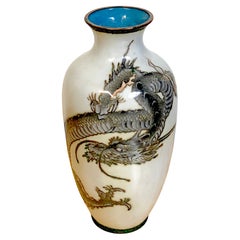
Exquisite Japanese Wireless Cloisonné Dragon Motif Vase, Meiji / Taisho Period
Located in West Palm Beach, FL
Japanese Wireless Cloisonné Enamel Vase, likely from the Meiji period (1868–1912) or possibly the early Taisho period (1912–1926). The vase features a dynamic depiction of a Japanese...
Category
Early 20th Century Japanese Meiji Metal Metalwork
Materials
Copper
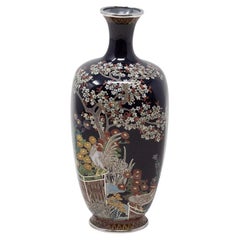
Japanese Meiji Period Cloisonne Enamel Vase by Ando Jubei
By Ando Jubei
Located in Newark, England
Free international shipping
Ando Cloisonne Company Mark
From our Japanese collection, we are delighted to introduce this Japanese Cloisonne Enamel Vase by Ando Jubei. The Cloisonn...
Category
Early 1900s Japanese Meiji Antique Metal Metalwork
Materials
Enamel, Wire
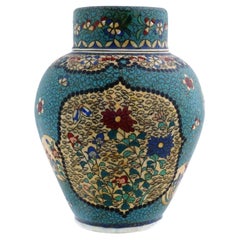
Antique Japanese Cloisonne Totai Covered Enamel Porcelain Jar
Located in Long Island City, NY
A Japanese covered Totai enamel on porcelain ginger jar. The ware is enameled with polychrome medallions representing blossoming flowers surrounded by floral, foliage and geometrical...
Category
19th Century Japanese Antique Metal Metalwork
Materials
Enamel

$495 Sale Price
67% Off
Japanese Hand-Hammered Copper Vase by Gyokusendō — Signed, with Original Tomobak
Located in Fukuoka, JP
Dimensions: Height 18.7 cm
Origin: Tsubame, Niigata, Japan
Material: Pure copper (dōsei)
A finely hand-hammered copper vase (tsuiki dōsei kabin) crafted by the renowned metalwork at...
Category
Early 20th Century Japanese Meiji Metal Metalwork
Materials
Copper
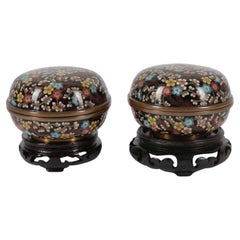
A Magnificent Pair of Chinese Cloisonne Enamel Kogo Boxes and cover. Meiji peri
Located in London, GB
A PAIR OF CHINESE CLOISONNE ENAMEL BOXES AND COVERS, 19TH CENTURY, each decorated with polychrome tree blossom on black ground, the insides enamelled with blue, each resting on pier...
Category
19th Century Chinese Antique Metal Metalwork
Materials
Enamel
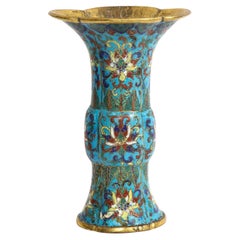
Antique Chinese Cloisonné Enamel Gu Form Vase, 17th/18th Century, Kangxi Period
Located in New York, NY
A Fantastic, rare, and antique Chinese Cloisonné Enamel Gu Form vase, 17th/18th century, Kangxi Period. This cloisonne vase is extremely rare to find in this quality, condition, age,...
Category
Late 17th Century Chinese Qing Antique Metal Metalwork
Materials
Bronze
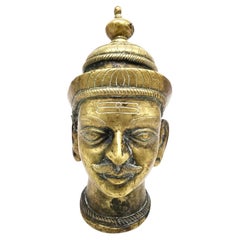
Antique 19th C Hindu Shiva Brass Votive Head Indian Ritual Art Sculpture
Located in London, GB
Antique Indian Hindu Shiva Brass Votive Head – 19th Century
Beautiful 19th-century brass votive head of Lord Shiva, finely cast with detailed moustache and turban. This larger form ...
Category
18th Century Indian Antique Metal Metalwork
Materials
Brass, Bronze
$450 Sale Price
40% Off
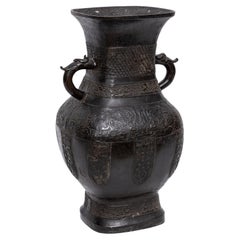
A Ming Dynasty Patinated Bronze Relief Work Vase Turned to a Lamp
Located in New York, NY
Hailing from the Ming period in 16/17th century, this monumental bronze vase is a fine example of the auspicious decor and markings unique to Chinese furnishings. The vase is cast wi...
Category
17th Century Chinese Ming Antique Metal Metalwork
Materials
Bronze
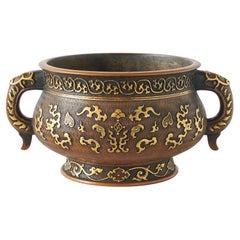
Large Gilt Bronze Censer
Located in San Francisco, CA
A Large Gilt Bronze Censer.
A large, gilt, bronze censer with twin handles and adorned with an intricate, raised pattern.
Stampled on base.
Additional information:
Dimensions: Heig...
Category
20th Century Chinese Metal Metalwork
Materials
Bronze
$9,500
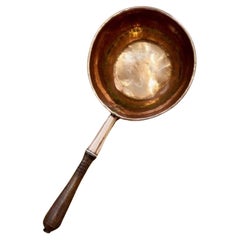
Large unusual antique quality George III copper pan
Located in Ipswich, GB
Large unusual antique quality George III quality copper pan having a quality antique George III copper pan with the original turned handle
Category
Early 19th Century George III Antique Metal Metalwork
Materials
Copper
$453 Sale Price
20% Off
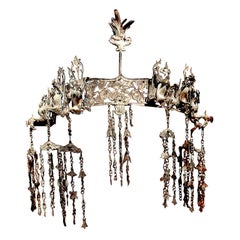
Chinese Ming Dynasty Silver Nine Phoenix Coronet Crown, 16th/17th Century
Located in Austin, TX
An amazing and rare Chinese silver Nine Phoenix Coronet or Crown, Ming Dynasty (1368 to 1644), late 16th to early 17th century, China.
A delicate and...
Category
Early 17th Century Chinese Antique Metal Metalwork
Materials
Silver, Gold
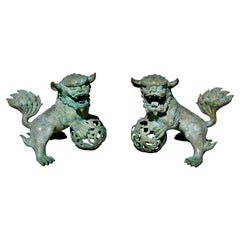
Pair Giant Bronze Foo Dogs Lions 63 Lb
Located in Somis, CA
A pair of extraordinary 26" wide, 63 lb, heavy cast bronze Foo Dog lions. Each modeled on its side with large turned head with open jaw, bulging eyes and curly eyebrows, framed by a tightly curled mane. One lion...
Category
20th Century Chinese Qing Metal Metalwork
Materials
Bronze
$3,775 Sale Price / set
50% Off
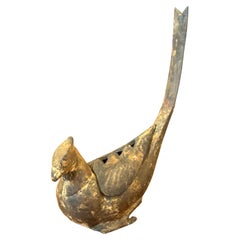
Japanese Iron Bird Incense Burner
Located in San Diego, CA
Vintage Japanese iron bird incense burner, circa 1960s. The piece has a removable vented piece for burning incense, a wonderful patina and measures 6.5"...
Category
Mid-20th Century Japanese Mid-Century Modern Metal Metalwork
Materials
Iron
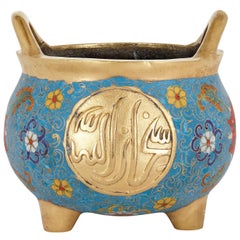
Chinese Floral Islamic Style Cloisonné Enamel and Ormolu Vase
Located in London, GB
Chinese floral Islamic style cloisonné enamel and ormolu vase
Chinese, early 20th century
Dimensions: Height 13cm, diameter 13cm
This beautiful bowl...
Category
Early 20th Century Chinese Chinese Export Metal Metalwork
Materials
Bronze, Enamel, Ormolu
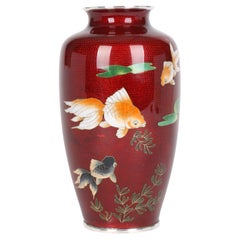
Japanese Vintage Silver Metal Mounted Cloisonne Vase with Fish
Located in Bishop
s Stortford, Hertfordshire
Exceptional vintage Japanese silver mounted cloisonne vase decorated with veiltail gold-fish and carp swimming amidst pond weed and dating arou...
Category
1940s Japanese Mid-Century Modern Vintage Metal Metalwork
Materials
Silver Plate, Enamel
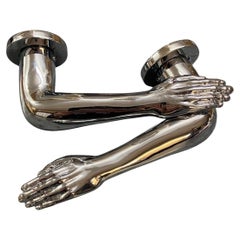
Pair Of Arms Door Handles by Quintana Partners
Located in BARCELONA, ES
The Arm Door Handles combine elegance and originality in a unique proposal that transforms any space with its iconic and sophisticated design. With the stylized shape of an arm, thes...
Category
2010s Spanish Metal Metalwork
Materials
Brass, Chrome
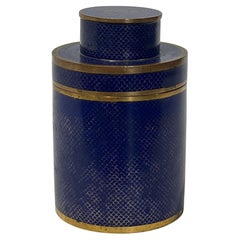
Fish Scale Midnight Blue Chinese Cloisonne Tobacco Box 1930
s
Located in Mobile, AL
Monochrome Chinese Fish Scale cloisonne is long famed for it's high quality of craftsmanship and understated elegance. A staple of interior design...
Category
1930s Chinese Chinoiserie Vintage Metal Metalwork
Materials
Metal, Enamel
$396 Sale Price
20% Off
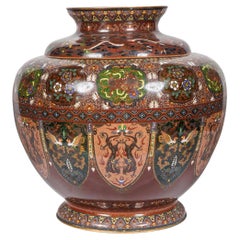
Meiji Masterpiece by Ando Jubei: A Maroon Cloisonné Vase with Dragons
Phoenix
By Ando Jubei
Located in Queens, NY
Meiji Masterpiece attributed to Ando Jubei: A Maroon Cloisonné Vase with Dragons
Phoenix, circa 1895
This monumental Meiji period Japanese cloisonné vase, attributed to the es...
Category
19th Century Japanese Meiji Antique Metal Metalwork
Materials
Enamel
19th Century Mughal India Raj Style Silver Traditional Anklet Bracelet Catchall
Located in Moreno Valley, CA
Late 19th century Mughal Indian Raj Style Silvered Traditional Anklet Bracelet from India repurposed as a vide poche, catchall, bowl ashtray or just as a beautiful collectible decorative object from India.
Antique silver coin and brass heavy metal Dhokra ethnic tribal ankle bracelet that has been repurposed with a brass inner plate that was later added to use the bracelet as a small ashtray or decorative vanity jewelry bowl.
The closure was a push pin mechanism that was closed.
Dhokra art old ethnic tribal brass traditional ankle bracelet from India, handcrafted of a hollow band of heavy brass decorated with chevron repoussé banding and lost wax granulation.
Measures: Height : 1.5 inches.
Length : 7.5 inches.
Width : 7.5 inches.
Diameter: 7.5 inches
Brass silver plated.
Rare collectible decorative bowl, catchall, ashtray, Mughal Raj style, North India, Rajasthan.
Circa 1900's
Weight= 2 Lb 6.9 oz
Anklets were important components in a suite of jewels worn by women in India. These very heavy examples are fabricated in two pieces, and tightly secured with a near-invisible pin. Some legends suggest that heavy anklets like these could weigh up to 20 pounds and were used to prevent brides from running away from their new families.
How it is made: "Dhokra is an ancient folk art tradition prevalent in India in the eastern states of West Bengal, Odisha, Jharkhand and Chhattisgarh. Dhokra craft objects are made through the process of non-ferrous metal casting using the lost-wax casting technique, which is one of the earliest and most advanced methods of metal casting known to human civilization. Its roots can be traced back 4500 years to the ancient city of Mohenjodaro in the Indus Valley Civilization. The name Dokra or Dhokra was used to indicate a group of craftsmen of nomadic type from the Dhokra Damar tribe, scattered over the regions of Bengal, Orisa and Madhya Pradash, whose wares were identified by their beautifully shaped and decorated metal products. The enchanting Dhokra art objects have motifs inspired by indigenous folk...
Category
Early 1900s Indian Islamic Antique Metal Metalwork
Materials
Silver Plate, Brass
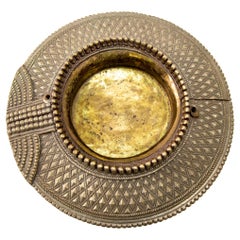
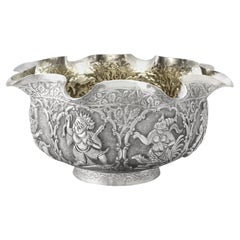
Antique Burmese Silver Bowl
Located in Jesmond, Newcastle Upon Tyne
An exceptional fine and impressive antique Burmese silver bowl; an addition to our ornamental silverware collection.
This exceptional anti...
Category
1880s Burmese Antique Metal Metalwork
Materials
Silver
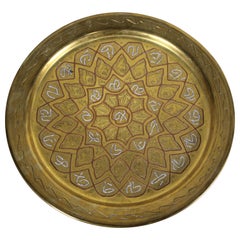
Egyptian Middle Eastern Tray Overlaid with Islamic Writing in Silver
Located in Moreno Valley, CA
Islamic Arabic calligraphy circular tray with silver overlay.
Round Egyptian brass tray overlaid with metal silver and copper Islamic calligraphy ...
Category
Mid-20th Century Egyptian Islamic Metal Metalwork
Materials
Metal, Brass, Copper
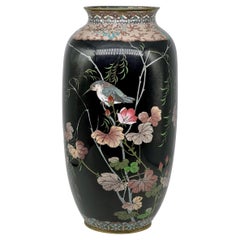
A Large Jet Black Japanese Meiji Period Cloisonné Enamel Vase
Located in London, GB
A Large Jet Black Japanese Meiji Period Cloisonné Enamel Vase
An elegant Meiji period Japanese cloisonné vase of ovoid form with a gently flared neck finely decorated on a rich bla...
Category
19th Century Japanese Antique Metal Metalwork
Materials
Enamel
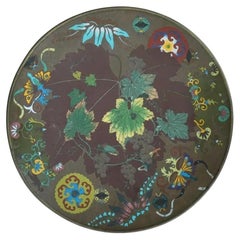
Antique Japanese Cloisonne Charger with Insects and Fall Foliage Plate Goto
Located in Long Island City, NY
A large antique Japanese Meiji period, 1868 to 1912, cloisonne enamel metal charger plate depicting a multicolored picture of vines and grapes with...
Category
Late 19th Century Japanese Meiji Antique Metal Metalwork
Materials
Copper, Enamel
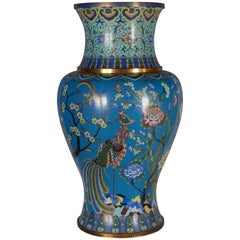
Massive Chinese Cloisonné Vase with Phoenix, Magnolia, Lotus and Chrysanthemums
Located in New York, NY
A massive Chinese blue cloisonné vase or urn depicting a colorful imperial phoenix with gilt bronze wires among birds and butterflies in an imperia...
Category
1920s Chinese Vintage Metal Metalwork
Materials
Enamel
$22,400 Sale Price
20% Off
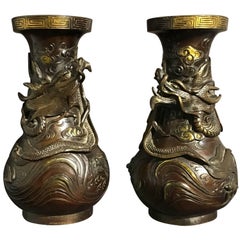
Pair of Japanese Edo Period Parcel-Gilt Bronze Dragon Vases, Early 19th Century
Located in Austin, TX
A pair of well cast and dramatic Japanese parcel gilt bronze dragon vases, Edo period, early 19th century. The heavy bronze vases of pear shape, each with a single writhing dragon cast in high relief...
Category
Early 19th Century Japanese Edo Antique Metal Metalwork
Materials
Bronze
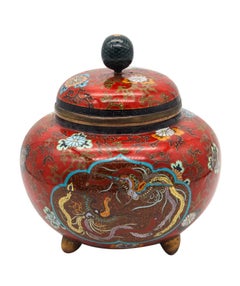
JAPAN IMPERIAL 1900 Meiji Period Tripode Koro Censer In Cloisonné Enamel With
Located in Miami, FL
Japanese tripod Koro from the Meiji Period (1868-1912).
This is a rare and beautiful antique koro censer, created in the imperial Japan during the Meiji period (1868-1912), circa 1900. It was carefully crafted in solid bronze and copper with silver wires and embellished with applications of polychromatic Cloisonné enamels and aventurine. The designs depict organics and natural motifs such mythological animals and flowers.
The Chrysanthemum Symbol
In Imperial Japan, the chrysanthemum (Kiku) was a potent symbol of the imperial family and the emperor himself, representing longevity, royalty, and divine power. The 16-petaled chrysanthemum is the Imperial Seal and crest, found on passports, coins, and the Chrysanthemum Throne. This association dates back to the Kamakura period (1185–1333), particularly with Emperor Go-Toba's fondness for the flower, establishing its link to imperial authority and lineage. The connection between the chrysanthemum and the imperial family began when Emperor Go-Toba adopted it as a personal emblem, aligning it with the strength and refinement of the emperor's rule. During the Meiji Period, the 16-petaled chrysanthemum crest, solidifying the association with the imperial family, was established during this time.
The Meiji Imperial Period
This is an era of Japanese history that extended from October 23, 1868 to July 30, 1912.The Meiji era was the first half of the Empire of Japan, when the Japanese people moved from being an isolated feudal society at risk of colonization by Western powers to the new paradigm of a modern, industrialized nation state and emergent great power, influenced by Western scientific, technological, philosophical, political, legal, and aesthetic ideas. As a result of such wholesale adoption of radically different ideas, the changes to Japan were profound, and affected its social structure, internal politics, economy, military, and foreign relations. The period corresponded to the reign of Emperor Meiji. It was preceded by the Keiō era and was succeeded by the Taishō era, upon the accession of Emperor Taishō.
Country: Imperial Japan.
Period: Meiji, 1890-1910.
Technique: Silver Wire Cloisonné over copper and bronze.
Weight: 416.80 Grams, (0.417 Kg).
Measurements:118 mm by 115 mm (4.65 x 4.52 Inches).
Koro
This term refers to a Japanese censer, incense burner, perfume burner or pastille burner is a vessel made for burning incense or perfume in some solid form. They vary greatly in size, form, and material of construction, and have been in use since ancient times throughout the world. They may consist of simple earthenware bowls or fire pots to intricately carved silver or gold vessels, small tabletop objects a few centimeters tall to as many as several meters high. Many designs use openwork to allow a flow of air. In many cultures, burning incense has spiritual and religious connotations, and this influences the design and decoration of the censer.
Cloisonné
This is an enameling technique in which the pattern is formed by wires soldered to the surface of the object to be decorated, which is usually made from copper, forming cells or cloisons, each of which holds a single colour of enamel paste which is then fired, and ground and polished. The champleve technique also uses an enameling technique, but the cells are formed by carving into the surface of the object, or in the casting. The cloisonne technique has been in use since the 12th century BC in the west, but the technique did not reach China until the 13th or 14th century. It became popular in China in the 18th century. Initially bronze or brass bodies were used, and in the 19th century copper, at which time the quality of the items produced began to decline. Chinese cloisonné is the best-known enamel cloisonné, though the Japanese produced large quantities from the mid-19th century, of very high technical quality. In the west the cloisonne technique was revived in the mid-19th century following imports from China, and its use continued in the Art Nouveau and Art Deco periods.
Condition: Basically, is in great antique condition, near mint, with insignificant and minimal usage, in great condition. All parts are secured in the settings. This Japanese Meiji Koro...
Category
Early 1900s Japanese Meiji Antique Metal Metalwork
Materials
Silver, Bronze, Copper, Enamel
$1,598 Sale Price
20% Off
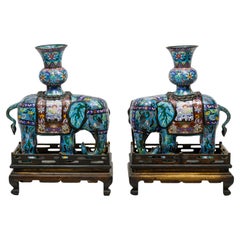
Chinese Pair of Large Cloisonné Elephants with Wood Stands
Located in Norton, MA
Large pair of standing elephants having fitted vases on their backs on wooden display stands
Measures: Height: 15 inches, Length: 14 inches, Wid...
Category
Early 20th Century Chinese Chinese Export Metal Metalwork
Materials
Copper
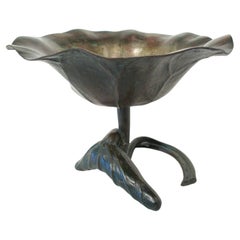
John Scott Bradstreet - Bronze Lotus Bowl - United States - circa 1900
Located in Chatham, ON
JOHN SCOTT BRADSTREET (Attributed) - Arts & Crafts cast and patinated bronze center-piece flower bowl taking the form of a lotus - later patinated flower 'frog' - unsigned - United S...
Category
Early 20th Century American Arts and Crafts Metal Metalwork
Materials
Bronze
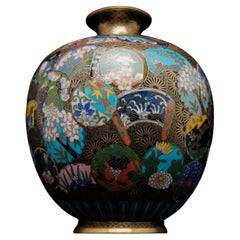
Japanese Meiji Cloisonne Vase
Located in Sarasota, FL
Japanese Meiji finely decorated cloisonne vase. Multiple designs within different cartouches. Unmarked
Category
1890s Japanese Meiji Antique Metal Metalwork
Materials
Copper
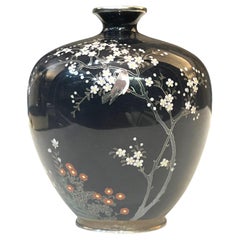
A Fine Silver-Mounted Cloisonné-Enamel Vase By Satō Sei, Meiji era
Located in London, GB
A Silver-Mounted Cloisonné-Enamel Vase
By Satō, Meiji era
By Satō, Meiji era (late 19th century), circa 1890–1900
Of globular form with a gently tapered neck, the body worked in y...
Category
19th Century Japanese Antique Metal Metalwork
Materials
Silver, Enamel
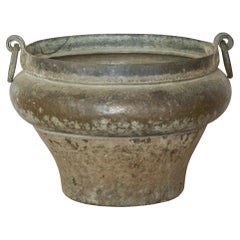
Large Bronze Tibetan Vase with Handles
Located in Alessandria, Piemonte
Large Tibet bronze and copper vase with handles: exceptional and perfect.
Sizes: diameter at the top cm. 52, with handles cm. 61. Base 35 cm.
High cm. 43....
Category
Late 19th Century Tibetan Other Antique Metal Metalwork
Materials
Bronze
$1,798 Sale Price
20% Off
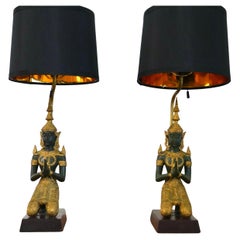
Pair of bronze Thai Teppanom kneeling Buddha table lamps. Hollywood Regency
Located in Las Vegas, NV
Pair of exquisite bronze Thai Teppanom kneeling angel Buddha table lamps.
These intricate bronze sculptures lamps, dating 1940’s to 1950’s, feature a dark green patina with gold det...
Category
1940s Thai Tibetan Vintage Metal Metalwork
Materials
Bronze
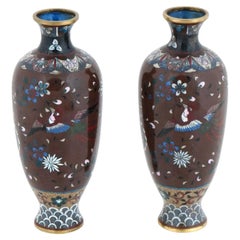
Antique Pair Of Meiji Japanese Cloisonne Enamel Vases
Located in Long Island City, NY
A pair of identical antique Japanese copper vases with cloisonne enamel design. Late Meiji period, before 1912. Elongated baluster shape with pronounced neck. Floral ornament with bl...
Category
Late 19th Century Japanese Meiji Antique Metal Metalwork
Materials
Enamel, Copper
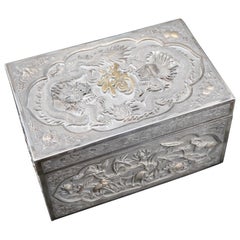
Chinese Export Silver Repousse Dragon and Landscape Box
Located in Sarasota, FL
Chinese silver box with repousse, chasing and cast applied dragons. Very fine period work. Marked with French import hallmarks.
Category
Late 19th Century Chinese Chinese Export Antique Metal Metalwork
Materials
Silver
Large Antique Japanese Cloisonne Enamel Censer Koro W Stand Attributed To GOTO
Located in Long Island City, NY
A large Japanese covered tripod enamel censer koro or incense burner. The sphere form ware is enameled with polychrome medallions representing cranes and birds in blossoming flowers ...
Category
Late 19th Century Japanese Antique Metal Metalwork
Materials
Enamel

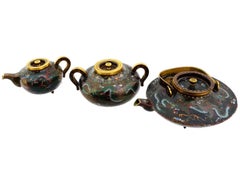
Rare Antique Meiji Japanese Cloisonne Enamel 3 Piece Tea Ceremony Dragon Set
Located in Long Island City, NY
A Japanese covered and footed enamel tea set including three pieces. The set includes a large tea pot, a small tea pot, and a sugar bowl. The wares are adorned with a polychrome enam...
Category
19th Century Japanese Antique Metal Metalwork
Materials
Enamel
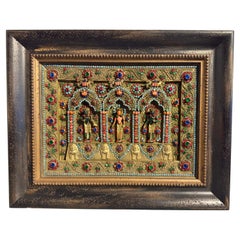
Nepalese Filigree and Stone and Glass Inlay Votive Plaque, circa 1900
Located in Austin, TX
A fine and impressive Nepalese gilt copper filigree votive plaque inset with coral, turquoise, and colored glass "gems", 19th/20th century, Nepal.
This large votive plaque would ori...
Category
Early 1900s Nepalese Antique Metal Metalwork
Materials
Stone, Coral, Copper
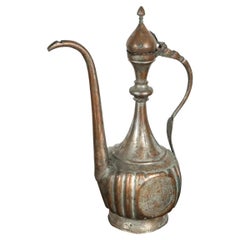
Antique 19th Century Turkish Ottoman Tinned Copper Ewer Pitcher
Located in Moreno Valley, CA
Antique 19th century Asian, Middle Eastern style Turkish tinned copper ewer.
Antique Turkish ottoman Islamic Ewer Tombak pitcher brass copper Ibrik.
Nic...
Category
19th Century Turkish Moorish Antique Metal Metalwork
Materials
Metal, Brass, Copper
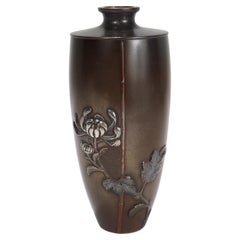
Antique Signed Japanese Bronze Mixed Metals Butterbur Vase by Atsuyoshi / Inoue
Located in Philadelphia, PA
A fine signed antique Japanese Meiji period mixed metals vase.
By Miyabe Atsuyoshi for Inoue of Kyoto.
With a bronze body and d...
Category
Early 20th Century Japanese Meiji Metal Metalwork
Materials
Gold, Silver, Bronze, Copper
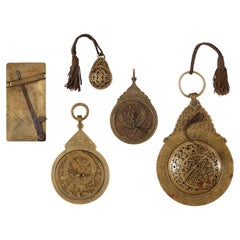
Collection of 18th and 19th Century Arabic Astrolabes and Quadrant
Located in London, GB
A collection of 18th and 19th century Arabic astrolabes and quadrant
Persian, 18th/19th Century
Largest: height 23cm, width 13cm, depth 3cm
Smallest: height 6.5cm, width 4.5cm, depth 1.5cm
This excellent set of antique astronomical instruments is a selection of five Persian brass astrolabes...
Category
Early 19th Century Persian Islamic Antique Metal Metalwork
Materials
Brass
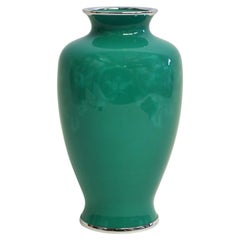
Signed Ando Jubei Green Baluster Cloisonné Vase
By Ando Jubei
Located in Somis, CA
A beautiful pristine condition Ando Jubei wireless cloisonné vase in baluster form. In his signature green enamel, portraying an intricate arabesque design of a blooming clematis vin...
Category
20th Century Japanese Meiji Metal Metalwork
Materials
Metal, Enamel
$650 Sale Price
45% Off
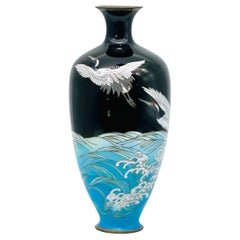
A magnificent Japanese cloisonne enamel Vase. Signed. Meiji period
Located in London, GB
A magnificent Japanese cloisonne enamel Vase. Signed. Meiji period
of tapering form with everted neck, decorated in various coloured enamels with two cranes in flight above the cra...
Category
19th Century Japanese Antique Metal Metalwork
Materials
Enamel
$1,452 Sale Price
20% Off
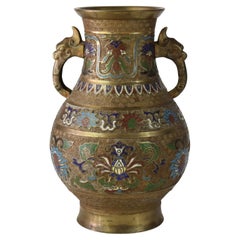
Antique Chinese Enameled Vase with Figural Handles Signed C1890
Located in Big Flats, NY
Antique Chinese Enameled Vase with Figural Handles Signed C1890 (12" x 7 1/2" x 7 1/2").
This exquisite antique Chinese vase dates to circa 1890. It features figural handles wi...
Category
Late 19th Century Antique Metal Metalwork
Materials
Metal, Enamel
$960 Sale Price
20% Off
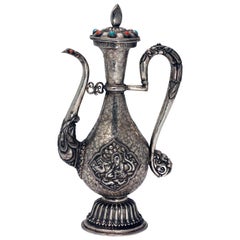
Antique Tibetan Silver Ceremonial Ewer
Located in Montreal, QC
This is a water ewer used in Tibetan ritual offerings to the "hungry ghosts". They have been reborn so, as a result of greed and avarice and are condemned to wander as spirits with b...
Category
Late 19th Century Tibetan Tibetan Antique Metal Metalwork
Materials
Silver
Moorish Revival Hand Engraved Figural Marriage Brass Bowl
Located in Bishop
s Stortford, Hertfordshire
An exceptional hand crafted antique Moorish revival brass bowl engraved in relief with a continuous figural scene, probably a wedding dating from the 1...
Category
19th Century Turkish Islamic Antique Metal Metalwork
Materials
Brass
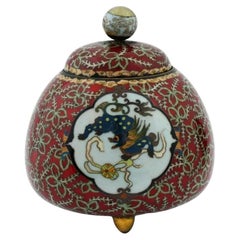
Antique Japanese Meiji Cloisonne Enamel Red Tripod Jar
Located in Long Island City, NY
An antique Japanese copper lidded jar with polychrome red cloisonne enamel design. Late Meiji period, before 1912. Round shape, lid with globe finial. The piece rests on three feet. ...
Category
Late 19th Century Japanese Meiji Antique Metal Metalwork
Materials
Enamel, Copper
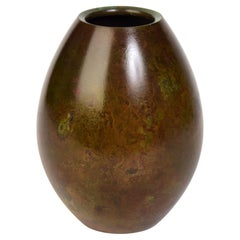
Early 20th Century, Showa, Japanese Bronze Vase with Artist Sign
Located in Sampantawong, TH
Japanese bronze vase with artist sign, used to decorate single flower arrangement in Japanese traditional tea ceremony.
Artist signature is on the last photo.
Age: Japan, Showa Pe...
Category
Early 20th Century Japanese Metal Metalwork
Materials
Bronze
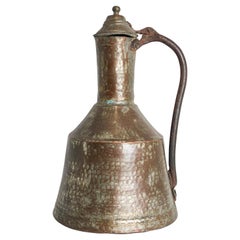
Antique 19th Century Middle Eastern Tinned Copper Ewer
Located in Moreno Valley, CA
Antique 19th century middle Eastern tinned copper ewer.
Nice decorative old rustic hand-hammered ewer in the Mameluke style.
Moorish middle e...
Category
19th Century Turkish Moorish Antique Metal Metalwork
Materials
Copper, Tin
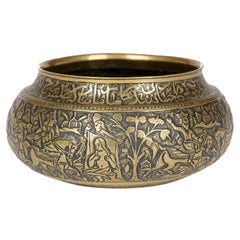
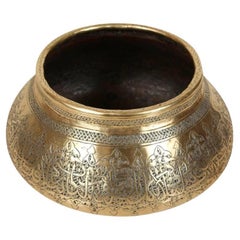
Antique Islamic Brass Bowl Fine Metalwork Hand Etched Bowl
Located in Moreno Valley, CA
Antique Middle Eastern Islamic art Moorish brass bowl engraved with Thuluth Arabic calligraphy.The polished brass bowl is profusely chased with vines and vegetal motifs and inscribed with Islamic verses of the Holly Koran.This bowl has been professionally cleaned and polished.Measures: Diameter 7.25" x 4" height Mouth opening: 5".Great Middle Eastern brass metalwork decorative Islamic art objects.Handcrafted Moorish hand-etched Islamic metal brass bowl.Engraved, incised and hammered with very fine Arabic Islamic calligraphy writing and geometric designs on brass vessel.Very Intricate fine Middle eastern Moorish Islamic Art metalwork, museum quality artwork.Late 19th Century.Date of Manufacture: Circa 1880.Condition: Wear consistent with age and use.
Islamic brass metalwork is an intricate and beautiful form of art that originated in the Islamic world. It encompasses a wide range of decorative objects made from brass or other metals such as copper, bronze, and silver. Brass trays, in particular, are highly regarded for their craftsmanship and intricate designs.
Islamic brass metalwork has a rich history that dates back to the early Islamic period, with its roots in the metalworking traditions of ancient civilizations such as the Persians, Greeks, and Romans. However, Islamic artisans developed their own unique styles and techniques, blending elements from various cultures and creating distinctive motifs that reflected Islamic aesthetics and religious beliefs.
The process of creating brass trays involves several steps, each requiring specialized skills. Here is a general overview of the traditional techniques involved:
1) Design: A skilled artist or calligrapher creates the design for the brass object. Islamic brass metalwork often incorporates intricate geometric patterns, arabesques, floral motifs, and calligraphy inspired by Quranic verses or poetry.
2) Metalworking: The object is typically made from a sheet of brass or another metal. The metal is cut into the desired shape and then hammered or pressed to create the object. Traditional techniques such as repoussé (hammering from the reverse side) or chasing (hammering on the front side) may be employed to shape the metal.
3) Engraving: The surface of the metal is often decorated with intricate engravings or etchings. Skilled artisans use chisels, gravers, or other specialized tools to create fine details and elaborate patterns.
4) Filigree and Inlay: Some brass trays feature additional decorative elements such as filigree or inlay work. Filigree involves shaping thin wires of brass into delicate patterns and soldering them onto the tray's surface. Inlay work, on the other hand, involves embedding contrasting materials such as silver or copper into the brass, creating intricate designs.
5) Surface Treatment: After the main decorative work is complete, the tray may undergo surface treatments to enhance its appearance. This can include processes like polishing, buffing, or applying various chemical patinas to create an aged or oxidized effect.
While this bowl has certainly witnessed the passage of time, it remains in remarkably good condition, with only minor signs of age that add character to its appearance. The patina on the brass enhances its antique allure, making it a truly authentic and captivating collectible.
Arabic Calligraphy: The Arabic writing on the bowl is a work of art in itself. The calligraphy showcases the mastery of the scribe's hand, with flowing curves and intricate details that form an elegant script. The script may include Quranic verses, blessings, or poetic verses, depending on the bowl's origin and purpose. The inscriptions are not only visually striking but also carry profound meaning, making this bowl a beautiful representation of Islamic heritage.
Intricate Patterns: In addition to the Arabic calligraphy, the bowl features intricate geometric patterns and motifs that further enhance its visual appeal. These patterns are a hallmark of Islamic art and reflect the mathematical precision and artistic creativity that defined Islamic craftsmanship.
This antique Islamic brass bowl...
Category
19th Century Turkish Islamic Antique Metal Metalwork
Materials
Brass
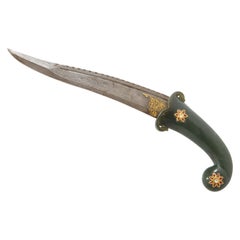
18th/19th Century Mughal Dynasty Gold and Gem Encrusted Jade Dagger
Located in New York, NY
Mughal dynasty gold and gem encrusted Spinach jade dagger having a dark green pistol grip, inlaid with gold, ruby and sapphire applied rosettes to either s...
Category
19th Century Indian Islamic Antique Metal Metalwork
Materials
Jade, Steel
Antique japanese forged iron tsuba from the Edo period
Located in Bilzen, BE
A forge iron Japanese samurai tsuba from the Edo period (1603 - 1868)
Katana tsuba 7.5 x 7.5 cm
Good condition as shown in the pictures uncleaned with its old patina
Category
18th Century Japanese Edo Antique Metal Metalwork
Materials
Iron

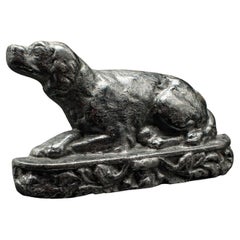
Small Antique Dog Door Stop, English, Cast Iron, Keeper, Retriever, Edwardian
Located in Hele, Devon, GB
This is an antique dog door stop. An English, cast iron decorative keeper in Retriever form, dating to the Edwardian period, circa 1910.
Fascin...
Category
Early 20th Century British Edwardian Metal Metalwork
Materials
Metal
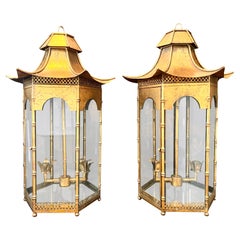
Large Pair of Pagoda Chinoiserie Gilt Bronze Lanterns, Mid-Century Modern
Located in Montreal, Quebec
Large pair of Pagoda Chinoiserie gilt bronze lanterns, Mid-Century Modern.
Exceptionally decorative and beautiful, each lantern has a pair of candle holders accessible through a hin...
Category
20th Century French Mid-Century Modern Metal Metalwork
Materials
Bronze
Early 20th Century, Showa, Japanese Bronze Vase with Artist Sign
Located in Sampantawong, TH
Japanese bronze vase with artist sign, used to decorate single flower arrangement in Japanese traditional tea ceremony.
Artist signature is on the last photo.
Age: Japan, Showa Pe...
Category
Early 20th Century Japanese Metal Metalwork
Materials
Bronze
$544 Sale Price
20% Off
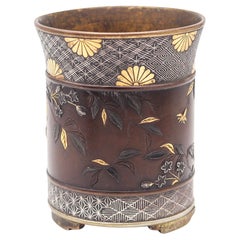
MEIJI Period Japan 1890 Imperial Shakudo Gold Mixed Metals Brush Vase-Pot
Located in Miami, FL
A brush pot from the Meiji imperial period.
This is a beautiful brush vase-pot created in the Imperial Japan during the early Meiji period (1868-1912), circa 1890. The fabulous roun...
Category
1890s Japanese Meiji Antique Metal Metalwork
Materials
Gold, Silver, Bronze
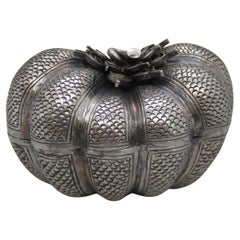
Fine Antique 19C Malaysia Southeast Asia .900 Silver Repousse Pumpkin Box
Located in San Diego, CA
Fine antique 19th century Malaysia Southeast Asia .900 silver box in the form of a pumpkin. Wonderful shape and form. Has repousse relief around the box. Opens and closes as it shoul...
Category
Late 19th Century Malaysian Antique Metal Metalwork
Materials
Silver
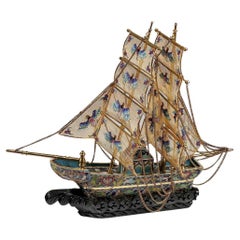
Large Chinese Cloisonné Enamel Filligree and Gilt Boat
Located in Norton, MA
A Large Chinese
Cloisonne Enamel Filigree
and Gilt Boat with Wood Base
The sails with colorful enameled birds, resting on a conforming carved ...
Category
Mid-20th Century Chinese Chinese Export Metal Metalwork
Materials
Copper
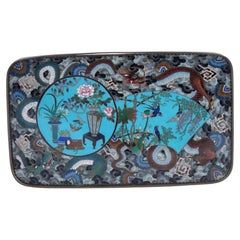
Exquisite Antique Meiji Japanese Cloisonne Tray Featuring Dragons in Clouds, Att
Located in Long Island City, NY
An antique Japanese, late Meiji era, enamel over copper tray. The interior of the ware is adorned with a polychrome enamel design representing figural medallions depicting plants in ...
Category
Late 19th Century Japanese Meiji Antique Metal Metalwork
Materials
Enamel, Copper
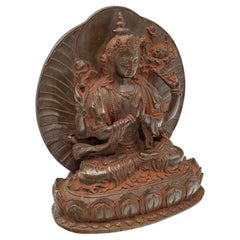
Antique Buddhist Avalokiteshvara Figure, Asian, Bronze Deity, Icon, Victorian
Located in Hele, Devon, GB
This is an antique Buddhist Avalokiteshvara figure. An Asian, bronze religious deity, dating to the late Victorian period, circa 1900.
Delightful rendition of the Bodhisattva Avalo...
Category
Late 19th Century Asian Late Victorian Antique Metal Metalwork
Materials
Bronze
More Ways To Browse
Tibetan Singing Bowl
Bronze Hibachi
China Brazier
Elephant Censer
Foo Censer
Japanese Bronze Crane And Turtle
Miyao Bronze
Quran Verse
Small Incense Burner
Tibetan Metal Art
Zhou Bronze
Antique Arabic Coffee Pot Dallah
Antique Chinese Bronze Marks
Antique Lime Boxes
Bidri Art
Burmese Bell
Cast Iron Kettle
Chinese Cloisonne Censer