East Asian Metalwork
to
201
713
286
1,157
3
1
11
6
5
4
1
1
1
92
536
529
4
287
95
30
27
7
17
7
3
6
17
1
3
2
1,143
477
312
202
180
1,533
1,161
630
481
177
1,161
1,160
1,161
16
15
5
4
4
Place of Origin: East Asian
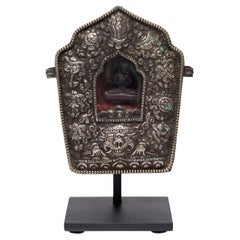
Tibetan Gau Traveling Shrine, c. 1900
Located in Chicago, IL
Tibetan traveling shrines, known as Gau, were believed to offer protective powers and were used to hold and carry sacred objects during long journeys. Crafted over a century ago, a B...
Category
Early 20th Century Tibetan East Asian Metalwork
Materials
Silver, Copper
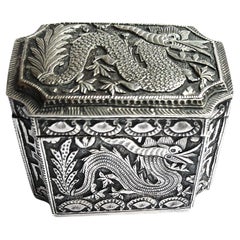
Fine Antique Chinese Qing Dynasty silver Dragon box Asian Art
Located in London, GB
Fine Qing Dynasty Chinese Silver Dragon Box – Late 19th Century
Description:
An exquisite antique Chinese silver box from the late Qing Dynasty, sho...
Category
Mid-19th Century Antique East Asian Metalwork
Materials
Silver
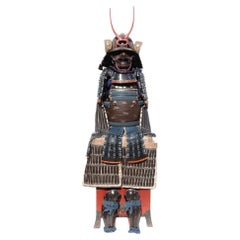
Antique Japanese Samurai Suit of Armor, Edo Period, 18th Century
Located in Point Richmond, CA
Antique Japanese Samurai Suit of Armor, Edo period, 18th century.
A complete matching set of lacquered iron work; the cuirass with dragonfly decoration and blue lacing, a Kaga schoo...
Category
18th Century Edo Antique East Asian Metalwork
Materials
Gold Leaf, Silver, Foil, Iron, Metal
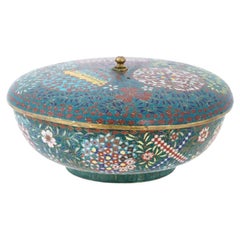
Antique Edo Japanese Cloisonne Geometric Design Box
Located in Long Island City, NY
An antique Japanese brass enamel ceremonial food container with a cover adorned with a pointed finial. Characterized by cloisonne floral designs...
Category
Late 19th Century Meiji Antique East Asian Metalwork
Materials
Brass, Enamel
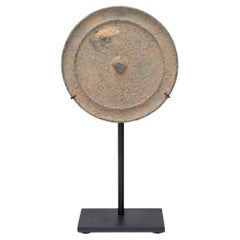
Chinese Ming Bronze Mirror, c. 1450
Located in Chicago, IL
This petite Chinese bronze mirror has the simple beauty and undeniable texture of an ancient object. Though an exact date is unknown, the mirror's round form, double ring edge and un...
Category
15th Century and Earlier Ming Antique East Asian Metalwork
Materials
Bronze
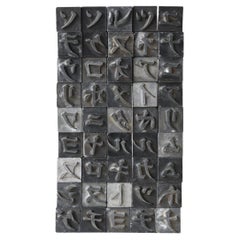
Vintage Japanese Katakana Metal Letterpress Movable Type
Located in Chiba, JP
45 pieces of vintage Japanese metal letterpress movable type, ‘Katakana’ (Angular form of Japanese syllabary, primarily used for words of foreign origin). Showa period, 20th century,...
Category
20th Century East Asian Metalwork
Materials
Metal
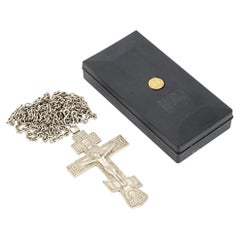
A vintage Russian Orthodox silver-tone priest
s cross
Located in Norton, MA
A vintage Russian Orthodox silver-tone priest's cross. The front side is decorated with a relief depiction of Jesus Christ. Inscription in Church Slavo...
Category
Late 20th Century Chinese Export East Asian Metalwork
Materials
Copper
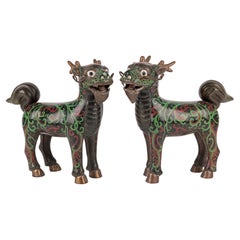
Antique Chinese Qing Cloisonne Kylin Dragon Figures, Late 19th Century
Located in Bishop
s Stortford, Hertfordshire
A fine pair antique Chinese Qing cloisonne standing Kylin Dragon figures with fine enamel detailing dating from the latter 19th century or possibly earlier. The standing figures have...
Category
Late 19th Century Qing Antique East Asian Metalwork
Materials
Brass, Enamel
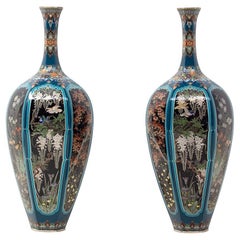
Japanese Cloisonné Enamel Vase Pair by Ota Hyozo, Meiji Period
Located in Newark, England
FREE WORLDWIDE SHIPPING ON ALL OUR COLLECTION - MORE IMAGES AVAILABLE UPON REQUEST
MEIJI PERIOD (1868-1912)
From our Japanese collection we are delighted to present this exceptio...
Category
Late 19th Century Meiji Antique East Asian Metalwork
Materials
Enamel
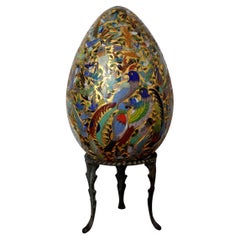
Chinese Supper Large Cloisonné Enamel Egg "Hundred Birds" with Bronze Stand
Located in Norton, MA
Presenting a supper large and beautiful Chinese cloisonné enamel egg with intricated patterns of "hundred birds" made by hand seating on a tripod bronze stand, from the Mid-20th Cent...
Category
Mid-20th Century Chinese Export East Asian Metalwork
Materials
Copper
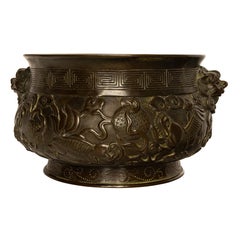
Antique 18th Century Cast Bronze Chinese Qing Dynasty Censer Xuande Mark
Located in Portland, OR
A fine antique late 18th century Chinese archaic style bronze censer with a Xuande mark.
The censer made of cast bronze is very finely modeled, the flared mouth with a key pattern, t...
Category
1780s Qing Antique East Asian Metalwork
Materials
Bronze
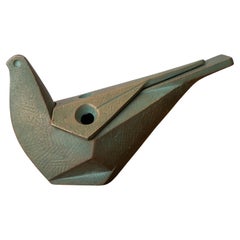
Japanese Iron Abstract Bird Sculpture or Incense Burner
Located in San Diego, CA
Iron bird sculpture. Removable vented piece, perhaps for burning incense or flower arrangements, 1960s.
Category
1960s Mid-Century Modern Vintage East Asian Metalwork
Materials
Iron
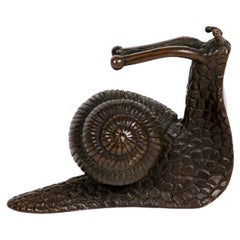
Bronze sculpture or Okimono in the form of a snail in an interesting pose
Located in PARIS, FR
An interesting bronze sculpture or okimono with a brown patina depicting a snail in a very original pose. Its angular form indeed suggests that it can be displayed in a way that give...
Category
Late 19th Century Meiji Antique East Asian Metalwork
Materials
Bronze
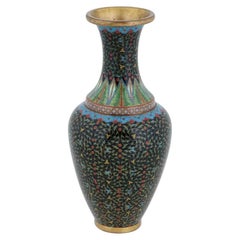
Chinese Cloisonne Enamel Brass Vase W Foliage Motif
Located in Long Island City, NY
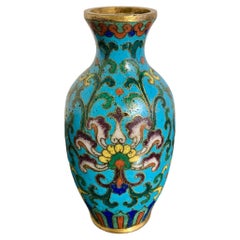
A Chinese enamel over brass vase. It has a classic, rounded body that tapers to a narrow neck. Adorned with polychrome enamel in foliage and floral motifs made in the Cloisonne techn...
Category
Early 20th Century East Asian Metalwork
Materials
Brass, Enamel

$1,500 Sale Price
50% Off
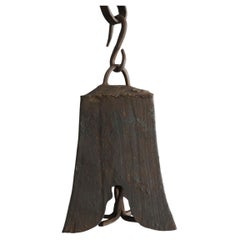
Antique iron hanging bell from Japan or East Asia/Early 20th century
Located in Sammu-shi, Chiba
This is an old iron hanging bell believed to have been made over 100 years ago. It is highly likely that it was manufactured in Japan, though the possibility of Korean or Chinese ori...
Category
Early 20th Century Taisho East Asian Metalwork
Materials
Iron
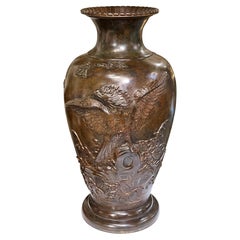
Very Large Meiji Japanese Bronze Vase with Eagle in Relief
Located in New York, NY
Impressive antique Meiji period Japanese bronze vase with brown patina with a ferocious eagle in relief plus birds flying above ocean waves. 20 inches tall and 43 lbs. Apparently un...
Category
Late 19th Century Meiji Antique East Asian Metalwork
Materials
Bronze
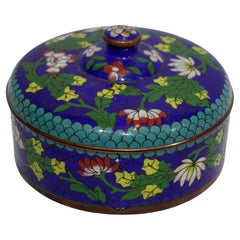
Antique Chinese Cloisonné Enamel Round Lidded Box 19th Century CO#01
Located in Norton, MA
Antique Chinese cloisonné enamel round box with lid depicting floral patterns all around, blue, yellow, pink, yellow, and red flowers and leaves, cyan, green and yellow leaves, 19th ...
Category
Late 19th Century Chinese Export Antique East Asian Metalwork
Materials
Copper
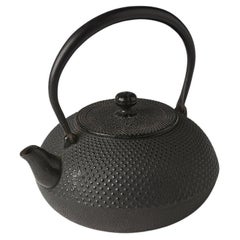
Mid-20th Century, Showa, Japanese Steel Teapot
Located in Sampantawong, TH
Japanese steel teapot with nice design.
Age: Japan, Showa Period, Mid-20th Century
Size: Height 20.8 C.M. / Width 21 C.M.
Condition: Nice condition...
Category
Mid-20th Century East Asian Metalwork
Materials
Metal
$1,504 Sale Price
20% Off
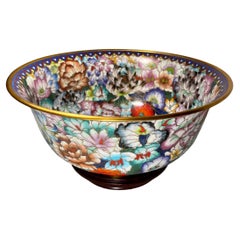
Large Chinese Cloisonne Enamel Bowl, Qing Dynasty
Located in Vero Beach, FL
Large Chinese Cloisonne enamel bowl, Qing Dynasty
Exceptional and finely decorated Chinese cloisonne punch bowl with gilt
metal foot and rim. The bowl has slightly flaring sides ...
Category
Early 20th Century Qing East Asian Metalwork
Materials
Copper, Enamel
$1,313 Sale Price
24% Off
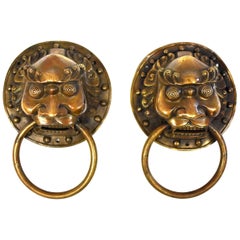
Pair of Bronze Door Knockers Warrior Motif 8.25"
Located in Somis, CA
A pair of beautiful bronze warrior motif knockers. The mythical warrior has large bulging eyes above wide open mouth. Curly hair surrounding the face, repeated in the eye brows which flanks the prominent forehead. Heavy cheekbones echoes the forehead, highlighting his masculine feature. Antiqued finish with mellow gold patina. Fantastic as door knockers or hand towel rings...
Category
Late 20th Century East Asian Metalwork
Materials
Bronze
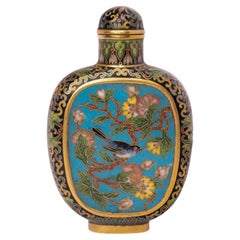
Antique 16k Gold Chinese Qianlong Cloisonne Enamel Snuff Bottle Mark
Period
Located in Portland, OR
A fine & rare antique Imperial Chinese Qing dynasty solid gold & cloisonne enamel snuff bottle, Qianlong mark & period, 1736-1795, tests as 16k gold.
It is rare to find a cloisonné e...
Category
18th Century Qing Antique East Asian Metalwork
Materials
Gold, Enamel
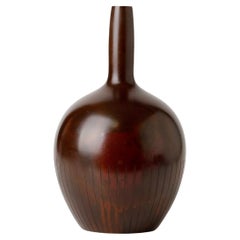
Superb Japanese Bronze Vase by TAKAMURA, Toyochika (1890 - 1972)
Located in Fukuoka, JP
Bronze Vase by TAKAMURA, Toyochika (1890 - 1972)
Period: Early Showa period, circa 1950s–60s
Size: Dim 14.5 × H24 cm (Dim 5.7 × H 9.5 inch )
Weight: 1580 g (2.8 lb), with box 2410...
Category
Early 20th Century East Asian Metalwork
Materials
Bronze
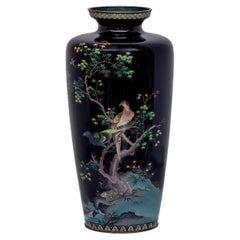
Magnificent Japanese Meiji Cloisonné Enamel Vase with Pheasants, Inaba Co.
By Inaba Cloisonne Co.
Located in Queens, NY
A Magnificent Japanese Meiji Period Silver-Wire Cloisonné Enamel Vase with Pheasants and Maple Leaves, Attributed to Inaba
An exceptional Japanese cloisonné enamel vase from the Mei...
Category
19th Century Meiji Antique East Asian Metalwork
Materials
Copper, Enamel
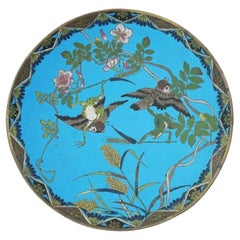
Antique Japanese Cloisonne Turquoise Enamel with Frogs Plate
Located in Long Island City, NY
An antique Japanese late Meiji era decorative enamel over copper plate or charger. The interior of the plate is adorned with a polychrome design of sparrows and frogs in blossoming f...
Category
Late 19th Century Meiji Antique East Asian Metalwork
Materials
Copper, Enamel
$500 Sale Price
75% Off
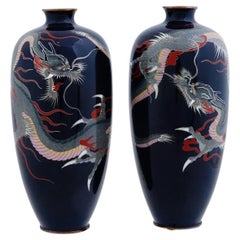
Pair Of Meiji Japanese Cloisonne Dragons Silver Wire Enamel Vases
Located in Long Island City, NY
A pair of Japanese silver wire enamel vases. The vases have an urn shaped body and a fluted neck. Each ware is enameled with a polychrome image of dragons on the dark blue ground mad...
Category
19th Century Antique East Asian Metalwork
Materials
Enamel
$5,625 Sale Price / set
25% Off
Rare Sino-Tibetan Silver Ritual Lamp Stands Tibet Himalayan - Candle holders
Located in London, GB
Pair of Sino-Tibetan Silver Ritual Lamp Stands
Tibet / Himalayan Region, Late 19th–Early 20th Century
Pair of Sino-Tibetan Silver Lamp Stands, Late 19th–Early 20th Century
A finely ...
Category
Early 20th Century East Asian Metalwork
Materials
Silver

Japanese Antique Cloisonne Enamel Vase Hayashi Kodenji
Located in Newark, England
MEIJI PERIOD (1868-1912)
From our Japanese collection, we are delighted to introduce this good size Japanese Cloisonne Enamel Vase. The Vase of gently tapered form with a pinched n...
Category
Early 1900s Meiji Antique East Asian Metalwork
Materials
Gold, Silver, Enamel
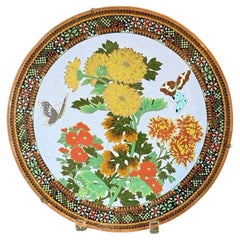
Japanese Cloisonne Enamel Plate with Chrysanthemums Butterflies Lavender Ground
Located in Long Island City, NY
A finely executed Japanese cloisonné enamel plate measuring 12 inches in diameter, distinguished by its exceptional level of craftsmanship and richly layered decorative program. The ...
Category
Late 19th Century Antique East Asian Metalwork
Materials
Enamel
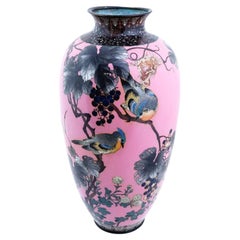
Large Antique Meiji Japanese Cloisonne Enamel Pink Vase W Birds
Located in Long Island City, NY
A large Japanese Meiji period cloisonne enameled vase with a scene of birds, butterflies, and flowers on the pink background and borders with colorful decoration. Collectible Orienta...
Category
Late 19th Century Meiji Antique East Asian Metalwork
Materials
Enamel
$2,250 Sale Price
50% Off
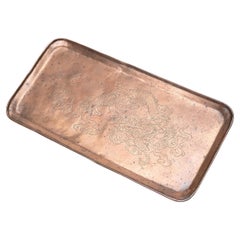
Chinese Copper Opium Tray with Celestial Dragon, c. 1900
Located in Chicago, IL
By the 18th century, opium use had become as central to Chinese social life as taking tea or smoking tobacco, fostering a subculture rich with its own customs, traditions, and exquis...
Category
Early 20th Century Qing East Asian Metalwork
Materials
Copper
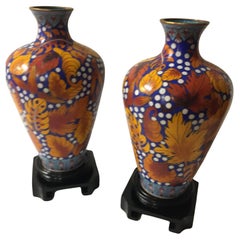
Antique Japanese Cloisonne Enamel Meiji Vases Petite Pair
Located in Savannah, GA
This colorful striking pair of antique Japanese bronze vases from the Meiji period are decorated with enamel using the cloisonne technique. Two matched vases with a relief pattern of...
Category
Early 1900s Anglo-Japanese Antique East Asian Metalwork
Materials
Enamel
$475 Sale Price / set
46% Off
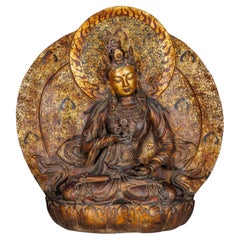
A Monumental Gilt-Lacquered Bronze Ornamental Buddha Sculpture of Vajravidarana
Located in Queens, NY
A Monumental Gilt-Lacquered Bronze Ornamental Buddha Sculpture of Vajravidarana:
A Masterpiece of Sino-Tibetan Craftsmanship, Late 19th Century, Qing Dynasty
This monumental gilt-lacquered bronze ornamental sculpture of Vajravidarana is an extraordinary and commanding piece of art, showcasing the pinnacle of Sino-Tibetan craftsmanship from the late 19th century. The figure of Vajravidarana, a powerful purification deity in Tibetan Buddhism, is meticulously sculpted to embody both spiritual authority and artistic excellence.
Vajravidarana is primarily known for his role in removing spiritual impurities and negativities. Unlike other deities associated with wisdom or compassion, Vajravidarana’s function is centered on purification and healing. He is typically depicted holding a vajra and a bell, symbolizing the cutting away of delusions and the resonance of divine truth. In this striking sculpture, Vajravidarana is shown holding a vishva vajra (the double vajra), a unique and powerful variation of the traditional iconography, which signifies ultimate protection and the dispelling of negative karma.
Vajravidarana: The Supreme Purifier and Protector
Vajravidarana is revered in Tibetan Buddhism as the deity of spiritual purification, called upon to cleanse practitioners of defilements and negative influences. His vajra represents the indestructibility of truth, while his bell signifies the wisdom that resonates through purification rituals. In this sculpture, the presence of the vishva vajra, or double vajra, enhances his association with supreme protection, ensuring the destruction of all spiritual obstacles and afflictions.
The figure’s powerful yet composed expression conveys a sense of unwavering resolve and divine authority. His posture, along with the carefully sculpted details of his robes and ornaments, highlights his function as a guardian against impurity. The inclusion of the vishva vajra rather than the usual single vajra reinforces his role as a supreme protector, capable of dispelling all forms of negativity and restoring balance.
Symbolism of the Mantras and Aureole:
Unlike deities that embody wisdom through duality, Vajravidarana’s iconography is centered on purification and exorcism. The aureole surrounding him is inscribed with sacred purification mantras rather than depictions of a consort. These mantras emphasize his function as a remover of obstacles and impurities, reinforcing his role in Buddhist healing rituals.
The presence of the sacred inscriptions elevates the sculpture’s spiritual significance, making it a focal point for meditation and ritual purification. Practitioners often visualize Vajravidarana radiating purifying light, dissolving afflictions and negative karma. This theme is mirrored in the sculptural repetition of the purification symbols on the aureole, reinforcing the deity’s role as a divine cleanser.
Gilt-Lacquered Bronze: The Artistry of Sino-Tibetan Metalwork:
The craftsmanship of this monumental figure reflects the expertise of late 19th-century Sino-Tibetan metalwork, where traditional Tibetan themes were infused with Chinese artistic sensibilities. Cast in bronze and finished with a rich gilt lacquer, the statue has an otherworldly glow, giving it an ethereal, almost divine presence. The gilding process—applied with exceptional skill—gives the sculpture a striking luminosity that enhances the fine details of the facial features, flowing robes, jewelry, and other elements of the deity’s attire.
The technique employed to create this figure speaks to the high level of craftsmanship that flourished during the late Qing Dynasty and early modern Tibetan art. The ornate details of the robes and the fine texture of the sculpture highlight the exceptional skill of the artisans who brought this work to life. The use of gold and lacquer not only reflects the preciousness of the sculpture but also its spiritual significance as an object meant to inspire reverence and meditation.
An Ornamental Sculpture of Monumental Scale:
Unlike smaller devotional objects, this sculpture is designed as an ornamental masterpiece, intended to make a grand visual and spiritual statement. Its monumental size allows it to dominate any space, offering a commanding presence that is both physically and symbolically impressive. In Buddhist practice, large sculptures of this nature are often placed in temples or meditation halls, where their imposing size and serene presence would encourage contemplation and devotion.
The grand scale of the statue further amplifies the spiritual power it is meant to convey. As a representation of Vajravidarana, it is not only a physical object of beauty but also a conduit for meditation, purification, and enlightenment. The scale of the sculpture also emphasizes the divine stature of the deity, highlighting his importance in the Buddhist tradition as the ultimate force for spiritual cleansing and protection.
Provenance:
Acquired in China in circa 1900
1905 Private Buddhist Temple, Northeast, USA
Private Sale
Solomon Treasure...
Category
Late 19th Century Tibetan Antique East Asian Metalwork
Materials
Bronze
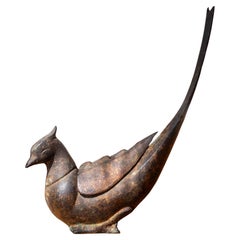
Mid Century Japanese Iron Bird Incense Burner
Located in San Diego, CA
Antique iron bird sculpture with a nice patina. Removable vented piece, for burning incense, 1960s.
Category
1960s Mid-Century Modern Vintage East Asian Metalwork
Materials
Iron
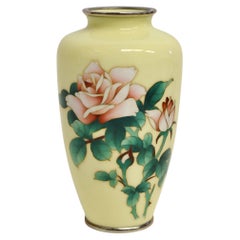
Signed Ando Jubei Japanese Cloisonné Vase Cream Yellow with Roses 7.5"
By Ando Jubei
Located in Somis, CA
A stunning large Ando Jubei (1876-1956) rose vase set against delicate cream yellow Musen-jippo background. In classic form with hand-finished silver metal rims. Soft pink contrastin...
Category
20th Century East Asian Metalwork
Materials
Metal, Enamel
$900 Sale Price
35% Off
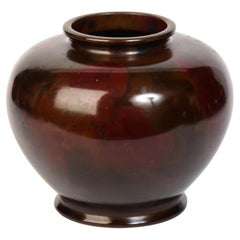
Early 20th Century, Showa, Japanese Bronze Vase with Artist Sign
Located in Sampantawong, TH
Japanese bronze vase with artist sign, used to decorate single flower arrangement in Japanese traditional tea ceremony.
Artist signature is on the last photo.
Age: Japan, Showa Pe...
Category
Early 20th Century East Asian Metalwork
Materials
Bronze
$760 Sale Price
20% Off
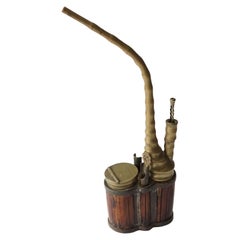
Chinese Tobacco Water Pipe, c. 1900
Located in Jimbaran, Bali
Despite common belief that water pipes such as these were used to smoke opium, water pipes such as these were more commonly used for smoking Tobacco. The h...
Category
Early 20th Century Chinoiserie East Asian Metalwork
Materials
Brass
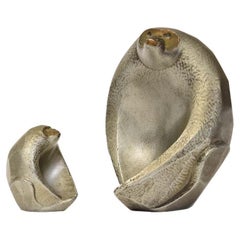
20th Century, Showa, a Set of Japanese Bronze Animal Monkey with Artist Sign
Located in Sampantawong, TH
A set of Japanese bronze animal monkey with artist sign.
Age: Japan, Showa Period, 20th Century
Size: Height 6.2 - 12.8 C.M. / Width 5 - 10.2 C.M. (size excluding stand)
Condition: ...
Category
20th Century East Asian Metalwork
Materials
Bronze
$1,080 Sale Price / set
20% Off
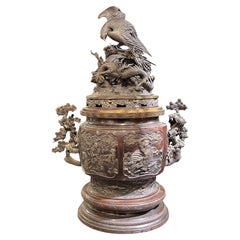
Fine quality 19th Century Meiji Japanese Bronze Censer / Incense Burner
Located in New York, NY
Finely modeled and cast antique (19th century) Meiji period Japanese bronze censer (incense burner) featuring a cover with wonderful details of an eagle and dragon stalking an exotic...
Category
19th Century Meiji Antique East Asian Metalwork
Materials
Bronze
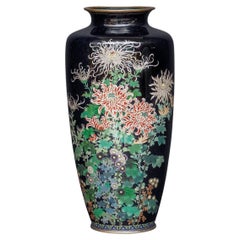
Japanese Meiji Silver-Wire Cloisonné Enamel Vase with Chrysanthemums, Inaba Co.
By Inaba Cloisonne Co.
Located in Queens, NY
A Japanese Meiji Period Silver-Wire Cloisonné Enamel Vase with Chrysanthemums on a Midnight Ground, Attributed to Inaba
A magnificent Japanese cloisonné enamel vase from the Meiji p...
Category
19th Century Meiji Antique East Asian Metalwork
Materials
Copper, Enamel
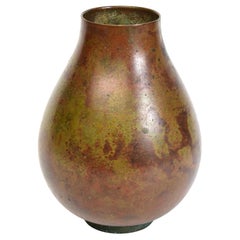
Early 20th Century, Showa, Japanese Bronze Vase with Artist Sign
Located in Sampantawong, TH
Japanese bronze vase with artist sign, used to decorate single flower arrangement in Japanese traditional tea ceremony.
Artist signature is on the last photo.
Age: Japan, Showa Pe...
Category
Early 20th Century East Asian Metalwork
Materials
Bronze
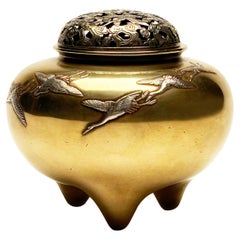
$624 Sale Price
20% Off
Japanese Bronze and Sterling Incense Burner from Takaoka
Located in Louisville, KY
This stunning Koro was crafted in Takaoka, Japan where craftsmen use intricate tooling and expert kills to create the delicate details found in this piece. Crafted of bronze, this Ko...
Category
20th Century Other East Asian Metalwork
Materials
Sterling Silver, Bronze
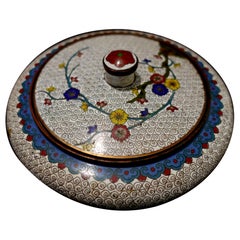
Antique Chinese Cloisonné Enamel Round Lidded Box 19th Century CO#08
Located in Norton, MA
Antique Chinese cloisonné enamel round box with lid depicting floral patterns. A white base tone and colorful floral all around, from the 19th century.
Category
Late 19th Century Chinese Export Antique East Asian Metalwork
Materials
Copper
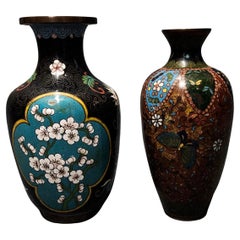
Antique 2 Japanese Cloisonné Meiji Period Vases, Signed
Located in Norton, MA
Quality work, Antique 2 Japanese Cloisonné Meiji Period Vases, Signed opm one vase.
Dimensions;
Larger: 4" Dia x 4.25" H with imperfect shape but no enamel lost
Smaller: 3" Dia x 6" H
Category
19th Century Antique East Asian Metalwork
Materials
Bronze, Copper
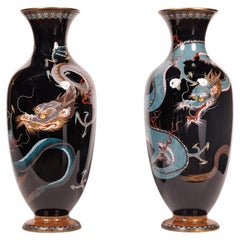
Large Pair of Meiji Period Japanese Cloisonne Enamel Double Dragon Vases
Located in Queens, NY
A large pair of Meiji Period Japanese Cloisonne Enamel Double Dragon Vases, 19th century.
Japanese cloisonne enamel dragon vases are highly ...
Category
19th Century Meiji Antique East Asian Metalwork
Materials
Copper, Enamel
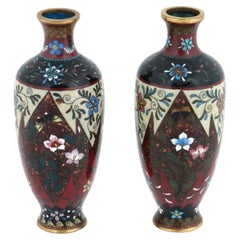
Antique Pair Of Meiji Japanese Cloisonne Enamel Vases
Located in Long Island City, NY
A pair of identical antique Japanese copper vases with cloisonne enamel design. Late Meiji period, before 1912. Elongated baluster shape with pronounced neck. Floral ornament against...
Category
Late 19th Century Meiji Antique East Asian Metalwork
Materials
Copper, Enamel
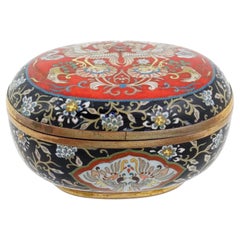
Antique Meiji Japanese Cloisonne Red Enamel Silver Wire Kogo Box
Located in Long Island City, NY
An antique Japanese silver wire enamel Kogo box for incense. Early Meiji period. The oval shaped box is covered with polychrome medallions representing a pair of Phoenix birds and fl...
Category
Late 19th Century Meiji Antique East Asian Metalwork
Materials
Enamel
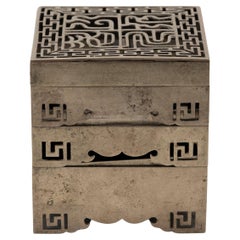
Chinese Baitong Stacking Incense Clock, c. 1850
Located in Chicago, IL
This three-tiered container is a 19th-century white brass incense clock, once used as a relatively accurate method to mark the passage of time. Incense c...
Category
Mid-19th Century Qing Antique East Asian Metalwork
Materials
Brass
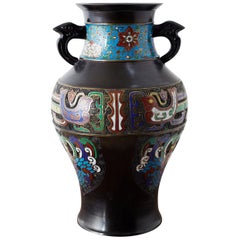
20th Century Japanese Bronze Champlevé Enamel Vase
Located in Rio Vista, CA
Colorful 20th century Japanese bronze champlevé vase with a vibrant enamel decoration. Adorned with zoomorphic motifs in an Art Deco style...
Category
20th Century Art Deco East Asian Metalwork
Materials
Bronze, Enamel
$640 Sale Price
20% Off
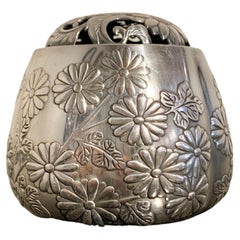
Japanese Silver Incense Burner, Akoda Koro, by Nomura, Meiji Period, Japan
Located in Austin, TX
A lovely and luxurious Japanese silver incense burner of lobed melon form, akoda koro, marked jungin and signed Nomura, Meiji Period, circa 1900, Japan.
The silver koro...
Category
1910s Meiji Vintage East Asian Metalwork
Materials
Silver, Sterling Silver
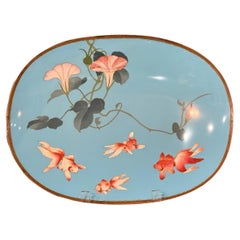
Signed Gonda Japanese Cloisonne Enamel Tray with Goldfish and Morning Glory
Located in Long Island City, NY
A refined Japanese cloisonné enamel tray of elegant oval form, measuring 12 inches wide by 9 inches high, signed on the reverse by Gonda. The composition is set against a luminous tu...
Category
Late 19th Century Antique East Asian Metalwork
Materials
Enamel, Copper
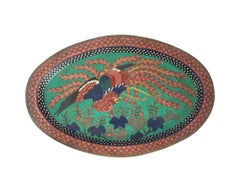
Antique Early Meiji Japanese Cloisonne Phoenix Bird Tray
Located in Long Island City, NY
An antique Japanese, Early Edo period, enamel copper tray. The oval shaped tray is enameled with a polychrome image of a Phoenix bird with flowers and leaves made in the Cloisonne te...
Category
Late 19th Century Meiji Antique East Asian Metalwork
Materials
Enamel, Copper
$2,000 Sale Price
50% Off
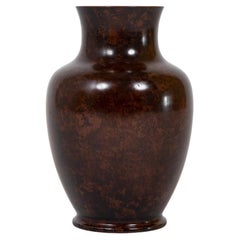
19th Century Japanese Bronze Vase
Located in Stamford, CT
19th century Japanese bronze vase of classic form with a lovely rich patina. The vase has been drilled for wiring as a lamp. It will make ...
Category
Late 18th Century Japonisme Antique East Asian Metalwork
Materials
Bronze
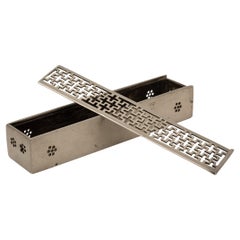
Chinese Lattice Top Incense Box, c. 1850
Located in Chicago, IL
This slender metal container is a 19th-century white brass incense burner, used for storing and burning incense sticks. The small box has a rectangular form and a removable sliding t...
Category
Mid-19th Century Qing Antique East Asian Metalwork
Materials
Brass
Chinese Cloisonne Incense Tool Vase, Qing Dynasty, 18th/19th Century, China
Located in Austin, TX
A small and elegant Chinese cloisonné vase for incense tools, Qing Dynasty, 18th/19th century, China.
Made for the scholar's studio, this small refined vase, was used to hold incense tools, including a small pair of tongs or chopsticks and spoon. The tools no longer present.
Of miniature baluster vase form, the vase beautify proportioned and decorated in the cloisonné enamel technique, with gilt wires forming the cloisons, or partitions. Within the cloisons, colorful enamels have been expertly laid.
The small incense tool vase...
Category
Early 1800s Qing Antique East Asian Metalwork
Materials
Copper, Enamel
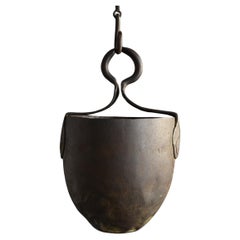
Antique Asian copper bucket "tsurube" /20th century/hanging flower vase
Located in Sammu-shi, Chiba
This is believed to be a bronze "tsurube" (water bucket) made in Japan or East Asia.
It was likely used to draw water from wells.
The base shows dents, possibly from repeated impacts...
Category
20th Century Other East Asian Metalwork
Materials
Copper
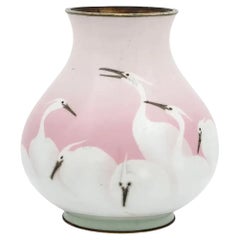
Japanese Meiji Era Wireless Cloisonne Pink Crane Enamel Vase
Located in Long Island City, NY
An antique Japanese copper vase with wireless cloisonne enamel design. Late Meiji era, before 1912. Round shape with pronounced base. The piece is decorated with a stork or crane bir...
Category
Late 19th Century Meiji Antique East Asian Metalwork
Materials
Copper, Enamel
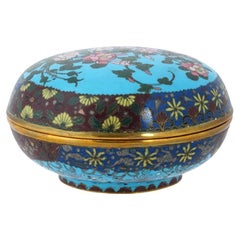
19th Century Japanese Cloisonne Enamel Meiji Floral Box
Located in Long Island City, NY
An antique Japanese, late Meiji era, covered enamel over brass jewelry or trinket box. The exterior of the ware is enameled with polychrome images of blossoming flowers surrounded by...
Category
19th Century Meiji Antique East Asian Metalwork
Materials
Enamel, Brass
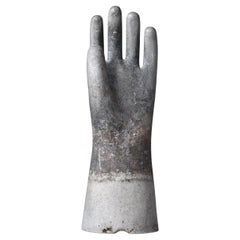
Japanese Old Aluminum Glove Mold 1940s-1960s / Object Wabi Sabi
Located in Chōsei District Nagara, JP
This is an old rubber glove mold made in Japan.
It was made in the Showa period (1940s-1960s), and the material used is aluminum.
Although it is a practical item that has been used f...
Category
Mid-20th Century Showa East Asian Metalwork
Materials
Aluminum
$400 Sale Price
20% Off
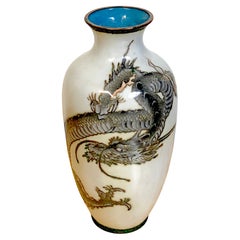
Exquisite Japanese Wireless Cloisonné Dragon Motif Vase, Meiji / Taisho Period
Located in West Palm Beach, FL
Japanese Wireless Cloisonné Enamel Vase, likely from the Meiji period (1868–1912) or possibly the early Taisho period (1912–1926). The vase features a dynamic depiction of a Japanese...
Category
Early 20th Century Meiji East Asian Metalwork
Materials
Copper
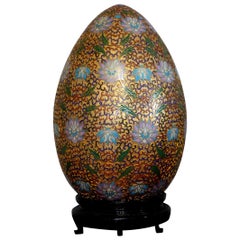
Chinese "Giant" Cloisonné Enamel Egg "Flowers" with Wood Stand #Ja1
Located in Norton, MA
Presenting a very large and beautiful Chinese cloisonné enamel egg with intricated patterns made by hand seating on a wood stand, early 20 century. It's measured about 17" x 10" with...
Category
Early 20th Century Chinese Export East Asian Metalwork
Materials
Copper
Still Thinking About These?
All Recently ViewedMore Ways To Browse
Tibetan Singing Bowl
Bronze Hibachi
China Brazier
Elephant Censer
Foo Censer
Japanese Bronze Crane And Turtle
Miyao Bronze
Quran Verse
Small Incense Burner
Tibetan Metal Art
Zhou Bronze
Antique Arabic Coffee Pot Dallah
Antique Chinese Bronze Marks
Antique Lime Boxes
Bidri Art
Burmese Bell
Cast Iron Kettle
Chinese Cloisonne Censer