East Asian Metalwork
to
203
713
288
1,161
3
1
11
6
5
4
1
1
1
92
539
530
4
287
96
30
27
7
17
7
3
6
17
1
3
2
1,147
480
313
202
180
1,537
1,165
633
482
177
1,165
1,164
1,165
16
15
5
4
4
Place of Origin: East Asian
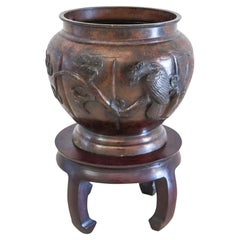
JAPAN 1900 Meiji Period Bronze Planter Vase With Carved Wood Base
Located in Miami, FL
Large Planter Vase from imperial Japan.
This a beautiful piece of Japanese decorative arts, created in Japan during the Meiji imperial period, circa 1900. The oversized vase can be ...
Category
Early 1900s Meiji Antique East Asian Metalwork
Materials
Bronze

$2,789 Sale Price / set
30% Off
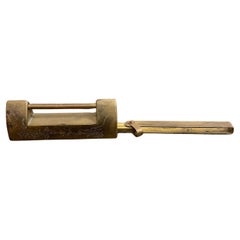
A Chinese Brass Etched Lock with Key, Early 20th Century
Located in ARMADALE, VIC
A Chinese Brass Etched Lock with Key, Early 20th Century
Provenance: Private Australian Collection.
Dimension: Height: 2.5cm Width: 10cm Depth: 2cm.
Category
Early 20th Century Qing East Asian Metalwork
Materials
Brass
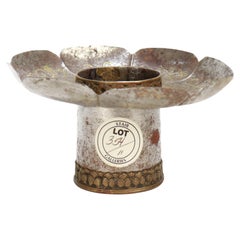
Antique Tibetan Steel Buddhist Cup Stand with Inlaid Gold
Located in Philadelphia, PA
A fine antique Tibetan Buddhist cup stand.
In gold inlaid steel.
The bowl in an eight-petaled lotus form with gold depictions of one the Eight Auspicious Symbols to each of the lob...
Category
19th Century Antique East Asian Metalwork
Materials
Gold, Steel
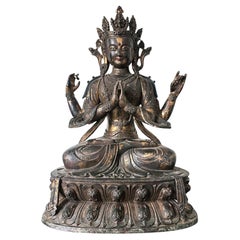
Large Gilt Bronze Statue of Bodhisattva Avalokiteshvara with Four Arms
Located in Atlanta, GA
A finely cast bronze statue of Avalokiteshvara in his four-arm form with gilt and polychrome surface. The Bodhisattva of Infinite Compassion is worshiped in all Buddhism sect as one ...
Category
17th Century Qing Antique East Asian Metalwork
Materials
Bronze
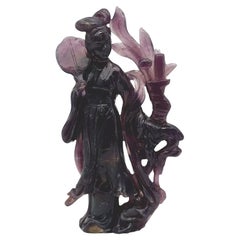
A IMPRESSIVE ANTIQUE CHINESE CARVED AMETHYST FIGURE OF GUANYIN. Qing dynasty
Located in London, GB
A IMPRESSIVE ANTIQUE CHINESE CARVED AMETHYST FIGURE OF GUANYIN
QING DYNASTY.
Standing in flowing robes and holding a hand fan beside the ta...
Category
19th Century Antique East Asian Metalwork
Materials
Amethyst
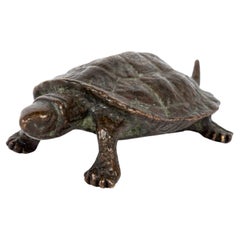
Japanese bronze sculpture or Okimono of a small yet realistic walking turtle
Located in PARIS, FR
Bronze turtle with brown patina. In Japan, the turtle (kame) is considered a symbol of wisdom, stability and luck. Tradition has it that it provides protection and 10,000 years of ha...
Category
Late 19th Century Meiji Antique East Asian Metalwork
Materials
Bronze
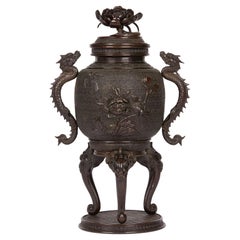
Large Japanese Meiji Bronze Lidded Urn, 19th Century
Located in Bishop
s Stortford, Hertfordshire
A large and stylish antique Japanese Meiji bronze lidded twin handle urn standing on a rounded plinth base with tongue and grotesque head formed legs with dragon handles and a flat c...
Category
Early 20th Century Meiji East Asian Metalwork
Materials
Bronze
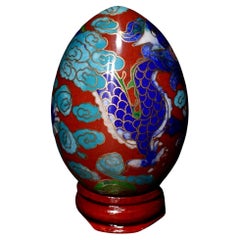
Chinese Cloisonné Enamel Egg "Flying Drago" with Wood Stand, Early 20th Century
Located in Norton, MA
Presenting a beautiful Chinese cloisonné enamel egg depicting a dragon flying in the cloud of the sky with a wood stand, early 20th century.
Category
Early 20th Century Chinese Export East Asian Metalwork
Materials
Copper
Large 31 cm Japanese Meiji Period Bronze Vase With Cloud Motiff Japan
Located in Amsterdam, Noord Holland
BRONZE top level Japanese vase
Condition
Perfect. Size 31cm
Period
19th century Meiji Periode (1867-1912)
Category
Early 20th Century Meiji East Asian Metalwork
Materials
Bronze
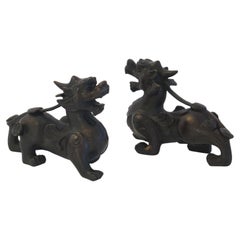
Antique PAIR of Chinese Bronze Foo Dogs with Good Detail and colour, early 20thC
Located in Lincoln, Lincolnshire
These are a very good pair of antique Ming style Chinese foo or lion dog sculptures, sometimes called temple lions, made of bronze, with good detail, which we date to the late Qing or early Republic period of the 20th Century, Circa 1920.
These pieces are well cast with very good detail, showing wear and a good natural patination to the high points as expected from use and polishing over a long period, the lustrous copper bronze metal below. The places on the castings where one would not normally polish ( eg. the underside, the back and neck area) are fairly rough to the touch in keeping with their age
These are a substantial pair of bronzes, weighing over 900gm unpacked
These lovely pair of antique Chinese foo dogs...
Category
Early 20th Century Ming East Asian Metalwork
Materials
Bronze
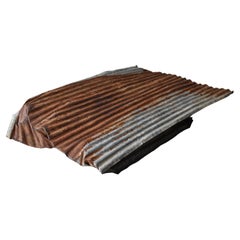
Japanese Old Galvanized Iron 1920s-1940s / Abstract Art Object Wabisabi
Located in Chōsei District Nagara, JP
This is an old Japanese tin. It has been lying in this condition in an old warehouse for many years.
Judging from the texture and feel, it is estimated to have been manufactured in t...
Category
Mid-20th Century Showa East Asian Metalwork
Materials
Tin
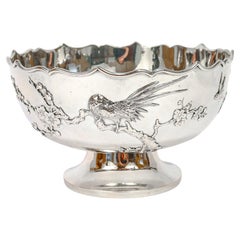
Antique Signed Chinese Export Sterling Silver Footed Bowl by Sing Fat
By Sing Fat
Located in Philadelphia, PA
A fine signed antique Chinese silver footed bowl.
By Sing Fat.
In solid silver.
With applied flowering branches and birds to the exterior and a shaped rim.
Supported by a wide f...
Category
Early 20th Century Chinese Export East Asian Metalwork
Materials
Sterling Silver
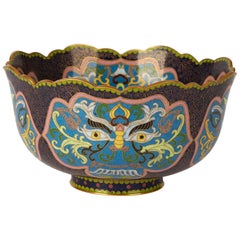
Vintage Chinese Republic Period Cloisonné Bowl, Early 20th Century
Located in Bishop
s Stortford, Hertfordshire
An exceptional and finely decorated vintage Chinese Republic period cloisonné bowl decorated with panels containing grotesque masks. The rounde...
Category
Early 20th Century East Asian Metalwork
Materials
Enamel
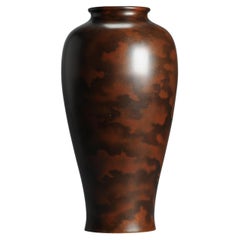
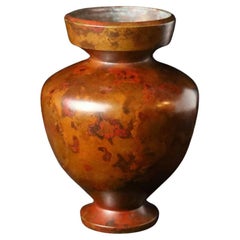
Small Japanese Bronze Vase with Warm Patina, 20th Century
Located in Fukuoka, JP
This compact Japanese bronze vase charms with its classic silhouette and richly mottled patina in warm reddish-brown tones. The subtle variations in the surface evoke the organic bea...
Category
20th Century Showa East Asian Metalwork
Materials
Bronze
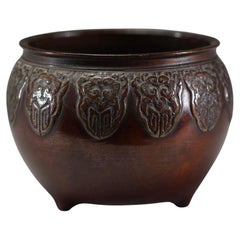
China, Bronze incense burner with archaic decoration, Qing Dynasty, 19th century
Located in Bilzen, BE
China, Bronze incense burner with archaic decoration, Qing dynasty.
Brown original patina and traces of aged use
19th century
Diameter body 10.5 cm, heigth 8 cm
Category
19th Century Qing Antique East Asian Metalwork
Materials
Bronze
Early 20th Century, Showa, Japanese Bronze Vase with Artist Sign
Located in Sampantawong, TH
Japanese bronze vase with artist sign, used to decorate single flower arrangement in Japanese traditional tea ceremony.
Artist signature is on the last photo.
Age: Japan, Showa Pe...
Category
Early 20th Century East Asian Metalwork
Materials
Bronze

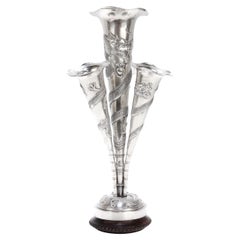
Antique Chinese Export Silver Dragon Epergne Flower Vase by Kwan Wo
By Kwan Wo
Located in Philadelphia, PA
A fine antique Chinese Export silver epergne or flower vase.
By Kwan Wo of Canton and Hong Kong (active ca. 1875 - 1940).
The epergne with 4 horn shaped, tapered arms or vases, a r...
Category
Early 20th Century Chinese Export East Asian Metalwork
Materials
Silver
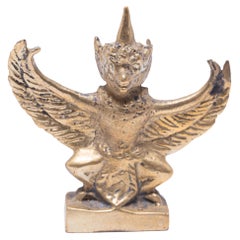
Petite Bronze Garuda Figurine
Located in Chicago, IL
This petite bronze figurine is cast in the form of Garuda, a demigod and mythical king of birds in Hindu and Buddhist faith. Taking the form of half-bird...
Category
20th Century East Asian Metalwork
Materials
Bronze
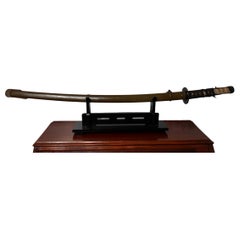
A Japanese Kanata Sword, Signed 池田鬼神丸国重
Located in Norton, MA
A JAPANESE SIGNED KATANA SWORD. Comprising a Japanese katana signed. The blade is signed "Ikeda Kishinmaru Kunishige" 池田鬼神丸国重. Ura side of the nakago stat...
Category
19th Century Antique East Asian Metalwork
Materials
Metal
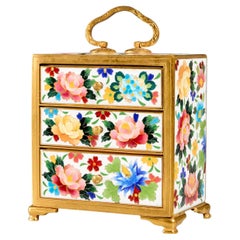
Late Meji Period Japanese Cloisonné Miniature 3 Drawer Chest by Inaba Nanaho
By Inaba Cloisonne Co.
Located in Morristown, NJ
An exquisite Japanese miniature cloisonné chest by Inaba Nanaho of Nagoya, finely crafted in the early 20th century, bridging the Meiji and Taishō ...
Category
Early 20th Century Meiji East Asian Metalwork
Materials
Metal, Enamel
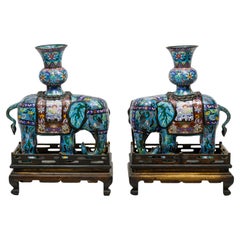
Chinese Pair of Large Cloisonné Elephants with Wood Stands
Located in Norton, MA
Large pair of standing elephants having fitted vases on their backs on wooden display stands
Measures: Height: 15 inches, Length: 14 inches, Wid...
Category
Early 20th Century Chinese Export East Asian Metalwork
Materials
Copper
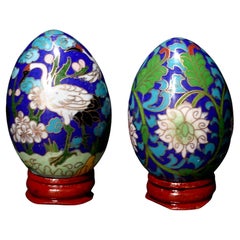
Two Chinese Cloisonné Enamel Egg "Flowers and Birds" with Wood Stands #8
Located in Norton, MA
Presenting a beautiful Chinese cloisonné enamel egg depicting flowers and birds with wood stands, early 20 century.
Category
Early 20th Century Chinese Export East Asian Metalwork
Materials
Copper
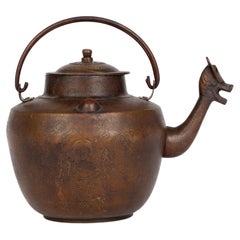
Chinese Antique Qianlong Mark Gold Inlay Bronze Teapot
Located in Bishop
s Stortford, Hertfordshire
An interesting antique Chinese, Qianlong mark bronze teapot with gilded overlay probably dating from the latter 19th century. The teapot is of rounded sh...
Category
Late 19th Century Qing Antique East Asian Metalwork
Materials
Bronze
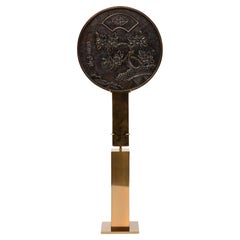
Early 20th Century, Showa, Japanese Bronze Mirror with Stand
Located in Sampantawong, TH
Japanese bronze mirror with stand.
Age: Japan, Showa Period, Early 20th Century
Size excluding stand: Diameter 15 C.M. / Height 24.7 C.M.
Height including stand: 39.7 C.M.
Condition...
Category
Early 20th Century East Asian Metalwork
Materials
Bronze
$560 Sale Price
20% Off
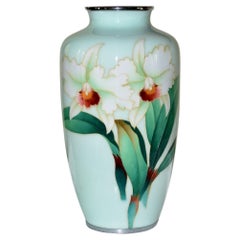
Large Signed Ando Jubei Japanese Cloisonné Vase Orchids 10"
By Ando Jubei
Located in Somis, CA
A large, rare masterpiece of Ando Jubei's wireless cloisonné artistry in excellent condition, depicting two orchids in full bloom, capturing their delicate beauty and verdant vitalit...
Category
20th Century Meiji East Asian Metalwork
Materials
Metal, Enamel
$960 Sale Price
46% Off
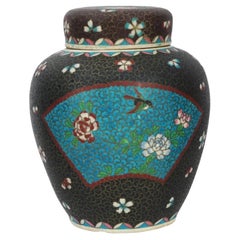
Large Antique Japanese Cloisonne Enamel on Porcelain Totai Jar Signed
Located in Long Island City, NY
A large antique Japanese late Meiji era covered Totai enamel on porcelain ginger jar. Circa: late 19th century to early 20th century. The ware is enameled with a polychrome fan shaped medallions with blossoming flowers, and butterflies, surrounded by floral and butterfly wings patterns made in the Cloisonne technique. The cover of the ware is decorated with a polychrome image of a flower surrounded by floral, foliage, and butterfly wings made in the same technique. The neck, the base, and the lid are adorned with polychrome geometrical, and floral motifs made in the same technique. Signed with red ink hieroglyphs, on the bottom. Totai Shippo is the name given to Japanese cloisonne on ceramics, both on earthenwares and on porcelain. It has a similar appearance to metallic cloisonne ware...
Category
Late 19th Century Meiji Antique East Asian Metalwork
Materials
Enamel
$720 Sale Price
60% Off
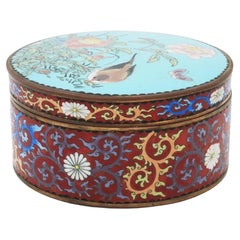
Antique Japanese Meiji Cloisonne Enamel Trinket Box
Located in Long Island City, NY
An antique Japanese, late Meiji era, covered enamel over brass jewelry or trinket box. The body of the ware is enameled with floral and foliage motifs made in the Cloisonne technique...
Category
Late 19th Century Meiji Antique East Asian Metalwork
Materials
Brass, Enamel
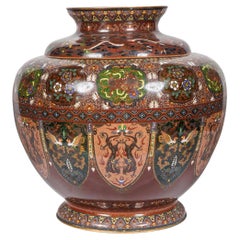
Meiji Masterpiece by Ando Jubei: A Maroon Cloisonné Vase with Dragons
Phoenix
By Ando Jubei
Located in Queens, NY
Meiji Masterpiece attributed to Ando Jubei: A Maroon Cloisonné Vase with Dragons
Phoenix, circa 1895
This monumental Meiji period Japanese cloisonné vase, attributed to the es...
Category
19th Century Meiji Antique East Asian Metalwork
Materials
Enamel
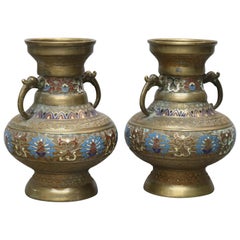
Antique Japanese Persian Style Champlevé Enameled Bronze Vase Set, circa 1900
Located in Big Flats, NY
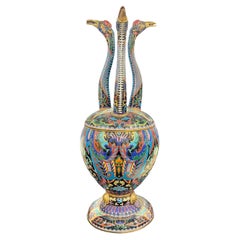
An antique Japanese Persian style vase set offers Champlevé enameled bronze urn form vessels with figural double handles, decorative bands to i...
Category
20th Century East Asian Metalwork
Materials
Bronze
$760 Sale Price / set
20% Off
Antique Japanese Singing Bowl Rose Gold 7" E4 Tone
Located in Somis, CA
A stunning antique Japanese singing bowl with beautiful rose gold-colored interior. Crafted in solid bronze with hand hammered divots and one broad cross band, the bowl embodies the ...
Category
Mid-20th Century East Asian Metalwork
Materials
Bronze
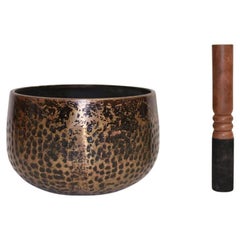
$600 Sale Price
20% Off
Japanese Bronze Two Handle Koro
Located in Astoria, NY
Japanese Bronze Two Handle Koro, early 20th century, with salamander form handles and exotic bird decorated body, on four mythical beast formed feet, the base drilled. 8" H x 12" W x...
Category
Early 20th Century Meiji East Asian Metalwork
Materials
Bronze
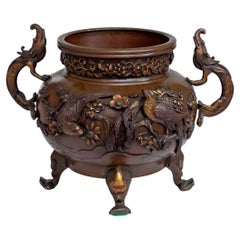
$950 Sale Price
34% Off
A Thick
Heavy Chinese Cloisonné Covered Jar Thunder Meandre on Wooden Stand
Located in Norton, MA
A Thick & Heavy Chinese Cloisonné Covered Jar Thunder Meandre on Wooden Stand
Vases: 8" High
Woden Bases: 2" High
Total Height: 10"
Category
Early 20th Century East Asian Metalwork
Materials
Copper, Enamel

Japanese hand hammered copper vase by famous Gyokusendo
Located in Fukuoka, JP
Gyokusendo Tsuiki Copperware is a traditional Japanese craft .
It originated in Tsubame City, Niigata Prefecture ,with a history of over 200 years. Tsuiki Is a metal working techn...
Category
20th Century East Asian Metalwork
Materials
Copper
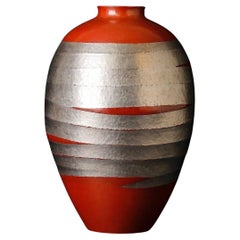
A Fine pair of Japanese cloisonné enamel vases Attributed to Honda Yasaburō
Located in London, GB
A Fine pair of Japanese cloisonné enamel vases
Attributed to Honda Yasaburō, Nagoya,
Meiji era
Each of baluster form, worked in polychrome enamels and silver wire on a mottled da...
Category
19th Century Antique East Asian Metalwork
Materials
Enamel
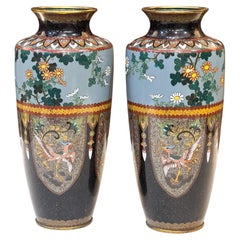
$1,043 Sale Price / set
20% Off
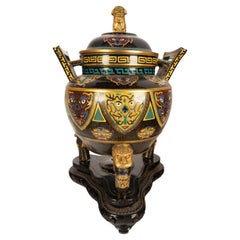
Antique Chinese Qing Dynasty Cloisonne Censer Ding Lidded Incense Burner 1870
Located in Portland, OR
A fine antique 19th century Chinese cloisonne ding shaped lidded censer/incense burner on stand, circa 1870. The twin handled censer having a gilded foo dog finial to the lid, the li...
Category
1870s Qing Antique East Asian Metalwork
Materials
Copper, Enamel
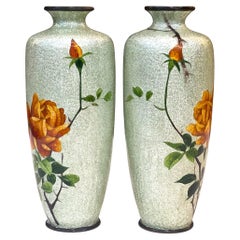
A Fine Pair of Japanese Cloisonné Vases with Ginbari Floral Decoration, 19th C
Located in London, GB
A Fine Pair of Japanese Cloisonné Vases with Ginbari Floral Decoration, Meiji Period (late 19th – early 20th century)
Of elegant baluster form with gently flared necks, this refined...
Category
19th Century Antique East Asian Metalwork
Materials
Enamel
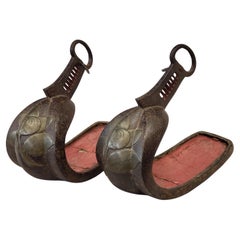
Antique Edo Period Japanese Samurai Iron Stirrups with Brass or Bronze Inlay
Located in Centennial, CO
A pair of antique Edo period (1603–1867) Japanese Samurai Abumis (stirrups for horseback-riding) expertly crafted out of cast iron with brass or bronze inlay in the form of a stylize...
Category
18th Century Edo Antique East Asian Metalwork
Materials
Brass, Bronze, Iron
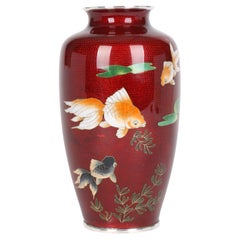
Japanese Vintage Silver Metal Mounted Cloisonne Vase with Fish
Located in Bishop
s Stortford, Hertfordshire
Exceptional vintage Japanese silver mounted cloisonne vase decorated with veiltail gold-fish and carp swimming amidst pond weed and dating arou...
Category
1940s Mid-Century Modern Vintage East Asian Metalwork
Materials
Silver Plate, Enamel
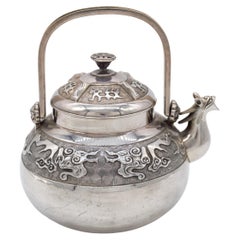
Amazing Japanese silver teapot and cover, dragon spout Meiji period 19TH century
Located in Tel Aviv - Jaffa, IL
amazing rare archaistic style silver ewer or tea pot with cover, the design is Of archaistic style dragons on the main frieze and on the cover, this style came from ancient Chinese a...
Category
1890s Antique East Asian Metalwork
Materials
Silver
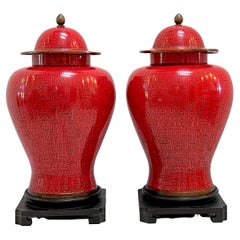
Pair of Chinese Modernist Red Cloisonné Ginger Jars and Stands, Circa 1960s
Located in West Palm Beach, FL
Pair of Chinese Modernist Red Cloisonné Ginger Jars and Stands, Circa 1960s
China, 20th Century
A stunning pair of Chinese Modernist red cloi...
Category
20th Century Chinese Export East Asian Metalwork
Materials
Brass, Copper
$2,366 Sale Price / set
20% Off
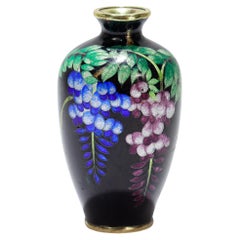
Antique Japanese Cloisonne Enamel Cabinet Vase with Wisteria
Located in Philadelphia, PA
A fine antique Japanese cloisonne enamel cabinet vase.
With polychrome enamel on a brass base.
Decorated with an enameled tree branches with blue & purple wisteria blossoms on a ...
Category
19th Century Meiji Antique East Asian Metalwork
Materials
Enamel
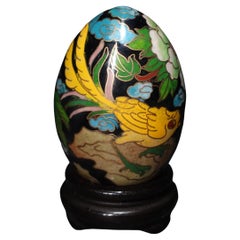
Chinese Cloisonné Enamel Egg "Flowers and Bird" with Wood Stand #7
Located in Norton, MA
Presenting a beautiful Chinese cloisonné enamel egg depicting flowers and bird with a wood stand, early 20 century.
Category
Early 20th Century Chinese Export East Asian Metalwork
Materials
Copper
Large Chinese Cloisonne Urn / Vase with Cover Featuring Cranes
Located in New York, NY
Large and very unusual Chinese or Japanese cloisonne metal urn or vase with cover featuring three handles depicting red crowned cranes. 28 inches tall and 10 inches across.
Category
Mid-20th Century East Asian Metalwork
Materials
Metal
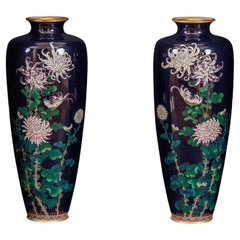
An Exquisite Pair Of Japanese Cloisonné Enamel Vases with Chrysanthemum Blossoms
Located in Queens, NY
An Exquisite Pair Of Japanese Cloisonné Enamel Vases with Chrysanthemum Blossoms, Attributed to Hayashi, Meiji Period.
Experience the exquisite craftsmanship of the Meiji period wit...
Category
19th Century Meiji Antique East Asian Metalwork
Materials
Enamel
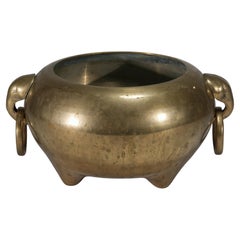
Large Korean Bronze Tripod Censer, Elephant Handled
Located in Clifton Springs, NY
Sculptural vintage bronze censer, or incense burner, is raised on three short feet and equipped with distinctive twin elephant mask handles. The rounded, graphic body blends seamless...
Category
Mid-20th Century Chinoiserie East Asian Metalwork
Materials
Brass, Bronze
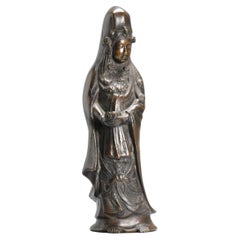
Antique Chinese Bronze Statue Guanyin China 19th / 20th century
Located in Amsterdam, Noord Holland
BRONZE top level Chinese statue
Qing period, 19th century.
Condition
29.5cm
Period
19th century
Category
19th Century Edo Antique East Asian Metalwork
Materials
Porcelain
$898 Sale Price
20% Off
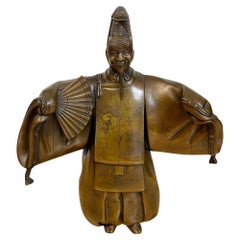
Meiji Period Bronze Figure of a Noh, With Mask
Located in West Palm Beach, FL
Meiji Period Bronze Figure of a Noh, with Mask
Japan, circa 1900s
A captivating Meiji period bronze figure of a Noh performer adorned with ...
Category
Early 20th Century Meiji East Asian Metalwork
Materials
Bronze
$2,360 Sale Price
20% Off
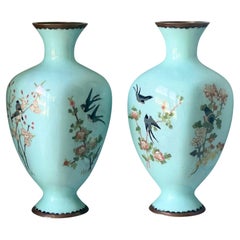
A Fine Pair of Japanese Cloisonné-Enamel Vases with Swallows and Parrots. 19th C
Located in London, GB
A Fine Pair of Japanese Cloisonné-Enamel Vases with Swallows and Parrots
Meiji period
Each of square shape with rounded shoulders, rising to a slightly waisted neck and flaring mout...
Category
19th Century Antique East Asian Metalwork
Materials
Enamel
$1,585 Sale Price / set
30% Off
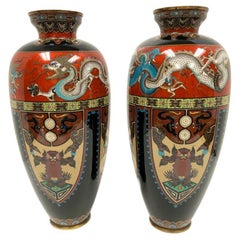
Pair Of Japanese Meiji Era Cloisonne Vases
Located in Bridgeport, CT
Pair of Japanese cloisonné vases with fine traditional form decorated with dragons and demons, geometric motifs and floral bands.
Dimensions: 5" W x 12" H
Condition: Please see detai...
Category
Late 19th Century Meiji Antique East Asian Metalwork
Materials
Metal, Enamel
$1,400 / set
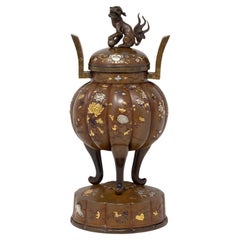
Japanese Bronze and Mixed Metals Koro by Kumagai, Meiji Period
Located in Newark, England
FREE WORLDWIDE SHIPPING
From our Japanese collection, we are pleased to present this Japanese Bronze and Mixed Metals Koro by Kumagai, dating to the Meiji Period (1868–1912).
The ...
Category
Late 19th Century Meiji Antique East Asian Metalwork
Materials
Gold, Silver, Bronze
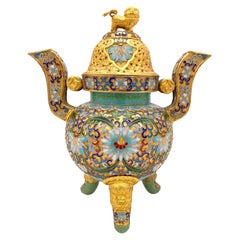
20th Century Chinese Elaborate Gilt Cloisonné Foo Dog Censor
Located in West Palm Beach, FL
20th Century Chinese Elaborate Gilt Cloisonné Foo Dog Censor
A stunning 20th Century Chinese Elaborate Gilt Cloisonné Foo Dog Censor, a masterwork of later craftsmanship. This exqu...
Category
20th Century Chinese Export East Asian Metalwork
Materials
Metal
$700 Sale Price
20% Off
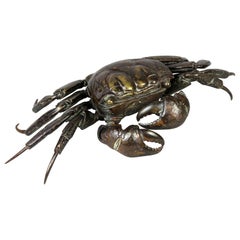
Japanese Meiji Articulated Bronze Crab
Located in Essex, MA
Darker brown patina with fully articulated body. Purchased in London by previous owner.
Category
1870s Meiji Antique East Asian Metalwork
Materials
Bronze
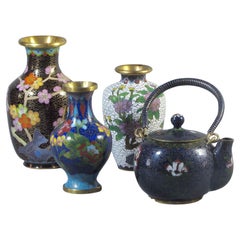
Lot of Four Chinese Cloisonne Vases
Teapot, 20th Century
Located in Ottawa, Ontario
Lot of four chinese cloisonne
vases and teapot
20th century.
From left:
Baluster-shaped black ground vase with flowering prunus
emerging from a rock, ruyi band around flaring ...
Category
Mid-20th Century Chinese Export East Asian Metalwork
Materials
Metal
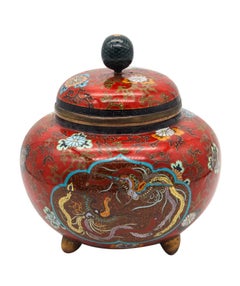
JAPAN IMPERIAL 1900 Meiji Period Tripode Koro Censer In Cloisonné Enamel With
Located in Miami, FL
Japanese tripod Koro from the Meiji Period (1868-1912).
This is a rare and beautiful antique koro censer, created in the imperial Japan during the Meiji period (1868-1912), circa 1900. It was carefully crafted in solid bronze and copper with silver wires and embellished with applications of polychromatic Cloisonné enamels and aventurine. The designs depict organics and natural motifs such mythological animals and flowers.
The Chrysanthemum Symbol
In Imperial Japan, the chrysanthemum (Kiku) was a potent symbol of the imperial family and the emperor himself, representing longevity, royalty, and divine power. The 16-petaled chrysanthemum is the Imperial Seal and crest, found on passports, coins, and the Chrysanthemum Throne. This association dates back to the Kamakura period (1185–1333), particularly with Emperor Go-Toba's fondness for the flower, establishing its link to imperial authority and lineage. The connection between the chrysanthemum and the imperial family began when Emperor Go-Toba adopted it as a personal emblem, aligning it with the strength and refinement of the emperor's rule. During the Meiji Period, the 16-petaled chrysanthemum crest, solidifying the association with the imperial family, was established during this time.
The Meiji Imperial Period
This is an era of Japanese history that extended from October 23, 1868 to July 30, 1912.The Meiji era was the first half of the Empire of Japan, when the Japanese people moved from being an isolated feudal society at risk of colonization by Western powers to the new paradigm of a modern, industrialized nation state and emergent great power, influenced by Western scientific, technological, philosophical, political, legal, and aesthetic ideas. As a result of such wholesale adoption of radically different ideas, the changes to Japan were profound, and affected its social structure, internal politics, economy, military, and foreign relations. The period corresponded to the reign of Emperor Meiji. It was preceded by the Keiō era and was succeeded by the Taishō era, upon the accession of Emperor Taishō.
Country: Imperial Japan.
Period: Meiji, 1890-1910.
Technique: Silver Wire Cloisonné over copper and bronze.
Weight: 416.80 Grams, (0.417 Kg).
Measurements:118 mm by 115 mm (4.65 x 4.52 Inches).
Koro
This term refers to a Japanese censer, incense burner, perfume burner or pastille burner is a vessel made for burning incense or perfume in some solid form. They vary greatly in size, form, and material of construction, and have been in use since ancient times throughout the world. They may consist of simple earthenware bowls or fire pots to intricately carved silver or gold vessels, small tabletop objects a few centimeters tall to as many as several meters high. Many designs use openwork to allow a flow of air. In many cultures, burning incense has spiritual and religious connotations, and this influences the design and decoration of the censer.
Cloisonné
This is an enameling technique in which the pattern is formed by wires soldered to the surface of the object to be decorated, which is usually made from copper, forming cells or cloisons, each of which holds a single colour of enamel paste which is then fired, and ground and polished. The champleve technique also uses an enameling technique, but the cells are formed by carving into the surface of the object, or in the casting. The cloisonne technique has been in use since the 12th century BC in the west, but the technique did not reach China until the 13th or 14th century. It became popular in China in the 18th century. Initially bronze or brass bodies were used, and in the 19th century copper, at which time the quality of the items produced began to decline. Chinese cloisonné is the best-known enamel cloisonné, though the Japanese produced large quantities from the mid-19th century, of very high technical quality. In the west the cloisonne technique was revived in the mid-19th century following imports from China, and its use continued in the Art Nouveau and Art Deco periods.
Condition: Basically, is in great antique condition, near mint, with insignificant and minimal usage, in great condition. All parts are secured in the settings. This Japanese Meiji Koro...
Category
Early 1900s Meiji Antique East Asian Metalwork
Materials
Silver, Bronze, Copper, Enamel
$1,398 Sale Price
30% Off
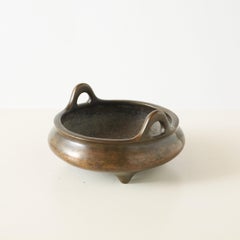
Patinated Bronze Tripod Censer with Double Handles
Located in San Francisco, CA
Patinated Bronze Tripod Censer with Double Handles
Round bronze censer with three legs and upright double handles at the rim. The surface shows a smooth, aged patina. Marked on the ...
Category
20th Century Ming East Asian Metalwork
Materials
Bronze
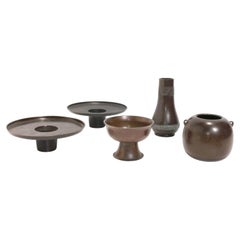
Japanese Bronze Vases or Vessels Collection
Located in Atlanta, GA
Collection of Japanese Bronze Vases or Vessels, circa 1940s or earlier. They retain their warm original patina. The price noted is for the collection of five vessels. The ikebana vas...
Category
1940s Japonisme Vintage East Asian Metalwork
Materials
Bronze
$2,250 / set
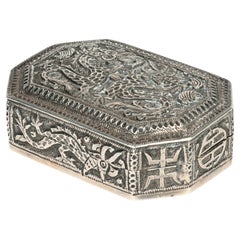
Chinese Qing Exceptional Quality Silver Box with Chinese Symbols and Dragons
Located in Bishop
s Stortford, Hertfordshire
An exceptional antique Chinese qing silver box with stylized creatures and Chinese symbols dating from the latter 19th century. The heavily made rectangular shaped box has angled cor...
Category
1890s Qing Antique East Asian Metalwork
Materials
Silver
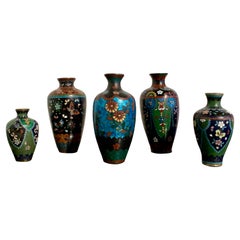
Group of 5 Small Japanese Cloisonne and Ginbari Vases, Early 20th Century, Japan
Located in Austin, TX
A charming group of five Japanese cloisonné and ginbari foiled vases, Meiji period, early 20th century, Japan.
The group consists of one vase with cloisonné chrysanthemum blossoms against bold and bright turquoise ginbari foil background, two similar vases of primarily black and burgundy cloisonné - one with a butterfly motif, the other with a floral motif, and two similar vases of primarily dark blue and green cloisonné, both with floral and butterfly motifs.
Turquoise ginbari vase...
Category
Early 20th Century Meiji East Asian Metalwork
Materials
Copper, Enamel, Foil, Wire
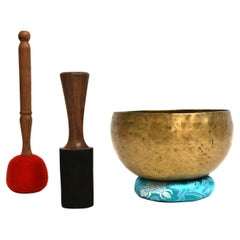
Antique Tibetan Singing Bowl Hand Hammered E Tone
Located in Somis, CA
A rare 19th century Tibetan singing bowl. The hand made piece is all original, hand hammered yielding a subtle overall pattern of indentation. Beautiful E tone. A meaningful ceremoni...
Category
19th Century Antique East Asian Metalwork
Materials
Brass
$880 Sale Price / set
20% Off
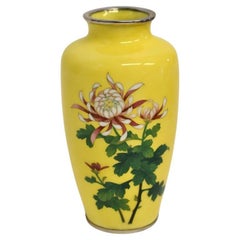
Signed Sato Japanese Cloisonné Vase Imperial Yellow with Chrysanthemum
Located in Somis, CA
A rare non-ginbari Sato cloisonné vase, from showa period, crafted on an imperial yellow Musen-jippo background. The classic form showcases vibrant...
Category
20th Century Showa East Asian Metalwork
Materials
Metal, Enamel
$650 Sale Price
40% Off
Still Thinking About These?
All Recently ViewedMore Ways To Browse
Tibetan Singing Bowl
Bronze Hibachi
China Brazier
Elephant Censer
Foo Censer
Japanese Bronze Crane And Turtle
Miyao Bronze
Quran Verse
Small Incense Burner
Tibetan Metal Art
Zhou Bronze
Antique Arabic Coffee Pot Dallah
Antique Chinese Bronze Marks
Antique Lime Boxes
Bidri Art
Burmese Bell
Cast Iron Kettle
Chinese Cloisonne Censer