Japanese Metalwork
to
138
345
168
624
10
3
3
3
27
340
257
135
42
11
15
6
6
4
2
4
10
2
611
287
213
114
62
1,524
1,156
624
482
178
624
624
624
15
5
4
4
3
Place of Origin: Japanese
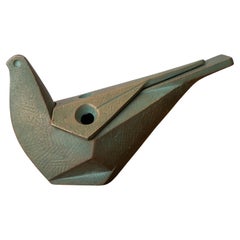
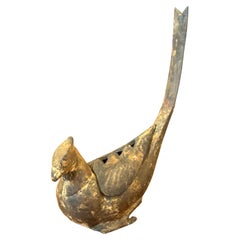
Japanese Iron Abstract Bird Sculpture or Incense Burner
Located in San Diego, CA
Iron bird sculpture. Removable vented piece, perhaps for burning incense or flower arrangements, 1960s.
Category
1960s Mid-Century Modern Vintage Japanese Metalwork
Materials
Iron
A Grand Meiji Cloisonné Enamel Tray Featuring Cherry Blossoms and Birds
Located in Queens, NY
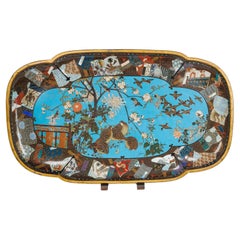
A Grand Meiji Japanese Cloisonné Enamel Tray – Lush Cherry Blossom Garden with Sparrows, Quail, and Japanese Fountain, Circa 1890
This monumental exhibition-size Meiji period Japane...
Category
19th Century Meiji Antique Japanese Metalwork
Materials
Enamel

$35,750 Sale Price
35% Off
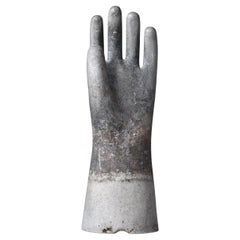
Japanese Old Aluminum Glove Mold 1940s-1960s / Object Wabi Sabi
Located in Chōsei District Nagara, JP
This is an old rubber glove mold made in Japan.
It was made in the Showa period (1940s-1960s), and the material used is aluminum.
Although it is a practical item that has been used f...
Category
Mid-20th Century Showa Japanese Metalwork
Materials
Aluminum
$400 Sale Price
20% Off
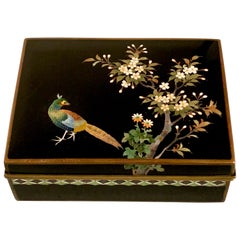
Japanese Cloisonne Box by Inaba, Meiji Period, circa 1900, Japan
By Inaba Cloisonne Co.
Located in Austin, TX
A fine Japanese cloisonne hinged box with pheasant and autumn foliage, by Inaba Nanaho and the Inaba Cloisonne Company, Meiji period, circa 1900, ...
Category
Early 1900s Meiji Antique Japanese Metalwork
Materials
Copper, Enamel, Metal
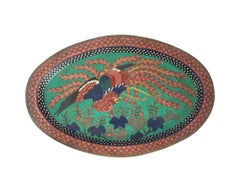
Antique Early Meiji Japanese Cloisonne Phoenix Bird Tray
Located in Long Island City, NY
An antique Japanese, Early Edo period, enamel copper tray. The oval shaped tray is enameled with a polychrome image of a Phoenix bird with flowers and leaves made in the Cloisonne te...
Category
Late 19th Century Meiji Antique Japanese Metalwork
Materials
Enamel, Copper
$1,600 Sale Price
60% Off
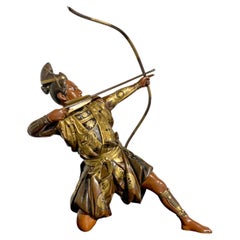
Japanese Miyao Style Gilt Bronze Samurai Archer, Meiji Period, Japan
By Eisuke Miyao 1
Located in Austin, TX
A spectacular Japanese cast, carved, and parcel gilt bronze sculpture, okimono, of a kneeling samurai archer, signed Kiyotsugu (died 1894), Meiji ...
Category
Late 19th Century Meiji Antique Japanese Metalwork
Materials
Bronze
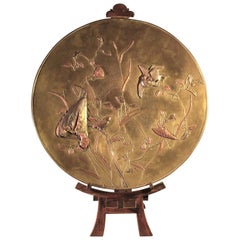
Large Japanese Patinated Bronze Mixed Metal Charger Meiji Period, circa 1880
Located in Ottawa, Ontario
A large Japanese patinated bronze
Mixed metal charger
Meiji period
Finely decorated in gold, silver, copper and bronze.
Naturalistically accurate...
Category
Late 19th Century Meiji Antique Japanese Metalwork
Materials
Gold, Silver, Copper, Bronze
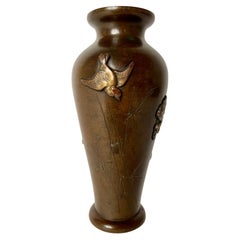
19th Century Japanese Bronze Vase, Gilt Bird Decoration, Meiji Period
Located in Stamford, CT
19th century Meiji Period diminutive bronze vase with lovely etched and applied decoration. A raised gilt bird is shown flying above etched bamboo on one side, gilt applied lilies wi...
Category
Late 19th Century Meiji Antique Japanese Metalwork
Materials
Bronze
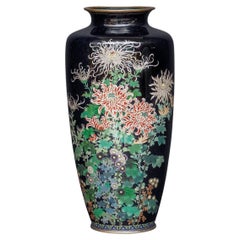
Japanese Meiji Silver-Wire Cloisonné Enamel Vase with Chrysanthemums, Inaba Co.
By Inaba Cloisonne Co.
Located in Queens, NY
A Japanese Meiji Period Silver-Wire Cloisonné Enamel Vase with Chrysanthemums on a Midnight Ground, Attributed to Inaba
A magnificent Japanese cloisonné enamel vase from the Meiji p...
Category
19th Century Meiji Antique Japanese Metalwork
Materials
Copper, Enamel
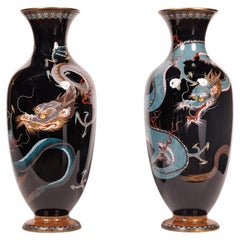
Large Pair of Meiji Period Japanese Cloisonne Enamel Double Dragon Vases
Located in Queens, NY
A large pair of Meiji Period Japanese Cloisonne Enamel Double Dragon Vases, 19th century.
Japanese cloisonne enamel dragon vases are highly ...
Category
19th Century Meiji Antique Japanese Metalwork
Materials
Copper, Enamel
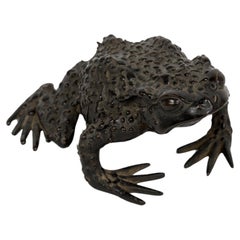
Japanese bronze okimono toad (sculpture)
Located in PARIS, FR
Okimono bronze sculpture of a large toad in a crouching position, possibly about to jump.
The toad and the frog, referred to by the same term in Japanese (kaeru), are associated with...
Category
Mid-19th Century Japonisme Antique Japanese Metalwork
Materials
Bronze
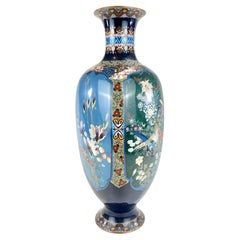
Very Rare Antique Japanese Meiji Era (late 1800
s) Cloisonné Vase 24"
Located in Portland, OR
Available from Shogun's Gallery in Portland, Oregon for over 40 years specializing in Asian Arts & Antiques.
This is a unique Japanese Meiji era (c. 1890) ornate Cloisonné vase. Mad...
Category
Late 19th Century Antique Japanese Metalwork
Materials
Copper, Enamel
Japanese Hand-Hammered Copper Vase by Gyokusendō — Signed, with Original Tomobak
Located in Fukuoka, JP
Dimensions: Height 16 cm
Origin: Tsubame, Niigata, Japan
Material: Pure copper (dōsei)
A finely hand-hammered copper vase (tsuiki dōsei kabin) crafted by the renowned metalwork atel...
Category
Early 20th Century Meiji Japanese Metalwork
Materials
Copper
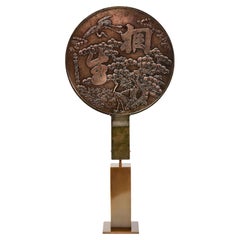
Early 20th Century, Showa, Japanese Bronze Mirror with Stand
Located in Sampantawong, TH
Japanese bronze mirror with stand.
Age: Japan, Showa Period, Early 20th Century
Size excluding stand: Diameter 23.7 C.M. / Height 33.4 C.M.
Height including stand: 49.2 C.M.
Conditi...
Category
Early 20th Century Japanese Metalwork
Materials
Bronze
$760 Sale Price
20% Off
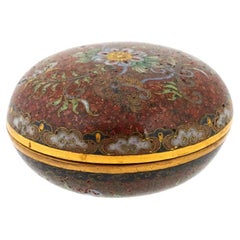
Antique Early Meiji Japanese Cloisonne Goldstone Enamel Trinket Box KOGO Attribu
Located in Long Island City, NY
Antique Early Meiji Japanese Cloisonne Enamel Trinket Box KOGO Attributed to Honda
An antique Japanese copper trinket box with polychrome cloisonne enamel design.
Early Meiji period...
Category
Late 19th Century Meiji Antique Japanese Metalwork
Materials
Enamel, Copper
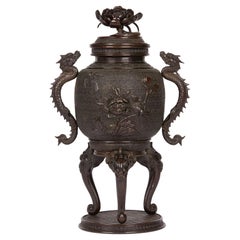
Large Japanese Meiji Bronze Lidded Urn, 19th Century
Located in Bishop
s Stortford, Hertfordshire
A large and stylish antique Japanese Meiji bronze lidded twin handle urn standing on a rounded plinth base with tongue and grotesque head formed legs with dragon handles and a flat c...
Category
Early 20th Century Meiji Japanese Metalwork
Materials
Bronze
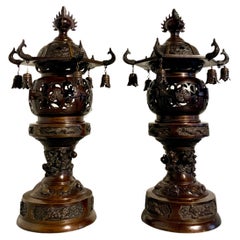
Pair Japanese Bronze Pagoda Temple Lanterns, Taisho Period, circa 1920, Japan
Located in Austin, TX
An elegant pair of Japanese cast and lacquered bronze pagoda lanterns, Taisho Period, circa 1920, Japan.
The lanterns a true pair, with mirrored decorations and lantern doors opening in opposite directions. The lanterns of traditional toro form, cast in bronze, and lacquered. Each lantern comprised of three parts - the "roof", the "fire box", and the pedestal. This type of pedestal lantern is called a dai-doro, as opposed to the hanging lantern type, tsuri-doro.
The hexagonal roof of the lantern, reminiscent of temples or pagodas, features a wonderful, dense cloud pattern with three heart-shaped cutouts, known as inome, or boar's eye. The roof topped by a hoju, the Buddhist flaming Jewel of Wisdom. Each of the six corners feature a fantastic shachihoko, mythical beasts with the face of a tiger and body of a fish. Bells are suspended from the shachihoko.
The globular body of the lantern features four pierced panels with the three leaf hollyhock mon of the Tokugawa clan surrounded by a karakusa pattern of scrolling vines. One panel serving as a hinged door with a lock stylized as the Three Jewels...
Category
1920s Taisho Vintage Japanese Metalwork
Materials
Bronze
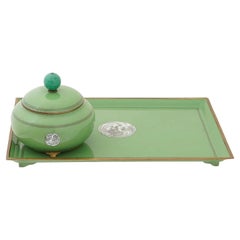
Antique Japanese Cloisonne Enamel Green Tray And Covered Jar With Phoenix Bird
Located in Long Island City, NY
A Japanese green tray and jar set. The tray is rectangular with a raised edge bordered with a geometric pattern. The surface of the tray has a circular medallion with a white design ...
Category
Late 19th Century Meiji Antique Japanese Metalwork
Materials
Enamel
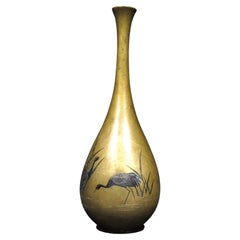
A Very Fine Miniature Japanese Mixed Metal Bronze Bottle Vase, Meiji Period
Located in Ottawa, Ontario
The finely proportioned ovoid shaped body rising to an elongated slender neck with a flaring rim, decorated with motifs of waterfowl standing in a grassy marsh with silvered bodies, ...
Category
Late 19th Century Meiji Antique Japanese Metalwork
Materials
Gold, Copper, Bronze, Silver
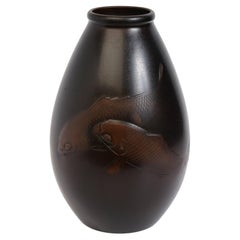
Mid-20th Century, Showa, Japanese Bronze Koi Fish Vase with Artist Sign
Located in Sampantawong, TH
Japanese bronze Koi fish vase with artist sign.
Japanese Koi fish symbolizes ultimate achievement, good fortune and prosperity.
Koi fish signifies strength and success because of...
Category
Mid-20th Century Japanese Metalwork
Materials
Bronze
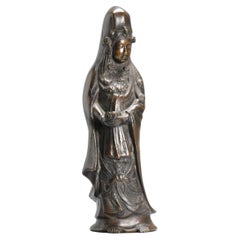
Antique Chinese Bronze Statue Guanyin China 19th / 20th century
Located in Amsterdam, Noord Holland
BRONZE top level Chinese statue
Qing period, 19th century.
Condition
29.5cm
Period
19th century
Category
19th Century Edo Antique Japanese Metalwork
Materials
Porcelain
$888 Sale Price
20% Off
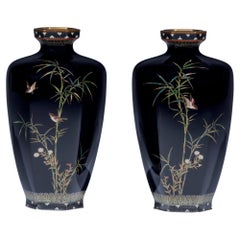
Pair of cloisonné vases attributed to Hayashi Kodenji
Located in Milano, IT
Pair of vases decorated with polychrome cloisonné enamels on a midnight blue ground, worked in silver and gold thread attributed to Hayashi Kodenji. The hexagonal body depicts sparro...
Category
Early 20th Century Japanese Metalwork
Materials
Enamel
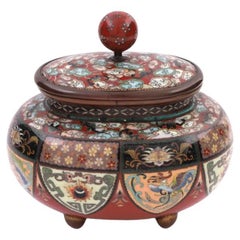
Red Meiji Japanese Cloisonne Enamel Covered Jar with Bats, Dragons, and Phoenix
Located in Long Island City, NY
An antique Japanese copper covered jar or box with polychrome cloisonne enamel design. Late Meiji period,Squat rounded piece resting on four ball feet. Richly decorated with floral a...
Category
Late 19th Century Meiji Antique Japanese Metalwork
Materials
Enamel, Copper
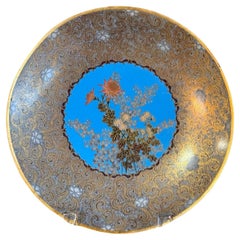
Fine Meiji Japanese Cloisonne Enamel Plate with Central Medallion and Bats
Located in Long Island City, NY
A beautifully executed Meiji period Japanese cloisonne enamel plate featuring a vivid sky blue central medallion framed by an elaborate border of intricate wire work. The center is d...
Category
Late 19th Century Meiji Antique Japanese Metalwork
Materials
Enamel
Antique Japanese Meiji Cloisonne Enamel Trinket Box
Located in Long Island City, NY
An antique Japanese, late Meiji era, covered enamel over brass jewelry or trinket box. The body of the ware is enameled with floral and foliage motifs made in the Cloisonne technique...
Category
Late 19th Century Meiji Antique Japanese Metalwork
Materials
Brass, Enamel
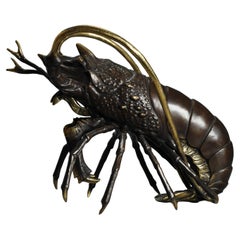
Large 30 cm Showa Period Bronze Japanese Lobster Okimono Statue Japan
Located in Amsterdam, Noord Holland
BRONZE top level Japanese statue. Lobster
Condition
Perfect. Size: 30x18cm
Period
Showa Period
Category
Early 20th Century Meiji Japanese Metalwork
Materials
Porcelain
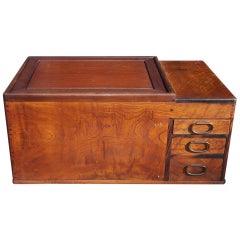
Japanese Three Drawer Copper Lined Hibachi. Circa 1870
Located in Charleston, SC
KYOTO STYLE NAGA HIBACHI (FIREBOX BRAZIER GRILL), Japanese, Meiji Period, The rectangular hibachi is of Keyaki (Zelkova) wood construction with the original copper liner, and a colum...
Category
1870s Antique Japanese Metalwork
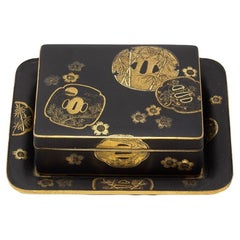
Antique Japanese Meiji Period Tsuba Decorated Box and Dish by Fujii Yoshitoyo
By Fujii Yoshitoyo
Located in Newark, England
Original Box and Dish Pair
From our Japanese collection, we are pleased to offer this Japanese Komai Style Box and Dish Fujii Yoshitoyo. The Box of slim rectangular shape seated upo...
Category
Late 19th Century Meiji Antique Japanese Metalwork
Materials
Metal
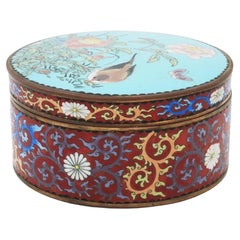
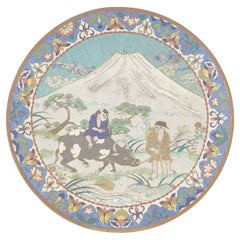
Meiji Period Japanese Cloisonne Enamel Plate Featuring Water Buffalo Mt Fuji
Located in Long Island City, NY
A beautifully decorated Japanese Meiji period cloisonne enamel plate depicting a pastoral scene of a young boy riding a water buffalo while another figure walks beside him. The two a...
Category
Late 19th Century Meiji Antique Japanese Metalwork
Materials
Enamel
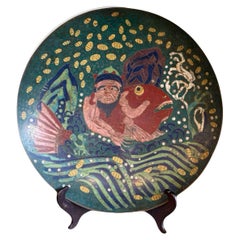
Meiji Japanese Cloisonne Charger Urashima Taro Riding the Sea Bream Mythological
Located in Long Island City, NY
Early Meiji Japanese cloisonne enamel charger measuring 15 inches in diameter, depicting the famous folktale of Urashima Taro. Shown riding a red sea bream across stylized waves, the...
Category
Late 19th Century Meiji Antique Japanese Metalwork
Materials
Enamel
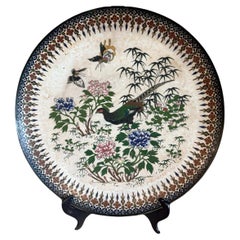
Early Meiji Japanese Cloisonne Enamel Charger White Ground Pheasant and Peonies
Located in Long Island City, NY
An important early Meiji Japanese cloisonne enamel charger on the rare white ground, 17.5 inches in diameter. The central medallion shows a finely detailed pheasant set among bamboo ...
Category
Late 19th Century Meiji Antique Japanese Metalwork
Materials
Enamel
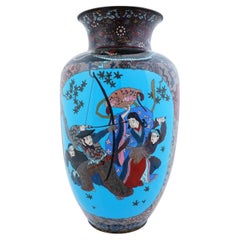
Antique Large Japanese Cloisonne Enamel Samurai Battle Dragon Floral Vase
Located in Long Island City, NY
A large antique Japanese vase with cloisonne enamel design. Taisho Period (1912-1926). Two medallions with birds among flowers and human figures are presented on sides. Depiction of ...
Category
Early 20th Century Taisho Japanese Metalwork
Materials
Enamel
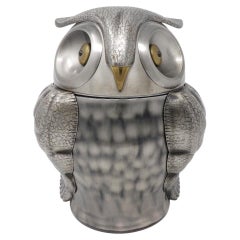
Vintage Owl Shaped Pewtertone Olde Tankardware Ice Bucket
Located in Point Richmond, CA
Vintage Owl Shaped Pewtertone Olde Tankardware Ice Bucket. The charming large ice bucket assembled from magnetic metallic parts in a pewter-like finish with body, wings and eyes all ...
Category
1960s Mid-Century Modern Vintage Japanese Metalwork
Materials
Metal
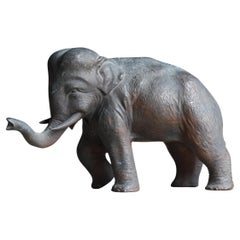
Japanese Old Copper Elephant Figurine 1940s-1960s / Sculpture Wabi Sabi
Located in Chōsei District Nagara, JP
This is an old Japanese copper elephant figurine.
It was crafted in the mid-Showa period (1940s–1960s), a time when Japan’s metal-casting techniques had reached an exceptional level ...
Category
1950s Showa Vintage Japanese Metalwork
Materials
Copper
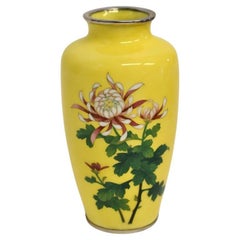
Signed Sato Japanese Cloisonné Vase Imperial Yellow with Chrysanthemum
Located in Somis, CA
A rare non-ginbari Sato cloisonné vase, from showa period, crafted on an imperial yellow Musen-jippo background. The classic form showcases vibrant...
Category
20th Century Showa Japanese Metalwork
Materials
Metal, Enamel
$650 Sale Price
40% Off
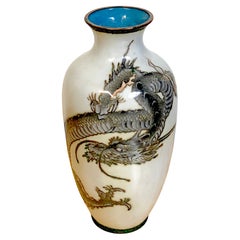
Exquisite Japanese Wireless Cloisonné Dragon Motif Vase, Meiji / Taisho Period
Located in West Palm Beach, FL
Japanese Wireless Cloisonné Enamel Vase, likely from the Meiji period (1868–1912) or possibly the early Taisho period (1912–1926). The vase features a dynamic depiction of a Japanese...
Category
Early 20th Century Meiji Japanese Metalwork
Materials
Copper
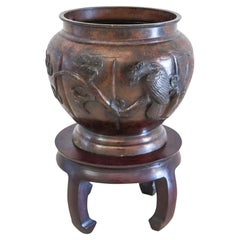
JAPAN 1900 Meiji Period Bronze Planter Vase With Carved Wood Base
Located in Miami, FL
Large Planter Vase from imperial Japan.
This a beautiful piece of Japanese decorative arts, created in Japan during the Meiji imperial period, circa 1900. The oversized vase can be ...
Category
Early 1900s Meiji Antique Japanese Metalwork
Materials
Bronze
$3,188 Sale Price / set
20% Off
Japanese Meiji Period Cloisonne Enamel Vase by Ando Jubei
By Ando Jubei
Located in Newark, England
Free international shipping
Ando Cloisonne Company Mark
From our Japanese collection, we are delighted to introduce this Japanese Cloisonne Enamel Vase by Ando Jubei. The Cloisonn...
Category
Early 1900s Meiji Antique Japanese Metalwork
Materials
Enamel, Wire
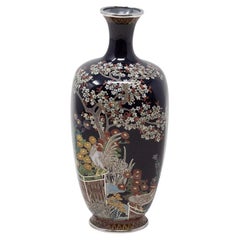
Antique Japanese Cloisonne Totai Covered Enamel Porcelain Jar
Located in Long Island City, NY
A Japanese covered Totai enamel on porcelain ginger jar. The ware is enameled with polychrome medallions representing blossoming flowers surrounded by floral, foliage and geometrical...
Category
19th Century Antique Japanese Metalwork
Materials
Enamel
$495 Sale Price
67% Off
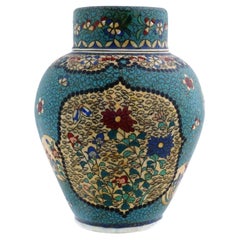
Japanese Hand-Hammered Copper Vase by Gyokusendō — Signed, with Original Tomobak
Located in Fukuoka, JP
Dimensions: Height 18.7 cm
Origin: Tsubame, Niigata, Japan
Material: Pure copper (dōsei)
A finely hand-hammered copper vase (tsuiki dōsei kabin) crafted by the renowned metalwork at...
Category
Early 20th Century Meiji Japanese Metalwork
Materials
Copper
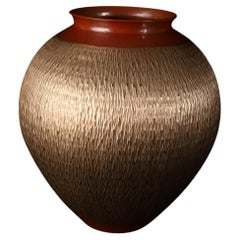
Japanese Iron Bird Incense Burner
Located in San Diego, CA
Vintage Japanese iron bird incense burner, circa 1960s. The piece has a removable vented piece for burning incense, a wonderful patina and measures 6.5"...
Category
Mid-20th Century Mid-Century Modern Japanese Metalwork
Materials
Iron
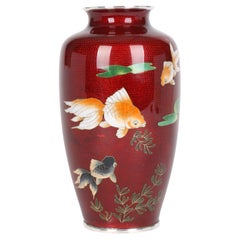
Japanese Vintage Silver Metal Mounted Cloisonne Vase with Fish
Located in Bishop
s Stortford, Hertfordshire
Exceptional vintage Japanese silver mounted cloisonne vase decorated with veiltail gold-fish and carp swimming amidst pond weed and dating arou...
Category
1940s Mid-Century Modern Vintage Japanese Metalwork
Materials
Silver Plate, Enamel
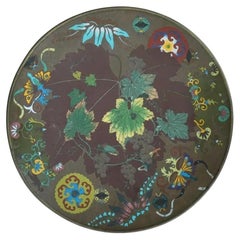
Antique Japanese Cloisonne Charger with Insects and Fall Foliage Plate Goto
Located in Long Island City, NY
A large antique Japanese Meiji period, 1868 to 1912, cloisonne enamel metal charger plate depicting a multicolored picture of vines and grapes with...
Category
Late 19th Century Meiji Antique Japanese Metalwork
Materials
Copper, Enamel
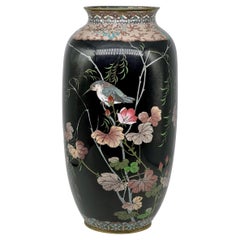
A Large Jet Black Japanese Meiji Period Cloisonné Enamel Vase
Located in London, GB
A Large Jet Black Japanese Meiji Period Cloisonné Enamel Vase
An elegant Meiji period Japanese cloisonné vase of ovoid form with a gently flared neck finely decorated on a rich bla...
Category
19th Century Antique Japanese Metalwork
Materials
Enamel
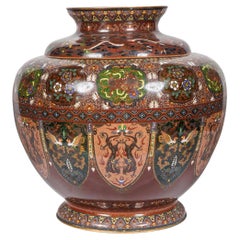
Meiji Masterpiece by Ando Jubei: A Maroon Cloisonné Vase with Dragons
Phoenix
By Ando Jubei
Located in Queens, NY
Meiji Masterpiece attributed to Ando Jubei: A Maroon Cloisonné Vase with Dragons
Phoenix, circa 1895
This monumental Meiji period Japanese cloisonné vase, attributed to the es...
Category
19th Century Meiji Antique Japanese Metalwork
Materials
Enamel
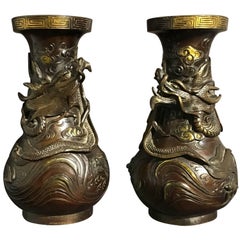
Pair of Japanese Edo Period Parcel-Gilt Bronze Dragon Vases, Early 19th Century
Located in Austin, TX
A pair of well cast and dramatic Japanese parcel gilt bronze dragon vases, Edo period, early 19th century. The heavy bronze vases of pear shape, each with a single writhing dragon cast in high relief...
Category
Early 19th Century Edo Antique Japanese Metalwork
Materials
Bronze
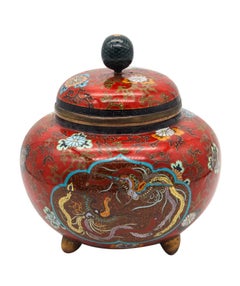
JAPAN IMPERIAL 1900 Meiji Period Tripode Koro Censer In Cloisonné Enamel With
Located in Miami, FL
Japanese tripod Koro from the Meiji Period (1868-1912).
This is a rare and beautiful antique koro censer, created in the imperial Japan during the Meiji period (1868-1912), circa 1900. It was carefully crafted in solid bronze and copper with silver wires and embellished with applications of polychromatic Cloisonné enamels and aventurine. The designs depict organics and natural motifs such mythological animals and flowers.
The Chrysanthemum Symbol
In Imperial Japan, the chrysanthemum (Kiku) was a potent symbol of the imperial family and the emperor himself, representing longevity, royalty, and divine power. The 16-petaled chrysanthemum is the Imperial Seal and crest, found on passports, coins, and the Chrysanthemum Throne. This association dates back to the Kamakura period (1185–1333), particularly with Emperor Go-Toba's fondness for the flower, establishing its link to imperial authority and lineage. The connection between the chrysanthemum and the imperial family began when Emperor Go-Toba adopted it as a personal emblem, aligning it with the strength and refinement of the emperor's rule. During the Meiji Period, the 16-petaled chrysanthemum crest, solidifying the association with the imperial family, was established during this time.
The Meiji Imperial Period
This is an era of Japanese history that extended from October 23, 1868 to July 30, 1912.The Meiji era was the first half of the Empire of Japan, when the Japanese people moved from being an isolated feudal society at risk of colonization by Western powers to the new paradigm of a modern, industrialized nation state and emergent great power, influenced by Western scientific, technological, philosophical, political, legal, and aesthetic ideas. As a result of such wholesale adoption of radically different ideas, the changes to Japan were profound, and affected its social structure, internal politics, economy, military, and foreign relations. The period corresponded to the reign of Emperor Meiji. It was preceded by the Keiō era and was succeeded by the Taishō era, upon the accession of Emperor Taishō.
Country: Imperial Japan.
Period: Meiji, 1890-1910.
Technique: Silver Wire Cloisonné over copper and bronze.
Weight: 416.80 Grams, (0.417 Kg).
Measurements:118 mm by 115 mm (4.65 x 4.52 Inches).
Koro
This term refers to a Japanese censer, incense burner, perfume burner or pastille burner is a vessel made for burning incense or perfume in some solid form. They vary greatly in size, form, and material of construction, and have been in use since ancient times throughout the world. They may consist of simple earthenware bowls or fire pots to intricately carved silver or gold vessels, small tabletop objects a few centimeters tall to as many as several meters high. Many designs use openwork to allow a flow of air. In many cultures, burning incense has spiritual and religious connotations, and this influences the design and decoration of the censer.
Cloisonné
This is an enameling technique in which the pattern is formed by wires soldered to the surface of the object to be decorated, which is usually made from copper, forming cells or cloisons, each of which holds a single colour of enamel paste which is then fired, and ground and polished. The champleve technique also uses an enameling technique, but the cells are formed by carving into the surface of the object, or in the casting. The cloisonne technique has been in use since the 12th century BC in the west, but the technique did not reach China until the 13th or 14th century. It became popular in China in the 18th century. Initially bronze or brass bodies were used, and in the 19th century copper, at which time the quality of the items produced began to decline. Chinese cloisonné is the best-known enamel cloisonné, though the Japanese produced large quantities from the mid-19th century, of very high technical quality. In the west the cloisonne technique was revived in the mid-19th century following imports from China, and its use continued in the Art Nouveau and Art Deco periods.
Condition: Basically, is in great antique condition, near mint, with insignificant and minimal usage, in great condition. All parts are secured in the settings. This Japanese Meiji Koro...
Category
Early 1900s Meiji Antique Japanese Metalwork
Materials
Silver, Bronze, Copper, Enamel
$1,598 Sale Price
20% Off
A Fine Silver-Mounted Cloisonné-Enamel Vase By Satō Sei, Meiji era
Located in London, GB
A Silver-Mounted Cloisonné-Enamel Vase
By Satō, Meiji era
By Satō, Meiji era (late 19th century), circa 1890–1900
Of globular form with a gently tapered neck, the body worked in y...
Category
19th Century Antique Japanese Metalwork
Materials
Silver, Enamel
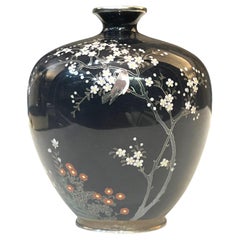
Antique Pair Of Meiji Japanese Cloisonne Enamel Vases
Located in Long Island City, NY
A pair of identical antique Japanese copper vases with cloisonne enamel design. Late Meiji period, before 1912. Elongated baluster shape with pronounced neck. Floral ornament with bl...
Category
Late 19th Century Meiji Antique Japanese Metalwork
Materials
Enamel, Copper
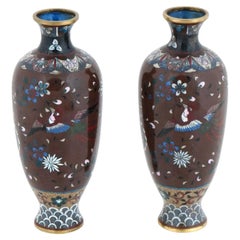
Large Antique Japanese Cloisonne Enamel Censer Koro W Stand Attributed To GOTO
Located in Long Island City, NY
A large Japanese covered tripod enamel censer koro or incense burner. The sphere form ware is enameled with polychrome medallions representing cranes and birds in blossoming flowers ...
Category
Late 19th Century Antique Japanese Metalwork
Materials
Enamel

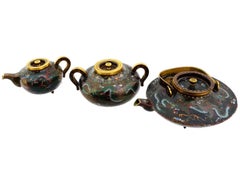
Rare Antique Meiji Japanese Cloisonne Enamel 3 Piece Tea Ceremony Dragon Set
Located in Long Island City, NY
A Japanese covered and footed enamel tea set including three pieces. The set includes a large tea pot, a small tea pot, and a sugar bowl. The wares are adorned with a polychrome enam...
Category
19th Century Antique Japanese Metalwork
Materials
Enamel
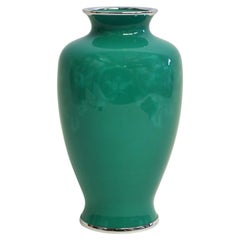
Signed Ando Jubei Green Baluster Cloisonné Vase
By Ando Jubei
Located in Somis, CA
A beautiful pristine condition Ando Jubei wireless cloisonné vase in baluster form. In his signature green enamel, portraying an intricate arabesque design of a blooming clematis vin...
Category
20th Century Meiji Japanese Metalwork
Materials
Metal, Enamel
$650 Sale Price
45% Off
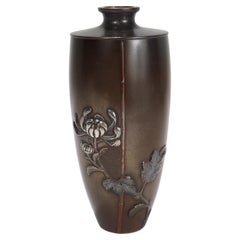
Antique Signed Japanese Bronze Mixed Metals Butterbur Vase by Atsuyoshi / Inoue
Located in Philadelphia, PA
A fine signed antique Japanese Meiji period mixed metals vase.
By Miyabe Atsuyoshi for Inoue of Kyoto.
With a bronze body and d...
Category
Early 20th Century Meiji Japanese Metalwork
Materials
Gold, Silver, Bronze, Copper
Japanese Meiji Cloisonne Vase
Located in Sarasota, FL
Japanese Meiji finely decorated cloisonne vase. Multiple designs within different cartouches. Unmarked
Category
1890s Meiji Antique Japanese Metalwork
Materials
Copper
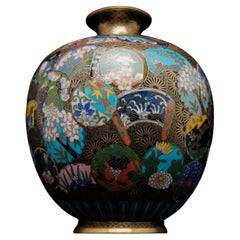
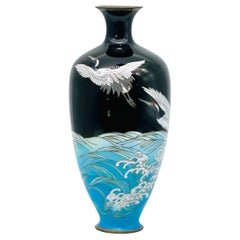
A magnificent Japanese cloisonne enamel Vase. Signed. Meiji period
Located in London, GB
A magnificent Japanese cloisonne enamel Vase. Signed. Meiji period
of tapering form with everted neck, decorated in various coloured enamels with two cranes in flight above the cra...
Category
19th Century Antique Japanese Metalwork
Materials
Enamel
$1,452 Sale Price
20% Off
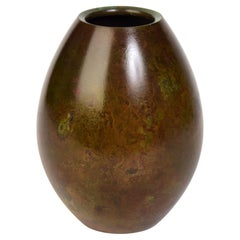
Early 20th Century, Showa, Japanese Bronze Vase with Artist Sign
Located in Sampantawong, TH
Japanese bronze vase with artist sign, used to decorate single flower arrangement in Japanese traditional tea ceremony.
Artist signature is on the last photo.
Age: Japan, Showa Pe...
Category
Early 20th Century Japanese Metalwork
Materials
Bronze
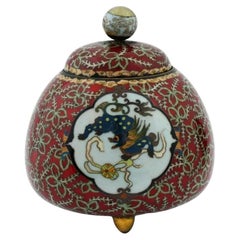
Antique Japanese Meiji Cloisonne Enamel Red Tripod Jar
Located in Long Island City, NY
An antique Japanese copper lidded jar with polychrome red cloisonne enamel design. Late Meiji period, before 1912. Round shape, lid with globe finial. The piece rests on three feet. ...
Category
Late 19th Century Meiji Antique Japanese Metalwork
Materials
Enamel, Copper
Antique japanese forged iron tsuba from the Edo period
Located in Bilzen, BE
A forge iron Japanese samurai tsuba from the Edo period (1603 - 1868)
Katana tsuba 7.5 x 7.5 cm
Good condition as shown in the pictures uncleaned with its old patina
Category
18th Century Edo Antique Japanese Metalwork
Materials
Iron

Early 20th Century, Showa, Japanese Bronze Vase with Artist Sign
Located in Sampantawong, TH
Japanese bronze vase with artist sign, used to decorate single flower arrangement in Japanese traditional tea ceremony.
Artist signature is on the last photo.
Age: Japan, Showa Pe...
Category
Early 20th Century Japanese Metalwork
Materials
Bronze
$544 Sale Price
20% Off
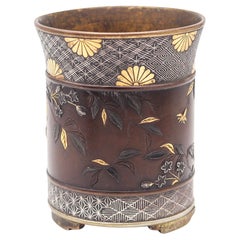
MEIJI Period Japan 1890 Imperial Shakudo Gold Mixed Metals Brush Vase-Pot
Located in Miami, FL
A brush pot from the Meiji imperial period.
This is a beautiful brush vase-pot created in the Imperial Japan during the early Meiji period (1868-1912), circa 1890. The fabulous roun...
Category
1890s Meiji Antique Japanese Metalwork
Materials
Gold, Silver, Bronze
More Ways To Browse
Japanese Bronze Crane And Turtle
Miyao Bronze
Quran Verse
Small Incense Burner
Tibetan Metal Art
Zhou Bronze
Antique Arabic Coffee Pot Dallah
Antique Chinese Bronze Marks
Antique Lime Boxes
Bidri Art
Burmese Bell
Cast Iron Kettle
Chinese Cloisonne Censer
Chinese Cloisonne Incense Burner
Chinese Tripod Bronze Censer
Hand Hammered Raj
Islamic Safavid
Japanese Bronze Miyao