Meiji Metalwork

MEIJI STYLE

From 1868 to 1912, Emperor Mutsuhito oversaw an era of transformation in Japan. Formerly a country of feudalism and isolation, Japan entered an age of modernization influenced by newly established trade and exchange with the West. The Meiji period, or period of “enlightened rule,” also saw the global impact of the East Asian country’s culture. Japanese Meiji furniture was exhibited at expositions from Paris to San Francisco and created for export.

Prior to the Meiji era, furniture was mostly made by commission for the ruling class; now there were new domestic and international markets. European styles like Japonisme appropriated Japanese design while craftsmen in places like Wales and England employed japanning, a varnishing technique that approximated the appearance of lacquer for the surfaces of furnishings.

Meiji furniture made for Japanese homes and buildings constructed in Western styles resulted in taller tables, chairs, cabinets with large drawers and other features. The government invested in areas such as transportation and communication, and because people could freely choose occupations after the restrictions of feudalism, industries of various types were energized by expressive new ideas during those years. Art schools were formed and, for the first time, design was an area of study in the country, leading to the evolution of professional design as a career by the 1890s.

The work of Japanese designers was transmitted widely through lavishly illustrated pattern books that included designs for screens and lacquerware for the home. While screens today may be of use as decorative accents or partitions to ensure privacy in one’s space, Japanese screens were adorned with paintings and were featured in performing arts such as concerts, tea ceremonies and more. The color illustrations that characterize Meiji woodblock prints, a genre of Japanese art that grew out of 17th-century developments in printing and book publishing, depicted the sweeping changes that the era brought to East Asia.

Although it was a time of societal and cultural shifts, a bolstered interest in art and design elevated Japanese craft traditions. From colorful porcelain table lamps with silk shades and hardwood tables decorated with dark lacquer to cabinets featuring iron hardware and inlaid with mother-of-pearl, Meiji furniture showcased Japan’s artistic heritage to the world.

Find a collection of antique Japanese Meiji period case pieces and storage cabinets, decorative objects, wall decorations and more furniture on 1stDibs.

to
59
195
59
266
4
79
42
28
20
11
9
8
7
4
3
1
1
1
1
3
204
59
4
47
1
1
9
4
1
262
125
108
75
33
265
263
263
4
4
270
270
270
10
4
2
2
2
Style: Meiji
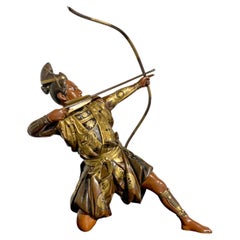
Japanese Miyao Style Gilt Bronze Samurai Archer, Meiji Period, Japan
Located in Austin, TX
A spectacular Japanese cast, carved, and parcel gilt bronze sculpture, okimono, of a kneeling samurai archer, signed Kiyotsugu (died 1894), Meiji ...
Category

Late 19th Century Japanese Antique Meiji Metalwork

Materials

Bronze

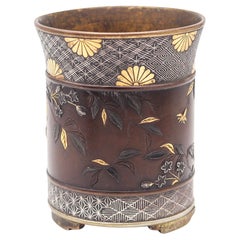
MEIJI Period Japan 1890 Imperial Shakudo Gold Mixed Metals Brush Vase-Pot
Located in Miami, FL
A brush pot from the Meiji imperial period. This is a beautiful brush vase-pot created in the Imperial Japan during the early Meiji period (1868-1912), circa 1890. The fabulous roun...
Category

1890s Japanese Antique Meiji Metalwork

Materials

Gold, Silver, Bronze

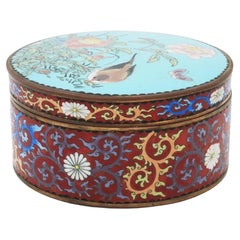
Antique Japanese Meiji Cloisonne Enamel Trinket Box
Located in Long Island City, NY
An antique Japanese, late Meiji era, covered enamel over brass jewelry or trinket box. The body of the ware is enameled with floral and foliage motifs made in the Cloisonne technique...
Category

Late 19th Century Japanese Antique Meiji Metalwork

Materials

Brass, Enamel

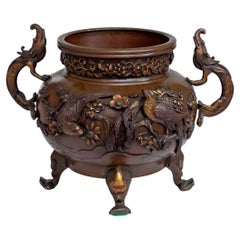
Japanese Bronze Two Handle Koro
Located in Astoria, NY
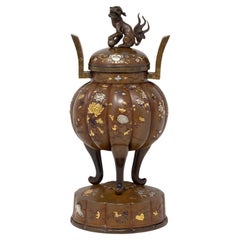
Japanese Bronze Two Handle Koro, early 20th century, with salamander form handles and exotic bird decorated body, on four mythical beast formed feet, the base drilled. 8" H x 12" W x...
Category

Early 20th Century Japanese Meiji Metalwork

Materials

Bronze

Japanese Bronze Two Handle Koro
$950 Sale Price
34% Off
Large Antique Japanese Cloisonne Enamel on Porcelain Totai Jar Signed
Located in Long Island City, NY
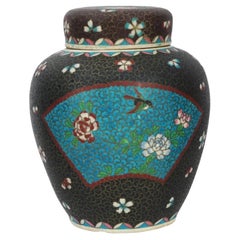
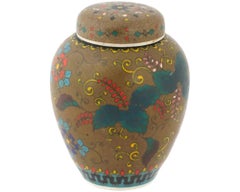
A large antique Japanese late Meiji era covered Totai enamel on porcelain ginger jar. Circa: late 19th century to early 20th century. The ware is enameled with a polychrome fan shaped medallions with blossoming flowers, and butterflies, surrounded by floral and butterfly wings patterns made in the Cloisonne technique. The cover of the ware is decorated with a polychrome image of a flower surrounded by floral, foliage, and butterfly wings made in the same technique. The neck, the base, and the lid are adorned with polychrome geometrical, and floral motifs made in the same technique. Signed with red ink hieroglyphs, on the bottom. Totai Shippo is the name given to Japanese cloisonne on ceramics, both on earthenwares and on porcelain. It has a similar appearance to metallic cloisonne ware...
Category

Late 19th Century Japanese Antique Meiji Metalwork

Materials

Enamel

Rare Japanese Articulate Silver Lobster Jizai Okimono Myochin Hiroyoshi Meiji
Located in Atlanta, GA
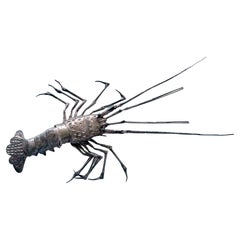
On offer is a rare articulate spiny lobster (Ise-Ebi) in pure silver made by Myochin Hiroyoshi in the late Meiji Period circa 1890-1900s. As an ornamental display item, this type of ...
Category

Early 20th Century Japanese Meiji Metalwork

Materials

Silver

Large Japanese Meiji Bronze Lidded Urn, 19th Century
Located in Bishop s Stortford, Hertfordshire
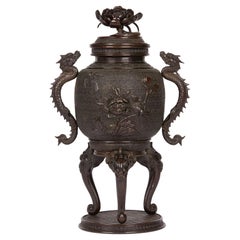
A large and stylish antique Japanese Meiji bronze lidded twin handle urn standing on a rounded plinth base with tongue and grotesque head formed legs with dragon handles and a flat c...
Category

Early 20th Century Japanese Meiji Metalwork

Materials

Bronze

Antique Japanese Cloisonne Enamel Cabinet Vase with Wisteria
Located in Philadelphia, PA
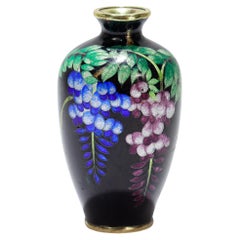
A fine antique Japanese cloisonne enamel cabinet vase. With polychrome enamel on a brass base. Decorated with an enameled tree branches with blue & purple wisteria blossoms on a ...
Category

19th Century Japanese Antique Meiji Metalwork

Materials

Enamel

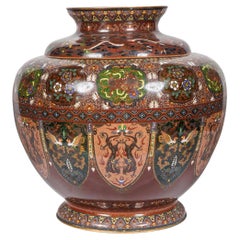
Meiji Masterpiece by Ando Jubei: A Maroon Cloisonné Vase with Dragons Phoenix
Located in Queens, NY
Meiji Masterpiece attributed to Ando Jubei: A Maroon Cloisonné Vase with Dragons Phoenix, circa 1895 This monumental Meiji period Japanese cloisonné vase, attributed to the es...
Category

19th Century Japanese Antique Meiji Metalwork

Materials

Enamel

JAPAN IMPERIAL 1900 Meiji Period Tripode Koro Censer In Cloisonné Enamel With
Located in Miami, FL
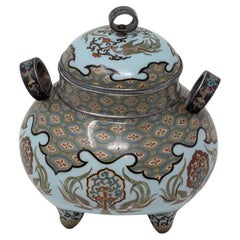
Japanese tripod Koro from the Meiji Period (1868-1912). This is a rare and beautiful antique koro censer, created in the imperial Japan during the Meiji period (1868-1912), circa 1900. It was carefully crafted in solid bronze and copper with silver wires and embellished with applications of polychromatic Cloisonné enamels and aventurine. The designs depict organics and natural motifs such mythological animals and flowers. The Chrysanthemum Symbol In Imperial Japan, the chrysanthemum (Kiku) was a potent symbol of the imperial family and the emperor himself, representing longevity, royalty, and divine power. The 16-petaled chrysanthemum is the Imperial Seal and crest, found on passports, coins, and the Chrysanthemum Throne. This association dates back to the Kamakura period (1185–1333), particularly with Emperor Go-Toba's fondness for the flower, establishing its link to imperial authority and lineage. The connection between the chrysanthemum and the imperial family began when Emperor Go-Toba adopted it as a personal emblem, aligning it with the strength and refinement of the emperor's rule. During the Meiji Period, the 16-petaled chrysanthemum crest, solidifying the association with the imperial family, was established during this time. The Meiji Imperial Period This is an era of Japanese history that extended from October 23, 1868 to July 30, 1912.The Meiji era was the first half of the Empire of Japan, when the Japanese people moved from being an isolated feudal society at risk of colonization by Western powers to the new paradigm of a modern, industrialized nation state and emergent great power, influenced by Western scientific, technological, philosophical, political, legal, and aesthetic ideas. As a result of such wholesale adoption of radically different ideas, the changes to Japan were profound, and affected its social structure, internal politics, economy, military, and foreign relations. The period corresponded to the reign of Emperor Meiji. It was preceded by the Keiō era and was succeeded by the Taishō era, upon the accession of Emperor Taishō. Country: Imperial Japan. Period: Meiji, 1890-1910. Technique: Silver Wire Cloisonné over copper and bronze. Weight: 416.80 Grams, (0.417 Kg). Measurements:118 mm by 115 mm (4.65 x 4.52 Inches). Koro This term refers to a Japanese censer, incense burner, perfume burner or pastille burner is a vessel made for burning incense or perfume in some solid form. They vary greatly in size, form, and material of construction, and have been in use since ancient times throughout the world. They may consist of simple earthenware bowls or fire pots to intricately carved silver or gold vessels, small tabletop objects a few centimeters tall to as many as several meters high. Many designs use openwork to allow a flow of air. In many cultures, burning incense has spiritual and religious connotations, and this influences the design and decoration of the censer. Cloisonné This is an enameling technique in which the pattern is formed by wires soldered to the surface of the object to be decorated, which is usually made from copper, forming cells or cloisons, each of which holds a single colour of enamel paste which is then fired, and ground and polished. The champleve technique also uses an enameling technique, but the cells are formed by carving into the surface of the object, or in the casting. The cloisonne technique has been in use since the 12th century BC in the west, but the technique did not reach China until the 13th or 14th century. It became popular in China in the 18th century. Initially bronze or brass bodies were used, and in the 19th century copper, at which time the quality of the items produced began to decline. Chinese cloisonné is the best-known enamel cloisonné, though the Japanese produced large quantities from the mid-19th century, of very high technical quality. In the west the cloisonne technique was revived in the mid-19th century following imports from China, and its use continued in the Art Nouveau and Art Deco periods. Condition: Basically, is in great antique condition, near mint, with insignificant and minimal usage, in great condition. All parts are secured in the settings. This Japanese Meiji Koro...
Category

Early 1900s Japanese Antique Meiji Metalwork

Materials

Silver, Bronze, Copper, Enamel

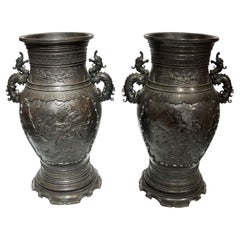
Pair Large Meiji Japanese Bronze Vases
Located in New York, NY
Pair of very fine Meiji period Japanese bronze vases with dark brown patina with dragon handles and exceptional designs of grotesque mythological figures. 23 1/4 inches tall and eac...
Category

Late 19th Century Japanese Antique Meiji Metalwork

Materials

Bronze

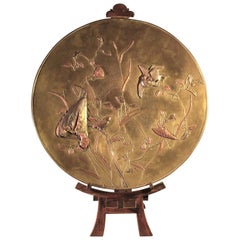
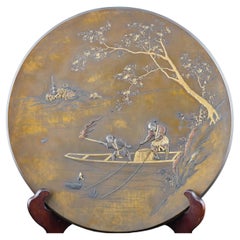
Large Japanese Patinated Bronze Mixed Metal Charger Meiji Period, circa 1880
Located in Ottawa, Ontario
A large Japanese patinated bronze Mixed metal charger Meiji period Finely decorated in gold, silver, copper and bronze. Naturalistically accurate...
Category

Late 19th Century Japanese Antique Meiji Metalwork

Materials

Gold, Silver, Copper, Bronze

Antique Japanese Cloisonne Flying Geese Enamel Plate Goto
Located in Long Island City, NY
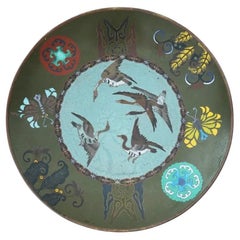
An antique Japanese late Meiji era decorative enamel over copper plate or charger. Attributed to Goto The interior of the plate is adorned with a polychrome design of flying geese ...
Category

Late 19th Century Japanese Antique Meiji Metalwork

Materials

Enamel, Copper

Japanese Bronze and Mixed Metals Koro by Kumagai, Meiji Period
Located in Newark, England
FREE WORLDWIDE SHIPPING From our Japanese collection, we are pleased to present this Japanese Bronze and Mixed Metals Koro by Kumagai, dating to the Meiji Period (1868–1912). The ...
Category

Late 19th Century Japanese Antique Meiji Metalwork

Materials

Gold, Silver, Bronze

Japanese Cloisonne Totai Enamel Jar with Paulownia Flowers
Located in Long Island City, NY
An antique Japanese late Meiji era covered Totai enamel on ceramic ginger jar. Circa: late 19th century . The body and the lid of the ware are enameled with polychrome floral, foliate scroll, and foliage motifs made in the Cloisonne technique. The neck and the base are adorned with polychrome geometrical, and foliage motifs made in the same technique. Signed with red and blue ink hieroglyphs, on the bottom. Totai Shippo is the name given to Japanese cloisonne on ceramics, both on earthenwares and on porcelain. It has a similar appearance to metallic cloisonne ware...
Category

Late 19th Century Japanese Antique Meiji Metalwork

Materials

Enamel

Japanese Meiji Champleve and Bronze Urn
Located in Dallas, TX
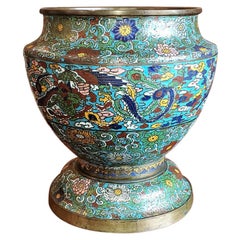
Presenting a gorgeous Japanese Meiji Champleve and bronze urn. Made in Japan during the Meiji Period circa 1880. The body of ...
Category

Late 19th Century Japanese Antique Meiji Metalwork

Materials

Bronze, Enamel

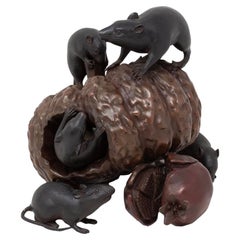
Japanese Meiji Bronze Rats Okimono by Shosai with Pumpkin and Pomegranate
Located in Newark, England
FREE WORLDWIDE SHIPPING From our Japanese collection, we’re pleased to offer this finely cast Meiji period bronze okimono by Shosai. The group depicts several rats gathered around ...
Category

Late 19th Century Japanese Antique Meiji Metalwork

Materials

Bronze

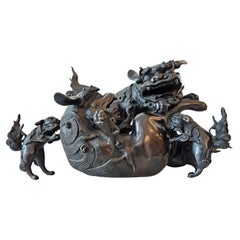
19th Century Japanese Meiji Era Patinated Bronze Foo Dog Lion Group Censer
Located in Forney, TX
A large and impressive Japanese Meiji period (1852-1912) patinated bronze guardian lion censer. Late 19th century, Japan, exceptionally executed, the group consisting of four shishi...
Category

Late 19th Century Japanese Antique Meiji Metalwork

Materials

Bronze

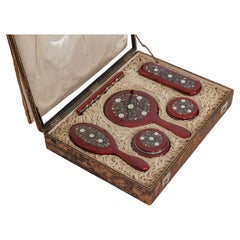
Exquisite Japanese Cloisonné Red Enamel Six-Piece Dressing Table Set, Ando Jubei
Located in Queens, NY
Japanese Ando Jubei Cloisonné Enamel Six-Piece Dressing Table Set with Ando Marks and Original Fitted Case A rare Japanese cloisonné enamel six-piece dressing table set by Ando Jube...
Category

Early 20th Century Japanese Meiji Metalwork

Materials

Copper, Enamel

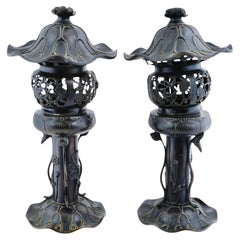
Pair 19th Century Japanese Meiji Bronze Lilly Pad Form Table Lamps
Located in New York, NY
Pair of antique (late 19th century) Meiji period Japanese patinated bronze table lamps or incense burners of lily flower form measuring 21 inches tall. Unsigned.
Category

Late 19th Century Japanese Antique Meiji Metalwork

Materials

Bronze

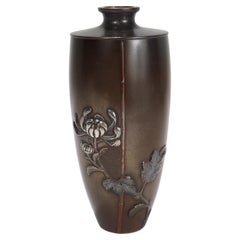
Antique Signed Japanese Bronze Mixed Metals Butterbur Vase by Atsuyoshi / Inoue
Located in Philadelphia, PA
A fine signed antique Japanese Meiji period mixed metals vase. By Miyabe Atsuyoshi for Inoue of Kyoto. With a bronze body and d...
Category

Early 20th Century Japanese Meiji Metalwork

Materials

Gold, Silver, Bronze, Copper

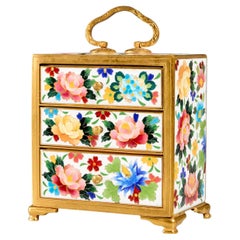
Late Meji Period Japanese Cloisonné Miniature 3 Drawer Chest by Inaba Nanaho
Located in Morristown, NJ
An exquisite Japanese miniature cloisonné chest by Inaba Nanaho of Nagoya, finely crafted in the early 20th century, bridging the Meiji and Taishō ...
Category

Early 20th Century Japanese Meiji Metalwork

Materials

Metal, Enamel

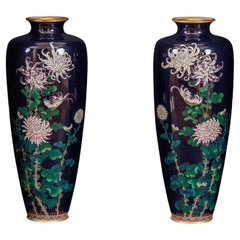
An Exquisite Pair Of Japanese Cloisonné Enamel Vases with Chrysanthemum Blossoms
Located in Queens, NY
An Exquisite Pair Of Japanese Cloisonné Enamel Vases with Chrysanthemum Blossoms, Attributed to Hayashi, Meiji Period. Experience the exquisite craftsmanship of the Meiji period wit...
Category

19th Century Japanese Antique Meiji Metalwork

Materials

Enamel

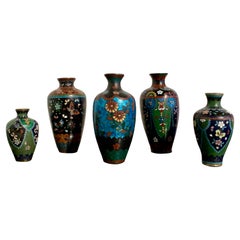
Group of 5 Small Japanese Cloisonne and Ginbari Vases, Early 20th Century, Japan
Located in Austin, TX
A charming group of five Japanese cloisonné and ginbari foiled vases, Meiji period, early 20th century, Japan. The group consists of one vase with cloisonné chrysanthemum blossoms against bold and bright turquoise ginbari foil background, two similar vases of primarily black and burgundy cloisonné - one with a butterfly motif, the other with a floral motif, and two similar vases of primarily dark blue and green cloisonné, both with floral and butterfly motifs. Turquoise ginbari vase...
Category

Early 20th Century Japanese Meiji Metalwork

Materials

Copper, Enamel, Foil, Wire

Japanese Meiji Period Cloisonne Enamel Koro Tsukamoto Hikokichi
By Tsukamoto Hikokichi
Located in Newark, England
Silver Mounted From our Japanese collection, we are thrilled to offer this Japanese Cloisonne Enamel Koro by Tsukamoto Hikokichi. The Cloisonne Enamel Koro of exceptional quality sh...
Category

Early 20th Century Japanese Meiji Metalwork

Materials

Metal, Enamel

Set of 19th Century Meiji Era Ornate Etched Bronze Kagami Hand Mirrors, Japan
Located in North Miami, FL
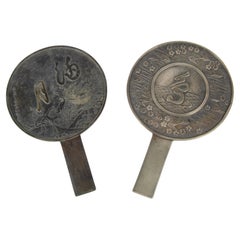
Set of 19th century Meiji Era ornate etched bronze kagami hand mirrors, Japan By: unknown Material: bronze, copper, tin, metal Technique: cast, molded, patinated, polished, metalwor...
Category

19th Century Japanese Antique Meiji Metalwork

Materials

Metal, Bronze, Copper, Tin

Pair Of Japanese Meiji Era Cloisonne Vases
Located in Bridgeport, CT
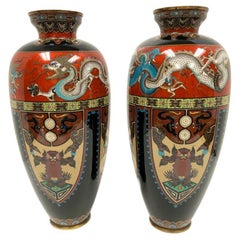
Pair of Japanese cloisonné vases with fine traditional form decorated with dragons and demons, geometric motifs and floral bands. Dimensions: 5" W x 12" H Condition: Please see detai...
Category

Late 19th Century Japanese Antique Meiji Metalwork

Materials

Metal, Enamel

Japanese Bronze Vase with Drip Relief Design, Signed, Meiji–Taisho Period
Located in Fukuoka, JP
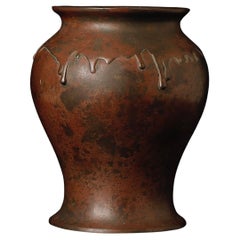
An elegant Japanese bronze vase from the late Meiji to early Taisho period, distinguished by its refined drip relief motif encircling the shoulder. The organic form and subtle textur...
Category

Early 20th Century Japanese Meiji Metalwork

Materials

Bronze

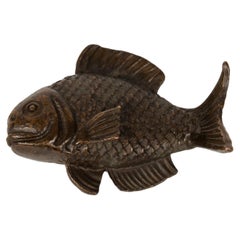
Japanese Bronze Bunchin or papper holder in the form of a fish
Located in PARIS, FR
A small but interesting bronze in the form of a fish, with a chocolate-colored patina, probably intended to serve as a calligrapher's weight (bunchin). The treatment of the scales is...
Category

Late 19th Century Japanese Antique Meiji Metalwork

Materials

Bronze

Japanese Cloisonné Ando Jubei Signed Vase 8.5" Wireless Clematis
Located in Somis, CA
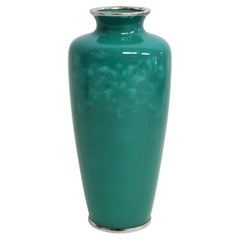
An exquisite Ando Jubei wireless cloisonné vase. In his signature green enamel, portraying an intricate arabesque design of a blooming clematis vine under the glaze. On Musen-jippo b...
Category

20th Century Japanese Meiji Metalwork

Materials

Metal, Enamel

Large Pair of Japanese Cloisonne Enamel Vases Attributed to Honda Yasaburo
Located in Queens, NY
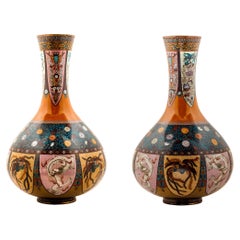
A large pair of Japanese Cloisonne Enamel vases attributed to Honda Yasaburo, 19th century. Finley decorated with the rich enamel colors of orange and green, these vases are desig...
Category

19th Century Japanese Antique Meiji Metalwork

Materials

Copper, Enamel

19th Century Oriental Bronze Japanese Kagami Handled Mirror
Located in Moreno Valley, CA
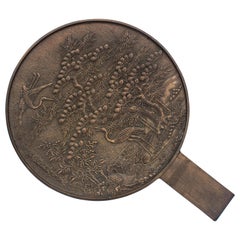
Antique traditional Oriental bronze Japanese Kagami handled Mirror. An exceptional and stunning Japanese bronze handled mirror called Kagami. Large and heavy bronze handle mirror ...
Category

Late 19th Century Japanese Antique Meiji Metalwork

Materials

Bronze

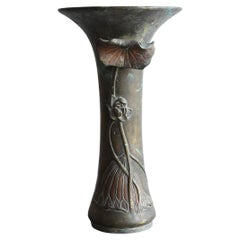
Japanese Antique Brass Vase / Lotus Sculpture / Around 19th Century
Located in Sammu-shi, Chiba
Japan Meiji era-Taisho era (around 1868-1910) Made of brass and decorated with lotus flowers. it's very beautiful. The shape of this vase also spreads from bottom to top like a fl...
Category

Late 19th Century Japanese Antique Meiji Metalwork

Materials

Brass

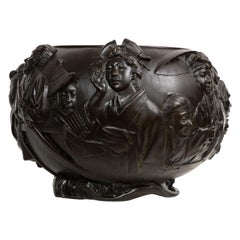
Meiji Japanese Bronze Jardinière Japanese People on a Boat, Genryusai Seiya Zo
Located in New York, NY
A masterpiece, rare, 19th Century Japanese bronze Jardinière/centerpiece of a group of Japanese travelers on a boat, signed on the bottom, Genryusai Seiya...
Category

Early 1900s Japanese Antique Meiji Metalwork

Materials

Bronze

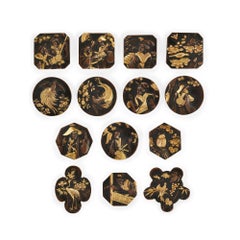
Group of Fourteen Japanese Meiji Period Gilt Metal Plaques
Located in London, GB
Group of fourteen Japanese Meiji period gilt metal plaques Japanese, Late 19th Century Height 2cm, width 2cm These beautiful Japanese Meiji period plaque...
Category

Late 19th Century Japanese Antique Meiji Metalwork

Materials

Metal

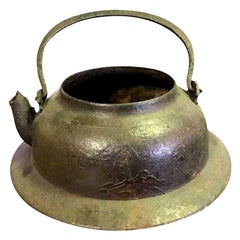
Japanese Edo/Meiji Period Cast Iron Tea Kettle Water Pot Tetsubin, 19th Century
Located in Studio City, CA
A large, heavy and uniquely shaped Japanese cast iron teapot tetsubin without top. Likely from late Edo/early Meiji Period. From a collecti...
Category

19th Century Japanese Antique Meiji Metalwork

Materials

Iron

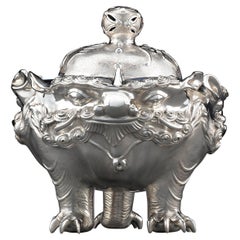
Meiji Period Japanese Silver Censer
Located in New Orleans, LA
This stunning Meiji period silver censer is a work of exquisite detail. Crafted by renowned silversmith Masatoshi of Tokyo, the censer, or incense burner...
Category

20th Century Japanese Meiji Metalwork

Materials

Silver

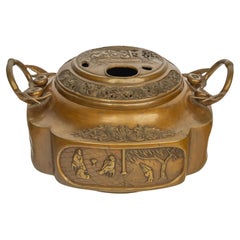
Antique Japanese Meiji Bronze Censer Insence Koro Hand Warmer Brazier 1890
Located in Portland, OR
A good & large antique Meiji period Japanese bronze brazier, koro or handwarmer, circa 1890. The twin handled koro having a reticulated lid dec...
Category

1890s Japanese Antique Meiji Metalwork

Materials

Bronze

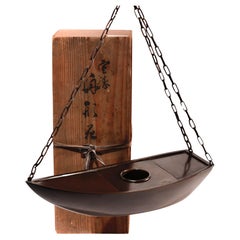
Antique Japanese Bronze Boat Flower Arranging Container
Located in Point Richmond, CA
Antique Japanese bronze hanging flower arranging container in the shape of a boat, sharp angular form with flat bottom hull base and center water receptacle sitting within a removabl...
Category

Late 19th Century Japanese Antique Meiji Metalwork

Materials

Bronze

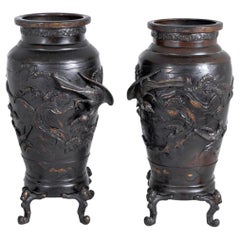
Japanese Bronze Baluster Vases, Pair
Located in Astoria, NY
Pair of Japanese Bronze Baluster Vases on Stands, late 19th century, each cast in relief with exotic birds and landscapes, on an integral base with four scrolled feet. 14.5" H x 7" W...
Category

Late 19th Century Japanese Antique Meiji Metalwork

Materials

Bronze

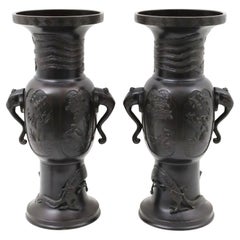
Pair Large Meiji Japanese Patinated Bronze Vases
Located in New York, NY
Pair of fine Meiji period Japanese patinated bronze vases distinguished by their stylized elephant form handles, cartouches depicting exotic birds and dragon encircling the base. 22...
Category

Late 19th Century Japanese Antique Meiji Metalwork

Materials

Bronze

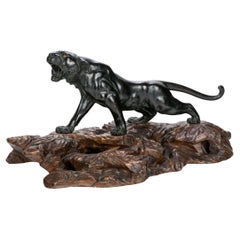
Exquisite Japanese Copper Tiger On Carved Wood Stand
Located in Bridgeport, CT
A very fine Japanese cast Copper Tiger in a rich deep brown patina in defensive pose with open snarling mouth and rampant tail. Details include yellow glass eye (one missing), fine S...
Category

20th Century Asian Meiji Metalwork

Materials

Copper

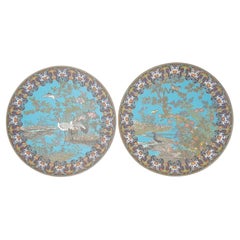
Masterwork Pair of Meiji Japanese Cloisonne Enamel Plates with Cranes Pheasant
Located in Long Island City, NY
A superb and important pair of Japanese Meiji period cloisonne enamel plates, each executed with remarkable refinement and a level of wire work and color control associated only with...
Category

Late 19th Century Japanese Antique Meiji Metalwork

Materials

Enamel

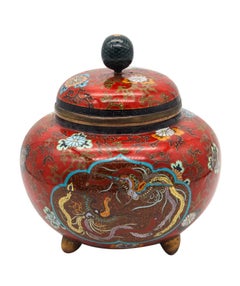
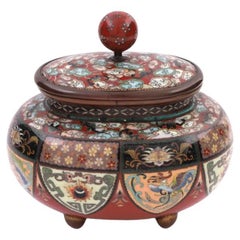
Red Meiji Japanese Cloisonne Enamel Covered Jar with Bats, Dragons, and Phoenix
Located in Long Island City, NY
An antique Japanese copper covered jar or box with polychrome cloisonne enamel design. Late Meiji period,Squat rounded piece resting on four ball feet. Richly decorated with floral a...
Category

Late 19th Century Japanese Antique Meiji Metalwork

Materials

Enamel, Copper

Japanese MIxed Metal Finely Executed Plate of Cormorant Fishing at Night
Located in Sarasota, FL
Japanese mixed metal platter finely executed to show night fishing with cormorants. Unsigned.
Category

Late 19th Century Japanese Antique Meiji Metalwork

Materials

Metal, Bronze

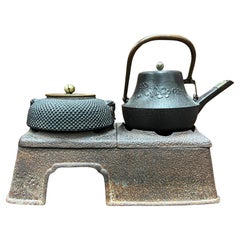
Antique Japanese Cast Iron Tetsubin Tea Pots on Cast Iron Hibachi Stand
Located in Sheridan, CO
Rare antique Tetsubin Japanese Cast Iron Tea Kettle set on Cast Iron hibachi Stand. This unique teapot/kettle is a Tetsubin, which is a teapot in Japa...
Category

Early 20th Century Japanese Meiji Metalwork

Materials

Brass, Iron

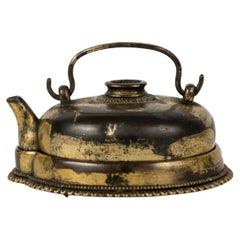
Suiteki or water dropper in bronze forming a teapot and its base
Located in PARIS, FR
Small Suiteki in bronze in the form of a tea pot, standing on a small socle with a very interesting bi color patina work. The suiteki is a small container used to hold the water tha...
Category

Late 19th Century Japanese Antique Meiji Metalwork

Materials

Bronze

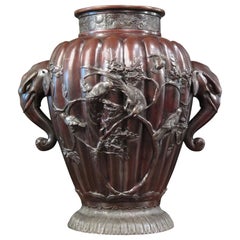
Massive Japanese Meiji Period Bronze Vase, Late 19th Century, Japan
Located in Austin, TX
A very large Meiji period bronze vase, possibly for temple use, with high relief design and elephant head handles, late 19th century, Japan. Of baluster form and unusual size, yet ...
Category

Late 19th Century Japanese Antique Meiji Metalwork

Materials

Bronze

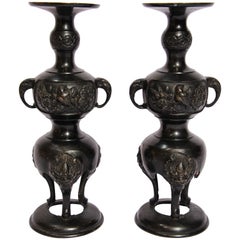
Pair of Black Bronze Japanese Candleholders Incense Burner
Located in Moreno Valley, CA
Pair of black cast bronze Japanese candleholders censer. Oriental antique late 19th century Meiji period Japanese heavy black bronze candlesticks...
Category

Late 19th Century Japanese Antique Meiji Metalwork

Materials

Bronze

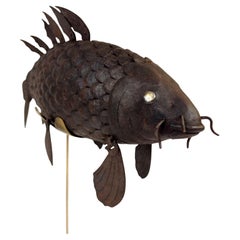
Jizai Okimono Koi Carp
Located in London, GB
Jizai Okimono – Koi Carp (2022) Handcrafted Articulated Sculpture Collector’s Piece Immerse yourself in the elegance of Japanese metalwork with this one-of-a-kind Jizai Okimono scul...
Category

21st Century and Contemporary British Meiji Metalwork

Materials

Steel

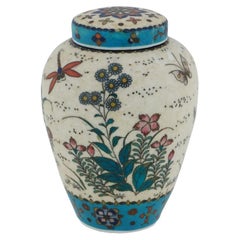
Japanese Totai Covered Cloisonne Enamel Porcelain Jar
Located in Long Island City, NY
A Japanese covered Totai enamel on porcelain ginger jar. The ware is enameled with polychrome images of blossoming flowers, butterflies, and dragonflies made in the Cloisonne techniq...
Category

19th Century Japanese Antique Meiji Metalwork

Materials

Enamel

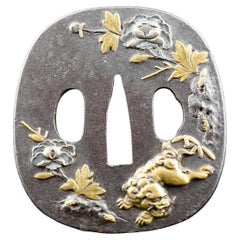
Japanese Mixed Metal Sword Guard (Tsuba) Meiji period
Located in Sarasota, FL
Japanese mixed metal sword guard (tsuba) Meiji period. Fine shakudo and silver decoration.
Category

1890s Japanese Antique Meiji Metalwork

Materials

Gold, Silver, Bronze, Copper

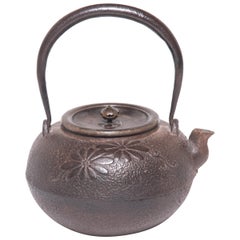
Japanese Iron Tetsubin with Chrysanthemum Blossoms, c. 1900
Located in Chicago, IL
Decorated with stylized chrysanthemum blossoms, symbols of longevity and rejuvenation, this Japanese teapot was used to boil water for traditional tea ceremonies. Known as tetsubin, ...
Category

Early 20th Century Japanese Meiji Metalwork

Materials

Bronze, Iron

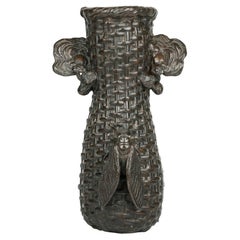
Japanese Meiji Bronze Basket Weave Wall Vase with Cicada
Located in Bishop s Stortford, Hertfordshire
An unusual and impressive antique Japanese Meiji bronze woven basket wall vase mounted with a cicada dating between 1868 and 1912. The heavily made ...
Category

19th Century Japanese Antique Meiji Metalwork

Materials

Bronze

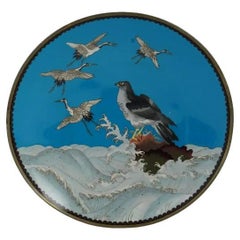
Antique Japanese Meiji Era Cloisonne Enamel Plate
Located in Long Island City, NY
An antique Japanese Meiji era enamel over copper charger plate. The exterior of the plate is adorned with a polychrome scene with an eagle standing on a rock and cranes flying over w...
Category

Late 19th Century Japanese Antique Meiji Metalwork

Materials

Copper, Enamel

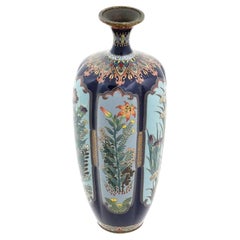
Antique Meiji Japanese Cloisonne Enamel Multi Panel Floral Vase Attributed OTA
Located in Long Island City, NY
An antique Japanese enamel vase, Ota Kichisaburo, Meiji period, 1868 to 1912. The baluster body is adorned with a polychrome design representing panels with blossoming flowers and sa...
Category

Late 19th Century Japanese Antique Meiji Metalwork

Materials

Enamel

Japanese Cloisonne Enamel Ceramic Tea Set Of 7 Pcs
Located in Long Island City, NY
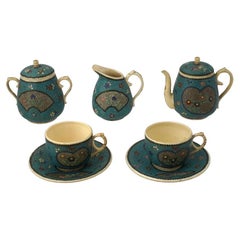
A Japanese enamel on ceramic tea set. A total of 7 items. The set comprises a pair of cups and saucers, a teapot, a sugar bowl, and a creamer. Each ware is adorned with polychrome en...
Category

19th Century Japanese Antique Meiji Metalwork

Materials

Enamel

Japanese Hammered Copper and Mixed Metal Meiji Period Vase.
Located in Sarasota, FL
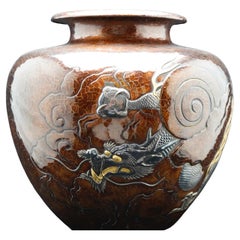
Japanese hammered copper and mixed metal inlay Meiji period vase. The vase has a motive of a silver and shaudo dragon in the clouds. Precise execution. Bears signatures on the bottom.
Category

Late 19th Century Japanese Antique Meiji Metalwork

Materials

Silver, Copper

Meiji Period Japanese Bronze Vase with Grasses and Quail Design
Located in Hudson, NY
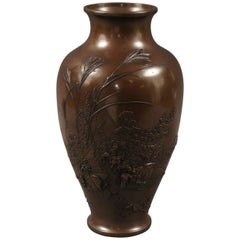
Meiji Japanese bronze vase with grasses and Quail design, Meiji period (1868-1912) bronze vase with elaborate raised design of wild grasses,...
Category

Late 19th Century Japanese Antique Meiji Metalwork

Materials

Bronze

Ota Jinnoei 1890 Imperial Meiji Period Pair of Cloisonne Cabinet Vases
By Ota Jinnoei
Located in Miami, FL
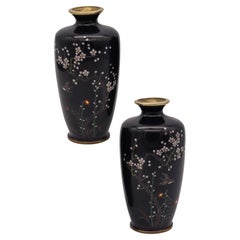
Pair of cloisonne vases designed by Ota Jinnoei. Beautiful pair of small cabinet vases, created in Japan circa 1890, during the meiji Imperial period (1868-1912). These vases has ...
Category

1890s Japanese Antique Meiji Metalwork

Materials

Silver, Bronze, Enamel

Meiji metalwork for sale on 1stDibs.

Find a broad range of unique Meiji metalwork for sale on 1stDibs. Many of these items were first offered in the Mid-20th Century, but contemporary artisans have continued to produce works inspired by this style. If you’re looking to add vintage metalwork created in this style to your space, the works available on 1stDibs include asian art and furniture, decorative objects, serveware, ceramics, silver and glass and other home furnishings, frequently crafted with metal, bronze and other materials. If you’re shopping for used Meiji metalwork made in a specific country, there are Asia, East Asia, and Japan pieces for sale on 1stDibs. While there are many designers and brands associated with original metalwork, popular names associated with this style include Ando Jubei, Eisuke Miyao, Hayashi Kodenji Studio, and Inaba Cloisonne Co.. It’s true that these talented designers have at times inspired knockoffs, but our experienced specialists have partnered with only top vetted sellers to offer authentic pieces that come with a buyer protection guarantee. Prices for metalwork differ depending upon multiple factors, including designer, materials, construction methods, condition and provenance. On 1stDibs, the price for these items starts at $200 and tops out at $113,520 while the average work can sell for $4,200.

Still Thinking About These?

All Recently Viewed