Japanese Asian Art and Furniture

to
947
2,459
1,165
4,509
602
67
82
52
19
14
7
6
5
1
1
1
349
1,879
2,281
669
941
557
213
109
15
76
64
30
52
78
45
40
18
1,749
1,604
1,348
1,001
869
17,008
12,835
6,935
5,178
2,246
5,178
5,151
5,156
32
29
26
24
21
Place of Origin: Japanese
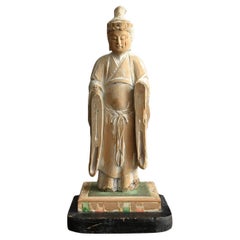
Wooden Buddha statues from the Edo period in Japan/1800-1868/Late Edo period
Located in Sammu-shi, Chiba
This wooden Buddhist statue was made in the late to late Edo period. It is thought to be a statue of Kannon Bodhisattva. It was originally placed in a shrine and was painted, but the...
Category

19th Century Edo Antique Japanese Asian Art and Furniture

Materials

Cypress

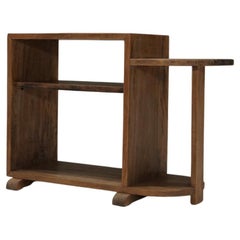
Japanese Antique Lauan Storage Cabinet, 1950s–1970s, Japandi Wabi-Sabi
Located in Chiba, Chiba
A Japanese antique storage cabinet crafted from lauan wood and dating from the 1950s–1970s. Constructed from thick, solid boards, the piece has a sturdy, reassuring presence that ref...
Category

Mid-20th Century Japanese Asian Art and Furniture

Materials

Wood

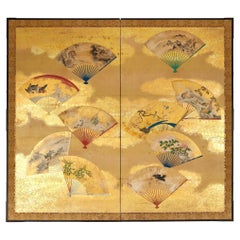
Japanese Two Panel Screen: Fans
Located in Hudson, NY
Old Fans mounted on a two panel screen of Gold Clouds. Mineral pigments and gold on mulberry paper, with silk brocade border and black lacquer trim. Signatures on fans read: Tsunenob...
Category

Mid-19th Century Antique Japanese Asian Art and Furniture

Materials

Gold

Antique 1700-1720 Japanese Porcelain Imari Edo Garniture Vase Flowers Shishi
Located in Amsterdam, Noord Holland
Description Nice & Beautiful Arita Japanese Porcelain Garniture consisting of 3 vases, 1 with a lid. The painting quality and shape are of really high quality. There is a similar gar...
Category

Early 18th Century Edo Antique Japanese Asian Art and Furniture

Materials

Porcelain

Early 20th Century, Showa, Japanese Bronze Vase with Artist Sign
Located in Sampantawong, TH
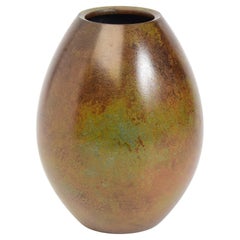
Japanese bronze vase with artist sign, used to decorate single flower arrangement in Japanese traditional tea ceremony. Artist signature is on the last photo. Age: Japan, Showa Pe...
Category

Early 20th Century Japanese Asian Art and Furniture

Materials

Bronze

Japanese Meiji Bronze Pedestal with Dragon Motif
Located in Buenos Aires, Argentina
Exceptional Japanese bronze pedestal from the Meiji period (1852–1912), featuring its original patina and remarkable craftsmanship. Originating from Japan, this rare piece is entirel...
Category

Early 1900s Meiji Antique Japanese Asian Art and Furniture

Materials

Bronze

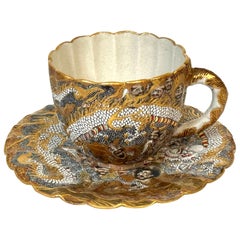
Meiji Satsuma Dragons Immortals Cup Saucer by Kitagawa-zō, Signed Dai Nippon
Located in West Palm Beach, FL
Meiji Satsuma Cup and Saucer by Kitagawa-zō with Dragons and Immortals, Signed Dai Nippon An extraordinary Meiji-period Satsuma porcelain cup and saucer, attributed to the distingui...
Category

Late 19th Century Meiji Antique Japanese Asian Art and Furniture

Materials

Pottery

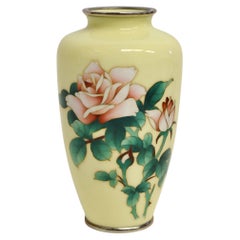
Signed Ando Jubei Japanese Cloisonné Vase Cream Yellow with Roses 7.5"
By Ando Jubei
Located in Somis, CA
A stunning large Ando Jubei (1876-1956) rose vase set against delicate cream yellow Musen-jippo background. In classic form with hand-finished silver metal rims. Soft pink contrastin...
Category

20th Century Japanese Asian Art and Furniture

Materials

Metal, Enamel

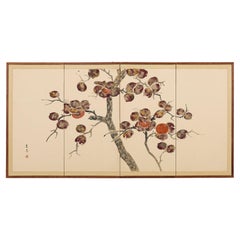
Japanese Showa Four Panel Screen Fruiting Pomegranate Tree
Located in Rio Vista, CA
Exquisite mid-20th century Showa period four panel folding byobu screen featuring a fruiting pomegranate tree over a dramatic cream toned background. Vivid ink and natural pigment co...
Category

20th Century Showa Japanese Asian Art and Furniture

Materials

Silk, Wood, Paper

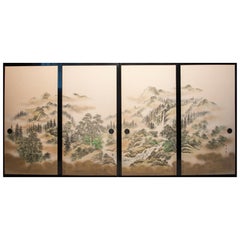
A set of four Japanese lacquered fusuma doors with a painted silk landscape
Located in Milano, IT
Incredible Japanese sliding doors fusuma (襖) painted on silk, framed with black lacquered borders. The composition depicts a wide natural landscape with mountains veiled in mist, pin...
Category

Mid-20th Century Japanese Asian Art and Furniture

Materials

Silk, Lacquer

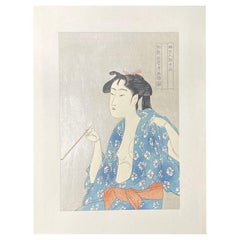
Kitagawa Utamaro Japanese Woodblock Print Edo Semi-Nude Woman Smoking Opium Pipe
By Kitagawa Utamaro 1
Located in Studio City, CA
A beautifully composed and richly colored Japanese woodblock print by Kitagawa Utamaro featuring a semi-undressed kimono-opened nude woman, perhaps a Geisha or courtesan, enjoying a ...
Category

20th Century Showa Japanese Asian Art and Furniture

Materials

Paper

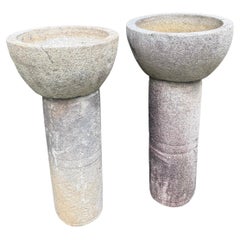
Japan Tall Pair Round Antique Stone Water Basin Planters , 44 Inches
Located in South Burlington, VT
Unique Pair (2) Tall Large Round Stone Bowls Planters On Stone Pedestals From our recent Japanese Acquisition Travels- comes this unusual pair of tall large round garden stone vesse...
Category

Early 20th Century Taisho Japanese Asian Art and Furniture

Materials

Stone

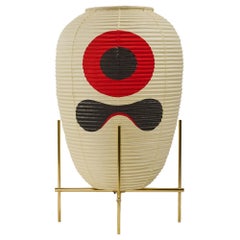
Contemporary Japanese Chochin Floor Lamp Limited Edition #1 Zen Washi
By Ryosuke Harashima
Located in Shibuya-ku, Tokyo
Name: OBAKE A Contemporary style Japanese Washi Japanese traditional paper shade floor lamp. Washi shade is famous as Isamu Noguchi Akari lightings. Base is made of brass. Limited pattern painted model. Edition of 3+1AP E26,27 light bulb. Available to work with 100-250V. Artist statement In Japan, there is an animist belief that the soul dwells in old tools that have passed a long time and turns into spirits such as "Youkai" or "OBAKE." Its existence lurks in the darkness of everyday life, sometimes causing fear and sometimes entertaining. This lantern is not an old tool, but it is made by the historic "Kojima Shoten", where the 10th generation are craftsmen in Kyoto. It's rare nowadays, and it's a style in which lanterns are made from bamboo bones to assembling papers and painting in one workshop and go. So, I decided to transform the polite crafted Japanese lanterns, which have been run through a traditional history, into a modern and pop style. It's not just OBAKE lurking in the darkness, but an existence who snuggles up to us as a more sophisticated being. These one-eyed OBAKE have a meaningful look that originated in ancient Sanskrit culture. The red-eye "A [a]" is the facial expression that is the first pronunciation to make a sound in Sanskrit, which means "truth" and "spirit of inquiry" at the same time. The blue-eyed "UN [hu?]" expresses the pronunciation to close the sound, and at the same time means "wisdom" and "nirvana." There is also the idea that describing the beginning and end of the universe is represented by considering the "A" and "UN" as a pair. In Asia, it is a common sight to see a pair of guardian statues...
Category

2010s Edo Japanese Asian Art and Furniture

Materials

Brass

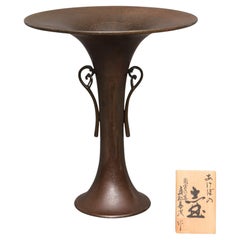
Japanese Patinated Bronze Trumpet Vase by Kanaya Gorôsaburô XI 金谷五良三郎
By Kanaya Gorôsaburô XI 金谷五良三郎
Located in Amsterdam, NL
Elegant brown patinated bronze trumpet vase with gold and red sprinkled design. It has an impressive broad outward curved mouth decorated on both sides with the dots. Its slender bod...
Category

Early 20th Century Japanese Asian Art and Furniture

Materials

Bronze

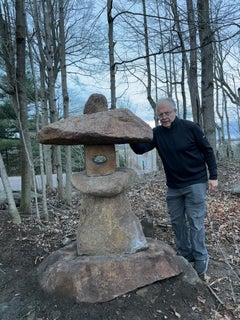
Japanese Rare Antique Red Kurama Stone Spirit Lantern, One-of-a-Kind
Located in South Burlington, VT
Best In Class Please view our video. From our recent Japanese acquisitions travels. This unusual hard to find old Japanese red kurama stone lantern is known as an Obakedouro "Spirit lantern...
Category

Early 20th Century Taisho Japanese Asian Art and Furniture

Materials

Stone

A Fine Shunga Mask Netsuke of Okame with Hidden Erotic Carving. Late Edo
Located in London, GB
A Fine Shunga Mask Netsuke of Okame with Hidden Erotic Carving Japan, Edo to Meiji period (circa 1850–1900) Material: Stained boxwood A charming a...
Category

19th Century Antique Japanese Asian Art and Furniture

Materials

Boxwood

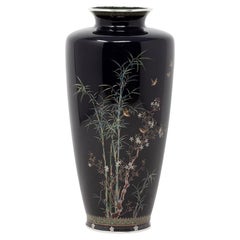
Japanese Antique Cloisonne Enamel Vase Hayashi Kodenji
Located in Newark, England
MEIJI PERIOD (1868-1912) From our Japanese collection, we are delighted to introduce this good size Japanese Cloisonne Enamel Vase. The Vase of gently tapered form with a pinched n...
Category

Early 1900s Meiji Antique Japanese Asian Art and Furniture

Materials

Gold, Silver, Enamel

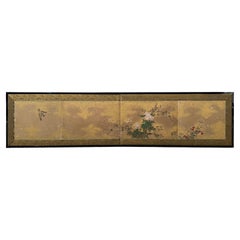
Japanese Screen: Spring Offering
Located in Fukuoka, JP
Spring Offering is a small yet exquisitely refined Edo-period screen originally created as a backdrop for a Girls’ Day altar. Against a softly shimmering gold-leaf background, delica...
Category

18th Century Edo Antique Japanese Asian Art and Furniture

Materials

Paper, Wood

Japanese Screen: Spring Offering
$1,250 Sale Price
56% Off
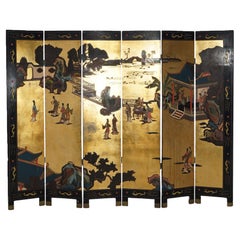
Antique Japanese Ebonized Gilt Chinoiserie Decorated Six-Panel Screen c1920
Located in Big Flats, NY
An antique Japanese Chinoiserie screen offers six ebonized and gilt decorated panels with a continuous village genre scene with figures and en verso garden scene, c1920 Measures - 72...
Category

Early 20th Century Japanese Asian Art and Furniture

Materials

Wood

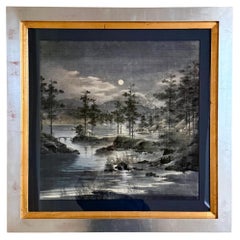
Framed Japanese Velvet Yuzen-Birodo Tapestry Panel Meiji Period
Located in Atlanta, GA
A Japanese tapestry velvet panel from Meiji period presented in a beautiful silver and gold leaf wood frame. The realistic landscape textile was created using resistant dye on cut ve...
Category

Early 20th Century Meiji Japanese Asian Art and Furniture

Materials

Velvet

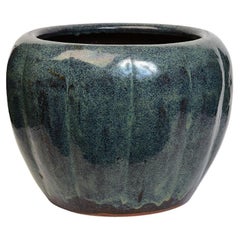
19th Century, Meiji, Antique Japanese Ceramic Jar
Located in Sampantawong, TH
Antique Japanese ceramic jar. Age: Japan, Meiji Period, 19th century Size: Height 34 C.M. / Width 46.2 C.M. Condition: Nice condition overall. 100% satisfaction and authenticity guaranteed...
Category

19th Century Antique Japanese Asian Art and Furniture

Materials

Ceramic

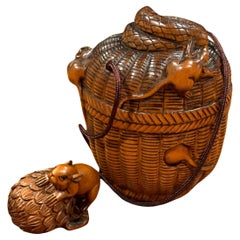
Japanese Boxwood Inro Netsuke of Rats and Snakes in Basket
Located in San Diego, CA
A really nice vintage Japanese boxwood inro and netsuke of rats and snakes on a round basket, circa early 1940s. The piece is well carved with wonderful detail and in very good vint...
Category

Early 20th Century Japanese Asian Art and Furniture

Materials

Boxwood

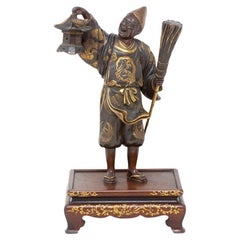
Japanese Bronze Figure by Miyao Eisuke, Meiji Period
By Eisuke Miyao 1
Located in Newark, England
FREE WORLDWIDE SHIPPING A FINELY DETAILED JAPANESE BRONZE FIGURE BY MIYAO EISUKE, MEIJI PERIOD, CIRCA 1890. From our Japanese collection, we a...
Category

Late 19th Century Meiji Antique Japanese Asian Art and Furniture

Materials

Bronze

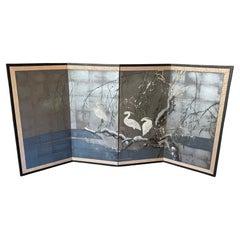
Japanese Asian Signed Four Panel Folding Byobu Screen Herons in the Winter Snow
Located in Studio City, CA
A gorgeous four-panel Showa Period Japanese Byobu folding screen depicting a nature landscape scene with a group of Herons frolicking in the snow covered bare Winter branches of a la...
Category

Mid-20th Century Showa Japanese Asian Art and Furniture

Materials

Silver Leaf

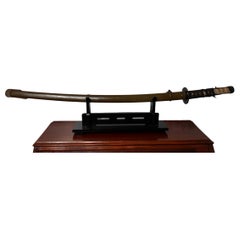
A Japanese Kanata Sword, Signed 池田鬼神丸国重
Located in Norton, MA
A JAPANESE SIGNED KATANA SWORD. Comprising a Japanese katana signed. The blade is signed "Ikeda Kishinmaru Kunishige" 池田鬼神丸国重. Ura side of the nakago stat...
Category

19th Century Antique Japanese Asian Art and Furniture

Materials

Metal

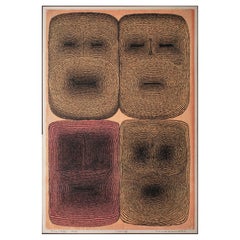
1969 Graphic Woodblock Print by Tomio Kinoshita, Japan
By Tomio Kinoshita
Located in Point Richmond, CA
Faces (4 Faces), 1969 Tomio Kinoshita (1923-2014), Japan Woodblock print Paper, pigment, sumi ink Image: 27 high by 18.25 inches wide (68.5 by 46.4 cm) Paper size: 28 high by 19...
Category

1960s Mid-Century Modern Vintage Japanese Asian Art and Furniture

Materials

Paper

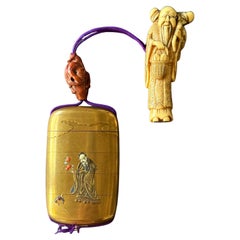
Fine Japanese Inro with Maki-e and Inlay by Shokasai and Shibayama
By Shibayama Factory
Located in Atlanta, GA
A Japanese four-case inro stringed together with a silk cord of a carved wood Ojime and a carved ivory netsuke circa 19th century of Edo period. This fine piece was made in collabora...
Category

19th Century Edo Antique Japanese Asian Art and Furniture

Materials

Wood, Lacquer

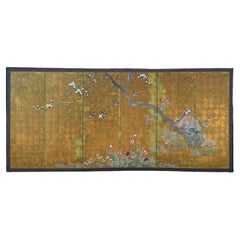
Japanese screen: Melody of Magnolia Blossoms
Located in Fukuoka, JP
Bathed in radiant gold, Melody of Magnolia Blossoms captures the fleeting harmony of nature in bloom. A graceful magnolia branch arcs across the shimmering surface, its petals unfold...
Category

Early 17th Century Edo Antique Japanese Asian Art and Furniture

Materials

Paper, Wood

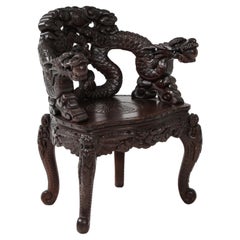
Japanese Export Carved Dragon Chair
Located in New York, NY
Eye catching highly carved sculptural dragon armchair. Japanese dragon motif carried throughout arms and chair with fantastic detailed hand carvings. Victorian era cabriole legs fini...
Category

19th Century Japonisme Antique Japanese Asian Art and Furniture

Materials

Wood

Japanese Export Carved Dragon Chair
$2,240 Sale Price
20% Off
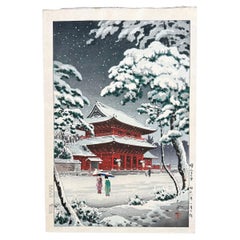
Fine Japanese Woodblock Print Zojoji Temple in Snow by Tsuchiya Koitsu
By Tsuchiya Koitsu
Located in Atlanta, GA
Japanese woodblock print by Tsuchiya Koitsu (1870-1949), entitled Zojoji Temple in Snow. The work was created by the artist in January Showa 8th year (1933) and depicts a serene snow...
Category

Mid-20th Century Showa Japanese Asian Art and Furniture

Materials

Paper

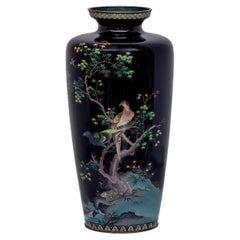
Magnificent Japanese Meiji Cloisonné Enamel Vase with Pheasants, Inaba Co.
By Inaba Cloisonne Co.
Located in Queens, NY
A Magnificent Japanese Meiji Period Silver-Wire Cloisonné Enamel Vase with Pheasants and Maple Leaves, Attributed to Inaba An exceptional Japanese cloisonné enamel vase from the Mei...
Category

19th Century Meiji Antique Japanese Asian Art and Furniture

Materials

Copper, Enamel

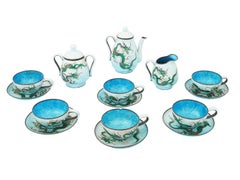
Antique Japanese Cloisonne Ginbari Enamel Dragon Tea Set Teapot Cup And Saucer
Located in Long Island City, NY
An antique Japanese Meiji period enamel tea set adorned with intricate dragon motifs. Consisting of six cups, six saucers, a creamer, a lidded sugar bowl, and a tea pot. The exterior...
Category

19th Century Antique Japanese Asian Art and Furniture

Materials

Enamel

Japanese Kutani Sei Ceramic Dishes, Set of Six, Late 19th Century
By Kutani Studio
Located in Bochum, NRW
Japanese Kutani Sei ceramic dishes, set of six, late 19th century. Rectangular quadrilobe shape, richly decorated in the Kutani specific red, enhanced with liquid gold accents. The ...
Category

1880s Meiji Antique Japanese Asian Art and Furniture

Materials

Ceramic

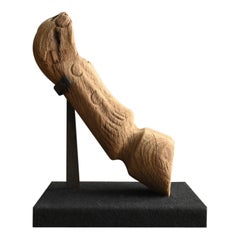
Japanese antique wood carving "Kirin s legs" /1800s/Shrines and temples carvings
Located in Sammu-shi, Chiba
Do you know Kirin? It is a type of legendary animal that appears in Chinese mythology, and is a spiritual animal that has been passed down in Japan since ancient times. At first glan...
Category

19th Century Edo Antique Japanese Asian Art and Furniture

Materials

Wood

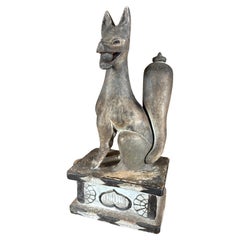
Japan Tall Antique Hand Crafted Inari Fox Kitsune With Glass Eyes Inari Shrine
Located in South Burlington, VT
Japanese antique shinto shrine ceramic Inari fox guardian and Shinto Kami (god). Rare glass eyes and remnant red (mouth) and white paint on its base still present and it holds the ...
Category

Early 20th Century Taisho Japanese Asian Art and Furniture

Materials

Pottery, Glass

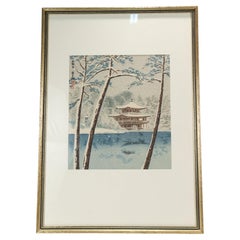
Vintage Japanese Ukiyo-e Print of Kinkaku-ji in Snow by Tokuriki Tomikichiro
By Tokuriki Tomikichiro 1
Located in Philadelphia, PA
A fine vintage Japanese woodblock print. Entitled "Kinkaku-ji in Snow". By Tomikichiro Tokuriki (1902 - 1999). Tokuriki came from a...
Category

1960s Showa Vintage Japanese Asian Art and Furniture

Materials

Paper

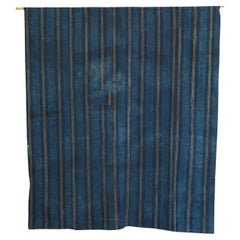
Japanese Old Indigo Dyed Striped Fabric / Tapestry / early 20th century / BORO
Located in Sammu-shi, Chiba
This is an ancient Japanese indigo-dyed cloth produced between the end of the Meiji and Taisho periods. Three thin, evenly spaced yellowish lines create a regular rhythm on a deep in...
Category

Early 20th Century Taisho Japanese Asian Art and Furniture

Materials

Cotton

Antique Japanese Meiji Cloissoné Charger Plate
Located in Miami, FL
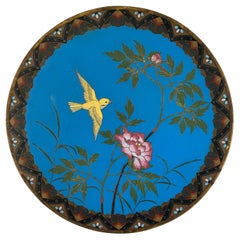
Antique Meiji Japanese Cloisonne Charger Plate A fine Japanese Meiji style charger, plate or dish. Hand crafted, this charger plate is adorned with a polychrome scene with a beautiful yellow bird and a rose. There is also a blossoming flower and trees on the turquoise base made in the Cloisonne technique. The border features traditional foliage, and floral motifs made in the same technique. The backside is decorated with a swirl motif also made in the Cloisonne technique. Unmarked. Circa: Late 19th to the Early 20th Century. Antique and Vintage Asian Collectibles, Oriental Enamel Plates, Home Decor And Collectibles. This wonderfully hand crafted decorative Japanese Meiji Cloisonne charger...
Category

20th Century Meiji Japanese Asian Art and Furniture

Materials

Copper, Enamel

Antique Pair Meiji Period Japanese Miniature Cloisonne Enamel Urns Vases 1875
Located in Dublin, Ireland
An Exceptionally Fine Quality Pair of Miniature Japanese Meiji Period Cloisonne Enamel Vases of unusually small proportions, early Meiji period (1868-1912) and of Museum quality, com...
Category

19th Century Early Victorian Antique Japanese Asian Art and Furniture

Materials

Ormolu

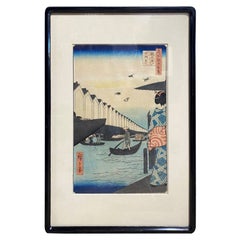
Utagawa Ando Hiroshige Japanese Woodblock Print Yoroi Ferry at Koami-Cho
By Utagawa Hiroshige (Ando Hiroshige)
Located in Studio City, CA
A wonderful Japanese woodblock print by famed Japanese artist Utagawa Hiroshige (Ando Hiroshige) (1797-1858) tilted "Yoroi Ferry at Koami-cho (Yoroi no ...
Category

Mid-19th Century Edo Antique Japanese Asian Art and Furniture

Materials

Paper

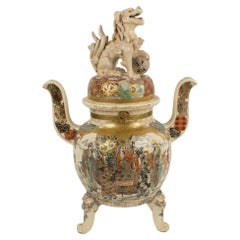
Meiji Satsuma Earthenware Urn or Vase with Foo Dog Sculpture, Japan circa 1880
By Satsuma
Located in Atlanta, GA
A magnificent testament to the artistry of the Japanese Meiji period (1868-1912), this rare Satsuma earthenware urn is an extraordinary find. Crafted in Japan circa 1880, its delicat...
Category

Late 19th Century Meiji Antique Japanese Asian Art and Furniture

Materials

Earthenware

Japanese Meiji Period (1868-1912) Satsuma Earthenware Vase Taizan for Hattori
Located in Newark, England
Meiji Period (1868-1912) From our Japanese collection, we are delighted to offer Japanese Meiji Period Satsuma Vases. The Satsuma Vase of hexagonal form with a slight waisted neck and tight rounded rim is extensively decorated with multiple figures to two large scenes. The first scene features a beach with waves to the background and a plethora of figures including multiple geisha holding traditional Japanese wagasa’s. The second scene follows on from the first with a large building in the foreground holding figures on a large platform under a pagoda roof with a pagoda building in the background and further figures in the foreground. The scenes are framed by a full detailed border with gilt shapes, flowers amongst pink shaded backgrounds and butterflies around the neck. The Satsuma Vase is unusually signed Fine Art, Satsuma Ware, Dai Nippon (Great Japan), Hattori Made, Gosuido Works, Taizan Painted. 美術, サツマヤキ(薩摩焼), 大日本, 服部造, 五スイ堂工, 對山画 and dates to the Meiji Period (1868-1912) and the turn of the 20th century circa 1905. Satsuma ware is a type of earthenware pottery originating from the Satsuma province in Southern Kyushu, Japan’s third largest island. Wagasa are traditional Japanese umbrellas made of washi paper attached to a bamboo frame and treated to ensure it is waterproof. Meiji Period was an era of Japanese history that spanned from 1868 to 1912. It was the first half of the Empire of Japan, when the Japanese people began to build a paradigm of a modern, industrialised nation state and emergent great power, influenced by Western countries and aesthetics. As a result of radically different ideas, the changes to Japan were profound and it affected the social structure, politics, economy, military, and foreign relations across the board. The period corresponded to the reign of Emperor Meiji and was preceded by the Keio era and was succeeded by the Taisho era. Cultural Art during the Meiji Period was of particular interest to the government and they overhauled the art export market which in turn promoted Japanese arts via various world’s fairs, beginning in Vienna at the world fair in 1873. The government heavily funded the fairs and took an active role organising how Japan’s culture was presented to the world including creating a semi-public company named Kiritsu Kosho Kaisha (First Industrial Manufacturing Company). The Kiritsu Kosho Kaisha was used to promote and commercialise exports of Japanese art and established the Hakurankai Jimukyoku (Exhibition Bureau) to maintain quality standards. For the 1876 Centennial International Exhibition in Philadelphia, the Japanese government created a Centennial Office and sent a special envoy to secure space for the 30,000 items that would be displayed. The Imperial Household also took an active interest in arts and crafts, commissioning works by select artists to be given as gifts for foreign dignitaries further emphasising the high quality and importance of Japanese art. Just before the end of the 19th century in 1890, the Teishitsu Gigeiin (Artist to the Imperial Household) system was created to recognise distinguished artists. These artists were selected for their exceptionally high quality wares and talent in their own industry. Over a period of 54 years Seventy artists were appointed, amongst these were ceramicist Makuzu Kozan and cloisonné enamel artist...
Category

Early 1900s Meiji Antique Japanese Asian Art and Furniture

Materials

Earthenware, Pottery

18th Century Japanese Rinpa Screen. White Chrysanthemums. School of Korin.
Located in Kyoto, JP
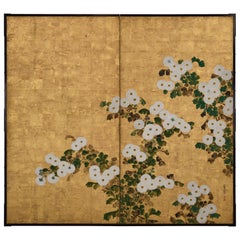
School of Ogata Korin White Chrysanthemums 18th Century, Edo period. A two-panel Japanese screen. Ink, color, gofun and gold leaf on paper. Dimensions: H. 171 cm x W. 188 cm (67.5” x 74”) On this two-panel Japanese screen we see blooming chrysanthemums, a flower which embodies the essence of autumn in Japan. Here the traditional floral theme has been simplified and stylized. The bright colors and asymmetrical composition against the delicate gold leaf create a luxurious and ornate work of art. Its background, a strikingly patinated grid of gold leaf, denies any sense of place or time and imbues everything with an ethereal glow. The leaves and stems of the plants are nothing more than pools of mottled color and ink without any outline whatsoever. These are typical Rinpa adaptations of traditional ink painting methods; tarashikomi, or diluted washes of color blended while very wet, and mokkotsu, or “bonelessness,” which creates forms without exterior outlines. The relief work of the rounded flower petals has been obtained by the moriage process (a mixture based on ground shells modeled on the surface of the paper). On the lower right of the screen, the siganture “Hokyo Korin Jakumyo” and the “Hoshuku” seal can be read. Korin is Ogata Korin, famed for the Irises (Nezu Museum) and Red and White Plum Blossom (MOA Museum of Art) folding screens, both National Treasures. Korin worked in both Kyoto and Edo in the mid-Edo period. Korin was using the art name “Jakumyo” just after he received the Hokyo level, which was in 1701. This particular screen was published in May of 1961 in the Japanese Sansai Fine Art Magazine*. An in depth article accompanies the photograph of the screen and and a photograph of the signature and seal. This article devotes much of its body to discussing the moriage technique, how it enlivens the chrysanthemum flowers and Korin’s specific skill in using the technique. The article goes on to discuss the most famous works of Korin, utilizing this technique, which were known at the time. Specifically a two-panel screen held in the Honolulu Museum which was discovered in the store-house of Takahashi Soan. A two-panel screen pair which the Nakano family own. A two-panel screen pair with chrysanthemums in moriage in fan designs owned by the Nomura family. Also a small folding screen featuring chrysanthemums held in the Yamato Bunkakan. The article goes on to say that this particular two-fold screen came from the Nijo family. Korin is known to have had a strong connection with the aristocratic Nijo family. The article explains that Korin received a lot of favors from the Nijo family and that this screen would have been gifted to them. Since that time the Honolulu screen has been amended to ‘attributed to Ogata Korin’ and I do not know further details of the other 3 screens. Other Chrysanthemum screens...
Category

18th Century Edo Antique Japanese Asian Art and Furniture

Materials

Gold Leaf

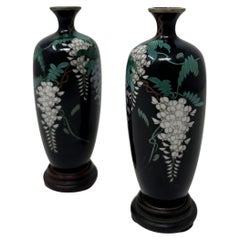
Antique Japanese Cloisonne Enamel Meiji Vases Petite Pair
Located in Savannah, GA
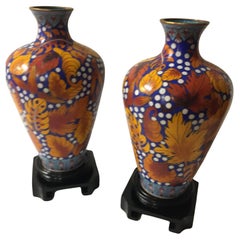
This colorful striking pair of antique Japanese bronze vases from the Meiji period are decorated with enamel using the cloisonne technique. Two matched vases with a relief pattern of...
Category

Early 1900s Anglo-Japanese Antique Japanese Asian Art and Furniture

Materials

Enamel

Japanese Asian Korean Chinese Signed 4-Panel Folding Byobu Cherry Blossom Screen
Located in Studio City, CA
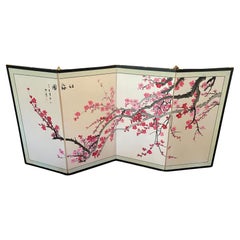
A gorgeous four-panel hand painted Japanese Asian Byobu folding screen depicting a wildly and brilliantly colorful fully blooming Spring cherry blossom tree with a wonderful composit...
Category

20th Century Showa Japanese Asian Art and Furniture

Materials

Wood, Paint, Paper

Set of 3 hibachi Incense burner Planters
Located in Fukuoka, JP
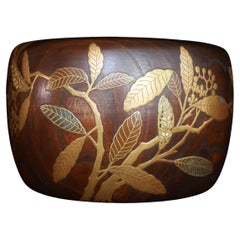
A rare and elegant set of three Japanese hibachi (traditional fire bowls) from the Meiji period (1868–1912), made of richly grained paulownia wood and intricately decorated with carv...
Category

20th Century Japanese Asian Art and Furniture

Materials

Belgian Black Marble, Copper

Japanese Black Kamuy-Kotan Suiseki God Stone
Located in Chiba, JP
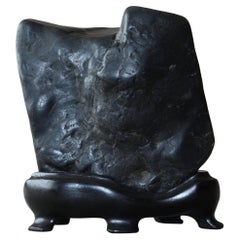
SUISEKI, KAMUY KOTAN STONE – Kamuy kotan stone from the canyon called ‘Kamuy-kotan’ (‘Whereabouts of God’ in the Ainu language) in the western part of Asahikawa city in Hokkaido, Jap...
Category

15th Century and Earlier Antique Japanese Asian Art and Furniture

Materials

Stone

Antique Japanese Folding Chamber Screen / Paravent 20th century Japan Cranes
Located in Amsterdam, Noord Holland
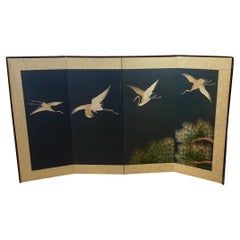
A super nice Meiji period 19th c Japanese Chamber Screen. Also usuable as wall mounted screen. Stunning piece!
Category

20th Century Meiji Japanese Asian Art and Furniture

Materials

Bronze

Early 20th Century, Showa, Japanese Bronze Vase with Artist Sign
Located in Sampantawong, TH
Japanese bronze vase with artist sign, used to decorate single flower arrangement in Japanese traditional tea ceremony. Artist signature is on the last photo. Age: Japan, Showa Pe...
Category

Early 20th Century Japanese Asian Art and Furniture

Materials

Bronze

Circa 1860-80 Japanese Imari Grand Scale Charger
Located in Chapel Hill, NC
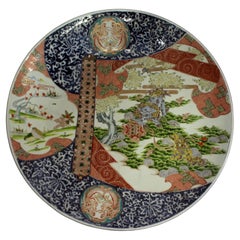
Circa 1860-80 Japanese Imari Grand Scale Charger. Meiji period. Superbly decorated with naturalistic reserves & asymmetric diapered panels; note the foo dog pair. 24.25" dia., 3 3/8"...
Category

Late 19th Century Meiji Antique Japanese Asian Art and Furniture

Materials

Ceramic

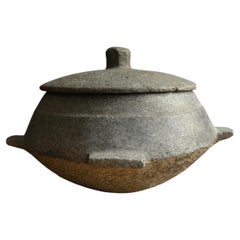
Antique Korean Stone Pot / Joseon Dynasty / Stone Folk Art Object
Located in Sammu-shi, Chiba
This stone pot was made in Korea during the late Joseon dynasty, between the late 19th and early 20th centuries. Its sturdy appearance, carved from a granite-like stone, emanates a p...
Category

Late 19th Century Other Antique Japanese Asian Art and Furniture

Materials

Stone

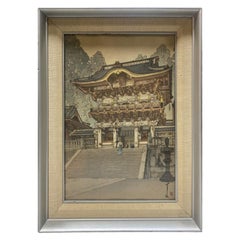
Hiroshi Yoshida Signed Sealed Framed Japanese Woodblock Print Yomei Gate
By Hiroshi Yoshida
Located in Studio City, CA
A wonderful image titled "Yomei Gate (Yomei Mon)" by one of Japan's finest 20th-century artists and one of, if not the greatest working artist in the Shin-Hanga movement. Yoshida was...
Category

1930s Showa Vintage Japanese Asian Art and Furniture

Materials

Wood, Paper

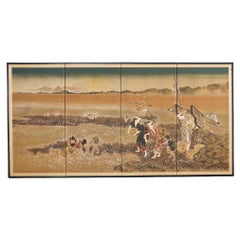
Japanese Showa Screen Shell Gathering After Katsushika Hokusai
Located in Rio Vista, CA
Fascinating Japanese Showa period four-panel byobu screen depicting women shell gathering or clamming after the painting by Katsushika Hokusai (Japanese 1760-1849). The women are gat...
Category

20th Century Showa Japanese Asian Art and Furniture

Materials

Brass

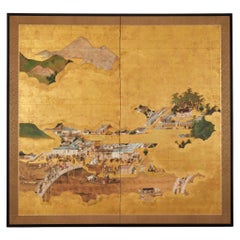
Japanese Two Panel Screen: View of Nagasaki City
Located in Hudson, NY
A Tosa School painting showing the hustle and bustle of the city including 3 dutchmen strolling. Mineral pigments on gold leaf with silk brocade border and black lacquer trim. From t...
Category

Early 19th Century Antique Japanese Asian Art and Furniture

Materials

Gold Leaf

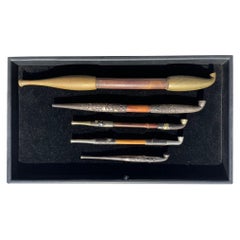
Japanese Connoisseurs Collection Fine Antique Smoking Pipes Kiseru
Located in South Burlington, VT
Rare one-of-a-kind collection Japanese Connoisseurs Collection of Five (5) Fine Antique Smoking Pipes, Kiseru. You dont need to be a conn...
Category

19th Century Meiji Antique Japanese Asian Art and Furniture

Materials

Bronze, Gold, Sterling Silver, Copper

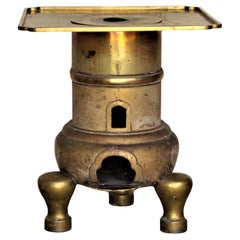
Antique 19th Century Japanese Bronze Kiln
Located in Rochester, NY
Antique Japanese large pagoda form bronze kiln or furnace for melting shaping metal w/ the original ceramic insert - signed at two places at top of insert. Old surface with oxidation...
Category

19th Century Meiji Antique Japanese Asian Art and Furniture

Materials

Bronze, Iron, Metal

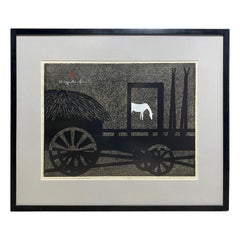
Kiyoshi Saito Signed Limited Edition Japanese Woodblock Print Hokkaido B 1961
By Kiyoshi Saitō
Located in Studio City, CA
A beautifully composed woodblock print by famed Japanese Sosaku Hanga printmaker Kiyoshi Saito. Many consider Saito to be one of the most important, if not the most important, contem...
Category

1960s Showa Vintage Japanese Asian Art and Furniture

Materials

Paper

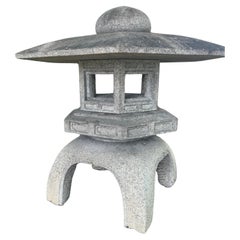
Japan Massive Old Stone Yukimi Lantern with Beautiful Details, 48 Inches
Located in South Burlington, VT
Rare Early Classic in a stunningly Large 48" Size. Beautiful patina, lovely lantern Please view the video. Japan, a fine large old hand crafted stone Yukimi hexagonal top lantern...
Category

Early 20th Century Showa Japanese Asian Art and Furniture

Materials

Stone, Granite

Meiji Period High Relief Porcelain Celadon Vase, circa 1900
Located in Miami, FL
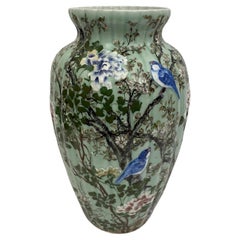
This captivating Meiji period (1868-1912) porcelain vase features a mesmerizing celadon glaze, with a subtle crackled texture. Exquisite details, meticulously hand-painted in vibrant...
Category

Early 20th Century Meiji Japanese Asian Art and Furniture

Materials

Porcelain

Japan Antique Hand-Carved Stone Chrysanthemum Petals Water or Plant Basin
Located in South Burlington, VT
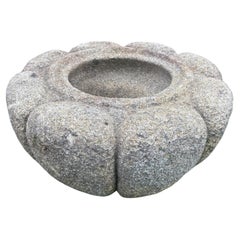
Japan, a visually attractive antique Classic stone chrysanthemum -kiko- garden planter or water basin hand-carved from solid granite. Beautiful Chrysanthemum leaf design. Whether ...
Category

Early 20th Century Taisho Japanese Asian Art and Furniture

Materials

Granite