Silk Paintings and Screens
to
123
313
100
506
37
2
4
4
2
1
1
42
210
254
39
114
49
15
13
2
13
7
2
12
8
3
776
774
732
545
477
528
517
440
55
14
545
527
531
26
3
1
1
1
Material: Silk
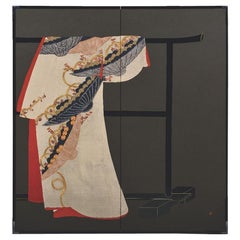
Japanese Contemporary Red Black Cream Folding Screen Silk Brocade Kimono Art, 3
Located in Takarazuka, JP
Exceptional Japanese contemporary two panel "byobu" or folding screen featuring genryoku style handcrafted silk raised kimono Japanese decorative art in crimson red, black and gold o...
Category
21st Century and Contemporary Japanese Meiji Silk Paintings and Screens
Materials
Gold
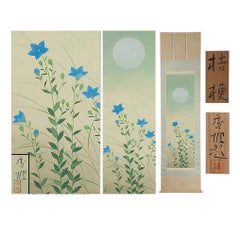
Lovely 20th Horii Ko Scroll Painting Japan Artist Flowers Painted
Located in Amsterdam, Noord Holland
Horii Ko?
1897 to 1990
Kyoto people
real name: Kiyotaro Horii
issue: Ko?
nurses: Kikuchi Chigiritsuki
Kyoto School of Arts & Crafts, Kyoto painting...
Category
Mid-20th Century Japanese Showa Silk Paintings and Screens
Materials
Silk

$1,562 Sale Price
20% Off
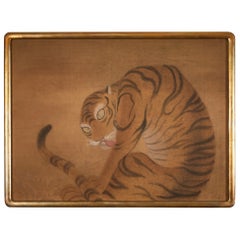
Chinese Single Panel: Chinese Painting of Tiger
Located in Hudson, NY
Mineral pigments on silk, mounted on board. With a gilded wood frame.
Category
Early 20th Century Chinese Silk Paintings and Screens
Materials
Silk, Wood, Giltwood
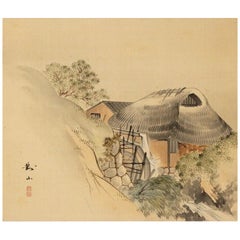
Lovely Late Edo Period Scroll Paintings Japan Artist Landscape Painted
Located in Amsterdam, Noord Holland
Artist: "Hineno Taiyama"
End of the Edo period painter. Osaka production.
Hine Taizan (Hine Taizan, 10 years of culture (1813)-March 13, 1868 (April 24, 1869) is a literary painter...
Category
19th Century Japanese Edo Antique Silk Paintings and Screens
Materials
Silk
$1,088 Sale Price
20% Off
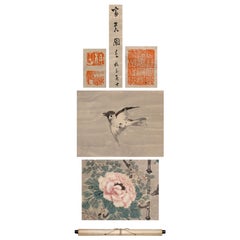
Lovely Nihonga Scene Meiji/Edo Period Scroll Japan Artist Flowers and Snow
Located in Amsterdam, Noord Holland
As you can see, this is a work in which a snow fence and a cold peony sparrow figure was drawn by Mt.
In addition to the cold snow peony in the snowfall that makes you feel a myster...
Category
19th Century Japanese Showa Antique Silk Paintings and Screens
Materials
Silk
$804 Sale Price
20% Off
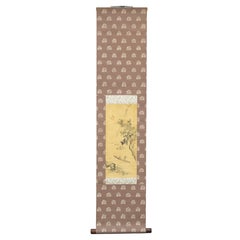
Japanese Edo Period Painting Scroll Fisherman in Landscape Japan Artist Signed
Located in Amsterdam, Noord Holland
Japanse school Vissers in landschap
Rolschildering / scroll op zijde, houten rollers. B- 35 x 14.7 / 106 x 23.5 cm
35 x 14.7 / 106 x 23.5 cm
Category
Mid-19th Century Japanese Meiji Antique Silk Paintings and Screens
Materials
Silk
$1,183 Sale Price
20% Off
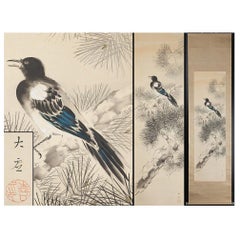
Magpie Nihonga Scene Meiji/Taisho Period Scroll Japan Artist Meiji Period
Located in Amsterdam, Noord Holland
Axis: Vertical 194 cm, horizontal 49.5 cm
Inside: Vertical 126 cm, horizontal 37 cm some errors will occur in the dimensions. Please understand.
Status I don't know the details of ...
Category
19th Century Japanese Meiji Antique Silk Paintings and Screens
Materials
Silk
$804 Sale Price
20% Off
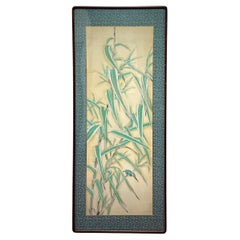
Japanese Signed painting on silk depicting Bamboo and Bird
Located in Fukuoka, JP
Japanese Signed painting on silk depicting Bamboo and Bird
This exquisite painting on silk depicts a beautiful bamboo and a bird, signed by the talented artist Waichi.
The pi...
Category
20th Century Japanese Silk Paintings and Screens
Materials
Silk, Wood
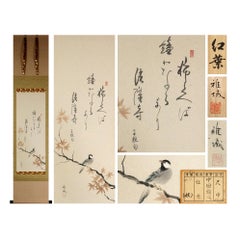
20thc Bird Scene Based Meiji Japan 19c Artist Shiki Masaoka The Poet
Located in Amsterdam, Noord Holland
As you can see, Masaoka Nakata's brush, Shiki Masaoka, "Kakikuba", "Autumn leaves", and a bird-and-flower painting / box.
One of the representative haikus of Shiki Masaoka drawn by ...
Category
20th Century Japanese Meiji Silk Paintings and Screens
Materials
Silk
$1,183 Sale Price
20% Off
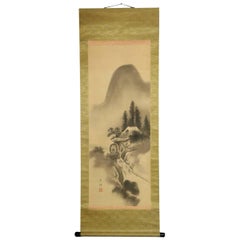
Lovely Nihonga Scene Meiji/Taisho Period Scroll Japan Artist Painting
Located in Amsterdam, Noord Holland
Lovely Nihonga scene Meiji/Taisho period scroll Japan artist painting. Painting size: (Width x height) mm 525 x 1499.
Category
19th Century Japanese Meiji Antique Silk Paintings and Screens
Materials
Silk
$615 Sale Price
20% Off
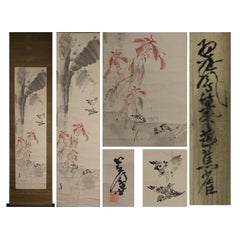
Artists Suiho Yano Showa Period Scroll Japan 20c Artist Nihonga
Located in Amsterdam, Noord Holland
As you can see, it is a work of "Basho / Sparrow" drawn by Midori Yano.
Under Basho, this work skillfully depicts the appearance of sparrows forming a flock and singing food.
«Su...
Category
20th Century Japanese Taisho Silk Paintings and Screens
Materials
Silk
$1,126 Sale Price
20% Off
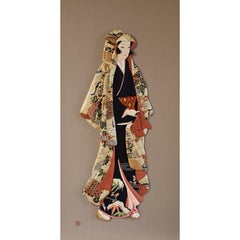
Japanese Contemporary silk brocade Traditional Oshie Handcrafted Decorative Art
Located in Takarazuka, JP
Extraordinary hand crafted Japanese contemporary traditional oshie wall decorative art piece with a stunning three-dimensional effect. This is a centuries-old traditional Japanese handcrafted wall decorative art form using high quality silk and brocade fabrics, known as oshie (literally, “pressed pictures”) that goes back to the Edo period (1603-1868). It is said this art form was born of the reluctance of ladies of the court to discard the magnificent silk kimonos and brocaded obi they had donned for a lifetime. The solution was to recycle these opulent fabrics into stunning works of art.
Oshie resembles a carefully crafted very intricate jigsaw puzzle comprising numerous intricate pieces of kimono fabric padded with slightly differing thicknesses of cotton and painstakingly glued and ironed individually. All those tiny pieces are then glued one by one on a custom-made board making sure each piece lands on the exact right place making sure that the right pieces overlap the lower pieces to create an undulating three-dimesional picture. Highly detailed oshie pieces contain hundreds of small pieces that are expertly aligned to recreate even the minutest details of the the painting In the final process. Facial features are painted in miniature-like exactitude. The end product is an awe-inspiring piece with a surprising three-dimensional effect.
This magnificent piece depicts a fascinating scene of a lady of privilege wearing an exquisitely brocaded headdress and overcoat to protect herself from the cold. Each dainty step she takes exposes the folds of her multi-layered kimono in a scene reminiscent of the ladies of the ancient imperial court of Japan. The creator of this signed piece has prided herself in using exquisite antique and vintage kimono and obi...
Category
21st Century and Contemporary Japanese Meiji Silk Paintings and Screens
Materials
Brocade, Silk
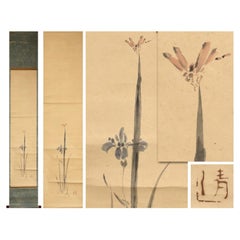
Flower Scene Edo Period Scroll Japan 19c Artist Kiyoshi Watanabe
Located in Amsterdam, Noord Holland
As you can see, this is an old painting by Kiyoshi Watanabe, a colored iris and a red dragonfly.
It has a simple yet calm texture, and
the appearance of a red dragonfly standing li...
Category
18th Century Japanese Edo Antique Silk Paintings and Screens
Materials
Silk
$1,041 Sale Price
20% Off
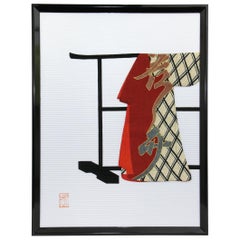
Japanese Contemporary Framed Red Black Silk Brocade Oshie Decorative Art
Located in Takarazuka, JP
A sophisticated technique is used to transform highest quality kimono fabrics into exquisite antique pieces of kimono fabric to recreate a Genryoku kosode kimono . Tagasode is the wa...
Category
21st Century and Contemporary Japanese Meiji Silk Paintings and Screens
Materials
Silk, Brocade
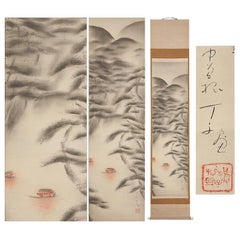
Lovely Nihonga Scene Meiji/Taisho Period Scroll Japan Artist Landscape Boats
Located in Amsterdam, Noord Holland
Axis: Vertical 192 cm, Horizontal 38.3 cm
Inside: Vertical 130 cm, Horizontal 35 cm *Some errors will occur in the dimensions. Please understand.
I don't know the details of the au...
Category
19th Century Japanese Meiji Antique Silk Paintings and Screens
Materials
Silk
$804 Sale Price
20% Off
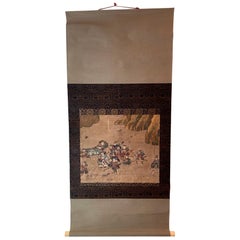
Antique Japanese Hanging Scroll Attributed to Iwasa Matabei
Located in Atlanta, GA
An antique ink and color on paper hanging scroll (kakejiku) with brocade border. It appears to be a fragment of a larger hand scroll depicting a procession of a lord with his entoura...
Category
Early 17th Century Japanese Japonisme Antique Silk Paintings and Screens
Materials
Silk, Paper
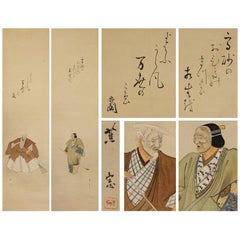
Actors in Dance / Theatre Scene 20th Century Scroll Painting Japan Artist
Located in Amsterdam, Noord Holland
It is a work of 2 scrolls figure in a Theatre/Dance Noh style.
it is a very tasty work combined with the hymns spelled at the top.
¦ Silk books and handwriting.
¦ State
There ...
Category
Early 20th Century Japanese Taisho Silk Paintings and Screens
Materials
Silk
$1,155 Sale Price
54% Off
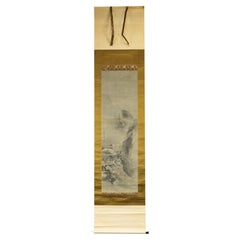
Ôhara Donshû (1792 - 1857) Edo Period - Smell of Plums in the Night. Scroll
Located in Amsterdam, Noord Holland
Ôhara Donshû (1792 - 1857) De geur van pruimen in de nacht
Rolschildering / scroll op zijde, houten rollers, in houten cassette. Provenance: Oranda Jin. A/B 98.8 x 29.4 / 184 x 41.5 ...
Category
Early 19th Century Japanese Meiji Antique Silk Paintings and Screens
Materials
Silk
$2,130 Sale Price
20% Off
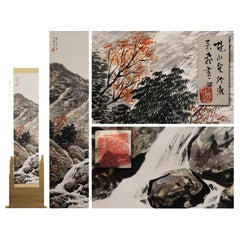
Japanese Painting Scroll Painter Kenzan Mizuta "Valley Autumn Scenery" Taisho
Located in Amsterdam, Noord Holland
« Kenzan Mizuta »
1902-1988 Taisho-Showa period Japanese painter.
Born in Meiji 35. Learn from his older brother Takeho Mizuta.
Born in Osaka. His ...
Category
Mid-20th Century Japanese Meiji Silk Paintings and Screens
Materials
Silk
$1,467 Sale Price
20% Off
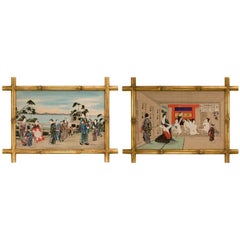
Pair of Japanese Watercolors on Silk within an English gilt faux-bamboo frame
Located in Lymington, Hampshire
A Pair of Japanese Watercolors on Silk.
One of families promenading beside a lake, the other showing ladies in the bath house, each within an English gilt faux-bamboo frame.
Category
1880s Japanese Antique Silk Paintings and Screens
Materials
Silk, Paint
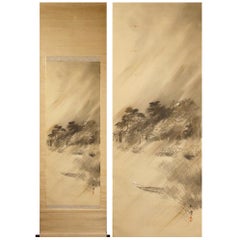
Lovely Nihonga Scene Meiji/Taisho Period Scroll Japan Artist Landscape Miyahara
Located in Amsterdam, Noord Holland
It is a work drawn by Miyahara Yanagi as you can see.
It is a pine tree drawing of Karasaki that has a unique presence, and it is
very attractive as it goes well with smoke.
¦ S...
Category
19th Century Japanese Meiji Antique Silk Paintings and Screens
Materials
Silk
$794 Sale Price
46% Off
Lovely Nihonga Scene Taisho / Showa Period Scroll Japan Artist Landscape Figure
Located in Amsterdam, Noord Holland
Axis: Vertical 192 cm, horizontal 38.3 cm
Inside: Vertical 130 cm, horizontal 35 cm some errors will occur in the dimensions. Please understand.
I don't know the details of the aut...
Category
19th Century Japanese Meiji Antique Silk Paintings and Screens
Materials
Silk
$804 Sale Price
20% Off
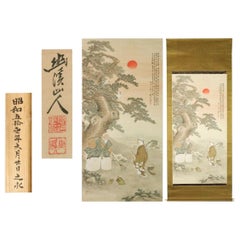
Autumn Scene Meiji Period Scroll Japan 19c Artist Marked Nihonga Style
Located in Amsterdam, Noord Holland
As you can see, Japanese painting late autumn Akino map / with box.
It is
a beautiful work that depicts the melancholy scenery of Akino, which is unique to late autumn , and is com...
Category
Mid-19th Century Japanese Meiji Antique Silk Paintings and Screens
Materials
Silk

$1,183 Sale Price
20% Off
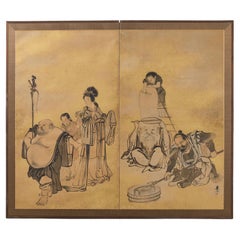
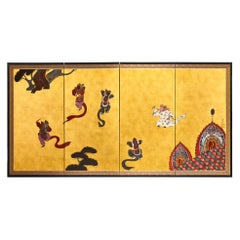
Japanese Edo Two Panel Screen Deities by Yokoyama Kazan
Located in Rio Vista, CA
Whimsical Japanese late Edo period two-panel screen circa 1800 by Yokoyama Kazan (Japanese 1784-1837). The screen depicts four of the seven Gods or deities ...
Category
19th Century Japanese Edo Antique Silk Paintings and Screens
Materials
Brass, Gold Leaf
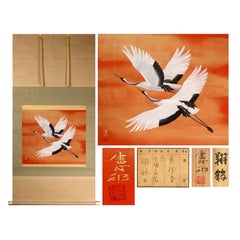
Artists Norikuni Kawamura, Showa Period Scroll Japan 20c Artist Nihonga
Located in Amsterdam, Noord Holland
As you can see, it is a double box and a box with "Shokakuzu" written by Norikuni Kawamura.
The
"Shokaku-zu", which is composed of graceful textures, spreads its wings and flies, i...
Category
20th Century Japanese Showa Silk Paintings and Screens
Materials
Silk
$1,126 Sale Price
20% Off
Japanese Meiji Period Painting Scroll Landscape Masuda Amison 1886 in Osaka
Located in Amsterdam, Noord Holland
Masuda Amison
(1886- ? ) Japanese painter. Commonly known as Wasaburo
Born in 1886 in Osaka.
He lives in Koroen, Nishinomiya City, Hyogo Prefecture....
Category
Early 20th Century Japanese Meiji Silk Paintings and Screens
Materials
Silk
$1,467 Sale Price
20% Off
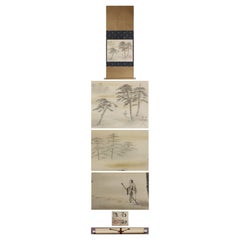
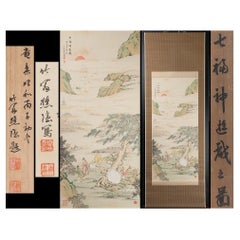
Immortals Nihonga Scene Meiji/Taisho Period Scroll Japan Artist Meiji Period
Located in Amsterdam, Noord Holland
Some errors will occur in the dimensions. Please understand.
Status I don't know the details of the author, but this item is hand-drawn rather than printed. Measures: Axis vertical ...
Category
20th Century Japanese Meiji Silk Paintings and Screens
Materials
Silk
$804 Sale Price
20% Off
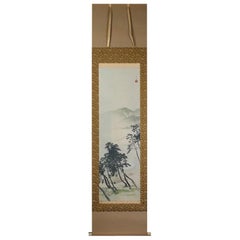
Lovely 19th-20th Century Scroll Painting Japan Artist Kawagoi Tamado Painted
Located in Amsterdam, Noord Holland
It is a high-quality craft of the work drawn by Kawai Yudou as you can see.
The slightly hazy distant mountains are really tasty,
and the pine tree drawn in the foreground is a very tasty work.
«Kawagoedado»
[1873-1957] Japanese painter. Born in Aichi.
His real name is Hosaburo. Another issue, Ikuan.
At the beginning, he studied under the Shijo school and then Masakuni Hashimoto to...
Category
Early 20th Century Japanese Meiji Silk Paintings and Screens
Materials
Silk
$2,035 Sale Price
20% Off
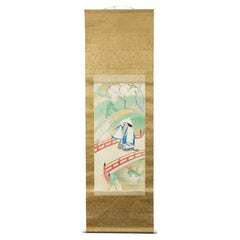
Japanese Painting Scroll Crane Landscape Nihonga Japan Artist Sign
Located in Amsterdam, Noord Holland
Japanse school Vrouw op brug
Rolschildering / scroll op zijde, benen rollers. B 77.5 x 36.9 / 160 x 49 cm
77.5 x 36.9 / 160 x 49 cm.
Category
Mid-19th Century Japanese Meiji Antique Silk Paintings and Screens
Materials
Silk
$1,467 Sale Price
20% Off
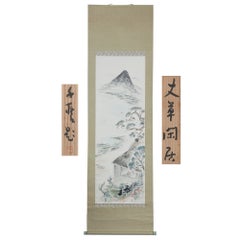
Lovely 20th Century Sen
yo Ogawa Scroll Painting Japan Artist Flowers Painted
Located in Amsterdam, Noord Holland
Sen'yo Ogawa
1882-1971
Japan painter. Kyoto production. Name Tasaburo. After served as apprentice of the Buddhist teacher, I learned a Movie to Chu Asai, exhibited oil paintings to...
Category
Mid-20th Century Japanese Showa Silk Paintings and Screens
Materials
Silk
$1,464 Sale Price
25% Off
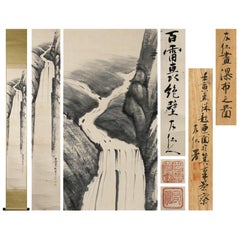
Lovely Nihonga Scene Edo Period Scroll Japan Artist Yusen Okajima Japan
Located in Amsterdam, Noord Holland
It
is a work drawn by Yusen Okajima known as a Japanese painter of the Shijo school as you can see.
It is a waterfall map that makes you feel momentum from the top to the bottom, a...
Category
Early 19th Century Japanese Edo Antique Silk Paintings and Screens
Materials
Silk
$994 Sale Price
20% Off
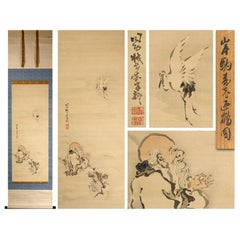
Jurojin Flying Crane Scene Edo Period Scroll Japan 19c Artist Saeki Kishi Ganku
Located in Amsterdam, Noord Holland
As you can see, Saeki Kishi Ganku brush Jurojin Hizuru figure / with box.
It is a
work that goes well with the flying crane and the Jurojin looking up, g...
Category
18th Century Japanese Edo Antique Silk Paintings and Screens
Materials
Silk
$1,846 Sale Price
20% Off
Blossom and Tree Scene Meiji Period Scroll Japan 19c Artist Araki Kanpo
Located in Amsterdam, Noord Holland
If it is good enough for the Japanese emperor :)
The painting's inscription says that it was painted in the artist's 82nd year, which would be 1913.
In the early Meiji Period following the Buncho ideal of hasshu kengaku ('learning eight schools'), Kanpo expanded his talents to incorporate Western painting techniques and began studying oil painting with Kawakami Togai (1827-1881) and Kunisawa Shinkuro (1847-1877). He achieved notable recognition as an oil painter and apparently was awarded the honor of painting a portrait of the Empress Dowager. Later Kanpo returned to Nihonga and continued to receive numerous honors for his work. He received a silver medal (2nd place) at the Tokyo Prefecture Crafts Competition in 1887; 2nd place with a painting of peacocks...
Category
Early 20th Century Japanese Meiji Silk Paintings and Screens
Materials
Silk

$4,970 Sale Price
20% Off
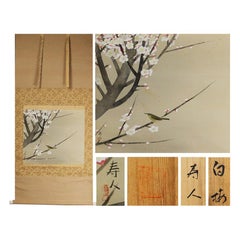
Artists Miyao Jujin, Showa Period Bird and Plum Scroll Japan 20c Artist Nihonga
Located in Amsterdam, Noord Holland
As you can see, Hisato Miyao, Okayama Prefecture, wrote "Shiraume" plum and warbler, and comes with a box.
It is a plum and warbler figure expressed in a truly wonderful color, and...
Category
20th Century Japanese Showa Silk Paintings and Screens
Materials
Silk
$738 Sale Price
20% Off
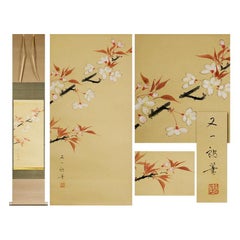
Cherry Blossoms Showa Period Scroll Japan 20c Artist Mataichiro Isoda Nihonga St
Located in Amsterdam, Noord Holland
Born in Kyoto, Isoda Mataichirô studied painting at the Kyoto City Specialist School of Painting. After graduating there he studied Japanese-style painting with Kikuchi Keigetsu. Though primarily a painter he also made a number of woodblock designs for Unsôdô in Kyoto.
is a very beautiful work in which the cherry blossoms in full bloom are drawn by the master, Mataichiro Isoda .
"Mataichiro Isoda"
Japanese-style painter. Born in Kyoto.
Graduated from Kyoto City University of Arts, Department of Painting in 1914, and Kyoto City University of Arts in 1933
. Advance to the graduate school and complete. He studied under Keigetsu Kikuchi and was selected for the first time in the 8th Imperial Exhibition in 1945 with "Yin".
Since then, he has been selected for the Imperial Exhibition, the Reorganized Imperial Exhibition, and the Nitten Exhibition almost every time.
After the war, he was selected from the 3rd
Nitten Exhibition in 1947, and "Chatei Liqiu" was selected at the 5th Exhibition in 1945. Since then, he will win an exhibition prize every time.
1956 Participated in the formation of Shirakosha by Uda Tekison,
and exhibited at regular exhibitions until 1966 . Nitten party friend.
During this time, he was a professor at Kacho Girls' High School from 28 to 1955.
e specializes in flower and bird...
Category
20th Century Japanese Showa Silk Paintings and Screens
Materials
Silk
$1,685 Sale Price
20% Off
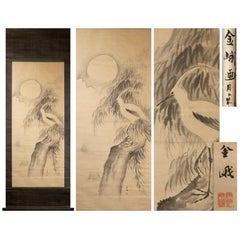
Lovely Nihonga Scene Meiji/Edo Period Scroll Japan Artist Furuichi Kintome
Located in Amsterdam, Noord Holland
It is a work drawn by Furuichi Kintomi as you can see.
In addition to the fantastic depth of willow under the moon, the Egret
that shines in the night view is a truly delicious pie...
Category
19th Century Japanese Meiji Antique Silk Paintings and Screens
Materials
Silk
$804 Sale Price
20% Off
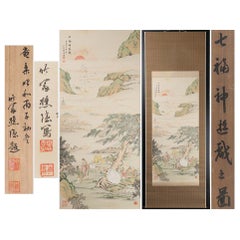
Immortals Nihonga Scene Meiji/Taisho Period Scroll Japan Artist Meiji Period
Located in Amsterdam, Noord Holland
Axis: Vertical 194 cm, Horizontal 49.5 cm
Inside: Vertical 126 cm, Horizontal 37 cm *Some errors will occur in the dimensions. Please understand.
Status I don't know the details of...
Category
20th Century Japanese Meiji Silk Paintings and Screens
Materials
Silk
$804 Sale Price
20% Off
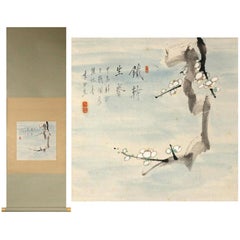
Lovely Nihonga Scene Showa Period Scroll Japan Artist Fujimoto Kida
Located in Amsterdam, Noord Holland
It is a work produced by Fujimoto Kida as you can see.
It is composed of a calm and cool texture,
and combined with the sanction on the top, it is a very tasty work.
"Fujimoto K...
Category
Mid-20th Century Japanese Showa Silk Paintings and Screens
Materials
Silk
$804 Sale Price
20% Off
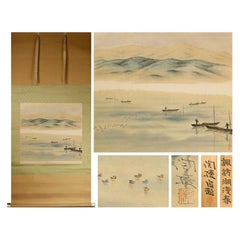
Lake Awasaru Scene Meiji Period Scroll Japan 19c Artist Marked Nihonga Style
Located in Amsterdam, Noord Holland
As you can see, it is a Japanese painting "Lake Suwa Asaharu" figure / co-box.
It is a "Lake Suwa Asaharu" figure with gentle sunlight, and it is
a very tasty work combined with a ...
Category
Mid-19th Century Japanese Meiji Antique Silk Paintings and Screens
Materials
Silk
$1,183 Sale Price
20% Off
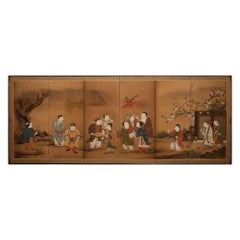
Japanese Six Panel Screen: Karako
Chinese Children
Located in Hudson, NY
Children at play in a Chinese palace garden, a favorite subject of Japanese painters. Kano School painting in mineral pigments on mulberry paper with si...
Category
18th Century Japanese Antique Silk Paintings and Screens
Materials
Bronze
Nihonga Pair Landcape Scene Meiji Period Scroll Japan 19c Artist Sakakibara
Located in Amsterdam, Noord Holland
As you can see, Fumi Sakakibara brush-colored landscape map with double width / box.
The light and calm colored landscape drawings applied to each are ...
Category
Late 19th Century Japanese Meiji Antique Silk Paintings and Screens
Materials
Silk

$2,130 Sale Price
20% Off
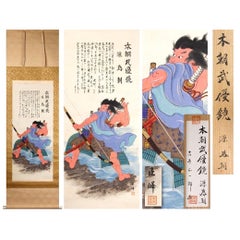
Lovely 19th-20th Century Scroll Painting Japan Artist Shoichiro Yoshii, Painted
Located in Amsterdam, Noord Holland
¦ Silk and handpaitning
¦ State
There are some discoloration and stains in the age.
¦ Axial dimension/approx. 193.0 cm x 57.0 cm.
¦ Actual paper size/about 103.0 cm x about 44...
Category
20th Century Japanese Showa Silk Paintings and Screens
Materials
Silk
$2,035 Sale Price
20% Off
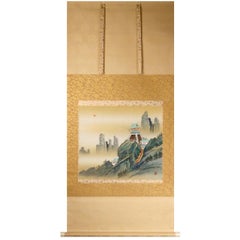
Mountain Scene Showa Period Scroll Japan 20c Artist Kazuhide Saiuchi Nihonga St
Located in Amsterdam, Noord Holland
As you can see, this work was drawn by Kazuhide Sainai, who is known as a Japanese-style painter.
The "Horaiyama-zu" is a very tasty view of trees, rocks, and mountains in the dista...
Category
20th Century Japanese Showa Silk Paintings and Screens
Materials
Silk
$1,211 Sale Price
20% Off
Vintage kimono textile art " Sunset Timelapse ~ Ephemerality ~" ikasu Red Japan
By Kimono ikasu
Located in Setagaya City, JP
<
The art piece uses two sides - front and reverse - of the same kimono, to show beautiful sea surrounding Japan, in hues and in late sunset, as a timelapse.
The frame for this work is made of paulownia wood taken from antique Kiritansu - chest-of-drawers for kimono.
I use antique kiritansu that can’t be used as furniture anymore to create basis and frames for my works. It adds them even more authentic atmosphere of traditional wabisabi spirit. Can you feel it?
<< Period / Story
The kimono used in this piece was originally crafted during Showa period (around 1960ies).
<< Explanation and meaning of pattern and colors
Sea waves, depicted in two color variations here, are a symbol of transience and Impermanence in Japanese culture. The ebb and flow of the tides, the ever-changing currents, and the relentless motion of the waves serve as reminders of the fleeting nature of life. This artwork featuring the sea convey themes of impermanence, reminding viewers to cherish the present moment and appreciate the beauty of life's fleeting moments.
The theme of impermanence is strengthen by two colors of the sea - the lighter in early hues and the darker when the sun is just about to set in the sea.
<< About the frame
This artwork frame is crafted from paulownia wood, a uniquely Japanese material closely tied to the world of kimonos, and it serves to convey the refined beauty of Japanese nature.
Paulownia wood is known as the lightest wood in Japan, prased for its natural luster, resistance to moisture, and resilience against cracking. Since ancient times, it has been used in crafting furniture, chests, and musical instruments.
Paulownia wood is closely linked to kimono culture. During the Edo period (17th cent.~), it became customary to store cherished kimonos in paulownia chests...
Category
1960s Japanese Japonisme Vintage Silk Paintings and Screens
Materials
Silk, Wood
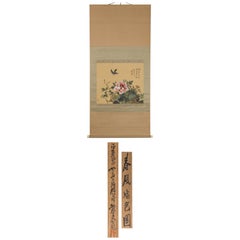
Lovely Scroll Paintings Japan Artist Signed Wakasa Seigyo Monogai "Spring Breeze
Located in Amsterdam, Noord Holland
Wakasa Seigyo "spring breeze garden view", silk, colors, painting, hanging scroll, with box
Size: Axis, vertical 142 cm horizontal 65.5 cm
picture, vertical 44 cm horizontal 50.5...
Category
20th Century Japanese Showa Silk Paintings and Screens
Materials
Silk
$1,020 Sale Price
25% Off
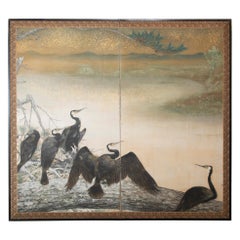
Taisho Period Painted Silk Screen Depicting Nesting Cormorants by Asami Joujou
Located in Stamford, CT
An exquisite Taisho period screen depicting nesting cormorants painted on raw silk with gold fleck by Japanese artist Asami Joujou (b. 1890 in Himeiji, Japan-d. 1974), circa 1912-1926.
Category
1920s Japanese Taisho Vintage Silk Paintings and Screens
Materials
Silk
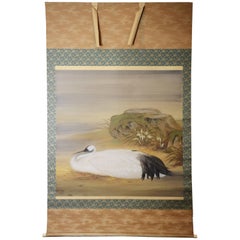
Large Antique Japanese Scroll Depicting a Nesting Crane, Taisho Period
Located in Prahran, Victoria
Large and exceptional Japanese hanging scroll with a realistically painted depiction of a nesting crane by Yoshifuji Yoshio, Taisho/Showa perio...
Category
Early 20th Century Japanese Taisho Silk Paintings and Screens
Materials
Paper, Silk
$7,040 Sale Price
20% Off
Japanese Four Panel Screen: Dancing Figures
Located in Hudson, NY
People dressed in ceremonial robes and masks celebrate the New Year. On New Year's eve a traditional Japanese custom is to ward off evil spirits by pretending to chase away people w...
Category
20th Century Japanese Silk Paintings and Screens
Materials
Gold, Gold Leaf
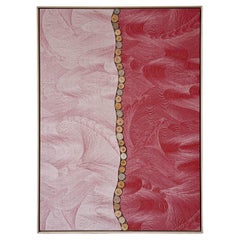
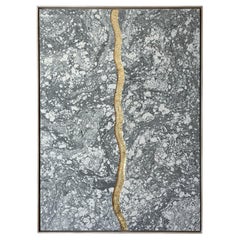
Vintage kimono textile art " Marble Story ~ Healing ~" by ikasu Grey Japan
By Kimono ikasu
Located in Setagaya City, JP
<
This work uses a vintage kimono fabric with marble pattern, that makes it look like a real piece of marble.
The line in the middle symbolizes “kintsugi” - concept of wabi-sabi, which values imperfection, impermanence, and the beauty of aging.
It is elegantly framed with paulownia wood originally used for kimono chest-of-drawers, and is filled with storytelling and sense of luxury.
I used pieces of kimono that could no longer be used as clothing and kiritansu chest-of-drawers that would normally be discarded to create the ultimate upcycled piece.
<< Explanation and meaning of pattern and colors
Kintsugi (金継ぎ), which translates to "golden joinery" or "golden repair," is a traditional Japanese art form of repairing broken pottery with lacquer mixed with powdered gold, silver, or platinum. I used this tecnique here to "repair" antique kimono by transforming it into art work. Beyond its literal meaning of mending broken ceramics, kintsugi carries profound philosophical and cultural significance in Japanese tradition:
・Embracing Imperfection: Kintsugi celebrates imperfection and impermanence. Rather than disguising or concealing flaws, it highlights them, treating the breakage as part of the object's history. This philosophy encourages acceptance of imperfection as an essential aspect of life, beauty, and human experience.
・Wabi-Sabi Aesthetic: Kintsugi embodies the principles of wabi-sabi, an aesthetic worldview centered on the acceptance of transience and imperfection. Wabi-sabi values simplicity, authenticity, and the beauty of things that are imperfect, impermanent, and incomplete. Kintsugi exemplifies these principles by turning what might be considered flaws into features that enhance the object's beauty and character.
・Resilience and Transformation: The act of repairing broken things with precious metals symbolizes resilience and transformation. Instead of discarding or replacing the broken object, kintsugi honors its history and transforms it into something new and valuable. This reflects broader philosophical themes of overcoming adversity, finding beauty in imperfection, and embracing change.
・Honoring the Past: Kintsugi preserves and honors the history of the object. Rather than erasing or ignoring its past, it acknowledges and celebrates it. This aspect of kintsugi can be seen as a metaphor for honoring our own personal histories, including the challenges and setbacks we have faced, and recognizing how they have shaped us into who we are today.
・Spiritual and Philosophical Symbolism: Kintsugi has spiritual and philosophical implications, reflecting concepts such as the interconnectedness of all things, the cycle of life and death, and the pursuit of harmony and balance. The process of repairing broken objects with precious metals is seen as a metaphor for spiritual growth, enlightenment, and the journey towards wholeness.
Overall, kintsugi represents not only a practical technique for repairing ceramics but also a profound philosophical and cultural perspective on life, beauty, and the human experience. It embodies values such as resilience, acceptance, and the transformative power of embracing imperfection.
<< Characteristics of the fabric
This vintage textile is hand-painted with a traditional painting technique where the colors are added on wet surface, which creates an effect of marble.
<< About the frame
Kiritansu - chest-of-drawers for kimono, is traditionally made from paulownia wood, a uniquely Japanese material closely tied to the world of kimonos.
Paulownia wood is known as the lightest wood in Japan, prased for its natural luster, resistance to moisture, and resilience against cracking. Since ancient times, it has been used in crafting furniture, chests, and musical instruments.
During the Edo period, it became customary to store cherished kimonos in paulownia chests...
Category
1960s Japanese Japonisme Vintage Silk Paintings and Screens
Materials
Gold Leaf
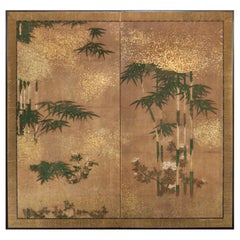
Japanese Two Panel Screen: Bamboo Grove on Mulberry Paper with Gold Dust
Located in Hudson, NY
Kano School painting of a bamboo grove with blooming flowers and gold dust mists. Painted in mineral pigments on mulberry paper with gold dust and a silk brocade border.
Category
Early 19th Century Japanese Antique Silk Paintings and Screens
Materials
Gold
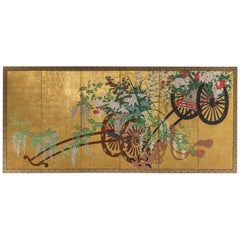
Japanese Six Panel Screens: Pair of Festival Carts
Located in Hudson, NY
Antique Japanese screen with Festival Cart design. Edo period painting (First half of the 19th century) of one brown lacquer cart and one bla...
Category
Early 19th Century Japanese Edo Antique Silk Paintings and Screens
Materials
Gold Leaf
Japanese Ink and Wash Scroll Painting by Watanabe Seitei
Located in Atlanta, GA
Watanabe Seitei, also known as Watanabe Shotei (1851–1918), was born in late Edo period. He was one of the earliest Japanese artists who visited and be...
Category
Early 1900s Japanese Japonisme Antique Silk Paintings and Screens
Materials
Brocade, Silk, Paper
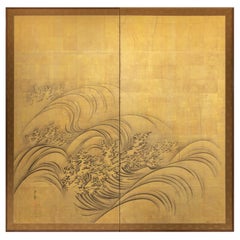
Japanese Two Panel Screen: Waves on Gold
Located in Hudson, NY
Ink on gold leaf with a silk brocade border. Signature reads: Nakajima Raishou (1796-1872). Student of Maruyama Okyo (one of Japan's most famous artists).
Category
Mid-19th Century Japanese Antique Silk Paintings and Screens
Materials
Brocade, Silk, Paper
Mid 20th Century obi textile art " Moon phase II " by ikasu Silver Black Japan
By Kimono ikasu
Located in Setagaya City, JP
<< About this artwork
This artwork has been upcycled from a stunning obi, which is adorned with calligraphy weaving saying "moon" and "moonlight".
<< Period /...
Category
1970s Japanese Japonisme Vintage Silk Paintings and Screens
Materials
Silver Leaf

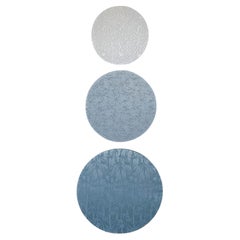
Vintage kimono textile art " Turquoise Forest ~ Strength ~ " by ikasu Blue Japan
By Kimono ikasu
Located in Setagaya City, JP
Fabrics featuring iconic Japanese plants like chrysanthemum, maple, and bamboo were gathered from various long underwear and kimono pieces to create a set of canvases (diameter 30, 25 and 20cm) showcasing exquisite gradations.
The top canvas, in pristine white, originates from long under-kimono, while the middle and bottom canvases are skillfully upcycled from kimono fabrics.
<< Period / Story
The long under-kimono and kimono fabrics used in these canvases were originally crafted and worn during the late Showa period (1960-80ies).
<< Explanation and meaning of pattern and colors
The pattern on the top canvas features a chrysanthemum, an auspicious emblem symbolizing longevity. It is affectionately referred to as the "raccoon dog chrysanthemum" due to the large, overlapping petals resembling the fur of a muzina, a creature similar to a raccoon dog or badger. This motif is highly popular in various plant-inspired designs and frequently seen in Edo komon, katazome, and jimon textiles.
The top canvas naga-juban under-kimono, being entirely white and devoid of any additional dyes, suggests its use as formal wear. Its pristine white hue accentuates the silk's luster when exposed to light and highlights the beauty of the woven patterns.
The fabric used here is rinzu, a type of fabric thinner than crepe de chine, characterized by its soft, smooth texture and subtle sheen. This particular lintel distinguishes itself with the way its ground pattern emerges and also incorporates a woven chrysanthemum pattern.
The central canvas showcases a maple tree, symbolizing longevity, which changes its colors with the seasons, bringing joy and happiness to people's lives.
The bamboo featured on the lower canvas has been regarded as a symbol of good fortune since ancient times, given its straight and vigorous growth, along with the Chinese legend that a phoenix consumes its fruit. It embodies concepts such as "immortality," "longevity," and "strength" because it remains green even in winter. The hollow stem also signifies "innocence," suggesting that there are no hidden agendas.
All three canvases are adorned with ground patterns that, when viewed from a distance, appear as modern works of art, yet upon closer inspection, they reveal a distinct Japanese ambiance.
<< Characteristics of the fabric
All three canvases are made of fabrics with jimon. The unique and high level of Japanese weaving...
Category
1970s Japanese Japonisme Vintage Silk Paintings and Screens
Materials
Canvas, Silk
17th Century Japanese Two-Panel Screen, Gibbons of Folklore
Located in Hudson, NY
Japanese two-panel screen: Gibbons of Folklore, Edo period (17th century) Kano School painting of gibbons in Japanese fables. The left panel represents a Japanese fable of a monkey a...
Category
Late 17th Century Japanese Edo Antique Silk Paintings and Screens
Materials
Silk, Wood, Paper

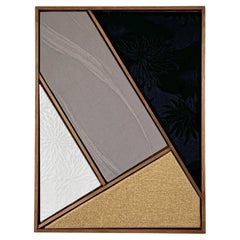
Vintage kimono textile art " Monochrome Geometry " by ikasu Gold Grey Japan
By Kimono ikasu
Located in Setagaya City, JP
This work is inspired by traditional Japanese nature colors symbolism, and is framed in paulownia wood originally used for a kimono chest-of-drawers.
It is filled with storytelling ...
Category
1960s Japanese Japonisme Vintage Silk Paintings and Screens
Materials
Silk, Wood
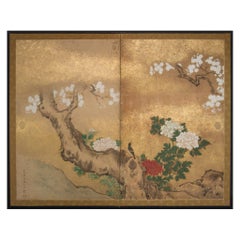
Japanese Two-Panel Screen Peony and Cherry
Located in Hudson, NY
Japanese two-panel screen: Peony and Cherry, Edo period (circa 1800) painting, formerly fusuma (Japanese sliding doors), executed in the Kano school style, featuring a cherry tree in...
Category
Early 1800s Japanese Edo Antique Silk Paintings and Screens
Materials
Gold Leaf
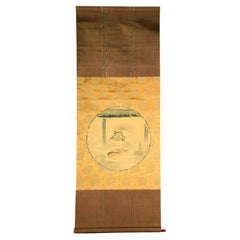
Japanese Silk Scroll of Daruma Hanabusa Itcho Edo Period
Located in Atlanta, GA
A Japanese hanging scroll attributed to Edo period painter Hanabusa Itcho (1652-1724). The artwork features a silk roundel nicely mounted in golden brocade background. The painting depicts a robed Daruma seated in meditation with his eyes widely open. The rendition of the famous monk, one of the most beloved subjects in Japanese art, was extremely minimalistic. With just a few effective ink strokes and patches of watercolor, it managed to successfully highlight the essence and spirit of Daruma. The roundel was possibly a center fragment of a larger painting by the artist and was remounted historically. Signed with one of his artist's names. It comes with a wood scroll box with ink inscription of title and artist formal name.
For a painting with the same signature, see number 1881,1210,0.1719 in the collection of the British Musuem. Also a horizontal scroll...
Category
18th Century Japanese Edo Antique Silk Paintings and Screens
Materials
Silk, Paper
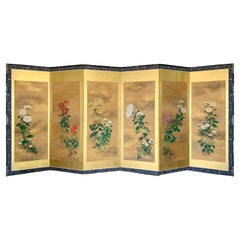
Meiji Chrysanthemum Masterpiece
Located in Fukuoka, JP
Step into a world of timeless beauty with our exceptional six-panel screen from the Edo-Meiji period. In impeccable condition, each panel features stunning paintings of chrysanthemum...
Category
19th Century Japanese Meiji Antique Silk Paintings and Screens
Materials
Gold
$4,624 Sale Price
40% Off
More Ways To Browse
Chinese Woodblock Print
Fusuma Doors
Japanese Tiger Screen
Ogata Korin
Painted Panel Screen Birds
Antique Chinese Black Lacquer Screen
Antique Falconry
Carved Stone Panel
Chinese Carved Hardwood Screen
Chinese Folding Silk Screen Art
Chinese Paint Brushes
Chinese Pearl And Lacquer Screen
Gold Screen Crane
Japanese 4 Panel Screen
Japanese Autumn Screen
Japanese Calligraphy Screen
Japanese Cherry Blossom Screen
Japanese Snow Painting