Japanese Paintings and Screens
to
170
500
176
911
49
1
22
9
1
1
106
361
444
50
178
88
23
26
2
20
10
2
6
17
10
2
514
510
436
348
324
1,606
1,464
961
455
113
961
958
959
25
23
3
2
2
Place of Origin: Japanese
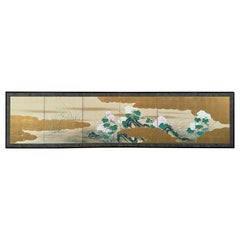
Japanese Six-Panel Folding Screen with Floral Landscape
Located in Fukuoka, JP
Elegant Japanese six-panel byōbu depicting a tranquil landscape with blooming flowers set against softly rendered hills and stylized clouds. The composition is balanced and serene, w...
Category
20th Century Showa Japanese Paintings and Screens
Materials
Gold Leaf
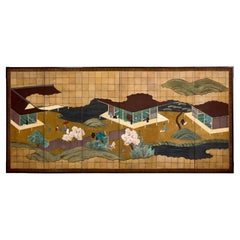
Japanese Byobu six panels screen on paper Edo Period 19th century
Located in Paris, IDF
Beautiful Edo period Japanese Byobu six panel screen from the early 19th century depicting scenes from the Tale of Genji, with pavilions, gardens and women of the court wearing kimon...
Category
19th Century Japonisme Antique Japanese Paintings and Screens
Materials
Paper
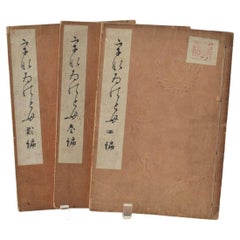
"Unai No Tomo" Early 20th C. Japanese Illustrated Toy Books, Volumes #2, #3, #4
Located in Norton, MA
Early 20th century Japanese illustrated toy books. "Unai No Tomo". Ca. 1911. 3 volumes from the larger set. Each volume includes numerous color woodblock illustrations of various toy...
Category
Early 20th Century Japanese Paintings and Screens
Materials
Silk, Paper
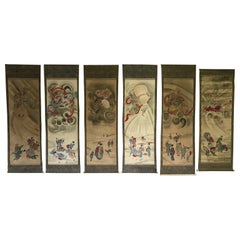
Set of 6 Large Kakemonos Japanese Mythology, 19th Century Japan circa 1800 Edo
Located in Beuzevillette, FR
Beautiful set of 6 large kakemonos from 19th century Japanese mythology.
Paper support with a canvas pasted on the paper
Wonderful set that is part of Japan's history and beliefs
When not hung, the Kakemonos are rolled up.
circa 1800 - Japan - Edo Period
A kakemono translates as "object to hang". In Japan this refers to a painting or calligraphy, most often done on silk or paper framed in a scroll that was intended to be hung on walls or in public lighting. This particular form, which allows them to be in a roll, dates back to the Tang dynasty in China (this would be related to the copying and preservation of ancient Buddhist texts). A Kami is a deity or spirit worshipped in the Shinto religion. A Yokai is a spirit, ghost, demon, or strange apparition from the creatures of Japanese folklore.
Each of these kakemonos represents a unique story:
- A kami, a Japanese deity, is shown painting a rainbow. Indeed, he performs the action with his right hand while his left hand holds a kind of basket with three pots of paint. This kami has a rather closed attitude. He is standing in a dark and tormented sky. Below this figure, 8 villagers are dressed in traditional Japanese clothes. Their faces are softened. They are not afraid of the elements made by the kami above their heads.
- A character with an unreal look is holding a kind of jar with his two hands, which he spills on human figures above. This being is floating in the air, probably a character from mythology, perhaps Susanoo. Underneath, villagers on umbrellas. They are trying to protect themselves as best they can from what is falling on them. One of them is carrying baskets with fish on her shoulders. A character in the background is thrown forward and falls.
- On this kakemono, the god Raijin, dressed in a white and blue outfit, strikes the sky with his two drum hammers to create lightning and its thunderous sound. Surrounded by Tomoe and a long red scarf, Raijin, enraged and with dishevelled hair, creates a dark and violent storm. The villagers seem frightened by this meteorological phenomenon. One of the villagers can be seen fainting in the arms of a man. This scene may seem chaotic, but Japanese legend tells us that once a field is struck by lightning, the harvest is good.
- On this kakemono, we see an unreal-looking figure holding a fan, as if he were sweeping away the bad weather, or simply producing gusts of wind. He is probably the kami of wind and air, Shina tsu-hiko. The figures below him seem surprised by so much wind. An umbrella flies away on the left, the women hold their hair and scarf, the clothes are caught in the power of the wind, there is even a woman on the ground on the bottom left.
- This Kakemono represents a short moment. This Raiju is a yokai (ghost spirit...
Category
19th Century Edo Antique Japanese Paintings and Screens
Materials
Paper

$2,567 Sale Price / set
20% Off
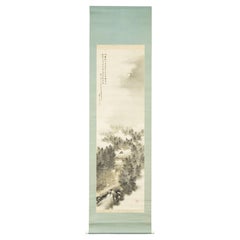
Japanese Meiji Period Painting Scroll Night Landscape Nihonga Japan Artist Sign
Located in Amsterdam, Noord Holland
Japanse school Boerderij in bamboebos in maanlicht
Rolschildering / scroll op zijde, benen rollers. B 140.4 x 42 / 198.5 x 54.5 cm
140.4 x 42 / 198.5 x 54.5 cm.
Category
Mid-19th Century Meiji Antique Japanese Paintings and Screens
Materials
Silk
$1,474 Sale Price
20% Off
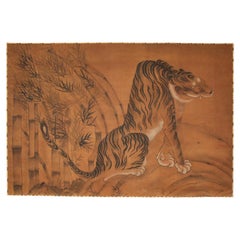
K26 Japanese Antiques A large hanging scroll, Bamboo Tiger Ink on Silk painted
Located in Niiza, JP
Ink on Silk, Scroll head: wood
Image size: 1400(W) x 930(H) [mm]
Scroll mounting: 1470(W) x 1350(H) [mm]
Box size: 100(W) x 90(H) x 1590(D) [mm] 3kg
Estimated packing size: 150(W) x...
Category
19th Century Antique Japanese Paintings and Screens
Materials
Fabric, Paper
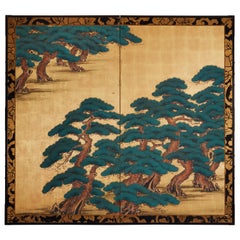
Japanese Two Panel Screen: Pine on Heavy Gold
Located in Hudson, NY
Kano School painting in mineral pigments on mulberry paper with heavy gold leaf and a silk brocade border made of antique monk's robes.
Category
Late 19th Century Antique Japanese Paintings and Screens
Materials
Gold Leaf
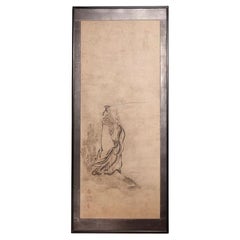
Antique Japanese Suibokuga Sage by Kano Tokinobu, 17th century.
Located in Point Richmond, CA
Antique Japanese Suibokuga Sage Painting by Kano Tokinobu, 17th century. A sumi-e ink on paper painting illustrating an acolyte at a riverbank. The image of the standing Chinese figure with elongated earlobes (a symbol of enlightenment), hair tied back in a kerchief and long beard, holds a large fan in his left hand to his right shoulder. The long robes are windswept with water curls about the figures feet. The painting with 3 vermillion seals of the artist in the lower left corner. Japanese dry mount paper on a wood frame with thin brocade border silver leafed surround and lacquered wood outer frame.
Condition: Paper restoration on center, a quarter of an inch of the left edge of the painting is added, other minor signs of age, wear, stains and repairs overall fine condition.
Age: Painting Edo Period, circa 1670. Mounting circa 1985.
Image: 51-1/2 in. x 20-1/2 in. (131cm x 52cm)
Frame: 59-1/4 in. x 25-1/4 in. (150cm x 64cm)
Weight: 6lbs.
Provenance:
with Honeychurch Antiques...
Category
1670s Edo Antique Japanese Paintings and Screens
Materials
Paper
Circa 1920. Taisho era Japanese Nihonga Screen. Dahlias
Cockscomb.
Located in Kyoto, JP
Kawabe Kasho (b.1892)
Dahlias & Cockscomb
Taisho era. Circa 1920
Two-panel Japanese Screen. Mineral pigments and ink on silk.
This exquisite two-panel Japanese folding screen, pa...
Category
Early 20th Century Taisho Japanese Paintings and Screens
Materials
Silk
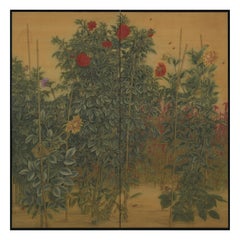
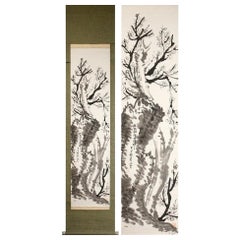
Lovely Nihonga Scene Taisho / Showa Period Scroll Japan Artist Prunus Blossom
Located in Amsterdam, Noord Holland
It is a work drawn by Doun as you can see.
It is a simple yet calm white plum blossom map, which is
very tasty.
¦Paper books and handwriting.
¦ State
...
Category
19th Century Meiji Antique Japanese Paintings and Screens
Materials
Silk
$808 Sale Price
20% Off
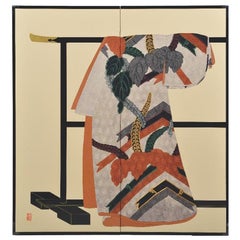
Japanese Contemporary Orange Black Silk Brocade Two-Panel Folding Screen, 3
Located in Takarazuka, JP
Extraordinary Japanese contemporary two panel "byobu" or folding screen featuring genryoku style handcrafted raised silk and brocade kimono in black, orange and gold on textured crea...
Category
21st Century and Contemporary Meiji Japanese Paintings and Screens
Materials
Gold
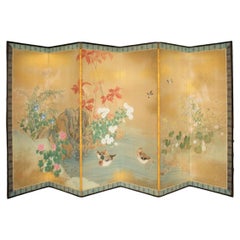
B11 Japanese Antiques 6panels, Paper, folding Screen with Flower & bird painting
Located in Niiza, JP
Bird and flower painting
Material: Paper on wooden frame, colored
One piece: W660×H1825mm×D20mm,
Unfolded size: W3860mm, 16kg
Folded size: W660×H1825×D110mm
Packaging (sandwiched wit...
Category
19th Century Antique Japanese Paintings and Screens
Materials
Paper
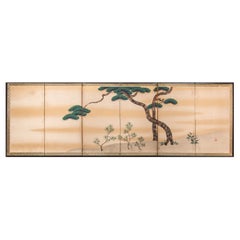
Japanese Six Panel Screen, Young Pine and Bell Flowers
Located in Hudson, NY
Signature reads: Kanshin. Mineral pigments painted on gold dusted mulberry paper with a silk brocade border.
Category
Late 19th Century Antique Japanese Paintings and Screens
Materials
Gold
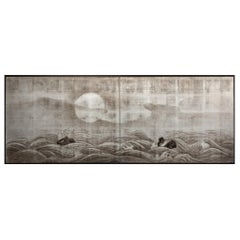
Japanese Two Panel Screen Moon Rising Over Turbulent Ocean Landscape
Located in Hudson, NY
Contemporary sumie (ink) painting on silver.
Category
1960s Showa Vintage Japanese Paintings and Screens
Materials
Paper
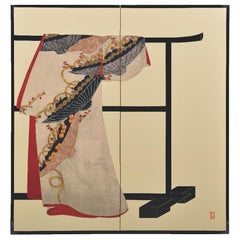
Japanese Contemporary Silk Red Black Cream Hand-Crafted Two Panel Folding Screen
Located in Takarazuka, JP
Exceptional Japanese contemporary two panel "byobu" or folding screen featuring genryoku style handcrafted silk raised kimono Japanese decorative art in crimson red, cream and gold o...
Category
21st Century and Contemporary Meiji Japanese Paintings and Screens
Materials
Gold
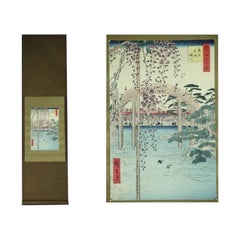
Hiroshige Utagawa "One Hundred Famous Views of Edo Kameido" Woodblock Ukiyo-e
Located in Amsterdam, Noord Holland
Hiroshige Utagawa "One Hundred Famous Views of Edo Kameido"
Condition
vertical width /114.5cm width /30.3Cm (actual paper) vertica...
Category
20th Century Edo Japanese Paintings and Screens
Materials
Bronze
$855 Sale Price
20% Off
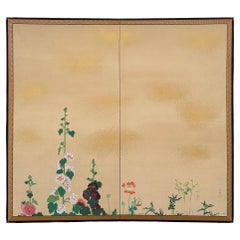
Showa Golden Mallow Screen
Located in Fukuoka, JP
This exquisite two-panel screen from the Showa period features a lush depiction of mallows in vibrant hues set against a luxurious golden background. The mallow flower, known in Japa...
Category
20th Century Showa Japanese Paintings and Screens
Materials
Gold Leaf
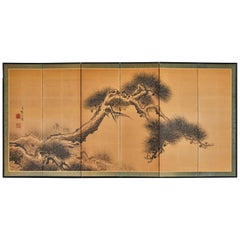
Japanese Six Panel Screen: Ink Painting of a Weathered Pine Tree
Located in Hudson, NY
Meiji period (1868 - 1912) sumi-e (or ink painting) on paper of a venerable pine tree with limbs stretching out over a bluff. Beautiful signature and seal read: Biei. Ink on paper ...
Category
19th Century Antique Japanese Paintings and Screens
Materials
Brocade, Silk, Paper
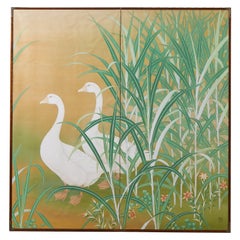
Japanese Meiji Two Panel Screen Geese and Reeds
Located in Rio Vista, CA
Fantastic Japanese late Meiji period two-panel byobu screen by Hashimoto Koshu. The large screen features two white geese amid brightly colored reeds. The symbolism of geese and reeds was introduced to Japan from China in the 13th century. This was a popular subject for Japanese zen artists of the period. Beautifully crafted with exceptional brush strokes and details. Made with natural pigments in dramatic vivid colors of white, pink, and mint green on a silk background of gilt. Circa 1900 with artist seal on bottom right corner. Koshu studied Western art under...
Category
20th Century Meiji Japanese Paintings and Screens
Materials
Silk, Wood, Paper
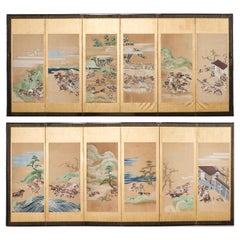
Pair of Japanese Edo/Tokugawa Screens Tale of Heiki
Located in Rio Vista, CA
Monumental pair of late 18th century Japanese Edo/Tokugawa period byobu screens depicting the battles between Taira and Minamoto. The screens have six panels each with individual sce...
Category
19th Century Edo Antique Japanese Paintings and Screens
Materials
Brass, Gold Leaf
Rare Antique Japanese Folding Screen by Kano Tanshin
By Kano Tanshin
Located in Atlanta, GA
An exquisite Japanese folding screen painted and signed by Kano Tanshin (Morimasa) (1658-1719), circa early Edo Period. An important member of the Kano painter family, the son of Kano Tanyu...
Category
17th Century Japonisme Antique Japanese Paintings and Screens
Materials
Brass
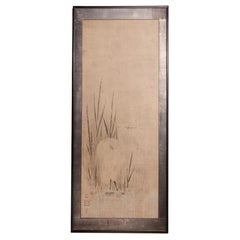
Antique Japanese Suibokuga Egrets by Kano Tokinobu, 17th century.
Located in Point Richmond, CA
Antique Japanese Suibokuga Egrets by Kano Tokinobu, 17th century.
A sumi-e ink on paper painting illustrating two egrets in reserve with no outlines contrasting with the reeds from the marsh in the background. The painting with 3 vermillion seals of the artist in the lower left corner. Japanese dry mount paper on a wood frame with thin brocade border silver leafed surround and lacquered wood outer frame.
Condition: Lighter discoloration on the lower portion of the painting, other minor signs of age, wear, stains and repairs otherwise fine condition.
Age: Painting Edo Period, circa 1670. Mounting circa 1985.
Image: 51-1/2 in. x 20-1/2 in. (131cm x 52cm)
Frame 59-1/4 in. x 25-1/4 in. (150cm x 64cm)
Weight: 6 lbs.
Provenance:
with Honeychurch Antiques...
Category
1670s Edo Antique Japanese Paintings and Screens
Materials
Paper
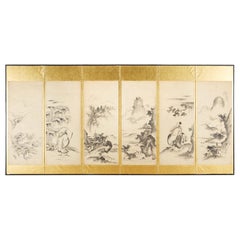
Japanese Edo Six-Panel Haboku Landscapes of Seasons
Located in Rio Vista, CA
19th century Japanese Edo period six-panel screen painted in Haboku (splashed ink) style. Depicts Four Seasons landscape scenes with two portraits of Chinese sages. One sage is trave...
Category
19th Century Edo Antique Japanese Paintings and Screens
Materials
Gold Leaf
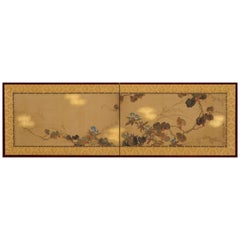
Japanese Screen Painting, Early 19th Century, Autumn Flowers by Sakai Hoitsu
Located in Kyoto, JP
A two-fold Japanese screen by the Rimpa school artist Sakai Hoitsu (1761-1828), Japan, 19th century, Edo period.
This small Japanese folding screen pai...
Category
Early 19th Century Edo Antique Japanese Paintings and Screens
Materials
Wood, Silk
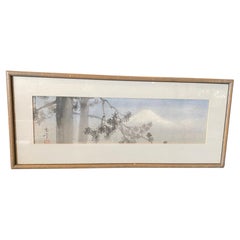
Kakunen Tsuruoka Signed Original Japanese Watercolor Painting of Mount Fuji 1927
Located in Studio City, CA
A wonderful and quite captivating original watercolor landscape painting by Japanese artist Kakunen (Tokutaro) Tsuruoka (1892–1977). The work features a dawn view of Mount (Mt.) Fuj...
Category
1920s Showa Vintage Japanese Paintings and Screens
Materials
Paint, Paper
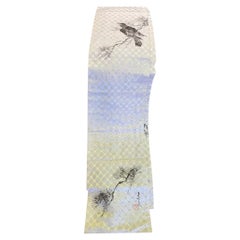
Japanese Signed Stamped Hand Drawn Silk Obi Sash Belt with Crow, Mid-1900
Located in Studio City, CA
A wonderful handmade vintage silk Obi sash/ belt featuring a rather unique hand-drawn scene with a crow and trees.
Signed and stamped by the artist...
Category
Mid-20th Century Showa Japanese Paintings and Screens
Materials
Silk
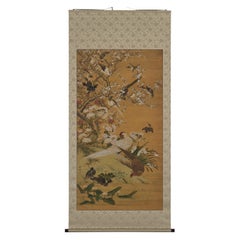
19th Century Japanese Scroll Painting, Birds
Flowers of the Four Seasons
Located in Kyoto, JP
Birds and flowers of the four seasons
Early to mid-19th century
Ink, pigment and gofun on silk
Unidentified artist
Signature: S...
Category
1830s Edo Antique Japanese Paintings and Screens
Materials
Silk
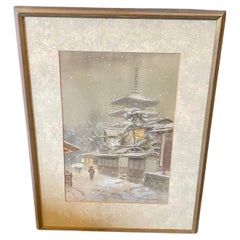
Fukutaro Terauchi Signed Original Japanese Watercolor Painting Temple in Snow
Located in Studio City, CA
A wonderful and quite evocative original watercolor painting on wove paper by Japanese artist Fukutaro Terauchi (1891-1964) featuring a serene village landscape scene with a large to...
Category
Mid-20th Century Showa Japanese Paintings and Screens
Materials
Wood, Paint, Paper
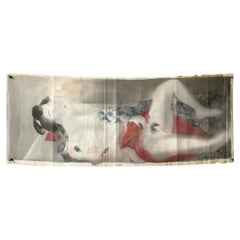
Early 20th century Japanese Shunga Painting Woman With Baby
Located in Chiba, JP
WOMAN WITH BABY
A hand-drawn shunga (erotic art) on highly transparent silk. Early 20th century, Japan.
Dimensions: 75.7 × 30 cm (29.8 × 11.8 in).
Shows natural signs of aging and o...
Category
Early 20th Century Meiji Japanese Paintings and Screens
Materials
Silk
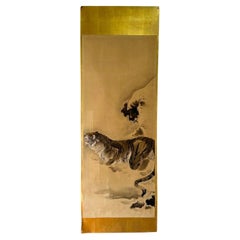
Late 19th century (Meiji period) painting depicting tiger
Located in Fukuoka, JP
Antique Tiger Painting on Paper – Meiji Period
A striking depiction of a tiger, painted on paper and signed by the artist. This work was originally part of a Japanese byobu folding ...
Category
Late 19th Century Meiji Antique Japanese Paintings and Screens
Materials
Gold Leaf
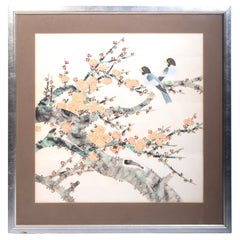
Large Japanese Cherry Blossom
Sakura
And Two Birds Framed Watercolour C.1950
Located in London, GB
Large Framed Japanese Cherry Blossom 'Sakura' And Two Birds Watercolour
Dimensions:
Frame: 86cm x 87cm
Painting: 64cm x 65cm
In good condition commensurate with age.
Please messag...
Category
1950s Vintage Japanese Paintings and Screens
Materials
Paint, Paper
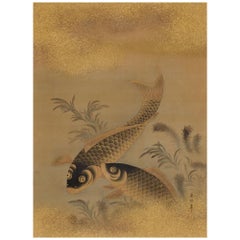
Japanese Painting, Hanging Scroll, Mid 19th Century, Koi and Water Plants
By Iwase Hirotaka
Located in Kyoto, JP
Iwase Hirotaka (1808-1877)
Koi and Water Plants
Hanging scroll, ink, color, gold wash and gold flecks on silk
Inscription: Hirotaka
Seal: Ille...
Category
1860s Edo Antique Japanese Paintings and Screens
Materials
Silk
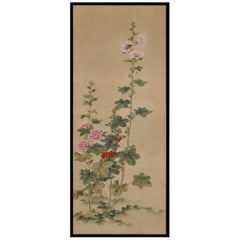
Mid 19th Century Framed Japanese Painting. Snail, Wasp
Hollyhock.
Located in Kyoto, JP
Obata Tosho (1812-1886)
Snail, Wasp & Hollyhock
Late Edo period, mid 19th Century
Framed Japanese Painting. Ink and color on paper.
Individually framed 19th century bird and flow...
Category
Mid-19th Century Edo Antique Japanese Paintings and Screens
Materials
Paper
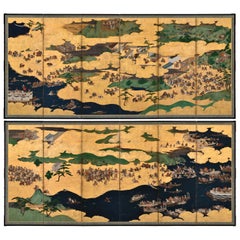
Late 17th Century Japanese Screen Pair. Battle of Ichi-no-tani and Yashima.
Located in Kyoto, JP
Anonymous
Late 17th Century
Battle of Ichi-no-tani & Yashima
Dimensions: Each Screen: H. 175 cm x W. 385 cm (69” x 151.5”)
This pair of Japanese screens depict two significant battles from the Genpei War (1180–85), as recounted in the Tale of the Heike, a semi-historical epic chronicling the conflict between rival clans for control of Japan, written in the early 1200s.
Each screen portrays a single battle through a series of small episodes, framed by gold clouds, landscape elements, and architectural features. True to the style of many screens inspired by The Tale of the Heike, the scenes are rendered in lavish colors and gold, downplaying the brutality of the warfare. Although based on real events, these narratives often glorified and romanticized the heroic feats of the warriors. Viewers at the time would have been familiar with the story’s details, leading to a proliferation of paintings on folding screens inspired by this theme from the late Muromachi to the early Edo periods.
On the right screen, we see the Minamoto’s attack on the Taira, who have retreated from the capital, Kyoto, toward the sea. The central building represents the temporary Taira headquarters, where Taira soldiers are holding the young Emperor Antoku. The Minamoto plan to launch a surprise attack from the rear after descending the steep cliff known as Ichi-no-tani, depicted at the top center. This scene highlights the tactical brilliance of Minamoto commander Yoshitsune and the courage of his men.
The left screen captures moments from the Battle of Yashima...
Category
Late 17th Century Edo Antique Japanese Paintings and Screens
Materials
Gold Leaf
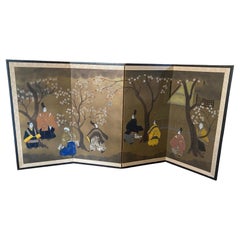
Japanese Asian Four-Panel Folding Byobu Showa Screen Tale of Genji
Cherry Tree
Located in Studio City, CA
A gorgeous four-panel Japanese Byobu folding screen depicting a scene from the Classic Japanese narrative "Tale of Genji" featuring various characters in a cherry blossom tree villag...
Category
20th Century Showa Japanese Paintings and Screens
Materials
Gold Leaf
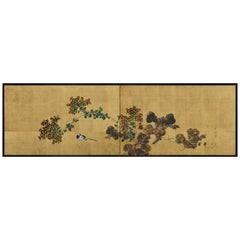
Japanese Screen, Early 20th Century Wagtail
Chrysanthemum by Ishizaki Koyo
Located in Kyoto, JP
Ishizaki Koyo (1884-1947)
Wagtail & Chrysanthemum
Early 20th century
Folding screen in two-panels. Ink, pigments and gofun on gold leaf.
Sign: Koyo
Seal: Koyo
This ...
Category
Early 20th Century Taisho Japanese Paintings and Screens
Materials
Gold Leaf
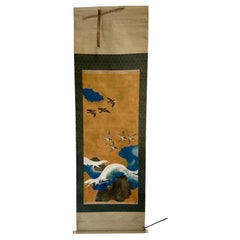
Early 20th c. scroll depicting birds flying over the waves
Located in Fukuoka, JP
Unique signed Hanging Scroll depicting birds flying over the waves.
Age: First half of the 20th century
Size: Overall 203/64.5cm ( 79.8 / 25.3inch ) , only painting part:117/50....
Category
Early 20th Century Taisho Japanese Paintings and Screens
Materials
Wood, Paper
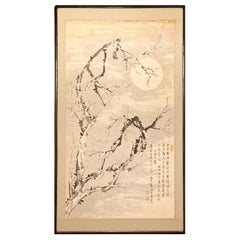
Japanese Single Panel Painting Moon and Plum Design
Winter Scene
Located in Hudson, NY
Meiji period (1868-1912) ink painting of plum branches in bloom against a full moon with calligraphy. The calligraphy is a poem about winter. Signature reads: Matsuura Ryosai, Dated:...
Category
Late 19th Century Meiji Antique Japanese Paintings and Screens
Materials
Paper
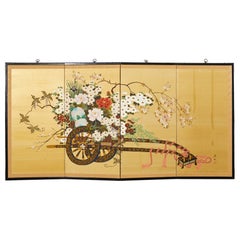
Japanese Showa Four Panel Screen Hanaguruma Flower Cart
Located in Rio Vista, CA
Beautiful Japanese Showa period four panel silk screen depicting a colorful Hanaguruma or flower cart. A bountiful cornucopia of peonies, irises, wisteria, and chrysanthemums set in ...
Category
20th Century Showa Japanese Paintings and Screens
Materials
Brass
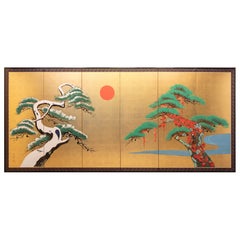
A six-panel folding screen with pine trees beneath the red sun
Located in Milano, IT
A six-panel folding screen with a gold-leaf ground, depicting two pine trees with a red sun at the center.
On the left, a snow-covered pine is shown with a sinuous, knotted trunk and...
Category
Late 19th Century Antique Japanese Paintings and Screens
Materials
Gold Leaf
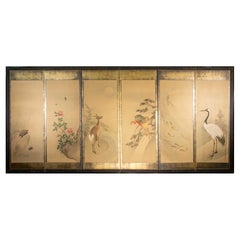
A six-panel folding screen of symbolic animals and peonies
Located in Milano, IT
A six-panel folding screen with applied paper on a ground of gold and silver leaf, featuring six motifs inspired by traditional Japanese symbolism. From left to right can be seen: tw...
Category
Early 19th Century Antique Japanese Paintings and Screens
Materials
Paper
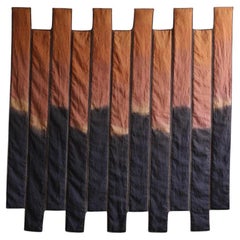
The sky visible at Honmonji Temple Ⅲ by Blue Tip Atelier
Located in Sammu-shi, Chiba
Title : The sky visible at Honmonji Temple Ⅲ
Japan / 2024s
Size : w1620 x h1630 mm
The sky can be seen from Honmonji Temple, which the artist passes while running, a hobby of her...
Category
2010s Modern Japanese Paintings and Screens
Materials
Linen
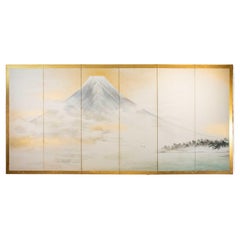
A six-panel folding screen depicting Mount Fuji seen from Lake Kawaguchi
Located in Milano, IT
A Japanese six-panel screen painted on paper and gold powder, depicting the majestic Mount Fuji surrounded by clouds and mist, as seen from Lake Kawaguchi. The snow-capped peak stand...
Category
Late 19th Century Antique Japanese Paintings and Screens
Materials
Gold Leaf
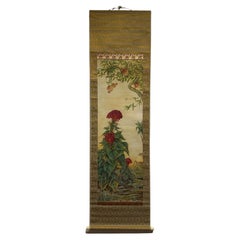
Fine Japanese Floral Painting Scroll, Taisho Period, Early 20th Century
Located in Fukuoka, JP
A superb early 20th-century Japanese hanging scroll (kakejiku) from the Taisho period, featuring an elegant and vibrant floral painting. The artwork is executed with refined skill an...
Category
Early 20th Century Taisho Japanese Paintings and Screens
Materials
Wood, Paper
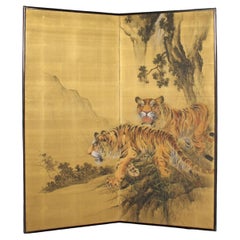
B13 Japanese Antiques 2panels, silk, folding Screen with Tiger
Located in Niiza, JP
Material: Silk on wooden frame
One piece: W685×H1525mm×D20mm,
Unfolded size: W1370mm
Folded size: W685×H1525×D40mm, 5kg
Packaging estimate (sandwiched with 5-10mm plywood): 12cm x 77...
Category
20th Century Japanese Paintings and Screens
Materials
Silk
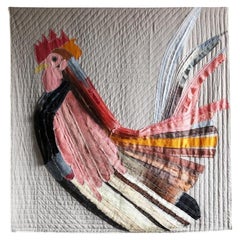
sky color bird by Blue Tip Atelier
Located in Sammu-shi, Chiba
Title : sky color bird
Japan / 2024s
Size : w1620 x h1635 mm
Scraps of fabric used in the Sky series are used to express birds in the colours of the sky.
The materials used are li...
Category
2010s Modern Japanese Paintings and Screens
Materials
Linen
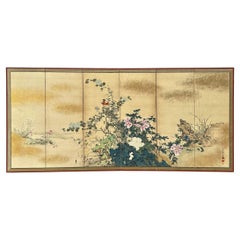
Peonies in Summer Light
Located in Fukuoka, JP
The screen blossoms with peonies — flowers often celebrated in Japanese art as symbols of prosperity, honor, and beauty. Painted in soft pinks and whites, they radiate under a gentle...
Category
20th Century Showa Japanese Paintings and Screens
Materials
Paper, Wood
$4,830
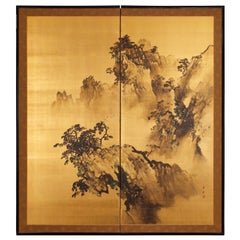
Japanese Two Panel Screen: Craggy Landscape on Gold Sil
Located in Hudson, NY
Dramatic Mountain landscape with gnarled pines. Signature reads: Shunsen. Ink painting on gold silk with silk brocade border.
Category
Early 20th Century Japanese Paintings and Screens
Materials
Brocade, Silk
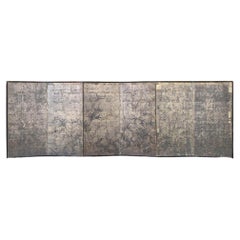
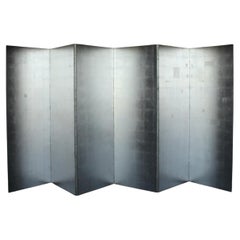
Evolving Elegance: An Oxidized Silver Screen from the Meiji Period
Located in Fukuoka, JP
This anodized 6-panel screen captures the serene and minimalistic beauty of a bamboo grove, embodying the aesthetic principles of the Edo period. The screen features subtle and delic...
Category
18th Century Edo Antique Japanese Paintings and Screens
Materials
Silver Leaf
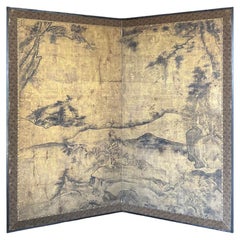
Early Edo Period Chinese-Inspired Screen
Located in Fukuoka, JP
This remarkable screen from the early Edo period, circa the 17th century, showcases the influence of early Chinese art forms with its intricate ink work on a gold leafed surface. The...
Category
17th Century Edo Antique Japanese Paintings and Screens
Materials
Gold Leaf
$3,496 Sale Price
56% Off
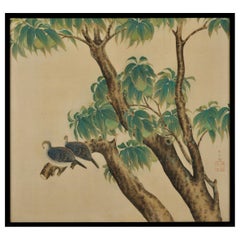
Japanese Framed Silk Painting, Turtledoves and Peaches, Taisho Era, circa 1920
Located in Kyoto, JP
Nakamura Daizaburo
Turtledoves in a Peach Tree
Taisho period, circa 1920
Framed painting. Mineral pigments, ink and gofun on silk
Signed: Daizaburo
Dimensions (framed)...
Category
1910s Taisho Vintage Japanese Paintings and Screens
Materials
Wood, Silk
Showa Delicate Floral Screen
Located in Fukuoka, JP
This graceful two-panel screen captures the essence of summer with its subtle depiction of slender grasses and fine lines, artfully arranged against a golden background. The screen e...
Category
20th Century Showa Japanese Paintings and Screens
Materials
Gold Leaf

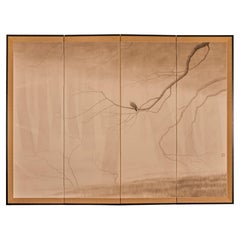
Japanese Four Panel Screen: Lone Dove
Located in Hudson, NY
Beautifully painted dove on a branch in the early morning mist in a muted wooded landscape.
Ink on buff mulberry paper with silk brocade border and black lacquer trim. Seal reads: ...
Category
Early 20th Century Japanese Paintings and Screens
Materials
Brocade, Silk, Lacquer, Paper
Japanese Two Panel Screen: Pomegranate Tree
Located in Hudson, NY
With various flowers, manderin ducks and garden stone accented with gold leaf on ground surface. Nagasaki School Painting.
Category
Mid-19th Century Antique Japanese Paintings and Screens
Materials
Silver Leaf
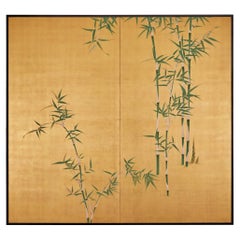
Japanese Two Panel Screen: Young Bamboo on Gold
Located in Hudson, NY
Symbolizing the Sun, gold is often used in shrines and temples in Japan. Gold has been extensively recognized to represent wealth, while bamboo is said to bring good luck due to its ability to regenerate in the forest. A beautiful composition of the two together...
Category
Late 19th Century Antique Japanese Paintings and Screens
Materials
Gold
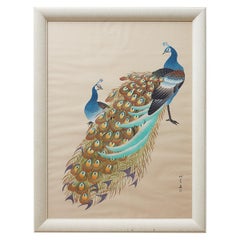
Japanese Showa Period Peacocks Painted on Silk
Located in Rio Vista, CA
Colorful Japanese ink and color on silk Showa painting of a pair of peacocks. Vivid colors and beautiful details with a signature and seal on right side bottom. Framed in a midcentur...
Category
20th Century Showa Japanese Paintings and Screens
Materials
Silk, Plexiglass, Paper, Wood
$1,440 Sale Price
20% Off
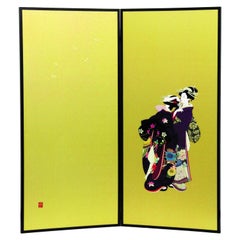
Japanese Contemporary Black Gold Silk Brocade Two-Panel Folding Screen
Located in Takarazuka, JP
Exceptional Japanese contemporary two-panel "byobu" or folding screen featuring two graceful ladies dressed in elegant formal traditional Japanese kimonos. This folding screen is ins...
Category
21st Century and Contemporary Meiji Japanese Paintings and Screens
Materials
Gold
18th Century Japanese Two-Panel Screen Collection of Fans on Gold
Located in Hudson, NY
18th century Japanese Screen of a Collection of Fans. Paintings on fans depict famous Japanese painting subjects, this screen was most li...
Category
18th Century Edo Antique Japanese Paintings and Screens
Materials
Gold Leaf

B81 Old Japanese Antiques 6panels, Silver Paper, folding Screen, Black remmed
Located in Niiza, JP
Silver paper folding screen
Material: Paper pasted on wooden frame
1 piece: Width 600 x Height 1750 x Depth 20 mm
Expanded size: Width 3630 mm
Folded size: Width 615 x Height 1750 x ...
Category
20th Century Japanese Paintings and Screens
Materials
Paper
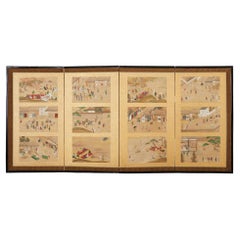
19th Century Japanese Meiji Four Panel Screen Festival Scenes
Located in Rio Vista, CA
Colorful late 19th century late Meiji period four-panel byobu screen featuring 12 scenes of a festival preparation. The intricately painted scenes have vibrant natural color pigments...
Category
19th Century Meiji Antique Japanese Paintings and Screens
Materials
Brass
Still Thinking About These?
All Recently ViewedMore Ways To Browse
Ogata Korin
Painted Panel Screen Birds
Antique Chinese Black Lacquer Screen
Antique Falconry
Carved Stone Panel
Chinese Carved Hardwood Screen
Chinese Folding Silk Screen Art
Chinese Paint Brushes
Chinese Pearl And Lacquer Screen
Gold Screen Crane
Japanese 4 Panel Screen
Japanese Autumn Screen
Japanese Calligraphy Screen
Japanese Cherry Blossom Screen
Japanese Snow Painting
Kimono Rack
Korean Painted Screen
Rinpa School