Mid-20th Century Paintings and Screens
to
28
149
39
219
24
12
4
3
2
1
152
682
946
151
290
219
114
40
3
30
16
14
25
36
27
30
8
95
92
65
63
48
158
122
88
29
18
219
219
219
11
3
2
2
1
Period: Mid-20th Century
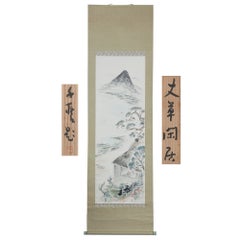
Lovely 20th Century Sen
yo Ogawa Scroll Painting Japan Artist Flowers Painted
Located in Amsterdam, Noord Holland
Sen'yo Ogawa
1882-1971
Japan painter. Kyoto production. Name Tasaburo. After served as apprentice of the Buddhist teacher, I learned a Movie to Chu Asai, exhibited oil paintings to...
Category
Japanese Showa Mid-20th Century Paintings and Screens
Materials
Silk

$1,486 Sale Price
25% Off
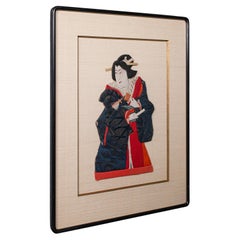
Vintage Geisha Portrait, Japanese Textile Relief Costume Picture, Art Deco, 1940
Located in Hele, Devon, GB
This is a vintage Geisha portrait. A Japanese, padded textile relief costume study in silk cotton, dating to the Art Deco period, circa 1940. A fascinating and decorative study, rich...
Category
Japanese Art Deco Vintage Mid-20th Century Paintings and Screens
Materials
Textile, Glass
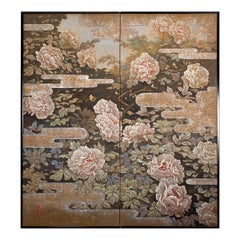
Japanese Two Panel Screen Peonies In the Mist
Located in Hudson, NY
Japanese Two Panel Screen: Peonies In the Mist. Showa period (1926 - 1945) painting in oil on canvas of peonies with gold and silver dust clouds. Signature reads, Seishu.
Category
Japanese Showa Vintage Mid-20th Century Paintings and Screens
Materials
Gold Leaf, Silver Leaf
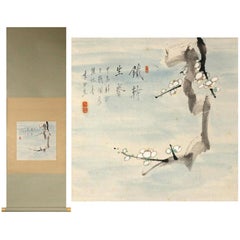
Lovely Nihonga Scene Showa Period Scroll Japan Artist Fujimoto Kida
Located in Amsterdam, Noord Holland
It is a work produced by Fujimoto Kida as you can see.
It is composed of a calm and cool texture,
and combined with the sanction on the top, it is a very tasty work.
"Fujimoto K...
Category
Japanese Showa Mid-20th Century Paintings and Screens
Materials
Silk
$816 Sale Price
20% Off
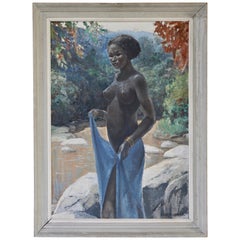
Figurative Painting of a African Nude Woman by Rob Francken
Located in Antwerp, BE
Painting by a nude African woman in Congo made by the Dutch painter Rob Francken.
49 x 69 cm unframed, 61 x 81 x 4 inches in white painted wood frame.
Category
Dutch Mid-Century Modern Mid-20th Century Paintings and Screens
Materials
Wood
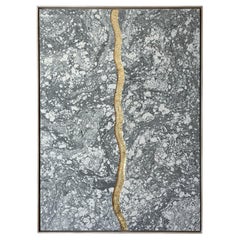
Vintage kimono textile art " Marble Story ~ Healing ~" by ikasu Grey Japan
By Kimono ikasu
Located in Setagaya City, JP
<
This work uses a vintage kimono fabric with marble pattern, that makes it look like a real piece of marble.
The line in the middle symbolizes “kintsugi” - concept of wabi-sabi, which values imperfection, impermanence, and the beauty of aging.
It is elegantly framed with paulownia wood originally used for kimono chest-of-drawers, and is filled with storytelling and sense of luxury.
I used pieces of kimono that could no longer be used as clothing and kiritansu chest-of-drawers that would normally be discarded to create the ultimate upcycled piece.
<< Explanation and meaning of pattern and colors
Kintsugi (金継ぎ), which translates to "golden joinery" or "golden repair," is a traditional Japanese art form of repairing broken pottery with lacquer mixed with powdered gold, silver, or platinum. I used this tecnique here to "repair" antique kimono by transforming it into art work. Beyond its literal meaning of mending broken ceramics, kintsugi carries profound philosophical and cultural significance in Japanese tradition:
・Embracing Imperfection: Kintsugi celebrates imperfection and impermanence. Rather than disguising or concealing flaws, it highlights them, treating the breakage as part of the object's history. This philosophy encourages acceptance of imperfection as an essential aspect of life, beauty, and human experience.
・Wabi-Sabi Aesthetic: Kintsugi embodies the principles of wabi-sabi, an aesthetic worldview centered on the acceptance of transience and imperfection. Wabi-sabi values simplicity, authenticity, and the beauty of things that are imperfect, impermanent, and incomplete. Kintsugi exemplifies these principles by turning what might be considered flaws into features that enhance the object's beauty and character.
・Resilience and Transformation: The act of repairing broken things with precious metals symbolizes resilience and transformation. Instead of discarding or replacing the broken object, kintsugi honors its history and transforms it into something new and valuable. This reflects broader philosophical themes of overcoming adversity, finding beauty in imperfection, and embracing change.
・Honoring the Past: Kintsugi preserves and honors the history of the object. Rather than erasing or ignoring its past, it acknowledges and celebrates it. This aspect of kintsugi can be seen as a metaphor for honoring our own personal histories, including the challenges and setbacks we have faced, and recognizing how they have shaped us into who we are today.
・Spiritual and Philosophical Symbolism: Kintsugi has spiritual and philosophical implications, reflecting concepts such as the interconnectedness of all things, the cycle of life and death, and the pursuit of harmony and balance. The process of repairing broken objects with precious metals is seen as a metaphor for spiritual growth, enlightenment, and the journey towards wholeness.
Overall, kintsugi represents not only a practical technique for repairing ceramics but also a profound philosophical and cultural perspective on life, beauty, and the human experience. It embodies values such as resilience, acceptance, and the transformative power of embracing imperfection.
<< Characteristics of the fabric
This vintage textile is hand-painted with a traditional painting technique where the colors are added on wet surface, which creates an effect of marble.
<< About the frame
Kiritansu - chest-of-drawers for kimono, is traditionally made from paulownia wood, a uniquely Japanese material closely tied to the world of kimonos.
Paulownia wood is known as the lightest wood in Japan, prased for its natural luster, resistance to moisture, and resilience against cracking. Since ancient times, it has been used in crafting furniture, chests, and musical instruments.
During the Edo period, it became customary to store cherished kimonos in paulownia chests...
Category
Japanese Japonisme Vintage Mid-20th Century Paintings and Screens
Materials
Gold Leaf
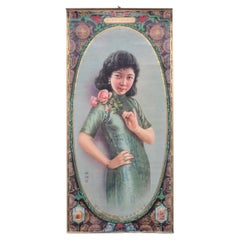
Vintage Victory Cigarettes Advertisement Poster, c. 1930
Located in Chicago, IL
This poster from the 1930s melds the meticulous detail of traditional Chinese painting with the craft of color lithography and a side of risque. Posters like this one, influenced by ...
Category
Chinese Vintage Mid-20th Century Paintings and Screens
Materials
Paint, Paper
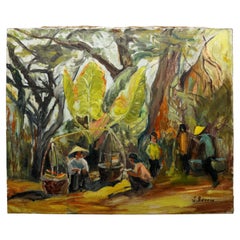
Vietnamese Scene by French Artist J Buttin
Located in Jersey City, NJ
J Buttin was a French artist who lived in Indochina. This painting shows water carrier women under banana leaves. It is signed.. The painting has been recently cleaned by a professio...
Category
French Vintage Mid-20th Century Paintings and Screens
Materials
Canvas, Wood
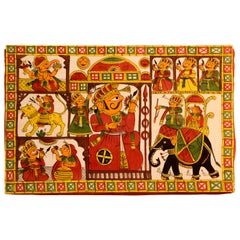
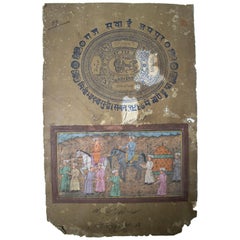
Asian Decorative Art Phad Painting Rajasthan Royal Procession
By Rajhastani
Located in Moreno Valley, CA
Asian Decorative Art Phad Painting Rajasthan Royal Procession.
Add a festive touch with this superbly hand painted Phad painting of a Rajput Royal Pr...
Category
Indian Folk Art Vintage Mid-20th Century Paintings and Screens
Materials
Silk
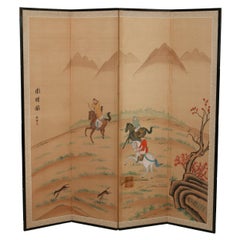
Vintage Asian Hunting Scene Four Panel Room Screen With Black Lacquered Edges an
Located in Locust Valley, NY
A super chic vintage asian screen showing a hunting scene with cherry blossoms. The screen has (4) 18" panels, black lacquered edges and brass fi...
Category
Unknown Chinoiserie Mid-20th Century Paintings and Screens
Materials
Brass
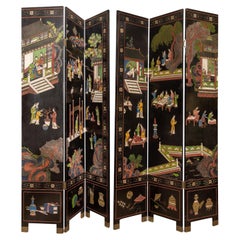
Pair of Vintage Asian 3 Panel Screens with Intricate Hand Painted Detail
Located in Locust Valley, NY
Super Chic pair of vintage Asian 3 Panel black lacquered screens with beautiful carved intricate detail and hand painted. Each side is displayin...
Category
Unknown Chinese Export Mid-20th Century Paintings and Screens
Materials
Wood
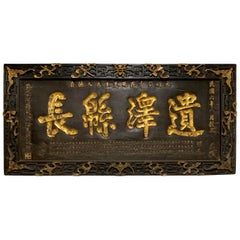
Large Chinese Heavily Carved Wood Relief Plaque Wall Mounted Sculpture
Located in West Hartford, CT
Stunning vintage heavily carved relief, ready to hang. Now, more than ever, home is where the heart is.
Category
Asian Chinese Export Mid-20th Century Paintings and Screens
Materials
Wood
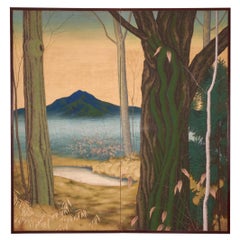
Japanese Two Panel Screen: Woodland Dream
Located in Hudson, NY
An unusual subject of a dream-like woodland landscape with a distant mountain. Heavy mineral pigments on paper with brown lacquer trim and bronze hardware.
Category
Japanese Mid-20th Century Paintings and Screens
Materials
Bronze
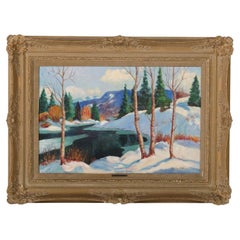
Oil On canvas Signed By Anita McNamee, Winter Snow Landscape
Located in West Palm Beach, FL
This is an original painting, oil on canvas by Anita McNamee (FL, Circa mid 20th century.)
This is a post impressionism Winter Snow Landscape wi...
Category
American Prairie School Mid-20th Century Paintings and Screens
Materials
Canvas, Wood, Paint
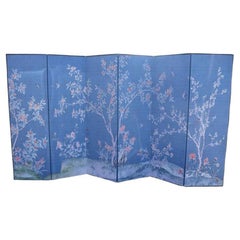
Blue Robert Crowder Screen
Located in Los Angeles, CA
Screen by Robert Crowder. With blue background hand painted pink roses with birds and butterflies. Signed on the bottom right corner. Each in...
Category
American Vintage Mid-20th Century Paintings and Screens
Materials
Paint
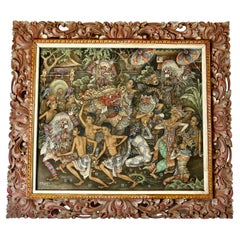
$16,000
Mythical Balinese Painting in Original Carved Frame by W Rejamus
Located in Godshill, Isle of Wight
Mythical Balinese Painting in Original Carved Frame by W Rejamus
Wonderfull detail and incredibly colourful characters, very well executed, all in all a very interesting piece and s...
Category
Folk Art Vintage Mid-20th Century Paintings and Screens
Materials
Teak
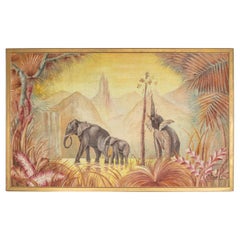
Vintage 20th Century Framed Oil On Canvas Elephant Family Painting c.1960
Located in Royal Tunbridge Wells, Kent
A stunning piece of mid 20th Century oil painting, showing a family of elephants strolling through the jungle. The parents lead their young amidst the greenery. It's a nice piece for...
Category
British Other Vintage Mid-20th Century Paintings and Screens
Materials
Canvas, Wood
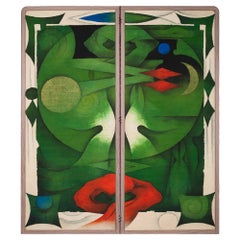
Japanese Two Panel Screen Psychedelic Forms
Located in Hudson, NY
Celestial images on hand-dyed tsumugi cloth. Makers mark: unreadable.
Category
Japanese Mid-20th Century Paintings and Screens
Materials
Fabric
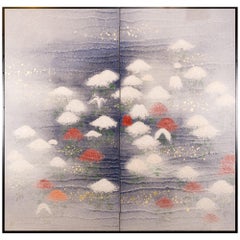
Japanese Two Panel Screen Chrysanthemums Through the Mist Obara Art Screen
Located in Hudson, NY
Japanese two panel screen: Chrysanthemums Through the Mist Obara Paper Art Screen. Surreal and masterful rendering of chrysanthemums cloaked in mist that varies in opacity made entirely of carefully arranged mulberry paper fibers in a Japanese art practice called Obara. Accented with gold leaf. Unique in terms of both execution and dreamlike mood. Made by Yamauchi Issei (b. 1929), stamped in the corner. Issei is well known throughout Japan as the leading artist in Obara Paper Art. Starting in 1948, he apprenticed with Fuji Tatsukichi, a leading proponent of the arts and crafts movement in Japan who worked to revive many cultural traditions on the brink of extinction. Issei started exhibiting in the Nitten in 1953, won the gold medal in 1963, and eventually became a juror. His artwork was given as a gift to the Showa Emperor of Japan, as well as dignitaries such as General Douglas MacArthur...
Category
Japanese Showa Mid-20th Century Paintings and Screens
Materials
Wood, Paper
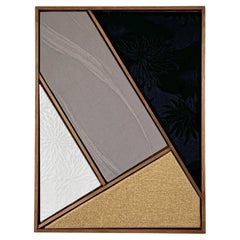
Vintage kimono textile art " Monochrome Geometry " by ikasu Gold Grey Japan
By Kimono ikasu
Located in Setagaya City, JP
This work is inspired by traditional Japanese nature colors symbolism, and is framed in paulownia wood originally used for a kimono chest-of-drawers.
It is filled with storytelling ...
Category
Japanese Japonisme Vintage Mid-20th Century Paintings and Screens
Materials
Silk, Wood
A Burmese painting showing a colourful scene of a a ceremonial celebration
Located in Central England, GB
This most eye catching piece of fine artwork dates to circa 1930 and is a Burmese painting on fine canvas laid onto a card and shows a kaleidoscope typ...
Category
Burmese Primitive Mid-20th Century Paintings and Screens
Materials
Canvas, Wood

VIntage kimono textile art " Geometry ~ Chrysanthemums ~" by ikasu White Japan
By Kimono ikasu
Located in Setagaya City, JP
<
This work is inspired by traditional Japanese natural symbolism, and is framed in paulownia wood originally used for a kimono chest-of-drawers.
It is elegantly framed with...
Category
Japanese Japonisme Vintage Mid-20th Century Paintings and Screens
Materials
Silk, Wood

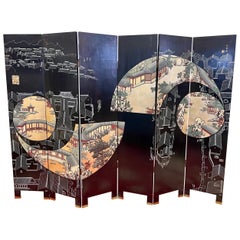
Chinese Chinoiserie Black Lacquered and Gold Coromandel 6 Panel Screen
Located in West Hartford, CT
Spectacular Chinese black lacquered 6 panel folding screen incised with gold gilt and white paint featuring Chinese village scenery. Feet...
Category
Chinese Chinese Export Mid-20th Century Paintings and Screens
Materials
Wood, Lacquer
$2,316 Sale Price
44% Off
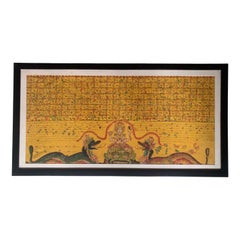
Framed Hindu Calendar Kamasan Painting from Bali, Indonesia
Located in Jimbaran, Bali
This framed Hindu Calendar is a 'Kamasan' cotton textile painting from Bali, Indonesia. It features a black wood frame and glass front. Along the bottom there are two "Naga" dragons ...
Category
Balinese Tribal Vintage Mid-20th Century Paintings and Screens
Materials
Cotton, Paint
Horse Racing Scene in Impressionist Style by Otto Dill
Located in Lantau, HK
Otto Dill was a German painter known for his Impressionist depictions of animals, landscapes, and equestrian sports. He was a member of the Munich Secession, a cooperative of artists...
Category
German Mid-20th Century Paintings and Screens
Materials
Canvas

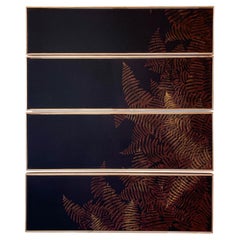
Vintage kimono textile art " Fern ~ Connection to Nature ~" by ikasu Black Japan
By Kimono ikasu
Located in Setagaya City, JP
This work uses an antique tomesode (festive kind of kimono) with fern design to evoke feelings of tranquility, harmony, and appreciation for the beauty of the environment. Can be used both vertically and horizontally.
It is elegantly framed with paulownia wood originally used for kimono chest-of-drawers, and is filled with storytelling and sense of luxury.
I used pieces of kimono that could no longer be used as clothing and kiritansu chest-of-drawers that would normally be discarded to create the ultimate upcycled piece.
<< Explanation of colors and patterns
In Japanese traditional culture, ferns, particularly the Japanese painted fern (Athyrium niponicum), hold several meanings and symbolisms:
・Elegance and Beauty: Ferns are admired for their graceful, delicate appearance and intricate leaf patterns. In Japanese aesthetics, they are appreciated for their natural beauty and are often used in gardens, landscapes, and floral arrangements to add a sense of refinement and elegance.
・Resilience and Perseverance: Ferns are known for their ability to thrive in diverse environments, including shady forests, rocky cliffs, and damp soil. Their resilience in the face of challenging conditions is seen as a symbol of endurance and perseverance. In Japanese culture, ferns may represent the ability to overcome adversity and flourish despite obstacles.
・Connection to Nature and Tranquility: Ferns are native to forested areas and are often associated with the natural world. In Japanese traditional culture, they symbolize a deep connection to nature and the importance of maintaining harmony with the environment. The lush green foliage of ferns evokes feelings of tranquility and peacefulness, making them popular motifs in Zen gardens and traditional landscape paintings.
・Purity and Simplicity: Ferns are emblematic of simplicity and purity in Japanese aesthetics. Their unassuming beauty and understated elegance reflect the principles of wabi-sabi, an aesthetic worldview that values imperfection, impermanence, and simplicity. Ferns may be used in tea ceremonies, Ikebana (flower arranging), and other traditional arts to evoke a sense of tranquility and appreciation for life's fleeting moments.
Overall, ferns in Japanese traditional culture symbolize elegance, resilience, connection to nature, purity, and simplicity. Their presence in art, literature, and landscape design underscores their enduring significance as symbols of natural beauty and spiritual resonance.
<< Characteristics of the fabric
This vintage textile is hand-painted with a traditional Japanese technique called "yuzen".
<< About the frame
Kiritansu - chest-of-drawers for kimono, is traditionally made from paulownia wood, a uniquely Japanese material closely tied to the world of kimonos.
Paulownia wood is known as the lightest wood in Japan, prased for its natural luster, resistance to moisture, and resilience against cracking. Since ancient times, it has been used in crafting furniture, chests, and musical instruments.
During the Edo period, it became customary to store cherished kimonos in paulownia chests...
Category
Japanese Japonisme Vintage Mid-20th Century Paintings and Screens
Materials
Silk, Wood
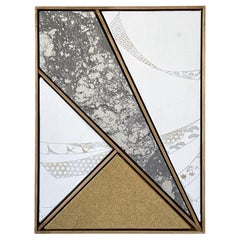
VIntage kimono textile art " Geometry ~ Marble ~" by ikasu Gold White Grey Japan
By Kimono ikasu
Located in Setagaya City, JP
This work is inspired by traditional Japanese nature motifs symbolism, and is framed in paulownia wood originally used for a kimono chest-of-drawers.
It is elegantly framed with pau...
Category
Japanese Japonisme Vintage Mid-20th Century Paintings and Screens
Materials
Silk, Wood
Vintage obi textile art " Camellia ~ Serendipity ~" by ikasu Blue Japan
By Kimono ikasu
Located in Setagaya City, JP
[Story behind the work]
This work is inspired by traditional Japanese nature motifs symbolism, and is framed in paulownia wood originally used for a kimono chest-of-drawers.
It is elegantly framed with paulownia wood originally used for kimono chest-of-drawers, and is filled with storytelling and sense of luxury.
In this artwork, the aim was to capture the the auspicious symbol of camellia used in antique kimono. Traditional Japanese culture, represented by the kimono, and wood, an integral element of Japanese craftsmanship, were used to bring this vision to life.
I used pieces of kimono that could no longer be used as clothing and kiritansu chest-of-drawers that would normally be discarded to create the ultimate upcycled piece.
[Explanation and meaning of pattern and colors]
This delicate piece features hand-drawn camellia motifs flowing gracefully on a softly brightened grayish background.
Camellias, native to Japan, bloom from winter to early spring. As an evergreen tree with green leaves throughout the year, it symbolizes the anticipation of spring and is considered an auspicious plant. Due to its seasonal significance and auspicious meanings, camellias have been used as motifs symbolizing good fortune. Additionally, they were highly valued for their use in oil, cosmetics, and medicine, representing nobility. Believed to possess the power to ward off misfortune, camellias also carry the meaning of "protection from calamity" and have strong ties to traditional ceremonies. In this artwork, camellias are delicately depicted alongside flowing branches, subtly representing good fortune with their pale pink and white hues.
"Sora-iro nezumi 空色鼠" refers to a light grayish color with a hint of blue, reminiscent of the slightly brightened sky on a lightly cloudy day. Popular during the late Edo period (19th cent.), it elegantly captures the slightly brighter sky pattern seen on lightly overcast days. Notably, the term "nezumi-iro" (mouse gray), popular during the late Edo period, was paired with brown tones, collectively known as "Forty-eight Teas and a Hundred Mice 四十八茶百鼠." Colors within the "nezumi" (gray) spectrum, particularly "sora-iro nezumi," were favored by young people for their cool and sophisticated appeal.
[Characteristics of the fabric]
The fabric features intricately woven patterns that reveal subtle gradations through dyeing, creating a grid pattern that transforms depending on the light conditions.
Originally, this fabric was part of a formal kimono known as a "hōmongi 訪問着," featuring motifs along the hem, shoulders, and sleeves. These motifs have been carefully selected and combined to create a unified piece of artwork.
[About the frame]
Kiritansu - chest-of-drawers for kimono, is traditionally made from paulownia wood, a uniquely Japanese material closely tied to the world of kimonos.
Paulownia wood is known as the lightest wood in Japan, prased for its natural luster, resistance to moisture, and resilience against cracking. Since ancient times, it has been used in crafting furniture, chests, and musical instruments.
During the Edo period, it became customary to store cherished kimonos in paulownia chests...
Category
Japanese Japonisme Vintage Mid-20th Century Paintings and Screens
Materials
Silk, Wood
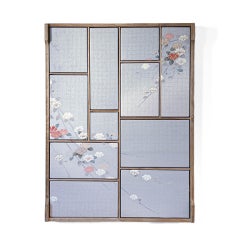
Vintage kimono textile art " Sunset Timelapse ~ Ephemerality ~" ikasu Red Japan
By Kimono ikasu
Located in Setagaya City, JP
<
The art piece uses two sides - front and reverse - of the same kimono, to show beautiful sea surrounding Japan, in hues and in late sunset, as a timelapse.
The frame for this work is made of paulownia wood taken from antique Kiritansu - chest-of-drawers for kimono.
I use antique kiritansu that can’t be used as furniture anymore to create basis and frames for my works. It adds them even more authentic atmosphere of traditional wabisabi spirit. Can you feel it?
<< Period / Story
The kimono used in this piece was originally crafted during Showa period (around 1960ies).
<< Explanation and meaning of pattern and colors
Sea waves, depicted in two color variations here, are a symbol of transience and Impermanence in Japanese culture. The ebb and flow of the tides, the ever-changing currents, and the relentless motion of the waves serve as reminders of the fleeting nature of life. This artwork featuring the sea convey themes of impermanence, reminding viewers to cherish the present moment and appreciate the beauty of life's fleeting moments.
The theme of impermanence is strengthen by two colors of the sea - the lighter in early hues and the darker when the sun is just about to set in the sea.
<< About the frame
This artwork frame is crafted from paulownia wood, a uniquely Japanese material closely tied to the world of kimonos, and it serves to convey the refined beauty of Japanese nature.
Paulownia wood is known as the lightest wood in Japan, prased for its natural luster, resistance to moisture, and resilience against cracking. Since ancient times, it has been used in crafting furniture, chests, and musical instruments.
Paulownia wood is closely linked to kimono culture. During the Edo period (17th cent.~), it became customary to store cherished kimonos in paulownia chests...
Category
Japanese Japonisme Vintage Mid-20th Century Paintings and Screens
Materials
Silk, Wood
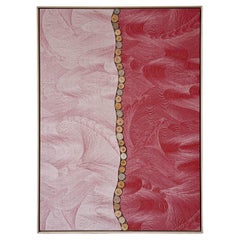
Japanese Two-Panel Screen "Women in Western Dress"
Located in Hudson, NY
Japanese Two Panel Screen: Women in Western Dress, Nihonga style painting of two young women in Western style summer clothing, sitting at water's edge and cooling off by putting their feet in the water. Showa period painting...
Category
Japanese Showa Vintage Mid-20th Century Paintings and Screens
Materials
Wood, Paper
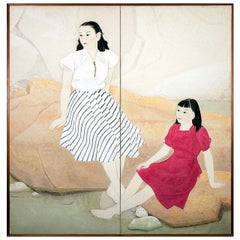
Japanese Two Panel Screen Plain Mulberry Paper
Located in Hudson, NY
(no image) on lattice frame. Pair available; Sold seperately.
Category
Japanese Mid-20th Century Paintings and Screens
Materials
Paper
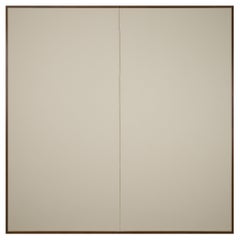
1950s Indian Mughal Paper Drawing of a Hunting Party on Antique Court Fee Stamp
Located in Marbella, ES
1950s Indian Mughal gouache colorful paper drawing of a hunting party on an antique court fee stamp official paper of the state of Jaipur.
Part of a l...
Category
Indian Mid-20th Century Paintings and Screens
Materials
Paper
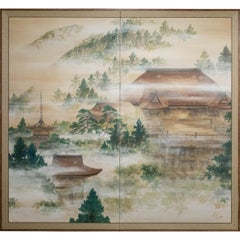
Japanese Two-Panel Screen "Spring Mist in Kyoto"
Located in Hudson, NY
Kyoto landscape featuring Kyomizu Shrine in all its glory in the Higashiyama Hills.
Artist signature and seal read: Asami Kojo
Mineral pigments on mu...
Category
Japanese Vintage Mid-20th Century Paintings and Screens
Materials
Silk, Paper
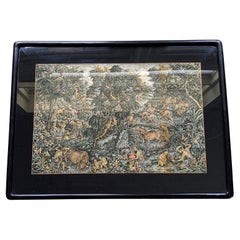
Original Balinese Traditional School Painting Harvest Artisan Signed and Framed
Located in Greer, SC
Stunning hand painted original Balinese traditional painting, featuring a scene of harvesting created in great detail. Signed by the artisan on the lower right hand corner. Measures ...
Category
Balinese Tribal Mid-20th Century Paintings and Screens
Materials
Glass, Wood, Paper
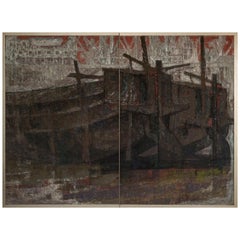
Japanese Two Panel Screen Harbor Scene in Abstract Form
Located in Hudson, NY
Abstracted painting of ships moored in the background. Painted by Nishide Kofuku and exhibited at the 1963 Nitten National Exhibition. Kofuku was born in 1926 in Shiga Prefecture. He...
Category
Japanese Showa Mid-20th Century Paintings and Screens
Materials
Metal, Brass
Oil on Canvas Painting "Bath House in Tokyo" by Frances Blakemore
Located in Hudson, NY
Oil on canvas: "Bath House in Tokyo" by Frances Blakemore
Frances Blakemore (1906-1997) was an American artist living for more than 50 years in Japa...
Category
Japanese Mid-20th Century Paintings and Screens
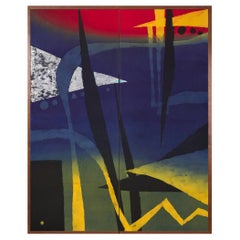
Japanese Two Panel Screen Geometric Design on Mounted Textile
Located in Hudson, NY
In strong primary colors. Makers seal reads: Yu.
Category
Japanese Mid-20th Century Paintings and Screens
Materials
Paint
20th Century Pair of Oil on Canvas Chevrolet Theme, 1930s
Located in LEGNY, FR
Not common pair of oil on canvas representing 1920s women repairing a Chevrolet car.
These canvas comes from an Automibile school in Barcelona (Spain).
...
Category
Spanish Art Deco Vintage Mid-20th Century Paintings and Screens
Materials
Canvas

$3,651 Sale Price / set
20% Off
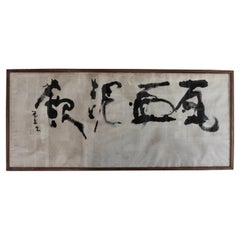
Gaboku Ogawa
Abstract Japanese Calligraphy
MOMA 1953
Located in Sharon, CT
A very important work, both historically and aesthetically-"Getting madly drunk out of an earthenware goblet", by Gaboku Ogawa c.1953,
exhibited in the Museum of Modern Art show "Abstract Japanese...
Category
Japanese Mid-Century Modern Mid-20th Century Paintings and Screens
Materials
Paper
Still Thinking About These?
All Recently ViewedMore Ways To Browse
Japanese Snow Painting
Kimono Rack
Korean Painted Screen
Rinpa School
Shoji Door
Antique Hawk Painting
Asian Screens Green
Asian Wood Wall Panels
Birds Folding Screen
Byobu Showa
Chinese Antique Signed Painting
Chinese Six Panel Coromandel Screen
Japanese Antique Wood Birds
Japanese Buddhist Screen
Japanese Silk Painting Ink
Japanese Watercolor Signed
Japanese Watercolour Signed
Japanese Wood Carved Panels