Edo Paintings and Screens

EDO STYLE

Edo furniture was created during a flourishing time for the decorative arts owing to the stability of the Tokugawa shogunate rule in Japan. Spanning from 1603 to 1867, this era of peace and economic growth supported artistic advancements in lacquer, woodblock printing, porcelain and other artisanal trades. Because the country was largely isolated, there was little outside influence, leading to centuries of exceptional attention to the design of its furnishings and the quality of its traditional arts.

Unlike during the Meiji period that followed, with an increase in domestic and international markets, furniture during the Edo period was predominately commissioned by the ruling class, although people from across social groups benefited from the burgeoning metropolitan hubs for artisanal trades. For instance, Kyoto became a major center for lacquer art. Most furniture pieces were made from wood such as cedar or ash, including the era’s sashimono cabinets, which involved fine joinery and were rooted in the Heian period.

Sashimono cabinets, which were built by master craftsmen in a range of different wood types owing to the various trees that populate Japan, occasionally featured a stack of slender drawers as well as sliding doors. They were popular with everyone from samurai to kabuki actors. Tansu storage chests crafted from wood with metal fittings were also common in Edo-period homes. Some were designed to be easily portable while others were made to double as staircases.

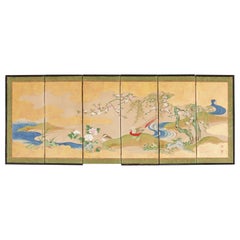
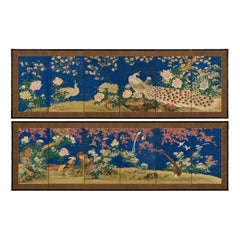
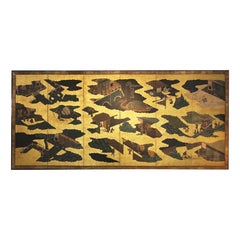
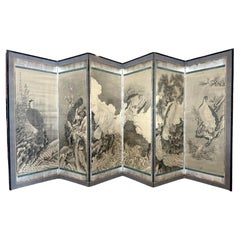
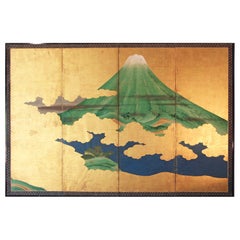
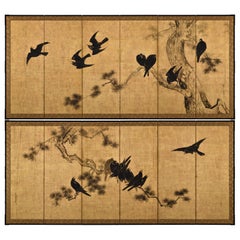
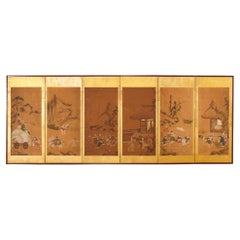
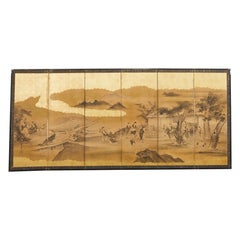
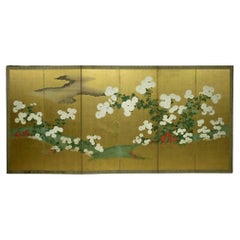
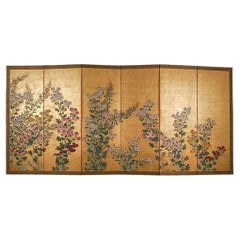
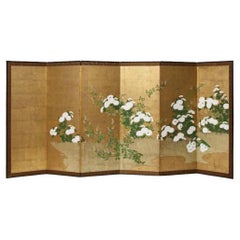
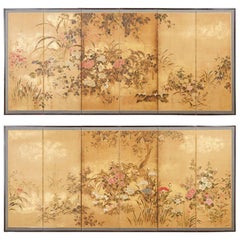
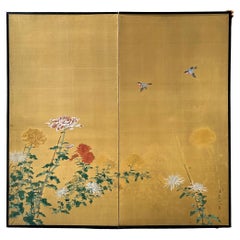
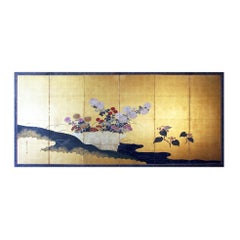
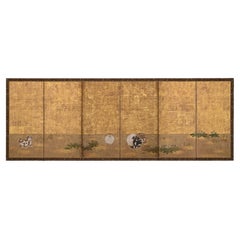
Painted folding screens, called byōbu, were also fashionable, with Japanese artists inspired by nature, literature and scenes of history and daily life to create vivid works. In Buddhist temples and the palatial homes of the aristocratic class, fusuma, or large sliding panels, would sometimes be adorned with gold or silver leaf. These dividers allowed interiors to change throughout the day, closing in small spaces for personal use or reflecting candlelight to illuminate communal spaces after dark.

Find a collection of Edo tables, lighting, decorative objects, wall decorations and more furniture on 1stDibs.

to
36
83
29
185
66
45
30
16
11
6
5
5
2
2
2
2
1
1
74
106
5
2
1
1
135
98
90
83
79
183
175
170
4
1
185
185
185
11
3
2
1
1
Style: Edo
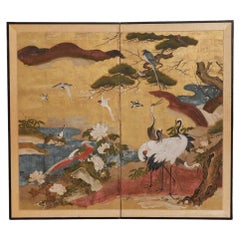
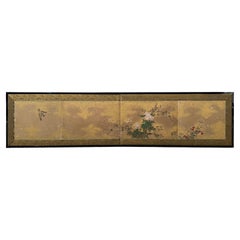
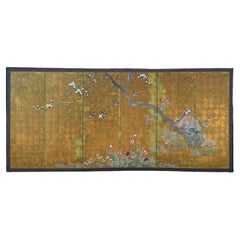
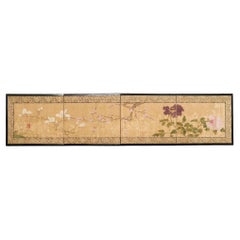
Antique Japanese Kachoga Kano School 2-Panel Screen, Edo Period
Located in Point Richmond, CA
Antique Japanese 2-panel Screen of Birds Flowers in a Landscape Setting, Kano School, Edo Period. This Kachoga subject of birds and flowers contains a brilliant mix of a variet...
Category

18th Century Japanese Antique Edo Paintings and Screens

Materials

Gold Leaf

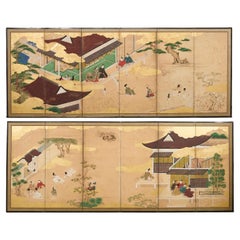
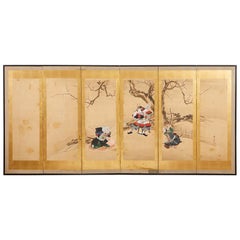
Pair Japanese Edo Six Panel Screens Legend of Minamoto
Located in Rio Vista, CA
Fascinating pair of large Japanese 19th century Edo period six-panel folding byobu screens depicting the legend of Minamoto No Yorimasa (Japanese Samurai 1106-1180). The pair of pain...
Category

19th Century Japanese Antique Edo Paintings and Screens

Materials

Brass, Gold Leaf

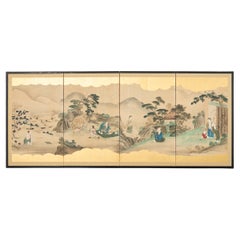
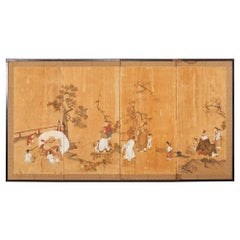
Japanese Edo Four Panel Screen Paragons of Filial Piety
Located in Rio Vista, CA
Late 19th century Edo period Japanese four panel folding byobu screen depicting four of the twenty-four paragons of filial piety. Beautifully painted in the Maruyama-Shijo style. The...
Category

19th Century Japanese Antique Edo Paintings and Screens

Materials

Brass, Gold Leaf

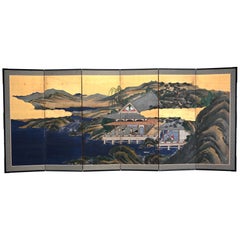
Edo-Style Six-Panel Japanese Byobu Screen with Gold Paint Landscape
Located in Hamburg, PA
This Asian screen print is a stunning six-panel byobu (folding screen) featuring a traditional Japanese landscape. The artwork showcases a serene scene with a lakeside pavilion set a...
Category

19th Century Antique Edo Paintings and Screens

Materials

Wood, Paint, Paper

Japanese Screen: Spring Offering
Located in Fukuoka, JP
Spring Offering is a small yet exquisitely refined Edo-period screen originally created as a backdrop for a Girls’ Day altar. Against a softly shimmering gold-leaf background, delica...
Category

18th Century Japanese Antique Edo Paintings and Screens

Materials

Paper, Wood

Japanese Screen: Spring Offering
$1,250 Sale Price
56% Off
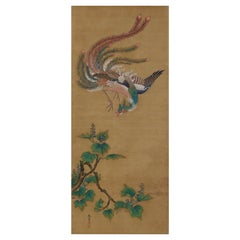
19th Century Japanese Silk Painting by Kano Chikanobu, Phoenix Paulownia
Located in Kyoto, JP
Birds & Flowers of the seasons Pheasants & Plum in Snow Unframed painting. Ink, pigment and gofun on silk Kano Chikanobu 1819-1888 Signature...
Category

Mid-19th Century Asian Antique Edo Paintings and Screens

Materials

Silk

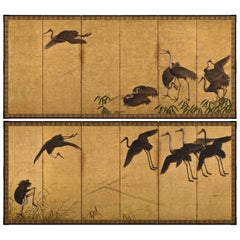
17th Century Japanese Screen Pair. Flock of Cranes. Ink and color on gold leaf.
Located in Kyoto, JP
A pair of six-fold Japanese screens from the 17th century depicting a flock of cranes arriving at their wintering grounds. The expansive scene is heavily atmospheric. The cranes are...
Category

17th Century Japanese Antique Edo Paintings and Screens

Materials

Gold Leaf

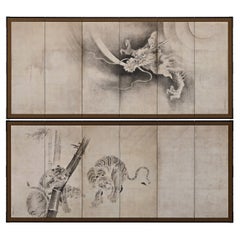
17th Century Japanese Screen Pair. Tiger Dragon by Kaiho Yusetsu
Located in Kyoto, JP
Kaiho Yusetsu (1598-1677) Tiger and Dragon Early Edo Period, Circa 1650 A Pair of Six-fold Japanese Screens. Ink and slight color on paper. Dimensions: Each screen: H. 171 cm x W. 380 cm (67.5’’ x 149.5’’) In this pair of early Edo period Japanese screens a group of tigers prowl in a bamboo grove whipped with fierce wind, while a dragon claws through clouds and mist. The dragon embodies elemental qualities - looming out of the mist, the coils of its body disappearing in the clouds. The dragon is calling for rain, symbolizing spring which is considered the fountain of life. On the other side, the tigers calls for the wind, symbolizing autumn which is considered the end of life. Tigers were familiar motifs within Japanese art from ancient times though the animals were imaginary to the people in the 17th century. While dragons and tigers are usually associated as sacred and ferocious, in this painting, both animals have rather amusing expressions. The tigers appear to glare at the dragon with cat-like eyes, and the look on the swirling dragon’s face appears almost affectionate - lending a playful flair to an otherwise magnificent theme. The tiger and dragon are cosmological symbols of the balancing forces in the world. Screens such as this were originally meant to express the fluctuating nature of the world. For Japanese in the early Edo period, they likely suggested the powers of the cosmos. In Japan the tiger and dragon motif was originally absorbed into the circles of Zen monasteries before spreading into the secular world. The theme especially appealed to the military classes with the Kano school, the official painters to the Shogun and the samurai, being the leading contributors. The painter of this pair of screens, Kaiho Yusetsu (1598-1677), was closely patronized by the third Shogun Tokugawa Iemitsu. In his later years he worked with Kano school artists...
Category

Mid-17th Century Japanese Antique Edo Paintings and Screens

Materials

Silk, Wood, Paper

Japanese Edo Six Panel Table Screen After Maruyama Okyo
Located in Rio Vista, CA
Fantastic diminutive Japanese Edo period table top screen depicting a lively water landscape with flora and fauna. The screen is beautifully painted o...
Category

19th Century Japanese Antique Edo Paintings and Screens

Materials

Brass, Gold Leaf

Mid 19th Century Japanese Screen Pair. Flowers Birds of the Four Seasons.
Located in Kyoto, JP
Shioka Sorin (1781-1850) Flowers & Birds of the Four Seasons Pair of six-panel Japanese Screens. Ink, gofun and pigments on silk. Dimensions (each screen): H. 91.5cm x W. 285cm (3...
Category

Mid-19th Century Japanese Antique Edo Paintings and Screens

Materials

Silk

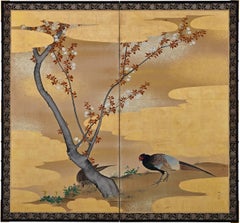
Early 19th Century Japanese Screen. Cherry Blossom Pheasants by Mori Tetsuzan
Located in Kyoto, JP
Mori Tetsuzan (1775-1841) Pheasants and Cherry Blossoms Two-fold Japanese screen. Ink, color, gofun, gold and silver on paper. A two-fold Japanese bir...
Category

Early 19th Century Japanese Antique Edo Paintings and Screens

Materials

Gold Leaf

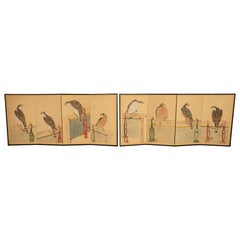
Pair Antique Japanese Edo Falcon Hawk Birds of Prey Handpainted Screens 1860
By Soga Nichokuan 1
Located in Portland, OR
A very fine pair of antique Edo period four paneled screens (Takagari), hand-painted with tethered birds of prey, in the manner of Soga Nichokuan, circa 1860. Wonderful pair of...
Category

Late 19th Century Japanese Antique Edo Paintings and Screens

Materials

Paper, Wood

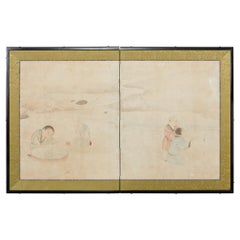
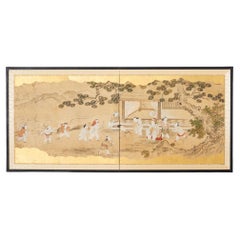
Japanese Edo Two Panel Screen Children Playing Catching Fish
Located in Rio Vista, CA
Delightful late 18th century/early 19th century Japanese Edo period two panel byobu screen depicting children at play near a riverbank and catching fish. Painted in the Maruyama-Shij...
Category

18th Century Japanese Antique Edo Paintings and Screens

Materials

Silk, Wood, Paper

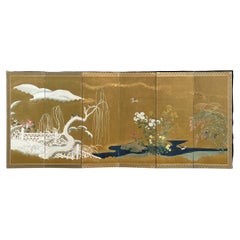
Japanese Screen: Flow of Time in Gold
Located in Fukuoka, JP
Seasons Flowing in Gold is a masterful expression of depth and rhythm, painted with a subtle three-dimensional effect that brings the landscape to life. From the snow-laden willow a...
Category

Early 19th Century Japanese Antique Edo Paintings and Screens

Materials

Paper, Wood

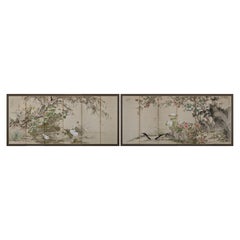
Antique 19th Century Japanese Two-Panel Screen ‘Byobu’, Kano School, Edo Period
Located in London, GB
Japanese Kano School Edo period two-panel screen depicting flowering prunus and bamboo on a rock formation, with colorful birds next to a body of water. ...
Category

Mid-19th Century Japanese Antique Edo Paintings and Screens

Materials

Gold Leaf

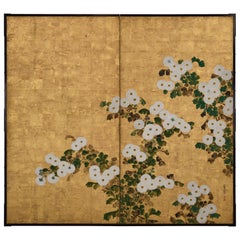
18th Century Japanese Rinpa Screen. White Chrysanthemums. School of Korin.
Located in Kyoto, JP
School of Ogata Korin White Chrysanthemums 18th Century, Edo period. A two-panel Japanese screen. Ink, color, gofun and gold leaf on paper. Dimensions: H. 171 cm x W. 188 cm (67.5” x 74”) On this two-panel Japanese screen we see blooming chrysanthemums, a flower which embodies the essence of autumn in Japan. Here the traditional floral theme has been simplified and stylized. The bright colors and asymmetrical composition against the delicate gold leaf create a luxurious and ornate work of art. Its background, a strikingly patinated grid of gold leaf, denies any sense of place or time and imbues everything with an ethereal glow. The leaves and stems of the plants are nothing more than pools of mottled color and ink without any outline whatsoever. These are typical Rinpa adaptations of traditional ink painting methods; tarashikomi, or diluted washes of color blended while very wet, and mokkotsu, or “bonelessness,” which creates forms without exterior outlines. The relief work of the rounded flower petals has been obtained by the moriage process (a mixture based on ground shells modeled on the surface of the paper). On the lower right of the screen, the siganture “Hokyo Korin Jakumyo” and the “Hoshuku” seal can be read. Korin is Ogata Korin, famed for the Irises (Nezu Museum) and Red and White Plum Blossom (MOA Museum of Art) folding screens, both National Treasures. Korin worked in both Kyoto and Edo in the mid-Edo period. Korin was using the art name “Jakumyo” just after he received the Hokyo level, which was in 1701. This particular screen was published in May of 1961 in the Japanese Sansai Fine Art Magazine*. An in depth article accompanies the photograph of the screen and and a photograph of the signature and seal. This article devotes much of its body to discussing the moriage technique, how it enlivens the chrysanthemum flowers and Korin’s specific skill in using the technique. The article goes on to discuss the most famous works of Korin, utilizing this technique, which were known at the time. Specifically a two-panel screen held in the Honolulu Museum which was discovered in the store-house of Takahashi Soan. A two-panel screen pair which the Nakano family own. A two-panel screen pair with chrysanthemums in moriage in fan designs owned by the Nomura family. Also a small folding screen featuring chrysanthemums held in the Yamato Bunkakan. The article goes on to say that this particular two-fold screen came from the Nijo family. Korin is known to have had a strong connection with the aristocratic Nijo family. The article explains that Korin received a lot of favors from the Nijo family and that this screen would have been gifted to them. Since that time the Honolulu screen has been amended to ‘attributed to Ogata Korin’ and I do not know further details of the other 3 screens. Other Chrysanthemum screens...
Category

18th Century Japanese Antique Edo Paintings and Screens

Materials

Gold Leaf

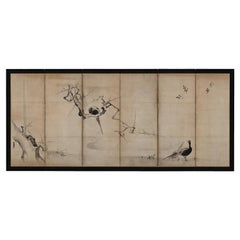
17th Century Japanese Screen. Ink Plum Tree Birds by Kano Naonobu.
Located in Kyoto, JP
Kano Naonobu (1607-1650) Plum Tree and Birds Six-fold Japanese Screen. Ink and slight color on paper. In this evocative ink work spread over a six-panel folding screen, we see the consummation of the elegance and refinement of the Edo Kano school. This 17th century screen is a rare surviving example of a large-scale bird and flower painting by Kano Naonobu, the younger brother of Kano Tanyu...
Category

17th Century Japanese Antique Edo Paintings and Screens

Materials

Wood, Paper

Japanese screen: Melody of Magnolia Blossoms
Located in Fukuoka, JP
Bathed in radiant gold, Melody of Magnolia Blossoms captures the fleeting harmony of nature in bloom. A graceful magnolia branch arcs across the shimmering surface, its petals unfold...
Category

Early 17th Century Japanese Antique Edo Paintings and Screens

Materials

Paper, Wood

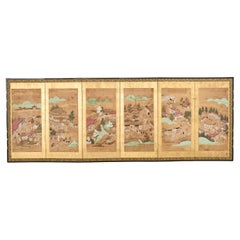
19th Century Japanese Edo Six Panel Screen Scenes of Kyoto
Located in Rio Vista, CA
Fascinating Japanese 19th century Edo period six-panel Rakuchu Rakugai folding byobu screen featuring scenes in and around the capitol Kyoto, Japan. This type of non-commissioned scr...
Category

19th Century Japanese Antique Edo Paintings and Screens

Materials

Brass, Gold Leaf

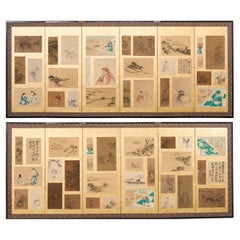
Pair Japanese Edo Six Panel Harimaze Decoupage Screens
Located in Rio Vista, CA
Incredible pair of late 18th/early 19th century Japanese Edo period six panel folding byobu screens featuring Harimaze decoupage, applied paintings and drawing. Each screen is an ama...
Category

19th Century Japanese Antique Edo Paintings and Screens

Materials

Gold Leaf

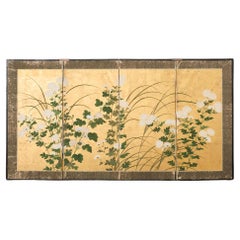
Japanese Edo Four Panel Screen Flowering White Chrysanthemums
Located in Rio Vista, CA
19th century extraordinary Japanese late Edo/early Meiji period four-panel byobu screen featuring flowering white chrysanthemums painted in a moriage (raised pigment) style. The pain...
Category

19th Century Japanese Antique Edo Paintings and Screens

Materials

Brass, Gold Leaf

19th Century Japanese Screen Pair - Birds Flowers of the Four Seasons
Located in Kyoto, JP
Birds & Flowers of the Four Seasons Yamamoto Baiitsu (1783-1856) Late Edo period, Dated 1850 A magnificent pair of six-panel Japanese folding screens by Yamamoto Baitsu, representin...
Category

Mid-19th Century Japanese Antique Edo Paintings and Screens

Materials

Wood, Paper

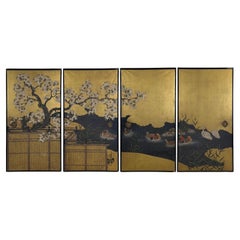
Stunning Set of Four 19th Century Edo Period Fusuma Door Decorative Panels
Located in Los Angeles, CA
A set of four fusuma (sliding door) panels from the 19th century, painted in ink and colors on gold leaf. The panels depict a blossoming cherry tree extending beyond a woven fence an...
Category

Late 19th Century Japanese Antique Edo Paintings and Screens

Materials

Gold Leaf, Brass

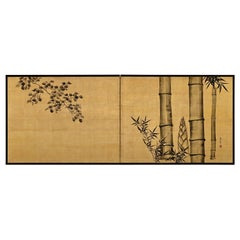
19th Century Japanese Screen for Tea-Ceremony, Ink Bamboo and Plum on Gold Leaf
Located in Kyoto, JP
Three Friends of Winter Nakajima Raisho (1796-1871) Late Edo period, circa 1850 Ink and gold leaf on paper. This is a double-sided Japanese Furosaki or tea-ceremony screen from the mid 19th century; bamboo and plum on the front, young pines the back. It by Nakajima Raisho, a master painter of the Maruyama school in the late Edo and early Meiji periods. In this work Raisho combines exquisite ink brushwork with large open spaces of brilliant gold-leaf to inspire the viewers imagination. Rather than naturalism, he is searching for the phycological impression of the motifs, resulting in abstraction and stylization. His simplification of the motifs the result of looking to capture the inner nature of the objects. This art motif is known as Sho Chiku Bai, or the Three Friends of Winter. Evergreen pine connotes steadfastness, bamboo suggests both strength and flexibility, while plum blossoms unfurling on snow-laden branches imply hardiness. Combined, this trio is emblematic of Japanese new year. Chinese literati were the first to group the three plants together due to their noble characteristics. Like these resilient plants flowering so beautifully in winter, it was expected of the scholar-gentleman to cultivate a strong character with which he would be able to show the same degree of perseverance and steadfastness even during times of adverse conditions. The screen would have been placed near the hearth of a room used for the Japanese tea ceremony, shielding the fire from draughts and also forming a stimulating and decorative backdrop behind the tea utensils. It would have been used in the Hatsugama, or first tea-ceremony of the new year. Nakajima Raisho (1796-1871) originally studied under Watanabe Nangaku before entering the school of Maruyama Ozui. He was the highest ranking Maruyama school painter at the end of the Edo period and was known as one of the ‘Four Heian Families’ along with Kishi...
Category

Mid-19th Century Japanese Antique Edo Paintings and Screens

Materials

Gold Leaf

Elegant Horse Screen. In style of Kano Tanshin
By Kano Tanshin
Located in Fukuoka, JP
Ink on gold. This continuation of equine grace unfolds across a stunning gold-leaf backdrop, capturing the essence of nobility that horses represent in Japanese lore. The screen de...
Category

Late 18th Century Japanese Antique Edo Paintings and Screens

Materials

Gold Leaf

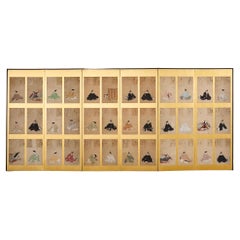
Japanese Edo Screen Portraits of the Thirty Six Immortal Poets
Located in Rio Vista, CA
Interesting 19th century Japanese Edo period six-panel byobu screen depicting the thirty six immortals of poetry (Sanjurokkasen). Each portrait is accompanied by their poems. The poe...
Category

19th Century Japanese Antique Edo Paintings and Screens

Materials

Wood, Paper

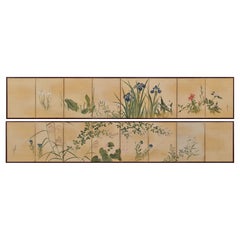
1838 Japanese Screen Pair. Flowers Grasses of the Four Seasons.
Located in Kyoto, JP
Maruyama Oshin (1790-1838) Flowers and grasses of the four seasons: dated 1838 Pair of eight-panel Japanese screens; ink, color and gold leaf on silk Dimensions: each (2) H. 38.5 cm...
Category

1830s Japanese Antique Edo Paintings and Screens

Materials

Silk

Pair of Japanese Edo Six Panel Screens the Seven Sages
Located in Rio Vista, CA
Fantastic pair of 19th century Japanese late Edo/early Meiji period six-panel screens titled The seven sages of the bamboo grove. The Kano school screens...
Category

19th Century Japanese Antique Edo Paintings and Screens

Materials

Brass, Gold Leaf

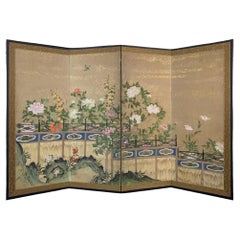
Peony Blossoms Screen
Located in Fukuoka, JP
Peony Blossoms Screen Period: Edo period 18-19th century Size: 212 x 138 cm (83.5 x 54.3 inches) SKU: PJ105 Experience a rare gem from Japan's heritage – an Edo period peony blosso...
Category

18th Century Japanese Antique Edo Paintings and Screens

Materials

Paper, Silk

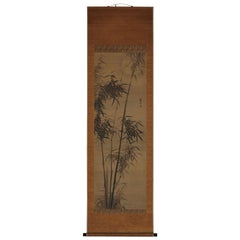
Japanese Painting, Hanging Scroll, 19th Century Bamboo in Moonlight
Located in Kyoto, JP
Bamboo in moonlight Gamo Rakan (1784-1866) Hanging scroll, ink on silk. Dimensions: Scroll: 201 cm x 58 cm Image: 137 cm x 45 cm In this early 19th century work by Gamo Rakan a light ink wash applied to the silk background silhouettes the moon and suggests the atmosphere of early evening. Even though it is a literati subject, Rakan’s bamboo is quite realistic with a strong decorative style. The painting finds its inspiration from Chinese Ming dynasty painters who often used a single-tone, jet black stroke to emphasize the calligraphic nature of bamboo. In a different era, decorative would have been seen as somewhat unrefined. But increasingly in the Edo period, it was the hallmark of high style. The Japanese people, in particular the rising merchant class, had gradually become apathetic toward the traditional Sesshu and Kano schools of painting. Chinese professional and amateur painters living in the port of Nagasaki during the 18th century had a profound effect on Japanese painting and the freshness of their style and its decorative appeal contributed greatly to its popularity. Gamo Rakan’s teacher, Tani Buncho...
Category

Early 19th Century Japanese Antique Edo Paintings and Screens

Materials

Silk

Six-panel gold leaf screen
Located in Brescia, IT
Large Japanese six-panel screen, ink, color, gold, and gold leaf on paper, depicting three scenes from Genji monogatari (The Tale of Genji), the vignettes punctuated by raised golden...
Category

Early 19th Century Japanese Antique Edo Paintings and Screens

Materials

Gold Leaf

Rare Japanese Floor Screen of Perched Eagles Soga Shohaku Edo period
Located in Atlanta, GA
A rare six-panel Japanese folding floor screen (Byōbu) by Soga Shōhaku (1730-1781) from Edo period. The screen depicts six perched hawk-eagles in various poses positioned in a litera...
Category

18th Century Japanese Antique Edo Paintings and Screens

Materials

Brocade, Wood, Paper

Japanese Folding Screen Gold Leaf
Located in Brescia, IT
Byobu painted with mineral pigments on gold leaf, the quality of the painting is still excellent, with no color loss or restorations. A classic four-panel screen depicting Mount Fuji...
Category

Early 19th Century Japanese Antique Edo Paintings and Screens

Materials

Gold Leaf

Mid 18th Century Japanese Screen Pair. Crows Pines by Unkoku Toshuku.
Located in Kyoto, JP
Unkoku Toshuku (1722-1779) Crows and Pines A pair of six-panel Japanese Screens. Ink and gold leaf on paper. Dimensions: Each Screen: H. 170.5 cm x W. 375 cm Haha-cho or mynah birds, whose forms resemble crows in artwork, were commonly depicted in Japanese art. These types of paintings were originally modeled on paintings attributed to the 13th century Chinese painter Muqi (Mokkei), whose art was enormously influential in Japan. Crows only became a theme among Japanese artists from the later 1500s onward. They likely were inspired by these imported Chinese paintings of myna birds, which are not native to Japan, substituting the native species of crow instead.  The best known early examples of the depiction of Japanese crows are two Momoyama screen...
Category

Mid-18th Century Japanese Antique Edo Paintings and Screens

Materials

Gold Leaf

Japanese Edo Six Panel Screen Chinese Children at Play
Located in Rio Vista, CA
Amazing 19th century Japanese Edo period six panel folding byobu screen depicting Chinese children at play. The screen alludes to the 100 children theme. ...
Category

19th Century Japanese Antique Edo Paintings and Screens

Materials

Gold Leaf

Japanese Edo Six Panel Screen Merrymaking in the Chinese Countryside
Located in Rio Vista, CA
Large 19th century Japanese Edo period six panel folding byobu screen made in the Kano school style. Beautifully crafted with signature after Kano Tan'yu. Ink and natural color pigme...
Category

19th Century Japanese Antique Edo Paintings and Screens

Materials

Gold Leaf

19th Century Japanese Edo Screen Kano School Garden Terrace
Located in Rio Vista, CA
Fantastic 19th century Japanese Edo/Tokugawa period two-panel byobu screen featuring Chinese children frolicking on a garden terrace with a pavilion and large pine tree. Made in the ...
Category

19th Century Japanese Antique Edo Paintings and Screens

Materials

Brass, Gold Leaf

Late Edo Period Rinpa School Chrysanthemum Blossom Screen
Located in Fukuoka, JP
Late Edo Period Rinpa School Chrysanthemum Blossom Screen Period: late Edo, early 19th century Size: 364 x 172 cm (143 x 67 inches) This exquisite late Edo period Rinpa school scr...
Category

18th Century Japanese Antique Edo Paintings and Screens

Materials

Paper

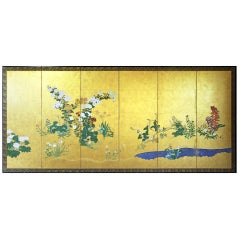
Japanese Six-Panel Screen Byobu With Chrysanthemums And Autumn Grass and Flower
Located in Torino, IT
The 19th Century Six-Panel Japanese folding screen "Byōbu" usually used in the most important Japanese house to stop wind and also to separate different space of the same big room de...
Category

Mid-19th Century Japanese Antique Edo Paintings and Screens

Materials

Gold Leaf

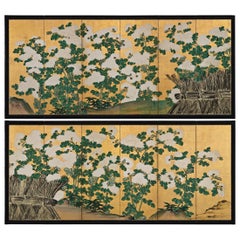
Kiku to Hagi Byobu, Rinpa School Style, Edo Period.
Located in Point Richmond, CA
A Chrysanthemum and Bush Clover painting on gold leaf six-panel folding screen, painted with clusters of leafy green chrysanthemum plants with white blossoms having moriage relief petals of gofun growing amidst pink blossoming bush clover within a bunched bush clover garden fence rendered in lighter gold relief, all on a background entirely of rich gold leaf. These two flowers are symbolic of Japan and the autumn season. The classic patterned paper verso with a Naga Antiques...
Category

Early 1800s Japanese Antique Edo Paintings and Screens

Materials

Gold Leaf

Pair of Japanese Edo Rimpa School Screens after Tawaraya Sōtatsu
Located in Rio Vista, CA
Impressive pair of 17th century Japanese Edo period Rinpa school screens made in the manner and style of Autumn Grasses by Tawaraya Sōtatsu (1570-1640). Beautifully decorated with wi...
Category

17th Century Japanese Antique Edo Paintings and Screens

Materials

Gold Leaf

Japanese Screens: Echo of Chrysanthemums
Located in Fukuoka, JP
Echo of Chrysanthemums captures the quiet dialogue between form and reflection. Against a radiant gold-leaf ground, blooming chrysanthemums rise in graceful color harmony — white, cr...
Category

19th Century Japanese Antique Edo Paintings and Screens

Materials

Gold Leaf

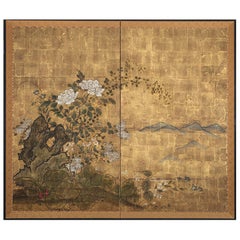
Japanese Two-Panel Screen, Floral Garden on Gold
Located in Hudson, NY
Peonies, marigolds and pinks next to a garden stone with soft mountain peaks in the background. Late Edo (1603 - 1868) period painting in mineral pigmen...
Category

Early 19th Century Japanese Antique Edo Paintings and Screens

Materials

Gold Leaf

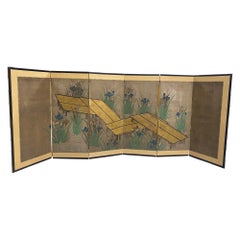
Japanese Asian Six-Panel Folding Byobu Screen Landcape Bridge with Iris Flowers
Located in Studio City, CA
A gorgeous six-panel Japanese Byobu folding screen depicting a nature lake/landscape scene with a water walkway/angular bridge and blossoming iris flowers - perhaps an homage to the famed Irises screens...
Category

19th Century Japanese Antique Edo Paintings and Screens

Materials

Gold Leaf

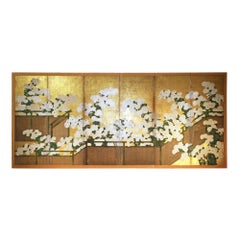
Japanese Screen mid Edo gold leaf
Located in Brescia, IT
This 18th century six-panel screen is truly special. The author is unknown, but his singular genius in portraying dozens of chrysanthemum flowers created with the white of the "gofun...
Category

Mid-18th Century Japanese Antique Edo Paintings and Screens

Materials

Gold Leaf

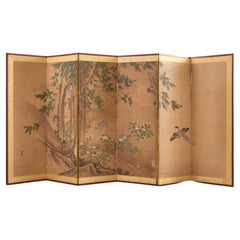
19th Century Japanese Edo Six Panel Kano School Landscape Screen
Located in Rio Vista, CA
Late Edo period 19th century Japanese six-panel landscape screen featuring a cypress tree over a flowering hibiscus with a pair of hototogisu birds. Kano school painted with ink and ...
Category

19th Century Japanese Antique Edo Paintings and Screens

Materials

Silk, Wood, Paper

Lovely 17th-18th Century Scroll Painting Japan Artist Kano Soyu Painted
Located in Amsterdam, Noord Holland
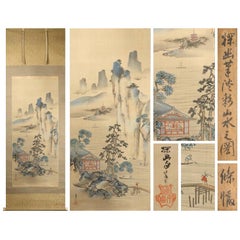
It is a work that is said to have been drawn by Kano Soyu as you can see. It is a picture of the light-colored Sansui map carefully drawn to the smallest detail, and the towering m...
Category

17th Century Japanese Antique Edo Paintings and Screens

Materials

Silk

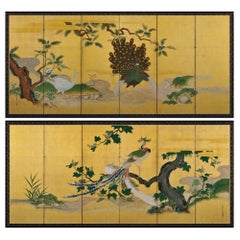
Japanese Screen Pair, circa 1730, Peacocks and Phoenix, Kano School
Located in Kyoto, JP
Phoenix and Peacocks. A pair of six-panel Japanese folding screens by Tsunetake Yotei (n.d.) First half of the 18th century. The signature reads 67 year old Tsunetake. The seals read: -Tsunetake no in, -Yotei, -Seishin Dimensions: Each screen – H. 69” x W. 149” (176 cm x 378 cm) A pair of Kano Grand Picture (Waga) screens depicting phoenix and peacocks rich with symbolic meaning. Dating to the first half of the 18th century, from the Kobikicho Kano school in Edo, this pair of folding...
Category

Early 18th Century Asian Antique Edo Paintings and Screens

Materials

Gold Leaf

Edo Landscape Japanese Folding Screen
Located in Brescia, IT
Refined work by a painter from the first half of the 19th century, from the landscape of the "Rinpa" school by a painter from the end of the 18th century, the Rinpa school. Six panels painted in ink on gold leaf and "gofun" on vegetable paper. The flowers are made with the "gofun" technique, natural or pigmented white oyster powder. Rinpa is one of the major historical schools of Japanese painting. The style was consolidated by the brothers Ogata Korin (1658–1716) and Ogata Kenzan (1663–1743). This folding screen has a very clean design that leaves plenty of room for the beautiful golden landscape. It comes flat and you can easily hang it with our hooks. Lucio Morini...
Category

18th Century Japanese Antique Edo Paintings and Screens

Materials

Gold Leaf

17th Century Late 1600s , Japanese Edo Period 12-Panel Folding Screen Painted
Located in North Miami, FL
A pair of 17th Century (Late 1600s) Japanese Edo screens made of 12-panels. This folding silk screen is painted on a gold leaf background. It has a...
Category

17th Century Japanese Antique Edo Paintings and Screens

Materials

Silk, Wood, Paint, Paper

Japanese Edo Six Panel Screen Yoshitsune and Benkei
Located in Rio Vista, CA
Spectacular 19th century Japanese late Edo period six-panel byobu screen depicting Yoshitsune and Benkei, two heroes of Japanese folklore. Crafted in ink and natural color pigments on mulberry paper with thick gold leaf borders on each panel. The character Yoshitsune is seated under a blossoming cherry tree in full armor holding a fan. The warrior priest or monk Benkei is depicted kneeling on a leopard skin...
Category

19th Century Japanese Antique Edo Paintings and Screens

Materials

Brass, Gold Leaf

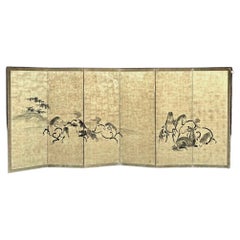
17th Century Japanese Edo Four Panel Screen Hotei with Chinese Sages
Located in Rio Vista, CA
Beautifully weathered late 17th/early 18th century Japanese edo period four panel byobu screen depicting hotei (fat monk) in a treed landscape with Chinese sages engaged in leisurely...
Category

17th Century Japanese Antique Edo Paintings and Screens

Materials

Brass

Mid-18th Century Japanese Screen Pair, One Hundred Flowers, Chrysanthemums
Located in Kyoto, JP
Omori Soun (b. 1704) Chrysanthemums - One Hundred Flowers A Pair of Six-fold Japanese Screens. Ink, color, gofun and gold leaf on paper. Dating ...
Category

Mid-18th Century Japanese Antique Edo Paintings and Screens

Materials

Gold Leaf

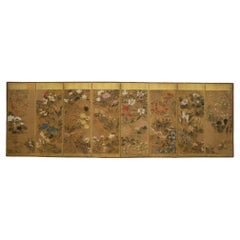
Summer Flowers Eight-Panel Botanical Screen
Located in Fukuoka, JP
Summer Flowers Eight-Panel Botanical Screen Period: Late Edo Size: 352x117 cm (138x46 inches) SKU: PTA42 Immerse yourself in the splendor of late Ed...
Category

18th Century Japanese Antique Edo Paintings and Screens

Materials

Gold Leaf

Japanese Edo Four Panel Screen Flowering Peony Prunus Magnolia
Located in Rio Vista, CA
Early 19th century Japanese Edo/Tokugawa period four panel folding byobu table screen featuring peony, prunus, and magnolia. Painted with ink and natural color pigments on silk with ...
Category

19th Century Japanese Antique Edo Paintings and Screens

Materials

Brass

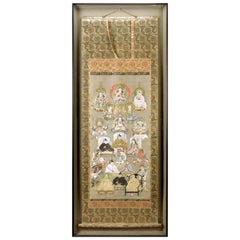
Japanese Silk Suijaku Scroll Nyorai-Kojin with Mixed Buddhism and Shinto Deities
Located in Atlanta, GA
A Japanese silk Suijaku hanging scroll beautifully presented in a custom wood shadow box frame from Edo period (circa 18-19th century). The scroll, surmounted on golden brocade was painted in fine details with gouache, ink and gold powder highlight, served as a Suijaku mandala for the worshippers. Honji Suijaku is a complicated religious concept uniquely developed in Japan. It mixed and hybrid the Buddism deities with native shinto spirits (known as Kami), which were seen as local manifestations (the suijaku, literally means a "trace") of Buddhist deities (the honji literally the original ground). The original idea may lie with the synergetic strategy to spread Buddism by making it more relatable to the local population who had already worshiped Shinto gods. The paradigm, adopted in the 10th century from an orignal Chinese concept, remained a defining feature of Japanese religious life up to the end of the Edo period (1868). Instead of being confined to deities, its application was often extended to historical figures as shown on this scroll. This long hanging scroll depicts an arrangement of 21 figures including Buddhism and Shinto deities as well as two historical figures on the bottom. Each figure was name-tagged in Kanji for easy identification by the worshippers. It was used in the temple or shrine so that when the worshipper prayed in front the mandala, they prayed simultaneously to all the deities. On the very top, sits Nyorai-Kojin, a hybrid deity of Nyorai Buddha and Kojin, the kaki for fire, stove and kitchen. From the top to bottom and left to right, here is the list of the deities: Kanon with Thousand Hands, Kanon with Willow Branch, Monju Bosatsu...
Category

Early 19th Century Japanese Antique Edo Paintings and Screens

Materials

Silk, Wood

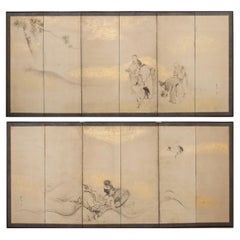
Pair of 18th Century Japanese Edo Screens of Chinese Immortals
Located in Rio Vista, CA
Mesmerizing pair of late 18th/early 19th century Japanese Edo period byobu screens by Shibata Gito (Japanese 1780-1819). The paintings depict Chinese immortals in a dreamy landscape....
Category

18th Century Japanese Antique Edo Paintings and Screens

Materials

Silk, Wood, Paper

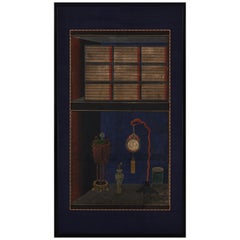
Korean Chaekgeori painting. 19th Century Joseon. Books Scholars’ Accouterments
Located in Kyoto, JP
Books and Scholars’ Accouterments; Chaekgeori Second half of the 19th century Korean framed panel. Ink and color on paper. This Korean Chaekgeori...
Category

Late 19th Century Korean Antique Edo Paintings and Screens

Materials

Paper

Japanese Byobu - Japanese Folding Screen Gold Leaf
Located in Brescia, IT
Floral scene of a "Rimpa School" garden with polychrome chrysanthemum flowers. Six-panel screen painted with pigments on golden rice paper of good size and well preserved. Bold color...
Category

Early 19th Century Japanese Antique Edo Paintings and Screens

Materials

Gold Leaf

Late 17th Century Japanese Screen. Puppy and Kittens on Gold Leaf.
Located in Kyoto, JP
Anonymous Late 17th century Puppy & Kittens A six-panel Japanese screen. Ink, color, gofun, gold-leaf and gold-fleck on paper. A medium sized late 17th century Japanese screen fe...
Category

Late 17th Century Japanese Antique Edo Paintings and Screens

Materials

Gold Leaf

Edo paintings and screens for sale on 1stDibs.

Find a broad range of unique Edo paintings and screens for sale on 1stDibs. It’s true that these talented designers have at times inspired knockoffs, but our experienced specialists have partnered with only top vetted sellers to offer authentic pieces that come with a buyer protection guarantee. Prices for paintings and screens differ depending upon multiple factors, including designer, materials, construction methods, condition and provenance. On 1stDibs, the price for these items starts at $375 and tops out at $475,500 while the average work can sell for $12,800.

Still Thinking About These?

All Recently Viewed