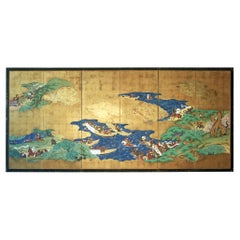
Edo Paintings and Screens

EDO STYLE

Edo furniture was created during a flourishing time for the decorative arts owing to the stability of the Tokugawa shogunate rule in Japan. Spanning from 1603 to 1867, this era of peace and economic growth supported artistic advancements in lacquer, woodblock printing, porcelain and other artisanal trades. Because the country was largely isolated, there was little outside influence, leading to centuries of exceptional attention to the design of its furnishings and the quality of its traditional arts.

Unlike during the Meiji period that followed, with an increase in domestic and international markets, furniture during the Edo period was predominately commissioned by the ruling class, although people from across social groups benefited from the burgeoning metropolitan hubs for artisanal trades. For instance, Kyoto became a major center for lacquer art. Most furniture pieces were made from wood such as cedar or ash, including the era’s sashimono cabinets, which involved fine joinery and were rooted in the Heian period.

Sashimono cabinets, which were built by master craftsmen in a range of different wood types owing to the various trees that populate Japan, occasionally featured a stack of slender drawers as well as sliding doors. They were popular with everyone from samurai to kabuki actors. Tansu storage chests crafted from wood with metal fittings were also common in Edo-period homes. Some were designed to be easily portable while others were made to double as staircases.

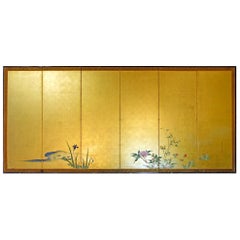
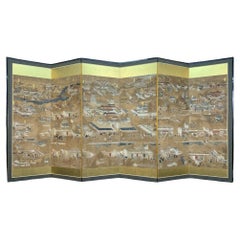
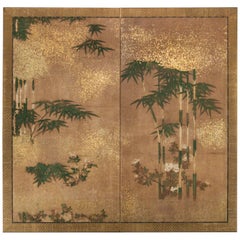
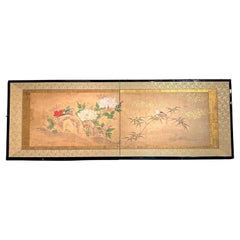
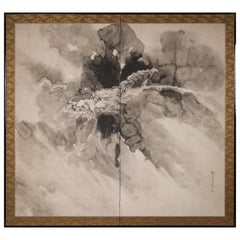
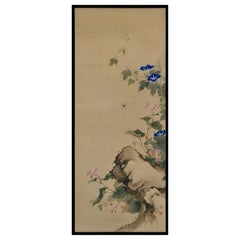
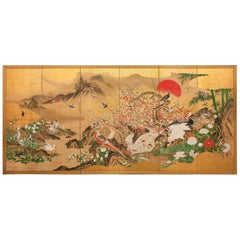
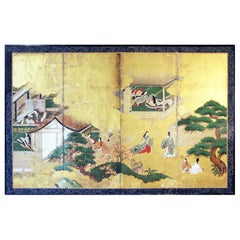
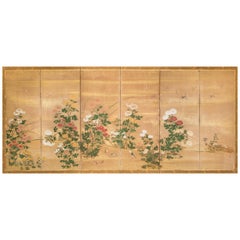
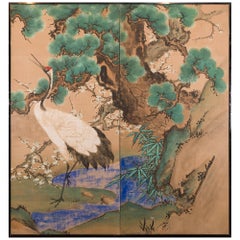
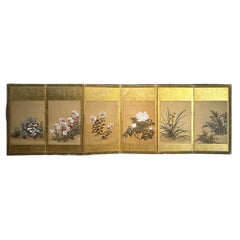
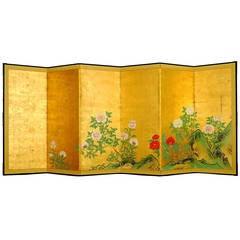
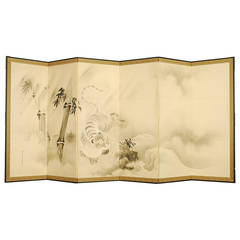
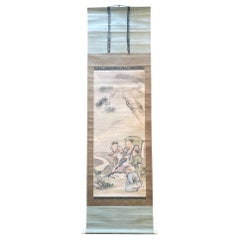
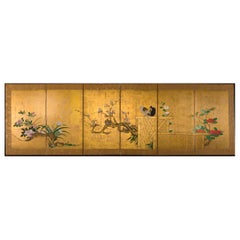
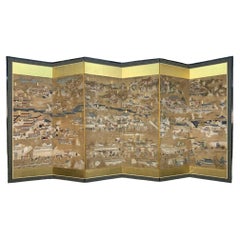
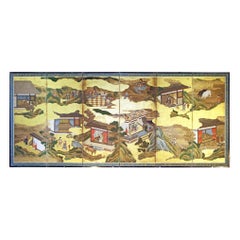
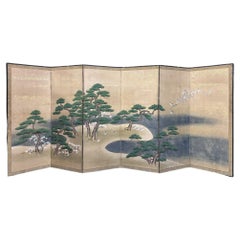
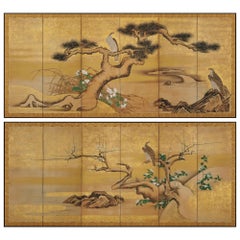
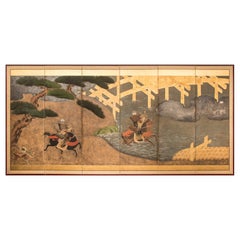
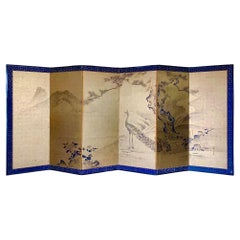
Painted folding screens, called byōbu, were also fashionable, with Japanese artists inspired by nature, literature and scenes of history and daily life to create vivid works. In Buddhist temples and the palatial homes of the aristocratic class, fusuma, or large sliding panels, would sometimes be adorned with gold or silver leaf. These dividers allowed interiors to change throughout the day, closing in small spaces for personal use or reflecting candlelight to illuminate communal spaces after dark.

Find a collection of Edo tables, lighting, decorative objects, wall decorations and more furniture on 1stDibs.

to
36
83
29
185
66
45
30
16
11
6
5
5
2
2
2
2
1
1
74
106
5
2
1
1
135
98
90
83
79
183
175
170
4
1
185
185
185
11
3
2
1
1
Style: Edo
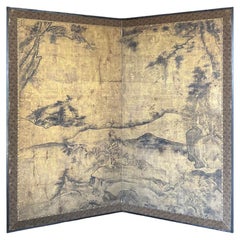
Early Edo Period Chinese-Inspired Screen
Located in Fukuoka, JP
This remarkable screen from the early Edo period, circa the 17th century, showcases the influence of early Chinese art forms with its intricate ink work on a gold leafed surface. The...
Category

17th Century Japanese Antique Edo Paintings and Screens

Materials

Gold Leaf

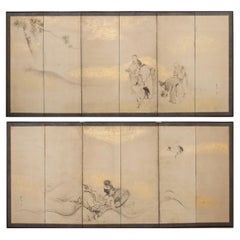
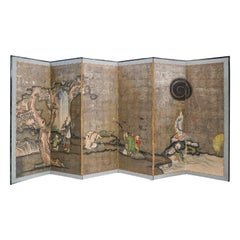
Pair of 18th Century Japanese Edo Screens of Chinese Immortals
Located in Rio Vista, CA
Mesmerizing pair of late 18th/early 19th century Japanese Edo period byobu screens by Shibata Gito (Japanese 1780-1819). The paintings depict Chinese immortals in a dreamy landscape....
Category

18th Century Japanese Antique Edo Paintings and Screens

Materials

Silk, Wood, Paper

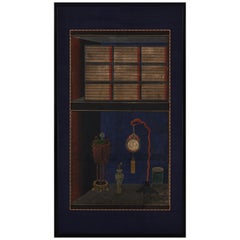
Korean Chaekgeori painting. 19th Century Joseon. Books Scholars’ Accouterments
Located in Kyoto, JP
Books and Scholars’ Accouterments; Chaekgeori Second half of the 19th century Korean framed panel. Ink and color on paper. This Korean Chaekgeori...
Category

Late 19th Century Korean Antique Edo Paintings and Screens

Materials

Paper

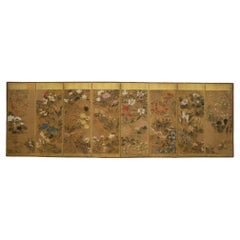
Summer Flowers Eight-Panel Botanical Screen
Located in Fukuoka, JP
Summer Flowers Eight-Panel Botanical Screen Period: Late Edo Size: 352x117 cm (138x46 inches) SKU: PTA42 Immerse yourself in the splendor of late Ed...
Category

18th Century Japanese Antique Edo Paintings and Screens

Materials

Gold Leaf

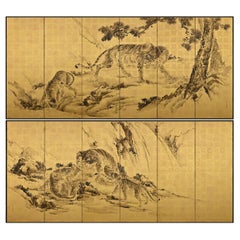
Japanese Screen Pair, Tigers by Kishi Renzan, Late Edo Period
Located in Kyoto, JP
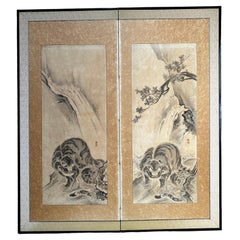
Kishi Renzan (1804-1859) Tigers Pair of six-panel Japanese screens. Ink and gold-leaf on paper. In this monochromatic pair of six-fold Japanese screens painted on gold-leaf, Kishi Renzan has created a breathtaking composition of a family of tigers. The screens are filled with a sense of drama which is conveyed by both the subject matter and the wet, expressive brushwork. The running mountain stream and the towering waterfall allude to refreshment during the summer months and we feel the tiger families familiarity and security within their environment. Renzan’s master, Kishi Ganku...
Category

Mid-19th Century Asian Antique Edo Paintings and Screens

Materials

Gold Leaf

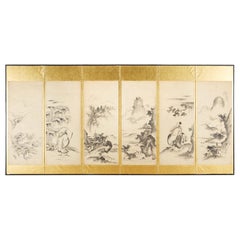
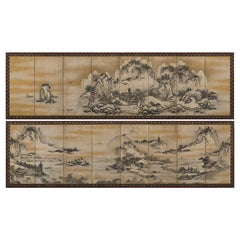
Japanese Edo Six-Panel Haboku Landscapes of Seasons
Located in Rio Vista, CA
19th century Japanese Edo period six-panel screen painted in Haboku (splashed ink) style. Depicts Four Seasons landscape scenes with two portraits of Chinese sages. One sage is trave...
Category

19th Century Japanese Antique Edo Paintings and Screens

Materials

Gold Leaf

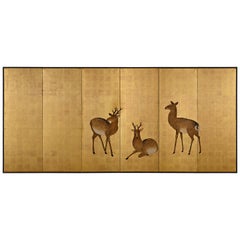
19th Century Japanese Screen, Deer in Spring, Maruyama Shijo School
Located in Kyoto, JP
A six-panel Japanese folding screen from the leading Maruyama-Shijo artist Okamoto Toyohiko (1773-1845). Simply featuring three deer and a few sprigs of foliage on a sumptuous gold-leaf background this work emphasizes naturalistic expression and a masterful use of negative space. Reduced to its most basic elements, the blank spaces inspire imagination and evoke the smells, sounds and even the weather of the scene. Whilst deer are traditionally depicted in association with autumn, here the green growth on the tops of the foliage indicates the season of spring. The work references Maruyama Okyo’s two-panel deer screen...
Category

Early 19th Century Japanese Antique Edo Paintings and Screens

Materials

Gold Leaf

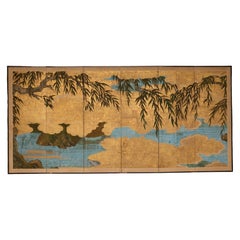
Japanese antique screen - EDO period - Willow over a stream
Located in Prahran, Victoria
Antique Japanese 6 panel screen from the early Edo period (C1650). One of a pair (both available). This magnificent golden screen shows...
Category

1650s Japanese Antique Edo Paintings and Screens

Materials

Gold Leaf

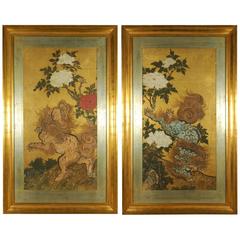
Pair of Antique Japanese Paintings of Karashishi, Edo Period, 18th Century
Located in Prahran, Victoria
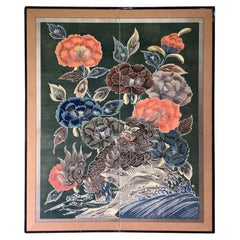
A rare pair of antique Japanese Karashishi paintings in a landscape of rocks and peony flowers on gold leaf ground in fine handmade frames, Edo period, early 18th century. The Karash...
Category

Early 18th Century Japanese Antique Edo Paintings and Screens

Materials

Gold Leaf

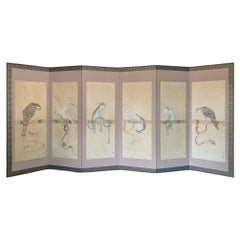
Mid-Edo Hawk Screen
Located in Fukuoka, JP
Step into the world of Mid Edo Japan with our six-panel Hawk screen, each depicting a different hawk. In this period, hawks were revered not only for their majestic beauty but also f...
Category

18th Century Japanese Antique Edo Paintings and Screens

Materials

Wood, Paper

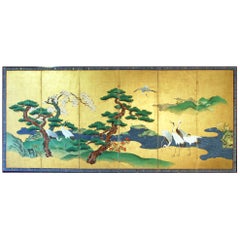
Japanese Folding Screen Six Panels Painted on Gold Leaf
Located in Brescia, IT
Paravento a sei pannelli di scuola giapponese Kano: paesaggio con bellissime ed eleganti gru vicino al fiume, con alberi di pino e sakura. Dipinto a mano con pigmenti minerali ed inc...
Category

Early 19th Century Japanese Antique Edo Paintings and Screens

Materials

Gold Leaf

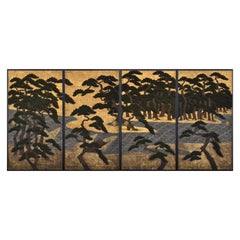
Circa 1700 Japanese Sliding Door (Fusuma) Set. Pine Trees on the Seashore.
Located in Kyoto, JP
"Pine Trees on the Seashore" A set of four sliding doors (Japanese fusuma). Ink, color, gold-leaf and gold-fleck on paper. Dimensions (total display si...
Category

Late 17th Century Japanese Antique Edo Paintings and Screens

Materials

Gold Leaf

17th Century Japanese Screen. View of West Lake by Unkoku Toyo.
Located in Kyoto, JP
Unkoku Toyo (1612-1668) View of West Lake Pair of eight-panel Japanese Screens. Ink and gold wash on paper. Dimensions: Each screen: H. 110 cm x W. 372 cm (43” x 147”) This pair ...
Category

Mid-17th Century Japanese Antique Edo Paintings and Screens

Materials

Paper

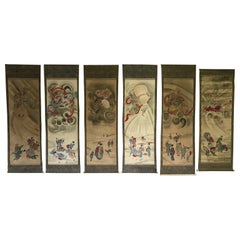
Set of 6 Large Kakemonos Japanese Mythology, 19th Century Japan circa 1800 Edo
Located in Beuzevillette, FR
Beautiful set of 6 large kakemonos from 19th century Japanese mythology. Paper support with a canvas pasted on the paper Wonderful set that is part of Japan's history and beliefs When not hung, the Kakemonos are rolled up. circa 1800 - Japan - Edo Period A kakemono translates as "object to hang". In Japan this refers to a painting or calligraphy, most often done on silk or paper framed in a scroll that was intended to be hung on walls or in public lighting. This particular form, which allows them to be in a roll, dates back to the Tang dynasty in China (this would be related to the copying and preservation of ancient Buddhist texts). A Kami is a deity or spirit worshipped in the Shinto religion. A Yokai is a spirit, ghost, demon, or strange apparition from the creatures of Japanese folklore. Each of these kakemonos represents a unique story: - A kami, a Japanese deity, is shown painting a rainbow. Indeed, he performs the action with his right hand while his left hand holds a kind of basket with three pots of paint. This kami has a rather closed attitude. He is standing in a dark and tormented sky. Below this figure, 8 villagers are dressed in traditional Japanese clothes. Their faces are softened. They are not afraid of the elements made by the kami above their heads. - A character with an unreal look is holding a kind of jar with his two hands, which he spills on human figures above. This being is floating in the air, probably a character from mythology, perhaps Susanoo. Underneath, villagers on umbrellas. They are trying to protect themselves as best they can from what is falling on them. One of them is carrying baskets with fish on her shoulders. A character in the background is thrown forward and falls. - On this kakemono, the god Raijin, dressed in a white and blue outfit, strikes the sky with his two drum hammers to create lightning and its thunderous sound. Surrounded by Tomoe and a long red scarf, Raijin, enraged and with dishevelled hair, creates a dark and violent storm. The villagers seem frightened by this meteorological phenomenon. One of the villagers can be seen fainting in the arms of a man. This scene may seem chaotic, but Japanese legend tells us that once a field is struck by lightning, the harvest is good. - On this kakemono, we see an unreal-looking figure holding a fan, as if he were sweeping away the bad weather, or simply producing gusts of wind. He is probably the kami of wind and air, Shina tsu-hiko. The figures below him seem surprised by so much wind. An umbrella flies away on the left, the women hold their hair and scarf, the clothes are caught in the power of the wind, there is even a woman on the ground on the bottom left. - This Kakemono represents a short moment. This Raiju is a yokai (ghost spirit...
Category

19th Century Japanese Antique Edo Paintings and Screens

Materials

Paper

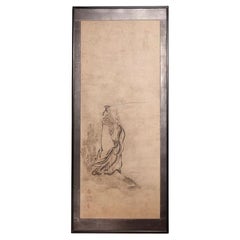
Antique Japanese Suibokuga Sage by Kano Tokinobu, 17th century.
Located in Point Richmond, CA
Antique Japanese Suibokuga Sage Painting by Kano Tokinobu, 17th century. A sumi-e ink on paper painting illustrating an acolyte at a riverbank. The image of the standing Chinese figure with elongated earlobes (a symbol of enlightenment), hair tied back in a kerchief and long beard, holds a large fan in his left hand to his right shoulder. The long robes are windswept with water curls about the figures feet. The painting with 3 vermillion seals of the artist in the lower left corner. Japanese dry mount paper on a wood frame with thin brocade border silver leafed surround and lacquered wood outer frame. Condition: Paper restoration on center, a quarter of an inch of the left edge of the painting is added, other minor signs of age, wear, stains and repairs overall fine condition. Age: Painting Edo Period, circa 1670. Mounting circa 1985. Image: 51-1/2 in. x 20-1/2 in. (131cm x 52cm) Frame: 59-1/4 in. x 25-1/4 in. (150cm x 64cm) Weight: 6lbs. Provenance: with Honeychurch Antiques...
Category

1670s Japanese Antique Edo Paintings and Screens

Materials

Paper

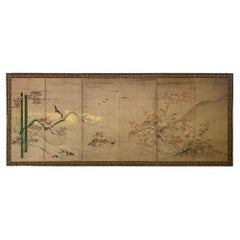
Japanese Six-Panel Screen
Located in Stamford, CT
A six-panel Japanese paper screen with poems, autumn flowers, bamboo fence and Mandarin ducks. Poems are believed to be earlier but were probably...
Category

Mid-19th Century Japanese Antique Edo Paintings and Screens

Materials

Paper

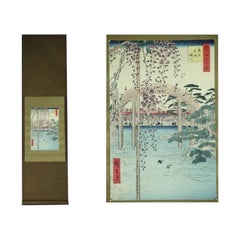
Hiroshige Utagawa "One Hundred Famous Views of Edo Kameido" Woodblock Ukiyo-e
Located in Amsterdam, Noord Holland
Hiroshige Utagawa "One Hundred Famous Views of Edo Kameido" Condition vertical width /114.5cm width /30.3Cm (actual paper) vertica...
Category

20th Century Japanese Edo Paintings and Screens

Materials

Bronze

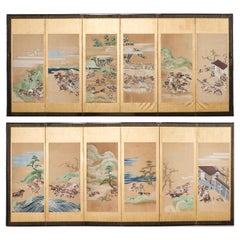
Pair of Japanese Edo/Tokugawa Screens Tale of Heiki
Located in Rio Vista, CA
Monumental pair of late 18th century Japanese Edo/Tokugawa period byobu screens depicting the battles between Taira and Minamoto. The screens have six panels each with individual sce...
Category

19th Century Japanese Antique Edo Paintings and Screens

Materials

Brass, Gold Leaf

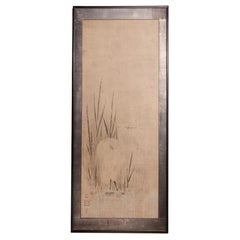
Antique Japanese Suibokuga Egrets by Kano Tokinobu, 17th century.
Located in Point Richmond, CA
Antique Japanese Suibokuga Egrets by Kano Tokinobu, 17th century. A sumi-e ink on paper painting illustrating two egrets in reserve with no outlines contrasting with the reeds from the marsh in the background. The painting with 3 vermillion seals of the artist in the lower left corner. Japanese dry mount paper on a wood frame with thin brocade border silver leafed surround and lacquered wood outer frame. Condition: Lighter discoloration on the lower portion of the painting, other minor signs of age, wear, stains and repairs otherwise fine condition. Age: Painting Edo Period, circa 1670. Mounting circa 1985. Image: 51-1/2 in. x 20-1/2 in. (131cm x 52cm) Frame 59-1/4 in. x 25-1/4 in. (150cm x 64cm) Weight: 6 lbs. Provenance: with Honeychurch Antiques...
Category

1670s Japanese Antique Edo Paintings and Screens

Materials

Paper

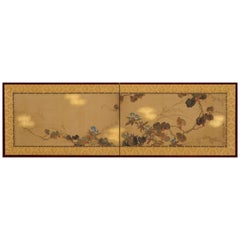
Japanese Screen Painting, Early 19th Century, Autumn Flowers by Sakai Hoitsu
Located in Kyoto, JP
A two-fold Japanese screen by the Rimpa school artist Sakai Hoitsu (1761-1828), Japan, 19th century, Edo period. This small Japanese folding screen pai...
Category

Early 19th Century Japanese Antique Edo Paintings and Screens

Materials

Wood, Silk

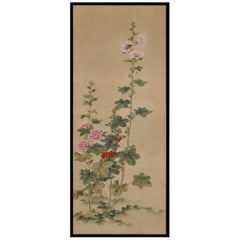
Mid 19th Century Framed Japanese Painting. Snail, Wasp Hollyhock.
Located in Kyoto, JP
Obata Tosho (1812-1886) Snail, Wasp & Hollyhock Late Edo period, mid 19th Century Framed Japanese Painting. Ink and color on paper. Individually framed 19th century bird and flow...
Category

Mid-19th Century Japanese Antique Edo Paintings and Screens

Materials

Paper

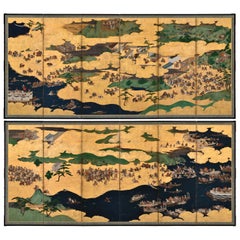
Late 17th Century Japanese Screen Pair. Battle of Ichi-no-tani and Yashima.
Located in Kyoto, JP
Anonymous Late 17th Century Battle of Ichi-no-tani & Yashima Dimensions: Each Screen: H. 175 cm x W. 385 cm (69” x 151.5”) This pair of Japanese screens depict two significant battles from the Genpei War (1180–85), as recounted in the Tale of the Heike, a semi-historical epic chronicling the conflict between rival clans for control of Japan, written in the early 1200s. Each screen portrays a single battle through a series of small episodes, framed by gold clouds, landscape elements, and architectural features. True to the style of many screens inspired by The Tale of the Heike, the scenes are rendered in lavish colors and gold, downplaying the brutality of the warfare. Although based on real events, these narratives often glorified and romanticized the heroic feats of the warriors. Viewers at the time would have been familiar with the story’s details, leading to a proliferation of paintings on folding screens inspired by this theme from the late Muromachi to the early Edo periods. On the right screen, we see the Minamoto’s attack on the Taira, who have retreated from the capital, Kyoto, toward the sea. The central building represents the temporary Taira headquarters, where Taira soldiers are holding the young Emperor Antoku. The Minamoto plan to launch a surprise attack from the rear after descending the steep cliff known as Ichi-no-tani, depicted at the top center. This scene highlights the tactical brilliance of Minamoto commander Yoshitsune and the courage of his men. The left screen captures moments from the Battle of Yashima...
Category

Late 17th Century Japanese Antique Edo Paintings and Screens

Materials

Gold Leaf

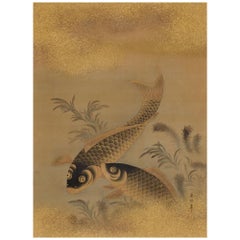
Japanese Painting, Hanging Scroll, Mid 19th Century, Koi and Water Plants
By Iwase Hirotaka
Located in Kyoto, JP
Iwase Hirotaka (1808-1877) Koi and Water Plants Hanging scroll, ink, color, gold wash and gold flecks on silk Inscription: Hirotaka Seal: Ille...
Category

1860s Japanese Antique Edo Paintings and Screens

Materials

Silk

Late 18th Century Japanese Framed Painting, God of Thunder by Yamaguchi Soken
Located in Kyoto, JP
Raijin - God of Thunder Yamaguchi Soken (1759-1818) Mid to Late Edo period, circa 1800. Framed painting. Ink and light color on paper. This humorous painting depicts the Thunder God, Raijin, tumbling from the sky, presumably being struck down by one of his own lighting bolts. He clings to one drumstick as the other is in free-fall along with his Taiko drums...
Category

Late 18th Century Asian Antique Edo Paintings and Screens

Materials

Paper

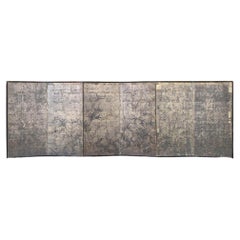
Evolving Elegance: An Oxidized Silver Screen from the Meiji Period
Located in Fukuoka, JP
This anodized 6-panel screen captures the serene and minimalistic beauty of a bamboo grove, embodying the aesthetic principles of the Edo period. The screen features subtle and delic...
Category

18th Century Japanese Antique Edo Paintings and Screens

Materials

Silver Leaf

Paravento Giapponese a sei pannelli su foglia d oro.
Located in Brescia, IT
Paravento giapponese a sei pannelli , opera di un pittore della prima metà del 19° secolo, di scuola Rinpa. Sei pannelli dipinti con inchiostro su foglia oro e "gofun" su carta veget...
Category

Early 19th Century Japanese Antique Edo Paintings and Screens

Materials

Gold Leaf

19th Century Japanese Scroll Painting, Birds Flowers of the Four Seasons
Located in Kyoto, JP
Birds and flowers of the four seasons Early to mid-19th century Ink, pigment and gofun on silk Unidentified artist Signature: S...
Category

1830s Japanese Antique Edo Paintings and Screens

Materials

Silk

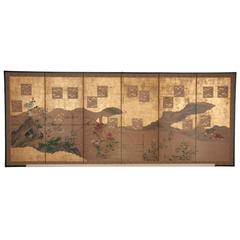
18th Century Japanese Two-Panel Screen Collection of Fans on Gold
Located in Hudson, NY
18th century Japanese Screen of a Collection of Fans. Paintings on fans depict famous Japanese painting subjects, this screen was most li...
Category

18th Century Japanese Antique Edo Paintings and Screens

Materials

Gold Leaf

Edo Period Kyoto Screen
Located in Fukuoka, JP
Edo Period Kyoto Screen Period: Edo period Size: 343 x 176 cm (134.6 x 69 inches) SKU: RJ69 This stunning Edo period screen depicts typical scenes of d...
Category

18th Century Japanese Antique Edo Paintings and Screens

Materials

Silk, Wood, Paper

Japanese Painting, 17th Century, Tale of Genji, Tosa School
Located in Kyoto, JP
Illustration to an unidentified chapter of the Tale of Genji (Genji Monogatari) Tosa School (second half of the 17th Century) Ink, pigment, gofun and...
Category

Late 17th Century Japanese Antique Edo Paintings and Screens

Materials

Gold Leaf

Japanese Two Panel Screen: Bamboo Grove on Mulberry Paper with Gold Dust
Located in Hudson, NY
Kano School painting of a bamboo grove with blooming flowers and gold dust mists. Painted in mineral pigments on mulberry paper with gold dust and a silk brocade border.
Category

Early 19th Century Japanese Antique Edo Paintings and Screens

Materials

Gold

Japanese "Magpie and Peony" Two Panel Screen, Edo Period, 18th/19th century
Located in Austin, TX
A sublime Japanese two panel "Magpie and Peony" screen, ink and color on paper, Edo Period, late 18th or early 19th century, circa 1800, Japan. The two panel screen features a wond...
Category

Early 19th Century Japanese Antique Edo Paintings and Screens

Materials

Copper

Japanese Two Panel Screen Dragon in the Mist
Located in Hudson, NY
Ink (Sumi) on paper. Signature and Seal read: Kishi Ganku It is backed with paper covered in gold and silver flake. Kishi Ganku (1749 or 1756-1839) was the...
Category

Early 19th Century Japanese Antique Edo Paintings and Screens

Materials

Wood, Paper

Mid 19th Century Framed Japanese Painting. Spider Morning Glory.
Located in Kyoto, JP
Obata Tosho (1812-1886) Spider & Morning Glory Late Edo period, mid 19th Century Framed Japanese Painting. Ink and color on paper. Individually framed 19th century bird and flowe...
Category

Mid-19th Century Japanese Antique Edo Paintings and Screens

Materials

Paper

Japanese Screen: Animals and Flowers in a Landscape with Rising Sun
Located in Hudson, NY
Edo period (c. 1800) screen, beautifully painted with excellent details. Kano School painting at its best. An exuberant Audobon landscape being observed by a cat and her kitten. A...
Category

Early 19th Century Japanese Antique Edo Paintings and Screens

Materials

Gold Leaf

18°th Century Japanese Gold Leaf Screen
Located in Brescia, IT
Four-panel folding screen depicting the famous legend of Hikaru Genji, a nobleman of extraordinary grace and beauty, and his gallant adventures at court. The novel Genji Monogatari, ...
Category

18th Century Japanese Antique Edo Paintings and Screens

Materials

Gold Leaf

Japanese Six-Panel Screen, Chrysanthemums
Located in Hudson, NY
Japanese six-panel screen: Chrysanthemums, Edo period (circa 1800) painting of a variety of chrysanthemums in a garden landscape, with sparrows. Mineral p...
Category

Early 1800s Japanese Antique Edo Paintings and Screens

Materials

Gold Leaf

Japanese Two Panel Screen Manchurian Crane and Turtles
Located in Hudson, NY
In Japan, cranes symbolize fidelity as they mate for life and turtles symbolize longevity. Additionally, this screen also has the Japanese motif of sho-chiku-bai, or the three friends of winter (pine, plum, and bamboo). So called the three friends of winter because all three flourish during the cold months. This screen was originally fusuma doors...
Category

Mid-19th Century Japanese Antique Edo Paintings and Screens

Materials

Paper

Edo Period Rimpa School Golden Screen - Summer Florals
Located in Fukuoka, JP
Edo Period Golden Screen - Summer Florals Period: Edo Size: 285 x 92.5 cm (112.2 x 36.4 inches) SKU: PTA141 This Edo period screen is a golden-framed window into the summer gardens...
Category

18th Century Japanese Antique Edo Paintings and Screens

Materials

Gold Leaf

Antique Japanese Six-Panel Screen by Kano Chikanobu "Shushin"
Located in Prahran, Victoria
Late 17th century Kano school peony landscape screens. Both screens signed: Hogan Josen Fujiwara Chikanobu Hitsu - Kano Chikanobu (Shushin) (1660 - 1728...
Category

Early 18th Century Japanese Antique Edo Paintings and Screens

Materials

Gold Leaf

Antique Japanese Kano School Painting by Yosenin Korenobu
Located in Prahran, Victoria
Six-panel Kano School tiger screen by Yosenin Korenobu (1753-1808). Sumi-e ink on paper, late 18th century. Dimensions: H 169cm x W 382cm.
Category

Late 18th Century Japanese Antique Edo Paintings and Screens

Materials

Wood, Paper

Edo Period (19th) Japanese antique painting of flowers
Located in Fukuoka, JP
Japanese antique painting of flowers 19 C Weight 3kg ( 6.6lb)
Category

Mid-19th Century Japanese Antique Edo Paintings and Screens

Materials

Silk, Paper

Japanese Silk Scroll by Haruki Nanmei Edo Period
Located in Atlanta, GA
A Japanese hanging silk scroll by late Edo period painter Haruki Nanmei (1795-1878). The gouache painting was in the tradition of Kano school and depicts an old scholar dressed in lo...
Category

19th Century Japanese Antique Edo Paintings and Screens

Materials

Silk, Paper

Japanese Six-Panel Screen Late Winter into Early Spring
Located in Hudson, NY
Japanese six-panel screen: Late winter into early spring, Rimpa style painting of a garden scene with doves on a bamboo fence. Flowers in bloom including ...
Category

Early 19th Century Japanese Antique Edo Paintings and Screens

Materials

Gold Leaf

Edo Period Kyoto Screen (2/2)
Located in Fukuoka, JP
Edo Period Kyoto Screen Period: Edo period Size: 343 x 176 cm (134.6 x 69 inches) This stunning Edo period screen depicts typical scenes of daily life...
Category

18th Century Japanese Antique Edo Paintings and Screens

Materials

Paper, Wood, Silk

Japanese Tosa School Framed Six Panel Screen Gold Leaf
Located in Brescia, IT
Japanese six-panel screen of the famous "Tosa school" made by an anonymous artist of the mid-18th century, work painted in the classic way with colored pigments and inks on vegetable...
Category

Mid-18th Century Japanese Antique Edo Paintings and Screens

Materials

Gold Leaf

The Plovers over the Sea Shores Screen (2/2)
Located in Fukuoka, JP
The Plovers over the Sea Shores Screen Period: 18th century (Edo period) Size: 360 x 170 cm (141.7 x 66.9 inches) SKU: PA39 Travel back in time with this classic Edo period screen,...
Category

18th Century Japanese Antique Edo Paintings and Screens

Materials

Wood, Paper

17th Century Japanese Screen Pair by Soga Nichokuan, Hawks on Pine Plum Trees
Located in Kyoto, JP
Hawks on plum and pine Soga Nichokuan (active circa 1625-1660) Pair of six-fold screens. Ink, mineral pigments, gofun, gold and speckled gold l...
Category

1640s Japanese Antique Edo Paintings and Screens

Materials

Wood, Paper

Japanese Six Panel Screen Battle of Uji Bridge
Located in Hudson, NY
The first battle at Uji was in 1180 and was the beginning of the Heike Wars. This screen depicts a famous scene from the Heike Wars. Two Heike generals, Sasaki Takatsuna and Kajiwa...
Category

Early 19th Century Japanese Antique Edo Paintings and Screens

Materials

Gold Leaf

Romantic Edo Peacock Screen
Located in Fukuoka, JP
Romantic Edo Peacock Screen Period: Edo Size: 379x173 cm Step into a world of romance with our beautiful six-panel Edo screen adorned with golden leaves. This masterpiece, measuri...
Category

18th Century Japanese Antique Edo Paintings and Screens

Materials

Gold Leaf

Japanese Six Panel Screen, Snow Scene at Water’s Edge
Located in Hudson, NY
Japanese Six Panel Screen: Snow Scene at Water's Edge with Flowers and Waterfowl. Edo period painting (mid 19th century) of plum, bamboo, white camellias, cranes and mandarin ducks ...
Category

Mid-19th Century Japanese Antique Edo Paintings and Screens

Materials

Gold Leaf

18th Century Nagasaki School Tiger Screen
Located in Fukuoka, JP
18th Century Nagasaki School Tiger Screen Period: Edo Size: 165 x 172 cm (65 x 67.7 inches) SKU: PTA69 This exceptional 18th-century screen from the Edo...
Category

Early 18th Century Japanese Antique Edo Paintings and Screens

Materials

Wood, Paper

Late Edo period Tsutsugaki 筒描 Auspicious Shishi Batik Screen
Located in Fukuoka, JP
Auspicious Shishi Batik Screen Period: Late Edo Size: 145x173 cm (57x68 inches) SKU: PTA62 Step into the mythical world of late Edo Japan with our radiant batik screen depicting the...
Category

19th Century Japanese Antique Edo Paintings and Screens

Materials

Cotton, Wood

Japanese ukiyo-e woodblock print – Woman under Cherry Blossoms – signed Kunisada
Located in Beuzevillette, FR
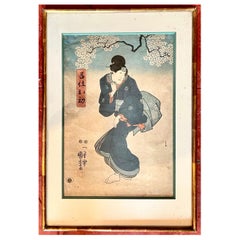
A superb Japanese ukiyo-e woodblock print depicting an elegant young woman wearing a blue kimono, walking beneath cherry blossoms in spring. This poetic and refined scene perfectly i...
Category

19th Century Japanese Antique Edo Paintings and Screens

Materials

Paper

Japanese Six Panel Screen with Hotei, Edo Period, Early 19th Century
Located in Austin, TX
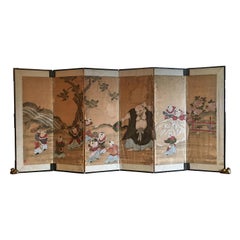
A delightful Japanese six panel painted paper screen featuring the beloved figure Hotei, Edo Period, early 19th century. Hotei, called Budai in China, and known as the Laughing Buddha or Fat Buddha in the West, is considered to be an emanation of Maitreya, the Buddha of the Future. In Japan, he also holds a special place as one of the Seven Lucky Gods, being the god of fortune, and protector of children. He is always portrayed as a mirthful and corpulent man, dressed in loose robes that show off his round belly. He carries a sack with him, said to be filled with treasure. As the protector of children, he is often portrayed with them playing on or around him, as he is here. The children portrayed in this screen are dressed in Chinese style clothing...
Category

Early 19th Century Japanese Antique Edo Paintings and Screens

Materials

Silk, Paper

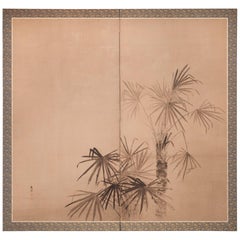
Japanese Two-Panel Screen Ink Painting of Palm Trees on Paper
Located in Hudson, NY
Japanese two-panel screen: ink painting of Palm Trees on paper, Edo period (1787) beautiful painting of Japanese windmill palm trees. Ink paint...
Category

18th Century Japanese Antique Edo Paintings and Screens

Materials

Silk, Wood, Paper

Japanese Chinese Asian Large Six-Panel Folding Byobu Screen Mythical Landscape
Located in Studio City, CA
A gorgeous, strangely beautiful, unusually engaging, and alluring hand-painted large six-panel Japanese/Asian Byobu folding screen depicting an almost magical/ mythical nature scene ...
Category

18th Century Japanese Antique Edo Paintings and Screens

Materials

Gold Leaf

Edo Period Seasonal Transition Screen
Located in Fukuoka, JP
Edo Period Seasonal Transition Screen Period: Edo Size: 368 x 153 cm This exquisite six-panel screen, adorned with golden flakes, beautifully portrays the seamless transitio...
Category

19th Century Japanese Antique Edo Paintings and Screens

Materials

Gold Leaf

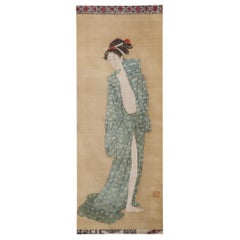
Early 19th Century Japanese Scroll Bijin after the Bath in Summer
Located in Hudson, NY
Early 19th century Japanese Scroll: Bijin after the bath in summer. Painted in pigments on silk. Signature reads: Yamauchi Sentsu. Japan,...
Category

Early 19th Century Japanese Antique Edo Paintings and Screens

Materials

Silk, Wood

Edo 19th Century Japanese Folding Screen Six Panels Battle of Menpei
Located in Brescia, IT
Samurai on horseback and by boat from the famous battle of Menpei Japanese folding screen six-panel of "Tosa School" painted with mineral pigments on vegetable on golden silk , earl...
Category

Early 19th Century Japanese Antique Edo Paintings and Screens

Materials

Gold Leaf

Edo paintings and screens for sale on 1stDibs.

Find a broad range of unique Edo paintings and screens for sale on 1stDibs. It’s true that these talented designers have at times inspired knockoffs, but our experienced specialists have partnered with only top vetted sellers to offer authentic pieces that come with a buyer protection guarantee. Prices for paintings and screens differ depending upon multiple factors, including designer, materials, construction methods, condition and provenance. On 1stDibs, the price for these items starts at $375 and tops out at $475,500 while the average work can sell for $12,800.

Still Thinking About These?

All Recently Viewed