Japonisme Paintings and Screens

JAPONISME STYLE

In the late 19th and early 20th century, France developed an enduring passion for Japanese aesthetics and craftsmanship. Not only did this interpretation of Japanese culture — which became known as Japonisme — infuse fresh energy into French art and design, but it also radically transformed how Europeans, and subsequently the world, would come to understand visual culture. 

Until 1853, Japan had been closely guarded against foreign visitors for over two centuries. However, American Commodore Matthew C. Perry sailed into Japan that year and initiated the first of its treaties with the United States and Europe, thereby opening its borders and giving the West its first-ever look at Japanese design. 

For the next few decades, taken with Japonisme, sophisticated collectors in Paris, New York and elsewhere gorged themselves on lacquered screens, celadon ceramics and netsuke ornaments, along with artworks depicting various aspects of Japanese life. The East Asian country’s influence on Europe, particularly France, contributed to one of the most creatively prosperous periods in history, leaving an imprint on the Impressionist, Art Nouveau and Art Deco movements, and inspiring artists like Edgar Degas, Mary Cassatt, Vincent van Gogh as well as luxury houses such as Louis Vuitton and Hermès. Japonisme emerged at the time when the ornate Renaissance Revival style was the most prominent mode of decorating in Europe, and Japanese aesthetics seemed strikingly modern and elegant in comparison. 

In addition to everyday practical objects from Japan, such as vases, tableware and decorative boxes, Japanese art, especially Japanese woodblock prints by masters of the ukiyo-e school, caught the eye of many artists — particularly those in the Art Nouveau poster community in 1880s Paris. The luscious organic colors associated with traditional Japanese design, motifs like cherry blossoms and carp and the vivid patterns found in woodblock prints, silks and more were adopted and appropriated by painters as well as ceramicists and those working in other fields of the decorative arts. Today, demand for Japanese lacquerware — furniture, trays, writing boxes, screens, incense burners — from the Edo period (1615–1868) and the late 19th century continues to be very strong among collectors.

Find a collection of antique Japonisme furniture and decorative objects on 1stDibs.

to
2
26
9
67
4
66
45
29
17
11
6
5
5
2
2
2
2
1
1
4
15
48
4
17
15
14
6
7
1
2
11
7
3
44
43
37
23
17
70
69
69
1
1
71
71
71
26
2
1
1
Style: Japonisme
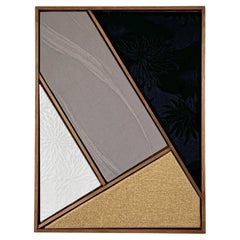
Vintage kimono textile art " Monochrome Geometry " by ikasu Gold Grey Japan
Located in Setagaya City, JP
This work is inspired by traditional Japanese nature colors symbolism, and is framed in paulownia wood originally used for a kimono chest-of-drawers. It is filled with storytelling ...
Category

1960s Japanese Vintage Japonisme Paintings and Screens

Materials

Silk, Wood

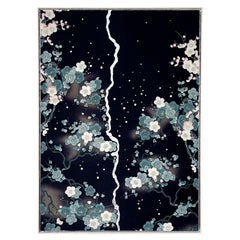
Antique kimono textile art " Plum Blossom Night ~ Resilience ~ " by ikasu Japan
Located in Setagaya City, JP
This artwork uses antique fabric from Taisho era (early 1920ies) kimono and paulownia wood taken from antique kiritansu - chest-of-drawers used initially to keep kimonos. It is el...
Category

1920s Japanese Vintage Japonisme Paintings and Screens

Materials

Silver Leaf

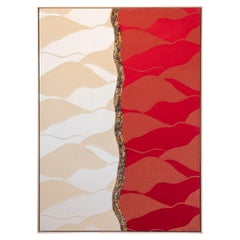
Vintage obi textile art "Under the Sun ~ Serendipity ~" by ikasu Red Beige Japan
Located in Setagaya City, JP
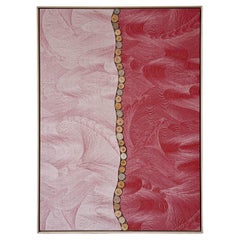
< This artwork creatively uses tree bark to evoke the imagery of woods and mountains during both the morning and nighttime on left and right. It is elegantly framed with paulownia wood, a tree closely connected to kimono culture, and is filled with storytelling and sense of luxury. By incorporating both the front and back sides of the same obi fabric woven in different colors, the play of light and shadow on the mountains is depicted through the contrasting appearances of these surfaces. The intention behind this piece is to convey the exquisite beauty of Japanese mountains and the lush forests that inhabit them. To achieve this, traditional elements of Japanese culture, such as obi textiles and craftsmanship involving wood, were used. The outer side and inner linings of the same obi, no longer suitable for clothing, along with bark material that would normally be discarded, have been repurposed to create this exceptional upcycle artwork. The fusion of Japanese natural materials – silk, paulownia wood, and pine bark for the central decoration – along with the so-called "Tozan" pattern, a unique Japanese natural design showing mountains from far-away point, captures the magnificent beauty of Japanese nature from various perspectives. The central bark decoration stands out as a distinctive feature of this work. Pine, oak, and other tree barks are interwoven among the mountains woven into the obi, creating a tangible and authentic natural atmosphere. << Period / Story The obi used in this piece was originally crafted during the late Showa period (1960-80ies). << Explanation and meaning of pattern and colors This upcycle artwork uses an obi with a tozan pattern woven in two colors. The design is inspired by a distant mountain range, a motif that has been used in paintings and crafts since ancient times. However, in this particular design, the mountains are depicted not as distant peaks but as graceful semicircles giving it a mild atmosphere. << Characteristics of the fabric This upcycled Fukuro-obi (two-side obi) showcases a festive color pattern of mountains intricately woven with gold threads against a beige front and red on the back. The way this obi interacts with light allows it to shift in expression, much like a mountain revealing different facets over time. It can transform from deep shades of color to the appearance of gold shimmering against bright hues, depending on the lighting and viewing angle. << About the frame Kiritansu - chest-of-drawers for kimono, is traditionally made from paulownia wood, a uniquely Japanese material closely tied to the world of kimonos. Paulownia wood is known as the lightest wood in Japan, prased for its natural luster, resistance to moisture, and resilience against cracking. Since ancient times, it has been used in crafting furniture, chests, and musical instruments. During the Edo period, it became customary to store cherished kimonos in paulownia chests...
Category

Late 20th Century Japanese Japonisme Paintings and Screens

Materials

Silk, Wood

VIntage kimono textile art " Geometry ~ Chrysanthemums ~" by ikasu White Japan
Located in Setagaya City, JP
< This work is inspired by traditional Japanese natural symbolism, and is framed in paulownia wood originally used for a kimono chest-of-drawers. It is elegantly framed with...
Category

1960s Japanese Vintage Japonisme Paintings and Screens

Materials

Silk, Wood

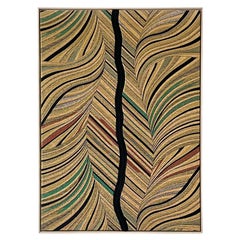
Vintage obi textile art " Broken Vase ~ kintsugi ~" by ikasu Black Gold Japan
Located in Setagaya City, JP
< This textile artwork uses a vintage obi dated around 1980ies, with a feather motif, and arranges it so that it looks like a vase. Antique obi, just as it is a broken vase, is united back again with black obijime - a string used to tie up obi when it’s worn. Framed in kiritansu (antique chest) paulownia wood. It is elegantly framed with paulownia wood originally used for kimono chest-of-drawers, and is filled with storytelling and sense of luxury. I used pieces of kimono that could no longer be used as clothing and kiritansu chest-of-drawers that would normally be discarded to create the ultimate upcycled piece. << Explanation and meaning of pattern and colors Feathers hold various meanings and symbolism in Japanese traditional culture, often reflecting themes of spirituality, symbolism, and folklore. Here are some of the meanings associated with feathers in Japanese tradition: ・Divine Protection: Feathers are often seen as symbols of divine protection and spiritual guidance. Feathers, especially those from birds, are considered to be imbued with the protective energy, offering spiritual guardianship and safeguarding against negative forces. ・Connection to the Spirit World: Feathers are sometimes associated with the spirit world and the realm of the divine. In folklore and mythology, feathers are depicted as messengers between the earthly realm and the celestial realms. ・Symbol of Beauty and Elegance: Feathers are admired for their natural beauty, grace, and elegance. In traditional Japanese arts such as Noh theater, Kabuki, and dance performances like Kagura, actors and performers often use feathered costumes or accessories to enhance their appearance and convey a sense of refinement and sophistication. ・Sign of Good Luck and Prosperity: In Japanese folklore, certain birds like cranes and pheasants are considered symbols of good fortune, longevity, and prosperity. Feathers from these birds are often depicted in art and craftwork as auspicious symbols believed to bring blessings and positive energy to the bearer. < Kiritansu - chest-of-drawers for kimono, is traditionally made from paulownia wood, a uniquely Japanese material closely tied to the world of kimonos. Paulownia wood is known as the lightest wood in Japan, prased for its natural luster, resistance to moisture, and resilience against cracking. Since ancient times, it has been used in crafting furniture, chests, and musical instruments. During the Edo period, it became customary to store cherished kimonos in paulownia chests...
Category

1980s Japanese Vintage Japonisme Paintings and Screens

Materials

Silk, Wood

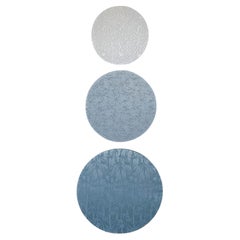
Vintage kimono textile art " Turquoise Forest ~ Strength ~ " by ikasu Blue Japan
Located in Setagaya City, JP
Fabrics featuring iconic Japanese plants like chrysanthemum, maple, and bamboo were gathered from various long underwear and kimono pieces to create a set of canvases (diameter 30, 25 and 20cm) showcasing exquisite gradations. The top canvas, in pristine white, originates from long under-kimono, while the middle and bottom canvases are skillfully upcycled from kimono fabrics. << Period / Story The long under-kimono and kimono fabrics used in these canvases were originally crafted and worn during the late Showa period (1960-80ies). << Explanation and meaning of pattern and colors The pattern on the top canvas features a chrysanthemum, an auspicious emblem symbolizing longevity. It is affectionately referred to as the "raccoon dog chrysanthemum" due to the large, overlapping petals resembling the fur of a muzina, a creature similar to a raccoon dog or badger. This motif is highly popular in various plant-inspired designs and frequently seen in Edo komon, katazome, and jimon textiles. The top canvas naga-juban under-kimono, being entirely white and devoid of any additional dyes, suggests its use as formal wear. Its pristine white hue accentuates the silk's luster when exposed to light and highlights the beauty of the woven patterns. The fabric used here is rinzu, a type of fabric thinner than crepe de chine, characterized by its soft, smooth texture and subtle sheen. This particular lintel distinguishes itself with the way its ground pattern emerges and also incorporates a woven chrysanthemum pattern. The central canvas showcases a maple tree, symbolizing longevity, which changes its colors with the seasons, bringing joy and happiness to people's lives. The bamboo featured on the lower canvas has been regarded as a symbol of good fortune since ancient times, given its straight and vigorous growth, along with the Chinese legend that a phoenix consumes its fruit. It embodies concepts such as "immortality," "longevity," and "strength" because it remains green even in winter. The hollow stem also signifies "innocence," suggesting that there are no hidden agendas. All three canvases are adorned with ground patterns that, when viewed from a distance, appear as modern works of art, yet upon closer inspection, they reveal a distinct Japanese ambiance. << Characteristics of the fabric All three canvases are made of fabrics with jimon. The unique and high level of Japanese weaving...
Category

1970s Japanese Vintage Japonisme Paintings and Screens

Materials

Canvas, Silk

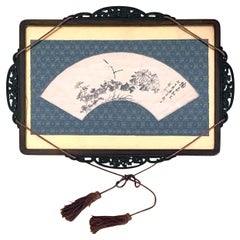
Framed Japanese Ink Painting Hidaka Tetsuo
Located in Atlanta, GA
An ink painting on the fan surface by Japanese Zen artist Hidaka Tetsuo (1791-1871), now framed in a traditional Japanese carved wood frame with silk fabric mat and decorative hangin...
Category

1850s Japanese Antique Japonisme Paintings and Screens

Materials

Wood, Paper

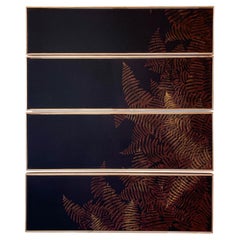
Vintage kimono textile art " Fern ~ Connection to Nature ~" by ikasu Black Japan
Located in Setagaya City, JP
This work uses an antique tomesode (festive kind of kimono) with fern design to evoke feelings of tranquility, harmony, and appreciation for the beauty of the environment. Can be used both vertically and horizontally. It is elegantly framed with paulownia wood originally used for kimono chest-of-drawers, and is filled with storytelling and sense of luxury. I used pieces of kimono that could no longer be used as clothing and kiritansu chest-of-drawers that would normally be discarded to create the ultimate upcycled piece. << Explanation of colors and patterns In Japanese traditional culture, ferns, particularly the Japanese painted fern (Athyrium niponicum), hold several meanings and symbolisms: ・Elegance and Beauty: Ferns are admired for their graceful, delicate appearance and intricate leaf patterns. In Japanese aesthetics, they are appreciated for their natural beauty and are often used in gardens, landscapes, and floral arrangements to add a sense of refinement and elegance. ・Resilience and Perseverance: Ferns are known for their ability to thrive in diverse environments, including shady forests, rocky cliffs, and damp soil. Their resilience in the face of challenging conditions is seen as a symbol of endurance and perseverance. In Japanese culture, ferns may represent the ability to overcome adversity and flourish despite obstacles. ・Connection to Nature and Tranquility: Ferns are native to forested areas and are often associated with the natural world. In Japanese traditional culture, they symbolize a deep connection to nature and the importance of maintaining harmony with the environment. The lush green foliage of ferns evokes feelings of tranquility and peacefulness, making them popular motifs in Zen gardens and traditional landscape paintings. ・Purity and Simplicity: Ferns are emblematic of simplicity and purity in Japanese aesthetics. Their unassuming beauty and understated elegance reflect the principles of wabi-sabi, an aesthetic worldview that values imperfection, impermanence, and simplicity. Ferns may be used in tea ceremonies, Ikebana (flower arranging), and other traditional arts to evoke a sense of tranquility and appreciation for life's fleeting moments. Overall, ferns in Japanese traditional culture symbolize elegance, resilience, connection to nature, purity, and simplicity. Their presence in art, literature, and landscape design underscores their enduring significance as symbols of natural beauty and spiritual resonance. << Characteristics of the fabric This vintage textile is hand-painted with a traditional Japanese technique called "yuzen". << About the frame Kiritansu - chest-of-drawers for kimono, is traditionally made from paulownia wood, a uniquely Japanese material closely tied to the world of kimonos. Paulownia wood is known as the lightest wood in Japan, prased for its natural luster, resistance to moisture, and resilience against cracking. Since ancient times, it has been used in crafting furniture, chests, and musical instruments. During the Edo period, it became customary to store cherished kimonos in paulownia chests...
Category

1960s Japanese Vintage Japonisme Paintings and Screens

Materials

Silk, Wood

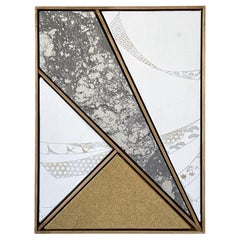
VIntage kimono textile art " Geometry ~ Marble ~" by ikasu Gold White Grey Japan
Located in Setagaya City, JP
This work is inspired by traditional Japanese nature motifs symbolism, and is framed in paulownia wood originally used for a kimono chest-of-drawers. It is elegantly framed with pau...
Category

1960s Japanese Vintage Japonisme Paintings and Screens

Materials

Silk, Wood

Vintage obi textile art " Camellia ~ Serendipity ~" by ikasu Blue Japan
Located in Setagaya City, JP
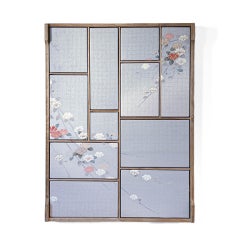
[Story behind the work] This work is inspired by traditional Japanese nature motifs symbolism, and is framed in paulownia wood originally used for a kimono chest-of-drawers. It is elegantly framed with paulownia wood originally used for kimono chest-of-drawers, and is filled with storytelling and sense of luxury. In this artwork, the aim was to capture the the auspicious symbol of camellia used in antique kimono. Traditional Japanese culture, represented by the kimono, and wood, an integral element of Japanese craftsmanship, were used to bring this vision to life. I used pieces of kimono that could no longer be used as clothing and kiritansu chest-of-drawers that would normally be discarded to create the ultimate upcycled piece. [Explanation and meaning of pattern and colors] This delicate piece features hand-drawn camellia motifs flowing gracefully on a softly brightened grayish background. Camellias, native to Japan, bloom from winter to early spring. As an evergreen tree with green leaves throughout the year, it symbolizes the anticipation of spring and is considered an auspicious plant. Due to its seasonal significance and auspicious meanings, camellias have been used as motifs symbolizing good fortune. Additionally, they were highly valued for their use in oil, cosmetics, and medicine, representing nobility. Believed to possess the power to ward off misfortune, camellias also carry the meaning of "protection from calamity" and have strong ties to traditional ceremonies. In this artwork, camellias are delicately depicted alongside flowing branches, subtly representing good fortune with their pale pink and white hues. "Sora-iro nezumi 空色鼠" refers to a light grayish color with a hint of blue, reminiscent of the slightly brightened sky on a lightly cloudy day. Popular during the late Edo period (19th cent.), it elegantly captures the slightly brighter sky pattern seen on lightly overcast days. Notably, the term "nezumi-iro" (mouse gray), popular during the late Edo period, was paired with brown tones, collectively known as "Forty-eight Teas and a Hundred Mice 四十八茶百鼠." Colors within the "nezumi" (gray) spectrum, particularly "sora-iro nezumi," were favored by young people for their cool and sophisticated appeal. [Characteristics of the fabric] The fabric features intricately woven patterns that reveal subtle gradations through dyeing, creating a grid pattern that transforms depending on the light conditions. Originally, this fabric was part of a formal kimono known as a "hōmongi 訪問着," featuring motifs along the hem, shoulders, and sleeves. These motifs have been carefully selected and combined to create a unified piece of artwork. [About the frame] Kiritansu - chest-of-drawers for kimono, is traditionally made from paulownia wood, a uniquely Japanese material closely tied to the world of kimonos. Paulownia wood is known as the lightest wood in Japan, prased for its natural luster, resistance to moisture, and resilience against cracking. Since ancient times, it has been used in crafting furniture, chests, and musical instruments. During the Edo period, it became customary to store cherished kimonos in paulownia chests...
Category

1960s Japanese Vintage Japonisme Paintings and Screens

Materials

Silk, Wood

Vintage kimono textile art " Sunset Timelapse ~ Ephemerality ~" ikasu Red Japan
Located in Setagaya City, JP
< The art piece uses two sides - front and reverse - of the same kimono, to show beautiful sea surrounding Japan, in hues and in late sunset, as a timelapse. The frame for this work is made of paulownia wood taken from antique Kiritansu - chest-of-drawers for kimono. I use antique kiritansu that can’t be used as furniture anymore to create basis and frames for my works. It adds them even more authentic atmosphere of traditional wabisabi spirit. Can you feel it? << Period / Story The kimono used in this piece was originally crafted during Showa period (around 1960ies). << Explanation and meaning of pattern and colors Sea waves, depicted in two color variations here, are a symbol of transience and Impermanence in Japanese culture. The ebb and flow of the tides, the ever-changing currents, and the relentless motion of the waves serve as reminders of the fleeting nature of life. This artwork featuring the sea convey themes of impermanence, reminding viewers to cherish the present moment and appreciate the beauty of life's fleeting moments. The theme of impermanence is strengthen by two colors of the sea - the lighter in early hues and the darker when the sun is just about to set in the sea. << About the frame This artwork frame is crafted from paulownia wood, a uniquely Japanese material closely tied to the world of kimonos, and it serves to convey the refined beauty of Japanese nature. Paulownia wood is known as the lightest wood in Japan, prased for its natural luster, resistance to moisture, and resilience against cracking. Since ancient times, it has been used in crafting furniture, chests, and musical instruments. Paulownia wood is closely linked to kimono culture. During the Edo period (17th cent.~), it became customary to store cherished kimonos in paulownia chests...
Category

1960s Japanese Vintage Japonisme Paintings and Screens

Materials

Silk, Wood

Japonisme paintings and screens for sale on 1stDibs.

Find a broad range of unique Japonisme paintings and screens for sale on 1stDibs. Many of these items were first offered in the 21st Century and Contemporary, but contemporary artisans have continued to produce works inspired by this style. If you’re looking to add vintage paintings and screens created in this style to your space, the works available on 1stDibs include asian art and furniture, wall decorations and other home furnishings, frequently crafted with fabric, paper and other materials. If you’re shopping for used Japonisme paintings and screens made in a specific country, there are Asia, East Asia, and Japan pieces for sale on 1stDibs. While there are many designers and brands associated with original paintings and screens, popular names associated with this style include Hidaka Tetsuo, and Kano Tanshin. It’s true that these talented designers have at times inspired knockoffs, but our experienced specialists have partnered with only top vetted sellers to offer authentic pieces that come with a buyer protection guarantee. Prices for paintings and screens differ depending upon multiple factors, including designer, materials, construction methods, condition and provenance. On 1stDibs, the price for these items starts at $235 and tops out at $40,000 while the average work can sell for $4,500.

Still Thinking About These?

All Recently Viewed