Painted Paintings and Screens
to
123
357
144
723
50
6
20
9
9
6
5
4
2
1
1
1
1
1
75
329
319
56
102
76
38
13
1
14
2
4
11
14
7
7
4
365
295
272
174
161
682
578
366
189
56
779
747
758
23
16
2
2
1
Technique: Painted
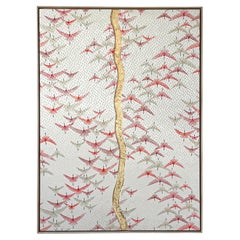
Vintage kimono textile art " Cranes ~ Kintsugi ~ " by ikasu White Red Gold Japan
By Kimono ikasu
Located in Setagaya City, JP
<
The frame for this work is made of paulownia wood taken from antique Kiritansu - chest-of-drawers for kimono.
I use antique kiritansu that can’t be used as furniture anymore to create basis and frames for my works. It adds them even more authentic atmosphere of traditional wabisabi spirit. Can you feel it?
The piece uses the concept of "kintsugi" - it "unites" the pieces of antique kimono back together with golden leaf to give it a second wind as art work.
<< Period / Story
The kimono used in this piece was originally crafted during the late Showa period (1960-80ies).
<< Explanation and meaning of pattern and colors
The Japanese saying goes, "A crane lives a thousand years, a tortoise lives ten thousand years," making cranes a symbol of longevity.
Cranes are also known for staying with the same partner for their entire lives, which is why they are often used at weddings and other celebrations to symbolize "marital bliss" and the desire for harmony between husband and wife.
On this particular piece, cranes are flying through snow woven on the fabric, as if they are overcoming all the disasters to get to their beloved ones.
The color scarlet, or deeply dyed red, used for the most of the cranes here, has long been associated with the meaning of "warding off evil." It is believed to possess the power to repel malevolent forces and invite good fortune.
During the Heian period, scarlet was reserved for sacred buildings and ceremonial objects that held great significance. Ordinary people were prohibited from wearing scarlet-red kimonos, which made it a highly special color.
<< Characteristics of the fabric
Cranes, going up and down, are generously decorated by kimpaku here. "Kimpaku" (金箔) refers to gold leaf/foil in Japanese. Gold leaf is a traditional material used in various aspects of Japanese culture, including art, crafts, and even in culinary applications.
In traditional Japanese art, gold leaf is often applied to religious objects, sculptures, paintings, and lacquerware to create a luxurious and decorative effect. The use of gold leaf in art dates back centuries and is associated with a sense of wealth, prestige, and the divine.
Traditional kimpaku technique is used here to make an accent decoration in the middle.
<< About the frame
This artwork frame is crafted from paulownia wood, a uniquely Japanese material closely tied to the world of kimonos, and it serves to convey the refined beauty of Japanese nature.
Paulownia wood is known as the lightest wood in Japan, prased for its natural luster, resistance to moisture, and resilience against cracking. Since ancient times, it has been used in crafting furniture, chests, and musical instruments.
Paulownia wood is closely linked to kimono culture. During the Edo period, it became customary to store cherished kimonos in paulownia chests...
Category
Late 20th Century Japanese Japonisme Painted Paintings and Screens
Materials
Gold Leaf
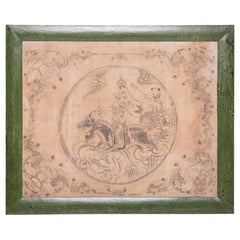
Chinese Folk Drawing of Mythical Qilin, c. 1900
Located in Chicago, IL
Beautifully detailed and masterfully painted, this painting dating from the turn of the 20th century centers its expressive composition upon a rondel of Chinese symbols. Representing...
Category
Early 20th Century Chinese Qing Painted Paintings and Screens
Materials
Muslin, Elm

$1,176 Sale Price
30% Off
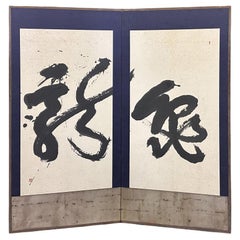
A turtle and a dragon calligraphy Screen
Located in Fukuoka, JP
"Immerse yourself in the timeless symbolism of the East with our dramatic calligraphy screen, adorned with characters representing a turtle and a dragon.
In Eastern culture, the tu...
Category
20th Century Japanese Painted Paintings and Screens
Materials
Silver Leaf
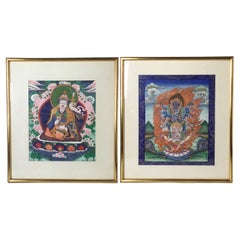
Pair of Burmese Early 20th Century Giltwood Framed Paintings
Located in Lambertville, NJ
A pair of vibrantly colored Burmese water color paintings of Deities. The early 20th century paintings in mid 20th century professionally framed giltwood frames.
Category
Early 20th Century Asian Painted Paintings and Screens
Materials
Glass, Giltwood, Paper
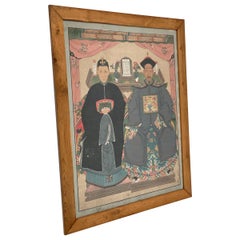
Antique Chinese Ancestor Portrait
Located in Schellebelle, BE
Antique Chinese ancestor portrait on canvas, Qing dynasty,
showing the patriarch and the matriarch
Portrait with nice, faded, warm ...
Category
18th Century Chinese Antique Painted Paintings and Screens
Materials
Canvas
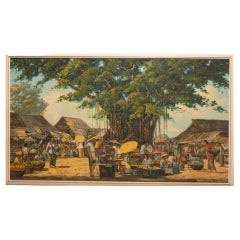
GA Kadir, Indonesian Village view, Oil on Canvas.Signed.First half 20 th C
Located in Leuven , BE
Original oil painting by the Indonesian impressionist painter G.A. Kadir: educated as a painter by the Danish van Russel (1898 - 1975) and active in the first half of the 20th centur...
Category
Early 20th Century Indonesian Painted Paintings and Screens
Materials
Canvas, Paint
FiNE
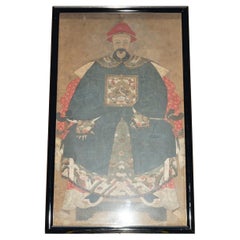
COLLECTABLE ANTIQUE CIR 1860 CHINESE ANCESTRAL PORTRAIT IN MUSEUM FRAME
Located in West Sussex, Pulborough
Royal House Antiques
Royal House Antiques is delighted to offer for sale this absolutely exquisite circa 1860-1880 Chinese Ancestral Portrait in a lovely museum glass exhibition fra...
Category
1860s Chinese High Victorian Antique Painted Paintings and Screens
Materials
Paper
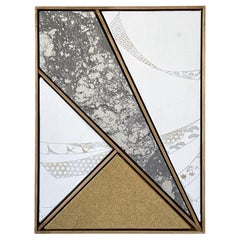
VIntage kimono textile art " Geometry ~ Marble ~" by ikasu Gold White Grey Japan
By Kimono ikasu
Located in Setagaya City, JP
This work is inspired by traditional Japanese nature motifs symbolism, and is framed in paulownia wood originally used for a kimono chest-of-drawers.
It is elegantly framed with pau...
Category
1960s Japanese Japonisme Vintage Painted Paintings and Screens
Materials
Silk, Wood
Vintage kimono textile art " Snowflake ~ New Beginnings ~" by ikasu Purple Japan
By Kimono ikasu
Located in Setagaya City, JP
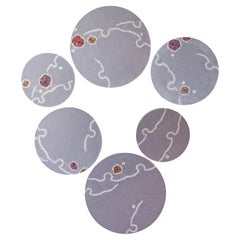
Six canvases (Diameter approx. 30cm, 25cm, 20cm) use the fabric taken from antique kimono, its' various parts, to create one harmonious fluid image of a snowflake - a symbol of new b...
Category
1970s Japanese Japonisme Vintage Painted Paintings and Screens
Materials
Canvas, Silk
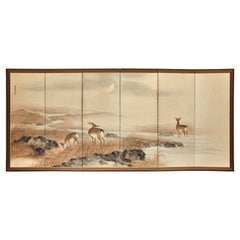
Japanese Six Panel Screen: Deer in Moonlit Water Landscape
Located in Hudson, NY
Meiji period (1868 - 1912) painting of a family of deer exploring the grassy and rocky shoreline of a meandering creek under the moonlight. Shijo School ink painting with minimal pi...
Category
19th Century Japanese Antique Painted Paintings and Screens
Materials
Brocade, Silk, Paper
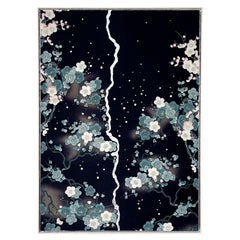
Antique kimono textile art " Plum Blossom Night ~ Resilience ~ " by ikasu Japan
By Kimono ikasu
Located in Setagaya City, JP
This artwork uses antique fabric from Taisho era (early 1920ies) kimono and paulownia wood taken from antique kiritansu - chest-of-drawers used initially to keep kimonos.
It is el...
Category
1920s Japanese Japonisme Vintage Painted Paintings and Screens
Materials
Silver Leaf
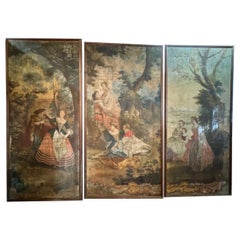
Set of French 18th Century Oil on Canvas Painting of Courting Scenes
Located in Dallas, TX
This product is a set of French 18th century oil on canvas paintings depicting courting scenes. Each painting captures romantic moments from the era, showcasing intricate details and...
Category
18th Century French Antique Painted Paintings and Screens
Materials
Paint
VIntage kimono textile art " Geometry ~ Chrysanthemums ~" by ikasu White Japan
By Kimono ikasu
Located in Setagaya City, JP
<
This work is inspired by traditional Japanese natural symbolism, and is framed in paulownia wood originally used for a kimono chest-of-drawers.
It is elegantly framed with...
Category
1960s Japanese Japonisme Vintage Painted Paintings and Screens
Materials
Silk, Wood

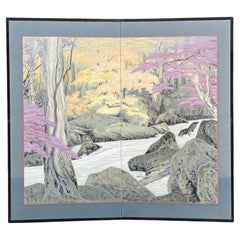
Two-panel folding screen, Nihonga, Hirai Baisen (1889–1969), early Shōwa era (19
Located in PARIS, FR
Two-panel folding screen, Nihonga, Hirai Baisen (1889–1969), early Shōwa era (1940s)
This two-panel screen is signed by Hirai Baisen (1889–1969), a major Nihonga painter who is only...
Category
20th Century Japanese Painted Paintings and Screens
Materials
Paper
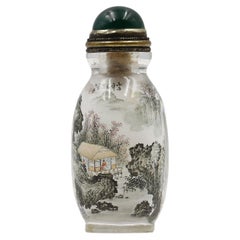
Inside Painted Glass, "Landscape" Snuff Bottle by Fu Guoshun, 1996
Located in Tainan, TW
Fu Guoshun was born at Hebei in 1954. He was complimented as a Master of Chinese arts and crafts in 2012. It is the highest honor for an inside painting artist. There are only ten artists who earned this glory. He is also the director of China International Painting and Calligraphy Association, vice chairman of China Snuff Bottle Professional Committee, and vice-chairman of Hebei Inside painted snuff bottle Association. Since 1977, he has been studying the art of inside painting under Wang Xisan. Fu Guoshun is one of the best artists in Ji school.
Mr Fu Guoshun's inside paintings are exquisite. His works include landscapes, figures, animals, flowers, and birds to calligraphy with comprehensive skills. In addition, his professions are known for their elegance, flexibility, and light. With the three superb skills of poetry, calligraphy, and painting, there are only a handful of artists who can match up in the field of snuff bottles. It is difficult to find other artists who could compare his paintings from an artistic perspective when it comes to inside painted snuff bottles...
Category
20th Century Chinese Modern Painted Paintings and Screens
Materials
Glass
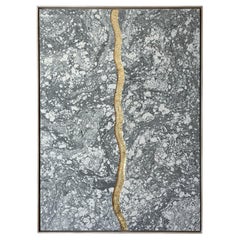
Vintage kimono textile art " Marble Story ~ Healing ~" by ikasu Grey Japan
By Kimono ikasu
Located in Setagaya City, JP
<
This work uses a vintage kimono fabric with marble pattern, that makes it look like a real piece of marble.
The line in the middle symbolizes “kintsugi” - concept of wabi-sabi, which values imperfection, impermanence, and the beauty of aging.
It is elegantly framed with paulownia wood originally used for kimono chest-of-drawers, and is filled with storytelling and sense of luxury.
I used pieces of kimono that could no longer be used as clothing and kiritansu chest-of-drawers that would normally be discarded to create the ultimate upcycled piece.
<< Explanation and meaning of pattern and colors
Kintsugi (金継ぎ), which translates to "golden joinery" or "golden repair," is a traditional Japanese art form of repairing broken pottery with lacquer mixed with powdered gold, silver, or platinum. I used this tecnique here to "repair" antique kimono by transforming it into art work. Beyond its literal meaning of mending broken ceramics, kintsugi carries profound philosophical and cultural significance in Japanese tradition:
・Embracing Imperfection: Kintsugi celebrates imperfection and impermanence. Rather than disguising or concealing flaws, it highlights them, treating the breakage as part of the object's history. This philosophy encourages acceptance of imperfection as an essential aspect of life, beauty, and human experience.
・Wabi-Sabi Aesthetic: Kintsugi embodies the principles of wabi-sabi, an aesthetic worldview centered on the acceptance of transience and imperfection. Wabi-sabi values simplicity, authenticity, and the beauty of things that are imperfect, impermanent, and incomplete. Kintsugi exemplifies these principles by turning what might be considered flaws into features that enhance the object's beauty and character.
・Resilience and Transformation: The act of repairing broken things with precious metals symbolizes resilience and transformation. Instead of discarding or replacing the broken object, kintsugi honors its history and transforms it into something new and valuable. This reflects broader philosophical themes of overcoming adversity, finding beauty in imperfection, and embracing change.
・Honoring the Past: Kintsugi preserves and honors the history of the object. Rather than erasing or ignoring its past, it acknowledges and celebrates it. This aspect of kintsugi can be seen as a metaphor for honoring our own personal histories, including the challenges and setbacks we have faced, and recognizing how they have shaped us into who we are today.
・Spiritual and Philosophical Symbolism: Kintsugi has spiritual and philosophical implications, reflecting concepts such as the interconnectedness of all things, the cycle of life and death, and the pursuit of harmony and balance. The process of repairing broken objects with precious metals is seen as a metaphor for spiritual growth, enlightenment, and the journey towards wholeness.
Overall, kintsugi represents not only a practical technique for repairing ceramics but also a profound philosophical and cultural perspective on life, beauty, and the human experience. It embodies values such as resilience, acceptance, and the transformative power of embracing imperfection.
<< Characteristics of the fabric
This vintage textile is hand-painted with a traditional painting technique where the colors are added on wet surface, which creates an effect of marble.
<< About the frame
Kiritansu - chest-of-drawers for kimono, is traditionally made from paulownia wood, a uniquely Japanese material closely tied to the world of kimonos.
Paulownia wood is known as the lightest wood in Japan, prased for its natural luster, resistance to moisture, and resilience against cracking. Since ancient times, it has been used in crafting furniture, chests, and musical instruments.
During the Edo period, it became customary to store cherished kimonos in paulownia chests...
Category
1960s Japanese Japonisme Vintage Painted Paintings and Screens
Materials
Gold Leaf
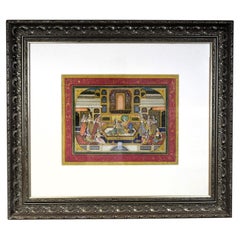
Miniature Mughal of Emperor Akbar And His Wife In His Courtyard, 19th Century
Located in Islamabad, PK
The Mughal miniature painting, executed with an exceptionally fine single-hair brush, is a testament to the meticulous craftsmanship and exquisite detail characteristic of Mughal art...
Category
Late 19th Century Indian Anglo-Indian Antique Painted Paintings and Screens
Materials
Paint, Paper
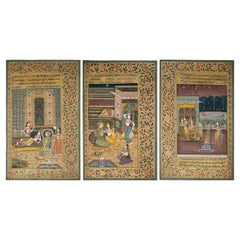
1970s, Indian Set of Three Colorful Drawings of the Royal Court
Located in Marbella, ES
1970s Indian set of three colorful drawing representing the kings royal court. Part of a large private collection.
Category
Late 20th Century Indian Painted Paintings and Screens
Materials
Paper
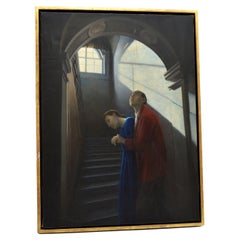
Oil Painting by Genevieve Dael, Couple IV
Located in London, GB
A beautiful original oil painting by well known artist Genevieve Dael (French, born 1947).
This is extremely well executed, it depicts a couple in a mysterious and atmospheric scene.
This was created in 1993 and was originally in the Francis Kyle...
Category
1990s French Mid-Century Modern Painted Paintings and Screens
Materials
Canvas
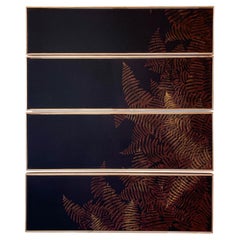
Vintage kimono textile art " Fern ~ Connection to Nature ~" by ikasu Black Japan
By Kimono ikasu
Located in Setagaya City, JP
This work uses an antique tomesode (festive kind of kimono) with fern design to evoke feelings of tranquility, harmony, and appreciation for the beauty of the environment. Can be used both vertically and horizontally.
It is elegantly framed with paulownia wood originally used for kimono chest-of-drawers, and is filled with storytelling and sense of luxury.
I used pieces of kimono that could no longer be used as clothing and kiritansu chest-of-drawers that would normally be discarded to create the ultimate upcycled piece.
<< Explanation of colors and patterns
In Japanese traditional culture, ferns, particularly the Japanese painted fern (Athyrium niponicum), hold several meanings and symbolisms:
・Elegance and Beauty: Ferns are admired for their graceful, delicate appearance and intricate leaf patterns. In Japanese aesthetics, they are appreciated for their natural beauty and are often used in gardens, landscapes, and floral arrangements to add a sense of refinement and elegance.
・Resilience and Perseverance: Ferns are known for their ability to thrive in diverse environments, including shady forests, rocky cliffs, and damp soil. Their resilience in the face of challenging conditions is seen as a symbol of endurance and perseverance. In Japanese culture, ferns may represent the ability to overcome adversity and flourish despite obstacles.
・Connection to Nature and Tranquility: Ferns are native to forested areas and are often associated with the natural world. In Japanese traditional culture, they symbolize a deep connection to nature and the importance of maintaining harmony with the environment. The lush green foliage of ferns evokes feelings of tranquility and peacefulness, making them popular motifs in Zen gardens and traditional landscape paintings.
・Purity and Simplicity: Ferns are emblematic of simplicity and purity in Japanese aesthetics. Their unassuming beauty and understated elegance reflect the principles of wabi-sabi, an aesthetic worldview that values imperfection, impermanence, and simplicity. Ferns may be used in tea ceremonies, Ikebana (flower arranging), and other traditional arts to evoke a sense of tranquility and appreciation for life's fleeting moments.
Overall, ferns in Japanese traditional culture symbolize elegance, resilience, connection to nature, purity, and simplicity. Their presence in art, literature, and landscape design underscores their enduring significance as symbols of natural beauty and spiritual resonance.
<< Characteristics of the fabric
This vintage textile is hand-painted with a traditional Japanese technique called "yuzen".
<< About the frame
Kiritansu - chest-of-drawers for kimono, is traditionally made from paulownia wood, a uniquely Japanese material closely tied to the world of kimonos.
Paulownia wood is known as the lightest wood in Japan, prased for its natural luster, resistance to moisture, and resilience against cracking. Since ancient times, it has been used in crafting furniture, chests, and musical instruments.
During the Edo period, it became customary to store cherished kimonos in paulownia chests...
Category
1960s Japanese Japonisme Vintage Painted Paintings and Screens
Materials
Silk, Wood
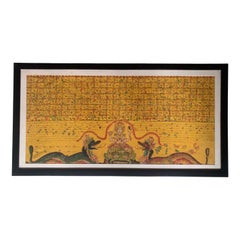
Framed Hindu Calendar Kamasan Painting from Bali, Indonesia
Located in Jimbaran, Bali
This framed Hindu Calendar is a 'Kamasan' cotton textile painting from Bali, Indonesia. It features a black wood frame and glass front. Along the bottom there are two "Naga" dragons ...
Category
1950s Balinese Tribal Vintage Painted Paintings and Screens
Materials
Cotton, Paint
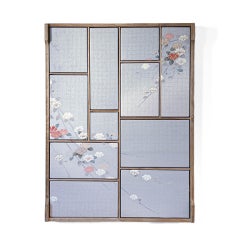
Vintage obi textile art " Camellia ~ Serendipity ~" by ikasu Blue Japan
By Kimono ikasu
Located in Setagaya City, JP
[Story behind the work]
This work is inspired by traditional Japanese nature motifs symbolism, and is framed in paulownia wood originally used for a kimono chest-of-drawers.
It is elegantly framed with paulownia wood originally used for kimono chest-of-drawers, and is filled with storytelling and sense of luxury.
In this artwork, the aim was to capture the the auspicious symbol of camellia used in antique kimono. Traditional Japanese culture, represented by the kimono, and wood, an integral element of Japanese craftsmanship, were used to bring this vision to life.
I used pieces of kimono that could no longer be used as clothing and kiritansu chest-of-drawers that would normally be discarded to create the ultimate upcycled piece.
[Explanation and meaning of pattern and colors]
This delicate piece features hand-drawn camellia motifs flowing gracefully on a softly brightened grayish background.
Camellias, native to Japan, bloom from winter to early spring. As an evergreen tree with green leaves throughout the year, it symbolizes the anticipation of spring and is considered an auspicious plant. Due to its seasonal significance and auspicious meanings, camellias have been used as motifs symbolizing good fortune. Additionally, they were highly valued for their use in oil, cosmetics, and medicine, representing nobility. Believed to possess the power to ward off misfortune, camellias also carry the meaning of "protection from calamity" and have strong ties to traditional ceremonies. In this artwork, camellias are delicately depicted alongside flowing branches, subtly representing good fortune with their pale pink and white hues.
"Sora-iro nezumi 空色鼠" refers to a light grayish color with a hint of blue, reminiscent of the slightly brightened sky on a lightly cloudy day. Popular during the late Edo period (19th cent.), it elegantly captures the slightly brighter sky pattern seen on lightly overcast days. Notably, the term "nezumi-iro" (mouse gray), popular during the late Edo period, was paired with brown tones, collectively known as "Forty-eight Teas and a Hundred Mice 四十八茶百鼠." Colors within the "nezumi" (gray) spectrum, particularly "sora-iro nezumi," were favored by young people for their cool and sophisticated appeal.
[Characteristics of the fabric]
The fabric features intricately woven patterns that reveal subtle gradations through dyeing, creating a grid pattern that transforms depending on the light conditions.
Originally, this fabric was part of a formal kimono known as a "hōmongi 訪問着," featuring motifs along the hem, shoulders, and sleeves. These motifs have been carefully selected and combined to create a unified piece of artwork.
[About the frame]
Kiritansu - chest-of-drawers for kimono, is traditionally made from paulownia wood, a uniquely Japanese material closely tied to the world of kimonos.
Paulownia wood is known as the lightest wood in Japan, prased for its natural luster, resistance to moisture, and resilience against cracking. Since ancient times, it has been used in crafting furniture, chests, and musical instruments.
During the Edo period, it became customary to store cherished kimonos in paulownia chests...
Category
1960s Japanese Japonisme Vintage Painted Paintings and Screens
Materials
Silk, Wood
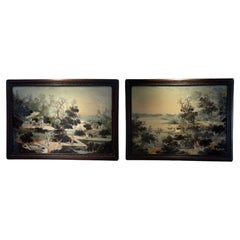
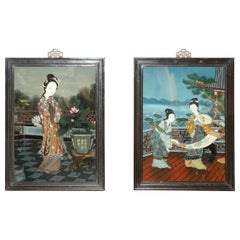
Chinese Pair
Diptych
Reverse Glass Paintings of Port Life, Early 18th Century
Located in North Miami, FL
This pair of reverse glass paintings are truly one-of-a-Kind pieces. The scene has been beautifully rendered, with great attention paid to detail. These piece were created in China d...
Category
18th Century Chinese Antique Painted Paintings and Screens
Materials
Wood, Glass, Paint
$23,600 Sale Price / set
20% Off
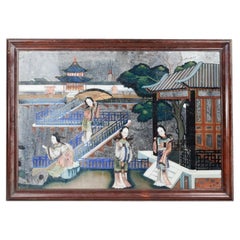
19th Century Chinese Qing Dynasty Reverse Painted Mirror
Located in Dublin 8, IE
19th Century Chinese Qing Dynasty Reverse Painted Mirror depicting a Court Scene. Featuring four ladies in traditional garments, including one fishing, along with a bridge to the cen...
Category
19th Century Chinese Qing Antique Painted Paintings and Screens
Materials
Glass, Mirror, Paint
English Portrait Of A Lady From Circa End Of The 17th Century
Located in Chonburi, TH
Circle of Willem Wissing
Oil on canvas in its original frame
Canvas size 65x75cm = 25.5”x29.5"
Including frame 82x93cm = 32”x36.5"
The oil painting is in excellent condition.
Fr...
Category
17th Century British Georgian Antique Painted Paintings and Screens
Materials
Canvas, Linen, Wood

A Burmese painting showing a colourful scene of a a ceremonial celebration
Located in Central England, GB
This most eye catching piece of fine artwork dates to circa 1930 and is a Burmese painting on fine canvas laid onto a card and shows a kaleidoscope typ...
Category
Mid-20th Century Burmese Primitive Painted Paintings and Screens
Materials
Canvas, Wood

Five Extremely Rare Chinese Drawings of Foreigners, 18th Century, Colonial
Located in Amsterdam, NL
Five Chinese paintings of western people by an unknown artist
China, circa 1760, captions later
All in giltwood frames.
“A woman with Portuguese hairdo, with gold, silver and gemstone necklace, a skirt under a vest, a koi on her back, called a cloak, a woman customarily inherited the family business, the male humble, to the threshold (Qianlong year, circa 1735).”
Gouache on silk, measures: 32 x 25.4 cm
“He is a Westerner who had a white skin. He does not have a heavy beard but plaits his hair. He wears a triangular black hat, short jacket, leather shoes and long stockings...
Category
Mid-18th Century Chinese Chinese Export Antique Painted Paintings and Screens
Materials
Paper
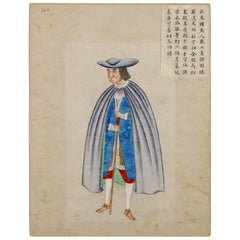
Sublime Pair of Antique Chinese Ancestral Portrait Hand Painted Glass Paintings
Located in West Sussex, Pulborough
Royal House Antiques
Royal House Antiques is delighted to offer for sale this Sublime pair of Antique Chinese Ancestral Portraits ...
Category
20th Century Chinese Chinese Export Painted Paintings and Screens
Materials
Glass
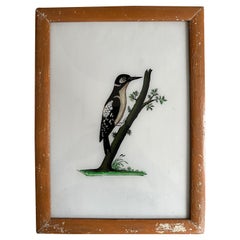
"19th-Century Bird Portrait: Fine Ornithological Art"
Located in Southall, GB
This fine 19th-century bird portrait beautifully captures the elegance and intricate details of its avian subject. The artist’s delicate brushwork and vi...
Category
19th Century English Antique Painted Paintings and Screens
Materials
Glass
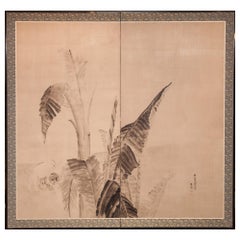
Japanese Two Panel Screen Ink Painting of Banana Leaves on Mulberry Paper
Located in Hudson, NY
Edo period (dated 1787) beautiful painting of unfurling palm leaves with romping puppies in the background. Ink painting (sumi-e) on mulberry paper. Signature reads: Okyo. Calligraph...
Category
Late 18th Century Japanese Edo Antique Painted Paintings and Screens
Materials
Paper
"19th-Century Bird Illustration: Timeless Avian Portrait"
Located in Southall, GB
This timeless 19th-century bird illustration beautifully captures the delicate elegance and distinctive features of its avian subject. The artist’s meticulous attention to detail is ...
Category
19th Century English Antique Painted Paintings and Screens
Materials
Glass
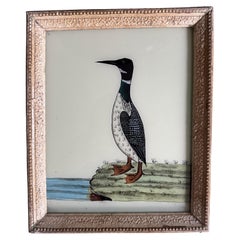
19th-Century Bird Portrait: Timeless Avian Art
Located in Southall, GB
This exquisite 19th-century bird painting captures the elegance and vibrant beauty of its subject with remarkable detail and artistry. The artist’s meticulous attention to the bird’s...
Category
19th Century English Antique Painted Paintings and Screens
Materials
Glass
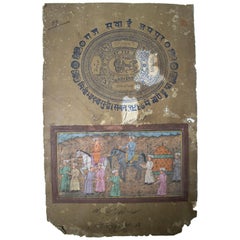
1950s Indian Mughal Paper Drawing of a Hunting Party on Antique Court Fee Stamp
Located in Marbella, ES
1950s Indian Mughal gouache colorful paper drawing of a hunting party on an antique court fee stamp official paper of the state of Jaipur.
Part of a l...
Category
Mid-20th Century Indian Painted Paintings and Screens
Materials
Paper
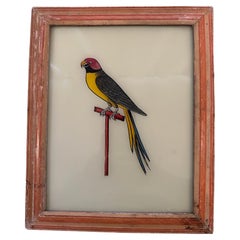
19th-Century Hand-Painted Animal Quartet: Lion, Pig, Dog, and Monkey
Located in Southall, GB
This unique 19th-century hand-painted collection features a captivating quartet of animals: a lion, pig, dog, and monkey. Each creature is brought to life with remarkable detail and ...
Category
19th Century English Antique Painted Paintings and Screens
Materials
Glass

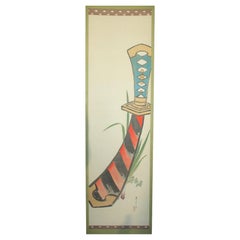
Japanese Antiques 4th Head Torii Kiyotada Silk Painted Scroll, Festival, Sword
Located in Niiza, JP
Torii School Head 7th Generation [4th Generation Torii Kiyotada] Silk Painted Scroll, Festival, Sword, May
Silk Painted
Scroll head: Ceramic
box: Paulownia wood
Size: Painting size: 330 (W) x 1130 (H) [mm]
Scroll: 360 (W) x 2000 (H) [mm]
Box size: 70 x 70 x 435 mm, 600g
A large composition depicting a Japanese sword
It is thought to represent the May festival
Sekku (seasonal festival) means a day that is a turning point in the season, or a traditional event that is held on that day.
Held in May, old weapons...
Category
19th Century Japanese Antique Painted Paintings and Screens
Materials
Silk, Paper
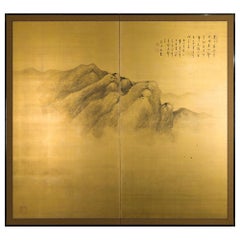
Japanese Two Panel Screen: Mountains in the Mist
Located in Hudson, NY
Chinese School landscape ink painting on gilded silk by Yukimatsu Shunpo, signed and dated 1924. Yukimatsu Shunpo was born in Oita in 1897 and studied under Himejima Chikugai in Osak...
Category
Early 20th Century Japanese Taisho Painted Paintings and Screens
Materials
Silk
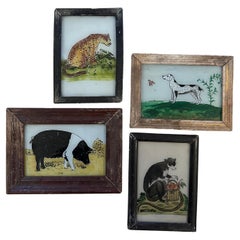
19th-Century Animal Portraits: Dog, Pig, Cheetah, and Monkey Paintings
Located in Southall, GB
This captivating set of 19th-century paintings showcases a diverse array of animals—a dog, pig, cheetah, and monkey—each rendered with exceptional detail and artistry. The artist ski...
Category
19th Century English Antique Painted Paintings and Screens
Materials
Glass
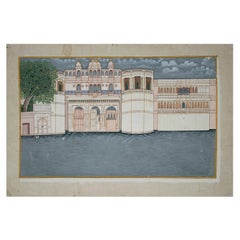
1970s Indian Paper Drawing of Palace
Located in Marbella, ES
1970s Indian paper drawing of a palace, part of a large private collection.
Category
Late 20th Century Indian Painted Paintings and Screens
Materials
Paper
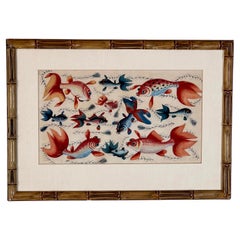
A Late C19th Chinese Gouache Painting On Pith Paper
Located in London, GB
A Charming Late C19th to Early C20th Chinese Gouache Painting on Pith Paper. Featuring an array of colourful Koi Carp swimming amongst reeds. Nicely executed with wonderful strong co...
Category
Late 19th Century Chinese Chinese Export Antique Painted Paintings and Screens
Materials
Paint, Paper
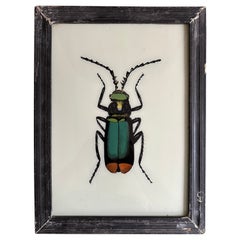
"19th-Century Large Bug Illustration: Intricate Entomological Art"
Located in Southall, GB
This intricate 19th-century illustration of a large bug showcases the remarkable detail and artistry characteristic of entomological studies of the era. The artist’s precise renderin...
Category
19th Century English Antique Painted Paintings and Screens
Materials
Glass
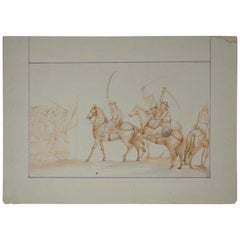
1970s Indian Mughal Gouache Paper Drawing Depicting Military Horsemen
Located in Marbella, ES
1970s Indian Mughal gouache paper drawing depicting military horsemen.
Part of a larger private collection.
Category
Late 20th Century Indian Painted Paintings and Screens
Materials
Paper
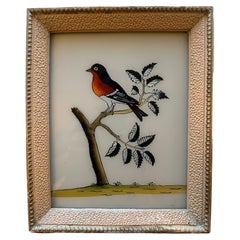
19th-Century Bird Illustration: Timeless Avian Art
Located in Southall, GB
This striking 19th-century bird illustration captures the grace and detail of its avian subject with exceptional artistry. The artist’s meticulous attention to feather patterns, colo...
Category
19th Century English Antique Painted Paintings and Screens
Materials
Glass
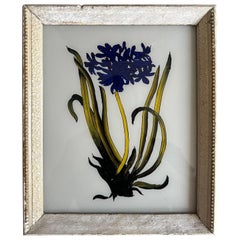
19th-Century Botanical Artwork: Exquisite Flower Painting
Located in Southall, GB
This exquisite 19th-century botanical painting beautifully captures the delicate details and vibrant colors of a single flower. The artist's meticulous attention to the petals, leave...
Category
19th Century English Antique Painted Paintings and Screens
Materials
Glass
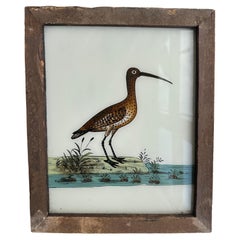
19th-Century Avian Masterpiece: Exquisite Bird Painting
Located in Southall, GB
This beautiful 19th-century bird painting showcases the artist's exceptional talent in capturing the essence of avian beauty. Every detail, from the intricate feather patterns to the...
Category
19th Century English Antique Painted Paintings and Screens
Materials
Glass
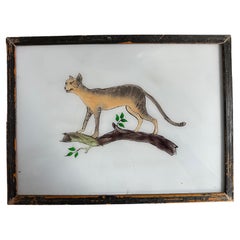
"19th-Century Cat Portrait: Graceful Feline Art"
Located in Southall, GB
This graceful 19th-century cat portrait captures the elegance and charm of its feline subject with remarkable detail and artistry. The artist’s skillful br...
Category
19th Century English Antique Painted Paintings and Screens
Materials
Glass
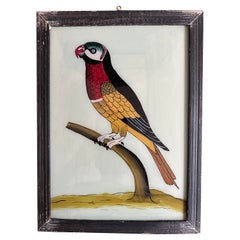
"19th-Century Parrot Portrait: Vibrant Exotic Bird Art"
Located in Southall, GB
This vibrant 19th-century parrot portrait captures the striking beauty and vivid colors of one of nature’s most exotic birds. The artist’s meticulous attention to detail showcases th...
Category
19th Century English Antique Painted Paintings and Screens
Materials
Glass
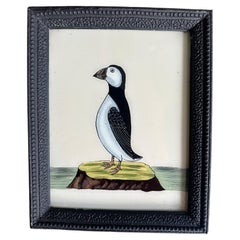
"19th-Century Penguin Study: Rare Antarctic Artwork"
Located in Southall, GB
This rare 19th-century penguin study captures the unique charm and distinctive features of this Antarctic bird with exceptional attention to detail. The artist's skillful brushwork a...
Category
19th Century English Antique Painted Paintings and Screens
Materials
Glass
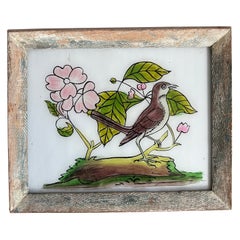
19th-Century Bird Portrait: Graceful Ornithological Art
Located in Southall, GB
This beautiful 19th-century bird portrait captures the elegance and vibrant detail of its avian subject with exceptional artistry. The artist’s precise b...
Category
19th Century English Antique Painted Paintings and Screens
Materials
Glass
19th-Century Ornithological Artwork: Elegant Bird Painting
Located in Southall, GB
This elegant 19th-century bird painting exemplifies the meticulous craftsmanship and artistic sensitivity of the era. The artist has captured the bird in stunning detail, from the de...
Category
19th Century English Antique Painted Paintings and Screens
Materials
Glass
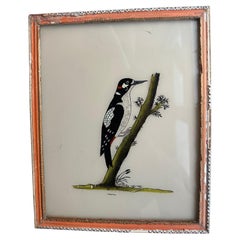
19th-Century Animal Study: Exquisite Wildlife Painting
Located in Southall, GB
This remarkable 19th-century animal painting captures the essence and character of its subject with exceptional detail and artistry. The artist’s skillful use of color and texture br...
Category
19th Century English Antique Painted Paintings and Screens
Materials
Glass
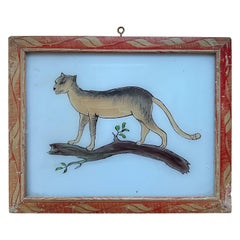
"19th-Century Red Bird Portrait: Striking Ornithological Art"
Located in Southall, GB
This striking 19th-century painting of a red bird captures the vivid beauty and elegance of its subject with exceptional detail. The artist's masterful use of rich, red hues and fine...
Category
19th Century English Antique Painted Paintings and Screens
Materials
Glass
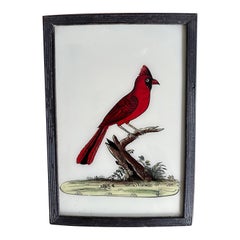
"19th-Century Bird Study: Masterful Ornithological Artwork"
Located in Southall, GB
This masterful 19th-century bird study captures the elegance and natural beauty of its subject with extraordinary detail and vivid color. The artist's delicate brushwork and keen obs...
Category
19th Century English Antique Painted Paintings and Screens
Materials
Glass
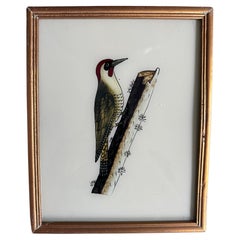
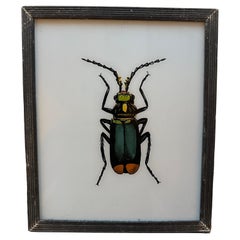
19th-Century Insect Illustration: Detailed Entomological Art
Located in Southall, GB
This 19th-century insect illustration showcases the intricate beauty and complexity of its subject with extraordinary detail. The artist’s precise rendering captures every nuance, fr...
Category
19th Century English Antique Painted Paintings and Screens
Materials
Glass
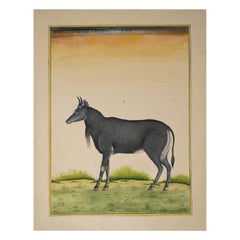
1970s Indian Paper Drawing of Goat
Located in Marbella, ES
1970s Indian paper drawing of a goat, part of a large private collection.
Dimensions with frame: 35 x 26 cm.
Category
Late 20th Century Indian Painted Paintings and Screens
Materials
Paper
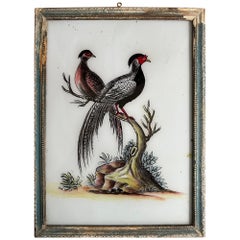
"19th-Century Pheasant Pair: Elegant Ornithological Artwork"
Located in Southall, GB
This elegant 19th-century artwork features a beautifully detailed pair of pheasants, capturing their graceful posture and vibrant plumage with remarkable artistry. The artist’s skill...
Category
19th Century English Antique Painted Paintings and Screens
Materials
Glass
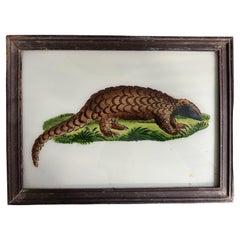
"Large 19th-Century Armadillo Portrait: Detailed Wildlife Art"
Located in Southall, GB
This impressive 19th-century armadillo portrait captures the distinct characteristics of this fascinating creature with meticulous detail. The artist’s skillful rendering highlights the armadillo’s large, segmented armor, unique texture, and characteristic stance, showcasing both scientific accuracy and artistic flair. Reflecting the era’s fascination with exotic wildlife, this artwork combines a detailed study of the animal’s anatomy with a refined artistic approach. Ideal for collectors and enthusiasts of natural history, this painting offers a striking and comprehensive view of the armadillo, celebrating its role in 19th-century wildlife art.
Category
19th Century English Antique Painted Paintings and Screens
Materials
Glass
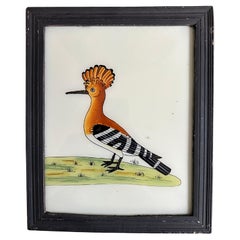
"19th-Century Bird Illustration: Elegant Avian Artwork"
Located in Southall, GB
This elegant 19th-century bird illustration captures the grace and beauty of its avian subject with stunning detail and artistry. The artist’s delicate brushstrokes and vibrant color...
Category
19th Century English Antique Painted Paintings and Screens
Materials
Glass
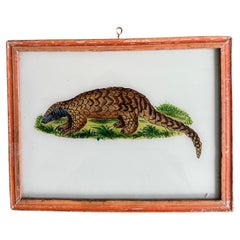
19th-Century Armadillo Portrait: Detailed Natural History Study
Located in Southall, GB
This captivating 19th-century armadillo painting offers a detailed and lifelike portrayal of this unique creature. The artist’s careful attention to the armadillo's textured armor an...
Category
19th Century English Antique Painted Paintings and Screens
Materials
Glass
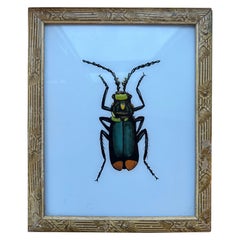
19th-Century Insect Portrait: Detailed Natural History Illustration
Located in Southall, GB
This captivating 19th-century insect painting showcases the intricate beauty of its subject with remarkable precision. The artist has meticulously rendered every detail, from the del...
Category
19th Century English Antique Painted Paintings and Screens
Materials
Glass
Still Thinking About These?
All Recently ViewedMore Ways To Browse
Kimono Rack
Korean Painted Screen
Rinpa School
Shoji Door
Antique Hawk Painting
Asian Screens Green
Asian Wood Wall Panels
Birds Folding Screen
Byobu Showa
Chinese Antique Signed Painting
Chinese Six Panel Coromandel Screen
Japanese Antique Wood Birds
Japanese Buddhist Screen
Japanese Silk Painting Ink
Japanese Watercolor Signed
Japanese Watercolour Signed
Japanese Wood Carved Panels
Tale Of Genji Japanese Screen