Asian Scholar s Objects
to
84
287
50
411
12
8
9
4
3
3
54
166
191
20
82
26
25
9
2
2
1
1
2
1
1
3
2
151
143
72
70
42
431
404
295
84
35
431
431
431
3
3
2
2
1
Place of Origin: Asian
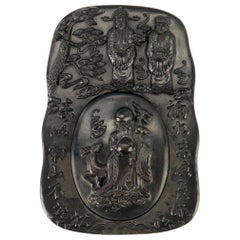
Carved Chinese Inkstone with Longevity Symbols and Marks
Located in Atlanta, GA
A black carved Chinese inkstone with an conforming oval cover circa early 20th century (late Qing to Republic period). The inkstone appears to be slate stone and was likely a She type (SheYan), one of the four famous inkstones in China that comes from She County (Anhui Province) and Wuyuan County (Jiangxi Province). It features a slight scalloping edge with elaborate surface carving that depicts the Sanxings (three beloved gods): Fu, God of Fortune (top right), Lu, God of Prosperity (top center holding a Ruyi staff) and Shou, God of Longevity (center on the lid who is holding a magical peach and a staff with a gourd with a deer at the back) . A towering evergreen pine was placed on the left with scrolling clouds and bats (the sound of bat in Chinese is Fu, the fortune). A famous Chinese couplet...
Category
Early 20th Century Chinese Export Asian Scholar s Objects
Materials
Stone
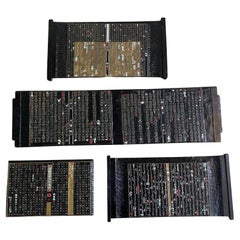
Collection of Four Japanese Wood Print Blocks Meiji Period
Located in Atlanta, GA
A collection of four carved wood print blocks from Japan circa late 19th century (Meiji Period). Constructed and hand-chiseled from hardwood, the printing blocks were finely carved o...
Category
Early 20th Century Other Asian Scholar s Objects
Materials
Wood
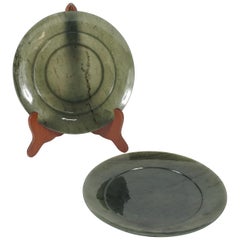
Pair of Large Carved Chinese Jade Plates
Located in Hudson, NY
This pair of jade plates are carved in a very delicate thin form allowing the stones natural striations and color to show through. The polish and luster are...
Category
21st Century and Contemporary Asian Scholar s Objects
Materials
Jade

$2,850 / set
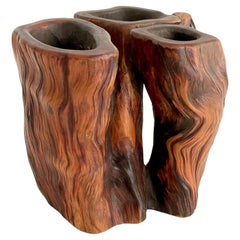
19th Century Chinese Cypress Root Brush Pot
Located in Atlanta, GA
Beautiful organic shaped Cypress root brush pot. This cypress root was carved out to hold the scholar’s calligraphy brushes. The aged natural patina enhan...
Category
Early 19th Century Antique Asian Scholar s Objects
Materials
Cypress
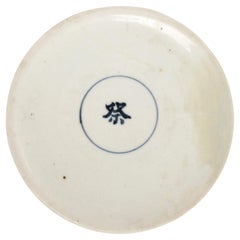
Korean Ceramic Ritual Offering Vessel with Inscription Joseon Dynasty
Located in Atlanta, GA
A ceramic dish with high cylindrical foot in white glaze with a cobalt blue underglaze inscription from Korea, circa 18-19th century Joseon Dynasty. This is a classic ceremonial vess...
Category
Late 18th Century Archaistic Antique Asian Scholar s Objects
Materials
Ceramic
$3,200 Sale Price
46% Off
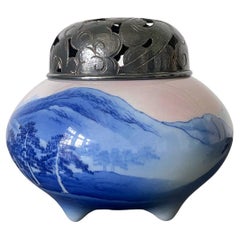
Japanese Glazed Ceramic and Silver Koro Incense Burner Makuzu Kozan
By Makuzu Kozan
Located in Atlanta, GA
A tri-pod ceramic incense burner (koro) by Japanese Imperial potter Makuzu Kozan (1842-1916) circa late Meiji to the start of Taisho period (1890-1910s). A fine example of the artist's work belonging to the late part of his underglaze paint phase (started around 1887 until his death), the surface of the koro was painted in beautiful shades of blue to depict a continuous landscape not unlike a traditional ink and watercolor hand scroll. The rise and fall mountains recede and fade into the horizon and are dotted with groves of pines. The sky is painted with a beautiful subtle shade of pink, suggesting a time of sunrise or sunset. The koro is fitted with an ensuite reticulated sterling silver hoya (incense cover), pierced with swirling cloud and marked with "pure silver' in Kanji. The base is signed in underglaze blue "Makuzu Kozan Sei" within a double ring. The piece is beautifully potted in form and the decoration was done with expertise using the novel technique developed by Kozan called Fuki-e (the blow painting), in order to achieve the striking landscape known as "Mountain and Water" with sense of dimensions and gradient, the poetic effects normally conveyed only by sumi ink staining on paper. The piece comes with an unsigned tomobako (wood storage box) of a recent age.
Also known as Miyagawa Kozan (1842–1916), Makuzu Kozan was one of the most established and collected ceramist from Meiji Period. Born as Miyagawa Toranosuke, Kozan established his pottery studio in Yokohama around 1870s and later became one of the appointed artists to the Japanese Imperial household. His work was exhibited in many international fairs that the Meiji government participated at the turn of the century and won many grand prizes. Being one of the most creative ceramists, Kozan started experimenting with new chemical colors from the West in the format of his porcelain glaze around 1880s. New colors allowed him to create underglaze designs that appeared bright, smooth and glossy. He even invented his own receipt of cobalt blue to achieve a much brighter yet softer shade, as evident on this vase. To create landscape that is realistic and dimensional, more common in the western paintings, he was inspired by the native Japanese ink painting technique developed around 1900 by Yokoyama...
Category
Early 1900s Japonisme Antique Asian Scholar s Objects
Materials
Silver
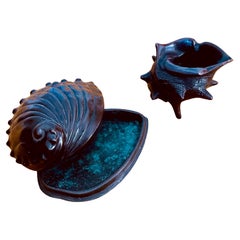
Two Japanese Bronze Shells
Located in New York, NY
These charming bronze shells were cast in Japan in the 19th century. They lived for many years in the collection of the Paris artist Pierre Le-Tan. One of...
Category
19th Century Edo Antique Asian Scholar s Objects
Materials
Bronze
$9,000 / set
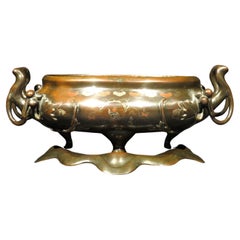
A Very Fine Japanese Mixed Metal Bronze Censer on Stand, Taisho Period
Located in Ottawa, Ontario
A very fine Taisho Period bronze censer of bellied oval form, richly decorated overall with hand enamelled and 'shibuichi'
'shakudo' motifs, depicting geometric designs, pine t...
Category
Early 20th Century Meiji Asian Scholar s Objects
Materials
Bronze
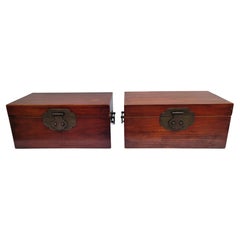
19th Century Pair of Camphor Boxes
Located in Santa Monica, CA
This pair of camphor storage boxes has its original lacquer finish. The construction is of standard mortise and tenon joints.
Category
19th Century Antique Asian Scholar s Objects
Materials
Hardwood
$960 Sale Price
36% Off
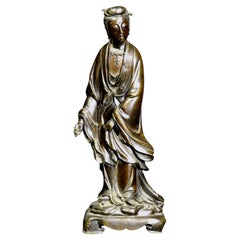
A Finely Cast Standing Bronze Figure of Guanyin, 17th / 18th Century
Located in Ottawa, Ontario
The finely cast bronze figure of Guanyin - Bodhisattva Goddess of Compassion, Kindness & Mercy.
Shown wearing an outer robe finely modelled with cascading folds tied at her waist, h...
Category
1690s Qing Antique Asian Scholar s Objects
Materials
Bronze
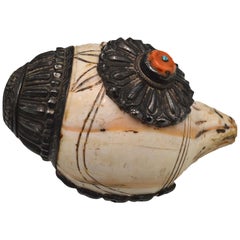
Sacred Silver and Conch Shell Trumpet, Tibet, 19th Century
Located in San Pedro Garza Garcia, Nuevo Leon
Conch shell recipient and container for holy water used in ceremonies. Known as “Buddha ears”, they were mounted as a sound instrument. Such shells are important ritual objects in Tibetan Buddhism...
Category
19th Century Tibetan Antique Asian Scholar s Objects
Materials
Silver
Still Thinking About These?
All Recently ViewedMore Ways To Browse
Antique Chinese Snuff Bottles Inside Painted
Jade Handle
Chinese Ink Stone
Jade Archer Ring
Snuff Bottle Stopper
Antique Chinese Carved Bamboo Brush Pot
Lingbi Scholar Stones
Chinese Brush Holder
Asian Green Marble
Carved Jade Bonsai Tree
Chinese Calligraphy Brush And Stand
Chinese Jade Brush
Chinese Scholar Seal
Carved Calligraphy Brush
Chinese Red Jade
Taihu Stone
Antique Chinese Brush Holder
Antique Chinese Calligraphy Brush