East Asian Sculptures and Carvings

to
395
1,161
253
1,609
35
10
20
13
10
8
4
1
245
498
866
45
310
192
77
30
2
15
11
5
21
6
12
7
5
679
532
354
232
172
3,297
1,150
989
709
1,654
1,653
1,653
4
4
4
4
3
Place of Origin: East Asian
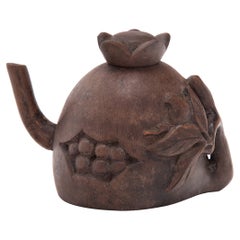
Chinese Bamboo Pomegranate Teapot, c. 1900
Located in Chicago, IL
Tea drinking has been an integral part of Chinese culture for centuries, resulting in a wide range of social customs and material traditions. In addition to tea leaves, water, and heat, the art of drinking tea (chayi) calls for a variety of teaware and utensils - both practical and decorative. This charming teapot dates to the late Qing dynasty and is hand-carved from a hollow length of bamboo in the shape of a ripe pomegranate. The handle is carved to resemble a thin branch, which forks to either side of the teapot bearing long, slender leaves. The teapot has a squat, rounded form and a dark brown finish, reminiscent of Yixing red clay teapots...
Category

Early 20th Century Qing East Asian Sculptures and Carvings

Materials

Bamboo

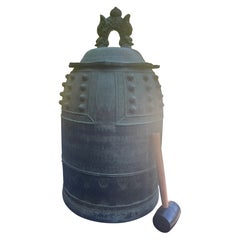
Japanese Giant Antique Bronze Temple Bell Bonsho Special Early Inscriptions, 27"
Located in South Burlington, VT
Unique Bronze Bell One of a kind find bronze bonsho temple bell- with an unusual scalloped crest, side panel markings, rare bottom band pattern castings, and early patron signatures - a rare Buddhist temple...
Category

19th Century Edo Antique East Asian Sculptures and Carvings

Materials

Bronze

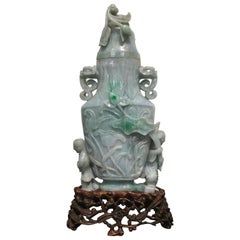
Large Early 20th Century Chinese Carved Jade Vase
Located in Austin, TX
A large and impressive Chinese caved jade vase, Republic Period, circa 1930. Carved from one massive piece of jade. The vase carved with the He He Er Xian...
Category

Early 20th Century Qing East Asian Sculptures and Carvings

Materials

Jade

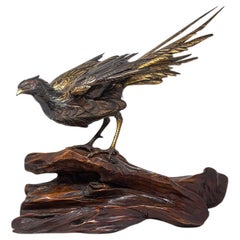
Japanese Bronze Pheasant Okimono Genryusai Seiya
Located in Newark, England
Unusual Casting of a Pheasant in Flight From our Japanese collection, we are delighted to offer this Japanese bronze okimono of a Pheasant upon a naturalistic root wood base. The Ph...
Category

Late 19th Century Meiji Antique East Asian Sculptures and Carvings

Materials

Bronze

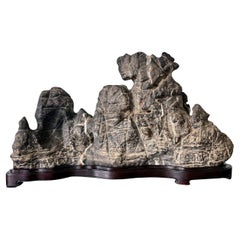
Large Chinese Horizontal Gray Lingbi Scholar Stone with Grotto on Display Stand
Located in Atlanta, GA
A wonderfully formed Chinese scholar stone of Lingbi type presented on a carved wood base with curvy conforming contour. Impressive in size and substantial in weight, this grey Lingb...
Category

19th Century Qing Antique East Asian Sculptures and Carvings

Materials

Stone

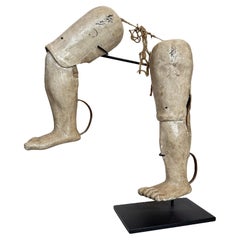
Pair of Articulated Paper Mache Bunraku Puppet Legs, Japanese, Meiji period
Located in Point Richmond, CA
Pair of Articulated Paper Mache Bunraku Puppet Legs, Japanese, Meiji period This pair of Meiji period Bunraku paper mache legs are a rare and intriguing piece of art. Bunraku is a f...
Category

Early 20th Century Meiji East Asian Sculptures and Carvings

Materials

Paper, Plaster

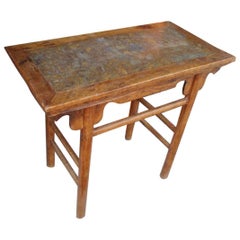
Chinese Fine Antique Hardwood Wine Table With Rare Inset Pudding Stone
Located in South Burlington, VT
China rare antique stone inlaid wine table, middle Qing dynasty (1644-1911), 18th/19th century. Elm wood (Humu) with original pudding stone inlay. All ...
Category

19th Century Qing Antique East Asian Sculptures and Carvings

Materials

Stone

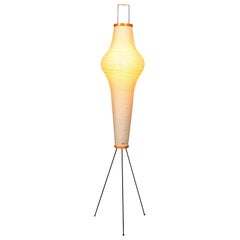
Isamu Noguchi Model 14A Akari Light Sculpture
By Isamu Noguchi, Akari, Ozeki Co. Ltd. 1
Located in Glendale, CA
Isamu Noguchi Model 14A Akari Light Sculpture. The shade is made from handmade washi paper and bamboo ribs with Noguchi Akari manufacturer's stam...
Category

21st Century and Contemporary Anglo-Japanese East Asian Sculptures and Carvings

Materials

Metal

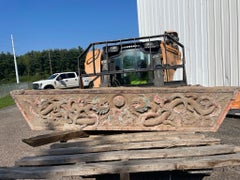
China Rare Antique Double Dragon Stone, 19thc
Located in South Burlington, VT
Here's one of the most beautiful Chinese antiques we have ever found in our travels in China over the past three decades. This is a one-of-a-kind antique sandstone lintel which when installed and displayed could be a handsome addition to your decor. It dates to the 18th century of the Qing dynasty. It still retains remnants of its original poly chrome surfaces. The carving and detail is deep and very fine. Depicted are a pair of writhing dragons competing for the fabled -wish granting jewel- and possibly water waves beneath- all auspicious signs. Dimensions: 13 inches high and 71 inches wide and 14 inches deep Photographs taken in natural light in our garden. Rare work of art. Provenance: originally found in Chengdu Province and has been part of family collection since its acquisition in 2004. Lifetime guarantee of authenticity. We are members of NAJGA- North American Japanese Garden...
Category

Early 19th Century Qing Antique East Asian Sculptures and Carvings

Materials

Sandstone

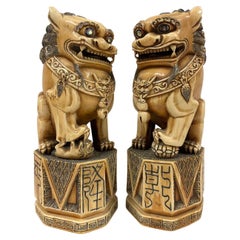
Early 20th Century Antique Chinese Carved Faux Ivory Foo Dogs, a Pair
Located in Pomona, CA
In these matching pair of male and female lion/foo dogs with curling mane and bulging eyes, the female holding its cub beneath one paw; the male with an embroidered ball. Each wears ...
Category

Early 20th Century Chinese Export East Asian Sculptures and Carvings

Materials

Bone

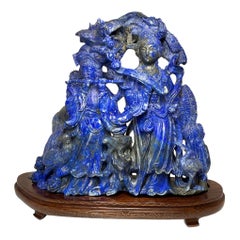
Chinese Lapis Lazuli Carved Group of Figures Sculpture
Located in Guaynabo, PR
This is a large heavy Chinese lapis lazuli well carved in details group of figures sculpture.`It depicts two young ladies very well dressed in southern and northern dynasty clothes with traditional Chinese hair...
Category

Mid-20th Century Chinese Export East Asian Sculptures and Carvings

Materials

Lapis Lazuli

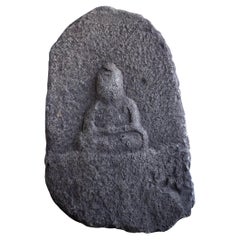
Edo Period Stone Buddha/1600’s/Japanese Antique Buddha Statue/Garden Ornament
Located in Sammu-shi, Chiba
This stone Buddha sculpture, believed to date back to the early Edo period or earlier, depicts Jizo Bosatsu in a seated pose. Crafted from granite, it showcases the natural effects ...
Category

Early 17th Century Edo Antique East Asian Sculptures and Carvings

Materials

Stone

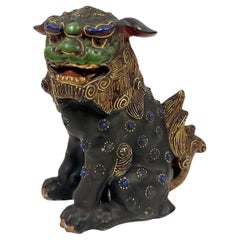
Vintage Japanese Satsuma Colorful Foo Dog Statue
Located in Pomona, CA
Fabulous colorful hand painted Satsuma porcelain foo dogs from Japan feature a colorful decoration on the body with green accents and gold detailing. Handcrafted in Japan, the detail...
Category

Early 20th Century Anglo-Japanese East Asian Sculptures and Carvings

Materials

Ceramic

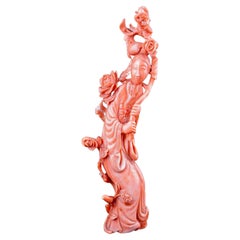
Chinese Red Coral Carving of Female Figure Qing Dynasty
Located in Sarasota, FL
Chinese carved red coral lady with flowers and flowing robes. Very fine work from Qing Dynasty. Weight 236 g. Last two images taken under natu...
Category

Mid-19th Century Chinese Export Antique East Asian Sculptures and Carvings

Materials

Coral

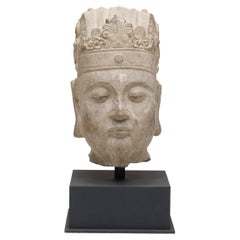
Tranquil Chinese Stone Bodhisattva Head
Located in Chicago, IL
Exuding an energy of calm and tranquility, this larger-than-life stone bust depicts a Buddhist bodhisattva in serene meditation. A disciple of the Buddha, a bodhisattva is a compassi...
Category

20th Century Qing East Asian Sculptures and Carvings

Materials

Limestone

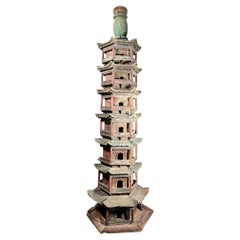
Chinese Antique Monumental Buddhist Wooden Pagoda Tower, 70 Inches
Located in South Burlington, VT
China antique monumental Wooden Pagoda, total height is 70 inches, hand carved and hand painted wood, seven hexagonal sections plus finial, late Qin...
Category

Early 20th Century Qing East Asian Sculptures and Carvings

Materials

Wood

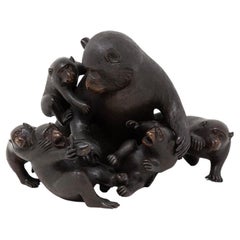
Japanese Meiji Period Bronze Monkey Group Sculpture Okimono Shosai
Located in Newark, England
Featuring Seven Japanese Macaques Form our Japanese collection, we are delighted to offer this Japanese Bronze Monkey Group by Shosai. The Japanese Bronze Group displaying a male father monkey and his infants playing around and being mischievous with Persimmon fruit. The monkeys modelled as Japanese macaque monkeys (snow monkey). The bronze okimono is beautifully patinated with a highly lifelike and naturalistic casting signed to the underside Shosai 正齊鋳. The Bronze group dates to the Meiji Period (1868-1912) circa 1885. Japanese macaque (snow monkey) is a terrestrial Old World monkey species that is native to Japan. They are known as snow monkeys because some live in areas where snow covers the ground for long periods each year hence their nickname. No other non-human primate lives further north or in a colder climate than the snow monkey. Individuals have brownish grey fur, pinkish-red faces, and short tails. Two subspecies are known and their conservation Status is of least concern. In Japan, the species is known as Nihonzaru ニホンザル, 日本 (Japan/Nihon) and saru 猿 (monkey) to distinguish it from other primates, but the Japanese macaque is the only species of monkey in Japan. The Japanese macaque features heavily in the religion, folklore, and art of Japan, as well as in proverbs and idiomatic expressions in the Japanese language. They are often seen in paintings, block prints and represented in all manner of carvings from Okimono to netsuke. Many of these art forms reside in the world’s most famous museums and collections, some of the most prominent pieces by artists such as Mori Sosen and Kawanabe Kyosai. In Shinto belief (Japan’s indigenous religion/nature religion) legendary mythical beasts known as raiju sometimes appeared as monkeys and kept Raijin (the god of lightning/storms) company. In another well known tale the three wise monkeys who warn people to “see no evil, hear no evil and speak no evil” can be seen depicted in relief over the door of the famous Tosho-gu shrine in Nikko. Meiji Period was an era of Japanese history that spanned from 1868 to 1912. It was the first half of the Empire of Japan, when the Japanese people began to build a paradigm of a modern, industrialised nation state and emergent great power, influenced by Western countries and aesthetics. As a result of radically different ideas, the changes to Japan were profound and it affected the social structure, politics, economy, military, and foreign relations across the board. The period corresponded to the reign of Emperor Meiji and was preceded by the Keio era and was succeeded by the Taisho era. Cultural Art during the Meiji Period was of particular interest to the government and they overhauled the art export market which in turn promoted Japanese arts via various world’s fairs, beginning in Vienna at the world fair in 1873. The government heavily funded the fairs and took an active role organising how Japan’s culture was presented to the world including creating a semi-public company named Kiritsu Kosho Kaisha (First Industrial Manufacturing Company). The Kiritsu Kosho Kaisha was used to promote and commercialise exports of Japanese art and established the Hakurankai Jimukyoku (Exhibition Bureau) to maintain quality standards. For the 1876 Centennial International Exhibition in Philadelphia, the Japanese government created a Centennial Office and sent a special envoy to secure space for the 30,000 items that would be displayed. The Imperial Household also took an active interest in arts and crafts, commissioning works by select artists to be given as gifts for foreign dignitaries further emphasising the high quality and importance of Japanese art. Just before the end of the 19th century in 1890, the Teishitsu Gigeiin (Artist to the Imperial Household) system was created to recognise distinguished artists. These artists were selected for their exceptionally high quality wares and talent in their own industry. Over a period of 54 years Seventy artists were appointed, amongst these were ceramicist Makuzu Kozan and cloisonné enamel artist...
Category

Late 19th Century Meiji Antique East Asian Sculptures and Carvings

Materials

Bronze

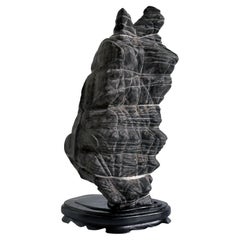
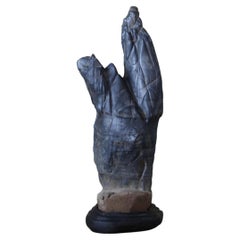
Rare Chinese Antique Black and White Lingbi Scholar Stone on Display Stand
Located in Atlanta, GA
A Chinese scholar stone of Lingbi type presented on a carved wood base. This stone takes a singular vertical form with one convex side that is largely flat, and the other side slight...
Category

19th Century Qing Antique East Asian Sculptures and Carvings

Materials

Stone

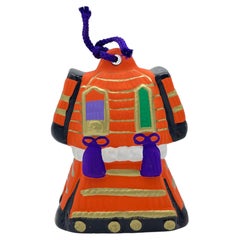
Japanese Armor Clay Bell Yoroi Dorei from Ohyama Jinjya 1990s
Located in Paris, FR
A Yoroi Dorei is a traditional Japanese clay bell shaped like a suit of samurai armor. These bells are often handcrafted and painted with intricate detail, symbolizing strength, prot...
Category

1990s Showa East Asian Sculptures and Carvings

Materials

Clay

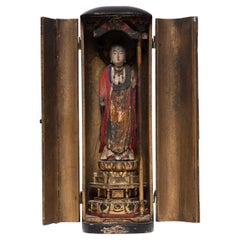
Japanese Zushi Traveling Shrine of Jizō Bosatsu, c. 1850
Located in Chicago, IL
The simple exterior of black lacquer encasing this 19th-century Japanese traveling shrine (zushi) belies the splendor within. The hinged doors open to reveal a lustrous gold interior...
Category

Mid-19th Century Edo Antique East Asian Sculptures and Carvings

Materials

Wood

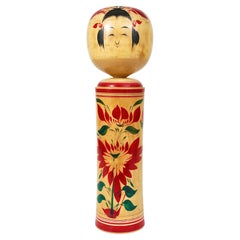
Decorative Naruko Kokeshi Doll Sculpture from Northern Japan, Hand-Painted
Located in Vienna, AT
A beautiful and exceptionally 18 inches tall classic traditional Naruko Kokeshi doll from Northern Japan. Handcrafted of wood and hand-painted in t...
Category

Early 20th Century Edo East Asian Sculptures and Carvings

Materials

Wood

Antique Chinese Carved Hetain Light Celadon/ White Jade, 19th Century
Located in Norton, MA
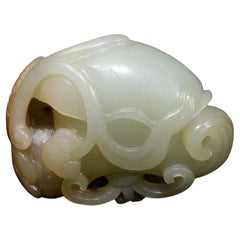
Antique Chinese Carved Hetain Light Celadon White Jade depicting dragonfly and ruyi on a lotus leaf. Good use of russet skin coloring, 19th-century. -Dimensions and Density- Jade: ...
Category

19th Century Other Antique East Asian Sculptures and Carvings

Materials

Jade

Lapis Lazuli Mountain-Form Carving
Located in San Francisco, CA
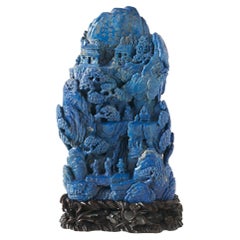
Lapis Lazuli Mountain-Form Carving Chinese lapis lazuli carving depicting a mountain scene with a pavilion, rockwork, trees, and figures on winding trails. The blue stone features g...
Category

20th Century East Asian Sculptures and Carvings

Materials

Lapis Lazuli

19th Century Carved Chinese Gilt Wood Panel II
Located in Houston, TX
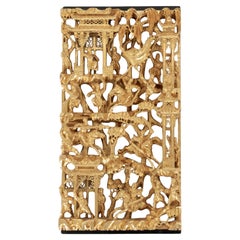
19th Century Chinese hand-carved gilt wood panel featuring a battle scene depicting both standing and horse-mounted sword-drawn warriors engaged in comba...
Category

19th Century Antique East Asian Sculptures and Carvings

Materials

Wood, Giltwood

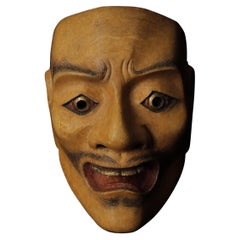
Japanese Noh Theater Taka (鷹) Mask. Attributed to Takada Fuki (高田 冨季, 1935–2008)
Located in Fukuoka, JP
Taka (鷹) Mask in Noh theater is designed to embody the strength, agility, and predatory instincts of a falcon. Its sharp facial features and wide, alert eyes symbolize the bird’s kee...
Category

20th Century Showa East Asian Sculptures and Carvings

Materials

Wood

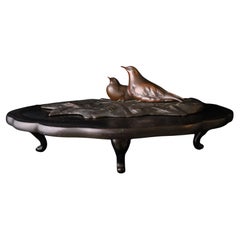
Japanese Bronze Sculpture of Two Birds on Leaf Base – Showa Period. Signed
Located in Fukuoka, JP
A serene and elegant Japanese bronze sculpture depicting a pair of birds resting on a large, naturalistically rendered leaf. Likely crafted during the Showa period, this piece showca...
Category

20th Century Showa East Asian Sculptures and Carvings

Materials

Bronze

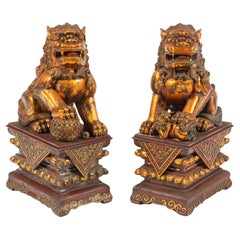
Pair of Antique Large Chinese Lacquered, Gilded Foo Dogs on Ornate Bases, China
Located in San Francisco, CA
Foo Dogs, or Guardian Lions, are a Chinese symbol of protection, often placed at entrances to ward off evil spirits and attract luck and wealth. This antique wooden pair, with gilt d...
Category

20th Century East Asian Sculptures and Carvings

Materials

Wood, Lacquer

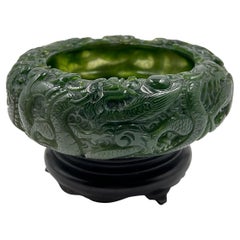
Chinese Jade Carved Bowl from the Qing Dynasty
Located in Autonomous City Buenos Aires, CABA
Chinese Carved Jade Bowl from the Qin Dynasty Circular piece, finely hand-carved in deep green jade with lighter natural veins. It features an intrica...
Category

Late 19th Century Other Antique East Asian Sculptures and Carvings

Materials

Jade

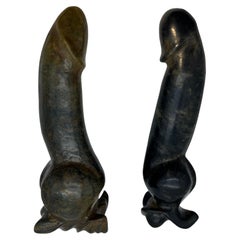
20th Century Chinese Polished Carved Stone Sex Toys
Located in North Miami, FL
A pair of 20th century Chinese polished carved stone sex toys.
Category

20th Century East Asian Sculptures and Carvings

Materials

Stone

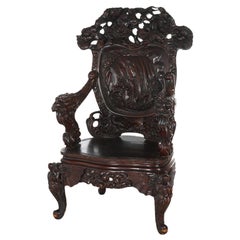
Antique Chinese Deep Carved Rosewood Figural King Throne Chair with Dragons 1920
Located in Big Flats, NY
Antique Chinese Deeply Carved Rosewood Figural King Throne Chair with Dragons C1920 Measures - 48.25"H x 29"W x 25"D An exquisite antique Chinese thr...
Category

Early 20th Century East Asian Sculptures and Carvings

Materials

Rosewood

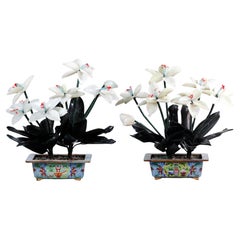
Pair of Chinese Jade/Stone Bonsai Flower Trees, Each in a Cloisonné Planter
Located in New York, NY
cloisonné planter decorated with objects' motif on blue ground
Category

Mid-20th Century East Asian Sculptures and Carvings

Materials

Jade, Metal, Enamel

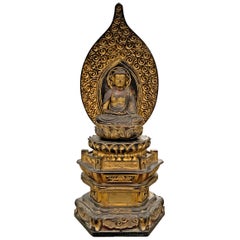
Edo Period Japanese Bodhisattva Shrine
Located in Chicago, IL
An incredible Edo Period Japanese gilt and lacquered carved wood shrine depicting a Bodhisattva with piercing glass eyes, a contemplative expression, and h...
Category

Early 1800s Japonisme Antique East Asian Sculptures and Carvings

Materials

Giltwood, Lacquer, Wood

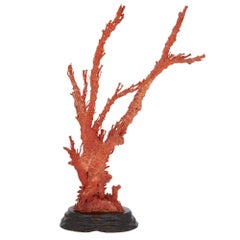
Qing Dynasty Antique Chinese Red Coral Specimen
Located in London, GB
This red coral specimen, with flowing lines and organic form, is a beautiful example of how the work of nature can be, and has been, celebrated as a...
Category

Early 20th Century East Asian Sculptures and Carvings

Materials

Coral

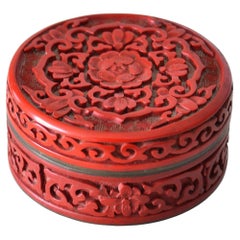
Antique Chinese Cinnabar, Brass and Enamel Box
Located in Miami, FL
A crisply carved antique Chinese red cinnabar lacquer lidded round box with blue enamel interior and brass fittings. The "dragon's blood" trinket box has a fine peony, foliate and fl...
Category

19th Century Qing Antique East Asian Sculptures and Carvings

Materials

Brass, Enamel

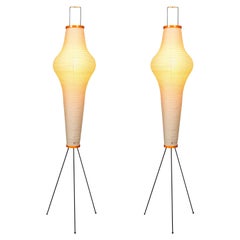
Pair of Isamu Noguchi Akari 14A Floor Lamps
By Akari, Ozeki Co. Ltd. 1, Isamu Noguchi
Located in Glendale, CA
Pair of Isamu Noguchi Akari 14A floor lamp. The shade is made from handmade washi paper and bamboo ribs with Noguchi Akari manufactu...
Category

21st Century and Contemporary Anglo-Japanese East Asian Sculptures and Carvings

Materials

Metal

Antique hand-carved Jade toggle or pendant, China 17th Century
Located in Beograd, RS
In this listing you will find an C Antique hinese nephrite jade carving of a crouching mythical animal, most likely a chilong (螭龙) or pixiu/獅獸–type beast, used as a toggle (挂件) or pe...
Category

17th Century Chinese Export Antique East Asian Sculptures and Carvings

Materials

Jade

Large Gilt Bronze Statue of Bodhisattva Avalokiteshvara with Four Arms
Located in Atlanta, GA
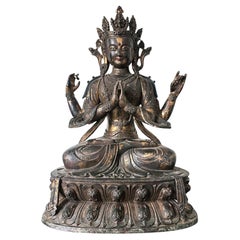
A finely cast bronze statue of Avalokiteshvara in his four-arm form with gilt and polychrome surface. The Bodhisattva of Infinite Compassion is worshiped in all Buddhism sect as one ...
Category

17th Century Qing Antique East Asian Sculptures and Carvings

Materials

Bronze

Antique Asian Chinese Horn Dragons Head Victorian Vintage Walking Stick Cane
Located in Dublin, Ireland
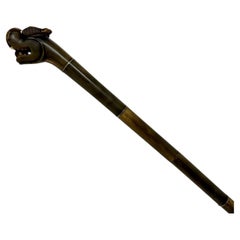
Very Unusual Horn Sectional Hand Carved Chinese Walking Stick or Dress Cane of outstanding quality, last half of the Nineteenth Century. The ...
Category

Late 19th Century Victorian Antique East Asian Sculptures and Carvings

Materials

Sterling Silver

Gilt Bronze Tibetan Water Moon Guan Yin Avalokiteshvara Statue
Located in Somis, CA
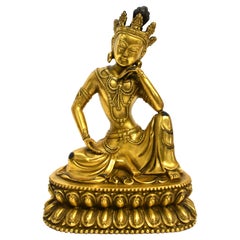
A magnificent gilt bronze statue of Tibetan Avalokiteshvara, the compassionate Bodhisattva Water Moon Guan Yin. Seated on a lotus base in rajalilasana, the "posture of royal ease...
Category

20th Century East Asian Sculptures and Carvings

Materials

Bronze

Soapstone Seal, Carved and Polished, China 1930, Republic Period, China 1930
Located in Auribeau sur Siagne, FR
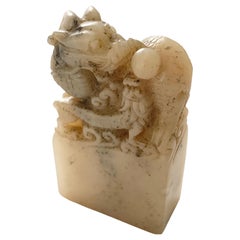
This Seal is in Soapstone, in white color. This has been made in China. The Period is the Republic Period, circa 1930. It is Hand-carved, and polished.
Category

1930s Chinese Export Vintage East Asian Sculptures and Carvings

Materials

Soapstone

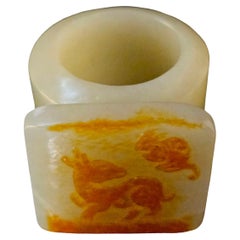
Antique Chinese Carved Hetain Light Celadon Jade " Archer s Ring", 19th Century
Located in Norton, MA
Antique Chinese Carved Hetain Light Celadon Jade " Archer's Ring", 19th Century. Good use of russet skin coloring, 19th-century. -Dimensions and Density- Jade: Width: 1.125" Depth:...
Category

19th Century Other Antique East Asian Sculptures and Carvings

Materials

Jade

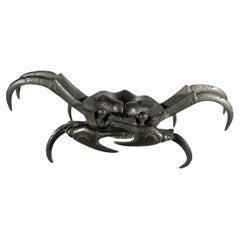
Large Japanese Meiji Period Bronze Crab (C) Okimono
Located in Chapel Hill, NC
Realistically modeled Japanese okimono of a crab raised on its toes. I of 5 designated by the (C) in the title.
Category

Late 19th Century Meiji Antique East Asian Sculptures and Carvings

Materials

Bronze

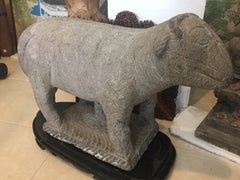
Ancient China Monumental Stone Ram Han Dynasty, 206BC-220AD
Located in South Burlington, VT
China, a large votive model of a stone ram, Han dynasty (206BC-220AD) Dimensions: 45cm, 18 inches high and 65cm, 26 inches length and 25cm, 10 inches wi...
Category

15th Century and Earlier Han Antique East Asian Sculptures and Carvings

Materials

Limestone

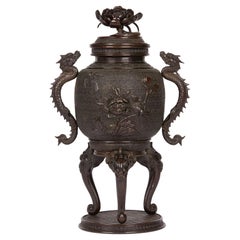
Large Japanese Meiji Bronze Lidded Urn, 19th Century
Located in Bishop s Stortford, Hertfordshire
A large and stylish antique Japanese Meiji bronze lidded twin handle urn standing on a rounded plinth base with tongue and grotesque head formed legs with dragon handles and a flat c...
Category

Early 20th Century Meiji East Asian Sculptures and Carvings

Materials

Bronze

Japanese "Suiseki" Makkouseki from Ehime
Located in Sammu-shi, Chiba
This is a stone mined in Japan. Not only in China but also in Japan from ancient times, rocks in the mountains have been shaved and stones for viewing have been quarried. Such stone...
Category

Mid-20th Century Showa East Asian Sculptures and Carvings

Materials

Stone

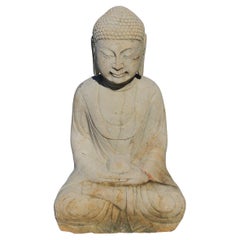
Antique Stone Amitabha Buddha Statue
Located in Somis, CA
A beautiful hand carved stone statue of Buddha Amitabha. Seated in dhyanasana, Buddha wears a robe elegantly draped over his body and gathered around his ankles. Finely depicted face...
Category

20th Century Tang East Asian Sculptures and Carvings

Materials

Stone

Antique Stone Amitabha Buddha Statue
$5,250 Sale Price
30% Off
Chinese Carved Hardstone Large Chop Seals, Pair
Located in Astoria, NY
Pair of Chinese Carved Hardstone Large Chop Seals, the reticulated bases with stag vignette reliefs, the upper portions depicting an ox mother and child. 8.25" H x 3" W x 3" D. Pro...
Category

Late 19th Century Qing Antique East Asian Sculptures and Carvings

Materials

Stone

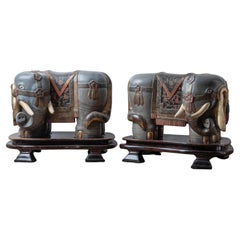
A Pair of Chinese Export Elephant Garden Stools
Located in Savannah, GA
A pair of Chinese export elephant form garden stools, early 20th century. Carved wood with gilding and painting. On custom built plinths. We...
Category

Early 20th Century Chinese Export East Asian Sculptures and Carvings

Materials

Wood

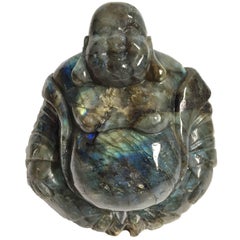
Gemstone Happy Buddha Labradorite
Located in Somis, CA
A fantastic labradorite Happy Buddha statue. The Buddha with round face, long earlobes and broad smile, wearing a loose robe that exposes the front of his...
Category

2010s East Asian Sculptures and Carvings

Materials

Stone

Gemstone Happy Buddha Labradorite
$1,200 Sale Price
65% Off
Isamu Noguchi Akari 10A Floor Lamp with Stamped Signature
By Isamu Noguchi, Ozeki Co. Ltd. 1
Located in Glendale, CA
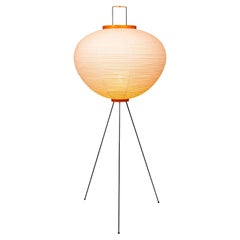
Isamu Noguchi Akari 10A floor lamp. The shade is made from handmade washi paper and bamboo ribs with Noguchi Akari manufacturer's stamp. Highly c...
Category

21st Century and Contemporary Anglo-Japanese East Asian Sculptures and Carvings

Materials

Metal

Antique Chinese Glazed Porcelain Roof Tile of a Warrior Figure, 19th C
Located in Amsterdam, Noord Holland
Chinese glazed porcelain roof tile of a warrior. The manufacture of glazed tiles was standardized in the Ming Dynasty and during the Qing Dynasty into the Republican Era, glazed tile...
Category

19th Century Qing Antique East Asian Sculptures and Carvings

Materials

Porcelain

A Large Chinese Carved Wood Figure of Guanyin, Late Qing Dynasty
Located in ARMADALE, VIC
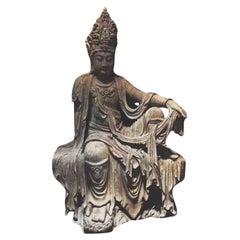
Description: A fine depiction of Guanyin, possessing the regal tranquillity that the Chinese Bodhisattva of compassion has come to be visually associated with. Marked by an urna signifying her spiritual enlightenment and crowned with a diadem depicting the Buddha Amitabha, the figure is immediately recognisable as Guanyin. Her androgynous figure is gracefully poised in the Lalit asana or “royal ease”, the pose classical in representations of the deity. The figure is asymmetric, with the weight of her supple form falling upon her left hand placed against the base, her right knee raised and left pendant. Her right hand rests upon her raised knee, delicately pinching at her draped attire. At first unassuming, this gesture may be suggestive of the Apana Mudra, the seal of purification. This Mudra is associated with physical wellbeing, fecundity and the cleansing of the body. Though she is adorned in the princely garb of dhoti, she bears features of idealised feminine beauty as prescribed in Asian art. With plump cheeks and near pouted lips, her full face gazes down upon the viewer with an empathetic and half-lidded gaze, upholding her title as ‘One who hears the cries of the world.’ Notes on the item: Guanyin is the Chinese interpretation of Avalokiteshvara, the Indian Bodhisattva of compassion. The term “Bodhisattva” is derived from the Sanskrit “Bodhi”, meaning ‘awakening’ or ‘enlightenment’, combined with “Sattva”, meaning ‘spirit’ or ‘being’, referring to one on the path to achieving enlightenment. Bodhisattvas in Mayahana Buddhism are recognised as figures who have effectively achieved enlightenment yet relinquish their accension to nirvana in order to remain amongst mankind in the ultimate act of compassion to aid as spiritual guides. As such, the Bodhisattva inhabit a liminal space between samsara and nirvana; enlightened beings that maintain a relationship with humanity that buddhas cannot, as attaining Buddhahood necessitates the abandonment of all worldly attachments, including mankind. Guanyin’s very name, ‘One who hears the cries of the world’ highlights this role as a compassionate figure who acknowledges the suffering and strife of man. Along with Mahāsthāmaprāpta, a fellow bodhisattva, Guanyin serves as an attendant to Buddha Amitabha, with these three deities recognised as the Three Sages of Western Pure Land Buddhism, a sect of Mayahana Buddhism popular in East Asia. Avalokiteshvara is commonly posited to have been adopted from Indian Buddhism into China as Guanyin around 200-400 CE, however it was the Tang dynasty (618-907) which saw the popularisation of the deity. By the Ming (1358–1644) and Qing (1644–1911) dynasties, Guanyin held the position as the most popular female deity in China. The unique state of religion in China held no monolithic canon regarding Buddhism and saw the assimilation of several belief systems, primarily Daoism, Buddhism and Confucianism. Consequently, Guanyin became a deity to be revered beyond Buddhism alone, appointed as both an official imperial deity and Daoist deity in the 12th century. Guanyin may also be seen to fulfil the role of idealised femininity as prescribed by Confucianism, with the scarcity of female Chinese deities perhaps accounting for the gradual gender shift Guanyin underwent. The Indian Avalokiteshvara is unequivocally recognised as male, whilst the supposed gender of Guanyin remains contentious. Although there is a clear shift from the masculine Avalokiteshvara towards a more feminine representation, it is unclear if Guanyin is understood to be entirely feminine, to inhabit qualities of both genders or to be elevated beyond gender entirely, embodying neither. Depictions of Guanyin are highly androgynous, which some believe lends credence towards Guanyin symbolising the unity of dualistic forces as recognised in Daoism, displaying the anthropomorphism of yin and yang. Comparative Analysis: Market comparisons of similar Qing Dynasty polychrome figures of Guanyin include lot 767 (no.2) From Christies ‘Important Chinese Ceramics and Works of Art,’ New York, 25 March 2022, with the price realised USD 52,920 (Estimate USD 20,000 – USD 30,000). Christies also auctioned a comparable polychrome Guanyin...
Category

Late 19th Century Qing Antique East Asian Sculptures and Carvings

Materials

Hardwood

Japanese Antique Wooden Small Netsuke Two wild boar 1960s
Located in Paris, FR
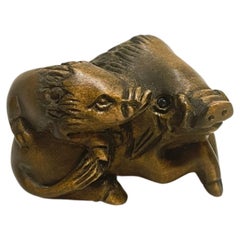
This is an antique netsuke made in Japan around Showa period 1960s. Dimensions: 2.5 x 2.3 x H2 cm Sculpture: Wild Boar Era: 1960s (Showa) Netsuke is a miniature sculpture, origina...
Category

Late 20th Century Showa East Asian Sculptures and Carvings

Materials

Wood

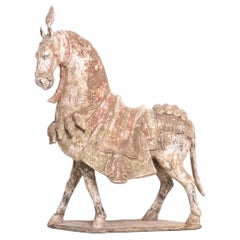
China 549-577 AD Northern Qi Dynasty Ancient Caparisoned Horse in Earthenware
Located in Miami, FL
Extremely rare Chinese pottery caparisoned horse from the Northern Qi region. A beautiful large sculptural piece, created in China during the Northern Qi dynasty period, between the 549 and 577 AD. This horse statue is extremely finely modeled of earthenware pottery, standing in a very elegant and majestic position striding on a trapezoidal shaped base. The animal has a gracefully arched neck to the left looking forward and its extremely well modeled. The head is adorned with a large detailed tassels of plumes and the body is embellished with a beautiful saddle and intricate harnesses. The trapping around the chest and rump is adorned with elaborated tassels and the straps are accented with multiples florets and bosses in high relief. Decorated with dotted and circles patterns. The surface is treated with applications of natural color pigments such; red, white and others. Has a measurements of 435 mm by 319 mm by 243 mm (17.10 x 12.55 x 9.55 Inches) (43.5 x 31.9 x 24.3 Cm). Northern Qi, was the successor state of the Chinese Xianbei state of Eastern Wei...
Category

15th Century and Earlier Archaistic Antique East Asian Sculptures and Carvings

Materials

Earthenware, Clay, Paint

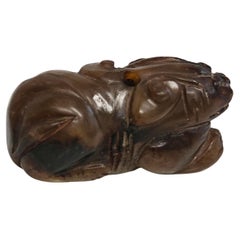
Japanese Wood Netsuke " The Beast", Meiji Era
Located in Norton, MA
A Japanese Antique carved netsuke "The Beast" dated around the late 19th to early 20th century.
Category

Late 19th Century Antique East Asian Sculptures and Carvings

Materials

Wood

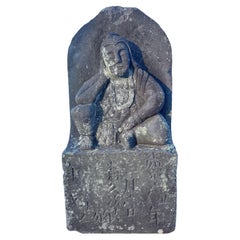
Japanese Rare Tall Antique Stone Buddha Shakyamuni Dated 1853, 27 Inches
Located in South Burlington, VT
A good antique, 19th century (1863) granite stone Buddha - Shyaka Nyorai Sakyamuni- sculpture perched upon a square base. Signed lower Kanji front: Kaei 6 ( 1853) March 6. Good gar...
Category

Early 20th Century Taisho East Asian Sculptures and Carvings

Materials

Stone, Granite

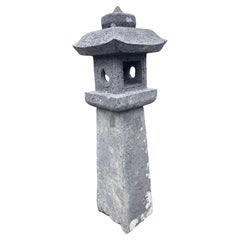
Japanese Antique Stone Sun And Moon Pathway Lantern Beautiful Details 33 Inches
Located in South Burlington, VT
Wouldn't this antique garden stone lantern look perfect for your garden entry or pathway, pool, patio, or deck ? Just acquired, our Japan stone "Arts & Crafts" antique stone pathway ...
Category

Early 20th Century Taisho East Asian Sculptures and Carvings

Materials

Stone

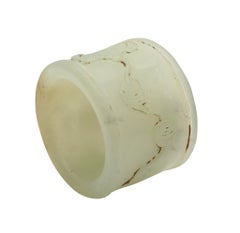
QING DYNASTY 1900 Antique Archer s Ring Carved In Translucent Jade
Located in Miami, FL
An archer's jade ring from the Qing Dynasty. This is a rare antique archer's ring created during the Qing dynasty period, back in the 19th century early 20th century The ring is mas...
Category

19th Century Qing Antique East Asian Sculptures and Carvings

Materials

Jade

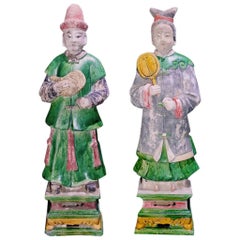
Magnificent Court Attendants in Terracotta - Ming Dynasty, China 1368-1644 AD TL
Located in San Pedro Garza Garcia, Nuevo Leon
A magnificent pair of male and female courtiers from the Ming Dynasty (1368-1644 CE) in excellent condition. They are wearing traditional Daopao robes in green and black garments wit...
Category

15th Century and Earlier Ming Antique East Asian Sculptures and Carvings

Materials

Terracotta

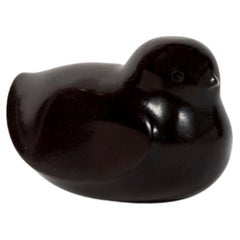
Netsuke in persimon wood in the form of a sparrow
Located in PARIS, FR
Netsuke in natural persimmon wood in the form of a stylized bird (probably a sparrow), it has been treated with abstraction and has a remarkable polish. In Asia, the sparrow is seen...
Category

19th Century Meiji Antique East Asian Sculptures and Carvings

Materials

Wood

Still Thinking About These?

All Recently Viewed