19th Century Sculptures and Carvings

to
112
563
518
1,165
24
15
2
2
1
1
1
1
1
757
1,668
275
602
452
166
64
8
36
26
16
45
35
37
14
10
663
275
216
213
76
1,073
496
439
332
296
1,165
1,165
1,165
4
2
1
1
1
Period: 19th Century
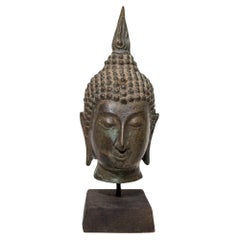
Antique Bronze Buddha Head Sculpture with Verdigris on Stand 19th C.
Located in Moreno Valley, CA
Antique Southeast Asian cast bronze buddha head sculpture with verdigris patina mounted on a black base wood stand. Bronze Sukhothai style Buddha bronze head with green patina, from ...
Category

Thai Tibetan Antique 19th Century Sculptures and Carvings

Materials

Bronze

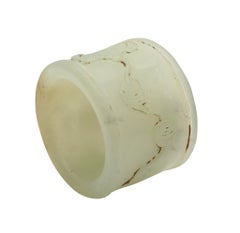
QING DYNASTY 1900 Antique Archer s Ring Carved In Translucent Jade
Located in Miami, FL
An archer's jade ring from the Qing Dynasty. This is a rare antique archer's ring created during the Qing dynasty period, back in the 19th century early 20th century The ring is mas...
Category

Chinese Qing Antique 19th Century Sculptures and Carvings

Materials

Jade

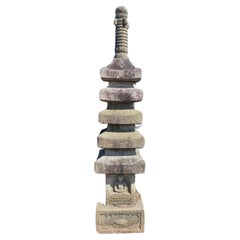
Japanese Early Antique Stone Four Buddhas Pagoda 10 feet, Best In Class
Located in South Burlington, VT
Just discovered from an old Kyoto area garden. Call or message us for details or to reserve. Please view our video. For the finest garden- an exceptional and spiritual representation of the Buddha expressed in this unique and substantial 10 feet five roof pagoda with four buddha images carved on base. Japan, a monumental antique stone pagoda...
Category

Japanese Meiji Antique 19th Century Sculptures and Carvings

Materials

Granite

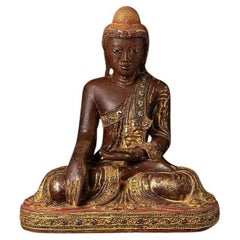
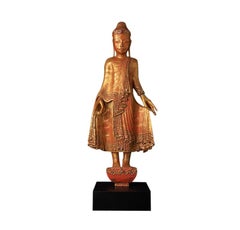
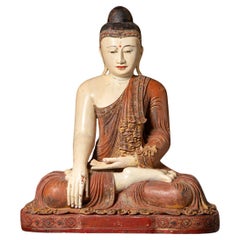
Antique wooden Mandalay Buddha from Burma
Located in DEVENTER, NL
Material: wood 49,7 cm high 44 cm wide and 31 cm deep Weight: 9.75 kgs Gilded with 24 krt. gold Mandalay style Bhumisparsha mudra Originating from Burma 19th century With inlayed ey...
Category

Burmese Antique 19th Century Sculptures and Carvings

Materials

Wood

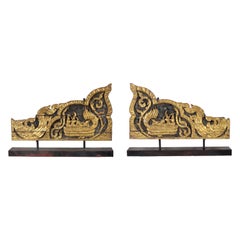
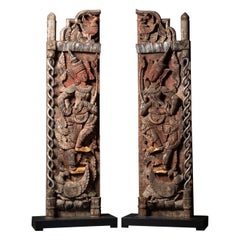
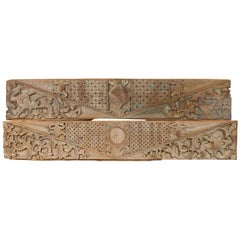
Thai Rattanakosin-Era Carved and Gilded Throne Side Panels (pair)
Located in Soquel, CA
Thai Rattanakosin-Era Carved and Gilded Throne Side Panels Ornately carved panels with gilding from Thailand. The central portion of these panels depict...
Category

Thai Neoclassical Antique 19th Century Sculptures and Carvings

Materials

Gold Leaf, Metal

Antique Wooden Burmese Buddha Statue from Burma
Located in DEVENTER, NL
Material: wood 69,5 cm high 24,8 cm wide and 20 cm deep Weight: 3.749 kgs Gilded with 24 krt. gold Mandalay style Originating from Burma 19th century With facial influences ...
Category

Burmese Antique 19th Century Sculptures and Carvings

Materials

Wood

19th century Special antique wooden temple panel from Burma
Located in DEVENTER, NL
This special antique wooden temple panel is a remarkable 19th-century artifact from Burma (Myanmar). Hand-carved from a single piece of teakwood, it measures an impressive 181 cm hig...
Category

Burmese Antique 19th Century Sculptures and Carvings

Materials

Wood

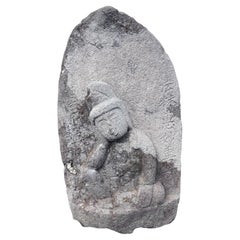
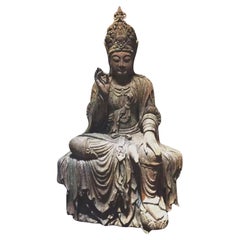
Japanese Antique Stone Garden Kanon Guan Yin in Royal Ease 19thc.
Located in South Burlington, VT
Big, Beautiful And Signed From our recent Japanese Acquisitions An early and hard to find Japanese hand carved stone Kanon in a mudra of contemplation. Nyoirin Kannon Bosatsu is b...
Category

Japanese Edo Antique 19th Century Sculptures and Carvings

Materials

Stone

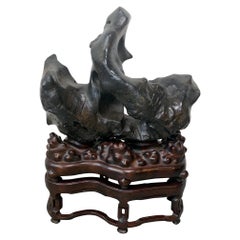
Large Spectacular Chinese Lingbi Scholar Stone on Stand
Located in Atlanta, GA
One of the most visually arresting Chinese scholar stones (also known as Gong Shi, meditation stone and spirit rock) we have ever had on offer. A massive block of naturally formed wo...
Category

Chinese Chinoiserie Antique 19th Century Sculptures and Carvings

Materials

Stone

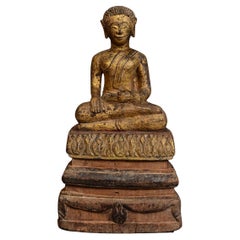
19th Century, Antique Lanna Thai Wooden Seated Disciple / Monk / Buddha
Located in Sampantawong, TH
Lanna Thai wooden seated disciple. Age: Thailand, 19th Century Size: Height 35 C.M. / Width 19.6 C.M. Condition: Nice condition overall (some expected degradation due to its age...
Category

Thai Antique 19th Century Sculptures and Carvings

Materials

Wood

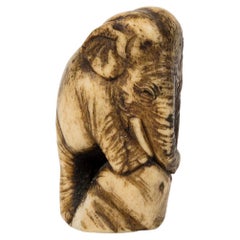
Netsuke in deer antler in the form of an elephant standing on some rock
Located in PARIS, FR
Netsuke in deer antler in the form of Asian elephant. Everywhere in Asia the elephant symbolizes strength and wisdom. As a spiritual guide it also symbolizes power and longevity. Th...
Category

Japanese Meiji Antique 19th Century Sculptures and Carvings

Materials

Antler

Very large and special antique Buddha statue from Burma
Located in DEVENTER, NL
This Very large and special antique Buddha statue is a truly unique and special collectible piece. Made of wood, this statue stands at 139 cm hi...
Category

Burmese Antique 19th Century Sculptures and Carvings

Materials

Wood

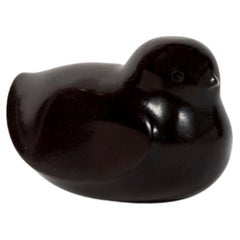
Netsuke in persimon wood in the form of a sparrow
Located in PARIS, FR
Netsuke in natural persimmon wood in the form of a stylized bird (probably a sparrow), it has been treated with abstraction and has a remarkable polish. In Asia, the sparrow is seen...
Category

Japanese Meiji Antique 19th Century Sculptures and Carvings

Materials

Wood

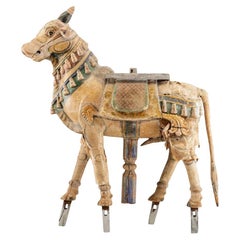
19th Century Hindu Nandi Temple Guardian, Architectural Ornament
Located in Forney, TX
A monumental Hindu Nandi temple gate-guardian architectural ornament, born in India, dating to the 19th century, hand carved and painted, richly detailed, polychrome decorated, the wooden sculpture depicting Nandi, a sacred bull, gatekeeper, and vahana religious deity figure. Provenance: Acquired from The Neiman Marcus Corporate Art Collection. Details below. Dimensions: (approx) 49.5" x 43" x 12" An important religious folk art work, the Nandi is of carved wood and gessoed cloth, then hand-painted. In Hindu religion, Nandi is the mythical mount of Shiva. The four legs represent truth, righteousness, peace and love. More than a means of conveyance, Nandi is considered Shiva's constant companion on all his travels, so much so that in any temple dedicated to Shiva, there is a sculpture of Nandi. This symbol is a deity in its own right, and in India there are temples dedicated exclusively to Nandi. In Hindu symbolism, the bull represents both strength and ignorance. The white or light color of the bull symbolizes purity and justice. Symbolically, the seated Nandi towards sanctum in Shiva temples, represents an individual jiva (soul) and the message that the jiva should always be focused on the Parameshwara. From the yogic perspective, Nandi is the mind dedicated to Shiva, the absolute. In other words, to understand and absorb light, the experience, and the wisdom is Nandi, which is the guru within. The fact that Shiva uses it as a mount symbolizes how this divine figure removes ignorance while instilling strength and wisdom. A superb example, the life size work is in great overall shape, and presents wonderfully, having beautifully aged patina over the whole, highly desirable original, worn, rustic, naturally distressed, chippy paint, craquelure finish, that's delicate, and enhances the artistic antique character and rich historic depth. Detailed Condition Report: Fragile / delicate by design. Loss to one ear, age related checking and separation to carvings, fabric to hind quarters is released and tattered with minor loss, rubbing to paint throughout with wear indicative of age and use; later grey painted mounting blocks are attached to back and hooves. White glove in-home shipping/delivery available. Pickup available near Dallas, Texas Additional Provenance: Property from the Neiman Marcus Collection. Acquired from Heritage Auction, Design District Gallery, Dallas, Texas. From The Dallas Morning Newspaper; April 12th, 2021 Neiman Marcus is selling some of its history and valuables that have been displayed and stored for decades as part of the luxury retailer’s corporate art collection. The Neiman Marcus corporate art collection dates back to 1951, when Stanley Marcus (1905-2002), a life long avid art collector, purchased Mariposa, a large mobile by Alexander Calder and started a long tradition of buying original artwork for new stores as they opened. The Mariposa sold at a Sotheby’s auction last month fetching $18.2 million. The items are being offered through Sotheby's auction house, NYC, New York and Heritage Auction, Dallas, Texas. Many of the pieces were personally collected by Stanley Marcus from the 1960s through the 1980s. Some of the pieces are from corporate spaces, stores and the company’s archives, among the items are important antique textiles, tribal robes...
Category

Indian Folk Art Antique 19th Century Sculptures and Carvings

Materials

Gesso, Wood, Paint

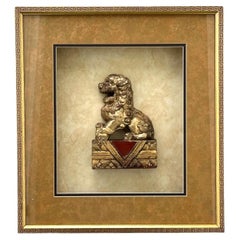
Antique Chinese Hand Carved Wood Gilt Foo Dog in Shadow Box.
Located in Vero Beach, FL
Antique Chinese Hand Carved Wood Gilt Foo Dog in Shadow Box. Chinese shadow box features a hand carved wood and gilded Foo Dog from the Qing Dynasty. It is mounted in a massive and ...
Category

Chinese Chinese Export Antique 19th Century Sculptures and Carvings

Materials

Glass

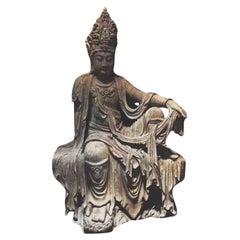
A Large Chinese Carved Wood Figure of Guanyin, Late Qing Dynasty
Located in ARMADALE, VIC
Description: A fine depiction of Guanyin, possessing the regal tranquillity that the Chinese Bodhisattva of compassion has come to be visually associated with. Marked by an urna signifying her spiritual enlightenment and crowned with a diadem depicting the Buddha Amitabha, the figure is immediately recognisable as Guanyin. Her androgynous figure is gracefully poised in the Lalit asana or “royal ease”, the pose classical in representations of the deity. The figure is asymmetric, with the weight of her supple form falling upon her left hand placed against the base, her right knee raised and left pendant. Her right hand rests upon her raised knee, delicately pinching at her draped attire. At first unassuming, this gesture may be suggestive of the Apana Mudra, the seal of purification. This Mudra is associated with physical wellbeing, fecundity and the cleansing of the body. Though she is adorned in the princely garb of dhoti, she bears features of idealised feminine beauty as prescribed in Asian art. With plump cheeks and near pouted lips, her full face gazes down upon the viewer with an empathetic and half-lidded gaze, upholding her title as ‘One who hears the cries of the world.’ Notes on the item: Guanyin is the Chinese interpretation of Avalokiteshvara, the Indian Bodhisattva of compassion. The term “Bodhisattva” is derived from the Sanskrit “Bodhi”, meaning ‘awakening’ or ‘enlightenment’, combined with “Sattva”, meaning ‘spirit’ or ‘being’, referring to one on the path to achieving enlightenment. Bodhisattvas in Mayahana Buddhism are recognised as figures who have effectively achieved enlightenment yet relinquish their accension to nirvana in order to remain amongst mankind in the ultimate act of compassion to aid as spiritual guides. As such, the Bodhisattva inhabit a liminal space between samsara and nirvana; enlightened beings that maintain a relationship with humanity that buddhas cannot, as attaining Buddhahood necessitates the abandonment of all worldly attachments, including mankind. Guanyin’s very name, ‘One who hears the cries of the world’ highlights this role as a compassionate figure who acknowledges the suffering and strife of man. Along with Mahāsthāmaprāpta, a fellow bodhisattva, Guanyin serves as an attendant to Buddha Amitabha, with these three deities recognised as the Three Sages of Western Pure Land Buddhism, a sect of Mayahana Buddhism popular in East Asia. Avalokiteshvara is commonly posited to have been adopted from Indian Buddhism into China as Guanyin around 200-400 CE, however it was the Tang dynasty (618-907) which saw the popularisation of the deity. By the Ming (1358–1644) and Qing (1644–1911) dynasties, Guanyin held the position as the most popular female deity in China. The unique state of religion in China held no monolithic canon regarding Buddhism and saw the assimilation of several belief systems, primarily Daoism, Buddhism and Confucianism. Consequently, Guanyin became a deity to be revered beyond Buddhism alone, appointed as both an official imperial deity and Daoist deity in the 12th century. Guanyin may also be seen to fulfil the role of idealised femininity as prescribed by Confucianism, with the scarcity of female Chinese deities perhaps accounting for the gradual gender shift Guanyin underwent. The Indian Avalokiteshvara is unequivocally recognised as male, whilst the supposed gender of Guanyin remains contentious. Although there is a clear shift from the masculine Avalokiteshvara towards a more feminine representation, it is unclear if Guanyin is understood to be entirely feminine, to inhabit qualities of both genders or to be elevated beyond gender entirely, embodying neither. Depictions of Guanyin are highly androgynous, which some believe lends credence towards Guanyin symbolising the unity of dualistic forces as recognised in Daoism, displaying the anthropomorphism of yin and yang. Comparative Analysis: Market comparisons of similar Qing Dynasty polychrome figures of Guanyin include lot 767 (no.2) From Christies ‘Important Chinese Ceramics and Works of Art,’ New York, 25 March 2022, with the price realised USD 52,920 (Estimate USD 20,000 – USD 30,000). Christies also auctioned a comparable polychrome Guanyin...
Category

Chinese Qing Antique 19th Century Sculptures and Carvings

Materials

Hardwood

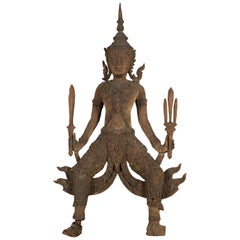
Hand-Carved Wooden Temple Sculpture Depicting a Thai Warrior Ready for Battle
Located in Yonkers, NY
A large hand-carved temple sculpture from the 19th century depicting a Thai warrior holding a sword and a trident, with great distressed appearance. Creat...
Category

Thai Antique 19th Century Sculptures and Carvings

Materials

Wood

19th Century, Antique Chinese Wood Carving with Stand
Located in Sampantawong, TH
Chinese wood carving with stand Age: China, 19th Century Size: Height 22.5 / Width 50.8 C.M. / Thickness 5.7 C.M. Size including stand: Height...
Category

Chinese Antique 19th Century Sculptures and Carvings

Materials

Wood

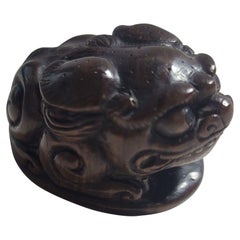
Japanese Wood Netsuke " The Chi-Lin Beast" Signed, Meiji Era
Located in Norton, MA
A Japanese Antique carved netsuke "The Chi-Lin Beast" dated around the late 19th to early 20th century, signed on the bottom.   
Category

Japanese Antique 19th Century Sculptures and Carvings

Materials

Wood

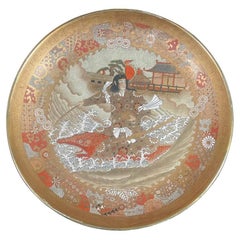
Japanese Huge Antique Captain Whale Fisherman Satsuma Charger, 18 Inches Box
Located in South Burlington, VT
Japanese Satsuma, a fine and monumental 18" Meiji period charger Ozara with rare motif: Captain fisherman and his fish. Depicting a tale of Urashima Tarō* (see below), Signed Jyukan pottery by Chinjyu Makoto, in a lovely gold gilt and red detailed hand-painted composition Age: 1880-1900. Dimensions: 18 inches diameter and includes owner's signed wooden presentation box, tomobako. Hand made and hand painted. Finest quality. Provenance: Old Southern Japanese collection. Urashima Tarō (浦島 太郎?) is a Japanese legend about a fisherman who holds a fishing pole and rescues a turtle and is rewarded for this with a visit to Ryūgū-jō, the palace of Ryūjin, the Dragon God, under the sea. He stays there for three days and upon his return to his village, finds himself 300 years in the future. Finest quality. Largest size. Original collector box tomobako included. Lifetime guarantee of authenticity: All of our Asian works of art come with our Lifetime Authenticity Guarantee. We are members of the North American Japanese Garden Association (NAJGA) specializing for ten years now in old and authentic Japanese stone...
Category

Japanese Meiji Antique 19th Century Sculptures and Carvings

Materials

Ceramic

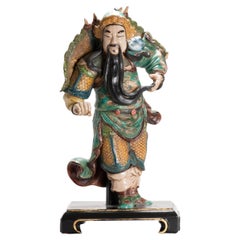
Antique Chinese Glazed Porcelain Roof Tile of a Warrior Figure, 19th C
Located in Amsterdam, Noord Holland
Chinese glazed porcelain roof tile of a warrior. The manufacture of glazed tiles was standardized in the Ming Dynasty and during the Qing Dynasty into the Republican Era, glazed tile...
Category

Chinese Qing Antique 19th Century Sculptures and Carvings

Materials

Porcelain

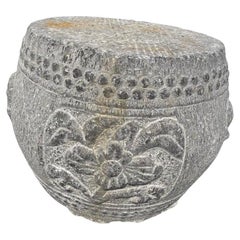
Chinese Antique Large Qing Hand Carved Stone Drum Stool Display Pedestal, 19thc.
Located in South Burlington, VT
Rare and Hard To Find 19th Century From China's Qing dynasty (1644-1912) a hard to find solid limestone finely carved "drum" pedestal - perfect for displaying your indoor or outdoor...
Category

Chinese Qing Antique 19th Century Sculptures and Carvings

Materials

Stone, Limestone

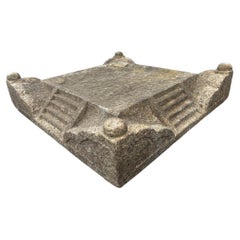
Japan Rare Antique Hand Carved Stone Flower Or Display Base 19thc Hard To Find
Located in South Burlington, VT
From Japan comes this seldom found , one of a kind large granite stone display base featuring four sets of altar steps- an impressive and spiritually significant object for displayin...
Category

Japanese Meiji Antique 19th Century Sculptures and Carvings

Materials

Limestone

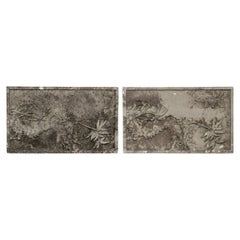
Extraordinary Pair of Chinese Carved Stone Garden Panels With Branches And Bird
Located in Bridgeport, CT
Calligraphic inscription upper right. Composition of leafy branches with berries and flowers and with a bird perched on one of them in the center. Dimensions: 15 3/4 x 27", Depth 2...
Category

Unknown Ming Antique 19th Century Sculptures and Carvings

Materials

Stone

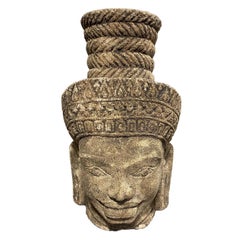
Asian Khmer Cambodia Stoned Carved Head Bust of Male Buddhist Buddha Shiva Deity
Located in Studio City, CA
A wonderfully sand stone-carved Asian deity figure / sculpture likely from Cambodia. The detailed head is likely that of the divinity deity Shiva, sometimes referred to as the smiling God-King. The features are clearly reminiscent of the carvings found at both Bayon Temple at Angkor Thom...
Category

Cambodian Antique 19th Century Sculptures and Carvings

Materials

Sandstone

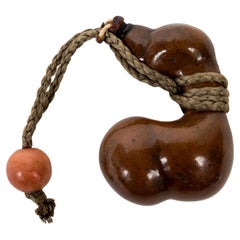
Nestuke in the form of a calabash gourd realised from an unmature cucurbitacea
Located in PARIS, FR
Netsuke made from a natural lacquered calabash. Curved around itself, it has a main bulb at the bottom and a second smaller bulb below the opening. It is narrowed in the middle, whe...
Category

Japanese Meiji Antique 19th Century Sculptures and Carvings

Materials

Fruitwood

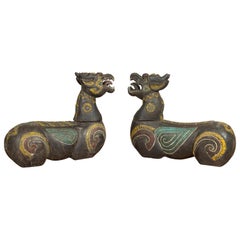
Pair of Antique Northern Thai Carved and Polychrome Mythical Guardian Animals
Located in Yonkers, NY
A pair of antique Chiang Mai wood mythical guardian animals from Thailand. Carved in Chiang Mai, Northern Thailand, this captivating pair of mythical guardian animals commands attent...
Category

Thai Antique 19th Century Sculptures and Carvings

Materials

Wood

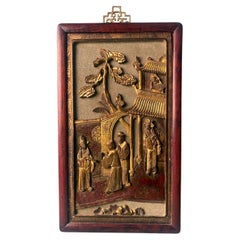
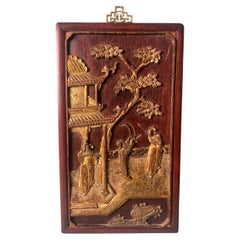
Qing Dynasty Exquisite Chinese Wooden Panel With Raised Figures And Gold Leaf
Located in Prato, Tuscany
We kindly invite you to read the entire description carefully, as we aim to provide detailed technical and historical information to ensure the authenticity of our items. This extrao...
Category

Chinese Chinoiserie Antique 19th Century Sculptures and Carvings

Materials

Wood

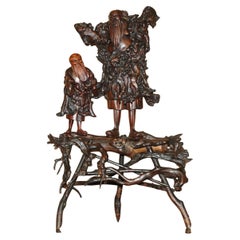
ANTIQUE CIRCA 1880 CHINESE BURR / BURL ROOT WOOD CARViNGS OF WISEMEN ON PLATFORM
Located in West Sussex, Pulborough
Royal House Antiques Royal House Antiques is delighted to offer for sale this lovely hand carved antique Burr or Burl Root wood statue of the two wisemen on a platform Please note...
Category

Chinese Chinese Export Antique 19th Century Sculptures and Carvings

Materials

Wood

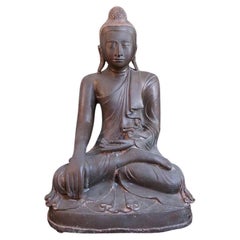
Antique Mandalay Buddha from, Burma
Located in DEVENTER, NL
Material: bronze. Measures: 54 cm high. Weight: 20.6 kgs. Bhumisparsha mudra. Originating from Burma. 19th Century. Hair is goldplated.  
Category

Burmese Antique 19th Century Sculptures and Carvings

Materials

Bronze

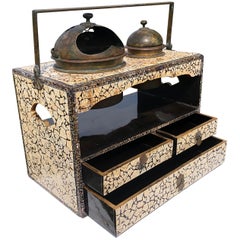
Japanese Rare Antique Inlaid Smoking Tansu, Complete 1850
Located in South Burlington, VT
The first we have seen A spectacular and hard to find Inlaid mother of pearly - using the raden technique- and lacquered three-drawer Tansu complete with all original bronze accoutrement including a fine engraved antique long pipe and two removable covered bronze cylinders all executed by expert mid-19th century Edo samurai...
Category

Japanese Edo Antique 19th Century Sculptures and Carvings

Materials

Bronze

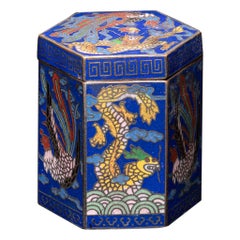
Antique Hexagonal Chinese Opium Box
Located in Leuven , BE
Antique Hexagonal Chinese Opium Boxes in Cloisonné Enamal , decorated with a Dragon and a Phoenix. The Rectangular Box is decorated with Vases and Fl...
Category

Chinese Antique 19th Century Sculptures and Carvings

Materials

Metal

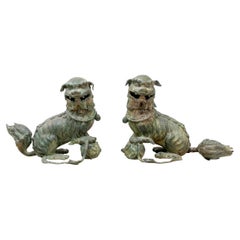
Fine Pair of Antique Chinese Cast Bronze Foo Lion Incense Burners
Located in Bridgeport, CT
Fabulous Antique Chinese Foo Lion incense burners originally purchased in Bangkok, Thailand. Patinated bronze with cloud-like tails and fierce open...
Category

Asian Qing Antique 19th Century Sculptures and Carvings

Materials

Bronze

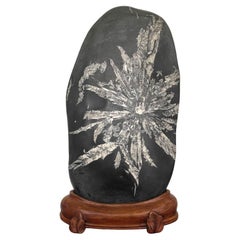
Chinese Scholar Rock Chrysanthemum Stone
Located in Atlanta, GA
An extraordinary specimen created by nature millions of years ago, this large and stunning Chinese black chrysanthemum stone features white crystalline mineral (calcite and chalcedon...
Category

Chinese Chinese Export Antique 19th Century Sculptures and Carvings

Materials

Stone

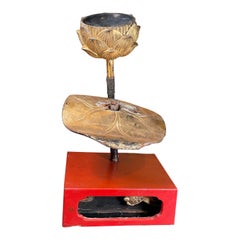
Japanese Fine Antique Gilt and Red Lacquer Lotus Bud Flower, Edo Period 19th C
Located in South Burlington, VT
From our recent Japanese acquisitions, a rare find Antique Original Japanese temple "blossoming lotus" flower bud stem including its original red lacquer display base. This finely hand carved wood and lacquered gold flower stem was made for a Buddhist 19th century temple altar. Its flower blossoms and leaves symbolize the stages of the path toward enlightenment. The individual parts of each lotus is carved separately then joined in an arrangement and inserted in altar vessels. Also called "Jyôka" , it is placed on or next to an altar in a Buddhist temple. Made with meticulous techniques. In Buddhism, the lotus is an important symbol of divine enlightenment because it blooms into beautiful flowers while growing in mud. Tsunehana means "a flower that continues to bloom forever" and "a flower that does not wither." For this reason, the flowers represented are in different stages of their life, unfolded lotus leaves, buds and full flowers, thus symbolizing the journey towards Buddhist enlightenment. This lovely Japanese antique gilt Lotus flower is an early survivor, circa 1840, and a hard to find treasure that was originally placed on or around a temple altar. This ensemble consists of a single stem, the top most flower, and the bottom leaf- all mounted in the original square red lacquer display base. A gold gilt 3.5 inch long tortoise "minogame" is affixed to the base as seen in the photo. Its attractive original old patina coupled with much of the original gilding remaining present is just the way we like to find them. Dimensions: With original red lacquer display stand Height, 17 inches height and 9 inches in width. The lotus flower stem alone measures 16 inches in height. Provenance: acquired from a Kyoto Japanse monk and collector History of the Japanese turtle "minogame" One of the most famous is the mythological giant turtle...
Category

Japanese Edo Antique 19th Century Sculptures and Carvings

Materials

Wood, Pine

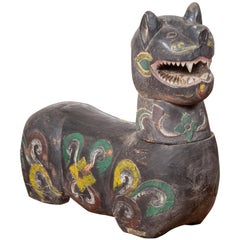
Antique Carved Wood Mythical Guardian Animal with Polychrome Finish
Located in Yonkers, NY
An antique carved wooden wood mythical guardian animal from Thailand. This striking antique carved wood mythical guardian animal commands attention with its vibrant polychrome finish...
Category

Thai Antique 19th Century Sculptures and Carvings

Materials

Wood

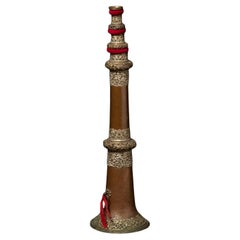
19th century Antique copper Tibetan horn - Dungchen from Tibet
Located in DEVENTER, NL
This antique copper Tibetan horn, known as a Dungchen, is a fascinating and authentic ritual instrument used in Tibetan Buddhist ceremonies. Crafted from copper, the horn measures an impressive 179 cm in length when fully extended, with a 19 cm diameter, and is designed in three parts for portability. When collapsed, the instrument shortens to just 70 cm, making it practical for use and storage. Dating back to the 19th century, this horn has a weight of 1.6 kgs and originates from Tibet, a region renowned for its rich spiritual and artistic heritage. The Dungchen is traditionally used in monasteries to accompany chants and rituals, its deep, resonant sound symbolizing the voice of the Dharma and calling practitioners to meditation and prayer. As an antique ritual...
Category

Nepalese Antique 19th Century Sculptures and Carvings

Materials

Copper

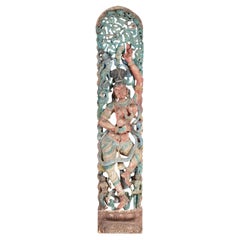
Antique Indian Carved Wood Sculpture of Parvati with Vibrant Polychrome
Located in Yonkers, NY
An Indian late 19th, early 20th century carved and painted wooden fragment depicting Parvati. A commanding presence in carved wood, this antique Indian sculpture...
Category

Indian Antique 19th Century Sculptures and Carvings

Materials

Hardwood

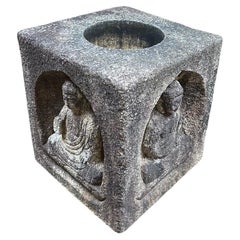
Japan Large Antique Stone Four Buddhas Water Purification Basin Chozu’bachi
Located in South Burlington, VT
Just discovered from an old southern Japanese area garden and now in our Vermont warehouse. Please view our video. Call or message us to reserve- now en route in our container fr...
Category

Japanese Meiji Antique 19th Century Sculptures and Carvings

Materials

Granite

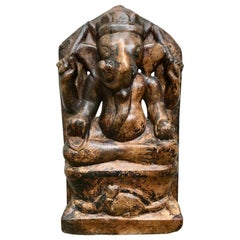
19th Century Indian Marble Carving of Ganesha, Remover of Obstacles
Located in Stamford, CT
Marble carving of the elephant headed four armed Hindu God Ganesha. With traces of old paint, it now has a rich honey patina from years of devotees touching the surface. Shown seated on a throne in the yoga pose, sukhasana, cross legged meditation pose. Two of his hands grasp a battle axe and a lasso, symbols of his role as a rescuer and protector. His other two hands hold an elephant goad and one of his own tusks, which he broke off in a fit of anger. His rat vehicle is below him. A great gift for the yogi or yogini in your life. Every home should have one. 17.25 inches high 9 wide 3 deep Ganesha, the son of Shiva and Parvati...
Category

Indian Anglo-Indian Antique 19th Century Sculptures and Carvings

Materials

Marble

Pair antique wooden Burmese temple doors from Burma - OriginalBuddhas
Located in DEVENTER, NL
This impressive pair of antique wooden Burmese temple doors is a fine 19th century example of traditional Burmese temple architecture, originating from Burma (Myanmar). Each door sta...
Category

Indonesian Antique 19th Century Sculptures and Carvings

Materials

Wood

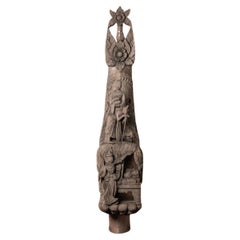
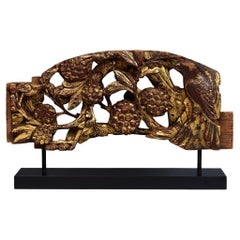
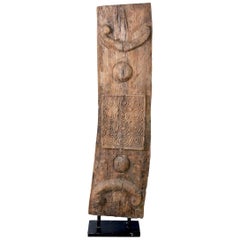
Antique Carved Wood Sculpture
Located in Sheffield, MA
Exotic 19th century carved relief architectural wood element, once part of a building facade has now been mounted on metal stand and made into an exciting and impressive sculpture. ...
Category

Asian Antique 19th Century Sculptures and Carvings

Materials

Wood

A Large Chinese Carved Wood Figure of Guanyin, Late Qing Dynasty
Located in ARMADALE, VIC
An impressive depiction of Guanyin, the Bodhisattva of compassion, whose name bears the meaning ‘One who hears the cries of the world.’ The rather androgynous figure is adorned with beaded jewellery and the princely regalia of a dhoti, draped across her body and spilling out over to partially obscure what she is resting upon. The goddess’ profile exhibits idealised features of Asian artistic convention; her face is soft and rounded, with full lips and relaxed eyes that provide a serene quality of youthfulness to the figure. Adhering to Chinese iconography of Guanyin, the figure is marked by an urna on her forehead, denoting her own enlightenment, as well as a diadem displaying Buddha Amitabha, the spiritual teacher of Guanyin. Seated in the Lalit asana pose, translated as ‘royal ease’, the figure exudes a fine example of the relaxed majesty typical in the characterisation of Guanyin. Whilst the figure’s left hand is placed restfully upon the left leg pendant, the right is raised in the gesture shuni mudra, the second finger held gently against the thumb. Otherwise known as the seal of patience, this gesture indicates the figure as one intended to bestow this virtue, along with compassion and understanding, upon the beholder. Notes on the item: Guanyin is the Chinese interpretation of Avalokiteshvara, the Indian Bodhisattva of compassion. The term “Bodhisattva” is derived from the Sanskrit “Bodhi”, meaning ‘awakening’ or ‘enlightenment’, combined with “Sattva”, meaning ‘spirit’ or ‘being’, referring to one on the path to achieving enlightenment. Bodhisattvas in Mayahana Buddhism are recognised as figures who have effectively achieved enlightenment yet relinquish their accension to nirvana in order to remain amongst mankind in the ultimate act of compassion to aid as spiritual guides. As such, the Bodhisattva inhabit a liminal space between samsara and nirvana; enlightened beings that maintain a relationship with humanity that buddhas cannot, as attaining Buddhahood necessitates the abandonment of all worldly attachments, including mankind. Guanyin’s very name, ‘One who hears the cries of the world’ highlights this role as a compassionate figure who acknowledges the suffering and strife of man. Along with Mahāsthāmaprāpta, a fellow bodhisattva, Guanyin serves as an attendant to Buddha Amitabha, with these three deities recognised as the Three Sages of Western Pure Land Buddhism, a sect of Mayahana Buddhism popular in East Asia. Avalokiteshvara is commonly posited to have been adopted from Indian Buddhism into China as Guanyin around 200-400 CE, however it was the Tang dynasty (618-907) which saw the popularisation of the deity. By the Ming (1358–1644) and Qing (1644–1911) dynasties, Guanyin held the position as the most popular female deity in China. The unique state of religion in China held no monolithic canon regarding Buddhism and saw the assimilation of several belief systems, primarily Daoism, Buddhism and Confucianism. Consequently, Guanyin became a deity to be revered beyond Buddhism alone, appointed as both an official imperial deity and Daoist deity in the 12th century. Guanyin may also be seen to fulfil the role of idealised femininity as prescribed by Confucianism, with the scarcity of female Chinese deities perhaps accounting for the gradual gender shift Guanyin underwent. The Indian Avalokiteshvara is unequivocally recognised as male, whilst the supposed gender of Guanyin remains contentious. Although there is a clear shift from the masculine Avalokiteshvara towards a more feminine representation, it is unclear if Guanyin is understood to be entirely feminine, to inhabit qualities of both genders or to be elevated beyond gender entirely, embodying neither. Depictions of Guanyin are highly androgynous, which some believe lends credence towards Guanyin symbolising the unity of dualistic forces as recognised in Daoism, displaying the anthropomorphism of yin and yang. Comparative Analysis: Market comparisons of similar Qing Dynasty polychrome figures of Guanyin include lot 767 (no.2) From Christies ‘Important Chinese Ceramics and Works of Art,’ New York, 25 March 2022, with the price realised USD 52,920 (Estimate USD 20,000 – USD 30,000). Christies also auctioned a comparable polychrome Guanyin...
Category

Chinese Qing Antique 19th Century Sculptures and Carvings

Materials

Hardwood

19th century Special antique bronze Siddhi Laksmi statue from Nepal
Located in DEVENTER, NL
The special antique bronze Siddhi Laksmi statue is a rare collectible masterpiece from 19th century Nepal, crafted with exceptional artistry and detail. Made from high-quality bronze...
Category

Burmese Antique 19th Century Sculptures and Carvings

Materials

Bronze

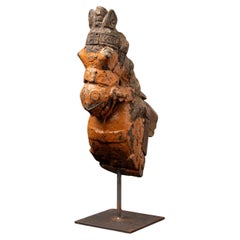
19th century Antique wooden temple fragment of a Horse head from India
Located in DEVENTER, NL
This antique wooden temple fragment of a horse head is a rare and evocative piece of 18th-century Indian temple art, showcasing the refined craftsmanship of the period. Carved from w...
Category

Antique 19th Century Sculptures and Carvings

Materials

Wood

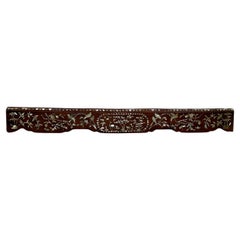
19c Chinese HandCarved Walnut Wood And Mother Of Perl Architectural Element
Located in Delray Beach, FL
One of a kind wall hanging made of solid wood with beautifully inlaid of mother of perl , Chinese garden ,animals and birds motifs imbedded in the wood . This panel originally was a ...
Category

Chinese Antique 19th Century Sculptures and Carvings

Materials

Mother-of-Pearl, Walnut

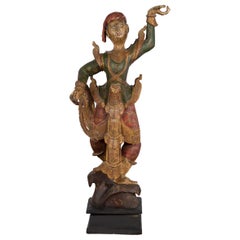
19th Century Balinese Hand-Carved and Painted Wooden Sculpture of a Young Dancer
Located in Yonkers, NY
A tall antique Balinese hand-carved and painted wooden statue from the 19th century on black base. Hand-made on the island of Bali, Southern Indonesia during the 19th century, this w...
Category

Balinese Antique 19th Century Sculptures and Carvings

Materials

Wood

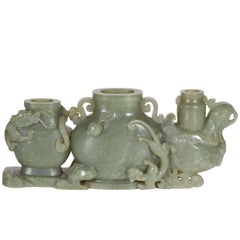
Antique Chinese Celadon Green Jade Carving, Triple Vase, Qing Dynasty
Located in New York, NY
An extremely finely carved antique Chinese Qing dynasty, Celadon green triple vase/brush washer with an Imperial Dragon from behind attacking a bird in fro...
Category

Chinese Qing Antique 19th Century Sculptures and Carvings

Materials

Jade

Pair of 19th Century Antique Carved Wood Overdoor Panels with Traces of Paint
Located in Yonkers, NY
A pair of antique carved wood overdoor panels from the 19th century, with traces of original paint. This pair of 19th-century antique carved wood overdoor panels features a captivati...
Category

Indonesian Antique 19th Century Sculptures and Carvings

Materials

Wood

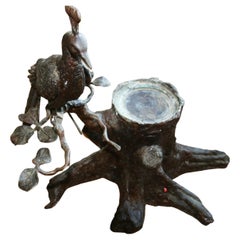
Japanese Peacock Brass and Stoneware Planter 19th Century
Located in Douglas Manor, NY
1313 Japanese peacock brass planter with stoneware vase.
Category

Antique 19th Century Sculptures and Carvings

Materials

Brass

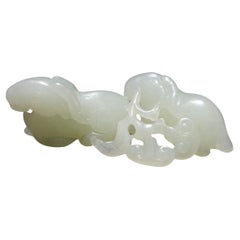
Antique Chinese Hetain White/C Jade Carved Group "Two Rams" 19th Century
Located in Norton, MA
A nice hand-carved antique, Chinese Hetain White with a light celadon Jade of Two Rams from the 19th Century. The color is presented in white with a very light celadon and the contex...
Category

Chinese Other Antique 19th Century Sculptures and Carvings

Materials

Jade

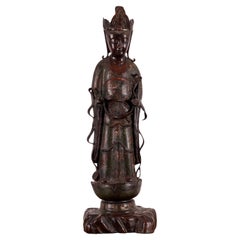
Japanese Meiji Champlevé Bronze Kannon Figure
Located in Savannah, GA
Japanese champlevé bronze Kannon Bodhisattva Avalokiteshvara figure, Meiji period. 9 ¾ inches wide by 8 inches deep by 29 ½ inches tall
Category

Japanese Meiji Antique 19th Century Sculptures and Carvings

Materials

Bronze

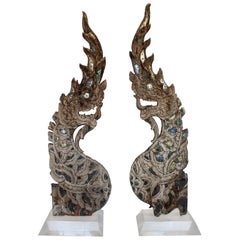
Large Pair of Thai Naga Sculptures on Lucite Bases, circa 1880
Located in San Diego, CA
Used in Thailand as temple roof finials or in pairs at entrances to guard against evil spirits and natural disasters, the powerful, mystical naga ar...
Category

Thai International Style Antique 19th Century Sculptures and Carvings

Materials

Wood

Qing Dynasty Exquisite Chinese Wooden Panel With Raised Figures Gold Leaf (n.2)
Located in Prato, Tuscany
We kindly invite you to read the entire description carefully, as we aim to provide detailed technical and historical information to ensure the authenticity of our items. This extrao...
Category

Chinese Chinoiserie Antique 19th Century Sculptures and Carvings

Materials

Wood

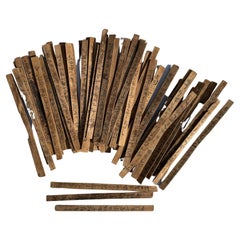
Chinese Old Bamboo Slips with Calligraphy Jiandu, 59 Piece Collection
Located in South Burlington, VT
Bamboo and wooden slips - jiandú- were the main media for writing documents in China before the widespread introduction of paper during the first two centuries AD. This substantial group, 59 pieces, of one-of-a-kind slips with painted and applied hand calligraphy appeals to book lovers and antiquity sleuths We believe them to be circa 1900 Qing dynasty and are offering this group from a collection of old works of art. Dimensions: bamboo slips...
Category

Chinese Qing Antique 19th Century Sculptures and Carvings

Materials

Wood

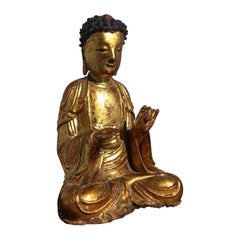
Korean Carved and Giltwood Buddha, Joseon Dynasty, 19th Century
Located in Austin, TX
A sublime and well carved Korean lacquered and gilt wood figure of Amitabha Buddha (Amita Bul), Joseon Dynasty, early 19th century, Korea. The Budd...
Category

Korean Antique 19th Century Sculptures and Carvings

Materials

Wood

Netsuke in lacquered boxwood of a toad resting on a waterlily plant
Located in PARIS, FR
Fine netsuke in the form of a lotus flower, within whose foliage hides a small frog. The realistic treatment of the plant allows for unmistakable identification, whether by the flowe...
Category

Japanese Meiji Antique 19th Century Sculptures and Carvings

Materials

Boxwood

Pair of Antique Chinese Fu Dogs
Located in Point Richmond, CA
Chinese pair of wood carved Fu Dogs, rendered from a single block of hardwood each, with exquisite detailing in a naive style, the dogs are opposing, crouched on their haunches, each...
Category

Chinese Qing Antique 19th Century Sculptures and Carvings

Materials

Hardwood

Pair of Tibetan or Nepalese Hindu Bronze Amulets Temple Shrine Figures Artifacts
Located in Studio City, CA
A very interesting pair of praying/ offering figures. We are not quite sure what they were used for but they have some age and are quite heavy and solid for their sizes. We believe they are from Tibet/Northern Nepal. Was acquired from a collection of Asian/ Tibetan/Nepalese and Indian artifacts...
Category

Tibetan Antique 19th Century Sculptures and Carvings

Materials

Bronze

Pair of Japanese Gilt Bronze Komainu by Ishikawa Komei, Meiji Period
Located in Austin, TX
A striking pair of Japanese gilt bronze komainu by the renowned Japanese sculptor, Ishikawa Komei (1852-1913), Meiji period, Japan. The pair well cast, and robustly modeled. They ar...
Category

Japanese Meiji Antique 19th Century Sculptures and Carvings

Materials

Bronze

Still Thinking About These?

All Recently Viewed