East Asian Textiles
to
56
294
82
401
26
1
23
11
1
1
1
13
197
191
27
112
48
4
13
1
14
9
2
5
2
1
417
266
87
59
54
1,285
428
427
407
397
428
424
428
3
1
1
Place of Origin: East Asian
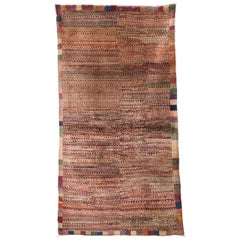
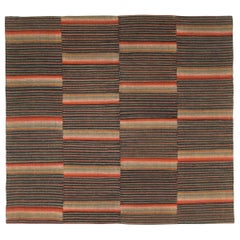
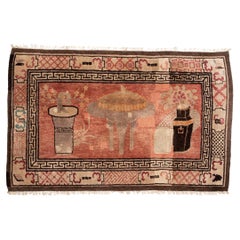
Minimalist Art Deco Chinese Rug 1930
s
Located in Milan, IT
The painterly effect obtained by mixing varying proportions of ivory and indigo wool is peculiar to this family of northern Chinese weavings. As most of them were sourced directly in...
Category
1930s Art Deco Vintage East Asian Textiles
Materials
Wool
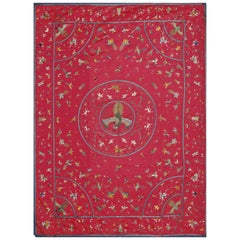
Extremely Fine Chinese Silk Embroidered Bed-Cover for the Dutch Market
Located in Amsterdam, NL
A Chinese red silk, embroidered bed cover
Guangdong or Macao, mid-18th century
The red silk cover, one one side elaborately embroided in co...
Category
Mid-18th Century Chinese Export Antique East Asian Textiles
Materials
Gold, Silver
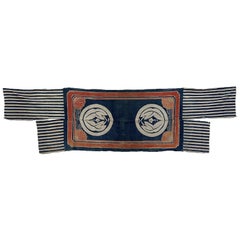
Japanese Horse Trapping, "Uma-No-Haragake", Tsutsugaki, Cotton, Meiji Period
Located in Point Richmond, CA
Japanese horse trapping, "Uma-No-Haragake", Tsutsugaki, cotton, Meiji period
This type of haragake is called yuiage ("tied up"). The central portion covered the belly of the horse an...
Category
20th Century Meiji East Asian Textiles
Materials
Cotton
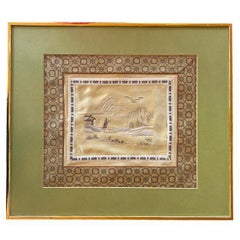
Antique Japanese Framed Embroidered Scene of Traditional Garden Life
Located in Oklahoma City, OK
A beautiful piece with an incredible history. This exquisite hand-embroidered tapestry was created in Japan and purchased by an American man who taught English. The scene depicts a t...
Category
20th Century Anglo-Japanese East Asian Textiles
Materials
Metal

$450 Sale Price
25% Off
Early 20th Century Wool Apron
Pangden,
Western Tibet
Located in Point Richmond, CA
Early 20th century wool apron (pangden), Western Tibet
In original condition, four panels woven on a back-strap loom, stitched together and worn as an apron among the Tibetans of th...
Category
Early 20th Century Tribal East Asian Textiles
Materials
Wool
Framed Japanese Relief Embroidery Textile Art of Dragon
Located in Atlanta, GA
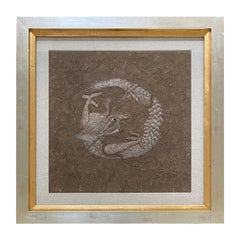
A beautiful Japanese textile art panel with an embroidered dragon on a swirling cloud background, nicely framed with a linen matt in an antique-fi...
Category
1890s Japonisme Antique East Asian Textiles
Materials
Silk, Wood
Antique Japanese Meiji era Framed Embroidery Wall Hanging
Located in Pomona, CA
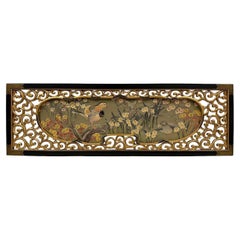
Hand embroidered in Japan, this large framed silk embroidered wall art was made in Meiji era, approximated 1900s. Very detailed hand embroidere...
Category
Early 20th Century Chinese Export East Asian Textiles
Materials
Silk
1920s Silk Chinese Embroidery ( 3
x 3
6" - 92 x 107 cm )
Located in New York, NY
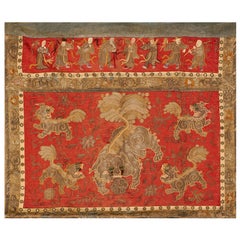
1920s Silk Chinese Embroidery ( 3' x 3' 6" - 92 x 107 cm )
Category
Early 1900s Antique East Asian Textiles
Materials
Silk
$2,210 Sale Price
35% Off
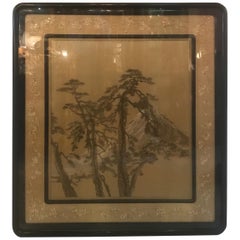
Antique Early 20th Century Japanese Hand Stitched Silk Framed Tapestry
Located in Lambertville, NJ
All hand work framed silk Japanese tapestry with embroidered boarder. A deep custom black lacquered frame. Originaly sold from Newman Galleries....
Category
Early 20th Century Meiji East Asian Textiles
Materials
Silk, Glass, Lacquer
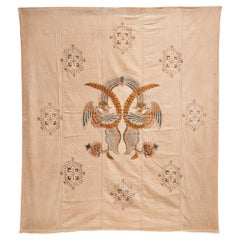
Japanese Vintage Fabric, Wabi Sabi, 1910s
Located in Tokyo, Tokyo
This unique and elegant textile with a phoenix pattern, known as Nagasaki Sarasa, was made in Nagasaki Prefecture (Kyushu) during the Taisho era.
The fabric was likely intended fo...
Category
1910s Vintage East Asian Textiles
Materials
Cotton
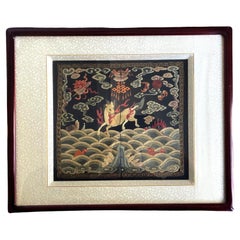
Framed Chinese Qing Dynasty Embroidered Ninth Military Rank Badge
Located in Atlanta, GA
A finely embroidered silk military rank badge panel framed in a wood frame circa late Qing dynasty 19th century. The square rank badge is known in Chinese as Buzi which was displayed...
Category
Late 19th Century Qing Antique East Asian Textiles
Materials
Silk
Framed Antique Japanese Embroidery Fukusa Panel
Located in Atlanta, GA
A finely embroidered Japanese silk Fukusa panel presented in a beautiful brocade-wrapped fame. Circa late 19th century of Meiji Period, Fukusa is a traditional Japanese textile...
Category
Late 19th Century Meiji Antique East Asian Textiles
Materials
Silk, Wood
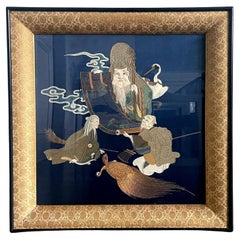
Framed Antique Chinese Qing Dynasty Embroidery 24LP111
Located in Pomona, CA
Originally purchased from Hong Kong, this Chinese antique embroidery presented in a museum quality. This textile was a roundel design likely from the center front of a noble woman's...
Category
Early 20th Century Chinese Export East Asian Textiles
Materials
Silk
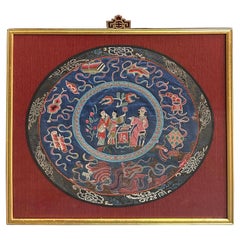
Exhibited Framed Fine Chinese Embroidery Silk Panel Qing Dynasty
Located in Atlanta, GA
A very fine embroidered silk panel in giltwood frame originally from the Annette Martin Collection and exhibited at the Chinese Culture Foundation of San Francisco February 8th - Mar...
Category
19th Century Chinese Export Antique East Asian Textiles
Materials
Silk, Giltwood
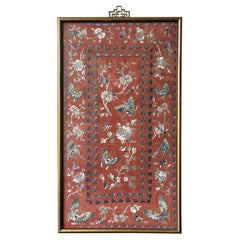
Antique Framed Japanese Silk Kesa Monk
s Robe Edo Period
Located in Atlanta, GA
A Japanese Kesa (Monk's Vestment) made from thirteen columns of patchworks of brocades set within a border of the same material. The brocade was woven from a subtle color palette of ...
Category
19th Century Edo Antique East Asian Textiles
Materials
Brocade, Silk
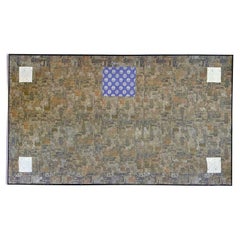
Elegant Vintage Japanese Silk Kimono with Shibori Band Design
Located in Atlanta, GA
A Japanese formal silk Kimono in a light blue color with striking floral design. The garment is hand-stitched from a crepe like silk and dated to circa 1940-60s. The garment is spars...
Category
Mid-20th Century Japonisme East Asian Textiles
Materials
Silk
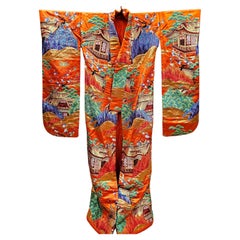
Vintage Japanese Silk Brocade Embroidery Ceremonial Kimono in Green, Red, Blue
Located in Barrington, IL
An exceptional and visually arresting vintage Uchikake wedding kimono from the late Meiji to early Taisho period (circa 1910s–1930s), originally designed for ceremonial bridal wear. ...
Category
Early 20th Century East Asian Textiles
Materials
Brocade, Silk
$2,000 Sale Price
59% Off
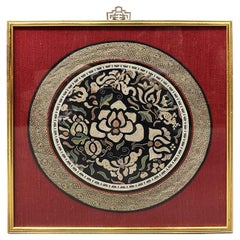
Framed Antique Chinese Qing Dynasty Embroidery 24LP110
Located in Pomona, CA
Originally purchased from Hong Kong, this Chinese antique embroidery presented in a museum quality. This textile was a roundel design likely from the center front of a noble woman's...
Category
Early 20th Century Chinese Export East Asian Textiles
Materials
Silk
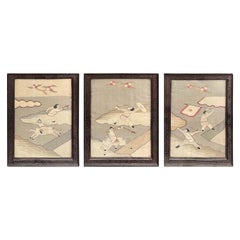
19th Century Set of 3 Framed Chinese Kesi Textiles ( 1
x 1
3" - 30 x 38 )
Located in New York, NY
19th Century Set of 3 Framed Chinese Kesi Textiles ( 1' x 1'3" - 30 x 38 )
Category
1880s Antique East Asian Textiles
Materials
Silk
$2,080 Sale Price / set
35% Off
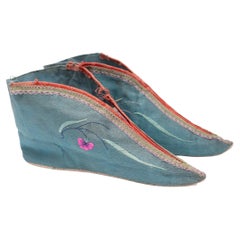
Pair of Chinese Silk Lotus Slippers, c. 1850
Located in Chicago, IL
These dainty, pointed slippers, made of blue silk and embroidered with pink flowers, were shaped to resemble a lotus bud and enhanced the diminutive shape of bound feet. A practice that began in the Tang dynasty and reached the height of its popularity in the Qing dynasty, foot binding was a painful process intended to make a woman's feet as small as possible by restricting bone growth from an early age. The smaller the feet the more attractive and erotic they were, giving elite women a mark of elegance and a distinctive - albeit tortured - gait of small, light steps. These embroidered silk lotus slippers...
Category
Mid-19th Century Qing Antique East Asian Textiles
Materials
Cotton, Silk
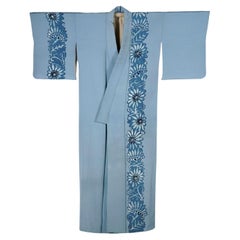
Japanese Woven Ikat and Stenciled Summer Usumono Kimono Meiji Period
Located in Atlanta, GA
On offer is a “Natsu No Kimono” (summer kimono) also called “Usumono" (thin clothes) dated from late Meiji Period circa late 19th to early 20th century. This well-preserved garment w...
Category
Early 20th Century Meiji East Asian Textiles
Materials
Linen
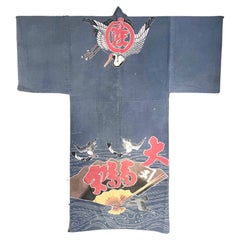
Japanese Fisherman Festival Kimono with Tsutsugaki Design
Located in Atlanta, GA
A Japanese festival Kimono robe circa late 19th to early 20th century (end of Meiji Period) for fishing ritual. Made in a cotton fabric, the kimono was elaborately decorated by Tsuts...
Category
Early 20th Century Meiji East Asian Textiles
Materials
Cotton, Linen
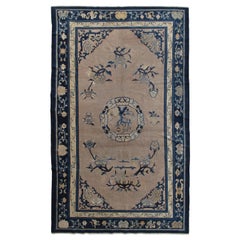
Antique Chinese Rug, Tan and Blue Oriental Handmade Wool Rug
Located in Port Washington, NY
China has a long tradition of carpets and the original ones, probably used as merchandise, are dated at over 2000 years ago. The art of knotting carpets was however, introduced somewhere around the 15th century in China.
The patterns on some of the older Chinese carpets...
Category
Early 20th Century Chinese Export East Asian Textiles
Materials
Wool
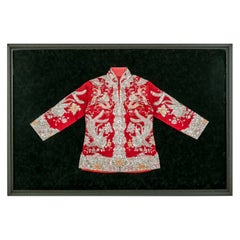
Framed Chinese Embroidery Southern Bridal Jacket
Located in Atlanta, GA
A framed vintage Chinese embroidered bridal jacket called "Gua", which is the upper part of the two-piece wedding assemble called "Qun Gua", with the low...
Category
Late 20th Century Chinese Export East Asian Textiles
Materials
Silk, Glass, Wood
Chinese Silk Brocade Chair Panel with Fu Lion, c. 1850
Located in Chicago, IL
This framed silk brocade tapestry is one half of a magnificent Qing-dynasty chair panel, or chair strip. Because traditional Chinese seating was not upho...
Category
Mid-19th Century Qing Antique East Asian Textiles
Materials
Silk
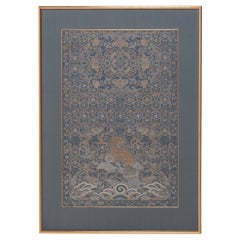
Framed Antique Japanese Embroidery Fukusa Panel
Located in Atlanta, GA
A finely embroidered Japanese silk Fukusa panel presented in a beautiful silk-lined giltwood frame (newly framed and glazed), circa late 19th century of Meiji Period. Fukusa is a tra...
Category
Late 19th Century Meiji Antique East Asian Textiles
Materials
Silk, Wood
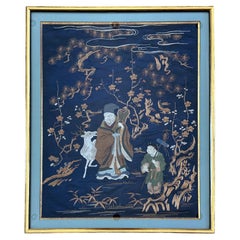
Japanese Fukusa Relief Embroidery Textile Art of Dragon
Located in Atlanta, GA
A visually stunning Japanese fukusa panel with an embroidered dragon on a swirling cloud background, nicely displayed on a scarlet felt matt in a carve...
Category
1890s Japonisme Antique East Asian Textiles
Materials
Silk, Wood
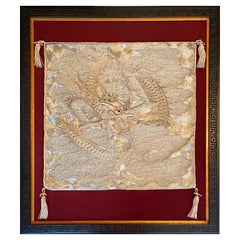
Antique Chinese Textile 4
3" x 7
6"
Located in New York, NY
Antique Chinese - Textile Size: 4'3" x7'6"
Category
Early 1900s Antique East Asian Textiles
Materials
Silk
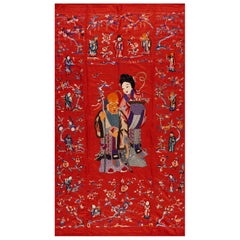
$6,370 Sale Price
35% Off
Antique Silk Kesa Monk
s Patched Robe Meiji Period
Located in Atlanta, GA
Kesa, known as "Jiasha" in Chinese and "Kasaya" in Sanskrit, is an out-layer garment worn by the ordained Buddhist monks. Bearing a basic rectangular form, it developed originally in...
Category
19th Century Meiji Antique East Asian Textiles
Materials
Textile, Brocade
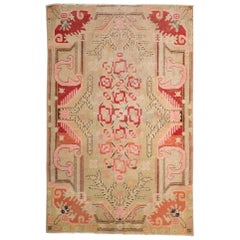
Antique Samarkand Carpet, c. 1920
Located in Chicago, IL
This masterfully knotted early 20th century samarkand carpet depicts a floral pattern at its center, framed by an ornate geometric border. Sometimes referred to as Khotan carpets, sa...
Category
Early 20th Century Khotan East Asian Textiles
Materials
Wool
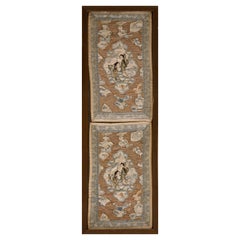
Mid 19th Century Pair of Chinese Silk
Metal Embroidery (7" x 1
9" - 18 x 54)
Located in New York, NY
Mid 19th Century Pair of Chinese Silk
Metal Embroidery (7" x 1' 9" - 18 x 54)
Category
1850s Antique East Asian Textiles
Materials
Silk
$1,072 Sale Price
35% Off
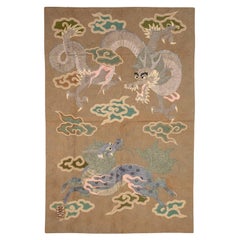
A silk tapestry embroidered in relief depicting a dragon and a kirin
Located in Milano, IT
Embroidered silk relief tapestry depicting a dragon and a kirin in the clouds.
A silk tapestry embroidered in relief with polychrome threads, depicting two mythological figures: a r...
Category
19th Century Antique East Asian Textiles
Materials
Silk
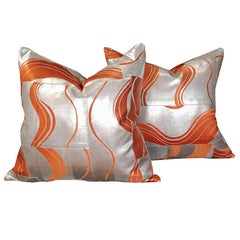
Pair of Japanese Obi Pillows in Silver and Orange
Located in Chicago, IL
This pair of artisan-designed pillows was made by hand from a vintage Japanese obi patterned with orange wave-like swirls against a metallic silver field. ...
Category
1970s Modern Vintage East Asian Textiles
Materials
Linen, Silk, Down
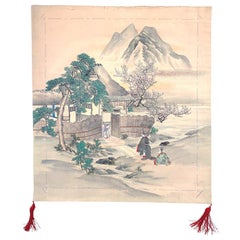
Japanese Antique Fukusa Textile Art Meiji Period
Located in Atlanta, GA
A Japanese silk Fukusa panel circa late 19th-early 20th century of Meiji Period. The front was beautifully decorated with Yuzen-zome, a labor intensive resist-dye technique invested by an artist monk Miyazaki Yuzensai (1654 -1736) of Edo period. The front cover likely depicts a scene from the Tale of Genji, showing a nobleman and his servant pays a visit to a lady in a fenced thatch-roof house under a high peak. The details of blossom trees and pines, as well as the characters, and scenery with a gradual color are astounding. It is telling that the Yuzen dying was used such an mastery.
The piece has a red silk backing and still retains two red tassels on the lower corners as well as decorative stitches along the edges. There is a patched design on the back likely a Mon symbol (family crest).
Fukusa is a traditional Japanese textile...
Category
Early 20th Century Japonisme East Asian Textiles
Materials
Silk
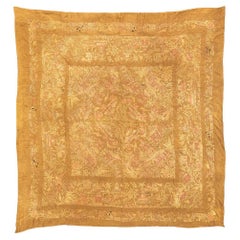
Chinese Textile Silk Embroidered Panel
Located in Ferrara, IT
19th Century Chinese Silk Embroidered Panel with Peking Knot and Gold This exquisite 19th-century Chinese silk embroidered textile is a rare masterpiece, probably of Qing Dynasty cra...
Category
Early 1900s Qing Antique East Asian Textiles
Materials
Wool
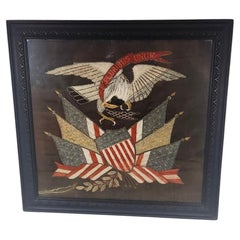
Antique Japanese Export Silk Embroidery Americana Patriotic Panel
Located in Buffalo, NY
A silk embroidery panel that depicts an American eagle perched on the liberty shield, with laurel branches and shooting arrows under the feet and flanked by four American flags and b...
Category
Late 19th Century Japonisme Antique East Asian Textiles
Materials
Silk, Wood
19th Century Antique Chinese Framed Groups of Textile Embroidery Pieces
Located in Pomona, CA
A group of three antique Chinese textiles embroidery arranged and professionally matted and framed. The museum quality display includes two Identical pieces symmetrically on the top ...
Category
19th Century Chinese Export Antique East Asian Textiles
Materials
Textile, Silk
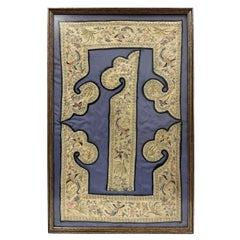
Antique Japanese Meiji era Framed Embroidery Wall Hanging
Located in Pomona, CA
Hand embroidered in Japan, this large framed silk embroidered wall art was made in Meiji era, approximated 1900s. Very detailed hand embroidere...
Category
Early 20th Century Chinese Export East Asian Textiles
Materials
Silk
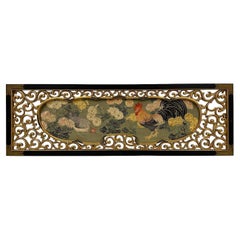
Rare and Antique Geometric Ivory Mongolian Rug
Located in Milan, IT
Today Mongolian carpets are highly appreciated for the geometric character of their design and for their neutral palette, which is often centred on an ivory/dark colour combination. ...
Category
Mid-19th Century Tibetan Antique East Asian Textiles
Materials
Wool
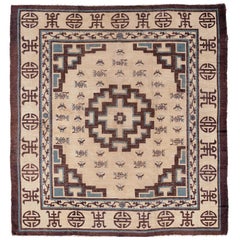
Antique Tibetan Wangden Rug with Red Open Field
Located in Milan, IT
A fairly unique example of monochrome Wangden rug, the latter being distinguished by the characteristic warp-face back. Typical for the group is the use of lanolin-rich wool which im...
Category
Early 20th Century Tibetan East Asian Textiles
Materials
Wool
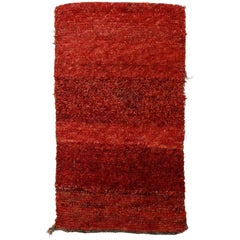
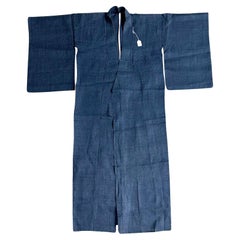
Japanese Woven Asa Double Ikat Summer Usumono Kimono Provenance
Located in Atlanta, GA
A “Natsu No Kimono” (summer kimono) also called “Usumono" (thin clothes) dated from early 20th century Taisho Period. This well-preserved garment was tailored from a woven indigo blu...
Category
Early 20th Century Taisho East Asian Textiles
Materials
Hemp
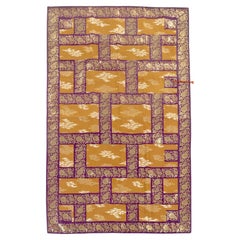
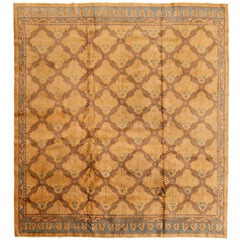
Light Yellow Chinese Art Deco Square Rug
Located in Milan, IT
Distinguished by an unusual all-over grid pattern on a soft lemon yellow background, this carpet is an example of the eclecticism of Chinese weavings in ...
Category
1930s Art Deco Vintage East Asian Textiles
Materials
Wool
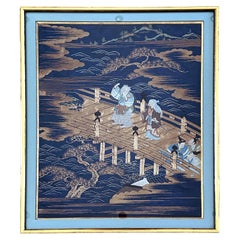
Framed Antique Japanese Embroidery Fukusa Panel Takasago Legend
Located in Atlanta, GA
A finely embroidered Japanese silk Fukusa panel presented in a beautiful silk-lined giltwood frame (newly framed and glazed), circa late 19th century of Meiji Period. Fukusa is a traditional Japanese textile art used to wrap and present gifts at important occasions. Depending on the occasion, the panel itself can be a very fine textile art on its own.
On the deep blue background, this elaborate textile art depicts an old couple standing on a bridge with three bystanders, flanked by pine trees with hills afar. The couple is Jotomba (Joo and Uba are their respective names), characters in the Legend of Takasago, one of the oldest Japanese mythologies, who are associated with old pines. The legend goes as: "At Takasago Shrine there is a very old pine tree, the trunk of which is bifurcated; in it dwells the spirit of the Maiden of Takasago who was seen once by the son of Izanagi who fell in love and wedded her. Both lived to a very great age, dying at the same hour on the same day, and since then their spirits abide in the tree, but on moonlight nights they return to human shape to revisit the scene of their earthly felicity and pursue their work of gathering pine needles. His pine tree is called “The Pine of Suminoe” while hers is "Takasago pine".
In Japan, Takasago couple...
Category
Late 19th Century Meiji Antique East Asian Textiles
Materials
Silk, Wood
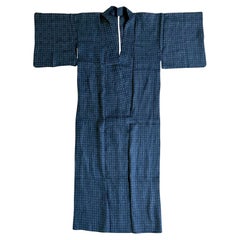
Japanese Woven Asa Double Ikat Summer Usumono Kimono Provenance
Located in Atlanta, GA
On offer is a “Natsu No Kimono” (summer kimono) also called “Usumono" (thin clothes) dated from early 20th century Taisho Period. This well-preserved garment was tailored from a wove...
Category
Early 20th Century Taisho East Asian Textiles
Materials
Hemp
Framed Tibetan Woven Silk Kesi Panel of Kirtimukha
Located in Atlanta, GA
A woven silk Kesi panel depicts Kirtimukha from Tibet circa the second half of 20th century. Beautifully woven from short weft silk with superb coloring and ...
Category
20th Century Tibetan East Asian Textiles
Materials
Silk
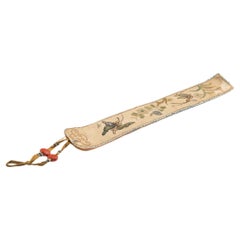
Chinese Embroidered Paper Fan Case, c. 1850
Located in Chicago, IL
This 19th-century embroidered fan case once belonged to a well-to-do lady of the late Qing dynasty (1644-1911), a must-have accessory that kept her paper fan close to hand. The delic...
Category
Mid-19th Century Qing Antique East Asian Textiles
Materials
Silk, Paper
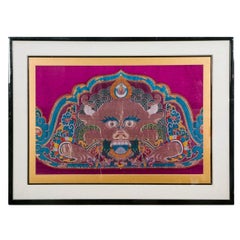
Framed Chinese Antique Textile Qing Dynasty Provenance
Located in Atlanta, GA
A spectacular antique Chinese embroidery panel dated from Qing dynasty (circa 19th century), professionally framed with linen mat, pur...
Category
19th Century Chinese Export Antique East Asian Textiles
Materials
Silk, Wood

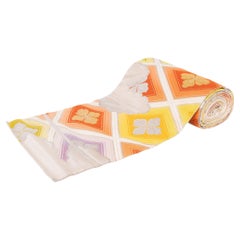
Japanese Flower Diamond Obi
Located in Chicago, IL
This finely woven Japanese silk obi exudes opulence and femininity. Typically made of fine silks with rich embroidery, the obi is a decorative sash w...
Category
20th Century East Asian Textiles
Materials
Silk
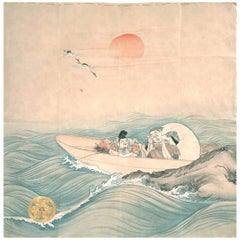
Japanese Antique Fukusa Textile Art Meiji Period
Located in Atlanta, GA
A Japanese silk Fukusa panel circa late 19th-early 20th century of Meiji Period. The front was beautifully decorated with Yuzen-zome, a labor intensive resist-dye technique invested ...
Category
Early 20th Century Japonisme East Asian Textiles
Materials
Silk, Beads
Framed Antique Chinese Embroidery Panel Qing Dynasty Provenance
Located in Atlanta, GA
An antique Chinese embroidery panel, originally the sleeve band of a robe from Qing Dynasty, circa 19th century. Nicely presented as a...
Category
Mid-19th Century Chinese Export Antique East Asian Textiles
Materials
Silk, Wood
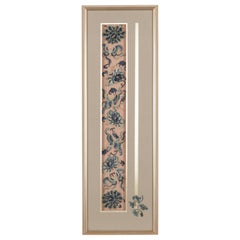
19th Century Chinese Framed Needlework in Silk
Located in Lambertville, NJ
A framed silk needlework consisting of hand made pieces of 19th century Chinese clothing in a fine custom frame and matt.
Category
1880s Antique East Asian Textiles
Materials
Silk, Glass, Giltwood
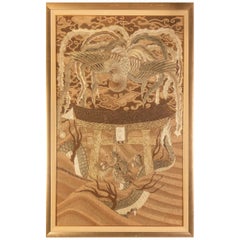
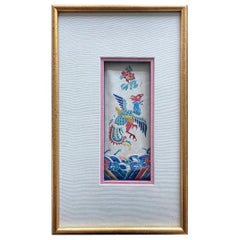
Framed Japanese Antique Phoenix Dragon Embroidery Tapestry Meiji Period
Located in Atlanta, GA
A visually stunning Japanese embroidery tapestry circa 1890s-1900s late Meiji period, presented with a linen matt with gold trim in a gilt wood frame. The design showcases a flying p...
Category
1890s Japonisme Antique East Asian Textiles
Materials
Silk, Giltwood
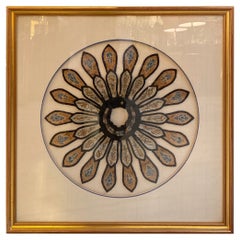
Framed Chinese Embroidered Silk Collar Qing Dynasty
Located in Atlanta, GA
An embroidered silk collar from China dated to late Qing Dynasty circa 19th century. Known as Yunjian (Cloud Shoulder or Cloud Collar).
This striking example features a two-tiered design with eleven inner and outer lobes radiating in a circular fashion. The red inner lobes feature floral embroidery design in satin stitches, the border with twisted chain stitches. The outer lobes are in the shape of auspicious "ruyi", which represents the head of Lingzhi mushroom, a symbol of longevity. Each showcases fine needlework of butterfly with spread wings and various floral motif. A small ball clasp remains on the front. This textile art is beautifully presented in a giltwood frame floating within a double mat of conforming shape.
Detachable collars such as this were worn around the shoulders as part of the traditional Chinese garment...
Category
19th Century Qing Antique East Asian Textiles
Materials
Silk
Antique Chinese Scholars
Object Carpet, c. 1930
Located in Chicago, IL
Taking months or even years to create, this gorgeous hand-knotted carpet was painstakingly crafted by tying pieces of vegetable-dyed wool around a cotton warp in thousands upon thous...
Category
1930s Vintage East Asian Textiles
Materials
Wool
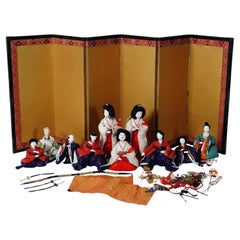
Japanese Doll Set With Screen And Other Pieces
Located in Long Island City, NY
A set of mid 20th century Japanese Sato Hakata Urasaki genuine clay dolls, hand woven textile, screen and othe pieces. The dolls are adorned with hand crafted and hand painted tradit...
Category
Mid-20th Century Meiji East Asian Textiles
Materials
Textile, Clay
$1,200 / set
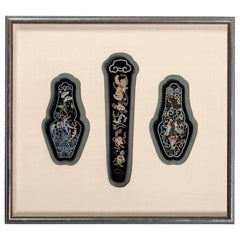
Framed Antique Chinese Textile Groups Qing Dynasty Provenance
Located in Atlanta, GA
A group of three antique Chinese textiles, arranged and professionally matted and framed. The museum quality display includes two similar pouches symmetrically flanking a fan case...
Category
19th Century Chinese Export Antique East Asian Textiles
Materials
Silk, Wood
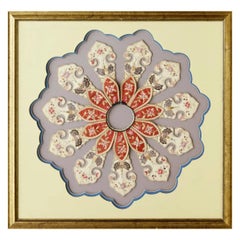
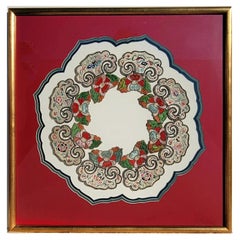
Framed Chinese Embroidered and Appliqued Silk Collar Qing Dynasty
Located in Atlanta, GA
A silk collar from China dated to late Qing Dynasty circa 19th century. Known as Yunjian (Cloud Shoulder or Cloud Collar), this multi-lobed textile piece was a detachable collar worn around the shoulders as part of the traditional Chinese garment accessory. With its origin dated back to the Han Dynasty and being used until the end of Qing Dynasty, the form evolves with time, but much of the ornamentation and fundamental symbolism remains the same.
This striking example features a two-tiered design with eight lobes on each circle, all of which are variations of the shape of auspicious "ruyi", which represents the head of Lingzhi mushroom, a symbol of longevity. The inner lobes were made with appliqued patchwork of colorful silk. The outer lobes feature elaborate embroidery of assortment of colorful flowers, scrolling ribbons and butterfly, using mostly long and short satin stitches. The borders and outlines of the designs were lineated with metallic threads buddled in chain stitches. Small black pearls were used to link the piece together and most of them still remain.
In Qing Dynasty, the silk collar with high quality was worn by noble or aristocratic women. The red color and the lotus boy symbol indicate that it was most likely part of the fashion accouterment worn during wedding ceremony.
The collar is beautifully float mounted within a double conforming mat in a giltwood frame and wood backing. A stunningly presented period piece with story to tell.
Reference: For a collection of Chinese embroidered collars...
Category
Early 19th Century Qing Antique East Asian Textiles
Materials
Silk
Framed Antique Embroidery Chinese Textile Qing Dynasty Provenance
Located in Atlanta, GA
A piece wonderful antique textile fragment from China, circa 19th century Qing dynasty, artistically displayed in a giltwood frame with white ...
Category
19th Century Chinese Export Antique East Asian Textiles
Materials
Silk, Giltwood
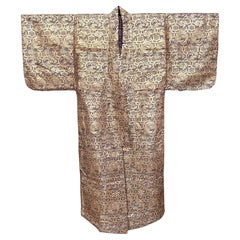
Japanese Brocade Noh Costume Kimono Robe Meiji Period
Located in Atlanta, GA
A Noh costume made from magnificent silk twill brocade woven with metallic gold threads circa 1930s. The robe is identified as "Atsuita", made for male actors in the Noh play. The luxuriant fabric has a deep blue background with golden interlocking hexagon pattern that resembles tortoise shells, the symbol of longevity. The motifs showcase three auspicious symbols in repetitive patterns: roundels of coiled dragon, phoenix and peony. The kimono robe...
Category
20th Century Meiji East Asian Textiles
Materials
Brocade, Silk
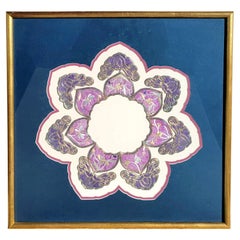
Framed Chinese Embroidered Silk Collar Qing Dynasty
Located in Atlanta, GA
A silk collar from China dated to late Qing Dynasty circa 19th century. Known as Yunjian (Cloud Shoulder or Cloud Collar), this multi-lobed textile piece was a detachable collar worn around the shoulders as part of the traditional Chinese garment accessory. With its origin dated back to the Han Dynasty and being used until the end of Qing Dynasty, the form evolves with time, but much of the ornamentation and fundamental symbolism remains the same.
This striking example features a two-tiered design with seven lobes on each circle, all of which are variations of the shape of auspicious "ruyi", which represents the head of Lingzhi mushroom, a symbol of longevity. The inner lobes feature elaborate embroidery floral design with long and short satin stitches. Notably, one panel has a double gourd design, the symbol of fortune. The outer lobes show a simpler but bolder vision with the outlines of the designs lineated with metallic threads buddled in chain stitches. Small jade beads were used to link the piece together and most of them still remain. The piece as a whole has a very pleasant lilac purple color, delicate with the jade beads.
In Qing Dynasty, the silk collar with high quality was worn by noble or aristocratic women. The red color and the lotus boy symbol indicate that it was most likely part of the fashion accouterment worn during wedding ceremony.
The collar is beautifully float mounted within a double conforming mat in a giltwood frame and wood backing. A stunningly presented period piece with story to tell.
Reference: For a collection of Chinese embroidered collars...
Category
Early 19th Century Qing Antique East Asian Textiles
Materials
Silk
Still Thinking About These?
All Recently ViewedMore Ways To Browse
Lame Furniture
Bamboo Mat
Chinese Kesi
Kesi Silk Chinese
Antique Chinese Silk Robes
Ikat Timor
Japanese Fukusa Textile Art
Japanese Sashiko
Moorish Shoes
Vintage Japanese Wedding Kimono
Baby Carrier
Chinese Embroidered Collar
Kimono Meiji
Moroccan Robe
Moroccan Slippers
Qing Dynasty Clothing
Antique Chinese Embroidered Panels
Japanese Silk Embroidered Birds Framed