Japanese Textiles
to
7
118
13
153
24
1
22
1
1
2
58
93
25
50
26
2
3
1
4
1
4
2
1
172
92
38
35
29
14,186
1,264
426
424
404
178
175
178
3
Place of Origin: Japanese
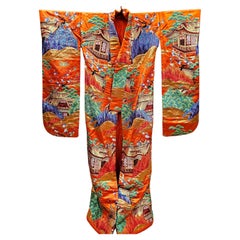
Vintage Japanese Silk Brocade Embroidery Ceremonial Kimono in Green, Red, Blue
Located in Barrington, IL
An exceptional and visually arresting vintage Uchikake wedding kimono from the late Meiji to early Taisho period (circa 1910s–1930s), originally designed for ceremonial bridal wear. ...
Category
Early 20th Century Japanese Textiles
Materials
Brocade, Silk
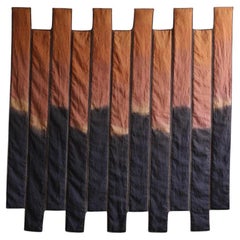
The sky visible at Honmonji Temple Ⅲ by Blue Tip Atelier
Located in Sammu-shi, Chiba
Title : The sky visible at Honmonji Temple Ⅲ
Japan / 2024s
Size : w1620 x h1630 mm
The sky can be seen from Honmonji Temple, which the artist passes while running, a hobby of her...
Category
2010s Modern Japanese Textiles
Materials
Linen
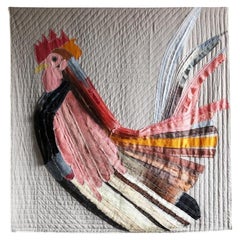
sky color bird by Blue Tip Atelier
Located in Sammu-shi, Chiba
Title : sky color bird
Japan / 2024s
Size : w1620 x h1635 mm
Scraps of fabric used in the Sky series are used to express birds in the colours of the sky.
The materials used are li...
Category
2010s Modern Japanese Textiles
Materials
Linen
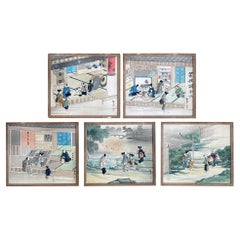
Rare Five Japanese Signed Oshi-E Textile Art Panels Meiji Period
Located in Atlanta, GA
On offer is a set of five Japanese textile art panels called Oshi-E circa Meiji Period (1868-1912). This unusual set of panels depict various aspects of daily life in Edo time with beautiful details. Some of these panels are snapshots of the buzzling commercial activities at the marketplace, providing insight into the signages, architecture, costumes and how people interacted within a historical and pictorial context. Other panels depict daily leisure activities such as lounging in the park or visiting friends. The realistic rendering and attention to details are not short of "photographic" quality. From the signage of the shops to the motions and attires of the individual characters, from the hairstyle, small ornaments, down to the facial expression, were all recorded in great details. Each panel was signed with the artist's name Yukihana in Kanji with a red seal.
These panels are unframed and await your custom touch (framing with inner gilt spacer and mat costs about 250-500 depending on the material chosen, see a framed example in the last picture of a single framed panel we have for sale). We offer them for sale individually, but it will be great for a collector to consider the whole set so that they can stay together.
The Oshi-E (also known as kiritori zaiku) is a type of ornamental textile art dated back to the Muromachi period (1392-1573). It started among the elite aristocratic women in Kyoto before spreading wider in the Japanese society. Throughout Edo and Meiji period, Oshi-E were sometimes used to make offerings to the altars in the temple and in the late 19th century, it was exported to the west along with the other embroidery textile art. Oshi-E was made by using silk wadding to create a relief design. Various silk fabric swaps and sometimes wires and tassels, often recycled from older kimonos...
Category
1890s Meiji Antique Japanese Textiles
Materials
Silk, Giltwood
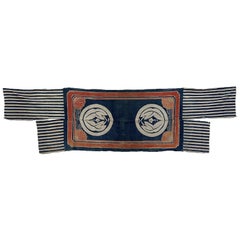
Japanese Horse Trapping, "Uma-No-Haragake", Tsutsugaki, Cotton, Meiji Period
Located in Point Richmond, CA
Japanese horse trapping, "Uma-No-Haragake", Tsutsugaki, cotton, Meiji period
This type of haragake is called yuiage ("tied up"). The central portion covered the belly of the horse an...
Category
20th Century Meiji Japanese Textiles
Materials
Cotton
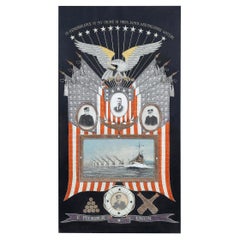
Japanese Antique Textile Panel of American Historical Great White Fleet
Located in Atlanta, GA
Nicknamed Great White Fleet, the sailing of the United States Navy battleships around the globe from December 16, 1907 to February 22, 1909 by order of Uni...
Category
Early 1900s Japonisme Antique Japanese Textiles
Materials
Brocade, Silk, Wood
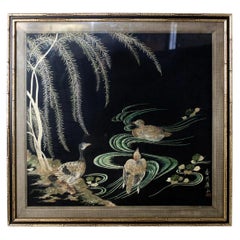
Framed Antique Japanese Embroidered Silk Panel Signed
Located in Atlanta, GA
An exquisite Japanese embroidery piece circa end of 19th-early 20th century of Meiji period. The silk panel depicts an idyllic water scenery, in which three mandarin ducks swim in th...
Category
Early 20th Century Japonisme Japanese Textiles
Materials
Silk, Wood
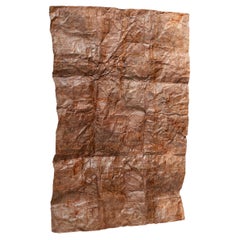
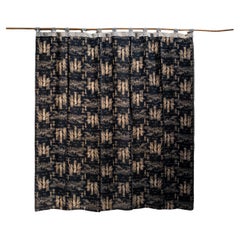
Japanese Persimmon-Dyed Washi Curtain (Shichou-maku), 19th Century
Located in Tokyo, Tokyo
This striking “shichou-maku,” or paper curtain, dates to the Meiji period and was originally used in sericulture rooms to shield silkworms from drafts and cold air. Hung from ceiling...
Category
19th Century Antique Japanese Textiles
Materials
Paper
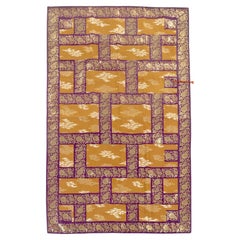
Signed Silk Brocade Obi
Located in Sharon, CT
Very large (188") hand woven silk brocade Obi.
Category
Late 19th Century Meiji Antique Japanese Textiles
Materials
Silk

$2,500
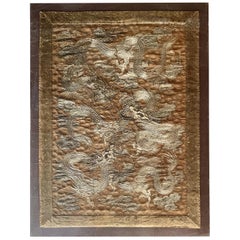
Large Framed Japanese Embroidery Dragon Tapestry
Located in Atlanta, GA
An impressive Japanese embroidery tapestry circa 1890s Meiji period, presented with brocade border on linen canvas in a Lucite shadow box. The stunning design features three dragons coiling and flying in the clouds. The high relief technique used to render the dragons using mostly the silver threads gives this piece a tremendous sense of motion. The most auspicious mythological creature in Japan and China, dragons were a very popular motif in textile art. In this particular piece, it is the impressive size, the superb craftsmanship, the profuse use of silver threads and near perfect condition that set it apart. Japanese Meiji textiles were widely exhibited in the west during turn of the 20th century at the international exposition. It was used to showcase the Japanese aesthetics with the techniques at their pinnacle. These expositions solidified the country's images overseas and felled the Japanese craze in the west, which turned out to be a long-lasting influence on the western art. Many pieces were purchased and stayed in the west. It is likely this estate piece was from one of the expositions based on its high quality.
For two similar dragon tapestries...
Category
1890s Japonisme Antique Japanese Textiles
Materials
Textile, Lucite
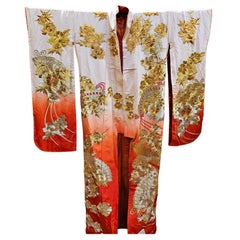
Vintage Japanese Silk Brocade Embroidery Ceremonial Kimono in Ivory, Red, Gold
Located in Barrington, IL
An exquisite and visually commanding vintage Uchikake wedding kimono from Japan, dating from the late Meiji to early Taisho period (circa 1910s–1930s). Traditionally worn by brides ...
Category
Early 20th Century Japanese Textiles
Materials
Gold
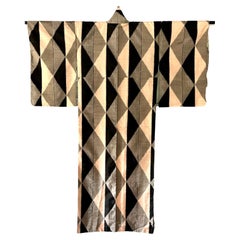
Japanese Art Deco Ikat Silk Meisen Kimono
Located in Atlanta, GA
A well preserved Japanese Meisen kimono hand-sewn from woven Ikat Silk circa 1920-30s (Taisho to early Showa period). The kosode style kimono (small slee...
Category
Early 20th Century Showa Japanese Textiles
Materials
Silk
Japanese Monastery Robe Patchwork Kesa with inscription Edo Period
Located in Atlanta, GA
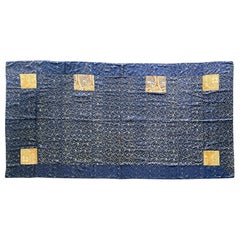
A Japanese Kesa (Monk's Vestment) made from fourteen columns of patchworks of blue brocades with sumptuous woven pattern. The elaborate motifs feature re...
Category
Early 19th Century Japonisme Antique Japanese Textiles
Materials
Brocade, Silk
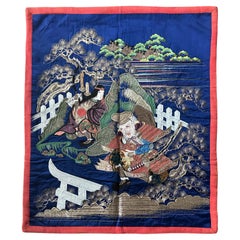
Fine Japanese Embroidery Silk Fukusa Kabuki Story Meiji Period
Located in Atlanta, GA
A Japanese silk embroidery Fukusa panel circa 1890-1910s toward the end of Meiji Period. The spectacular needlework on this piece is a tour-de-force showcasing a scene from Kabuki th...
Category
1890s Meiji Antique Japanese Textiles
Materials
Silk
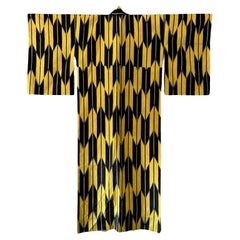
Japanese Art Deco Ikat Silk Meisen Kimono
Located in Atlanta, GA
A well preserved Japanese Meisen kimono hand-sewn from woven Ikat Silk circa 1920-30s (Taisho to early Showa period). The kosode style kimono (small slee...
Category
Early 20th Century Showa Japanese Textiles
Materials
Silk
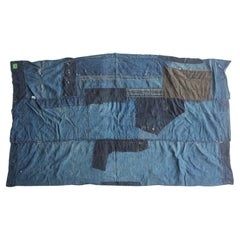
Boro3 Japanese Antiques Primitive Art BORO Indigo-dyed Old Cloth patchwork
Located in Niiza, JP
Material: cotton
Width 1700 x Height 1000 x Depth 5 mm (about) weight 600g
estimate Packaging (It will be rolled or folded and shipped in bubble wrap and cardboard.)
30 cm x 50 cm x ...
Category
19th Century Antique Japanese Textiles
Materials
Cotton
Antique Japanese Framed Embroidered Scene of Traditional Garden Life
Located in Oklahoma City, OK
A beautiful piece with an incredible history. This exquisite hand-embroidered tapestry was created in Japan and purchased by an American man who taught English. The scene depicts a t...
Category
20th Century Anglo-Japanese Japanese Textiles
Materials
Metal
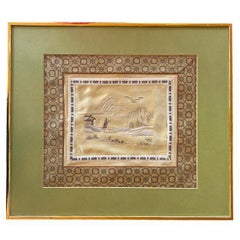
Framed Antique Japanese Embroidery Fukusa Panel
Located in Atlanta, GA
A finely embroidered Japanese silk Fukusa panel presented in a beautiful brocade-wrapped fame. Circa late 19th century of Meiji Period, Fukusa is a traditional Japanese textile...
Category
Late 19th Century Meiji Antique Japanese Textiles
Materials
Silk, Wood
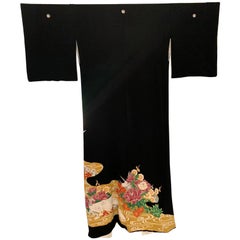
Vintage Japanese Formal Black Silk Kimono
Located in Atlanta, GA
A vintage Japanese silk Kuro Tomesode Kimono, circa 1960s-1980s. Kuro Tomesode is a dress for married woman for the most formal occasions, equivalent of the evening gowns in the west. It is overall black, decorated only with patterns of bright colors on the bottom. This kimono has three Mon family crests on the front and back shoulder. It is lined with white silk in its interior. On the front, it features exposed white stitches around neck and breast, a very subtle and elegant touch. The bottom part of the kimono is decorated with lavish woven design with embroidery accents that depicts a group of pheasants among peonies and other blossoms along a flowing stream. Great contrast in the colors and attention to details. An very elegant textile for wall...
Category
Mid-20th Century Japonisme Japanese Textiles
Materials
Silk
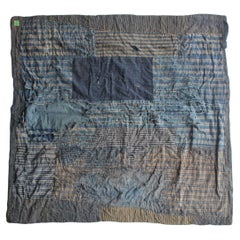
Boro1 Japanese Antiques Primitive Art BORO Indigo-dyed Old Cloth patchwork
Located in Niiza, JP
Material: cotton
Width 1550 x Height 1500 x Depth 10 mm (about) weight 2 kg
estimate Packaging (It will be rolled or folded and shipped in bubble wrap and cardboard.)
45 cm x 45 cm ...
Category
19th Century Antique Japanese Textiles
Materials
Cotton
19th century silk decorative pillow case (Fukusa)
Located in Fukuoka, JP
Superb embroidered silk Fukusa, wedding gift wrapping silk cloth decorated with auspicious motive.
Condition : Fine original condition with only minor abrasions and very ...
Category
19th Century Edo Antique Japanese Textiles
Materials
Silk
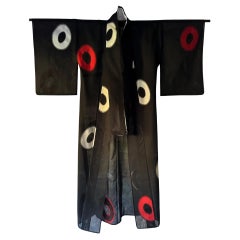
Vintage Japanese Gauze Kimono with Embroidery Modern Design
Located in Atlanta, GA
A Japanese formal Kimono made with a very fine black linen gauze augmented with applied modern circle pattern. The garment was hand-stitched and dated to circa 1930-50s. The black ga...
Category
Mid-20th Century Japonisme Japanese Textiles
Materials
Silk, Linen
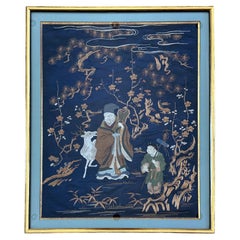
Framed Antique Japanese Embroidery Fukusa Panel
Located in Atlanta, GA
A finely embroidered Japanese silk Fukusa panel presented in a beautiful silk-lined giltwood frame (newly framed and glazed), circa late 19th century of Meiji Period. Fukusa is a tra...
Category
Late 19th Century Meiji Antique Japanese Textiles
Materials
Silk, Wood
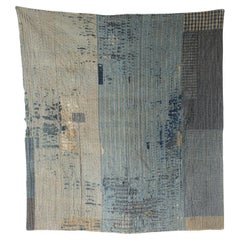
Boro0 Japanese Antiques Primitive Art BORO Indigo-dyed patchwork Old Cloth
Located in Niiza, JP
Material: cotton
Width 1550 x Height 1700 x Depth 10 mm (about) weight 5 kg
estimate Packaging (It will be rolled or folded and shipped in bubble wrap and cardboard.)
50cm x 50cm x...
Category
Early 19th Century Antique Japanese Textiles
Materials
Cotton
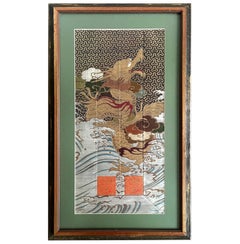
Framed Japanese Woven Textile Panel with Dragon Meiji Period
Located in Atlanta, GA
A framed Japanese woven textile circa late 19th century of Meiji Period. Likely a fragment of a priest robe or kesa, the multi-paneled textile was finely woven with gold foiled threads that depicts a five-clawed dragon slithering in the clouds and water...
Category
19th Century Meiji Antique Japanese Textiles
Materials
Silk, Wood
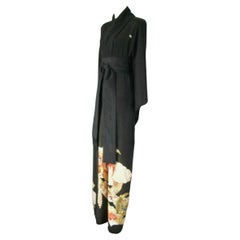
Vintage Hand-Painted Silk Kimono with Gold Embroidery - Japan - 20th Century
Located in Chatham, ON
Vintage fine quality silk kimono - hand sewn with gold embroidery - hand-painted silk textile - white silk crepe and off-white rayon lining - signed - original label attached to the ...
Category
Mid-20th Century Japonisme Japanese Textiles
Materials
Silk
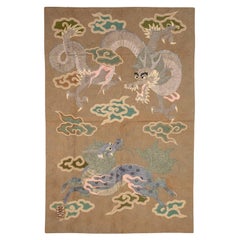
A silk tapestry embroidered in relief depicting a dragon and a kirin
Located in Milano, IT
Embroidered silk relief tapestry depicting a dragon and a kirin in the clouds.
A silk tapestry embroidered in relief with polychrome threads, depicting two mythological figures: a r...
Category
19th Century Antique Japanese Textiles
Materials
Silk
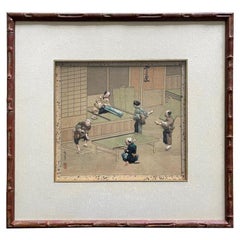
Framed Japanese Oshi-E Textile Art Meiji Period
Located in Atlanta, GA
On offer is the last one of the set of seven framed Japanese textile art called Oshi-E circa Meiji Period (1868-1912). This rare set consists ...
Category
1890s Japonisme Antique Japanese Textiles
Materials
Giltwood, Silk
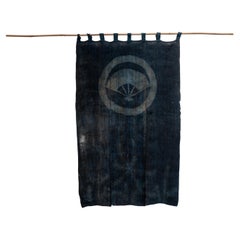
Divider, Tsutsugaki Aigaeshi-Dyed Noren with Family Crest, Japan, 19th Century
Located in Tokyo, Tokyo
This is a traditional Japanese noren (fabric divider) from the late Edo period, created in Yamagata Prefecture in the 19th century. Crafted from hand-sp...
Category
19th Century Antique Japanese Textiles
Materials
Fabric
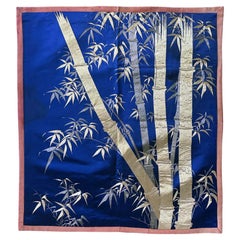
Japanese Embroidery Silk Bamboo Fukusa Meiji Period
Located in Atlanta, GA
A Japanese silk embroidery Fukusa panel circa 1890-1910s toward the end of Meiji Period. On the deep blue satin background, the artist showcases a clump of bamboos in a realistic sty...
Category
Early 20th Century Meiji Japanese Textiles
Materials
Silk
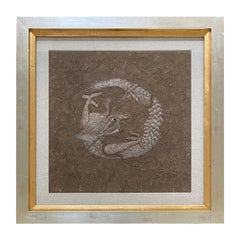
Framed Japanese Relief Embroidery Textile Art of Dragon
Located in Atlanta, GA
A beautiful Japanese textile art panel with an embroidered dragon on a swirling cloud background, nicely framed with a linen matt in an antique-fi...
Category
1890s Japonisme Antique Japanese Textiles
Materials
Silk, Wood
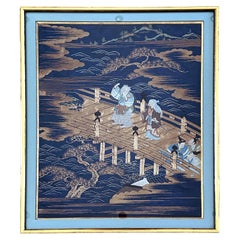
Framed Antique Japanese Embroidery Fukusa Panel Takasago Legend
Located in Atlanta, GA
A finely embroidered Japanese silk Fukusa panel presented in a beautiful silk-lined giltwood frame (newly framed and glazed), circa late 19th century of Meiji Period. Fukusa is a traditional Japanese textile art used to wrap and present gifts at important occasions. Depending on the occasion, the panel itself can be a very fine textile art on its own.
On the deep blue background, this elaborate textile art depicts an old couple standing on a bridge with three bystanders, flanked by pine trees with hills afar. The couple is Jotomba (Joo and Uba are their respective names), characters in the Legend of Takasago, one of the oldest Japanese mythologies, who are associated with old pines. The legend goes as: "At Takasago Shrine there is a very old pine tree, the trunk of which is bifurcated; in it dwells the spirit of the Maiden of Takasago who was seen once by the son of Izanagi who fell in love and wedded her. Both lived to a very great age, dying at the same hour on the same day, and since then their spirits abide in the tree, but on moonlight nights they return to human shape to revisit the scene of their earthly felicity and pursue their work of gathering pine needles. His pine tree is called “The Pine of Suminoe” while hers is "Takasago pine".
In Japan, Takasago couple...
Category
Late 19th Century Meiji Antique Japanese Textiles
Materials
Silk, Wood
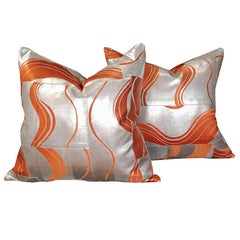
Pair of Japanese Obi Pillows in Silver and Orange
Located in Chicago, IL
This pair of artisan-designed pillows was made by hand from a vintage Japanese obi patterned with orange wave-like swirls against a metallic silver field. ...
Category
1970s Modern Vintage Japanese Textiles
Materials
Linen, Silk, Down
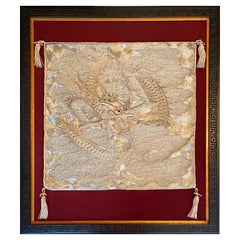
Japanese Fukusa Relief Embroidery Textile Art of Dragon
Located in Atlanta, GA
A visually stunning Japanese fukusa panel with an embroidered dragon on a swirling cloud background, nicely displayed on a scarlet felt matt in a carve...
Category
1890s Japonisme Antique Japanese Textiles
Materials
Silk, Wood
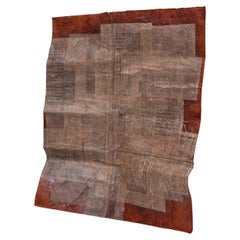
Japanese Persimmon-Dyed Washi Rug with Layered Repairs, 20th Century
Located in Tokyo, Tokyo
This rare persimmon tannin–dyed washi rug dates from the late Meiji to Taisho period (early 20th century) and was traditionally used to protect tatami mats from sunlight or serve as ...
Category
20th Century Japanese Textiles
Materials
Paper
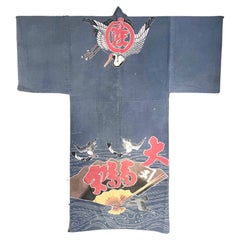
Japanese Fisherman Festival Kimono with Tsutsugaki Design
Located in Atlanta, GA
A Japanese festival Kimono robe circa late 19th to early 20th century (end of Meiji Period) for fishing ritual. Made in a cotton fabric, the kimono was elaborately decorated by Tsuts...
Category
Early 20th Century Meiji Japanese Textiles
Materials
Cotton, Linen
Fabric Divider, Cotton Noren with Kakumoji Character, Japan, Early 20th Century
Located in Tokyo, Tokyo
This is a traditional Japanese noren (fabric shop curtain) dating to the Taisho period (1912–1926), crafted from cotton dyed with persimmon tannin (kaki...
Category
Early 20th Century Japanese Textiles
Materials
Cotton
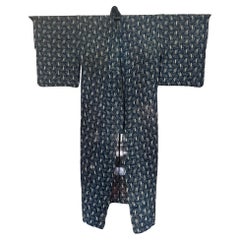
Japanese Woven Ikat and Stenciled Summer Usumono Kimono Meiji Period
Located in Atlanta, GA
On offer is a “Natsu No Kimono” (summer kimono) also called “Usumono" (thin clothes) dated from late Meiji Period circa late 19th to early 20th century. This well-preserved garment w...
Category
Early 20th Century Meiji Japanese Textiles
Materials
Linen
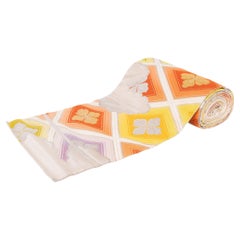
Japanese Flower Diamond Obi
Located in Chicago, IL
This finely woven Japanese silk obi exudes opulence and femininity. Typically made of fine silks with rich embroidery, the obi is a decorative sash w...
Category
20th Century Japanese Textiles
Materials
Silk
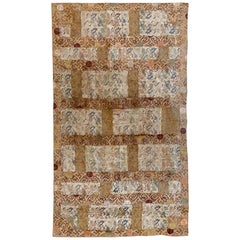
Antique Brocade Kesa Monk
s Patched Robe Edo Period
Located in Atlanta, GA
Kesa, known as "Jiasha" in Chinese and "Kasaya" in Sanskrit, is an out layer garment worn by the ordained Buddhist monks. Bearing a basic rectangular form, it developed originally in...
Category
Late 18th Century Edo Antique Japanese Textiles
Materials
Textile, Brocade
Antique Framed Japanese Silk Kesa Monk
s Robe Edo Period
Located in Atlanta, GA
A Japanese Kesa (Monk's Vestment) made from thirteen columns of patchworks of brocades set within a border of the same material. The brocade was woven from a subtle color palette of ...
Category
19th Century Edo Antique Japanese Textiles
Materials
Brocade, Silk
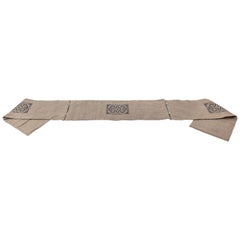
Hand embroidered linen table runner from the SoShiro Ainu collection
By SoShiro
Located in London, GB
This hand-embroidered linen table runner from SoShiro’s Ainu collection, a collaboration between award-winning artist Toru Kaizawa and Shiro Muchiri, consists of three separate pieces, so it can be buttoned up to form an extra-long runner for larger table settings.
It is made from a medium-weight linen, with a 400-gram-per-square-meter thread count, to ensure the runner remains weighted to the desired position on the table. The Blakiston’s fish owl...
Category
2010s International Style Japanese Textiles
Materials
Linen, Natural Fiber
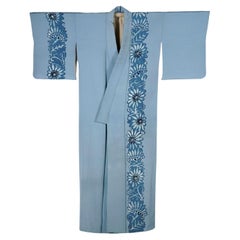
Elegant Vintage Japanese Silk Kimono with Shibori Band Design
Located in Atlanta, GA
A Japanese formal silk Kimono in a light blue color with striking floral design. The garment is hand-stitched from a crepe like silk and dated to circa 1940-60s. The garment is spars...
Category
Mid-20th Century Japonisme Japanese Textiles
Materials
Silk
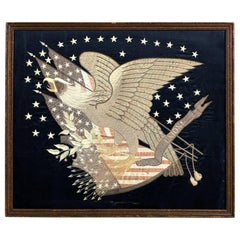
Antique Japanese Export Silk Embroidery Panel of American Union
Located in Atlanta, GA
A rather fascinating silk embroidery panel that depicts an American eagle perched on a shield, with laurel branches and shooting arrows under the...
Category
Late 19th Century Japonisme Antique Japanese Textiles
Materials
Silk, Wood
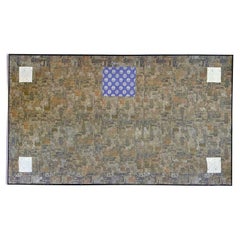
Japanese Antique Fukusa Textile Art Meiji Period
Located in Atlanta, GA
A Japanese silk Fukusa panel circa late 19th-early 20th century of Meiji Period. The front was beautifully decorated with Yuzen-zome, a labor intensive resist-dye technique invested ...
Category
Early 20th Century Japonisme Japanese Textiles
Materials
Silk, Beads
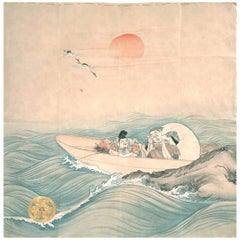
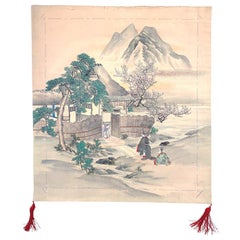
Japanese Antique Fukusa Textile Art Meiji Period
Located in Atlanta, GA
A Japanese silk Fukusa panel circa late 19th-early 20th century of Meiji Period. The front was beautifully decorated with Yuzen-zome, a labor intensive resist-dye technique invested by an artist monk Miyazaki Yuzensai (1654 -1736) of Edo period. The front cover likely depicts a scene from the Tale of Genji, showing a nobleman and his servant pays a visit to a lady in a fenced thatch-roof house under a high peak. The details of blossom trees and pines, as well as the characters, and scenery with a gradual color are astounding. It is telling that the Yuzen dying was used such an mastery.
The piece has a red silk backing and still retains two red tassels on the lower corners as well as decorative stitches along the edges. There is a patched design on the back likely a Mon symbol (family crest).
Fukusa is a traditional Japanese textile...
Category
Early 20th Century Japonisme Japanese Textiles
Materials
Silk
Antique Silk Kesa Monk
s Patched Robe Meiji Period
Located in Atlanta, GA
Kesa, known as "Jiasha" in Chinese and "Kasaya" in Sanskrit, is an out-layer garment worn by the ordained Buddhist monks. Bearing a basic rectangular form, it developed originally in...
Category
19th Century Meiji Antique Japanese Textiles
Materials
Textile, Brocade
Japanese Vintage Linen Noren, Textile, Wabi Sabi, 19th Century
Located in Tokyo, Tokyo
The unique and beautiful fabric piece, that's called noren - traditional Japanese fabric divider that was made during the Meiji era. This traditional Japanese curtains used to divide...
Category
19th Century Antique Japanese Textiles
Materials
Linen
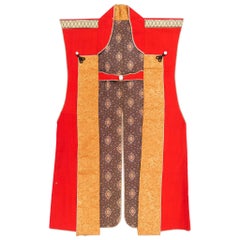
Antique Japanese Textile Art Campaign Jacket Jinbaori with Mon
Located in Atlanta, GA
Known as Jinabori during 16th century when warfare was common in feudal Japan, the sleeveless jacket was created to be worn outside of the armor by samurai warriors. In addition to s...
Category
19th Century Japonisme Antique Japanese Textiles
Materials
Textile, Silk
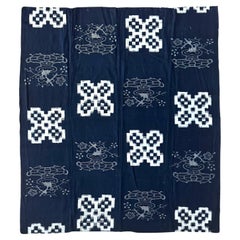
Japanese Textile Panel Double Ikat Kasuri Futon Cover
Located in Atlanta, GA
A Japanese woven cotton textile panel with white pattern on indigo background circa 1900-20s (end of Meiji to Tasho period). The panel was joined by four vertical stripes and was tra...
Category
Early 20th Century Meiji Japanese Textiles
Materials
Cotton
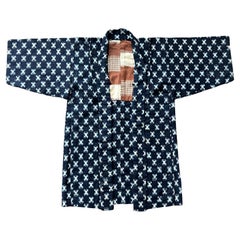
Rare Japanese Woven Ikat Child Kimono Nemaki
Located in Atlanta, GA
A rare and well preserved Japanese woven child's kimono circa early 20th century (end of Meiji period). The small kimono was a great example of Nemaki (...
Category
Early 20th Century Meiji Japanese Textiles
Materials
Cotton
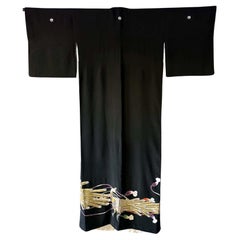
Vintage Japanese Formal Black Silk Kimono with Pheonix Embroidery
Located in Atlanta, GA
A vintage Japanese silk Kuro Tomesode Kimono, circa 1950s-1980s. Kuro Tomesode is a dress for married woman for the most formal occasions, equivalent of the evening gowns in the west. It is overall black, decorated only with patterns of bright colors on the bottom. This kimono has three Mon family crests on the front and back shoulder. It is lined with white silk in its interior. On the front, it features exposed white stitches around neck and breast, a very subtle and elegant touch. The bottom part of the kimono is decorated with an embroidery imagery of two phoenix in flight. The lavish use of gold and polychrome threads and meticulous rendition of the birds contrast greatly with the otherwise sober black background. Pheonix is the mythical bird traditionally represents the Queen or Female Supreme in Chinese culture. Known as Hoo-oo in Japanese, Pheonix is a symbol of good fortune, power and divine wisdom and represents the sun goddess Amaterasu, the Queen of Heaven and Creation, who was believed to be the ancestor of the lines of the Japanese imperial family...
Category
Mid-20th Century Showa Japanese Textiles
Materials
Silk
Framed Japanese Embroidery Silk Panel Meiji Period
Located in Atlanta, GA
A Japanese silk embroidery Fukusa panel presented in mat and glazed gilt wood frame circa 1890-1910s (end of Meiji Period). The blue silk pane...
Category
1890s Meiji Antique Japanese Textiles
Materials
Silk
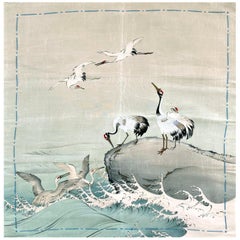
Japanese Antique Fusuka Textile Art Meiji Period
Located in Atlanta, GA
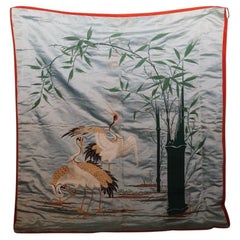
A Japanese silk Fukusa panel circa late 19th-early 20th century of Meiji Period. The front was beautifully decorated with Yuzen-zome, a labor intensive resist-dye technique invested by an artist monk Miyazaki Yuzensai (1654 -1736) of Edo period. The auspicious composition features a group of red-crown cranes, the symbol of longevity. Three of them perch on the rock by the ocean (East Sea) an two of them are in flight. Additionally, two egrets frolic in the wave. Yuzen dying was used extensively to showcase the amazing details such as the waves and the gradual coloring effect. Embroidery was used sparsely to highlight areas such as the legs of the crane to render it more dimensional details.
The piece has a red silk backing and still retains four blue tassels on corners as well as decorative stitches along the edges.
Fukusa is a traditional Japanese textile...
Category
Early 20th Century Japonisme Japanese Textiles
Materials
Brocade, Silk
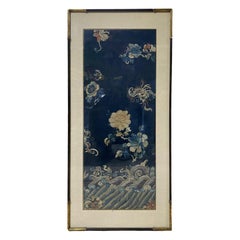
Japanese Asian Framed Meiji Peroid Silk Floral Flower Embroidery Textile Panel
Located in Studio City, CA
A beautiful and wonderfully designed/composed Japanese textile panel with embroidery floral natural landscape/flower decoration. The work is pr...
Category
19th Century Meiji Antique Japanese Textiles
Materials
Textile, Silk, Wood
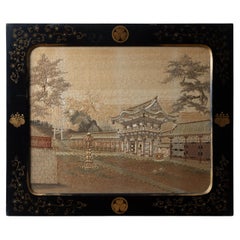
Japanese Silk Embroidery in Lacquer Frame, c.1890
Located in Savannah, GA
A Japanese export silk embroidery of a Shinto shrine in original parcel gilt ebonized lacquer frame, circa 1890.
29 ¼ by 24 ¾ inches
Category
Late 19th Century Meiji Antique Japanese Textiles
Materials
Silk, Glass, Wood, Lacquer
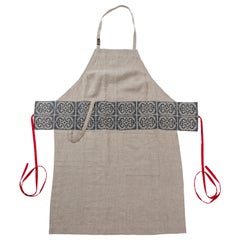
Hand embroidered linen apron from the SoShiro Ainu collection
By SoShiro
Located in London, GB
This hand-embroidered linen apron from SoShiro’s Ainu collection, a collaboration between award-winning artist Toru Kaizawa and Shiro Muchiri, took design cues from leading chefs, resulting in the addition of clever loops and pockets.
The apron, partly inspired by the structure of a kimono, is made of absorbent linen, with a 400-gram-per-square-meter thread count. The Blakiston’s fish owl eyes motif was designed by celebrated Ainu artist Mamoru Kaizawa. It is hand embroidered using 100% silk, and its placement is reminiscent of a kimono obi...
Category
2010s International Style Japanese Textiles
Materials
Linen, Natural Fiber
Japanese Buddhist Monk Priest 7 Column Silk Brocade Kesa Ceremonial Temple Robe
Located in Studio City, CA
A wonderful, beautifully ornamented and somewhat rare fully intact Japanese Buddhist monk/ priest's Kesa ceremonial silk robe featuring various colorful birds in flight.
Kesa (which came from the Chinese word "kasaya") robes have been handmade/handstitched by monks/priests as an act of devotion as ceremonial robes for centuries in various Asian cultures (Japanese, Chinese, Korean, Vietnamese, Indian, etc.). The kesa is a rectangular garment designed to be worn over the left shoulder (see example image). The robes are made (often in a patchwork column pattern ranging from five, seven, nine or more pannels) specifically for fully ordained Buddhist monks, priests and nuns and are made from donations of exquisite textiles from wealthy patrons of Japanese Buddhist temples. The robes were used in daily ceremonies, temple gatherings, and private meditation.
Antique Kesa robes...
Category
Mid-20th Century Showa Japanese Textiles
Materials
Textile, Brocade, Silk
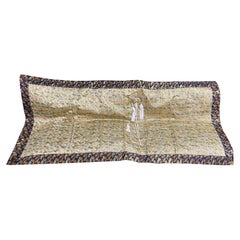
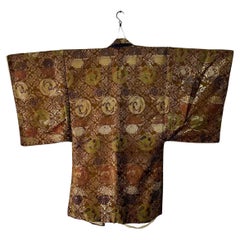
Rare 19th-Century Brocade Silk Robe for Noh Theatre Performance, Japan
Located in Fukuoka, JP
A rare and historically significant brocade silk robe from 19th-century Japan, originally created for use in Noh theatre, one of the country’s oldest and most revered performing arts...
Category
19th Century Edo Antique Japanese Textiles
Materials
Silk
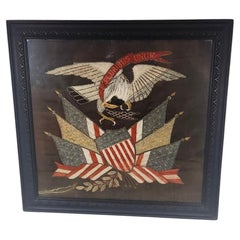
Antique Japanese Export Silk Embroidery Americana Patriotic Panel
Located in Buffalo, NY
A silk embroidery panel that depicts an American eagle perched on the liberty shield, with laurel branches and shooting arrows under the feet and flanked by four American flags and b...
Category
Late 19th Century Japonisme Antique Japanese Textiles
Materials
Silk, Wood
Still Thinking About These?
All Recently ViewedMore Ways To Browse
Lame Furniture
Bamboo Mat
Chinese Kesi
Kesi Silk Chinese
Antique Chinese Silk Robes
Ikat Timor
Japanese Fukusa Textile Art
Japanese Sashiko
Moorish Shoes
Vintage Japanese Wedding Kimono
Baby Carrier
Chinese Embroidered Collar
Kimono Meiji
Moroccan Robe
Moroccan Slippers
Qing Dynasty Clothing
Antique Chinese Embroidered Panels
Japanese Silk Embroidered Birds Framed