Empire Mantel Clocks

EMPIRE STYLE

From 1804–15, Napoléon I reigned as the emperor of France, bringing the country into a new era of opulence after the fall of the monarchy and the tumultuous years of the French Revolution. He declared, “We must have very solid things, made to last 100 years.” Empire-style furniture followed suit, with imposing pieces constructed from mahogany and adorned with gilded ornaments. Expanding on the neoclassicism popularized in the previous century — such as in ​​Louis XVI style — Empire style borrowed from the great civilizations of antiquity, from Egypt to Greece and Rome, to connect this nascent empire to the power of the past.

Napoléon I believed the production of fine furniture would reflect the stature of the republic, with his official architects Charles Percier and Pierre-François-Léonard Fontaine leading the way with their work on his residences.

Luxurious materials, symmetrical shapes and bold colors characterize antique Empire-style bedroom furniture, armchairs, cabinets and other structures, with frequent motifs including mythological creatures, geometric designs, acanthus leaves, eagles, bees (the imperial emblem) and swans, a favorite of Empress Joséphine.

Flat surfaces, like marble tabletops, were accented with decadent details, such as the bronze furniture mounts made by sculptor Pierre-Philippe Thomire for the French palaces. Martin-Guillaume Biennais, who worked as the imperial goldsmith, crafted intricate luxury objects that mixed wood, fine metal, mother-of-pearl and ivory. Ormolu — or elaborate bronze gilding — was essential to French design in the 18th and 19th centuries as a cornerstone of the neoclassical and Empire styles.

The style became popular abroad, influencing the American Empire style. Stately pieces carved with sprigs of olives by cabinetmaker Pierre-Antoine Bellange were acquired by American President James Monroe for the White House in 1817.

Find a collection of antique Empire tables, lighting, seating and other furniture on 1stDibs.

to
24
209
7
197
5
3
1
330
123
119
104
96
56
27
26
25
24
21
18
11
4
2
1
1
196
148
63
63
51
99
71
203
192
2
2
1
Height
to
Width
to
209
209
209
3
2
2
2
2
Style: Empire
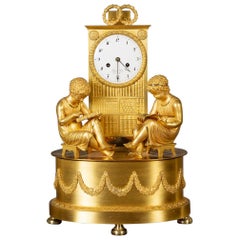
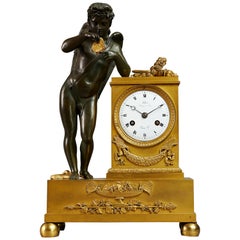
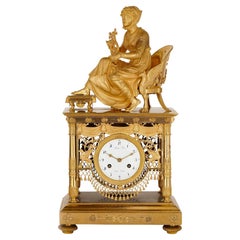
French Empire Ormolu Mantel Clock
Located in Norwich, GB
French Empire Ormolu mantel clock resting on four turned feet supporting an oval base with raised garland and zig-zag rope decoration...
Category

Early 1800s French Antique Empire Mantel Clocks

Materials

Ormolu

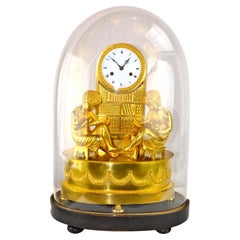
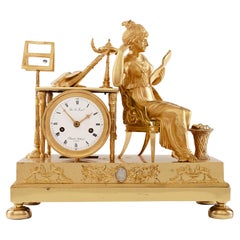
Gilt Bronze French Empire Clock Depicting An Allegory of a Library
Located in Vancouver, British Columbia
A rare model of a French Empire clock in gilded bronze called The Library, featuring a boy and a girl dressed in classical attire diligently studying in a library, both are sitting on a stool in front of a clock which is integrated into a column which also serves as a bookshelf. The oval clock...
Category

Early 19th Century French Antique Empire Mantel Clocks

Materials

Bronze

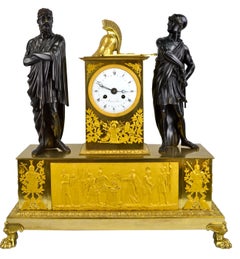
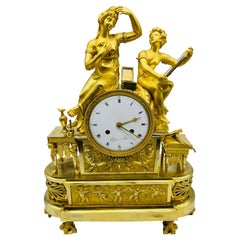
Allegorical French Empire clock Titled " Le Sacrifice d’Iphigénie "
Located in Vancouver, British Columbia
A fine example of a period French Empire mantle clock which depicts the argument between Achilles and Agamemnon in Homer’s Iliad. The case is of matte and burnished gilded bronze, th...
Category

Early 19th Century French Antique Empire Mantel Clocks

Materials

Bronze

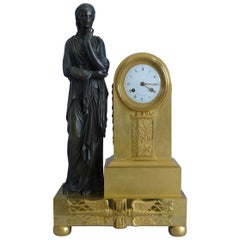
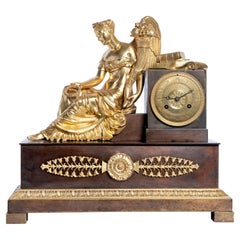
French Empire Ormolu and Patinated Bronze Mantel Clock Signed Vaillaint a Paris
Located in London, GB
Superb quality French Empire ormolu and patinated bronze mantel clock in a beautifully restrained case. The casting and gilding of the finest quality. A classically dressed maiden st...
Category

Early 1800s French Antique Empire Mantel Clocks

Materials

Ormolu, Bronze

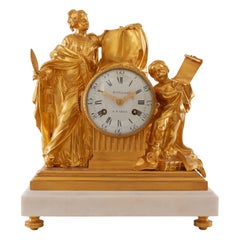
18th Century Clock, Baillon in Paris
Located in Warsaw, PL
This is a unique, authentic antique French table or mantel clock. It is in finely chiseled and gilded bronze. The dial with outer Arabic numerals and inner Roman numerals and a fine pair of pierced gilt brass hands for the hours and minutes. Next to the clock is a tall lady figurine, accompanied by a child. The woman is holding a book in her right hand and a feather pen in her left hand. On the other side, the child draped in the Antique is standing on books and holding a paper. The white marble base rests on four small spinning feet. This clock was made by Jean-Baptiste Baillon III, one of the most skilled and innovative makers of his day. Baillon achieved almost unprecedented success to become “the richest watchmaker in Europe” - F.J. Britten. He was also one of the most important clockmakers of the eighteenth century and undoubtedly the most famous member of a long line of clockmakers. His success was largely due to his ability to organise a vast and thriving private factory in Saint-Germain-en-Laye which was unique in the history of eighteenth century clockmaking. The renowned horologist, Ferdinand Berthoud was among many to be impressed by its scale and quality and in 1753 noted that Baillon’s “house is the finest and richest Clock Shop. Diamonds are used not only to decorate his Watches but even Clocks. He has made some whose cases were small gold boxes...
Category

Early 19th Century French Antique Empire Mantel Clocks

Materials

Marble, Bronze

18th Century Clock, Baillon in Paris
$8,043 Sale Price
43% Off
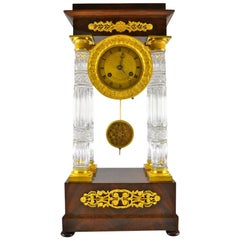
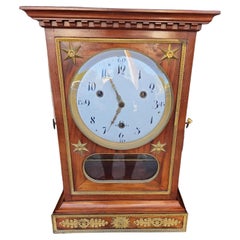
French Empire Mahogany and Cut Crystal Columned Portico Clock
Located in Vancouver, British Columbia
A rare example of a late French Empire portico clock combining the use of mahogany casing with gilt bronze mounts and cut crystal. The four pillars linking the top and bottom section...
Category

Early 19th Century French Antique Empire Mantel Clocks

Materials

Crystal, Bronze

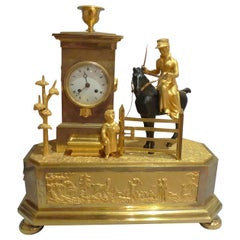
French Empire Genre Mantel Clock of an Arcadian Hunting Scene
Located in London, GB
A very unusual French Empire Genre Arcadian mantel clock of a hunting scene. The primary subject is that of a finely dressed woman in riding habit, hat, whip and gloves riding side saddle on a fine patinated bronze hunter...
Category

Early 1800s French Antique Empire Mantel Clocks

Materials

Ormolu, Bronze

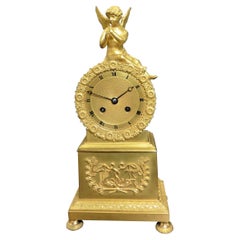
French Empire Ormolu Mantel Clock
Located in Norwich, GB
Ormolu French Empire clock, drumhead case with applied frieze decoration to the base, standing on turned and engraved feet. Superb engine turned dial centre, the gilded dial with Roman numerals, original hands and floral cast bezel surround. Convex glass to the rear supporting the eight day movement with outside countwheel striking and silk suspension. The whole surmounted by a gilded winged...
Category

19th Century French Antique Empire Mantel Clocks

Materials

Ormolu

Pierre-Philippe Thomire Empire Marble Mantle Clock
Located in Atlanta, GA
Pierre-Philippe Thomire (French, 1751-1843) Empire marble mantel (fireplace) clock. 1st quarter 19th century; Rouge Griotte marble and bronze doré...
Category

19th Century French Antique Empire Mantel Clocks

Materials

Marble, Bronze

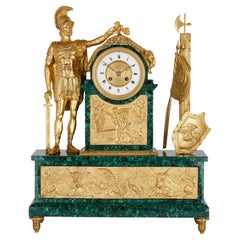
Large Empire Style Ormolu and Malachite Mantel Clock with Mythological Sculpture
Located in London, GB
Large Empire style ormolu and malachite mantel clock with mythological sculpture French, late 19th century Measures: height 58cm, width 46cm, depth 14cm With large sculptural work depicting Jason and the Golden Fleece...
Category

Late 19th Century French Antique Empire Mantel Clocks

Materials

Malachite, Ormolu

Royal Empire Mantel Clock / Pendulum Clock, Fire-Gilt, Around 1805-1815, Paris
Located in Berlin, DE
Royal Empire mantel clock / pendulum clock, fire-gilt, around 1805-1815, Paris Solid bronze, fire-gilded, Paris around 1805-1815, original French Empire from the first period. ...
Category

Early 1800s French Antique Empire Mantel Clocks

Materials

Bronze

Mantel Clock 19th Century Styl Empire by Chaussee D aulin À Paris
Located in Warsaw, PL
This exceptional mantel clock, executed in the highly sought-after Empire style, presents a captivating tableau dedicated to the theme of music. Signed "Caillouet à Paris," a clockma...
Category

19th Century French Antique Empire Mantel Clocks

Materials

Bronze

Fine 19th Century French Empire Gilt Bronze and Patinated Bronze Mantle Clock
Located in Dallas, TX
A fine 19th century Empire gilt bronze figural mantle clock. Patinated bronze and gilt bronze fine details. Working condition.
Category

Late 19th Century French Antique Empire Mantel Clocks

Materials

Bronze

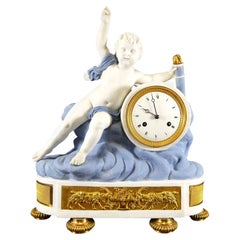
French Empire Bisque Porcelain and Ormolu Mantel Clock
Located in Norwich, GB
French Empire Ormolu and Bisque Porcelain Mantel Clock French Empire ormolu mounted Bisque porcelain mantel clock surmounted by a winged...
Category

1780s French Antique Empire Mantel Clocks

Materials

Porcelain

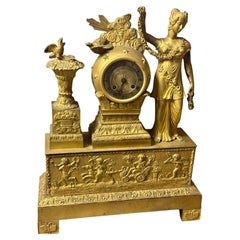
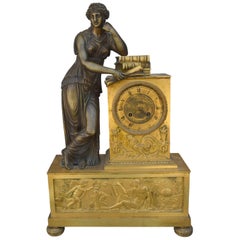
19th Century Mantel Empire clock bronze
Located in Los Angeles, CA
Magnificent empire clock in its original gilding , one of the most beautiful models executed at this time.The beauty of this woman standing ,the base decorated with children one of w...
Category

1810s French Antique Empire Mantel Clocks

Materials

Bronze

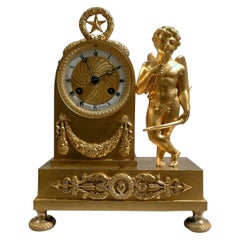
French Empire Miniature Ormolu Clock of Cupid Signed by Ledure and Thomas
Located in London, GB
French Empire miniature ormolu clock of Cupid signed by Ledure and Thomas. A small French Empire clock only 10 inches (25 cms high) but of outstanding quality. A figure of Cupid stan...
Category

1810s French Antique Empire Mantel Clocks

Materials

Ormolu

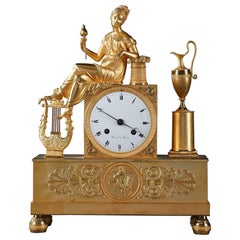
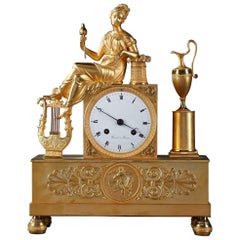
Empire Clock The Spinner by Rossel in Rouen
Located in Paris, FR
French Empire pendulum clock finely crafted of gilt bronze, featuring a young spinner wearing a classical dress, seating on the dial near a lyre ...
Category

Early 19th Century French Antique Empire Mantel Clocks

Materials

Bronze

Early 19th Century Empire Mantel Clock by Ledure with Apollo or Eros
Located in Worpswede / Bremen, DE
The clock is signed on the enamel dial by the famous Parisian bronzier ”Ledure Bronzier à Paris” and the clockmaker ”Hedon Hr" (horloger). Patinated and fully sculpted bronze figure ...
Category

Early 19th Century French Antique Empire Mantel Clocks

Materials

Bronze

Gilt and Patinated Bronze Mantel Clock, Machine Signed L. Moinet, France
Located in Buenos Aires, Buenos Aires
Gilt and patinated bronze mantel clock, machine signed L. Moinet A Paris. France, early 19th century.
Category

Early 19th Century French Antique Empire Mantel Clocks

Materials

Bronze

19th Century Empire Pendulum from "French National Furniture" Called "The study"
Located in Marseille, FR
Pendulum of national furniture called "The study" of Empire period double patina and gilded bronze with scientific attributes of astronomy, on the base we find cupid, Minerev and his...
Category

19th Century French Antique Empire Mantel Clocks

Materials

Bronze

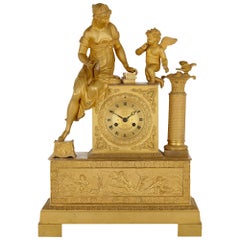
French Empire Gilt Bronze Mantel Clock with Venus and Cupid
Located in London, GB
French Empire gilt bronze mantel clock with Venus and Cupid French, early 19th Century Measures: Height 53cm, width 37.5cm, depth 13.5cm This fine Empire period mantel clock is crafted from gilt bronze. The clock includes a sculptural surmount of Venus accompanied by Cupid. Venus sits atop the square clock...
Category

Early 19th Century French Antique Empire Mantel Clocks

Materials

Bronze, Ormolu

Large Empire Period Gilt Bronze Mantel Clock
Located in London, GB
Large Empire period gilt bronze mantel clock French, early 19th Century Measures: Height 52cm, width 28cm, depth 17.5cm This superb Empi...
Category

Early 19th Century French Antique Empire Mantel Clocks

Materials

Ormolu

Empire Pendulum Clock the Spinner, Signed Rossel in Rouen
Located in Paris, FR
French Empire pendulum clock finely crafted of gilt bronze, featuring a young spinner wearing a classical dress, seating on the dial near a lyre ...
Category

Early 19th Century French Antique Empire Mantel Clocks

Materials

Bronze

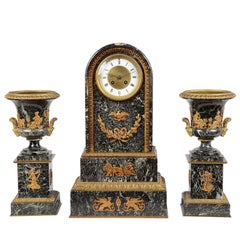
French Empire Influenced Clock Set, 19th Century
Located in Brighton, Sussex
An impressive 19th century Empire influenced green marble clock set. Having the arched clock with a white enamel clock face, an eight day striking m...
Category

19th Century French Antique Empire Mantel Clocks

Materials

Marble, Ormolu

19th Century Empire Mantel Clock
Located in Los Angeles, CA
Excellent condition with finely chased dore bronze mounts. Has key and pendulum.
Category

Early 19th Century French Antique Empire Mantel Clocks

Materials

Bronze

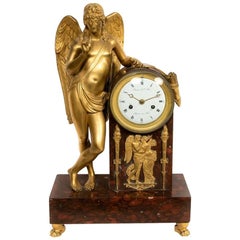
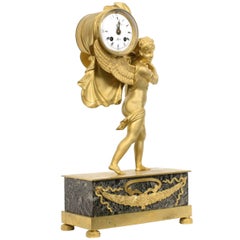
French Empire Figural Gilt Bronze Mantel Clock
Located in New York, NY
Winged cupid with flowing robe, clock resting between wings and fabric, raised on bronze ormolu-mounted verde antico plinth. France, first half of the 19th century. Measures: H ...
Category

19th Century French Antique Empire Mantel Clocks

Materials

Marble, Bronze, Enamel

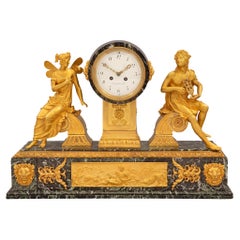
French 19th Century Empire Style Ormolu and Vert Patricia Marble Clock
Located in West Palm Beach, FL
A stunning and extremely high quality French 19th century Empire st. ormolu and Vert de Patricia marble clock, signed Armingault à Paris. The clock is raised by an impressive rectang...
Category

19th Century French Antique Empire Mantel Clocks

Materials

Marble, Ormolu

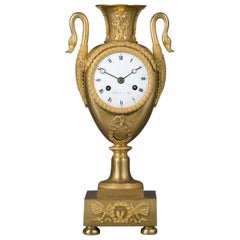
Empire Clock in the Form of a Classical Urn, by Maison Lepautre, circa 1825
By Pierre-Basile Lepaute
Located in Brighton, West Sussex
A gilt bronze Empire clock in the form of a classical urn, by Maison Lepautre. French, circa 1825. The dial signed 'Lepaute a Paris'. The clock has an ornate cast bezel with a 3-inch porcelain dial with Roman numerals and Breguet style hands. The twin train eight-day movement with outside count wheel striking on a bell and silk thread suspension. This elegant Empire style clock has a gilt bronze case in the form of a classical urn with swan neck handles and a winged cherub to the neck. The circular pedestal base is raised on a footed stepped square plinth. The Lepaute family were the premier French clockmakers of their day. Their significance lies in their contribution to the clock making industry which had hitherto come under the trade of locksmiths. The family held the brevet Horlogers du Roi. Jean-André Lepaute (1720–1789) arrived in Paris at an early age and in 1740 founded the family business. A skilled artist and mechanic, he quickly gained an excellent reputation. He was received as maître by the clockmakers guild in 1759, was granted royal lodgings from the king in The Luxembourg Palace, and was entrusted with the construction of the majority of the great public clocks of Paris. He executed, amongst others, those in The Luxembourg Palace, the Jardin des Plantes, the Château de Bellevue and the Château des Ternes. His clock at Paris’s École Militaire still works today. Three editions of his Traité d’Horlogerie were published in Paris in 1755, 1760 and 1767. A small volume, Description de Plusieurs Ouvrages d’Horlogerie appeared in 1764. Jean-André’s wife, Nicole-Reine Etable de la Brière (1723-1788), was a highly esteemed mathematician and astronomer. Her passion for science lent itself to Lepaute’s work and she played an active role in the scientific and mathematical aspects of the clock making. Jean-André’s younger brother Jean-Baptiste Lepaute (1727-1802) joined him in Paris in 1747 and immediately started working for the family business. He was received as maître in 1776 and was known for the clocks he constructed for the Paris Hôtel de Ville (1780), destroyed in a fire of 1871, and for the Hôtel des Invalides (1784). Jean-Baptiste took over the workshop when Jean-André retired in 1775. After Jean-Baptiste’s death in 1802, the firm was taken over by his nephew Pierre-Basil Lepaute (1750-1843) where he was duly joined by his own nephew Jean-Joseph (1768-1846) and son Pierre-Michel (1785-1849). By 1816, Pierre-Michel Lepaute was in charge of the business. His masterpieces include the astronomical clock in Paris’s Bureau...
Category

Early 19th Century French Antique Empire Mantel Clocks

Materials

Bronze

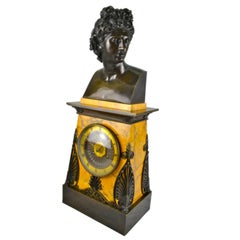
Empire Bronze and Sienna Marble Clock with a bust of Apollo Belvedere
Located in Vancouver, British Columbia
A fine example of a French Empire period mantle clock, circa 1830. The rectangular stepped case is made of yellow Sienna marble and is decorated on the top and bottom with patinated ...
Category

Early 19th Century French Antique Empire Mantel Clocks

Materials

Siena Marble, Bronze

Empire mantel clocks for sale on 1stDibs.

Find a broad range of unique Empire mantel clocks for sale on 1stDibs. Many of these items were first offered in the Early 20th Century, but contemporary artisans have continued to produce works inspired by this style. If you’re looking to add vintage mantel clocks created in this style to your space, the works available on 1stDibs include decorative objects and other home furnishings, frequently crafted with metal, bronze and other materials. If you’re shopping for used Empire mantel clocks made in a specific country, there are Europe, France, and Austria pieces for sale on 1stDibs. While there are many designers and brands associated with original mantel clocks, popular names associated with this style include Claude Galle, Breguet a Paris, C. Maniere, and Claude Hemon. It’s true that these talented designers have at times inspired knockoffs, but our experienced specialists have partnered with only top vetted sellers to offer authentic pieces that come with a buyer protection guarantee. Prices for mantel clocks differ depending upon multiple factors, including designer, materials, construction methods, condition and provenance. On 1stDibs, the price for these items starts at $960 and tops out at $102,428 while the average work can sell for $8,222.