15th Century and Earlier Decorative Objects

to
94
1,545
6,608
26,235
86,295
29,427
15,746
35,995
20,588
2,499
1,081
3,325
4,246
2,257
6,154
8,419
7,914
3,528
1,879
15
4
2
2
1
1
843
375
314
281
190
686
530
641
238
222
191
189
Height
to
Width
to
1,545
1,545
1,545
17
1
1
1
1
Period: 15th Century and Earlier
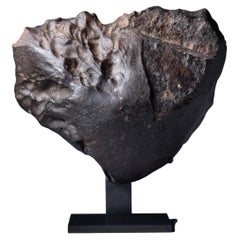
Oriented Stone Meteorite
Located in London, GB
Oriented Stone Meteorite Chondrite 5.00 kg Detached from its parent body by a mighty impact, this large, oriented Meteorite travelled over a hu...
Category

North African Antique 15th Century and Earlier Decorative Objects

Materials

Stone

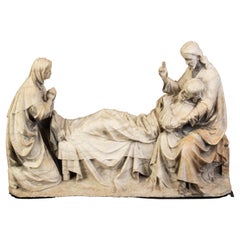
Large Medieval 15th Century Religious Hand Carved Marble Sculpture Group
Located in Nottingham, GB
A large and rare second half of 15th century religious marble sculpture group, hand carved, mounted on bronze base for display. This sculpture group depicts the death of Saint Joseph...
Category

French Antique 15th Century and Earlier Decorative Objects

Materials

Marble

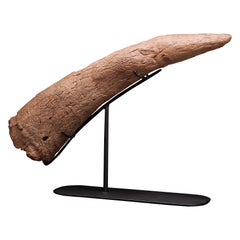
Medusaceratops Iokii Brow Horn Fossil
Located in New York, NY
This incredible 27" long fossilized brow horn belonged to the Medusaceratops Iokii: an herbivorous dinosaur that lived during the Late Cretaceous period circa 78-77 million years ago...
Category

American Antique 15th Century and Earlier Decorative Objects

Materials

Other

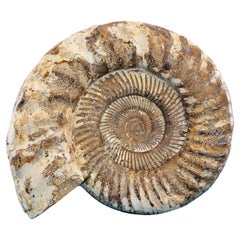
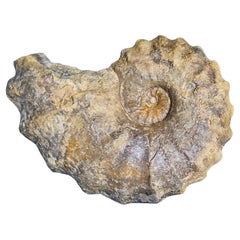
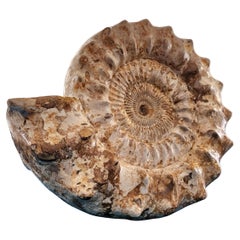
Extra Large Jurassic Ammonite Fossil 11 x 10.5 x 3.75" w/ Leafy Suture Patterns
Located in Warrenton, OR
Extra Large Jurassic Ammonite Fossil 11 x 10.5 x 3.75" w/ Leafy Suture Patterns. Comes with a second, tiny (1.25 x 1 x .5) ammonite, further demonstrating the size of this one. This...
Category

Unknown Prehistoric Antique 15th Century and Earlier Decorative Objects

Materials

Shell, Organic Material

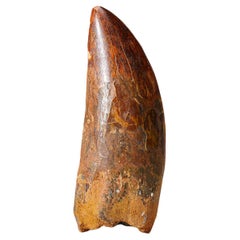
Genuine Natural Carcharodontosaurus Dinosaur Tooth (74 grams)
Located in New York, NY
Carcharodontosaurus (Dinosaur) tooth in a glass display box From Tegana Formation, North Africa. Cretaceous Age 65 million years Carcharodontosaurus is one of the longest and heavi...
Category

Egyptian Antique 15th Century and Earlier Decorative Objects

Materials

Other

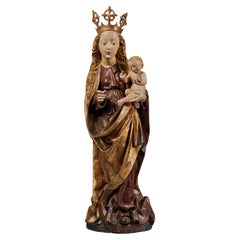
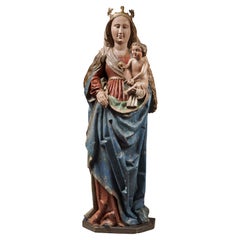
Polychrome carved wood Virgin and Child from the 15th Century
Located in Saint-Ouen, FR
POLYCHROME CARVED WOOD VIRGIN AND CHILD FROM THE 15TH CENTURY   ORIGIN: SOUTH GERMANY, SWABIA, NUREMBERG REGION PERIOD: 15th CENTURY   Height: 94,6cm Width : 28 cm Depth : 18 cm   Lime wood Original Polychromy Good state of conservation     From 1430 onwards, sculpture underwent a profound stylistic renewal which continued until 1530, the so-called late Gothic period. In the Germanic countries, original sculptures flourished in an expressive and sensitive vein.
This renewal was inspired by the art of Nicholas of Leiden, who was active in Strasbourg in the 1460's. His style broke with the refined and delicate art of the international Gothic style in force throughout Europe around 1400. The figures became more authentic and realistic. The bodies became denser. Clothes are animated by deep, broken folds, the fabrics are heavy and have a great decorative value. In addition, the polychromy is intended to be illusionistic. The painting makes it possible to restore the texture of the materials, the richness of the textiles and the natural skin tone of the characters.   The dissemination of images through engraving and the great mobility of the artists led to the success of this style, which conquered the Upper Rhine, Swabian, Tyrolean and Franconian regions, contributing to the formation of a common stylistic identity in these regions. The economic boom in the flourishing German cities was conducive to the development of original production. Attracted by this prosperity, numerous workshops were set up in order to meet the orders of religious communities, the Church and the laity, including a clientele of middle-class rockers.      This precious Virgin and Child is depicted standing on a crescent moon, her head encircled by a crown of tall flowers. Her long wavy hair spreads over her shoulders, framing her beautiful oval face. Under fine eyebrows drawn with a brushstroke, her almond-shaped, slightly drooping eyes look at the Child with infinite softness. She is dressed in a long red dress with a rounded neckline, belted under the chest. The heavy fabric of her dress spreads out in broken folds at her feet. On her shoulders she wears a golden cloak. The drapery has deep folds. She holds out her right hand while she holds the Christ Child with her left.   Christ, with his well-defined hair, is naked. His cheeks are highlighted with red, he holds an apple in his left hand and with the other hand makes a sign of blessing towards the faithful.   Virgins with Child on a crescent moon were very popular in the second half of the 15th century, especially as the central subject of altarpieces in southern Germany and Austria. The crescent moon on which Mary is standing is reminiscent of the Woman of the Apocalypse. Often equated with the Virgin Mary.    This episode is taken from the Book of Revelation (12:1-6)   1 Then a great sign appeared in heaven: a woman clothed with the sun, with the moon under her feet and a crown of twelve stars on her head. ; 2 She was pregnant, and she cried out because she was in labor, in pain from giving birth. ; 3 Then another sign appeared in heaven: it was a great fiery red dragon, with seven heads and ten horns, and seven royal crowns on his heads. ; 4 His tail swept down a third of heaven's stars and threw them to the earth. The dragon stood in front of the woman who was about to give birth so that when she gave birth, he might devour her child. ; 5 She gave birth to a son, a male child who is to rule all the nations with an iron rod. Her child was snatched up to God and his throne. ; 6 Then the woman fled into the desert, where God has prepared a place for her. There she will be taken care of for one thousand two hundred sixty days.   Some theologians see in this woman a reference to the Virgin Mary and in the child, Jesus.    
This remarkable work is a very fine example of sculpture from Swabian workshops in the last decades of the 15th century. It presents all the characteristic stylistic elements: a highly girdled silhouette, an abundant drapery with angular folds, but also a great physical presence accentuated by the polychromy that restores the anatomical details. This group is made of a wooden log. The deep folds of the drapery highlight the movement of the Virgin holding the child.       Bibliography :   Sophie Guillot de Suduiraut, Dévotion et Séduction, Sculptures souabes des musées de France, vers 1460-1530, Paris musée du Louvre-Éditions somogy, 2015   “Revelation 12 -   Common English Bible...
Category

German Gothic Antique 15th Century and Earlier Decorative Objects

Materials

Wood

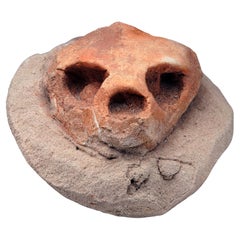
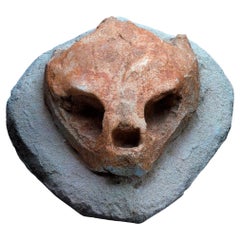
Fossilized Turtle Skull II
Located in New York, NY
A beautifully preserved 95+ million year old fossilized turtle skull from the Kem Kem fossil formation in Morocco, exhibiting outstanding anatomical detail. The bone structure remain...
Category

Moroccan Antique 15th Century and Earlier Decorative Objects

Materials

Other

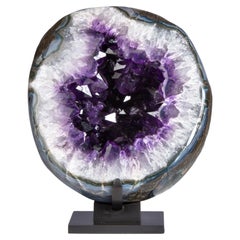
Polished Purple Amethyst White Quartz Agate Decorative object Sculpture Organic
Located in London, GB
Polished to a breath-taking finish and presented on an artistic wooden stand, this unique and beautiful piece displays a half geode. The edges of the geodes have been polished reveal...
Category

Uruguayan Organic Modern Antique 15th Century and Earlier Decorative Objects

Materials

Agate, Amethyst, Quartz

Fossilized Turtle Skull
Located in New York, NY
A beautifully preserved fossilized turtle skull from the Kem Kem fossil formation in Morocco, exhibiting outstanding anatomical detail. The bone structure remains highly intact, with...
Category

Moroccan Antique 15th Century and Earlier Decorative Objects

Materials

Other

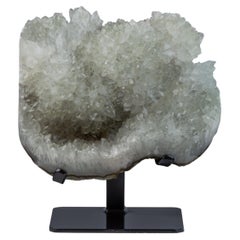
White Quartz Stalactite Decorative Oblect Table top Sculpture Rock Crystal
Located in London, GB
This substantial formation consists of prominent white quartz crystals with a slight green tinge, laid over a bed of undulating stalactites. A small hon...
Category

Uruguayan Organic Modern Antique 15th Century and Earlier Decorative Objects

Materials

Agate, Amethyst, Quartz

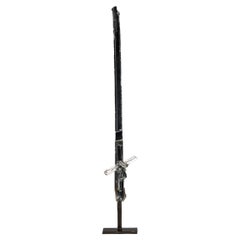
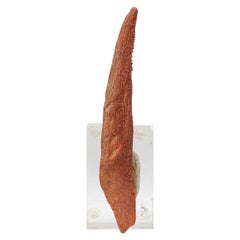
Silver Sword – Stibnite
Located in London, GB
An extraordinary stibnite specimen from China, with a tall, elongated crystal formation that evokes the shape of a silver sword. Its sleek, metallic lustre and refined symmetry give ...
Category

Chinese Antique 15th Century and Earlier Decorative Objects

Materials

Crystal, Rock Crystal

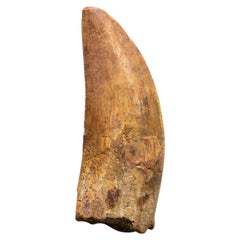
Genuine Natural Large Carcharodontosaurus Dinosaur Tooth
Located in New York, NY
Carcharodontosaurus (Dinosaur) tooth in a glass display box From Tegana Formation, North Africa. Cretaceous Age 65 million years Carcharodontosaurus is one of the longest and heavi...
Category

Antique 15th Century and Earlier Decorative Objects

Materials

Other

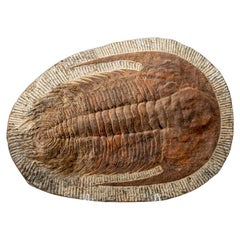
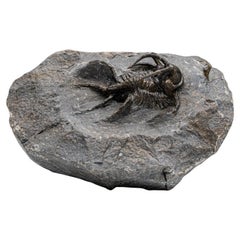
Genuine Trilobite (Ptychopariida) Fossil on Matrix (17 lbs)
Located in New York, NY
Ptychopariida is a large, heterogeneous order of trilobite containing some of the most primitive species known. The earliest species occurred in the second half of the Lower Cambrian...
Category

Antique 15th Century and Earlier Decorative Objects

Materials

Cement, Other

Conlinoceras Tarrantense Ammonite Fossil, 90+ Million Years Old
Located in Warrenton, OR
Conlinoceras Tarrantense Ammonite Fossil, 90-100 Million Years Old. The Conlinoceras Tarrantense Ammonite is considered rare and is highly sought after as a collector's item. Sin...
Category

American Prehistoric Antique 15th Century and Earlier Decorative Objects

Materials

Shell, Organic Material

Fossilised Dinosaur Skin with Hexagonal Scales
Located in London, GB
This exceptional specimen of fossilised dinosaur skin preserves the hexagonal scales of a Brachylophosaurus (‘short-crested lizard’), giving us a rare snapshot of life 80 million yea...
Category

American Antique 15th Century and Earlier Decorative Objects

Materials

Stone

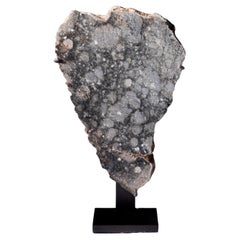
Greyish-White Lunar Meteorite Fragment
Located in London, GB
This beautifully polished lunar meteorite fragment is a precious but powerful display piece, offering both extraterrestrial provenance and striking natural beauty. This specimen is f...
Category

Antique 15th Century and Earlier Decorative Objects

Materials

Stone

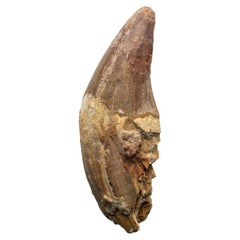
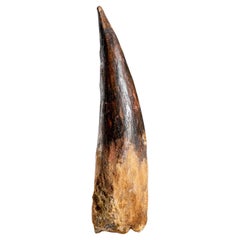
Genuine Natural Spinosaurus Dinosaur Tooth
Located in New York, NY
Genuine Spinosaurus (Dinosaur) tooth. Spinosaurus (meaning "spine lizard") is a genus of theropod dinosaur that lived in what now is North Africa, during the upper Albian to upper T...
Category

Moroccan Antique 15th Century and Earlier Decorative Objects

Materials

Other

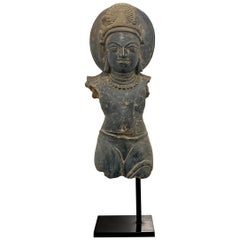
Gupta Empire Torso of Vishnu
Located in Chicago, IL
A mesmerizing Gupta Empire (mid-3rd century BCE - 543 AD) mounted terracotta torso of a standing Vishnu. Vishnu is the preserver god, which means he p...
Category

Bangladeshi Hellenistic Antique 15th Century and Earlier Decorative Objects

Materials

Terracotta

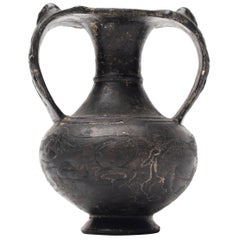
Etruscan "Bucchero" Black Ware Two Handle Vase
Located in CA, CA
An Etruscan "bucchero" black ware two handle vase dating from the 6th century BC. Adorned with boar designs in relief around the body of vessel and a single standing human figure in...
Category

Italian Other Antique 15th Century and Earlier Decorative Objects

Materials

Pottery

Genuine Spinosaurus Dinosaur Tooth (56.2 grams)
Located in New York, NY
Genuine Spinosaurus (Dinosaur) tooth. Spinosaurus (meaning "spine lizard") is a genus of theropod dinosaur that lived in what now is North Africa, during the upper Albian to upper T...
Category

Antique 15th Century and Earlier Decorative Objects

Materials

Other

XL Jurassic Ammonite Fossil 15.5 x 14 x 5.5 Inches Apx, with Nice Ribs
Located in Warrenton, OR
XL Jurassic Ammonite Fossil 15.5 x 14 x 5.5 Inches Apx, with Nice Ribs. We think this is a Kranaosphinctes species. We love the substantial ridges (also called ribs, spines, and nod...
Category

Unknown Prehistoric Antique 15th Century and Earlier Decorative Objects

Materials

Shell, Organic Material

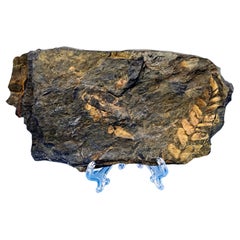
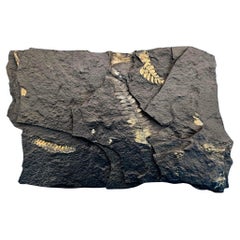
Neuralethopteris orPolymorphopteris Tree Fern Fossil, Paleozoic Era, 300+ m yrs
Located in Warrenton, OR
Neuralethopteris or Polymorphopteris Tree Fern Fossil, Paleozoic Era, 300+ million years old. Discovered in PA. Colors occur naturally over time through the mineralization process. T...
Category

American Prehistoric Antique 15th Century and Earlier Decorative Objects

Materials

Organic Material

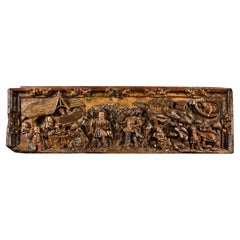
15th Century Burgundian Low-Relief Depicting Scenes of the Nativity
Located in Saint-Ouen, FR
Provenance : In the same private collection for several generations, Burgundy. The canonical Gospels describe briefly the episode of the Nativity. It comprises three parts : • The Preludes : the Journey to Bethlehem, the Census • The Nativity • The Announce to the Shepherds and the Adoration of the Magi Only the Gospel according to Matthew (2, 1-12) speaks about the Adoration of the Magi. Staying vague about their number it does say they brought the newborn gold, incense and myrrh. The apocryphals, the fathers of the Church and many other authors have filled in the gaps of the evangelic tale. The sobriety and symbolic of the story have been a huge inspiration to artists. Although one of the oldest depictions of the Adoration of the Magi dates from the 2nd century the theme became very popular in Christian art during the late 14th century. One of the reasons explaining this success is that it celebrates both the Virgin and Christ at the same time. This important walnut panel is carved in a strong relief and depicts the different steps of the story of Jesus’ birth. On the left, the donkey and ox that have accompanied Mary and Joseph from Bethlehem are depicted behind a trough. On the thatch roof appears the star that would guide the magi to the place of birth of Jesus. Mary is wearing a veil and is seating on a bed. She holds her baby at arm’s length to present him to the magi. Saint Joseph is by her side. The old man is holding a cane in his left hand while from the right hand he seems to uncover himself to greet the visitors. A woman assists to the scene. In front of the holy family the three magi stand behind one another to pay their homage to the newborn. The first magi has a pointed beard. He is already kneeling out of deference and has placed his crown to his feet. He gives the baby a hanap filled with gold coins. This is Melchior as the legend describes him with white hair and a long beard. Caspar, the second magi bears a cup of incense. He is looking at the third magi and with his right hand he points to the star that has guided them there. He has a short beard and wears crakow shoes, breeches and a wide sleeved doublet. Finally Balthazar, the elegant last magi proceeds proudly towards the holy family with his one hand on the saber’s hilt and the other holding a cup. He brings the divine child the myrrh. He probably just dismounted as the horse can be seen behind him. The scene is set in a very detailed and narrative decor. In the right part of the panel the shepherd receive the announce of Jesus’ birth. An angel comes down from heaven with a scroll bearing the good news in his hands. The herding dog sleeps peacefully while sheeps graze. At the top of the cliff we notice the gilded sheeps enclosure. The panel’s moulded frame is carved with a foliated decor. In it’s centre appears a coat-of-arms. It is the alliance of the three magi’s arms. Indeed as it was common for legendary figures the three of them received imaginaries coat-of-arms. Thus, on a field of azure stands a star for Melchior, a crescent for Caspar and a pennon for Balthazar. This high-relief panel is undeniably the work of a very skilled and imaginative artist. This key moment in the New Testament is transposed to a contemporary environment thanks to the figures’ clothing and the rural daily life scene. This way the universal dimension of the episode is highlighted allowing a better understanding for the contemporaries. The sculptor has represented the episodes of the Adoration of the Magi and the Announce to the Shepherd with great talent and numerous details giving life to a picturesque and narrative scene. The important traces of polychromy give those already very animated scenes a stronger pictorial power and a rich dynamism. Because of the picturesque and familiar realism so dear to the artists of the late Medieval era, of the didactic function of this type of panel as well as the quality of the sculpture this piece is an astounding example of Burgundian art of the 15th century. Literature Louis Réau, Iconographie de l’Art chrétien...
Category

French Gothic Antique 15th Century and Earlier Decorative Objects

Materials

Walnut

Natural Genuine Large Spinosaurus Dinosaur Tooth from Egypt- 334.4 grams
Located in New York, NY
This huge, Museum-quality Spinosaur tooth is completely in tact with no repairs. This incredible specimen includes a display box for preservation and display purposes. Spinosaurus (m...
Category

Egyptian Antique 15th Century and Earlier Decorative Objects

Materials

Bone

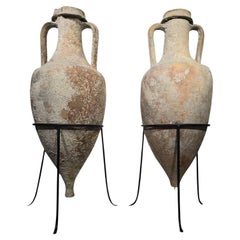
Pair of Roman Terracotta Amphorae, 3rd–1st Century BC
Located in Madrid, ES
Impressive pair of Roman terracotta amphorae dating from the 3rd to 1st century BC, mounted on custom iron bases. These amphorae were traditionally used to store salted fish and othe...
Category

Antique 15th Century and Earlier Decorative Objects

Materials

Terracotta

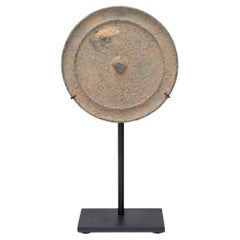
Chinese Ming Bronze Mirror, c. 1450
Located in Chicago, IL
This petite Chinese bronze mirror has the simple beauty and undeniable texture of an ancient object. Though an exact date is unknown, the mirror's round form, double ring edge and un...
Category

Chinese Ming Antique 15th Century and Earlier Decorative Objects

Materials

Bronze

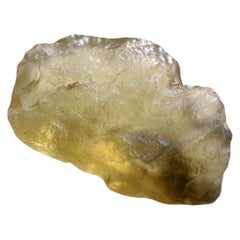
Meteorite Impact Desert Glass
Located in London, GB
Libyan Desert Glass Circa 29 Million y/o Height: 9.5 cm A beautiful, tactile piece of yellow glass, found between the high crested dunes of the Libyan De...
Category

Libyan Antique 15th Century and Earlier Decorative Objects

Materials

Glass

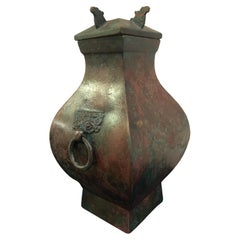
Early Bronze Fang Hu Ritual Wine Vessel Han Dynasty
Located in Hopewell, NJ
Very early, 206 BC to 220 AD, square shaped bronze fang hu bronze vessel would have functioned as a ritual container for the storage and transportation of sump...
Category

Chinese Han Antique 15th Century and Earlier Decorative Objects

Materials

Bronze

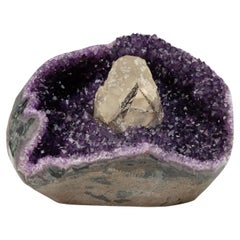
Pueple Amethyst calcite black epitaxial goethite decorative object Sculpture
Located in London, GB
A stunning amethyst formation formed of a three quarter geode with cut window, revealing deep purple amethyst crystals, with a beautiful central calcite coated in black goethite and ...
Category

Uruguayan Organic Modern Antique 15th Century and Earlier Decorative Objects

Materials

Agate, Amethyst, Quartz

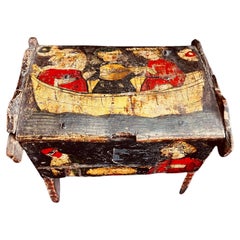
Antique Rare 15th Century Venetian Casket Former Dr. Albert Figdor Collection
Located in Doha, QA
This exceptional 15th-century Venetian painted casket is a rare example of early decorative art from the late Medieval to early Renaissance period in the Republic of Venice, Italy. H...
Category

Italian Renaissance Antique 15th Century and Earlier Decorative Objects

Materials

Wood, Paint

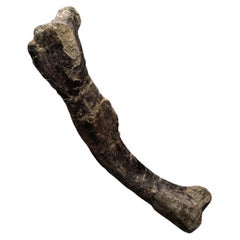
Dryosaurus Altus Dinosaur Femur Fossil // 150 Million Years Old
Located in New York, NY
This is the well preserved and fully intact fossilized femur of a Dryosaurus altus, found in Emery County, Utah within the famous fossil-rich Morrison Formation spanning much of the ...
Category

American Antique 15th Century and Earlier Decorative Objects

Materials

Other

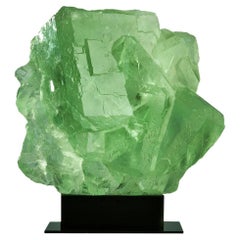
Green Fluorite Decorative object Organic Sculpture Crystal Rock Table top
Located in London, GB
A stunning specimen of green fluorite from China, formed by large intergrown cubes of different sizes, creating a beautiful and sculptural shape. The central crystal is especially st...
Category

Chinese Organic Modern Antique 15th Century and Earlier Decorative Objects

Materials

Crystal, Rock Crystal, Copper

Fluorite Cubes with Creamy Calcite on Quartz Matrix
Located in London, GB
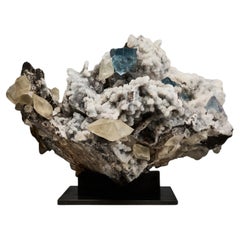
This exceptional specimen from La Viesca mine, La Collada, Asturias, Spain features sharp purple and blue fluorite cubes beautifully set on a bed of white quartz crystals. Scattered ...
Category

Spanish Antique 15th Century and Earlier Decorative Objects

Materials

Quartz

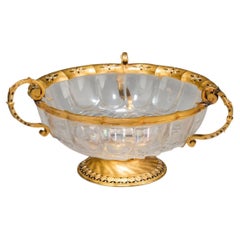
Exquisite 13th Century Rock Crystal and Gold Bowl in Superb Condition
Located in London, GB
Rock crystal vessels were highly demanded and valuable in Medieval times. Inventories from European royal houses and the highest aristocratic families detail the important and sophisticated collections of ewers and bowls. Rock crystal has also been used extensively in religious art. Fine European reliquaries were also made of Rock Crystal including gems, enamel and other precious materials. The work of rock crystal is very ancient. The materials has been worked and valued for its solidity and its purity: it has been believed to be water ice permanently frozen. Our superb example is a gold-mounted rock crystal bowl with enamel. The items origin is not clear and various features and characteristics may lead us to think of different origins and periods of creation. A single piece of stone mounted with gold could be a Milanese work. Although the cut could be French as similar pieces belonged to the French royalty (especially the art lover Duc de Berry, (1340-1416)). French and Italian crystal cutters have been active at the same time and it is often difficult to differentiate their works. Islamic art also influenced European artists. The famous Fatimid treasury provided examples of their sophistication and quality. The seven ewers carved for the Fatimid Imans (known as "The Magnificent Seven") display impressive quality of both rock crystal and enamelled mounts. Even though not identical to works by French silversmith Jean-Valentin Morel who was appointed goldsmith to Queen Victoria in 1852 or Reinhold Vasters (1927-1909) another renown German goldsmith who embellished older rock crystal items, there are similarities between these works. Both reduce their use of colour to black and white on pure gold mounts. Moreover the black enamel design is quite similar. Also, no gems are included and no human figure is represented. Sotherby's described our bowl as a "German Rock crystal bowl with later gold mounts, 15th century." Other items from the period from Germany or Austria are usually silver mounted and the decorations are more colourful and include gems or human figures but they have in common enamel motifs. In our case, the gold foot, handles and rim could date from the 1900s. An expert has established the foot, handles and rim are pure gold. The goldsmith responsible for the improvement of the bowl is possibly the most famous Reinhold Vasters whose work has been displayed in the greatest museums such as the V&A in London and the Metropolitan Museum of Art in New York. The Rock Crystal bowl we have is gold mounted. The gold shows in enamelled details that are black and white. The gold handles are also enamelled with black acanthus-like leaves. The enamelling method could be "champleve" or "painting metal". The metal that is usually preferred is copper but these techniques are also applied to gold. The bowl itself could be from the 14th century. It's cut reminds of an estimated 14th century rock crystal ball bearing the Buoncompagni family arms...
Category

Italian Antique 15th Century and Earlier Decorative Objects

Materials

Rock Crystal

Antique Chinese pottery green-glazed vase/[Liao Dynasty]/10th century
Located in Sammu-shi, Chiba
We are pleased to introduce a glazed ceramic vase from the Liao dynasty of China, dating from the 10th century, about 1,000 years ago. The Liao dynasty was established by the Qidan ...
Category

Chinese Other Antique 15th Century and Earlier Decorative Objects

Materials

Pottery

Late Bronze Age Sword
Located in London, GB
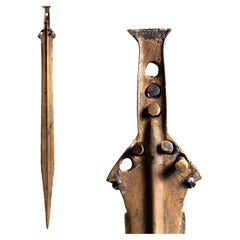
Saint Nazaire Sword, Late Bronze Age, circa 800-900 B.C. An exceptionally well preserved Bronze Age sword, with elegant, finely incised decorations,...
Category

French Antique 15th Century and Earlier Decorative Objects

Materials

Bronze

Lapis lazuli sphere
Located in London, GB
This captivating lapis lazuli sphere from Afghanistan features a deep, royal blue body accented with delicate veins of golden pyrite and soft white calcite. Place of origin: Afghani...
Category

Afghan Antique 15th Century and Earlier Decorative Objects

Materials

Crystal, Lapis Lazuli, Rock Crystal

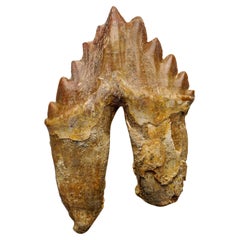
Carcharodontosaurus Tooth (African T-Rex)
Located in New York, NY
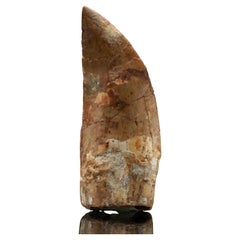
This genuine Carcharodontosaurus tooth is a prehistoric treasure from one of the most fearsome predators of the Cretaceous period. With its razor-sharp serrations and blade-like shap...
Category

Moroccan Antique 15th Century and Earlier Decorative Objects

Materials

Bone

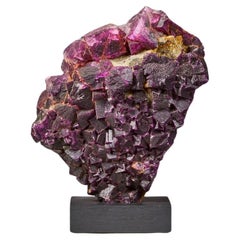
Spectral Symphony: Multi-Colored Fluorite from the USA
Located in London, GB
Behold the dazzling beauty of this multi-colored fluorite specimen from the USA, featuring a rich palette of violet hues interspersed with transparent areas and edges adorned with a ...
Category

American Antique 15th Century and Earlier Decorative Objects

Materials

Crystal, Quartz

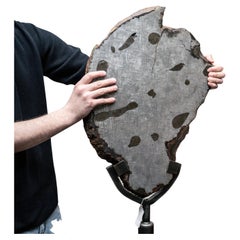
Giant Muonionalusta Meteorite 86 lbs on Custom Metal Stand
Located in New York, NY
Truly a museum quality piece, this giant meteorite is a completely solid, natural Muonionalusta Meteorite sliced & polished which boasts its be...
Category

Scandinavian Antique 15th Century and Earlier Decorative Objects

Materials

Other

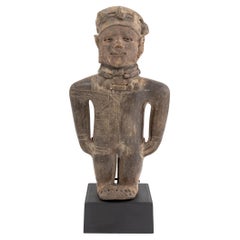
Pre-Columbian Standing Male Nude Figure
Located in Astoria, NY
Pre-Columbian Standing Male Nude Figure, probably Aztec, black burnished terracotta, mounted on ebonized wood base. 14.5" H x 7" W x 4.5" D. Provenance: From an Upper East Side Colle...
Category

Central American Pre-Columbian Antique 15th Century and Earlier Decorative Objects

Materials

Terracotta

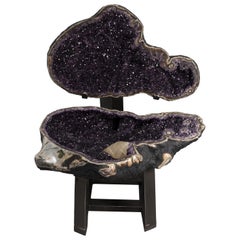
Purple Polished Amethyst White Calcite Grey Agate Decorative object Sculpture
Located in London, GB
This is an extraordinarily complete geode, split in two and mounted atop a custom metal Stand. This piece celebrates the visual phenomenon of the geode in its entirety, with some par...
Category

Uruguayan Organic Modern Antique 15th Century and Earlier Decorative Objects

Materials

Agate, Amethyst, Quartz

Pair of Louis XV Candelabra
Located in Bastia Umbra, IT
Pair of wooden Louis XV candelabra.   Fantastic Pair of carved and gilded wooden palm holders. Terminating handles painted with plant elements and Chinese Lacquer (RARE). At the bott...
Category

Italian Louis XV Antique 15th Century and Earlier Decorative Objects

Materials

Wood

Woolly Mammoth Tooth
Located in New York, NY
This extraordinary Woolly Mammoth tooth from Siberia is a rare relic of the Pleistocene epoch, dating back tens of thousands of years. Exhibiting distinct ridges and exceptional pres...
Category

Asian Antique 15th Century and Earlier Decorative Objects

Materials

Other

Ancient Celtic Killed Sword
Located in Long Island City, NY
Beginning in the Bronze Age, in much of what is now Europe, there emerged a practice of ritually “killing” weapons and other possessions to be buried with the warrior to whom they ha...
Category

European Antique 15th Century and Earlier Decorative Objects

Materials

Bronze

Virgin and Child in Majesty, also known as "Sedes Sapientae"
Located in Saint-Ouen, FR
VIRGIN AND CHILD IN MAJESTY, ALSO KNOWN AS "SEDES SAPIENTIAE"   ORIGIN : SPAIN, CATALOGNE PERIOD: EARLY 13th CENTURY   Height :  95 cm Width : 32 cm Depth : 28 cm   Softwood No polychromy     In the middle of the 12th century, the Virgin took her place in churches, seated in Majesty, serving as a throne for her son Jesus. She is then called Sedes Sapientiae, meaning the Throne of Wisdom. At that time, she is not represented for herself and only exists because she has been designated as Theotokos, the mother of God, at the Council of Ephesus in 431, where the divine nature of Christ was proclaimed from his birth.   The upright and perfectly hieratic bust of this Virgin and Child in Majesty is seated on a throne-bench. She is dressed in a tunic with a rounded neckline and covered with a fine mantle placed on her narrow shoulders. The supple and natural drapery follows the lines of the body.   Large curls frame her face with delicate and regular features, a long straight nose, almond-shaped eyes, and small lips.   She supports the Infant Jesus with her left hand. Like his mother, he is dressed in a long tunic, and his little feet are visible in the folds. He holds a small sphere in his left hand, while with his right hand, he gestures in blessing. The face of Christ bears a strong resemblance to his mother’s one, and he gives a slight smile.   The position of the Child is no longer as hieratic, nor frontal or central as in the early 12th century, but his face still turns towards the faithful.   The 13th century indeed emerges as a period of transition in the artistic domain. The statuary, while retaining certain characteristics still belonging to the habits of the previous century, also develops new formal solutions.   As a result, Mary maintains a hieratic and frontal position, while her son shifts to place himself well to the left on her knee. Similarly, while the Virgin seems perfectly still, Jesus, on the other hand, appears much more animated, especially in the positioning of his hands. His left hand holds the orb, and judging by the raised right arm directed towards the faithful, one can easily imagine that he was making a gesture of blessing.   The influence of the Sedes Sapientiae from previous centuries still seems particularly prevalent in this work.   These few characteristics allow dating this Spanish Virgin...
Category

Spanish Gothic Antique 15th Century and Earlier Decorative Objects

Materials

Softwood

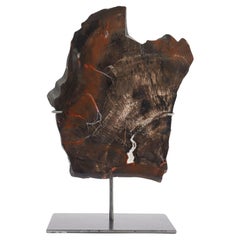
Geological specimen of Southwestern American petrified wood on stand
Located in Kenilworth, IL
Slice cut and polished geological specimen of Southwestern American petrified wood.
Category

Antique 15th Century and Earlier Decorative Objects

Materials

Petrified Wood

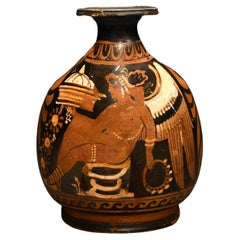
Ancient Apulian Red-Figured Askos
Located in Los Angeles, CA
This beautifully proportioned South Italian ceramic production is an askos, or pouring vessel.  It prominently features a seated naked winged Eros wearing anklets, bracelets, a body ...
Category

Italian Classical Greek Antique 15th Century and Earlier Decorative Objects

Materials

Terracotta

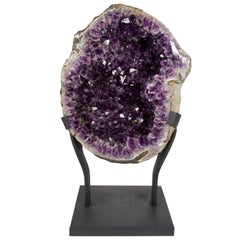
Gem Grade Amethyst Geode Sculpture, Uruguay
Located in Los Angeles, CA
The amethyst geodes from Uruguay are mined from the same rock formation as their relatives just to the north across the border into southern Brazil and are igneous (volcanic) in orig...
Category

Uruguayan Organic Modern Antique 15th Century and Earlier Decorative Objects

Materials

Amethyst

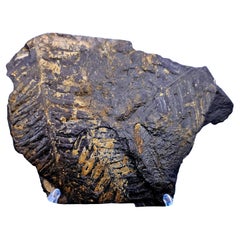
Alethopteris Neuropteris Natural Tree Fern Fossil Specimen
Located in Warrenton, OR
Alethopteris Neuropteris Natural Tree Fern Fossil Specimen, 300 - 360 years old apx. Discovered in Pennsylvania. Colors occurred naturally over time through the mineralization ...
Category

American Prehistoric Antique 15th Century and Earlier Decorative Objects

Materials

Organic Material

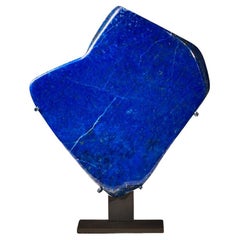
Slim royal lapis lazuli
Located in London, GB
This refined, slim-cut lapis lazuli slab from Afghanistan showcases an exceptionally deep, velvety blue with subtle golden pyrite flecks and faint calcite veining. Despite its slen...
Category

Afghan Antique 15th Century and Earlier Decorative Objects

Materials

Crystal, Lapis Lazuli, Rock Crystal

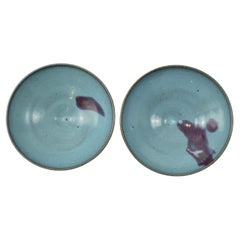
Pair of Chinese Jun Ware Bowls, Yuan Dynasty
Located in Houston, TX
Pair of Chinese Jun ware bowls, Yuan dynasty (circa 1250-1400): Large Jun Yao, purple splashed stone ware bowl Yuan Dynasty, China. Well potted, on a neatly cu...
Category

Chinese Antique 15th Century and Earlier Decorative Objects

Materials

Porcelain, Stoneware

Kolihapeltis chlupaci Trilobite from Djebel Oufaten, Morocco (154.5 grams)
Located in New York, NY
Kolihapeltis chlupaci hollardi is a rare, spiny trilobite fossil, a member of the Order Corynexochida and Family Scutellidae, found in the Lhandar Formation near Atchana, Morocco, du...
Category

Moroccan Antique 15th Century and Earlier Decorative Objects

Materials

Cement, Other

Important 15th Century Polychrome Wood Virgin and Child
Located in Saint-Ouen, FR
Important 15th century polychrome wood virgin and child Origin: Southern Germany Period: Late 15th Century, Ca. 1480-1490 Height : 125 cm Polychrome limewood Good condition Provenance : Private collection, Alsace, France. As soon as 1430, sculpture starts a major and deep stylistic evolution than will unfold over a century, until around 1530. We call it the International Gothic. This production is particularly interested in a quest for realism. This important Virgin and Child wears a long red dress with a round gilded neckline. A delicate golden belt...
Category

Antique 15th Century and Earlier Decorative Objects

Materials

Wood

8.5" Polymorphopteris Species Natural Tree Fern Fossil Specimen, 305 million yrs
Located in Warrenton, OR
8.5" Polymorphopteris Species Natural Tree Fern Fossil Specimen, 305 million yrs old apx. Discovered in Pennsylvania. Here is another gorgeous plant fossil specimen that would make a...
Category

American Prehistoric Antique 15th Century and Earlier Decorative Objects

Materials

Organic Material

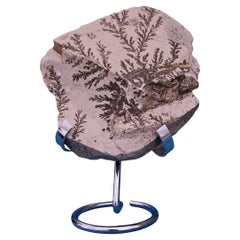
Natural Dendritic Specimen Slab or Fossil Specimen
Located in Warrenton, OR
Natural Dendritic Specimen Slab or Fossil Specimen, probably from the Jurassic period. A small stand will come with the fossil as a gift unless you instruct us not to include it (it ...
Category

Unknown Organic Modern Antique 15th Century and Earlier Decorative Objects

Materials

Organic Material

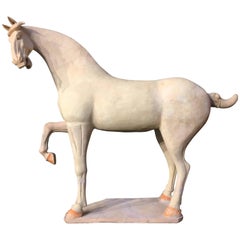
Large Early Tang Dynasty Painted Pottery Model of a Prancing Horse, TL Tested
Located in Austin, TX
A magnificent and large early Tang dynasty (618-906 AD) model of a prancing or dancing horse, circa 7th century. The majestic animal is caught mid-motion, one leg raised, head grace...
Category

Chinese Tang Antique 15th Century and Earlier Decorative Objects

Materials

Pottery

Genuine Natural Pre Historic Basilousaurus Whale Tooth
Located in New York, NY
This well preserved tooth is 40 to 34 million years old from the Late Eocene Period. Basilosaurus was first thought to be a reptile but was later identified as a genus of ancient cet...
Category

Antique 15th Century and Earlier Decorative Objects

Materials

Other

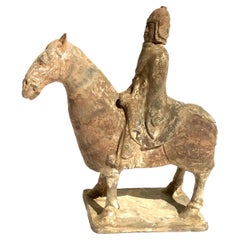
Sui or Tang Dynasty Painted Pottery Armored Horse And Rider
Located in Dallas, TX
Sui or Qi Dynasty Painted Pottery Armored Horse and Warrior Sui Dynasty (581-618) Height: 11 Inches x 10.5 Wide x 4.25 Deep Provenance: Weisbrod Chinese Art, Ltd., New York Conditi...
Category

Chinese Tang Antique 15th Century and Earlier Decorative Objects

Materials

Pottery

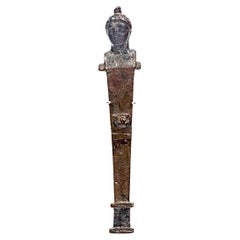
Ancient Roman Bronze Herm on Stand, 1st-4th Century AD
Located in Bradenton, FL
Ancient Roman Bronze Herm Statue dating from the 1st to 4th Century A.D. A herm was a statue consisting of a a head atop a square pillar, originally an artifact to honor the god Herm...
Category

Italian Classical Roman Antique 15th Century and Earlier Decorative Objects

Materials

Bronze

Still Thinking About These?

All Recently Viewed