16th Century Decorative Objects
to
39
311
6,575
25,900
85,153
29,615
15,729
35,644
20,457
2,492
1,099
3,320
4,231
2,252
6,069
8,335
7,901
3,531
1,884
17
1
120
102
67
42
33
157
142
156
134
99
84
59
Height
to
Width
to
311
311
311
1
1
1
Period: 16th Century
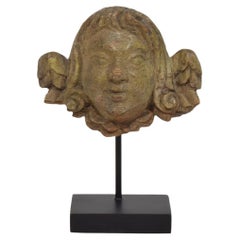
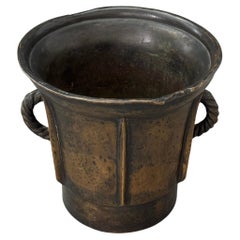
French 16th/ 17th Century Weathered Oak Renaissance Angel Fragment
Located in Buisson, FR
Beautiful weathered oak winged angel head Renaissance ornament. France, 16/ 17th century. Weathered Measurements include the wooden pedestal.
Category

French Renaissance Antique 16th Century Decorative Objects
Materials

Oak

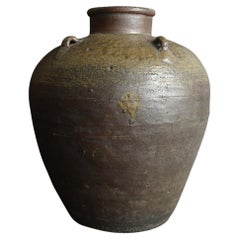
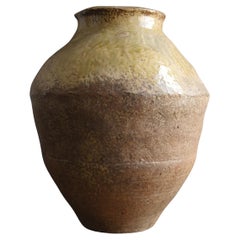
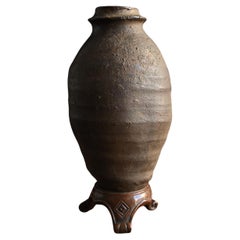
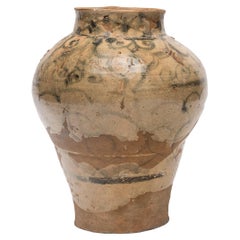
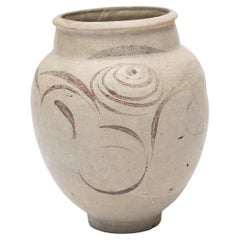
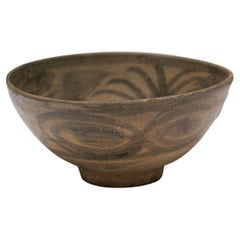
Japanese antique pottery with very beautiful colors/ [shigaraki] Jar/1500-1600
Located in Sammu-shi, Chiba
It is "Shigaraki ware". Shigaraki is a historical kiln located in Shiga Prefecture, Japan. (Shigaraki Kiln is marked with a red circle on the map.) It is said to have originated in t...
Category

Japanese Other Antique 16th Century Decorative Objects
Materials

Pottery

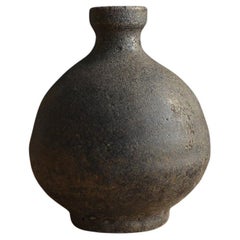
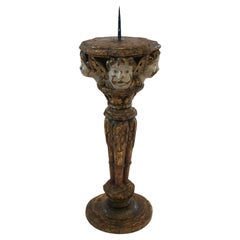
Japanese antique Bizen ware vase / 15th-16th century / Wabi-sabi vase/Tsubo
Located in Sammu-shi, Chiba
This Bizen ware jar was fired in the Bizen region of Okayama Prefecture. Bizen ware is one of Japan's Six Ancient Kilns and is known as one of the oldest pottery styles in Japan. Its...
Category

Japanese Other Antique 16th Century Decorative Objects
Materials

Pottery

Korean antique black glaze pottery/Joseon period/15th-16th century/small vase
Located in Sammu-shi, Chiba
This is a small black-glazed jar made in Korea between the 15th and 16th centuries. White porcelain is famous in Korea, but this was a type of porcelain that was only allowed to be u...
Category

South Korean Other Antique 16th Century Decorative Objects

Materials

Pottery

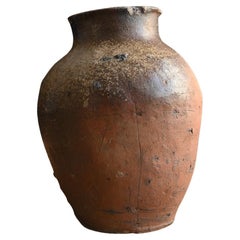
Japanese Antique Pottery Jar 15th-16th Century/ Wabi-Sabi Jar/Tokoname Vase
Located in Sammu-shi, Chiba
It is a very old jar in Japan. This is a pottery called Tokoname ware. Tokoname is a kiln located in Aichi prefecture, Japan. It is said to have originated around the 12th century. A...
Category

Japanese Other Antique 16th Century Decorative Objects

Materials

Pottery

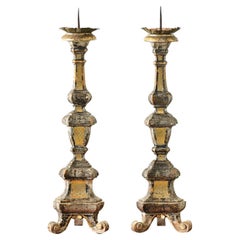
Pair of 16th Century Italian Gilt Candlesticks
Located in Baton Rouge, LA
A glorious pair of Italian giltwood altar candlesticks from the 1500’s; equally impressive is that this hand-carved pair have stayed together for over 400 years. Gold and silver gilt...
Category

Italian Renaissance Antique 16th Century Decorative Objects

Materials

Giltwood

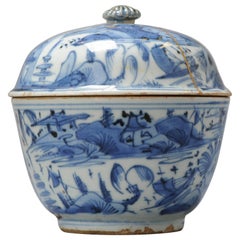
Rare Chinese Porcelain Ming Period Wanli Kraak Lidded Jar Landscape, ca 1600
Located in Amsterdam, Noord Holland
Amazing Lidded Jar from the Ming period, kraak porcelain. Nicely potted and with beautiful Kintsugi restoration. ⁠ ⁠ Ongoing scene of a typical Kraak landscape. The lid with a nice f...
Category

Chinese Antique 16th Century Decorative Objects

Materials

Porcelain

Chinese Ming Cobalt Brushed Wine Vessel, c. 1550
Located in Chicago, IL
This delicate ceramic bottle is a Ming-dynasty (1368-1644) vessel originally used for serving rice wine or spirits. The gracefully curved form is known as a yuhuchunping, or pear-sha...
Category

Chinese Ming Antique 16th Century Decorative Objects

Materials

Earthenware

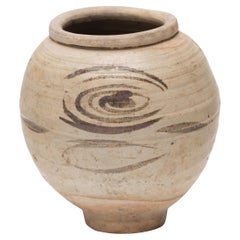
Antique Japanese pottery, Echizen ware vase / 1450-1600 / Natural glaze
Located in Sammu-shi, Chiba
This medium-sized Echizen ware jar, a representative example of ancient Japanese pottery, is believed to have been produced during the late Muromachi period to the Azuchi-Momoyama pe...
Category

Japanese Other Antique 16th Century Decorative Objects

Materials

Pottery

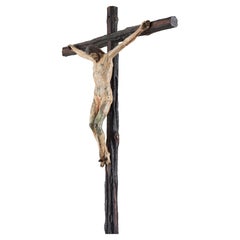
Rare and important painted bronze Crucifix after a model by Michelangelo
By Michelangelo Buonarroti
Located in Leesburg, VA
A rare and very fine bronze corpus of Christ after a model by Michelangelo, cast ca. 1597-1600 by Juan Bautista Franconio and painted in 1600 by Francisco Pacheco in Seville, Spain. The present corpus reproduces a model attributed to Michelangelo. The best known example, lesser in quality, is one on display at the Metropolitan Museum of Art (MET). The association of this corpus with Michelangelo was first brought to light by Manuel Gomez-Moreno (1930-33) who studied the wider circulated casts identified throughout Spain. The attribution to Michelangelo was subsequently followed by John Goldsmith-Phillips (1937) of the MET and again by Michelangelo expert, Charles de Tolnay (1960). While Michelangelo is best known for his monumental works, there are four documented crucifixes he made. The best known example is the large-scale wooden crucifix for the Church of Santa Maria del Santo Spirito in Florence, made in 1492 as a gift for the Prior, Giovanni di Lap Bicchiellini, for allowing him to study the anatomy of corpses at the hospital there. In 1562, Michelangelo wrote two letters to his nephew, Lionardo, indicating his intention to carve a wooden crucifix for him. In 1563 a letter between Lionardo and the Italian sculptor Tiberio Calcagni, mentions this same crucifix (a sketch of a corpus on the verso of a sheet depicting Michelangelo’s designs for St. Peter’s Basillica [Palais des Beaux-Arts in Lille] may reproduce this). That Michelangelo was working on small corpora in the last years of his life is further evidenced by the small (26.5 cm) unfinished wooden crucifix located at the Casa Buonarroti, considered his last known sculptural undertaking. Michelangelo’s contemporary biographer, Giorgio Vasari additionally cites that Michelangelo, in his later years, made a small crucifix for his friend, Menighella, as a gift. Surviving sketches also indicate Michelangelo’s study of this subject throughout his career, most notably during the end of his life but also during the 1530s-40s as he deepened his spiritual roots. The occasional cameo of crucified Christ’s throughout his sketched oeuvre have made it challenging for scholars to link such sketches to any documented commissions of importance. All the while, in consideration that such objects were made as gifts, it is unlikely they should be linked with commissions. Nonetheless, a number of theories concerning Michelangelo’s sketches of Christ crucified have been proposed and some may regard the origin of the present sculpture. It has been suggested that the corpus could have its impetus with Michelangelo’s work on the Medici Chapel, whose exclusive design was given to the master. It is sensible smaller details, like an altar cross, could have fallen under his responsibility (see for example British Museum, Inv. 1859,0625.552). Others have noted the possibility of an unrealized large marble Crucifixion group which never came to fruition but whose marble blocks had been measured according to a sheet at the Casa Buonarroti. A unique suggestion is that Michelangelo could have made the crucifix for Vittoria Colonna, of whom he was exceedingly fond and with whom he exchanged gifts along with mutual spiritual proclivities. In particular, Vittoria had an interest in the life of St. Bridget, whose vision of Christ closely resembles our sculpture, most notably with Christ’s proper-left leg and foot crossed over his right, an iconography that is incredibly scarce for crucifixes. The suggestion could add sense to Benedetto Varchi’s comment that Michelangelo made a sculpted “nude Christ…he gave to the most divine Marchesa of Pescara (Vittoria Colonna).” Of that same period, two sketches can be visually linked to our sculpture. Tolnay relates it to a sketch of a Crucified Christ at the Teylers Museum (Inv. A034) of which Paul Joannides comments on its quality as suggestive of preparations for a sculptural work. Joannides also calls attention to a related drawing attributed to Raffaello da Montelupo copying what is believed to be a lost sketch by Michelangelo. Its relationship with our sculpture is apparent. Montelupo, a pupil of Michelangelo’s, returned to Rome to serve him in 1541, assisting with the continued work on the tomb of Pope Julius II, suggesting again an origin for the corpus ca. 1540. The earliest firm date that can be given to the present corpus is 1574 where it appears as a rather crudely conceived Crucifixion panel, flanked by two mourners in low-relief and integrally cast for use as the bronze tabernacle door to a ciborium now located at the Church of San Lorenzo in Padula. Etched in wax residue on the back of the door is the date, 27 January 1574, indicating the corpus would have at least been available as a model by late 1573. The Padula tabernacle was completed by Michelangelo’s assistant, Jacopo del Duca and likely has its origins with Michelangelo’s uncompleted tabernacle for the Basilica of St. Mary of the Angels in Rome. The impetus for the Padula tabernacle’s Crucifixion panel begins with a series of late Crucifixion sketches by Michelangelo, depicting a scene of Christ crucified and flanked by two mourners (see British Museum Inv. 1895.0915.510; Ashmolean Museum Inv. 1846.89, KP II 343 recto; Windsor Castle RCIN 912761 recto; and Louvre Inv. 700). A faintly traced block possibly intended for sculpting the sketch of the crucified Christ on its recto was discovered by Tolnay on a version of the composition at Windsor Castle. The Windsor sketch and those related to it appear to have served as preparatory designs for what was probably intended to become the Basilica of St. Mary’s tabernacle door. Vasari documents that the project was to be designed by Michelangelo and cast by his assistant, Jacopo del Duca. Michelangelo died before the commission was complete, though on 15 March 1565, Jacopo writes to Michelangelo’s nephew stating, “I have started making the bronze tabernacle, depending on the model of his that was in Rome, already almost half complete.” Various circumstances interrupted the completion of the tabernacle, though its concept is later revitalized by Jacopo during preparations to sell a tabernacle, after Michelangelo’s designs, to Spain for Madrid’s El Escorial almost a decade later. The El Escorial tabernacle likewise encountered problems and was aborted but Jacopo successfully sold it shortly thereafter to the Carthusians of Padula. An etched date, 30 May 1572, along the base of the Padula tabernacle indicates its framework was already cast by then. A 1573 summary of the tabernacle also describes the original format for the door and relief panels, intended to be square in dimension. However, a last minute decision to heighten them was abruptly made during Jacopo’s negotiations to sell the tabernacle to King Phillip II of Spain. Shortly thereafter the commission was aborted. Philippe Malgouyres notes that the Padula tabernacle’s final state is a mixed product of the original design intended for Spain’s El Escorial, recycling various parts that had already been cast and adding new quickly finished elements for its sale to Padula, explaining its unusually discordant quality, particularly as concerns the crudeness of the door and relief panels which were clearly made later (by January 1574). Apart from his own admission in letters to Spain, it is apparent, however, that Jacopo relied upon his deceased master’s designs while hastily realizing the Padula panels. If Michelangelo had already earlier conceived a crucifix model, and Jacopo had access to that model, its logical he could have hastily employed it for incorporation on the door panel to the tabernacle. It is worth noting some modifications he made to the model, extending Christ’s arms further up in order to fit them into the scale of the panel and further lowering his chin to his chest in order to instill physiognomic congruence. A crude panel of the Deposition also follows after Michelangelo’s late sketches and is likewise known by examples thought to be modifications by Jacopo based upon Michelangelo’s initial sculptural conception (see Malgouyres: La Deposition du Christ de Jacopo del Duca, chef-d’oeuvre posthume de Michel-Ange). Jacopo’s appropriation of an original model by Michelangelo for more than one relief on the Padula tabernacle adds further indication that the crucifix was not an object unique to Jacopo’s hand, as few scholars have posited, but rather belongs to Michelangelo’s original...
Category

Renaissance Antique 16th Century Decorative Objects

Materials

Bronze

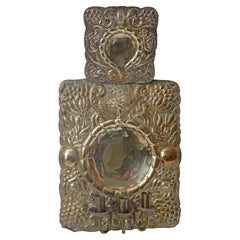
Danzig Baroque Wall Candle Holder Blaker Brass with Bird motif and Flora
Located in Hannover, DE
These beautiful wall candle holders come from a private castle that was decorated in the style of the Gdansk Baroque. The candlesticks were bought in the 1960s in a Gdansk candlestic...
Category

Polish Baroque Antique 16th Century Decorative Objects

Materials

Brass

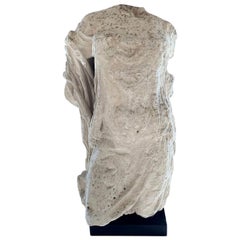
16th Century Stone Classical Roman Style Torso
Located in Vosselaar, BE
A wonderful 16th century draped female torso in classical style. Made in France under Italian Renaissance influence this female torso is finely sculpted with great detail to the stol...
Category

French Renaissance Antique 16th Century Decorative Objects

Materials

Sandstone

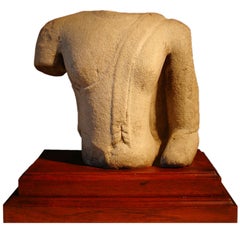
16th Century Thai Ayutthaya Sandstone Torso of the Buddha
Located in Austin, TX
A lovely carved sandstone torso of the Buddha, Ayutthaya period (1350-1767), Thailand. Wonderfully simplistic, the only ornamentation this torso displays...
Category

Thai Antique 16th Century Decorative Objects

Materials

Sandstone

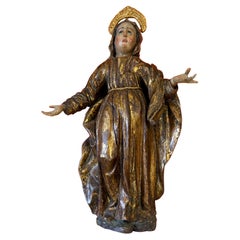
Renaissance polychrome and gilded wooden sculpture of Saint Anne, Spain, 16th ce
Located in Madrid, ES
Renaissance polychrome and gilded wooden sculpture of Saint Anne, Spain, 16th century Imposing carved, polychrome, and gilded wooden sculpture, representing Saint Anne. Made in the ...
Category

Spanish Baroque Antique 16th Century Decorative Objects

Materials

Silver

A very old small pottery jar from China / 13th to 17th century / Excavated vase
Located in Sammu-shi, Chiba
This is a fired jar made in southern China or northern Laos or the surrounding area in the 15th to 17th century. Its unique shape has long been loved in Japan as a wabi-sabi flower v...
Category

Southeast Asian Other Antique 16th Century Decorative Objects

Materials

Pottery

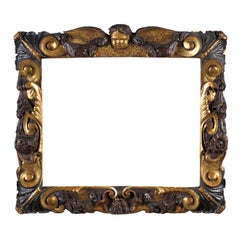
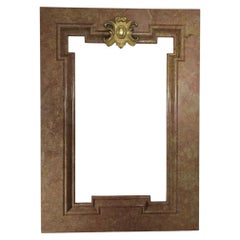
16th Century Partly Gilt Carved Wood Frame
Located in Saint-Ouen, FR
This rare Venetian frame entirely carved in high-relief shows a rich decor of scrolls, garlands, daisy flowers and thistles. At the four corners of the frame are depicted large acant...
Category

Italian Renaissance Antique 16th Century Decorative Objects

Materials

Wood

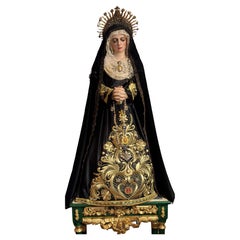
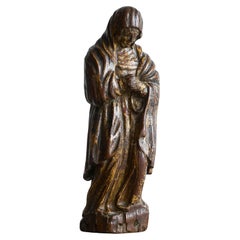
Amazing 16th Cent. Castilian Virgin of Sorrows with an 18th-century Silver Crown
Located in Madrid, ES
Amazing 16th Century Castilian Virgin of Sorrows with an 18th-century Silver Crown, Virgin of Peñaranda Exceptional 16th-century Castilian school Virgin of Sorrows of Peñaranda, car...
Category

Spanish Spanish Colonial Antique 16th Century Decorative Objects

Materials

Wood

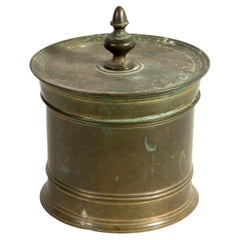
Hostiary. Bronze. 16th century.
Located in Madrid, ES
Hostiary. Bronze. 16th century. A circular, tubular bronze box with a finial lid, to which a piece of tubing is attached, forming a press for the interior of the case. It features a...
Category

European Other Antique 16th Century Decorative Objects

Materials

Bronze

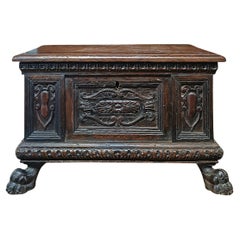
LATE 16th CENTURY SMALL WALNUT BOX
Located in Firenze, FI
Elegant solid walnut small box, entirely hand-carved. The rectangular chest features an opening top, ideal for storing objects. The front, back, and sides are decorated with geometri...
Category

Italian Renaissance Antique 16th Century Decorative Objects

Materials

Nutwood

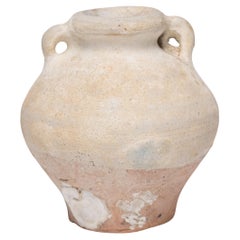
Petite Ming Shipwreck Medicine Jar, c. 1500
Located in Chicago, IL
The eroded surface of this petite, Ming-dynasty medicine jar tells a story of trade, tradition and lost treasure. A matte texture and traces of marine life suggest the jar spent many...
Category

Chinese Ming Antique 16th Century Decorative Objects

Materials

Earthenware

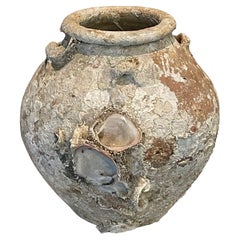
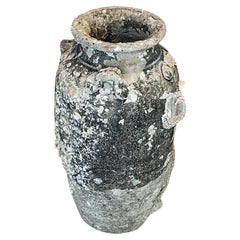
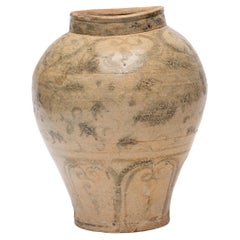
16th Century Animist Shipwreck Ceramic Vase, Vietnam
Located in New York, NY
16th century Vietnamese Animist ceramic vase. Beautiful and abundant fossil growth from being submerged under water. Natural original patina. Part of a very large collection of shipw...
Category

Vietnamese Antique 16th Century Decorative Objects

Materials

Ceramic

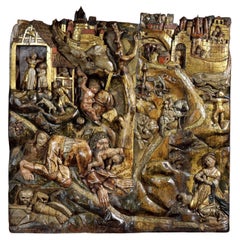
Wood Low-Relief Depicting a Werewolf and Saint George
Located in Saint-Ouen, FR
Exceptional polychrome wood low-relief depicting a werewolf and saint george after a woodcut by lucas cranach (“DER WERWOLF” 1512) Provenance : collection Brimo de Laroussihle colle...
Category

German Renaissance Antique 16th Century Decorative Objects

Materials

Wood

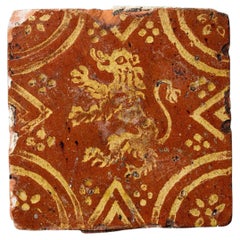
16th Century Late Medieval Heraldic Encaustic Tile
Located in Wormelow, Herefordshire
A 445-year-old late medieval 16th century heraldic encaustic tile of Flemish origin (unmarked). Made from terracotta and glazed, this 6-inch antique tile is an excellent collector’s ...
Category

Dutch Medieval Antique 16th Century Decorative Objects

Materials

Terracotta

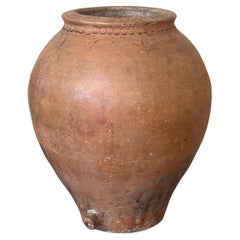
16th Century Spanish Terracotta Vase
Located in Miami, FL
16th Century Spanish Terracotta Vase Hand made marks around the vase.
Category

Spanish Baroque Antique 16th Century Decorative Objects

Materials

Terracotta

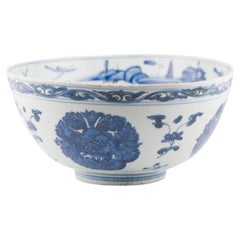
Chinese Ming Cobalt Brushed Rice Bowl, c. 1550
Located in Chicago, IL
This Ming-dynasty (1368-1644) bowl is attributed to the kilns of Yunnan province, painted in dark cobalt underglaze with floral motifs and sweeping brushstrokes. Dated to the 15th/16...
Category

Chinese Ming Antique 16th Century Decorative Objects

Materials

Earthenware

16th Century Fossil Embedded Shipwreck Vase, Sawankhalok, Thailand
Located in New York, NY
16th century Thailand Sawankhalok ceramic vase from the old city of Sawankhalok known for its pottery. Beautiful and abundant fossil growth from being submerged under water. Natural ...
Category

Thai Antique 16th Century Decorative Objects

Materials

Ceramic

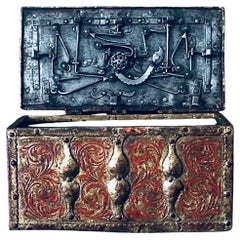
Antique 16th century Venetian Painted Gold Gilt Iron Strongbox with Original Key
Located in Doha, QA
An extraordinarily rare and visually striking 16th-century Venetian iron treasure coffer, showcasing the height of Renaissance artistry and engineering. Crafted in the early to mid-1...
Category

Italian Renaissance Antique 16th Century Decorative Objects

Materials

Gold, Iron

Chinese Ming Cobalt Brushed Cloud Jar, c. 1500
Located in Chicago, IL
Beautiful in its imperfection, this ceramic storage jar from Yunnan province has a crawled glaze finish that reveals the maker's hand. Dated to the 15th/16th century, the sculptural ...
Category

Chinese Ming Antique 16th Century Decorative Objects

Materials

Earthenware

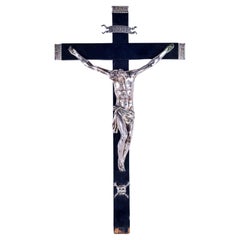
Christ Crucified in Silver 16th Century Italian School
Located in Madrid, ES
Christ crucified in silver 16th Century Italian school Measure: height: 40cm. very good condition.
Category

Italian Baroque Antique 16th Century Decorative Objects

Materials

Silver

Antique Chinese Porcelain Bowl With Landscape, Jiajing – Wanli Period 1560-1600
Located in Amsterdam, Noord Holland
Lovely decorated piece. A rare type with landscape China Jingdezhen kilns Ming Dynastie, Jiajing or Wanli Reign Provenance: – Private collection Netherlands Additional information: ...
Category

Chinese Antique 16th Century Decorative Objects

Materials

Porcelain

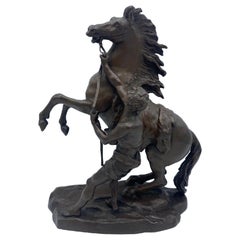
French Bronze Sculpture of Youth Wrangling a Horse by Guillaume Coustou
Located in Middleburg, VA
French Bronze Sculpture of Youth Wrangling a Horse by Guillaume Coustou (1677-1746). Best known for his monumental statues of horses, Coustou was the royal sculptor for Louis XIV an...
Category

French Louis XIV Antique 16th Century Decorative Objects

Materials

Bronze

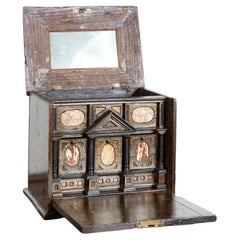
Venetian Renaissance Jewelry Chest
Located in Greenwich, CT
Rare Venetian 16th century Italian traveling jewelry chest profusely decorated in Arabesque black and gilt decoration featuring rare specimen stone drawer fronts in a Palladian archi...
Category

Italian Antique 16th Century Decorative Objects

Materials

Wood

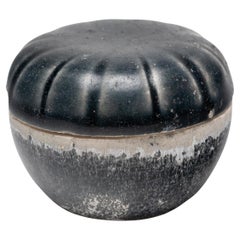
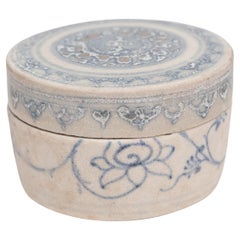
Petite Ming Shipwreck Box, c. 1500
Located in Chicago, IL
The soft, matte texture and eroded wear of this petite porcelain box suggest it spent many years submerged in saltwater, likely excavated from a sunken trade ship carrying ceramic ex...
Category

Chinese Ming Antique 16th Century Decorative Objects

Materials

Porcelain

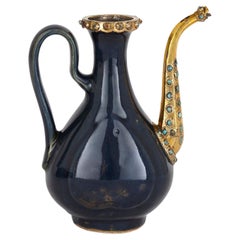
Very Rare Ming Dynasty Porcelain Ewer with Ottoman Gem-Set Tombak Mounts
Located in London, GB
Very rare Ming dynasty porcelain ewer with ottoman gem-set tombak mounts Chinese and Turkish, 16th/17th century Measures: Tombak: height 20cm,...
Category

Chinese Ming Antique 16th Century Decorative Objects

Materials

Multi-gemstone, Brass

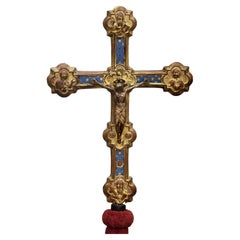
Paolo di Giovanni Sogliani - Processional Cross Florence, around 1515
Located in Bruxelles, BE
Paolo di Giovanni Sogliani (Florence 1455-1522) Processional Cross Florence, around 1515 Enameled, chiseled, engraved, stippled, and gilded copper; wooden core ; Inscription: "OPA...
Category

Italian Renaissance Antique 16th Century Decorative Objects

Materials

Copper, Enamel

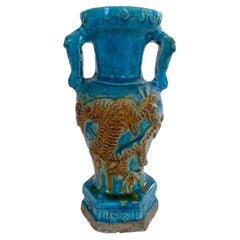
Ming Dynasty Vase with Vibrant Turquoise Glaze
Located in Atlanta, GA
Ming Dynasty (16th century) pottery vase with vivid turquoise glaze, decorated with dragons. The vase is partially moulded, with circular bosses around the mouth rim and a hexagonal ...
Category

Chinese Antique 16th Century Decorative Objects

Materials

Pottery

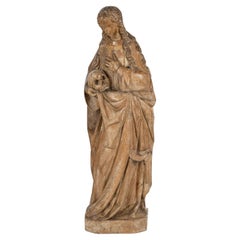
Carved Wooden Sculpture of Mary Magdalene, Circa 1500.
Located in Saint-Ouen, FR
Carved wooden sculpture of Mary Magdalene, circa 1500. Large limewood sculpture with traces of polychromy representing Mary Magdalene, German work, circa 1500. H: 80cm. W: 35cm, D: ...
Category

German Antique 16th Century Decorative Objects

Materials

Wood

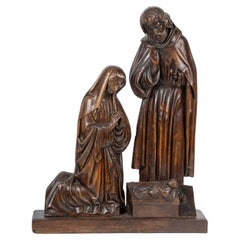
Religious Sculpture Representing the Nativity, Carved Wood from the 16th Century
Located in Saint-Ouen, FR
Religious sculpture representing the nativity, carved wood from the 16th century. Carved wood sculpture, walnut wood and oak wood base, sculpture representing the nativity, circa 16...
Category

French Neoclassical Antique 16th Century Decorative Objects

Materials

Oak, Walnut

Petite Ming Shipwreck Box, c. 1500
Located in Chicago, IL
The soft, matte texture and eroded wear of this petite porcelain box suggest it spent many years submerged in saltwater, likely excavated from a sunken trade ship carrying ceramic ex...
Category

Chinese Ming Antique 16th Century Decorative Objects

Materials

Porcelain

Chinese Ming Iron Brushed Jar, c. 1600
Located in Chicago, IL
This Ming-dynasty (1368-1644) storage jar is attributed to the kilns of Yunnan province, loosely decorated with iron underglaze in a manner typical of the region. Dated to the 15th/1...
Category

Chinese Ming Antique 16th Century Decorative Objects

Materials

Earthenware

Chinese Ming Cobalt Brushed Celadon Jar, c. 1500
Located in Chicago, IL
Warped by fire and eroded by time, this ceramic storage jar from Yunnan province is a testament to the wabi-sabi beauty of provincial Chinese pottery. Dated to the 15th/16th century,...
Category

Chinese Ming Antique 16th Century Decorative Objects

Materials

Earthenware

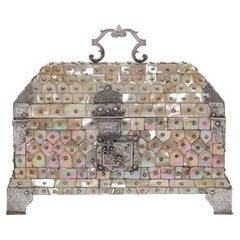
16th-Century Indo-Portuguese Colonial Mother-of-pearl Gujarat Casket
Located in Amsterdam, NL
An exceptional Indo-Portuguese colonial mother-of-pearl veneered casket with silver mounts India, Gujarat, 2nd half of the 16th century, the silver mounts Goa or probably Lisbon Measures: H. 16 x W. 24.6 x D. 16.1 cm An exceptional Gujarati casket with a rectangular box and truncated pyramidal lid (with slopes on each side and a flat top) made from exotic wood, probably teak (Tectona grandis), covered with a mother-of-pearl mosaic. The tesserae, cut from the shell of the green turban sea snail (Turbo marmoratus, a marine gastropod) in the shape of fish scales, are pinned to the wooden structure with silver ball-headed nails. The casket is set on bracket feet on the corners. The masterfully engraved decoration of the silver mounts follows the most refined and erudite Mannerist repertoire of rinceaux and ferroneries dating from the mid-16th century. The high quality and refinement of the silver mounts and, likewise, the silver nails that replaced the original brass pins used to hold the mother-of-pearl tesserae in place indicate the work of a silversmith probably working in Lisbon in the second half of the 16th century. The Indian origin of this production, namely from Cambay (Khambhat) and Surat in the present state of Gujarat in north India, is, as for the last three decades, consensual and fully demonstrated, not only by documentary and literary evidence - such as descriptions, travelogues and contemporary archival documentation - but also by the survival in situ of 16th-century wooden structures covered in mother-of-pearl tesserae. A fine example is a canopy decorating the tomb (dargah) of the Sufi saint, Sheik Salim Chisti (1478-1572) in Fatehpur Sikri in Agra district in the state of Uttar Pradesh, north India. This is an artistic production, geometric in character and Islamic in nature, where usually the mother-of-pearl tesserae form complex designs of fish scales or, similar to the dishes also made using the same technique, with the thin brass sheets and pins, stylized lotus flowers. The truncated pyramidal shape corresponds, like their contemporary tortoiseshell counterparts also made in Gujarat, to a piece of furniture used in the Indian subcontinent within the Islamic world prior to the arrival of the first Portuguese. This shape, in fact, is very old and peculiar to East-Asian caskets, chests or boxes used to contain and protect Buddhist texts, the sutras. A similar chest is the famous and large reliquary chest from Lisbon cathedral that once contained the relics of the city's patron saint, Saint Vincent. Both match in shape, having the same kind of socle or pedestal and bracket feet, and in their engraved silver mountings, featuring the same type of refined, erudite decoration. Their differences lie in the silver borders that frame the entire length of the edges of the chest (both the box and the lid), pinned with silver nails, and on the lock plate, shaped like a coat of arms in the Lisbon example. Given the exceptional dimensions of the reliquary casket...
Category

Indian Antique 16th Century Decorative Objects

Materials

Silver

16th Century Mary Magdalene in Polychromed Carved Walnut
Located in Meer, VAN
Mary Magdalene in Polychromed Carved Walnut 16th Century Devotional figure in carved wood, depicting Mary Magdalene. Walnut, most probably Flemish and from the 16th century. It de...
Category

European Medieval Antique 16th Century Decorative Objects

Materials

Walnut

Rare Chinese Porcelain Ming Period Kosometsuke Incense Burner, ca 1600
Located in Amsterdam, Noord Holland
⁠It's 17th century chinese porcelain, Ming period, made for the Japanese market. This unusual Kosumetsuke Koro would have been used for incense that is added to the charcoal fire dur...
Category

Chinese Antique 16th Century Decorative Objects

Materials

Porcelain

Chinese Ming Iron Brushed Jar, c. 1600
Located in Chicago, IL
This Ming-dynasty (1368-1644) storage jar is attributed to the kilns of Yunnan province, loosely decorated with iron underglaze in a manner typical of the region. Dated to the 15th/1...
Category

Chinese Ming Antique 16th Century Decorative Objects

Materials

Earthenware

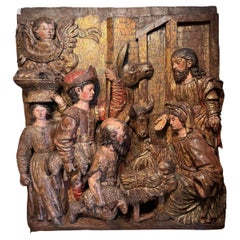
Adoration of the shepherds - Large high-relief, Northern Italy Circa 1500
Located in PARIS, FR
Large high relief in carved and gilt wood, with many traces of polychromy, representing the Adoration of the Shepherds. The evangelist Luke first mentions that the scene takes place at night. A sudden light, which frightens the shepherds, signals the arrival of an angel who announces "great joy". He gives them a sign: they will find "a newborn baby wrapped...
Category

Italian Renaissance Antique 16th Century Decorative Objects

Materials

Wood

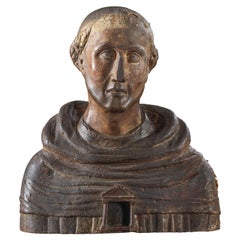
16th Century Polychrome Reliquary of a Monk
Located in Saint-Ouen, FR
The monk is depicted with an oval face, marked with high and strong cheekbones, sunken cheeks, strong jawbones and a cleft chin. His almond shaped eyes are opened under very strong a...
Category

Italian Renaissance Antique 16th Century Decorative Objects

Materials

Wood

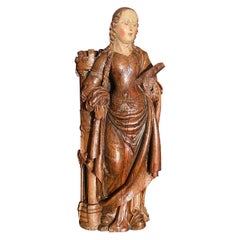
Important Sculpture Representing Saint Barbara
Located in Saint-Ouen, FR
IMPORTANT WOOD SCULPTURE REPRESENTING SAINT BARBARA ORIGIN : NORTHERN FRANCE OR FLANDERS PERIOD : 16th CENTURY Height: 103 cm Length: 40 cm Depth: 30 cm Oak wood Good condition Saint Barbara was the daughter of Dioscorus who imprisonned her in a tower to prevent her from being corrupted by Christianity. Despite this, she was taught and baptisted by a local priest. According to legend, she proved her faith by carving a third window into the tower, symbolic of the Trinity. Once her father learned this, he threatened her with his sword. She managed to escape and hide, not before being revealed by a sheperd. She was thrown in jail and tortured, refusing to denounce her faith. Her father forced her up to the mountain’s summit and decapitated her, afterwhich God struck him down by lightning. Saint Barbara`s following was popularized in the Occident in the 13th century because of the Golden Legend...
Category

Antique 16th Century Decorative Objects

Materials

Oak

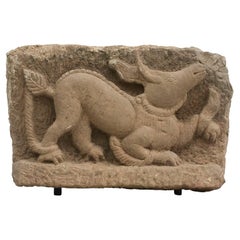
Dragon "Mythical Beast" Sandstone Relief
Located in Kastrup, DK
400 - 600 Year old charming and artistic sandstone relief. Dragon "mythical beast" which is a symbol of wisdom. From Buddha temple in Arakan, Burma....
Category

Burmese Other Antique 16th Century Decorative Objects

Materials

Sandstone

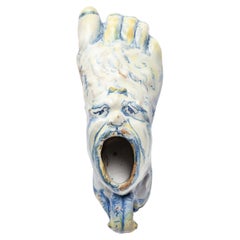
Renaissance Inkwell Calamelli workshop, Italy, Faenza, second half of the 16th
By Virgiliotto Calamelli
Located in Milano, IT
Inkwell Calamelli workshop (attr.). Faenza, second half of the 16th century Height 4.33 in; length 8.07 in; depth 2.95 in (11 cm; 20.5 cm; 7.5 cm) Weight: 0.800 lb (363 g) State of conservation: some chipping to the top of the mask around the mouth. Handle glued, without any restorations; minor chips in some raised areas. This object has the shape of a foot wearing Greek-style footwear, as can be seen in some raised areas. The foot is anatomically modeled with bare toes, while the ankle is partially covered by the footwear. On the heel, there is a small circular handle to support the object. The mouth of the container is shaped like a mask. The interior, completely enameled, suggests that the piece was intended to be used as an inkwell or to contain some other liquid. The base, however, is not enamelled. The painted decoration, scant and brief, consists of rapid cobalt blue shading between the toes of the foot, with more precise emphasis on the nails. It is accompanied by yellow citrine accents to enhance the forms. The mask is painted with the tip of the brush, to accentuate the tense nature of the eyes and to accentuate their outline. Thin strokes of yellow-orange line the interior of the mouth. Since the Renaissance, this decoration has been referred to as "compendiaria" and it characterizes the period of production extending from the mid-16th century to approximately the middle of the following century. It significantly influenced tastes at the time. It evolved from the polychrome style "istoriato" and transformed into a new style that "summarized" (compendia), or condensed, the ornamentation of the works into a few colors, placing greater prominence on the shapes. It was often inspired by metal specimens. Since the Renaissance, this decoration has been referred to as "compendiaria" and it characterizes the period of production extending from the mid-16th century to approximately the middle of the following century. It significantly influenced tastes at the time. It evolved from the polychrome style "istoriato" and transformed into a new style that "summarized" (compendia), or condensed, the ornamentation of the works into a few colors, placing greater prominence on the shapes. It was often inspired by metal specimens. This artwork finds parallels in similar objects all characterized by this refined style and produced in the city of Faenza and other Italian centers starting from the mid-16th century. The closest comparable example in majolica is a foot acquired by the British Museum in 2011 (inv. 2011, 8008.1). This was previously published by Carmen Ravanelli Guidotti in 1996 and later by Dora Thornton in 2016 during the conference on Renaissance ceramics...
Category

Italian Renaissance Antique 16th Century Decorative Objects

Materials

Maiolica

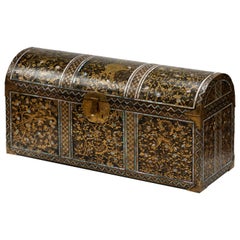
Large Japanese Namban Lacquer Coffer Arqueta, 16th Century
Located in Amsterdam, NL
A large Japanese Namban lacquer arqueta coffer for the Portuguese market Kyoto, Momoyama-period, late 16th century In Hinoki cypress lacquered in ...
Category

Japanese Antique 16th Century Decorative Objects

Materials

Mother-of-Pearl, Wood

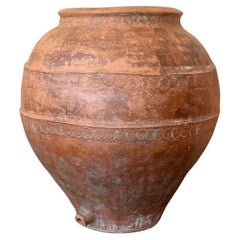
16th Century Spanish Terracotta Vase
Located in Miami, FL
16th Century Spanish Terracotta Vase Hand made marks around the vase.
Category

Spanish Baroque Antique 16th Century Decorative Objects

Materials

Terracotta

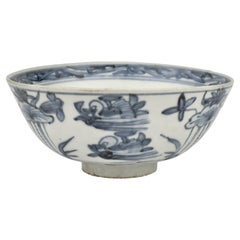
Bowl with mandarin duck and lotus pattern design, Late Ming Era(16-17th century)
Located in seoul, KR
Bowl from the late Ming dynasty cargo. An identical piece is included on page 136 of the Bin Thuan catalog titled 'The Age of Discovery: Asian Ceramics Found...
Category

Vietnamese Ming Antique 16th Century Decorative Objects

Materials

Ceramic, Porcelain

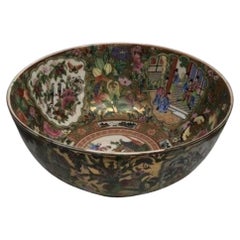
Chinese Antique Rose Famille Bowl Qing Synasty Qinglong
Located in Newmanstown, PA
Marked Qian Long Dynasty. Large decorative painted bowl. Constructed from high quality, high temperature fired Chinese porcelain. Features hand applied images of an Asian courtyard s...
Category

Chinese Antique 16th Century Decorative Objects

Materials

Porcelain

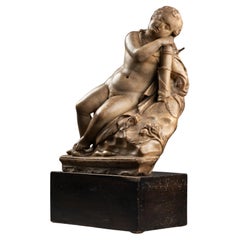
Sleeping Eros - Rome, 16th century
Located in Bruxelles, BE
Sleeping Eros Rome, 16th century
 Carrara marble, on a wooden base
 of an ancient collection 31 × 44 x 17 cm Carved from a fine block of Carrara marble, this sculpture depicts Eros ...
Category

Italian Renaissance Antique 16th Century Decorative Objects

Materials

Carrara Marble

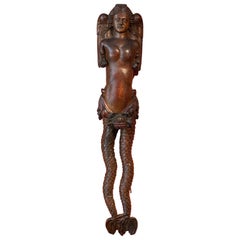
16th Century Southern Germany Carved Wood Bracket Depicting a Mermaid
Located in Saint-Ouen, FR
In Medieval Europe and even more during the early 16th century fantastic beasts could be found in Bestiaries, a literary genre close to poetry. A bestiary used the characteristics of...
Category

German Renaissance Antique 16th Century Decorative Objects

Materials

Wood

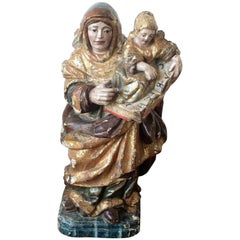
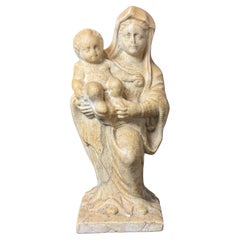
16th Century Spanish Carved Polychrome Painted Saint Anne with the Infant Mary
Located in Miami, FL
This sculpture represents Santa Ana (Saint Anne) with the infant Mary. Verge
Category

European Baroque Antique 16th Century Decorative Objects

Materials

Wood

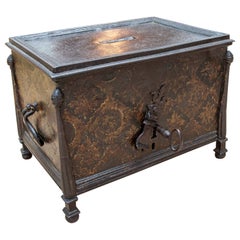
16th Wrought Iron Safe, Renaissance Style, for Donations or Cash Chest
Located in Marbella, ES
Impressive wrought iron tabletop safe with engraved decoration and original patina. This type of safe was commonly used in the 16th and 17th centuries to hold valuables, alms, or doc...
Category

Spanish Antique 16th Century Decorative Objects

Materials

Iron

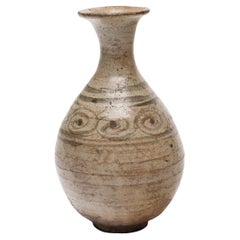
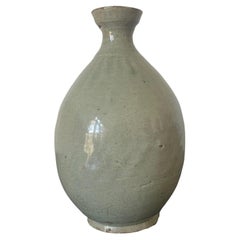
Antique Korean Celadon Bottle Vase Joseon Dynasty
Located in Atlanta, GA
A Korean ceramic bottle-form vase circa 16th century Joseon Dynasty. It was likely intended as a wine bottle, the pear-shaped vessel with flaring neck feature a celadon glaze exterio...
Category

Korean Archaistic Antique 16th Century Decorative Objects

Materials

Ceramic

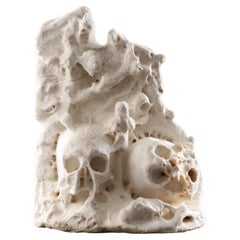
An Unusual and Rare English ‘Memento Mori’ Carved Shrine with Two Human Skulls
Located in London, GB
An Unusual and Rare English ‘Memento Mori’ Carved Shrine with Two Human Skulls to the underside, a carved ‘Dragonfly’ Marble 16th / 17th Century England Size: 36cm high, 28cm w...
Category

English Antique 16th Century Decorative Objects

Materials

Marble

Still Thinking About These?

All Recently Viewed