16th Century Decorative Objects

to
39
311
6,589
25,917
85,157
29,597
15,736
35,631
20,465
2,492
1,099
3,321
4,219
2,246
6,068
8,338
7,900
3,534
1,887
17
1
120
102
67
42
33
157
142
156
134
99
84
59
Height
to
Width
to
311
311
311
1
1
1
Period: 16th Century
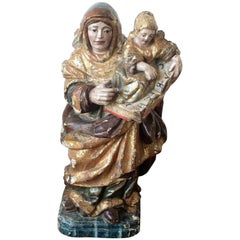
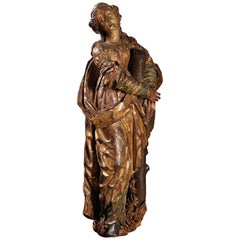
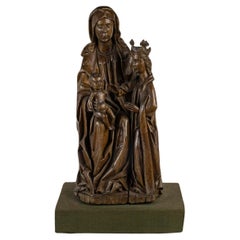
16th Century Spanish Carved Polychrome Painted Saint Anne with the Infant Mary
Located in Miami, FL
This sculpture represents Santa Ana (Saint Anne) with the infant Mary. Verge
Category

European Baroque Antique 16th Century Decorative Objects

Materials

Wood

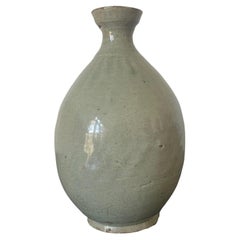
Antique Korean Celadon Bottle Vase Joseon Dynasty
Located in Atlanta, GA
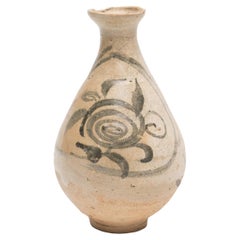
A Korean ceramic bottle-form vase circa 16th century Joseon Dynasty. It was likely intended as a wine bottle, the pear-shaped vessel with flaring neck feature a celadon glaze exterio...
Category

Korean Archaistic Antique 16th Century Decorative Objects

Materials

Ceramic

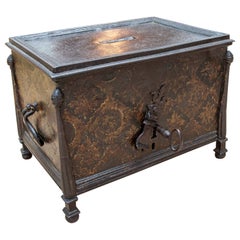
16th Wrought Iron Safe, Renaissance Style, for Donations or Cash Chest
Located in Marbella, ES
Impressive wrought iron tabletop safe with engraved decoration and original patina. This type of safe was commonly used in the 16th and 17th centuries to hold valuables, alms, or doc...
Category

Spanish Antique 16th Century Decorative Objects

Materials

Iron

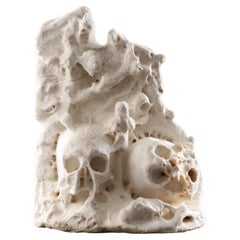
An Unusual and Rare English ‘Memento Mori’ Carved Shrine with Two Human Skulls
Located in London, GB
An Unusual and Rare English ‘Memento Mori’ Carved Shrine with Two Human Skulls to the underside, a carved ‘Dragonfly’ Marble 16th / 17th Century England Size: 36cm high, 28cm w...
Category

English Antique 16th Century Decorative Objects

Materials

Marble

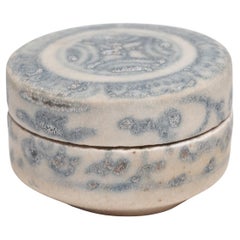
Petite Ming Shipwreck Box, c. 1500
Located in Chicago, IL
The soft, matte texture and eroded wear of this petite porcelain box suggest it spent many years submerged in saltwater, likely excavated from a sunken trade ship carrying ceramic ex...
Category

Chinese Ming Antique 16th Century Decorative Objects

Materials

Porcelain

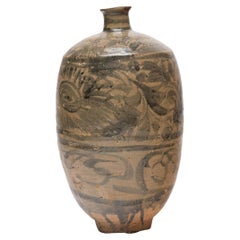
Chinese Ming Cobalt Brushed Wine Bottle, c. 1550
Located in Chicago, IL
Elegant yet unrefined, this ceramic wine bottle from Yunnan province is a testament to the wabi-sabi beauty of provincial Chinese pottery. Dated to the 15th/16th century, the bottle ...
Category

Chinese Ming Antique 16th Century Decorative Objects

Materials

Earthenware

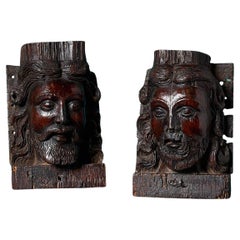
Pair of 16th Century Carved Oak Corbels
Located in Wormelow, Herefordshire
A decorative pair of 16th century carved oak corbels. Each intricately hand carved to showcase the head of a man with fine details of flowing locks and thick beards. Backed onto oa...
Category

English Tudor Antique 16th Century Decorative Objects

Materials

Wood, Oak

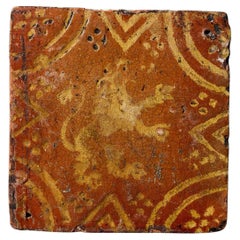
16th Century Late Medieval Encaustic Tile with Rampant Lion
Located in Wormelow, Herefordshire
A 445-year-old late medieval 16th century encaustic tile of Flemish origin (unmarked), detailed with a rampant lion. Made from terracotta and glazed, this 6-inch antique tile is an e...
Category

Dutch Medieval Antique 16th Century Decorative Objects

Materials

Terracotta

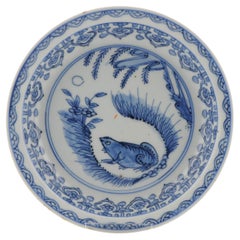
Antique Ming Jiajing/Wanli 16th century dish Chinese Porcelain FROG
Located in Amsterdam, Noord Holland
Sharing with you this most interesting 16th Century dish. Small saucer dish with flat everted rim, painted with a frog looking up in a grassy verge beside flowers and tree, the cav...
Category

Chinese Ming Antique 16th Century Decorative Objects

Materials

Porcelain

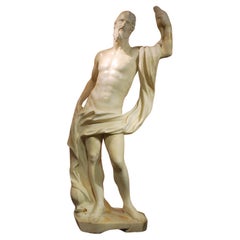
A 16th century carved marble sculpture of poseidon
Located in London, GB
This fine and imposing sculpture is an excellent example of 16th century Italian craftsmanship. The figure is stood on a raised, shaped rectangular base with a carved "dolphin" at th...
Category

Italian Renaissance Antique 16th Century Decorative Objects

Materials

Marble

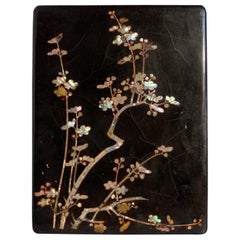
Japanese Momoyama Period Black Lacquer and Mother of Pearl Box, 16th Century
Located in Austin, TX
A fine and unusual Japanese black lacquer and mother of pearl inlaid box, Momoyama Period, 16th century, Japan. The large box and cover featu...
Category

Japanese Edo Antique 16th Century Decorative Objects

Materials

Lacquer, Abalone

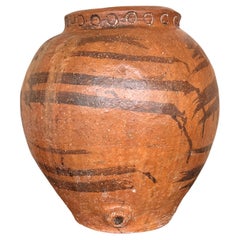
18th Century Handmade Terracotta Olive Jar, Vase with Two Handles, Spain
Located in Miami, FL
This is a terracotta olive jar from central Spain. It has a wonderful aged patina with chalky painted finish. It makes a great statement as a sculpture in a room on a pedestal, alone...
Category

Spanish Baroque Antique 16th Century Decorative Objects

Materials

Terracotta

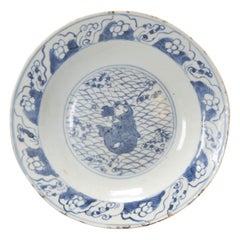
Liu Hai Kosometsuke Antique Chinese Ming Dynasty Plate Porcelain, 16/17th C
Located in Amsterdam, Noord Holland
Beautiful dish in blue and white. This is a Jingdezhen made dish made for the Japanese market. Kosometsuke. Central scene of Liu Hai and the toad. No mark Ad...
Category

Chinese Ming Antique 16th Century Decorative Objects

Materials

Porcelain

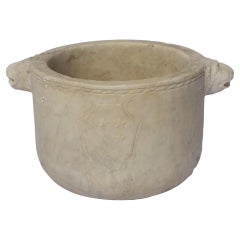
Large White Marble Mortar 16th Century
Located in Bonita Springs, FL
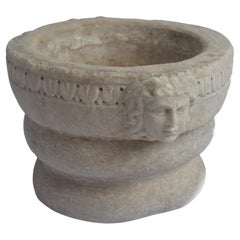
A very large and unique white marble mortar from the 16th century with sculpted side mascarons. This imposing piece has great patina and character. It looks impressive set in a coffe...
Category

Italian Renaissance Antique 16th Century Decorative Objects

Materials

Marble

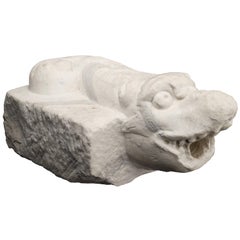
Italian Ancient Marble Sculpture Fountain, Late 16th Century
Located in Milano, IT
Sea monster Carrara marble mouth fountain Italy, late 16th century It measures 13.8 x 31.5 x 18.9 in (35 x 80 x 48 cm) State of conservation: some small evident gaps and widespread signs of wear due to outdoor exposure. The gray marks crossing it do not come from restoration, but are rather the natural veins of the marble. This work has some morphological characteristics typically associated with the iconography of the sea monster: an elongated muzzle, sharp teeth, protruding eyes, elongated ears, and a coiled serpent's tail. An in-depth series of studies on artistic depictions of the sea monster attempted to verify how this symbol evolved in antiquity in the European and Mediterranean contexts and how it gradually changed its image and function over time. The iconography itself is mutable and imaginative and its history is rich with cultural and artistic exchange, as well as the overlapping of ideas. This occurred so much that it is difficult to accurately pinpoint the "types" that satisfactorily represent its various developments. However, we can try to summarize the main figures, starting from the biblical Leviathan and the marine creature that swallowed Jonah (in the Christian version, this figure was to become a whale or a "big fish", the “ketos mega”, translation of the Hebrew “dag gadol”). Other specimens ranged from the dragons mentioned in the Iliad (which were winged and had legs) to "ketos” (also from Greek mythology), the terrifying being from whose Latinized name (“cetus”) derives the word "cetacean". See J. Boardman, “Very Like a Whale” - Classical Sea Monsters, in Monsters and Demons in the Ancient and Medieval Worlds, in Papers presented in Honor of Edith Porada, Mainz am Rhein 1987, pp. 73-84). In Italy the monster underwent yet further variations: it can be found in Etruscan art on the front of some sarcophagi representing the companion of souls, while among the Romans we find the “Pistrice” (cited by Plinio in Naturalis Historia PLIN., Nat., II 9, 8 and by Virgilio in Eneide: VERG., Aen., III, 427), which appeared in the shape of a stylized hippocampus or a very large monstrous cetacean and evolved into a hideous being with a dragon's head and long webbed fins. During the Middle Ages, the sea monster was the object of new transformations: at this time, it is often winged, the head is stretched like a crocodile, the front legs are often very sharp fins - sometimes real paws - until the image merges with dragons, the typical figures of medieval visionary spirituality widely found throughout Europe (on this topic and much more, see: Baltrušaitis, J., Il Medioevo fantastico. Antichità ed esotismi nell’arte gotica, Gli Adelphi 1997). In Italy during the 15th and 16th centuries, the revival of classicism - representative of the humanistic and Renaissance periods - led to a different reading of these "creatures". Indeed, the sea monster was also to find widespread use as an isolated decorative motif, especially in numerous fountains and sculptures where dolphins or sea monsters were used as a characterizing element linked to water (on this theme see: Chet Van Duzer, Sea Monsters on Medieval and Renaissance Maps, London, The British library, 2013). From the morphological point of view, the "sea monsters" of this period are mostly depicted as hybrid figures, in which the body of a mythological or real being (a hippocampus, a sea snake, a dolphin), is joined to a head with a rather indistinct appearance. It was usually characterized by large upright ears, an elongated snout, sharp teeth and globular, protruding eyes; a complex and indefinite figure, both from the symbolic point of view and from that of its genesis. The work we are examining is placed as a cross between the medieval sea serpent and the Renaissance dolphin, with stylistic features which recall the snake as often used in heraldry (such as the "snake" depicted in the coat of arms of the Visconti - the lords and then dukes of Milan between 1277 and 1447 - and which, for some, may be derived from the representations of the “Pistrice” that swallowed Jonah). In the search for sources, Renaissance cartography and in particular woodcuts should not be neglected. See for example the monsters of Olaus Magnus, from the editions of the “Historia de gentibus septentrionalibus” (“History of the peoples of the north”) and the natural histories of Conrad Gesner, Ulisse...
Category

Italian Renaissance Antique 16th Century Decorative Objects

Materials

Carrara Marble

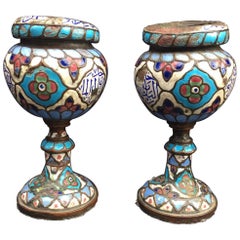
Pair of Islamic Enameled Vessels, Ancient Urns
Located in Vero Beach, FL
This is an exceptional and historic pair of Damascus enameled metalwork vessels or urns. These art objects show signs of rough use and handling through the centuries. Although it is ...
Category

West Asian Islamic Antique 16th Century Decorative Objects

Materials

Enamel

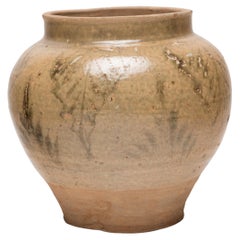
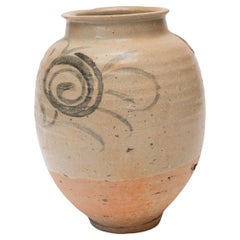
Chinese Ming Cobalt Brushed Storage Jar, c. 1500
Located in Chicago, IL
Warped by fire and eroded by time, this ceramic storage jar from Yunnan province is a testament to the wabi-sabi beauty of provincial Chinese pottery. Dated to the 15th/16th century,...
Category

Chinese Ming Antique 16th Century Decorative Objects

Materials

Earthenware

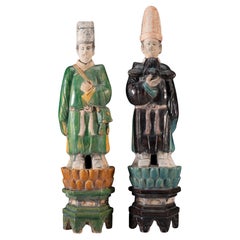
Tall Ming Dynasty Sancai Glazed Dignitary Tomb Figures
Located in Dallas, TX
A Pair of Chinese Enameled Sancai Glazed Pottery Attendant Figures Representing Dignitaries. Ming Dynasty Period. Circa 1600AD Dimensions; 23 x 5.5 x 5.25 inches (58.4 x 13.7 x 13.3 ...
Category

Chinese Ming Antique 16th Century Decorative Objects

Materials

Pottery

Saint Afre of Augsburg
Located in Saint-Ouen, FR
SAINT AFRE OF AUGSBURG ORIGIN : SOUTHERN GERMANY PERIOD : 16th CENTURY Height : 119 cm Width : 50 cm Depth : 28 cm Limewood Good state of conservation Patron Saint of the city and the diocese of Augsburg, the oldest traces of her worship date back to the 6th century. There are several versions of his legend. She is sometimes identified as the daughter of a king of Cyprus whose violent and unexpected death forced her and her mother, Hilaria, to flee. They went to Augsburg via Rome. Others see her origins in Africa instead, her name meaning African in Latin. Settled in Augsburg, they became the owners of a notorious inn where they traded in their charms. Bishop Narcissus of Girona, accompanied by his deacon Felix, found refuge there one day, fleeing the persecution of Emperor Diocletian. As the two men prayed devoutly, Afre was touched by grace and asked to be baptized. She then left her old life and embraced the Christian faith. When the Roman authorities learned of his new vocation, they exhorted her to worship the old gods and to deny the Christian faith. She refused to renounce her faith and was sentenced to be burned alive. Her sentence was applied immediately and she suffered her mart...
Category

Antique 16th Century Decorative Objects

Materials

Wood

Superb Late 16th Century Signed Colonial Japanese Namban Export Lacquer Coffer
Located in Amsterdam, NL
Superb late 16th century signed colonial Japanese Namban export lacquer coffer Momoyama period, late 16th/early 17th century, inscribed 'Arisato' on the bottom H. 30.5 x W. 43...
Category

Japanese Antique 16th Century Decorative Objects

Materials

Cedar, Lacquer

Italian Corpus Christi
Located in S-HERTOGENBOSCH, NL
Hand-carved Italian Corpus Christi with traces of polychromy. This sculpture reflects the transition from Gothic to Renaissance style.
Category

Italian Renaissance Antique 16th Century Decorative Objects

Materials

Wood

Pair of rare statues , Noah and King David, Flanders, early 16th century
Located in PARIS, FR
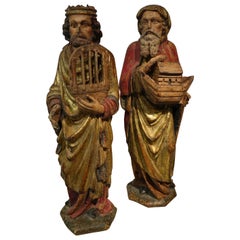
Noah and King David, Flanders, early 16th century Rare wood carvings in the round of Noah holding the Ark and King David holding his lyre. Noah, a biblical figure, is the tenth and l...
Category

Belgian Renaissance Antique 16th Century Decorative Objects

Materials

Wood

16th Century Spanish Gilded Painted Wood Sculpture of Saint Roch
Located in Marbella, ES
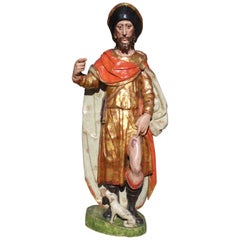
16th century Castilian gold-leaf gilded painted wood sculpture of Saint Roch, where the quality shows in the exceptional realistic skin tone. He is represen...
Category

Spanish Antique 16th Century Decorative Objects

Materials

Wood

Large White Marble Mortar 16th Century with carved Lateral Mascarons.
Located in Bonita Springs, FL
A very large and unique white marble mortar from the 16th century with sculpted side mascarons. Mascaron were decorative architectural element in the form of a sculpted face or head...
Category

Italian Baroque Antique 16th Century Decorative Objects

Materials

Marble

Chinese Ming Cobalt Brushed Oil Bottle, c. 1500
Located in Chicago, IL
This elegant ceramic vessel is a Ming-dynasty (1368-1644) bottle originally used for storing oil or sauces. Dated to the 15th/16th century, the small bottle has a gracefully curved f...
Category

Chinese Ming Antique 16th Century Decorative Objects

Materials

Earthenware

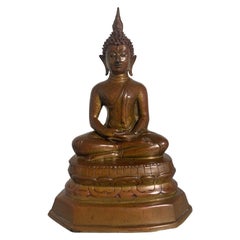
Northern Thai Lan Na Bronze Buddha Seated in Meditation, 15th-16th Century
Located in Austin, TX
A lovely northern Thai cast bronze seated meditating Buddha statue with shell inlaid eyes, style of Wat Chedi Luang, Lan Na Kingdom, region of Chiang Mai, 15th-16th century.  The statue of the historical Buddha, Shakyamuni, is portrayed in dhyanasana, seated upon a double lotus pedestal atop a raised platform. His legs in virasana, the half lotus position, hands in dhyana mudra, the gesture of meditation. The Buddha's face is youthful and pleasant, reminiscent of faces of contemporaneous Sukhothai Buddha...
Category

Thai Antique 16th Century Decorative Objects

Materials

Bronze

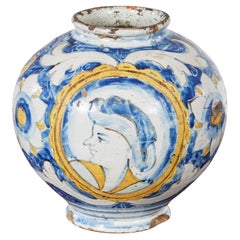
Patron s Polychrome Drug Jar
Located in Greenwich, CT
A rare Italian late 16th century drug jar of cylindrical form with polychrome decoration in blue and yellow on a white ground featuring a portrait of the town's patron in a fancy hat...
Category

Italian Antique 16th Century Decorative Objects

Materials

Ceramic

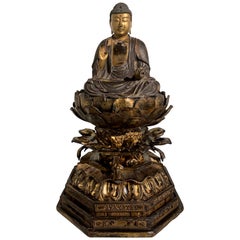
Japanese Giltwood Medicine Buddha, Yakushi Nyorai, Muromachi Period 16th Century
Located in Austin, TX
A striking Japanese late Muromachi Period (1333-1573) lacquered and giltwood figure of Yakushi Nyorai, the Medicine Buddha, seated upon an elaborate car...
Category

Japanese Edo Antique 16th Century Decorative Objects

Materials

Rock Crystal

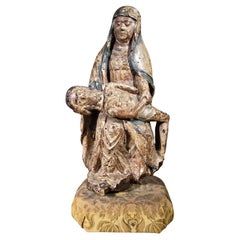
Rare 16th-Century French Polychrome Wooden Pietà Sculpture
Located in Madrid, ES
This rare and extraordinary 16th-century French sculpture depicts the iconic Pietà, showcasing exceptional craftsmanship and emotional depth. Finely carved from wood and adorned with...
Category

Antique 16th Century Decorative Objects

Materials

Fruitwood

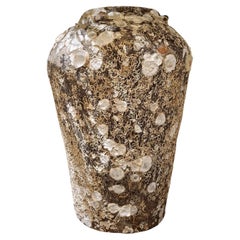
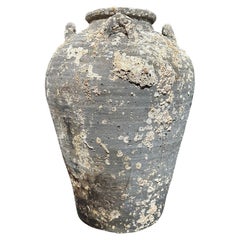
16th Century Vietnamese Large Unusual Shape Shipwreck Vessel, Vietnam
Located in New York, NY
16th century Vietnamese large unusual shape shipwrecked vessel. Beautiful and natural patina from being submerged under water. Part of a very large coll...
Category

Vietnamese Antique 16th Century Decorative Objects

Materials

Ceramic

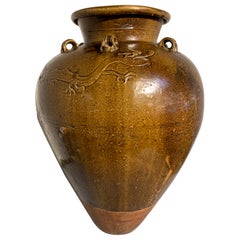
Chinese Ochre Brown Glazed Martaban Jar, Ming Dynasty, 15th-16th Century
Located in Austin, TX
A fine and large Chinese brown ochre glazed stoneware storage jar, commonly known as a Martaban or Martavan jar, Ming dynasty, 15th-16th century. The elegant ovoid jar with a slen...
Category

Chinese Ming Antique 16th Century Decorative Objects

Materials

Stoneware

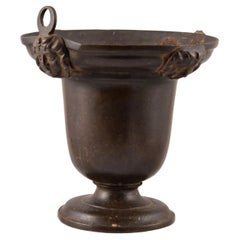
Bronze Situla, 16th Century
Located in Madrid, ES
Acetre. Bronze. Century XVI. Bronze piece that has a circular foot, and a circular body, with an outwardly hollowed mouth at the top, and a decoration in relief in this last area o...
Category

European Renaissance Antique 16th Century Decorative Objects

Materials

Bronze

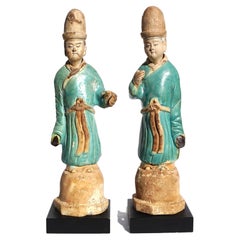
Pair Ming Dynasty Glazed Pottery Dignitary Figures
Located in Dallas, TX
A pair of Ming dynasty sancai blue glazed pottery figures. Circa 1500 AD Ming Dynasty I have owned over 250 ming tomb figures including over 80...
Category

Chinese Ming Antique 16th Century Decorative Objects

Materials

Pottery

Sawankhalok Ship Wreck Jar from the Kingdom of Sukhothai, Thailand, 16th Century
Located in Jimbaran, Bali
A wonderful example of a 16th Century Sawankhalok jar from a Shipwreck off the Coast of the Indonesian Island of Batam. Batam was one of the most substantial and influential ports in...
Category

Thai Other Antique 16th Century Decorative Objects

Materials

Ceramic

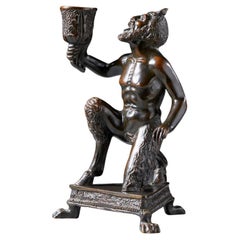
Calzetta Da Ravenna Severo Candlestick Depicting a Kneeling Satyr
By Severo Calzetta da Ravenna
Located in Milano, IT
Calzetta Da Ravenna (Attivo Tra IL 1496 E IL 1543 circa) Severo. Circle of. Candlestick depicting a kneeling satyr. The model of the present bronze is the ""kneeling satyr"" attributed to Severo Calzetta da Ravenna, one of the main Paduan bronze sculptors of the first half of the 16th century, whose figure was rediscovered by Planiscig in 1935 (L. Planiscig, ""Severo da Ravenna...
Category

Italian Renaissance Antique 16th Century Decorative Objects

Materials

Bronze

Oak Sculpture of Saint Anne, 16th Century.
Located in Saint-Ouen, FR
Oak sculpture of Saint Anne, 16th century. Large oak sculpture of Saint Anne. Work from the Upper Rhine, Basel region. First third of the 16th century. An arm is missing from the i...
Category

French Renaissance Antique 16th Century Decorative Objects

Materials

Oak

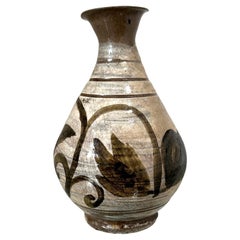
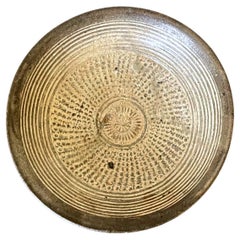
Korean Glazed Ceramic Vase Buncheong Ware Joseon Dynasty
Located in Atlanta, GA
A small antique Korean Buncheong stoneware vase from early Joseon Dynasty circa 16th century. The vase is of a classic pear form with a waisted neck, a flared mouth and a ringed base...
Category

Korean Other Antique 16th Century Decorative Objects

Materials

Ceramic

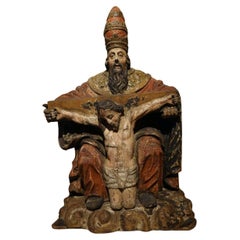
Trinity , Polychrome Sculpture , Germany, circa 1550
Located in PARIS, FR
Trinity in carved and polychromed wood, in the round, the back partially hollowed out. It is represented here as a "Throne of Grace". In this original formula, which probably origina...
Category

Antique 16th Century Decorative Objects

Materials

Wood

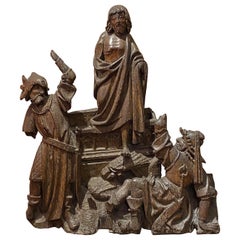
Carved Wood Depicting the Resurrection of Christ
Located in Saint-Ouen, FR
Carved wood depicting the resurrection of Christ ORIGIN : SOUTHERN NETHERLANDS, ANTWERP PERIOD : EARLY 16th CENTURY Height : 67.5 cm Len...
Category

Antique 16th Century Decorative Objects

Materials

Oak

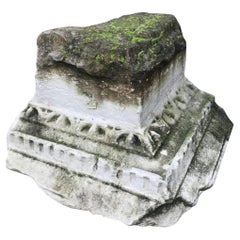
16th C. Hand Carved Capital Stone Base Architectural Element Sculpture Pedestal
Located in West Hollywood, CA
16th C. Hand Carved Capital Stone Base Architectural Element Sculpture Pedestal. Very rare 16th Century Renaissance corner Capital . Hand carved limestone Chapiteau Capital from a Cloister in France . From an ornamental point of view , it is the coronation , the upper part of a post or a column or pilaster pillar . A beautiful Architectural element garden ornament . It can used as a Base for a coffee glass table , or as a side table for drinks or to mount books. A stunning Fragments to be used as stand for a sculpture . Use it as a pedestal or as a mounted decorative object. In an entryway a bathroom a living room , in an office , it will create an incredible focal point . It can make a beautiful base for a floor lamp by a leather reading chair...
Category

French Renaissance Antique 16th Century Decorative Objects

Materials

Stone, Limestone

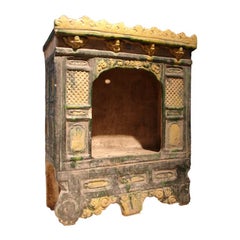
Chinese Ming Dynasty Sancai Glazed Pottery Architectural Model, 16th Century
Located in Austin, TX
An unusually large Chinese Ming Dynasty glazed pottery architectural model of a shrine or cabinet, Ming Dynasty (1368 - 1644), circa 16th century, China. The shrine model crafted o...
Category

Chinese Ming Antique 16th Century Decorative Objects

Materials

Pottery

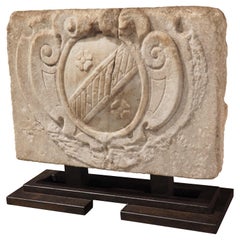
Carved and Mounted Marble Stemma Cartouche from Tuscany, Italy, 16th Century
Located in Dallas, TX
The carvings of this marble stemma cartouche dates to the 1500’s. Hand-carved in Tuscany, Italy, the marble was mounted onto a geometrically shaped iron stand within the last century...
Category

Italian Antique 16th Century Decorative Objects

Materials

Marble

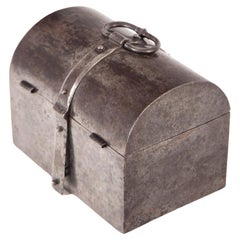
Rare 16th Century Nuremberg Box
Located in Madrid, ES
Rare 16th century Nuremberg box In iron, measurements: 13 x 18 x 12 cm Good condition.
Category

German Baroque Antique 16th Century Decorative Objects

Materials

Iron

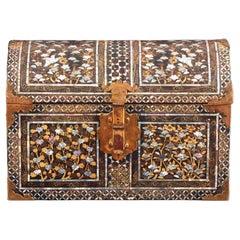
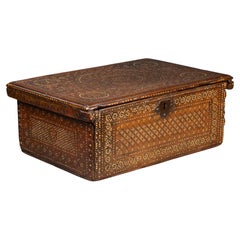
Hispano-Moresque Mudéjar Bone-Inlaid Walnut Chest
 - Spain, 16th century
Located in Bruxelles, BE
Hispano-Moresque Mudéjar Bone-Inlaid Walnut Chest
 Spain, 16th–17th century 
Walnut, bone inlay, iron fittings
 44.5 × 30.5 × 18 cm This rectangular walnut chest, richly ornamented ...
Category

Spanish Renaissance Antique 16th Century Decorative Objects

Materials

Bone, Walnut

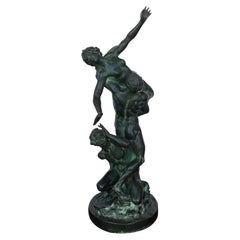
Jean Boulogne Bronze Sculpture
Located in Los Angeles, CA
Jean Boulogne bronze sculpture "Abduction of the Sabine Women" a verdigris patinated bronze figured group on a circular stylized. Base signe "Jean Bologne".
Category

Italian Antique 16th Century Decorative Objects

Materials

Bronze

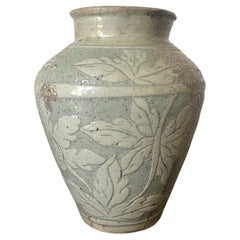
Antique Korean Buncheong Ceramic Vase with Incised Designs
Located in Atlanta, GA
A Korean ceramic bottle form jar of Buncheong ware circa 15-16th century Joseon Dynasty. The surface of the jar features a celadon glaze and an elaborate incised design of large flor...
Category

Korean Archaistic Antique 16th Century Decorative Objects

Materials

Ceramic

Sculpture of John The Baptist, 16th Century
Located in North Miami, FL
Early 16th Century Spanish gold gilded and polychromed carved wood sculpture of John The Baptist.
Category

Spanish Renaissance Antique 16th Century Decorative Objects

Materials

Gold Leaf

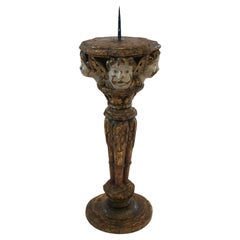
Renaissance Painted Giltwood Pricket with Cherubs - France - Circa 1580
Located in Chatham, ON
Renaissance period painted and giltwood candle holder or pricket - featuring four elaborately hand carved winged cherubs beneath an octogonal platform with the original hand forged i...
Category

French Renaissance Antique 16th Century Decorative Objects

Materials

Gesso, Wood, Paint

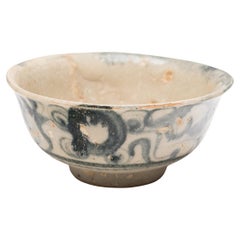
Chinese Ming Blue White Rice Bowl, c. 1600
Located in Chicago, IL
This Ming-dynasty (1368-1644) bowl is attributed to the kilns of Yunnan province, brushed with dark cobalt underglaze in a pattern of loops and spirals reminiscent of ancient bronze ...
Category

Chinese Ming Antique 16th Century Decorative Objects

Materials

Earthenware

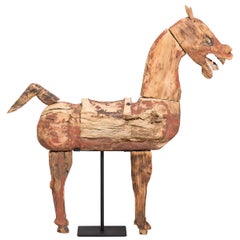
Chinese Ming Celestial Mingqi Horse Figure
Located in Chicago, IL
This hand carved Chinese wooden horse is a type of centuries-old burial figurine known as míngqì. Depicting the pleasures of daily life, míngqì f...
Category

Chinese Ming Antique 16th Century Decorative Objects

Materials

Wood

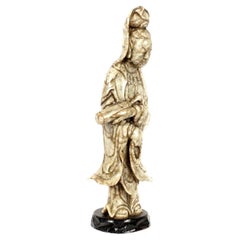
Chinese Jade Figure of Guanyin
Located in Bradenton, FL
Most likely Ming 15th/16th Century, carved chicken bone jade figure of a standing Guanyin (Quanyin) holding a scroll in one hand, prayer beads in the other. Affixed to carved wood ba...
Category

Chinese Ming Antique 16th Century Decorative Objects

Materials

Organic Material

Small Korean Stoneware Bungcheong Bowl Joseon Dynasty
Located in Atlanta, GA
A small Korean ceramic shallow bowl on ringed foot in the classic Buncheong (or Punch'ong) style from Joseon Dynasty circa 15-16th century. Originally intended for wine-drinking like...
Category

Korean Archaistic Antique 16th Century Decorative Objects

Materials

Ceramic

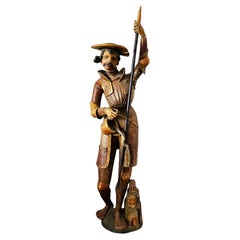
16th C. Polychromed Carved St. Florian, Former N. Rothschild Collection
Located in Doha, QA
From the esteemed former collection of Baron Nathaniel de Rothschild, this exquisite early 16th-century polychromed carved wood figure of St. Florian stands as a rare example of late...
Category

German Gothic Antique 16th Century Decorative Objects

Materials

Wood, Giltwood

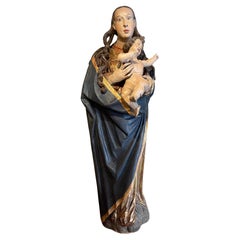
Large Virgin and Child, Tyrol, 16th century
Located in PARIS, FR
Large wooden Madonna and Child, painted and carved in hollow at the back. The theme of the Virgin and Child is the most represented in all Christian art, whereas the infancy of Jesus...
Category

German Renaissance Antique 16th Century Decorative Objects

Materials

Wood, Pine

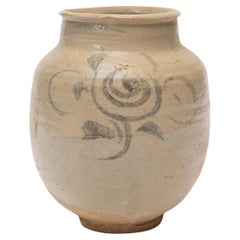
Chinese Ming Cobalt Brushed Jar, c. 1600
Located in Chicago, IL
This Ming-dynasty (1368-1644) storage jar is attributed to the kilns of Yunnan province, loosely decorated with cobalt underglaze in a manner typical of the region. Dated to the 15th...
Category

Chinese Ming Antique 16th Century Decorative Objects

Materials

Earthenware

Chinese Ming Cobalt Brushed Jar, c. 1600
Located in Chicago, IL
This Ming-dynasty (1368-1644) storage jar is attributed to the kilns of Yunnan province, loosely decorated with cobalt underglaze in a manner typical of the region. Dated to the 15th...
Category

Chinese Ming Antique 16th Century Decorative Objects

Materials

Earthenware

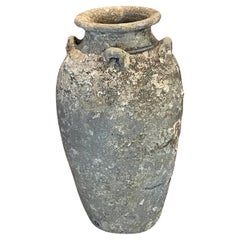
16th Century Fossil Embedded Shipwreck Vase, Sawankhalok, Thailand
Located in New York, NY
16th century Thailand Sawankhalok ceramic vase from the old city of Sawankhalok known for its pottery. Beautiful and abundant fossil growth from being submerged under water. Natural ...
Category

Thai Antique 16th Century Decorative Objects

Materials

Ceramic

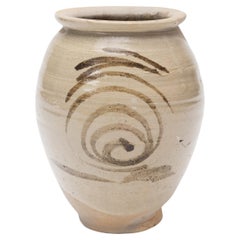
Chinese Ming Iron Brushed Jar, c. 1600
Located in Chicago, IL
This Ming-dynasty (1368-1644) storage jar is attributed to the kilns of Yunnan province, loosely decorated with iron underglaze in a manner typical of the region. Dated to the 15th/1...
Category

Chinese Ming Antique 16th Century Decorative Objects

Materials

Earthenware

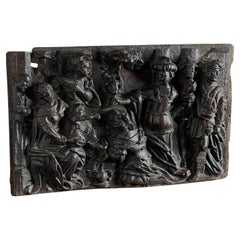
A deep and well carved panel English oak 16th century
Located in Bakewell, GB
A deep and well carved panel English oak with many figures in deep relief and a good colour Circa 1520 33cms wide x 21cms high
Category

English Antique 16th Century Decorative Objects

Materials

Oak

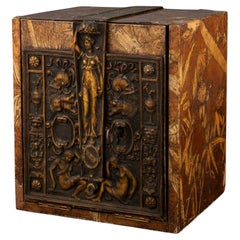
Rare Important 16th Century Italian Bronze Jacopo Lodovico del Duca Table Box
Located in Forney, TX
A magnificent antique fall-front box with scarce Medieval period bronze lockplate and hasp attributed to Jacopo and Lodovico del Duca. Featuring an important Lockplate and Hasp designed circa 1570, exact date of manufacture unknown, attributed to the late 16th century Roman foundry of Jacopo 1520-1604) and Ludovico (1551-1601) del Duca, with no apparent signatures or hallmarks which is typical of the era, but we did not remove it and inspect the back. Boxes such as this hand various uses but were frequently used by merchants as a writing box - slope during travel and trade, as a small coffer - strong box for storing important documents, money and valuables, as well as a jewelry casket. This hand-crafted European drop-front box dates to the late 19th century, signed L'PUPLET, adorned with a significantly older Italian fine quality cast bronze lockplate with intricate Renaissance era reliefs, including figures, coat-of-arms, and elongated hasp, mounted on a chest of drawers form solid wooden case, wrapped in exotic Japanesque embossed and gilded metallic paper, having a locking fall-front panel with original key included, opening to reveal three interior drawers, all lined in red velvet. circa 1875 The visually striking textured wallpaper covering the box's exterior displays bamboo, birds, and flowers in the oriental Japanesque taste popular in Europe in the 1860s and 1870s following the forced reopening of foreign trade with Japan in 1858 and the ensuing Japonisme craze. To the interior of the fall front panel is a gilt circular stamp with the somewhat obscured name of the workshop or store (likely) "L'PUPLET" and the city "Burxelles" which is in Brussels, indicating the box was likely made or retailed there. Marks to box: L'PUPLET, BRUXELLES Inscription: 13, 14, 15 (Interior drawers inscribed on the verso of their backboards in script from top to bottom, respectively) Provenance / Acquisition: The origin of the elaborate lockplate with hasp on the front of the piece is more intriguing. At least 76 lockplates of this design have been recorded in major museums, private collections, and in the antiques trade across the Western World. For example, lockplates of this pattern are in the collections of the Rijksmuseum in Amsterdam, the State Museum of Prussian Cultural Heritage in Berlin, the Museum Cicico in Bologna, The Museum of Fine Arts in Boston, the Dallas Museum of Art in Texas, the Victoria & Albert Museum in London, the Museo di Palazzo Venezia in Rome, the State Hermitage Museum in St. Petersburg, and the National Gallery of Art in Washington, DC.[1] Specialists in Renaissance bronzes, especially Charles Avery...
Category

Italian Japonisme Antique 16th Century Decorative Objects

Materials

Bronze, Metal

Still Thinking About These?

All Recently Viewed