18th Century and Earlier Decorative Objects
to
1,166
6,595
26,225
86,361
29,440
15,757
36,018
20,614
2,492
1,092
3,340
4,244
2,259
6,177
8,421
7,952
3,516
1,879
619
422
355
210
181
130
53
36
24
15
14
13
11
6
3
1
1
2,168
1,990
1,719
1,474
881
3,250
2,842
3,957
1,574
1,170
1,016
855
Height
to
Width
to
6,595
6,595
6,595
206
43
28
12
12
Period: 18th Century and Earlier
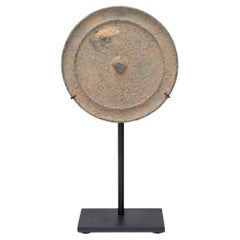
Chinese Ming Bronze Mirror, c. 1450
Located in Chicago, IL
This petite Chinese bronze mirror has the simple beauty and undeniable texture of an ancient object. Though an exact date is unknown, the mirror's round form, double ring edge and un...
Category

Chinese Ming Antique 18th Century and Earlier Decorative Objects

Materials

Bronze

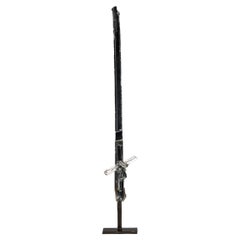
Silver Sword – Stibnite
Located in London, GB
An extraordinary stibnite specimen from China, with a tall, elongated crystal formation that evokes the shape of a silver sword. Its sleek, metallic lustre and refined symmetry give ...
Category

Chinese Antique 18th Century and Earlier Decorative Objects

Materials

Crystal, Rock Crystal

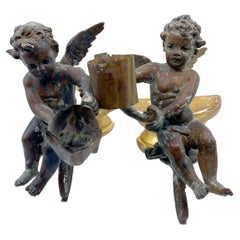
Pair Antique Bronze Patinated Putti Angel Sconces
Located in New York, NY
Pair antique bronze patinated angel putti sconces. Italian late 17th century bronze putti with exceptional modeling seated on scrolled arms each ex...
Category

Italian Baroque Antique 18th Century and Earlier Decorative Objects

Materials

Bronze

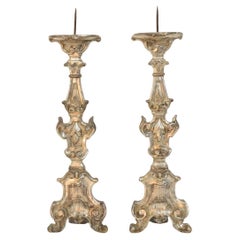
Couple of 18th Century Italian Baroque Carved Wooden And Silvered Candlesticks
Located in Buisson, FR
Great pair of carved wooden candleholders with their beautiful silver leaf gilding. Italy, circa 1750-1800. Weathered and small losses and old repairs. More photo's available on requ...
Category

Italian Baroque Antique 18th Century and Earlier Decorative Objects

Materials

Wood

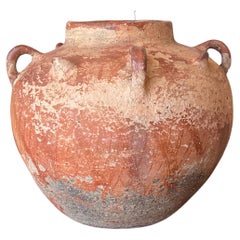
18th Century Terracotta Vessel, Vase, Planter with Four Handles
Located in Miami, FL
Old tinaja of Calanda (Teruel), Spain. Made of red clay with handcrafted circular figures and four handles. A "tinaja" is an oval terracotta jar with a narrow mouth and foot, usu...
Category

Spanish Baroque Antique 18th Century and Earlier Decorative Objects

Materials

Terracotta

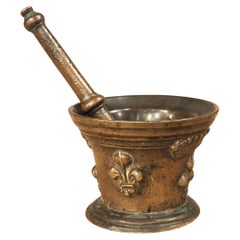
Small French Bronze Mortar and Pestle with Fleur De Lys and Crown, Circa 1700
Located in Dallas, TX
This small bronze mortar and pestle are from France, circa 1700. The circular opening has several layers of molding, with the bottom three interrupted by a pair of open crowns on opp...
Category

French Louis XIV Antique 18th Century and Earlier Decorative Objects

Materials

Bronze

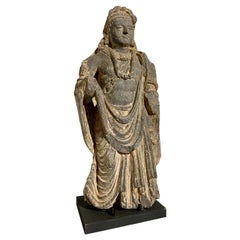
Gandharan Standing Bodhisattva Maitreya, Carved Black Schist, 2nd-4th Century
Located in Austin, TX
An impressive and well carved Gandharan figure of the Bodhisattva Maitreya, the Buddha of the Future, carved black schist, ancient Kingdom of Gand...
Category

Pakistani Antique 18th Century and Earlier Decorative Objects

Materials

Schist

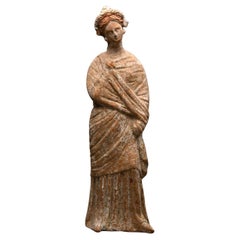
Ancient Greek Terracotta Female Figure
Located in Los Angeles, CA
This is a superb Hellenistic terracotta female figure with an host of delicate remaining details and finely painted elements. A finely pleated himation envelops both of her arms and...
Category

Greek Classical Greek Antique 18th Century and Earlier Decorative Objects

Materials

Terracotta

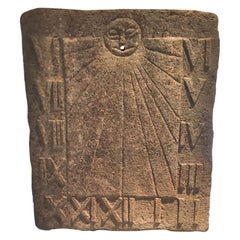
18th Century French Stone Sundial
Located in Vosselaar, BE
A impressive late 18th century French sandstone sundial mounted on a custom lade iron stand. The Latin numerals finely carved at both sides an...
Category

French Neoclassical Antique 18th Century and Earlier Decorative Objects

Materials

Sandstone

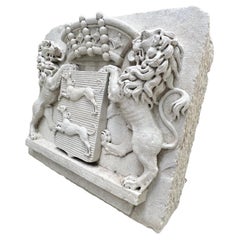
A Heavy Carved Stone Armorial Relief from a Chateau in Nice, France, Circa 1700
Located in Dallas, TX
More information coming soon… Dating to circa 1700, this heavy stone armorial has been hand-carved in relief. The 9 1/2 inch thick stone was found on a chateau in Nice, France. Th...
Category

French Antique 18th Century and Earlier Decorative Objects

Materials

Stone

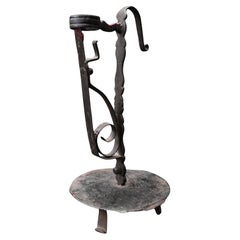
Antique Forged Iron Candlestick – 17th Century
Located in Bilzen, BE
A rare hand-forged wrought iron candlestick, likely dating to the 17th century, with beautiful scrollwork and a practical tripod base. Entirely hand-worked by a blacksmith, it featur...
Category

French Baroque Antique 18th Century and Earlier Decorative Objects

Materials

Iron

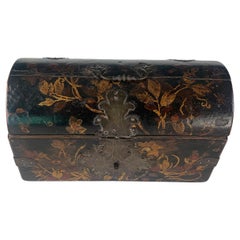
Early 18th Century Black Japanned Trinket/Jewel Box
Located in Folkestone, GB
An exceptionally rare early 17th century, James I/Charles I, black Japanned jewel box decorated with gold and red flowers and foliage. With a domed lid, o...
Category

English Elizabethan Antique 18th Century and Earlier Decorative Objects

Materials

Wood

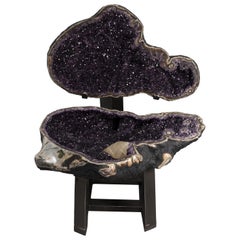
Purple Polished Amethyst White Calcite Grey Agate Decorative object Sculpture
Located in London, GB
This is an extraordinarily complete geode, split in two and mounted atop a custom metal Stand. This piece celebrates the visual phenomenon of the geode in its entirety, with some par...
Category

Uruguayan Organic Modern Antique 18th Century and Earlier Decorative Objects

Materials

Agate, Amethyst, Quartz

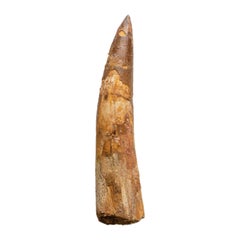
Genuine Natural Spinosaurus Dinosaur Tooth
Located in New York, NY
Spinosaurus (meaning "spine lizard") is a genus of theropod dinosaur that lived in what now is North Africa, during the upper Albian to upper Turonian stages of the Cretaceous period...
Category

Antique 18th Century and Earlier Decorative Objects

Materials

Other

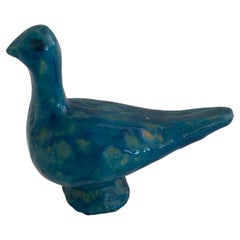
Ming Dynasty Blue Glazed Terra Cotta Bird
Located in Los Angeles, CA
Ming Dynasty Blue Glazed Terra Cotta Bird. Very rare early Ming Dynasty Blue Glazed Terra Cotta sourced from our Paris Offices at Chateau de Vitray. Beautiful blue tone glazing.
Category

Chinese Ming Antique 18th Century and Earlier Decorative Objects

Materials

Terracotta

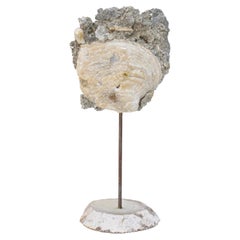
Fossilized Clamshell with Naturally Formed Pearl on Polished Agate Base
Located in Dublin, Dalkey
Fossilized clamshell with a natural forming pearl and mounted on a polished agate base. This unique type of fossilized clamshell can be up to 1.5 to 2 million years old. The striki...
Category

American Organic Modern Antique 18th Century and Earlier Decorative Objects

Materials

Agate, Metal

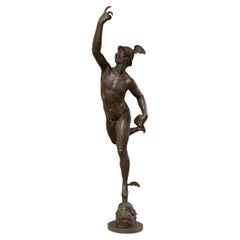
French Artist, Life-Size Statue of Hermes, Bronze, France, 18th Century
By Giambologna
Located in Manhasset, NY
Life-sized Bronze Statue of Hermes, 18th Century, French, After Giambologna Direct, as seen photographed, from a Greenwich CT mansion comes t...
Category

Antique 18th Century and Earlier Decorative Objects

Materials

Bronze

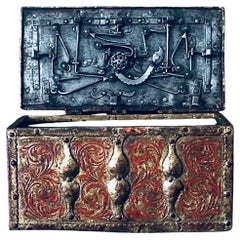
Antique 16th century Venetian Painted Gold Gilt Iron Strongbox with Original Key
Located in Doha, QA
An extraordinarily rare and visually striking 16th-century Venetian iron treasure coffer, showcasing the height of Renaissance artistry and engineering. Crafted in the early to mid-1...
Category

Italian Renaissance Antique 18th Century and Earlier Decorative Objects

Materials

Gold, Iron

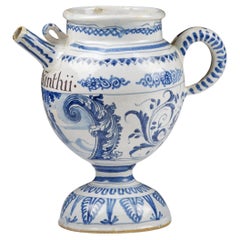
18th Century Absinthe Wet Drug Apothecary Jar
Located in Pease pottage, West Sussex
18th Century Absinthe infusion Albarello or Wet Drug Jar, Interesting Rare Jar. Historical Repairs. Circa 1760.
Category

Italian Antique 18th Century and Earlier Decorative Objects

Materials

Faience

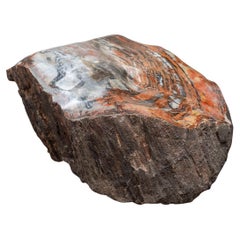
Genuine Polished Petrified Wood Stump from Arizona
Located in New York, NY
This large and beautiful hand-polished petrified wood stump is sourced from Arizona and polished to a mirrored finish. It has an amazing pattern with vibrant hues of brown, yellow, a...
Category

American Antique 18th Century and Earlier Decorative Objects

Materials

Other

Japanese antique pottery [Tamba] jar / Edo period / 1600s / Beautiful glazed
Located in Sammu-shi, Chiba
This is a Tamba ware jar produced in Japan during the early Edo period (circa 17th century). Tamba ware, along with Seto, Tokoname, Echizen, Shigaraki, and Bizen, is known as one of ...
Category

Japanese Edo Antique 18th Century and Earlier Decorative Objects

Materials

Pottery

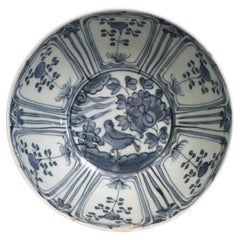
Antique Ming Dynasty Chinese Export Porcelain Swatow Blue White Bowl
Located in Wilton, CT
Antique Chinese late Ming Dynasty export porcelain Swatow ware blue & white bowl, Wanli period, early 17th century. Circa 1600-1620. Relatively fine decoration for Swatow ware with d...
Category

Chinese Ming Antique 18th Century and Earlier Decorative Objects

Materials

Porcelain

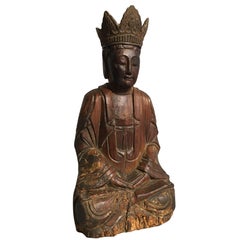
Chinese Carved Wood Bodhisattva Guanyin, Late Ming Dynasty, 17th Century
Located in Austin, TX
An attractive carved wood figure of the Bodhisattva Avalokiteshvara, known as Guanyin in China, late Ming Dynasty, early 17th century, China. Guanyi...
Category

Chinese Ming Antique 18th Century and Earlier Decorative Objects

Materials

Gesso, Wood

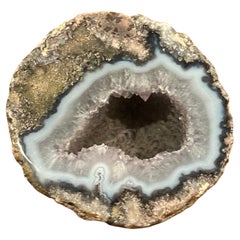
Vintage Cut Geode Paperweight
Located in San Diego, CA
A very nice vintage cut geode paper weight, circa 1960s. The piece is in very good condition with wonderful brown, tan, grey and blue colors and measures ...
Category

American Mid-Century Modern Antique 18th Century and Earlier Decorative Objects

Materials

Quartz

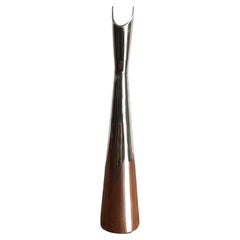
Lino Sabattini Silverware "Cardinale" Vase for Christofle, France, 1956
Located in Reggio Emilia, IT
A France Mid-Century Modern design vase model “Cardinale” in silvered metal designed by Italian artist Lino Sabattini for Christofle France in 1956,...
Category

French Mid-Century Modern Antique 18th Century and Earlier Decorative Objects

Materials

Silver Plate, Metal

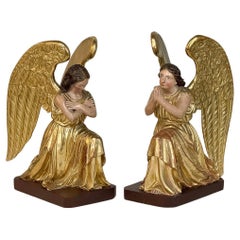
Pair 18th Century Hand-Carved Polychromed Wood Angels
Located in Dallas, TX
Pair 18th Century Hand-Carved Polychromed Wood Angels are amazingly well preserved and perfect for any devotional display. Sculpted from solid blocks of walnut, each features amazin...
Category

French Baroque Revival Antique 18th Century and Earlier Decorative Objects

Materials

Walnut, Paint

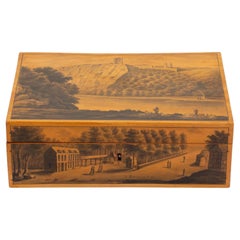
Original Antique Belgium Spa Sewing Box with Secret Compartment
Located in Northampton, GB
Painted with Spa Scenes From our Sewing Box collection, we are delighted to offer this Original Spa Sewing Box. The Sewing Box of rectangular form made from Sycamore is extensively decorated with Spa scenes to each side which include; la Sauvenière, la Géronstère, le Tonnelet, les Cascades de Coo and vue du aviny du château dimbles. When opened the box reveals a light pink lined sewing box with multiple compartments for storage and tools. The interior lid is finished with a framed panel of rauch velvet and an outer border of simulated ropework. The Sewing Box also contains four original spa spinners with painted scenes and a central lidded compartment painted with a further spa scene of la place du spa at lo fontaine du pouhon. Beneath the lid is a secret compartment which can be accessed by removing the rear panel which reveals a small handled drawer. The Spa Box...
Category

Belgian George III Antique 18th Century and Earlier Decorative Objects

Materials

Sycamore

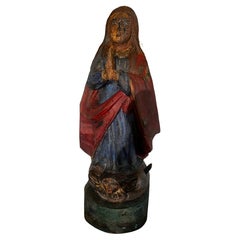
18th Century Italian Carved Wood Polychrome Virgin Mary Sculpture
Located in Doha, QA
This is an outstanding Italian 18th century carved wood polychromed sculpture of Virgin Mary. The Sculpture is hand painted with some remains of a gold gilt in few places and originated until lately in a private Villa in Tuscany (Italy). The colors are typical red, blue and green are spectacular on this large figure. The Virgin's hands are joined together in a prayer, while standing on a pedestal on the both sides of which are devil's horns (bottom left side horn missing ) symbolising Holly Mary defeating the Evil, protected by the Holly Ghost and an Angel. A story tells the pose of the Virgin Mary sculpture...
Category

Italian Baroque Antique 18th Century and Earlier Decorative Objects

Materials

Wood, Pine

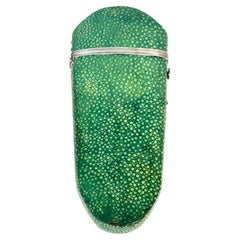
18th Century Green Shagreen and Silver Eyeglass Case with Monogram
Located in West Palm Beach, FL
18th Century Green Shagreen and Silver Eyeglass Case with Monogram England or France, circa 1760–1780 Dimensions: 5" H × 2.5" W × 0.5" D Interior measures 3"d x 1.25 w A refined G...
Category

European Georgian Antique 18th Century and Earlier Decorative Objects

Materials

Silver

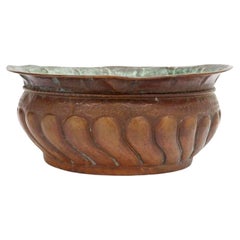
18th Century Continental European Hammered Copper Wine Cistern
Located in Forney, TX
A scarce Continental hammered copper wine cistern dating to the 18th century, with beautifully aged verdigris patina! The European antique having gadro...
Category

European Antique 18th Century and Earlier Decorative Objects

Materials

Copper

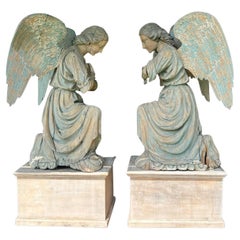
Pair of Large 18th Century Hand Carved Angel Statues
Located in Sag Harbor, NY
This is a pair of jaw dropping hand carved angles. Each figure is carved with an individual face and pose. Removed from a Church in Europe and brought to the States in the 1990's. Th...
Category

French Baroque Antique 18th Century and Earlier Decorative Objects

Materials

Hardwood

17th Century Italian Renaissance Walnut Bible Box
Located in Viterbo, VT
Bible box hand-crafted in Italy in the mid 1600s using walnut. The box is still in fantastic shape and has a gorgeous patina. On three sides it is decorated with beautiful hand-carve...
Category

Italian Renaissance Antique 18th Century and Earlier Decorative Objects

Materials

Walnut

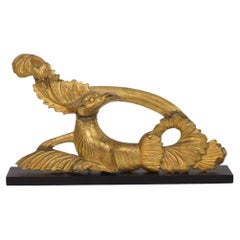
Italian 18th/ 19th Century Carved Giltwood Neo Classical Style bird Ornament
Located in Buisson, FR
Beautiful handcarved giltwood bird ornament. Italy circa 1780-1820 . Weathered and small losses and old repairs Measurements include the wooden base. H:23cm W:41cm D:6,5cm
Category

Italian Neoclassical Antique 18th Century and Earlier Decorative Objects

Materials

Wood

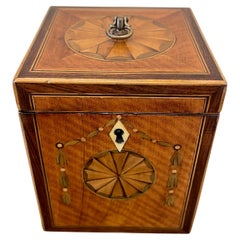
English Inlaid Mahogany Tea Caddy with Elaborate Crossbanding and Swag Inlay
Located in San Francisco, CA
An extremely fine quality inlaid mahogany tea caddy of elegant small size, the top and front with elaborate crossbanding and circular fan inay, the front with further swag inlay, the...
Category

English George III Antique 18th Century and Earlier Decorative Objects

Materials

Boxwood, Mahogany, Rosewood

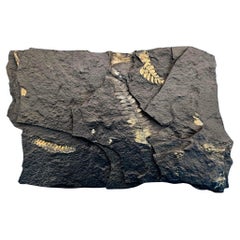
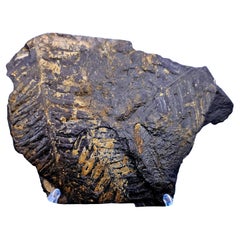
8.5" Polymorphopteris Species Natural Tree Fern Fossil Specimen, 305 million yrs
Located in Warrenton, OR
8.5" Polymorphopteris Species Natural Tree Fern Fossil Specimen, 305 million yrs old apx. Discovered in Pennsylvania. Here is another gorgeous plant fossil specimen that would make a...
Category

American Prehistoric Antique 18th Century and Earlier Decorative Objects

Materials

Organic Material

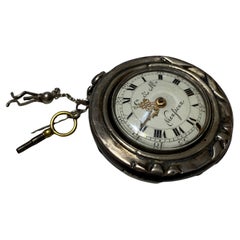
Silver Travel Clock 1700 Jean et Michel Vieusseux
Located in Palermo, Sicily
Silver Travel Clock 1700 Jean et Michel Vieusseux
Category

Romantic Antique 18th Century and Earlier Decorative Objects

Materials

Silver

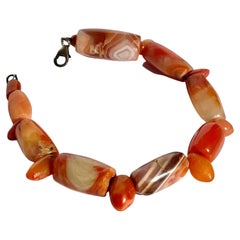
Pre Colombian Tairona Carnelian Bead Bracelet
Located in Dallas, TX
Circa 1000 - 1500 CE Pre Colombian. Columbia, Tairona. Beads. A lovely bracelet of a wearable comprised or 17 seed form, tubular and ovoid beads carve...
Category

Colombian Pre-Columbian Antique 18th Century and Earlier Decorative Objects

Materials

Carnelian

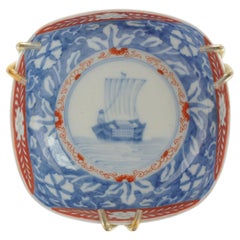
Antique Japanese Porcelain 19th c Meiji Arita Polychrome bowl SHIP
Located in Amsterdam, Noord Holland
Sharing with you this unusual and magnificent bowl from the Meiji period (19th century). It has a very interesting and lovely blue, red and gold scene Unmarked at the base. Conditi...
Category

Japanese Meiji Antique 18th Century and Earlier Decorative Objects

Materials

Porcelain

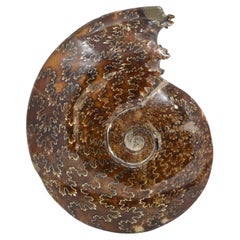
Whole Ammonite Fossil, Mineral Specimen, Jurassic Cretaceous Period #HJA
Located in Point Richmond, CA
Madagascar Jurassic - Cretaceous Period, 200 - 145 million years old 8.75 x 7 x 2 in. / 22 x 18 x 5 cm Weight: 4 lbs 14 oz/ 2.065 kg Ammonites were cephalopods that resembled a s...
Category

Malagasy Other Antique 18th Century and Earlier Decorative Objects

Materials

Precious Stone

Fossil Crocodile Tooth imbedded Int Turtle Shell
Located in New York, NY
This extraordinary fossil specimen captures a dramatic moment from the Upper Cretaceous period 70 million years ago: a Leidyosuchus crocodilian tooth embedded in the fossilized shell...
Category

American Antique 18th Century and Earlier Decorative Objects

Materials

Other

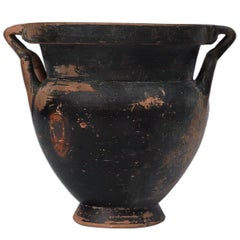
Greek Black Glazen Column Krater (4th Century BC)
Located in Soho, London, GB
Black Glazen Column Krater mid-4th century BC, Apulia With broad avoid body on a short echinus foot and thick mouth. The two handles form loops around the...
Category

Italian Classical Greek Antique 18th Century and Earlier Decorative Objects

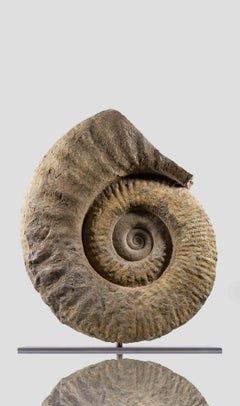
Mantelliceras Fossil Ammonite On Steel Mount
Located in Scorton, GB
CONDITION REPORT Specimen: Mantelliceras Ammonite Provenance: Anti-Atlas Mountain Range, Agadir Region, Morocco, NWA Chronostratigraphy: Upper Cretaceous, ~135 Ma Mount: THE FOSSIL ...
Category

North African Prehistoric Antique 18th Century and Earlier Decorative Objects

Materials

Limestone, Stainless Steel

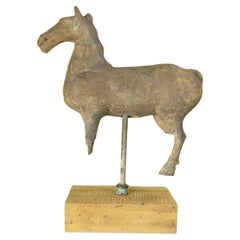
Exquisite Han Dynasty Ceramic Horse
Located in Delray Beach, FL
Own a tangible piece of history with this captivating antique ceramic horse, a relic , probably from the illustrious Han Dynasty , This beautifully restored artefact offers a uniqu...
Category

Chinese Antique 18th Century and Earlier Decorative Objects

Materials

Ceramic

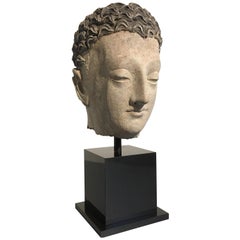
Gandharan Stucco Head of the Buddha, 3rd-5th Century
Located in Austin, TX
A sublime Greco-Buddhist stucco head of the Buddha, ancient region of Gandhara, circa 3rd-5th century. A fragment of a larger statue, the Buddha's face...
Category

Pakistani Antique 18th Century and Earlier Decorative Objects

Materials

Stucco

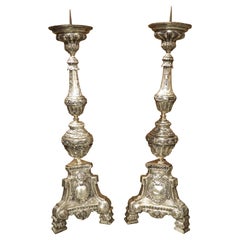
Pair of Tall 18th Century Silvered Brass Candlesticks from France
Located in Dallas, TX
At over three feet tall, this pair of silvered brass candlesticks would make impressive decorative accessories or light sources. Dating to the 1700s, these French candlesticks have a...
Category

French Antique 18th Century and Earlier Decorative Objects

Materials

Metal, Brass

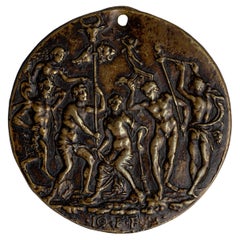
15th Century Italian Renaissance Bronze Medallion
Located in Fort Lauderdale, FL
Renaissance bronze medallion made by Master IOFF in the mid 15th century, showing the mythological scene of Ariadne on Naxos. Made in the mid-15th ...
Category

Italian Renaissance Antique 18th Century and Earlier Decorative Objects

Materials

Bronze

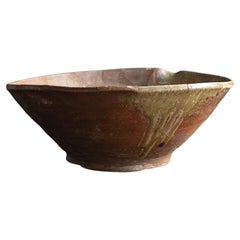
Japanese antique pottery bowl/Tokoname ware/12th-13th century/excavated pottery
Located in Sammu-shi, Chiba
This is a pottery called Tokoname ware. Tokoname is a kiln located in Aichi Prefecture, Japan (Tokoname Kiln is marked with a red circle on the map). It is said to have originated ar...
Category

Japanese Other Antique 18th Century and Earlier Decorative Objects

Materials

Pottery

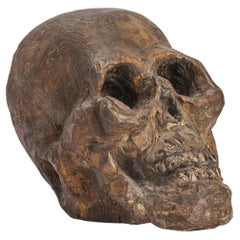
Memento mori sculpture depicting a skull, Italy 1700.
Located in Milan, IT
Wunderkammer Memento Mori sculpture. depicting a skull, carved from a single piece of fruitwood, this sculpture depicts a skull with deliberately exaggerated and distorted proportion...
Category

Italian Antique 18th Century and Earlier Decorative Objects

Materials

Wood

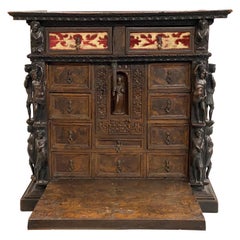
17th Century Spanish Burled Walnut Vargueno or Collectors Cabinet
Located in Milford, NH
A fine example of a diminutive burled walnut vargueno, collector or valuables cabinet, with molded cornice and drop front, opening to a multi-drawer ...
Category

Spanish Moorish Antique 18th Century and Earlier Decorative Objects

Materials

Brass, Wrought Iron

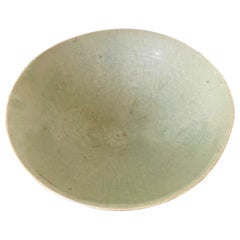
Celadon Ceramic Tea Bowl Korean Goryeo Dynasty
Located in Atlanta, GA
An antique Korean ceramic tea bowl with celadon glaze from Goryeo dynasty, circa 12th century. The thin-walled stoneware bowl was potted delicately with...
Category

Korean Archaistic Antique 18th Century and Earlier Decorative Objects

Materials

Ceramic

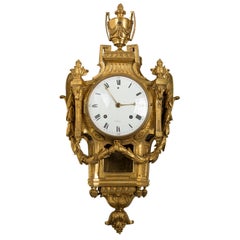
Louis XVI Ormolu Cartel Clock
Located in Kittery Point, ME
The circular glazed white enamel dial with Roman and Arabic chapters, set within a pierced case with ribbon-tied fruiting laurel trails, each side with a ram’s mask capped pilaster, ...
Category

French Louis XVI Antique 18th Century and Earlier Decorative Objects

Materials

Bronze

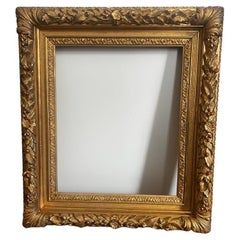
Antique French Louis XVI 18th Century Gold Gilded Picture Frame
Located in Doha, QA
Magnificent 18th century French hand carved and gold gilded frame. An incredible detailed work. The frame looks Royal and luxurious. Dimensions of the interior painting size to fit a...
Category

French Baroque Antique 18th Century and Earlier Decorative Objects

Materials

Gold

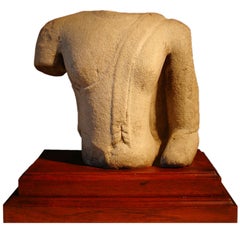
16th Century Thai Ayutthaya Sandstone Torso of the Buddha
Located in Austin, TX
A lovely carved sandstone torso of the Buddha, Ayutthaya period (1350-1767), Thailand. Wonderfully simplistic, the only ornamentation this torso displays...
Category

Thai Antique 18th Century and Earlier Decorative Objects

Materials

Sandstone

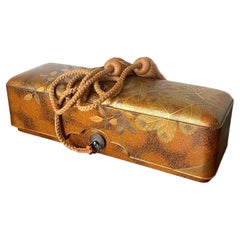
Japanese Lacquer Maki-E Scroll Box Fubako by Kansonsai Edo Period
Located in Atlanta, GA
A Japanese lacquered wood fubako (a box to store document or small scroll painting) circa late 18th century of Edo period. The rectangular box features a deep lid with rounded corners and recessed mid-edge and a lower box with two bronze medallion rings and tasseled silk ties. The surface of the fubako was elaborately decorated with hiramaki-e and a low takamaki-e on a mottled Mura-nashiji background. The motifs on the lid depict branches of Japanese pine with finely rendered needles on the lower part; on the upper part, it showcases fruited persimmon branches. Two different shades of gold fundame were used to contrast the design and augmented by scattered gold kirigane to highlight some of the leaves. The design continues and cascades down to all sides of the lid as well as the walls of the box. The two bronze medallions appear original to the box and the silk ties show significant fading from the age. This Fine fubako is signed on the lower wall "Kanshosai" in Kanji with a kao mark. All the trims were finished in gold fundame and the interiors a dense nashiji in gold. Kanshosai is the mark of the distinguished lacquer artist Lizuka Toyo I who also signed his work "Toyosai". He was active in the second half of the 18th century during Edo period, employed by Hachisuka Shigeyoshi (1738-1801), daimyo of Awa on Shikoku Island. Although most survived work bearing his marks are inros, he was also known to decorated trays and other larger objects...
Category

Japanese Edo Antique 18th Century and Earlier Decorative Objects

Materials

Wood, Lacquer

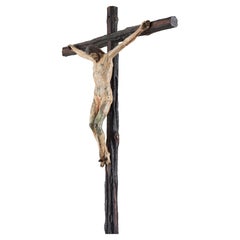
Rare and important painted bronze Crucifix after a model by Michelangelo
By Michelangelo Buonarroti
Located in Leesburg, VA
A rare and very fine bronze corpus of Christ after a model by Michelangelo, cast ca. 1597-1600 by Juan Bautista Franconio and painted in 1600 by Francisco Pacheco in Seville, Spain. The present corpus reproduces a model attributed to Michelangelo. The best known example, lesser in quality, is one on display at the Metropolitan Museum of Art (MET). The association of this corpus with Michelangelo was first brought to light by Manuel Gomez-Moreno (1930-33) who studied the wider circulated casts identified throughout Spain. The attribution to Michelangelo was subsequently followed by John Goldsmith-Phillips (1937) of the MET and again by Michelangelo expert, Charles de Tolnay (1960). While Michelangelo is best known for his monumental works, there are four documented crucifixes he made. The best known example is the large-scale wooden crucifix for the Church of Santa Maria del Santo Spirito in Florence, made in 1492 as a gift for the Prior, Giovanni di Lap Bicchiellini, for allowing him to study the anatomy of corpses at the hospital there. In 1562, Michelangelo wrote two letters to his nephew, Lionardo, indicating his intention to carve a wooden crucifix for him. In 1563 a letter between Lionardo and the Italian sculptor Tiberio Calcagni, mentions this same crucifix (a sketch of a corpus on the verso of a sheet depicting Michelangelo’s designs for St. Peter’s Basillica [Palais des Beaux-Arts in Lille] may reproduce this). That Michelangelo was working on small corpora in the last years of his life is further evidenced by the small (26.5 cm) unfinished wooden crucifix located at the Casa Buonarroti, considered his last known sculptural undertaking. Michelangelo’s contemporary biographer, Giorgio Vasari additionally cites that Michelangelo, in his later years, made a small crucifix for his friend, Menighella, as a gift. Surviving sketches also indicate Michelangelo’s study of this subject throughout his career, most notably during the end of his life but also during the 1530s-40s as he deepened his spiritual roots. The occasional cameo of crucified Christ’s throughout his sketched oeuvre have made it challenging for scholars to link such sketches to any documented commissions of importance. All the while, in consideration that such objects were made as gifts, it is unlikely they should be linked with commissions. Nonetheless, a number of theories concerning Michelangelo’s sketches of Christ crucified have been proposed and some may regard the origin of the present sculpture. It has been suggested that the corpus could have its impetus with Michelangelo’s work on the Medici Chapel, whose exclusive design was given to the master. It is sensible smaller details, like an altar cross, could have fallen under his responsibility (see for example British Museum, Inv. 1859,0625.552). Others have noted the possibility of an unrealized large marble Crucifixion group which never came to fruition but whose marble blocks had been measured according to a sheet at the Casa Buonarroti. A unique suggestion is that Michelangelo could have made the crucifix for Vittoria Colonna, of whom he was exceedingly fond and with whom he exchanged gifts along with mutual spiritual proclivities. In particular, Vittoria had an interest in the life of St. Bridget, whose vision of Christ closely resembles our sculpture, most notably with Christ’s proper-left leg and foot crossed over his right, an iconography that is incredibly scarce for crucifixes. The suggestion could add sense to Benedetto Varchi’s comment that Michelangelo made a sculpted “nude Christ…he gave to the most divine Marchesa of Pescara (Vittoria Colonna).” Of that same period, two sketches can be visually linked to our sculpture. Tolnay relates it to a sketch of a Crucified Christ at the Teylers Museum (Inv. A034) of which Paul Joannides comments on its quality as suggestive of preparations for a sculptural work. Joannides also calls attention to a related drawing attributed to Raffaello da Montelupo copying what is believed to be a lost sketch by Michelangelo. Its relationship with our sculpture is apparent. Montelupo, a pupil of Michelangelo’s, returned to Rome to serve him in 1541, assisting with the continued work on the tomb of Pope Julius II, suggesting again an origin for the corpus ca. 1540. The earliest firm date that can be given to the present corpus is 1574 where it appears as a rather crudely conceived Crucifixion panel, flanked by two mourners in low-relief and integrally cast for use as the bronze tabernacle door to a ciborium now located at the Church of San Lorenzo in Padula. Etched in wax residue on the back of the door is the date, 27 January 1574, indicating the corpus would have at least been available as a model by late 1573. The Padula tabernacle was completed by Michelangelo’s assistant, Jacopo del Duca and likely has its origins with Michelangelo’s uncompleted tabernacle for the Basilica of St. Mary of the Angels in Rome. The impetus for the Padula tabernacle’s Crucifixion panel begins with a series of late Crucifixion sketches by Michelangelo, depicting a scene of Christ crucified and flanked by two mourners (see British Museum Inv. 1895.0915.510; Ashmolean Museum Inv. 1846.89, KP II 343 recto; Windsor Castle RCIN 912761 recto; and Louvre Inv. 700). A faintly traced block possibly intended for sculpting the sketch of the crucified Christ on its recto was discovered by Tolnay on a version of the composition at Windsor Castle. The Windsor sketch and those related to it appear to have served as preparatory designs for what was probably intended to become the Basilica of St. Mary’s tabernacle door. Vasari documents that the project was to be designed by Michelangelo and cast by his assistant, Jacopo del Duca. Michelangelo died before the commission was complete, though on 15 March 1565, Jacopo writes to Michelangelo’s nephew stating, “I have started making the bronze tabernacle, depending on the model of his that was in Rome, already almost half complete.” Various circumstances interrupted the completion of the tabernacle, though its concept is later revitalized by Jacopo during preparations to sell a tabernacle, after Michelangelo’s designs, to Spain for Madrid’s El Escorial almost a decade later. The El Escorial tabernacle likewise encountered problems and was aborted but Jacopo successfully sold it shortly thereafter to the Carthusians of Padula. An etched date, 30 May 1572, along the base of the Padula tabernacle indicates its framework was already cast by then. A 1573 summary of the tabernacle also describes the original format for the door and relief panels, intended to be square in dimension. However, a last minute decision to heighten them was abruptly made during Jacopo’s negotiations to sell the tabernacle to King Phillip II of Spain. Shortly thereafter the commission was aborted. Philippe Malgouyres notes that the Padula tabernacle’s final state is a mixed product of the original design intended for Spain’s El Escorial, recycling various parts that had already been cast and adding new quickly finished elements for its sale to Padula, explaining its unusually discordant quality, particularly as concerns the crudeness of the door and relief panels which were clearly made later (by January 1574). Apart from his own admission in letters to Spain, it is apparent, however, that Jacopo relied upon his deceased master’s designs while hastily realizing the Padula panels. If Michelangelo had already earlier conceived a crucifix model, and Jacopo had access to that model, its logical he could have hastily employed it for incorporation on the door panel to the tabernacle. It is worth noting some modifications he made to the model, extending Christ’s arms further up in order to fit them into the scale of the panel and further lowering his chin to his chest in order to instill physiognomic congruence. A crude panel of the Deposition also follows after Michelangelo’s late sketches and is likewise known by examples thought to be modifications by Jacopo based upon Michelangelo’s initial sculptural conception (see Malgouyres: La Deposition du Christ de Jacopo del Duca, chef-d’oeuvre posthume de Michel-Ange). Jacopo’s appropriation of an original model by Michelangelo for more than one relief on the Padula tabernacle adds further indication that the crucifix was not an object unique to Jacopo’s hand, as few scholars have posited, but rather belongs to Michelangelo’s original...
Category

Renaissance Antique 18th Century and Earlier Decorative Objects

Materials

Bronze

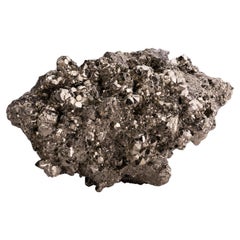
Pyrite Cluster from Huanuco Province, Peru
Located in New York, NY
A classic and very attractive specimen of Pyrite from Huanzala Mine, Huanuco Province, Peru. Complex pyritohedron cluster with striated crystal faces and a metallic mirror luster wit...
Category

Peruvian Antique 18th Century and Earlier Decorative Objects

Materials

Crystal, Pyrite, Other

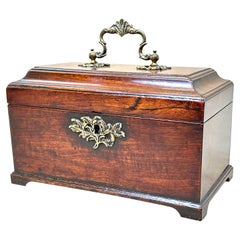
Georgian 18th Century Mahogany Tea Caddy
Located in Bedfordshire, GB
A Very Good Quality 18th century Georgian, Chippendale Period, Mahogany Tea Caddy Of Rectangular Form, Having Elegant Shaped Top Enclosing Original Tin Containers, Retaining Original...
Category

English Georgian Antique 18th Century and Earlier Decorative Objects

Materials

Mahogany

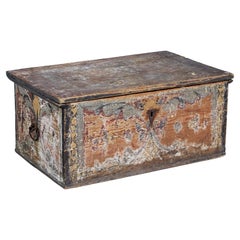
Mid 18th century hand painted traditional Swedish pine chest
Located in Debenham, Suffolk
Mid 18th century hand painted traditional Swedish chest/box circa 1750. Stunning traditional Swedish box hand painted in the original paintwork.   Decorated on all sides with swags ...
Category

Swedish Folk Art Antique 18th Century and Earlier Decorative Objects

Materials

Iron

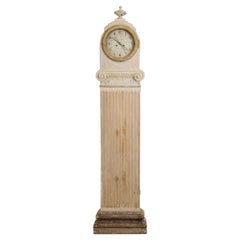
Gustavian Swedish Long Case Clock from the Late 1700s, Unusual Straight Shape
Located in Kramfors, SE
Gustavian long case clock from Sweden made during the late 1700s. Unusual straight column-shaped case with the classic gustavian ribbed decor. The clock was made in Stockholm during ...
Category

Swedish Gustavian Antique 18th Century and Earlier Decorative Objects

Materials

Pine

Alethopteris Neuropteris Natural Tree Fern Fossil Specimen
Located in Warrenton, OR
Alethopteris Neuropteris Natural Tree Fern Fossil Specimen, 300 - 360 years old apx. Discovered in Pennsylvania. Colors occurred naturally over time through the mineralization ...
Category

American Prehistoric Antique 18th Century and Earlier Decorative Objects

Materials

Organic Material