18th Century Decorative Objects

to
647
3,617
6,539
26,063
85,504
29,634
15,727
35,719
20,523
2,498
1,098
3,321
4,213
2,244
6,082
8,340
7,905
3,528
1,877
431
371
335
193
174
121
46
23
14
12
11
6
4
4
2
1
1
1,451
1,376
958
595
482
1,862
1,637
2,833
757
651
648
532
Height
to
Width
to
3,617
3,617
3,617
161
43
26
12
12
Period: 18th Century
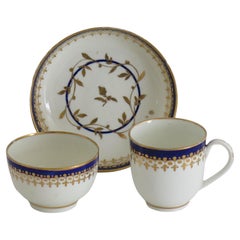
18th C Worcester Porcelain Trio of Coffee Cup Tea Bowl and Saucer, circa 1780
Located in Lincoln, Lincolnshire
This is a good late 18th century Worcester porcelain TRIO of Coffee Cup, Tea Bowl and Saucer in a combined blue and gold pattern, full...
Category

British George III Antique 18th Century Decorative Objects

Materials

Porcelain

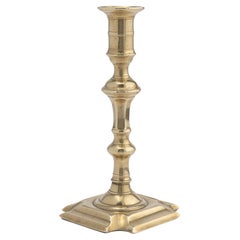
English Queen Anne brass candlestick, 1750-60
Located in Kenilworth, IL
Queen Anne brass candlestick with a hollow core cast baluster. The bluster is cast with a candle cup with medial ring along with a cupped circular bobeshe. The baluster is peened to ...
Category

British Queen Anne Antique 18th Century Decorative Objects

Materials

Brass

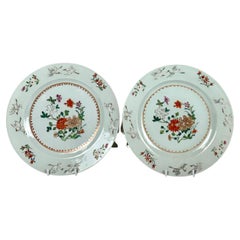
Pair Antique Chinese Porcelain Plates Famille Rose Made Circa 1770
Located in Katonah, NY
This pair of lovely Chinese porcelain plates were hand painted in the Famille Rose style in the mid-18th century. The center of each plate is painted in delicate colored enamels and ...
Category

Chinese Qing Antique 18th Century Decorative Objects

Materials

Porcelain

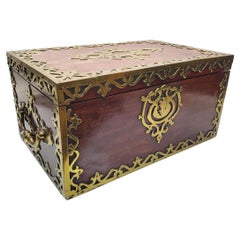
18th Century Brass Mounted Mahogany Strong Box with Spring Lock Interior Tray
Located in Chapel Hill, NC
Mid 18th century mahogany strong box with applied brass edges centering a central applique on the lid, a large lock plate (key present) and large carry handles. The two ends fitted w...
Category

English Georgian Antique 18th Century Decorative Objects

Materials

Brass

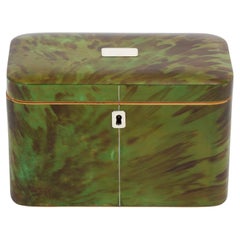
Antique George III Green Tortoiseshell Tea Caddy
Located in Northampton, GB
Georgian Period Circa 1790 From our Tea Caddy collection, we are delighted to offer this Georgian Green Tortoiseshell Tea Caddy. The Tea...
Category

English George III Antique 18th Century Decorative Objects

Materials

Silver

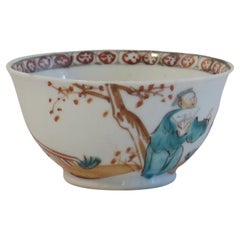
Chinese Porcelain Tea Bowl Hand Painted Famille Rose, Qing Qianlong circa 1760
Located in Lincoln, Lincolnshire
This is a finely hand painted Chinese porcelain tea bowl from the 18th century, Qing dynasty, Qianlong period, 1736-1795. The bowl is well decorated, continuously around the body ...
Category

Chinese Qing Antique 18th Century Decorative Objects

Materials

Porcelain

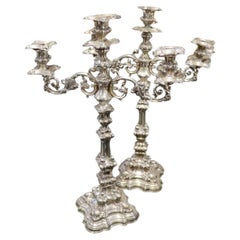
Silver candelabras with reliefs and applications set on gradient beaded bases
Located in Porto, PT
Description: Silver candelabra with reliefs and applications set on gradient frieze bases. Metal: Silver. Origin: Portuguese. Brand: Porto Coroa. Weight: 3,252.02 grams. Dimensions: ...
Category

European Antique 18th Century Decorative Objects

Materials

Silver

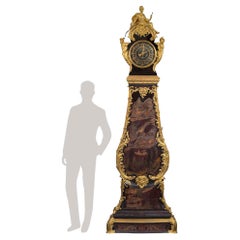
French 18th Century Coromandel and Ormolu Grandfather Clock
Located in West Palm Beach, FL
A magnificent large scale French 18th century Coromandel and ormolu Grandfather Clock, by André Furet. This very unique and high quality clock is raised by rectangular base with a li...
Category

French Antique 18th Century Decorative Objects

Materials

Ormolu

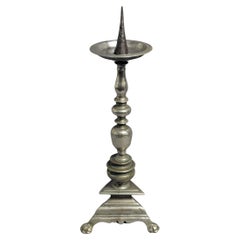
Mid-18th Century German Silver on Bronze Pricket Stick
Located in Chapel Hill, NC
A good, bold silver on bronze pricket stick. German, mid-18th century. Baluster standard to triangulated base with paw feet. 16 1/2" h., 6 1/2" x 4" base. Whitehall Antiques is a fa...
Category

German Antique 18th Century Decorative Objects

Materials

Silver, Bronze

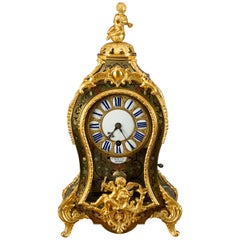
Louis XV Tortoiseshell Boulle Clock by St Martin, Paris, circa 1720
Located in Norwich, GB
Louis XV tortoiseshell Boulle Timepiece with ‘Silent’ pull quarter repeat by St. Martin, Paris, circa 1720 Waisted case with fine ormolu mounts and cut brass inlay to the stained tortoiseshell with ‘mother of pearl’ and coloured floral decoration. Gilded top surmounted by a cherub feeding through a straw from a scallop shell over leafy corner mounts. Shaped bead-bordered glazed door applied with an apron mount of a child chromos holding a sandglass and staff, set within a leafy trail surround. Brass lined recessed arch windows to the sides, the interior of the case with symmetrical Rococo panel...
Category

French Louis XV Antique 18th Century Decorative Objects

Materials

Ormolu

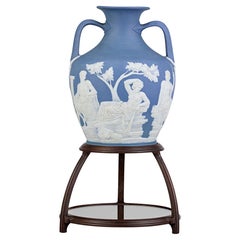
Wedgwood First Edition Portland Vase
Located in New Orleans, LA
This extraordinary First Edition Wedgwood rendering of the legendary Portland Vase is one of the rarest masterpieces of Josiah Wedgwood, the most important ceramics manufacturer of the 18th century. A tour de force of ceramic art, the Portland Vase First Editions are regarded as one of the greatest ceramic accomplishments of the 18th century, and they are a testament to the superior skill of Josiah Wedgwood, his extraordinary ambition and his tireless dedication to perfection. One of the very few First Editions still in private hands, this exceptional Wedgwood Portland Vase is one of the most important works of ceramics on the market. The story of Wedgwood and the Portland Vase is legendary. The original Portland Vase is the ancient world's most famous decorative arts masterpiece—a cameo glass vase dating to circa 25 CE with a frieze representing the myth of Peleus and Thetis, initially thought to be carved from stone. When it was first rediscovered around 1582, it captivated the world with its opaque white cameo figures over its rich blue background. After the vase was excavated it was owned by Cardinal Barberini, whose family later sold it to the Duke of Hamilton who eventually sold it to the Duchess of Portland, from whom the famed vase now takes its name. The famed British sculptor John Flaxman was likely the first to have brought the vase to Wedgwood’s attention. In a letter dated February 5, 1784, he wrote: “I wish you may soon come to town to see William Hamilton’s vase, it is the finest production of Art that has been brought to England and seems to be the very apex of perfection to which you are endeavouring to bring your bisque and jasper…” Indeed, the Portland Vase is a masterpiece of cameo-cutting, with a stunning frieze of opaque white cameo glass over its translucent deep blue form. Its beauty and translucence would inspire Wedgwood to undertake his years-long endeavor to precisely replicate the original in porcelain. Upon closer examination, Wedgwood realized the vase was not made of stone or earthenware, but of cameo glass—a technique so advanced it remains the masterpiece of cameo-cutting. Today, the vase is housed in the British Museum, where it is the second most viewed antiquity, only after the Rosetta Stone. It then took Wedgwood several painstaking years to craft his unparalleled copy of the vase, during which he perfected the jasperware technique that would become his crowning achievement. To this day, the renowned porcelain firm regards the vase as its most momentous triumph, so much so that the vessel’s silhouette is incorporated into the Wedgwood logo. The four years it took Wedgwood to complete his vase were not without tribulations. From the start, Wedgwood encountered numerous problems with his copies, from cracking and blistering to the difficulty of replicating the translucent effects of the original. The first acceptable copy was produced in October 1789 and sent to Wedgwood’s physician and friend Erasmus Darwin, the grandfather of Charles Darwin. Wedgwood presented another copy to Queen Charlotte in May 1790 and afterward organized a private exhibition of the vase at the Portland House in London. The viewing proved so popular that Wedgwood was forced to restrict the show to 1,900 visitors. Much of London wished to see Wedgwood’s greatest major achievement. Perhaps the highest praise of Wedgwood’s copy came from the famed artist Sir Joshua Reynolds, the founder of the British Royal Academy: “I can venture to declare it a correct and faithful imitation, both in regard to the general effect, and the most minute detail of the part.” Over the next few years, Wedgwood's oven records listed 43 First Edition copies of the Portland Vase produced between 1791 and 1796, 11 of which were broken during the firing process. In all, it is believed around 30 First Edition vases were completed, though an unknown number of these were somewhat damaged—one of these imperfect examples is currently held by the Victoria & Albert Museum in London. The perfect examples such as ours have found their way into the most important museum collections in the world. The British Museum (London), Art Institute of Chicago, Birmingham Museum of Art, Museum of Fine Arts (Boston) and the Fitzwilliam Museum (Cambridge, UK), among others, all hold one of these highly coveted vases in their collections. In terms of technical achievement, the First Edition Portland Vases...
Category

English Classical Roman Antique 18th Century Decorative Objects

Materials

Porcelain

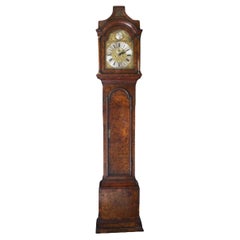
George I Longcase Clock by Samuel Guy, c.1715
Located in Norwich, GB
Stunning pagoda top, Burr Walnut case with integral pillars and quarter pillars to the hood door. Long trunk door with original escutcheon and iron stra...
Category

English Antique 18th Century Decorative Objects

Materials

Walnut

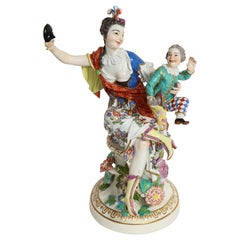
Rare 18th Century Meissen Porcelain Group of a Thalia with a Harlequin Child
Located in New York, NY
An important, extremely rare, and rather large 18th century Meissen Porcelain Group of a Thalia with a Harlequin Child, By Johann Joachim (J.J.) Kändler, Circa: 1744. This is an incredible and extremely rare 18th century Meissen Porcelain piece modeled by the greatest Meissen modeler ever in the Company, Johann Joachim (J.J.) Kändler. Thalia can be seen seated on a gorgeous hand-carved and hand-painted flowered and vined porcelain pedestal. Her right arm is raised holding a Phantom of the Opera Black and White Mask, while in her other arm is a young Harlequin dancing and singing holding a hat. Thalia is wearing a gilt-edged dark blue bodice with white floral decorations over a black corset draped in a red-over-yellow robe...
Category

German Rococo Antique 18th Century Decorative Objects

Materials

Porcelain

Rococo Style Mora Clock 1700 s
Located in Crowthorne, Surrey
Rococo longcase Mora Clock dated 1777 by Anders Swensson with original decorative paint detailing. Carved detailing to crown. Working Longcase clock mechanism of pendulum and 2 weigh...
Category

European Gustavian Antique 18th Century Decorative Objects

Materials

Wood

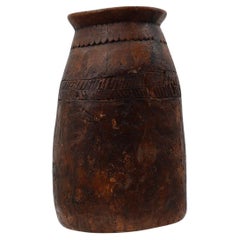
Rare Rustic wabi sabi style vase in solid wood, France 1800s
Located in Meulebeke, BE
France / 1800 / vase / wood / Rustic / Antique Handmade French solid wooden vase from the late 18th or early 19th century. This decorative antique piece was crafted from warm dark b...
Category

French Rustic Antique 18th Century Decorative Objects

Materials

Wood

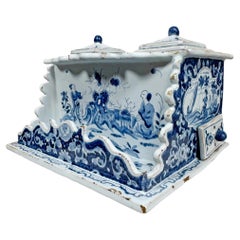
18th Century Dutch Delft Blue and White Ink Well attributed to Anthoni Pennis
Located in Hastings, GB
A superb 18th Century Dutch Delft Blue and White Ink Well and Desk Stand attributed to Anthoni Pennis, beautifully decorated in the chinoiserie style. Marked to the base with the Blu...
Category

Dutch Chinoiserie Antique 18th Century Decorative Objects

Materials

Pottery

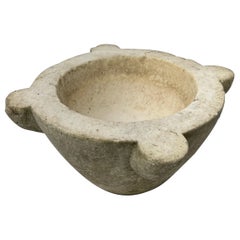
Large 18th Century, Italian or French White Marble Mortar Phenomenal Patina
Located in Atlanta, GA
Likely Italian or French, 18th century. An impressive and large mortar carved from a single block of white marble. Showing phenomenal antique patina - this piece was heavily used du...
Category

French Renaissance Antique 18th Century Decorative Objects

Materials

Marble

18th Century Tea Caddy, Attributed to Landall Gordon
Located in Richmond, London
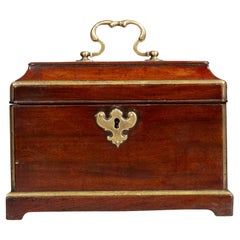
A superb and very rare mid-18th century George II period brass-inlaid tea caddy, attributed to Landall & Gordon. English, circa 1750. Why we like it Gorgeous proportions combined w...
Category

Antique 18th Century Decorative Objects

Materials

Brass

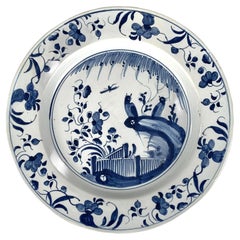
Antique Blue and White English Delft Charger Plate Hand Painted Circa 1760
Located in Katonah, NY
Produced in Bristol, England, circa 1760, this handpainted blue and white Delft charger is a visual delight. The center of the charger features a flower garden with songbirds seated ...
Category

English Chinoiserie Antique 18th Century Decorative Objects

Materials

Delft

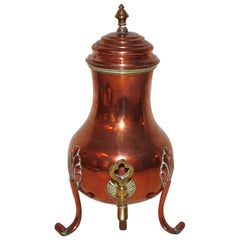
18th Century Rococo Copper Samovar
Located in Copenhagen, K
Very nice, not to large, Rococo samovar in copper with brass lining and nozzle.
Category

Danish Rococo Antique 18th Century Decorative Objects

Materials

Copper

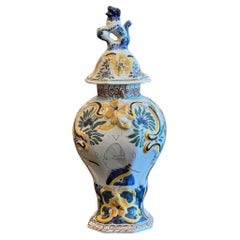
18th Century Polychrome Delft Urn With Lid
Located in Charlottesville, VA
A beautiful polychromed urn with lid. Lots of nice colors.
Category

British Antique 18th Century Decorative Objects

Materials

Delft

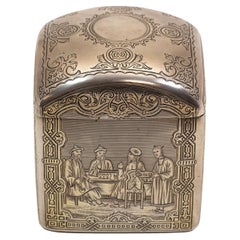
Antique Russian Solid Silver Chinoiserie Tea Caddy
By Victor Savinsky
Located in Northampton, GB
Rare Form with Chinoiserie Figures From our Tea Caddy collection, we are delighted to introduce to the market this rare example Russian Silver Chinoiserie Tea Caddy. The Tea Caddy ...
Category

Russian Antique 18th Century Decorative Objects

Materials

Silver

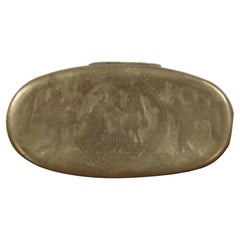
18th Century Dutch Brass Oval Etched Snuff Tobacco Trinket Box 5"
Located in Dayton, OH
Antique Dutch 18th century oval shaped brass tobacco snuff box with hinged lid, engraved with a low relief pattern of two figures flanked by angels.
Category

Dutch Colonial Antique 18th Century Decorative Objects

Materials

Brass

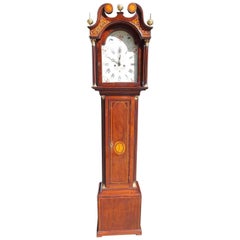
Scottish Mahogany Swan Neck Satinwood Patera Inlaid Tall Case Clock, Circa 1780
By Charles Campbell
Located in Charleston, SC
Scottish mahogany eight day tall case clock with three sphere brass finials, a swan neck satinwood inlay patera pediment, intricately carved fretwork, over an arched door with flanki...
Category

Scottish Regency Antique 18th Century Decorative Objects

Materials

Brass, Steel

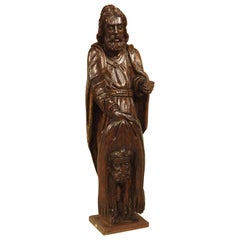
18th Century Carved Oak Statue Depicting St. Bartholomew
Located in Dallas, TX
This tall French statue of St. Bartholomew was hand-carved from oak in the 1700’s. This depiction of St. Bartholomew is not often seen in art, except for one of the most well known r...
Category

French Antique 18th Century Decorative Objects

Materials

Oak

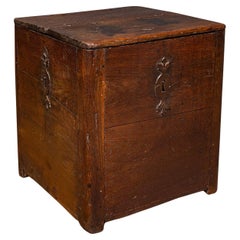
Antique Mail Carriage Strong Box, English, Oak, Security Chest, Early Georgian
Located in Hele, Devon, GB
This is an antique mail carriage strong box. An English, oak security chest, dating to the early Georgian period, circa 1720. Fascinating George I lock b...
Category

British Georgian Antique 18th Century Decorative Objects

Materials

Oak

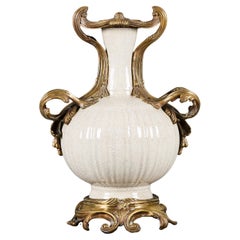
An 18th Century Grey Celadon Craquelure Glaze Vase with Rococo Mounts
Located in London, GB
France, circa 1780 A late eighteenth century bottle vase with grey celadon craquelure glaze and expansive rococo brass mounts. Height 40.00cm Width 29.00cm Depth 19.00cm
Category

French Antique 18th Century Decorative Objects

Materials

Brass

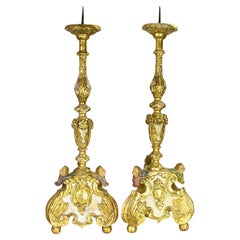
18th Century Baroque Giltwood Candleholders with Putti Decorations
Located in Bad Säckingen, DE
This impressive pair of carved giltwood candleholders dates to the 18th century and was likely created in Southern Europe. Executed in richly detailed Baroque style, each piece featu...
Category

German Baroque Antique 18th Century Decorative Objects

Materials

Iron

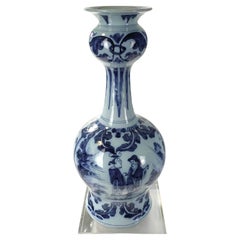
Antique Blue and White Delft Vase Hand Painted Chinoiserie Early 18th Century
Located in Katonah, NY
This exquisite blue and white Dutch Delft vase was crafted in the early 18th century, circa 1720. Its excellent chinoiserie decoration epitomizes 17th and 18th century Europe's fasci...
Category

Dutch Chinoiserie Antique 18th Century Decorative Objects

Materials

Delft

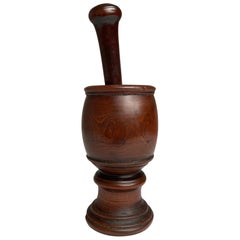
18th Century English Treen Yew Wood Mortar and Pestle
Located in Stamford, CT
18th century English treen mortar and pestle hand turned and carved from yew wood with the rich and warm patina that only comes with age and use. Beautifully carved by hand from a si...
Category

English Georgian Antique 18th Century Decorative Objects

Materials

Yew

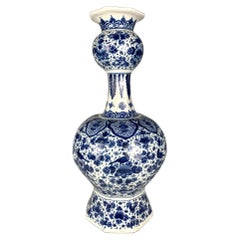
Large Antique Blue and White Dutch Delft Vase Hand Painted 18th Century Ca. 1770
Located in Katonah, NY
This hand-painted Dutch Delft vase, made circa 1770, is a beautiful example of 18th-century tin-glazed earthenware in blue and white. Rising to more than eighteen inches, the vase ha...
Category

Dutch Antique 18th Century Decorative Objects

Materials

Delft

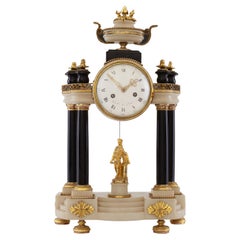
Mantel Clock 18th Century Louis XV Period by Gavelle L e Aaria
Located in Warsaw, PL
Antique French portico clock is crafted in Empire style during the reign of Napoleon in the 19th century. The Empire style gives the antique clock...
Category

French Louis XV Antique 18th Century Decorative Objects

Materials

Marble

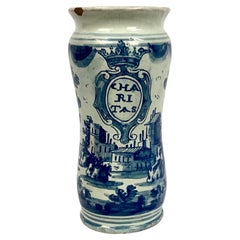
18th Century Italian Maiolica Blue and White Alborello Pharmacy Jar #1
Located in Bradenton, FL
18th Century Italian Majolica Albarello Pharmacy Jar. Jar is in a cylindrical shape with flared rim and foot. Jar features blue and white pattern with the word "Charitas" in an oval ...
Category

Italian Renaissance Antique 18th Century Decorative Objects

Materials

Maiolica

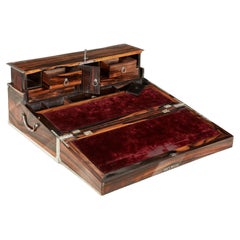
18th c. Coromandel Travel Writing Slope
Located in Greenwich, CT
Very fine 18th century Indian Macassar Ebony traveling writing box with Tutenag metal hardware, the vividly grained case with rare alloy trim, the rectangular form opening to make a ...
Category

Indian Antique 18th Century Decorative Objects

Materials

Hardwood

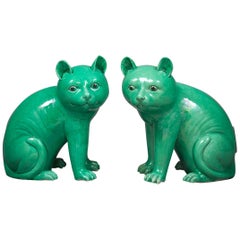
Pair of Chinese Porcelain Cats, circa 1750
Located in New York, NY
Pair of Chinese porcelain cats, circa 1750.
Category

Antique 18th Century Decorative Objects

Materials

Porcelain

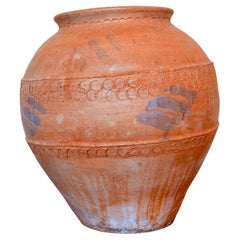
18th Century Rare Large Terracotta Hand Carved French Biot Pot
Located in Miami, FL
This fabulous handmade terracotta pot originated in the Provençal town of Biot and was used to store olive oil. The interior glaze that extends to around the rim was used to prevent ...
Category

French Baroque Antique 18th Century Decorative Objects

Materials

Terracotta

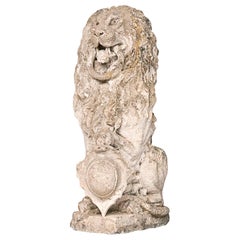
Baroque Limestone Lion from Solgården, circa 1700s
Located in Kastrup, DK
French carved seated lion with a ring in his mouth, carved French limestone, circa 1700s. Provenance: The Danish author Karen Branson 1875-1936, One of ...
Category

Danish Baroque Antique 18th Century Decorative Objects

Materials

Limestone

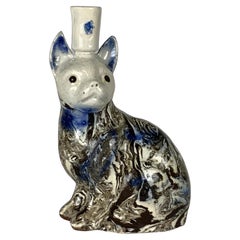
Salt-Glazed Solid Agateware Cat with Candle Holder, Staffordshire, Mid-18th C.
Located in Katonah, NY
Staffordshire, England, circa 1745 – 1760 This charming and unusual figure depicts a seated cat, its body marbled in tones of buff, grey, and warm brown, the patterns flowing like fur beneath a translucent salt glaze. From the crown of its head rises a small candleholder—an enchanting, functional variation that transforms the cat into a decorative light for the Georgian home. The salt-glazed surface has a gentle satin sheen, enlivened by a cobalt wash brushed across the ears and shoulders, a subtle touch of colour that draws the eye. The figure is compact and beautifully balanced, exuding both humor and grace: a work of wit and craftsmanship meant to charm and amuse as much as to illuminate. As a pair, this cat with candleholder and its companion cat carrying a mouse form a dialogue of light and life—one playful, one practical—representing the Staffordshire potters’ genius for turning everyday subjects into artful curiosities. Attribution and Significance Within the history of English ceramics, agateware animals represent the marriage of experimentation and domestic charm. They were objects of conversation—proof of a potter’s technical mastery and a household’s refinement. This cat, with its delicate candleholder, captures that artistic playfulness and innovation. The glaze’s clarity, the elegant pose, and the subtle marbling make it not only an artifact of mid-18th-century Staffordshire but also a small masterpiece of whimsy and craft. Scholarly Analysis and Authentication The figure is made from laminated clays of contrasting colors, known as laid agate, a technique perfected in Staffordshire workshops during the 1740s and 1750s. Strata of buff, pale grey, and iron-bearing brown clay were rolled together, pressed into a two-part mold, and luted along the spine before firing. The cat’s body thus shows true through-body marbling: the veining continues through the thickness of the clay, not merely applied on the surface. The candle socket, made from a single buff clay rather than agate, was luted to the head before glazing. This practical choice prevented distortion during firing and was a typical workshop economy seen in other mid-18th-century functional animal forms. The piece was salt-glazed in a wood- or coal-fired kiln into which common salt was introduced near peak temperature. Sodium vapor combined with the silica of the clay to form a thin, glassy coating. Here, the glaze is smooth and even, suggesting the cat was fired within a protective sagger. The underside of the figure is open, revealing the pressed-clay interior. Two or three minute stilt contacts are visible on the bottom ledge, confirming that the figure rested on kiln props during firing rather than being supported from beneath a closed base. The cobalt wash was brushed under the glaze before firing. It fuses permanently into the surface, creating soft haloes of blue wholly consistent with decoration on salt-glazed figures from the Whieldon circle circa 1750-1760. Later 19th-century reproductions employ overpainted enamels that sit atop the glaze. The open underside, authentic stratified body, integrated socket, and original cobalt staining collectively identify this as a genuine product of Staffordshire’s mid-18th-century agateware tradition, most plausibly from the orbit of Thomas Whieldon at Fenton Vivian or a closely related potter. The measured height, modelling, and marbling correspond closely to examples in the Burnap Collection (nos.. 362–363, Nelson-Atkins Museum) and Sotheby’s (2015) — “A Staffordshire agateware cat-form candlestick, circa 1755. Provenance / Condition: Current Condition: Excellent, with one ear repaired at the tip and restoration at the top of the candleholder; the glaze remains bright and continuous across the body and socket. References: Burnap Collection, English Pottery 1675–1825, nos. 362–363. Sotheby’s (2015) — “A Staffordshire agateware cat-form candlestick, circa 1755. Christie’s, London 2010, lot 82. 1stDibs “Staffordshire Agateware Pottery Saltglaze Figure of a Cat,” item ref LU95812370442 Price: $4,482.16 Chipstone Foundation, Marbled Agateware: Techniques and Identification, 2005. Henry Sandon, Staffordshire Pottery, 1970, pp. 52–54. John Howard Antiques, Antique Agateware...
Category

English Folk Art Antique 18th Century Decorative Objects

Materials

Stoneware

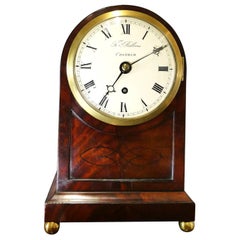
Small Georgian Mahogany Bracket Clock by Thomas Robbins, Chatham
Located in Norwich, GB
Small Georgian Bracket Clock by Thomas Robbins, Chatham Fine mahogany arch top case standing on a raised, moulded plinth and resting on four brass ball feet with red silk lined fishs...
Category

English Georgian Antique 18th Century Decorative Objects

Materials

Mahogany

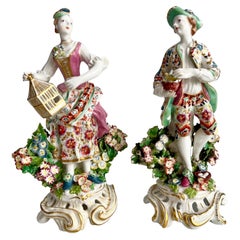
Bow Pair of Porcelain Figures of Liberty Matrimony, Rococo 1760-1764
Located in London, GB
This is a fabulous pair of figures of Liberty and Matrimony made by the Bow Porcelain factory between 1760 and 1764. These figures were a popular pair portraying marriage. The bow p...
Category

English Rococo Antique 18th Century Decorative Objects

Materials

Porcelain

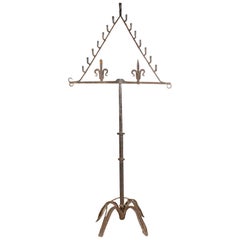
Torchère 15 Candleholder Iron Spanish Fleur-de-Lys Renaissance
Located in BUNGAY, SUFFOLK
- Striking Spanish wrought iron standing torchère in the Renaissance style With fifteen rolled candle-sockets, and two decorative fleur-de-lys finials, on a knopped...
Category

Spanish Baroque Antique 18th Century Decorative Objects

Materials

Wrought Iron

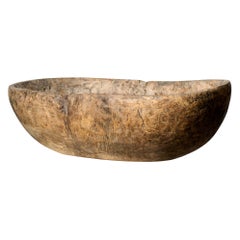
Antique Unusual Swedish 18th Century Hand-Made Country Solid Birch Root Bowl
Located in Kramfors, SE
Unusual Swedish antique bowl from the late 1700s. The bowl is a large and heavy root bowl in an organic shape made in solid birch root. Made by hand with a great patina after 200 yea...
Category

Swedish Country Antique 18th Century Decorative Objects

Materials

Birch

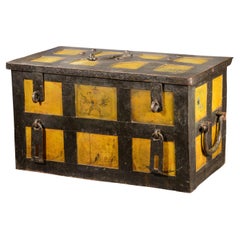
Regimental cash box. Iron. Possibly Germany, 18th century.
Located in Madrid, ES
Regimental cash box. Iron. Possibly Germany, 18th century. It has faults. Rectangular safe with a flat lid containing the top bolt mechanism (which has a simple mechanism to cover...
Category

European Neoclassical Revival Antique 18th Century Decorative Objects

Materials

Other, Iron

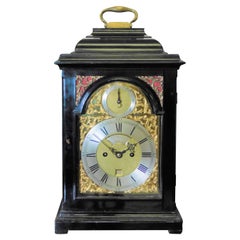
George II Ebonised English Bracket Clock by Thomas Wagstaffe, London
Located in Norwich, GB
George II bracket clock by Thomas Wagstaffe, London Ebonised bell top case surmounted by a hinged brass carrying handle standing on a raised plinth...
Category

English George II Antique 18th Century Decorative Objects

Materials

Fruitwood

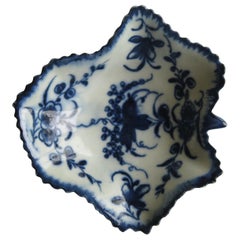
First Period Worcester Pickle Leaf Dish in Blue Floral Pattern, Ca 1770
Located in Lincoln, Lincolnshire
This is a very good early, First period (Dr. Wall), Worcester porcelain leaf shaped Pickle Dish in a deep cobalt blue floral pattern with a Crescent mark to the base. dating to 1770 ...
Category

British George III Antique 18th Century Decorative Objects

Materials

Porcelain

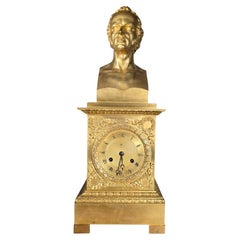
French Empire Gilded Bronze Mantel Clock
Located in Madrid, ES
An elegant French Empire-style mantel clock crafted in gilded bronze, featuring a classic bust of a gentleman as its central decorative element. This timepiece exemplifies the refine...
Category

Antique 18th Century Decorative Objects

Materials

Bronze

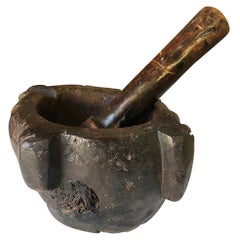
Spanish 18th Century Mortar and Pestle
Located in Round Top, TX
A very handsome 18th century mortar and pestle hand carved from a solid block of wood. Sensational patina. A wonderful object for table top, bookca...
Category

Spanish Antique 18th Century Decorative Objects

Materials

Wood

Rare Pair of Georgian Two-Color Wedgwood Candlesticks
Located in Steyning, West sussex
A rare pair of ormolu-mounted two-color Wedgwood drums with most unusual Wedgwood eggs these supporting Vandyke candle nozzles and drip pans hung with the finest quality pear drops.
Category

Georgian Antique 18th Century Decorative Objects

Materials

Ormolu

Imperial Manufacture Of Tula, Russia, End Of The 18th Century. Steel Sewing Box
Located in Bilzen, BE
"Imperial Manufacture Of Tula, Russia, End Of The 18th Century. Steel Sewing Box" Russian work from the imperial factory of Tula from the end of the 18th century. inlaid with copper ...
Category

Russian Louis XVI Antique 18th Century Decorative Objects

Materials

Copper, Iron

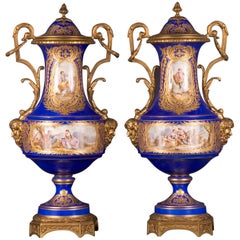
Pair of Porcelaine de Paris Vases Signed and Gifted to "la Princess de Lamballe"
Located in New Orleans, LA
This pair of vases is made of exceptionally fine Porcelaine de Paris from the 18th century. The bronze mounts are covered in gold, and were 19th century additions. The porcelain itself is a phenomenal blue color with gold designs on it that looks magnificent. The vases each have a set of four portraits on them as well: two horizontal scenes on the front and back, with two vertical portraits above them on the front and back as well. The paintings on the front of each have people in them, whereas the ones on the back depict country scenes and buildings. The inscription under the lid of the vase reads "Offert par Le Duc de Richelieu a la Princess de Lomballe." The Duke of Richelieu who gave these vases was most likely Louis François Armand de...
Category

French Antique 18th Century Decorative Objects

Materials

Bronze, Gold Plate

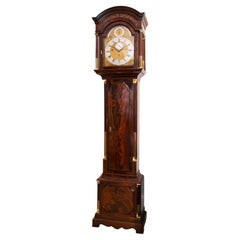
Late 18th Century English Longcase Clock with Moonphases, Manchester, circa 1780
Located in Greven, DE
Late 18th Century English Grandfather Clock with Moonphases England (Manchester) Mahogany second half of 18th century Dimensio...
Category

English Antique 18th Century Decorative Objects

Materials

Mahogany

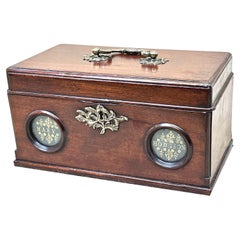
George III Period Mahogany Tea Caddy
Located in Bedfordshire, GB
A Very Good Quality 18th century, Georgian Mahogany Rectangular Tea Caddy, Having Original Brass Handle To Hinged Top, Enclosing Divisions, With Unusual Glazed Panels To Front Bearin...
Category

English George III Antique 18th Century Decorative Objects

Materials

Mahogany

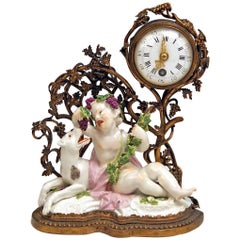
Meissen Mantel Table Clock Bronze Porcelain Autumn Fall Kaendler, circa 1745
Located in Vienna, AT
Meissen gorgeous rococo mantel / table clock made of gilded / gilt bronze, excellently decorated with sculptured figurines made of porcelain. Manufactory: Meissen Hallmarked: Blue M...
Category

German Rococo Antique 18th Century Decorative Objects

Materials

Brass, Bronze, Enamel

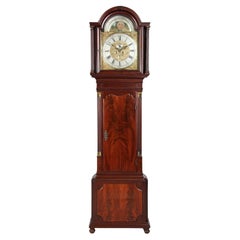
18th Century Antique Mahogany Quarter-Striking Longcase Clock by John Waldron
Located in Devon, GB
This superb George III longcase clock is veneered throughout with patinated figured mahogany of excellent colour. The base, trunk with openin...
Category

English George III Antique 18th Century Decorative Objects

Materials

Brass

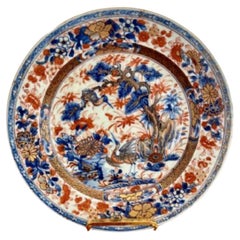
Fine quality 18th century Chinese plate
Located in Ipswich, GB
Fine quality 18th century Chinese plate having a quality 18th Century Chinese plate decorated with birds, trees and flowers in wonderful blu...
Category

Chinese Antique 18th Century Decorative Objects

Materials

Ceramic

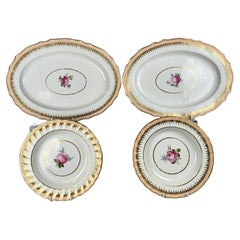
18th C Royal Crown Derby Porcelain Set Prince of Wales Roses Hand Painted
Located in Katonah, NY
This collection of platters and dishes is hand-painted in the beautiful Prince of Wales Roses pattern. The porcelain was crafted at the Derby factory in Derby, England, in the late 1...
Category

Antique 18th Century Decorative Objects

Materials

Porcelain

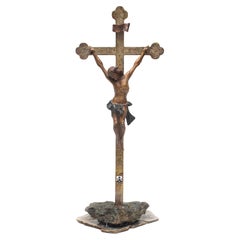
18th Century Italian Crucifix on Emerald in Matrix on Mica
Located in Dublin, Dalkey
Sculptural 18th century Italian crucifix mounted on emerald in matrix on a reflective mica base. The crucifix artifact is originally hand carved wood with silver leaf from a church ...
Category

Italian Baroque Antique 18th Century Decorative Objects

Materials

Rock Crystal

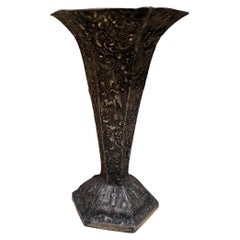
European Peasant Motif Silverplated on Repousse Copper Vase Late 1800s
Located in Chula Vista, CA
For your consideration an European peasant motif silver plated on repousse copper vase , Circa 1800s. Stamped: Hallmark UJEP, H 309 Dimensions: 8.75 H x 5.5 diameter. Please visi...
Category

American Art Nouveau Antique 18th Century Decorative Objects

Materials

Silver Plate, Copper

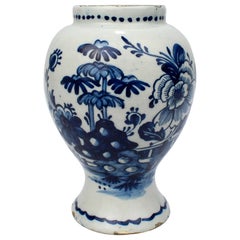
18th Century Tin Glazed Dutch Delft Pottery Blue and White Vase or Jar
Located in Philadelphia, PA
A very fine 18th century Dutch Delft pottery vase or jar. Of typical vasiform shape with medium and deep blue Chinoiserie landscape decoration, dot border to the top rim, and swag...
Category

Dutch Baroque Antique 18th Century Decorative Objects

Materials

Delft

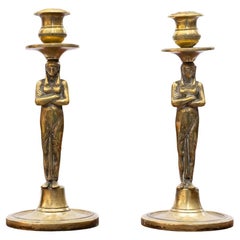
Pair of 18th Century Gustavian Bronze Candlesticks with Egyptian Female Figures
Located in Kastrup, DK
Pair of Gustavian bronze candlesticks featuring stems in the form of a standing Egyptian woman with crossed arms. The candleholders are adorned with intricate ciselé work. Displays a...
Category

Swedish Gustavian Antique 18th Century Decorative Objects

Materials

Bronze

Still Thinking About These?

All Recently Viewed