15th Century and Earlier Figurative Sculptures
to
18
203
1,164
3,784
9,404
2,654
2,265
3,281
2,161
306
163
561
571
260
544
557
715
397
284
1
70
59
59
35
17
110
86
72
70
46
39
33
Height
to
Width
to
203
203
203
1
1
Period: 15th Century and Earlier
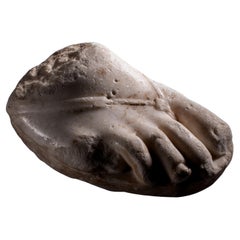
Roman Marble Foot with Sandal
Located in London, GB
This evocative Roman marble foot fragment is a timeless remnant of the overlifesized sculpture it was once part of. Sensitively carved and polished, the outer sole of the sandal rema...
Category
Classical Roman Antique 15th Century and Earlier Figurative Sculptures
Materials
Marble
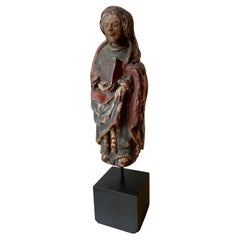
12th Century Rare Romanesque Wood Sculpture of the Virgin Mary
Located in Vero Beach, FL
12th century extremely rare romanesque wood sculpture of the Virgin Mary.
Magnificent wood hand carved sculpture of the Virgin Mary holding a book to her chest.
It is an extremely rare survivor of the 12th century. The style is European, possibly French or English. This statue is a testimony to beautiful religious art from about 1150. A truly rare Romanesque sculpture...
Category
English Medieval Antique 15th Century and Earlier Figurative Sculptures
Materials
Stone

$11,200 Sale Price
20% Off
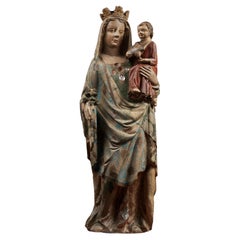
Important 14th Century Polychrome Limestone Virgin from Lorraine
Located in Saint-Ouen, FR
Provenance :
- Kunsthaus Heinrich Hahn, Frankfurt am Main, sale 16, June 17, 1930, lot 16.
- Sotheby's, Amsterdam, Feb. 26, 2006, lot 201.
HISTORIC
Located between Moselle valley and Meuse valley, framed by the Vosges Mountains on the south side and the duchy of Luxembourg on the north side, the duchy of Lorraine is the result of several partitions. It starts with the 9th century when the Carolingian empire is divided, with Lothar 1st inheriting Lotharingia. In 959 this territory was in turn divided in two; Lower and Upper Lotharingia, the latter being the forebear of the duchy of Lorraine. This duchy was under the rule of the Holy Roman Germanic Empire until 1736 when it was absorbed by the kingdom of France.
All along its history the duchy of Lorraine has found itself in the midst of many conflicts. Alliances and feuds marking European history were always particularly sensible in Lorraine where instability was frequent. Because of its geographic position the duchy of Lorraine was also an artistic crossroad.
Hence the duchy of Lorraine becomes from the 13th century onwards an important artistic centre where a particular type of Virgin and Child appears. According to professor J. A. Schmoll the characteristics of Lorraine sculpture burgeon around 1280-1300 in the Aube region. It presents “vigorous volumes, restrained movements, rare but solemn gestures and a strong interiorised and stern expression”. Those Virgins look similar with a wide forehead, a shield- or oval-shaped face, large neck, small lips and a cleft chin.
This model is particularly in favour during the 13th century because of the revival for Marial worship and for the theme of the Virgin and Child. It bears witness to a new religious sensibility with a more intimate vision of religious practice.
DESCRIPTION
The important 14th century Virgin we present to you is one of the most beautiful examples of sculptural art from Eastern France, with her fascinating distant gaze.
Her contrapposto posture is induced by the weight of the child she carries high on her left side. The child has a chubby face framed by blond hair with well defined curls and he wears a long red V-collared tunic from which emerge his feet. The fabric is animated by long folds. The position of the right foot turned to the back is a detail we can notice on several Virgins from Lorraine. He holds a bird that seems to be pecking his thumb.
“The bird /held by the child in his hands/ has been read as a reference to an episode from Christ’s childhood when he has moulded sparrows with clay before giving them life. It appears in the apocryphal gospel of Pseudo-Matthew (ch. 27) and later in the Quran (III, 43, v. 110). However the iconography seems to be more influenced by the concept of Redemption or of Eucharist, the bird symbolising the soul of the Christian about to be redeemed or revitalised.”
Mary wears a long dress with two rock crystal cabochons remaining from the original five. She is covered by a red cloak enriched with old-gold motifs draped as an apron falling in long pleats along her left hip. The relief treatment and the volume of the cloak developing a network of concentric pleats contrast with the the flat pleating of her dress. They nevertheless suggest the curve of her bent right leg.
She wears a floret crown securing a short thin veil carved in very low relief. From it emerges her blond curled hair characteristic of the 13th century. The large face with almond-shaped eyes, straight nose, small lips and cleft chin casts its gaze afar in a fashion typical of 13th century Virgins.
In her right hand she holds a lily flower. In a very refined manner the artist has carved a band on her right ring-finger.
In the back, carefully sculpted, spreads the minutely detailed short veil.
COMPARATIVE STUDIES
This sculpture of great quality presents obvious similarities with Virgins from Lorraine, designated by William Forsythe...
Category
French Gothic Antique 15th Century and Earlier Figurative Sculptures
Materials
Limestone
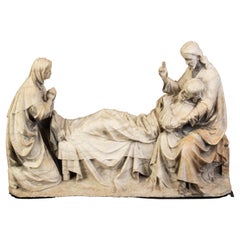
Large Medieval 15th Century Religious Hand Carved Marble Sculpture Group
Located in Nottingham, GB
A large and rare second half of 15th century religious marble sculpture group, hand carved, mounted on bronze base for display. This sculpture group depicts the death of Saint Joseph...
Category
French Antique 15th Century and Earlier Figurative Sculptures
Materials
Marble
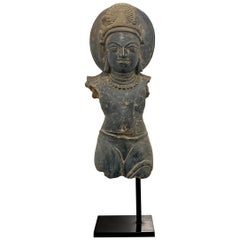
Gupta Empire Torso of Vishnu
Located in Chicago, IL
A mesmerizing Gupta Empire (mid-3rd century BCE - 543 AD) mounted terracotta torso of a standing Vishnu. Vishnu is the preserver god, which means he p...
Category
Bangladeshi Hellenistic Antique 15th Century and Earlier Figurative Sculptures
Materials
Terracotta
$18,500
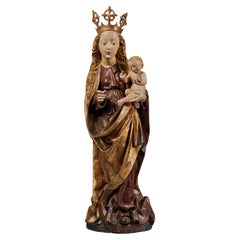
Polychrome carved wood Virgin and Child from the 15th Century
Located in Saint-Ouen, FR
POLYCHROME CARVED WOOD VIRGIN AND CHILD FROM THE 15TH CENTURY
ORIGIN: SOUTH GERMANY, SWABIA, NUREMBERG REGION
PERIOD: 15th CENTURY
Height: 94,6cm
Width : 28 cm
Depth : 18 cm
Lime wood
Original Polychromy
Good state of conservation
From 1430 onwards, sculpture underwent a profound stylistic renewal which continued until 1530, the so-called late Gothic period. In the Germanic countries, original sculptures flourished in an expressive and sensitive vein.
This renewal was inspired by the art of Nicholas of Leiden, who was active in Strasbourg in the 1460's. His style broke with the refined and delicate art of the international Gothic style in force throughout Europe around 1400. The figures became more authentic and realistic. The bodies became denser. Clothes are animated by deep, broken folds, the fabrics are heavy and have a great decorative value. In addition, the polychromy is intended to be illusionistic. The painting makes it possible to restore the texture of the materials, the richness of the textiles and the natural skin tone of the characters.
The dissemination of images through engraving and the great mobility of the artists led to the success of this style, which conquered the Upper Rhine, Swabian, Tyrolean and Franconian regions, contributing to the formation of a common stylistic identity in these regions. The economic boom in the flourishing German cities was conducive to the development of original production. Attracted by this prosperity, numerous workshops were set up in order to meet the orders of religious communities, the Church and the laity, including a clientele of middle-class rockers.
This precious Virgin and Child is depicted standing on a crescent moon, her head encircled by a crown of tall flowers. Her long wavy hair spreads over her shoulders, framing her beautiful oval face. Under fine eyebrows drawn with a brushstroke, her almond-shaped, slightly drooping eyes look at the Child with infinite softness. She is dressed in a long red dress with a rounded neckline, belted under the chest. The heavy fabric of her dress spreads out in broken folds at her feet. On her shoulders she wears a golden cloak. The drapery has deep folds. She holds out her right hand while she holds the Christ Child with her left.
Christ, with his well-defined hair, is naked. His cheeks are highlighted with red, he holds an apple in his left hand and with the other hand makes a sign of blessing towards the faithful.
Virgins with Child on a crescent moon were very popular in the second half of the 15th century, especially as the central subject of altarpieces in southern Germany and Austria. The crescent moon on which Mary is standing is reminiscent of the Woman of the Apocalypse. Often equated with the Virgin Mary.
This episode is taken from the Book of Revelation (12:1-6)
1 Then a great sign appeared in heaven: a woman clothed with the sun, with the moon under her feet and a crown of twelve stars on her head. ; 2 She was pregnant, and she cried out because she was in labor, in pain from giving birth. ; 3 Then another sign appeared in heaven: it was a great fiery red dragon, with seven heads and ten horns, and seven royal crowns on his heads. ; 4 His tail swept down a third of heaven's stars and threw them to the earth. The dragon stood in front of the woman who was about to give birth so that when she gave birth, he might devour her child. ; 5 She gave birth to a son, a male child who is to rule all the nations with an iron rod. Her child was snatched up to God and his throne. ; 6 Then the woman fled into the desert, where God has prepared a place for her. There she will be taken care of for one thousand two hundred sixty days.
Some theologians see in this woman a reference to the Virgin Mary and in the child, Jesus.
This remarkable work is a very fine example of sculpture from Swabian workshops in the last decades of the 15th century. It presents all the characteristic stylistic elements: a highly girdled silhouette, an abundant drapery with angular folds, but also a great physical presence accentuated by the polychromy that restores the anatomical details. This group is made of a wooden log. The deep folds of the drapery highlight the movement of the Virgin holding the child.
Bibliography :
Sophie Guillot de Suduiraut, Dévotion et Séduction, Sculptures souabes des musées de France, vers 1460-1530, Paris musée du Louvre-Éditions somogy, 2015
“Revelation 12 - Common English Bible...
Category
German Gothic Antique 15th Century and Earlier Figurative Sculptures
Materials
Wood
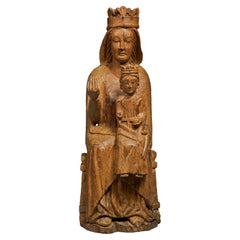
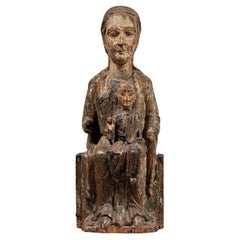
Virgin and Child in Majesty, also known as "Sedes Sapientae"
Located in Saint-Ouen, FR
VIRGIN AND CHILD IN MAJESTY, ALSO KNOWN AS "SEDES SAPIENTIAE"
ORIGIN : SPAIN, CATALOGNE
PERIOD: EARLY 13th CENTURY
Height : 95 cm
Width : 32 cm
Depth : 28 cm
Softwood
No polychromy
In the middle of the 12th century, the Virgin took her place in churches, seated in Majesty, serving as a throne for her son Jesus. She is then called Sedes Sapientiae, meaning the Throne of Wisdom.
At that time, she is not represented for herself and only exists because she has been designated as Theotokos, the mother of God, at the Council of Ephesus in 431, where the divine nature of Christ was proclaimed from his birth.
The upright and perfectly hieratic bust of this Virgin and Child in Majesty is seated on a throne-bench. She is dressed in a tunic with a rounded neckline and covered with a fine mantle placed on her narrow shoulders. The supple and natural drapery follows the lines of the body.
Large curls frame her face with delicate and regular features, a long straight nose, almond-shaped eyes, and small lips.
She supports the Infant Jesus with her left hand. Like his mother, he is dressed in a long tunic, and his little feet are visible in the folds. He holds a small sphere in his left hand, while with his right hand, he gestures in blessing. The face of Christ bears a strong resemblance to his mother’s one, and he gives a slight smile.
The position of the Child is no longer as hieratic, nor frontal or central as in the early 12th century, but his face still turns towards the faithful.
The 13th century indeed emerges as a period of transition in the artistic domain. The statuary, while retaining certain characteristics still belonging to the habits of the previous century, also develops new formal solutions.
As a result, Mary maintains a hieratic and frontal position, while her son shifts to place himself well to the left on her knee. Similarly, while the Virgin seems perfectly still, Jesus, on the other hand, appears much more animated, especially in the positioning of his hands. His left hand holds the orb, and judging by the raised right arm directed towards the faithful, one can easily imagine that he was making a gesture of blessing.
The influence of the Sedes Sapientiae from previous centuries still seems particularly prevalent in this work.
These few characteristics allow dating this Spanish Virgin...
Category
Spanish Gothic Antique 15th Century and Earlier Figurative Sculptures
Materials
Softwood
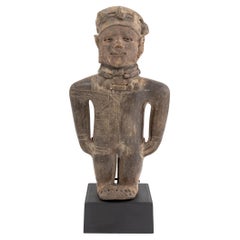
Pre-Columbian Standing Male Nude Figure
Located in Astoria, NY
Pre-Columbian Standing Male Nude Figure, probably Aztec, black burnished terracotta, mounted on ebonized wood base. 14.5" H x 7" W x 4.5" D. Provenance: From an Upper East Side Colle...
Category
Central American Pre-Columbian Antique 15th Century and Earlier Figurative Sculptures
Materials
Terracotta
Important 15th Century Polychrome Wood Virgin and Child
Located in Saint-Ouen, FR
Important 15th century polychrome wood virgin and child
Origin: Southern Germany
Period: Late 15th Century, Ca. 1480-1490
Height : 125 cm
Polychrome limewood
Good condition
Provenance : Private collection, Alsace, France.
As soon as 1430, sculpture starts a major and deep stylistic evolution than will unfold over a century, until around 1530. We call it the International Gothic. This production is particularly interested in a quest for realism.
This important Virgin and Child wears a long red dress with a round gilded neckline. A delicate golden belt...
Category
Antique 15th Century and Earlier Figurative Sculptures
Materials
Wood
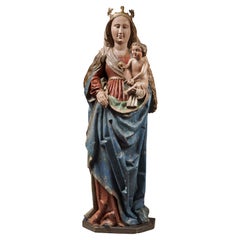
15th Century Burgundian Low-Relief Depicting Scenes of the Nativity
Located in Saint-Ouen, FR
Provenance : In the same private collection for several generations, Burgundy.
The canonical Gospels describe briefly the episode of the Nativity. It comprises three parts :
• The Preludes : the Journey to Bethlehem, the Census
• The Nativity
• The Announce to the Shepherds and the Adoration of the Magi
Only the Gospel according to Matthew (2, 1-12) speaks about the Adoration of the Magi. Staying vague about their number it does say they brought the newborn gold, incense and myrrh. The apocryphals, the fathers of the Church and many other authors have filled in the gaps of the evangelic tale. The sobriety and symbolic of the story have been a huge inspiration to artists. Although one of the oldest depictions of the Adoration of the Magi dates from the 2nd century the theme became very popular in Christian art during the late 14th century. One of the reasons explaining this success is that it celebrates both the Virgin and Christ at the same time.
This important walnut panel is carved in a strong relief and depicts the different steps of the story of Jesus’ birth.
On the left, the donkey and ox that have accompanied Mary and Joseph from Bethlehem are depicted behind a trough. On the thatch roof appears the star that would guide the magi to the place of birth of Jesus.
Mary is wearing a veil and is seating on a bed. She holds her baby at arm’s length to present him to the magi. Saint Joseph is by her side. The old man is holding a cane in his left hand while from the right hand he seems to uncover himself to greet the visitors.
A woman assists to the scene.
In front of the holy family the three magi stand behind one another to pay their homage to the newborn.
The first magi has a pointed beard. He is already kneeling out of deference and has placed his crown to his feet. He gives the baby a hanap filled with gold coins. This is Melchior as the legend describes him with white hair and a long beard.
Caspar, the second magi bears a cup of incense. He is looking at the third magi and with his right hand he points to the star that has guided them there. He has a short beard and wears crakow shoes, breeches and a wide sleeved doublet.
Finally Balthazar, the elegant last magi proceeds proudly towards the holy family with his one hand on the saber’s hilt and the other holding a cup. He brings the divine child the myrrh. He probably just dismounted as the horse can be seen behind him.
The scene is set in a very detailed and narrative decor. In the right part of the panel the shepherd receive the announce of Jesus’ birth. An angel comes down from heaven with a scroll bearing the good news in his hands. The herding dog sleeps peacefully while sheeps graze. At the top of the cliff we notice the gilded sheeps enclosure.
The panel’s moulded frame is carved with a foliated decor. In it’s centre appears a coat-of-arms. It is the alliance of the three magi’s arms. Indeed as it was common for legendary figures the three of them received imaginaries coat-of-arms. Thus, on a field of azure stands a star for Melchior, a crescent for Caspar and a pennon for Balthazar.
This high-relief panel is undeniably the work of a very skilled and imaginative artist. This key moment in the New Testament is transposed to a contemporary environment thanks to the figures’ clothing and the rural daily life scene. This way the universal dimension of the episode is highlighted allowing a better understanding for the contemporaries.
The sculptor has represented the episodes of the Adoration of the Magi and the Announce to the Shepherd with great talent and numerous details giving life to a picturesque and narrative scene. The important traces of polychromy give those already very animated scenes a stronger pictorial power and a rich dynamism.
Because of the picturesque and familiar realism so dear to the artists of the late Medieval era, of the didactic function of this type of panel as well as the quality of the sculpture this piece is an astounding example of Burgundian art of the 15th century.
Literature
Louis Réau, Iconographie de l’Art chrétien...
Category
French Gothic Antique 15th Century and Earlier Figurative Sculptures
Materials
Walnut
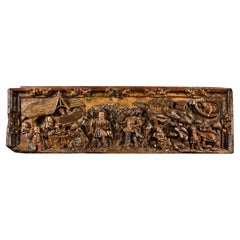
Ancient Roman Bronze Herm on Stand, 1st-4th Century AD
Located in Bradenton, FL
Ancient Roman Bronze Herm Statue dating from the 1st to 4th Century A.D. A herm was a statue consisting of a a head atop a square pillar, originally an artifact to honor the god Herm...
Category
Italian Classical Roman Antique 15th Century and Earlier Figurative Sculptures
Materials
Bronze
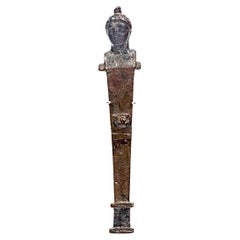
Ancient Greek Terracotta Female Figure
Located in Los Angeles, CA
This is a superb Hellenistic terracotta female figure with an host of delicate remaining details and finely painted elements. A finely pleated himation envelops both of her arms and...
Category
Greek Classical Greek Antique 15th Century and Earlier Figurative Sculptures
Materials
Terracotta
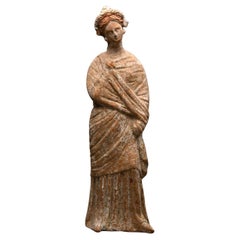
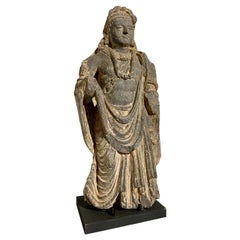
Gandharan Standing Bodhisattva Maitreya, Carved Black Schist, 2nd-4th Century
Located in Austin, TX
An impressive and well carved Gandharan figure of the Bodhisattva Maitreya, the Buddha of the Future, carved black schist, ancient Kingdom of Gand...
Category
Pakistani Antique 15th Century and Earlier Figurative Sculptures
Materials
Schist
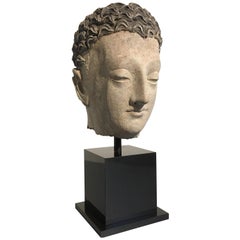
Gandharan Stucco Head of the Buddha, 3rd-5th Century
Located in Austin, TX
A sublime Greco-Buddhist stucco head of the Buddha, ancient region of Gandhara, circa 3rd-5th century.
A fragment of a larger statue, the Buddha's face...
Category
Pakistani Antique 15th Century and Earlier Figurative Sculptures
Materials
Stucco
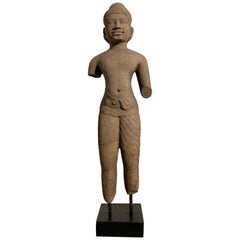
Khmer Carved Sandstone Male Deity, Style of the Baphoun, 11th Century
Located in Austin, TX
A delightful carved sandstone sculpture of an unidentified male deity, Khmer, Angkor Period, style of the Baphuon, 11th century.
The smil...
Category
Cambodian Antique 15th Century and Earlier Figurative Sculptures
Materials
Sandstone
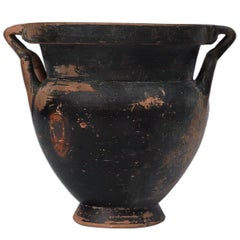
Greek Black Glazen Column Krater (4th Century BC)
Located in Soho, London, GB
Black Glazen Column Krater
mid-4th century BC, Apulia
With broad avoid body on a short echinus foot and thick mouth.
The two handles form loops around the...
Category
Italian Classical Greek Antique 15th Century and Earlier Figurative Sculptures
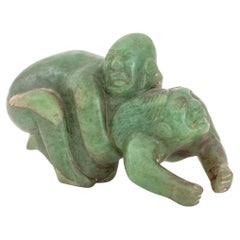
Olmec Pre-Columbian Jade Erotic Sculpture
Located in Astoria, NY
Olmec Pre-Columbian Carved Jade Erotic Sculpture, depicting a male figure embracing a female figure. 1.75" H x 3.25" W x 1.75" D. Provenance: From the Upper East Side Apartment of a ...
Category
Central American Pre-Columbian Antique 15th Century and Earlier Figurative Sculptures
Materials
Jade
$1,800 Sale Price
23% Off
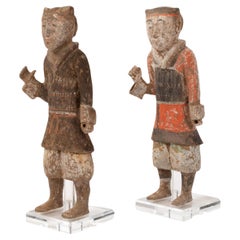
Pair of Terracotta Han Guards in Polychrome Paint China Han-Dynastie, TL Tested
Located in Salzburg, AT
Pair of terracotta Han guardsmen in polychrome paint China TL tested
Pair of rare standing male terracotta sculptures/warriors of the Chinese Han dynasty from the 2nd century BC.
W...
Category
Chinese Han Antique 15th Century and Earlier Figurative Sculptures
Materials
Terracotta, Acrylic
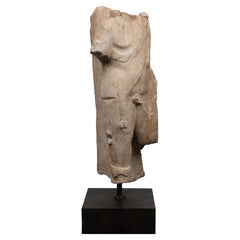
A Roman Marble Sculpture of Hercules, Circa 1st / 2nd Century AD Ex Sotheby
s
Located in ARMADALE, VIC
A Roman Marble Sculpture of Hercules, Circa 1st / 2nd Century AD
The sculpture is nude except for the draped Nemean lion skin.
Provenance: Sotheby's London, December 14, 1981, lot ...
Category
Italian Classical Roman Antique 15th Century and Earlier Figurative Sculptures
Materials
Marble
$46,750 Sale Price
44% Off
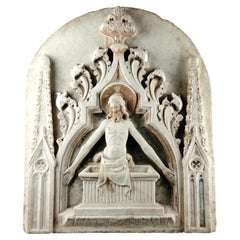
A Very Rare and Important Marble Relief of the ‘Resurrection of Christ’
Located in London, GB
A Very Rare and Important Marble Relief of the ‘Resurrection of Christ’
Attributed to the Master of the Mascoli Altar
Marble
Venice, Italy
Second half of the 15th Century
SIZE: ...
Category
Italian Renaissance Antique 15th Century and Earlier Figurative Sculptures
Materials
Marble
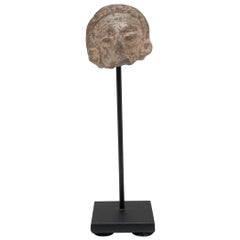
Pre-Columbian Ceramic Head Fragment
Located in Chicago, IL
This intriguing head fragment was once attached to a pre-Columbian bust or full effigy figurine. Earthenware figurines like this were made in great abundance throughout Mesoamerican history, serving a wide variety of purposes and functions from religious rituals to burial offerings.
Figurines like this commemorated important people and events across Mesoamerica, portraying individuals of different rank and status such as soldiers, merchants, bureaucrats, and occasionally divinities. This figure is adorned with an elaborate headdress, or coiffure, and ear spools...
Category
Central American Pre-Columbian Antique 15th Century and Earlier Figurative Sculptures
Materials
Ceramic
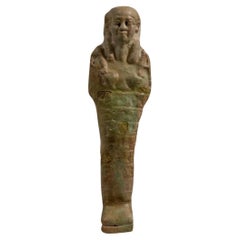
Ancient Egyptian Faience Ushabti Figure, c. 700-30 B.C.
Located in Los Angeles, CA
An impressive Ancient Egyptian Faience Ushabti figure, belonging to the c. 700-30 B.C. It consists of a molded pottery having a green glazed surface. The figure is wearing a royal wi...
Category
Egyptian Antique 15th Century and Earlier Figurative Sculptures
Materials
Pottery
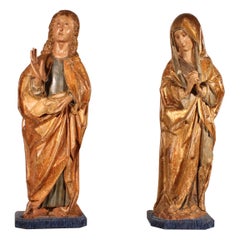
Saint John The Evangelist And The Virgin From A Crucifixion Group, Spain, Circa
Located in Brussels, Brussels
Saint John the Evangelist and the Virgin from a Crucifixion Group, Spain, circa 1500, in walnut.
Superb pair of gilded and polychrome wood sculptures from the late 15th century, circ...
Category
Spanish Gothic Antique 15th Century and Earlier Figurative Sculptures
Materials
Walnut
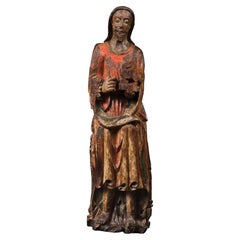
Wood Sculpture Depicting John the Baptist
Located in Saint-Ouen, FR
This wood scultpure showing fine traces of polychromy depicts John the Baptist, one the Old Testament’s last prophets and the first martyr of the New Testament. He is easily recognizable with the lamb he is carrying in his left hand. The way the artist has carved the face exudes a spiritual strenght inherited from previous centuries.
Description
Saint John the Baptist is depicted bare feet, seated in a hieratic manner. His elongated face is marked by a beard and a moustache. The straight nose and wide eyes indicate a Spanish origin. This asumption is reaffirmed by the Saint’s resigned expression.
His parted hair frames his face while uncovering his ears.
He wears a round collar red-orange tunic, draped onto the body and belted at the waist. A flap of his green coat covers his knees and falls down in stylized pleats.
Following iconographic rules Saint John the Baptist is pointing with his right hand the lamb seated...
Category
Spanish Gothic Antique 15th Century and Earlier Figurative Sculptures
Materials
Wood
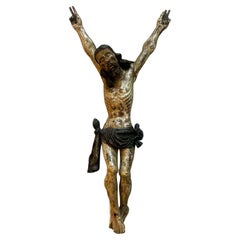
Rare Antique Gothic Corpus Christi 1480 -1530
Located in Doha, QA
An extraordinary and museum-worthy 15th century Gothic Corpus Christi, masterfully hand-carved in wood with exceptional anatomical detail and partially polychromed in white and royal...
Category
German Gothic Antique 15th Century and Earlier Figurative Sculptures
Materials
Wood
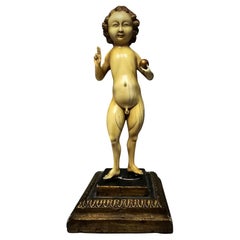
Sculpture of the Infant Jesus as Salvator Mundi - School of Mechelen, 15th-16th
Located in Madrid, ES
Immerse yourself in the timeless beauty of this sculpture of the Infant Jesus as Salvator Mundi, an exceptional piece originating from the renowned School of Mechelen of the 15th-16t...
Category
Antique 15th Century and Earlier Figurative Sculptures
Materials
Bone
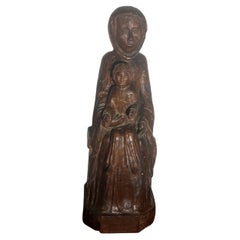
Antique French Romanesque 12th century Enthroned Madonna and Child
Located in Doha, QA
This extraordinary museum piece Enthroned Virgin Mary/Madonna with child on her lap comes from the Rhone region in France. The saint symbol and protec...
Category
French Gothic Antique 15th Century and Earlier Figurative Sculptures
Materials
Wood, Walnut
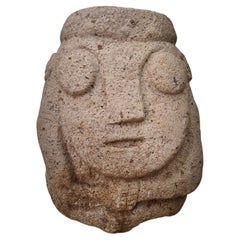
Stone Carved Anthropomorphic Sculpture From The Recuay Culture Peru 400bc-400ac
Located in Madrid, ES
ANTHROPOMORPHIC SCULPTURE CARVED IN STONE OF THE RECUAY CULTURE PERU 400BC-400AC
Recuay is an archaeological culture of Ancient Peru that developed in the Sierra of the current Peruvian department of Áncash between 200 AD. C. until 600 d. C. It corresponds to the stage called Regional Developments, it has also been called the Huaylas or Santa culture.
Like the other Early Intermediate cultures, little is known about this culture. The most accepted position is that it was an extension of the Chavin culture, after the influence of the "White on Red" style in the region. Regarding the political aspect of the recuay, there is a hypothesis that questions their autonomy and maintains that Recuay would be part of one of the many political units that made up the Moche state.
The recuay style, characterized by its ceramics and stone sculpture, was initially described by Eduard Seler in 1893, based on ceramic specimens brought to the Ethnographic Museum in Berlin by Mariano M. Macedo. Seler named this style of pottery Recuay, based on the report that these pieces had been found in the town of Recuay. Later studies showed that this characteristic pottery was not originally from Recuay but from Copa, near Carhuaz, for which reason the name change to that of this town was proposed. Eventually the name of Huaylas was used for this culture. In 1919 Julio C. Tello explored the area and recovered lithic sculptures and Recuay-type ceramics. In the 1960s Rafael Larco Hoyle proposed changing the names of Recuay and Copa to Santa, arguing that the Recuay style had originated in the coastal regions of the Santa Valley. However, the name Recuay has persisted.
Its chronology is also highly debatable. The time of its origin between 0 and 200 AD is discussed. C. and its end or collapse is commonly set to 600 d. C. probably caused by the invasion of the Huari conquerors.
It encompassed almost the entire Callejón de Huaylas, a narrow valley fed by the Santa River and enclosed between two mountain ranges, the Cordillera Blanca to the west and the Cordillera Negra to the east. Its influence extended to the east to the Marañón river basin and to the west to the upper parts of the Santa, Casma and Huarmey valleys. To the north it reached the town of Pashash, in the province of Pallasca.
The Copa area, Marca district, Recuay province, Ancash department seems to have been the center or main nucleus of cohesion of this culture. The name of the culture would then be justified, derived from the province of the same name. Other important settlements were those of Huilcahuaín (near the current city of Ancash), Cátac, Araucay, Tambo, Jancu, Upayacu and Pashash (near the current city of Cabana).
Its main form of expression of art was through stone work (carving and masonry), inherited from its predecessor, the Chavín culture. In addition, they made sculptures in lumps that represent warriors with shields or trophy heads, with which they decorated their complex architectural constructions. They also made white clay pottery...
Category
Antique 15th Century and Earlier Figurative Sculptures
Materials
Stone
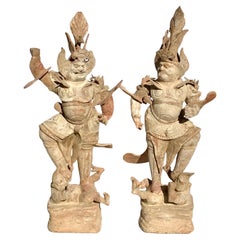
Large Tang Dynasty Pottery Painted Lokapalas Sculptures 28 Inches
Located in Dallas, TX
Tang Dynasty Pair of Painted Pottery Lokapalas
Tang Dynasty (618-907),
Height: 27.25 x 11.5 x 7" each
PROVENANCE: Weisbrod Chinese Art, Ltd., New York
Condition: Losses and resto...
Category
Chinese Tang Antique 15th Century and Earlier Figurative Sculptures
Materials
Pottery
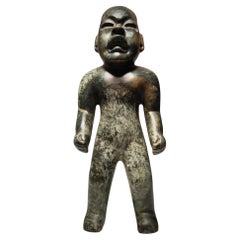
Important Olmec figure of Olmec ethnic dignitary from the preclassic period
Located in Madrid, ES
Important Olmec figure of Olmec ethnic dignitary from the preclassic period (2500-200 BC)
Important Olmec figure of dignitary of the Olmec ethnic group of...
Category
Antique 15th Century and Earlier Figurative Sculptures
Materials
Precious Stone
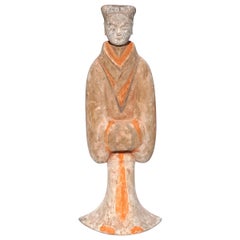
Large Han Dynasty Terra-cotta Court Lady Figure TL Tested
Located in Dallas, TX
Huge Han Dynasty Terracotta figure Of A Court Lady. TL Test conducted by Ralf Kotalla Laboratory in Germany. Report included.
Height: 29...
Category
Chinese Han Antique 15th Century and Earlier Figurative Sculptures
Materials
Terracotta
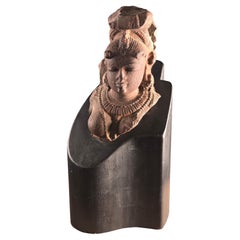
Indian Red Sandstone Female Deity Fragment, Mounted, 12th Century
Located in Kilmarnock, VA
Carved red sandstone bust of a female deity, India, circa 10th-12th century. The fragment itself measures 8.5 inches tall by 4.5 inches wide and deep, and stands 14.5 inches overall ...
Category
Antique 15th Century and Earlier Figurative Sculptures
Materials
Sandstone
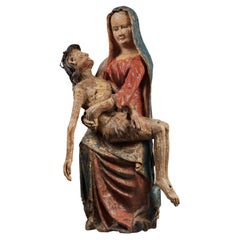
Important German Pietà from the, 14th Century
Located in Saint-Ouen, FR
IMPORTANT GERMAN PIETÀ FROM THE 14th CENTURY
ORIGIN: GERMANY, REGION DE COLOGNE
PERIOD: BEGINNING IF THE 14th CENTURY, ca. 1330
Height: 98 cm
Length: 45 cm
Depth: 33 cm
Polychromed linden wood
Good condition of conservation
Provenance : particular Alsatian collection
The theme of the Pietà or Vesperbild appears in Germany at the end of the 13th century, reflecting the mysticism of the late Middle Ages. Although the theme does not exist in the Gospels, it was often mentioned in contemporary devotional literature. Indeed, during the first half of the 14th century, mystical thought and devotional practices changed under the impulse of a number of religious, among them Heinrich Suso and St Bridget. In his writings, Suso placed important emphasis on contemplation and meditation in the footsteps of Christ's martyrdom.
This will have great impact in the field of art, especially in Germany and later in France. The emphasis will from now on be on grief, death is shown in a straightforward way. The wounds of Christ are gaping and bloody. The suffering of Christ and the seven sorrows of the Virgin Mary are meditated upon.
This piece demonstrates the interest of the faithful in these representations where pathos reigns.
The virgin is represented seated in a frontal position. The bust is very elongated. She is wearing a red dress with a simple neckline and a blue mantel...
Category
Antique 15th Century and Earlier Figurative Sculptures
Materials
Wood
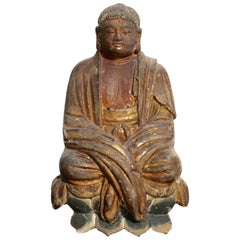
Early Ming Dynasty Chinese Buddha Statue, circa 14th Century
Located in Dallas, TX
A very fine late Yuan to early Ming Chinese terracotta gilt and polychrome painted Buddha figure, he is dressed in thick robes, his hair arranged in ty...
Category
Chinese Ming Antique 15th Century and Earlier Figurative Sculptures
Materials
Terracotta
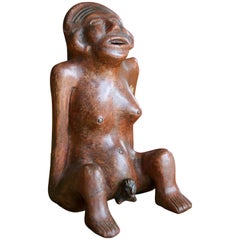
Pre-Columbian Pottery Figure of a Woman Giving Birth
Located in Sofia, BG
Pre-Columbian pottery figure of a seated woman giving birth, with her hands behind the back. It was most probably used by a shaman to look for the benevol...
Category
Mexican Pre-Columbian Antique 15th Century and Earlier Figurative Sculptures
Materials
Terracotta
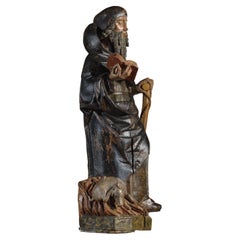
Sculpture in Polychrome Wood Representing Saint Anthony Hermit
Located in Saint-Ouen, FR
Sculpture In Polychrome Wood Representing Saint Anthony Hermit
Origin : East of France
Period : End of the 15th century
Measures: Height : 97 cm
Width : 32 cm
Depth : 26 cm
Polychrome wood
The saint is represented by an old, bearded man, dressed in a hooded monk’s habit over the tunic of his religious order. He is stood upright, holding an open book, La Règle des Antonnites, in his right hand. In the other hand, he is holding a staff in the form of the Greek letter tau with a rosary hanging down over it. At his feet lies a pig wearing a small bell around its neck.
He rests on his right leg, whilst the left advances forward as if he were about to start walking. His belted tunic, forming several rectilinear pleats, is covered by a habit which is open only at the waist, therefore revealing these pleats. He is also wearing a hooded scapular over his shoulders.
His thick hair escapes from under a distinctive hat, forming a collection of finely sculpted ringlets. This fine detail is also applied to the four long ringlets of his superb beard, which sit just below the shorter ones of his moustache.
His face is a picture of harmony, with lowered eyes and his small mouth lost amongst the abundance of hair.
At his feet on a pedestal of flames, hinting to the fire of Saint Anthony no doubt, a pig trying to scratch its ear.
Born in 251 in Upper Egypt, he withdrew into solitude at a very young age. He would have been plagued in the desert with extremely diabolical temptations.
He payed a visit to Saint Paul the hermit towards the end of his life. He was the dean of the Thébaïde anchorites, who was miraculously fed by a crow. On the day that Saint Anthony visited, the crow brought two portions of bread in its beak instead of one.
Some time after, having learnt of the death of his venerable brother, Saint Anthony went to bury him with the help of two lions.
The King of Catalonia pleaded to come and exorcise his posessed wife and children. He left Thébaïde for Barcelona. He appeared at the house of the provost André, bringing him a sow in his mouth, a monstrous piglet born without eyes. André wanted to kill it but Anthony stopped him, telling him that the poor beast wanted to ask for healing, as the King had done for his offspring.
He made a sign of the cross on the piglet and it suddenly acquired its sight and the members which it did not have at birth. After which, André, guided by Saint Anthony, exorcised the Queen of Catalonia in the same way whilst she knelt at his feet.
Théophile discovered the body of Saint Anthony wrapped in a palm fibre tunic which he had been given by Saint Paul the Hermit.
In the Red Sea Desert there are two Coptic, IV century, monasteries which stand next to each other, one dedicated to Saint Anthony, the other to Saint Paul the Hermit. They are the oldest monasteries in the Christian world.
The body of the famous hermit was transported to Constantinople and would have been transferred into the abbaye, Saint Antoine-en-Viennois, Dauphine.
The Antonnite Order was a charitable order which specialised in treating contagious diseases. The fire of Saint Anthony, was identified by doctors as a grangrenous ergotism, caused by a diet of rye bread contaminated with the parasite ergot. The effect of this is the drying out of hands and feet which then need amputation, the plague and then later syphilis. All the skin diseases came from Saint Anthony.
Saint Anthony’s pilgrimage to Dauphine rivaled that of Saint Jacques to Compostela. Thanks to the various commanderies created by the mother house, Saint Anthony’s cult spread throughout Christianity.
In order to maintain commanderies and their hospitals, the Antonnites resorted to pig farming. They enjoyed having the benefit of letting their pigs roam freely through the streets of the villages, with little bells round their necks that had a recognisable chime so that they were able to find them. This privilege was very envied by other monastic Orders.
Saint Anthony was the patron saint of several crafts such as basket makers and gravediggers.
However it is to the pig that he owes the majority of his patronages; pigkeepers, pig sellers, butchers, porc butchers, brush makers who use pig bristle and bell-ringers because of the pig bells...
Category
Antique 15th Century and Earlier Figurative Sculptures
Materials
Wood
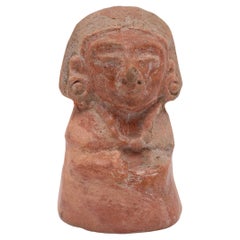
Teotihuacan Redware Figure
Located in Chicago, IL
This intriguing redware figure was crafted in 400 A.D. from the ancient Teotihuacan region of Mexico. Earthenware figurines were made in great abundance throughout Teotihuacan's history. After 250 A.D. objects made from clay increased dramatically, serving a wide variety of purposes and functions from religious rituals to burial offerings.
Figurines like this commemorated important people and events within the city of Teotihuacan and other parts of Mesoamerica, portraying individuals of different rank and status such as soldiers, merchants, bureaucrats, and occasionally divinities. This figure is adorned with an elaborate headdress, a thick beaded necklace...
Category
Mexican Pre-Columbian Antique 15th Century and Earlier Figurative Sculptures
Materials
Ceramic
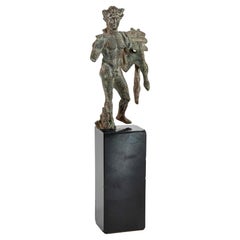
1st Century AD Roman Bronze Statuette of Mercury Polykleitos Classic Antiquities
Located in Keego Harbor, MI
A unique historic artifact – a Roman bronze statuette of Mercury, holding a caduceus, with ram at side, of Polykeitan style. Circa 1st Century A.D. Displayed on base pedestal. Polykl...
Category
Italian Classical Roman Antique 15th Century and Earlier Figurative Sculptures
Materials
Bronze
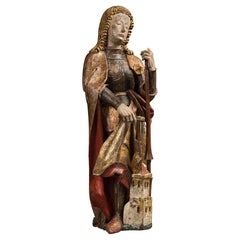
Carved Polychrome Wood Depicting Saint Florian
Located in Saint-Ouen, FR
CARVED POLYCHROME WOOD DEPICTING SAINT FLORIAN
ORIGIN : SWABIA, SOUTHERN GERMANY
PERIOD : LATE 15th CENTURY
Height : 98 cm
Length : 29 cm
Depth : 24 cm
Polychrome limewood
Very fine condition
Provenance
- Swiss collection STAEHELIN-PARAVICINI - March 1939
- Auction Jacob Hecht -18 April 1929, Berlin
- Sammlung Prof Q.A. LEIMHAAS Munich, Helbing - 26 May 1908
(Research by Thierry Fraslin)
During the Middle-Age Saint Florian was particularly popular, subject to worship in Austria -Tyrol- Bavaria and Bohemia. Embodying courage and commitment Saint Florian was invoked to protect the soul of the living against sins and to keep the soul of the deads from the purgatory.
From the mid-15th century he safeguards from water and fire. The legend has it that when he was young the saint had contained the fire of a burning...
Category
Antique 15th Century and Earlier Figurative Sculptures
Materials
Wood
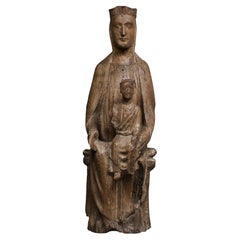
Important Sedes Sapientiae Virgin and Child also called "Throne of Wisdom"
Located in Saint-Ouen, FR
IMPORTANT SEDES SAPIENTIAE VIRGIN AND CHILD
ALSO CALLED « THRONE OF WISDOM »
ORIGIN: FRANCE, BURGUNDY
PERIOD: EARLY 13th CENTURY
Height : 75 cm
Len...
Category
Antique 15th Century and Earlier Figurative Sculptures
Materials
Oak
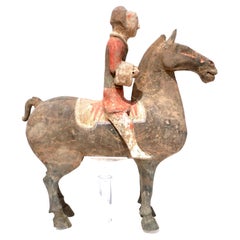
Han Dynasty Polychromed Horse and Rider
Located in Dallas, TX
A fine Han dynasty polychrome painted terracotta horse and rider. The warrior is dressed in orange and black on a black horse.
Measures: Height 14 inches (35 cm)
Width 12.5 inches (32 cm).
Condition: Excellent with tastefully undetectable repairs.
During the unification of China under the Han dynasty, bands of mounted nomadic warriors from the north threatened the country. In order to thwart their attacks, the Chinese sought to import stronger, faster steeds from Central Asia (as opposed to the Mongol ponies used by the invaders), eventually leading to the creation of the Silk Road. This small sculpture of a mounted soldier reveals the crucial military role of the horse. When compared to the diminutive stature of the rider, the importance of the horse becomes readily apparent. This creature provided security and strength, allowing the empire to secure its borders and expand its influences across Central Asia. The magnificent regalia of the horse, including a brilliantly painted saddle in red and green/gold, reflect the respect this animal received. The warrior as well is gorgeously decorated with a painted red tunic and gray chest...
Category
Chinese Han Antique 15th Century and Earlier Figurative Sculptures
Materials
Terracotta
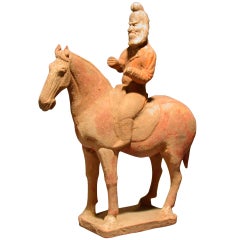
Unusual Tang Dynasty Persian Horse Rider Statue, Silk Road Trader, TL Tested
Located in Greenwich, CT
A fine and unusual statue of standing horse with a Persian rider. Tang Dynasty (618-907 AD) Silk Road trader from Persia, comes with Oxford authenticati...
Category
Chinese Tang Antique 15th Century and Earlier Figurative Sculptures
Materials
Terracotta
$6,200 Sale Price
20% Off
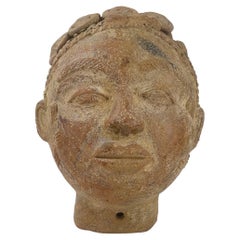
Sculpted Clay Head of African Woman
Located in Dallas, TX
Sculpted clay head of a beautiful African woman. Light sandy brown with rough texture. A hand sculpted piece. Head adorned with a decorative circular pattern...
Category
Antique 15th Century and Earlier Figurative Sculptures
Materials
Clay
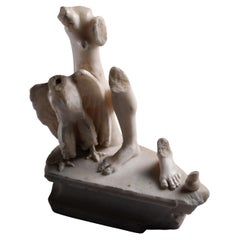
Roman Marble Statuette of Jupiter
Located in London, GB
Roman Marble Fragment of jupiter
Circa 2nd-3rd Century A.D.
Measure: Height: 19.7 cm
This beautiful Roman fragmentary statuette depicts Jupiter, the king of the gods, here recognisable from his two chief attributes, the eagle with outstretched wings - according the Pseudo-Hyginus, singled out by Jupiter because ''it alone, men say, strives to fly straight into the rays of the rising sun'' - and the base of the scepter, which remains at the side of the left foot, an aspect likely borrowed from the statue of Zeus at Olympia, once one of the Seven Wonders of the World. Though much of the original piece has been lost, the subtle anatomical detail in the feet mark this out as a piece of exceptional quality, and the work of an artist of particular talent and patience - as Johann Winckelmann once said of the famous Belvedere Torso, ''if you contemplate this with a quiet eye [...] the god will at once become visible in this stone.''
This fragment once caught the eye of Henry Howard, 4th Earl of Carlisle (1694-1758), a Knight of the Garter and among the most prolific collectors of his day. The piece, acquired during his travels to Rome, was proudly displayed on an alcove of the Western Staircase of Castle Howard...
Category
Italian Classical Roman Antique 15th Century and Earlier Figurative Sculptures
Materials
Marble
Exceptional Virgin and Child in Majesty or "Sedes Sapientiae", Throne of Wisdom
Located in Saint-Ouen, FR
Exceptional virgin and child in majesty
or “Sedes Sapientiae”, throne of wisdom
Origin: southwestern France.
Period: late 12th - early 13th cen...
Category
Antique 15th Century and Earlier Figurative Sculptures
Materials
Walnut
Late 15th Century Polychrome Wood Carving Depicting the Nativity
Located in Saint-Ouen, FR
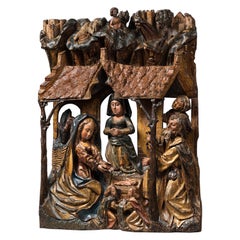
While the birth of Christ is briefly told in the Gospel of Luke (2, 7) it is in the apocryphal texts that we find most of the elements and details that have then inspired artists. As of the 14th century and even more of the 15th century the subject of the Adoration of the Child replaces in Western art the scene of the Birth, much favoured in Byzantine art. Instead of being depicted lying with the new-born swathed in the manger, the Virgin is now kneeling, her hands joined in prayer in front of the naked child. This change was probably hastened by the popularity of the visions of Saint Bridget of Sweden to whom the Virgin allegedly appeared to show how she had given birth to Jesus (Visions, VII, chap. 21).
Sheltered by a thatch-roofed structure the Virgin is kneeling in front of the Child Jesus. She wears a magnificent red dress under a large gold cloak. Her curled blond hair is partially veiled. The newborn is lying on a straw mat. Joseph is depicted with a parted beard and stands opposite from the Virgin. He wears a tunic and a coat with a purse hanging from the belt. His costume reminds us of the long journey him and Mary have accomplished to reach Bethlehem.
Two other women are present. One is looking through the stable’s window to observe the Holy Family while another one kneels in prayer in front of the divine child. The rich costume of the lady might indicate she is a donator.
However they could also both represent the women who took part in the birth of Christ, Zelemi and Salome. Salome, incredulous did not believe in the virginal conception of Mary and she is represented far from the scene. The artist has depicted her with an expression of doubt on her face. Zelemi, on the contrary, is a believer. She is rewarded by a place of honour at the heart of the scene, close to Mary.
To the left the donkey and ox that have accompanied Mary and Joseph to Bethlehem observe quietly the scene.
On the foreground two angels hold a scroll reading an excerpt from the Gloria : “/Gloria/ in excelsis /Deo/.” One of the angels wears a blue cape while the other’s is red Those two colours are very significant as during Middle-Ages blue symbolises hope and red charity. Together they express the hope in redemption thanks to the advent of Christ and his sacrifice to come.
Above the main scene, up a cliff, a small shepherd lets his herd of sheep graze amidst the trees. He is framed by two walled cities.
This wood carving is the work of a very skilled and inventive artist. The piece bears witness to his exceptional talent. The realism of the scene is emphasised by the amount of details depicted. The refinement of the carving itself is highlighted by the well preserved polychromy.
This key moment of the New Testament is set in a contemporary context thanks to the clothes of the characters and the scenes of rural life. The universal dimension of the scene is intensified while allowing contemporary viewers to grasp its meaning more easily.
This care for details, the picturesque realism as well as the extraordinary rendition of the cloths suggest it was made by a Flemish artist during the late 15th century.
This relief can be compared with the panel of the Nativity from the Saint-Vaast altarpiece made by Jacques Daret between 1433 and 1435, today in Madrid’s Thyssen-Bronemisza Museum.
Literature
Louis Réau, Iconographie de l’Art chrétien...
Category
Dutch Gothic Antique 15th Century and Earlier Figurative Sculptures
Materials
Wood
Virgin and Child in Majesty
Located in Saint-Ouen, FR
Virgin and child in majesty
Origine: castille
Epoque: early 14th century
Measures: Height: 72cm
Length: 30cm
Depth: 25cm
Polychrome and gi...
Category
Antique 15th Century and Earlier Figurative Sculptures
Materials
Wood
$41,451
Pair of Tang Dynasty Painted Pottery Soldiers
Located in Austin, TX
A well modelled pair of Tang dynasty painted pottery soldiers.
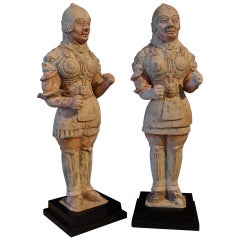
The warriors portrayed standing, dressed in form fitting, elaborate layered Armor with fitted helmets. The breastplate...
Category
Chinese Tang Antique 15th Century and Earlier Figurative Sculptures
Materials
Pottery
$25,000 / set
Supernatural Being, Pre-Columbian Gold Pendant, Costa Rica, circa 800 to 1500 AD
Located in San Pedro Garza Garcia, Nuevo Leon
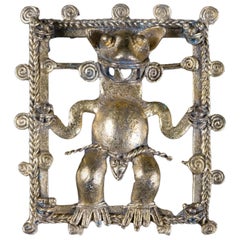
Southern Costa Rica or Western Panama, circa 800 to 1500 AD. A very fine example of the goldwork of the Veraguas-Chiriqui-Diquis region. A pendant in Carbonera style of a supernatural being, a composite monster with human torso and feline (probably jaguar) head. The figure is set in a frame decorated with little animal heads, one at each corner. The hands have also turned into animal heads. In place of genitalia is a stylized serpent head suspended by a twisted cord that was supposed to continue across the frame. A minor casting accident prevented it form being attached to the frame. A modern goldsmith would solder in two short lengths of twisted wire, but the ancient goldsmith did not have the equipment to make such repair. A double thread ending in spirals goes across the frame behind the neck of the figure, helping to fill up the frame and avoiding a large empty space. The word "thread" reminds us that the twisted and straight cords were, in the original wax model of the pendant really extruded wax threads, turned into metal by the lost wax (cire perdue) process. The braid pattern on the frame is illusory, just two twisted threads of extruded wax laid side by side. The goldsmith made the toes out of extruded wax thread too, very decorative as well. The piece comes with a certificate of authenticity by Mr. Robert Sonin, 5 May 2006. ref. photo roll 3301. A world renowned expert on Pre-Columbian Artifacts...
Category
Costa Rican Pre-Columbian Antique 15th Century and Earlier Figurative Sculptures
Materials
Gold
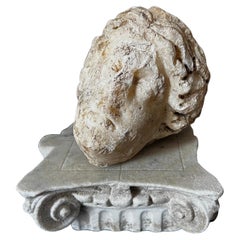
Antique Roman Marble Head of a Goddess, Possibly Venus, 1st-3rd Century AD
Located in Doha, QA
A captivating Roman marble head of a Goddess, possibly Venus, dating from the 1st–3rd century AD, exquisitely carved and presented on a bespoke marble pedestal styled as a classical ...
Category
Italian Classical Roman Antique 15th Century and Earlier Figurative Sculptures
Materials
Marble
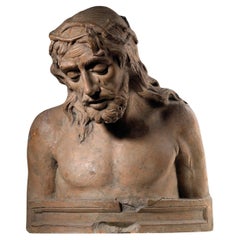
Ecce Homo - Florence, 15th century
Located in Bruxelles, BE
A terracotta bust "Ecce Homo"
Florence, 15th century
53 x 44 x 31 cm
Category
Italian Renaissance Antique 15th Century and Earlier Figurative Sculptures
Materials
Terracotta
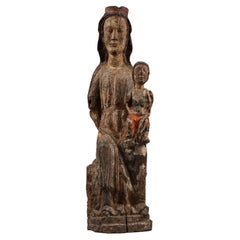
Virgin and Child "Sedes Sapientiae", Seat of Holy Wisdom
Located in Saint-Ouen, FR
Virgin and child sedes sapientiae, seat of holy wisdom
Origin : Northern Spain, castile, navarre or galicia.
Period : early 13th century.
Heigh...
Category
Antique 15th Century and Earlier Figurative Sculptures
Materials
Wood
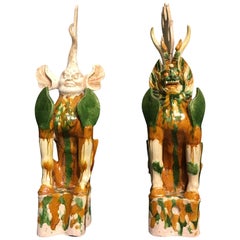
Pair of Tang Dynasty Sancai Glazed Tomb Guardians, Zhenmushou, 7th-8th Century
Located in Austin, TX
A fantastic and powerful pair of Chinese Tang Dynasty three-color (sancai) glazed zhenmushou, tomb guardian figures, late 7th or early 8th century. TL t...
Category
Chinese Tang Antique 15th Century and Earlier Figurative Sculptures
Materials
Earthenware
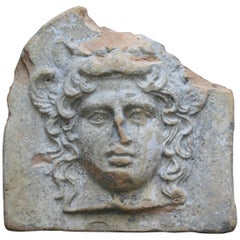
Ancient Greek Terracotta Antefix in Form of the Head of Artemis Bendis, Taranto
Located in Antwerp, BE
Ancient Greek mould-made terracotta antefix decorated with the female head of the Goddess Artemis Bendis.
Western Greek, Italy, Taranto, early 4th century BC.
Two small feathered win...
Category
Italian Classical Greek Antique 15th Century and Earlier Figurative Sculptures
Materials
Stone
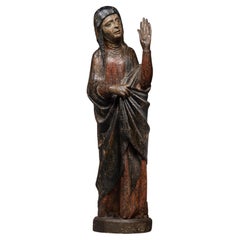
Virgin of Calvary
Located in Saint-Ouen, FR
VIRGIN OF CALVARY
ORIGIN : ITALY
PERIOD : SECOND HALF 13th CENTURY
Height : 75 cm
Length : 19 cm
Depth : 13 cm
Polychrome wood carved in the round
This rare sculpture of a Virgin of Calvary originally belonged to an ensemble depicting the Crucifixion. The Virgin would be accompanied by a sculpture of the apostle John, both flanking the Christ. Depictions of Joseph of Arimathea and Nicodemus could complete the ensemble.
The portrayal of the Descent from the Cross had to be a touching and moving scene for the viewer. Quite rare during the 10th and 11th centuries this particular scene of the Passion was very much in favour during the 12th century before other scenes took over in turn.
Mary is standing with her head slightly tilted to her right shoulder. In a gesture of intercession she raises her left hand – note the long and delicate fingers – towards the missing Christ while with her right hand she holds her cloak around her elbow. Those calm and restrained movements break with the hieratism of Romanesque sculpture...
Category
Antique 15th Century and Earlier Figurative Sculptures
Materials
Wood
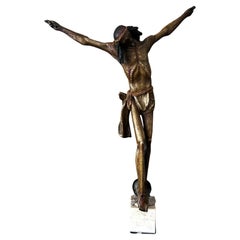
$47,372
Antique 15th c. Gothic Italian Corpus Christi in Polychrome Wood, Hand-Carved
Located in Doha, QA
Exceptional 15th Century Polychromed Wood Crucifix Sculpture from Northern Italy
This rare and exquisite 15th-century hand-carved Corpus Christi ...
Category
Italian Gothic Antique 15th Century and Earlier Figurative Sculptures
Materials
Stone, Marble
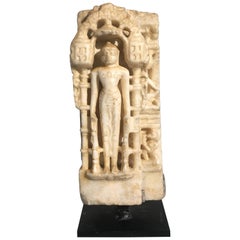
12th Century Indian Carved White Marble Figure of a Jain Tirthankara or Jina
Located in Austin, TX
A well carved Indian white marble Jain temple relief fragment featuring an image of a Jina, circa 12th century, Rajasthan or Gujarat, India.
The Tirthan...
Category
Indian Antique 15th Century and Earlier Figurative Sculptures
Materials
Marble
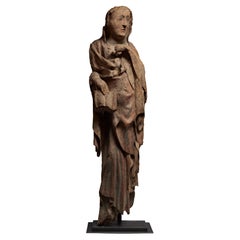
Saint Woman in polychrome carved wood
Located in Saint-Ouen, FR
SAINT WOMAN IN POLYCHROME CARVED WOOD
ORIGIN : ITALY
PERIOD : late 13th century
Height : 103 cm
Length : 28 cm
Width : 16 cm
Remains of polychromy
...
Category
Italian Gothic Antique 15th Century and Earlier Figurative Sculptures
Materials
Softwood
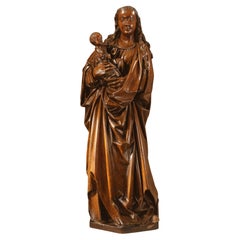
Gothic Virgin and Child from Flanders
Located in Saint-Ouen, FR
Exhibition
Museum Cantini, 1952, The art of the Middle Ages in the Marseille collections, n°101
Provenance
Former collection Louis Bresset (before 1952)
Former collection Profe...
Category
Dutch Gothic Antique 15th Century and Earlier Figurative Sculptures
Materials
Oak
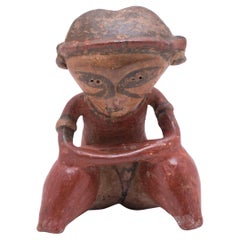
Nayarit Chinesco-Style Seated Figure
Located in Chicago, IL
This seated ceramic figure is attributed to the ancient Nayarit region of Mexico and was likely used as a ritual or burial offering. The ceramic works of this style, known as Chinesc...
Category
Mexican Pre-Columbian Antique 15th Century and Earlier Figurative Sculptures
Materials
Ceramic
More Ways To Browse
Thai Musician
The Dying Gaul
Torso Brass
Vintage Pin Holder
War Statue
Water Maiden
Winged Cherubs Sculpture
Winged Mercury
Woman Ceramic Figurine
15th Century Angel
1880s Bronze Sculptures
1960s Mannequin
African Bronze Figure
Alabaster Head Sculpture
Alabaster Plinth
Alexandra Feodorovna
Andrea Del Verrocchio
Antique German Gnomes