Renaissance Figurative Sculptures

RENAISSANCE STYLE

Spanning an era of cultural rebirth in Europe that harkened back to antiquity, the Renaissance was a time of change in design. From the late 1400s to the early 1600s, Rome, Venice and Florence emerged as artistic centers through the expansion of global trade and a humanist belief in the arts being central to society. Antique Renaissance furniture was ornately carved from sturdy woods like walnut, its details standing out against the tapestries and stained glass adorning the walls.

Renaissance chests, which were frequently commissioned for marriages, were often decorated with gilding or painted elements. Those that were known as cassoni were crafted in shapes based on classical sarcophagi. As opposed to the medieval era, when furniture was pared down to the necessities, a wide range of Renaissance chairs, tables and cabinets were created for the home, and the designs regularly referenced ancient Rome.

Large torchères of the Renaissance era that were used as floor lamps were inspired by classical candelabras, while marble surfaces evoked frescoes. The inlaid boxes being imported from the Middle East informed the intarsia technique, which involved varying hues of wood in mosaic-like patterns, such as those by architect Giuliano da Maiano in the Florence Cathedral.

Tapestry-woven cushion covers accented the variety of Renaissance seating — from conversation to study chairs — while bookcases for secular use reflected the migration of culture and knowledge from the church into the home. The aesthetics of the Italian Renaissance later spread to France through the publishing of work by renowned designers, including Hugues Sambin and Jacques Androuet du Cerceau. Centuries later, the 19th-century Renaissance Revival would see a return to this influential style.

Find a collection of antique Renaissance case pieces, decorative objects and other furniture on 1stDibs.

to
43
165
5
94
41
30
5
14
2
6
2
1
1
2
1,758
1,596
1,280
517
514
370
287
227
220
167
122
97
79
54
54
42
25
21
76
58
47
34
31
106
61
153
73
30
13
11
Height
to
Width
to
170
170
170
4
2
1
1
1
Style: Renaissance
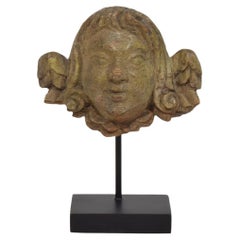
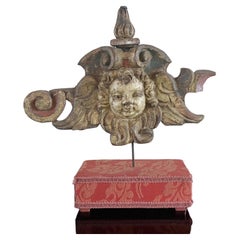
French 16th/ 17th Century Weathered Oak Renaissance Angel Fragment
Located in Buisson, FR
Beautiful weathered oak winged angel head Renaissance ornament. France, 16/ 17th century. Weathered Measurements include the wooden pedestal.
Category

16th Century French Antique Renaissance Figurative Sculptures

Materials

Oak

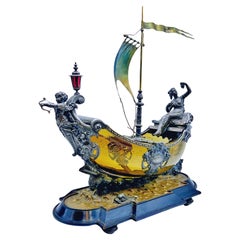
c.1880s ANTIQUE NEO-RENAISSANCE IMPRESSIVE FIGURAL NEF, AUSTRIA
Located in Skien, NO
**Magnificent Late 19th-Century Neo-Renaissance Figural Nef, ca. 1880s-1890s** This exquisitely crafted table vessel embodies the grandeur of Renaissance-inspired artistry, reinte...
Category

Late 19th Century Austrian Antique Renaissance Figurative Sculptures

Materials

Metal, Silver Plate

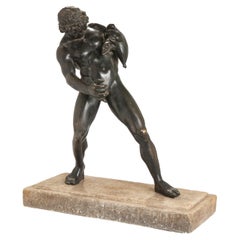
Nude Male Bronze Sculpture Fountain
Located in Malibu, CA
Bronze male sculpture signed. Fonderia Giorgio Sommer Calabritto Napoli Thomas, sculptor, lived and worked in the Naples area, and especially on Capri, from 1889 to 1906. Given this ...
Category

20th Century Italian Renaissance Figurative Sculptures

Materials

Carrara Marble, Bronze

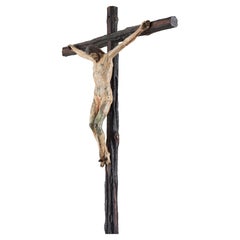
Rare and important painted bronze Crucifix after a model by Michelangelo
By Michelangelo Buonarroti
Located in Leesburg, VA
A rare and very fine bronze corpus of Christ after a model by Michelangelo, cast ca. 1597-1600 by Juan Bautista Franconio and painted in 1600 by Francisco Pacheco in Seville, Spain. The present corpus reproduces a model attributed to Michelangelo. The best known example, lesser in quality, is one on display at the Metropolitan Museum of Art (MET). The association of this corpus with Michelangelo was first brought to light by Manuel Gomez-Moreno (1930-33) who studied the wider circulated casts identified throughout Spain. The attribution to Michelangelo was subsequently followed by John Goldsmith-Phillips (1937) of the MET and again by Michelangelo expert, Charles de Tolnay (1960). While Michelangelo is best known for his monumental works, there are four documented crucifixes he made. The best known example is the large-scale wooden crucifix for the Church of Santa Maria del Santo Spirito in Florence, made in 1492 as a gift for the Prior, Giovanni di Lap Bicchiellini, for allowing him to study the anatomy of corpses at the hospital there. In 1562, Michelangelo wrote two letters to his nephew, Lionardo, indicating his intention to carve a wooden crucifix for him. In 1563 a letter between Lionardo and the Italian sculptor Tiberio Calcagni, mentions this same crucifix (a sketch of a corpus on the verso of a sheet depicting Michelangelo’s designs for St. Peter’s Basillica [Palais des Beaux-Arts in Lille] may reproduce this). That Michelangelo was working on small corpora in the last years of his life is further evidenced by the small (26.5 cm) unfinished wooden crucifix located at the Casa Buonarroti, considered his last known sculptural undertaking. Michelangelo’s contemporary biographer, Giorgio Vasari additionally cites that Michelangelo, in his later years, made a small crucifix for his friend, Menighella, as a gift. Surviving sketches also indicate Michelangelo’s study of this subject throughout his career, most notably during the end of his life but also during the 1530s-40s as he deepened his spiritual roots. The occasional cameo of crucified Christ’s throughout his sketched oeuvre have made it challenging for scholars to link such sketches to any documented commissions of importance. All the while, in consideration that such objects were made as gifts, it is unlikely they should be linked with commissions. Nonetheless, a number of theories concerning Michelangelo’s sketches of Christ crucified have been proposed and some may regard the origin of the present sculpture. It has been suggested that the corpus could have its impetus with Michelangelo’s work on the Medici Chapel, whose exclusive design was given to the master. It is sensible smaller details, like an altar cross, could have fallen under his responsibility (see for example British Museum, Inv. 1859,0625.552). Others have noted the possibility of an unrealized large marble Crucifixion group which never came to fruition but whose marble blocks had been measured according to a sheet at the Casa Buonarroti. A unique suggestion is that Michelangelo could have made the crucifix for Vittoria Colonna, of whom he was exceedingly fond and with whom he exchanged gifts along with mutual spiritual proclivities. In particular, Vittoria had an interest in the life of St. Bridget, whose vision of Christ closely resembles our sculpture, most notably with Christ’s proper-left leg and foot crossed over his right, an iconography that is incredibly scarce for crucifixes. The suggestion could add sense to Benedetto Varchi’s comment that Michelangelo made a sculpted “nude Christ…he gave to the most divine Marchesa of Pescara (Vittoria Colonna).” Of that same period, two sketches can be visually linked to our sculpture. Tolnay relates it to a sketch of a Crucified Christ at the Teylers Museum (Inv. A034) of which Paul Joannides comments on its quality as suggestive of preparations for a sculptural work. Joannides also calls attention to a related drawing attributed to Raffaello da Montelupo copying what is believed to be a lost sketch by Michelangelo. Its relationship with our sculpture is apparent. Montelupo, a pupil of Michelangelo’s, returned to Rome to serve him in 1541, assisting with the continued work on the tomb of Pope Julius II, suggesting again an origin for the corpus ca. 1540. The earliest firm date that can be given to the present corpus is 1574 where it appears as a rather crudely conceived Crucifixion panel, flanked by two mourners in low-relief and integrally cast for use as the bronze tabernacle door to a ciborium now located at the Church of San Lorenzo in Padula. Etched in wax residue on the back of the door is the date, 27 January 1574, indicating the corpus would have at least been available as a model by late 1573. The Padula tabernacle was completed by Michelangelo’s assistant, Jacopo del Duca and likely has its origins with Michelangelo’s uncompleted tabernacle for the Basilica of St. Mary of the Angels in Rome. The impetus for the Padula tabernacle’s Crucifixion panel begins with a series of late Crucifixion sketches by Michelangelo, depicting a scene of Christ crucified and flanked by two mourners (see British Museum Inv. 1895.0915.510; Ashmolean Museum Inv. 1846.89, KP II 343 recto; Windsor Castle RCIN 912761 recto; and Louvre Inv. 700). A faintly traced block possibly intended for sculpting the sketch of the crucified Christ on its recto was discovered by Tolnay on a version of the composition at Windsor Castle. The Windsor sketch and those related to it appear to have served as preparatory designs for what was probably intended to become the Basilica of St. Mary’s tabernacle door. Vasari documents that the project was to be designed by Michelangelo and cast by his assistant, Jacopo del Duca. Michelangelo died before the commission was complete, though on 15 March 1565, Jacopo writes to Michelangelo’s nephew stating, “I have started making the bronze tabernacle, depending on the model of his that was in Rome, already almost half complete.” Various circumstances interrupted the completion of the tabernacle, though its concept is later revitalized by Jacopo during preparations to sell a tabernacle, after Michelangelo’s designs, to Spain for Madrid’s El Escorial almost a decade later. The El Escorial tabernacle likewise encountered problems and was aborted but Jacopo successfully sold it shortly thereafter to the Carthusians of Padula. An etched date, 30 May 1572, along the base of the Padula tabernacle indicates its framework was already cast by then. A 1573 summary of the tabernacle also describes the original format for the door and relief panels, intended to be square in dimension. However, a last minute decision to heighten them was abruptly made during Jacopo’s negotiations to sell the tabernacle to King Phillip II of Spain. Shortly thereafter the commission was aborted. Philippe Malgouyres notes that the Padula tabernacle’s final state is a mixed product of the original design intended for Spain’s El Escorial, recycling various parts that had already been cast and adding new quickly finished elements for its sale to Padula, explaining its unusually discordant quality, particularly as concerns the crudeness of the door and relief panels which were clearly made later (by January 1574). Apart from his own admission in letters to Spain, it is apparent, however, that Jacopo relied upon his deceased master’s designs while hastily realizing the Padula panels. If Michelangelo had already earlier conceived a crucifix model, and Jacopo had access to that model, its logical he could have hastily employed it for incorporation on the door panel to the tabernacle. It is worth noting some modifications he made to the model, extending Christ’s arms further up in order to fit them into the scale of the panel and further lowering his chin to his chest in order to instill physiognomic congruence. A crude panel of the Deposition also follows after Michelangelo’s late sketches and is likewise known by examples thought to be modifications by Jacopo based upon Michelangelo’s initial sculptural conception (see Malgouyres: La Deposition du Christ de Jacopo del Duca, chef-d’oeuvre posthume de Michel-Ange). Jacopo’s appropriation of an original model by Michelangelo for more than one relief on the Padula tabernacle adds further indication that the crucifix was not an object unique to Jacopo’s hand, as few scholars have posited, but rather belongs to Michelangelo’s original...
Category

16th Century Antique Renaissance Figurative Sculptures

Materials

Bronze

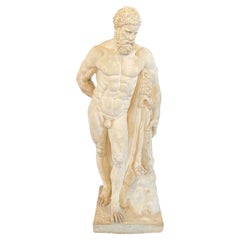
Sensual Realistic French Sculpture of Male Nude Mythological Figure Hercules
Located in Hopewell, NJ
Impressive realistic plaster statue of a muscular nude male that sits on top of a square block base. The elegant design shows intricate detail and qualit...
Category

19th Century French Antique Renaissance Figurative Sculptures

Materials

Plaster

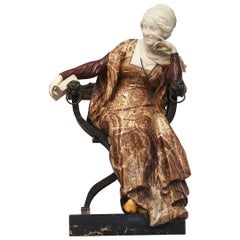
Ferdinando Vichi Marble Sculpture Sitting Woman On Pedestal
Located in Kastrup, DK
"Ferdinando Vichi", Florence 1875-1945. Romantic figure of sitting woman. Made in marble, sitting on a chair made of bronze, original pedestal of green, Italian marble. Sign. Vichi. Ca. in 1900. (In two pieces) Ferdinando Vichi (1875-1945) was a central figure in the production of Florentine sculpture...
Category

Early 20th Century Italian Renaissance Figurative Sculptures

Materials

Marble, Bronze

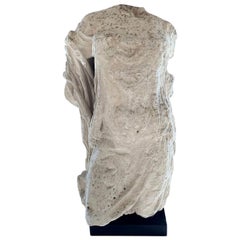
16th Century Stone Classical Roman Style Torso
Located in Vosselaar, BE
A wonderful 16th century draped female torso in classical style. Made in France under Italian Renaissance influence this female torso is finely sculpted with great detail to the stol...
Category

16th Century French Antique Renaissance Figurative Sculptures

Materials

Sandstone

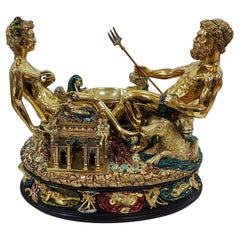
20th Century Italian Silver 800 and Ebony "Benvenuto Cellini Salt Cellar"Replica
Located in VALENZA, IT
Fantastic reproduction of the famous saltcellar of Benvenuto Cellini, symbol of the world goldsmith's art. The master goldsmith made only very few copies of this wonderful object that makes it a unique piece in the world. 6.641 grams of solid silver. Some information on the original piece by Benvenuto Cellini: The Cellini Salt...
Category

1980s Italian Vintage Renaissance Figurative Sculptures

Materials

Silver

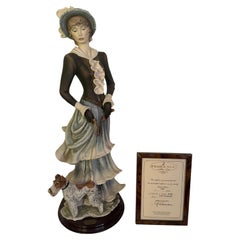
Vintage Giuseppe Armani figurines, limited edition made in Italy with certifica
Located in Birmingham, AL
A genuine original Armani Figurine of a woman with a dog , very detailed sculpture, which G. Armani is famous for , it is made in Florence Italy , l...
Category

1970s Vintage Renaissance Figurative Sculptures

Materials

Alabaster

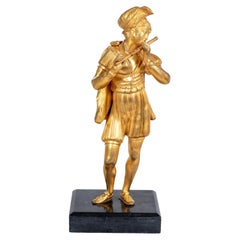
French Flute Player Gilt Bronze Figure
Located in Astoria, NY
French Flute Player Gilt Bronze Figure, mid 19th century, the standing figure in 16th century costume on a black marble base. 11" H x 4.5" W x 4.5" D.
Category

Mid-19th Century French Antique Renaissance Figurative Sculptures

Materials

Marble, Bronze

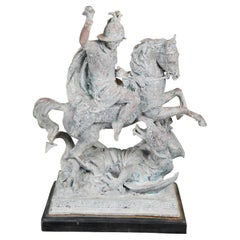
Antoine-Louis Barye Bronze Saint George Dragon Slayer Sculpture Statue Verdigris
Located in Dayton, OH
An eye caching figural sculpture of Saint George and the Dragon, After Antoine Louis Barye. As the legend goes, Saint George—a soldier venerated in Christianity—defeats a dragon. The...
Category

20th Century Renaissance Figurative Sculptures

Materials

Marble, Bronze

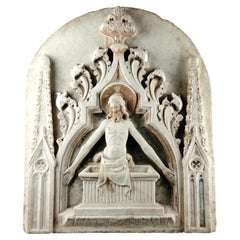
A Very Rare and Important Marble Relief of the ‘Resurrection of Christ’
Located in London, GB
A Very Rare and Important Marble Relief of the ‘Resurrection of Christ’ Attributed to the Master of the Mascoli Altar Marble Venice, Italy Second half of the 15th Century SIZE: ...
Category

15th Century and Earlier Italian Antique Renaissance Figurative Sculptures

Materials

Marble

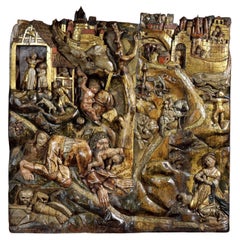
Wood Low-Relief Depicting a Werewolf and Saint George
Located in Saint-Ouen, FR
Exceptional polychrome wood low-relief depicting a werewolf and saint george after a woodcut by lucas cranach (“DER WERWOLF” 1512) Provenance : collection Brimo de Laroussihle colle...
Category

16th Century German Antique Renaissance Figurative Sculptures

Materials

Wood

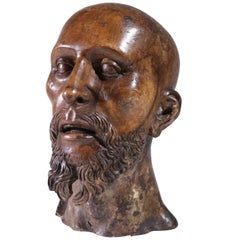
Life-Size Carved Wood Sculpture of a Man s Head circa 1700 South European
Located in Boven Leeuwen, NL
Stunning life-size carved wood sculpture of a man's head dating from circa 1700 in the south of Europe.  
Category

1690s European Antique Renaissance Figurative Sculptures

Materials

Wood

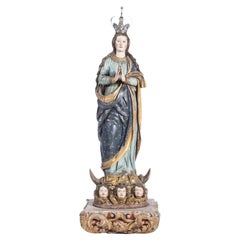
Indo-Portuguese sculpture "Lady Conception" 17th century, H 147cm
Located in Madrid, ES
Indo-Portuguese sculpture "Lady Conception" 17th century, H 147cm. Our Lady Conception Indo-Portuguese teak wood carving from the 17th century. Upholstered and polychrome . T he ...
Category

17th Century Portuguese Antique Renaissance Figurative Sculptures

Materials

Wood

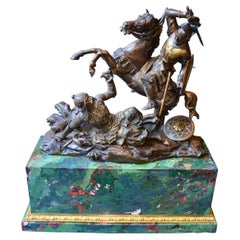
Bonze Statue depicting the fight of Charles Martel and Abderame
By Jean-François Théodore Gechter
Located in Vancouver, British Columbia
A dramatic patinated bronze statue depicting the mortal fight between Charles Martel a Medieval Frankish King over the Muslim KIng of the Saracens at ...
Category

Late 19th Century French Antique Renaissance Figurative Sculptures

Materials

Marble, Bronze

Italian Renaissance Carved Wooden Angel Head
Located in Los Angeles, CA
Italian renaissance hand carved wooden "putto" angel head, circa 15th Century Width 14 inches / height 14 inches / depth 4 inches 1 available in stock in Italy Order reference #: FAB...
Category

15th Century and Earlier Italian Antique Renaissance Figurative Sculptures

Materials

Wood

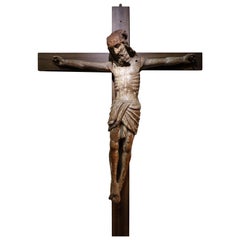
A Burgundy Christ, 15th century
Located in PARIS, FR
A huge Burgundy 15th century Christ on its cross. Oak wood . Cross is modern. Damages, some parts missing. 98x83 cm without the cross.
Category

15th Century and Earlier French Antique Renaissance Figurative Sculptures

Materials

Wood

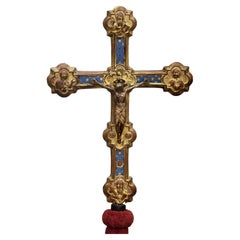
Paolo di Giovanni Sogliani - Processional Cross Florence, around 1515
Located in Bruxelles, BE
Paolo di Giovanni Sogliani (Florence 1455-1522) Processional Cross Florence, around 1515 Enameled, chiseled, engraved, stippled, and gilded copper; wooden core ; Inscription: "OPA...
Category

16th Century Italian Antique Renaissance Figurative Sculptures

Materials

Copper, Enamel

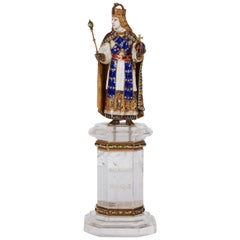
Enamel Gold and Rock Crystal Figure of Emperor Maximilian I by Reinhold Vasters
Located in Queens, NY
A rare enamel, gold and rock crystal figure of Emperor Maximilian I by Reinhold Vasters, Aachen, In the Renaissance style, circa 1870. The g...
Category

Late 19th Century German Antique Renaissance Figurative Sculptures

Materials

Rock Crystal, Gold, Enamel

Pair of Patinated Bronze Sculptures After Giambologna
By Giambologna
Located in London, GB
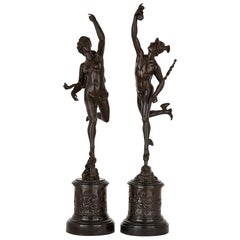
Pair of patinated bronze sculptures after Giambologna French, late 19th century Measures: Mercury height 86cm, width 19cm, depth 27cm Fortuna height 83cm, width 18cm, depth 28cm ...
Category

Late 19th Century French Antique Renaissance Figurative Sculptures

Materials

Bronze

Monumental 19th Century Bronze Equestrian Statue of Bartolomeo Colleoni
Located in Budapest, HU
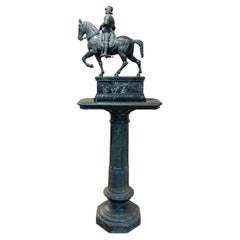
A truly impressive and monumental bronze equestrian statue depicting Bartolomeo Colleoni, after the celebrated Renaissance model by Andrea del Verrocchio (Venice, Campo Santi Giovann...
Category

19th Century Italian Antique Renaissance Figurative Sculptures

Materials

Marble, Serpentine, Bronze

Antique French Renaissance Don Juan Don Cesar Spelter Metal Sculptures 2 Pcs
Located in Philadelphia, PA
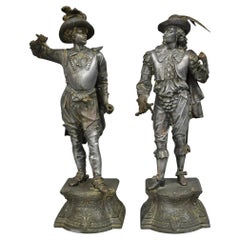
Antique French Renaissance Don Juan & Don Cesar Spelter Metal "Cavaliers" Sculptures - 2 Pcs. Circa Late 19th Century. Measurements: 21" H x 8" W x 6" D.
Category

Late 19th Century Unknown Antique Renaissance Figurative Sculptures

Materials

Metal

Adoration of the shepherds - Large high-relief, Northern Italy Circa 1500
Located in PARIS, FR
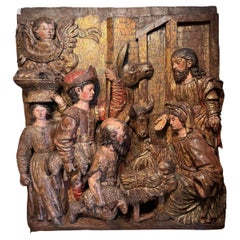
Large high relief in carved and gilt wood, with many traces of polychromy, representing the Adoration of the Shepherds. The evangelist Luke first mentions that the scene takes place at night. A sudden light, which frightens the shepherds, signals the arrival of an angel who announces "great joy". He gives them a sign: they will find "a newborn baby wrapped...
Category

16th Century Italian Antique Renaissance Figurative Sculptures

Materials

Wood

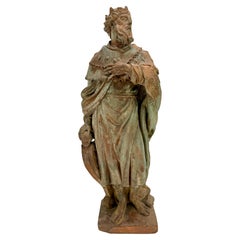
Highly Important Jacques Bergé (Flemish, 1693 - 1756) King David Sculpture 1736
Located in Atlanta, GA
Jacques Bergé "King David" - Terracotta or Fired Clay with Polychrome Remnants Dated 1736 14.5" h x 5.5" w x 4.5" d A rare and exceptionally refined terracotta sculpture of *King ...
Category

Early 18th Century Belgian Antique Renaissance Figurative Sculptures

Materials

Clay, Terracotta

19th Century over Life-Size Marble Statue of Bacchus after Michelangelo
Located in Essex, MA
Mid-19th century over life-size carved marble statue of Michelangelo's "Bacchus". Grand Tour copy through the "Point To Point" method directly from the original keeping its masterful proportions and Fine details in an exact size to Michelangelo's work. We have never seen a 19th century copy of this Renaissance Masterpiece of this size and are quite fortunate to be responsible for its stewardship until purchase by a discerning collector The original "Bacchus" is a marble sculpture by the master, Michelangelo, created circa 1496 when the artist was 21. This statue was originally commissioned by Cardinal Raffaele Riario. However, it was rejected by him and eventually found its way to Jacopo Galli, Cardinal Riario’s banker and a friend of the sculptor, who purchased it in 1506. Some 66 years later it was bought for the Medici and transferred to the royal house in Florence, Italy. Currently it can be viewed at the Museo Nazionale del Bargello in Florence. It is one of just two sculptures surviving Michelangelo’s initial period in Rome, with the other being Pieta. The artwork: This somewhat oversized...
Category

19th Century Italian Antique Renaissance Figurative Sculptures

Materials

Marble

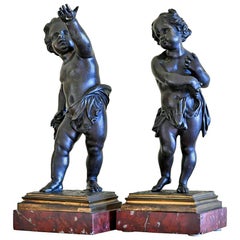
Pair of 19th Century French Bronze Cherubs on Marble Base
Located in INTERLAKEN, NY
A pair of cast bronze cherubs or putti standing contrapposto on a square red marble base, France, circa late 1800s. Note: These charming cherubic figures were probably used in combi...
Category

Late 19th Century French Antique Renaissance Figurative Sculptures

Materials

Marble, Bronze

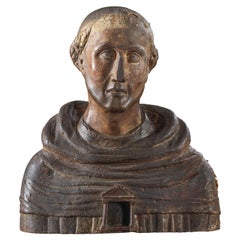
16th Century Polychrome Reliquary of a Monk
Located in Saint-Ouen, FR
The monk is depicted with an oval face, marked with high and strong cheekbones, sunken cheeks, strong jawbones and a cleft chin. His almond shaped eyes are opened under very strong a...
Category

16th Century Italian Antique Renaissance Figurative Sculptures

Materials

Wood

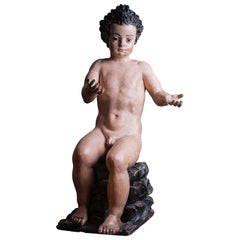
Cercle of Juan Martinez Montañés 1568-1649 , Infant St John the Baptist
Located in Bruxelles, BE
Cercle of Juan Martinez Montañés (1568-1649) Infant St John the Baptist Spanish, 17th century H 74 cm Saint John the Baptist is here represented naked, sitting on a rock, with...
Category

17th Century Spanish Antique Renaissance Figurative Sculptures

Materials

Wood

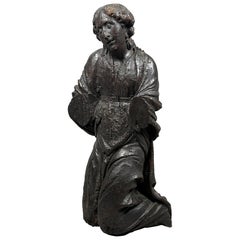
A large 16th century wood carving of an Angel
Located in Sleepy Hollow, NY
A large 16th-century hand-carved wooden fragment depicting a kneeling angel in adoration, arms extended and wearing a gentle, serene expression. Likely of Northern European origin, t...
Category

16th Century European Antique Renaissance Figurative Sculptures

Materials

Fruitwood

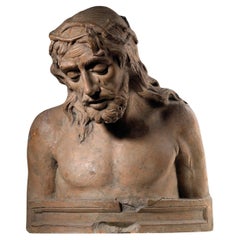
Ecce Homo - Florence, 15th century
Located in Bruxelles, BE
A terracotta bust "Ecce Homo" Florence, 15th century 53 x 44 x 31 cm
Category

15th Century and Earlier Italian Antique Renaissance Figurative Sculptures

Materials

Terracotta

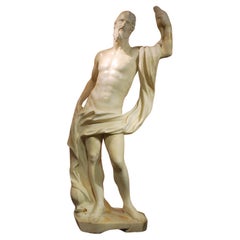
A 16th century carved marble sculpture of poseidon
Located in London, GB
This fine and imposing sculpture is an excellent example of 16th century Italian craftsmanship. The figure is stood on a raised, shaped rectangular base with a carved "dolphin" at th...
Category

16th Century Italian Antique Renaissance Figurative Sculptures

Materials

Marble

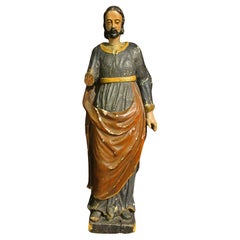
18th Century Wood Sculpture of a Saint
Located in Chapel Hill, NC
An 18th Century carved polychromed Saint, various old repairs losses, but truly great original surface! 42 1/2"h. We are a family business that has been a major source f...
Category

18th Century Italian Antique Renaissance Figurative Sculptures

Materials

Wood

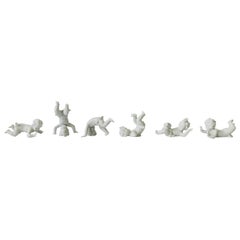
German White Porcelain Male Nude Putti Sculptures, Set of 6
Located in New York, NY
A set of six (6) German white porcelain male nude putti sculptures in the Renaissance or Neoclassical styles, circa 20th century, Germany. A fun set of six male nude tumbling putti s...
Category

Mid-20th Century German Renaissance Figurative Sculptures

Materials

Porcelain

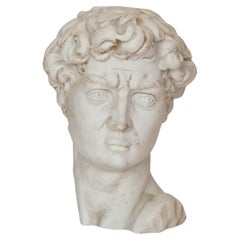
David s head, by Michelangelo, a decorative 20th Century copy, Italy no 1169.
Located in Stockholm, SE
A decorative sculpture / bust of David's head by Michelangelo, a mid-20th Century copy, made in Italy. Marked no 1169 with an italian eagle crest. A beautiful decor for the bookshe...
Category

Mid-20th Century Italian Renaissance Figurative Sculptures

Materials

Stone

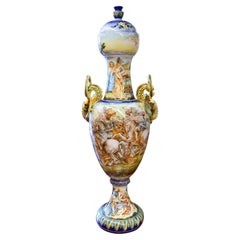
Majestic Amphora Vase Majolica Painted Subject Inspired by Leonardo Da Vinci
Located in Recanati, IT
Majestic majolica Amphora vase, with a height of 200 cm (78,7 in) and a diameter of 70 cm (27,5 in): a unique piece, entirely handmade and hand-painted in Gubbio, Central Italy, in 1...
Category

1990s Italian Renaissance Figurative Sculptures

Materials

Ceramic, Majolica

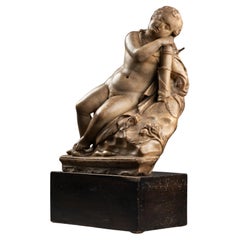
Sleeping Eros - Rome, 16th century
Located in Bruxelles, BE
Sleeping Eros Rome, 16th century
 Carrara marble, on a wooden base
 of an ancient collection 31 × 44 x 17 cm Carved from a fine block of Carrara marble, this sculpture depicts Eros ...
Category

16th Century Italian Antique Renaissance Figurative Sculptures

Materials

Carrara Marble

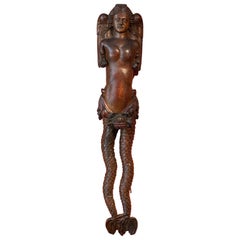
16th Century Southern Germany Carved Wood Bracket Depicting a Mermaid
Located in Saint-Ouen, FR
In Medieval Europe and even more during the early 16th century fantastic beasts could be found in Bestiaries, a literary genre close to poetry. A bestiary used the characteristics of...
Category

16th Century German Antique Renaissance Figurative Sculptures

Materials

Wood

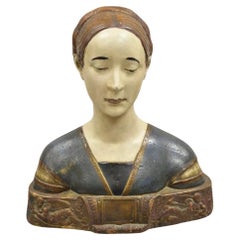
Vintage Polychrome Plaster Bust Ippolita Maria Sforza Statue Renaissance Style
Located in Philadelphia, PA
Vintage Polychrome Plaster Bust of Ippolita Maria Sforza in the Renaissance Style After Francesco Laurana. Circa Early 20th Century. Measurements: 19" H x 19" W x 9" D.
Category

Early 20th Century Unknown Renaissance Figurative Sculptures

Materials

Plaster

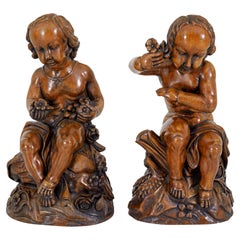
Pair of fruitwood gothic revival carved cherubs
Located in Debenham, Suffolk
Pair of gothic revival carved cherubs circa 1970. Good quality pair of hardwood cherubs which are coloured to match walnut. Each figure seated on a plinth base of carved rock, tree...
Category

Late 20th Century English Renaissance Figurative Sculptures

Materials

Fruitwood

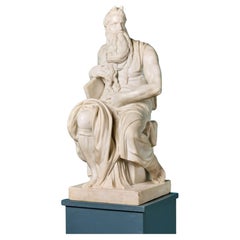
After Michelangelo White Statuary Marble Sculpture of Moses
Located in Wormelow, Herefordshire
A scale white statuary marble sculpture of Moses after Michelangelo circa 1875. After the larger than life-size Carrara marble original from the tomb of Pope Julius II in St. Peter’s Basilica, Rome completed around 1515. This scale sculpture is exceptionally carved, capturing the quality and detail of Michelangelo’s Moses...
Category

Mid-19th Century Italian Antique Renaissance Figurative Sculptures

Materials

Marble, Statuary Marble

Italian Corpus Christi
Located in S-HERTOGENBOSCH, NL
Hand-carved Italian Corpus Christi with traces of polychromy. This sculpture reflects the transition from Gothic to Renaissance style.
Category

16th Century Italian Antique Renaissance Figurative Sculptures

Materials

Wood

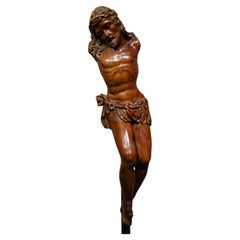
Christ in Boxwood, France, late 16th-early 17th century".
Located in PARIS, FR
Christ in Boxwood, France, late 16th-early 17th century Beautiful corpse of Christ with missing arms. He must have been on the Cross, arms in a horiz...
Category

Early 17th Century French Antique Renaissance Figurative Sculptures

Materials

Boxwood

Antique 17th Century Carved Boxwood Cherub Wall Hanging
Located in Wormelow, Herefordshire
An antique carved boxwood cherub decorative wall hanging dating to circa 1650. Crafted in boxwood, this renaissance style sculpture depicts a detailed handcarved cherub or putti bea...
Category

Mid-17th Century English Antique Renaissance Figurative Sculptures

Materials

Wood, Boxwood

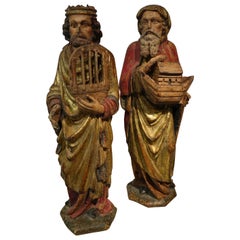
Pair of rare statues , Noah and King David, Flanders, early 16th century
Located in PARIS, FR
Noah and King David, Flanders, early 16th century Rare wood carvings in the round of Noah holding the Ark and King David holding his lyre. Noah, a biblical figure, is the tenth and l...
Category

16th Century Belgian Antique Renaissance Figurative Sculptures

Materials

Wood

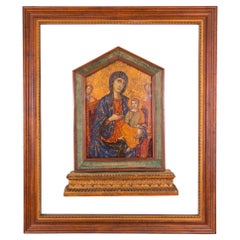
Madonna Enthroned with the Child Christ, 17th Century, Gold Gilded on Wood Panel
Located in North Miami, FL
17th Century Italian polychromed and gold gilded on wood panel Sienese style painting of the Madonna Enthroned with the child and two adoring angels behind them. The halos are beautifully adorned with punch work. She is framed by a hand-carved gold gilded and velvet lined frame and sitting on a hand-carved matching base. The piece is mounted on a Lucite panel and framed with a contemporary hand-finished wood molding.
Category

Early 17th Century Italian Antique Renaissance Figurative Sculptures

Materials

Gold Leaf

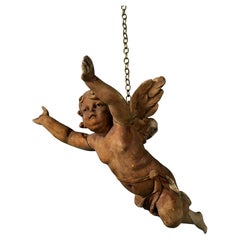
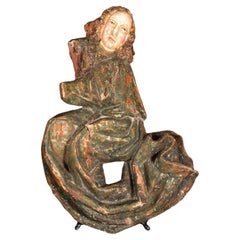
Angel, Carved and Polychrome Wood, 16th Century
Located in Madrid, ES
Angel. Carved and polychrome wood. Century XVI. Polychrome wood carving showing an angel, with the face facing the viewer and the body in pr...
Category

16th Century Spanish Antique Renaissance Figurative Sculptures

Materials

Wood

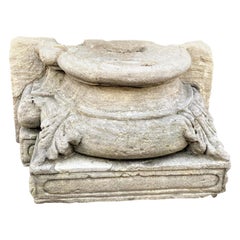
Hand Carved Stone Column Base Pedestal Sculpture Doorstop Decorative Element LA
Located in West Hollywood, CA
Hand Carved Stone Column Base pedestal Sculpture Doorstop Decorative Element LA . Nicely hand carved 17th century Renaissance stone column base appli...
Category

17th Century French Antique Renaissance Figurative Sculptures

Materials

Stone

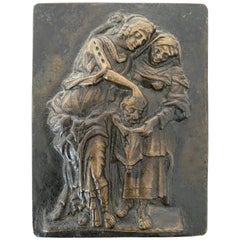
Judith with the Head of Holofernes, Plaquette After Riccio, Italian 17th Century
By Andrea Briosco (Riccio)
Located in Miami Beach, FL
Judith with the head of Holofernes, unsigned rectangular cast bronze plaquette, by Andrea Briosco, called Riccio (1470-1532), Judith...
Category

17th Century Italian Antique Renaissance Figurative Sculptures

Materials

Bronze

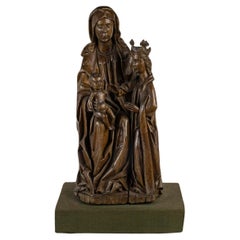
Oak Sculpture of Saint Anne, 16th Century.
Located in Saint-Ouen, FR
Oak sculpture of Saint Anne, 16th century. Large oak sculpture of Saint Anne. Work from the Upper Rhine, Basel region. First third of the 16th century. An arm is missing from the i...
Category

16th Century French Antique Renaissance Figurative Sculptures

Materials

Oak

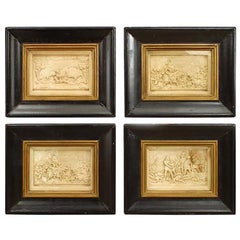
Italian Renaissance Style Soapstone Carvings
Located in Queens, NY
4 Italian Renaissance style (19th Century) carved soapstone wall plaques of Medieval scenes under glass in black frames.
Category

19th Century Antique Renaissance Figurative Sculptures

Materials

Soapstone

Sculpture of John The Baptist, 16th Century
Located in North Miami, FL
Early 16th Century Spanish gold gilded and polychromed carved wood sculpture of John The Baptist.
Category

16th Century Spanish Antique Renaissance Figurative Sculptures

Materials

Gold Leaf

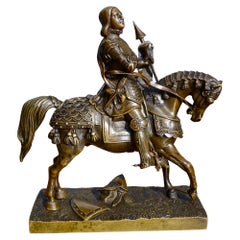
A 19 Century Bronze Statue of St Joan of Arc in full body armour on horseback
Located in Vancouver, British Columbia
An small but exquisitely cast and highly detailed bronze statue of St Joan of Arc in full body battle armour including the horse with one hand holding ...
Category

Mid-18th Century French Antique Renaissance Figurative Sculptures

Materials

Bronze

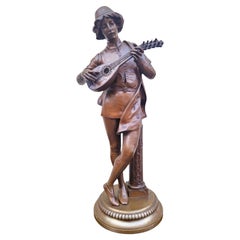
Paul Dubois, The Florentine Singer Of The 15th Century, Signed Bronze, 19th Cent
Located in MARSEILLE, FR
Large double patina bronze representing the Florentine Singer of the 15th century, signed P Dubois Fr The young and elegant boy, standing, plays and sings, leaning against a column:...
Category

19th Century French Antique Renaissance Figurative Sculptures

Materials

Bronze

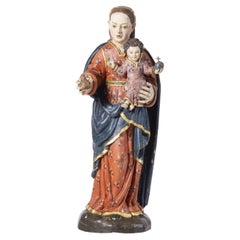
Our Lady with Child Jesus Savior of the World 17th Century
Located in Madrid, ES
Our lady with child Jesus savior of the world 17th century Portuguese sculpture in polychrome and gilded wood. Repaints. Height: 71 cm very g...
Category

Early 17th Century Portuguese Antique Renaissance Figurative Sculptures

Materials

Wood

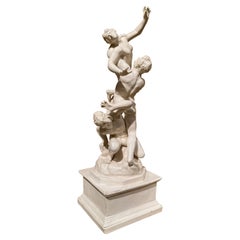
Italian 19th Century Renaissance White Glazed Porcelain Figural Group Sculpture
By Capodimonte, Carlo Ginori, Giambologna
Located in Firenze, IT
This compelling Italian 19th century white glazed porcelain sculpture depicts ‘The Rape of the Sabines’, after a monumental work by the Renaissance artist, Giambologna (1529-1608) th...
Category

19th Century Italian Antique Renaissance Figurative Sculptures

Materials

Porcelain

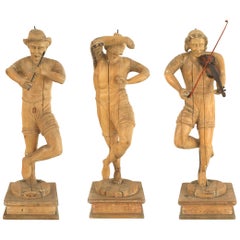
Set of 3 Italian Renaissance Musical Figures
Located in Queens, NY
Set of 3 Italian Renaissance style (19th Cent) stripped large figures/statues playing musical instruments
Category

19th Century Antique Renaissance Figurative Sculptures

Materials

Wood

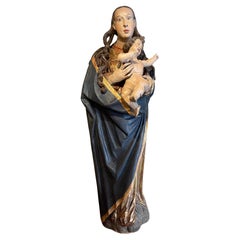
Large Virgin and Child, Tyrol, 16th century
Located in PARIS, FR
Large wooden Madonna and Child, painted and carved in hollow at the back. The theme of the Virgin and Child is the most represented in all Christian art, whereas the infancy of Jesus...
Category

16th Century German Antique Renaissance Figurative Sculptures

Materials

Wood, Pine

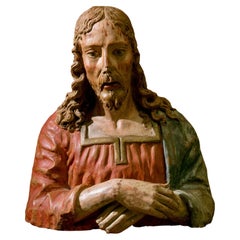
Terracotta Bust of Christ as the Redeemer, 15th Century
Located in Bruxelles, BE
A terracotta bust of Christ as The Redeemer Tuscany or Emilia Romagna, late 15th century Measures: 46 x 43 x 21 cm This powerful, moving bust of...
Category

15th Century and Earlier Italian Antique Renaissance Figurative Sculptures

Materials

Terracotta

renaissance wooden candelabrum and painted cross - Umbria, 16th century
Located in Bruxelles, BE
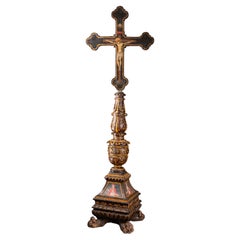
Base of a carved wooden candelabrum, polychrome and gilded; cross painted on both sides. Umbria or Tuscany, 16th century 136 x 43,5 x 30 cm (The cross and the base of the candelabrum were later assembled) The base of the candelabrum is intricately carved and adorned with polychrome and gilded finishes. The shafts take on the shape of balusters reminiscent of ancient columns, feature ornate foliage decorations, garlands and winged cherub faces. The feet are crafted in the likeness of lion paws. The base is further embellished with depictions of four saint martyrs, among them Saint Barbara and Saint Catherine of Alexandria. The plasticity of the figures, outlined with strong contour lines, the clear and vibrant colors, are stylistic elements linked to the Umbrian tradition of the sixteenth century.The precisely defined and elegant drawing, along with the clear color palette applied with refined chiaroscuro modulations, became the signature of a style that would leave a lasting mark on the era to come. This is exemplified by a preference for vibrant, multicolored images, accentuated in this case by the use of red and pink in the saint's attire. A notable addition, introduced later, is a polylobed cross painted on both sides. On one side, the Crucifixion is vividly portrayed:The treatment of the corpus itself is in line with High Medieval practice, emphasizing pathos by showing Jesus dead, his arms sagging from the weight of the body. The upper section displaying a pelican pecks at her breast to feed her young with her own blood; a symbol of the sacrifice of Christ on the cross whose body and blood similarly nourishes the celebrant during Mass. The lower part depicts Golgotha. On the reverse side, the Resurrection is artistically presented in a Renaissance iconography, reminiscent of the renowned composition painted by Piero della Francesca, now housed in the Civic Museum of Sansepolcro. In terms of composition, with the frontal depiction of Christ holding the banner, this motif became particularly widespread in central Italy, spanning from Tuscany to Umbria throughout the 16th century.. The double-sided construction suggests that it may also have been carried in liturgical processions. In Umbria from the 14th century, the use of portable crosses painted on both sides had become a widespread practice, aimed at satisfying the monastic clientele that had significantly increased following the establishment of new religious communities. The earliest surviving Tuscan painted crucifix represent Christ as Christus Triumphans, or the “Triumphant Christ” with his head up and eyes open. This form was supplanted in the 13th century with the Christus Patiens, or “Suffering Christ” type who is shown often with his head fallen on his shoulder and his eyes closed, as In our cross. The iconography of the suffering Christ appears to have developed out of a new interest in Christ’s human nature, the development of the feast of Corpus Christi and with increased importance given to the Eucharist. The process of humanizing the figure of Christ reaches its peak with the abandonment of all the previous expressive conventions in favor of more realistic details we can observe in this Crucifix, such as the swollen belly, the arms stretched to the limit of muscle tearing, the body falling heavily forward, the abundant blood on the wounds, and the cross firmly embedded in the rock of Calvary. It's worth noting that Renaissance candelabra...
Category

16th Century Italian Antique Renaissance Figurative Sculptures

Materials

Wood, Giltwood

Renaissance figurative sculptures for sale on 1stDibs.

Find a broad range of unique Renaissance figurative sculptures for sale on 1stDibs. Many of these items were first offered in the 21st Century and Contemporary, but contemporary artisans have continued to produce works inspired by this style. If you’re looking to add vintage figurative sculptures created in this style to your space, the works available on 1stDibs include decorative objects, more furniture and collectibles, wall decorations and other home furnishings, frequently crafted with wood, metal and other materials. If you’re shopping for used Renaissance figurative sculptures made in a specific country, there are Europe, Italy, and France pieces for sale on 1stDibs. While there are many designers and brands associated with original figurative sculptures, popular names associated with this style include Europa Antiques, Andrea Salvatori, Ferdinand Barbedienne, and Capodimonte. It’s true that these talented designers have at times inspired knockoffs, but our experienced specialists have partnered with only top vetted sellers to offer authentic pieces that come with a buyer protection guarantee. Prices for figurative sculptures differ depending upon multiple factors, including designer, materials, construction methods, condition and provenance. On 1stDibs, the price for these items starts at $135 and tops out at $348,500 while the average work can sell for $7,236.

Still Thinking About These?

All Recently Viewed