Renaissance Figurative Sculptures

RENAISSANCE STYLE

Spanning an era of cultural rebirth in Europe that harkened back to antiquity, the Renaissance was a time of change in design. From the late 1400s to the early 1600s, Rome, Venice and Florence emerged as artistic centers through the expansion of global trade and a humanist belief in the arts being central to society. Antique Renaissance furniture was ornately carved from sturdy woods like walnut, its details standing out against the tapestries and stained glass adorning the walls.

Renaissance chests, which were frequently commissioned for marriages, were often decorated with gilding or painted elements. Those that were known as cassoni were crafted in shapes based on classical sarcophagi. As opposed to the medieval era, when furniture was pared down to the necessities, a wide range of Renaissance chairs, tables and cabinets were created for the home, and the designs regularly referenced ancient Rome.

Large torchères of the Renaissance era that were used as floor lamps were inspired by classical candelabras, while marble surfaces evoked frescoes. The inlaid boxes being imported from the Middle East informed the intarsia technique, which involved varying hues of wood in mosaic-like patterns, such as those by architect Giuliano da Maiano in the Florence Cathedral.

Tapestry-woven cushion covers accented the variety of Renaissance seating — from conversation to study chairs — while bookcases for secular use reflected the migration of culture and knowledge from the church into the home. The aesthetics of the Italian Renaissance later spread to France through the publishing of work by renowned designers, including Hugues Sambin and Jacques Androuet du Cerceau. Centuries later, the 19th-century Renaissance Revival would see a return to this influential style.

Find a collection of antique Renaissance case pieces, decorative objects and other furniture on 1stDibs.

to
43
165
5
94
41
30
5
14
2
6
2
1
1
2
1,758
1,592
1,280
517
514
371
287
227
218
167
122
96
79
54
54
42
25
21
76
58
47
34
31
106
61
153
73
30
13
11
Height
to
Width
to
170
170
170
4
2
1
1
1
Style: Renaissance
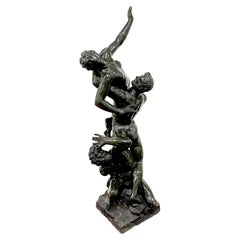
Grand Tour Verdigris Marble After Giambologna, The Abduction of a Sabine Woman
By Giambologna, Benedetto Boschetti
Located in West Palm Beach, FL
Grand Tour Verdigris Marble After Giambologna, The Abduction of a Sabine Woman' Italy, Mid- 19th century, Attributed to the workshops of Benedetto Bosch...
Category

Mid-19th Century Italian Antique Renaissance Figurative Sculptures

Materials

Marble

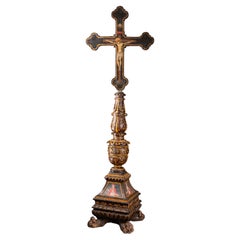
renaissance wooden candelabrum and painted cross - Umbria, 16th century
Located in Bruxelles, BE
Base of a carved wooden candelabrum, polychrome and gilded; cross painted on both sides. Umbria or Tuscany, 16th century 136 x 43,5 x 30 cm (The cross and the base of the candelabrum were later assembled) The base of the candelabrum is intricately carved and adorned with polychrome and gilded finishes. The shafts take on the shape of balusters reminiscent of ancient columns, feature ornate foliage decorations, garlands and winged cherub faces. The feet are crafted in the likeness of lion paws. The base is further embellished with depictions of four saint martyrs, among them Saint Barbara and Saint Catherine of Alexandria. The plasticity of the figures, outlined with strong contour lines, the clear and vibrant colors, are stylistic elements linked to the Umbrian tradition of the sixteenth century.The precisely defined and elegant drawing, along with the clear color palette applied with refined chiaroscuro modulations, became the signature of a style that would leave a lasting mark on the era to come. This is exemplified by a preference for vibrant, multicolored images, accentuated in this case by the use of red and pink in the saint's attire. A notable addition, introduced later, is a polylobed cross painted on both sides. On one side, the Crucifixion is vividly portrayed:The treatment of the corpus itself is in line with High Medieval practice, emphasizing pathos by showing Jesus dead, his arms sagging from the weight of the body. The upper section displaying a pelican pecks at her breast to feed her young with her own blood; a symbol of the sacrifice of Christ on the cross whose body and blood similarly nourishes the celebrant during Mass. The lower part depicts Golgotha. On the reverse side, the Resurrection is artistically presented in a Renaissance iconography, reminiscent of the renowned composition painted by Piero della Francesca, now housed in the Civic Museum of Sansepolcro. In terms of composition, with the frontal depiction of Christ holding the banner, this motif became particularly widespread in central Italy, spanning from Tuscany to Umbria throughout the 16th century.. The double-sided construction suggests that it may also have been carried in liturgical processions. In Umbria from the 14th century, the use of portable crosses painted on both sides had become a widespread practice, aimed at satisfying the monastic clientele that had significantly increased following the establishment of new religious communities. The earliest surviving Tuscan painted crucifix represent Christ as Christus Triumphans, or the “Triumphant Christ” with his head up and eyes open. This form was supplanted in the 13th century with the Christus Patiens, or “Suffering Christ” type who is shown often with his head fallen on his shoulder and his eyes closed, as In our cross. The iconography of the suffering Christ appears to have developed out of a new interest in Christ’s human nature, the development of the feast of Corpus Christi and with increased importance given to the Eucharist. The process of humanizing the figure of Christ reaches its peak with the abandonment of all the previous expressive conventions in favor of more realistic details we can observe in this Crucifix, such as the swollen belly, the arms stretched to the limit of muscle tearing, the body falling heavily forward, the abundant blood on the wounds, and the cross firmly embedded in the rock of Calvary. It's worth noting that Renaissance candelabra...
Category

16th Century Italian Antique Renaissance Figurative Sculptures

Materials

Wood, Giltwood

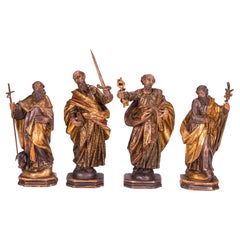
15th Cen Four Pillars of the Christian Faith Saint Peter, Saint Paul, Saint Luke
Located in North Miami, FL
15th century Italian carved wood, polychromed and gold gilded sculptures of four Pillars of the Christian Faith (Saint Peter, Saint Paul, Saint Luke, Saint Matthew).
Category

15th Century and Earlier Italian Antique Renaissance Figurative Sculptures

Materials

Gold Leaf

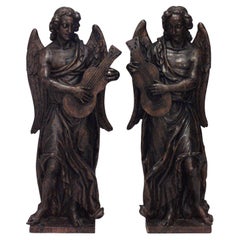
19th Century Pair of Italian Renaissance Revival Oak Angel Statues
Located in Queens, NY
Pair of Italian Renaissance style (19th Century) carved oak large angels with guitars.  
Category

19th Century Antique Renaissance Figurative Sculptures

Materials

Wood, Oak, Walnut

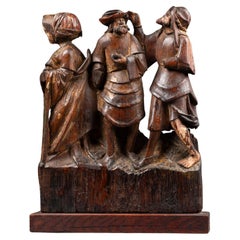
Group of Altarpiece - Antwerpen, 16th century
Located in Bruxelles, BE
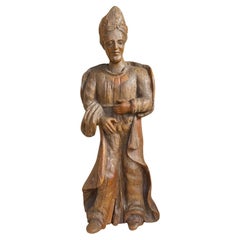
Group of altarpiece representing the life of a Saint, Saint Renualde? Engraved by the sign of Antwerp hand on the hat of the central character Carved oak, traces of polychromy Fir...
Category

16th Century Belgian Antique Renaissance Figurative Sculptures

Materials

Oak

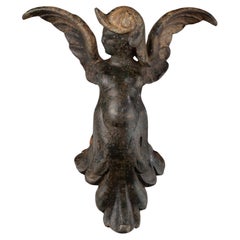
Renaissance Harpy - Italy, 16th century
Located in Bruxelles, BE
Renaissance Harpy bronze Italy, 16th century 15 x 12 x 5,5 cm This expressive bronze figure represents a harpy, a mythological creature with the body of a bird and the head and tor...
Category

16th Century Italian Antique Renaissance Figurative Sculptures

Materials

Bronze

Crystal Ball on a 19th Century French Bronze Cherub Stand
Located in San Francisco, CA
An exceptional Renaissance style patinated and gilt bronze cherub base made in the early to mid 19th century. The figure holding a 10 inch diameter solid crystal ball. Beautiful qu...
Category

Mid-19th Century European Antique Renaissance Figurative Sculptures

Materials

Bronze

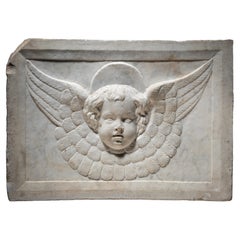
Cercle of Jacopo della Pila - Marble relief depicting a winged Cherub
Located in Bruxelles, BE
Cercle of Jacopo della Pila (Lombard, in Naples 1471-1502) Marble relief depicting a winged Cherub Naples, second half of15th century 40 x 57 x 12 cm Exquisitely carved, this relief portrays a winged cherub with cascading hair and delicate features. The cherub's plump, smooth countenance, rounded cheeks, outlined lips, and finely drawn nose emanate a sense of tenderness. The quadrangular module, is adorned with a carved frame. The relief ascends gradually, transitioning from the low relief of the wings to the high relief of the head. The rectangular frame and the subtly curved form of the artwork suggest that the relief likely adorned the upper part of an arch or a vaulted chapel. The type is that of the perspective room with a coffered ceiling decorated with figures of winged cherubs, which is found in various Neapolitan chapels of the 15th century. Coffered ceilings attest to the recovery of antiquity and the search for luxury in Renaissance architecture, first in Florence, then in Rome and Naples. The majority of the numerous family chapels and tombs built during the late fifteenth century in south of Italy employ the new formal vocabulary of the Florentine Renaissance in a self-confident manner that permitted a broad spectrum of variations. The escalating admiration for the classical world, coupled with the development of perspective, significantly contributed to the Renaissance endorsement of coffered ceilings. This artistic and constructive device drew inspiration from the intricate marble patterns observed in historical landmarks such as the Arch of Titus, the Temple of Vesta in Tivoli, the Pantheon, and the Basilica of Maxentius. A distilled product of both mathematical and artistic cultures, deeply scrutinizing the ancient world, the coffered ceiling plays a vital role in the perspective construction of space with its regular and directional geometry. The motif of the coffered ceiling decorated with cherubs in relief was introduced in Naples by Francesco Laurana in the plastic decoration of the Arch of Castelnuovo. Laurana's impact on the art scene in the south of Italy was profound. The introduction of the winged cherub into the region's artistic vocabulary bridged the gap between the classical and the contemporary, creating a synthesis that resonated with both aesthetic and spiritual sensibilities. His influence extended beyond the immediate visual appeal, shaping the cultural identity of the Renaissance in southern Italy. Although the plastic decoration of the Arch of Castelnuovo cannot certainly be ascribed to a mature Renaissance style, it was precisely on this occasion that the sculptors who worked there could get to know and export throughout the Italian peninsula that type of "Florentine classicism" which, even in the 15th century Naples, was conditioned by the Burgundian culture imported into the Kingdom by Alfonso of Aragon himself, with artists called from Spain and Northern Europe. The coffered ceiling, with its geometric patterns and Laurana's winged cherubs nestled within, became a symbol of refinement and cultural sophistication. The relief sculptures, carefully integrated into the overall design, transformed the ceiling into a celestial realm, inviting viewers to contemplate the divine while immersed in the grandeur of the Renaissance space. Similar winged cherubs appears also in the Naples cathedral. Within the renowned Succorpo Chapel, a mesmerizing marble coffered ceiling adorned with cherubs epitomizes the splendor of the Neapolitan Renaissance. The interplay of light and shadow on the textured surface of the marble coffered ceiling introduces an ethereal dimension, providing an immersive visual experience for observers. The geometric precision and the repeated patterns, reminiscent of classical motifs, establish a sense of harmony and balance that has become the hallmark of the Neapolitan interpretation of Florentine Renaissance aesthetics. Although probably intended to be admired from a distance, this cherub is intricately detailed and exquisitely rendered: the face and hair are elegantly outlined and the feathers are textured through juxtaposed lines. The marble, both figurative and decorative, adheres to the principles of balance and restrained ornamentation typical of the « Florentine Classicism ». Harmonious shapes and gracefully orchestrated curves , rooted in the classical repertoire, converge to evoke a sense of ethereal beauty. The surface displays the masterful use of a chisel to intricately carve the feathers and facial features, creating an almost abstract quality. This work is a testament to a sculptor of great skill and rich figurative knowledge, seamlessly blending classical firmness in contours with a refined treatment of the marble's surface. The combination of tradition and innovation point to a stylistic idiom from Lombardy, in particular we can find some comparaisons with the works of Jacopo della Pila, sculptor of Lombard origin working in Naples in the second half of the 15th century. He is documented there between 1471 and 1502, and is a protagonist of the Aragon Renaissance in the second half of the Quattrocento, together with the other great Northern sculptor active in the kingdom, Domenico Gagini. the first commission he received dates back to August 9, 1471, when Jacopo publicly committed to sculpting the funerary monument of Archbishop Nicola Piscicelli to be placed in the Cathedral of Salerno. The last known work is an altar ordered on July 29, 1502, by the noble Jacopo Rocco for the church of San Lorenzo Maggiore in Naples. Between these two chronological extremes (1471-1502), we must place the fervent activity of the artist, who had trained in Rome, perhaps under the guidance of Paolo Romano but also engaged in dialogue with other major artists of the city, especially Isaia da Pisa. He enriched his experience in Naples, initially drawing inspiration from the works of Domenico Gagini and later from the Tuscan masterpieces of Antonio Rossellino and Benedetto da Maiano destined for the church of Santa Maria di Monteoliveto. Jacopo della Pila's artistic personality is thus based on a complex interplay of influences, contributing to the definition of a highly personal style. Close comparaison can be made between our cherub and the winged angels reliefs...
Category

15th Century and Earlier Italian Antique Renaissance Figurative Sculptures

Materials

Marble

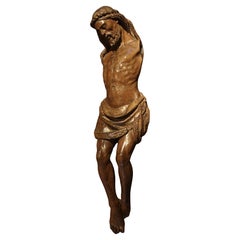
Christ - Umbria, second half of the 15th century
Located in Bruxelles, BE
Christ
 Umbria, Orvieto?
 Second half of the 15th century
 77 x 16.5 cm
Category

15th Century and Earlier Italian Antique Renaissance Figurative Sculptures

Materials

Walnut

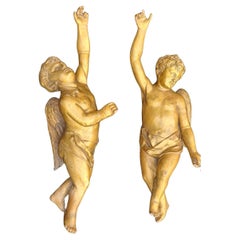
Pair of gilded wooden angels, northern Italy (probably Veneto area), f
Located in Vicenza, IT
Evocative pair of wooden sculptures depicting angels in flight, carved in the round and covered in fine gold leaf gilding. The figures, with strong expressiveness and movement, are d...
Category

17th Century European Antique Renaissance Figurative Sculptures

Materials

Gold Leaf

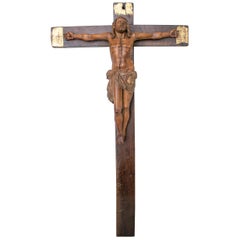
17th Century Spanish Boxwood Christ on the Cross
Located in Marbella, ES
17th century Spanish boxwood Christ on the cross.
Category

17th Century Spanish Antique Renaissance Figurative Sculptures

Materials

Boxwood

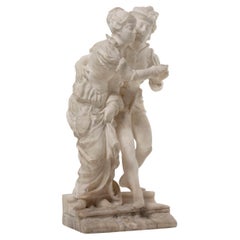
Figurative sculptures renaissances couple in alabaster
Located in Los Angeles, CA
Magnificent figurative sculpture in alabaster depicting a renaissance couple in the process of dancing
Category

Early 1900s French Antique Renaissance Figurative Sculptures

Materials

Alabaster

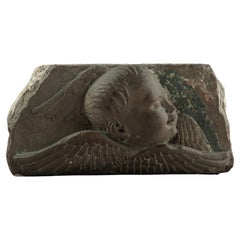
Renaissance Winged Cherub Relief
- Florence, 15th century
Located in Bruxelles, BE
Renaissance Winged Cherub Relief
Florence, Second Half of the 15th Century
Stone with traces of polychromy Provenance: Important private collection, Northern Italy This exceptional...
Category

15th Century and Earlier Italian Antique Renaissance Figurative Sculptures

Materials

Stone

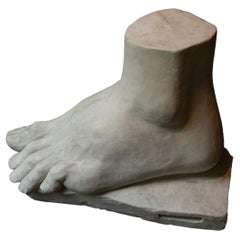
Colossal 19th-Century Classical Plaster Foot Sculpture 28"
Located in New York, NY
This 19th-century plaster foot sculpture is an imposing and impressive work of art. With dimensions of 28 inches in width, 15 inches in depth, and 22 inches in height, its colossal s...
Category

19th Century French Antique Renaissance Figurative Sculptures

Materials

Plaster

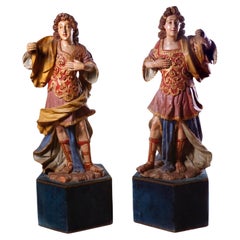
Impressive Pair of Portuguese Seraphim late 17th Century
Located in Madrid, ES
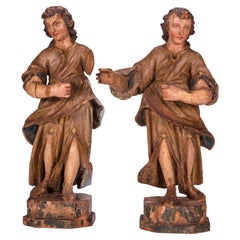
Impressive Pair of Portuguese Seraphim end 17th began1 8th Century Sculptures in molded, polychrome and gilded clay. The figures are represented standing. Set on bases. Normal d...
Category

Late 17th Century Portuguese Antique Renaissance Figurative Sculptures

Materials

Wood

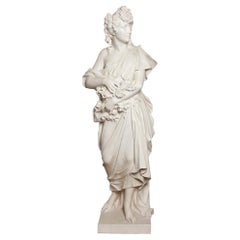
Life-Size Marble Sculpture of Spring by Antonio Frilli
Located in London, GB
Life-size marble sculpture of Spring by Antonio Frilli Italian, late 19th century Height 159cm, width 47cm, depth 40cm This superb sculpture is the work of Antonio Frilli, a renowned Italian artist active in the late 19th century, who founded the Frilli gallery...
Category

Late 19th Century Italian Antique Renaissance Figurative Sculptures

Materials

Marble

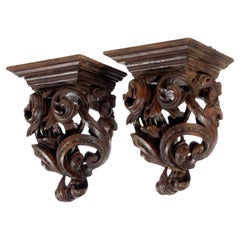
AMAZING PAIR OF PORTUGUESE CORBELS 19th century
Located in Madrid, ES
PAIR OF CORBELS 19th century Portuguese brown wood Profuse decoration with plant motifs. Dim.: 38 x 31 cm good state
Category

19th Century Portuguese Antique Renaissance Figurative Sculptures

Materials

Wood

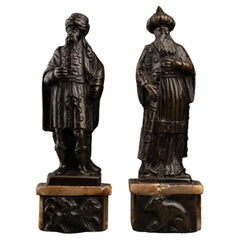
Two rare Figures in Turkish Attire - Venice, early 17th century
Located in Bruxelles, BE
Rare Bronzes Depicting two Figures in Turkish Attire Possibly Suleiman the Magnificent at two different ages bronzes, alabaster bases Venice, early 17th century 19,5 x 6 x 5 cm These two rare bronze statuettes represent two figures dressed in elaborate "Turkish" attire. They are mounted on alabaster bases with bronze reliefs—one featuring the winged lion of Venice, and the other possibly symbolizing Turkey with a wolf depiction. One figure wears a grand külah, a spherical turban with a cone top, signifying royal authority, while the other has a wrapped turban, denoting rank and religious identity. Their garments are richly detailed with intricate engravings, suggesting luxurious fabrics of the Ottoman court. The statuettes may represent Suleiman the Magnificent at two different stages of life, as both young and old. The sultan depicted alongside the winged lion corresponds to a description from a Venetian delegate in 1534, when Suleiman was 43. At that time, he had conquered Iraq from the Safavids and achieved a decisive victory over the Papal fleet at the Battle of Preveza. He was described as having large eyes, an aquiline nose, and long red mustaches—traits visible in Cristofano dell'Altissimo’s portrait of Suleiman in the Uffizi Gallery in Florence. Unlike Mehmed II, who commissioned portraits by European artists for diplomatic purposes, Suleiman did not directly order such representations. Instead, his likeness spread through works by artists like Albrecht Dürer, based on sketches made by diplomats. Following his capture of Belgrade in 1521, his victory over Hungary in 1526, and his siege of Vienna...
Category

17th Century Italian Antique Renaissance Figurative Sculptures

Materials

Alabaster, Bronze

19th Century Renaissance Marble Relief
Located in Madrid, ES
19th century Renaissance marble relief. The relief is carved to the Renaissance taste and is in very good condition. It is framed in a later frame ...
Category

19th Century Italian Antique Renaissance Figurative Sculptures

Materials

Marble

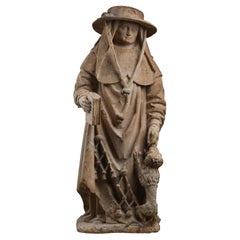
Followers of Jean de la Huerta, Jean de Blany ? - Saint Jerome
Located in Bruxelles, BE
Followers of Jean de la Huerta, Jean de Blany ? Saint Jerome Limestone Burgundy, second half of the15th century 60,5 cm ALR Ref : S00248050 This exquisite sculpture of Saint Jerome, carved from soft, nearly white limestone typical of eastern France, exemplifies the exceptional craftsmanship of 15th-century Burgundian art. The figure of Saint Jerome, a key figure in Christian history renowned for translating the Bible into Latin, is depicted wearing a cardinal’s hat and holding the Vulgate Bible...
Category

15th Century and Earlier French Antique Renaissance Figurative Sculptures

Materials

Limestone

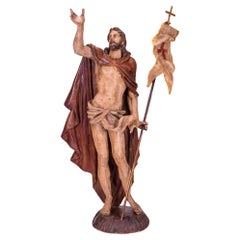
Jesus Christ the Conqueror Raising the Flag After his Resurrection, 16th Century
Located in North Miami, FL
16th Century Italian carved-wood and polychromed sculpture of Jesus Christ the conqueror raising the flag after his resurrection.
Category

16th Century Italian Antique Renaissance Figurative Sculptures

Materials

Gold Leaf

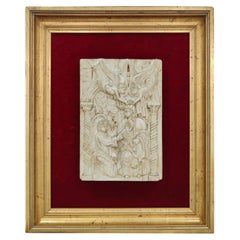
Altarpiece Representing The Annunciation, North of Portugal, circa 1600
Located in Brussels, Brussels
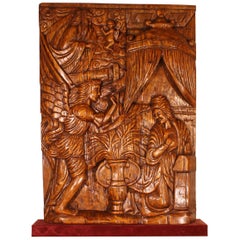
Exceptional altarpiece representing the annunciation circa 1600, fruitwood rare altarpiece from the North of Portugal, unique due to its large size representing the scene of the annunciation, where the Archangel Gabriel (represented on the bottom left), sent by god (represented on the top left) announces to Marie (bottom right) that she will give birth to Jesus. Very good state of conservation, carved on three panels Dimension: Height 1m51 Width 1m03 Very nice colour and exceptional dimensions Restorations of use We placed the altarpiece on a red velvet base and a Spanish occasional...
Category

17th Century Portuguese Antique Renaissance Figurative Sculptures

Materials

Fruitwood

Sterling, Bone, Semi-Precious Gems Figure of St. George Dragon
Located in West Palm Beach, FL
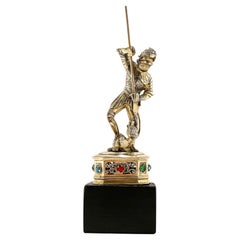
Sterling, Bone, & Semi-Precious Gems Figure of 'St. George & Dragon' Germany, Early 20th Century A meticulously cast and modeled Medieval / Renaissance Figure of St. George Slaying the Dragon, This figure with a moveable helmet visor, revealing his carved bone face...
Category

20th Century German Renaissance Figurative Sculptures

Materials

Multi-gemstone, Sterling Silver

Angelic Carved Wood Sculptures, 16th Century
Located in North Miami, FL
Pair of 16th Century Italian carved polychromed angelic sculptures.
Category

16th Century Italian Antique Renaissance Figurative Sculptures

Materials

Gold Leaf

Angelic Carved Wood Sculptures, 16th Century
$9,375 Sale Price / set
25% Off
Saints Apostles John and Paul, Wood, Castillian School, 16th Century
Located in Madrid, ES
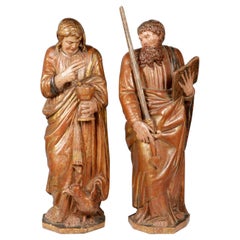
Pair of polychrome wood sculptures. "San Juan and San Pablo". Castilian school, 16th century. Both male figures have been represented standing, with their main iconographic attrib...
Category

16th Century Spanish Antique Renaissance Figurative Sculptures

Materials

Other

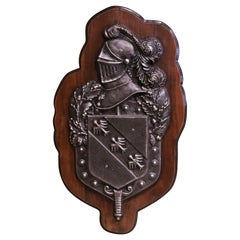
19th Century French Renaissance Style Polished Iron Crest on Walnut Plaque
Located in Dallas, TX
Decorate a study or a man's office with this elegant antique plaque. Crafted in France circa 1880, the wall decor features a coat of arms with a medieval royal knight...
Category

Late 19th Century French Antique Renaissance Figurative Sculptures

Materials

Iron

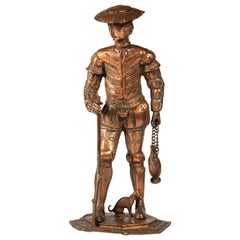
Renaissance Style Copper Figure of a Pilgrim with a Small Dog, circa 1860
Located in San Francisco, CA
Renaissance style figure of a pilgrim with a small dog. Continental hammered, repouusse and incised copper, circa 1860.
Category

Mid-19th Century Italian Antique Renaissance Figurative Sculptures

Materials

Copper

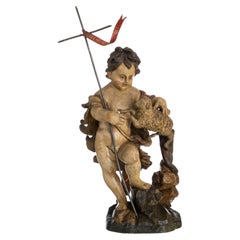
Saint John the Baptist Sculpture, 18th Century
Located in Madrid, ES
Saint John the Baptist 18th century Portuguese sculpture from the 18th century. in polychrome wood. The figure is represented standing with the lamb. Small flaws. Measure: ...
Category

18th Century Portuguese Antique Renaissance Figurative Sculptures

Materials

Wood

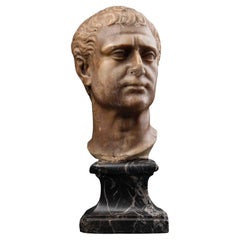
Renaissance Marble Portrait - Northern Italy, 17th century
Located in Bruxelles, BE
Renaissance Marble Portrait Northern Italy, 17th century, inspired by antiquity Marble 36 x 13 cm (including the marble pedestal) This Renaissance portrait head of a young man, sl...
Category

17th Century Italian Antique Renaissance Figurative Sculptures

Materials

Marble

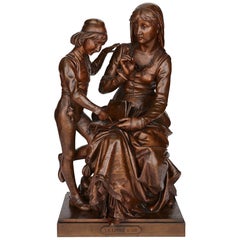
Bronze Mother and Child by Faure De Brousse
By Vincent Désiré Fauré de Broussé
Located in London, GB
This beautiful sculpture of a mother and child was created in circa 1900 by the French sculptor, Vincent Desire Faure de Brousse. Faure de Brousse was...
Category

Early 20th Century French Renaissance Figurative Sculptures

Materials

Bronze

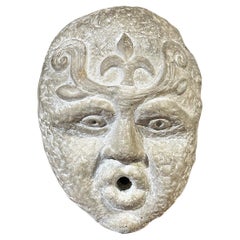
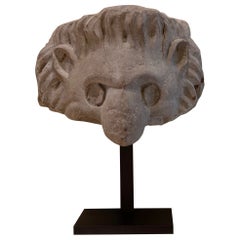
16th CENTURY FOUNTAIN MASK SCULPTURE
Located in Firenze, FI
Unique and precious sculpture in carved white marble, likely depicting Aeolus, the god of the wind. The sculpture originated as a fountain mask, as evidenced by the opening in the mo...
Category

16th Century Italian Antique Renaissance Figurative Sculptures

Materials

Marble

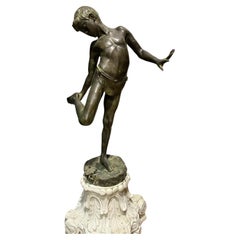
Spectacular Patinated Bronze SCULPTURE "The Child and the Crab" 19th Cent. VIDEO
Located in Madrid, ES
Spectacular Patinated Bronze SCULPTURE depicting "The Child and the Crab"19th century Italy late 19th century 100 x 70cm good conditions
Category

19th Century Italian Antique Renaissance Figurative Sculptures

Materials

Bronze

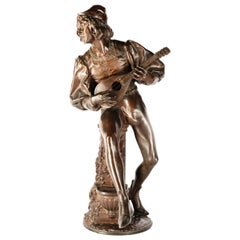
19th Century Bronze Statue of a Minstrel, Signed Paul Fournier
Located in Brighton, Sussex
Paul Fournier (French, 1859-1926): A large bronze figure of a minstrel playing a lute the figure in Renaissance dress, looking to dexter and seated o...
Category

19th Century French Antique Renaissance Figurative Sculptures

Materials

Bronze

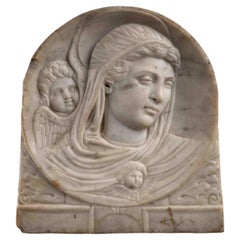
Renaissance Marble Relief - Emilia Romagna, 1470-80
Located in Bruxelles, BE
Renaissance Marble Relief Emilia Romagna, Faenza ? 1470-80 H 30,2 x L 33 x P 3,5 cm The carved marble relief depicts the Virgin accompanied by a winge...
Category

15th Century and Earlier Italian Antique Renaissance Figurative Sculptures

Materials

Marble

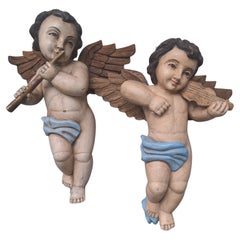
Pair 19thc Italian Renaissance Carved/ Polychrome Wood Musical Cherub Sculptures
Located in Opa Locka, FL
Pair 19thc Italian Renaissance/ Baroque style Large Carved and Polychromed Wood Full Relief Cherub Sculptures. Holding their instruments. These precious figures are large and hang be...
Category

1890s Antique Renaissance Figurative Sculptures

Materials

Wood

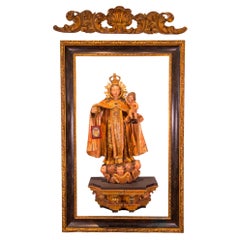
16th Century Our Lady of Mount Carmel, Gold Gilded and Polychromed
Located in North Miami, FL
16th Century Spanish gold gilded and polychromed Carved-wood sculpture of Our Lady of Mount Carmel. She depicts the Blessed Virgin Mary in her...
Category

16th Century Spanish Antique Renaissance Figurative Sculptures

Materials

Gold Leaf

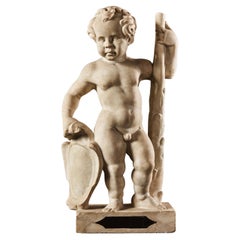
Hercules Holding a Coat of Arms, Flemish, XVII Century
Located in Bruxelles, BE
Hercules holding a coat of arms Flemish, XVII century White and black marble Measures: 67 x 32 x 19 cm Hercules is depicted naked, holding a coat of arms with the right hand an...
Category

17th Century Belgian Antique Renaissance Figurative Sculptures

Materials

Marble, Belgian Black Marble

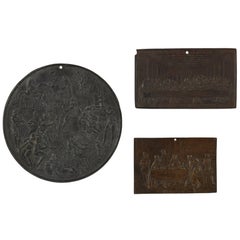
Three German Antique Iron Plaques Cast in the Renaissance Style
Located in London, GB
This charming set of three antique German plaques are each cast from high quality 19th century iron, meaning that the detailing on them is of a very hig...
Category

19th Century German Antique Renaissance Figurative Sculptures

Materials

Iron

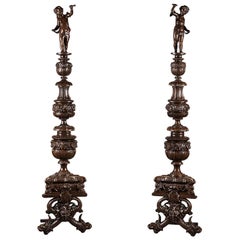
19th Century Pair of Napoleon III Andirons in Patinated Bronze
Located in Paris, FR
Impressive pair of patinated bronze firedog andirons in Renaissance style. They are decorated with alternating vases of flowers topped by winged cupids...
Category

Late 19th Century French Antique Renaissance Figurative Sculptures

Materials

Bronze

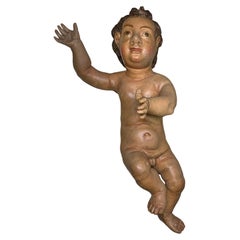
Large Spaniard Hand Painted and Carved Wood Baby Jesus
Located in Guaynabo, PR
This is an old large Spaniard hand painted and carved wood nude baby Jesus. He has hand painted large expressive eyes and eye brows. His abundant hair is bro...
Category

18th Century Spanish Antique Renaissance Figurative Sculptures

Materials

Wood

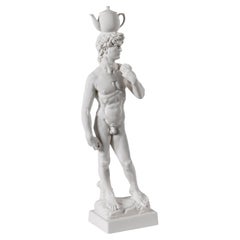
Michelangelo David Ceramic Sculpture by Andrea Salvatori, Italy, Contemporary
Located in London, GB
Andrea Salvatori, "Davidiera", 2015 glazed earthenware, measures: H 68 x 25 x 18 cm Michelangelo's David becomes a teapot in this witty reinterpret...
Category

21st Century and Contemporary Italian Renaissance Figurative Sculptures

Materials

Ceramic

16h century Griffin Head - Italy
Located in Bruxelles, BE
Griffin head Italy, 16th century On a modern metal stand Measures: 20 x 29 x 21 cm (without the stand) The griffin is a legendary creature with the body of a lion, the head an...
Category

16th Century Italian Antique Renaissance Figurative Sculptures

Materials

Marble

16h century Griffin Head - Italy
$4,192 Sale Price
30% Off
Cercle of Romano Alberti, Page, Around 1530-1540
Located in Bruxelles, BE
Cercle of Romano Alberti, dit Il Nero da Sansepolcro ( San Sepolcro, 1521-1568 ) Page Mixed media : wood core, papier mâché, stucco, polychrome and gilded Italy, around 1530-154...
Category

16th Century Italian Antique Renaissance Figurative Sculptures

Materials

Stucco, Wood, Paper

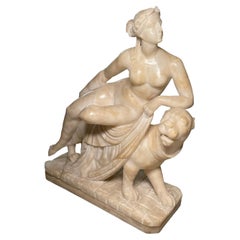
Marble and Alabaster Group Sculpture of Ariadne over a Panther
Located in Guaynabo, PR
This is an alabaster group sculpture of the Cretan princess and daughter of the king Minos of Crete, Ariadne seated over her panther. Her left elbow is over the head of the panther a...
Category

Early 20th Century Unknown Renaissance Figurative Sculptures

Materials

Alabaster

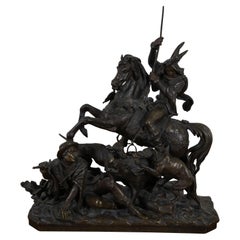
Tiffany Co Duchoiselle Hunt Bronze Louis XI Quentin Durward Théodore Gechter 18"
Located in Dayton, OH
Antique Tiffany & Co number 2114 bronze sculpture portraying a scene from Quentin Durward. Written by Walter Scott and published in 1823, Quentin Durward is the story of a young Scot...
Category

Early 20th Century Renaissance Figurative Sculptures

Materials

Bronze

Agnolo di Polo Firenze 1470 - Arezzo 1528 - Saint Nicholas of Tolentino
Located in Bruxelles, BE
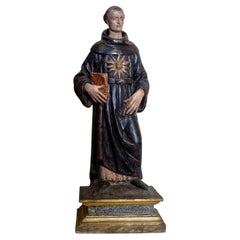
Agnolo di Polo (Firenze 1470 - Arezzo 1528) Saint Nicholas of Tolentino Around 1510-1520 Painted and gilded terracotta 55.5 x 24 x 16.5 cm San Nicholas de Tolentino is represe...
Category

16th Century Italian Antique Renaissance Figurative Sculptures

Materials

Terracotta

Coppia di Cariatidi Italiane Scolpite in Noce Inizio 1600 Grandi 7ft circa
Located in Milano, MI
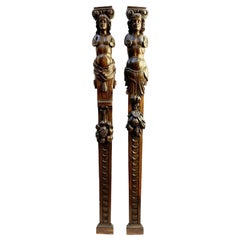
Coppia di Importanti Cariatidi del 1600 in legno intagliato a patina scura provenienti da un complesso corale impiegati come divisori tra gli stalli. Le due figure sono asessuate, co...
Category

Early 17th Century Italian Antique Renaissance Figurative Sculptures

Materials

Wood, Walnut

Cerberus, Italy, 17th Century
Located in Bruxelles, BE
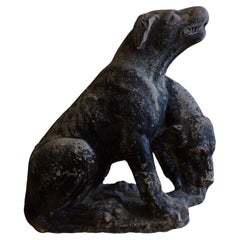
Cerberus Black painted stone Italy, 17th century Measures: 80 x 69 x 36cm (one head missing) Cerberus, cruel monster, fierce and strange, Through his wide threefold throat barks as a dog Over the multitude immers'd beneath. His eyes glare crimson, black his unctuous beard, His belly large, and claw'd the hands, with which He tears the spirits, flays them, and their limbs Piecemeal disparts (Dante, Inferno, Canto VI). Cerberus figure seated, in his role of ferocious guardian of the underworld; he shows a nervous musculature, an adherent skin which reveals the ribs, long and robust limbs; his heads are broad and the eyes set well apart. Painted in black to amplify his menacing look, the infernal guardian is depicted with his famous attributes, writhing his heads, growling and barking furiously. Cerberus, in Greek mythology, was the monstrous watchdog of the underworld – also known as the “hound of Hades” – preventing the dead from leaving, and making sure that those who entered never left. A child of Typhon and Echidna, he was part of a monstrous family, which included Orthus, the Lernaean Hydra, and the Chimaera as well. Only on three occasions Cerberus was tricked by visitors of Hades: Heracles did it with his strength, Orpheus with his music. In "The Inferno", Dante places Cerberus as the guardian of the third circle of Hell. With his three mouths, Dante saw Cerberus as a beast that was synonymous with the sin of Gluttony. Virgil gets past the monster by throwing mud in his three mouths, temporarily choking him. Very rare are the representations of Cerberus in ancient statuary...
Category

17th Century Italian Antique Renaissance Figurative Sculptures

Materials

Stone

Cerberus, Italy, 17th Century
$19,763 Sale Price
25% Off
16th-century Flemish Female Wooden Sculpture
Located in Villa Verucchio, Emilia-Romagna
Prologue: An Ancient Mastery the Wooden Sculpture We begin our journey through Gothic art by presenting a magnificent Late Gothic Female Wooden Sculpture from the Flemish 500s. This ...
Category

16th Century Belgian Antique Renaissance Figurative Sculptures

Materials

Wood

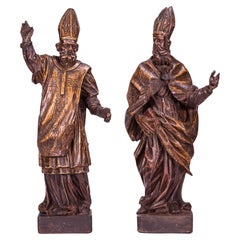
Saint Ambrose Archbishop of Milan and Saint Augustine Bishop of Hippo, 16th Cent
Located in North Miami, FL
A pair of 16th Century Italian wood carved figures of Saint Ambrose Archbishop of Milan and Saint Augustine Bishop of Hippo, two of the four original Doc...
Category

16th Century Italian Antique Renaissance Figurative Sculptures

Materials

Wood

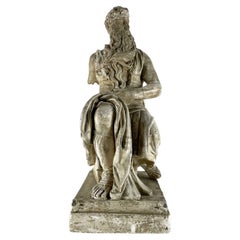
Italian Plaster Sculpture Depicting Moses Inspired by Michelangelo Early 1900s
By Michelangelo Buonarroti
Located in Milano, MI
Italian Plaster Sculpture Depicting Moses Inspired by Michelangelo Early 1900s. This plaster work recreates one of the masterpieces of Renaissance art, Michelangelo's Moses, inspired...
Category

20th Century Italian Renaissance Figurative Sculptures

Materials

Gesso

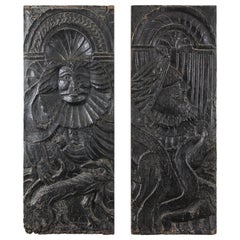
Renaissance Period Hand Carved Oak Panels, 16th Century
Located in Beuzevillette, FR
Set of two 16th century oak panels, one representing a character accompanied by a dog, the other a character in flames, probably saints. These ...
Category

16th Century French Antique Renaissance Figurative Sculptures

Materials

Oak

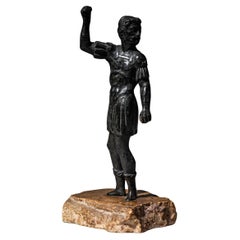
Bronze statuette of a Venetian mercenary, Italy 16th/17th century
Located in Greding, DE
Small statuette in bronze of a Venetian mercenary on a small brown stone base with a natural edge. Italy, 16th/17th Century.
Category

17th Century Italian Antique Renaissance Figurative Sculptures

Materials

Stone, Bronze

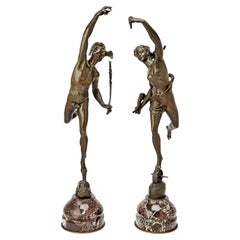
Antique Mercury and Fortuna Bronze Sculptures After Giambologna
By Giambologna
Located in New York, NY
Antique (late 19th to early 20th century) patinated bronze sculptures of Mercury and Fortuna after the original models by Giambologna (1529-1608), aka Giovanni da Bologna (Italian) a...
Category

Late 19th Century French Antique Renaissance Figurative Sculptures

Materials

Marble, Bronze

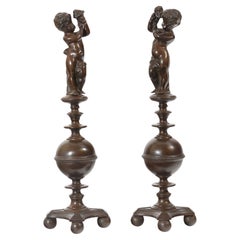
Pair of bronzed cast iron Italian Renaissance style fire andirons
Located in Castle Douglas, GB
A pair of bronzed cast iron Renaissance style andirons. Each with a figure of a cherub holding a cornucopia, on a ring turned and baluster column over stepped quadripartite plinth ba...
Category

Mid-19th Century Italian Antique Renaissance Figurative Sculptures

Materials

Bronze, Iron

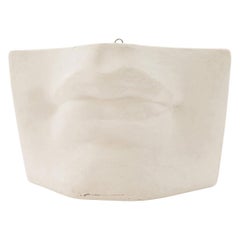
Italian Renaissance Michelangelo s "David" Plaster Mouth Detail
Located in Queens, NY
Italian Renaissance style plaster mouth detail of Michelangelo\'s David statue
Category

20th Century Italian Renaissance Figurative Sculptures

Materials

Plaster

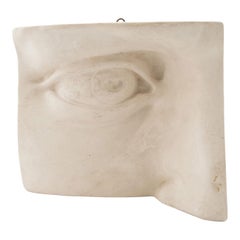
Italian Renaissance Michelangelo s "David" Plaster Eye Detail
Located in Queens, NY
Italian Renaissance style plaster eye detail of Michelangelo\'s David statue
Category

20th Century Italian Renaissance Figurative Sculptures

Materials

Plaster

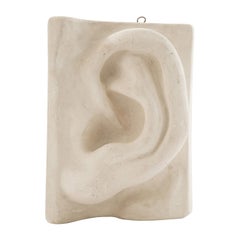
Italian Renaissance Michelangelo s "David" Plaster Ear Detail
Located in Queens, NY
Italian Renaissance style plaster ear detail of Michelangelo\'s David statue
Category

20th Century Italian Renaissance Figurative Sculptures

Materials

Plaster

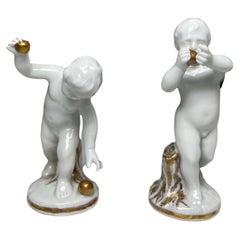
Capodimonte Glazed White Parian Porcelain Cherubs
Located in Guaynabo, PR
This is a pair of Capodimonte glazed white Parian porcelain nude cherubs who are playing with some gilt round small balls. Both of them are standing n...
Category

Early 20th Century Italian Renaissance Figurative Sculptures

Materials

Porcelain

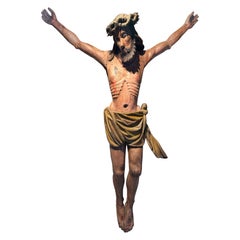
A very large French 16th century Christ
Located in PARIS, FR
Very large Christ (1.80m from hands to feet) sculpted in the round, with its original polychromy. Oak wood, probably from the Troyes sculpture workshops in the Aube region. First hal...
Category

16th Century French Antique Renaissance Figurative Sculptures

Materials

Wood

Renaissance figurative sculptures for sale on 1stDibs.

Find a broad range of unique Renaissance figurative sculptures for sale on 1stDibs. Many of these items were first offered in the 21st Century and Contemporary, but contemporary artisans have continued to produce works inspired by this style. If you’re looking to add vintage figurative sculptures created in this style to your space, the works available on 1stDibs include decorative objects, more furniture and collectibles, wall decorations and other home furnishings, frequently crafted with wood, metal and other materials. If you’re shopping for used Renaissance figurative sculptures made in a specific country, there are Europe, Italy, and France pieces for sale on 1stDibs. While there are many designers and brands associated with original figurative sculptures, popular names associated with this style include Europa Antiques, Andrea Salvatori, Ferdinand Barbedienne, and Capodimonte. It’s true that these talented designers have at times inspired knockoffs, but our experienced specialists have partnered with only top vetted sellers to offer authentic pieces that come with a buyer protection guarantee. Prices for figurative sculptures differ depending upon multiple factors, including designer, materials, construction methods, condition and provenance. On 1stDibs, the price for these items starts at $135 and tops out at $348,500 while the average work can sell for $7,236.

Still Thinking About These?

All Recently Viewed