18th Century and Earlier Sculptures

to
270
2,811
6,870
25,498
11,438
4,467
9,189
7,443
576
240
962
1,105
529
1,495
2,079
2,690
1,307
821
318
225
59
27
24
20
16
8
4
3
3
2
2
1,250
958
694
514
331
1,263
1,211
1,382
678
661
245
227
Height
to
Width
to
2,811
2,811
2,811
205
25
10
8
5
Period: 18th Century and Earlier
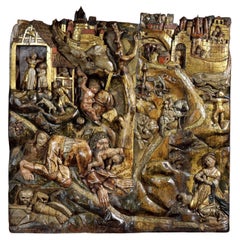
Wood Low-Relief Depicting a Werewolf and Saint George
Located in Saint-Ouen, FR
Exceptional polychrome wood low-relief depicting a werewolf and saint george after a woodcut by lucas cranach (“DER WERWOLF” 1512) Provenance : collection Brimo de Laroussihle colle...
Category

German Renaissance Antique 18th Century and Earlier Sculptures
Materials

Wood

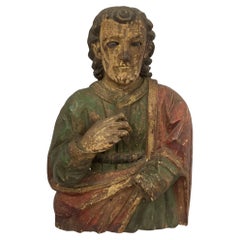
18th Century Carved Polychrome Bust of a Saint
Located in Bradenton, FL
18th Century Carved & Polychrome Bust of a Saint with Glass Eye. Either Italian or Spanish. This piece retains a good portion of the original painted f...
Category

Spanish Baroque Antique 18th Century and Earlier Sculptures

Materials

Wood

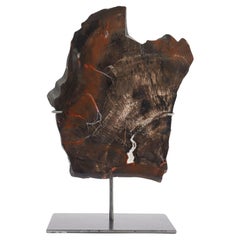
Geological specimen of Southwestern American petrified wood on stand
Located in Kenilworth, IL
Slice cut and polished geological specimen of Southwestern American petrified wood.
Category

Antique 18th Century and Earlier Sculptures

Materials

Petrified Wood

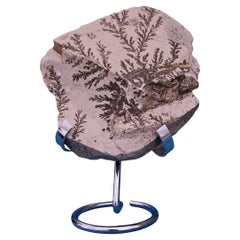
Natural Dendritic Specimen Slab or Fossil Specimen
Located in Warrenton, OR
Natural Dendritic Specimen Slab or Fossil Specimen, probably from the Jurassic period. A small stand will come with the fossil as a gift unless you instruct us not to include it (it ...
Category

Unknown Organic Modern Antique 18th Century and Earlier Sculptures

Materials

Organic Material

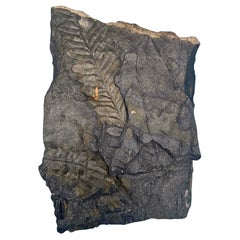
8.5" Polymorphopteris Species Natural Tree Fern Fossil Specimen, 305 million yrs
Located in Warrenton, OR
8.5" Polymorphopteris Species Natural Tree Fern Fossil Specimen, 305 million yrs old apx. Discovered in Pennsylvania. Here is another gorgeous plant fossil specimen that would make a...
Category

American Prehistoric Antique 18th Century and Earlier Sculptures

Materials

Organic Material

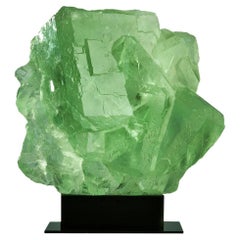
Green Fluorite Decorative object Organic Sculpture Crystal Rock Table top
Located in London, GB
A stunning specimen of green fluorite from China, formed by large intergrown cubes of different sizes, creating a beautiful and sculptural shape. The central crystal is especially st...
Category

Chinese Organic Modern Antique 18th Century and Earlier Sculptures

Materials

Crystal, Rock Crystal, Copper

Lapis lazuli sphere
Located in London, GB
This captivating lapis lazuli sphere from Afghanistan features a deep, royal blue body accented with delicate veins of golden pyrite and soft white calcite. Place of origin: Afghani...
Category

Afghan Antique 18th Century and Earlier Sculptures

Materials

Crystal, Lapis Lazuli, Rock Crystal

Woolly Mammoth Tooth
Located in New York, NY
This extraordinary Woolly Mammoth tooth from Siberia is a rare relic of the Pleistocene epoch, dating back tens of thousands of years. Exhibiting distinct ridges and exceptional pres...
Category

Asian Antique 18th Century and Earlier Sculptures

Materials

Other

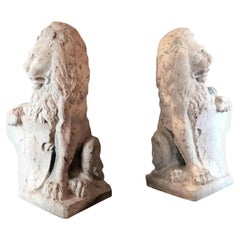
Pair 18th C. Hand Carved Marble Figures Lions Sculptures Garden Statues
Located in West Hollywood, CA
Pair 18th C. Carved Marble Terracotta Figures Lions Sculptures Garden Statues LA . Rare large Pair of early 18th century carved marble terracotta Figures of regal lions, holding an i...
Category

Italian Antique 18th Century and Earlier Sculptures

Materials

Stone, Marble

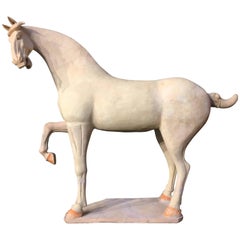
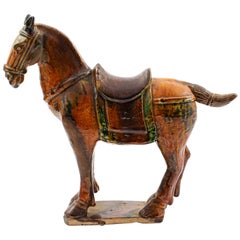
Large Early Tang Dynasty Painted Pottery Model of a Prancing Horse, TL Tested
Located in Austin, TX
A magnificent and large early Tang dynasty (618-906 AD) model of a prancing or dancing horse, circa 7th century. The majestic animal is caught mid-motion, one leg raised, head grace...
Category

Chinese Tang Antique 18th Century and Earlier Sculptures

Materials

Pottery

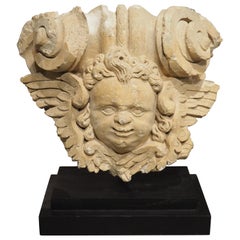
A 17th Century Mounted French Limestone Carving of a Winged Angel
Located in Dallas, TX
Originally part of a larger architectural from a French building in the 1600s, this hand-carved limestone fragment of a winged angel has been mounted more recently to a painted black...
Category

French Baroque Antique 18th Century and Earlier Sculptures

Materials

Stone, Limestone, Metal

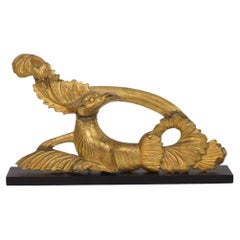
Italian 18th/ 19th Century Carved Giltwood Neo Classical Style bird Ornament
Located in Buisson, FR
Beautiful handcarved giltwood bird ornament. Italy circa 1780-1820 . Weathered and small losses and old repairs Measurements include the wooden base. H:23cm W:41cm D:6,5cm
Category

Italian Neoclassical Antique 18th Century and Earlier Sculptures

Materials

Wood

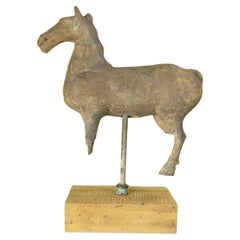
Exquisite Han Dynasty Ceramic Horse
Located in Delray Beach, FL
Own a tangible piece of history with this captivating antique ceramic horse, a relic , probably from the illustrious Han Dynasty , This beautifully restored artefact offers a uniqu...
Category

Chinese Antique 18th Century and Earlier Sculptures

Materials

Ceramic

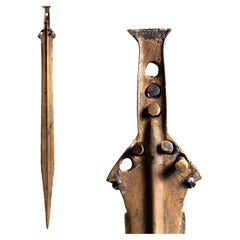
Late Bronze Age Sword
Located in London, GB
Saint Nazaire Sword, Late Bronze Age, circa 800-900 B.C. An exceptionally well preserved Bronze Age sword, with elegant, finely incised decorations,...
Category

French Antique 18th Century and Earlier Sculptures

Materials

Bronze

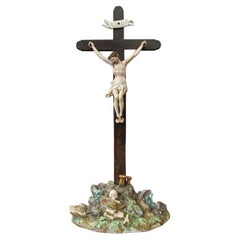
SECOND HALF OF THE 18th CENTURY MEISSEN PORCELAIN CRUCIFIX
Located in Firenze, FI
Beautiful polychrome porcelain crucifix from the Meissen factory, one of the oldest and most prestigious European porcelain manufacturers. The brand...
Category

Italian Antique 18th Century and Earlier Sculptures

Materials

Porcelain, Wood, Paint

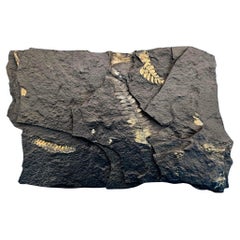
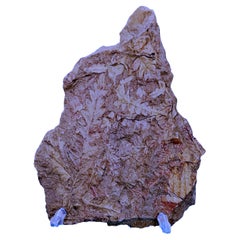
Mariopteris Species Natural Tree Fern Fossil Specimen Over 300 Million Years Old
Located in Warrenton, OR
Mariopteris Species Natural Tree Fern Fossil Specimen Over 300 Million Years Old Discovered in Pennsylvania. Hues occur naturally over time through the mineralization process. The hu...
Category

American Prehistoric Antique 18th Century and Earlier Sculptures

Materials

Organic Material

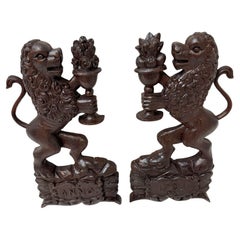
Antique Pair of Hand-Carved Sculptures of Lions The Netherlands, 1723
Located in Amsterdam, NL
Magnificent and rare pair of 18th Century Dutch Colonial sculptures of lions. Striking Dutch design from 1723! Original hand-carved solid oak sculptures of lions. The pair is dated a...
Category

Dutch Dutch Colonial Antique 18th Century and Earlier Sculptures

Materials

Oak

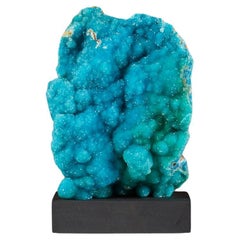
Enchanting Hemimorphite: Blue Stone Wonder from China
Located in London, GB
Immerse yourself in the captivating hues of this exceptional hemimorphite specimen from China. This unique piece showcases a mesmerizing gradient of colors, transitioning smoothly fr...
Category

Chinese Antique 18th Century and Earlier Sculptures

Materials

Crystal, Quartz

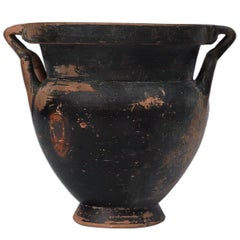
Greek Black Glazen Column Krater (4th Century BC)
Located in Soho, London, GB
Black Glazen Column Krater mid-4th century BC, Apulia With broad avoid body on a short echinus foot and thick mouth. The two handles form loops around the...
Category

Italian Classical Greek Antique 18th Century and Earlier Sculptures

Kolihapeltis chlupaci Trilobite from Djebel Oufaten, Morocco (154.5 grams)
Located in New York, NY
Kolihapeltis chlupaci hollardi is a rare, spiny trilobite fossil, a member of the Order Corynexochida and Family Scutellidae, found in the Lhandar Formation near Atchana, Morocco, du...
Category

Moroccan Antique 18th Century and Earlier Sculptures

Materials

Cement, Other

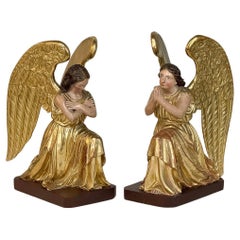
Pair 18th Century Hand-Carved Polychromed Wood Angels
Located in Dallas, TX
Pair 18th Century Hand-Carved Polychromed Wood Angels are amazingly well preserved and perfect for any devotional display. Sculpted from solid blocks of walnut, each features amazin...
Category

French Baroque Revival Antique 18th Century and Earlier Sculptures

Materials

Walnut, Paint

Late Ming Era Documented Glazed Pottery Horse
Located in Kastrup, DK
An elegant Chinese Ming dynasty pottery figurine depicting a horse in a standing pose with polychrome finish (aubergine, light brown and g...
Category

Chinese Ming Antique 18th Century and Earlier Sculptures

Materials

Pottery

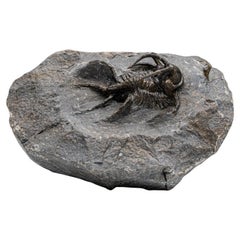
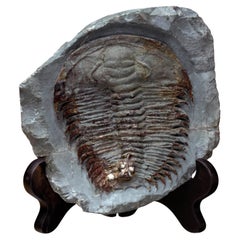
Paradoxides Trilobite Fossil
Located in New York, NY
This Paradoxides trilobite specimen presented as-unearthed in matrix dates back over 499 million years to the Middle Cambrian Epoch. Paradoxides is one of the earliest known genus of...
Category

Asian Antique 18th Century and Earlier Sculptures

Materials

Other

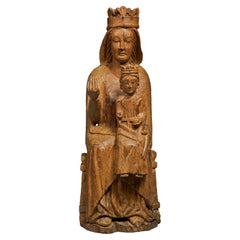
Virgin and Child in Majesty, also known as "Sedes Sapientae"
Located in Saint-Ouen, FR
VIRGIN AND CHILD IN MAJESTY, ALSO KNOWN AS "SEDES SAPIENTIAE"   ORIGIN : SPAIN, CATALOGNE PERIOD: EARLY 13th CENTURY   Height :  95 cm Width : 32 cm Depth : 28 cm   Softwood No polychromy     In the middle of the 12th century, the Virgin took her place in churches, seated in Majesty, serving as a throne for her son Jesus. She is then called Sedes Sapientiae, meaning the Throne of Wisdom. At that time, she is not represented for herself and only exists because she has been designated as Theotokos, the mother of God, at the Council of Ephesus in 431, where the divine nature of Christ was proclaimed from his birth.   The upright and perfectly hieratic bust of this Virgin and Child in Majesty is seated on a throne-bench. She is dressed in a tunic with a rounded neckline and covered with a fine mantle placed on her narrow shoulders. The supple and natural drapery follows the lines of the body.   Large curls frame her face with delicate and regular features, a long straight nose, almond-shaped eyes, and small lips.   She supports the Infant Jesus with her left hand. Like his mother, he is dressed in a long tunic, and his little feet are visible in the folds. He holds a small sphere in his left hand, while with his right hand, he gestures in blessing. The face of Christ bears a strong resemblance to his mother’s one, and he gives a slight smile.   The position of the Child is no longer as hieratic, nor frontal or central as in the early 12th century, but his face still turns towards the faithful.   The 13th century indeed emerges as a period of transition in the artistic domain. The statuary, while retaining certain characteristics still belonging to the habits of the previous century, also develops new formal solutions.   As a result, Mary maintains a hieratic and frontal position, while her son shifts to place himself well to the left on her knee. Similarly, while the Virgin seems perfectly still, Jesus, on the other hand, appears much more animated, especially in the positioning of his hands. His left hand holds the orb, and judging by the raised right arm directed towards the faithful, one can easily imagine that he was making a gesture of blessing.   The influence of the Sedes Sapientiae from previous centuries still seems particularly prevalent in this work.   These few characteristics allow dating this Spanish Virgin...
Category

Spanish Gothic Antique 18th Century and Earlier Sculptures

Materials

Softwood

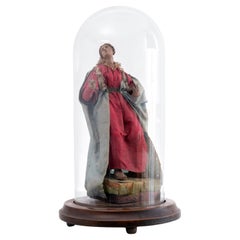
18th century Neapolitan Terracotta Santo Presepio Figure of Saint Anna
Located in Leesburg, VA
18th century Neapolitan Terracotta Santo Presepio Figure of Saint Anna Anonymous Naples, Italy; ca. 1760 Polychrome terracotta, wood, silk, gla...
Category

Italian Baroque Antique 18th Century and Earlier Sculptures

Materials

Terracotta, Silk, Glass, Wood

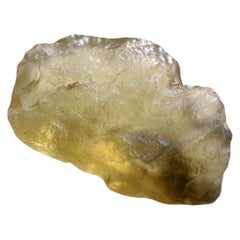
Meteorite Impact Desert Glass
Located in London, GB
Libyan Desert Glass Circa 29 Million y/o Height: 9.5 cm A beautiful, tactile piece of yellow glass, found between the high crested dunes of the Libyan De...
Category

Libyan Antique 18th Century and Earlier Sculptures

Materials

Glass

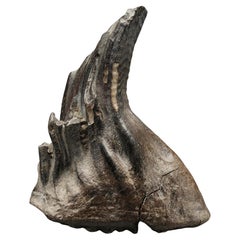
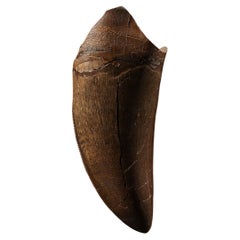
T-Rex Tooth
Located in London, GB
The tooth of an adult Tyrannosaurus Rex, dating to the Late Cretaceous period, approximately 67 million years old. This large beautifully preserved specimen has a rich brown enamel, ...
Category

American Antique 18th Century and Earlier Sculptures

Materials

Bone

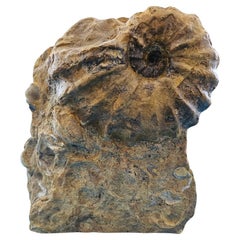
Conlinoceras Tarrantense Ammonite Fossil, 90 to 100 Million Years Old
Located in Warrenton, OR
Conlinoceras Tarrantense Ammonite Fossil, 90 to 100 Million Years Old. A rare and highly sought after ammonite for collectors. The ammonite itself is somewhere between 5 and 6 inch...
Category

American Prehistoric Antique 18th Century and Earlier Sculptures

Materials

Shell, Organic Material

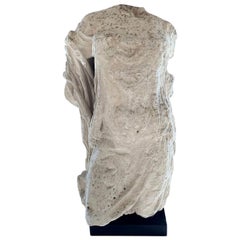
16th Century Stone Classical Roman Style Torso
Located in Vosselaar, BE
A wonderful 16th century draped female torso in classical style. Made in France under Italian Renaissance influence this female torso is finely sculpted with great detail to the stol...
Category

French Renaissance Antique 18th Century and Earlier Sculptures

Materials

Sandstone

Important 15th Century Polychrome Wood Virgin and Child
Located in Saint-Ouen, FR
Important 15th century polychrome wood virgin and child Origin: Southern Germany Period: Late 15th Century, Ca. 1480-1490 Height : 125 cm Polychrome limewood Good condition Provenance : Private collection, Alsace, France. As soon as 1430, sculpture starts a major and deep stylistic evolution than will unfold over a century, until around 1530. We call it the International Gothic. This production is particularly interested in a quest for realism. This important Virgin and Child wears a long red dress with a round gilded neckline. A delicate golden belt...
Category

Antique 18th Century and Earlier Sculptures

Materials

Wood

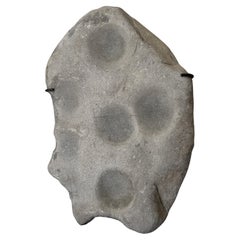
bronze age ceremonial cup stone
Located in Vosselaar, BE
This peculiar archeological piece is described as a 'cup stone'. These cup marked stones have been found worldwide and been dated from 300.000 bc up to 1000 bc. The exact purpose of ...
Category

Scandinavian Archaistic Antique 18th Century and Earlier Sculptures

Materials

Stone

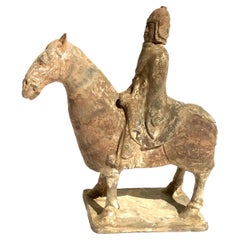
Sui or Tang Dynasty Painted Pottery Armored Horse And Rider
Located in Dallas, TX
Sui or Qi Dynasty Painted Pottery Armored Horse and Warrior Sui Dynasty (581-618) Height: 11 Inches x 10.5 Wide x 4.25 Deep Provenance: Weisbrod Chinese Art, Ltd., New York Conditi...
Category

Chinese Tang Antique 18th Century and Earlier Sculptures

Materials

Pottery

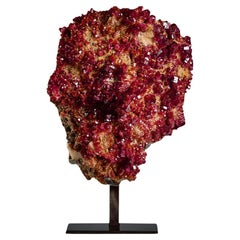
Red Vanadinite Decorative Object Sculpture Crystal Table top
Located in London, GB
A striking specimen of vanadinite from Morocco, displaying an intense deep red colour and remarkable lustre. The surface is covered with brilliant, well-formed crystals of varying si...
Category

Moroccan Organic Modern Antique 18th Century and Earlier Sculptures

Materials

Crystal, Quartz, Rock Crystal

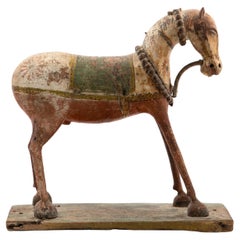
8-19th Century Wooden Horse
Located in Kastrup, DK
A Indian 18-19th century hand-carved wooden horse decorated with polychrome colors. In original untouched condition with a beautiful age-related patina, showing the antique authentic...
Category

Indian Folk Art Antique 18th Century and Earlier Sculptures

Materials

Wood

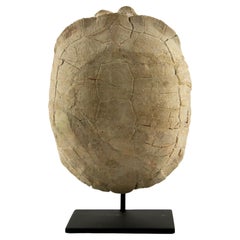
Oligocene Turtle Fossil, South Dakota
Located in New York, NY
Oligocene Turtle Fossil, South Dakota This exceptional mounted turtle fossil originates from the Oligocene period (approximately 23–34 million years ago) and was unearthed in South D...
Category

American Antique 18th Century and Earlier Sculptures

Materials

Stone

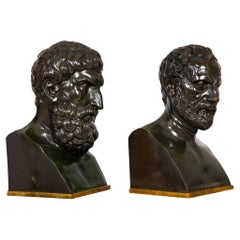
Pair of Busts "Pythagoras Epicurus" attributed to Giacomo Giancarlo Zoffol
Located in Shippensburg, PA
IMPORTANT PAIR OF BUSTS OF PYTHAGORAS AND EPICURUS Circa late 18th century Attributed to the workshop of Giacomo and Giancarlo Zoffoli Unsigned, black and green patina with gilt bron...
Category

European Antique 18th Century and Earlier Sculptures

Materials

Bronze

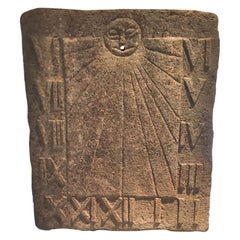
18th Century French Stone Sundial
Located in Vosselaar, BE
A impressive late 18th century French sandstone sundial mounted on a custom lade iron stand. The Latin numerals finely carved at both sides an...
Category

French Neoclassical Antique 18th Century and Earlier Sculptures

Materials

Sandstone

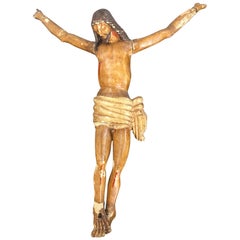
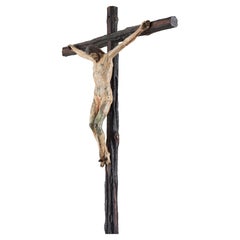
18th Century Carved Wooden Representing Christ on the Cross
Located in Miami, FL
Carved wooden representing Christ on the cross.
Category

Spanish Neoclassical Antique 18th Century and Earlier Sculptures

Materials

Wood, Paint

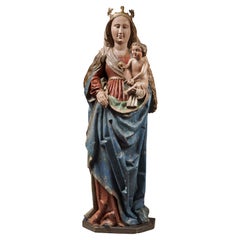
Baroque Virgin and Child in Polychrome Wood with Silver Crown, Spain, 17th Centu
Located in Madrid, ES
Baroque Virgin and Child in Polychrome Wood with Silver Crown, Spain, 17th Century An important Spanish Baroque sculpture of the Virgin and Child, datable to the 17th century, made ...
Category

Spanish Baroque Antique 18th Century and Earlier Sculptures

Materials

Silver

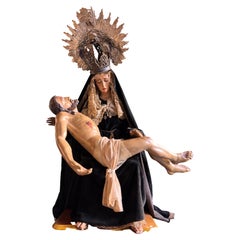
Amazing Spanish Baroque Pietà in Polychrome Wood with Silver Crown, 18th Century
Located in Madrid, ES
Amazing Spanish Baroque Pietà in Polychrome Wood with Silver Crown, 18th Century Impressive large-format Spanish Pietà, carved in wood and polychromed, datable to the late 18th cent...
Category

Spanish Baroque Antique 18th Century and Earlier Sculptures

Materials

Silver

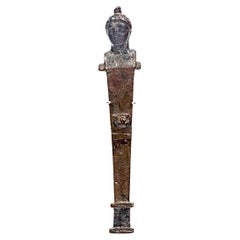
Ancient Roman Bronze Herm on Stand, 1st-4th Century AD
Located in Bradenton, FL
Ancient Roman Bronze Herm Statue dating from the 1st to 4th Century A.D. A herm was a statue consisting of a a head atop a square pillar, originally an artifact to honor the god Herm...
Category

Italian Classical Roman Antique 18th Century and Earlier Sculptures

Materials

Bronze

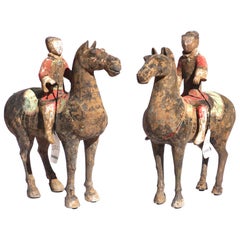
Pair of Han Dynasty Pottery Horses and Equestrian Riders
Located in Dallas, TX
A wonderful pair of Ex Sotheby’s painted Polychrome Equestrian Horse and Riders made from gray pottery, Presents beautifully and guaranteed authentic with provenance and COA. Measures: Height 11.5 inches and width 11 inches Condition: Possible professional restorations but not detectable. Provenance: Sotheby’s London. 16th November, 1999. Lot 12 (2 of 4 horses in that lot). Sotheby’s New York, NY September 14, 2019. The importance of the horse in the history and culture of China can be viewed, in part, through the artistic legacy of this great civilization. In sculpture, painting, and literature, horses were glorified and revered. Horses were believed to be related to mythological dragons, reflecting their sacred status within society. During the unification of China under the Han Dynasty, bands of mounted nomadic warriors from the north threatened the country. In order to thwart their attacks, the Chinese sought to import stronger, faster steeds from Central Asia (as opposed to the Mongol ponies used by the invaders), eventually leading to the creation of the Silk Road. This small sculpture of a mounted soldier reveals the crucial military role of the horse. When compared to the diminutive stature of the rider, the importance of the horse becomes readily apparent. This creature provided security and strength, allowing the Empire to secure its borders and expand its influences across Central Asia. The magnificent regalia of the horse, including a brilliantly painted saddle in red and green/gold, reflect the respect this animal received. The warrior as well is gorgeously decorated with a painted red tunic and gray chest...
Category

Chinese Chinoiserie Antique 18th Century and Earlier Sculptures

Materials

Pottery

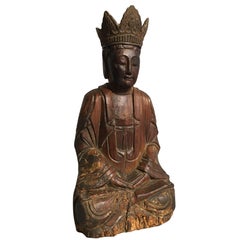
Chinese Carved Wood Bodhisattva Guanyin, Late Ming Dynasty, 17th Century
Located in Austin, TX
An attractive carved wood figure of the Bodhisattva Avalokiteshvara, known as Guanyin in China, late Ming Dynasty, early 17th century, China. Guanyi...
Category

Chinese Ming Antique 18th Century and Earlier Sculptures

Materials

Gesso, Wood

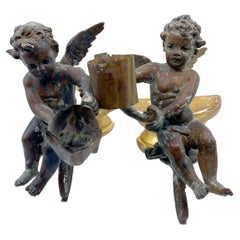
Pair Antique Bronze Patinated Putti Angel Sconces
Located in New York, NY
Pair antique bronze patinated angel putti sconces. Italian late 17th century bronze putti with exceptional modeling seated on scrolled arms each ex...
Category

Italian Baroque Antique 18th Century and Earlier Sculptures

Materials

Bronze

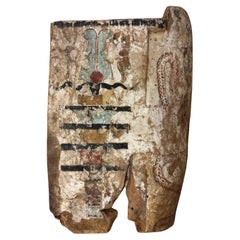
FRAGMENT OF SARCOPHAGUS, Egypt, end of the New Kingdom to Late Period.
Located in Nice, Cote d Azur
FRAGMENT OF SARCOPHAGUS Painted with the djed pillar topped with the atef crown. This type of symbol was frequently painted on the bottoms of sarcophagus vats. H. 79,5 cm Egypt, end ...
Category

Egyptian Egyptian Antique 18th Century and Earlier Sculptures

Materials

Wood

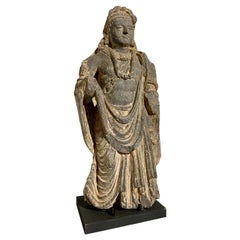
Gandharan Standing Bodhisattva Maitreya, Carved Black Schist, 2nd-4th Century
Located in Austin, TX
An impressive and well carved Gandharan figure of the Bodhisattva Maitreya, the Buddha of the Future, carved black schist, ancient Kingdom of Gand...
Category

Pakistani Antique 18th Century and Earlier Sculptures

Materials

Schist

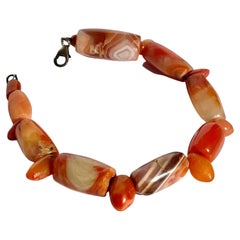
Pre Colombian Tairona Carnelian Bead Bracelet
Located in Dallas, TX
Circa 1000 - 1500 CE Pre Colombian. Columbia, Tairona. Beads. A lovely bracelet of a wearable comprised or 17 seed form, tubular and ovoid beads carve...
Category

Colombian Pre-Columbian Antique 18th Century and Earlier Sculptures

Materials

Carnelian

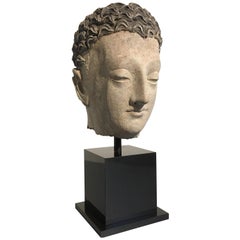
Gandharan Stucco Head of the Buddha, 3rd-5th Century
Located in Austin, TX
A sublime Greco-Buddhist stucco head of the Buddha, ancient region of Gandhara, circa 3rd-5th century. A fragment of a larger statue, the Buddha's face...
Category

Pakistani Antique 18th Century and Earlier Sculptures

Materials

Stucco

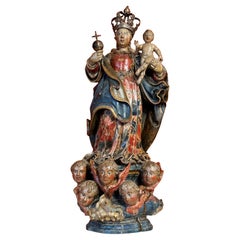
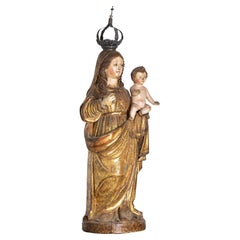
Portuguese Baroque Madonna and Child Religious Sculpture, 17th Century Statue
Located in Lisbon, PT
This late 17th-century Portuguese Baroque figure in polychromed wood depicts the Madonna holding the Christ Child, carved with exquisite detail and spiritual grace. The Virgin is p...
Category

Portuguese Baroque Antique 18th Century and Earlier Sculptures

Materials

Gold Leaf

Rare and important painted bronze Crucifix after a model by Michelangelo
By Michelangelo Buonarroti
Located in Leesburg, VA
A rare and very fine bronze corpus of Christ after a model by Michelangelo, cast ca. 1597-1600 by Juan Bautista Franconio and painted in 1600 by Francisco Pacheco in Seville, Spain. The present corpus reproduces a model attributed to Michelangelo. The best known example, lesser in quality, is one on display at the Metropolitan Museum of Art (MET). The association of this corpus with Michelangelo was first brought to light by Manuel Gomez-Moreno (1930-33) who studied the wider circulated casts identified throughout Spain. The attribution to Michelangelo was subsequently followed by John Goldsmith-Phillips (1937) of the MET and again by Michelangelo expert, Charles de Tolnay (1960). While Michelangelo is best known for his monumental works, there are four documented crucifixes he made. The best known example is the large-scale wooden crucifix for the Church of Santa Maria del Santo Spirito in Florence, made in 1492 as a gift for the Prior, Giovanni di Lap Bicchiellini, for allowing him to study the anatomy of corpses at the hospital there. In 1562, Michelangelo wrote two letters to his nephew, Lionardo, indicating his intention to carve a wooden crucifix for him. In 1563 a letter between Lionardo and the Italian sculptor Tiberio Calcagni, mentions this same crucifix (a sketch of a corpus on the verso of a sheet depicting Michelangelo’s designs for St. Peter’s Basillica [Palais des Beaux-Arts in Lille] may reproduce this). That Michelangelo was working on small corpora in the last years of his life is further evidenced by the small (26.5 cm) unfinished wooden crucifix located at the Casa Buonarroti, considered his last known sculptural undertaking. Michelangelo’s contemporary biographer, Giorgio Vasari additionally cites that Michelangelo, in his later years, made a small crucifix for his friend, Menighella, as a gift. Surviving sketches also indicate Michelangelo’s study of this subject throughout his career, most notably during the end of his life but also during the 1530s-40s as he deepened his spiritual roots. The occasional cameo of crucified Christ’s throughout his sketched oeuvre have made it challenging for scholars to link such sketches to any documented commissions of importance. All the while, in consideration that such objects were made as gifts, it is unlikely they should be linked with commissions. Nonetheless, a number of theories concerning Michelangelo’s sketches of Christ crucified have been proposed and some may regard the origin of the present sculpture. It has been suggested that the corpus could have its impetus with Michelangelo’s work on the Medici Chapel, whose exclusive design was given to the master. It is sensible smaller details, like an altar cross, could have fallen under his responsibility (see for example British Museum, Inv. 1859,0625.552). Others have noted the possibility of an unrealized large marble Crucifixion group which never came to fruition but whose marble blocks had been measured according to a sheet at the Casa Buonarroti. A unique suggestion is that Michelangelo could have made the crucifix for Vittoria Colonna, of whom he was exceedingly fond and with whom he exchanged gifts along with mutual spiritual proclivities. In particular, Vittoria had an interest in the life of St. Bridget, whose vision of Christ closely resembles our sculpture, most notably with Christ’s proper-left leg and foot crossed over his right, an iconography that is incredibly scarce for crucifixes. The suggestion could add sense to Benedetto Varchi’s comment that Michelangelo made a sculpted “nude Christ…he gave to the most divine Marchesa of Pescara (Vittoria Colonna).” Of that same period, two sketches can be visually linked to our sculpture. Tolnay relates it to a sketch of a Crucified Christ at the Teylers Museum (Inv. A034) of which Paul Joannides comments on its quality as suggestive of preparations for a sculptural work. Joannides also calls attention to a related drawing attributed to Raffaello da Montelupo copying what is believed to be a lost sketch by Michelangelo. Its relationship with our sculpture is apparent. Montelupo, a pupil of Michelangelo’s, returned to Rome to serve him in 1541, assisting with the continued work on the tomb of Pope Julius II, suggesting again an origin for the corpus ca. 1540. The earliest firm date that can be given to the present corpus is 1574 where it appears as a rather crudely conceived Crucifixion panel, flanked by two mourners in low-relief and integrally cast for use as the bronze tabernacle door to a ciborium now located at the Church of San Lorenzo in Padula. Etched in wax residue on the back of the door is the date, 27 January 1574, indicating the corpus would have at least been available as a model by late 1573. The Padula tabernacle was completed by Michelangelo’s assistant, Jacopo del Duca and likely has its origins with Michelangelo’s uncompleted tabernacle for the Basilica of St. Mary of the Angels in Rome. The impetus for the Padula tabernacle’s Crucifixion panel begins with a series of late Crucifixion sketches by Michelangelo, depicting a scene of Christ crucified and flanked by two mourners (see British Museum Inv. 1895.0915.510; Ashmolean Museum Inv. 1846.89, KP II 343 recto; Windsor Castle RCIN 912761 recto; and Louvre Inv. 700). A faintly traced block possibly intended for sculpting the sketch of the crucified Christ on its recto was discovered by Tolnay on a version of the composition at Windsor Castle. The Windsor sketch and those related to it appear to have served as preparatory designs for what was probably intended to become the Basilica of St. Mary’s tabernacle door. Vasari documents that the project was to be designed by Michelangelo and cast by his assistant, Jacopo del Duca. Michelangelo died before the commission was complete, though on 15 March 1565, Jacopo writes to Michelangelo’s nephew stating, “I have started making the bronze tabernacle, depending on the model of his that was in Rome, already almost half complete.” Various circumstances interrupted the completion of the tabernacle, though its concept is later revitalized by Jacopo during preparations to sell a tabernacle, after Michelangelo’s designs, to Spain for Madrid’s El Escorial almost a decade later. The El Escorial tabernacle likewise encountered problems and was aborted but Jacopo successfully sold it shortly thereafter to the Carthusians of Padula. An etched date, 30 May 1572, along the base of the Padula tabernacle indicates its framework was already cast by then. A 1573 summary of the tabernacle also describes the original format for the door and relief panels, intended to be square in dimension. However, a last minute decision to heighten them was abruptly made during Jacopo’s negotiations to sell the tabernacle to King Phillip II of Spain. Shortly thereafter the commission was aborted. Philippe Malgouyres notes that the Padula tabernacle’s final state is a mixed product of the original design intended for Spain’s El Escorial, recycling various parts that had already been cast and adding new quickly finished elements for its sale to Padula, explaining its unusually discordant quality, particularly as concerns the crudeness of the door and relief panels which were clearly made later (by January 1574). Apart from his own admission in letters to Spain, it is apparent, however, that Jacopo relied upon his deceased master’s designs while hastily realizing the Padula panels. If Michelangelo had already earlier conceived a crucifix model, and Jacopo had access to that model, its logical he could have hastily employed it for incorporation on the door panel to the tabernacle. It is worth noting some modifications he made to the model, extending Christ’s arms further up in order to fit them into the scale of the panel and further lowering his chin to his chest in order to instill physiognomic congruence. A crude panel of the Deposition also follows after Michelangelo’s late sketches and is likewise known by examples thought to be modifications by Jacopo based upon Michelangelo’s initial sculptural conception (see Malgouyres: La Deposition du Christ de Jacopo del Duca, chef-d’oeuvre posthume de Michel-Ange). Jacopo’s appropriation of an original model by Michelangelo for more than one relief on the Padula tabernacle adds further indication that the crucifix was not an object unique to Jacopo’s hand, as few scholars have posited, but rather belongs to Michelangelo’s original...
Category

Renaissance Antique 18th Century and Earlier Sculptures

Materials

Bronze

Burmese Arakan Bronze Crowned Buddha, 17th Century
Located in Austin, TX
A gorgeous and refined Burmese crowned and adorned seated bronze Buddha, Kingdom of Arakan, Mrauk-U period, 17th century. The Buddha is portrayed seated in vajrasana upon a high double lotus pedestal, hands in dhyana mudra, a ritual vessel resting in his upturned palms. He is festooned with jewelry – armlets, bracelets, anklets, a double necklace, a jeweled belt, and large earrings. His hair done up in a high chignon, covering the ushnisha, and topped by a stupa shaped finial. The Buddha wears a large five pointed crown tied with ribbons that flare dramatically behind either ear, and a thin scarf...
Category

Burmese Antique 18th Century and Earlier Sculptures

Materials

Bronze

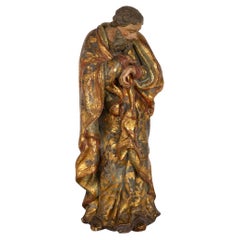
Very Fine Spanish Carved Polychromed Saint Santos Statue c. 1720-50
Located in Shippensburg, PA
FIGURE OF A PENITENT SAINT Probably Spanish, circa 1720-50 14" H x 6" D x 5 1/8" W A carved wooden figure of a bearded saint, richly polychromed and gilded in the estofado techniqu...
Category

European Baroque Antique 18th Century and Earlier Sculptures

Materials

Wood

7.5" Alethopteris Species Natural Tree Fern Fossil Specimen, 305 million yrs
Located in Warrenton, OR
7.5" Alethopteris Species Natural Tree Fern Fossil Specimen, 305 million yrs old apx. This plant fossil specimen is unique and subtantial. In addition to the two large fern leaf fos...
Category

American Prehistoric Antique 18th Century and Earlier Sculptures

Materials

Organic Material

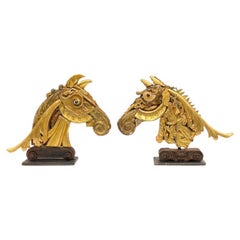
Pair of 18th Century Italian Gilt Fragment Horse Head Sculptures
Located in Dublin, Dalkey
Pair of 18th century Italian gold-leaf fragment horse head sculptures. The pair is made of 18th century Italian water-gilt fragments mounted on scroll wood bases. The fragments come...
Category

Italian Rococo Antique 18th Century and Earlier Sculptures

Materials

Gold Leaf

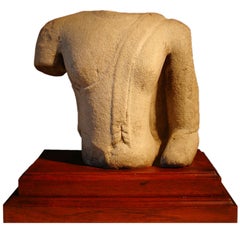
16th Century Thai Ayutthaya Sandstone Torso of the Buddha
Located in Austin, TX
A lovely carved sandstone torso of the Buddha, Ayutthaya period (1350-1767), Thailand. Wonderfully simplistic, the only ornamentation this torso displays...
Category

Thai Antique 18th Century and Earlier Sculptures

Materials

Sandstone

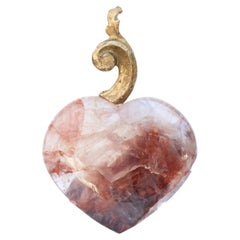
18th Century Italian Scroll Fragment on a Red and White Hematoid Quartz Heart
Located in Dublin, Dalkey
18th century Italian gilded scroll fragment mounted on a polished red and white hematoid quartz heart. The piece is inspired by "The Sacred Heart" in Catholic art history which symbo...
Category

Italian Rococo Antique 18th Century and Earlier Sculptures

Materials

Quartz, Rock Crystal, Gold Leaf

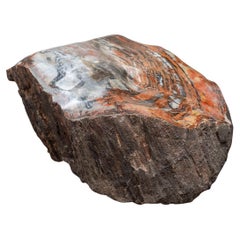
Genuine Polished Petrified Wood Stump from Arizona
Located in New York, NY
This large and beautiful hand-polished petrified wood stump is sourced from Arizona and polished to a mirrored finish. It has an amazing pattern with vibrant hues of brown, yellow, a...
Category

American Antique 18th Century and Earlier Sculptures

Materials

Other

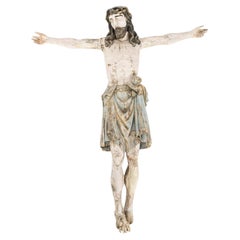
Italian 18th Century Hand-carved Corpus Christi in Original Paint
Located in Houston, TX
Italian 18th century hand-carved Corpus Christi, in original paint, or in some small areas early paint. Note: Original/early finish on antique a...
Category

Italian Baroque Antique 18th Century and Earlier Sculptures

Materials

Gesso, Wood, Paint

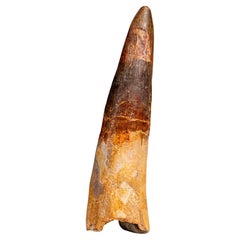
Genuine Natural Large Spinosaurus Dinosaur Tooth (67 grams)
Located in New York, NY
This large, Museum-quality Spinosaur tooth is completely in tact with no repairs. This incredible specimen includes a display box for preservation and display purposes. Spinosaurus (...
Category

Prehistoric Antique 18th Century and Earlier Sculptures

Materials

Other

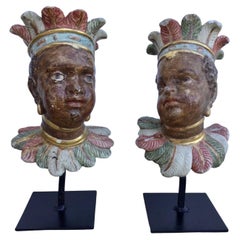
Pair of 18th Century Venetian Rococo Polychromed Nubian Heads
Located in Bradenton, FL
Rare pair Of 18th century Venetian Rococo period polychromed antique carved wood sculptures in the form of nubian heads. Each with substantial traces of original polychrome, portray...
Category

Italian Rococo Antique 18th Century and Earlier Sculptures

Materials

Wood

Read More

He Wrote ‘Oedipus Rex,’ but Do You Know What He Looked Like?

The Greek tragedian is said to have been handsome in his day.

These Soft Sculptures Are Childhood Imaginary Friends Come to Life

Miami artist and designer Gabriela Noelle’s fantastical creations appeal to the Peter Pan in all of us.

Salvatori Commissioned Several Famous Architects to Create Miniature Homes in Stone

Gabriele Salvatori explains how the COVID lockdowns inspired his design company's latest collection, the Village.

Christopher Norman Is Turning the Cast-Off Urban Trees of Los Angeles into Art

With a World War II–era milling machine, the California artist crafts poetic, sculptural furniture pieces.

These Human-Size Ceramic Hares Evoke Serious Emotions

Swedish artist Margit Brundin's large anthropomorphic animal sculptures are on view for the first time in the United States at Dienst + Dotter Antikviteter, in New York.

Tour the Wabi-Sabi New York Apartment of Andrianna Shamaris

As her sun-filled home reveals, the furniture maker and dealer puts a contemporary spin on antiques from around the globe.

Vicente Wolf’s Tips for Finding — and Living with — Eastern Treasures

The A-list designer shares his expertise on choosing authentic objects and displaying them with style.

Rodrigo Rivero Lake’s Mexico City Showroom Is a Museum-Worthy Trove of Spanish Colonial and Asian Antiques

The dealer and curator has spent the past 50 years amassing a collection of exceptional art, furniture and architectural elements that trace the cultural influence of the Spanish empire from Europe to the Americas and beyond.

Still Thinking About These?

All Recently Viewed