Art Nouveau Vases and Vessels

ART NOUVEAU STYLE

In its sinuous lines and flamboyant curves inspired by the natural world, antique Art Nouveau furniture reflects a desire for freedom from the stuffy social and artistic strictures of the Victorian era. The Art Nouveau movement developed in the decorative arts in France and Britain in the early 1880s and quickly became a dominant aesthetic style in Western Europe and the United States.

ORIGINS OF ART NOUVEAU FURNITURE DESIGN

CHARACTERISTICS OF ART NOUVEAU FURNITURE DESIGN

  • Sinuous, organic and flowing lines
  • Forms that mimic flowers and plant life
  • Decorative inlays and ornate carvings of natural-world motifs such as insects and animals 
  • Use of hardwoods such as oak, mahogany and rosewood

ART NOUVEAU FURNITURE DESIGNERS TO KNOW

ANTIQUE ART NOUVEAU FURNITURE ON 1STDIBS

Art Nouveau — which spanned furniture, architecture, jewelry and graphic design — can be easily identified by its lush, flowing forms suggested by flowers and plants, as well as the lissome tendrils of sea life. Although Art Deco and Art Nouveau were both in the forefront of turn-of-the-20th-century design, they are very different styles — Art Deco is marked by bold, geometric shapes while Art Nouveau incorporates dreamlike, floral motifs. The latter’s signature motif is the "whiplash" curve — a deep, narrow, dynamic parabola that appears as an element in everything from chair arms to cabinetry and mirror frames.

The visual vocabulary of Art Nouveau was particularly influenced by the soft colors and abstract images of nature seen in Japanese art prints, which arrived in large numbers in the West after open trade was forced upon Japan in the 1860s. Impressionist artists were moved by the artistic tradition of Japanese woodblock printmaking, and Japonisme — a term used to describe the appetite for Japanese art and culture in Europe at the time — greatly informed Art Nouveau. 

The Art Nouveau style quickly reached a wide audience in Europe via advertising posters, book covers, illustrations and other work by such artists as Aubrey Beardsley, Henri de Toulouse-Lautrec and Alphonse Mucha. While all Art Nouveau designs share common formal elements, different countries and regions produced their own variants.

In Scotland, the architect Charles Rennie Mackintosh developed a singular, restrained look based on scale rather than ornament; a style best known from his narrow chairs with exceedingly tall backs, designed for Glasgow tea rooms. Meanwhile in France, Hector Guimard — whose iconic 1896 entry arches for the Paris Metro are still in use — and Louis Majorelle produced chairs, desks, bed frames and cabinets with sweeping lines and rich veneers. 

The Art Nouveau movement was known as Jugendstil ("Youth Style") in Germany, and in Austria the designers of the Vienna Secession group — notably Koloman Moser, Josef Hoffmann and Joseph Maria Olbrich — produced a relatively austere iteration of the Art Nouveau style, which mixed curving and geometric elements.

Art Nouveau revitalized all of the applied arts. Ceramists such as Ernest Chaplet and Edmond Lachenal created new forms covered in novel and rediscovered glazes that produced thick, foam-like finishes. Bold vases, bowls and lighting designs in acid-etched and marquetry cameo glass by Émile Gallé and the Daum Freres appeared in France, while in New York the glass workshop-cum-laboratory of Louis Comfort Tiffany — the core of what eventually became a multimedia decorative-arts manufactory called Tiffany Studios — brought out buoyant pieces in opalescent favrile glass. 

Jewelry design was revolutionized, as settings, for the first time, were emphasized as much as, or more than, gemstones. A favorite Art Nouveau jewelry motif was insects (think of Tiffany, in his famed Dragonflies glass lampshade).

Like a mayfly, Art Nouveau was short-lived. The sensuous, languorous style fell out of favor early in the 20th century, deemed perhaps too light and insubstantial for European tastes in the aftermath of World War I. But as the designs on 1stDibs demonstrate, Art Nouveau retains its power to fascinate and seduce.

There are ways to tastefully integrate a touch of Art Nouveau into even the most modern interior — browse an extraordinary collection of original antique Art Nouveau furniture on 1stDibs, which includes decorative objects, seating, tables, garden elements and more.

to
274
1,942
16
10
1
335
1,606
26
1,324
112
54
520
181
143
44
9
12
2
28
8
3
10,614
5,756
3,218
3,025
637
606
438
415
196
186
171
154
130
118
114
104
59
954
751
445
444
166
1,008
686
1,762
851
249
150
147
Height
to
Width
to
1,968
1,966
1,966
128
96
83
49
41
Style: Art Nouveau
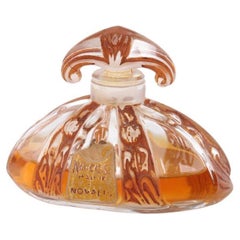
Art Nouveau perfume bottle by Julien Viard Depinoix 1920
Located in Oirlo, LI
Art Nouveau perfume bottle by Julien Viard Depinoix 1920 Small bottle of antique perfume and Art Nouveau style cut in crystal with stripes of f...
Category

20th Century French Art Nouveau Vases and Vessels

Materials

Art Glass

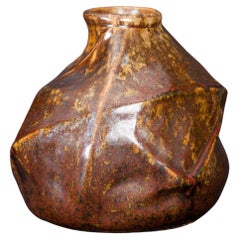
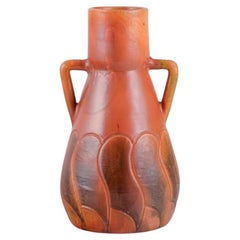
Art Nouveau Asymmetrical Vase by Pierre-Adrien Dalpayrat
Located in Palm Beach, FL
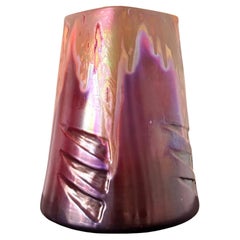
Much fuss is made about Dalpayrat’s signature red, but what many have not realized is that “Dalpayrat Red” refers not simply to a vivid red color glaze but just as often to a nuanced appearance of color resulting from the artist’s technical expertise navigating a complex play of minerals and various firing temperatures. Mossy greens, amber and chestnut tones dance together over Dalpayrat’s blood red base. The result is just as surprisingly modern as the geometric planes forming this asymmetrical vase...
Category

Early 1900s French Antique Art Nouveau Vases and Vessels

Materials

Stoneware

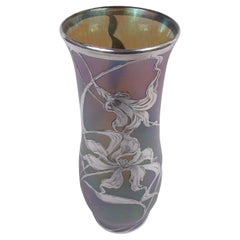
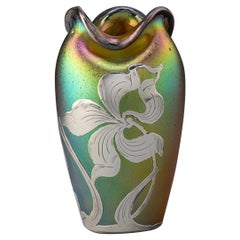
Very Large Loetz Art Nouveau Iridescent Vase with Silver Overlay
Located in New York, NY
Very large turn-of-the-century art glass vase made by historic Loetz. Gentle baluster in iridescent blue shading to gold. Engraved silver overlay in form of Japonesque irises. Big bl...
Category

Early 20th Century Austrian Art Nouveau Vases and Vessels

Materials

Silver

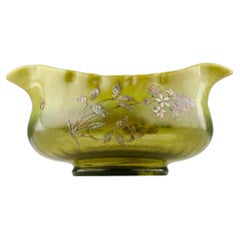
Émile Gallé, Enameled Seashells and Flowers Green Opaline Glass Jardinière Vase
Located in PARIS, FR
Superb and rare early Émile Gallé jardinière vase in green opaline glass with enamelled decorations of seashells, plants and flowers. France late 1800s. Signed "Émile Gallé pour Bonh...
Category

1890s French Antique Art Nouveau Vases and Vessels

Materials

Enamel

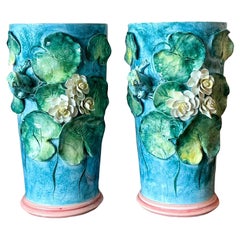
Vintage Italian Lilypad Majolica Vase - A Pair
Located in West Palm Beach, FL
A magnificent piece of sculptural ceramic art, this vintage vase is a beautiful example of the Italian majolica tradition. The vessel boasts a tall, elegant form, finished in a rich,...
Category

Mid-20th Century Italian Art Nouveau Vases and Vessels

Materials

Pottery

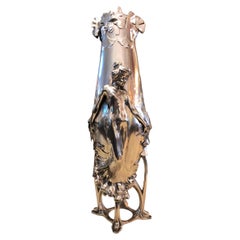
Big Vase , German, 1900 in Silver, Art Nouveau
Located in Ciudad Autónoma Buenos Aires, C
Signs: Hugo Leven Hugo Leven studied at the Kunstgewerbeschule and then at the Düsseldorf Art Academy. For some time he worked in his father Louis Leven's studio, had numerous contac...
Category

Early 1900s German Antique Art Nouveau Vases and Vessels

Materials

Metal

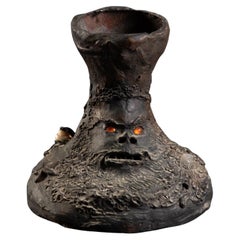
Art Nouveau Metalwork Vase with Grotesque Creatures by Maria Longworth Storer
By Maria Longworth Storer
Located in Palm Beach, FL
Note: We highly recommend shipping through 1stDibs for its cost effectiveness, full insurance coverage, and reliable handling. While standard parcel services are an option, the defau...
Category

1890s American Antique Art Nouveau Vases and Vessels

Materials

Tin, Copper

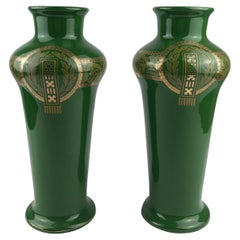
Green Gold Pair of French Art Deco Porcelain Vases by Sarreguemines
Located in Miami, FL
Trendy Green & Gold vases Intricately detailed pair of French Art Deco porcelain vases manufactured by Sarreguemines. These fine quality vas...
Category

Early 20th Century French Art Nouveau Vases and Vessels

Materials

Porcelain

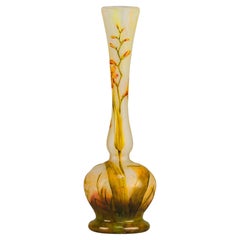
Early 20th Century Art Nouveau Cameo Glass "Botanica Vase" by Daum Frères
By Daum
Located in London, GB
An attractive early 20th Century cabinet cameo glass vase etched and enamelled with budding flowers against a cream field, signed Daum Nancy and with the Cross of Lorraine ADDITIONAL...
Category

Early 20th Century French Art Nouveau Vases and Vessels

Materials

Glass

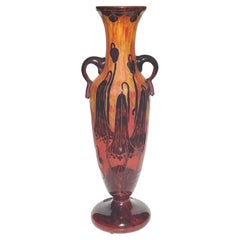
Schneider Le Verre Francaise Carved Handled Art Deco Vase
Located in Dallas, TX
A Tall Le Verre Francaise Schneider Art Nouveau Two Handled Cameo Vase with Bell Flowers in Orange, Red and Yellow. France Circa. 1925, Incised mark "Le Verre Francais," Height: 1...
Category

1920s French Vintage Art Nouveau Vases and Vessels

Materials

Art Glass

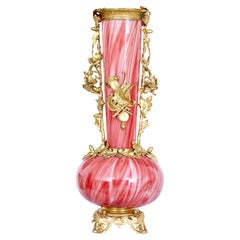
1930’s French art glass vase with ormolu mounts
Located in Debenham, Suffolk
1930's French art glass vase with ormolu mounts circa 1930. Elegant hand blown art glass of reds and whites, profusely decorated with ormolu mounts to the rim, top and base.   Decor...
Category

Mid-20th Century French Art Nouveau Vases and Vessels

Materials

Ormolu

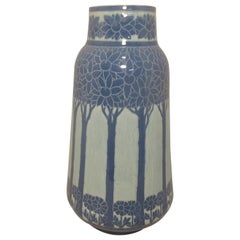
Josef Ekberg Ceramic Vase
Located in Hollywood, FL
This is a Hand made, 1 off Sgraffito vase made by the Swedish ceramic artist Josef Ekberg in 1907. he was one of Sweden's Top Ceramic artist at the time. He started working at the Gu...
Category

Early 1900s Swedish Antique Art Nouveau Vases and Vessels

Materials

Ceramic

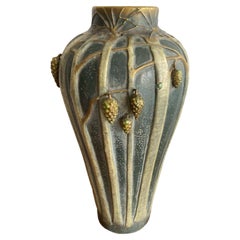
Early 20th Century Art Nouveau Amphora Pine Cone Vase by, Paul Dachsel
Located in Englewood, NJ
A Monumental Austrian Art Nouveau Amphora "Pine Cone" Ceramic Vase decorated with applied pine cone decoration against Green Blue Matte glaze and further enameled gilt. The vase is...
Category

Early 20th Century Art Nouveau Vases and Vessels

Materials

Ceramic

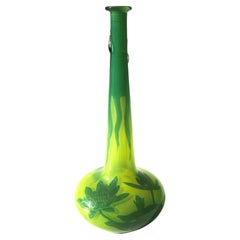
French Art Nouveau Signed Désiré Christian Cameo Glass Vase, circa 1896
Located in Worcester Park, GB
Extraordinary cameo, hot applied and wheel carved vase by Désiré Christian c1896 in greens and yellows depicting water lilies with applied blue tear d...
Category

1890s French Antique Art Nouveau Vases and Vessels

Materials

Art Glass

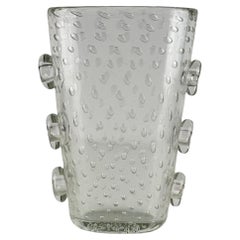
Ercole Barovier Exceptional Pulegoso Glass Vase with Applied Discs, 1930s
Located in Brescia, Brescia
An extraordinarily rare example of Ercole Barovier’s early 1930s experimentation with the pulegoso technique, this sculptural vase represents one of the most sought-after chapters in...
Category

1930s Italian Vintage Art Nouveau Vases and Vessels

Materials

Art Glass, Murano Glass

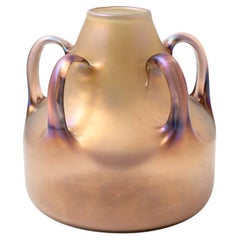
Antique Art Nouveau Jugendstil vase Freiherr von Poschinger Design Iridicend
Located in Amsterdam, Noord Holland
Step into the elegance of the Art Nouveau era with this exquisite natural shape Despite its age, this vase remains in remarkable condition With its interesting size and captivating...
Category

Early 20th Century German Art Nouveau Vases and Vessels

Materials

Art Glass

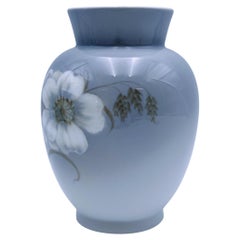
ca. 1920s Royal Copenhagen No.2315-36 Vase with under-glazed floral pattern
Located in Skien, NO
Primitive Antique Vase from Royal Copenhagen with Hand-Decorated Underglazed Pattern Vase No. 2315-36 in porcelain with Art Nouveau-style floral decoration. Made by Royal Copenhagen...
Category

1920s Danish Vintage Art Nouveau Vases and Vessels

Materials

Porcelain

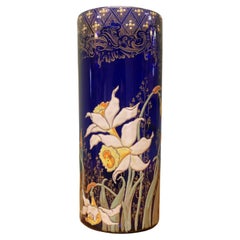
A Stunning Cobalt Blue Enamelled Vase with Daffodils The vase is superb piece
Located in Godshill, Isle of Wight
A Stunning Cobalt Blue Enamelled Vase with Daffodils The vase is superb piece overlaid with gold and colourful daffodils, there is one very tiny chip at the rim of the vase otherw...
Category

1920s Vintage Art Nouveau Vases and Vessels

Materials

Art Glass

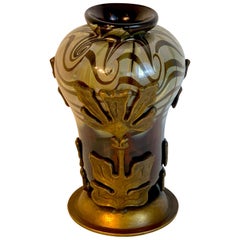
Art Nouveau Bronze Mounted Loetz Vase, Stamped Made in Austria
Located in West Palm Beach, FL
Art Nouveau bronze mounted Loetz vase, stamped made in Austria', in two parts the vase with beautiful pulled feather decoration. The bronze frame with stylized floral design, stamped...
Category

Early 20th Century Austrian Art Nouveau Vases and Vessels

Materials

Bronze

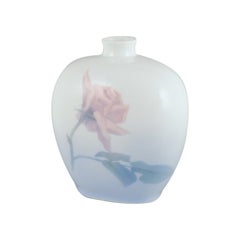
Royal Copenhagen, Art Nouveau porcelain vase with a flower and dragonfly motif
Located in København, Copenhagen
Royal Copenhagen, Art Nouveau porcelain vase decorated with a flower and dragonfly motif. Dating: circa 1920. Perfect condition. Marked. First factory quality. Dimensions: H 17.0 cm ...
Category

1920s Danish Vintage Art Nouveau Vases and Vessels

Materials

Porcelain

Art Noveau Style Large Crystal Vase Engraved With Butterflies And Dragonflies
Located in Prato, Tuscany
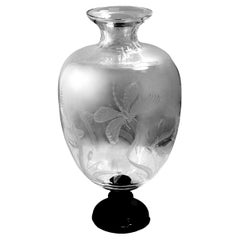
Before describing the object under consideration, we must make an important clarification; the artifact, one of many that we will publish over time, is part of the museum collection of a historic Florentine crystal grinder that unfortunately closed recently. It is the Marcello Galgani & Sons company, whose completely manual and artisanal work has not withstood the disproportionate advance of mass-produced mechanical processes! Marcello Galgani began his craft as a grinder and restorer in 1960; as the years went by, Marcello mastered and became familiar with particular techniques and shapes, resulting in the production of objects that manage to retain the freshness of grinding and engraving, the warmth and softness of light, and the inimitable flavor of unique artifacts. After several years, his son Lorenzo, who grew up among crystals, also entered the business and immediately became passionate about this ancient craft with skill and ability. Stimulated by the aesthetic sense of the past, father and son, set up a workshop in which the shapes they researched and created themselves are mouth-blown by traditional Tuscan glassmakers in Empoli, then ground and engraved using ancient sixteenth-century techniques, with motifs born from the Galgani's inexhaustible imagination or culturally inspired by designs of objects seen and studied in Florentine museums (Uffizi, Galleria Palatina, Museo degli Argenti, etc.). Marcello and Lorenzo Galgani were also Masters in the difficult art of restoration, bringing rare and precious objects back to life. As mentioned the company recently closed and disposed of all its last production, and only Marcello's old private museum collection remained, which includes unique and special objects created over time, a collection that the craftsman made available to us for a planned sale. All of the objects were made entirely by hand with old grinding wheels, but there were mainly two tools that allowed the creation of masterpieces: the right hand and the left hand of the master craftsman. Ancient glassmaking techniques were used for all the ground and engraved products: first, the object was ground with an emery wheel fed continuously by a jet of abrasive sand and water, then re-polished with a very fine-grained sandstone wheel also fed with water; the engravings were done freehand using as many as 10-15 small stone wheels for each design (flowers, branches, animals, etc. ); then the object was polished and shined; we must make, at this point, an important clarification on these last two operations: towards the end of the 1960s acid crystal polishing was devised, the object was immersed and rotated in a solution of sulfuric acid, fluoridic acid and water and in a short time all the defects left by the previous processes were eliminated, it was a fast, industrial operation that allowed to lower costs considerably, with discrete but not excellent results. But for Galgani's products polishing is done with a cork bark wheel wet with water and pumice, to make the surfaces more transparent, and finally polishing was achieved with a felt wheel wet with a paste of water, iron oxide, and cerium oxide. This series of processes takes an average of two days of work( sometimes much longer) for each object, each engraving or grinding is the result of the creative inventiveness of the two artisans, inventiveness that transforms crystal into reality material of the highest aesthetic value and inestimable value. All the items in the entire collection have never been used; they were part of the exhibition. Large crystal vase with a black base; the decorations, purely Art Noveau, represent graceful butterflies and dragonflies in a peaceful lake landscape. The object is "one-of-a-kind" signed by the Master; it was created in Marcello Galgani's workshop in 1982 and made with the techniques (grinding, engraving, and polishing) we explained in the description; for the shape, the Master was inspired by a vase found in a painting, preserved in the Uffizi Gallery in Florence by the 16th-century painter Jacopo Ligozzi...
Category

Late 20th Century Italian Art Nouveau Vases and Vessels

Materials

Crystal

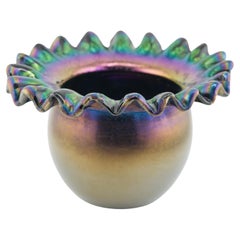
Iridescent Iris Art Nouveau Cachepot by Clement Massier
Located in Palm Beach, FL
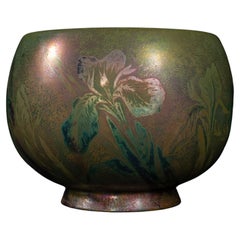
An encounter with Massier’s luster-glazed ceramics is an embarkation on an acid-colored trip, the sort of exploration which inspires deep reflection and requires transparency. Clemen...
Category

Early 1900s French Antique Art Nouveau Vases and Vessels

Materials

Earthenware

Josef Ekberg Ceramic Vase
Located in Hollywood, FL
This is a handmade, 1 off Sgraffito vase made by the Swedish ceramic artist Josef Ekberg in 1901. He was one of Sweden's top ceramic artist at the time. He started working at the Gus...
Category

Early 1900s Swedish Antique Art Nouveau Vases and Vessels

Materials

Ceramic

Art Nouveau Allegory of Germany Portrait Vase by Kannhäuser for RStK Amphora
Located in Palm Beach, FL
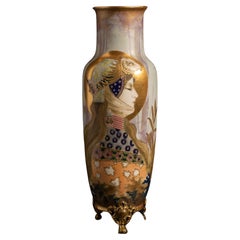
Model #2011 Note: We highly recommend shipping through 1stDibs for its cost effectiveness, full insurance coverage, and reliable handling. While standard parcel services are an opti...
Category

1890s Austrian Antique Art Nouveau Vases and Vessels

Materials

Porcelain

Red And Gold Leaf Painted Art Nouveau Toleware Planter Or Champagne Cooler
Located in Haddonfield, NJ
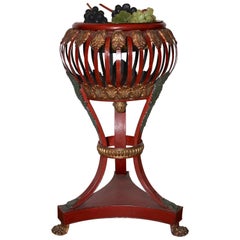
Red and gold leaf painted Art Nouveau toleware jardinière or champagne cooler.   
Category

Early 20th Century French Art Nouveau Vases and Vessels

Materials

Metal

A D Argental Cameo Glass Vase, c1925
Located in Tunbridge Wells, GB
A D'Argental Cameo Glass Vase, c1925 Additional information: Date : Circa 1920 Origin : Saint-Lous-Les-Bitche, Lorraine, France Bowl Features : The shouldered form tapering to the c...
Category

20th Century French Art Nouveau Vases and Vessels

Materials

Glass

Antique Glass Vase Koloman Moser Loetz Purple 1903 Vienna Jugendstil
Located in Klosterneuburg, AT
Vase, Koloman Moser, Johann Loetz Witwe for E. Bakalowits' Söhne, Violetta decoration, 1903 Among the most important glass objects from the Lötz manufactory are undoubtedly those from the series created in cooperation with E. Bakalowits Söhne. As a professor at the School of Arts and Crafts in Vienna, Koloman Moser influenced an entire generation of designers and architects. Under his guidance, he and his students created ultra-modern glassware...
Category

Early 1900s Austrian Antique Art Nouveau Vases and Vessels

Materials

Glass, Blown Glass, Art Glass

Small Art Nouveau Vase, N.S.A. Brantjes Co, Purmerend, Model 1100, Decor A
By Wed. N.S.A. Brantjes Co.
Located in MAASTRICHT, LI
A rare small Art Nouveau vase produced by N.S.A. Brantjes & Co. in Purmerend, the Netherlands, between 1895 and 1904. This model, No. 1100, features the sought-after Decor A, charact...
Category

1890s Dutch Antique Art Nouveau Vases and Vessels

Materials

Earthenware, Faience, Majolica

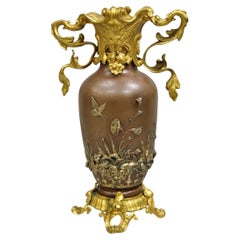
Antique French Art Nouveau Gold Gilt Patinated Bronze Small 9" Flower Vase
Located in Philadelphia, PA
Antique French Art Nouveau Gold Gilt and Patinated Bronze Twin Handle Small 9" Flower Vase. Item features decorated flowers, hummingird, and butterfly scenes, as well as what appears...
Category

Early 20th Century Unknown Art Nouveau Vases and Vessels

Materials

Bronze

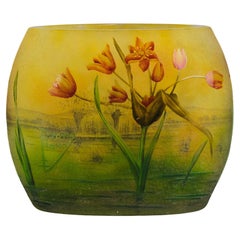
Early 20th Century Art Nouveau Cameo "Poppy Pillow Vase" by Daum Frères
By Daum
Located in London, GB
An attractive early 20th Century cameo pillow glass vase etched and enamelled with flowering poppies in a deep green and yellow landscape. Signed Daum Nancy and with the Cross of Lor...
Category

Early 20th Century French Art Nouveau Vases and Vessels

Materials

Glass

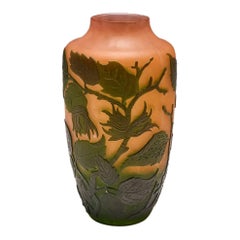
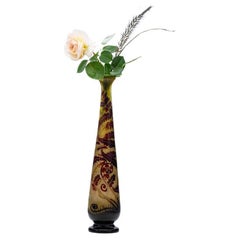
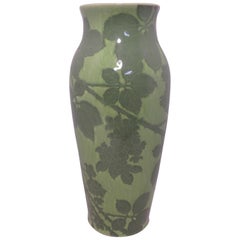
Gallé Signed, Large Acid Etched Overlay Vase, France, 1905
Located in Rijssen, NL
This exquisite multi colored Art Nouveau vase by Émile Gallé in Nancy is statement pieces in the room. Signed E. Gallé. Vase with decoration in frosted glass internally suffused wit...
Category

Early 1900s French Antique Art Nouveau Vases and Vessels

Materials

Glass

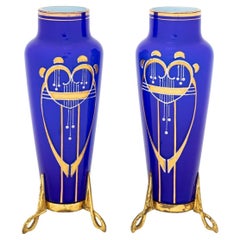
Austrian Secessionist Cobalt Blue Glass Vases, Pr.
Located in Astoria, NY
Pair of Austrian Secessionist Cobalt Blue Glass Vases, with gilt geometric design on gilt metal tripod base. 6.5" H x 2.5" Diameter.  Provenance: From a Greenwich, Connecticut Coll...
Category

Early 20th Century Austrian Art Nouveau Vases and Vessels

Materials

Metal

Martin Mortensen, Danish ceramicist, own workshop. Ceramic Art Nouveau vase
Located in København, Copenhagen
Martin Mortensen (1874-1949), Danish ceramicist, own workshop. Ceramic Art Nouveau vase with handles. Glaze in ochre yellow and green shades. Signed M...
Category

Early 1900s Danish Antique Art Nouveau Vases and Vessels

Materials

Ceramic

Loetz Candia Silberiris Glass Vase with Silver Overlay
Located in Dallas, TX
Loetz Candia Silberiris Glass Vase with Silver Overlay Circa 1900 Height: 5.2 inches (13.0 cm) Diameter: 3 Inches (7.5 cm) Condition: Glass vas...
Category

Early 1900s Czech Antique Art Nouveau Vases and Vessels

Materials

Art Glass

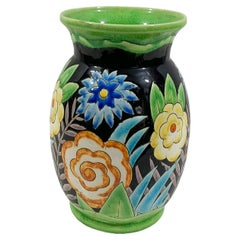
Art Deco Floral Vase by Charles Catteau stamped "KERAMIS MADE IN BELGIUM" 1920s
Located in Beirut, LB
This vintage Art Deco ceramic vase by Keramis, made in Belgium in the 1920s, features striking hand-painted floral motifs with vibrant bl...
Category

1920s Belgian Vintage Art Nouveau Vases and Vessels

Materials

Ceramic

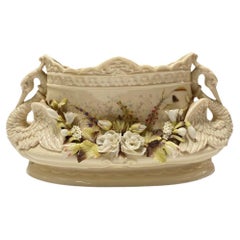
Italian Floral Swan Centerpiece Bowl Cachepot
Located in Van Nuys, CA
Capodimonte porcelain is porcelain created by the Capodimonte porcelain manufactory, which operated in Naples, Italy, between 1743 and 1759. Capodimonte is one of the most revered fa...
Category

Early 1900s Antique Art Nouveau Vases and Vessels

Materials

Porcelain

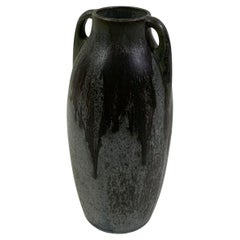
Glazed Ceramic Vase Stamped Denbac, 1940 s
Located in Beirut, LB
This vase is a handcrafted ceramic piece featuring a dark glaze with a slightly textured, organic finish. Its elegant, elongated form is accentuated by two small looped handles near ...
Category

Mid-20th Century French Art Nouveau Vases and Vessels

Materials

Ceramic

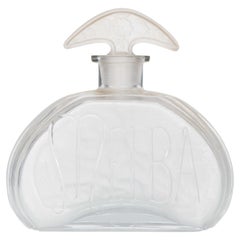
Art Nouveau Melba Glass Perfume Bottle
Located in Queens, NY
Vintage Art Nouveau style clear and frosted glass perfume bottle (LOVE'ME by MELBA) with an embossed design of a nude woman on one side and the name "Melba" on the other, and a frost...
Category

20th Century Unknown Art Nouveau Vases and Vessels

Materials

Glass

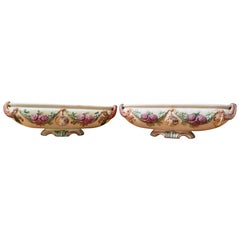
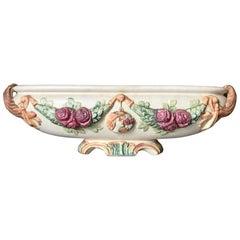
pair of Weller Roma Rose Compotes or Planters
Located in Redding, CT
Pair of Weller Roma Rose Compotes or Planters. Very Rare find, especially a pair. Lovely romantic compotes for fruit or plants embellished with applique roses and a face of a woman,...
Category

1920s American Vintage Art Nouveau Vases and Vessels

Materials

Ceramic, Clay

Murano Venetian Antique White Ribbons Italian Art Glass Fan Shaped Flower Vase
Located in Kissimmee, FL
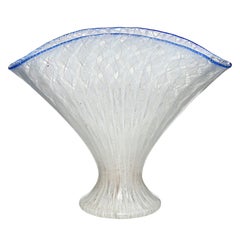
Beautiful antique Murano hand blown white with blue rim Italian art glass fan shaped flower vase. The vase is made with layered white net Zanfirico ribbons. Each ribbon has an intric...
Category

Mid-20th Century Italian Art Nouveau Vases and Vessels

Materials

Art Glass, Blown Glass, Murano Glass, Glass
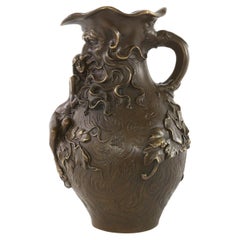
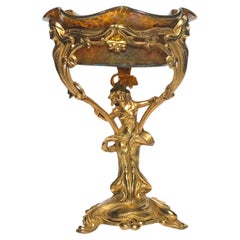
Stunning Art Nouveau Style Bronze Piece / Vase
Located in Tarry Town, NY
A truly stunning gilt bronze Art Nouveau style decorative piece / vase with Exterior hand carved design details. The piece / vase is in great condition . Minor wear consistent with a...
Category

19th Century French Antique Art Nouveau Vases and Vessels

Materials

Bronze

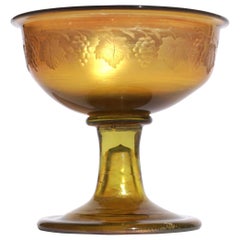
Louis Comfort Tiffany L.C.T. Favrile Decorated Cup
Located in Dallas, TX
A wonderful L.C.T. gold Favrile champagne or sorbet glass cup with engraved grape clusters and wine leaves. Engraved signature: “L.C.T. Favrile” Measures: Height 3.4 Inches, diamet...
Category

Early 1900s American Antique Art Nouveau Vases and Vessels

Materials

Art Glass

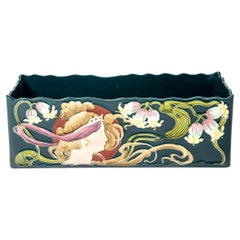
Glazed Ceramic Jardiniére, Art Nouveau Period, Austria, Late 19th Century
Located in Buenos Aires, Buenos Aires
Glazed ceramic jardiniére. Art Nouveau period. Austria, late 19th century.
Category

Late 19th Century Austrian Antique Art Nouveau Vases and Vessels

Materials

Ceramic

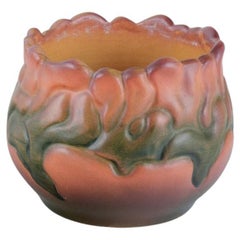
Ipsen s, Denmark. Ceramic Art Nouveau jar. 1920s/1930s.
Located in København, Copenhagen
Ipsen's, Denmark. Ceramic Art Nouveau jar. Model 662. 1920s/1930s. Marked. In excellent condition. Dimensions: Diameter 13.0 cm x Height 10.0 cm.
Category

1920s Danish Vintage Art Nouveau Vases and Vessels

Materials

Ceramic

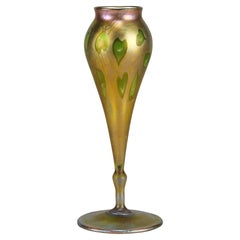
Early 20th Century Art Nouveau Glass "Hearts and Vines Vase" by Louis Tiffany
Located in London, GB
An impressive early 20th Century American iridescent glass vase of slender form with green hearts shining through an attractive golden iridescence, signed L C Tiffany Favrile and numbered to base. ADDITIONAL INFORMATION Height: 23 cm Condition: Very Good Condition Circa: 1905 Materials: Iridescent Coloured Glass SKU: 6667 ABOUT Louis Comfort Tiffany Louis Comfort Tiffany (February 18, 1848 – January 17, 1933) was an American artist and designer who worked in the decorative arts and is best known for his work in stained glass. He is the American artist most associated with the Art Nouveau and Aesthetic movements. Tiffany was affiliated with a prestigious collaborative of designers known as the Associated Artists, which included Lockwood de Forest, Candace Wheeler, and Samuel Colman. Tiffany designed stained glass windows and lamps, glass mosaics, blown glass, ceramics, jewellery, enamels and metalwork. Early Life He was born in New York City, New York, the son of Charles Lewis Tiffany, founder of Tiffany and Company; and Harriet Olivia Avery Young. He attended school at Pennsylvania Military Academy in West Chester, Pennsylvania, and Eagleswood Military Academy in Perth Amboy, New Jersey. His first artistic training was as a painter, studying under George Inness in Eagleswood, New Jersey and Samuel Colman in Irvington, New York. He also studied at the National Academy of Design in New York City in 1866-67 and with salon painter Leon-Adolphe-Auguste Belly in 1868-69. Belly’s landscape paintings had a great influence on Tiffany. Career Louis started out as a painter, but became interested in glassmaking from about 1875 and worked at several glasshouses in Brooklyn between then and 1878. In 1879, he joined with Candace Wheeler, Samuel Colman and Lockwood de Forest to form Louis Comfort Tiffany and Associated American Artists. The business was short-lived, lasting only four years. The group made designs for wallpaper, furniture, and textiles. He later opened his own glass factory in Corona, New York, determined to provide designs that improved the quality of contemporary glass. Tiffany’s leadership and talent, as well as his father’s money and connections, led this business to thrive. In 1881 Tiffany did the interior design of the Mark Twain House in Hartford, Connecticut, which still remains, but the new firm’s most notable work came in 1882 when President Chester Alan Arthur refused to move into the White House until it had been redecorated. He commissioned Tiffany, who had begun to make a name for himself in New York society for the firm’s interior design work, to redo the state rooms, which Arthur found charmless. He worked on the East Room, the Blue Room, the Red Room, the State Dining Room and the Entrance Hall, refurnishing, repainting in decorative patterns, installing newly designed mantelpieces, changing to wallpaper with dense patterns and, of course, adding Tiffany glass to gaslight fixtures, windows and adding an opalescent floor-to-ceiling glass screen in the Entrance Hall. The Tiffany screen and other Victorian additions were all removed in the Roosevelt renovations of 1902, which restored the White House interiors to Federal style in keeping with its architecture. A desire to concentrate on art in glass led to the breakup of the firm in 1885 when Tiffany chose to establish his own glassmaking firm that same year. The first Tiffany Glass Company was incorporated December 1, 1885 and in 1902 became known as the Tiffany Studios. In the beginning of his career, he used cheap jelly jars and bottles because they had the mineral impurities that finer glass lacked. When he was unable to convince fine glassmakers to leave the impurities in, he began making his own glass. Tiffany used opalescent glass in a variety of colors and textures to create a unique style of stained glass. He developed the “copper foil” technique, which, by edging each piece of cut glass in copper foil and soldering the whole together to create his windows and lamps, made possible a level of detail previously unknown. This can be contrasted with the method of painting in enamels or glass paint on colorless glass, and then setting the glass pieces in lead channels, that had been the dominant method of creating stained glass for hundreds of years in Europe. (The First Presbyterian Church building of 1905 in Pittsburgh, Pennsylvania is unique in that it uses Tiffany windows that partially make use of painted glass.) Use of the colored glass itself to create stained glass pictures was motivated by the ideals of the Arts and Crafts movement and its leader William Morris in England. Fellow artists and glassmakers Oliver Kimberly and Frank Duffner, founders of the Duffner and Kimberly Company and John La Farge were Tiffany’s chief competitors in this new American style of stained glass. Tiffany, Duffner and Kimberly, along with La Farge, had learned their craft at the same glasshouses in Brooklyn in the late 1870s. In 1889 at the Paris Exposition, he is said to have been “Overwhelmed” by the glass work of Émile Gallé, French Art Nouveau artisan. He also met artist Alphonse Mucha. In 1893, Tiffany built a new factory called the Stourbridge Glass Company, later called Tiffany Glass Furnaces, which was located in Corona, Queens, New York, hiring the Englishman Arthur J. Nash to oversee it. In 1893, his company also introduced the term Favrilein conjunction with his first production of blown glass at his new glass factory. Some early examples of his lamps were exhibited in the 1893 World’s Fair in Chicago. At the Exposition Universelle (1900) in Paris, he won a gold medal with his stained glass windows The Four Seasons He trademarked Favrile (from the old French word for handmade) on November 13, 1894. He later used this word to apply to all of his glass, enamel and pottery. His first commercially produced lamps date from around 1895. Much of his company’s production was in making stained glass windows and Tiffany lamps, but his company designed a complete range of interior decorations. At its peak, his factory employed more than 300 artisans. Recent scholarship led by Rutgers professor Martin Eidelberg suggests that a team of talented single women designers – sometimes referred to as the “Tiffany Girls” – led by Clara Driscoll played a big role in designing many of the floral patterns on the famous Tiffany...
Category

Early 20th Century American Art Nouveau Vases and Vessels

Materials

Glass

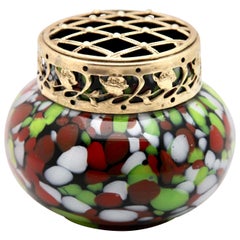
Pique Fleurs Vase in Red, White, Green Splatter Colors, with Grille
Located in Verviers, BE
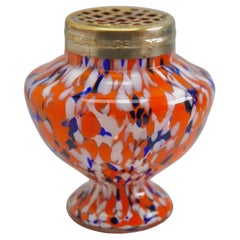
Startling spatter vase with Italian tricolor colors (green, white, red) on a dark background, in hand blown splatter glass vase in the Art Deco style. Thi...
Category

Early 20th Century Czech Art Nouveau Vases and Vessels

Materials

Art Glass, Blown Glass

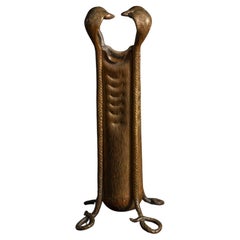
Art Nouveau Bronze Vase with Cobras by Fabulous Unknown Austrian Artist
Located in Palm Beach, FL
Footed cobra vase by unknown Austrian artist. Note: We highly recommend shipping through 1stDibs for its cost effectiveness, full insurance coverage, and r...
Category

Early 1900s Austrian Antique Art Nouveau Vases and Vessels

Materials

Bronze

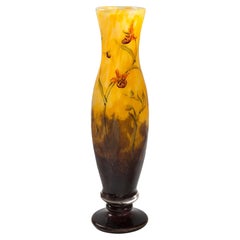
Daum Nancy Enameled and Etched Orchid Landscape Glass Vase
By Daum
Located in New York, NY
This French Art Nouveau enameled and etched glass vase by Daum Nancy is a bright scene is dominated by two planes of mottled glass, golden yellow on top of deep purple, which togethe...
Category

Early 20th Century French Art Nouveau Vases and Vessels

Materials

Glass

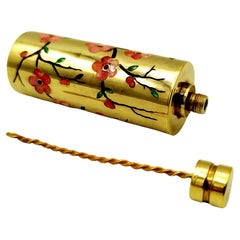
Perfume holder manual engraving peach blossom shoots Sterling Silver Salimbeni
Located in Firenze, FI
Cylindrical handbag perfume holder in 925/1000 sterling Silver gold plated with screwed cap and fine manual engraving of peach blossom shoots, fire enamelled with various colours, in...
Category

1970s Italian Vintage Art Nouveau Vases and Vessels

Materials

Gold Plate, Sterling Silver, Enamel

Josef Ekberg Ceramic Vase
Located in Hollywood, FL
This is a handmade, 1 off Sgraffito vase made by the Swedish ceramic artist Josef Ekberg in 1907. He was one of Sweden’s top ceramic artist at the time. He started working at the Gus...
Category

Early 1900s Swedish Antique Art Nouveau Vases and Vessels

Materials

Ceramic

Loetz Oil Spot Glass And Gilt Metal Art Nouveau Compote Vase
Located in Dallas, TX
Loetz Oil Spot Glass And Gilt Metal Art Nouveau Compote Vase Czech Republic Circa. 1900 Art Nouveau Height: 11.75 Inches X Diametter 8.28 inches. Cond...
Category

Early 1900s Czech Antique Art Nouveau Vases and Vessels

Materials

Metal

Weller Pottery Roma Rose Planter or Compote
Located in Redding, CT
In 1872, Samuel A. Weller founded Weller Pottery in Fultonham, Ohio, United States. Originally, his business consisted of a small cabin and one beehive kiln, and Weller produced flow...
Category

1920s American Vintage Art Nouveau Vases and Vessels

Materials

Ceramic, Clay

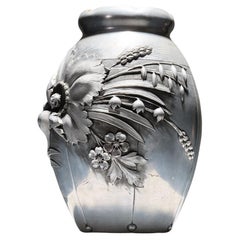
Floral Motif Vase, Art Nouveau, 1920s
Located in PARIS, FR
Vase Art Nouveau en étain signé Luciani, orné de motifs floraux en relief inspirés des épis de blé et des fleurs de campagne. Bel état général, témoignant de la qualité de sa fabrica...
Category

Early 20th Century Unknown Art Nouveau Vases and Vessels

Materials

Metal

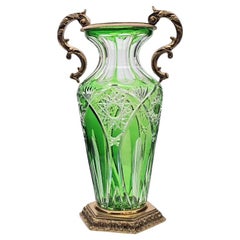
Martin Benito Crystal Centerpiece, Green and Bronze, Paris France
By OTHR
Located in Rijssen, NL
Luxury at its finest, a rarely seen Martin Benito fine and heavy green cut to clear centre piece bowl, mouth-blown, hand-cut crystal and gilt bronze doré mount of swans and Baroque s...
Category

1950s French Vintage Art Nouveau Vases and Vessels

Materials

Crystal, Bronze

Art Nouveau Vase w/Stylized Trees by Paul Dachsel for Ernst Whaliss Turn-Teplitz
Located in Palm Beach, FL
Paul Dachsel was the son-in-law of Alfred Stellmacher, the founder of Amphora Pottery company in Turn-Teplitz, then in Austria. Very little is known or was written about Dachsel. He ...
Category

1910s Austrian Vintage Art Nouveau Vases and Vessels

Materials

Earthenware

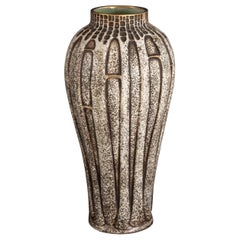
Art Nouveau Shell Pattern Stoneware Vase by Auguste Delaherche
Located in Palm Beach, FL
This early vase provides a rare glimpse into the making of a master. Auguste Delaherche turned the science of experimentation in ceramic ware into an art form. Coming from a long tra...
Category

1880s French Antique Art Nouveau Vases and Vessels

Materials

Stoneware

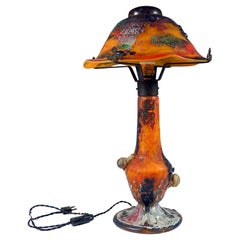
Art Nouveau Table Lamp Vignes Et Escargots , Daum Nancy, France, Circa 1905
By Daum
Located in Vienna, AT
A museum piece of French Art Nouveau glass art: Lamp with baluster-shaped foot on a stepped, flat, round stand raised in the centre, hemispherical shade, slightly heat-stretched and pressed upwards on four sides, made of multi-layered glass with coloured powder fusions, predominantly in yellow-orange, red, brown, green and blue-violet tones, with highly etched vine leaves and grapevine decoration, two fully sculpted snails on the foot as a special accent, Cameo signature ‘DAUM NANCY’ with Lorraine cross on the foot in the lower area, and on the shade, which rests on a patinated metal mount, which also carries the threads for the light sources, one at the top and one inside the foot. Technique: Handmade cameo glass Glass overlaid with several layers, with high-cut worked out motifs. Since the middle of the 19th century, the design has also been done by etching. Cameo glass vessels were already being made in antiquity; cameo glass vessels were already being made in ancient times, and at the end of the 19th century this glass art was further developed, especially in Nancy. Manufactory: Daum Frères / Nancy, Lorraine, France Dating: Circa 1905 Dimensions: Height: 53,5 cm / 21.06 in Diameter: 32,0 cm / 12.59 in Bibliography: Carolus Hartmann, Glasmarken-Lexikon / Encyclopedia of Glass Marks, Stuttgart / Germany 1997, Signature number 2984 on page 148, and page 561: Daum Frères Cie, Verreries de Nancy Condition: Very good The electrification is functional, but should be renewed for safety reasons. About the design: The development of Art Nouveau glass art coincides with a revolution in lighting, the significance of which we can no longer fully appreciate today in the 21st century. Around 1880-1890, oil lamps and paraffin lamps were still almost unrivalled in every household. It was not until the beginning of the 20th century that the ‘electricity fairy’ emerged as a remarkable advance and gradually found its way into the daily lives of all social classes. The glassmakers at the Ecole de Nancy were true pioneers and eagerly seized the opportunity to use electricity to illuminate the colours applied to the glass. Colour was one of the main concerns of the master glassmakers at the Ecole de Nancy. Emile and Antonin Daum returned to the colours that had made the stained glass of the Middle Ages so splendid and extended the palette of colours in the glass mass as they needed it for the floral motifs and exact representations of nature. But the modulation of the colours, their arrangement in juxtaposed patches, the technique that the Impressionist painters practised on their canvases at the same time, was difficult to achieve due to the nature of the glass melted in a large mass. To achieve this richness of expression, around 1900 Daum developed ‘the process of applying glass powder and enamel to the outside of the vases to create coloured backgrounds or decorative spots’, according to the report of the jury of the 1900 World Exhibition. The field of naturalistic, contrasting and shimmering colours was one in which Antonin Daum excelled. This new technical process made it possible to create the symphonies of colour that we find on the ‘Vignes et escargots’ lamp...
Category

Early 1900s French Antique Art Nouveau Vases and Vessels

Materials

Glass

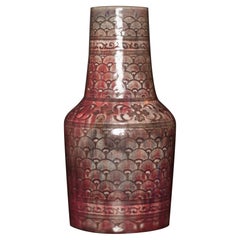
Large French Ceramic Vase with Iridescent Glaze by Clement Massier
Located in Atlanta, GA
A large ceramic stoneware vase with striking iridescent glaze by the legendary French ceramist Pierre Clement Massier (1845-1917). Massier is widely considered as the founder the mod...
Category

Early 1900s French Antique Art Nouveau Vases and Vessels

Materials

Ceramic

Pique Fleurs Vase, in Multi Color Decor with Grille, Late 1930s
Located in Verviers, BE
Dramatic multi color decor, cobalt and orange, in hand blown splatter glass vase in the Art Deco style. This design for vases is often called 'Piqu...
Category

Early 20th Century Belgian Art Nouveau Vases and Vessels

Materials

Art Glass, Blown Glass

Emilio Robba for Daum, Bamboo Vase, France 2000s
Located in PARIS, FR
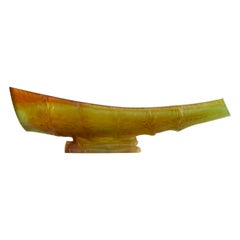
Beautiful bamboo vase by Emilio Robba for the Daum Maison, France 2000s. Signed by the artist and manufacture. In very good condition, in its original box, the box has some wear. Dimensions in cm ( H x L x l ) : 6.8 x 21 x 6 Secure shipping The collaboration between Emilio Robba and the prestigious glassworks Daum is an exquisite fusion of two distinct artistic worlds, uniting the delicacy of nature captured by Robba and Daum's legendary expertise in crafting exceptional glass pieces. Emilio Robba, renowned for his talent in capturing natural beauty through his floral creations, brings his refined aesthetic and artistic sensitivity to this unique collaboration. His ability to transform nature into timeless works of art finds new expression in the medium of glass. On the other hand, the glassworks Daum, with decades of experience and unmatched craftsmanship, breathes life into Emilio Robba's floral visions with unparalleled precision and mastery. Each piece created in collaboration reveals a perfect harmony between the delicacy of botanical forms and the crystalline transparency of glass. Together, Emilio Robba and Daum transcend the boundaries of traditional floral art...
Category

21st Century and Contemporary French Art Nouveau Vases and Vessels

Materials

Glass

Art Nouveau vases and vessels for sale on 1stDibs.

Find a broad range of unique Art Nouveau vases and vessels for sale on 1stDibs. Many of these items were first offered in the 21st Century and Contemporary, but contemporary artisans have continued to produce works inspired by this style. If you’re looking to add vintage vases and vessels created in this style to your space, the works available on 1stDibs include decorative objects, serveware, ceramics, silver and glass, building and garden elements and other home furnishings, frequently crafted with glass, ceramic and other materials. If you’re shopping for used Art Nouveau vases and vessels made in a specific country, there are Europe, France, and Austria pieces for sale on 1stDibs. While there are many designers and brands associated with original vases and vessels, popular names associated with this style include Loetz Glass, Emile Gallé, Daum, and Le Verre Français. It’s true that these talented designers have at times inspired knockoffs, but our experienced specialists have partnered with only top vetted sellers to offer authentic pieces that come with a buyer protection guarantee. Prices for vases and vessels differ depending upon multiple factors, including designer, materials, construction methods, condition and provenance. On 1stDibs, the price for these items starts at $55 and tops out at $800,000 while the average work can sell for $2,107.

Still Thinking About These?

All Recently Viewed