Art Nouveau Vases and Vessels

ART NOUVEAU STYLE

In its sinuous lines and flamboyant curves inspired by the natural world, antique Art Nouveau furniture reflects a desire for freedom from the stuffy social and artistic strictures of the Victorian era. The Art Nouveau movement developed in the decorative arts in France and Britain in the early 1880s and quickly became a dominant aesthetic style in Western Europe and the United States.

ORIGINS OF ART NOUVEAU FURNITURE DESIGN

CHARACTERISTICS OF ART NOUVEAU FURNITURE DESIGN

  • Sinuous, organic and flowing lines
  • Forms that mimic flowers and plant life
  • Decorative inlays and ornate carvings of natural-world motifs such as insects and animals 
  • Use of hardwoods such as oak, mahogany and rosewood

ART NOUVEAU FURNITURE DESIGNERS TO KNOW

ANTIQUE ART NOUVEAU FURNITURE ON 1STDIBS

Art Nouveau — which spanned furniture, architecture, jewelry and graphic design — can be easily identified by its lush, flowing forms suggested by flowers and plants, as well as the lissome tendrils of sea life. Although Art Deco and Art Nouveau were both in the forefront of turn-of-the-20th-century design, they are very different styles — Art Deco is marked by bold, geometric shapes while Art Nouveau incorporates dreamlike, floral motifs. The latter’s signature motif is the "whiplash" curve — a deep, narrow, dynamic parabola that appears as an element in everything from chair arms to cabinetry and mirror frames.

The visual vocabulary of Art Nouveau was particularly influenced by the soft colors and abstract images of nature seen in Japanese art prints, which arrived in large numbers in the West after open trade was forced upon Japan in the 1860s. Impressionist artists were moved by the artistic tradition of Japanese woodblock printmaking, and Japonisme — a term used to describe the appetite for Japanese art and culture in Europe at the time — greatly informed Art Nouveau. 

The Art Nouveau style quickly reached a wide audience in Europe via advertising posters, book covers, illustrations and other work by such artists as Aubrey Beardsley, Henri de Toulouse-Lautrec and Alphonse Mucha. While all Art Nouveau designs share common formal elements, different countries and regions produced their own variants.

In Scotland, the architect Charles Rennie Mackintosh developed a singular, restrained look based on scale rather than ornament; a style best known from his narrow chairs with exceedingly tall backs, designed for Glasgow tea rooms. Meanwhile in France, Hector Guimard — whose iconic 1896 entry arches for the Paris Metro are still in use — and Louis Majorelle produced chairs, desks, bed frames and cabinets with sweeping lines and rich veneers. 

The Art Nouveau movement was known as Jugendstil ("Youth Style") in Germany, and in Austria the designers of the Vienna Secession group — notably Koloman Moser, Josef Hoffmann and Joseph Maria Olbrich — produced a relatively austere iteration of the Art Nouveau style, which mixed curving and geometric elements.

Art Nouveau revitalized all of the applied arts. Ceramists such as Ernest Chaplet and Edmond Lachenal created new forms covered in novel and rediscovered glazes that produced thick, foam-like finishes. Bold vases, bowls and lighting designs in acid-etched and marquetry cameo glass by Émile Gallé and the Daum Freres appeared in France, while in New York the glass workshop-cum-laboratory of Louis Comfort Tiffany — the core of what eventually became a multimedia decorative-arts manufactory called Tiffany Studios — brought out buoyant pieces in opalescent favrile glass. 

Jewelry design was revolutionized, as settings, for the first time, were emphasized as much as, or more than, gemstones. A favorite Art Nouveau jewelry motif was insects (think of Tiffany, in his famed Dragonflies glass lampshade).

Like a mayfly, Art Nouveau was short-lived. The sensuous, languorous style fell out of favor early in the 20th century, deemed perhaps too light and insubstantial for European tastes in the aftermath of World War I. But as the designs on 1stDibs demonstrate, Art Nouveau retains its power to fascinate and seduce.

There are ways to tastefully integrate a touch of Art Nouveau into even the most modern interior — browse an extraordinary collection of original antique Art Nouveau furniture on 1stDibs, which includes decorative objects, seating, tables, garden elements and more.

to
207
1,930
16
10
1
332
1,597
26
1,316
114
53
513
183
142
45
9
12
2
28
7
3
10,752
5,677
3,307
3,052
652
645
434
414
196
193
173
149
132
118
117
106
61
942
750
451
435
166
1,004
679
1,746
839
245
150
147
Height
to
Width
to
1,956
1,954
1,954
126
93
77
49
41
Style: Art Nouveau
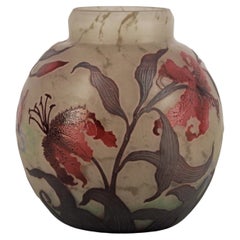
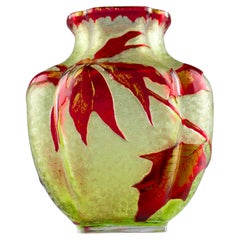
Müller Freres Glass Vase
Located in Buenos Aires, Argentina
Müller Freres glass vase with a flower motif. Art nouveau cameo technique. The vase is in excellent condition with no restorations. circa 191...
Category

1910s French Vintage Art Nouveau Vases and Vessels

Materials

Art Glass

Müller Freres Glass Vase
$3,040 Sale Price
20% Off
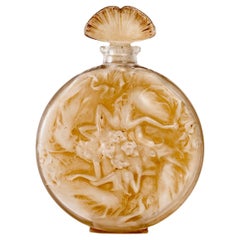
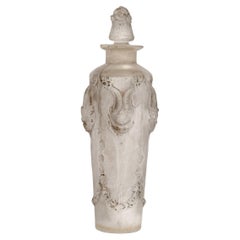
1912 René Lalique Perfume Bottle Rosace Figurines Frosted Glass Sepia Patina
Located in Boulogne Billancourt, FR
Perfume bottle “Rosace Figurines” made in frosted glass with sepia patina by René Lalique. Molded signature. Perfect condition. Rare model and exceptional patina. Félix Marci...
Category

1910s French Vintage Art Nouveau Vases and Vessels

Materials

Blown Glass

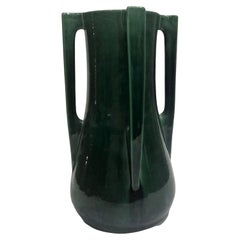
Japanese Art Nouveau, Awaji Ware Art Studio Pottery Flower Vase, Ca. 1900
Located in New York, NY
DIMENSIONS: Height: 12.5 inches Width: 6.75 inches Depth: 6.75 inches ABOUT AWAJI POTTERY Awaji pottery was made on the Japanese island of the same name between 1830 and 19...
Category

Early 1900s Japanese Antique Art Nouveau Vases and Vessels

Materials

Ceramic

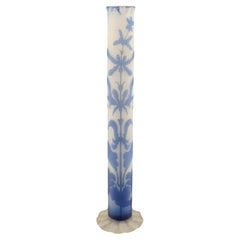
Emile Galle Early Cameo Glass Vase
Located in Sarasota, FL
Early cameo glass vase by Emile Galle.. Beautiful work, unsual execution of the 1890-1900. Signed in cameo.
Category

Late 19th Century French Antique Art Nouveau Vases and Vessels

Materials

Glass

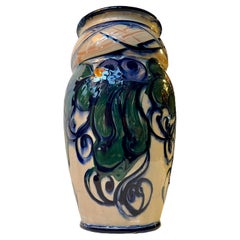
Large Hand-Glazed Danish Art Nouveau Vase by Danico, 1920s
Located in Esbjerg, DK
A danish 'Jugend' - art nouveau vase. . The floral decorations on this vase was achieved by using slip trailed glaze through a cow horn and feather quill . Danico in Horsens, Denmark...
Category

Early 20th Century Danish Art Nouveau Vases and Vessels

Materials

Ceramic

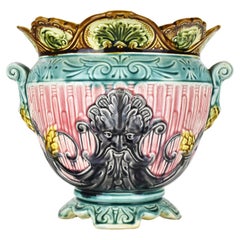
Exceptional French Art Nouveau Barbotine Majolica Planter Jardiniere Green Man
Located in Bad Säckingen, DE
This cachepot is crafted from high-quality ceramic, typically Majolica or Barbotine, known for its vibrant, glossy glaze. The glaze gives the piece a lustrous sheen and adds depth an...
Category

Early 1900s French Antique Art Nouveau Vases and Vessels

Materials

Ceramic, Majolica

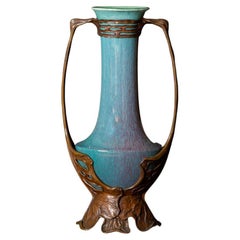
Jugendstil Porcelain Waterlily Vase in Bronze Mount by Otto Eckmann
Located in Palm Beach, FL
While there may have been no love lost for his early paintings, Eckmann had an endless fascination for the decorative potential of undulating water. The open spaces created by the me...
Category

Early 1900s German Antique Art Nouveau Vases and Vessels

Materials

Bronze

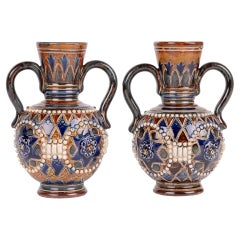
Doulton Lambeth Pair Art Nouveau Vases by Ethel Beard Florrie Jones
Located in Bishop s Stortford, Hertfordshire
A delightful and stylish pair Art Nouveau Doulton Lambeth twin handled vases with stylized floral designs by artists Ethel Beard and Florrie Jones and dating from around 1905. The st...
Category

Early 1900s English Antique Art Nouveau Vases and Vessels

Materials

Stoneware

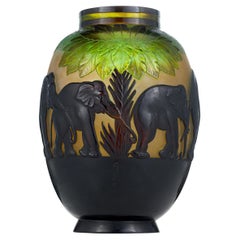
Gallé Cameo Elephant Vase
Located in New Orleans, LA
Cameo Glass Elephant Vase Émile Gallé Circa 1925 This monumental Art Nouveau vase is one of the finest achievements of Émile Gallé’s iconic glassmaking firm. Showcasing Gallé’s mast...
Category

20th Century French Art Nouveau Vases and Vessels

Materials

Glass

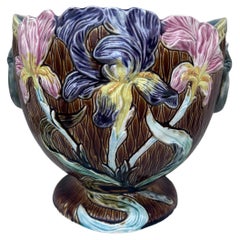
19th Century French Majolica Purple Pink Iris Cache Pot
Located in Austin, TX
19th French Majolica purple and pink iris cache pot. H / 8.5 inches D / 10 to 8.8 inches.
Category

1890s French Antique Art Nouveau Vases and Vessels

Materials

Ceramic

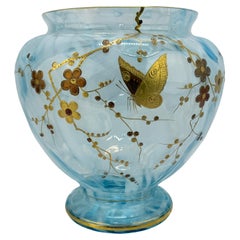
Harrach Bohemian Art Glass Vase, Gilt Butterfly Floral Enamel C. 1900
Located in Atlanta, GA
This exquisite art glass vase was produced by the renowned Harrach Glassworks, one of the oldest and most esteemed glass manufacturers in Bohemia, known for their exceptional craftsm...
Category

20th Century Czech Art Nouveau Vases and Vessels

Materials

Enamel

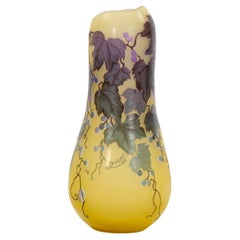
Galle Cameo Glass Art Nouveau Vase
Located in Tarry Town, NY
A lovely gourd shaped cameo glass vase in the Art Nouveau style featuring violet colored flowering berry vines on a yellow ground. 13 1/2 by 5 1/2 inches and in very good condition....
Category

20th Century Art Nouveau Vases and Vessels

Materials

Art Glass

Legras and Gallé Signed, Set of Large Acid Etched Enameled Glass Vases, 1920
Located in Rijssen, NL
This exquisite Art Nouveau set of 3 soliflore vases by LeGras and Galle are statement pieces in the room. Signed "Legrass" and "E Gallé" An acid etched 'cut back' technique has been...
Category

1920s French Vintage Art Nouveau Vases and Vessels

Materials

Glass

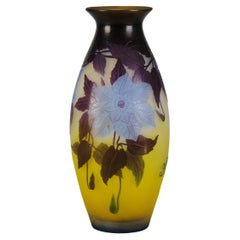
Early 20th Century Glass Vase Entitled "Blue Flower Vase" by Emile Gallé
Located in London, GB
"Blue flower vase" by Emile Gallé A beautiful early 20th Century cameo glass vase acid cut and etched with a blue and purple floral decoration against a yellow field. Exhibiting ve...
Category

Early 20th Century French Art Nouveau Vases and Vessels

Materials

Glass

Rare Antique Impressionistic Hand-painted Vase Finished with Moriage Decoration
Located in Louisville, KY
Rare Antique Impressionistic Hand-painted Vase finished with Moriage Decoration A rare beauty indeed, this piece of pottery is simple in design, yet adorned with a colorful impressi...
Category

Early 20th Century Unknown Art Nouveau Vases and Vessels

Materials

Pottery

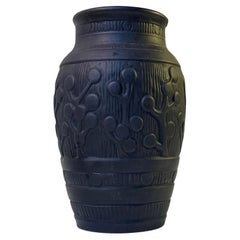
L. Hjorth Black Jugend Terracotta Vase in the style of Thorvald Bindesbøll, 1890
Located in Esbjerg, DK
Number 747 relief vase in matte black glazed terracotta. Made during the 1890s on the Island of Bornholm by L. Hjorth possibly after a pattern by Thorvald Bindesbøll. Measurements: ...
Category

1890s Danish Antique Art Nouveau Vases and Vessels

Materials

Terracotta

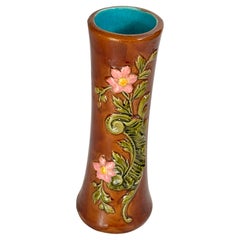
19th Century Majolica Vase with Floral and Foliage Motifs
Located in Auribeau sur Siagne, FR
19th Century Majolica Vase with Floral and Foliage Motifs Description: This is a majolica vase dating from the 19th century, made in glazed ceramic with a rich and earthy brown tone...
Category

19th Century French Antique Art Nouveau Vases and Vessels

Materials

Majolica

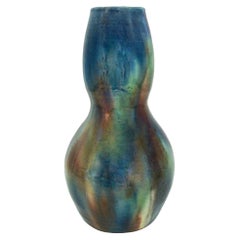
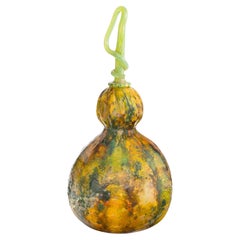
Art Nouveau Double Gourd Ceramic Vase - Iridescent Glaze - Belgium - 20th C.
Located in Chatham, ON
Art Nouveau double gourd studio pottery vase - featuring multi-color splashed glazes with an iridescent finish - all on a cream ceramic ground - wheel thrown - unsigned - inscribed C...
Category

Early 20th Century Belgian Art Nouveau Vases and Vessels

Materials

Ceramic

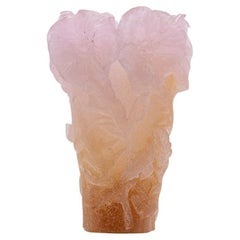
Daum Art Glass Vase Roses Pink Orange, France
By Daum
Located in Rijssen, NL
Luxury at its finest, high-end glass vase with roses in pink with green leafs by Daum, France. The vase - made out of art glass - is formed by flowers connected to each other in bea...
Category

1970s French Vintage Art Nouveau Vases and Vessels

Materials

Art Glass

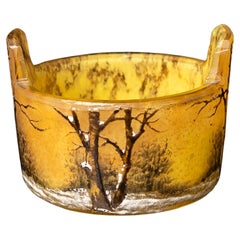
Miniature Acid-Etched Glass Vase with Winter Landscape by Daum Nancy, 20th Centu
By Daum
Located in BARCELONA, ES
Exquisite miniature vase in acid-etched and enameled glass, signed Daum Nancy with the cross of Lorraine. Produced in France during the early 20th century, this finely crafted piece ...
Category

Early 20th Century French Art Nouveau Vases and Vessels

Materials

Glass

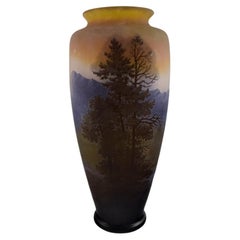
Émile Gallé (1846-1904), France. Very large and rare "Vosges" vase.
Located in København, Copenhagen
Émile Gallé (1846-1904), France. Huge and rare "Vosges" vase in mouth-blown cameo art glass. Mountain landscape with trees in relief. Approx. 1900. Measures: 44.5 x 21 cm. In exce...
Category

Early 20th Century French Art Nouveau Vases and Vessels

Materials

Art Glass

Daum Nancy ‘Coloquinte’ Flacon
By Daum
Located in New York, NY
This exquisite Daum Nancy ‘Coloquinte’ Flacon (perfume bottle) combines a dazzling array of techniques. The body of the vase uses the intercalaire technique, whereby green, yellow oc...
Category

Early 20th Century French Art Nouveau Vases and Vessels

Materials

Glass

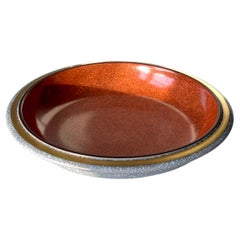
Orange Gold Royal Copenhagen Crackle Glaze Vide-Poche, 1950s
Located in Copenhagen, DK
Vintage porcelain vide-poche bowl by Thorkild Olsen for Royal Copenhagen. Warm ginger orange and light grey colored crackle glaze and simple decorative black and gilded bands around ...
Category

Mid-20th Century Danish Art Nouveau Vases and Vessels

Materials

Ceramic, Porcelain

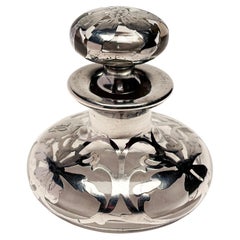
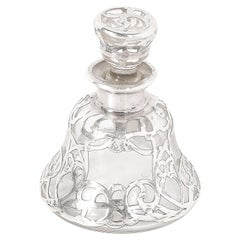
Art Nouveau Perfume Bottle with Ornate Flora and Monogrammed Sterling Overlay
Located in Louisville, KY
This beautiful piece of functional art is a gorgeous reflection of the Art Nouveau era from which it came. Used primarily as a perfume bottle, this stunning work of art was created b...
Category

Late 19th Century American Antique Art Nouveau Vases and Vessels

Materials

Sterling Silver

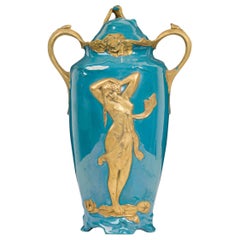
Kronach Art Nouveau Blue and Gold Urn
Located in Queens, NY
Art Nouveau (Bavarian) turqoise and gold urn / vase with cover having 2 handles featuring a female on one side and two dragonflies on the other (impressed on bottom: KRONACH, signed:...
Category

Late 19th Century Unknown Antique Art Nouveau Vases and Vessels

Materials

Gold

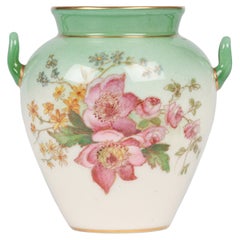
Royal Worcester Floral Painted Urn Shaped Porcelain Twin Handled Vase
Located in Bishop s Stortford, Hertfordshire
A delightful Art Nouveau Royal Worcester urn shaped twin handled porcelain vase hand painted with floral designs dated 1905. The lightly potted vase stands on a narrow round foot rim...
Category

Early 1900s English Antique Art Nouveau Vases and Vessels

Materials

Porcelain

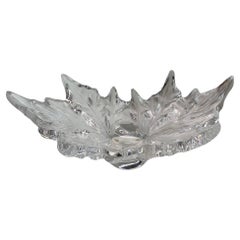
Lalique Crystal Champs-Elysees Bowl Vase
Located in Guaynabo, PR
This is a Lalique Crystal Champs- Elysses medium size oval bowl vase. It depicts multiple horse chestnut leaves arranged around a circular center base. Below the base, it is the acid...
Category

20th Century French Art Nouveau Vases and Vessels

Materials

Crystal

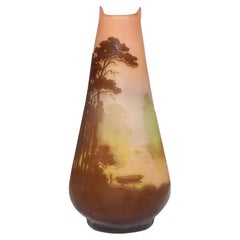
Large Emile Galle Scenic Cameo Vase
Located in Dallas, TX
Emile Galle scenic wheel carved and acid etched cameo vase. A beautiful and tall cameo vase by Galle. The 18 - 1/2” tall vase has a background of muted yellow glass near the base, which progresses to blue/gray at mid-vase, and then peach towards the top. Brown, cameo cut trees are generously displayed across the body of the vase, with the addition of a boat in the lake. Signed "Galle". Dimensions: 18 - 1/2” x 10” x 8”. Condition: Very good Émile Gallé (8 May 1846 in Nancy – 23 September 1904 in Nancy) was a French artist and designer who worked in glass, and is considered to be one of the major innovators in the French Art Nouveau movement. He was noted for his designs of Art Nouveau glass art and Art Nouveau furniture, and was a founder of the École de Nancy or Nancy School, a movement of design in the city of Nancy, France. Gallé born on 4 March 1846 in the city of Nancy, France. His father, Charles Gallé, was a merchant of glassware and ceramics who had settled in Nancy in 1844, and his father-in-law owned a factory in Nancy which manufactured mirrors. His father took over the direction of his mother's family business, and began to manufacture glassware with a floral design. He also took over a struggling faience factory and began manufacturing new products. The young Gallé studied philosophy and natural science at the Lycée Imperial in Nancy. At the age of sixteen he went to work for the family business as an assistant to his father, making floral designs and emblems for both faience and glass. In his spare time he became an accomplished botanist, studying with D.A. Godron, the director of the Botanical Gardens of Nancy and author of the leading textbooks on French flora. He collected plants from the region and from as far away as Italy and Switzerland. He also took courses in painting and drawing, and made numerous drawings of plants, flowers, animals and insects, which became subjects of decoration. At the age of sixteen he finished the Lycée in Nancy and went to Weimar in Germany from 1862–1866 to continue his studies in philosophy, botany, sculpture and drawing. In 1866, to prepare himself to inherit the family business, he went to work as an apprentice at the glass factory of Burgun and Schwerer in Meisenthal, and made a serious study of the chemistry of glass production. Some of his early glass and faience works for the family factory at Saint-Clémont were displayed at the 1867 Paris Universal Exposition. In early 1870 he designed a complete set of dishware with a rustic animal designs for the family enterprise. During this time he became acquainted with the painter, sculptor and engraver Victor Prouvé, an artist of the romantic "troubadour" style, who became his future collaborator in the Nancy School. He enlisted for military service in the Franco-Prussian War in 1870, then was demobilised after the disastrous French defeat in 1871 and the French loss to Germany of much of the province of Lorraine, including Meisenthal where he had done his apprenticeship. Thereafter the Cross of Lorraine, the patriotic symbol of the region, became part of his signature on many of his works of art. After his demobilization Gallé went to London, where he represented his father at an exhibition of the arts of France, then to Paris, where he remained for several months, visiting the Louvre and Cluny Museum, studying examples of ancient Egyptian art, Roman glassware and ceramics, and especially early Islamic enamelled...
Category

Early 1900s French Antique Art Nouveau Vases and Vessels

Materials

Art Glass

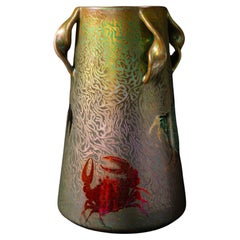
Iridescent Art Nouveau Vase with Crabs and Seaweed by Clement Massier
Located in Palm Beach, FL
Note: We highly recommend shipping through 1stDibs for its cost effectiveness, full insurance coverage, and reliable handling. While standard parcel services are an option, the defau...
Category

Early 1900s French Antique Art Nouveau Vases and Vessels

Materials

Stoneware

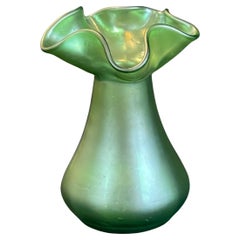
1900s Art Nouveau Mild Iridescent Green Sea Urchin Vase, Loetz Witwe
Located in Andernach, DE
Absolutely marvellous antique vase in a very mildly iridescent green, attributed to Loetz Witwe. Bohemia around 1900. This small sea urchin and equally floral shaped vase is somewhat...
Category

Early 1900s German Antique Art Nouveau Vases and Vessels

Materials

Art Glass

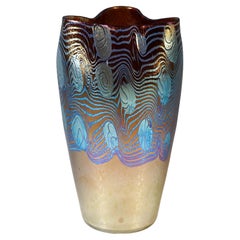
Loetz Art Nouveau Vase, Argus , Phenomenon Gre 2/351, Austria-Hungary, Ca 1902
Located in Vienna, AT
Mould blown body widening conically towards the top on a flush round base, the rim shaped into a trefoil by impressions, polished pontil. Form: Prod. No. - PN 2/603, year 1902 Deco...
Category

Early 1900s Austrian Antique Art Nouveau Vases and Vessels

Materials

Glass

Vase, Sign: Le Verre Francais ( Plant Mirettes / Peepers ), Style: Art Nouveau
Located in Ciudad Autónoma Buenos Aires, C
Vase Sign: Le Verre Francais acid worked Le Verre cameo glass was a separate line of art glass designed by Charles Schneider. Its production was made at the same time as the Schneid...
Category

1920s French Vintage Art Nouveau Vases and Vessels

Materials

Art Glass

1920 René Lalique Perfume Bottle Pan Satyres Glass with Grey Patina
Located in Boulogne Billancourt, FR
Perfime Bottle "Pan" made in frosted glass with grey patina by René Lalique in 1920. Molded signature. Perfect condition. Very beautiful patina. Height: 12.5 cm Félix Marcilhac, R...
Category

1920s French Vintage Art Nouveau Vases and Vessels

Materials

Blown Glass

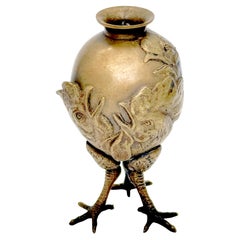
Austrian Art Nouveau Three Rooster Diminutive Vase with Talon Legs
Located in West Palm Beach, FL
Austrian Art Nouveau Three Rooster Diminutive Vase with Talon Legs Austria, Circa 1890s, Franz Bergmann School, Unmarked This rare and striking Art Nouveau vase exemplifies the o...
Category

Late 19th Century Austrian Antique Art Nouveau Vases and Vessels

Materials

Bronze

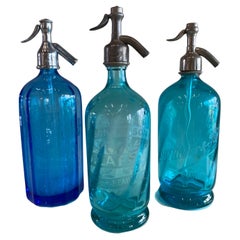
Art Nouveau Seltzer Soda Syphon Bottles Set, Blue Glass, Turquoise Glass
Located in Hamburg, DE
Antique siphons from France from the years around 1900. The bottles are made of thick heavy blue and turquoise glass and closures made of tin. In the cap of the blue bottle is stam...
Category

Early 20th Century French Art Nouveau Vases and Vessels

Materials

Lead

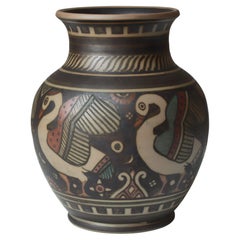
Art Nouveau Terracotta Vase by L. Hjorth Hand Painted Bird Motif, Denmark, 1920s
Located in Odense, DK
A beautifully hand-painted Art Nouveau terracotta vase by L. Hjorth, Denmark, dating from the 1920s. The vase features a richly decorative bird motif encircling the body, rendered in...
Category

1920s Danish Vintage Art Nouveau Vases and Vessels

Materials

Terracotta

Iridescent Art Nouveau Foliage Vase w/Silver Mount by Clement Massier
Located in Palm Beach, FL
Note: We highly recommend shipping through 1stDibs for its cost effectiveness, full insurance coverage, and reliable handling. While standard parcel services are an option, the defau...
Category

Early 1900s French Antique Art Nouveau Vases and Vessels

Materials

Silver

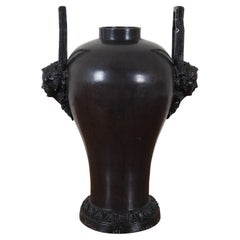
Maitland Smith Bronze Art Nouveau Bas Relief Face Bust Handle Mantel Vase Urn
Located in Dayton, OH
Heavy vintage Maitland Smith Art Nouveau style bronze urn / vase / vessel featuring high keyhole handles with a ridged texture above a pair of femal...
Category

Late 20th Century Art Nouveau Vases and Vessels

Materials

Bronze

Baccarat, Holly Vase, French Art Nouveau 1900s
Located in PARIS, FR
Superb Baccarat crystal vase. A masterpiece of French Art Nouveau. Crafted in the late 1800s / early 1900s, it echoes the elegance of a holly tree, its branches and leaves dancing in...
Category

Early 1900s French Antique Art Nouveau Vases and Vessels

Materials

Crystal

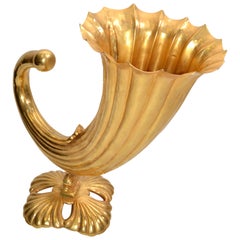
Fine Art Italian Gilt Bronze Cornucopia Vase Sea Serpent Decoration 20th Century
Located in Miami, FL
Art Nouveau Italian cornucopia vase in gilt bronze from the late 20th century. The neck is surrounded with a Sea Serpent and is mounted firmly on a square base. The Cornucopia Vase ...
Category

1940s Italian Vintage Art Nouveau Vases and Vessels

Materials

Bronze

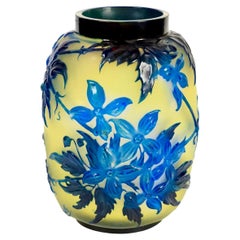
Emile Galle Blown Out Clematis Vase
Located in Dallas, TX
Emile Galle Mold Blown Blue Clematis Glase Vase. Circa: 1910 Nancy, France A fine Galle blown-out glass vase, Clematis pattern, in strong blue colors. Signed in cameo, Galle. Heigh...
Category

Early 1900s French Antique Art Nouveau Vases and Vessels

Materials

Art Glass

Antique Art Nouveau Jugendstilvase Germany Bohemian Green Glass
Located in Amsterdam, Noord Holland
Step into the elegance of the Art Nouveau era with this exquisite natural shape Despite its age, this vase remains in remarkable condition With its interesting size and captivating...
Category

Early 20th Century German Art Nouveau Vases and Vessels

Materials

Art Glass

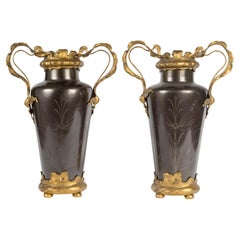
A Pair of Art Nouveau Gilt Bronze and Patinated Vases, Circa 1900.
Located in Saint-Ouen, FR
A pair of Art Nouveau gilt bronze and patinated vases, circa 1900, the inside of a planter is missing. H: 43cm, W: 32cm, D: 18cm Please contact us before ordering to confirm availa...
Category

20th Century French Art Nouveau Vases and Vessels

Materials

Bronze

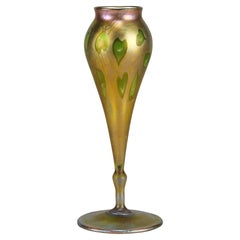
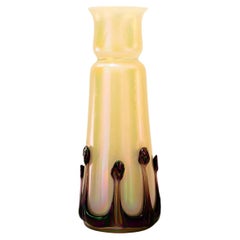
Early 20th Century Art Nouveau Glass "Hearts and Vines Vase" by Louis Tiffany
Located in London, GB
An impressive early 20th Century American iridescent glass vase of slender form with green hearts shining through an attractive golden iridescence, signed L C Tiffany Favrile and numbered to base. ADDITIONAL INFORMATION Height: 23 cm Condition: Very Good Condition Circa: 1905 Materials: Iridescent Coloured Glass SKU: 6667 ABOUT Louis Comfort Tiffany Louis Comfort Tiffany (February 18, 1848 – January 17, 1933) was an American artist and designer who worked in the decorative arts and is best known for his work in stained glass. He is the American artist most associated with the Art Nouveau and Aesthetic movements. Tiffany was affiliated with a prestigious collaborative of designers known as the Associated Artists, which included Lockwood de Forest, Candace Wheeler, and Samuel Colman. Tiffany designed stained glass windows and lamps, glass mosaics, blown glass, ceramics, jewellery, enamels and metalwork. Early Life He was born in New York City, New York, the son of Charles Lewis Tiffany, founder of Tiffany and Company; and Harriet Olivia Avery Young. He attended school at Pennsylvania Military Academy in West Chester, Pennsylvania, and Eagleswood Military Academy in Perth Amboy, New Jersey. His first artistic training was as a painter, studying under George Inness in Eagleswood, New Jersey and Samuel Colman in Irvington, New York. He also studied at the National Academy of Design in New York City in 1866-67 and with salon painter Leon-Adolphe-Auguste Belly in 1868-69. Belly’s landscape paintings had a great influence on Tiffany. Career Louis started out as a painter, but became interested in glassmaking from about 1875 and worked at several glasshouses in Brooklyn between then and 1878. In 1879, he joined with Candace Wheeler, Samuel Colman and Lockwood de Forest to form Louis Comfort Tiffany and Associated American Artists. The business was short-lived, lasting only four years. The group made designs for wallpaper, furniture, and textiles. He later opened his own glass factory in Corona, New York, determined to provide designs that improved the quality of contemporary glass. Tiffany’s leadership and talent, as well as his father’s money and connections, led this business to thrive. In 1881 Tiffany did the interior design of the Mark Twain House in Hartford, Connecticut, which still remains, but the new firm’s most notable work came in 1882 when President Chester Alan Arthur refused to move into the White House until it had been redecorated. He commissioned Tiffany, who had begun to make a name for himself in New York society for the firm’s interior design work, to redo the state rooms, which Arthur found charmless. He worked on the East Room, the Blue Room, the Red Room, the State Dining Room and the Entrance Hall, refurnishing, repainting in decorative patterns, installing newly designed mantelpieces, changing to wallpaper with dense patterns and, of course, adding Tiffany glass to gaslight fixtures, windows and adding an opalescent floor-to-ceiling glass screen in the Entrance Hall. The Tiffany screen and other Victorian additions were all removed in the Roosevelt renovations of 1902, which restored the White House interiors to Federal style in keeping with its architecture. A desire to concentrate on art in glass led to the breakup of the firm in 1885 when Tiffany chose to establish his own glassmaking firm that same year. The first Tiffany Glass Company was incorporated December 1, 1885 and in 1902 became known as the Tiffany Studios. In the beginning of his career, he used cheap jelly jars and bottles because they had the mineral impurities that finer glass lacked. When he was unable to convince fine glassmakers to leave the impurities in, he began making his own glass. Tiffany used opalescent glass in a variety of colors and textures to create a unique style of stained glass. He developed the “copper foil” technique, which, by edging each piece of cut glass in copper foil and soldering the whole together to create his windows and lamps, made possible a level of detail previously unknown. This can be contrasted with the method of painting in enamels or glass paint on colorless glass, and then setting the glass pieces in lead channels, that had been the dominant method of creating stained glass for hundreds of years in Europe. (The First Presbyterian Church building of 1905 in Pittsburgh, Pennsylvania is unique in that it uses Tiffany windows that partially make use of painted glass.) Use of the colored glass itself to create stained glass pictures was motivated by the ideals of the Arts and Crafts movement and its leader William Morris in England. Fellow artists and glassmakers Oliver Kimberly and Frank Duffner, founders of the Duffner and Kimberly Company and John La Farge were Tiffany’s chief competitors in this new American style of stained glass. Tiffany, Duffner and Kimberly, along with La Farge, had learned their craft at the same glasshouses in Brooklyn in the late 1870s. In 1889 at the Paris Exposition, he is said to have been “Overwhelmed” by the glass work of Émile Gallé, French Art Nouveau artisan. He also met artist Alphonse Mucha. In 1893, Tiffany built a new factory called the Stourbridge Glass Company, later called Tiffany Glass Furnaces, which was located in Corona, Queens, New York, hiring the Englishman Arthur J. Nash to oversee it. In 1893, his company also introduced the term Favrilein conjunction with his first production of blown glass at his new glass factory. Some early examples of his lamps were exhibited in the 1893 World’s Fair in Chicago. At the Exposition Universelle (1900) in Paris, he won a gold medal with his stained glass windows The Four Seasons He trademarked Favrile (from the old French word for handmade) on November 13, 1894. He later used this word to apply to all of his glass, enamel and pottery. His first commercially produced lamps date from around 1895. Much of his company’s production was in making stained glass windows and Tiffany lamps, but his company designed a complete range of interior decorations. At its peak, his factory employed more than 300 artisans. Recent scholarship led by Rutgers professor Martin Eidelberg suggests that a team of talented single women designers – sometimes referred to as the “Tiffany Girls” – led by Clara Driscoll played a big role in designing many of the floral patterns on the famous Tiffany...
Category

Early 20th Century American Art Nouveau Vases and Vessels

Materials

Glass

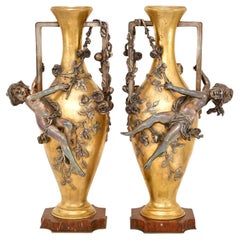
Pair Antique Art Nouveau Figurative Gilt Silvered Bronze Vases by Auguste Moreau
Located in New York, NY
Pair of Finest quality casting antique Art Nouveau period gilt bronze vases by Auguste Moreau (French, 1934-1917) with finely cast figures of cherubs with silvered patinas, and roug...
Category

Late 19th Century French Antique Art Nouveau Vases and Vessels

Materials

Bronze

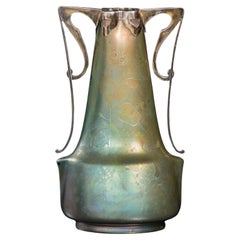
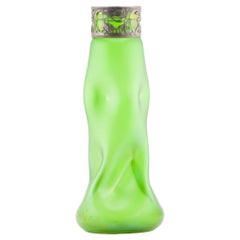
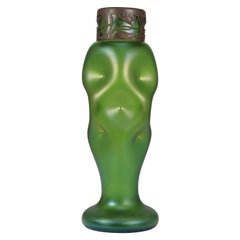
Loetz attr. A tall Art Nouveau green iridescent vase with brass floral collar.
Located in London, GB
Loetz attributed. A tall Art Nouveau green iridescent vase with a brass collar decorated in foliate Art Nouveau style with dimple decoration to t...
Category

Early 1900s English Antique Art Nouveau Vases and Vessels

Materials

Ceramic

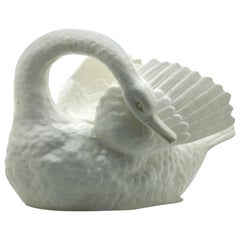
Majolica Swan Jardinière Stamped Imperiale Nimy, Belgium, circa 1900
Located in Verviers, BE
Majolica white swan jardinière Nimy, circa 1900. Stamped: Nimy Faiences imperiale 1789-1951 Belgium. A real treasure for the ceramics' collector. ...
Category

Early 1900s Belgian Antique Art Nouveau Vases and Vessels

Materials

Majolica

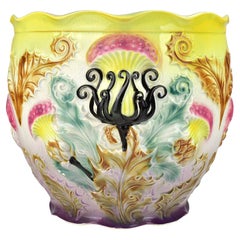
Exceptional Art Nouveau Barbotine Majolica Jardiniere Flowerpot Thistle Motif
Located in Bad Säckingen, DE
A highly decorative and vividly colored Art Nouveau Majolica jardinière or flowerpot, dating from circa 1900. This exuberant barbotine piece features an ornate relief design dominate...
Category

Early 1900s French Antique Art Nouveau Vases and Vessels

Materials

Ceramic, Majolica

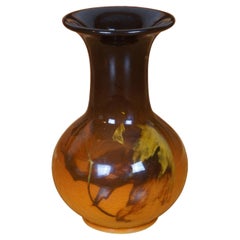
Antique Art Nouveau Rookwood 1901 Irene Bishop Oak Leaf Vase Urn 5.5"
Located in Dayton, OH
Antique Rookwood Irene Bishop vase or urn featuring Art Nouveau / Arts & Crafts styling with an Autumn Oak leaf motif of browns and orange glaze. Cirac 1901. Shape 40. Signed IB f...
Category

Early 1900s American Antique Art Nouveau Vases and Vessels

Materials

Pottery

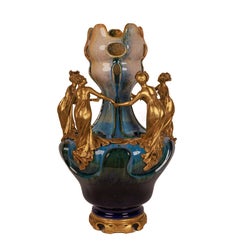
Important Monumental Art Nouveau Ormolu-Mounted Ceramic "Exhibition" Vase
Located in Queens, NY
An Important and Monumental Art Nouveau Ormolu-Mounted Ceramic "Exhibition" Vase, C. 1895 Spectacularly mounted naturalist vase; the base dressed and balustered, the neck finished in double openwork bulb, the surface describing sinuous reliefs. Polychrome glazed ceramic in Beige, blue, and green. The shoulder is decorated with a gilded bronze roundel with five ormolu bronze female...
Category

Late 19th Century French Antique Art Nouveau Vases and Vessels

Materials

Bronze, Ormolu

Palme koenig vase around 1908
Located in Wien, AT
Palme koenig vase around 1908 in the 2nd picture you can see that part of the decoration is chipped. but there is no crack and no danger of breaking the vase
Category

Early 1900s Austrian Antique Art Nouveau Vases and Vessels

Materials

Glass

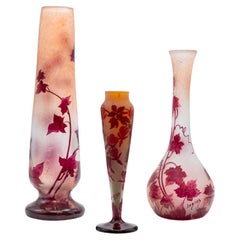
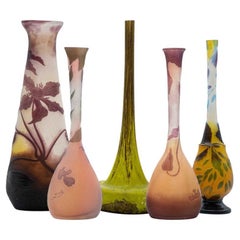
Set of Daum and Galle Signed, Acid Etched Purple Green Pink Yellow Vases, 1910
Located in Rijssen, NL
This exquisite set of Art Nouveau vases by Daum Nancy and Gallé is statement piece in the room. Wonderful craftsmanship form 1910. Signed "Daum Nancy" and "Gallé"  . Dimensions:  1....
Category

1910s French Vintage Art Nouveau Vases and Vessels

Materials

Glass

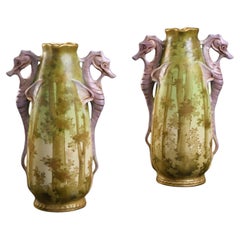
Pair of Art Nouveau Seahorse Vases by RStK Amphora
Located in Palm Beach, FL
Model #2064 Riessner, Stellmacher and Kessel (RSt&K), consistently marked pieces with the tradename “Amphora” by the late 1890s and became known by that name. The Amphora pottery fa...
Category

Early 1900s Austrian Antique Art Nouveau Vases and Vessels

Materials

Earthenware

Art Nouveau Fine Sterling Overlay Perfume Bottle signed Steuben
Located in New York, NY
This exquisite Art Nouveau perfume bottle, crafted in America circa 1910 and signed by Steuben, is a true testament to the elegance and innovation of the era. Its fine sterling silve...
Category

1910s American Vintage Art Nouveau Vases and Vessels

Materials

Sterling Silver

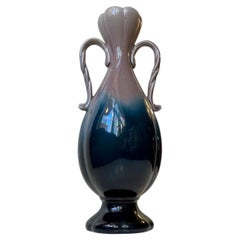
Art Nouveau Porcelain Vase from Rörstrand, circa 1910
Located in Esbjerg, DK
Large porcelain/creamware vase / urn made by Swedish porcelain gigant Rörstrand circa 1910. It has a grey/petrol blue glaze that fades from dark to light. The inside has a turquoise ...
Category

1910s Swedish Vintage Art Nouveau Vases and Vessels

Materials

Porcelain

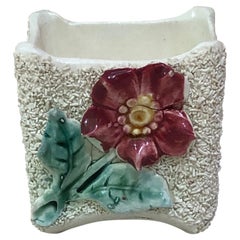
19th Century Small Majolica Floral Jardinière Onnaing
Located in Austin, TX
19th-century small square Majolica floral jardinière Onnaing. Sand background.
Category

1890s French Antique Art Nouveau Vases and Vessels

Materials

Ceramic, Faience

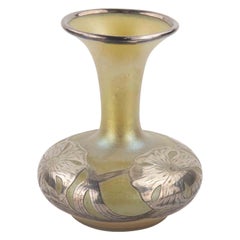
Art Nouveau Loetz Glass Vase, Early 1900
Located in Roma, IT
Art Nouveau Loetz Glass vase with Alvin Silver Overlay, realized in Austria in 1900/1910. Very good condition.
Category

Early 20th Century Austrian Art Nouveau Vases and Vessels

Materials

Art Glass

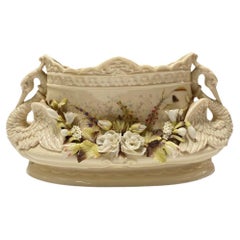
Italian Floral Swan Centerpiece Bowl Cachepot
Located in Van Nuys, CA
Capodimonte porcelain is porcelain created by the Capodimonte porcelain manufactory, which operated in Naples, Italy, between 1743 and 1759. Capodimonte is one of the most revered fa...
Category

Early 1900s Antique Art Nouveau Vases and Vessels

Materials

Porcelain

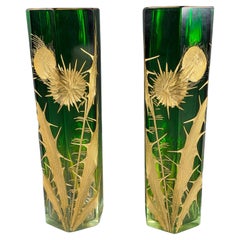
Pair Of Crystal Vases With Thistles – Maison Moser – Art Nouveau Period
Located in BARSAC, FR
Exquisite pair of hexagonal crystal vases in shades of green, decorated with thistles cut from the glass, engraved, and gilded with fine gold. Superb craftsmanship! Unsigned...
Category

Early 1900s Czech Antique Art Nouveau Vases and Vessels

Materials

Crystal

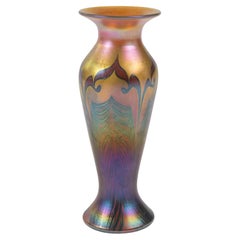
Classic Pulled Feather Art Glass Vase, Lundberg Studios of California, Signed
Located in San Francisco, CA
Popular classic pulled feather design art glass vase, made by Lundberg Studios of California, signed. Iridescent finish and inspired by Tiffany designs.
Category

Late 20th Century American Art Nouveau Vases and Vessels

Materials

Art Glass

Art Nouveau vases and vessels for sale on 1stDibs.

Find a broad range of unique Art Nouveau vases and vessels for sale on 1stDibs. Many of these items were first offered in the 21st Century and Contemporary, but contemporary artisans have continued to produce works inspired by this style. If you’re looking to add vintage vases and vessels created in this style to your space, the works available on 1stDibs include decorative objects, serveware, ceramics, silver and glass, building and garden elements and other home furnishings, frequently crafted with glass, ceramic and other materials. If you’re shopping for used Art Nouveau vases and vessels made in a specific country, there are Europe, France, and Austria pieces for sale on 1stDibs. While there are many designers and brands associated with original vases and vessels, popular names associated with this style include Loetz Glass, Emile Gallé, Daum, and Le Verre Français. It’s true that these talented designers have at times inspired knockoffs, but our experienced specialists have partnered with only top vetted sellers to offer authentic pieces that come with a buyer protection guarantee. Prices for vases and vessels differ depending upon multiple factors, including designer, materials, construction methods, condition and provenance. On 1stDibs, the price for these items starts at $55 and tops out at $800,000 while the average work can sell for $2,107.