Earthenware Ceramics

to
96
745
124
2
118
319
308
126
83
149
36
31
5
17
23
10
38
20
20
10
101
76
41
35
28
26
18
17
10
10
10
8
2
2
9,615
1,240
910
539
463
390
771
265
159
145
131
871
836
863
30
28
26
25
23
Material: Earthenware
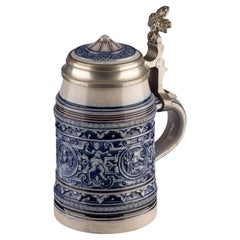
Antique German Lidded Blue Glazed Earthenware Beer Stein Jug Merkelbach Wick
Located in Greven, DE
Antique German Lidded Blue Glazed Earthenware Beer Stein Jug Merkelbach Wick German Earthenware, Metal c. 1900 Dimensions: H x D: 18.5cm x 13.5cm This fine beer stein was made by Merkelbach Wick, a German stoneware factory based in Grenzhausen. Founded around 1872–1873 by Friedrich Wilhelm Merkelbach II and Georg Peter Wick, the firm became known for its fine earthenware and, from the early 1880s onward, its ivory stoneware, which blended traditional craftsmanship with emerging artistic styles. Their creations gained particular popularity in North America, with roughly half of their production exported there by the late 19th century. Merkelbach Wick’s beer steins were especially notable: many 19th and early 20th century pub steins, including those produced for major breweries, were crafted in salt-glazed or ivory stoneware and often bore the distinctive ‘M W Gr.’ impressed seal - such as the one on this example - making them highly prized by collectors today. Crafted from earthenware, this stein features moulded high-relief decoration encircling the entire body. Various geometric borders frame a central band filled with naturalistic and mythological motifs. Oval cartouches contain classical busts, while the spaces between them depict centaurs, symbolising the duality of human nature and the tension between intellect and instinct. The deep blue glaze accentuates the raised decoration while allowing parts of the ivory-coloured earthenware to remain visible for contrast. The prominent earthenware handle is decorated in the same style as the body, and the vessel is topped with a hinged metal lid. Its generously sized thumb lever allows the drinker to comfortably raise the lid, and the top is inset with a beautifully modelled earthenware panel. On the base remains the original Merkelbach Wick label, highlighting the firm's international reach with branches in Philadelphia, Vienna, and Munich. The earthenware is also impressed with their ‘M W Gr.’ mark, used between c. 1879 and 1921. With its detailed design and superb craftsmanship from a renowned manufacturer, this antique stein...
Category

Early 20th Century German Earthenware Ceramics

Materials

Metal

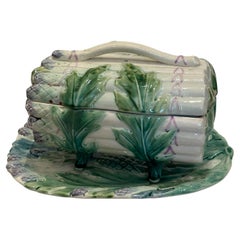
Tureen asparagus dish, in style of luneville
Located in Paris, FR
Discover this rare 19th-century polychrome earthenware set, featuring a covered asparagus server with a matching platter. This French Barbotine asparagus server is a true collector's...
Category

Late 19th Century Antique Earthenware Ceramics

Materials

Ceramic, Earthenware, Majolica

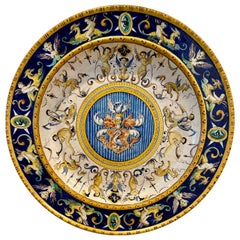
Italian Cantagalli Maiolica Large Plate with family noble emblem, Late 19th C.
Located in CH
Cantagalli Maiolica Plate with Heraldic Emblem Cantagalli Factory, Florence, Late 19th Century Tin-glazed earthenware (maiolica); polychrome decoration This large maiolica plate was...
Category

Late 19th Century Italian Renaissance Revival Antique Earthenware Ceramics

Materials

Ceramic, Maiolica

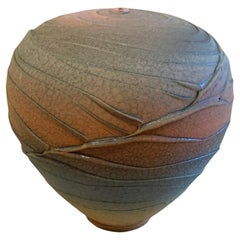
Orange and Blue Textured Small Earthenware Vase, U.S.A., Contemporary
Located in New York, NY
Contemporary small textured ceramic earthenware vase. Blue and orange glaze has a crackle effect giving it an ancient feel. Tiny top spout. Hand made one of a kind. Part of a col...
Category

21st Century and Contemporary American Earthenware Ceramics

Materials

Earthenware

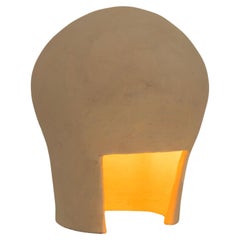
Contemporary Organic Modern Moroccan Handmade White Ceramic Table Lamp
Located in Marseille, FR
- Handbuilt white ceramic table lamp - made of clay collected from the potter's surroundings. - made in the Moroccan Rif mountains by the potter Houda. - co-created by the potter Hou...
Category

2010s Moroccan Organic Modern Earthenware Ceramics

Materials

Clay, Earthenware

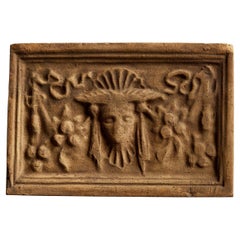
Vintage Earthenware Tile with a Woman s Face
Located in Leuven , BE
Lovely rectangular earthenware tile representing a woman's face surrounded by ribbons and folliage. An exquisite antique with a lot of character that draws the eye and makes you wonder.
Category

15th Century and Earlier Antique Earthenware Ceramics

Materials

Earthenware

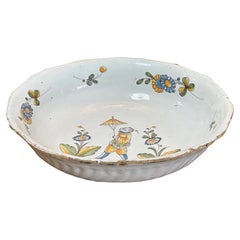
Charming French Faience Serving Bowl with Chinoiserie Figure
Located in Charlottesville, VA
18th century Continental, most likely French, Faience Earthenware Serving Bowl with fluted sides; hand painted vignette of a chinoiserie character with an umbrella flanked by images...
Category

18th Century French Antique Earthenware Ceramics

Materials

Faience

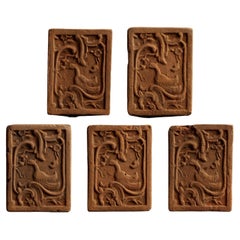
Beautiful Earthenware Tile with Floral Motifs and a Bird
Located in Leuven , BE
Lovely set of 5 antique earthenware tiles with an elegant pheasant surrrounnded by nature. Strong symbol of luck, imperial bird, the pheasant is associated with immortality and was often used as sepulchral symbol in early Christian art...
Category

15th Century and Earlier Antique Earthenware Ceramics

Materials

Earthenware

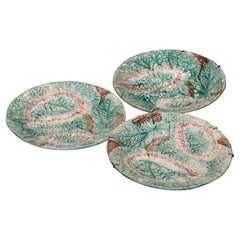
19th Century English Majolica Decorative Plates, Set of 3
Located in Dallas, TX
Decorate a wall of a shelf with this colorful set of decorative plates. Crafted in England circa 1880, each plate is heavily textured and brig...
Category

Late 19th Century English Antique Earthenware Ceramics

Materials

Majolica

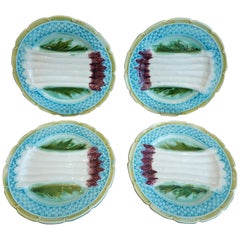
Set of Four Majolica Asparagus Plates Attributed to Orchies
Located in Pembroke, MA
Set of four colorful French majolica asparagus plates attributed to Orchies. Each plate features six amethyst-colored molded asparagus spears resting on a leaf on a plate with turquo...
Category

Late 19th Century French French Provincial Antique Earthenware Ceramics

Materials

Majolica

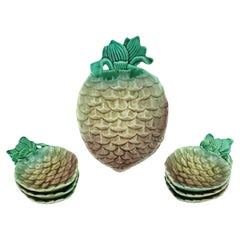
Set of Glazed Ceramic Pineapple Dessert Serving or Appetizer Snack Bowls
Located in Barcelona, ES
Eye-catching set of 6 majolica ceramic pineapple small dishes and a large pineapple tray or large bowl. Spain, 1960s. This hand-painted set can be used to serve desserts, salads or a...
Category

20th Century Spanish Mid-Century Modern Earthenware Ceramics

Materials

Majolica, Ceramic

19th Century Majolica Rooster Plate Choisy Le Roi
Located in Austin, TX
Majolica plate with rooster signed Hippolyte Boulenger Choisy le Roi, circa 1890. The manufacture of Choisy le Roi was one of the most important manufacture at the end of 19th centu...
Category

1890s French Country Antique Earthenware Ceramics

Materials

Majolica, Ceramic, Faience

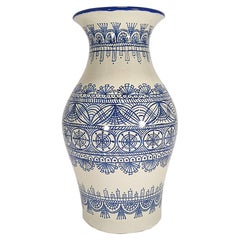
Authentic Talavera Decorative Vase Folk Art Vessel Mexican Ceramic Blue White
Located in Queretaro, Queretaro
Elegant white and blue vase made with the Talavera technique. Artist, Cesar Torres portraits the colonial art of Mexico. The Talavera is not just a simple painted ceramic: its exquisite decoration is the product of a delicate process of alchemy that translates into fine enamels. In Puebla, Mexico few people still produce using Talavera with the ancestral techniques. One of those few is Cesar Torres, Don Cesar learned his art in the workshop of the Uriarte family, an excellent workshop where his grandfather worked. In his creations he uses the black and white mud that is obtained from the nearby hills of Loreto and Guadalupe, and colors of mineral origin that he creates in his workshop with recipes from his grandfather. All the pieces are modeled in a traditional way and go through a production process that usually takes from one to two months, between drying, burning, and painting. Being surrounded by a living tradition, Cesar Torres Jr., learned from his father since childhood. Architect by profession, Cesar Jr. has come to revolutionize and modernize with new designs and ideas of the current world, nevertheless always respecting the tradition of the processes and materials that make Talavera a Creole art...
Category

21st Century and Contemporary Mexican Spanish Colonial Earthenware Ceramics

Materials

Ceramic, Clay, Majolica

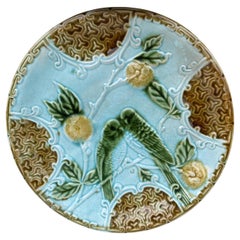
Majolica Parakeets Plate Salins, circa 1890
Located in Austin, TX
Majolica plate two parakeets on a blue background with oranges Salins, circa 1890.  
Category

1890s French Art Nouveau Antique Earthenware Ceramics

Materials

Ceramic, Majolica

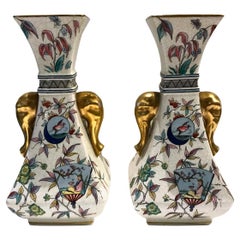
Christopher Dresser Old Hall Aesthetic Vases c.1885
Located in Paris, FR
Paire of Japanese style Old Hall Earthenware vases decorated with gilt elephants. Design attributed to Christopher Dresser (a similar model in C.W Dress...
Category

19th Century British Aesthetic Movement Antique Earthenware Ceramics

Materials

Earthenware

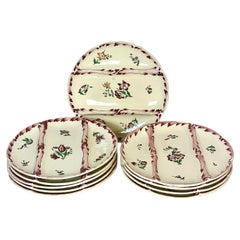
Set of 10 Vintage Sarreguemines Majolica Asparagus Plates
Located in LA CIOTAT, FR
A set of 10 vintage Sarreguemines Majolica asparagus serving plates, from the beginning of the 20th century. Each of these fine earthenware plates has two raised, decorated dividers,...
Category

19th Century French Rococo Antique Earthenware Ceramics

Materials

Majolica

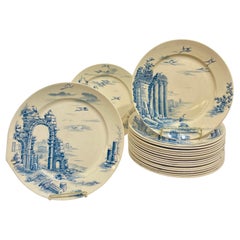
Set Of 18 French Faience Blue White Architectural Dinner Plates, Gien, C.1900
Located in West Palm Beach, FL
Just arrived! This beautiful and rare French Set of 18 Faience Blue & White Architectural design Dinner Plates. There are three different designs of Architectural ruins in Blue & Off...
Category

Early 20th Century Earthenware Ceramics

Materials

Faience

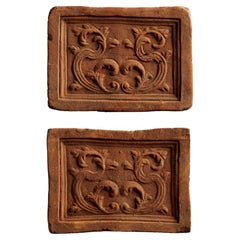
Beautiful Antique Earthenware Tiles with Foliage
Located in Leuven , BE
Set of beautiful moulded tiles made of earthenware. Featuring flowerheads and foliage, this set of antiques creates a universe on its own.
Category

15th Century and Earlier Antique Earthenware Ceramics

Materials

Earthenware

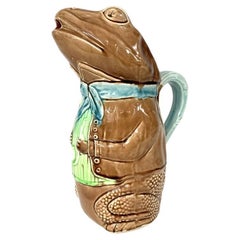
Majolica French Barbotine Toad Frog By Fives-Lille 1880 Gustave De Bruyn
Located in Bridgeport, CT
An antique Majolica French Barbotine toad frog pitcher by Fives-Lille, manufactured circa 1880 by Gustave De Bruyn. The pitcher features a unique Frog Trestille pattern in multicolor...
Category

Late 19th Century French Rustic Antique Earthenware Ceramics

Materials

Majolica

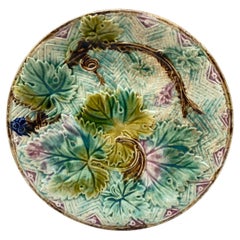
French Majolica Grape Leaves Plate Onnaing, circa 1900
Located in Austin, TX
French Majolica grape leaves plate Onnaing, circa 1900.
Category

Early 1900s French Country Antique Earthenware Ceramics

Materials

Ceramic, Faience

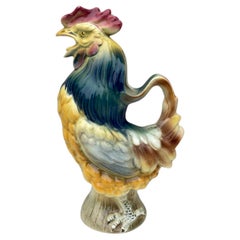
French Majolica Rooster Pitcher Keller and Guerin Saint Clement
Located in Austin, TX
French Majolica rooster pitcher signed Keller and Guerin Saint Clement, circa 1900. Original older model. Measure: Height / 12.8 inches.
Category

Early 1900s French Rustic Antique Earthenware Ceramics

Materials

Ceramic, Faience, Majolica

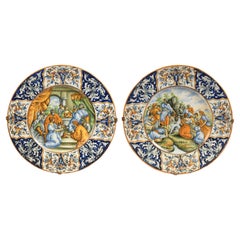
Gaetano BATTAGLIA (Naples-Italy-Active 1850 and 1885) Pair of Large Plates
Located in Madrid, ES
Pair of Large Plates Gaetano Battaglia 19th century made of earthenware decorated with mythological scenes Italy (Naples) Diameter 50 cm good cond...
Category

19th Century Italian Rococo Antique Earthenware Ceramics

Materials

Majolica

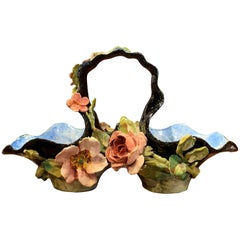
19th Century French Painted Ceramic Barbotine Basket from Montigny-sur-Loing
Located in Dallas, TX
Place this sculptural, antique jardinière on a shelf or on a kitchen counter for a pop of color. Crafted in Montigny-sur-Loing, France circa 1860, the colorful basket has a central handle and features a double vase decorated with floral and leaf motifs in high relief. The elegant, artistic planter with flowers is in excellent condition and has rich, pigmented colors in a blue, black, green and pink palette. Different markings on the bottom. Impressionist ceramics term generally applies to "paint the slip" or "batch gouache". At the turn of the 19th and 20th centuries, the towns of Montigny-sur-Loing and Marlotte are many artists living places like Jean-Baptiste Corot, Eugène Thirion (1839-1910), Adrien Schulz (1851-1931), Numa Gillet (1868-1940) and Lucien Cahen-Michel (1888-1980), all attracted by the quality of the landscape and the light. When Eugene Schopin founded in 1872 a ceramics factory, he worked with the painters to create a range of designs inspired by Impressionism and decorated according to new public demands. Several ceramic factories will develop around this Impressionist movement. The most famous, such as Georges Delvaux (1834-1909), Albert Boué (1862-1918) and Charles Alphonse Petit (1862-1927), will produce until 1922. Other manufacturers, such as Theodore Lefront...
Category

Late 19th Century French Antique Earthenware Ceramics

Materials

Ceramic, Majolica

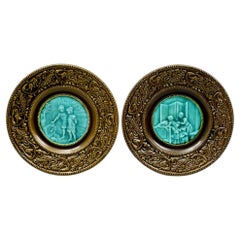
Two Beautiful 19th Century Majolica Plates by Villeroy Boch, Germany
Located in Nuernberg, DE
19th century majolica plates by Villeroy & Boch in unusual color combination of olive green and turquoise with relief design on front. Nice addition to your table or just to display....
Category

19th Century German Victorian Antique Earthenware Ceramics

Materials

Ceramic, Majolica

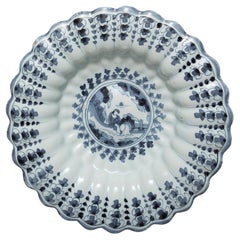
Dish Charger Lobed Delft German Blue White Fluted Chinoiserie
Located in BUNGAY, SUFFOLK
Decorated with a chinoiserie scene of a man sitting on rocks within a landscape. Surrounded by a triple-circle center and an interlocking arc and trefoil border. The rim with 27 flut...
Category

18th Century German Baroque Antique Earthenware Ceramics

Materials

Earthenware

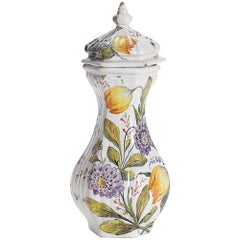
Antique Italian Le Nove Floral Painted Faience Earthenware Lidded Jar, 19th C
Located in Bishop s Stortford, Hertfordshire
A fine and elegant antique Italian Le Nove floral painted faience vase and cover. The earthenware hexagonal shaped vase has a moulded ribbed body exquisitely h...
Category

Late 19th Century Italian Antique Earthenware Ceramics

Materials

Faience

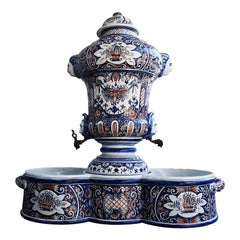
19th Rouen Style Faience Ribbed Wall Cistern and Basin
Located in Marseille, FR
19th Rouen style Faience ribbed wall cistern and basin with decoration heads, carrying by 2 times inscription Pinxit Anno 1738, 19th century.
Category

19th Century European Antique Earthenware Ceramics

Materials

Faience

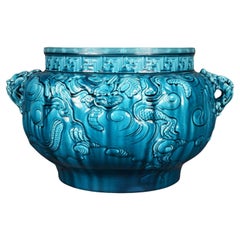
Théodore DECK, Large vase of Far Eastern inspiration
Located in SAINT-OUEN-SUR-SEINE, FR
This large turquoise pot holder in glazed earthenware was made by the reknowned ceramist Théodore Deck at the end of the 19th century. Its beautiful bl...
Category

Late 19th Century French Japonisme Antique Earthenware Ceramics

Materials

Faience

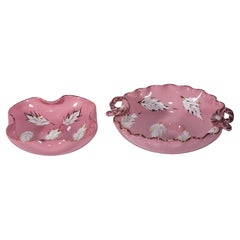
Aldo Londi for Bitossi Majolica Bowls Set of 2, Italy 1960s
Located in Clifton Springs, NY
Modernist set of 2 majolica bowls features complex sculptural shapes and abstract leaves decor on pink background glaze. The larger bowl is sculpted with scalloped edge and intricate...
Category

Mid-20th Century Italian Earthenware Ceramics

Materials

Gold

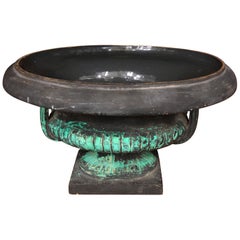
Art Nouveau Style Italian Ceramic Jardinière/Urn, Signed, Italy
Located in Los Angeles, CA
Black ceramic Art Nouveau style jardinière with green distressed finish. Inside is flamed glaze and outside is natural finish. Minor chipping/scuffs. (See pics). Signed Italy.
Category

Early 20th Century Italian Earthenware Ceramics

Materials

Creamware

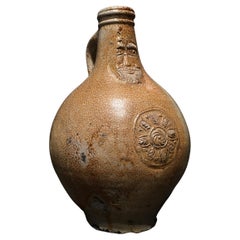
17th century German Stoneware Bellarmine Jug
Located in AMSTERDAM, NH
Germany Frechen Circa 1620 – 1650 Bellarmine or Bartmann jug with a flower medallion. A salt-glazed and iron-engobed bellarmine with a narrow neck, sphe...
Category

1630s German Antique Earthenware Ceramics

Materials

Ceramic, Faience

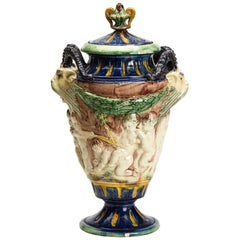
Antique Lidded Majolica Grotesque Horned Head Vase, 19th Century
Located in Bishop s Stortford, Hertfordshire
An antique Majolica lidded vase moulded with a continuous relief moulded scene of putti in various activity with grotesque horned lion heads applied either side of the rim. The earth...
Category

19th Century European Victorian Antique Earthenware Ceramics

Materials

Majolica

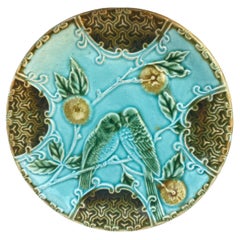
Majolica Parakeets Plate Salins, circa 1890
Located in Austin, TX
Majolica plate two parakeets on a blue background with oranges signed Salins, circa 1890.  
Category

1890s French Art Nouveau Antique Earthenware Ceramics

Materials

Ceramic, Majolica

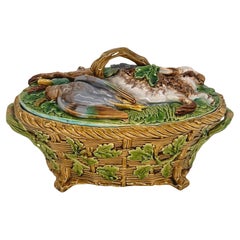
A Minton Majolica Dead Game Pie Tureen, Cover, and Liner, English, Dated 1859
Located in Banner Elk, NC
A Minton Majolica Game Pie Tureen, Cover, and Liner, the base molded as a wicker basket with green glazed oak leaves and banded branch handles on raised feet, the cover with high rel...
Category

19th Century English Victorian Antique Earthenware Ceramics

Materials

Majolica

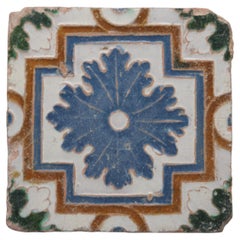
Spanish Azulejo Tile Arista y Cuenca - Toledo 16th century
Located in DELFT, NL
Early Arista y cuenca tiles made in Toledo. Tile decorated in renaissance with stylized flowers, probably made between 1550 and 1575. I have four of them available, please reach o...
Category

16th Century Spanish Renaissance Antique Earthenware Ceramics

Materials

Earthenware, Maiolica

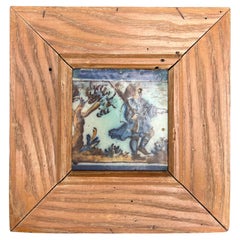
Rare 17th Century Dutch Delft Polychrome Majolica Tile, Provenance
Located in Vero Beach, FL
Rare 17th Century Dutch Delft Polychrome Majolica Tile, Provenance Magnificent 17th century Dutch Delft majolica tile with polychrome decoration. It features a robust huntsman in th...
Category

17th Century Dutch Renaissance Antique Earthenware Ceramics

Materials

Majolica

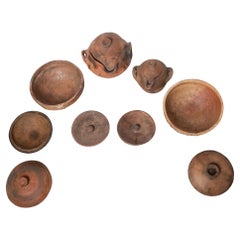
Berber Old Earthenware Bowls and Lids from Morocco
Located in Alessandria, Piemonte
O/2956 - Old earthenware bowls and lids from Morocco: terracotta lids can be used to keep food warm in serving dishes. I'm closing my activities, so...
Category

Mid-20th Century Moroccan Moorish Earthenware Ceramics

Materials

Earthenware

Italian Modern 3 Ernestine Ceramiche Serving Bowls Salerno, Italy, 1950s
Located in Miami, FL
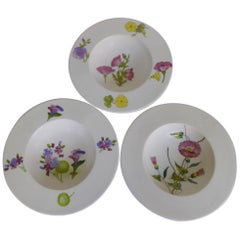
REDUCED FROM $150....Ernestine ceramics bowls are a must for a garden lunch or brunch. The shape of the bowls is superb, with their double outer edge and wide flat shoulder rim terminating in a sharp edge bowl. The decorations are a work of art with fluidity and lovely color palette. The flowers depicted are Morning Glory pattern # 934, Violets #727 and Pansies on the rim with Wild Roses in the center #871. All three are signed Ernestine ITALY...
Category

1950s Italian Mid-Century Modern Vintage Earthenware Ceramics

Materials

Ceramic, Earthenware, Pottery

Small Majolica Leaves Handled Oval Platter Choisy le Roi, circa 1890
Located in Austin, TX
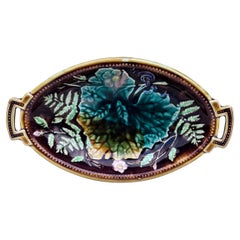
Small Majolica Leaves Oval Handled Platter Choisy le Roi, circa 1890. 9.7 by 5.4 inches.
Category

1890s French Rustic Antique Earthenware Ceramics

Materials

Ceramic, Faience

19th Century French Glazed Earthenware Jug
Located in Buisson, FR
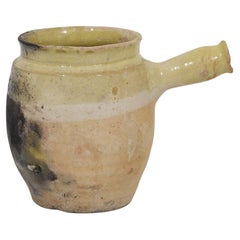
Wonderful weathered glazed earthenware jug from the south of France., France, circa 1850-1900. Despite of its age in a good condition.
Category

19th Century French French Provincial Antique Earthenware Ceramics

Materials

Earthenware

Majolica Asparagus Platter Orchies, circa 1880
Located in Austin, TX
Unusual French Majolica asparagus oval platter Orchies, circa 1880. Decorated with asparagus and asparagus.
Category

1880s French Country Antique Earthenware Ceramics

Materials

Ceramic, Faience

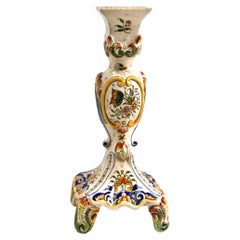
Early 20th Century French Hand-Painted Faience Candlestick from Rouen
Located in Verviers, BE
The designs on this French faience group is typical of pottery made in Rouen. Early 20th Century French Hand-Painted Faience Candlestick from Rouen Marking on the bottom: " Rouen Fa...
Category

Early 20th Century French Earthenware Ceramics

Materials

Faience

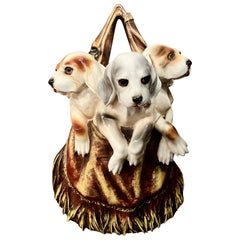
Antique French Hand-Painted Majolica Porcelain "Beagles" Wall Pocket, Circa 1890
Located in New Orleans, LA
Antique French hand-painted Majolica porcelain "Beagles" wall pocket, Circa 1890's.
Category

19th Century French Antique Earthenware Ceramics

Materials

Majolica

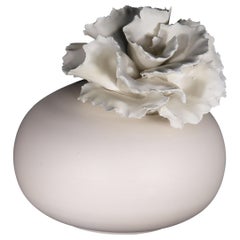
Matt White Glaze Majolica Sculpture with Hand Sculpted Peony, Italy 21st Century
Located in London, GB
Small ceramic sculptures with peony by Antonietta Mazzotti Emaldi, 2018, Glazed earthenware (majolica) and 24ct gold, entirely handmade, unique piece. Customisation available in terms of colour of both for base and flower. Antonietta Mazzotti (Faenza, Italy 1950) attended the Istituto d’Arte per la Ceramica in Faenza and opened her first workshop in her hometown taking part in group and solo exhibitions at international level. In 1976 she has transformed the neo-gothic greenhouse of Villa Emaldi in her workshop. Antonietta Mazzotti has worked for some of the most important international museums and has received several important recognitions worldwide. Her works have been featured in major Italian magazines of interior design and she has acquired international visibility being featured in major international press publications, such as The New York Times. She still lives and works at Villa Emaldi in Faenza where she continues her research on historical decor...
Category

21st Century and Contemporary Italian Earthenware Ceramics

Materials

Ceramic, Earthenware, Majolica

French Majolica Rooster Pitcher Keller and Guerin Saint Clement
Located in Austin, TX
French Majolica rooster pitcher Keller and Guerin Saint Clement, circa 1900. Original older model. Height / 12.8 inches.
Category

Early 1900s French Rustic Antique Earthenware Ceramics

Materials

Ceramic, Faience, Majolica

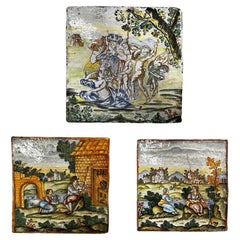
Set of Three 18th Century Large Italian Majolica Plaques
Located in Los Angeles, CA
Set of three large Italian Majolica plaques. Each of them painted with a different scenery. Italy, 18th century. Dimensions: Plaque with grouping Il...
Category

18th Century Italian Antique Earthenware Ceramics

Materials

Majolica

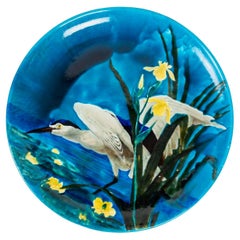
Théodore Deck (1823-1891), an Impressive 19th Century Faïence Charger
Located in Saint-Ouen, FR
Théodore Deck ( 1823-1891) Impressive polychromed circular faience charger with hand-painted enameled design of a wader among water lilies and reeds. Impressed Uppercase Mark Th.Dec...
Category

1870s French Japonisme Antique Earthenware Ceramics

Materials

Faience

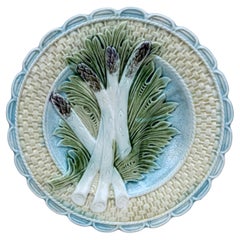
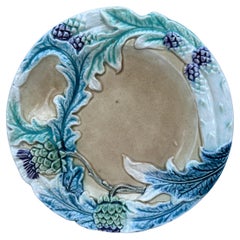
French Majolica Asparagus Plate Salins, circa 1890
Located in Austin, TX
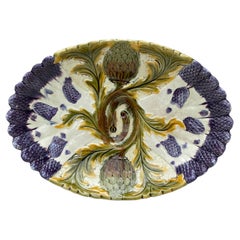
Colorful Majolica asparagus and artichoke plate Salins, circa 1890.   
Category

1890s French French Provincial Antique Earthenware Ceramics

Materials

Ceramic, Faience

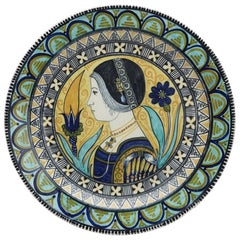
Torquato Castellani Majolica Renaissance Revival Tin-Glazed Charger
Located in Bishop s Stortford, Hertfordshire
An exceptional Renaissance Revival Maiolica tin-glazed plate painted with a side profile portrait of a lady within a decorative border with a line painted design to the base. The lig...
Category

1880s Italian Renaissance Revival Antique Earthenware Ceramics

Materials

Earthenware, Maiolica

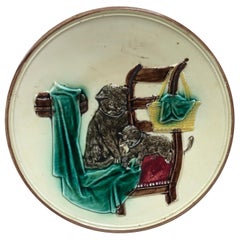
German Majolica Cat Wall Plate, circa 1900
Located in Austin, TX
Lovely German Majolica cat with her kitten plate, circa 1900.
Category

Early 1900s German Country Antique Earthenware Ceramics

Materials

Ceramic, Faience, Majolica

Italian Renaissance Plate, Patanazzi Workshop Urbino, End of 16th Century
Located in Milano, IT
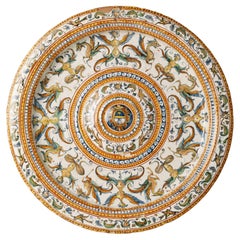
Acquareccia plate Patanazzi workshop Urbino, last quarter of the 16th century It measures diameter 17.12 in; foot diameter 11.53 in; height 1.88 in (43.5 cm; 29.3 cm; 4.8 cm). Weight State of conservation: wear and a few small minimal detachments of enamel, chipping on the raised areas, peeling of enamel at the brim on the back. This large, shallow basin is equipped with a wide and convex well. It is umbonate with a contoured center. The brim, short and flat, is enclosed in a double rounded and barely raised edge. The basin has a flat base without rims; it has a slightly concave center in correspondence to the well. The shape takes inspiration from the basins associated with the metal forged amphora pourers that traditionally adorned the credenza. These were used from the Middle Ages to wash hands during banquets. Two or three people washed their hands in the same basin and it was considered an honor to wash one’s hands with an illustrious person. The decoration is arranged in concentric bands with, in the center of the umbo, an unidentified shield on a blue background: an oval banded in gold with a blue head, a gold star and a field with a burning pitcher. Rings of faux pods separate the center from a series of grotesque motifs of small birds and masks. These go around the basin and are, in fact, faithfully repeated on the brim. The main decoration develops inside the flounce of the basin, which sees alternating symmetrical figures of winged harpies and chimeras. The ornamentation, outlined in orange, green and blue, stands out against the white enamel background. This decorative style, defined since the Renaissance as “grottesche” or “raffaellesche”, refers to the decorations introduced after the discovery of the paintings of the Domus Aurea towards the end of the fifteenth century. The discovery of Nero's palace, buried inside Colle Oppio by damnatio memoriae, occurred by chance when a young Roman, in 1480, fell into a large crack which had opened in the ground on the hill, thus finding himself in a cave with walls covered with painted figures. The great artists present in the papal city, including Pinturicchio, Ghirlandaio, Raffaello, immediately visited these caves. The decorations found there soon became a decorative subject of immense success: the term grotesque , with the meaning of “unusual,” “caricatured,” or “monstrous,” was later commented by Vasari in 1550 as “una spezie di pittura licenziose e ridicole molto”( “a very licentious and ridiculous kind of painting”). The decorations “a grottesche” also widely circulated in ceramic factories, through the use of engravings, variously interpreted according to the creativity of the artists or the requests of the client. Our basin is reflected in similar artifacts produced at the end of the sixteenth century by the factories of the Urbino district. See the series of basins preserved in the main French museums, among which the closest in morphology is that of the Campana collection of the Louvre (Inv. OA1496); this however has a more complex figure decoration, while the decoration of our specimen is sober and with a watercolor style. The style, sure in its execution, approaches decorative results still close to the works produced around the middle of the sixteenth century by the Fontana workshop. The decoration is closely linked to their taste, which later finds its natural outlet, through the work of Antonio, also in the Patanazzi workshop. Studies show the contiguity between the two workshops due to the kinship and collaboration between the masters Orazio Fontana and Antonio Patanazzi, both trained in the workshop of Guido Fontana il Durantino. It is therefore almost natural that their works, often created according to similar typologies and under the aegis of the same commissions, are not always easily distinguishable, so much so that the presence of historiated or “grottesche” works by Orazio is documented and preserved in Antonio Patanazzi's workshop. Given that the studies have always emphasized the collaboration between several hands in the context of the shops, it is known that the most ancient “grottesche” works thus far known, can be dated from 1560, when the Fontana shop created the so-called Servizio Spagnolo (Spanish Service) and how, from that moment on, this ornamentation became one of the most requested by high-ranking clients. We remember the works created for the Granduchi di Toscana, when Flaminio Fontana along with his uncle Orazio supplied ceramics to Florence, and, later, other commissions of considerable importance: those for the service of the Duchi d’Este or for the Messina Farmacia of Roccavaldina, associated with the Patanazzi workshop when, now after 1580, Antonio Patanazzi began to sign his own work. Thus, in our basin, the presence of masks hanging from garlands, a theme of more ancient memory, is associated in the work with more advanced stylistic motifs, such as the hatching of the chimeras and harpies. These are found here on the front with the wings painted in two ornate ways. In addition, the theme of the birds on the edge completes the decoration along the thin brim and can be seen as representing an early style typical of the Urbino district during a period of activity and collaboration between the two workshops. Later, a more “doll-like” decorative choice, typical of the end of the century and the beginning of the seventeenth century, characterized the period of the Patanazzi workshop under the direction of Francesco. Bibliography: Philippe Morel, Il funzionamento simbolico e la critica delle grottesche nella seconda metà del Cinquecento, in: Marcello Fagiolo, (a cura di), Roma e...
Category

16th Century Italian Renaissance Antique Earthenware Ceramics

Materials

Maiolica

Majolica Asparagus Plate Fives Lille, circa 1890
Located in Austin, TX
Majolica asparagus plate attributed to Fives Lille, circa 1890.  
Category

1890s French French Provincial Antique Earthenware Ceramics

Materials

Ceramic, Faience

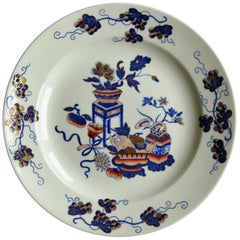
Georgian Plate by Spode in Gilded Bow Pot Pattern Number 2954, circa 1820
Located in Lincoln, Lincolnshire
This is a beautiful plate in the Bow Pot pattern, produced by the Spode factory and made of a type of earthenware pottery called Pearl-ware, in the early 19th century, circa 1820. ...
Category

Early 19th Century English Chinoiserie Antique Earthenware Ceramics

Materials

Pearlware

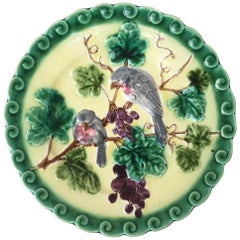
Majolica Plate Birds with Grapes Sarreguemines, circa 1880
Located in Austin, TX
Majolica plate birds with grapes signed Sarreguemines, circa 1880.
Category

1880s French French Provincial Antique Earthenware Ceramics

Materials

Ceramic, Faience

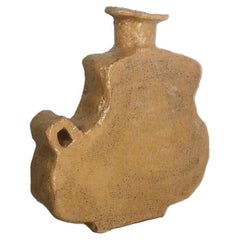
A double decorated Ceramic Vase by Joe and Pat Rowland circa 1960 Capron Blin
Located in Camblanes et Meynac, FR
A double decorated Ceramic Vase by Joe and Pat Rowland circa 1960 Capron Blin A beautiful free-form ceramic vase. It is both a brutalist work, with its ve...
Category

Mid-20th Century French Mid-Century Modern Earthenware Ceramics

Materials

Sandstone, Enamel

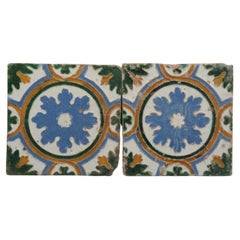
Spanish Azulejo pair of Tiles Arista y Cuenca - Toledo 16th century
Located in DELFT, NL
Early Arista y cuenca tiles made in Toledo. Tile decorated in renaissance with stylized flowers, probably made between 1550 and 1575. Also separately available, please reach out t...
Category

16th Century Spanish Renaissance Antique Earthenware Ceramics

Materials

Earthenware, Maiolica

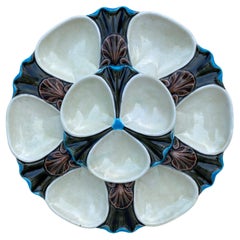
Austrian Majolica Oyster Plate, circa 1880
Located in Austin, TX
Large unusual Austrian Majolica oyster plate, circa 1880.
Category

1880s Austrian Aesthetic Movement Antique Earthenware Ceramics

Materials

Ceramic, Faience

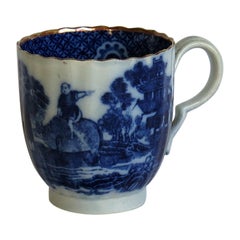
Early Coffee Cup Blue and White Boy on a Buffalo Ptn probably Spode, circa 1790
Located in Lincoln, Lincolnshire
This is a good, very early, rare blue and white coffee cup in the "Boy on a Buffalo" pattern, probably from the factory of Josiah Spode, stoke on Trent, Staffordshire, England, made...
Category

Late 18th Century English Chinoiserie Antique Earthenware Ceramics

Materials

Earthenware

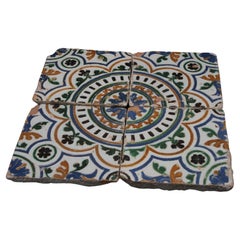
Spanish Azulejo set of 4 tiles Arista y Cuenca - Toledo 16th century
Located in DELFT, NL
A set of four early Arista y Cuenca tiles from Toledo, Spain, dating to circa 1550–1575. These tiles were produced during the Spanish Renaissance, a period when Toledo was a major ce...
Category

16th Century Spanish Renaissance Antique Earthenware Ceramics

Materials

Earthenware, Maiolica

Van Hooff Ceramic Vase "Atro" in Natural Clay, Contemporary African Style Vessel
Located in Barcelona, ES
Ceramic vase model “Atro” From the series "Core Vessels" Manufactured by Willem van Hooff Holland, 2022 Earthenware, glazed Measurements 40 cm x 38 cm 15,7 in x 14,9 in E...
Category

2010s Dutch Earthenware Ceramics

Materials

Earthenware, Ceramic, Clay

Still Thinking About These?

All Recently Viewed