Chinoiserie Ceramics

CHINOISERIE STYLE

Emerging in the 17th century, chinoiserie appropriated the aesthetics and imagery of popular East Asian design for European-made versions. Reflecting the exoticization of China, Japan and other countries in this era, the word directly translates from French to “Chinese-esque,” which reveals its shortcomings as a style of furniture and decor that often stereotypically and reductively mimics Asian culture rather than showcasing and paying tribute to its artistic traditions.

The enthusiastically decorative chinoiserie style was propelled by influential tastemakers including French King Louis XIV, whose Trianon de Porcelaine in 1670 was inspired by Chinese architecture. Expanded trade between the East and West led to a demand for porcelain, lacquer objects, silk and other goods, which further informed the fanciful furniture being crafted in Europe.

Artisans working in the chinoiserie style used materials and elements like pagoda shapes, bamboo, lacquer surfaces, bird and flower motifs and other interpretations of Asian design on pieces that were frequently set against vibrant wallcoverings. This whimsical approach yielded chinoiserie furniture that boasted dramatic flourishes drawing on the natural world and reflected the dominance of Rococo during the 18th century.

As chinoiserie was shaped by approximations of Asian design by European creators, it had regional variations, such as Chinese Chippendale in England where cabinets, chairs and tea tables had wooden fretwork designs and “japanned” surfaces intended to resemble lacquer work that was created in East Asia. In North America, furniture makers in Boston and New York integrated chinoiserie-painted scenes into Queen Anne furniture.

Antique chinoiserie furniture has continued to be fashionable, from its popularity with decorators of the Hollywood Regency era — James Mont, Tommi Parzinger, William Haines and Samuel Marx favored the style — to contemporary interior designers, although it brings with it a complex history.

Find a collection of chinoiserie bedroom furniture, cabinets, decorative objects and more on 1stDibs.

to
5
138
1
15
100
23
1
7
5
1
1
1
2,708
948
947
656
305
251
121
115
71
65
54
32
31
16
8
6
3
2
139
71
71
26
18
100
35
122
105
105
16
16
139
139
139
47
9
6
4
4
Style: Chinoiserie
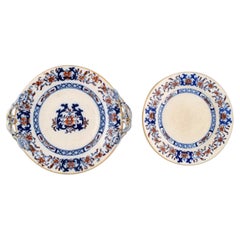
Mintons, England, Two Antique Plates in Hand-Painted Faience, Chinese Style
Located in København, Copenhagen
Mintons, England. Two antique plates in hand-painted faience. Chinese style, early 20th century. Largest measures: 23.5 x 20.5 cm. In excellent condi...
Category

Early 20th Century English Chinoiserie Ceramics

Materials

Faience

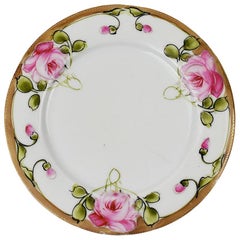
Moriage Chintz Round Pink and Green Floral Nippon Catchall Dish with Gold Rim
Located in Oklahoma City, OK
A small round ceramic plate with a pink and green floral design around the edges. The center of the plate is a crisp white glazed ceramic with slight cracquelure. The edges feature hand painted pink roses with green foliage. A raised pattern of dots accents at the outer most edge of the rim. (Moriage style...
Category

Late 19th Century Japanese Antique Chinoiserie Ceramics

Materials

Ceramic, Paint

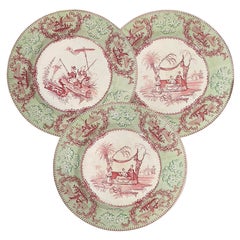
Romantic Chinese Scenes Fine Earthenware 8 Plates by Creil 1834-1840
Located in Paris, FR
Set of 8 Chinoiseries Scenes lunch plates (+ 1 for free with a crack). Made of opaque porcelain, they had a principal scene showing various scenes of extreme-oriental kids playing together in several landscapes printed in pink on a white background. On the border, pink pagodas...
Category

1830s French Antique Chinoiserie Ceramics

Materials

Ceramic, Porcelain

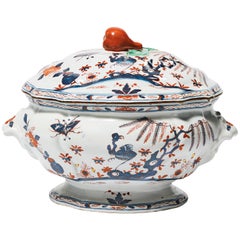
Ancient Italian Maiolica Tureen Milano, 1770 circa
Located in Milano, IT
Maiolica tureen “allo struzzo” (ostrich decoration) Milan, Felice Clerici or Pasquale Rubati factory, circa 1750-1780 Measures: 9.25 in x 12.79 in x 10.23 in (cm 23.5 x cm 32.5 x cm 26) lb 4.78 (kg 2.17) State of conservation, a felûre consolidated inside with slight edge chipping restored. In Milan in the 18th century two Majolica warehouses were opened, the first, by Felice Clerici, in 1745, the second in 1756 by Pasquale Rubati. Traditionally this type of decoration has been attributed to the Pasquale Rubati factory. In reality the motif “allo struzzo”, one of the clearest examples of how the taste for chinoiserie met with considerable success during the 18th century, had been produced, in specimens of greater or lesser quality, by both Milanese manufactories. This Maiolica tureen has a swollen and ribbed oval bowl, rests on an extroflexed foot and shows stirrup handles. The tri-color ornament, in the typical tones of Japanese "Imari" decorations, shows an idealized oriental landscape that develops around a perforated rock and has a willow tree with long lance-shaped leaves framing the long-legged bird figure. The ornamentation is enhanced by decorative elements such as butterflies, small florets and a vase with a thin flowery stem. The lid is ribbed with a pear-shaped knob on top. The decoration was called in the Milanese manufactories "allo struzzo" (ostrich decoration) and this refers to the oriental figure Xian He or the crane, symbol of longevity, here losing its symbolic value. It is hypothesized that among some 16th century engravings...
Category

1770s Italian Antique Chinoiserie Ceramics

Materials

Maiolica

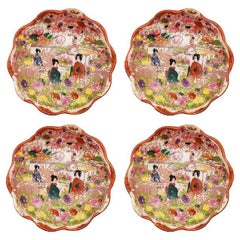
Ceramic Chinoiserie Vide Poche Decorative Dishes, Set of 4
Located in Oklahoma City, OK
A set of four pretty scalloped chinoiserie dishes. Each dish is slightly bowl-shaped and would be fabulous if used as a lemon dish at a place setting, or as...
Category

Early 20th Century Japanese Chinoiserie Ceramics

Materials

Ceramic, Paint

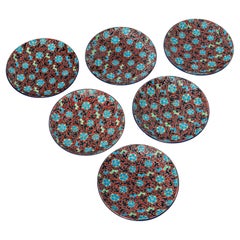
Set of Six Enamel Ceramic Dishes by Longwy, France, Mid-19th Century
Located in Buenos Aires, Buenos Aires
Set of six enamel ceramic dishes by Longwy, France, mid-19th century.
Category

Mid-19th Century French Antique Chinoiserie Ceramics

Materials

Ceramic

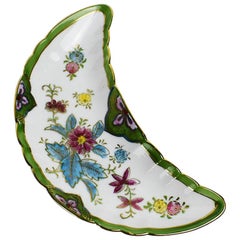
Green and White Crecent Shape Ceramic Dish
Located in Oklahoma City, OK
A ceramic Crecent shaped dish with hand painted green, red and gold decorations. A lovely piece with felt pads at the bottom for protection of surfaces. Dimensions: 6.75" wide ...
Category

20th Century Chinese Chinoiserie Ceramics

Materials

Ceramic, Paint

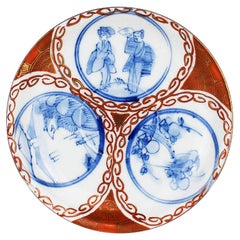
Antique Red Blue and Gold Geisha Motif Saucer Sichuan Province, Signed
Located in Oklahoma City, OK
A striking antique porcelain saucer from the Sichuan Province in China. This lovely piece depicts still life scenes of mountains and botanica...
Category

Mid-19th Century Chinese Antique Chinoiserie Ceramics

Materials

Porcelain, Paint

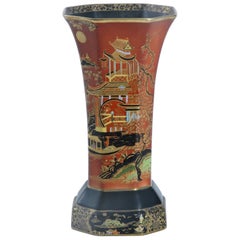
Carlton Ware England Temple Pattern Octagonal Vase, circa 1925
Located in Pymble, NSW
A superbly hand decorated 'Temple' pattern vase from circa 1925 in near perfect condition having been in only the one collection since purchase in the 1930s. Oriental scene of figure...
Category

1920s English Vintage Chinoiserie Ceramics

Materials

Ceramic

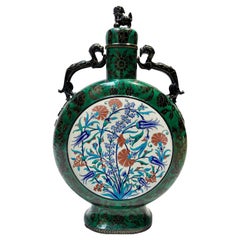
Enamel Ceramic Vase Signed Eugène Victor Collinot Toujours, France, circa 1870
Located in Buenos Aires, Buenos Aires
Enamel ceramic vase signed Eugène Victor Collinot Toujours. France, circa 1870.
Category

Late 19th Century French Antique Chinoiserie Ceramics

Materials

Ceramic

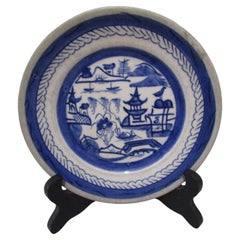
Pair of Wright Tynsdale Van Roden Blue WIllow Salad Plates
Located in Lomita, CA
This pair of Tynsdale and Wright, Van Roden plates has all of the blue willow elements for the narrative.
Category

Early 20th Century American Chinoiserie Ceramics

Materials

Ceramic

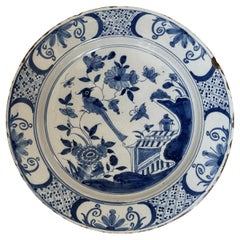
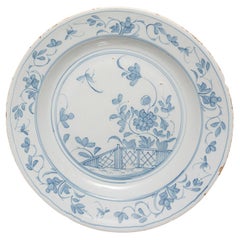
Fine English delft charger featuring a chinoiserie garden scene
Located in Charlottesville, VA
A fine English delft charger featuring a chinoiserie garden scene with long-tailed bird, butterflies, and bees amid peonies and a fence, painted in deep cobalt blue on a tin-glazed g...
Category

18th Century English Antique Chinoiserie Ceramics

Materials

Delft

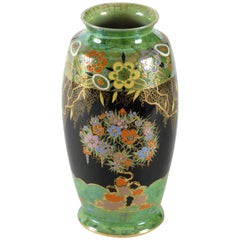
Carlton Ware Mandarin Tree Vase England, circa 1935
Located in Pymble, NSW
A large Carlton Ware vase from, circa1935 with the Mandarin Tree pattern with the green/black color way variation. Superbly hand painted and gilded in near excellent condition. A cou...
Category

1930s English Vintage Chinoiserie Ceramics

Materials

Pottery

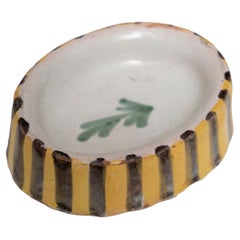
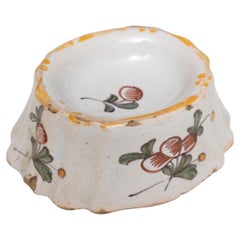
Salt Cellar Dish Faience Oval French Yellow Blue White Sprig Stripe
Located in BUNGAY, SUFFOLK
Rare surviving small piece of early tableware. Suitable for everyday use as a charming piece of history for the dining table. French faience salt. Oval shape with a leafy sprig in...
Category

18th Century French Antique Chinoiserie Ceramics

Materials

Earthenware

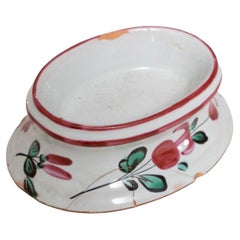
Salt Cellar Dish Faience French Rose Green White Flowers
Located in BUNGAY, SUFFOLK
Rare surviving small piece of early tableware. Suitable for everyday use as a charming piece of history for the dining table. two red bands around the top. the base decorated with...
Category

18th Century French Antique Chinoiserie Ceramics

Materials

Earthenware

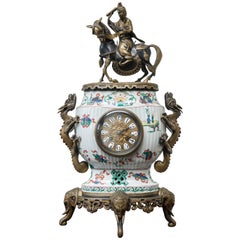
19th Century, French Clock in the Chinoiserie Style
Located in San Francisco, CA
19th century, French clock In the Chinoiserie style. An 8 day pendulum movement that bell strikes on the hour and half hour. Chinese porcelain body in the Kang His style by Samson. T...
Category

Late 19th Century French Antique Chinoiserie Ceramics

Materials

Bronze

Salt Cellar Dish Faience French Oval Green Brown Orange White
Located in BUNGAY, SUFFOLK
Rare surviving small piece of early tableware. Suitable for everyday use as a charming piece of history for the dining table. The oval centre painted with a large berry and leafy ...
Category

18th Century French Antique Chinoiserie Ceramics

Materials

Earthenware

Dish, delftware, English, Liverpool, blue white butterfly 35cm 13 3/4" c1760
Located in BUNGAY, SUFFOLK
Delightfully painted in soft tones of blue conveying the lightness and charm of Chinoiserie. Painted with a chinoiserie landscape scene of a large peony growing behind a fence wit...
Category

18th Century English Antique Chinoiserie Ceramics

Materials

Earthenware

19th Century Spanish Sargadelos Ceramic Transferware Octagonal Serving Plate
Located in Madrid, ES
The origin of Sargadelos Ceramics goes back to the early 19th century in Spain's northern province of Galicia. Industrialist Antonio Raimundo Ibáñez had already established a thriving metalworks foundry in the rural Santiago de Sargadelos parish, when in 1806 he expanded his business into chinaware manufacturing when conflicts with Great Britain ceased the importation of the popular, bright white “Bristol...
Category

Late 19th Century Spanish Antique Chinoiserie Ceramics

Materials

Porcelain

Chinoiserie ceramics for sale on 1stDibs.

Find a broad range of unique Chinoiserie ceramics for sale on 1stDibs. Many of these items were first offered in the 21st Century and Contemporary, but contemporary artisans have continued to produce works inspired by this style. If you’re looking to add vintage ceramics created in this style to your space, the works available on 1stDibs include serveware, ceramics, silver and glass, decorative objects, asian art and furniture and other home furnishings, frequently crafted with ceramic, ironstone and other materials. If you’re shopping for used Chinoiserie ceramics made in a specific country, there are Europe, United Kingdom, and England pieces for sale on 1stDibs. While there are many designers and brands associated with original ceramics, popular names associated with this style include Mason's Ironstone, Josiah Spode, Ashworth Ironstone, and Spode. It’s true that these talented designers have at times inspired knockoffs, but our experienced specialists have partnered with only top vetted sellers to offer authentic pieces that come with a buyer protection guarantee. Prices for ceramics differ depending upon multiple factors, including designer, materials, construction methods, condition and provenance. On 1stDibs, the price for these items starts at $25 and tops out at $88,000 while the average work can sell for $439.