Early 19th Century Folk Art

to
78
143
118
272
79
16
14
8
4
3
1
1
1
1
1
660
2,975
8,358
1,511
2,190
2,989
1,471
197
102
268
328
266
426
486
568
267
177
163
57
53
48
36
140
88
81
40
39
272
272
272
4
1
1
1
1
Period: Early 19th Century
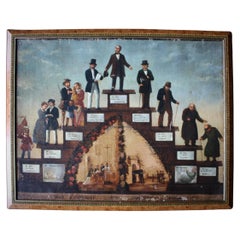
European School 19th Century the Arch or Steps of Life Death ‘Stages of Life’
Located in Lowestoft, GB
A charming depiction of figures from youth to old age, ascending and descending the steps of the ladder of life, the centre shows baptism and ...
Category

European Antique Early 19th Century Folk Art

Materials

Canvas

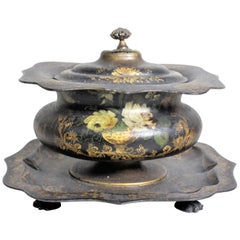
Antique English Regency Period and Styled Hand Painted Toleware Tea Caddy
Located in Hamilton, Ontario
This antique English toleware tea caddy dates to circa 1820 and done in the period Regency style. This tea caddy is constructed of tin with a cast i...
Category

English Regency Antique Early 19th Century Folk Art

Materials

Metal

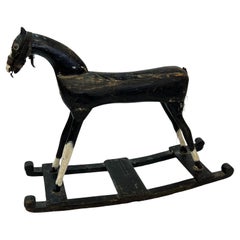
Rare Early 19th Century Folk Art Rocking Horse - Authentically Aged Antique
Located in North Palm Beach, FL
Discover a captivating piece of childhood history with this charming and rare early 19th-century folk art rocking horse. This exquisite antique, showcasing the distinctive character ...
Category

American Folk Art Antique Early 19th Century Folk Art

Materials

Wood

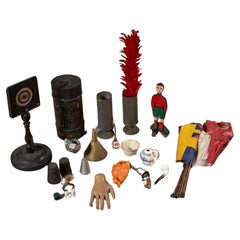
Vintage Magician s Tool Collection - Assorted Magic Props and Accessories
Located in Mortsel, BE
Step into the world of classic magic with this unique collection of vintage magician's tools and props. This assorted set includes a variety of intriguing items, each with its own history and charm. From the traditional magician's hat and wand to more obscure tools, this collection is perfect for any magic enthusiast or collector. The items showcase the craftsmanship and creativity that were essential in the art of magic, making them not only functional but also fascinating pieces of history. Whether displayed as a complete set or used in performances, these vintage magic props...
Category

Antique Early 19th Century Folk Art

Materials

Textile, Wood

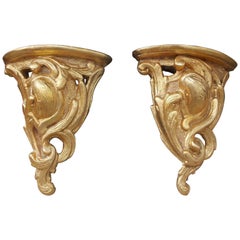
Pair of Italian Gilt Carved Wood Demilune Acanthus Wall Brackets, Circa 1800
Located in Charleston, SC
Pair of Italian gilt carved wood demilune wall brackets with scrolled foliage acanthus motif. All original. Early 19th Century.
Category

Italian Neoclassical Antique Early 19th Century Folk Art

Materials

Giltwood, Wood

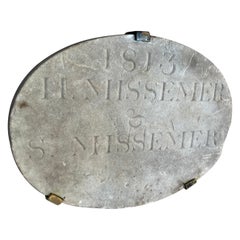
American Folk Art Carved Marble Oval Building Marker, Dated 1813
Located in Lambertville, NJ
A haunting and unusual American carved marble building marker, probable New England origin circa 1813. The names inscribed are H. Missemer & S. Missemer. It...
Category

American Antique Early 19th Century Folk Art

Materials

Marble, Wrought Iron

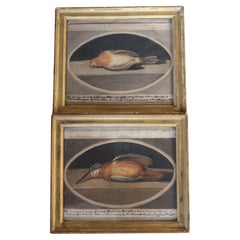
1807 British School Studies Dead Robin Kingfisher by Richard Pillar A Fair Lad
Located in Lowestoft, GB
Early 19th Century British School studies of a dead robin and kingfisher both similarly inscribed to the lower margin. Watercolours on paper with pencil underdrawings, housed in glaz...
Category

English George III Antique Early 19th Century Folk Art

Materials

Glass, Giltwood, Paper

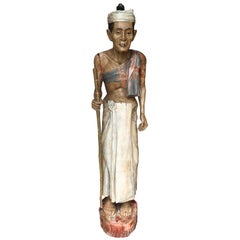
Antique Folk Art Carved Gesso over Wood and Hand Painted Native Man Statue
Located in Hamilton, Ontario
Presumed to date from the late 19th century, this life-sized Folk Art carved and hand painted study depicts a Native man dressed in traditional attire and holding a staff. The artist is unknown and this sculpture is unsigned and done in a very realistic style. The carving, likely done in Cyprus wood...
Category

American Folk Art Antique Early 19th Century Folk Art

Materials

Softwood, Paint

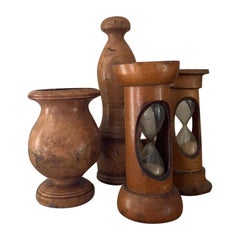
Set of Kitchen Treen with 2 Hourglasses, One Candlestick Holder and Pepper Mill
Located in Vosselaar, BE
Set of kitchen treen with 2 hourglasses, one candlestick holder and pepper mill. All 19th century French.
Category

French Victorian Antique Early 19th Century Folk Art

Materials

Birch

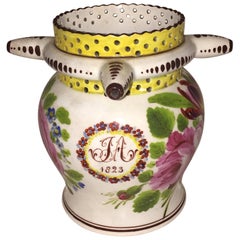
George IV Painted Puzzle Jug, Dated 1823 with Initials JA
Located in Spencertown, NY
The puzzle jug consisting of a handle with pierced yellow painted decoration above and below the band of three spouts, floral painting on each side with int...
Category

English George IV Antique Early 19th Century Folk Art

Materials

Ceramic

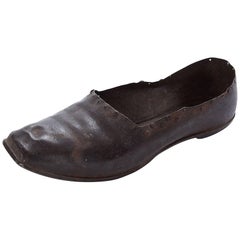
Late 19th Century Hand-Forged Iron Shoe, Likely a Cobblers Sample
Located in Wainscott, NY
Late 19th century hand-forged iron shoe, likely a Conblers sample.    
Category

European Antique Early 19th Century Folk Art

Materials

Iron

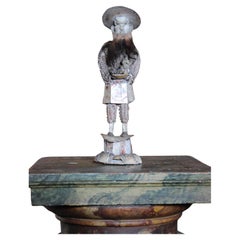
Early 19th C George III Folk Art Shell Work China Man Sailor Maritime Naval
Located in Lowestoft, GB
A wonderfully detailed and intricately decorated early 19th century shell work figure. Depicting a traditionally dressed Chinese gent, with his wispy beard, hat and holding his bask...
Category

English George III Antique Early 19th Century Folk Art

Materials

Natural Fiber

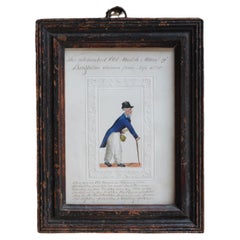
George IV Folk Art Portrait of The Brighton Match Maker 1828
Located in Lowestoft, GB
A wonderful folk art hand penned and coloured portrait of the Brighton Match Maker 1828. Housed in its original frame with a decorative perforated border and wee verse that reads ...
Category

English Antique Early 19th Century Folk Art

Materials

Paint

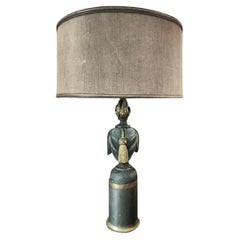
American Folk Art Table Lamp, Hand-Carved Pine, Circa 1850
Located in Hudson, NY
Very stylish folk art carving of an urn with flame. Likely from a hears of the mid nineteenth century. This sculpture is hand carved from pine and retains the original painted and gi...
Category

American Folk Art Antique Early 19th Century Folk Art

Materials

Gold

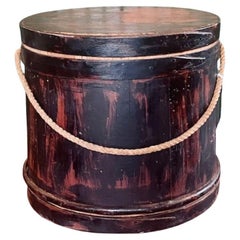
Early 19th Century Grain Painted Firkin
Located in Nantucket, MA
Early 19th Century Grain Painted Firkin, possibly late 18th Century, a hand crafted firkin or bucket, having a round lid above a barrel-stave built vessel held by wooden hoops, on so...
Category

American Folk Art Antique Early 19th Century Folk Art

Materials

Pine

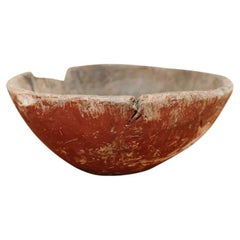
19th Century Swedish Dugout Bowl
Located in Brecht, BE
A lovely dugout Swedish bowl, with rests of old red paint. Dated 1821.
Category

Swedish Antique Early 19th Century Folk Art

Materials

Wood

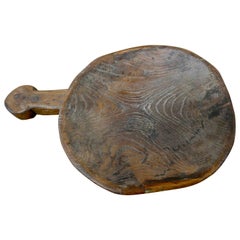
Ancient Asian Grain Scoop Bowl
Located in Godshill, Isle of Wight
Ancient Asian grain scoop bowl A tactile and lovely looking piece the bowl has a handle, it is made from a single piece of wood, it has flat bottom, a s...
Category

Anglo Raj Antique Early 19th Century Folk Art

Materials

Wood

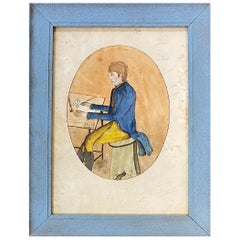
John Taylor Pen Watercolor Self Portrait, Albany NY c1805-06
Located in Milford, NH
A wonderful American folk art pen and watercolor self portrait of John Taylor, Albany, NY, circa 1805-6. Taylor has drawn himself as a fashionable, industrious young man seated at hi...
Category

American Folk Art Antique Early 19th Century Folk Art

Materials

Glass, Wood, Paper

Qing Dynasty Crystal Seated Buddha
Located in New York, NY
Chinese carved rock crystal figure of Buddha, Qing Dynasty, seated in meditation, incised crescent moon mark to lower edge at front, Measures: 5" H...
Category

Chinese Qing Antique Early 19th Century Folk Art

Materials

Rock Crystal

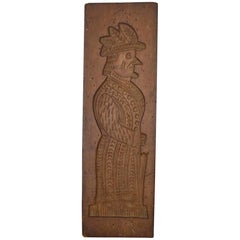
Wooden Gingerbread Mold
Located in Vista, CA
Wooden gingerbread mold (man with feathers in hat and umbrella), signed.
Category

European Antique Early 19th Century Folk Art

Materials

Wood

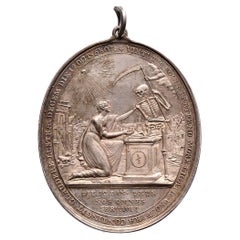
Medal In memory of the gunpowder ship disaster on January 12
Located in UTRECHT, UT
Obverse: VIRTUTIS SOCIIS FRATERNO MORE LIGATIS PROSPERA CONTINGIT CLAUDERE LUSTRA DECIM DIE 19 OCT. 5807, all-seeing eye in a halo, woman in draped robe and with sun on her chest, kn...
Category

Dutch Neoclassical Antique Early 19th Century Folk Art

Materials

Silver

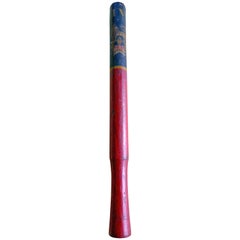
William IV Police Truncheon
Located in Godshill, Isle of Wight
A William IV policeman’s truncheon. A great piece of social history, the baton has a slightly shaped grip handle, the lower part is painted in Red and the upper part has a blue ba...
Category

Regency Antique Early 19th Century Folk Art

Materials

Paint

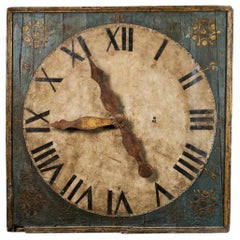
Monumental Clock on a Polychromed Panel with Hands in Golden Metal
Located in Leuven , BE
Monumental early 19th century clock on a polychrome panel with clock-hands in golden metal, fixed on a tin sheet. The hands are attached to the back of the panel with a clock system,...
Category

French Antique Early 19th Century Folk Art

Materials

Fruitwood

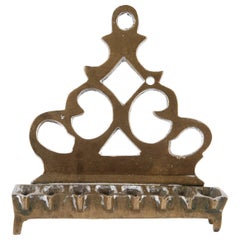
Early 19th Century Polish Brass Hanukkah Lamp Menorah
Located in New York, NY
Brass Hanukkah lamp Menorah, Poland, circa 1810. Cast in Bench form, on four feet. The backplate is cast and pierced featuring scrollwork. This lamp was made by the technique known as "sand casting". This process begins with a wooden mold that was carved out to create negative space, which in turn is used to make the inverse form or shape to be used for the casting of metal. The mold is pressed into fine sand mixed with clay, then removed, and molten brass poured into the impression. When a mold wears out, a casting from that mold is often used as the mold for the next generation. Those later lamps...
Category

Polish Antique Early 19th Century Folk Art

Materials

Brass

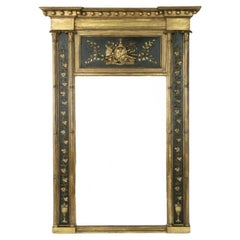
A large Nelson commemorative armorial pier glass
Located in Lymington, Hampshire
A large Nelson commemorative armorial pier glass. This George III giltwood mirror has a rectangular glass plate below a shaped cornice with a central coat of arms for Admiral Lord Nelson (1758-1805) flanked by foliate tendrils on a painted black ground. The sides consist of paired tied-reed columns with palm frond capitals enclosing similar black painted panels of fruiting vine tendrils rising from classical vases. English, circa 1805. See Wick Antiques, Britain on the High Seas: From Nelson to Churchill, pp.76-77, for a very similar giltwood mirror from a group at Merton Place, the house in Surrey which the Admiral shared with his mistress Emma, Lady Hamilton (1765-1815). They all featured his coat of arms surmounted by a baron’s coronet...
Category

English Antique Early 19th Century Folk Art

Materials

Giltwood

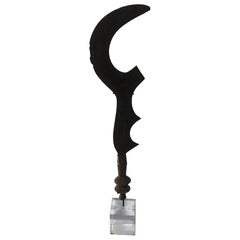
Tribal African Iron Hook Currency
Located in Dallas, TX
Tribal African Currency.
Category

African Antique Early 19th Century Folk Art

Materials

Iron

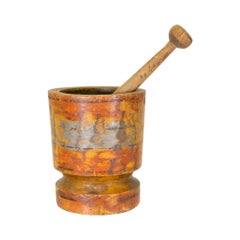
19th Century Mortar and Pestle
Located in Coeur d Alene, ID
19th century fruitwood mortar and pestle. Remnants of oxblood red and silver blue banded paint. Original pestle included. Origin: Eastern, United States Period: First half of the 19...
Category

American Antique Early 19th Century Folk Art

Materials

Fruitwood

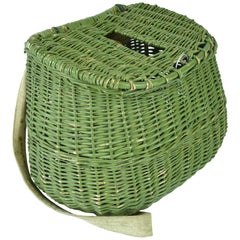
Duckweed Green Creel
Located in Coeur d Alene, ID
Native center opening creel made of split willow. We assume sold to a fisherman, he painted. Measures: 9" x 13" x 8" H. Period: 19th century Origin: Northeast Size: 9" x 13" x 8" ...
Category

American Native American Antique Early 19th Century Folk Art

Materials

Willow

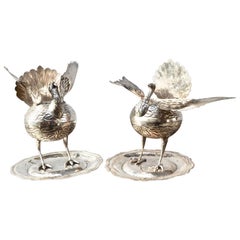
Pair of South American Perfume or Incense Burners in Silver
Located in Brussels, BE
Silver tested but not stamped.
Category

South American Antique Early 19th Century Folk Art

Materials

Silver

Bone Inlaid Wall Art in Blue Resin with Celtic Dragon Pattern- Instock
Located in New York City, NY
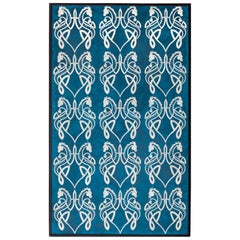
Feast your eyes on our Bone Inlaid Pattern Wall Art in Blue Resin. This isn't just art; it's a mesmerizing blend of tradition and contemporary design. Imagine multiple Celtic dragons...
Category

Unknown French Provincial Antique Early 19th Century Folk Art

Materials

Bone

Federal Grain Painted and Stenciled Document Box 19th Century American
Located in Hudson, NY
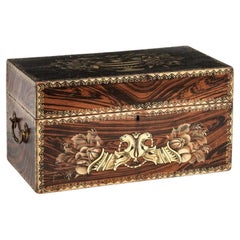
A spectacular and fine, dovetailed poplar, rosewood grain painted and ebonized document box. The gold stenciling is of a very fine quality. Retains the original fire gilded steel bai...
Category

American Federal Antique Early 19th Century Folk Art

Materials

Gold, Steel

1806 Printed Linen Kerchief Glorifying George Washington, Germantown, Penn
Located in York County, PA
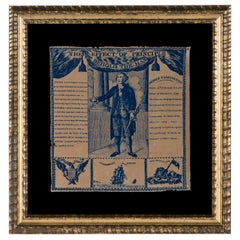
EXTRAORDINARILY EARLY (1806) PRINTED LINEN KERCHIEF GLORIFYING GEORGE WASHINGTON, PRINT WORKS, GERMANTOWN, PENNSYLVANIA Printed in blue ink on coarse, white linen, this patriotic kerchief shows a standing portrait of George Washington, above which is a swag valance and the words “The Effect of Principle, Behold the Man”. The portrait is based on a mezzotint after Gilbert Stuart’s very famous painting of Washington in his later years, most often referred to as the Landsdowne portrait. Stuart painted three versions of it in oil on canvas, one of which was completed in 1796 for a wealthy merchant by the name of William Constable, who commissioned the work for Alexander Hamilton. The kerchief is interesting because it is both American-made and documented. This is exceptionally unusual for any printed textile of the 19th century or prior and the earlier the time period the more unlikely an object is to be identified. This kerchief and a companion piece entitled “The Love of Truth Mark the Boy” (also glorifying Washington, through the fabled story of the cherry tree), were made circa 1806 by Germantown Print Works in Germantown, Pennsylvania. To the left of Washington's image is a portion of his infamous farewell address to his troops at the end of the Revolutionary War. To the right is a short excerpt from his eulogy. Below these are three images. In the center is a square-rigged tall ship with “Commercial Union” above it, flanked by the American eagle on the left and the British lion on the right. It is reasonable to assume that the textile may have been produced in demonstration of the maker's desire, and/or that of others, to advance trade with England. Commercial printers were very influential in early America, as they possessed the means by which to disseminate information. This kerchief and its companion piece are documented in Threads of History, Americana Recorded on Cloth, 1775 - the Present, by Herbert Ridgeway Collins (1979, Smithsonian Press), p. 63, items 38 39.* The two pieces pictured are in the collection of Cornell University, but the Collins text also cites an uncut pair to be present in the collection of the Western Reserve Historical Society, Cleveland, OH. The name "Germantown Print Works" is printed on the Western Reserve examples. Another example of the textile in question is documented in "Running for President, The Candidates and Their Images, 1789-1896" by Schlesinger, Israel, and Frendt, (1994, Simon Schuster), p. 15. I have seen three different color variations of this textile, including sepia, mulberry red, and blue. This particular example has a hand-sewn binding along the top, lower, and left edges. Mounting: The textile was mounted and framed within our own conservation department, which is led by expert staff. We take great care in the mounting and preservation of flags and have framed thousands of examples. The gilded molding has a rippled profile and dates to the period between 1825 and 1850.The background is 100% cotton twill, black in color. The glazing is U.V. protective plexiglass. Feel free to contact us for more details. Condition: There is an all-over golden oxidation of the white fabric and there is very minor staining. There are tiny tack holes in each corner and there are minor nicks around the perimeter. * Collins relates that Germantown Printworks was operated by the Hewsons. In doing so he cites one of Worthington Chauncey Ford's books on George Washington, but it isn't clear which one (there are many) and no page numbers are given. John Hewson was an Englishman who came to America and opened his printing business on the advice of Benjamin Franklin. He was one of the first “calico printers” and is the earliest documented to have advertised printed kerchiefs. His ads for bandanas appear as early as June 20th, 1774. He is suspected of having produced the very first American kerchief that pictured an American president, which is documented in Collins as item 1 on page 48. Linda Eaton, curator at Winterthur, in 2012, is currently doing in depth research on the three printers of fabrics that were operating in Germantown in early America. She discovered that the owner and/or operator of Germantown Print Works, while not currently known, was not John Hewson. This information is not yet published. She also noted that Winterthur possessed examples of the two George Washington textiles...
Category

American Antique Early 19th Century Folk Art

Materials

Cotton

Still Thinking About These?

All Recently Viewed