Revival Folk Art

to
30
15
14
81
29
2,079
1,000
545
266
183
179
169
91
75
75
54
39
39
30
21
20
6
6
2
11
16
81
7
3
1
1
1
90
86
75
75
12
83
78
75
72
22
110
105
105
75
5
Style: Revival
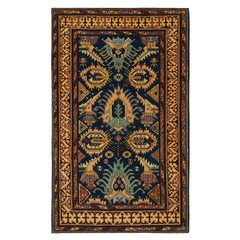
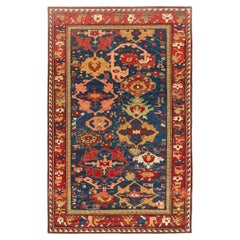
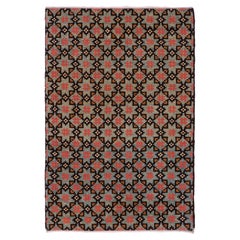
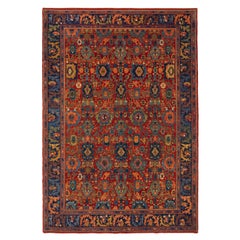
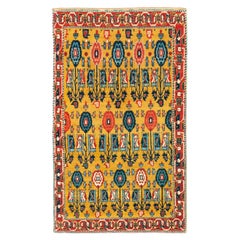
Ararat Rugs Bidjov Kazak Rug Caucasian Antique Revival Carpet Natural Dye
Located in Tokyo, JP
This is a Bidjov Kazak rug, designed late 19th century, is a type of handwoven rug that originated from the Caucasus region, specifically from the town of Bidjov, a few miles north o...
Category

21st Century and Contemporary Turkish Revival Folk Art

Materials

Wool, Natural Fiber, Organic Material

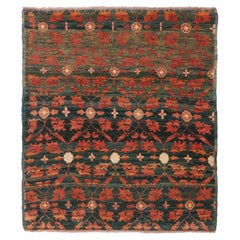
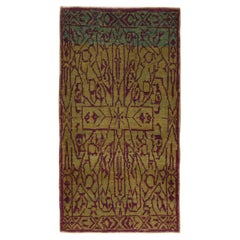
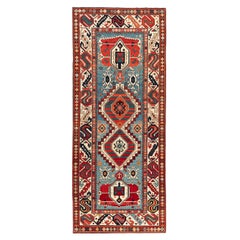
Ararat Rugs Mamluk Wagireh Rug with Flower Lattice Design DoorMat Entrance Mat
Located in Tokyo, JP
The design source of carpet comes from the book Völker, Angela, Die orientalischen Knüpfteppiche das MAK, Vienna: Böhlau, 2001: 42–5. This rug with the central star was designed in the early 16th-century rug by Mamluk Sultane of Cairo, Egypt. It is exhibited at MAK – Museum of Applied Arts, Vienna Austria. The interpreted design is composed of a flower lattice pattern taken from a part of the MAK Museum’s rug...
Category

21st Century and Contemporary Turkish Revival Folk Art

Materials

Wool, Natural Fiber, Organic Material

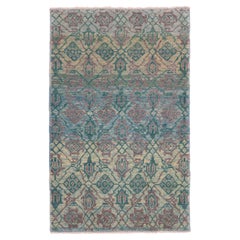
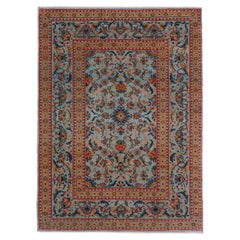
Ararat Rugs Mamluk Wagireh Rug Lattice Pattern Revival Carpet Natural Dyed
Located in Tokyo, JP
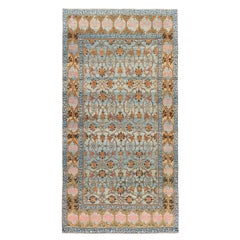
This lattice pattern is composed of palmettes and leaves filling the various compartments against the imposing ground. One has the impression that it is only part of a larger scheme designed 15th-century rug from the Mamluk era, Cairo region, Eygpt. These designs have often been described as wagirehs or samplers and were said to have been used as weaver`s aids, or for demonstration purposes, made as a template or pattern for the carpet design and production of larger rugs, they are generally small pieces of the size of a scatter rug or mat. Mamluk carpets originated in a physical environment that lacked the combination of abundant marginal grazing land and a temperate climate with cool winters that were common to most carpet-weaving areas in the Islamic world. While related to a broader tradition of Turkish weaving centered in Anatolia, far to the north, the designs of these carpets include atypical elements, such as stylized papyrus plants, that are deeply rooted in Egyptian tradition. Their unusual composition and layout probably represent an attempt to develop a distinctive product that could in effect establish a “Mamluk brand” in the lucrative European export market. The uncharacteristic color scheme—devoid of the undyed white pile and employing a limited range of three or five hues in much the same value—also suggests a conscious attempt to create a particular stylistic identity. Also virtually unique in the world of Islamic carpets is the S-spun wool. It has been argued that the tradition of clockwise wool spinning originated in Egypt because of the earlier Egyptian tradition of spinning flax into linen thread. Details of the plant’s botanical structure make it impossible to spin flax fiber in the more common counterclockwise direction utilized throughout the Middle East for wool and cotton. Mamluk carpets with the color combinations seen in the Simonetti are now generally accepted as part of an earlier tradition that has many links to the weaving of Anatolia, Iran, and Syria. The “three-color” Mamluk carpets, well represented in the Metropolitan’s collection, represent a later development that continued well after the Ottoman conquest of Egypt in 1517. Many such carpets may have been produced well into the seventeenth century, and possibly even later. (Walter B. Denny in [Ekhtiar, Soucek, Canby, and Haidar 2011]). The design of the rug is interpreted by our designers from our Mamlouk-type rugs collection and soft colors are used for this rug. Color summary: 3 colors in total; Moss Green 27 (Spurge – Indigo) Mount Olive...
Category

21st Century and Contemporary Turkish Revival Folk Art

Materials

Wool, Natural Fiber, Organic Material

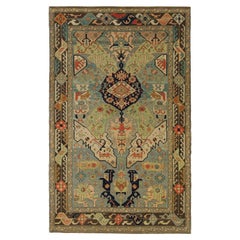
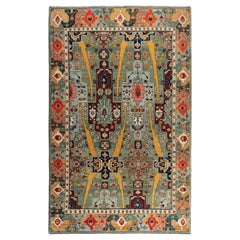
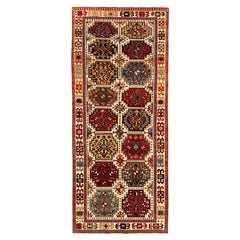
Ararat Rugs Dragon Rug, Antique Caucasus Museum Revival Carpet, Natural Dyed
Located in Tokyo, JP
There has long been a fascination with the symbolism of the dragon and its depiction in carpet weavings. The design of ‘Dragon’ carpets consists of a field pattern composed of different colored overlaid lattices formed of pointed, serrated leaves creating intersecting lozenges, which alternately contain palmettes and are flanked by confronting stylized dragons, birds, or animal figures. The most archaic of the ‘Dragon’ carpets include dragon motifs with birds and running animals relatively naturalistically drawn, which stand either alone or in confronting pairs facing a tree. The Graf carpet, originally found in a Damascene mosque, now in the Islamiches Museum, Berlin, is considered to be the oldest example of this type, see Serare Yetkin, Early Caucasian Carpets in Turkey, Vol. II, London, 1978, p.8, fig.118. Yetkin defines four types of ‘Dragon’ carpet: ‘Archaic’, ‘Four-Dragon’, ‘Dragon-and-Phoenix’ and as a further combined development of the latter, the ‘Two-Dragon’ style, of which the present carpet falls into the ‘Dragon-and-Phoenix group along with other examples, some of which include two fragments, one in the Museum fur Kunst und Gerwerbe, Hamburg; another in the Christian Museum, Esztergom, Hungary, a complete carpet in the Kier collection; an incomplete example in the Textile Museum, Washington, D.C; the ‘Cassirer’ Dragon carpet in the Thyssen-Bornemisza collection, Lugano; the Ali Pasa Mosque carpet in Tokat, and a further example in the Vakiflar Hali Museum, Istanbul (S. Yetkin, op. cit. pp.16-20). It has been suggested that the earliest examples of the Caucasian ‘Dragon’ carpets...
Category

21st Century and Contemporary Caucasian Revival Folk Art

Materials

Organic Material, Natural Fiber, Wool

Ararat Rugs Mamluk Wagireh Rug with Flower Lattice Design Natural Dyed Carpet
Located in Tokyo, JP
The source of carpet comes from the book Völker, Angela, Die orientalischen Knüpfteppiche das MAK, Vienna: Böhlau, 2001: 42–5. This rug with the central star was designed in the early 16th-century rug by Mamluk Sultane of Cairo, Egypt. It is exhibited at MAK – Museum of Applied Arts, Vienna Austria. The interpreted design is composed of a flower lattice pattern taken from a part of the MAK Museum’s rug...
Category

21st Century and Contemporary Turkish Revival Folk Art

Materials

Wool, Natural Fiber, Organic Material

Ararat Collection, Mamluk Wagireh Rug with Flower Lattice Natural Dye Mat Carpet
Located in Tokyo, JP
The source of carpet comes from the book Völker, Angela, Die orientalischen Knüpfteppiche das MAK, Vienna: Böhlau, 2001: 42–5. This rug with the central star was designed in the early 16th-century rug by Mamluk Sultane of Cairo, Egypt. It is exhibited at MAK – Museum of Applied Arts, Vienna Austria. The interpreted design is composed of a flower lattice pattern taken from a part of the MAK Museum’s rug...
Category

21st Century and Contemporary Turkish Revival Folk Art

Materials

Wool, Natural Fiber, Organic Material

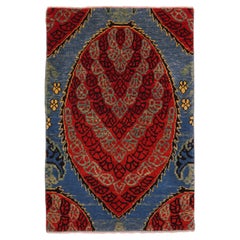
Ararat Rugs Mamluk Wagireh Rug with Flower Lattice Design Natural Dyed Carpet
Located in Tokyo, JP
The design source of the carpet comes from the book Völker, Angela, Die orientalischen Knüpfteppiche das MAK, Vienna: Böhlau, 2001: 42–5. This rug with the central star was designed ...
Category

21st Century and Contemporary Turkish Revival Folk Art

Materials

Wool, Natural Fiber, Organic Material

Ararat Rugs Mamluk Wagireh Rug with Palmette Lattice Revival Carpet Natural Dyed
Located in Tokyo, JP
This rug has an interpreted design composed of a palmette lattice pattern taken from a part of the Mamluk rug, filling the field elegantly. These kinds of rugs have often been descri...
Category

2010s Turkish Revival Folk Art

Materials

Wool, Natural Fiber, Organic Material

Ararat Rugs Gerous Bidjar Wagireh Pendant Rug Revival Carpet Natural Dyed
Located in Tokyo, JP
The most dramatic of the Gerous ( Garrus, Gerus, Garus ) carpets are those with an “asymmetric” design. Only a section of the original is shown, in the same way, many Lotto carpets w...
Category

21st Century and Contemporary Turkish Revival Folk Art

Materials

Wool, Organic Material, Natural Fiber

Ararat Rugs Palmettes and Flowers Lattice Rug Antique Revival Carpet Natural Dye
Located in Tokyo, JP
This offset pattern is composed of palmettes and flowers, one has the impression that it is only part of a larger scheme designed for 19th-century rugs from the Bidjar region, Easter...
Category

21st Century and Contemporary Turkish Revival Folk Art

Materials

Wool, Natural Fiber, Organic Material

Ararat Rugs Mamluk Wagireh Rug Lattice Pattern Revival Carpet Natural Dyed
Located in Tokyo, JP
This lattice pattern is composed of palmettes and leaves filling the various compartments against the imposing ground. One has the impression that it is only part of a larger scheme ...
Category

21st Century and Contemporary Turkish Revival Folk Art

Materials

Wool, Natural Fiber, Organic Material

Ararat Rugs Mamluk Wagireh Rug with Palmette Lattice Revival Carpet Natural Dyed
Located in Tokyo, JP
This rug has an interpreted design composed of a palmette lattice pattern taken from a part of the Mamluk rug, filling the field elegantly. These kinds of rugs have often been descri...
Category

21st Century and Contemporary Turkish Revival Folk Art

Materials

Wool, Natural Fiber, Organic Material

Ararat Rugs the Barbieri Tree Design Carpet, Persian Revival Rug, Natural Dyed
Located in Tokyo, JP
The source of carpet comes from the book Orient Star – A Carpet Collection, E. Heinrich Kirchheim, Hali Publications Ltd, 1993 nr.64 and Islamic Carpets, Joseph V. McMullan, Near Eastern Art Research Center Inc., New York 1965 nr.26. This is a long Khorassan Compartment and tree design 17th-century carpet from Khorasan, Eastern Persia. The name of this carpet comes from the provenance of Piero Barbieri, Genoa. The basic design of this rug is essentially quite simple. The field is organized by alternate rows of smaller multilobed medallions and larger reciprocal cartouches. The medallions alternate in width and color; from the wider ones, four trees...
Category

21st Century and Contemporary Turkish Revival Folk Art

Materials

Organic Material, Natural Fiber, Wool

Ararat Rugs Divrigi Ulu Mosque Wagireh Carpet Seljuk Rug Entrance Mat Doormat
Located in Tokyo, JP
The source of carpet comes from the book Turkish Carpets from the 13th – 18th centuries, Ahmet Ertug, 1996 pl.16. This 15th-century carpet is from Ulu Mosque, Divrigi Sivas region, c...
Category

2010s Turkish Revival Folk Art

Materials

Wool, Organic Material, Natural Fiber

Ararat Rugs Mamluk Wagireh Rug with Geometric Design Revival Carpet Natural Dyed
Located in Tokyo, JP
This geometric lattice pattern rug has the impression that it is only part of a larger scheme designed 15th-century rug from the Mamluk era, Cairo region, Eygpt. These designs have o...
Category

21st Century and Contemporary Turkish Revival Folk Art

Materials

Wool, Natural Fiber, Organic Material

Ararat Rugs Turkish Court Manufactury Rug Ottoman Revival Rug Natural Dyed
Located in Tokyo, JP
Turkish Court Manufactury Rugs were woven in the Egyptian workshops founded by the Ottoman Empire in the 16th century. Those carpets were woven in Egypt, following the paper cartoons...
Category

21st Century and Contemporary Turkish Revival Folk Art

Materials

Wool, Natural Fiber, Organic Material

Ararat Rugs Memling Gul Kazak Rug, 19th C. Caucasian Revival Carpet Natural Dyed
Located in Tokyo, JP
The source of the rug comes from the book Tapis du Caucase – Rugs of the Caucasus, Ian Bennett & Aziz Bassoul, The Nicholas Sursock Museum, Beirut, Lebanon 2003, nr.24 and Oriental R...
Category

21st Century and Contemporary Turkish Revival Folk Art

Materials

Wool, Natural Fiber, Organic Material

Ararat Rugs Mamluk Carpet with Lattice Design, Antique Revival Rug Natural Dyed
Located in Tokyo, JP
The source of carpet comes from the Mercer Collection Sotheby’s 2000 (catalog cover). This Mamluk-Cairene carpet is known, curiously featuring some type ...
Category

21st Century and Contemporary Turkish Revival Folk Art

Materials

Wool, Natural Fiber, Organic Material

Ararat Rugs the Alaeddin Mosque Diamond Lattice Carpet Seljuk Rug, Natural Dyed
Located in Tokyo, JP
The source of the carpet comes from the book Orient Stars Collection, Anatolian Tribal Rugs 1050-1750, Michael Franses, Hali Publications Ltd, 2021 fig.21. This 13th century carpet i...
Category

21st Century and Contemporary Turkish Revival Folk Art

Materials

Wool, Natural Fiber, Organic Material

Ararat Rugs Palmettes and Flowers Lattice Carpet with Bidjar Border Natural Dyed
Located in Tokyo, JP
This offset pattern is composed of palmettes and flowers, one has the impression that it is only part of a larger scheme designed 19th-century rug from the Bidjar region, Eastern Kur...
Category

21st Century and Contemporary Turkish Revival Folk Art

Materials

Wool, Natural Fiber, Organic Material

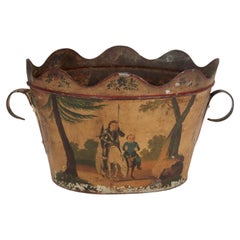
Antique French Toleware Cachepot or Planter Painted with a Don Quixote Scene
Located in Philadelphia, PA
A fine antique Toleware cachepot or planter. Decorated to both sides with a scene of Don Quixote and his companion Sancho riding atop a horse and ...
Category

Early 20th Century French Revival Folk Art

Materials

Metal

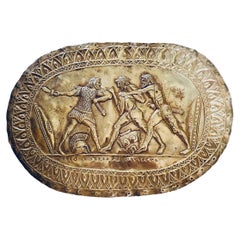
Large Greek Style Repousse Oval Metal Plaque
Located in Guaynabo, PR
This is a large Greek style repousse oval metal plaque depicting a scene of a Spartan warrior trying to defend himself against two nudes warriors from another tribe. There are two shields standing at each side of them. There are also a Spartan helmet...
Category

20th Century Greek Revival Folk Art

Materials

Metal

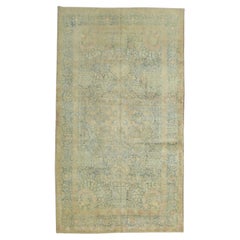
Breathtaking Persian Kerman Accent Rug
Located in New York, NY
An early 20th century formal Persian Kerman Rug in pastel tones. Measures: 4'6'' x 7'10''
Category

20th Century Persian Revival Folk Art

Materials

Wool

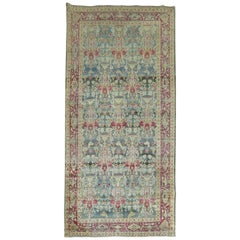
Antique Persian Kerman Rug
Located in New York, NY
A late 19th century Persian Kerman with a matching repetitive floral design with animal figures on a green ground surrounded by raspberry accents. 5' x 9'9''
Category

20th Century Persian Revival Folk Art

Materials

Wool

Antique Persian Kerman Rug
$7,000 Sale Price
20% Off
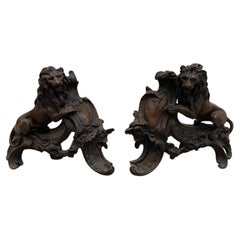
Chenet en forme de lion surmontant un écusson bronze
Located in Cantù, IT
Chenet en forme de lion surmontant un écusson bronze
Category

1970s Vintage Revival Folk Art

Materials

Brass

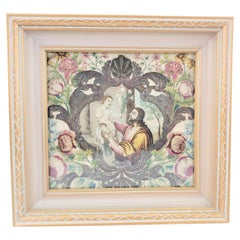
Antique Renaissance Styled Hand-Embroidered Sampler Panel or Tapestry Fragment
Located in Hamilton, Ontario
This antique framed hand-embroidered textile is unsigned, and presumed to have originated from Italy and dating to approximately 1900 and done in a Renaissance Revival style. This pi...
Category

Early 20th Century Italian Revival Folk Art

Materials

Silk

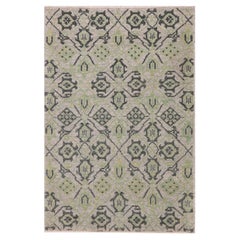
Ararat Rugs Palmettes and Flowers Lattice Rug Antique Revival Carpet Natural Dye
Located in Tokyo, JP
This offset pattern is composed of palmettes and flowers, one has the impression that it is only part of a larger scheme designed 19th-century rug from the Bidjar region, Eastern Kur...
Category

21st Century and Contemporary Turkish Revival Folk Art

Materials

Wool, Natural Fiber, Organic Material

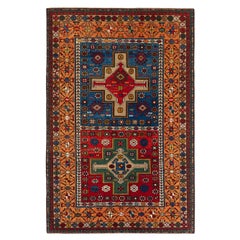
Ararat Rugs Two Medallions Kagizman Kazak Rug Antique Revival Carpet Natural Dye
Located in Tokyo, JP
This is a Two Medallion Kagizman Kazak Rug, also known as Caucasian Kazak rug, is a type of handwoven rug that originated from the Kagizman region in northeastern Turkey, near the bo...
Category

21st Century and Contemporary Turkish Revival Folk Art

Materials

Wool, Natural Fiber, Organic Material

Ararat Rugs Mamluk Wagireh Rug Lattice Pattern Revival Carpet Natural Dyed
Located in Tokyo, JP
This lattice pattern is composed of palmettes and leaves filling the various compartments against the imposing ground. One has the impression that it is only part of a larger scheme ...
Category

21st Century and Contemporary Turkish Revival Folk Art

Materials

Wool, Natural Fiber, Organic Material

Ararat Rugs Gerous Bidjar Wagireh Pendant Rug Revival Doormat Carpet Natural Dye
Located in Tokyo, JP
The most dramatic of the Gerous ( Garrus, Gerus, Garus ) carpets are those with an “asymmetric” design. Only a section of the original is shown, in the same way, many Lotto carpets w...
Category

21st Century and Contemporary Turkish Revival Folk Art

Materials

Wool, Natural Fiber, Organic Material

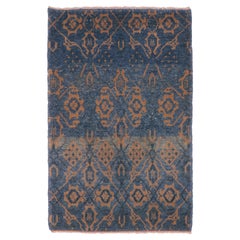
Ararat Rugs Shrubs in Lattice Rug Kurdish Wagireh Doormat Carpet Natural Dye
Located in Tokyo, JP
The source of rug comes from the book Antique Rugs of Kurdistan A Historical Legacy of Woven Art, James D. Burns, 2002 nr.6. This is one of the most popular and ubiquitous lattice designs of 18th century rugs...
Category

21st Century and Contemporary Turkish Revival Folk Art

Materials

Wool, Natural Fiber, Organic Material

Ararat Rugs Senna Rows of Flowers Rug Gerous Persian Wagireh Carpet Natural Dyed
Located in Tokyo, JP
The source of the rug comes from the book Antique Rugs of Kurdistan A Historical Legacy of Woven Art, James D. Burns, 2002 nr.28. This was an exclusive example of offset rows of flowers designed 18th-century rug...
Category

21st Century and Contemporary Turkish Revival Folk Art

Materials

Wool, Natural Fiber, Organic Material

Ararat Rugs Mamluk Wagireh Rug with Leaf Lattice Design, Egypt Revival Carpet
Located in Tokyo, JP
The source of carpet comes from the book Völker, Angela, Die orientalischen Knüpfteppiche das MAK, Vienna: Böhlau, 2001: 42–5. That rug with the central star was designed in the early 16th-century rug by Mamluk Sultane of Cairo, Egypt. It is exhibited at MAK – Museum of Applied Arts, Vienna Austria. The interpreted design is composed of a leaf lattice pattern taken from the border of the MAK Museum’s rug...
Category

21st Century and Contemporary Turkish Revival Folk Art

Materials

Wool, Natural Fiber, Organic Material

Ararat Rugs Senna Rows of Flowers Rug, 18th Century Revival Carpet Natural Dyed
Located in Tokyo, JP
The source of the rug comes from the book Antique Rugs of Kurdistan: A Historical Legacy of Woven Art, James D. Burns, 2002 nr.28. This was an exclusive example of offset rows of flowers designed in an 18th-century rug...
Category

21st Century and Contemporary Turkish Revival Folk Art

Materials

Wool, Natural Fiber, Organic Material

Ararat Rugs Shirvan Rug with Hexagon Columns Caucasia Revival Carpet Natural Dye
Located in Tokyo, JP
The source of the rug comes from the book Oriental Rugs Volume 1 Caucasian, Ian Bennett, Oriental Textile Press, Aberdeen 1993, nr.256. This is a hexagon columns...
Category

21st Century and Contemporary Turkish Revival Folk Art

Materials

Wool, Natural Fiber, Organic Material

Ararat Rugs Mamluk Modern Rug with Leaf Lattice Design, Revival Rug Natural Dyed
Located in Tokyo, JP
The source of carpet comes from the book Völker, Angela, Die orientalischen Knüpfteppiche das MAK, Vienna: Böhlau, 2001: 42–5. That rug with the central star was designed in the earl...
Category

21st Century and Contemporary Turkish Revival Folk Art

Materials

Wool, Natural Fiber, Organic Material

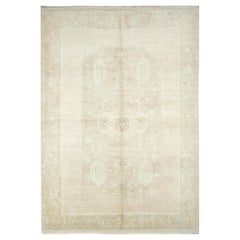
Hand-Knotted Wool Rug in White Ice and Driftwood, Modern Organic Design
Located in Milano, IT
This 6' x 9' hand-knotted rug from Jaipur Rugs features a serene blend of white ice and driftwood tones, creating an elegant, calming atmosphere. Made from a luxurious blend of high-...
Category

21st Century and Contemporary Indian Revival Folk Art

Materials

Wool

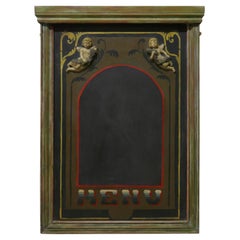
Decorative Bacchanalian Wine Bar Menu, Black Board
Located in Godshill, Isle of Wight
Decorative bacchanalian wine bar menu, black board A very decorative piece with the theme of grape bearing nymphs in both corners at the top The attractiv...
Category

Mid-20th Century Revival Folk Art

Materials

Wood

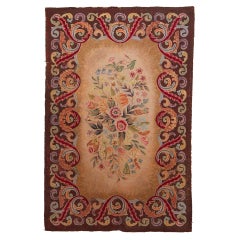
Early American Hooked Floral Rug, 1880 s
Located in Milan, IT
Decorated by a floral pattern inspired by French Aubussons and Savonneries, this rare American hooked carpet is very finely woven using coloured...
Category

19th Century American Antique Revival Folk Art

Materials

Wool

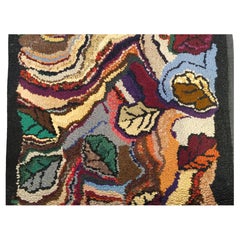
Rare Antique American Hooked Narrow Runner Rug
Located in Milan, IT
Woven with an all-over design of stylized leaves and tendrils, this rare American hooked runner carpet has the added bonus of being very narrow, making it ideal for contemporary spaces.
Category

Early 20th Century American Revival Folk Art

Materials

Wool

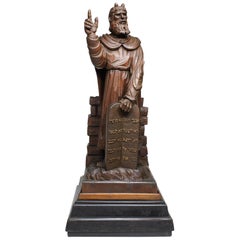
19th-20th Century Renaissance Carved Wood Judica Figure of Michelangelo s Moses
By Michelangelo Buonarroti
Located in Los Angeles, CA
A fine and large continental 19th-20th century Renaissance revival carved walnut judica figure of "Moses with the Ten Commandments". The baroque wood carving...
Category

Early 20th Century Spanish Revival Folk Art

Materials

Wood, Walnut

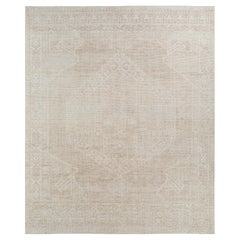
Hand-Knotted Jaipur Wool Rug in Linen and Cloud White, Subtle Textured Pattern
Located in Milano, IT
This 8' x 10' hand-knotted rug from Jaipur Rugs features a calming palette of linen and cloud white, crafted from a luxurious blend of wool. The soft, lustrous finish highlights a su...
Category

21st Century and Contemporary Indian Revival Folk Art

Materials

Wool

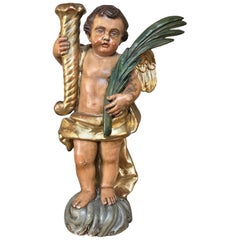
19th Century Italian Hand-Carved and Painted Cherub
Located in Dallas, TX
19th century Italian hand-carved and painted cherub presents a charming, colorful and adorable rendering of a young winged cherub, holding a spiral torchere in one hand that can be u...
Category

1870s Italian Antique Revival Folk Art

Materials

Walnut

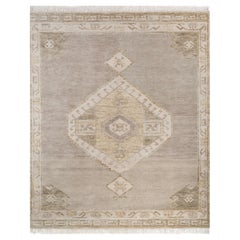
Hand-Knotted Wool Rug in Dark Ivory and Medium Caramel, transitional design
Located in Milano, IT
This 8' x 10' hand-knotted wool rug from Jaipur Rugs features a luxurious blend of dark ivory and medium caramel tones, creating a warm, sophisticated look. Its timeless geometric pa...
Category

21st Century and Contemporary Indian Revival Folk Art

Materials

Wool

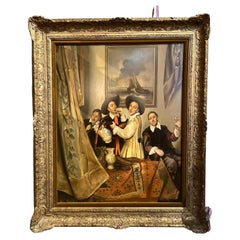
20th Century Original Oil Painting by Franz Xaver Wolf
Located in Scottsdale, AZ
20th Century Original Oil Painting by Austrian artist VW Wolf. "Family of the artist". Painted in 20th century, it is known to have been collected by European Elite
Category

Early 20th Century Austrian Revival Folk Art

Materials

Canvas, Paint

Hand-Knotted Jaipur Wool Rug in Luxurious Gold, Elegant Textured Solid Design
Located in Milano, IT
This 6'6 x 9' hand-knotted wool rug from Jaipur Rugs features a rich, luminous gold tone, offering an opulent yet understated elegance to any space. Expertly crafted by skilled artis...
Category

21st Century and Contemporary Indian Revival Folk Art

Materials

Wool

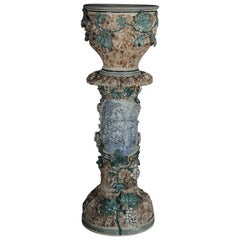
Plant Pot Pillar Majolica Austria Vine Leaves Ceramics from 1885
Located in Berlin, DE
Flower column / flower vase Majolika Austria, museum circa 1885 Richly carved body (two-part) with plastic vine leaves on a plastic rock surface. In t...
Category

1880s Austrian Antique Revival Folk Art

Materials

Ceramic

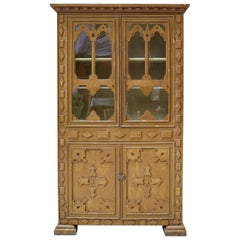
Neo-Gothic Style Faux-Bois Painted Cabinet from the Jura, circa 1900s
Located in Isle Sur La Sorgue, Vaucluse
Delightful and unusual pinewood cabinet from the Jura region of France, painted with a faux-bois effect. The style has elements reminiscent of the Gothic aesthetic. The top section h...
Category

Early 20th Century French Revival Folk Art

Materials

Pine

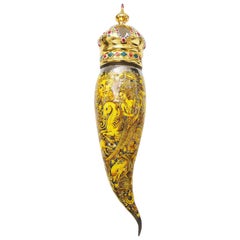
Lucky Horn Ceramic Sculpture Glazed Majolica Platinum Gold Hand Painted, Italy
Located in London, GB
Francesco Raimondi, Lucky Horn, 2020 glazed earthenware, platinum and gold, hand painted, unique piece Measures: Approximate 100cm x 25 cm A cornicello It...
Category

21st Century and Contemporary Italian Revival Folk Art

Materials

Platinum, Gold

Hand-Tufted Wool Rug in Ebony Slate and Dark Gray, Contemporary Abstract Design
Located in Milano, IT
This 5' x 8' hand-tufted wool rug from Jaipur Rugs features a sophisticated palette of ebony slate and dark gray, ideal for grounding any room in contemporary elegance. Its abstract ...
Category

21st Century and Contemporary Indian Revival Folk Art

Materials

Wool

Revival folk art for sale on 1stDibs.

Find a broad range of unique Revival folk art for sale on 1stDibs. Many of these items were first offered in the 21st Century and Contemporary, but contemporary artisans have continued to produce works inspired by this style. If you’re looking to add vintage folk art created in this style to your space, the works available on 1stDibs include folk art, rugs and carpets, decorative objects and other home furnishings, frequently crafted with fabric, wool and other materials. If you’re shopping for used Revival folk art made in a specific country, there are Asia, West Asia, and Caucasus pieces for sale on 1stDibs. While there are many designers and brands associated with original folk art, popular names associated with this style include Ararat Rugs, and Pietro Gabrini. It’s true that these talented designers have at times inspired knockoffs, but our experienced specialists have partnered with only top vetted sellers to offer authentic pieces that come with a buyer protection guarantee. Prices for folk art differ depending upon multiple factors, including designer, materials, construction methods, condition and provenance. On 1stDibs, the price for these items starts at $228 and tops out at $48,000 while the average work can sell for $1,935.

Still Thinking About These?

All Recently Viewed