Hand-Crafted Tribal Art
to
49
191
80
301
4
3
35
8
5
28
27
246
7
94
76
20
2
1
5
2
3
1
5
8
4
1
112
107
45
40
35
151
97
70
49
45
308
307
308
39
2
2
1
1
Technique: Hand-Crafted
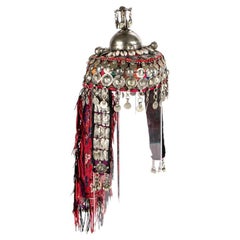
Turkoman Tribal Ceremonial Headdress
Located in Bridgeport, CT
A stitched colorful fabric hat with applied silver tone roundels, plaques and pendants, bells and cowrie shells. The long back flap with a triangular Turkoman pendant with glass rou...
Category
Mid-20th Century Asian Tribal Hand-Crafted Tribal Art
Materials
Other, Metal
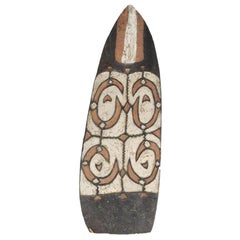
Monumental Oceanic Asmat People Carved Painted Wooden War Shield
Located in Forney, TX
A monumental, rare and important Oceanic Papuan Asmat People tribal carved war shield from the first half of the 20th century, collected from the coast of the headhunting tribe in Papua New Guinea, a Provincial Indonesian island in the mid 20th century.
Among the Asmat, war shields are the most powerful symbolic element of a warrior's equipment, and have many layers of meaning. Traditionally, they were functional items used to protect warriors in battle by deflecting an enemy's spears and arrows. The carved and painted images on the surface of the shields were also intended to frighten the enemy and symbolize the power of the ancestors.
Ancestral imagery appears on multiple forms of Asmat art...
Category
Early 20th Century Papua New Guinean Tribal Hand-Crafted Tribal Art
Materials
Wood
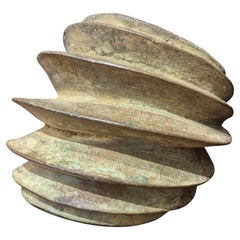
Ankle Bracelet "Djokélebalé" or "Nsoukou" – Kota Culture, Gabon, 19th century
Located in NICE, FR
Impressive open bronze alloy ankle bracelet, featuring a wide ring decorated with six raised moldings. The oxidized, granular patina attests to its age and ritual use.
These ornamen...
Category
1890s Gabonese Tribal Antique Hand-Crafted Tribal Art
Materials
Bronze, Copper
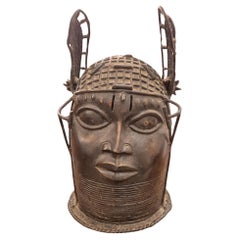
Mid-20th Century Ife-Style Bronze Royal Head, Benin
Located in NICE, FR
This rare and unique Ife-style bronze head, dating from the mid-20th century, draws inspiration from the great sculptural traditions of West Africa’s royal arts. Echoing the prestigious effigies of the kingdoms of Ife and Benin, these works embody the symbolic language associated with sovereign authority, lineage, and ancestral commemoration.
Crafted using the refined lost-wax casting technique, it demonstrates remarkable precision and mastery—harmonious proportions, finely worked surfaces, and a dignified presence. The style evokes the renowned Ife heads...
Category
1940s Beninese Tribal Vintage Hand-Crafted Tribal Art
Materials
Bronze
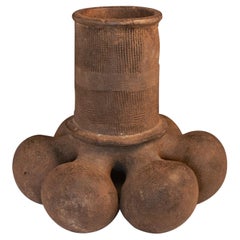
Mid-20th Century Globular Vessel, Mangbetu People, D. R. Congo
Located in Point Richmond, CA
Mid-20th Century Globular Vessel, Mangbetu People, D. R. Congo
An unusually large and striking non-figurative vessel from the Mangbetu people, comprised of six lobes joined to a c...
Category
Mid-20th Century Congolese Tribal Hand-Crafted Tribal Art
Materials
Ceramic
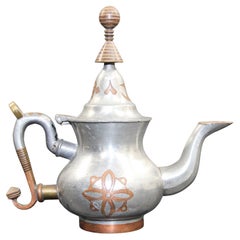
African Tuareg Silver Pewter Tea Pot from Mauritania
Located in Moreno Valley, CA
Vintage African Tuareg Tea pot Mauritania
Mid-20th century Tuareg teapot from Mauritania, Africa, Western Sahara.
Handcrafted of pewter, copper and brass...
Category
Mid-20th Century Mauritanian Folk Art Hand-Crafted Tribal Art
Materials
Brass, Copper, Pewter
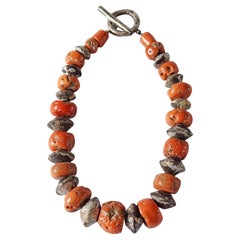
Tibetan Coral Necklace with Silver Painted Wooden Beads c. 1900
Located in Jimbaran, Bali
A wonderful example of a Tibetan Coral Bead mala / neckpiece with a stunning mix of orange & red colours that have aged beautifully over the decades. Tib...
Category
Early 20th Century Tibetan Tribal Hand-Crafted Tribal Art
Materials
Coral, Silver
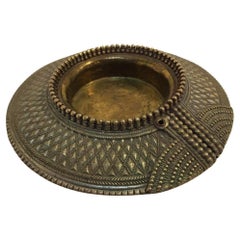
Antique Ethnic Brass Traditional Anklet Bracelet from India Vide Poche
Located in Moreno Valley, CA
Dhokra art old ethnic tribal brass traditional ankle bracelet from India, repurposed as ashtrays ,catchall, or vide poche.
Handcrafted of a hollow band of heavy brass decorated with chevron repoussé banding and lost wax granulation.
The brass inner plate was later added to use the bracelet as a small ashtray.
The closure was a push pin mechanism that was closed.
India, circa 1920s.
Measure: 7"5 D x 2" H.
"Dhokra is an ancient folk art tradition prevalent in India in the eastern states of West Bengal, Odisha, Jharkhand and Chhattisgarh. Dhokra craft objects are made through the process of non-ferrous metal casting using the lost-wax casting technique, which is one of the earliest and most advanced methods of metal casting known to human civilization. Its roots can be traced back 4500 years to the ancient city of Mohenjodaro in the Indus Valley Civilization.
The name Dokra or Dhokra was used to indicate a group of craftsmen of nomadic type from the Dhokra Damar tribe, scattered over the regions of Bengal, Orisa and Madhya Pradash, whose wares were identified by their beautifully shaped and decorated metal products. The enchanting Dhokra art objects have motifs inspired by indigenous folk...
Category
Early 20th Century Indian Anglo Raj Hand-Crafted Tribal Art
Materials
Metal
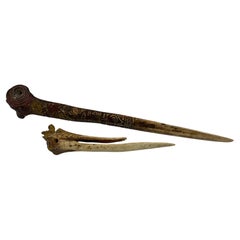
Antique Ethnic Artifact Sepik River Cassowary Bone from Papua New Guinea
Located in Moreno Valley, CA
Antique Ethnic Artifact Sepik River Cassowary Bone from Papua New Guinea
For many groups in Papua New Guinea, bone was an important medium for making tools of all types. This artifact is made from leg bone of a cassowary, a large, flightless, and extremely dangerous, bird.
Cassowaries also play an important role in the mythology of groups in the Sepik River area.
Though no longer used these bone artifacts are still used ceremonially. They often play important roles in male initiation and other rituals. They are also worn as personal adornment by tucking them into a band of braided fibers worn around the upper arm.
Antique Ethnic Bone Cassowary Artifact with minimal carving and incised design confined to the joint end.
A small hole has been drilled through from both sides of the top and presumably for the threading of a cord.
The bone has been partially divided near the top and to form two prongs that project down the back of the dagger possibly allowing the user to wear is tuck into a waist band or belt.
Origin Papua New Guinea Maprik Dist Area
From the Art Collection of Marian and John Scott, acquired in 1962.
Similar items are in display in the Timothy S. Y. Lam Museum of Anthropology.
Purchased from the amazing private collection of Mark Lissauer who spent his life collecting niche ethnographic pieces.
About Mark Lissauer:
Mark Lissauer spent forty years travelling abroad for months at a time collecting ethnographic artefacts primarily from New Guinea and the islands of the West Pacific, and from Asia and Himalayan countries. Fluent in five languages and having in the course of business travelled to more than forty countries, Mark is well-known to museums and art-collectors around the world for his long career and his interesting and diverse collection of rare ethnographic material.
Mark knows the origin and symbolism of each piece. Through extensive research and more than ninety trips around the globe, Mark familiarised himself with the traditions of the various cultures he visited in order to understand the meaning of each object to its region and tribe. His home has a specialist library and several rooms are filled with tribal carvings, textiles and ethnographica.
He acquired his first tribal piece in 1948 during a business trip to Milne Bay, New Guinea, and has since documented the acquisition of some 35,000 items. Several thousands of these have been sold to important private collections and museums worldwide, including the Rockefeller Museum, the British Museum and the Musée National des Arts d’Afrique et d’Océanie, now incorporated into the Louvre Museum.
Estimator certificate of authenticity by Wayne Heathcote Tribal Art Dealer and Expert.
Heathcote has a flash gallery in Brussels, where much of the tribal art business is centred, and is an expert at Sotheby's tribal art sale...
Category
Early 20th Century Folk Art Hand-Crafted Tribal Art
Materials
Bone
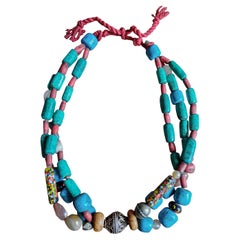
Berber Stone Necklace, Early 20th Century
Located in New York, NY
A long Berber necklace, hand-crafted with stone beads and wool, with a round filigree silver accent. Morocco, early 20th Century.
Green and blue amazonite, red coral, glass and sto...
Category
1920s Moroccan Tribal Vintage Hand-Crafted Tribal Art
Materials
Stone, Silver

$270 Sale Price
40% Off
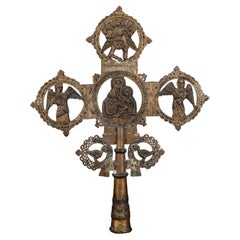
Ethiopian Procession Cross: A Sacred Heritage and Craftsmanship
Located in Ixelles, BE
Ethiopian Procession Cross: A Sacred Heritage and Craftsmanship.
Structure and Composition: This finely crafted Ethiopian procession cross is rich in iconographic detail. Constructed from metal, likely bronze or brass, it features a complex structure with several decorative elements.
- Central Part:
• Madonna and Child: At the heart of the cross is a depiction of the Virgin Mary holding the Child Jesus. This central image is framed within a circle adorned with openwork motifs and small inlays that appear to be precious stones or colored glass pieces.
Arms of the Cross:
• Angelic Musicians: Each lateral arm of the cross features an angelic musician, playing instruments and depicted in a flying position. The angels are finely detailed, with spread wings and carefully sculpted garments.
• Cherub: At the apex of the cross, a cherub is depicted, a celestial being with multiple wings and surrounded by cloud-like motifs.
• Bird Motifs: The lower extremities of the cross are adorned with bird motifs, likely doves, symbolizing peace and the Holy Spirit, placed within openwork circles.
Base and Handle:
• Engraved Base: The base of the cross, which serves as a handle, is also richly engraved with floral and geometric motifs, providing a sturdy and decorative grip for processions.
History of Ethiopian Procession Crosses
Origins and Evolution: Ethiopian procession crosses have a long history, dating back to the introduction of Christianity to Ethiopia in the 4th century under King Ezana. Influenced by Coptic and Byzantine traditions, these crosses evolved to adopt a distinctive style unique to Ethiopia.
- Characteristics:
• Style and Iconography: Ethiopian crosses...
Category
19th Century Ethiopian Primitive Antique Hand-Crafted Tribal Art
Materials
Brass
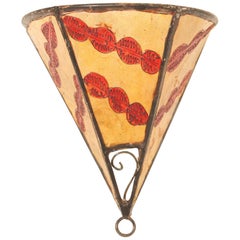
Ethnic Parchment African Art Wall Sconce
Located in Moreno Valley, CA
African tribal art parchment wall shade sconce featuring a large triangle hide form stitched on iron and hand painted surface.
These Moroccan art pieces could be used as wall lamp s...
Category
20th Century Moroccan Folk Art Hand-Crafted Tribal Art
Materials
Iron
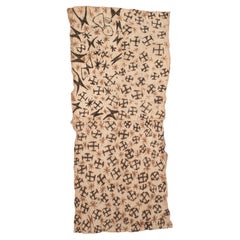
20th Century Bark Cloth Painting, Mbuti People, D.R. Congo
Located in Point Richmond, CA
20th Century bark cloth painting, Mbuti people, Ituri Forest, D. R. Congo
A wonderful barkcloth from the Mbuti people in the Ituri forest of northeastern Democratic Republic of the ...
Category
1970s Congolese Tribal Vintage Hand-Crafted Tribal Art
Materials
Natural Fiber
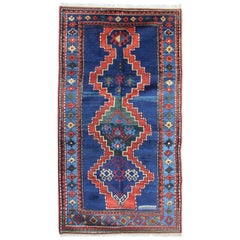
Antique Rugs Blue Caucasian Kazak Rugs, Geometric Carpet Livingroom Rug
Located in Wembley, GB
Kazak rugs have primarily been produced as village productions rather than city pieces. Made from materials particular to individual tribal provinces and the rugs of the Caucasus typically display bold geometric designs in primary colours. Kazak rugs are a type of Armenian rug...
Category
Late 19th Century Caucasian Kazak Antique Hand-Crafted Tribal Art
Materials
Wool, Natural Fiber, Organic Material
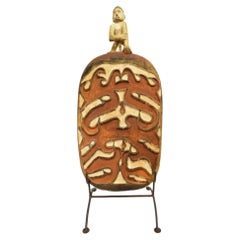
Important Oceanic Carved Asmat Tribal Sago Bowl Serving Platter after War Shield
Located in Forney, TX
A rare and important Oceanic Papuan Asmat tribal carved ancestral sago bowl (also known as a platter, serving shield and tray) crafted in the likes of the...
Category
20th Century Papua New Guinean Tribal Hand-Crafted Tribal Art
Materials
Wood, Paint
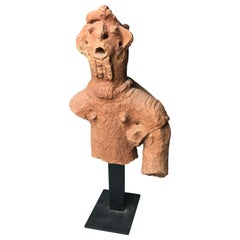
African Tribal Art Antique Ancient Koma Terracotta Ghana Abstract Sculpture
Located in London, GB
A striking abstract modelled terracotta figural torso the expressive visage gesticulating with open singing mouth and beard and ridged coiffure carrying a object on his back, in heavy solid terracotta with red pigment A splendid and rare example of ancient abstract art.
Size: H 8.5 " W 5 W 2.5 . 22x12 x6cm on included high quality custom metal stand. overall height including stand 13.5 " , 35 cm
West Africa, Ghana, Koma Land culture, 13th to 16th century CE
Ex Anthony Powell...
Category
15th Century and Earlier Ghanaian Antique Hand-Crafted Tribal Art
Materials
Terracotta
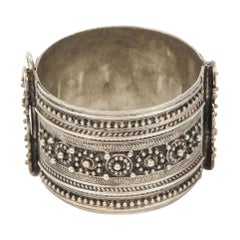
Moroccan Berber Tribal Silver Cuff
Located in Moreno Valley, CA
Moroccan Berber tribal bracelet.
Moroccan ethnic bracelet from the High Atlas of Morocco.
Handcrafted by Berber women using Moroccan si...
Category
20th Century Moroccan Folk Art Hand-Crafted Tribal Art
Materials
Metal, Silver
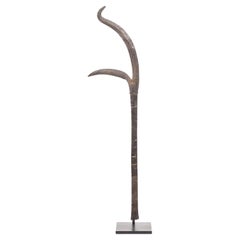
Traditional Throwing Knife (Ngalio) Chad Africa
Located in Point Richmond, CA
Throwing Knife (Ngalio)
Sara People, Chad, Africa
Mid-20th century
Material: Iron
Height on custom display stand: 28 in. / 71 cm
Known as "ngalio", thi...
Category
Mid-20th Century Chadian Other Hand-Crafted Tribal Art
Materials
Iron
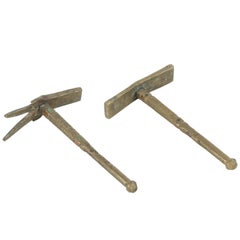
Moroccan Antique Brass Sugar Hammer
Located in Moreno Valley, CA
Set of two Moroccan brass Berber tribal sugar hammer.
Moroccan Collectible Brass Berber Sugar Hammer,Brass Berber Tribal Sugar Hammer.
Authentic old Tuare...
Category
Early 20th Century Moroccan Folk Art Hand-Crafted Tribal Art
Materials
Brass
$1,350 / set
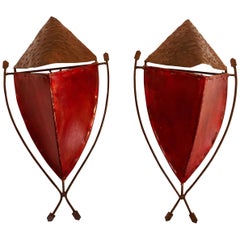
African Tribal Art Mask Parchment Wall Shade Sconces in Red
Located in Moreno Valley, CA
Pair of African Tribal Art mask parchment wall shade sconces.
These Art pieces could be used as large wall lamp shade.
Iron frame covered with hide w...
Category
Early 20th Century Moroccan Folk Art Hand-Crafted Tribal Art
Materials
Iron
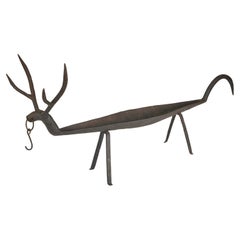
19th Century Forged Iron Deer-Form Teeth Blackening Ritual Dish
Located in Kilmarnock, VA
A rare 19th-century Japanese iron ohaguro tsubo-a ritual teeth-blackening dish-formed as a stylized deer. These were traditionally used to hold the heated iron implement and mixture ...
Category
Mid-19th Century Japanese Modern Antique Hand-Crafted Tribal Art
Materials
Iron
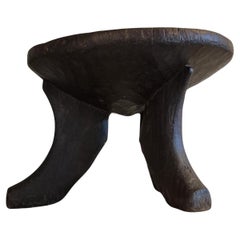
Wabi sabi solid wood "Oromo" stool, Ethiopia 1950s
Located in ECHT, NL
Wabi sabi hand crafted stool. Made by the Oromo people of Ethiopia around the 1950s. Carved from a single piece of hardwood. Skillfully made and highly decorative. The top is made co...
Category
Mid-20th Century Ethiopian Folk Art Hand-Crafted Tribal Art
Materials
Hardwood
$805 Sale Price
59% Off
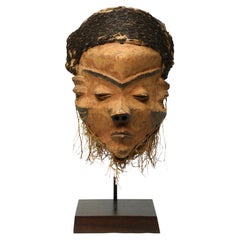
Early Pende Giwoyo Mask with Strong Face and Woven Black Raffia Hair Cap
Located in Point Richmond, CA
Old Pende giwoyo mask with traces of yellow, black and red pigments and woven black raffia hair cap. Strong face with tight expression, weathered surface, goo...
Category
Mid-20th Century Congolese Tribal Hand-Crafted Tribal Art
Materials
Organic Material, Wood
$3,150 Sale Price
30% Off
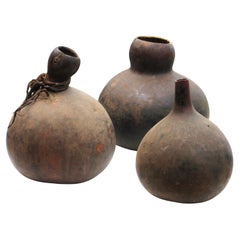
Three Tutsi Gourd Vessels Burundi Africa
Located in Rochester, NY
Three Tutsi gourd storage vessels ( liquids wine ) w/ nicely aged old surface color. Mid 20th century. Burundi Africa. Measurements - gourd w/ woven natural grass wrapping at top -...
Category
Mid-20th Century Burundian Tribal Hand-Crafted Tribal Art
Materials
Natural Fiber
$495 / set
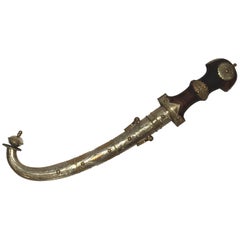
Antique Decorative Moroccan Arabian Jambiya
Located in Moreno Valley, CA
Antique decorative Moroccan Arabian khoumaya or Jambiya, which is the name in Arabic Ornate with brass and silvered steel hammered element and wood handle. The decorative dagger is v...
Category
Mid-20th Century Moroccan Islamic Hand-Crafted Tribal Art
Materials
Metal, Brass
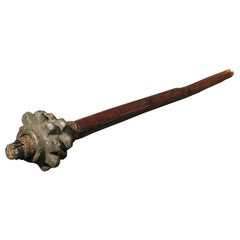
A Rare Papua New Guinea Kukukuku
Pineapple
Stone War Club, Eastern Highlands
Located in Ottawa, Ontario
This rare antique Kukukuku (pronounced "cookah-cookah") war club is from the remote Morobe Province located within the Eastern Highlands of Papua New Guinea.
The head is carved from...
Category
Early 20th Century Papua New Guinean Tribal Hand-Crafted Tribal Art
Materials
Stone
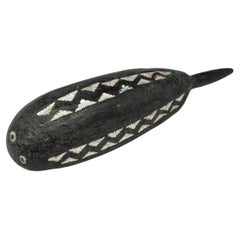
Early 20th Century Wood and Shell Inlay Scoop, Solomon Islands
Located in Point Richmond, CA
Early 20th Century Wood and Shell Scoop, Solomon Islands
A small scoop in the shape of a whale, with three rows of inlaid notched shell triangles and three circular shell eyes. Nice...
Category
Early 20th Century Solomon Islands Tribal Hand-Crafted Tribal Art
Materials
Shell, Wood
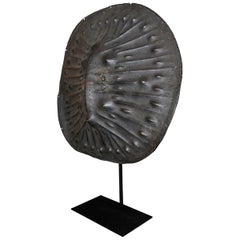
African Shield Oromo from Ethiopia Early 20th Century
Located in Paris, FR
African shield Oromo from Ethiopia, early 20th century.
Base 34 x 20cm.
Category
Early 20th Century Ethiopian Hand-Crafted Tribal Art
Materials
Leather
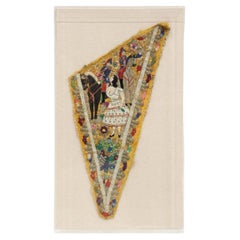
Vintage Peruvian Folk Art Framed Negreria Dance Cape
Located in Forney, TX
A scarce framed fragment of "Negreria" dance cape, circa 1940s, Huayucachi, Junin, Peru.
Dating to the mid-20th century, the rare large size South ...
Category
Mid-20th Century Peruvian Folk Art Hand-Crafted Tribal Art
Materials
Textile, Cotton, Sequins
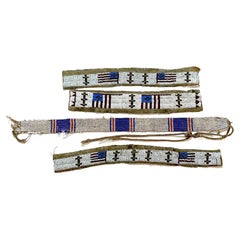
Set of 4 Plains Tribe American Flag Motif Ceremonial Beadwork Strips
Located in West Palm Beach, FL
Set of 4 Plains Tribe American Flag Motif Ceremonial Beadwork Strips
USA, circa 1900s
A rare collection of four Plains Tribe American Flag motif ceremonial beadwork strips dating ba...
Category
20th Century North American Hand-Crafted Tribal Art
Materials
Leather, Fabric, Beads
$608 Sale Price / set
20% Off
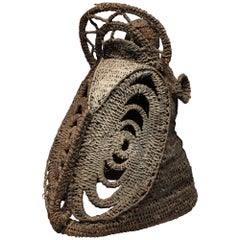
Woven Painted Basketry Old Yam Helmet Mask Sculptural Face Papua New Guinea
Located in Point Richmond, CA
Woven painted basketry yam helmet style mask from Papua New Guinea. Hollow woven form with traces of red and white pigments. Would have been put on top of a large yam as a part of th...
Category
Mid-20th Century Papua New Guinean Tribal Hand-Crafted Tribal Art
Materials
Organic Material
$617 Sale Price
35% Off
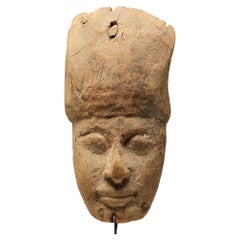
Old Cedar Wood Sweet Refined Egyptian Mummy Mask
Located in Point Richmond, CA
Elegant old cedar wood sweet Egyptian mummy mask, 8 3/4 Inches high. Soft weathered surface and great expression. Areas of chips erosion and little bits mis...
Category
15th Century and Earlier Egyptian Tribal Antique Hand-Crafted Tribal Art
Materials
Organic Material, Wood
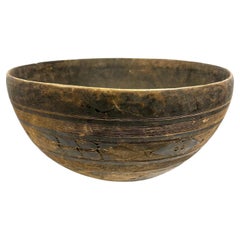
Large Carved and Incised Wooden Bowl from the Taureg Tribe in Mali, Africa
Located in Chicago, IL
This wood bowl from the Tuareg tribe in Mali has a quiet, grounded presence, shaped by hand and time. Its softly rounded form is animated by incised geometric bands that circle the v...
Category
Early 20th Century Hand-Crafted Tribal Art
Materials
Wood
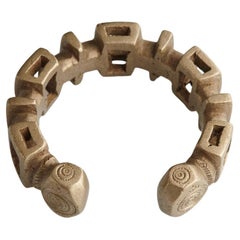
Solid Brass/Nickel Alloy Cuff Bracelet, Nupe People, Nigeria, 19th/20th Century
By Nupe
Located in Aramits, Nouvelle-Aquitaine
Late 19th or early 20th-century brass or copper alloy with higher nickel content. Bracelet in horseshoe form with fixed opening. Pierced design with rectangular shapes and carved swi...
Category
Early 20th Century Nigerian Tribal Hand-Crafted Tribal Art
Materials
Brass, Nickel
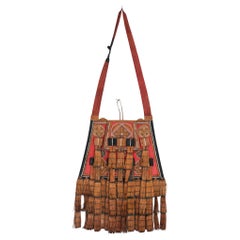
Antique African Tuareg Red Black and Brown Leather Bag
Located in Moreno Valley, CA
Vintage African Tuareg red, black and brown leather bag with fringes.
A great old fringed leather bag from the Tuareg sourced in Mali.
Handcrafted by the Tuareg women in Mali Africa ...
Category
Mid-20th Century Malian Tribal Hand-Crafted Tribal Art
Materials
Leather
Moroccan Berber Wooden Sugar Hammer Marteau a Sucre Deggaga
Located in Moreno Valley, CA
Moroccan Berber hand-carved wooden sugar hammer "Deggaga".
Handcrafted by the Berber women of Morocco, hand-carved and hand painted wood with tribal desig...
Category
Early 19th Century Moroccan Islamic Antique Hand-Crafted Tribal Art
Materials
Wood
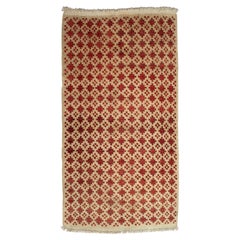
Early 20th C. Brick/Cream Stepped Polygon and Cross Ceremonial Carpet, Tibet
Located in Point Richmond, CA
Early 20th C. Brick/Cream Wool Stepped Polygon and Cross Ceremonial Carpet, Tibet
A wool carpet from Tibet with a talismanic stepped-polygon and cross motif in a rich brick red on a...
Category
Early 20th Century Tibetan Tribal Hand-Crafted Tribal Art
Materials
Wood
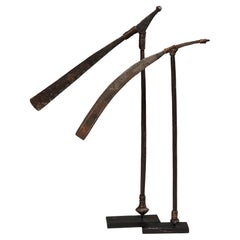
Pair West African Incised Iron and Copper Axe Form Currency Pieces Custom Mounts
Located in Point Richmond, CA
A pair of West African incised iron and copper wire axe form currency pieces or may have used as dance wands. On custom mounts. In the form of a ritual axe, which in many parts of A...
Category
Mid-20th Century North African Tribal Hand-Crafted Tribal Art
Materials
Iron
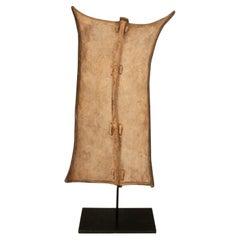
Early 20th Century Leather Shield, Taposa/Turkana, South Sudan
Located in Point Richmond, CA
Leather Shield, South Sudan
A small leather shield typical of the region known as an upwal, concave hide is attached to a reed spine with plaiting to form a strong grip. Mounted on ...
Category
Early 20th Century Sudanese Tribal Hand-Crafted Tribal Art
Materials
Wood, Leather
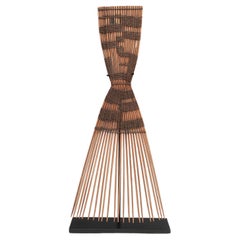
Mid-20th Century Ceremonial Comb, Luba People, Zaire, D. R. Congo
Located in Point Richmond, CA
Ceremonial comb, Luba People, Zaire, D. R. Congo
Made of palm leaf midribs, this large, graphic comb has a pinched waist and is held together with finely wrapped wire. Presented o...
Category
Mid-20th Century Congolese Tribal Hand-Crafted Tribal Art
Materials
Wire
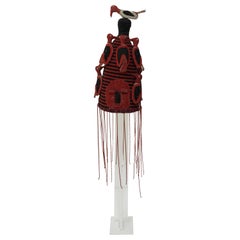
Yoruba Nigeria African Red Royal Beaded Headdress Crown on Lucite Stand
Located in Moreno Valley, CA
West African hand beaded head dress crown from Yoruba, Nigeria.
This artistic beautiful and functional art piece is covered with beads in ivory, red and black colors with faces bird...
Category
Mid-20th Century Nigerian Tribal Hand-Crafted Tribal Art
Materials
Metal
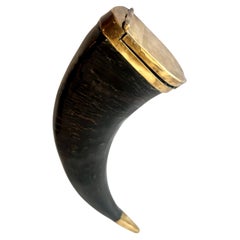
Decorative Horn with Brass Closure and Brass Tip for Storage, Drinking, 420
Located in Los Angeles, CA
A beautiful horn - typically used as a drinking cup on the camp, or storage of anything from gunpowder to tobacco - today, with the addition of a beaurtiful brass hinged top and adde...
Category
20th Century English Rustic Hand-Crafted Tribal Art
Materials
Brass
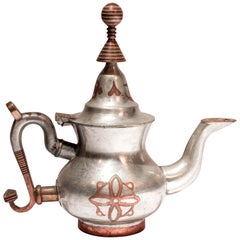
African Tuareg Tea Pot Mauritania
Located in Moreno Valley, CA
Mid-20th century Tuareg tea pot from Mauritania, Africa, Western Sahara.
Handcrafted of pewter, copper and brass decorations.
The Tuareg people inhabit a large area, covering almost ...
Category
Mid-20th Century Mauritanian Folk Art Hand-Crafted Tribal Art
Materials
Brass, Copper, Pewter
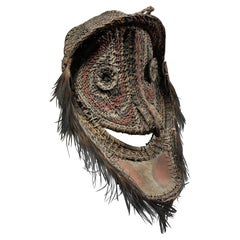
Large Woven Painted Basketry Wall Mask Blackwater Rivers, Papua New Guinea
Located in Point Richmond, CA
Large woven painted basketry wall mask created in Blackwater Rivers area, Papua New Guinea. With open expressive mouth and mask fringed with feathers, striking mask that easily hang...
Category
Mid-20th Century Papua New Guinean Tribal Hand-Crafted Tribal Art
Materials
Organic Material
$1,715 Sale Price
30% Off
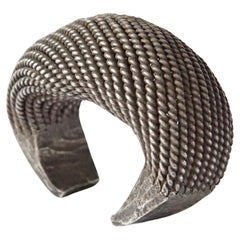
Antique Akha Hill Tribe Silver Cuff Bracelet, Golden Triangle
Located in Jimbaran, Bali
A large Akha Tribe woven silver bracelet with spiral design. This Tribal bracelet encompasses tradition Hill tribe silversmithing techniques with each silve...
Category
Early 20th Century Thai Tribal Hand-Crafted Tribal Art
Materials
Silver
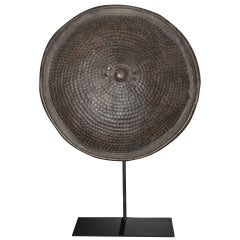
African Shield Wallaïta from Ethiopia Early 20th Century
Located in Paris, FR
African shield Wallaïta from Ethiopia, early 20th century.
Base: 40 x 17cm.
Category
Early 20th Century Ethiopian Hand-Crafted Tribal Art
Materials
Leather
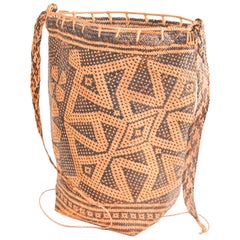
Traditional Ethnic Woven Ajat Basket Borneo Indonesia
Located in Moreno Valley, CA
Handmade ethnic aged Borneo Ajat basket made from natural Rattan. Motifs of Burung Kenyalang / Hornbill Bird.
Traditional ethnic Borneo woven natural organic fiber rattan basket
A ...
Category
1950s Indonesian Folk Art Vintage Hand-Crafted Tribal Art
Materials
Canvas, Wood
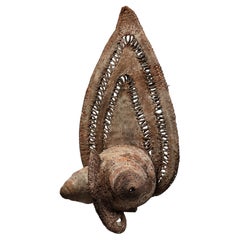
Woven Painted Basketry Old Yam Mask with Sculptural Bird Face, Papua New Guinea
Located in Point Richmond, CA
Early woven painted basketry yam mask from Papua New Guinea. Bug eyed or bird faced mask with heavy incrustation from many years of use, a striking mask that ...
Category
Mid-20th Century Papua New Guinean Tribal Hand-Crafted Tribal Art
Materials
Organic Material
$942 Sale Price
35% Off
Indonesian
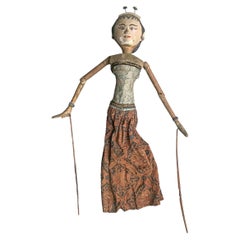
Wayang Golek" Shadow Puppet, Java, Indonesia, Early 20th Century
Located in Jimbaran, Bali
This “Wayang Golek” is a visibly old shadow puppet carved using soft wood and cloth. It features an articulated head and arms connected to rods, the dress...
Category
Early 20th Century Indonesian Tribal Hand-Crafted Tribal Art
Materials
Wood, Fabric
$516 Sale Price
20% Off
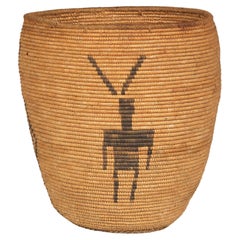
Antique Prestige Basket, Tanzania
Located in Point Richmond, CA
Prestige open top basket
Sukuma People (?) Tanzania
Circa 1900
Coiled and woven basketry, natural fibers and dye
8 x 6 1/2 inches (21 x 16.5 cm)
Provenance: ex private collection U...
Category
Early 1900s Tanzanian Tribal Antique Hand-Crafted Tribal Art
Materials
Natural Fiber
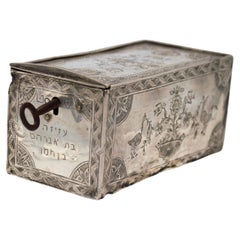
extremely rare Algerian Judaica silver, jewish Dowry box early 19th century
Located in Tel Aviv - Jaffa, IL
Amazing and scarce JUDAICA object, we have here one of the most touching jewish objects we had for a long time, this small silver dowry box was made in Algeria in the early 19th century, it is all covered with symbols of jewish faith and of couples, the sliding lid has 2 flanking birds with hamsa (protective hand) on each side and a flower vase in the middle.
one side shows two flanking lions with a tree in the middle and the other side shows again two big and two small birds with a flower bowl in the middle, front side has a key hole and next to it there is the Hebrew inscription ס״ט״" which says Siman tov or in English "a good sign" it is taken from the wedding blessing, underneath the lock there is another inscription with the name ״עזיזה בת אברהם בן חמו״ which is the name of the bride, her father and her grandfathers name.
the box is full marked a lot of times with the silversmith mark, every side of the box is marked.
this box was probably ordered by the grooms family to hold the jewelry they are giving to the bride as dowry, this type of objects are rare and there are just a few of them on museum collections.
DOWRY (Heb. נְדֻנְיָה), the property a wife brings to her husband at marriage; the Yiddish equivalent, nadn, is from the same root. The custom of nedunyah became clearly defined and institutionalized only in the talmudic period. In biblical times, mohar (מֹהַר), whereby the groom bought his wife from her father (Gen. 24:53; Ex. 22:15–16; Hos. 3:2), was the accepted practice. It was then customary that the groom give the bride gifts, and that she bring certain property to her husband's home upon marriage: slaves, cattle, real estate, etc. (cf. Gen. 24:59–61; 29; Judg. 1:14ff.; I Kings 9:16). Evidence of the custom of nedunyah is to be found in Tobit (7:14; 8:21) and in the Assuan papyri (Cowley, Aramaic, nos. 15, 18). Gradually, mohar was superseded by the ketubbah custom according to which the husband merely assumed the responsibility of compensation to his wife in case he divorced her: he had to pay her 200 zuzim if she had been a virgin at the time of marriage, and 100 zuzim if a widow or divorcée (see *Ketubbah).
By talmudic times, the institution of nedunyah was prevalent; the father gave a dowry to the bride since the daughter was excluded from paternal inheritance. Fifty zuzim (equivalent to the worth of 180 grams of silver) was the minimum amount a father was obliged to give to his daughter (Ket. 6:5). Parents usually gave much more, according to their social standing. Community funds provided the dowry for an orphan or a very poor girl (ibid.; cf. Sh. Ar., YD 251:8). In case of her father's death, the brothers of a minor girl were obliged to give her the minimum dowry, and the court estimated how much her father would have given her above the minimum dowry. The sum was then taken out of the father's estate and given to the daughter upon majority (Ket. 6:6; 68a–69b). In the absence of such an estimate, each daughter was entitled to receive one-tenth of the value of her father's estate in money, or in valuables (Yad, Ishut, 20:4–7; Sh. Ar., EH 113:4). If the father was unable or unwilling to pay the promised dowry at the betrothal ceremony, the groom could refuse to marry his bride (Ket. 13:5; Ket. 108b–109a). Insistence on exact payment of the promised dowry, however, was frowned upon by later rabbinic authorities (Rema to Sh. Ar., EH 2:1). In certain communities it was customary for the groom's father to make a dowry contribution equal to that of the bride's father (Ket. 102b). The dowry, whether given in real estate, slaves, money, or chattel was recorded in the marriage contract (the ketubbah) and in some instances one-third or one-fifth of the actual value of the dowry was added to the sum mentioned in the ketubbah. Based upon a decree enacted by *Simeon b. Shetah (first century C.E.), the Talmud ruled that the husband and his entire property were liable for compensation as stipulated in the ketubbah, either in case he died (when she collected the sum specified in the ketubbah from the heirs) or in case he divorced his wife (Ket. 82b). For the status of the dowry and the husband's rights and obligations, see below. The rabbinic enactments (Takkanot Shum) by R. Jacob *Tam and by the rabbinic synod of the communities of Speyer, Worms, and Mainz (Germany) stipulated that if a woman died...
Category
Mid-19th Century Algerian Antique Hand-Crafted Tribal Art
Materials
Silver
Indonesian
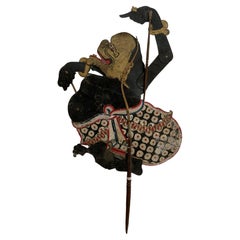
Wayang Kulit" Shadow Puppet, Java, Indonesia, Early 20th Century
Located in Jimbaran, Bali
This flat shadow puppet was crafted on the island of Java by a puppet artist using buffalo hide and mounted on bamboo sticks. It features movable arms, controlled by outer bamboo rods. It was used in Wayang...
Category
Early 20th Century Indonesian Tribal Hand-Crafted Tribal Art
Materials
Leather, Wood
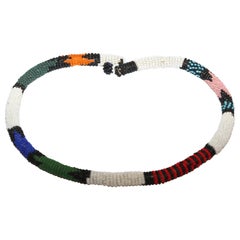
African Urembo Beaded Vintage Necklace Choker by the Maasai Tribe Kenya
Located in Moreno Valley, CA
Vintage African Urembo beaded necklace choker.
Handmade in Kenya by the maasai tribe.
Urembo means “beauty” and the handmade pattern and unique ...
Category
Late 20th Century Kenyan Folk Art Hand-Crafted Tribal Art
Materials
Beads
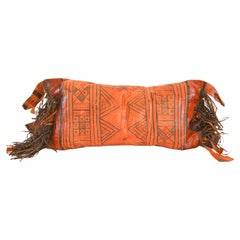
African Tuareg Hand-Tooled Leather Pillow with Fringes
Located in Moreno Valley, CA
Large African Tuareg hand tooled leather pillow.
Great colors, hand painted with tribal geometric design with long leather fringes on each side.
Handcrafted in Africa with pieces of ...
Category
Mid-20th Century Kenyan Tribal Hand-Crafted Tribal Art
Materials
Leather
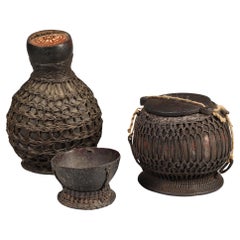
Old Toraja Group of three Basketry Wrapped Coconut Containers, Indonesia
Located in Point Richmond, CA
Group of three pieces. Two old used finely wrapped basketry enclosed coconut containers and one cup from the island of Toraja, Indonesia. The tall one has a flat wood stopper with classic Toraja designs, Early to mid 20th century or earlier, with deep dark patina from traditional use. Evidence of wear and use, smaller container with carved wood top attached by string.
Last view...
Category
Mid-20th Century Indonesian Tribal Hand-Crafted Tribal Art
Materials
Organic Material
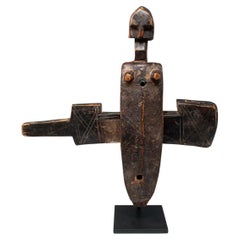
Early 20th Century Granary Door Lock, Bamana Peoples, Mali
Located in Point Richmond, CA
Early 20th Century Granary Door Lock, Bamana Peoples, Mali
A figurative wood door lock from the Bamana (Bambara) people of Mali. This probably depic...
Category
Early 20th Century Malian Tribal Hand-Crafted Tribal Art
Materials
Wood
Handcrafted North African Art Wall Sconce in Red and Yellow
Located in Moreno Valley, CA
African Tribal Art parchment wall shade sconce featuring a large triangle hide form stitched on iron and hand painted surface.
These Moroccan Art pieces could be used as wall lamp s...
Category
20th Century Moroccan Folk Art Hand-Crafted Tribal Art
Materials
Iron

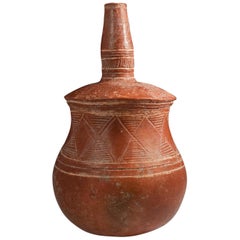
Late 19th-Early 20th Century Tribal Terracotta Bottle, Djenne Area, Mali
Located in Point Richmond, CA
Late 19th-Early 20th century tribal terracotta bottle, Djenne Area, Mali
A handsome terracotta bottle from the Djenne area of Mali with incised geometric patterns on the globular ...
Category
Early 20th Century Malian Tribal Hand-Crafted Tribal Art
Materials
Terracotta
$600 Sale Price
20% Off
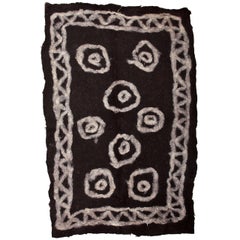
Vintage Black Tribal Felt Rug
Located in Milan, IT
Felts are among the first woolen structures made by mankind, some of the earliest we know were found in the 'kurgans' of Central Asia, decorated by a variety of zoomorphic motifs typ...
Category
20th Century Turkish Tribal Hand-Crafted Tribal Art
Materials
Wool
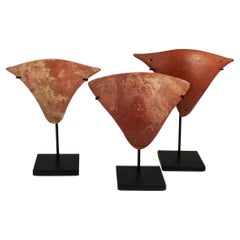
15th Century or Earlier Redware Tangas, Marajoara Culture, Marajo Island, Brazil
Located in Point Richmond, CA
15th Century or Earlier Redware Tangas, Marajoara culture, Marajo Island, Brazil
Tangas are thin concave triangular ceramic pubic covers found in burial mounds associated with fem...
Category
15th Century and Earlier Brazilian Tribal Antique Hand-Crafted Tribal Art
Materials
Earthenware