Other Trunks and Luggage
to
1
82
9
91
90
69
66
47
30
25
24
16
10
9
8
3
3
2
2
1
1
1
13
77
9
3
2
2
4
1
1
1
77
69
67
64
64
85
74
6
4
3
91
91
91
70
2
1
1
Style: Other
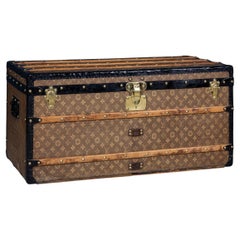
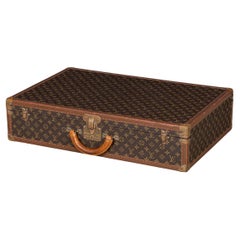
Antique 20th Century Louis Vuitton Trunk In Woven Canvas, France c.1900
Located in Royal Tunbridge Wells, Kent
Around the turn of the 19th and 20th century Louis Vuitton had established himself as a market leader in trunk making and needed to set his now famous brand apart from the imitators and competitors. They decided to come up with a logo, a monogram, which was indeed the famous and very recognisable print we are so familiar with today. The very first run was only made for about six years from 1895 and the print was woven into the canvas.
This example dates to around 1900 and is a perfect example of such trunks. With its steel trim, brass studs and locks it still shows the same elegance as it did well over 100 years ago and is a testament to the durability of the best trunk maker in the world. Today it makes for a wonderful piece of interior design, both decorative and useful.
A brief history about Louis Vuitton trunks: Louis Vuitton was born in 1821 to a farmer and milliner and came from a long-established working-class family in eastern France. Vuitton grew up understanding the effects of perseverance and a strong work ethic from watching his family. At the age of 16, he made the decision to walk 292 miles from his hometown to Paris to try and make a new life for himself. When he arrived the city was in the midst of industrialization with current modes of transportation evolving quickly allowing for longer journeys. With this came the need for sturdy travel pieces. Vuitton was taken as an apprentice for a successful box maker and packer named Monsieur Marechal. He learned to craft durable containers and how to pack them properly – a well-respected profession at the time. In 1854, years after he had mastered his craft and became well respected for it, Vuitton ventured out on his own to open a shop on Rue Neuve des Capucines. It was here that he began to establish himself as a luggage maker. Then, in 1858, Vuitton designed the first Louis Vuitton steamer trunk. At the time trunks had rounded tops to allow for water to run off but this did not allow for convenient stowage. Vuitton introduced a flat, yet waterproof...
Category
20th Century French Other Trunks and Luggage
Materials
Metal, Brass
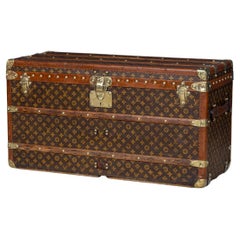
20th Century Louis Vuitton Cabin Trunk In Monogram Canvas, France c.1930
Located in Royal Tunbridge Wells, Kent
Around the turn of the 19th and 20th century Louis Vuitton had established himself as a market leader in trunk making and needed to set his now famous brand apart from the imitators ...
Category
20th Century French Other Trunks and Luggage
Materials
Brass

Antique Rare 20thC Louis Vuitton "Malle Fleurs" Trunk In Monogram Canvas, France
Located in Royal Tunbridge Wells, Kent
An extremely rare “malle fleurs“, or “flower trunk“ made by Louis Vuitton in the 1920s. These items are one of the rarest of trunks in circulation. Gaston Louis Vuitton had a company...
Category
20th Century French Other Trunks and Luggage
Materials
Brass
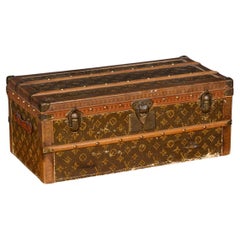
20th Century Louis Vuitton Shoe Trunk, France c.1930
Located in Royal Tunbridge Wells, Kent
A magnificent and exceptionally rare Louis Vuitton shoe trunk, adorned with stencilled monogram canvas, lozine trim and brass fittings. Elevating its uniqueness is the remarkably unc...
Category
20th Century French Other Trunks and Luggage
Materials
Brass
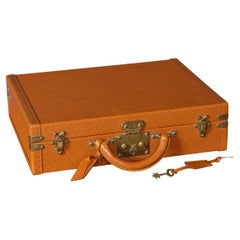
20thC Louis Vuitton Presidential Briefcase In Orange Epi Leather, Made In France
Located in Royal Tunbridge Wells, Kent
Lovely late 20th century Louis Vuitton “President” briefcase finished in Epi leather. The Louis Vuitton Taiga Leather line is produce...
Category
20th Century French Other Trunks and Luggage
Materials
Brass
20th Century Louis Vuitton Suitcase In Natural Cow Hide, France c.1910
Located in Royal Tunbridge Wells, Kent
A highly unusual and exceptionally rare Louis Vuitton suitcase, originating from the early years of the 20th century, distinguishes itself not with the globally renowned monogram canvas but with a distinctive covering crafted from a singular piece of cowhide. This unique piece represents a special order from Louis Vuitton, showcasing the brand's historical commitment to utilising only the finest hides available.
Unlike many of its counterparts, leather trunks and cases of this era often struggle to withstand the test of time, requiring regular treatments to prevent drying and disintegration. Remarkably, this particular example defies the odds, retaining the same supple quality it possessed on the day it first graced the shop floor. This suitcase belongs to Louis Vuitton's collection of "speciality materials," which encompasses a diverse range, including, but not limited to, zinc, copper, crocodile leather, and cow leather.
A brief history about Louis Vuitton trunks: Louis Vuitton was born in 1821 to a farmer and milliner and came from a long-established working-class family in eastern France. Vuitton grew up understanding the effects of perseverance and a strong work ethic from watching his family. At the age of 16, he made the decision to walk 292 miles from his hometown to Paris to try and make a new life for himself. When he arrived the city was in the midst of industrialization with current modes of transportation evolving quickly allowing for longer journeys. With this came the need for sturdy travel pieces.
Vuitton was taken as an apprentice for a successful box maker and packer named Monsieur Marechal. He learned to craft durable containers and how to pack them properly – a well-respected profession at the time.In 1854, years after he had mastered his craft and became well respected for it, Vuitton ventured out on his own to open a shop on Rue Neuve des Capucines. It was here that he began to establish himself as a luggage maker. Then, in 1858, Vuitton designed the first Louis Vuitton steamer trunk. At the time trunks had rounded tops to allow for water to run off but this did not allow for convenient stowage. Vuitton introduced a flat, yet waterproof, trunk that was easily stackable. The first of his trunks were outfitted with a grey canvas referred to as Trianon – it wouldn’t be until several decades later that the signature monogram would be introduced.
With a burgeoning business, Vuitton moved his family and workplace to Asniere, where he employed twenty workers to craft his trunks. By 1900 he would have 100 employees, and in 1914 the company would more than double in size. After years of success, Vuitton began to experiment with the design of his luggage by introducing a new striped canvas pattern (1876) and later the still well-known Damier print (1888). The hand-painted patterns were developed to prevent counterfeits. Even in the late 1800s, Louis Vuitton was enough of a status symbol to warrant counterfeiting. In 1886, his son George invented and patented an ingenious locking system that made it impossible to pick the lock of their trunks. This lock is still used today.
1892 would prove to be a time of mourning for the family as Louis Vuitton passed...
Category
20th Century French Other Trunks and Luggage
Materials
Brass
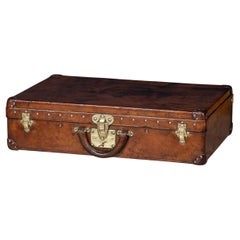
Antique 19th Century Louis Vuitton Courier Trunk In Woven Canvas, France c.1896
Located in Royal Tunbridge Wells, Kent
This exceptional Louis Vuitton courier trunk, crafted in France circa 1896, is adorned with the very first woven Monogram canvas—produced for only a brief period at the close of the ...
Category
19th Century French Antique Other Trunks and Luggage
Materials
Brass
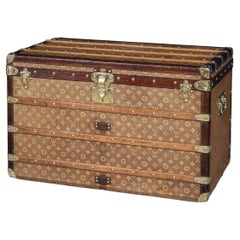
Antique 20th Century Louis Vuitton Hat Trunk In Monogram Canvas, France c.1920
Located in Royal Tunbridge Wells, Kent
Around the turn of the 19th and 20th century Louis Vuitton had established himself as a market leader in trunk making and needed to set his now famous brand apart from the imitators ...
Category
20th Century French Other Trunks and Luggage
Materials
Brass
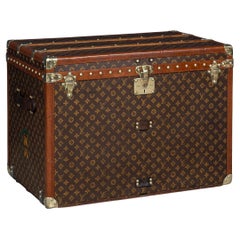
Antique 20thC Louis Vuitton "Malle Haute" Trunk In Woven Canvas, France c.1900
Located in Royal Tunbridge Wells, Kent
Around the turn of the 19th and 20th century Louis Vuitton had established himself as a market leader in trunk making and needed to set his now famous brand apart from the imitators ...
Category
20th Century French Other Trunks and Luggage
Materials
Metal
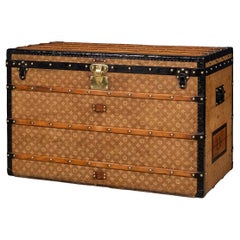
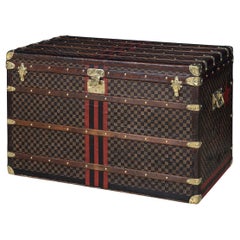
Antique 20thC Louis Vuitton "Malle Haute" Trunk In Damier Canvas, France c.1900
Located in Royal Tunbridge Wells, Kent
A Damier “malle haute“ (tall trunk) by Louis Vuitton, early 20th century. This trunk was the must have item of any elite traveller. This trunk is covered in the world famous Damier (...
Category
20th Century French Other Trunks and Luggage
Materials
Brass
20th Century Louis Vuitton Steamer 35 Bag In Monogram Canvas, Made In France
Located in Royal Tunbridge Wells, Kent
A lovely Louis Vuitton steamer travel bag in monogram canvas and natural tan leather, made in France in the latter quarter of the 20th century. Steamer bags have been produced by Lou...
Category
20th Century French Other Trunks and Luggage
Materials
Leather

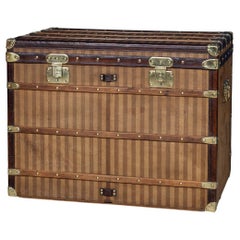
19th Century Louis Vuitton Courier Trunk In Striped Canvas, France c.1885
Located in Royal Tunbridge Wells, Kent
Antique 19th Century Louis Vuitton trunk in striped canvas. The earliest Louis Vuitton trunks were revolutionary when they hit the market. It had a flat lid, rather than the domed li...
Category
20th Century French Other Trunks and Luggage
Materials
Metal
Antique 20th Century Louis Vuitton Trunk In Woven Canvas, France c.1900
Located in Royal Tunbridge Wells, Kent
Around the turn of the 19th and 20th century Louis Vuitton had established himself as a market leader in trunk making and needed to set his now famous brand apart from the imitators ...
Category
20th Century French Other Trunks and Luggage
Materials
Metal, Brass
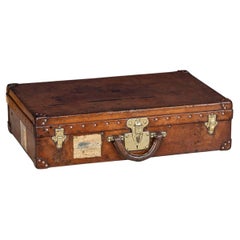
20th Century Louis Vuitton Cow Hide Suitcase, France c.1920
Located in Royal Tunbridge Wells, Kent
A highly unusual and exceptionally rare Louis Vuitton suitcase, originating from the early years of the 20th century, distinguishes itself not with the globally renowned monogram canvas but with a distinctive covering crafted from a singular piece of cowhide. This unique piece represents a special order from Louis Vuitton, showcasing the brand's historical commitment to utilizing only the finest hides available.
Unlike many of its counterparts, leather trunks and cases of this era often struggle to withstand the test of time, requiring regular treatments to prevent drying and disintegration. Remarkably, this particular example defies the odds, retaining the same supple quality it possessed on the day it first graced the shop floor. This suitcase belongs to Louis Vuitton's collection of "speciality materials," which encompasses a diverse range, including, but not limited to, zinc, copper, crocodile leather, and cow leather.
A brief history about Louis Vuitton trunks: Louis Vuitton was born in 1821 to a farmer and milliner and came from a long-established working-class family in eastern France. Vuitton grew up understanding the effects of perseverance and a strong work ethic from watching his family. At the age of 16, he made the decision to walk 292 miles from his hometown to Paris to try and make a new life for himself. When he arrived the city was in the midst of industrialization with current modes of transportation evolving quickly allowing for longer journeys. With this came the need for sturdy travel pieces.
Vuitton was taken as an apprentice for a successful box maker and packer named Monsieur Marechal. He learned to craft durable containers and how to pack them properly – a well-respected profession at the time.In 1854, years after he had mastered his craft and became well respected for it, Vuitton ventured out on his own to open a shop on Rue Neuve des Capucines. It was here that he began to establish himself as a luggage maker. Then, in 1858, Vuitton designed the first Louis Vuitton steamer trunk. At the time trunks had rounded tops to allow for water to run off but this did not allow for convenient stowage. Vuitton introduced a flat, yet waterproof, trunk that was easily stackable. The first of his trunks were outfitted with a grey canvas referred to as Trianon – it wouldn’t be until several decades later that the signature monogram would be introduced.
With a burgeoning business, Vuitton moved his family and workplace to Asniere, where he employed twenty workers to craft his trunks. By 1900 he would have 100 employees, and in 1914 the company would more than double in size. After years of success, Vuitton began to experiment with the design of his luggage by introducing a new striped canvas pattern (1876) and later the still well-known Damier print (1888). The hand-painted patterns were developed to prevent counterfeits. Even in the late 1800s, Louis Vuitton was enough of a status symbol to warrant counterfeiting. In 1886, his son George invented and patented an ingenious locking system that made it impossible to pick the lock of their trunks. This lock is still used today.
1892 would prove to be a time of mourning for the family as Louis Vuitton passed...
Category
20th Century French Other Trunks and Luggage
Materials
Brass
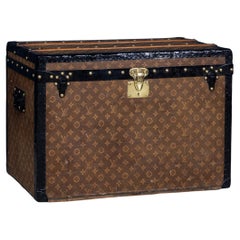
Antique 20th Century Louis Vuitton Trunk In Woven Canvas, France c.1900
Located in Royal Tunbridge Wells, Kent
Around the turn of the 19th and 20th century Louis Vuitton had established himself as a market leader in trunk making and needed to set his now famous brand apart from the imitators ...
Category
20th Century French Other Trunks and Luggage
Materials
Fabric, Canvas, Cedar
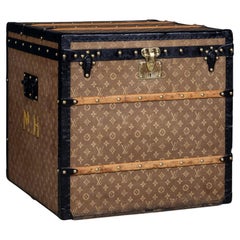
20th Century Louis Vuitton Courier Trunk In Monogram Canvas, France c.1910
Located in Royal Tunbridge Wells, Kent
Around the turn of the 19th and 20th century Louis Vuitton had established himself as a market leader in trunk making and needed to set his now famous brand apart from the imitators ...
Category
1910s French Vintage Other Trunks and Luggage
Materials
Leather, Canvas, Wood
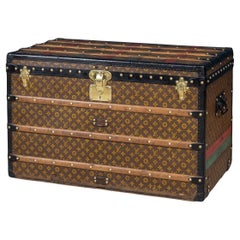
Blanketchest or Trunk with Old Caucasian Kilim
Located in Alessandria, Piemonte
Unusual and beautiful trunk with an old Caucasian kilim: useful and rare, settable everywhere.
Nothing has been taken away: intact in every parte, only adapted to modern life, not no...
Category
Mid-20th Century Caucasian Other Trunks and Luggage
Materials
Wool, Fruitwood
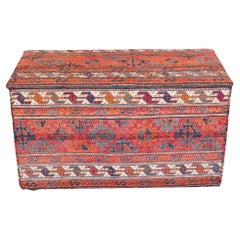
20thC Louis Vuitton Encyclopedia Britannica Trunk In Monogram Canvas c.1911
Located in Royal Tunbridge Wells, Kent
This very unusual trunk, dating from around 1911, was specially commissioned by Encyclopaedia Britannica and is associated with Cambridge. As described in 100 Legendary Trunks by Louis Vuitton, the idea was both ingenious and practical: rather than having to decide what essential reading material one might bring to a desert island, why not take the entire Encyclopaedia Britannica? Recognised as the most comprehensive and well-researched collection of knowledge, the encyclopaedia was continuously revised and updated, making it not only an indispensable source of learning but also an ideal companion for long journeys. In 1910, the publisher—linked to Cambridge University—placed an order for 1,000 trunks a full year before the eleventh edition was released. Each trunk was designed to house twenty-nine volumes, totalling roughly 28,000 pages (excluding the index) and containing 40,000 articles, all carefully edited to expand its market reach in North America.
Louis Vuitton was at the forefront of luxury trunk design during this era, and his library trunk...
Category
20th Century French Other Trunks and Luggage
Materials
Brass
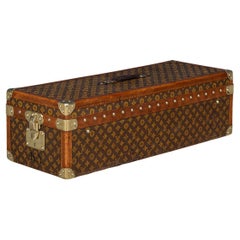
Louis Vuitton Hard-Sided Case, Monogram Canvas, Brass Fittings, France
Located in Royal Tunbridge Wells, Kent
A delightful late 20th-century Louis Vuitton hard-sided case, covered with the iconic monogram canvas and complemented by brass fittings. The exterior exudes the unmistakable style t...
Category
20th Century French Other Trunks and Luggage
Materials
Brass
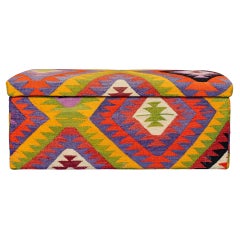
Trunk with Kilim
Located in Alessandria, Piemonte
Padded trunk made in Italy but covered with a brightly colored kilim.
It prings cheer. In a beach house it can hold beach towels.
Also very convenient as a bench in an entryway.
re...
Category
Late 20th Century Turkish Other Trunks and Luggage
Materials
Wool, Fruitwood

$2,130
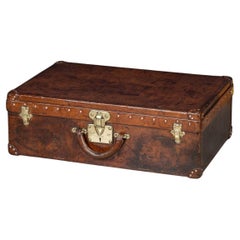
20th Century Louis Vuitton Cow Hide Suitcase, France c.1920
Located in Royal Tunbridge Wells, Kent
A highly unusual and exceptionally rare Louis Vuitton suitcase, originating from the early years of the 20th century, distinguishes itself not with the globally renowned monogram canvas but with a distinctive covering crafted from a singular piece of cowhide. This unique piece represents a special order from Louis Vuitton, showcasing the brand's historical commitment to utilizing only the finest hides available.
Unlike many of its counterparts, leather trunks and cases of this era often struggle to withstand the test of time, requiring regular treatments to prevent drying and disintegration. Remarkably, this particular example defies the odds, retaining the same supple quality it possessed on the day it first graced the shop floor. This suitcase belongs to Louis Vuitton's collection of "speciality materials," which encompasses a diverse range, including, but not limited to, zinc, copper, crocodile leather, and cow leather.
A brief history about Louis Vuitton trunks: Louis Vuitton was born in 1821 to a farmer and milliner and came from a long-established working-class family in eastern France. Vuitton grew up understanding the effects of perseverance and a strong work ethic from watching his family. At the age of 16, he made the decision to walk 292 miles from his hometown to Paris to try and make a new life for himself. When he arrived the city was in the midst of industrialization with current modes of transportation evolving quickly allowing for longer journeys. With this came the need for sturdy travel pieces.
Vuitton was taken as an apprentice for a successful box maker and packer named Monsieur Marechal. He learned to craft durable containers and how to pack them properly – a well-respected profession at the time.In 1854, years after he had mastered his craft and became well respected for it, Vuitton ventured out on his own to open a shop on Rue Neuve des Capucines. It was here that he began to establish himself as a luggage maker. Then, in 1858, Vuitton designed the first Louis Vuitton steamer trunk. At the time trunks had rounded tops to allow for water to run off but this did not allow for convenient stowage. Vuitton introduced a flat, yet waterproof, trunk that was easily stackable. The first of his trunks were outfitted with a grey canvas referred to as Trianon – it wouldn’t be until several decades later that the signature monogram would be introduced.
With a burgeoning business, Vuitton moved his family and workplace to Asniere, where he employed twenty workers to craft his trunks. By 1900 he would have 100 employees, and in 1914 the company would more than double in size. After years of success, Vuitton began to experiment with the design of his luggage by introducing a new striped canvas pattern (1876) and later the still well-known Damier print (1888). The hand-painted patterns were developed to prevent counterfeits. Even in the late 1800s, Louis Vuitton was enough of a status symbol to warrant counterfeiting. In 1886, his son George invented and patented an ingenious locking system that made it impossible to pick the lock of their trunks. This lock is still used today.
1892 would prove to be a time of mourning for the family as Louis Vuitton passed...
Category
20th Century French Other Trunks and Luggage
Materials
Brass
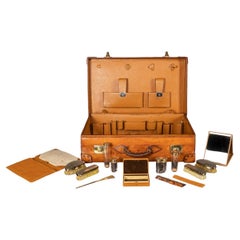
An Edwardian Dressing Case With Silver Accessories By Walker
Hall c.1928
Located in Royal Tunbridge Wells, Kent
An English bridle hide dressing case with gilded silver accessories marked with the Walker and Hall stamp and a delicate engine turned pattern, including brushes, jars, mirror and do...
Category
1920s British Vintage Other Trunks and Luggage
Materials
Brass
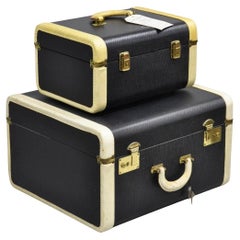
Vintage Art Deco Black
White Hard Case Travel Luggage Suitcase - 2 Pc Set
Located in Philadelphia, PA
Vintage Art Deco Black & White Hard Case Travel Luggage Suitcase - 2 Pc Set. Circa Mid 20th Century. Measurements: Small: 8" H x 14" W x 10" D Large: 10.5" H x 18" W x 16" D.
Category
Mid-20th Century Other Trunks and Luggage
Materials
Wood
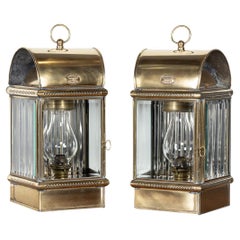
19th Century Victorian Pair Of Brass Davy
Co Yacht Cabin Oil Lamps c.1890
By Davey
Co.
Located in Royal Tunbridge Wells, Kent
Antique 19th Century Victorian pair of oil lamps by Davey & Co London Ltd. Made from brass and bevelled glass, with a faceted panel in the back to reflect the light, these lamps were...
Category
19th Century British Antique Other Trunks and Luggage
Materials
Brass
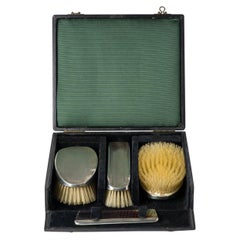
Travel Vanity Set
Located in Alessandria, Piemonte
English brushes set for an elegant person, man or woman, in its original case. Marked Birmingham 1929.
An idea for a special gift.
reference: A/2950.
Category
Early 20th Century English Other Trunks and Luggage
Materials
Silver
$662 Sale Price / set
43% Off
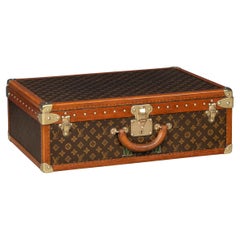
20th Century Louis Vuitton Suitcase In Monogram Canvas, France
Located in Royal Tunbridge Wells, Kent
A charming and authentic Louis Vuitton hard-sided case dating from the mid-20th century, beautifully finished in the brand’s iconic stencilled monogram canvas, a version that was dis...
Category
20th Century French Other Trunks and Luggage
Materials
Brass
Louis Vuitton Hat Trunk, Damier Canvas
Black Leather, France, 1920
Located in Royal Tunbridge Wells, Kent
Produced by the world-renowned trunk maker Louis Vuitton, this exceptional piece is finished in the brand’s iconic Damier checkerboard canvas, complemented by elegant Lozine black le...
Category
20th Century French Other Trunks and Luggage
Materials
Brass

20th Century Louis Vuitton Wardrobe Trunk In Monogram Canvas, France c.1930
Located in Royal Tunbridge Wells, Kent
A stunning early 20th century Louis Vuitton wardrobe trunk covered in the world famous LV monogrammed canvas. With its lozine borders and brass fittings it would have been the top of...
Category
20th Century French Other Trunks and Luggage
Materials
Brass
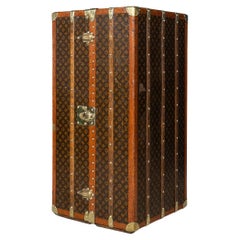
Baule in legno laccato e dipinto, Toscana Italia
Located in Cuneo, Italy (CN)
Antico baule dipinto e laccato a mano, originale di epoca '800, di provenienza Toscana (Italia), era il baule porta dote del matrimonio, ora utilizzabile come contenitore, porta tv o...
Category
19th Century Italian Antique Other Trunks and Luggage
Materials
Poplar
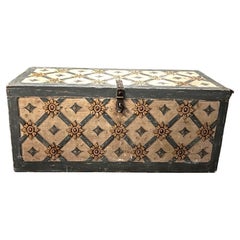
Scandinavian Painted Dowery Wedding Chest, circa 1800
Located in San Francisco, CA
Colorful and brightly painted all-over with flowers and love birds, marriage or dowery chest on carved and painted legs, Scandinavian, circa 1800.
In lovely antique condition.
Category
Early 19th Century Scandinavian Antique Other Trunks and Luggage
Materials
Wood
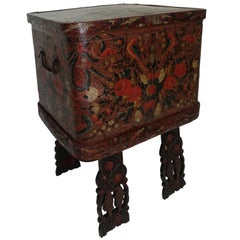
Antique 19thC English Leather Overnight Case With Six Silver Topped Jars c.1881
Located in Royal Tunbridge Wells, Kent
Antique 19th Century English bridle leather overnight case, containing six different shaped glass vanity jars topped with solid silver lids, dating to 1881. Inside the case there als...
Category
1880s British Antique Other Trunks and Luggage
Materials
Brass
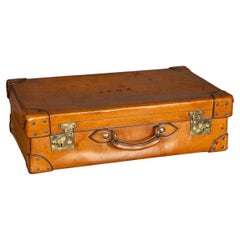
Other trunks and luggage for sale on 1stDibs.
Find a broad range of unique Other trunks and luggage for sale on 1stDibs. It’s true that these talented designers have at times inspired knockoffs, but our experienced specialists have partnered with only top vetted sellers to offer authentic pieces that come with a buyer protection guarantee. Prices for trunks and luggage differ depending upon multiple factors, including designer, materials, construction methods, condition and provenance. On 1stDibs, the price for these items starts at $500 and tops out at $19,972 while the average work can sell for $1,711.
More Ways To Browse
Louis Vuitton Car Trunk
Louis Vuitton Fabric Bag
Louis Vuitton Painted Trunk
Louis Vuitton Shoe Trunk
Narrow Trunk
Pigskin Luggage
Sea Trunk
Shipping Trunks
Shipwright Tools
Spanish Colonial Leather Trunk
Vintage Halliburton
Wood Band Trunk
1880 Louis Vuitton Trunk
1896 Louis Vuitton
1940s Suitcase
Alligator Skin Luggage
Alligator Trunk
Aluminum Suitcase