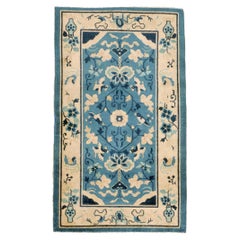
Chinese More Carpets
to
115
Width
to
Length
to
360
86
22
91
15
7
5
4
3
1
1
5
32
323
108
138
67
93
7
3
4
10
3
6
3
6
26
447
426
98
89
49
348
109
468
447
452
24,303
24,859
11,102
9,397
5,950
16
5
3
1
1
Place of Origin: Chinese
1920
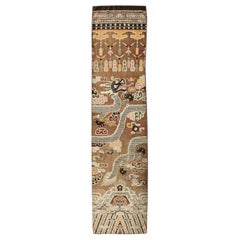
s Antique Chinese Ningxia Pillar Rug with Dragon Pictorial
Located in Dallas, TX
53479 Antique Chinese Ningxia Pillar Rug 03'05 x 14'01. This exquisite hand-knotted wool antique Chinese Ningxia pillar rug unveils a fascinating na...
Category
Early 20th Century Qing Chinese More Carpets
Materials
Wool
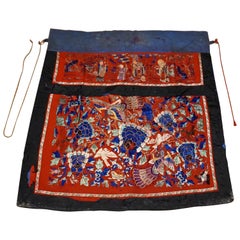
19th Century Chinese Qing Dynasty Silk Embroidery Altar Banner
Located in Vancouver, British Columbia
Fine Qing Dynasty Chinese Altar weaving hand embroidered in silk. Intricate and complex weave depicting a celebration of Spring with a Royal Court Scene rendered in breathtaking deta...
Category
1870s Qing Antique Chinese More Carpets
Materials
Satin

$1,388 Sale Price
24% Off
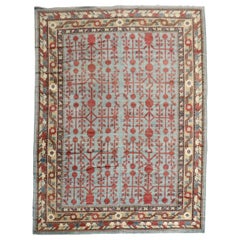
Teal Antique Room-Size Khotan Rug
Located in New York, NY
A rare size vintage Khotan rug with Classic large pomegranate design on a teal field from the 3rd quarter of the 20th century.
Measures: 9' x 11'9".
Category
Late 20th Century Bohemian Chinese More Carpets
Materials
Wool
$20,000 Sale Price
20% Off
The Noble Stillness: An Antique Chinese Peking Masterpiece of Scholarly Elegance
Located in Dallas, TX
72991 Antique Chinese Peking Rug, 08'09 x 11'05. Step into a world of imperial quietude with this hand-knotted wool antique Chinese Peking rug—a one-of-a-kind masterpiece that captur...
Category
Early 20th Century Chinoiserie Chinese More Carpets
Materials
Wool
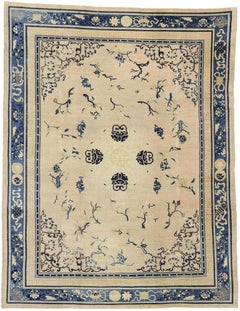
Rare Antique Imperial Palace Chinese Silk
Metal Rug
Located in Ferrara, IT
This is your chance to own a rare and exquisite piece of history. The Imperial Palace Chinese Silk & Metal Rug from the 19th century is a work of art t...
Category
19th Century Other Antique Chinese More Carpets
Materials
Cotton
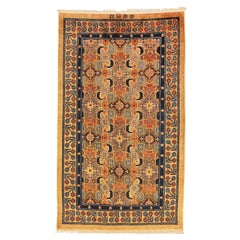
Vintage Chinese Tabriz Silk Rug Hotel Lobby Size Carpet
Located in Dallas, TX
78337 Oversized Vintage Chinese Tabriz Silk Rug, 11'11 x 18'02. Emanating a timeless floral design, incredible detail and texture, this hand knotte...
Category
Late 20th Century Tabriz Chinese More Carpets
Materials
Silk
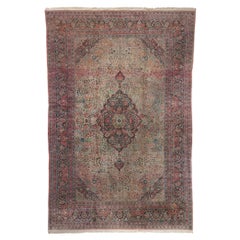
Mid-20th Century Handmade Chinese Art Deco Room Size Carpet
Located in New York, NY
A vintage Chinese Art Deco room size carpet handmade during the mid-20th century.
Measures: 9' 2" x 11' 9"
Chinese Rugs
Carpet:
The craft of the hand-knotted carpet in China, and the surrounding areas including Mongolia and Tibet, extends into the early centuries of the first millennium, C.E., but we really have a firm grasp only beginning in the later 16th century with large, very coarsely woven carpets, often depicting dragons, created for the Imperial Forbidden City palaces. Chinese carpets have always been commercial and there are no tribal groups responsible for any of the carpet weaving strains.
When the Ming Dynasty fell in 1644, with no Imperial patrons, production moved to the city of Ningxia in north central China where several workshops turned out more finely woven pieces for the Mandarins of the administrative Ch’ing bureaucracy and well-to-do merchants. Ningxia was the major Chinese carpet center up through most of the 19th century, with first allover and then medallion designs on cotton foundations in medium weaves. Palettes were initially limited to yellows, dark blue and cream, but later widened to include reds, browns and even green. These antiques were the first Chinese carpets to be exported to the West and they fitted in well with the craze for Chinese blue-and-white porcelain in the second half of the 19th century. Ningxia also wove shaped and rectangular small rugs for saddle underlays, chair (“throne”) seats and shaped backs, pillar carpets with dragons or monks for Buddhist monasteries, and long divided runners for monastery meditation halls. These small rugs are among the most collectible of all Chinese weavings.
Weavers from Ningxia set up workshops in the capital Peking (Beijing) in the 1860’s and began weaving Western room sizes for export, primarily to America. In blue – and – white and polychrome palettes, with round wreath medallions, precious objects, seasonal flowers, paeonies, lotuses, fretwork, clouds, butterflies and bats, all relatively spaciously drawn. The round “Shou” (Good Luck) character is also a prominent decorative motif. There are also a few Peking landscape pictorials with pagodas, houses, bridges, waterscapes and boats. Peking carpets were woven right up until WWII and production began again after the Cultural Revolution around 1970. They are moderately well-woven, on cotton foundations, exactingly executed and indisputably Chinese. Many are in the blue-and-white style. Nothing else looks like a Peking carpet and for a Chinese “look” in a room, they are absolutely indispensable. Sizes range from scatters and a few runners, through the popular 9’12’ size, to large carpets over 20’ which must have been special orders. The earliest Peking Revival carpets are pliable and fairly thin, but they became heavier and more compact in the 20th century, in competition with Art Deco carpets from Tientsin. The modern, post- 1970, pieces are in the traditional Peking style, but are a little too regular and neat. Exactitude has been favored over character, as hard to explain that as it is.
There are a number of all-silk and silk-and –metal thread pieces, many with inscriptions purporting to link them with rooms in the Imperial palaces, bringing very substantial auction prices, but none are really antique. The genre emerged after WWI and the present demand comes from mainland Chinese. The silk piles often stand in pattern relief against flat woven gold metal thread grounds. The inscriptions are apocryphal, the rugs are flashily opulent, perfect for nouveaux riches.
The Art Deco period between the two World Wars saw a distinctive carpet industry developing in Tientsin (Tianjin) in northeastern China. These are highly prized for their transitional design character, neither overtly Chinese, nor abstractly modern/contemporary. Woven exclusively for export, usually by and for American firms, such as Nichols and Elbrook, they are totally in the “Jazz Age Modern” style of the 1920’s, often without borders, with abstract or abstracted patterns, and only with, at best, a few Chinese-y pattern elements. Vases asymmetrically placed in the corners are features of some of the more Chinese-y carpets. Open fields with floral sprays and branches growing in from the edges are anther design innovation. Often, Chinese motives have been re-imagined in more sharp-edged, abstract manners. Some have no references whatsoever to natural elements. The patterns are sharp and the rugs are never subdued, soft or restrained. The rugs are heavily constructed, with crisp, unfading dyes and medium to medium coarse weaves on cotton foundations. All are extremely well-executed, with none of the vagaries, variations or twists found on even high-quality Persian rugs. The majority are in the 9’ by 12’ format and a surprising number can be found in top condition. There also was a substantial production in Peking from, especially from the Fette factory. Elliptical and round carpets, and lighter, often pastel colors, were a specialty. Nothing looks like an Art Deco Chinese and they work well with traditional Chinese furniture and the most modern decor as well. These is no substitute for a good Chinese Art Deco carpet.
Chinese carpets also include small scatters from Tibet, with high quality wool, floating dragons and allover textile patterns. The colors of vintage and modern pieces are bright, but there are antique small rugs...
Category
Mid-20th Century Art Deco Chinese More Carpets
Materials
Wool
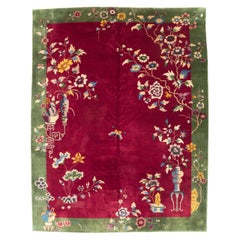
Vintage Chinese Art Deco 9
x 12
Room Size Rug
Located in New York, NY
A vintage Chinese Art Deco rug handmade during the mid-20th century predominantly in red, green, and antique white, and with accent colors in silver, beige, pink, blue, and orange , ...
Category
Mid-20th Century Art Deco Chinese More Carpets
Materials
Wool
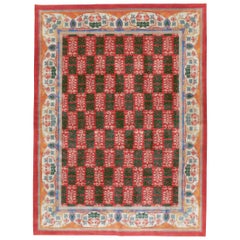
Mid-20th Century Handmade Chinese Art Deco Room Size Carpet
Located in New York, NY
A vintage Chinese Art Deco room size carpet handmade during the mid-20th century.
Measures: 9' 1" x 11' 9".
Category
Mid-20th Century Art Deco Chinese More Carpets
Materials
Wool
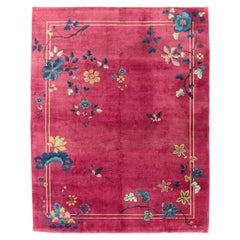
Zabihi Collection Chinese Eclipse Room Size Rug
Located in New York, NY
An authentic early-20th-century Chinese rug with a spacious open field floral design with an eclipsed medaion on a tan ground.
Measures: 8' x 9'8''.
Category
Early 20th Century Art Deco Chinese More Carpets
Materials
Wool
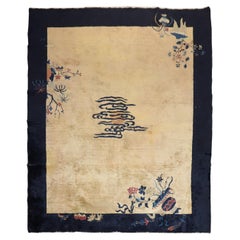
Zabihi Collection Lovely Floral Blue Chinese Room Size Rug
Located in New York, NY
An authentic early-20th-century Chinese rug with a spacious open field floral design on a navy ground.
Measures: 8'11'' x 11'6''.
Category
Early 20th Century Art Deco Chinese More Carpets
Materials
Wool
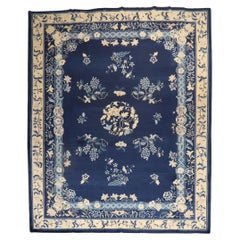
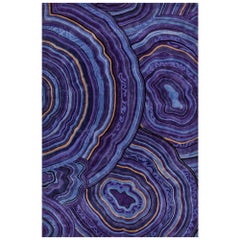
Schumacher Malachite Area Rug in Hand-Tufted Wool Silk by Patterson Flynn
By Schumacher, Hutton Wilkinson
Located in New York, NY
Hutton Wilkinson is one of the world’s reigning masters of high style decorating. He first trained with, and then became the business partner of, the ...
Category
21st Century and Contemporary Modern Chinese More Carpets
Materials
Wool, Silk
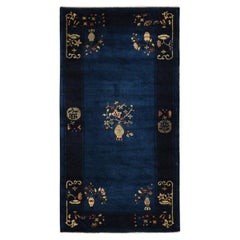
3
x5
8" Big Dipper Blue Antique Chinese Peking Pure Wool Hand Knotted Clean Rug
Located in Carlstadt, NJ
This fabulous Hand-Knotted carpet has been created and designed for extra strength and durability. This rug has been handcrafted for weeks in the traditional method that is used to m...
Category
1910s Medieval Vintage Chinese More Carpets
Materials
Wool
$1,770 Sale Price
25% Off
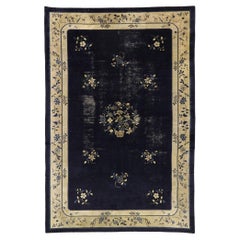
Antique Chinese Peking Rug with Rustic Chinoiserie Style
Located in Dallas, TX
78131 Distressed Antique Chinese peking rug with Rustic Chinoiserie Style 12'02 x 18'02. This hand knotted wool antique Chinese Peking rug features a rounded open medallion decorated...
Category
Early 20th Century Chinoiserie Chinese More Carpets
Materials
Wool
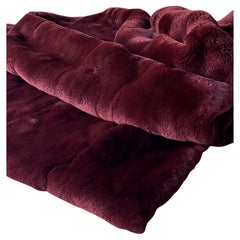
Burgundy Red Fur Blanket throw - Rex Rabbit Fur Customize to any size
By Emily Barbara
Located in Dural, AU
Emily Barbara Fur Couture — Rex Rabbit Fur Blanket Throw
Elevate your interior with the unmistakable luxury of the Emily Barbara Fur Couture Rex Fur Blanket Throw, an exceptional s...
Category
2010s Aesthetic Movement Chinese More Carpets
Materials
Fur
Zabihi Collection Early 20th Century Khotan Pomegranate Full Pile Rug
Located in New York, NY
A full pile excellent condition early 20th century Khotan rug. Gray ground, red accent pomegranates throughout with a lavender multi band border,
circa 1920, measures: 5'11" x 9'.
Category
Early 20th Century Chinese Chippendale Chinese More Carpets
Materials
Wool

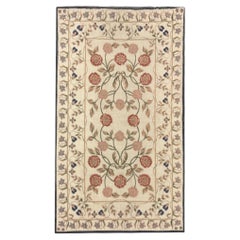
Beige Floral Aubusson Rug Handwoven Wool Needlepoint, Traditional Botanical Rug
Located in Wembley, GB
This fantastic area rug has been handwoven with a beautiful, symmetrical floral design woven on an ivory background with cream green and ivory accents. This elegant piece's colour an...
Category
1990s Aubusson Chinese More Carpets
Materials
Wool, Cotton, Organic Material
$1,982 Sale Price
20% Off
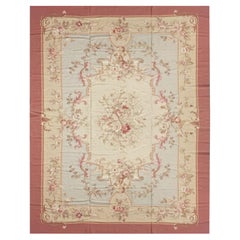
Blue Aubusson Rug, Extra Large Wool Tapestry Rug, Handmade Carpet Blush Pink Rug
Located in Wembley, GB
Featuring intricately woven motifs and emblems on a mixture of beige and light blue backgrounds through the centre. A highly detailed layered blush pink border encloses the handmade ...
Category
21st Century and Contemporary Hollywood Regency Chinese More Carpets
Materials
Wool, Cotton, Organic Material
Light Pink Fur Blanket throw - Rabbit Fur Customize to any size
By Emily Barbara
Located in Dural, AU
Light Pink Rabbit Fur Blanket — 120 × 180 cm
An expression of modern opulence, this light pink fur blanket throw is designed for those who appreciate understated luxury and impeccab...
Category
2010s Aesthetic Movement Chinese More Carpets
Materials
Fur

Zabihi Collection Pumpkin Color 20th Century Chinese Room Size Rug
Located in New York, NY
A room-size tradtional Chinese rug with a rare pumpkin color ground
Measures: 9' x 11'6''.
Category
20th Century Art Deco Chinese More Carpets
Materials
Wool
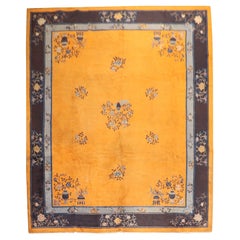
The Eternal Seasons: Antique Chinese Peking Masterpiece of Chinoiserie Splendor
Located in Dallas, TX
78762 Antique Blue Chinese Peking Rug, 04'00 x 05'09. Steeped in poetic symbolism and imperial grace, this hand-knotted wool antique Chinese Peking rug transcends time, fusing the re...
Category
Early 20th Century Qing Chinese More Carpets
Materials
Wool

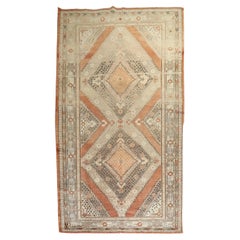
Zabihi Collection Apricot Color Khotan Gallery Rug
Located in New York, NY
20th century one of a kind gallery size Khotan rug with 2 large medallions on an apricot color ground, dominant accents in orange and gray,
meas...
Category
20th Century Rustic Chinese More Carpets
Materials
Wool
Whispers of the Willow: An Antique Chinese Art Deco Masterpiece of Distinction
Located in Dallas, TX
77615 Antique Chinese Art Deco Oval Rug, 03'00 x 04'09. Steeped in the poetic refinement of early 20th-century Shanghai ateliers, this hand-knotted w...
Category
Early 20th Century Art Deco Chinese More Carpets
Materials
Wool
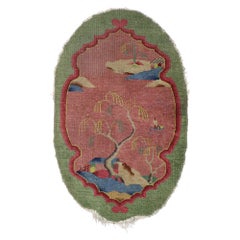
Stunning Blue and Beige Antique Collectible Ningxia or Ningshia Silk Area Rug
Located in Miami, FL
A fine antique Ningxia blue and beige handmade silk rug.
This contemporary silk rug exudes a truly joyful aura. Its design is based on geometric figures regularly located on the e...
Category
1920s Art Deco Vintage Chinese More Carpets
Materials
Wool
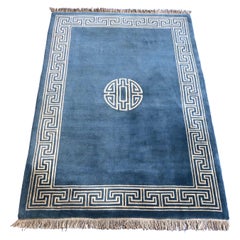
The Silk Road Sigil: A Late 19th Century Turkestan Khotan Masterpiece
Located in Dallas, TX
79408 Late 19th Century Turkestan Khotan Rug, 05'01 x 10'09. This rare antique Khotan rug stands as a ceremonial expression of Turkestan weaving culture at the close of the nineteent...
Category
Late 19th Century Khotan Antique Chinese More Carpets
Materials
Wool
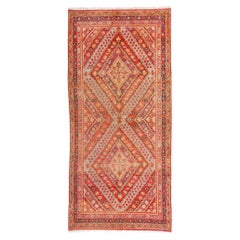
Vintage Chinese Art Deco Rug Art Nouveau Rug Khotan Rug Pink
Located in New York, NY
Rare Vintage Chinese Art Deco Art Nouveau Khotan Rug Geometric
Pink
8'7" x 11'10" (9 x 12)
262cm x 361cm
Circa 1965
"This an exquisite Rare vintage Hand made Chines...
Category
1960s Vintage Chinese More Carpets
Materials
Wool
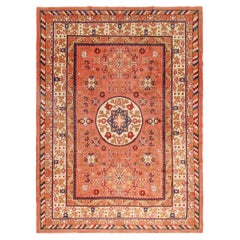
Traditional Chinese Area Rug, Pink Wool Carpet Rug Small Handwoven
Located in Wembley, GB
This elegant handmade carpet was constructed in the 1990s in China. The central design has been woven on a pink field with peach, purple and green accent colours that make up the flo...
Category
1980s Mid-Century Modern Vintage Chinese More Carpets
Materials
Wool, Cotton, Natural Fiber, Organic Material
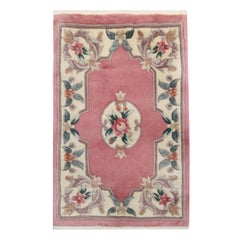
$616 Sale Price
30% Off
Mid-20th Century Handmade Chinese Pictorial Accent Rug of Horses
Located in New York, NY
A vintage Chinese pictorial accent rug handmade during the mid-20th century of horses prancing in a field over a dark midnight blue background.
Measures: 4' 0" x 6' 6".
Category
Mid-20th Century Modern Chinese More Carpets
Materials
Wool
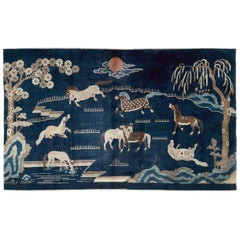
A Symphony of Seasons: Antique Chinese Peking Rug of Timeless Harmony
By Walter Nichols
Located in Dallas, TX
77230 Antique Chinese Peking Rug, 09'00 x 11'04. Bathed in the serene glow of antiquity, this hand-knotted wool antique Chinese Peking rug captures the poetic essence of China’s Four...
Category
Early 20th Century Chinoiserie Chinese More Carpets
Materials
Wool
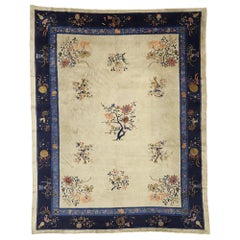
Antique Chinese Baotou Scholar’s Rug with Confucian Pictorial Design
Located in Dallas, TX
77586, antique Chinese Baotou Scholar’s rug with Confucian Pictorial Design. This hand-knotted wool antique Chinese Baotou rug features a pi...
Category
Early 20th Century Chinoiserie Chinese More Carpets
Materials
Wool
The Chinoiserie Dynasty: An Antique Chinese Peking Rug of Symbolic Grace
Located in Dallas, TX
77260 Antique Chinese Peking Rug, 09'02 x 11'07. An embodiment of timeless Chinese artistry and imperial refinement, this hand-knotted wool antique Peking rug captures the serene har...
Category
Early 20th Century Qing Chinese More Carpets
Materials
Wool
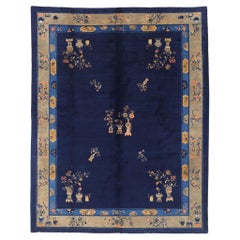
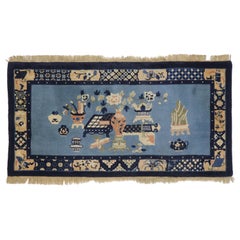
Vintage Chinese Baotou Vase Pictorial Rug with Chinese Chippendale Style
Located in Dallas, TX
77587, vintage Chinese Baotou Vase Pictorial rug with Chinese Chippendale style. This hand-knotted wool vintage Chinese Baotou pictorial rug features an abrashed tan field showcasing different types of cloisonné vases sprouting with stylized florals resting on pedestals. The main border, which features repeated motifs of diamonds containing stylized Ruyi clouds with rosette centers, echoes the balance of geometric forms and floral touches used throughout the piece. It would be perfect for a small space, kitchen, reading nook, master bathroom, grand foyer, designer entry, study, studio, den, walk-in closet, stair landing, alcove, mudroom, entryway, bedroom, private library, private chambers, living room, front room, wine cellar, conservatory, drawing room, trophy room, game room, music room, listening room, or hotel lobby. It would also make a lovely accent next to a buffet in a dining room or behind the sofa table in the living room. Iconic in its styling, this antique Chinese Baotou rug...
Category
Mid-20th Century Chinese Chippendale Chinese More Carpets
Materials
Wool

Antique Chinese Art Deco Rug, French European Meets Chinoiserie Chic
Located in Dallas, TX
70603 Antique Chinese Art Deco Rug, 09'01 x 11'09.
French European meets Chinoiserie chic in this hand knotted wool antique Chinese Art Deco rug. The intrinsic botanical design and r...
Category
Early 20th Century Chinoiserie Chinese More Carpets
Materials
Wool
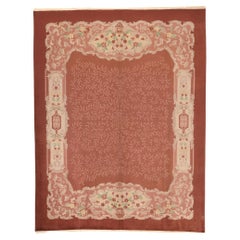
Mid-20th Century Chinese Art Deco Room Size Carpet
Located in New York, NY
A vintage Chinese Art Deco room size carpet handmade during the Mid-20th Century.
Measures: 8' 11" x 11' 7".
Category
Mid-20th Century Art Deco Chinese More Carpets
Materials
Wool
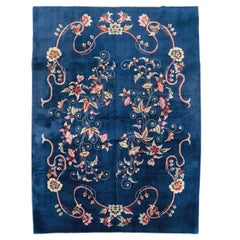
Early 20th Century Handmade Chinese Ningxia Square Throw Rug
Located in New York, NY
An antique Chinese Ningxia square throw rug handmade during the early 20th century.
Measures: 2' 3" x 2' 4"
The craft of the hand-knotted carpet in China, and the surrounding areas including Mongolia and Tibet, extends into the early centuries of the first millennium, C.E., but we really have a firm grasp only beginning in the later 16th century with large, very coarsely woven carpets, often depicting dragons, created for the Imperial Forbidden City palaces. Chinese carpets have always been commercial and there are no tribal groups responsible for any of the carpet weaving strains.
When the Ming Dynasty fell in 1644, with no Imperial patrons, production moved to the city of Ningxia in north central China where several workshops turned out more finely woven pieces for the Mandarins of the administrative Ch’ing bureaucracy and well-to-do merchants. Ningxia was the major Chinese carpet center up through most of the 19th century, with first allover and then medallion designs on cotton foundations in medium weaves. Palettes were initially limited to yellows, dark blue and cream, but later widened to include reds, browns and even green. These antiques were the first Chinese carpets to be exported to the West and they fitted in well with the craze for Chinese blue-and-white porcelain in the second half of the 19th century. Ningxia also wove shaped and rectangular small rugs for saddle underlays, chair (“throne”) seats and shaped backs, pillar carpets with dragons or monks for Buddhist monasteries, and long divided runners for monastery meditation halls. These small rugs are among the most collectible of all Chinese weavings.
Weavers from Ningxia set up workshops in the capital Peking (Beijing) in the 1860’s and began weaving Western room sizes for export, primarily to America. In blue – and – white and polychrome palettes, with round wreath medallions, precious objects, seasonal flowers, paeonies, lotuses, fretwork, clouds, butterflies and bats, all relatively spaciously drawn. The round “Shou” (Good Luck) character is also a prominent decorative motif. There are also a few Peking landscape pictorials with pagodas, houses, bridges, waterscapes and boats. Peking carpets were woven right up until WWII and production began again after the Cultural Revolution around 1970. They are moderately well-woven, on cotton foundations, exactingly executed and indisputably Chinese. Many are in the blue-and-white style. Nothing else looks like a Peking carpet and for a Chinese “look” in a room, they are absolutely indispensable. Sizes range from scatters and a few runners, through the popular 9’12’ size, to large carpets over 20’ which must have been special orders. The earliest Peking Revival carpets are pliable and fairly thin, but they became heavier and more compact in the 20th century, in competition with Art Deco carpets from Tientsin. The modern, post- 1970, pieces are in the traditional Peking style, but are a little too regular and neat. Exactitude has been favored over character, as hard to explain that as it is.
There are a number of all-silk and silk-and –metal thread pieces, many with inscriptions purporting to link them with rooms in the Imperial palaces, bringing very substantial auction prices, but none are really antique. The genre emerged after WWI and the present demand comes from mainland Chinese. The silk piles often stand in pattern relief against flat woven gold metal thread grounds. The inscriptions are apocryphal, the rugs are flashily opulent, perfect for nouveaux riches.
The Art Deco period between the two World Wars saw a distinctive carpet industry developing in Tientsin (Tianjin) in northeastern China. These are highly prized for their transitional design character, neither overtly Chinese, nor abstractly modern/contemporary. Woven exclusively for export, usually by and for American firms, such as Nichols and Elbrook, they are totally in the “Jazz Age Modern” style of the 1920’s, often without borders, with abstract or abstracted patterns, and only with, at best, a few Chinese-y pattern elements. Vases asymmetrically placed in the corners are features of some of the more Chinese-y carpets. Open fields with floral sprays and branches growing in from the edges are anther design innovation. Often, Chinese motives have been re-imagined in more sharp-edged, abstract manners. Some have no references whatsoever to natural elements. The patterns are sharp and the rugs are never subdued, soft or restrained. The rugs are heavily constructed, with crisp, unfading dyes and medium to medium coarse weaves on cotton foundations. All are extremely well-executed, with none of the vagaries, variations or twists found on even high-quality Persian rugs. The majority are in the 9’ by 12’ format and a surprising number can be found in top condition. There also was a substantial production in Peking from, especially from the Fette factory. Elliptical and round carpets, and lighter, often pastel colors, were a specialty. Nothing looks like an Art Deco Chinese and they work well with traditional Chinese furniture and the most modern decor as well. These is no substitute for a good Chinese Art Deco carpet.
Chinese carpets also include small scatters from Tibet, with high quality wool, floating dragons and allover textile patterns. The colors of vintage and modern pieces are bright, but there are antique small rugs...
Category
Early 20th Century Art Deco Chinese More Carpets
Materials
Wool
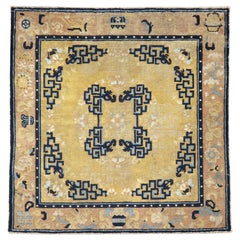
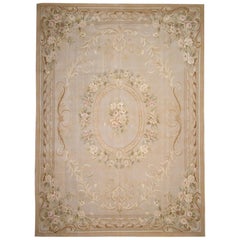
Traditional Aubusson Style Rug Tapestry Area Rug Handwoven Wool
Located in Wembley, GB
This fantastic area rug has been handwoven with a beautiful symmetrical floral design woven on a beige background with accents of cream green and ivory. Both the color and design of ...
Category
Late 20th Century Aubusson Chinese More Carpets
Materials
Wool, Cotton, Organic Material
$5,946 Sale Price
20% Off
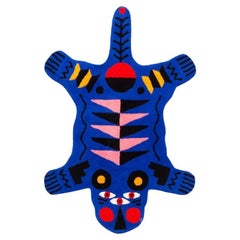
Carpet Oggian Blue Panther M (Shaped) in Acrylic Hand Tufted by Marco Oggian
By Qeeboo
Located in Brooklyn, NY
Continues the development of the carpets family with a new collection designed by Marco Oggian, characterized with a variety of bright colours and strong geometries. Discover Carpet ...
Category
21st Century and Contemporary Chinese More Carpets
Materials
Acrylic
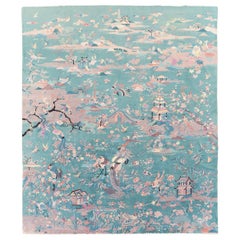
Mid-20th Century Handmade Chinese Art Deco Room Size Carpet in Seafoam Green
Located in New York, NY
A vintage Chinese Art Deco room size carpet handmade during the mid-20th century with a pictorial design in a pale mauve tone over a seafoam green background.
Measures: 12' 5" x 1...
Category
Mid-20th Century Art Deco Chinese More Carpets
Materials
Wool
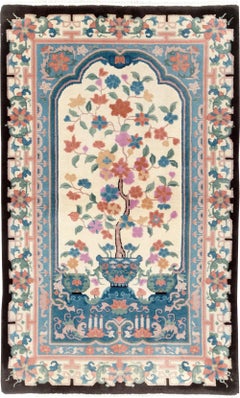
Mid-20th Century Handmade Chinese Art Deco Throw Rug
Located in New York, NY
A vintage Chinese Art Deco throw rug handmade during the mid-20th century.
Measures: 3' 1" x 4' 11".
Category
Mid-20th Century Art Deco Chinese More Carpets
Materials
Wool
Antique Chinese Baotou Indigo Rug, circa 1900
Located in Ottawa, Ontario
Antique Chinese Baotou indigo rug, circa 1900. The central field with an intricate lattice work of Traditional Gau (Amulet) design in two shades of blue...
Category
Early 20th Century Chinese Export Chinese More Carpets
Materials
Wool
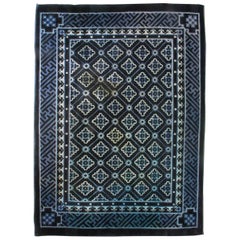
Antique Chinese Art Deco Pictorial Rug with Gazebo and Pagoda Scene
By Walter Nichols
Located in Dallas, TX
78175 Antique Chinese Art Deco Pictorial rug with Gazebo & Pagoda Scene 09'01 x 11'02. This hand knotted wool antique Chinese Art Deco ...
Category
Early 20th Century Art Deco Chinese More Carpets
Materials
Wool
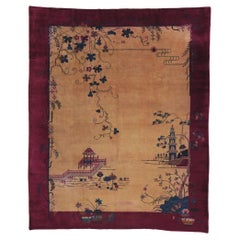
The Phoenix Ascendancy: 1920s Imperial Peking Masterpiece of Celestial Elegance
Located in Dallas, TX
61489 Rare Antique Chinese Peking Rug, 02'07 x 04'01. Woven as a poetic tribute to cosmic order and imperial virtue, this antique Chinese Peking rug unfolds like a courtly scroll fro...
Category
Early 20th Century Chinoiserie Chinese More Carpets
Materials
Gold, Metallic Thread
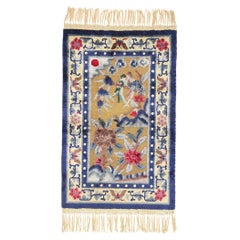
Vintage Wool
Silk Chinese Tabriz Rug with European Cottage Style
Located in Dallas, TX
78285 Vintage Wool & Silk Chinese Tabriz rug with European Cottage Style 9'08 x 13'05. Ornate details and effortless beauty with romantic connotations, this hand knotted wool and sil...
Category
Late 20th Century Tabriz Chinese More Carpets
Materials
Wool, Silk
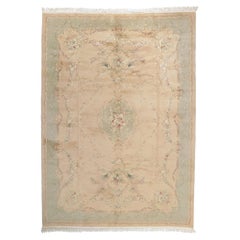
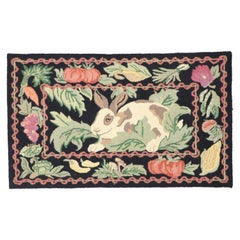
Vintage Garden Rabbit Hooked Rug with French Country Cottage Style
Located in Dallas, TX
77854 vintage Garden Rabbit Hooked rug with French Country Cottage style 02'05 x 04'00. Warm and welcoming, this vintage garden rabbit hooked rug sho...
Category
Late 20th Century Folk Art Chinese More Carpets
Materials
Wool
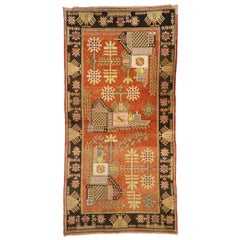
Antique Eastern Turkestan Pictorial Khotan Rug with Eclectic Northwestern Style
Located in Dallas, TX
77325 antique Eastern Turkestan Pictorial Khotan rug with Eclectic Northwestern style. This hand knotted wool antique Eastern Turkestan Khot...
Category
Early 20th Century Khotan Chinese More Carpets
Materials
Wool
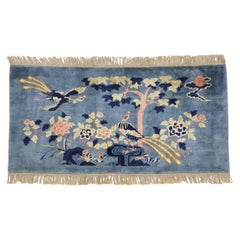
1920
s Chinese Art Deco Pictorial Carpet
Located in Dallas, TX
77585 Antique Chinese Art Deco Pictorial Rug, 02'04 x 04'07. This exceptional hand-knotted wool antique Chinese Art Deco rug captures the essence of classical Chinese symbolism and a...
Category
Early 20th Century Art Deco Chinese More Carpets
Materials
Wool
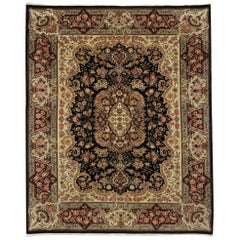
New Persian Style Rug with Traditional Kirman Design
Located in Dallas, TX
76698, New Persian Style Rug with Traditional Kirman Design. This opulent hand-knotted wool Persian Kirman style rug features an intricate centre medallion with a stylized floral mot...
Category
21st Century and Contemporary Kirman Chinese More Carpets
Materials
Wool
Distressed Antique Chinese Peking Rug with Rustic Chinoiserie Style
Located in Dallas, TX
78174 Distressed Antique Chinese Peking rug, 08'08 x 11'00. Effortless beauty and understated elegance, this hand-knotted wool distressed antique Peking rug beautifully embodies rust...
Category
Early 20th Century Chinese Chippendale Chinese More Carpets
Materials
Wool
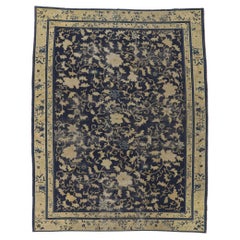
Antique Chinese Peking Rug
Located in Dallas, TX
78231 Antique Chinese Peking Rug, 09'04 x 11'08.
Rendered in variegated shades of tan, sand, cerulean, ecru, blue, peach, rust, taupe, latte, and mocha with other accent colors. Des...
Category
Early 20th Century Chinese Chippendale Chinese More Carpets
Materials
Wool
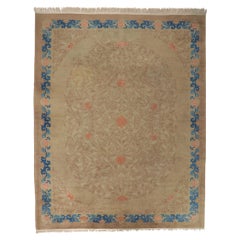
$13,687
Vintage Chinese Floral Kilim Rug
Located in Dallas, TX
77814 vintage Chinese Floral Kilim rug 04'02 x 06'03. This hand-woven wool vintage Chinese kilim rug features a color blocked field and border festoon...
Category
Late 20th Century Chinese Export Chinese More Carpets
Materials
Wool
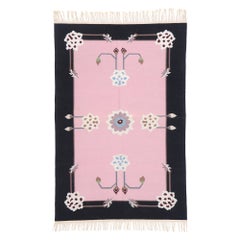
Early 20th Century Handmade Chinese Peking Long Gallery Carpet in Cream
Blue
Located in New York, NY
An antique Chinese Peking long gallery carpet handmade during the early 20th century in shades of cream and blue.
Measures: 5' 9" x 16' 3"
The craft of the hand-knotted carpet in China, and the surrounding areas including Mongolia and Tibet, extends into the early centuries of the first millennium, C.E., but we really have a firm grasp only beginning in the later 16th century with large, very coarsely woven carpets, often depicting dragons, created for the Imperial Forbidden City palaces. Chinese carpets have always been commercial and there are no tribal groups responsible for any of the carpet weaving strains.
When the Ming Dynasty fell in 1644, with no Imperial patrons, production moved to the city of Ningxia in north central China where several workshops turned out more finely woven pieces for the Mandarins of the administrative Ch’ing bureaucracy and well-to-do merchants. Ningxia was the major Chinese carpet center up through most of the 19th century, with first allover and then medallion designs on cotton foundations in medium weaves. Palettes were initially limited to yellows, dark blue and cream, but later widened to include reds, browns and even green. These antiques were the first Chinese carpets to be exported to the West and they fitted in well with the craze for Chinese blue-and-white porcelain in the second half of the 19th century. Ningxia also wove shaped and rectangular small rugs for saddle underlays, chair (“throne”) seats and shaped backs, pillar carpets with dragons or monks for Buddhist monasteries, and long divided runners for monastery meditation halls. These small rugs are among the most collectible of all Chinese weavings.
Weavers from Ningxia set up workshops in the capital Peking (Beijing) in the 1860’s and began weaving Western room sizes for export, primarily to America. In blue – and – white and polychrome palettes, with round wreath medallions, precious objects, seasonal flowers, paeonies, lotuses, fretwork, clouds, butterflies and bats, all relatively spaciously drawn. The round “Shou” (Good Luck) character is also a prominent decorative motif. There are also a few Peking landscape pictorials with pagodas, houses, bridges, waterscapes and boats. Peking carpets were woven right up until WWII and production began again after the Cultural Revolution around 1970. They are moderately well-woven, on cotton foundations, exactingly executed and indisputably Chinese. Many are in the blue-and-white style. Nothing else looks like a Peking carpet and for a Chinese “look” in a room, they are absolutely indispensable. Sizes range from scatters and a few runners, through the popular 9’12’ size, to large carpets over 20’ which must have been special orders. The earliest Peking Revival carpets are pliable and fairly thin, but they became heavier and more compact in the 20th century, in competition with Art Deco carpets from Tientsin. The modern, post- 1970, pieces are in the traditional Peking style, but are a little too regular and neat. Exactitude has been favored over character, as hard to explain that as it is.
There are a number of all-silk and silk-and –metal thread pieces, many with inscriptions purporting to link them with rooms in the Imperial palaces, bringing very substantial auction prices, but none are really antique. The genre emerged after WWI and the present demand comes from mainland Chinese. The silk piles often stand in pattern relief against flat woven gold metal thread grounds. The inscriptions are apocryphal, the rugs are flashily opulent, perfect for nouveaux riches.
The Art Deco period between the two World Wars saw a distinctive carpet industry developing in Tientsin (Tianjin) in northeastern China. These are highly prized for their transitional design character, neither overtly Chinese, nor abstractly modern/contemporary. Woven exclusively for export, usually by and for American firms, such as Nichols and Elbrook, they are totally in the “Jazz Age Modern” style of the 1920’s, often without borders, with abstract or abstracted patterns, and only with, at best, a few Chinese-y pattern elements. Vases asymmetrically placed in the corners are features of some of the more Chinese-y carpets. Open fields with floral sprays and branches growing in from the edges are anther design innovation. Often, Chinese motives have been re-imagined in more sharp-edged, abstract manners. Some have no references whatsoever to natural elements. The patterns are sharp and the rugs are never subdued, soft or restrained. The rugs are heavily constructed, with crisp, unfading dyes and medium to medium coarse weaves on cotton foundations. All are extremely well-executed, with none of the vagaries, variations or twists found on even high-quality Persian rugs. The majority are in the 9’ by 12’ format and a surprising number can be found in top condition. There also was a substantial production in Peking from, especially from the Fette factory. Elliptical and round carpets, and lighter, often pastel colors, were a specialty. Nothing looks like an Art Deco Chinese and they work well with traditional Chinese furniture and the most modern decor as well. These is no substitute for a good Chinese Art Deco carpet.
Chinese carpets also include small scatters from Tibet, with high quality wool, floating dragons and allover textile patterns. The colors of vintage and modern pieces are bright, but there are antique small rugs...
Category
Early 20th Century Art Deco Chinese More Carpets
Materials
Wool
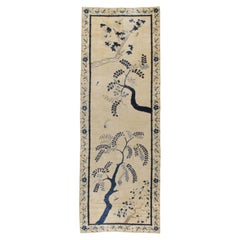
Mid-20th Century Handmade Chinese Art Deco Room Size Carpet in Green
Located in New York, NY
A vintage Chinese Art Deco room size carpet handmade during the mid-20th century in shades of green and cream.
Measures: 9' 0" x 11' 10".
Category
Mid-20th Century Art Deco Chinese More Carpets
Materials
Wool
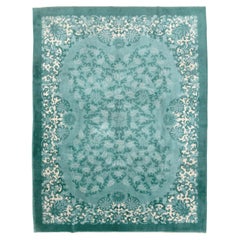
Antique Chinese Peking Accent Rug with Neoclassical Chinoiserie Style
Located in Dallas, TX
73471 Antique Chinese Peking Accent Rug with Neoclassical Chinoiserie Style 03'00 x 05'09. This hand knotted wool antique Chinese Peking rug features an open center medallion with a ...
Category
Early 20th Century Qing Chinese More Carpets
Materials
Wool
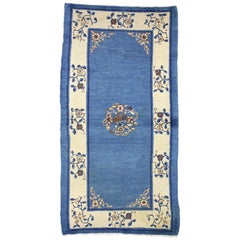
Antique Chinese Oval Accent Rug with Pictorial Phoenix Design
Located in Dallas, TX
71754, antique Chinese oval accent rug with Pictorial Phoenix design. This hand knotted wool antique Chinese oval rug features a pictorial oval medallio...
Category
Early 20th Century British Colonial Chinese More Carpets
Materials
Wool
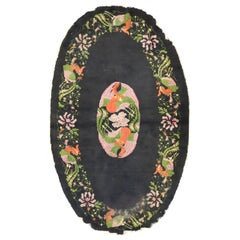
Medium Vintage Aubusson Style Area Rug Traditional Flat-Weave Rug
Located in Wembley, GB
This beautifully handwoven Aubusson rug is sure to make a great accent piece in any room it’s introduced too. An ivory blue color makes up the background of this elegant area rug. Th...
Category
1990s Aubusson Chinese More Carpets
Materials
Wool, Cotton, Organic Material

$3,853 Sale Price
20% Off
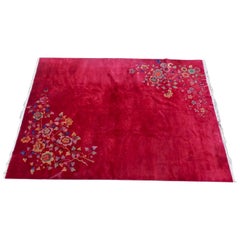
Nichols deep red Chinese Art Deco Wool Rug
By Nichols
Located in Ferndale, MI
Deep red field Chinese Deco Nichols rug. Bright colored floral design in two corners. One or two small discolorations (shown) but truly nice overall condit...
Category
Mid-20th Century Art Deco Chinese More Carpets
Materials
Wool
$3,200 Sale Price
25% Off
Decorative Pillows, Floral Vintage Pure Silk Aubusson Style Pillow Cushion Cover
Located in Wembley, GB
Antique rug vintage pillowcase zipper cushion handmade Aubusson pillow cover, view one of the most comprehensive collections of the decorative pill...
Category
1980s Aubusson Vintage Chinese More Carpets
Materials
Wool, Cotton, Organic Material

$1,297 Sale Price
35% Off
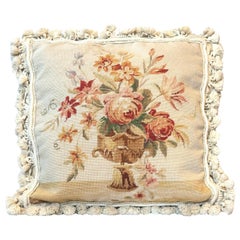
French Aubusson Cushion Cover Vintage Rug Vase Pillow Cushion
Located in Wembley, GB
Antique rug vintage pillowcase zipper cushion handmade needlepoint pillow cover, view one of the most comprehensive collections of the decorative p...
Category
1990s Aubusson Chinese More Carpets
Materials
Wool, Cotton, Organic Material
$222 Sale Price
35% Off
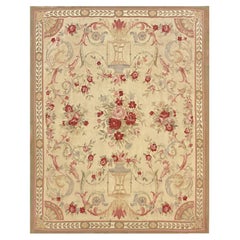
Traditional Aubusson Rug Pink Beige Handwoven Floral Carpet Wool Livingroom Rug
Located in Wembley, GB
This fantastic area rug has been handwoven with a beautiful symmetrical pink floral design on an ivory blue background with cream green and ivory accents. This elegant piece's colour...
Category
1990s Aubusson Chinese More Carpets
Materials
Wool, Cotton, Organic Material
$3,743 Sale Price
20% Off
Mid-20th Century Handmade Chinese Peking Throw Rug in Cream and Light Blue
Located in New York, NY
A vintage Chinese Peking throw rug handmade during the mid-20th century with a cream border and light blue field.
Measures: 2' 6" x 4' 3"
The craft of the hand-knotted carpet in China, and the surrounding areas including Mongolia and Tibet, extends into the early centuries of the first millennium, C.E., but we really have a firm grasp only beginning in the later 16th century with large, very coarsely woven carpets, often depicting dragons, created for the Imperial Forbidden City palaces. Chinese carpets have always been commercial and there are no tribal groups responsible for any of the carpet weaving strains.
When the Ming Dynasty fell in 1644, with no Imperial patrons, production moved to the city of Ningxia in north central China where several workshops turned out more finely woven pieces for the Mandarins of the administrative Ch’ing bureaucracy and well-to-do merchants. Ningxia was the major Chinese carpet center up through most of the 19th century, with first allover and then medallion designs on cotton foundations in medium weaves. Palettes were initially limited to yellows, dark blue and cream, but later widened to include reds, browns and even green. These antiques were the first Chinese carpets to be exported to the West and they fitted in well with the craze for Chinese blue-and-white porcelain in the second half of the 19th century. Ningxia also wove shaped and rectangular small rugs for saddle underlays, chair (“throne”) seats and shaped backs, pillar carpets with dragons or monks for Buddhist monasteries, and long divided runners for monastery meditation halls. These small rugs are among the most collectible of all Chinese weavings.
Weavers from Ningxia set up workshops in the capital Peking (Beijing) in the 1860’s and began weaving Western room sizes for export, primarily to America. In blue – and – white and polychrome palettes, with round wreath medallions, precious objects, seasonal flowers, paeonies, lotuses, fretwork, clouds, butterflies and bats, all relatively spaciously drawn. The round “Shou” (Good Luck) character is also a prominent decorative motif. There are also a few Peking landscape pictorials with pagodas, houses, bridges, waterscapes and boats. Peking carpets were woven right up until WWII and production began again after the Cultural Revolution around 1970. They are moderately well-woven, on cotton foundations, exactingly executed and indisputably Chinese. Many are in the blue-and-white style. Nothing else looks like a Peking carpet and for a Chinese “look” in a room, they are absolutely indispensable. Sizes range from scatters and a few runners, through the popular 9’12’ size, to large carpets over 20’ which must have been special orders. The earliest Peking Revival carpets are pliable and fairly thin, but they became heavier and more compact in the 20th century, in competition with Art Deco carpets from Tientsin. The modern, post- 1970, pieces are in the traditional Peking style, but are a little too regular and neat. Exactitude has been favored over character, as hard to explain that as it is.
There are a number of all-silk and silk-and –metal thread pieces, many with inscriptions purporting to link them with rooms in the Imperial palaces, bringing very substantial auction prices, but none are really antique. The genre emerged after WWI and the present demand comes from mainland Chinese. The silk piles often stand in pattern relief against flat woven gold metal thread grounds. The inscriptions are apocryphal, the rugs are flashily opulent, perfect for nouveaux riches.
The Art Deco period between the two World Wars saw a distinctive carpet industry developing in Tientsin (Tianjin) in northeastern China. These are highly prized for their transitional design character, neither overtly Chinese, nor abstractly modern/contemporary. Woven exclusively for export, usually by and for American firms, such as Nichols and Elbrook, they are totally in the “Jazz Age Modern” style of the 1920’s, often without borders, with abstract or abstracted patterns, and only with, at best, a few Chinese-y pattern elements. Vases asymmetrically placed in the corners are features of some of the more Chinese-y carpets. Open fields with floral sprays and branches growing in from the edges are anther design innovation. Often, Chinese motives have been re-imagined in more sharp-edged, abstract manners. Some have no references whatsoever to natural elements. The patterns are sharp and the rugs are never subdued, soft or restrained. The rugs are heavily constructed, with crisp, unfading dyes and medium to medium coarse weaves on cotton foundations. All are extremely well-executed, with none of the vagaries, variations or twists found on even high-quality Persian rugs. The majority are in the 9’ by 12’ format and a surprising number can be found in top condition. There also was a substantial production in Peking from, especially from the Fette factory. Elliptical and round carpets, and lighter, often pastel colors, were a specialty. Nothing looks like an Art Deco Chinese and they work well with traditional Chinese furniture and the most modern decor as well. These is no substitute for a good Chinese Art Deco carpet.
Chinese carpets also include small scatters from Tibet, with high quality wool, floating dragons and allover textile patterns. The colors of vintage and modern pieces are bright, but there are antique small rugs...
Category
Mid-20th Century Art Deco Chinese More Carpets
Materials
Wool