Danish Credenzas
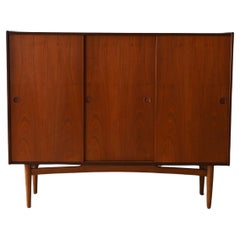
1960s Scandinavian Modern Vintage Danish Credenzas
Teak

2010s Post-Modern Danish Credenzas
Metal
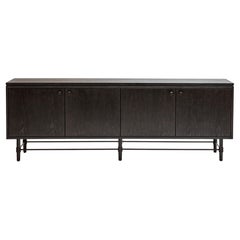
2010s Scandinavian Modern Danish Credenzas
Leather, Wood
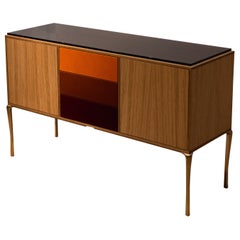
2010s Post-Modern Danish Credenzas
Brass
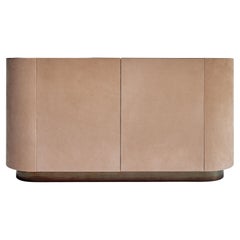
1960s Vintage Danish Credenzas
Elm
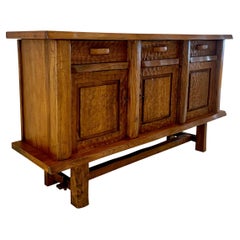
1960s Mid-Century Modern Vintage Danish Credenzas
Teak
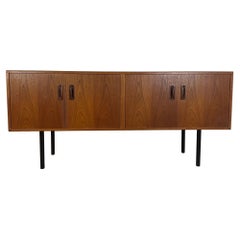
Vintage Danish Credenzas for Sale: Shop Teak Credenzas, Hans Wegner Credenzas and Arne Vodder Credenzas on 1stDibs
Shopping for a vintage Danish credenza?
Credenzas, which were initially used in Italy during the medieval era as a small side table in religious services, usually have short legs or no legs at all, and can feature drawers and cabinets. This popular type of case furniture is a long and sophisticated cabinet-style piece that can serve a variety of purposes, and they look great too. All kinds of iterations of the credenza have seen the light of day over the years.
In form, a credenza has much in common with a sideboard — in fact, the terms credenza and sideboard are used almost interchangeably today (and like credenzas, vintage Danish sideboards can add an understated touch of grace to your home).
The credenza’s blend of style and functionality led to its widespread use in the 20th century. Mid-century modern credenzas are particularly popular — take a look at Danish furniture designer Arne Vodder’s classic Model 29, for instance, with its reversible sliding doors and elegant drawer pulls. Hans Wegner, another prolific Danish modernist, produced strikingly minimalist credenzas in the 1950s and ’60s.
While the likes of Ib Kofod-Larsen and Ole Wanscher created understated credenzas in rosewood, in the postwar years, Danish cabinetmakers and furniture designers also worked frequently with teak.
Knoll luminary Jens Risom, for example, relied on teak. Grete Jalk is known for her pared-back, expressive designs, which touted fluid forms and were made of alluring woods such as teak. Appreciated for its dense grain and rich luster, old-growth teak was a sought-after material among mid-century modernists. Danish designers, and Scandinavians in general, harvested teak as much as they liked. This enhanced their pieces’ handcrafted look and came to define the timeless simple shapes of mid-century modern design.
In its heyday, Danish teak credenzas and other pieces of Danish teak furniture were so popular most of the larger cities in Canada imported and sold them. While America embraced mass-produced design by the likes of Herman Miller and Charles and Ray Eames, Scandinavian manufacturers held fast to their handmade traditions, as seen in Danish modern credenzas and other Scandi pieces from the 1950s and ’60s. In the postwar era American tastemakers really sold the citizenry on the “Scandinavian dream,” suggesting that, like us, the inhabitants of the Nordic nations valued home, hearth, family and good craftsmanship and design, as well as democracy.
The gentle, organic contours that are typical of Scandinavian design appear in the furnishings and decor created by Danish, Finnish and Swedish designers not as a stylistic gesture, but rather as a practical, ergonomic — and, as importantly, elegant — response to the human form.
Find vintage Danish credenzas for sale on 1stDibs.