Charles II Furniture
to
17
75
56
130
4
2
198,962
115,239
44,332
33,490
16,608
12,279
10,862
10,850
9,975
8,885
7,328
6,710
6,570
6,413
6,272
6,128
4,908
3,741
97
11
22
6
6
13
2
1
2
1
1
2
86
61
39
15
14
116
99
76
6
6
136
133
136
5
1
1
1
1
Style: Charles II
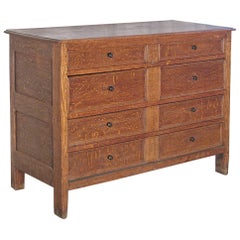
English late 17th Century Blond Oak commode / Chest of Drawers
Located in Troy, NY
English chest of drawers, Charles II, late 17th century, made of blond oak and left un-stained, which gives this commode a striking, unique "honey" color. The thin molded top sits a...
Category
Late 17th Century English Antique Charles II Furniture
Materials
Oak
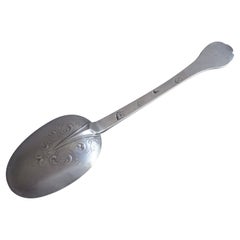
Charles II Lace Back Trefid Spoon made in London in 1682 by Lawrence Coles
Located in London, GB
This extremely fine and rare Charles II Lace back trefid spoon was made in London in 1682 by the prolific, quality, spoon maker, Lawrence Coles. As you will see from the images, the ...
Category
1660s English Antique Charles II Furniture
Materials
Sterling Silver
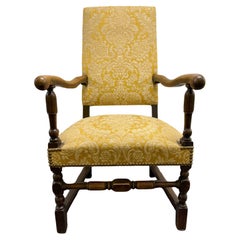
Charles II Walnut Elbow Chair
Located in Basildon, GB
A Charles II walnut elbow chair with foliate carved scrolling arms. The rectangular back and seat covered in modern needlework authentically styled to the period.
Category
1680s British Antique Charles II Furniture
Materials
Walnut

$1,735 Sale Price
45% Off
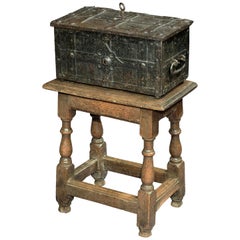
Stool, Mid-17th Century, English Charles II, Oak
Located in BUNGAY, SUFFOLK
United with a mid-17th century rustic oak stool table. The plank top with a moulded edge. Two sets of metal nails and another set of screws show where it has been secured at differen...
Category
Mid-17th Century British Antique Charles II Furniture
Materials
Oak
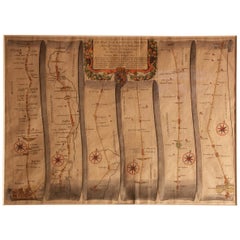
Road Map Britannia 1675/6 No 5 Road London to Barwick, London Stilton Grey Frame
By John Ogilby
Located in BUNGAY, SUFFOLK
John Ogilby (British 1600-1676) cosmographer and geographick printer to Charles II.
A road map from Britannia, 1675/6. No 5, The road from London to Barwick: London to Stilton
In a grey painted and gilded frame.
In a remarkable life John Ogilby pursued, several careers, each ending in misfortune, and yet he always emerged undeterred, to carry on. His modern reputation is based on his final career, started in his sixty-sixth year, as a publisher of maps and geographical accounts.
Ogilby was born outside Dundee, in 1600, the son of a Scottish gentleman. While he was still a child, the family moved to London. When the elder Ogilby was imprisoned for debt, the young John invested his savings in a lottery, won a minor prize, and settled his father's debts. Unfortunately, not enough money was left to secure John a good apprenticeship; instead, he was apprenticed to a dance master. Ogilby was soon dancing in masques at court but, one day, while executing a particularly ambitious leap, he landed badly. The accident left him with a permanent limp, and ended his dancing career. However, he had come to the attention of Thomas Wentworth, later Earl of Strafford, Charles I's most senior minister. Ever one to exploit his contacts, Ogilby became a dance instructor in Strafford's household.
When Strafford was sent to Ireland, Ogilby accompanied him as Deputy-Master of the Kings Revels, and then Master of Revels. In Dublin, he built the New Theatre, in St. Werburgh Street, which prospered at first, but the Irish Rebellion, in 1641, cost Ogilby his fortune, which he estimated at £2,000, and almost his life. After brief service as a soldier, he returned to England, survived shipwreck on the way, and arrived back penniless.
On his return, Ogilby turned his attention to the Latin classics, as a translator and publisher. His first faltering attempt, in 1649, was a translation of the works of Virgil, but after his marriage to a wealthy widow the same year, his publishing activities received a considerable boost. One means by which Ogilby financed these volumes was by subscription, securing advance payments from his patrons, in return for including their name and coats-of-arms on the plates of illustrations. Another approach was to secure a patron, preferably in the court circle. Ogilby's first patron was Strafford, who found out too late that all leading ministers are dispensable when Charles I assented to his execution in 1641. As he re-established himself, Ogilby sought a new patron, the King himself.
In 1661, Ogilby was approached to write poetry for Charles II's coronation procession; he later published 'The Relation of His Majesties Entertainment Passing Through the City of London', and a much enlarged edition the following year, which included a Fine set of plates depicting the procession. Royal favour was bestowed in 1674 when John Ogilby received the title of 'His Majesty's Cosmographer and Geographick Printer' with a salary of £13.6s.8d per annum.
In 1665, Ogilby left London to avoid the Plague then ravaging the capital. The following year, in the Great Fire of London, Ogilby claimed that he lost his entire stock of books valued at some £3,000, as well as his shop and house, leaving him worth just £5.
As he sought to restore his fortunes, Ogilby was already looking in new directions. The initial opportunity he seized on was the reconstruction of London's burnt-out centre. He secured appointment as a "sworn viewer", whose duty was to establish the property boundaries as they existed before the Fire. Ogilby was assisted in the project by his step-grandson, William Morgan, and by a number of professional surveyors. The result was an outstanding plan of London, on a scale of 100 feet to an inch, on 20 sheets, although it was not printed until after Ogilby's death.
Ogilby then turned his attention to publishing geographical descriptions of the wider-world. In 1667, he issued 'An Embassy from the East India Company of the United Provinces to the Grand Tartar Cham, Emperor of China.' Buoyed by the response to this volume, Ogilby conceived an ambitious project, a multi-volume description of the world. The volumes were joint collaborations, in conjunction with the Dutch publisher Jacob van Meurs. 'Africa', published in 1670, was the least original of the three, both in terms of the text, maps and illustrations. In a similar vein, he issued the 'Atlas Japannensis' (1670), the 'Atlas Chinensis' (1671), and 'Asia' (1673). In 1671, Ogilby published the 'America', translated from Arnold Montanus' Dutch text. The 'America' is certainly the most original, and most important, of Ogilby's various geographical volumes, and its influence and popularity was immediate.
With its completion, Ogilby turned to a project nearer his heart, the description of Britain. Ogilby originally intended to devote one volume to Britain, but as the project evolved, he became more ambitious, as revealed in a prospectus issued in about 1672:
"This having oblig'd our Author to take new Measures ... to compleat within the space of two Years a Work ... considering the Actual survey of the Kingdom, the Delineation and Dimensuration of the Roads, the Prospects and Ground plots of Cities, with other Ornamentals ... into six fair volumes. The Four first comprehending the historical and geographical description of England, with the County-Maps truly and actually survey'd. ... The fifth containing an Ichnographical and Historical Description of all the Principal Road-ways in England and Wales, in two hundred copper sculptures, after a new and exquisite method. The sixth containing a New and Accurate Description of the famous City of London, with the perfect Ichnography thereof ..."
In the proposals, Ogilby emphasised the scale of the undertaking; no-one before him had attempted such a vast project. He estimated the total costs would be £20,000, a staggering amount. The cost of the complete set of six volumes was to be £34. At that time, Wenceslas Hollar...
Category
Late 17th Century British Antique Charles II Furniture
Materials
Paper
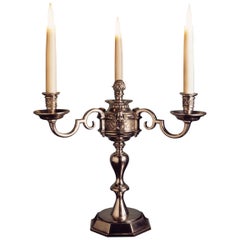
Candelabra, 20th Century, English, Charles II Style, Silver Plated, Knole
Located in BUNGAY, SUFFOLK
This was adapted from the silver chandelier hanging at Knole in Kent, exclusively for use in a conservation project at Hampton Court. It has an antique, silver plated finish. There i...
Category
1990s Charles II Furniture
Materials
Silver Plate
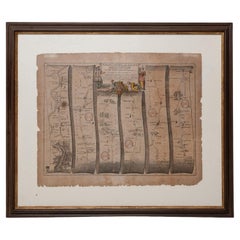
Road Map Britannia No 25 London to the Lands End, John Ogilby Brown Gilded Frame
By John Ogilby
Located in BUNGAY, SUFFOLK
The road from London to the lands end. Commencing at the Standard in Cornhill and extending to Senan in Cornwall. By John Ogilby His Majesties Cosmographer. A road map from Britannia, 1675/6. No 25.
Continuing 308 miles, 3 furlongs.
London Southwark to Brentford, to Hampton Court, to Hounslow, to Windsor, to Cobham, to Farnham, to Basingstoke to Winchester
The handcoloured sheet free floated. In a brown painted and gilded, ogee moulded frame. Some foxing and creasing, uneven edge of sheet, all commensurate with age
Provenance : purchased as pair from a collector with no 15 London to St David's. Framed as a pair.
Sheet width 48cm., 19 ”., height 38cm., 15 “
Frame width 66.5cm., 26”., height 56cm., 22 ”
In a remarkable life John Ogilby pursued, several careers, each ending in misfortune, and yet he always emerged undeterred, to carry on. His modern reputation is based on his final career, started i
Black Linear Border around Map Length 44cm., 17 1/8" Height 32cm., 12 1/2"
Full Sheet Length 58cm., 22 3/4" Height 38cm., 15"
Frame Length 66cm., 26"., Height 56cm., 22"
In a remarkable life John Ogilby pursued, several careers, each ending in misfortune, and yet he always emerged undeterred, to carry on. His modern reputation is based on his final career, started in his sixty-sixth year, as a publisher of maps and geographical accounts.
Ogilby was born outside Dundee, in 1600, the son of a Scottish gentleman. While he was still a child, the family moved to London. When the elder Ogilby was imprisoned for debt, the young John invested his savings in a lottery, won a minor prize, and settled his father's debts. Unfortunately, not enough money was left to secure John a good apprenticeship; instead, he was apprenticed to a dance master. Ogilby was soon dancing in masques at court but, one day, while executing a particularly ambitious leap, he landed badly. The accident left him with a permanent limp, and ended his dancing career. However, he had come to the attention of Thomas Wentworth, later Earl of Strafford, Charles I's most senior minister. Ever one to exploit his contacts, Ogilby became a dance instructor in Strafford's household.
When Strafford was sent to Ireland, Ogilby accompanied him as Deputy-Master of the Kings Revels, and then Master of Revels. In Dublin, he built the New Theatre, in St. Werburgh Street, which prospered at first, but the Irish Rebellion, in 1641, cost Ogilby his fortune, which he estimated at £2,000, and almost his life. After brief service as a soldier, he returned to England, survived shipwreck on the way, and arrived back penniless.
On his return, Ogilby turned his attention to the Latin classics, as a translator and publisher. His first faltering attempt, in 1649, was a translation of the works of Virgil, but after his marriage to a wealthy widow the same year, his publishing activities received a considerable boost. One means by which Ogilby financed these volumes was by subscription, securing advance payments from his patrons, in return for including their name and coats-of-arms on the plates of illustrations. Another approach was to secure a patron, preferably in the court circle. Ogilby's first patron was Strafford, who found out too late that all leading ministers are dispensable when Charles I assented to his execution in 1641. As he re-established himself, Ogilby sought a new patron, the King himself.
In 1661, Ogilby was approached to write poetry for Charles II's coronation procession; he later published 'The Relation of His Majesties Entertainment Passing Through the City of London', and a much enlarged edition the following year, which included a fine set of plates depicting the procession. Royal favour was bestowed in 1674 when John Ogilby received the title of 'His Majesty's Cosmographer and Geographick Printer' with a salary of £13.6s.8d per annum.
In 1665, Ogilby left London to avoid the Plague then ravaging the capital. The following year, in the Great Fire of London, Ogilby claimed that he lost his entire stock of books valued at some £3,000, as well as his shop and house, leaving him worth just £5.
As he sought to restore his fortunes, Ogilby was already looking in new directions. The initial opportunity he seized on was the reconstruction of London's burnt-out centre. He secured appointment as a "sworn viewer", whose duty was to establish the property boundaries as they existed before the Fire. Ogilby was assisted in the project by his step-grandson, William Morgan...
Category
Late 17th Century British Antique Charles II Furniture
Materials
Paper
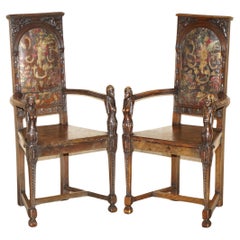
PAIR OF ANTIQUE 1640 CAQUETOIRE CARVED WALNUT POLYCHROME PAINTED ARMCHAIRs
Located in West Sussex, Pulborough
Royal House Antiques
Royal House Antiques is delighted to offer for sale this super rare pair of totally original 17th century circa 1640-1680 French Caquetoire armchairs with ornat...
Category
1640s French Antique Charles II Furniture
Materials
Walnut
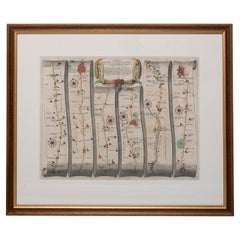
Road Map No43 London to Kings Lynn, Royston to Downham, John Ogilby, Britannia
By John Ogilby
Located in BUNGAY, SUFFOLK
John Ogilby (British 1600-1676) Cosmographer and Geographick Printer to Charles II.
A road map from Britannia, 1675/6. The road from London to Kings Lynn, showing Royston to Downham. In oak and gilded frame.
In a remarkable life John Ogilby pursued, several careers, each ending in misfortune, and yet he always emerged undeterred, to carry on. His modern reputation is based on his final career, started in his sixty-sixth year, as a publisher of maps and geographical accounts.
Ogilby was born outside Dundee, in 1600, the son of a Scottish gentleman...
Category
Late 17th Century British Antique Charles II Furniture
Materials
Paper
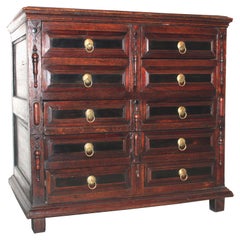
Charles II Moulded Front Oak Chest of Drawers
Located in Bradford-on-Avon, Wiltshire
A Charles II 17 century oak chest with moulded front drawers, snakewood and bog oak panels and turned spindles and applied designs down each side. The top four drawers are half width...
Category
1660s English Antique Charles II Furniture
Materials
Oak
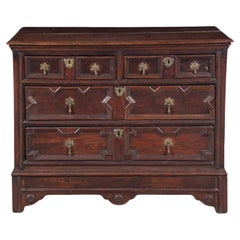
Charles II Oak Chest of Drawers Late 17th/Early 18th Century. Great color
Located in Buchanan, MI
A Charles II Oak Chest of Drawers
Late 17th/Early 18th Century. Great piece in both traditional and contemporary settings.
Height 35 x...
Category
17th Century English Antique Charles II Furniture
Materials
Oak
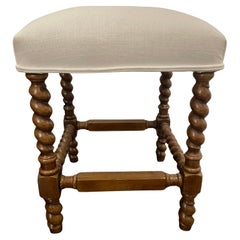
A Charles II Style Stool Upholstered with White Fabric
Located in ARMADALE, VIC
A Charles II Style Stool Upholstered with White Fabric
Provenance: Private Australian Collection
Dimension:
Height: 62cm
Width: 46.5cm
Depth: 46cm
Category
21st Century and Contemporary Australian Charles II Furniture
Materials
Fabric, Wood
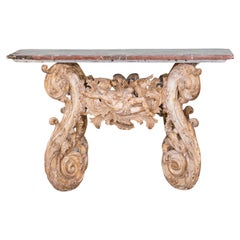
A Charles II Giltwood and Marble Topped Console Table c.1680
Located in London, GB
A Charles II Giltwood and Marble Topped Console Table
A Charles II giltwood and marble topped console table c.1680, on bold ‘S scroll’ supports, having central figurative decoration...
Category
Mid-17th Century English Antique Charles II Furniture
Materials
Marble
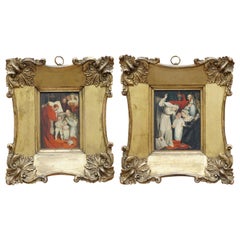
JAMES NORTHCOTE 1480-1517 PAiNTINGS PRINCESS BRIDGET
MARRIAGE OF SHREWSBURY
Located in West Sussex, Pulborough
Royal House Antiques is delighted to offer for sale this stunning pair of 16th to 17th century, miniature oil paintings which are after the originals by James Northcote (1480-1517) t...
Category
17th Century English Antique Charles II Furniture
Materials
Giltwood
Pair of Huge Original Circa 1660 Pierre Mignard
1612-1695
Copper Plate Prints
By Pierre Mignard
Located in West Sussex, Pulborough
We are delighted to offer this exquisite pair of extra large Burr Satinwood framed copper plate prints dating to circa 1660 by the genius that was Pierre Mignard...
Category
1660s English Antique Charles II Furniture
Materials
Paper

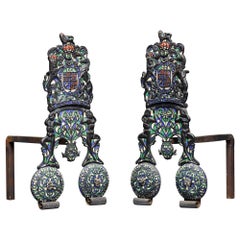
Charles II Style Armorial Firedogs, Brass
Cast Iron, England, 1890
Located in Brighton, West Sussex
A pair of Charles II style, enamel brass and cast iron armorial firedogs, in the manner of Anthony Hatch and Stephen Pilcherd.
Each firedog is decorated with red, blue and white enamel, the upperpart bearing the arms of Charles II or James II, the middle part formed of two nude male figures supporting the arms with a vase of flowers between them, the lower portions in the form of two convex disks decorated with flowers, with wrought iron supports.
They are modelled after an example in the collections of the Victoria & Albert Museum, London, formerly belonging to the Earl of Cowley. For a long time, their method of production -whereby the fields to be enameled were cast in the original moulds and not, as was more common, engraved (champlévé) or enclosed (cloisonné) - was referred to as Surrey Enamels after the author Charles R. Beard ascribed their manufacture to a factory in Esher, Surrey. However, documentary evidence makes a strong case for their reattribution to the London workshops of Anthony Hatch and Stephen Pilcherd, members of the Armourers' and Braziers' Company (see C. Blair and A. Petterson, 'Details for Surrey Enamels Reattributed (Part 1)', Journal of the Antique Metalware...
Category
19th Century English Antique Charles II Furniture
Materials
Brass, Enamel, Iron
Charles Ii furniture for sale on 1stDibs.
Find a broad range of unique Charles II furniture for sale on 1stDibs. Many of these items were first offered in the 21st Century and Contemporary, but contemporary artisans have continued to produce works inspired by this style. If you’re looking to add vintage furniture created in this style to your space, the works available on 1stDibs include case pieces and storage cabinets, seating, serveware, ceramics, silver and glass and other home furnishings, frequently crafted with wood, oak and other materials. If you’re shopping for used Charles II furniture made in a specific country, there are Europe, United Kingdom, and England pieces for sale on 1stDibs. While there are many designers and brands associated with original furniture, popular names associated with this style include Georg Andrea Bockler, Richard Blome, Charles
Richard Comyns, and Christopher Lawrence. It’s true that these talented designers have at times inspired knockoffs, but our experienced specialists have partnered with only top vetted sellers to offer authentic pieces that come with a buyer protection guarantee. Prices for furniture differ depending upon multiple factors, including designer, materials, construction methods, condition and provenance. On 1stDibs, the price for these items starts at $75 and tops out at $121,160 while the average work can sell for $4,888.
Still Thinking About These?
All Recently ViewedMore Ways To Browse
Book Table Stand
Brands Of Vintage Glass
Brass Heron Sculpture
Bread Cabinet
Bronze Lalanne
Burl Bedside Chests
Burled Walnut Desk
Burnished Bamboo
Butter Table
Cabinet Dowel
Cabinets With Metal Inlay
Cameo Glass Bowl
Campaign Chest 1970
Campaign Chest Camphor
Canopic Jars
Canton Chinese Bowl
Cardinal Sculpture
Carrera Marble Dining Table