Revival Furniture
to
1,086
3,370
2,877
6,171
553
71
198,289
115,516
44,207
33,251
16,439
12,241
10,906
10,847
9,979
8,956
7,370
6,654
6,523
6,396
6,226
6,162
4,923
3,745
142
2,954
3,075
624
1,111
960
469
179
42
154
97
101
164
136
165
72
52
3,083
2,780
929
926
831
4,989
1,616
1,422
740
604
6,795
6,598
6,684
265
51
23
21
21
Style: Revival
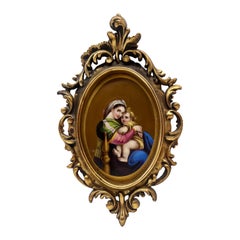
Antique KPM Porcelain Style Plaque "Madonna Della Sedia" After Raphael
Located in Atlanta, GA
Antique KPM Porcelain Style Plaque "Madonna Della Sedia" After Raphael (Italian, 15th - 16th century).
A fine quality porcelain plaque with hand painted enamel surface decorated wit...
Category
20th Century French Revival Furniture
Materials
Enamel
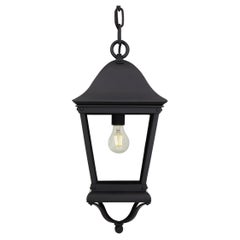
Traditional Colonial Hanging Pendant Lantern Light, Handmade Outdoor Lighting
By Britt Jewett
Located in Santa Paula, CA
Elegant and timeless, the Colonial Hanging Lantern captures the beauty of historic American and European ironwork reinterpreted with modern craftsmanship. Each lantern is handmade in...
Category
2010s American Revival Furniture
Materials
Wrought Iron, Steel
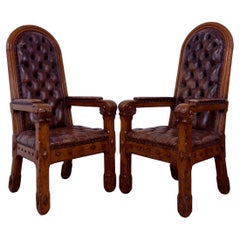
Pair Of 19th Century Gothic Revival Oak
Buttoned Leather Armchairs
Located in Hoddesdon, GB
A majestic pair of mid 19th-century Gothic Revival throne-armchairs in solid oak showcasing a lovely original golden patina. Each chair is distinguished by a tall, arched back, uphol...
Category
Mid-19th Century British Antique Revival Furniture
Materials
Leather, Oak
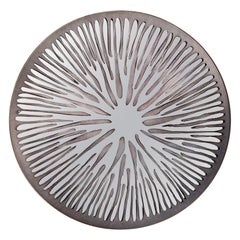
Graphite Mirror Pupil by Gianluca Pacchioni Italy
Located in Paris, FR
Mirror Pupil, designed by Gianluca Pacchioni who is represented by Galerie Negropontes in Paris, France.
Milanese artist Gianluca Pacchioni developed a passion for metal work in th...
Category
2010s Italian Revival Furniture
Materials
Aluminum, Brass
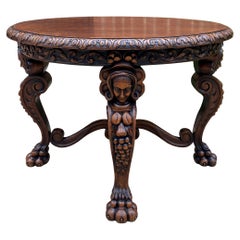
Antique French Round Table Entry Sofa Foyer Coffee Table Renaissance Revival Oak
Located in Tyler, TX
Superb highly carved late 19th century antique oak round entry, coffee, sofa, center, parlor or end table ~~Victorian Era Renaissance Revival
~~c. 1890s
T...
Category
Late 19th Century French Antique Revival Furniture
Materials
Oak
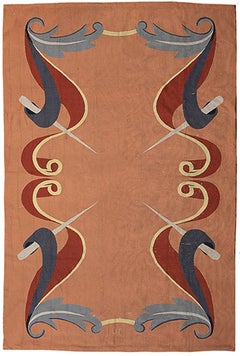
Modernist Aubusson Rug in the Neo Baroque Style Signed JF
By André Arbus
Located in Milan, IT
One of the main trajectories of French Modernism was dedicated towards a revival of a classical iconography. Motivated from a reaction towards the often rigid and austere mood of the...
Category
1930s French Vintage Revival Furniture
Materials
Wool
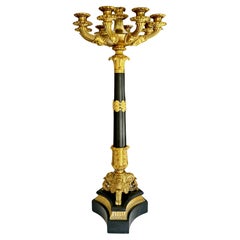
Single Large French Restoration Gilt Bronze Candelabra
Located in Palm Springs, CA
Single tall French Restoration period doré gilt bronze ormolu candelabra candlestick. The chasing of the ormolu is very detailed and finely chased, the large center stem is solid bla...
Category
1840s French Antique Revival Furniture
Materials
Stone, Bronze
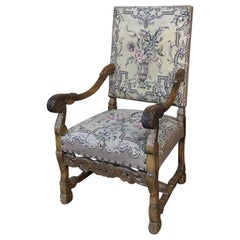
19th Century French Louis XIII Needlepoint Armchair
Located in Dallas, TX
19th century French Louis XIII needlepoint armchair represents the essence of style, grace and elegance, all rendered by a master sculptor from old-growth white oak, then upholstered...
Category
1890s French Antique Revival Furniture
Materials
Tapestry, Oak
Vintage Italian Wall Lamps Gold Giltwood Carved Florentiner Sconces a pair
Located in Wommelgem, VAN
A pair Italian Gold Florentiner 2 light wall sconces candelabra
Style: Italian, Florentiner, Vintage, Mid century, fifties, French Country, bois dore,
Design: Carved giltwood, Venic...
Category
Early 20th Century Italian Revival Furniture
Materials
Gold Leaf

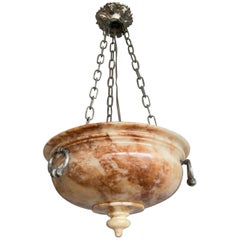
Exceptional Shape Koi Color Neoclassical Style Alabaster Pendant Light Fixture
Located in Lisse, NL
Small size, good quality and great value for money.
This early 1900s alabaster pendant comes with a perfect chain and stylish ceiling cap. The shape, the color and the effect of the...
Category
Early 20th Century Italian Revival Furniture
Materials
Alabaster, Brass, Bronze
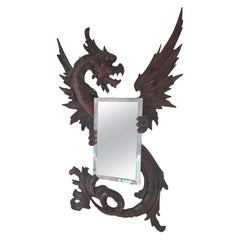
A Carved Wood Dragon Mirror, in the manner of Gabriel Viardot, circa 1880
Located in Henley-on-Thames, Oxfordshire
An attractive unusual mirror, creating an impact on any wall
Category
1880s European Antique Revival Furniture
Materials
Beech
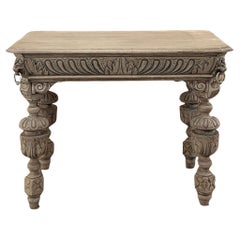
19th Century French Renaissance Revival Library Table ~ End Table
Located in Dallas, TX
19th Century French Renaissance Revival Library Table ~ End Table will introduce a splendid masculine air to your room. Fitted with ...
Category
Mid-19th Century French Antique Revival Furniture
Materials
Brass
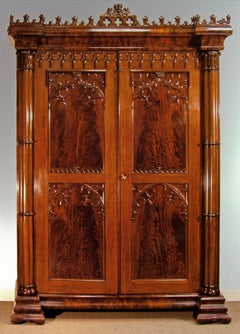
Gothic Armoire
Located in New York, NY
FAPG 19959D/2
Gothic Revival armoire
New York, about 1835-1840
Mahogany, with brass hardware
Measure: 104 in. high, 73 in. wide, 30 in. deep
Exhibited: Hirschl & Adler Galleries, New York, 2011–12, The World of Duncan Phyfe: The Arts of New York, 1800–1847, p. 89 no. 45 illus. 89
Ex coll.: Private collection (probably R. H. Selstadt, Big Stone Gap, Virginia)
Although no specific pieces of Gothic furniture documented as by Duncan Phyfe have come to light, there is considerable evidence that he, like various of his contemporaries in New York, embraced the Gothic style. For example, the catalogue of the Halliday & Jenkins auction sale of the contents of Phyfe’s furniture ware rooms, which was held on site at 192 and 194 Fulton Street, New York, on April 16 and 17, 1847, included a “mahogany centre table Gothic gilt pillar and Egyptian marble top” (Halliday & Jenkins, p. 3 no. 63); “12 mahogany Gothic chairs...
Category
19th Century American Antique Revival Furniture
Materials
Brass

$125,000
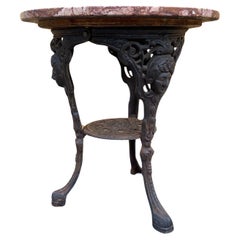
Antique Neoclassical Cast Iron Marble Top English Pub Table
Located in Chicago, IL
Antique Neoclassical Cast Iron Marble Top English Pub Table
Fantastic Early 1900's Neoclassical Ornate Figural Cast Iron Base with Round Italian Marble Top Pub Table. This English table is a solid, sturdy classic antique side table...
Category
Early 19th Century English Antique Revival Furniture
Materials
Marble, Iron
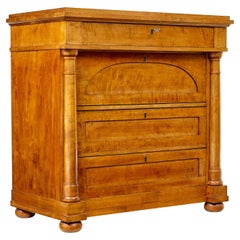
19th century empire revival birch chest of drawers
Located in Debenham, Suffolk
19th century empire revival birch chest of drawers circa 1890.
Fine quality Swedish birch chest of drawers in the empire taste. Presented in it's original condition.
Rectangular to...
Category
Late 19th Century Swedish Antique Revival Furniture
Materials
Birch
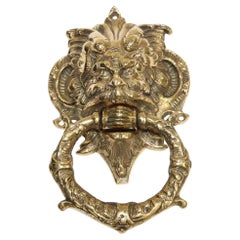
Vintage Solid Brass Italian Gothic Devil Door Knocker
Located in Moreno Valley, CA
Vintage solid cast brass Italian door knocker with scary evil devil man face.
The large mascaron crest has been crafted in grotesque style and is sometimes called a chimera.
A mascar...
Category
Mid-20th Century Italian Revival Furniture
Materials
Brass
Italian Eglomise Wall Mirror
Located in Boca Raton, FL
Vintage Italian reverse painting on Mercury glass mirror. Renown Italian mirror technique. Rich and elegant signature style.
Category
1950s Italian Vintage Revival Furniture
Materials
Mercury Glass

$1,098 Sale Price
55% Off
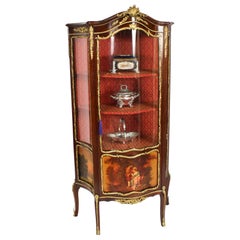
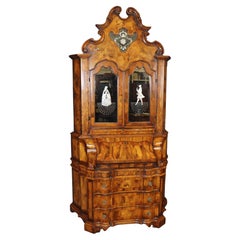
Antique French Vernis Martin Display Cabinet Vetrine Circa 1880 19th Century
Located in London, GB
This is a stunning antique French louis XV Revival Vernis Martin display cabinet, circa 1880 in date.
The cabinet features a shaped top with impressive ornate ormolu mounts and the...
Category
1880s Antique Revival Furniture
Materials
Ormolu
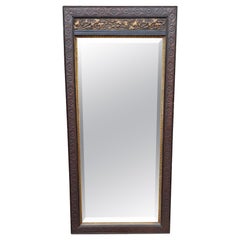
Late 19th C. Aesthetic Movement Carved Mahogany and Parcel Gilt Frame Mirror
Located in Germantown, MD
A Late 19th Century Aesthetic Movement Carved Mahogany and Parcel Gilt Frame Mirror.
Measures 25.25" in width and 53.5 " in height.
Category
Late 19th Century American Antique Revival Furniture
Materials
Mirror, Hardwood
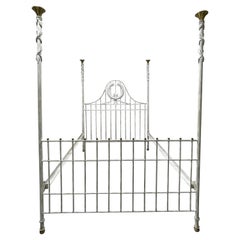
Vintage Neoclassical Iron Four Poster Bed Maitland Smith
Located in W Allenhurst, NJ
Wonderful Iron Neoclassical four poster bed. 3 dimensional Laurel Wreath centers the headboard and four posts are topped with brass accent and cascading vines. Brass ball feet and ac...
Category
Mid-20th Century Revival Furniture
Materials
Brass, Iron
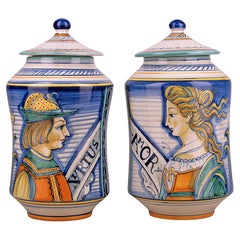
Pair of Mid-Century Italian Renaissance Revival Ceramic Jars by Fratelli Mari
By Deruta
Located in North Miami, FL
Pair of mid-20th century Renaissance Revival hand-painted ceramic jars with lids by Fratelli Mari from Deruta, Italy
By: Fratelli Mari, Deruta
Material: ceramic, paint, enamel
Techn...
Category
1930s Italian Vintage Revival Furniture
Materials
Enamel
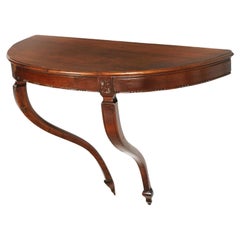
Early 1900s Venetian Empire Console, in Carved Walnut by Bassano
s Ebanistery
Located in Vigonza, Padua
Venetian console from the early 1900s empire style, with widespread decorative carving, by Bassano's Ebanistery.
Central drawer, wax polished. Exceptional patina of antique furnitur...
Category
1920s Italian Vintage Revival Furniture
Materials
Walnut
Fine Etched Mirror Door Olivewood Italian Rococo Secretary Desk with Figures
Located in Swedesboro, NJ
Grand Scale Italian Olivewood Secretary Desk with Etched Courtship Scene, Circa 19th Century
This magnificent grand-scale olivewood secretary desk is a true masterpiece of European ...
Category
1940s Italian Vintage Revival Furniture
Materials
Brass
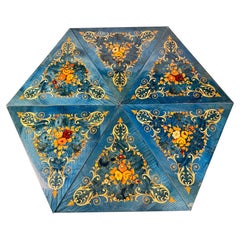
1970s Italian Music Box Side Tables
Located in Southampton, NJ
This exquisite set of six vintage Italian side tables from the 1970s is a true collector’s piece, blending artistry, function, and nostalgia. Each triangular table features a hidden ...
Category
Late 20th Century Italian Revival Furniture
Materials
Mahogany
$2,600 / set
Gothic Talon, Rooster Claw Chamber Candlesticks, Early 20th Century
Located in Esbjerg, DK
A pair of wrought iron candlesticks featuring talon claw bases, glazed ceramic baluster shaped centrepieces and detailed Gothic handles. They are of European origin, presumably France.
Category
Early 20th Century European Revival Furniture
Materials
Wrought Iron

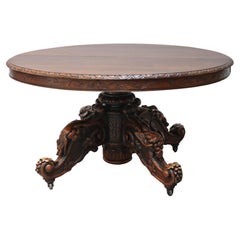
19th Century French Antique Oak Oval Dining Hunt Table Black Forest Hunt Trophy
Located in Ijzendijke, NL
Exquisite 19th century French antique hunting table / beast table in black forest style, large oval model.
Amazing Trophy model with 4 differen...
Category
Mid-19th Century French Antique Revival Furniture
Materials
Oak
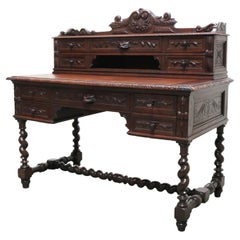
Antique French Renaissance Revival Hunt Desk / Secretaire Barley Twist Oak 19th
Located in Ijzendijke, NL
Gorgeous French antique 19th century Renaissance revival / Hunt style Writing desk in carved oak.
Marvelous decorated hunt style desk with fox head drawers & barley twisted columns...
Category
1870s French Antique Revival Furniture
Materials
Oak
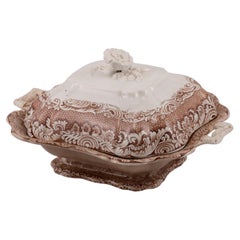
Vegetable bowl with lid, Morro Castle, Havana, Cuba. Sargadelos, 19th cent.
By Sargadelos
Located in Madrid, ES
Vegetable bowl with lid, Morro Castle, Havana, Cuba. Earthenware. Sargadelos, 19th century.
It has minor flaws.
Vegetable bowl with handles and a lid on which a landscape can be se...
Category
19th Century Spanish Antique Revival Furniture
Materials
Other
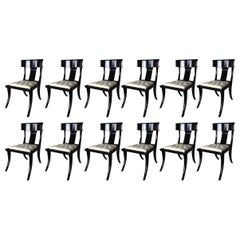
Klismos Wood Saber Legs Customizable White Leather Seats Dining Chairs Set of 12
Located in IT
Klismos walnut wood customizable dining chairs Italian production, white ivory color leather - capitonnè ( with buttons) - upholstery. Other colors and upholstery are available. Ital...
Category
2010s Italian Revival Furniture
Materials
Walnut
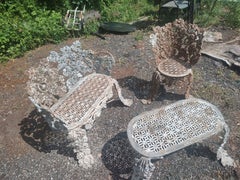
Antique Late 19th C Cast Iron 3 Piece Garden Set Bench a Chair and a Table Chair
Located in Port Jervis, NY
Fabulous 3 piece set of Cast Iron garden seating with table. A bench a chair and a converted bench minus it's back that can be used as a table. All three in outstanding antique condition with no visible damage or missing pieces. Very ornate with a grape leaf and vine pattern. Not a repro, these are the real...
Category
Early 1900s American Antique Revival Furniture
Materials
Iron, Zinc
Original 19th Century Historistic Chandelier, Laxenburger Gothic Style
By Woka Lamps
Located in Vienna, AT
Historistic chandelier Gothic style of Laxenburg so called after the Franzensburg near "Laxenburg Castle," the favored summer-residence of the Austrian Emperor of the house of Habsburg, which was erected between 1801-1836 in the style of an old Gothic castle. The name originates from the then emperor Franz II. It is Neo-Gothic blended with original artefacts.
Materials & Techniques Notes: carved limewood, covered with beaten gold.
Category
19th Century Austrian Antique Revival Furniture
Materials
Gold Leaf

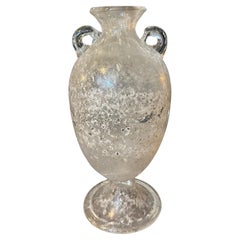
1970s Scavo Murano Glass Tall Amphora Vase by Seguso
By Seguso
Located in Aci Castello, IT
This is a 1970s Scavo Murano Glass Amphora Vase attributed to Seguso, a renowned Murano glassmaking family. The vase exhibits the Scavo (excavated) technique, which gives it an ancie...
Category
Mid-20th Century Italian Revival Furniture
Materials
Murano Glass
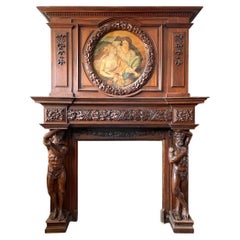
Monumental carved walnut fireplace with atlantes and painted medallion
Located in SAINT-OUEN-SUR-SEINE, FR
Monumental carved walnut fireplace with atlantes and painted medallion Imposing ceremonial fireplace in solid walnut, richly carved in a Neo-Renaissance style. It features two full-r...
Category
Late 19th Century French Antique Revival Furniture
Materials
Walnut, Canvas
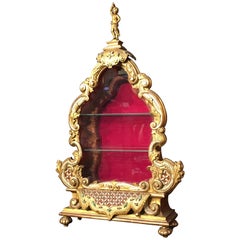
Late 19th Century Italian Baroque Revival Gilt and Polychrome Table Top Vitrine
Located in Austin, TX
An elegant late 19th century Baroque style tabletop vitrine. The vitrine marvelously carved and richly gilt in the Baroque manner, with beautiful foliate scrollwork and polychrome de...
Category
Late 19th Century Italian Antique Revival Furniture
Materials
Velvet, Glass, Giltwood
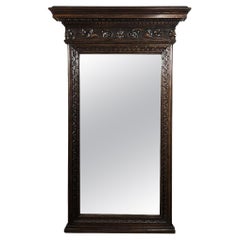
Antique Italian Baroque Walnut Mirror
Located in Dallas, TX
Antique Italian Baroque Walnut Mirror is a splendid example of the genre, and can be used to decorate any room. The design features bold molding ...
Category
Early 20th Century Italian Revival Furniture
Materials
Mirror, Walnut
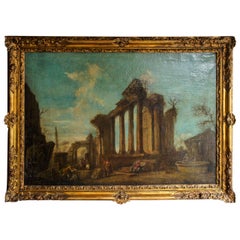
19th Century Italian Oil Painting in the Manner of Antonio Panini
Located in Hudson, NY
This fine old painting is a typical pastiche of the kind popular throughout Italy and the world in the 17th, 18th and 19th centuries. The most commonly associated artist who really m...
Category
19th Century Italian Antique Revival Furniture
Materials
Canvas, Wood
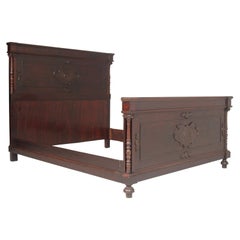
19th Century Antique Double Bed, Hand Carved Ebonized Walnut, Wax-Polished
Located in Vigonza, Padua
Majestic important antique double bed, wax-polished.
Bed by the School of Arts in Monza, 19th century, in hand carved walnut
Measures in cm: H 144\8...
Category
Mid-19th Century Italian Antique Revival Furniture
Materials
Mahogany
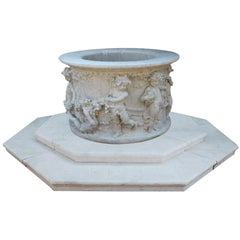
Italian 19th-20th Century Whimsical White Marble Wishing Wellhead with Children
Located in Los Angeles, CA
A very fine and exceptionally carved Italian 19th-20th century Baroque Revival style whimsical white Carrara marble wishing wellhead, raised on an octagonal two-step marble base. The intricately carved marble relief circular wellhead depicting carved figures of dancing and cheerful children (Putti) among vines, flowers and fruits, dancing and playing musical instruments with a backdrop of castles, landscapes, forests and wreaths, Florence, circa, 1900.
Note: We have part II video of this amazing Wishing Wellhead. Please feel free to request a copy.
Literature:
A similar wellhead was sold by Jan's & Co. Fine French Antiques, Inc. in 1999, provenance the Atkinson/Kirkeby Estate and it is illustrated in "The Estates of Beverly Hills" by Charles Lockwood and Jeff-Hyland, page 150.
Another similar is currently on display at the gardens of "The Elms" mansion a public museum part of the Newport Mansions by The Preservation Society of Newport County in Newport, Rhode Island.
Yet another similar wellhead carved with frolicking putti with musical instruments and a dentil molded rim is located at Cranbrook House, Bloomfield Hills, Michigan, and is illustrated in B. Israel, Antique Garden Ornament...
Category
Early 1900s Italian Antique Revival Furniture
Materials
Carrara Marble
Victorian Gothic Hall Tree Coat Rack with Mirror w Cast Iron Umbrella Stand
Located in Port Jervis, NY
Fabulous Victorian Gothic hall tree with a mirror and a cast iron umbrella tray. Four brass coat hooks with porcelain tips. Fresh black paint, grey on...
Category
1870s American Antique Revival Furniture
Materials
Brass, Iron

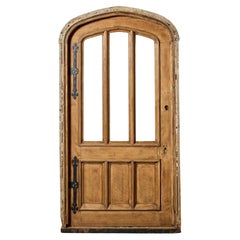
English Gothic Revival Oak Arched Exterior Door for Glazing
Located in Wormelow, Herefordshire
A substantial unglazed solid English oak arched exterior door in the gothic revival style. This door comes without glass, ready from custom-glazing as you desire, and includes a matc...
Category
Late 19th Century English Antique Revival Furniture
Materials
Wood, Oak
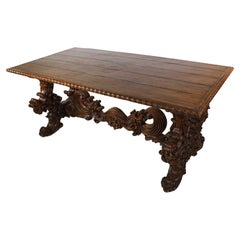
Baroque Revival Style Carved Wood Tavern or Farm Dining Pedestal Table
Located in Los Angeles, CA
A large carved wood tavern or farm dining table in the Baroque Revival Style. The rectangular top with a carved border, raised on twin carved pedestal bases conjoined with a central ...
Category
20th Century Unknown Revival Furniture
Materials
Fruitwood
$6,895 Sale Price
44% Off
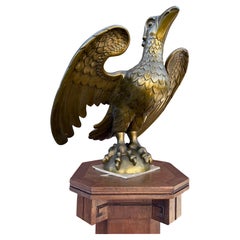
Enormous Antique Bronze Eagle Sculpture Church Bible Stand or Saint John Lectern
Located in Lisse, NL
*Note that we arrange the shipping ourselves to ensure a smooth, secure, and reliable delivery. This allows us to provide the best possible service and care for your purchase.
Monumental Bronze Eagle Lectern Sculpture .. Symbol of Saint John the Evangelist, Church Relic, ca. 1900
For the true connoisseur of ecclesiastical antiques and meaningful design, this remarkable bronze eagle sculpture offers a rare opportunity to own an object that is both spiritually symbolic and visually commanding.
Originally crafted as a Bible lectern...
Category
19th Century European Antique Revival Furniture
Materials
Bronze
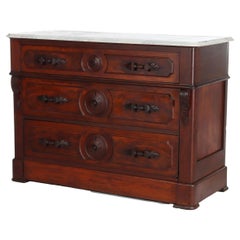
Antique Renaissance Revival Walnut
Burl 4-Drawer Marble Top Dresser c1890
Located in Big Flats, NY
Antique Renaissance Revival Walnut & Burl 4-Drawer Marble Top Dresser With Carved Pulls C1880
Measures - 33 1/2" x 46 1/8" x 20 3/4"
An example of Renaissance Revival craftsmanship...
Category
Late 19th Century Antique Revival Furniture
Materials
Walnut, Burl
$1,160 Sale Price
20% Off
Large antique sterling silver trophy made in 1923 by Charles Stuart Harris
Located in London, London
Hallmarked in London in 1923 by Charles Stuart Harris, this attractive, George V period, Antique Sterling Silver Trophy, features sunken fluting, acanthus detailed loop handles, and ...
Category
1920s English Vintage Revival Furniture
Materials
Sterling Silver

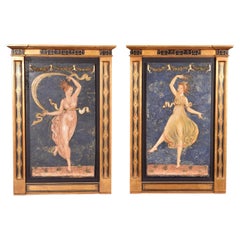
Pair of panels, Dancers. Molded alabaster. 20th century, after CANOVA, Ant
Located in Madrid, ES
Pair of panels, Dancers. Molded alabaster. 20th century, inspired by CANOVA, Antonio (1757-1822).
Pair of reliefs with frames made of alabaster molded with polychrome, inspired by t...
Category
20th Century Spanish Revival Furniture
Materials
Other
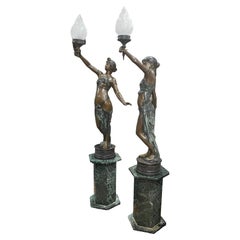
Pair of Neoclassical Patinated Bronze Nymphs Sculptures Torchere Lamps/Pedestal
Located in Guaynabo, PR
This is a pair of large heavy patinated bronze Greek/Roman nymphs sculptures torchere lamps. They depict a pair of semi nude females dressing classica...
Category
20th Century Unknown Revival Furniture
Materials
Bronze
$12,000 Sale Price / set
20% Off
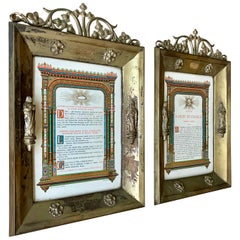
Antique Pair of Brass
Bronze Gothic Wall Picture Frames with Saint Sculptures
Located in Lisse, NL
For the collectors of rare and ready to use Gothic antiques.
These beautiful and all handcrafted Gothic Revival picture frames with Biblical texts in Latin are an absolute joy to ow...
Category
Early 20th Century European Revival Furniture
Materials
Brass, Bronze
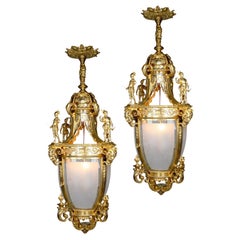
A Palatial Pair French 19th/20th C. Régence Style Gilt-Bronze 4-Light Lanterns
Located in Los Angeles, CA
A Very Fine and Palatial Pair of French 19th/20th Century Régence Revival Style Gilt-Bronze (Ormolu) Four-Light Figural Lanterns. The impressive pair of lanterns with a pierced circu...
Category
Early 1900s French Antique Revival Furniture
Materials
Bronze
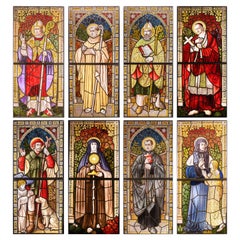
Selection of eight restored 19th C Neo-Gothic Stained-Glass Windows
Located in Leuven , BE
The Color Experience: Stained-glass windows
“Color is a power which directly influences the soul” (Wassili Kandinsky, Moskou 1866 – Neuilly-sur-Seine, 1944)
“Color! What a deep and mysterious language, the language of dreams!” (« La couleur ! Quelle langue profonde et mystérieuse, le langage des rêves », Paul Gauguin, Paris, 1848-Fatu-Hiva, 1903)
‘Color and feeling’, ‘color and meaning’, these are concepts that have gone together since time immemorial. Artists and craftsmen have a special bond with color. After all, it is a means of expression that can have a real reinforcing effect. Especially linking color with light offers unlimited possibilities. Glaziers and glass painters have tried to master both these ‘instruments’ for centuries.
The set of beautifully restored neo-Gothic windows in our collection are enough reason for us to let these works of art figure in a broader story. As a bonus, we would like to introduce you to the contemporary stained-glass artist and stained-glass restorer, Daniël Theys. whose workshop is in Sint-Pieters-Rode (Belgium). He talked to us about the materials and techniques he used for the restoration of our set of neo-Gothic stained-glass windows. A fascinating look at the tricks of the trade from a specialist!
A bird’s eye view of the history of the European stained-glass window.
Although the Romans already used translucent glass plates to cover wall openings, the stained-glass window reached its peak in Europe between 1150 and 1500. A period also known as the era of the cathedrals. At that time, stained-glass windows became more than just a way to let in the light, and to keep the space closed off. From now on, their functionality was also found in their didactic value. The biblical and saints’ stories that adorned the stained-glass windows became a kind of poor man’s bible. They brought, as it were, the knowledge of the holy scriptures in an understandable, pictorial way. At the same time, the colored light provided additional symbolism. The invading light was interpreted as a manifestation of God. It is also no coincidence that the main altar was bathed in light. It was the place where the most important sacrament was celebrated, that of the Eucharist. How were these magical colors obtained? Well, during the 12th and 13th centuries, metal oxides gave color to the glass. Copper, for example, produced different colors in the various stages of oxidation. The metal could color the glass light blue, green and even red. It should be noted that from the 13th century onwards, clear glass, which was cheaper and at the same time allowed more light into the buildings, was used more often. A century later, in the years 1400 to 1500, glass painters frequently painted onto the glass with a ‘stain’ of silver chloride or sulfide. The painted piece of glass was heat-treated in a furnace. The heating process ensured that the silver ions migrated into the glass and became suspended within the glass network. The stain gave colors ranging from a pale yellow to a rather deep red. This new technique allowed glaziers to get more than one color on a single glass fragment. The shades produced by painting in silver chloride were well suited for depicting golden crowns, scepters and other gilded objects and ornaments. But the most important advantage of the technique was the fact that the glass painter could now make transitions from yellow tones to white without having to apply separations with lead strips! This also improved the legibility of the pictured scene.
You can imagine that the labor-intensive process of the production of stained-glass windows was a very costly affair and therefore it was often patrons who donated them to a church or a chapel. The benefactors were usually eager to propagate their social status and were moved by concern for their salvation.
In the 16th century, stained-glass windows also began to appear in secular buildings such as town halls, the homes of the wealthy and commercial premises such as inns. It is striking that during this period the use of lead strips that border many parts of the image was further reduced in favor of real painting on stained glass. This was due to an increasing love of detail. For example, one wanted realistically painted portrait heads. Working with enamel paints was cumbersome. Each newly applied color had to be burned into the glass before another color or overpainting could be applied. It was not only the coloring of the glass that was complicated, the process of obtaining flat glass plates required many steps as well. The glazier blew a glass bulb with a blowpipe and then cut it open. Finally, each half of the sphere was turned around so fast that it became a disc. In later periods, the glazier blew out his glass bulb into a cylinder. Once the cylinder had cooled, its closed ends were removed, and the long sides were cut open. The pieces of glass obtained were then heated and flattened. During the 16th century, there was a division of labor between the stained-glass designer, the glazier, and the glass painter. It happened as well that the stained-glass artist used prints as models for his stained-glass windows. Whoever drew the design, the glazier always needed a model on the right scale, the so-called cartoon. On the cartoon, the lead strips were clearly marked, and the use of colors was indicated. Contracts at the time show that the price of stained-glass windows was calculated per square foot. The price per square foot included the labor and material costs. The price of the cartoon was not included.
In the 17th century, the work of glass painters remained important. At the same time, there was a growing popularity of stained-glass windows with heraldic themes. In the Low Countries there were several high-quality glass painters active.
During the 18th century, glass painting went downhill in our regions. The French occupation of the Southern Netherlands resulted in the destruction and sale of religious stained-glass windows.
It was only around the middle of the 19th century that the young Belgian state experienced a revival of stained glass. The renewed interest in the Middle Ages, the so-called ‘gothic revival’, caused a wave of restoration of old stained-glass windows of churches and orders for neo-gothic stained-glass windows. The Sint-Lucas art schools in Belgium played an important role in this. Industrial developments in the glass and steel industries naturally had an important hand in the popularity of stained-glass windows. Stained-glass had a wide range of uses; think of stained glasses in winter gardens, domes, windows, and doors of large mansions. Significant glazier’ studios arose in several larger Belgian cities. In Brussels, for example, you had the workshops of Capronnier and Colpaert, in Bruges the studios of Coucke and Dobbelaere, in Ghent the companies of Ganton-Defoin or Ladon. During the 19th century, glaziers followed the style developments in the visual arts. For example, the number of windows in Art Nouveau and Art Deco style is large. The restored stained-glass windows with male and female saints that we offer for sale, come from a building in Laeken, near Brussels. They probably decorated the space of a church, chapel, convent, or Catholic school. In the results of the interview with glass restorer Daniël Theys, you will learn more about the particularities of these splendid windows.
Chatting and browsing in the workshop of Daniël Theys
The Belgian Glass restorer and glass blower, Daniël Theys (), made a career switch at a later age and has been active in the profession since 1987. He is an important player in the field of stained-glass window art in Belgium. Moreover, he is the only one in the country who still masters the technique of glass etching. Daniël Theys receives many commissions from small parish churches to restore old stained-glass windows to their former glory. He made a name for himself in that niche and that is how Spectandum brought the set of 19th century stained glass windows to his workshop for reconstruction. They were delivered in old numbered wooden crates and Daniel had to start puzzling.
Numbered wooden crates with sections of the stained-glass windows
Normally a glazier starts working from a drawing with a scale of 1:1 (full size drawing), but in this case each piece had to be cataloged and photographed. The smaller pieces were grouped on the light box and photographed in their entirety. Then Daniël made a drawing of the remaining pieces that he had puzzled together with great care.
Smaller pieces identified and grouped on the light box
The restauration guidelines of the Agency for Monuments and Landscapes are not always the same as those of a restorer. For this reconstruction, Daniël primarily considered the purpose of the stained-glass windows. It had to be an aesthetic and salable set of stained-glass windows, so the choice of filling the gaps with neutral glass or epoxy was not really an option. Theys left well-executed previous restorations untouched. The windows may have been repaired three or four times in the past.
Piece of a cloak with glass shards from different periods (restorations)
Another problem Daniel faced during the restoration was the fact that some small parts of the old grisaille had been eaten away by microorganisms. The defect – caused by moisture – can be seen from the discoloration of the grisaille. The black-brown color is turned red.
This fragment shows well how the brown grisaille has turned red due to the attack of micro-organisms
The stained-glass windows of the 19th century are made of ‘in the mass-colored’ glass. This means that the colors were added to the liquid glass during its production process. This type of glass differs from glass colored with enamel paint, which became popular from the interwar period. The latter process involves applying enamel paint (this is a glass powder with a metal oxide to which a medium has been added) to the colorless glass. When firing the glass with the enamel paint, the powder fuses with the glass. The colors of email painted glass are less intense and less brilliant than those of ‘in the mass-colored glass’.
Jars with colored powder for the enamel paints
For the restoration Daniël only worked with mouth-blown glass, both with ‘in the mass-colored glass’ and with ‘verre plaqué’. This is blown glass composed of several layers of different shades. Over the years, Theys built up a large stock of old blown glass. Colored blown glass always has sliding shades. For example, a red piece of glass can have a color transition from bright red to light orange. These differences in shades are the result of the different thicknesses of the piece of glass. It allows the glazier to use a wide variety of shades.
The purple-red foliage with light blue accents was obtained by etching away parts of a piece ‘verre plaqué’. A small part of the lower glass layer is exposed.
The windows were completely re-leaded by the restorer because there was virtually no ‘lead net’ preserved. In general, lead strips only have a limited lifespan because of oxidation processes. Daniël removed the old lead remnants and placed new lead profiles. Then he applied putty between the glass fragments and the lead strips to seal the lead. A window must be made watertight. The current condition of the windows is excellent.
Decorative glass part with original lead remnants
New lead strip
The set of stained-glass windows we present today, originally consisted of windows of 5 to 6 m high. After all, they originally adorned a neo-gothic church. Since the original dimensions are not suitable for private buildings, it was decided to only restore the figurative representation.
The original spire of one of the windows
Thanks to a suspension eye, the window can be hung. There is also the possibility to place the window in an upright position.
Thanks to the craftsmanship of the Theys-Studio, we can once again enjoy the brilliance of color!
Looking for the missing link
The set of 19th-century stained-glass windows came into the possession of Spectandum without a clear provenance. The renowned Leuven antiques dealer, Cornelius Engelen, recalls that the windows came from a church in Laeken. There is no solid starting point for a search for the provenance. Based on the style of the stained-glass windows – most probably the late 19th century -, their religious iconography, and their original shape (pointed arch windows) and dimensions (5 to 6 cm high), we can assume that they were once displayed in a (neo-)gothic cult building. On the one hand, the stained-glass windows may have been removed after storm damage or other calamities, on the other they may have been taken away during a renovation or a demolition of a church. The Church of Our Lady in Laeken is the most famous church building in that municipality that could qualify. In the early 1920s, the central windows of the transept were badly damaged by a hurricane. Today, glass fragments of these windows (dating from 1893-1894) with the names of the sixteen missing saints and an arch infill of the western window are officially known. It would be interesting to find out if our set of eight saints once were part of the transept of Our Lady in Laeken. Research in the records of the church administrators could provide clarification. Knowing that most neo-gothic stained-glass windows from the Church of Our Lady come from the Jules Dobbelaere’s glass studio in Bruges, it is useful to consult that company’s archive as well. It is kept in the KADOC (Documentation and research center for religion, culture and; in Leuven. Of course, the sizes and shape of the stone window openings of the transept can also provide an indication. If we stylistically compare the grisailles of the set of stained-glass windows with the work of Jules Dobbelaere, we do see some relationship. Especially with a stained-glass window in the chapel of Our Lady of the Saint Anthony Church in Aalst.
Another line of research that we could follow, is that of the iconography of the series. One of the saints depicted is Saint Roch. There once was a Saint-Roch church in Laeken with 19th-century stained-glass windows from the Brussels studio of Jean-Baptiste Capronnier. The company archive of the glaziers François and Jean-Baptiste Capronnier is owned by the Flemish government and can be consulted in the above-mentioned KADOC. We already searched the sales catalog of 1892, in which Capronnier’s drawings and cartoons are described one by one. The saints that are represented in our set of windows, does not correspond with the names of the saints mentioned for the church of St. Roch in Laeken. Building on this argument, it can be concluded that the eight saints were not destined for this house of worship.
In the absence of lavishly illustrated monographs on the various glazier-companies in Belgium, the execution of a comparative study of the stained-glass windows is time-consuming and complex. Although a limited number of old photos of stained-glass windows can still be found in the database ‘Balat’ of the KIK-IRPA (), this remains far too limited to get a good picture of the output of the various companies.
19th C, Saint, Neo-Gothic Stained-Glass Window with Saint Martin, Belgium, 163 x 73 cm
Most people know Saint Martin (Szombathely, ca. 316 – Candes, 397) as the Roman Tribune who cut his cloak in two with his sword and gave one half to a beggar. The artist of the stained-glass window has opted for a different, less common iconographic representation here. Saint Martin is presented as a bishop with a miter and staff. According to a legend, Martin was lured to the city of Tours with a trick to consecrate him as a bishop. He refused the ecclesiastical office and hid in a barn with some geese. The birds betrayed him with their twittering. In the end Martin received his episcopal consecration. The goose at the feet of the saint clearly refers to this event.
19th C, Saint, Neo-Gothic Stained-Glass Window with St. Angela, Belgium, 163 x 73 cm
Angela de Merici was an Italian woman who taught young women religion, health care, and household skills. She founded the monastic community of the Ursulines. They played an important social role as founders of schools and orphanages. Saint Angela died in Brescia in 1540. It should therefore come as no surprise that the saint on the stained-glass-window is depicted with
a girl by her side.
19th C, Saint, Neo-Gothic Stained-Glass Window with Charles Borromeo, Belgium, 163 x 73 cm
Charles Borromeo (Milan, 1538-1584) grew up in a noble family. He was already made Cardinal and Archbishop of Milan at the age of 24. With his writings he contributed to the implementation of the Church reforms determined at the Council of Trent. Among other things, he released a new catechism. With his book on the design of church buildings, “Instructiones Fabriacae et Supellectilis Ecclesiasticae”, he left a mark on Baroque church construction. At the outbreak of the plague in his diocese in 1576, he devoted himself to the care of those affected. Hence, people sometimes pray to him when they have been hit by a serious illness.
19th C, Saint, Neo-Gothic Stained-Glass Window with St. Roch, Belgium, 163 x 73 cm
Saint Roch (Montpellier, 1295? /1350? -1327? /1380?) was born with a port-wine stain in the shape of a cross on his left hip. It was interpreted as a sign from God. After the dead of his parents, he gave his money to the poor and went on to live the life of pilgrim. He cared for plague sufferers and healed some of them by making a sign of the cross. He is especially invoked as protector against the plague.
19th C, Neo-Gothic Stained-Glass Window with St. Bernard of Clairvaux, Belgium, 163 x 73 cm
Bernard of Clairvaux (Fontaines, 1090-Clairvaux, 1153) decided to become a monk at the age of 21. In 1112 he entered in the monastery of Cîtaux. He was soon commissioned by the abbot to find a new monastery in Clairvaux. Because of his intellectual capacities and eloquence, he was consulted by various ecclesiastical and secular leaders. He ensured the expansion of the Cistercian order throughout Europe. As a Doctor of the Church, he wrote many tracts and sermons and established a new rule for the Templars. Above all, he was concerned with the discipline of the clergy. Therefore, he wrote a spiritual manual for the priests and bishops. Saint Bernard can be seen as a true mystic. He envisioned the union of the human soul with God as the most important goal in life. According to a legend, Bernard once had a vision in which the Blessed Virgin appeared to him and strengthened him with her mother’s milk. In the arts, the saint is mainly depicted with an abbot’s staff and a book with the Cistercian rule. His vision was also often portrayed.
19th C, Neo-Gothic Stained-Glass Window with St. John Berchmans, Belgium, 163 x 73 cm
The Belgian Jan Berchmans (Diest, 1599-Rome, 1621) was the eldest of five children. When his mother became seriously ill, he initially took care of her, but at the age of nine he was housed with the town’s priest. After a few years he moved to Mechelen to become the servant of a canon. It also gave him the opportunity to begin his studies in the seminary for priests. He eventually joined the Jesuits of Mechelen. He got their permission to study philosophy in Rome. In the Eternal City, he visited working-class neighbourhoods to teach the children about God. He died of an illness at the age of 22. Saint Jan Berchmans is the patron saint of school children and students.
19th C, Neo-Gothic Stained-Glass Window with Saint Clare...
Category
19th Century Belgian Antique Revival Furniture
Materials
Art Glass, Stained Glass
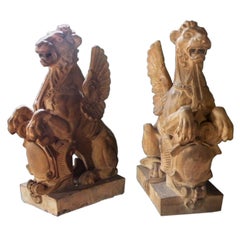
Pair of 19th Century Terra Cotta Winged Lions
Located in Troy, NY
Pair of 19th Century Terra Cotta Winged Lions. Well articulated, impressive pair of terra cotta winged lions, in seated position and holding heraldic shields between their front paws...
Category
19th Century Italian Antique Revival Furniture
Materials
Terracotta
$16,500 / set
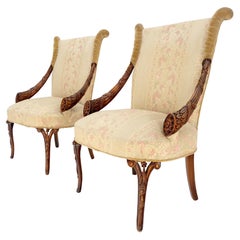
Pair of Carved Mahogany Fireside Lounge Chairs Regency Revival Style Clean!
Located in Rockaway, NJ
Pair of Carved Mahogany Fireside Lounge Chairs Regency Revival Style Clean!
Very comfortable spring loaded seats!
Category
20th Century American Revival Furniture
Materials
Upholstery, Mahogany
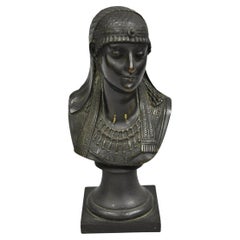
Antique Egyptian Revival Small 7" Bronze Grand Tour Bust of a Pharaoh
Located in Philadelphia, PA
Antique Egyptian Revival Small 7" Bronze Grand Tour Bust of a Pharaoh. Circa Late 19th Century. Measurements: 7" H x 3.5" W x 3.5" D.
Category
Late 19th Century Unknown Antique Revival Furniture
Materials
Bronze
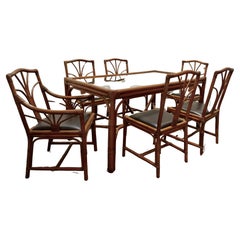
Regency Style Simulated Bamboo Dining Table and 6 Chairs
Located in Godshill, Isle of Wight
Regency Style Simulated Bamboo Dining Table and 6 Chairs
This superb and large set would be wonderful in a large Garden or Modern conservatory, th...
Category
1950s Vintage Revival Furniture
Materials
Bamboo
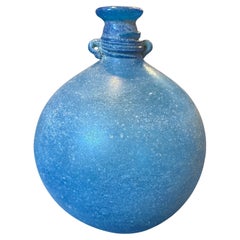
1960s Cenedese Attributable Light Blue Scavo Murano Glass Vase
By Cenedese
Located in Aci Castello, IT
This vase is a valuable and sought-after piece among collectors of Murano glass. Cenedese is a well-known and respected glassmaker in Murano, Italy, famous for its high-quality glass...
Category
Late 20th Century Italian Revival Furniture
Materials
Murano Glass
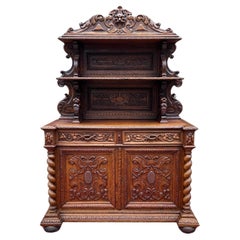
Antique French Buffet Server Sideboard Buffet Barley Twist Honey Oak 3-Tier 19C
Located in Tyler, TX
SUPERB 19th Century Antique French Honey Oak 3-Tier Server Sideboard Buffet Cabinet Bookcase~~
c. 1870s
This is only one of multiple exquisite pieces recently received from our European shipper~~wonderful hand-carved oak pieces in the highly sought after Black Forest, Gothic, Renaissance Revival and Barley Twist styles~~19th century and in unbelievably spectacular condition! If you're looking for that special and unique "statement piece" for your home or office, please view these items in our inventory!
HIGHLY CARVED lion's mask crown~~exquisite corbel supports with carved backsplash, and carved edge shelves
Three tiers~~perfect for displaying your favorite Majolica, Imari, Staffordshire or other antique collectibles
Two hand cut, dovetailed drawers with carved vine pulls over lower double door cabinet~~original key included~~ cartouche carved center and door medallions...
Category
Late 19th Century French Antique Revival Furniture
Materials
Oak
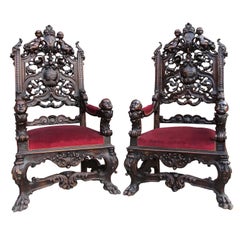
Pair of Italian 19th Century Renaissance Style Carved Figural Throne Armchairs
Located in Los Angeles, CA
A fine and palatial pair of Italian 19th century renaissance style carved walnut figural throne armchairs. The intricately carved Baroque frames with the backrests depicting a pair o...
Category
Late 19th Century Antique Revival Furniture
Materials
Velvet, Walnut
$24,850 Sale Price / set
29% Off
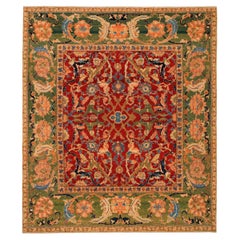
Ararat Rugs Polonaise Carpet, 17th Century Museum Piece Revival, Natural Dyed
By Ararat Rugs
Located in Tokyo, JP
The source of the carpet comes from the book 'Oriental Rugs in the Metropolitan Museum of Art, by Dimand, Maurice S., and Jean Mailey, The Metropolitan Museum of Art, New York, 1973, fig.90.'
If the so-called vase-technique carpets represented the triumph of Safavid workshop weaving in the seventeenth century, another group of Safavid carpets, popularly, if erroneously, known as “Polonaise” or “Polish” carpets, demonstrates the extent to which Safavid weavers would go to create flashy and expensive objects of conspicuous consumption. Polonaise carpets...
Category
21st Century and Contemporary Turkish Revival Furniture
Materials
Wool, Natural Fiber, Organic Material
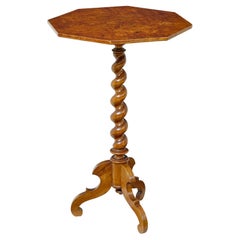
19th century Scandinavian burr elm octagonal side table
Located in Debenham, Suffolk
19th century burr elm octagonal side table. Circa 1880.
Octagonal burr elm top, with central strung circle and border around the outside shape. Barley twist and turned stem, raised ...
Category
Late 19th Century Swedish Antique Revival Furniture
Materials
Elm
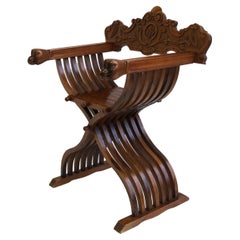
Italian 19th Century Renaissance Revival Savonarola Chair in Walnut Side Chair
Located in Ijzendijke, NL
Impressive & fully original Florentine Renaissance Savonarola chair in carved walnut. Restored in our workshop and it looks simply stunning.
Armrests ending with two amazing hand-c...
Category
Late 19th Century Italian Antique Revival Furniture
Materials
Birch, Walnut
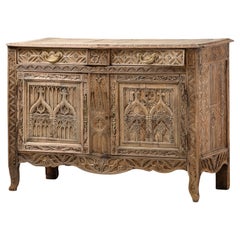
Gothic Revival Buffet in Carved Oak, France, Late 19th Century
Located in Split, Splitsko-dalmatinska županija
Gothic Revival Buffet in Carved Oak, France, Late 19th Century
A domestic cathedral carved in oak
A masterwork of French Gothic Revival design, this late 19th-century buffet transfo...
Category
Late 19th Century French Antique Revival Furniture
Materials
Oak
Revival furniture for sale on 1stDibs.
Find a broad range of unique Revival furniture for sale on 1stDibs. Many of these items were first offered in the 21st Century and Contemporary, but contemporary artisans have continued to produce works inspired by this style. If you’re looking to add vintage furniture created in this style to your space, the works available on 1stDibs include decorative objects, lighting, tables and other home furnishings, frequently crafted with wood, metal and other materials. If you’re shopping for used Revival furniture made in a specific country, there are Europe, France, and Italy pieces for sale on 1stDibs. While there are many designers and brands associated with original furniture, popular names associated with this style include Ararat Rugs, Wedgwood, Woka Lamps, and Ferdinand Barbedienne. It’s true that these talented designers have at times inspired knockoffs, but our experienced specialists have partnered with only top vetted sellers to offer authentic pieces that come with a buyer protection guarantee. Prices for furniture differ depending upon multiple factors, including designer, materials, construction methods, condition and provenance. On 1stDibs, the price for these items starts at $30 and tops out at $721,205 while the average work can sell for $2,897.
Still Thinking About These?
All Recently ViewedMore Ways To Browse
Cabinets With Metal Inlay
Cameo Glass Bowl
Campaign Chest Camphor
Canopic Jars
Canton Chinese Bowl
Cardinal Sculpture
Carrera Marble Dining Table
Carved Boar
Cast Grape Vine
Ceramic Cheetah
Ceramic Giraffe
Ceramic Pagoda
Ceramic Spanish Jug
Cherry Blossom Painting Japanese
Chest Of Drawers Display
Chinese Ancestral Portraits
Chinese Chippendale Style Display Cabinet
Chinese Coral Sculpture