Italian Decorative Art

to
222
1,194
372
889
680
19
Height
to
Width
to
352
184
93
72
37
23
21
19
8
8
7
5
4
3
3
2
2
170
204
515
699
49
224
171
9
4
2
10
13
64
51
71
45
13
478
403
356
331
207
8,685
2,354
1,588
1,573
1,498
1,588
960
1,533
246
37
30
21
18
Place of Origin: Italian
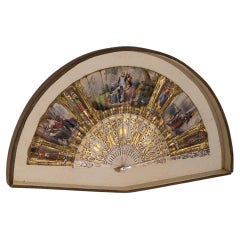
Silk fan in shrine from the late 1800s
Located in Milano, IT
The Italian silk fan in a vitrine from the late 1800s is a true masterpiece of craftsmanship and elegance. Housed in a beautiful alloy case, this antique fan...
Category

1890s Neoclassical Antique Italian Decorative Art

Materials

Silk, Wood

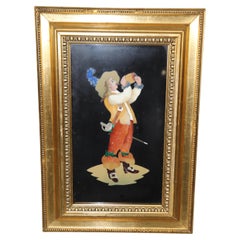
Antique Italian Pietra Dura Marble Inlay Plaque of Spaniard
Located in Swedesboro, NJ
Dimensions - (Frame) H: 16 1/2 in W: 11 1/2 in D: 1 in (Plaque) H: 12 1/4 in W: 7 1/4 in This exquisite Antique Italian Early 20th Century Pietra Dura Inlaid Marble Plaque is a stu...
Category

20th Century Grand Tour Italian Decorative Art

Materials

Lapis Lazuli, Malachite, Marble

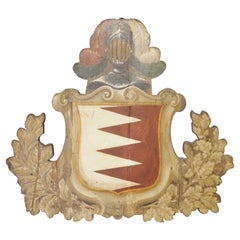
Large Painted Antique Tuscan Cartouche Panel, 18th Century
Located in Dallas, TX
This large cartouche panel was carved from wood and hand-painted with a central coat of arms in Italy during the 1700’s. Inspired by a 16th century Fr...
Category

18th Century Baroque Antique Italian Decorative Art

Materials

Wood

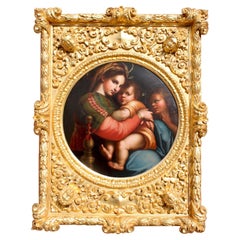
After Raffaello Sanzio 1483-1520 Raphael La Madonna della Seggiola Oil on Canvas
By (after) Raphael (Raffaello Sanzio da Urbino)
Located in Los Angeles, CA
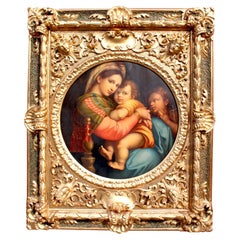
A Fine Italian 19th Century Oil Painting on Canvas "La Madonna della Seggiola" after Raphael (Raffaello Sanzio da Urbino 1483-1520). The circular painted canvas depicting a seated Madonna holding an infant Jesus Christ next to a child Saint John the Baptist, all within a massive carved gilt wood and gesso frame, which is identical to the frame on Raphael's original artwork. This painting is a 19th Century copy of Raphael's Madonna della Seggiola painted in 1514 and currently exhibited and part of the permanent collection at the Palazzo Pitti, Galleria Palatina, Florence, Italy. The bodies of the Virgin, Christ, and the boy Baptist fill the whole picture. The tender, natural looking embrace of the Mother and Child, and the harmonious grouping of the figures in the round, have made this one of Raphael's most popular Madonnas. The isolated chair leg is reminiscent of papal furniture, which has led to the assumption that Leo X himself commissioned the painting. A retailer's label reads " Fred K/ Keer's Sons - Framers and Fine Art Dealers - 917 Broad St. Newark, N.J." - Another label from the gilder reads "Carlo Bartolini - Doratore e Verniciatori - Via Maggio 1924 - Firenze". Circa: 1890-1900. Subject: Religious painting Canvas diameter: 28 inches (71.1 cm) Frame height: 54 inches (137.2 cm) Frame width: 42 1/2 inches (108 cm) Frame depth: 5 1/2 inches (14 cm) Raffaello Sanzio da Urbino (Italian, March 28 or April 6, 1483 - April 6, 1520), known as Raphael, was an Italian painter and architect of the High Renaissance. His work is admired for its clarity of form, ease of composition, and visual achievement of the Neoplatonic ideal of human grandeur. Together with Michelangelo and Leonardo da Vinci, he forms the traditional trinity of great masters of that period. Raphael was enormously productive, running an unusually large workshop and, despite his death at 37, leaving a large body of work. Many of his works are found in the Vatican Palace, where the frescoed Raphael Rooms were the central, and the largest, work of his career. The best known work is The School of Athens in the Vatican Stanza della Segnatura. After his early years in Rome much of his work was executed by his workshop from his drawings, with considerable loss of quality. He was extremely influential in his lifetime, though outside Rome his work was mostly known from his collaborative printmaking. After his death, the influence of his great rival Michelangelo was more widespread until the 18th and 19th centuries, when Raphael's more serene and harmonious qualities were again regarded as the highest models. His career falls naturally into three phases and three styles, first described by Giorgio Vasari: his early years in Umbria, then a period of about four years (1504–1508) absorbing the artistic traditions of Florence, followed by his last hectic and triumphant twelve years in Rome, working for two Popes and their close associates. Raphael was born in the small but artistically significant central Italian city of Urbino in the Marche region, where his father Giovanni Santi was court painter to the Duke. The reputation of the court had been established by Federico III da Montefeltro, a highly successful condottiere who had been created Duke of Urbino by the Pope - Urbino formed part of the Papal States - and who died the year before Raphael was born. The emphasis of Federico's court was rather more literary than artistic, but Giovanni Santi was a poet of sorts as well as a painter, and had written a rhymed chronicle of the life of Federico, and both wrote the texts and produced the decor for masque-like court entertainments. His poem to Federico shows him as keen to show awareness of the most advanced North Italian painters, and Early Netherlandish artists as well. In the very small court of Urbino he was probably more integrated into the central circle of the ruling family than most court painters. Federico was succeeded by his son Guidobaldo da Montefeltro, who married Elisabetta Gonzaga, daughter of the ruler of Mantua, the most brilliant of the smaller Italian courts for both music and the visual arts. Under them, the court continued as a centre for literary culture. Growing up in the circle of this small court gave Raphael the excellent manners and social skills stressed by Vasari. Court life in Urbino at just after this period was to become set as the model of the virtues of the Italian humanist court through Baldassare Castiglione's depiction of it in his classic work The Book of the Courtier, published in 1528. Castiglione moved to Urbino in 1504, when Raphael was no longer based there but frequently visited, and they became good friends. He became close to other regular visitors to the court: Pietro Bibbiena and Pietro Bembo, both later cardinals, were already becoming well known as writers, and would be in Rome during Raphael's period there. Raphael mixed easily in the highest circles throughout his life, one of the factors that tended to give a misleading impression of effortlessness to his career. He did not receive a full humanistic education however; it is unclear how easily he read Latin. Early Life and Works His mother Màgia died in 1491 when Raphael was eight, followed on August 1, 1494 by his father, who had already remarried. Raphael was thus orphaned at eleven; his formal guardian became his only paternal uncle Bartolomeo, a priest, who subsequently engaged in litigation with his stepmother. He probably continued to live with his stepmother when not staying as an apprentice with a master. He had already shown talent, according to Vasari, who says that Raphael had been "a great help to his father". A self-portrait drawing from his teenage years shows his precocity. His father's workshop continued and, probably together with his stepmother, Raphael evidently played a part in managing it from a very early age. In Urbino, he came into contact with the works of Paolo Uccello, previously the court painter (d. 1475), and Luca Signorelli, who until 1498 was based in nearby Città di Castello. According to Vasari, his father placed him in the workshop of the Umbrian master Pietro Perugino as an apprentice "despite the tears of his mother". The evidence of an apprenticeship comes only from Vasari and another source, and has been disputed—eight was very early for an apprenticeship to begin. An alternative theory is that he received at least some training from Timoteo Viti, who acted as court painter in Urbino from 1495.Most modern historians agree that Raphael at least worked as an assistant to Perugino from around 1500; the influence of Perugino on Raphael's early work is very clear: "probably no other pupil of genius has ever absorbed so much of his master's teaching as Raphael did", according to Wölfflin. Vasari wrote that it was impossible to distinguish between their hands at this period, but many modern art historians claim to do better and detect his hand in specific areas of works by Perugino or his workshop. Apart from stylistic closeness, their techniques are very similar as well, for example having paint applied thickly, using an oil varnish medium, in shadows and darker garments, but very thinly on flesh areas. An excess of resin in the varnish often causes cracking of areas of paint in the works of both masters. The Perugino workshop was active in both Perugia and Florence, perhaps maintaining two permanent branches. Raphael is described as a "master", that is to say fully trained, in December 1500. His first documented work was the Baronci altarpiece for the church of Saint Nicholas of Tolentino in Città di Castello, a town halfway between Perugia and Urbino. Evangelista da Pian di Meleto, who had worked for his father, was also named in the commission. It was commissioned in 1500 and finished in 1501; now only some cut sections and a preparatory drawing remain. In the following years he painted works for other churches there, including the Mond Crucifixion (about 1503) and the Brera Wedding of the Virgin (1504), and for Perugia, such as the Oddi Altarpiece. He very probably also visited Florence in this period. These are large works, some in fresco, where Raphael confidently marshals his compositions in the somewhat static style of Perugino. He also painted many small and exquisite cabinet paintings in these years, probably mostly for the connoisseurs in the Urbino court, like the Three Graces and St. Michael, and he began to paint Madonnas and portraits. In 1502 he went to Siena at the invitation of another pupil of Perugino, Pinturicchio, "being a friend of Raphael and knowing him to be a draughtsman of the highest quality" to help with the cartoons, and very likely the designs, for a fresco series in the Piccolomini Library in Siena Cathedral. He was evidently already much in demand even at this early stage in his career. Influence of Florence Raphael led a "nomadic" life, working in various centres in Northern Italy, but spent a good deal of time in Florence, perhaps from about 1504. Although there is traditional reference to a "Florentine period...
Category

Early 1900s Baroque Antique Italian Decorative Art

Materials

Canvas, Giltwood

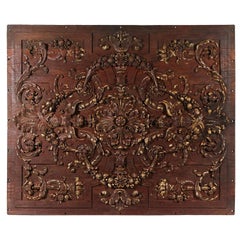
18th - 19th Century Italian Walnut Rococo Carved Wall - Antique Ceiling Panel
Located in West Palm Beach, FL
A large Italian ceiling panel made of hand crafted Walnut, enhanced with caryatid and acanthus scrolls, in good condition. The antique wall relief, décor represents the Rococo time period...
Category

Late 18th Century Rococo Antique Italian Decorative Art

Materials

Walnut

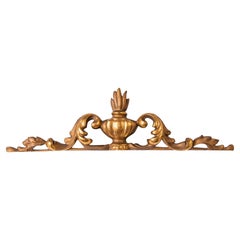
Gilt Wooden Frame Frieze
Located in Alessandria, Piemonte
Elegant antique gilt wooden frame frieze. Perfect, it can be placed anywhere: on a mirror, on an internal door, on the frame of a particular painting. ref. nr. O/2548.
Category

Early 19th Century Aubusson Antique Italian Decorative Art

Materials

Fruitwood

Gilt Wooden Frame Frieze
$475 Sale Price
20% Off
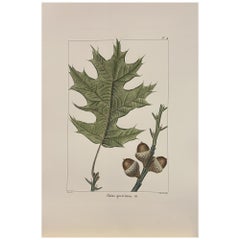
Italian Contemporary Hand Painted Botanical Print "Chene Quercitron" 4 of 4
Located in Scandicci, Florence
Print from the Collection Botanique Trees representing Chene Quercitron, enriched with green and browm colors and nuances of watercolor, to make it more realistic. Another different...
Category

21st Century and Contemporary Italian Decorative Art

Materials

Paper

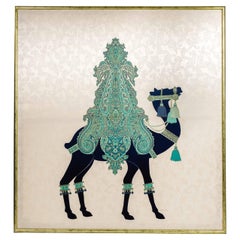
Painting of a Stylized Oriental Camel By Fabbriziani and Calandra Italy 1970s
Located in Salzburg, AT
Painting of a stylized oriental camel by Fabbriziani and Calandra from the 1970-ies Italy. On satin in a kind of silkscreen in limited edition, wooden frame gilded. The black camel i...
Category

1970s Mid-Century Modern Vintage Italian Decorative Art

Materials

Silk, Wood

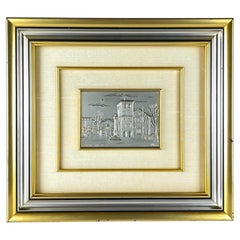
Vintage Silver relief picture collection Alliani, Italy, 1970s
Located in Miklavž Pri Taboru, SI
Vintage Silver relief picture "Trieste - San Giusto", collection Alliani made in Italy in the 1970s. Sterling Silver 925 and gold. Sculpture relief picture has certification of authe...
Category

Mid-20th Century Mid-Century Modern Italian Decorative Art

Materials

Gold, Silver

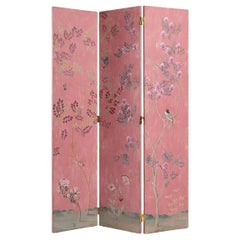
18th Century Hand-Painted Venetian Style Fuchsia Otello Screen with Flowers
By Porte Italia
Located in Ronchi dei Legionari, IT
From our Hand-Painted Furniture Collection, we are pleased to introduce you to our Fuchsia Otello Screen. Nature has always been a source of inspiration for our hand-decorated furn...
Category

2010s Other Italian Decorative Art

Materials

Wood

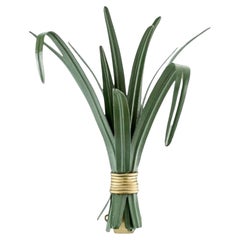
Lemongrass Leaf Bunch Wall Sconce
Located in Firenze, FI
Enhance your space with the exquisite Lemongrass Leaf Brunch Wall Sconce from our Hortus line in the eclectic collection. Designed by the creative Cecilia Pantaleo, crafted from iron...
Category

2010s Italian Decorative Art

Materials

Iron, Brass

Period Century Giltwood Italian Empire Style Frame
Located in Roma, IT
Wonderful Italian Empire original giltwood frame with two rows of carving Early 19th century Internal measurements cm 58.5 x 47 Every item of our Gallery, upon request, is accompan...
Category

Early 19th Century Empire Antique Italian Decorative Art

Materials

Wood

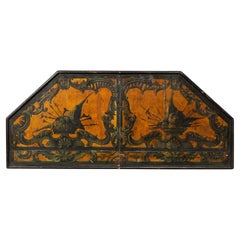
An 18th Century Italian Hand-Painted Plaque, Decorative Wall Ornament
Located in Atlanta, GA
An Italian hand-painted wall plaque from the 18th century. This wall decoration from Italy has a half-octagon shape with longer flat section being at bottom-side of plaque. It has been hand-painted in a motif of horns, arrows, angels, and volutes. Primary coloring is gold and green with a black frame. There is a lovely old patina; a nice reflection of its age. This 18th century Italian wall plaque...
Category

18th Century Antique Italian Decorative Art

Materials

Wood

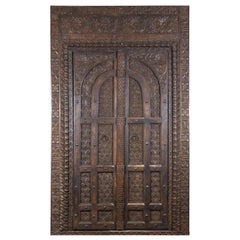
18th Century Italian Rococo Carved Frieze Wall Panel - Antique Oakwood Door
Located in West Palm Beach, FL
An antique Italian frieze panel with flowers, vines and leaves, made of hand crafted Oakwood in good condition. The vertical door features two hand crafted round metal door pulls...
Category

Late 18th Century Rococo Antique Italian Decorative Art

Materials

Oak

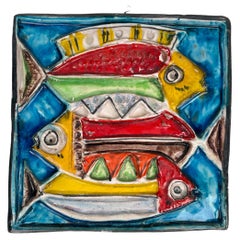
Giovanni de Simone Colored Ceramic Fish Squared Tile Plate, Italy 1960s
By Pablo Picasso, Giovanni de Simone
Located in Rome, IT
Beautiful squared wall mounted tile plate in colored ceramic representing three fishes by the Italian artisti Giovanni De Simone. Giovanni De Simone was a great Sicilian artist...
Category

1960s Mid-Century Modern Vintage Italian Decorative Art

Materials

Ceramic, Terracotta, Pottery

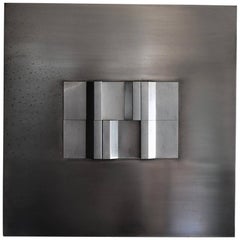
Object MO6 by Studio Zero Milano, 1970
By Studio Zero
Located in Weesp, NL
Studio Zero Milano Object MO6, 1970 Abstract composition "multipli" on the plate, label marked G. Tonti, Studio Zero, Milan. Giorgio Tonti was de found...
Category

1970s Mid-Century Modern Vintage Italian Decorative Art

Materials

Aluminum

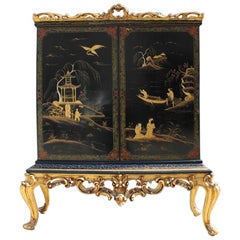
Midcentury Italian Orientalist Wood Bar Cabinet in Gold and Black Lacquer, 1950
Located in Palermo, Sicily
Midcentury Italian orientalist wood bar cabinet in gold and black lacquer, 1950.
Category

1950s Mid-Century Modern Vintage Italian Decorative Art

Materials

Gold Leaf

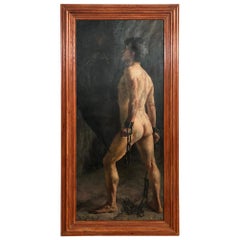
Large Scale Italian Oil on Canvas Painting
Located in Round Top, TX
An outstanding and grand scale oil on canvas painting of a nude male. Entitled "La Vittoria Della Verita' Sull'Insidia" - "The Victory Of Truth Over The Trap"..... Expertly executed ...
Category

Early 20th Century Italian Decorative Art

Materials

Canvas

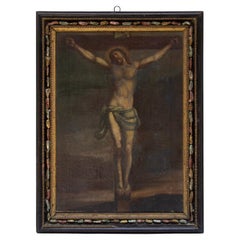
17th Century Italian Painting of the Crucifixion of Christ in Original Frame
By Interi
Located in Dublin, Dalkey
17th century Italian painting of the crucifixion of Christ on canvas in its original wood frame and adorned with naturally formed baroque...
Category

17th Century Baroque Antique Italian Decorative Art

Materials

Wood, Paint

Hand Painted Ceramic Plate
Located in Norwalk, CT
This signed work in ceramic features a beautifully rendered face with nice use of color. Glazed finish with an imprinted signature, which sadly we cannot make out as the artist is cl...
Category

1970s Modern Vintage Italian Decorative Art

Materials

Ceramic

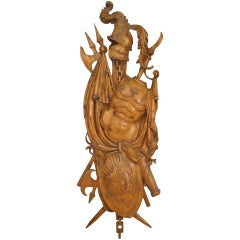
A Monumental Italian Neoclassic Triumphal Military Wall Plaque
Located in Queens, NY
Roman fruitwood trophy wall plaque carved with the forms of armor, halberds, and other military regalia.
Category

18th Century and Earlier Neoclassical Antique Italian Decorative Art

Materials

Fruitwood

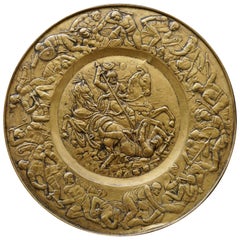
Hammered Copper Wall Relief Sculpture with Roman Warriors
Located in Antwerp, BE
A 19th century hammered brass dish of unusual size in the historical style representing a battle scene between Romans and Barbarians, in the middle fighting generals on horseback, th...
Category

Mid-20th Century Mid-Century Modern Italian Decorative Art

Materials

Copper

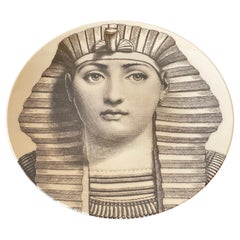
Fornasetti Wall Plate Tema E Variazioni N. 221
By Fornasetti, Jonathan Adler
Located in San Diego, CA
Beautiful wall plate with the interpretation of opera singer Lina Cavalieri’s face are the basis of the iconic Tema e Variazioni series by Fornasetti. Beautiful hand-decorated porce...
Category

20th Century Baroque Revival Italian Decorative Art

Materials

Porcelain

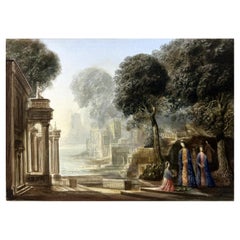
Antique English Italianate Framed Watercolor attr Harold Hitchcock George Stubbs
Located in Dublin, Ireland
ERROR IN LISTING: This listing is for ONE Painting, we are trying to fix this currently. Stunning Continental View possibly Venice, Italy. Watercolour on Artists board, first quarter of the Twentieth Century. Allthough not signed this beautiful Watercolour is firmly attributed to the work of English Artist Harold Hitchcock, who did not always add signature. Depicting Mountainous and Landscape views with three ladies...
Category

Early 20th Century Edwardian Italian Decorative Art

Materials

Canvas, Giltwood

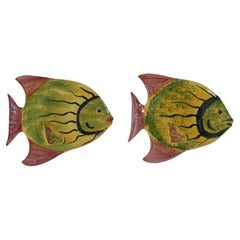
Pair of Hand Painted Majolica Fish Wall Appliques - Italy - Mid 20th Century
Located in Chatham, ON
Pair of majolica 'fish form' wall appliques - large size - molded form - each distinctly hand painted and glazed featuring bright Mediterranean colors and styling - each applique wit...
Category

Mid-20th Century Mid-Century Modern Italian Decorative Art

Materials

Ceramic, Majolica

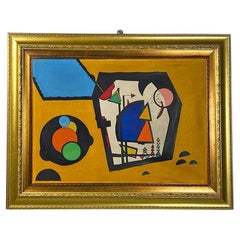
Italian Midcentury Anamnesi Acrylic Paint Work on Canvas Lucio Del Pezzo, 1960s
By Lucio Del Pezzo
Located in MIlano, IT
Italian Mid-Century Modern Anamnesi acrylic paint work on canvas by Lucio Del Pezzo, 1960s. Colored acrylic paint work on canvas entitled Anamnesi with abstract subject with multicolored geometric shapes, on a mustard-colored background, and wooden frame with friezes with a golden finish. Drawing by Lucio Del Pezzo from around 1960s. Good conditions. Measures in cm 91x3x70h If you are interested in this product or need photos or additional information, we are available to respond any question as soon and quickly as possible. Remember to check our product in the listing of this our store, where we present fantastic original vintage products...
Category

1960s Mid-Century Modern Vintage Italian Decorative Art

Materials

Wood, Paint

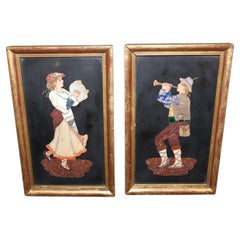
Pair of Antique Pietra Dura Marble Inlay Figural Plaques With Malachite
Located in Swedesboro, NJ
Dimensions: Height: 9 1/4 in Width: 5 3/4 in Depth: 3/4 in This vintage pair of Pietra Dura framed plaques is bound to bring a sense of sophisticat...
Category

Early 20th Century Neoclassical Italian Decorative Art

Materials

Lapis Lazuli, Malachite, Marble

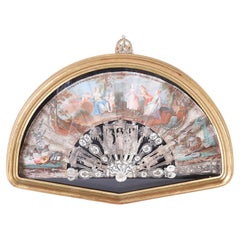
Antique Italian Painted Hand Fan in a Glass Case
Located in Palm Beach, FL
Impressive 19th century Italian hand fan, remarkably preserved with silvered metal sticks and guards depicting ancient gods, palm trees and classical emblemes. The paper leaves are h...
Category

Mid-19th Century Rococo Revival Antique Italian Decorative Art

Materials

Metal

Manner of J.M.W Turner, Venice Scene of the Grand Canal Painting
Located in Nashville, TN
Probably circa 1910, decorative painting with craquelure throughout. Old dark varnish. The sky near frame edge has thicker paint suggesting some later in painting. Stretcher marks sh...
Category

1910s Vintage Italian Decorative Art

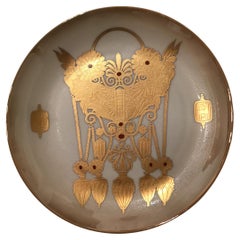
Morbelli Porcelain Wall Plate “Gioielli Italici”, 1987 Italy
By Arte Morbelli
Located in Milano, IT
Morbelli Porcelain wall plate “Gioielli Italici” 1987 Italy.
Category

1980s Other Vintage Italian Decorative Art

Materials

Porcelain

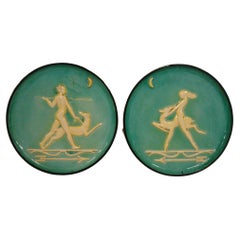
Vintage Tarcisio Tosin, La Freccia Wall Plated, Glazed Ceramic, Italy, 1934
By Tarcisio Tosin
Located in Buenos Aires, Olivos
Vintage Tarcisio Tosin - La Freccia wall plated - Glazed Ceramic, Italy 1934 hand painted under glaze from the 1934 to the 1942. The Diana Huntress St...
Category

Mid-20th Century Mid-Century Modern Italian Decorative Art

Materials

Ceramic

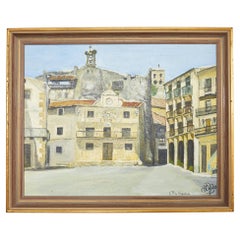
Midcentury Modern Italian Impressionist Town Square
Located in Rio Vista, CA
Untitled mid-century modern Italian impressionist oil on board painting of a village or town square landscape. The painting features beautifully detailed b...
Category

20th Century Mid-Century Modern Italian Decorative Art

Materials

Wood

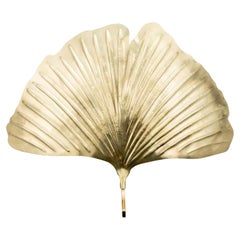
Ginkgo Leaf Ornamental Wall Light
Located in Firenze, FI
Introduce a touch of elegance with the Hortus Gingko brass Leaf Wall Light. Crafted with meticulous attention to detail, this exquisite wall ligh...
Category

2010s Italian Decorative Art

Materials

Brass

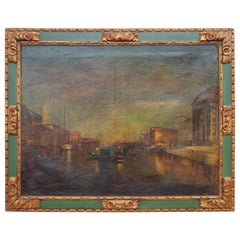
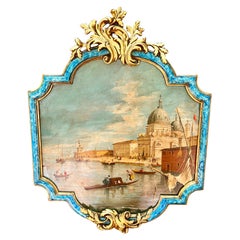
Venetian Canal Scene Set in Marbleized and Giltwood Frame
Located in Nashville, TN
Oil on board Venetian Canal Scene looking towards the mouth of The Grand Canal with Della Salute to one side . Typical in the Grand Tour style of 18th ,19th and 20th centuries ..
Category

Mid-20th Century Baroque Italian Decorative Art

Materials

Wood

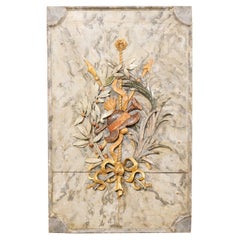
Italian Decorative Wall Panel Carved w/Helmet, Horn Arrows, 19th Century
Located in Atlanta, GA
An Italian hand-carved wall plaque, with its original painted and gilt finish, from the 19th century. This antique wall decoration from Italy features a rectangular-shaped molded surround, with quarter-circle inner edges, that frame a carved assemblage of helmet, horn, arrows, and foliate motif at center with carved-rope and bow-tied ribbon in gilt. The original hand-painted finish has a faux marble background in gray hues, with green, red and gilt accents on the center carvings. This 19th century Italy carved plaque...
Category

19th Century Antique Italian Decorative Art

Materials

Wood

Antique Grand Tour Faux Book of Neoclassical Intaglios
Located in Wormelow, Herefordshire
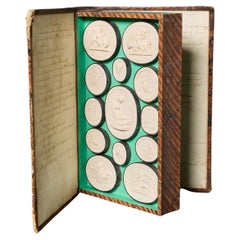
An antique Grand Tour faux book of Neoclassical plaster intaglios. Dating to the early 19th century, this intriguing book encloses twenty-five classically themed Italian medallions...
Category

Early 19th Century Grand Tour Antique Italian Decorative Art

Materials

Plaster

Arte Morbelli Five Porcelain Plates with 24k Golden Inserts
By Arte Morbelli
Located in Milano, IT
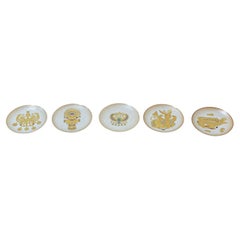
Fantastic set of five decorative porcelain plates produced by Arte Morbelli, of fine Italian manufacture. Each plate can be hung as a decorative object, or you can use them as real plates. The plates are made entirely of ceramic, with designs and edges in 24 karat gold, very precious and elegant. The plates contain designs of animals symbolic of every historical era and every area of the world. They are represented: a quadruped with a back decorated with red and gold squiggles, representing Southern Russia; a donkey also decorated in gold and purple and represents the period of greatest flowering of the Persian period (500-400 BC); the Egyptian jewel...
Category

1970s Mid-Century Modern Vintage Italian Decorative Art

Materials

Gold

After Raffaello Sanzio 1483-1520 Raphael La Madonna della Seggiola Oil on Canvas
By (after) Raphael (Raffaello Sanzio da Urbino)
Located in Los Angeles, CA
A Fine Italian 19th Century Oil Painting on Canvas "La Madonna della Seggiola" after Raphael (Raffaello Sanzio da Urbino 1483-1520). The circular painted canvas depicting a seated Madonna holding an infant Jesus Christ next to a child Saint John the Baptist, all within a massive carved two-tone gilt wood, gilt-patinated and gesso frame, which is identical to the frame on Raphael's original artwork. This painting is a 19th Century copy of Raphael's Madonna della Seggiola painted in 1514 and currently exhibited and part of the permanent collection at the Palazzo Pitti, Galleria Palatina, Florence, Italy. The bodies of the Virgin, Christ, and the boy Baptist fill the whole picture. The tender, natural looking embrace of the Mother and Child, and the harmonious grouping of the figures in the round, have made this one of Raphael's most popular Madonnas. The isolated chair leg is reminiscent of papal furniture, which has led to the assumption that Leo X himself commissioned the painting. Circa: 1890-1900. Subject: Religious painting Painting diameter: 28 inches (71.1 cm) Frame height: 55 1/8 inches (140 cm) Frame width: 46 inches (116.8 cm) Frame depth: 5 1/8 inches (13 cm) Raffaello Sanzio da Urbino (Italian, March 28 or April 6, 1483 - April 6, 1520), known as Raphael, was an Italian painter and architect of the High Renaissance. His work is admired for its clarity of form, ease of composition, and visual achievement of the Neoplatonic ideal of human grandeur. Together with Michelangelo and Leonardo da Vinci, he forms the traditional trinity of great masters of that period. Raphael was enormously productive, running an unusually large workshop and, despite his death at 37, leaving a large body of work. Many of his works are found in the Vatican Palace, where the frescoed Raphael Rooms were the central, and the largest, work of his career. The best known work is The School of Athens in the Vatican Stanza della Segnatura. After his early years in Rome much of his work was executed by his workshop from his drawings, with considerable loss of quality. He was extremely influential in his lifetime, though outside Rome his work was mostly known from his collaborative printmaking. After his death, the influence of his great rival Michelangelo was more widespread until the 18th and 19th centuries, when Raphael's more serene and harmonious qualities were again regarded as the highest models. His career falls naturally into three phases and three styles, first described by Giorgio Vasari: his early years in Umbria, then a period of about four years (1504–1508) absorbing the artistic traditions of Florence, followed by his last hectic and triumphant twelve years in Rome, working for two Popes and their close associates. Raphael was born in the small but artistically significant central Italian city of Urbino in the Marche region, where his father Giovanni Santi was court painter to the Duke. The reputation of the court had been established by Federico III da Montefeltro, a highly successful condottiere who had been created Duke of Urbino by the Pope - Urbino formed part of the Papal States - and who died the year before Raphael was born. The emphasis of Federico's court was rather more literary than artistic, but Giovanni Santi was a poet of sorts as well as a painter, and had written a rhymed chronicle of the life of Federico, and both wrote the texts and produced the decor for masque-like court entertainments. His poem to Federico shows him as keen to show awareness of the most advanced North Italian painters, and Early Netherlandish artists as well. In the very small court of Urbino he was probably more integrated into the central circle of the ruling family than most court painters. Federico was succeeded by his son Guidobaldo da Montefeltro, who married Elisabetta Gonzaga, daughter of the ruler of Mantua, the most brilliant of the smaller Italian courts for both music and the visual arts. Under them, the court continued as a centre for literary culture. Growing up in the circle of this small court gave Raphael the excellent manners and social skills stressed by Vasari. Court life in Urbino at just after this period was to become set as the model of the virtues of the Italian humanist court through Baldassare Castiglione's depiction of it in his classic work The Book of the Courtier, published in 1528. Castiglione moved to Urbino in 1504, when Raphael was no longer based there but frequently visited, and they became good friends. He became close to other regular visitors to the court: Pietro Bibbiena and Pietro Bembo, both later cardinals, were already becoming well known as writers, and would be in Rome during Raphael's period there. Raphael mixed easily in the highest circles throughout his life, one of the factors that tended to give a misleading impression of effortlessness to his career. He did not receive a full humanistic education however; it is unclear how easily he read Latin. Early Life and Works His mother Màgia died in 1491 when Raphael was eight, followed on August 1, 1494 by his father, who had already remarried. Raphael was thus orphaned at eleven; his formal guardian became his only paternal uncle Bartolomeo, a priest, who subsequently engaged in litigation with his stepmother. He probably continued to live with his stepmother when not staying as an apprentice with a master. He had already shown talent, according to Vasari, who says that Raphael had been "a great help to his father". A self-portrait drawing from his teenage years shows his precocity. His father's workshop continued and, probably together with his stepmother, Raphael evidently played a part in managing it from a very early age. In Urbino, he came into contact with the works of Paolo Uccello, previously the court painter (d. 1475), and Luca Signorelli, who until 1498 was based in nearby Città di Castello. According to Vasari, his father placed him in the workshop of the Umbrian master Pietro Perugino as an apprentice "despite the tears of his mother". The evidence of an apprenticeship comes only from Vasari and another source, and has been disputed—eight was very early for an apprenticeship to begin. An alternative theory is that he received at least some training from Timoteo Viti, who acted as court painter in Urbino from 1495.Most modern historians agree that Raphael at least worked as an assistant to Perugino from around 1500; the influence of Perugino on Raphael's early work is very clear: "probably no other pupil of genius has ever absorbed so much of his master's teaching as Raphael did", according to Wölfflin. Vasari wrote that it was impossible to distinguish between their hands at this period, but many modern art historians claim to do better and detect his hand in specific areas of works by Perugino or his workshop. Apart from stylistic closeness, their techniques are very similar as well, for example having paint applied thickly, using an oil varnish medium, in shadows and darker garments, but very thinly on flesh areas. An excess of resin in the varnish often causes cracking of areas of paint in the works of both masters. The Perugino workshop was active in both Perugia and Florence, perhaps maintaining two permanent branches. Raphael is described as a "master", that is to say fully trained, in December 1500. His first documented work was the Baronci altarpiece for the church of Saint Nicholas of Tolentino in Città di Castello, a town halfway between Perugia and Urbino. Evangelista da Pian di Meleto, who had worked for his father, was also named in the commission. It was commissioned in 1500 and finished in 1501; now only some cut sections and a preparatory drawing remain. In the following years he painted works for other churches there, including the Mond Crucifixion (about 1503) and the Brera Wedding of the Virgin (1504), and for Perugia, such as the Oddi Altarpiece. He very probably also visited Florence in this period. These are large works, some in fresco, where Raphael confidently marshals his compositions in the somewhat static style of Perugino. He also painted many small and exquisite cabinet paintings in these years, probably mostly for the connoisseurs in the Urbino court, like the Three Graces and St. Michael, and he began to paint Madonnas and portraits. In 1502 he went to Siena at the invitation of another pupil of Perugino, Pinturicchio, "being a friend of Raphael and knowing him to be a draughtsman of the highest quality" to help with the cartoons, and very likely the designs, for a fresco series in the Piccolomini Library in Siena Cathedral. He was evidently already much in demand even at this early stage in his career. Influence of Florence Raphael led a "nomadic" life, working in various centres in Northern Italy, but spent a good deal of time in Florence, perhaps from about 1504. Although there is traditional reference to a "Florentine period...
Category

Early 1900s Baroque Antique Italian Decorative Art

Materials

Canvas, Giltwood

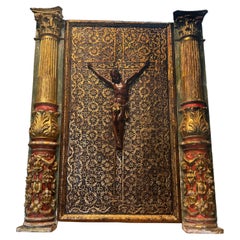
Grand Baroque Composition Made in Naples in the Mid-17th Century
Located in Budapest, HU
Grand Baroque composition made in Naples in the mid-17th century intended for the private chapel of a noble Neapolitan family. In the early nineteenth century on the finely executed ...
Category

Mid-17th Century Baroque Antique Italian Decorative Art

Materials

Wood

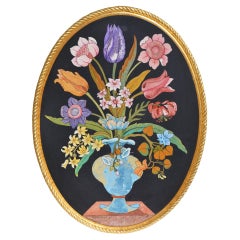
Black Oval Inlaid Flowers and Gold Frame Painting Handmade by Cupioli Italy
By Cupioli made in Italy
Located in Rimini, IT
Black Oval Flower Inlay Painting and Gold Frame Handmade by Cupioli Italy. Oval wall painting, handcrafted by our artisans using the ancient Italian technique of scagliola inlay . Th...
Category

21st Century and Contemporary Neoclassical Revival Italian Decorative Art

Materials

Scagliola

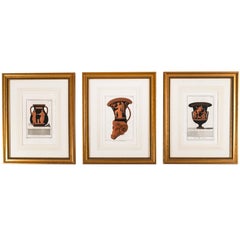
Set of Three Framed Prints Depicting Greek Apulian Red-Figure Pottery
Located in Palm Desert, CA
Set of three framed prints depicting Greek glassical red-figure pottery. Left print: Marked: T.XV. - "In Miis. Vaticano - Depicting Apulian Red-Figure bell krater...
Category

Late 19th Century Classical Roman Antique Italian Decorative Art

Materials

Wood, Paper

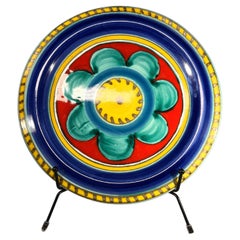
DeSimone of Italy, Hand Painted Colorful Ceramic Plate, 1960s
By DeSimone
Located in Rothley, Leicestershire
Colorful hand painted, large ceramic plate by DeSimone, Italy Signed DeSimone, Italy to reverse, circa 1960s Measures: Height 1 inch, diameter 10 inch In very good condition.
Category

Mid-20th Century Mid-Century Modern Italian Decorative Art

Materials

Ceramic

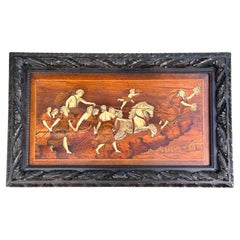
Antique Marquetry Inlaid Scenic Tarsia Panel of Raffigurante "Il Carro Dell Auro
Located in LOS ANGELES, CA
Antique Marquetry Inlaid Scenic Tarsia Panel of Raffigurante "Il Carro Dell'Aurora"
Category

18th Century Renaissance Antique Italian Decorative Art

Materials

Wood

Fabscarte Handmade Hand Painted Wallpaper Wall Decor, Ninfee
By Fabscarte
Located in Milan, IT
- This product is priced per square meter. Please contact us for assistance with square footage calculations. - The lead time depends on the quantity of the order. A perfect combina...
Category

2010s Italian Decorative Art

Materials

Paper, Paint

Mid-Century Modern Italian Studio Pottery Wall Plate from Antonio Milani, 1960s
Located in Hamburg, DE
Mid-Century Modern Italian Studio Pottery Wall Plate from Antonio Milani, 1960s, in Very Good conditions. Designed 1960 to 1969 This piece has an attribution mark. Additional inform...
Category

20th Century Mid-Century Modern Italian Decorative Art

Materials

Ceramic

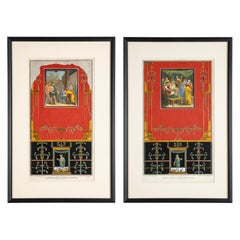
Pair 18th Century Italian Hand Colored Engravings Roman Frescoes from Pompeii
Located in Stamford, CT
A pair of 18th century Italian hand colored renderings of frescoes in Pompeii in what became famous as the color "Pompeii Red". The detail is intricate and exquisite, and it is clea...
Category

Late 18th Century Neoclassical Antique Italian Decorative Art

Materials

Paper

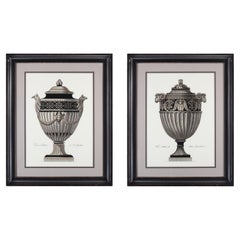
Pair of Contemporary Italian Hand Coloured Roman Vase Prints with Black Frames
Located in Scandicci, Florence
Pair of Extra large Roman Vase printed on a hand press on 100% cotton engraving paper. Completely handpainted with a cream wash, umber highlights, and...
Category

21st Century and Contemporary Neoclassical Italian Decorative Art

Materials

Wood, Paper

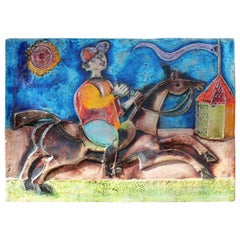
Large Ceramic Wall Panel Giovanni De Simone 1960 Sicilian Art Picasso
By Giovanni de Simone
Located in Palermo, Sicily
Large ceramic wall panel Giovanni De Simone 1960 Sicilian Art Picasso Horse Rider. In his hometown he founded his own workshop "Maioliche d'Arte De Simo...
Category

1960s Mid-Century Modern Vintage Italian Decorative Art

Materials

Ceramic

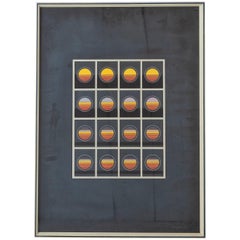
Italian Modern Lithographic Poster by Angela Trapani, Abstract Art, 1970s
Located in Ceglie Messapica, IT
Angela Trapani – Lithographic Poster, Italy, 1970s A vibrant lithographic poster by Italian artist Angela Trapani, created in the 1970s. Trapani’s work is distinguished by her explo...
Category

1970s Mid-Century Modern Vintage Italian Decorative Art

Materials

Glass, Wood, Paper

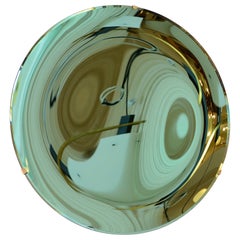
Sculptural Concave Mirror in Green
Located in London, GB
Anish Kapoor style concave mirror. Sculptural green glass mirror, with brass wall fixing. Excellent quality mirror with amazing reflections. Available in pink gold, copper and b...
Category

2010s Mid-Century Modern Italian Decorative Art

Materials

Brass

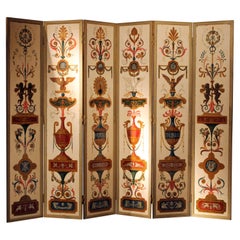
19th Century Italian Painted Wood Empire Folding Screen in Gilt Bronze Frame
Located in Firenze, IT
This one-of-a-kind antique Italian Empire Period folding screen is a masterpiece of early 19th-century craftsmanship, dating most likely from 1801 during the Republic of Lucca. Pain...
Category

Early 19th Century Empire Antique Italian Decorative Art

Materials

Bronze, Ormolu

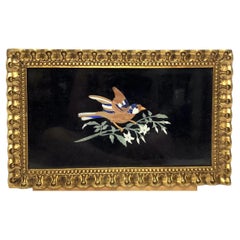
Vintage Italian Grand Tour Style Pietra Dura Mosaic Plaque, Framed 1
Located in Bradenton, FL
A Beautiful Italian grand tour style pietra dura mosaic on marble plaque with gilt framing. Picture is a bird on branch with leaves and flowers.
Category

Early 20th Century Baroque Italian Decorative Art

Materials

Marble

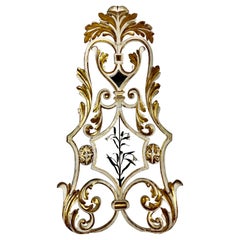
19th C. Italian Painted Parcel Gilt Architectural Piece
Located in Los Angeles, CA
19th C. carved painted & parcel gilt architectural element. The piece is painted in antique white with 22K gold leaf details throughout. There is also a metal stem of flowers in the ...
Category

19th Century Baroque Antique Italian Decorative Art

Materials

Gold Leaf

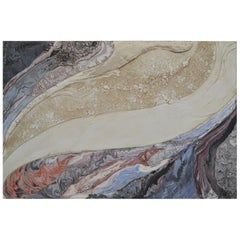
Art Wall Panel Scagliola Relief Decor Handmade in Italy by Cupioli available
By Cupioli made in Italy
Located in Rimini, IT
The title of this work is "Evolution" in this panel the artist Lodovico Cupioli represented a river in his particular vision. From the primordial Era after the game of time, the orig...
Category

21st Century and Contemporary Modern Italian Decorative Art

Materials

Scagliola

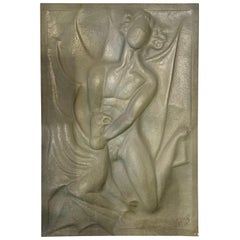
Art Deco Embossed Pewter Panel Sculpture, 1920s
Located in Florence, IT
Art Deco metal embossed pewter panel sculpture representing a naked boy with eagle, signed by Foma.
Category

Early 20th Century Art Deco Italian Decorative Art

Materials

Pewter

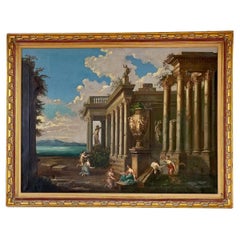
Architectural Capriccio of Roman Ancient Ruins with Figures
Located in Vero Beach, FL
Architectural Capriccio of Roman Ancient Ruins with Figures. Italian, 18th century large painting in oil on canvas is from the school of Giovan...
Category

18th Century Other Antique Italian Decorative Art

Materials

Canvas

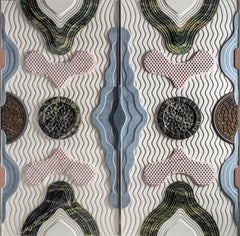
Lithea/Gadir by Elena Salmistraro Wall Art in Marble Stone Copper White Pink
By Lithea, Elena Salmistraro
Located in Patti, IT
Cala Gadir, aterm of Arabic origin which means ‘Valley of water’ is a location known since old times for its natural hot water springs and still nowadays is one of the most well-know...
Category

21st Century and Contemporary Modern Italian Decorative Art

Materials

Stone, Marble, Copper

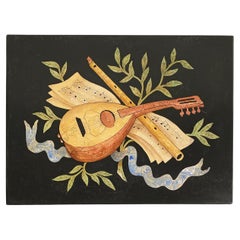
Mid-Century Pietra Dura Musical-Motif Wall Plaque in the Style of Richard Blow
By Richard Blow
Located in Minneapolis, MN
Here is a very decorative Italian Pietra Dura wall plaque which we're estimating, based on the motifs, is from the 1940s. It depicts a flute and a string instrument along with sheet ...
Category

1940s Mid-Century Modern Vintage Italian Decorative Art

Materials

Marble

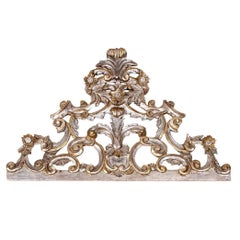
Hand-Carved Silver Giltwood Decorative Sculpture
Located in Sheffield, MA
Silver and gold gilt decorative sculpture pediment with scroll work, sunflowers and leaves. Could be used over a mirror, bed as corona or door having the right width or above headboa...
Category

20th Century Baroque Italian Decorative Art

Materials

Vermeil, Silver

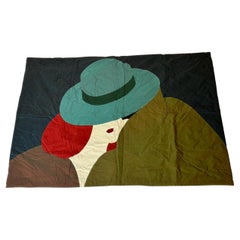
Tapestry by Enzo Mari for Interflex - Flou
By Enzo Mari, Interflex
Located in Milan, Italy
Tapestry designed by Enzo e Elio Mari Hand-tufted and doubled textile panel. Printed by silk-screen printing. Interflex- Flou production, 1999. Without iron support for hanging. Bi...
Category

1990s Modern Italian Decorative Art

Materials

Textile

Still Thinking About These?

All Recently Viewed