Painted Decorative Art

to
277
942
737
1,337
382
32
Height
to
Width
to
162
157
62
55
49
41
30
26
22
20
16
13
11
8
8
7
6
5
162
413
762
414
165
284
187
25
6
30
23
8
50
44
37
28
9
594
441
424
414
350
1,322
431
257
197
181
1,751
1,431
1,689
31
21
20
19
14
Technique: Painted
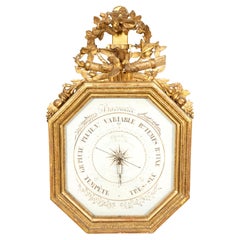
Charles X Giltwood Barometer
Located in Essex, MA
A fine example from a Lost Tree Florida estate. A fine example with original gilded decoration. Octagonal with grisaille painted dial and signed by Chevallier. Jean Gabriel Augustin ...
Category

1830s French Charles X Antique Painted Decorative Art

Materials

Giltwood

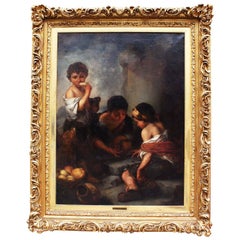
Large Oil on Canvas "Beggar Boys Playing Dice" After Bartolomé Esteban Murrillo
Located in Los Angeles, CA
A fine and large 19th century oil on canvas after Bartolomé Esteban Murrillo's (Spanish, 1617-1682) "Beggar Boys Playing Dice" (The original work by Murillo was painted in 1675). The impressive artwork depicts two young boys playing dice while another eats a piece of fruit as his dog watches on., within an ornate gildwood and gesso frame bearing a label from the faming company Bigelow & Jordan. The original work by Murillo is currently at the Alte Pinakothek Museum in Munich, Germany. The present work is signed: L. Rüber. Circa: Munich, Late 19th Century. Bartolomé Esteban Murillo (born late December 1617, baptized January 1, 1618 – April 3, 1682) was a Spanish Baroque painter. Although he is best known for his religious works, Murillo also produced a considerable number of paintings of contemporary women and children. These lively, realist portraits of flower girls, street urchins, and beggars constitute an extensive and appealing record of the everyday life of his times. Murillo was born to Gaspar Esteban and María Pérez Murillo. He may have been born in Seville or in Pilas, a smaller Andalusian town. It is clear that he was baptized in Seville in 1618, the youngest son in a family of fourteen. His father was a barber and surgeon. His parents died when Murillo was still very young, and the artist was largely brought up by his aunt and uncle. Murillo began his art studies under Juan del Castillo in Seville. There he became familiar with Flemish painting and the "Treatise on Sacred Images" of Molanus (Ian van der Meulen or Molano). The great commercial importance of Seville at the time ensured that he was subject to influences from other regions. His first works were influenced by Zurbarán, Jusepe de Ribera and Alonzo Cano, and he shared their strongly realist approach. As his painting developed, his more important works evolved towards the polished style that suited the bourgeois and aristocratic tastes of the time, demonstrated especially in his Roman Catholic religious works. In 1642, at the age of 26, he moved to Madrid, where he most likely became familiar with the work of Velázquez, and would have seen the work of Venetian and Flemish masters in the royal collections; the rich colors and softly modeled forms of his subsequent work suggest these influences. In 1645 he returned to Seville and married Beatriz Cabrera y Villalobos, with whom he eventually had eleven children. In that year, he painted eleven canvases for the convent of St. Francisco el Grande in Seville. These works depicting the miracles of Franciscan saints vary between the Zurbaránesque tenebrism of the Ecstasy of St Francis and a softly luminous style (as in Death of St Clare...
Category

Late 19th Century German Baroque Antique Painted Decorative Art

Materials

Gesso, Canvas, Wood

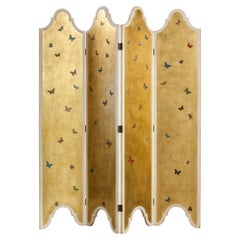
18th Century Hand-Painted Venetian Style Gold-Leaf Moro Screen with butterflies
Located in Ronchi dei Legionari, IT
From our Hand-Painted Furniture Collection, we are pleased to introduce you to our Moro Screen. Did you know that a group of butterflies is called a "Kaleidoscope"? The name comes ...
Category

2010s Italian Other Painted Decorative Art

Materials

Wood

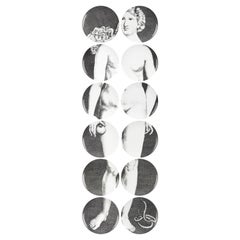
Set 12 Porcelain Plates Eva Black/White
Located in MILANO, IT
This set of twelve hand-decorated porcelain plates, as a whole, forms the figure of Eva. You can use the ensemble for ornamental purposes or...
Category

21st Century and Contemporary Italian Modern Painted Decorative Art

Materials

Porcelain

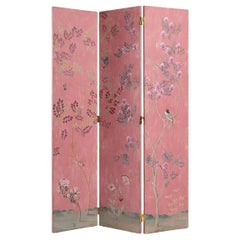
18th Century Hand-Painted Venetian Style Fuchsia Otello Screen with Flowers
Located in Ronchi dei Legionari, IT
From our Hand-Painted Furniture Collection, we are pleased to introduce you to our Fuchsia Otello Screen. Nature has always been a source of inspiration for our hand-decorated furn...
Category

2010s Italian Other Painted Decorative Art

Materials

Wood

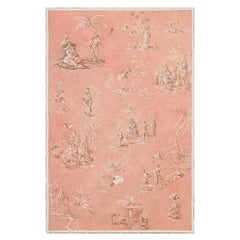
18th Century Hand Painted Venetian Style Pink Decorative Panel with Chinoiserie
Located in Ronchi dei Legionari, IT
The Bellini Panel is a poetic expression of timeless elegance. Hand-painted in soft pink with intricate light taupe chinoiserie scenes, this piece echoes the romance of 18th-century ...
Category

2010s Italian Other Painted Decorative Art

Materials

Wood

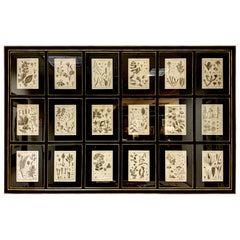
18th Century French Buffon Botanical Prints Composition with Black new Frame
Located in Scandicci, Florence
Composition of 18 antique botanical prints from the iconic encyclopaedia "Histoire Naturelle" Buffon 1749-1804, each print is individually matted an...
Category

21st Century and Contemporary French Country Painted Decorative Art

Materials

Gold Leaf

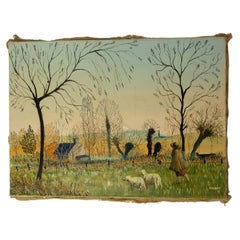
Oil Painting "Maison dans les Arbres" Oil on Canvas Signed Laurent Pradat 1976
Located in Labrit, Landes
1976 oil painting in the naive style Oil on canvas representing and landscape, a shepherds and two sheep at the forefront, a house surrounded by trees in the middle plane and a villa...
Category

1970s French Vintage Painted Decorative Art

Materials

Canvas

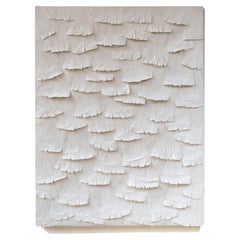
Fabscarte Framework Handmade Hand Painted Wall Decor, Ginko
Located in Milan, IT
The Frameworks are created with the same technique as our wallcoverings and represent a unique artistic vision, which embellish the location where they are exhibited. The leaves of ...
Category

2010s Italian Painted Decorative Art

Materials

Paint, Paper

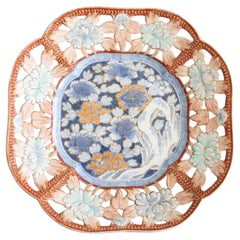
19th Century Japanese Imari Arita Reticulated Floral Charger Plate
Located in Pearland, TX
A gorgeous rare 19th-Century Japanese Imari porcelain octagonal reticulated charger plate or dish with hand painted floral decorations in the traditional Imari colors. Maker's mark o...
Category

1870s Japanese Antique Painted Decorative Art

Materials

Porcelain

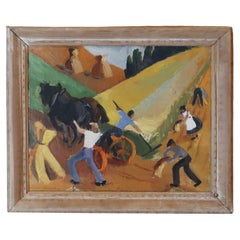
Harvesting The Wheat, Oil on Canvas, Italian, 1950s
Located in St Annes, Lancashire
Wonderful painting of farmers bringing in the harvest of wheat Oil on canvas. Unsigned. Artist unknown Framed in a slightly distressed antiqu...
Category

1950s Italian Mid-Century Modern Vintage Painted Decorative Art

Materials

Other

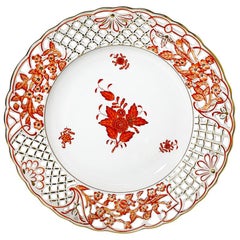
Herend Hungary Porcelain "Apponyi Rust" Wall Decoration Plate
Located in Delft, NL
Herend Hungary Porcelain "Apponyi Rust" wall decoration plate Herend Hungary porcelain plate for as decoration to hang on the wall, with openwork edge with a scene of a peony with...
Category

20th Century Hungarian Painted Decorative Art

Materials

Porcelain

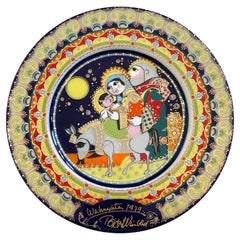
Christmas 1979 Wall Plate by Wiinblad, Hand Painted Gold Porcelain, Rosenthal
Located in Andernach, DE
Bjorn Wiinblad, Danish artist, has created this beautiful series for German art glass & porcelain makers Rosenthal for their Studio-Line art edition. This plate is the 1979 edition, ...
Category

Mid-20th Century German Mid-Century Modern Painted Decorative Art

Materials

Porcelain

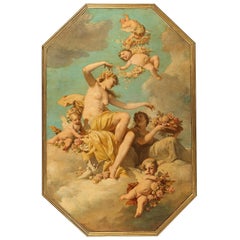
Fine 19th Century Oil on Canvas "Triumph of Flora" Attr. Ferdinand Wagner II
Located in Los Angeles, CA
A very fine and large 19th century Louis XV style Whimsical Neoclassical Revival style Oil on Canvas "The Triumph of Flora" attributed to Ferdinand Wagner II (German, 1847-1927), school of François Boucher (French, 1703-1770). The impressive artwork depicting a semi-nude Flora hovering through the clouds surrounded by playful cupids, cherubs, love doves and a seated maiden, within white and grey clouds, offering her Spring flower bouquets and floral wreaths, within a banded giltwood frame. Note: Previously used as a ceiling painting. Unsigned, Circa 1870. Measures: Canvas height: 91 3/4 inches (233 cm) Canvas width: 59 inches (150 cm) Frame height: 61 3/8 inches (155.9 cm) Frame width: 93 1/2 inches (237.5 cm) Depth: 2 3/8 inches (6 cm) Ferdinand Wagner II (German, 1847-1927) was the son of Passau Ferdinand Wagner Senior, a teacher at a vocational art school who began training him professionally at a young age. After traveling to Italy in 1867-1868, he continued with his art studies at The Munich Academy of Arts led by Peter Von Cornelius and Julius Schnorr Von Carolsfeld...
Category

19th Century German Neoclassical Revival Antique Painted Decorative Art

Materials

Giltwood, Canvas

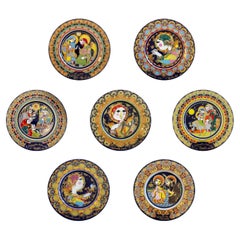
7 Hand Painted Signed by Wiinblad Porcelain Christmas Plates, Rosenthal, 1970s
Located in Andernach, DE
Bjorn Wiinblad, Danish artist, has created this beautiful series for German art glass & porcelain makers Rosenthal for their Studio-Line art edition. Plates from 1975 with the Annunc...
Category

Late 20th Century German Mid-Century Modern Painted Decorative Art

Materials

Porcelain

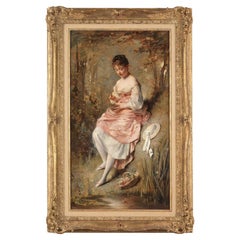
Charles Joshua Chaplin French, 1825-1891 Girl with Bird s Nest Oil on Canvas
By Charles Joshua Chaplin
Located in Los Angeles, CA
Charles Joshua Chaplin (French, 1825-1891) 'The Bird's Nest' A very fine and charming Rococo revival style oil on canvas depicting a young girl, dressed in 18th century costume and r...
Category

19th Century French Rococo Revival Antique Painted Decorative Art

Materials

Canvas, Giltwood

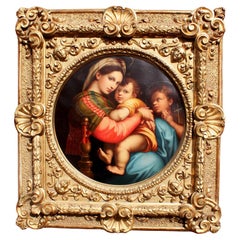
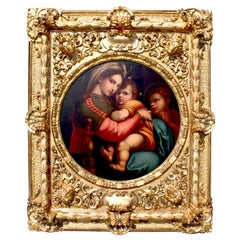
After Raffaello Sanzio 1483-1520 Raphael La Madonna Della Seggiola Oil on Canvas
Located in Los Angeles, CA
A fine Italian 19th century oil painting on canvas "La Madonna della Seggiola" after Raphael (Raffaello Sanzio da Urbino 1483-1520). The circular painted canvas depicting a seated Ma...
Category

Late 19th Century Italian Baroque Antique Painted Decorative Art

Materials

Canvas, Giltwood

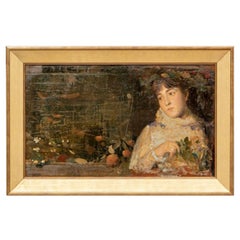
Mersad Berber Bosnia, 1940-2012 Oil on Canvas, Woman with Flowers
Located in Bridgeport, CT
Signed lower left. A lovely pensive woman dressed in 19th c. style holding flowers. She looks to the left with fruits in an abstract composition on a tab...
Category

20th Century Aesthetic Movement Painted Decorative Art

Materials

Canvas, Wood

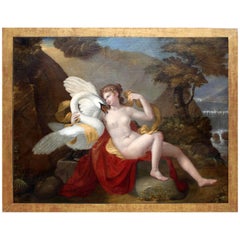
French 19th Century Old Master School Oil on Canvas Titled "Leda and The Swan"
Located in Los Angeles, CA
A fine and large French 19th century old master school oil on canvas titled "Leda and The Swan" within a giltwood frame. Leda and the swan is a motif from Greek mythology, in which Z...
Category

19th Century French Renaissance Revival Antique Painted Decorative Art

Materials

Giltwood, Canvas

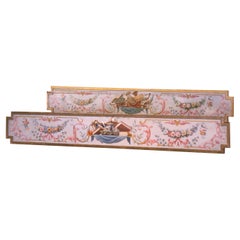
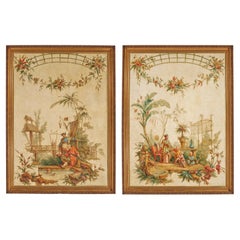
Pair of 19th Century French Hand Painted Wooden Trompe L Oeil Wall Panels
Located in Dallas, TX
Dress a wall or interior niche with this elegant pair of antique hand-painted panels. Crafted in France circa 1860, each wooden panel is framed in a molded gilt border and rendered i...
Category

Mid-19th Century French Antique Painted Decorative Art

Materials

Wood

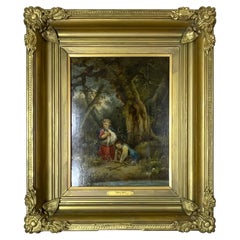
19th Century Oil on wood board by : Thomas hand
Located in Delray Beach, FL
Two beauties kids picking wood in the forest oil on wood painting by : Thomas HAND a British artist born in 1771 to 1804. The artist's works have gone up for sale at public auction...
Category

Early 19th Century British Antique Painted Decorative Art

Materials

Wood

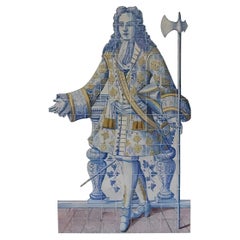
Portuguese Azulejos Tile Mural "Gentleman" Hand Painted Signed by Artist
Located in Baldock, GB
Beautiful tile mural with the "GENTLEMAN" motif finely painted. Tile mural size: 91.45"H X 59"W (232.5cm X 150cm) Tile size: 5.9"H X 5.9"W (15cm X 15cm) Origin: Portugal Productio...
Category

21st Century and Contemporary Portuguese Modern Painted Decorative Art

Materials

Ceramic, Paint

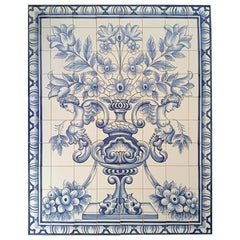
Portuguese Azulejos Tile Mural "Flower Vase" Hand Painted Signed by Artist
Located in Baldock, GB
Beautiful tile mural with the "Flower Vase" motif finely painted. Quantity: 80 tiles Tile mural size: 59"H X 47.2"W (150cm X 120cm) Tile size: 5.9"H X 5.9"W (15cm X 15cm) Origin...
Category

21st Century and Contemporary Portuguese Modern Painted Decorative Art

Materials

Ceramic, Paint

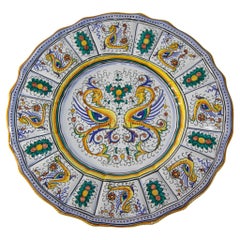
Majolica Deruta Raffaellesco Decorative Ceramic Wall Plate 14 75 inches
Located in Moreno Valley, CA
A large vintage Deruta Raffaellesco decorative wall plate with scalloped rim. Majolica hand-painted with magnificent detailing and artwork, extraordinar...
Category

Mid-20th Century Italian Folk Art Painted Decorative Art

Materials

Ceramic

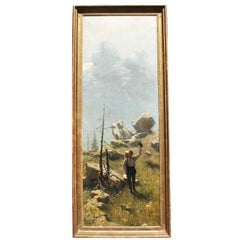
Felix Possart Large Oil on Canvas "A Spring Alpine Journey"
By Felix Possart
Located in Los Angeles, CA
Felix Possart (German, 1837-1928) a large oil on canvas "A Spring Alpine Journey". The elongated painting depicting a mountain scene, possibly set in the Austrian or Swiss Alps, of a young man hiking in the Alps during springtime wearing Lederhosen and carrying a bucket and a water drum...
Category

Late 19th Century German Black Forest Antique Painted Decorative Art

Materials

Giltwood, Canvas

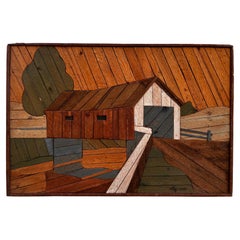
Vintage Austin Prods Theodore Degroot Lath Folk Wall Art Signed by the Artist
Located in Miami, FL
Original Lath Art by Austin Productions, hand painted and signed by the Dutch- American artist Theodore Degroot, circa 1970s This charming piece features a ...
Category

1970s American Rustic Vintage Painted Decorative Art

Materials

Wood

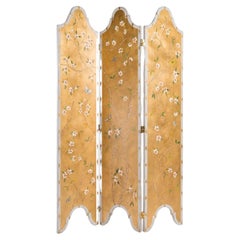
18th Century Hand-Painted Venetian Style Gold-Leaf Moro Screen with Chinoiserie
Located in Ronchi dei Legionari, IT
From our Hand-Painted Furniture Collection, we are pleased to introduce you to our Moro Screen. Nature has always been a source of inspiration for our hand-decorated furnishings. We...
Category

2010s Italian Other Painted Decorative Art

Materials

Wood

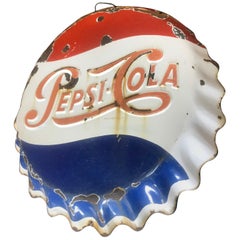
Vintage Mexican 1950’s Pepsi Cola Bottle Cap Embossed Metal Sign
Located in San Diego, CA
Rare 1950’s. Mexican Pepsi Cola Soda Pop Bottle Cap Gas Embossed Metal Sign
Category

1950s American Mid-Century Modern Vintage Painted Decorative Art

Materials

Sheet Metal

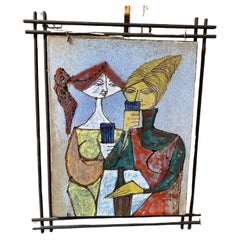
1950s Mid-Century Modern Iron Framed Hand Painted Ceramic Italian Plaque
Located in Aci Castello, IT
This 1950s Mid-Century Modern Italian ceramic plaque, framed in iron, is a vibrant and expressive example of the era's love for both abstraction...
Category

Mid-20th Century Italian Mid-Century Modern Painted Decorative Art

Materials

Iron

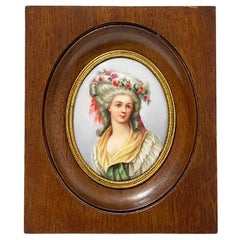
Miniature Framed Portrait of a Lady Painted on Porcelain
Located in Delft, NL
Miniature framed portrait of a lady painted on porcelain An oak wooden frame with in oval placed porcelain plaque, painted with a scene of a lady w...
Category

19th Century French Antique Painted Decorative Art

Materials

Wood, Porcelain

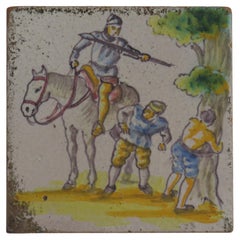
Dutch Delft Ceramic Wall Tile Polychrome Horseman, Circa 1800
Located in Lincoln, Lincolnshire
This is a very attractive Delft Polychrome, hand painted earthenware ceramic wall tile dating to the late 18th Century. The tile is 5.5 inches ( 14cm) square and over 1/2 inches thi...
Category

Late 18th Century Dutch Dutch Colonial Antique Painted Decorative Art

Materials

Ceramic

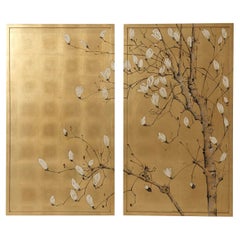
Set of Two Gilt Japanese Paintings
Located in Westwood, NJ
A set of two Japanese paintings, each with a hand gilt background depicting a Japanese Magnolia painted sans traverse across the two panels. The originals Japanese, circa 1900. Dime...
Category

21st Century and Contemporary Vietnamese Anglo-Japanese Painted Decorative Art

Materials

Wood, Giltwood

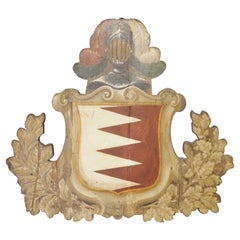
Large Painted Antique Tuscan Cartouche Panel, 18th Century
Located in Dallas, TX
This large cartouche panel was carved from wood and hand-painted with a central coat of arms in Italy during the 1700’s. Inspired by a 16th century Fr...
Category

18th Century Italian Baroque Antique Painted Decorative Art

Materials

Wood

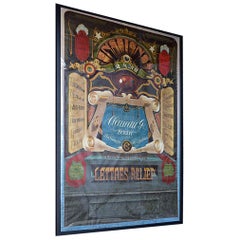
Exquisite Early 20th Century French Hand Lettering Trade Sign
Located in London, GB
We are proud to offer an exquisite early 20th century French hand lettering trade sign. This is truly a unique piece of trade sign retail art in our opi...
Category

1920s French Victorian Vintage Painted Decorative Art

Materials

Canvas

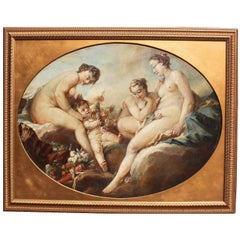
French 19th Century Oil on Canvas "Venus Disarming Cupid" after François Boucher
Located in Los Angeles, CA
A large French 19th century oil on canvas laid on board painting in the manner of François Boucher (French, 1703-1770). The oval framed canvas depicting a version of Boucher's "Venus...
Category

Late 19th Century French Romantic Antique Painted Decorative Art

Materials

Canvas, Wood, Plywood

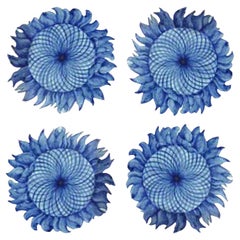
1 of the 24 Handmade Majolica Sunflower Tiles Made in Italy
Located in Rijssen, NL
1 of the 24 blue and white sunflower tiles. The floral tiles are handmade and hand painted in Europe, Italy. These tiles are particularly beautiful, the biscuit is handmade and the ...
Category

2010s Italian Painted Decorative Art

Materials

Ceramic, Majolica, Pottery

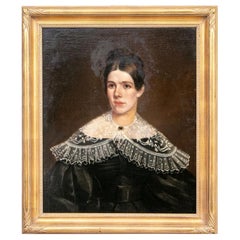
19th C. Oil on Panel, Portrait of a Lady with Lace Collar
Located in Bridgeport, CT
Unsigned. Ca. mid-19th c. portrait of a lovely seated lady wearing a black dress with a fine broad lace collar, a sign of her high status in socie...
Category

19th Century Victorian Antique Painted Decorative Art

Materials

Canvas, Wood

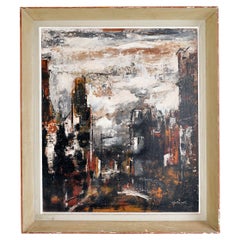
Abstract Midcentury Oil Painting on Board Industrial Scene by F. David Taggart
Located in Sherborne, Dorset
A striking 1960s abstract painting, possibly of a Northern England Industrial street scene. Oil on board signed FD Taggart (British born 1937), with indistinctive title to the back. ...
Category

1960s British Mid-Century Modern Vintage Painted Decorative Art

Materials

Wood, Paint

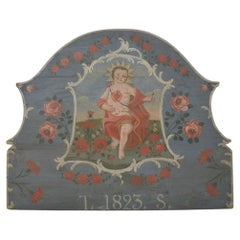
19th Century French Folk Art Painted Wooden Panel With Baby Christ Figure
Located in Buisson, FR
Very beautiful Folk Art wooden panel with a very rich decoration full of flowers and a Christ figure in the center France, dated 1823. Weathered. H:64,5cm W:92cm D:3,5cm .More photo...
Category

19th Century French Folk Art Antique Painted Decorative Art

Materials

Wood

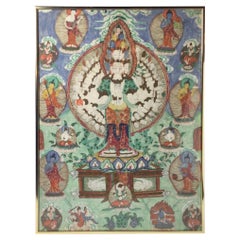
Antique Tibetan Thangka of a Deity
Located in Lambertville, NJ
A vibrantly colored Tibetan Thangka of a multi armed Deity, Tibet Circa 1900, framed in a gold tone frame under glass, Measures: 28 inches tall, 30.75 inches wide.
Category

Early 1900s Tibetan Antique Painted Decorative Art

Materials

Fabric

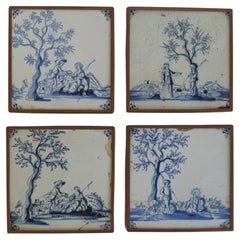
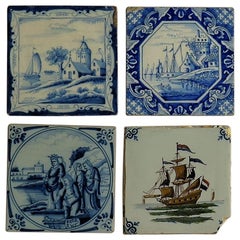
FOUR fine early Delft Blue and White Wall Tiles in Copper frames, Ca 1700
Located in Lincoln, Lincolnshire
These are Four fine Delft ceramic wall tiles all with a blue and white hand painted similar pattern, made in the Netherlands during the late 17th / early 18th Century, circa 1700 and...
Category

Late 17th Century Dutch Dutch Colonial Antique Painted Decorative Art

Materials

Earthenware

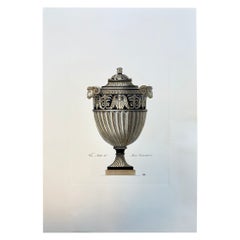
Contemporary Italian Hand Coloured Antique Roman Vase Print " Museo Clementino"
Located in Scandicci, Florence
Extra large Roman vase printed on a hand press on 100% cotton engraving paper. Completely handpainted with a cream wash, umber highlights, and matte black details. Light brown mat...
Category

21st Century and Contemporary Italian Neoclassical Painted Decorative Art

Materials

Wood, Paper

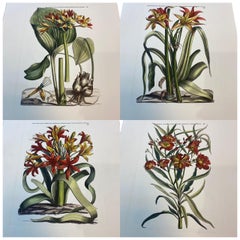
Italian Contemporary Hand Painted Botanical Print, Set of 4
Located in Scandicci, Florence
Elegant hand-watercoloured botanical prints representing some different types of flowers Lilium Narcissus. Each print is an artisanal Florentine product, reproducing images of the...
Category

21st Century and Contemporary Italian Painted Decorative Art

Materials

Paper

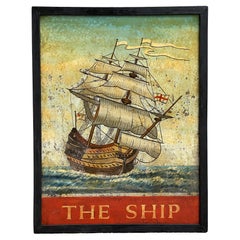
English Pub Sign, "The Ship"
Located in Austin, TX
An authentic English pub sign (one-sided) featuring a painting of a British brigantine or two-mast sailing ship featuring flags with St. George's cross, entitled: The Ship. A very f...
Category

20th Century English Painted Decorative Art

Materials

Metal

After Raffaello Sanzio 1483-1520 Raphael La Madonna della Seggiola Oil on Canvas
Located in Los Angeles, CA
A fine Italian 19th century oil painting on canvas "La Madonna della Seggiola" after Raphael (Raffaello Sanzio da Urbino 1483-1520) The circular canvas depicting a seated Madonna holding an infant Jesus Christ next to a child Saint John the Baptist, all within a massive carved gilt wood and gesso frame (all high quality gilt is original) which is identical to the frame on Raphael's original artwork. This painting is a 19th Century copy of Raphael's Madonna della Seggiola painted in 1514 and currently exhibited and part of the permanent collection at the Palazzo Pitti, Galleria Palatina, Florence, Italy. The bodies of the Virgin, Christ, and the boy Baptist fill the whole picture. The tender, natural looking embrace of the Mother and Child, and the harmonious grouping of the figures in the round, have made this one of Raphael's most popular Madonnas. The isolated chair leg is reminiscent of papal furniture, which has led to the assumption that Leo X himself commissioned the painting, circa 1890-1900. Subject: Religious painting Measures: Canvas height: 29 1/4 inches (74.3 cm) Canvas width: 29 1/4 inches (74.3 cm) Painting diameter: 28 1/4 inches (71.8 cm) Frame height: 57 7/8 inches (147 cm) Frame width: 45 1/2 inches (115.6 cm) Frame depth: 5 1/8 inches (13 cm).   Raffaello Sanzio da Urbino (Italian, March 28 or April 6, 1483 - April 6, 1520), known as Raphael, was an Italian painter and architect of the High Renaissance. His work is admired for its clarity of form, ease of composition, and visual achievement of the Neoplatonic ideal of human grandeur. Together with Michelangelo and Leonardo da Vinci, he forms the traditional trinity of great masters of that period. Raphael was enormously productive, running an unusually large workshop and, despite his death at 37, leaving a large body of work. Many of his works are found in the Vatican Palace, where the frescoed Raphael Rooms were the central, and the largest, work of his career. The best known work is The School of Athens in the Vatican Stanza della Segnatura. After his early years in Rome much of his work was executed by his workshop from his drawings, with considerable loss of quality. He was extremely influential in his lifetime, though outside Rome his work was mostly known from his collaborative printmaking. After his death, the influence of his great rival Michelangelo was more widespread until the 18th and 19th centuries, when Raphael's more serene and harmonious qualities were again regarded as the highest models. His career falls naturally into three phases and three styles, first described by Giorgio Vasari: his early years in Umbria, then a period of about four years (1504–1508) absorbing the artistic traditions of Florence, followed by his last hectic and triumphant twelve years in Rome, working for two Popes and their close associates. Raphael was born in the small but artistically significant central Italian city of Urbino in the Marche region, where his father Giovanni Santi was court painter to the Duke. The reputation of the court had been established by Federico III da Montefeltro, a highly successful condottiere who had been created Duke of Urbino by the Pope - Urbino formed part of the Papal States - and who died the year before Raphael was born. The emphasis of Federico's court was rather more literary than artistic, but Giovanni Santi was a poet of sorts as well as a painter, and had written a rhymed chronicle of the life of Federico, and both wrote the texts and produced the decor for masque-like court entertainments. His poem to Federico shows him as keen to show awareness of the most advanced North Italian painters, and Early Netherlandish artists as well. In the very small court of Urbino he was probably more integrated into the central circle of the ruling family than most court painters. Federico was succeeded by his son Guidobaldo da Montefeltro, who married Elisabetta Gonzaga, daughter of the ruler of Mantua, the most brilliant of the smaller Italian courts for both music and the visual arts. Under them, the court continued as a centre for literary culture. Growing up in the circle of this small court gave Raphael the excellent manners and social skills stressed by Vasari. Court life in Urbino at just after this period was to become set as the model of the virtues of the Italian humanist court through Baldassare Castiglione's depiction of it in his classic work The Book of the Courtier, published in 1528. Castiglione moved to Urbino in 1504, when Raphael was no longer based there but frequently visited, and they became good friends. He became close to other regular visitors to the court: Pietro Bibbiena and Pietro Bembo, both later cardinals, were already becoming well known as writers, and would be in Rome during Raphael's period there. Raphael mixed easily in the highest circles throughout his life, one of the factors that tended to give a misleading impression of effortlessness to his career. He did not receive a full humanistic education however; it is unclear how easily he read Latin. Early Life and Works His mother Màgia died in 1491 when Raphael was eight, followed on August 1, 1494 by his father, who had already remarried. Raphael was thus orphaned at eleven; his formal guardian became his only paternal uncle Bartolomeo, a priest, who subsequently engaged in litigation with his stepmother. He probably continued to live with his stepmother when not staying as an apprentice with a master. He had already shown talent, according to Vasari, who says that Raphael had been "a great help to his father". A self-portrait drawing from his teenage years shows his precocity. His father's workshop continued and, probably together with his stepmother, Raphael evidently played a part in managing it from a very early age. In Urbino, he came into contact with the works of Paolo Uccello, previously the court painter (d. 1475), and Luca Signorelli, who until 1498 was based in nearby Città di Castello. According to Vasari, his father placed him in the workshop of the Umbrian master Pietro Perugino as an apprentice "despite the tears of his mother". The evidence of an apprenticeship comes only from Vasari and another source, and has been disputed—eight was very early for an apprenticeship to begin. An alternative theory is that he received at least some training from Timoteo Viti, who acted as court painter in Urbino from 1495.Most modern historians agree that Raphael at least worked as an assistant to Perugino from around 1500; the influence of Perugino on Raphael's early work is very clear: "probably no other pupil of genius has ever absorbed so much of his master's teaching as Raphael did", according to Wölfflin. Vasari wrote that it was impossible to distinguish between their hands at this period, but many modern art historians claim to do better and detect his hand in specific areas of works by Perugino or his workshop. Apart from stylistic closeness, their techniques are very similar as well, for example having paint applied thickly, using an oil varnish medium, in shadows and darker garments, but very thinly on flesh areas. An excess of resin in the varnish often causes cracking of areas of paint in the works of both masters. The Perugino workshop was active in both Perugia and Florence, perhaps maintaining two permanent branches. Raphael is described as a "master", that is to say fully trained, in December 1500. His first documented work was the Baronci altarpiece for the church of Saint Nicholas of Tolentino in Città di Castello, a town halfway between Perugia and Urbino. Evangelista da Pian di Meleto, who had worked for his father, was also named in the commission. It was commissioned in 1500 and finished in 1501; now only some cut sections and a preparatory drawing remain. In the following years he painted works for other churches there, including the Mond Crucifixion (about 1503) and the Brera Wedding of the Virgin (1504), and for Perugia, such as the Oddi Altarpiece. He very probably also visited Florence in this period. These are large works, some in fresco, where Raphael confidently marshals his compositions in the somewhat static style of Perugino. He also painted many small and exquisite cabinet paintings in these years, probably mostly for the connoisseurs in the Urbino court, like the Three Graces and St. Michael, and he began to paint Madonnas and portraits. In 1502 he went to Siena at the invitation of another pupil of Perugino, Pinturicchio, "being a friend of Raphael and knowing him to be a draughtsman of the highest quality" to help with the cartoons, and very likely the designs, for a fresco series in the Piccolomini Library in Siena Cathedral. He was evidently already much in demand even at this early stage in his career. Influence of Florence Raphael led a "nomadic" life, working in various centres in Northern Italy, but spent a good deal of time in Florence, perhaps from about 1504. Although there is traditional reference to a "Florentine period...
Category

19th Century Italian Baroque Antique Painted Decorative Art

Materials

Gesso, Canvas, Wood

Pair French 18th-19th Century Chinoiserie Circle of Jean B. Pillement
By Jean-Baptiste Pillement
Located in Los Angeles, CA
A fine pair of French 18th-19th century whimsical rococo style chinoiserie oil on canvas, circle of Jean-Baptiste Pillement. (French, 1728-1808). One oil painting depicting an outdoor patio scene of a standing young mother, holding a fan, with her three young children playing with a horse-toy, a parrot and a cat, all surrounded by flowers, plants, trees, planters and flanked by a dragon fountain...
Category

Late 18th Century French Chinoiserie Antique Painted Decorative Art

Materials

Canvas, Giltwood

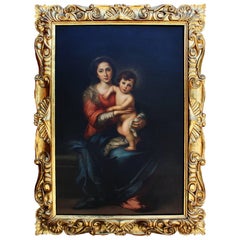
Attributed to Giorgio Lucchesi, Oil on Canvas "Madonna Child" After Murillo
Located in Los Angeles, CA
Attributed to Giorgio Lucchesi (1855-1941) A large and impressive early 20th century oil on canvas "Madonna and Child" after Bartolomé Esteban Murillo...
Category

1910s Italian Baroque Vintage Painted Decorative Art

Materials

Canvas, Giltwood

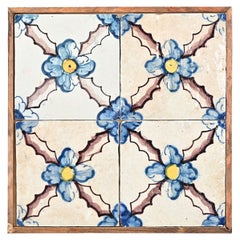
Framed Set of 18th Century Portuguese Tiles
Located in Baton Rouge, LA
The artistry and industry of Portuguese azulejos tiles is a tradition that dates back many centuries; as a practical, architectural surface to cover both interior and exterior walls ...
Category

18th Century Portuguese Other Antique Painted Decorative Art

Materials

Clay, Pottery, Glass, Wood

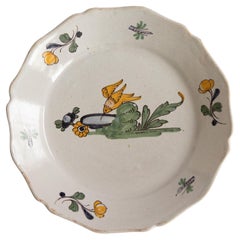
18th Century French Nevers Birdbath Polychrome Faïence Plate
Located in Pearland, TX
A lovely 18th century Nevers earthenware plate featuring a brilliant yellow drinking out of a bird bath, the rim decorated with flowers.
Category

18th Century French Antique Painted Decorative Art

Materials

Paint, Faience

FOUR Individual Ceramic Delft Wall Tiles Hand Painted, 19th Century
Located in Lincoln, Lincolnshire
These are four attractive individual Delft ceramic wall tiles, dating to the second half of the 19th century. All tiles are nominally 5 inches square and 5/16 to 3/8 inches thick....
Category

19th Century Dutch Dutch Colonial Antique Painted Decorative Art

Materials

Ceramic

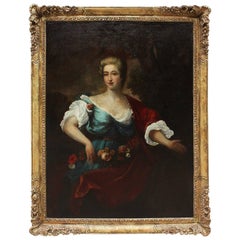
French 18th-19th Century Oil on Canvas Portrait of Lady, after Jean-Marc Nattier
By Jean-Marc Nattier
Located in Los Angeles, CA
A very fine French 18th-19th century oil on canvas portrait of a posing lady with flowers, after Jean-Marc Nattier (1685-1766) within an ornate gilt wood carved frame, circa 1800. ...
Category

Early 19th Century French Louis XV Antique Painted Decorative Art

Materials

Canvas, Giltwood

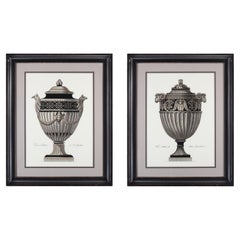
Pair of Contemporary Italian Hand Coloured Roman Vase Prints with Black Frames
Located in Scandicci, Florence
Pair of Extra large Roman Vase printed on a hand press on 100% cotton engraving paper. Completely handpainted with a cream wash, umber highlights, and...
Category

21st Century and Contemporary Italian Neoclassical Painted Decorative Art

Materials

Wood, Paper

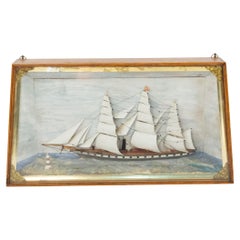
Victorian English Nautical Diorama Ship Wall Plaque
Located in Queens, NY
English Country style Victorian diorama in oak case of sail/steam ship with small lighthouse.  
Category

19th Century Victorian Antique Painted Decorative Art

Materials

Oak

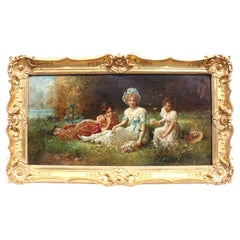
Hans Zatzka Austrian, 1859-1945 a Very Fine Oil on Canvas "Spring Beauties"
Located in Los Angeles, CA
Hans Zatzka (Austrian, 1859-1945) a very fine and charming oil on canvas "Spring Beauties", depicting three young maidens picking flowers by a lake. The three young girls sitting, kneeling and laying on a grassy area of the forest, her wicker basket filled with the freshly picked flowers, the middle one wearing a bonnet and a straw-hat laying on the ground behind with butterflies flying by, within a gilt-wood and gesso carved frame. Signed (l/r): H. Zatzka. Circa: 1890-1900's, Hans Zatzka (Austrian, 1859-1945) was a well known and regarded Austrian fantasy artist whose most popular and valuable works depicted figures of young maidens with angels, floral and other cheerful and warm scenes, including Orientalist themes. In the past thirty years alone, the high quality and detail of his beautiful paintings has caught the attention of International collectors and art dealers alike, creating a highly sought after market and demand for his instantly recognizable body of work. In the late 19th and early 20th century, many of Zazka's charming works were photographed for commercial and collectable postcards. Though no information about his works being exhibited in museums is currently available, most of Zatzka's paintings are in private collections and, in the past century, very few of them have become available on the open market. At the young age of eighteen Zatzka joined Austria's Academy of Fine Arts under the leadership of Professor Blaas. For his fine early works, in 1880 he received The Golden Fügermedal award. Zatzka, like many other artists of the era, traveled around Europe working and selling his art and, in one of his many trips to Italy, he developed a special interest in Religious themes, decorating churches with frescos as well as painting several religious scenes of Madonna's and Child, Saints, Angels and others. In 1885 Zatzka was commissioned to paint "The Naiad of Baden" a ceiling fresco at Kurhaus Baden. Most of Zatzka's income came from his work in religious art and special church commissions. Numerous leading art dealers from around the world that specialize in late 19th and early 20th century European genre paintings have come to the conclusion that the painter signing his works Bernard Zatzka, Joseph Bernard or J. Bernard is almost certainly the artist Hans Zatzka. The consensus seems quite plausible when comparing works known to have been executed by Hans Zatzka together with similar works displaying the signature; Joseph Bernard, J. Bernard or Bernard Zatzka. Lohengrin refers to the knight of the swan, hero of German versions of a legend widely known in variant forms from the European Middle Ages onward. It seems to bear some relation to the northern European folktale of “The Seven Swans,” but its actual origin is uncertain. It is also a character in German Arthurian literature. The son of Parzival (Percival), he is a knight of the Holy Grail sent in a boat pulled by swans...
Category

Late 19th Century Austrian Belle Époque Antique Painted Decorative Art

Materials

Canvas, Giltwood

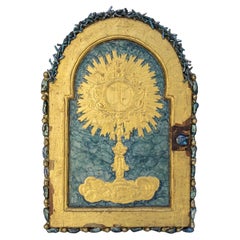
18th Century Italian Gilt Tabernacle Door with Turquoise Baroque Pearls
Located in Dublin, Dalkey
18th century Italian gold gilded tabernacle door adorned with naturally forming baroque pearls. This door once belonged on a tabernacle which housed the eucharist in a church. In the...
Category

18th Century Italian Rococo Antique Painted Decorative Art

Materials

Gold Leaf

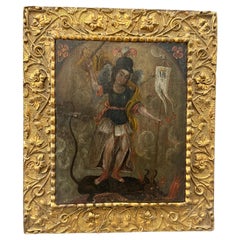
17th Century Spanish Colonial Cusco School Painting
Located in Middleburg, VA
A rare and evocative example of Spanish Colonial art from the Cusco School, this 17th-century oil on wood panel captures the iconic biblical scene of Sain...
Category

17th Century Peruvian Antique Painted Decorative Art

Materials

Wood, Paint, Giltwood

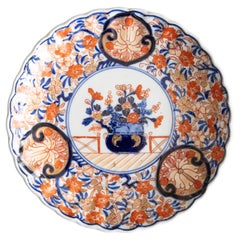
Antique 19th Century Japanese Scalloped Imari Plate
Located in Pearland, TX
A striking 19th century antique Imari plate with a scalloped edge. Featuring vibrant oranges, blues, and green. The multi-color design depicts traditional Japanese motifs, showcasing...
Category

19th Century Japanese Japonisme Antique Painted Decorative Art

Materials

Porcelain, Paint

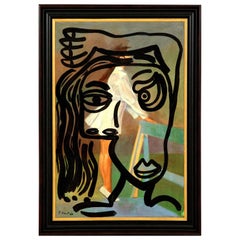
Painting by Peter Keil, Mid-Century Modern Art, Fall Colors, 1977, Oil on Canvas
Located in New York, NY
Peter Robert Keil was born to an artist blacksmith father whom he lost very early in his childhood during the Second World War. During the end phase of the war, Keil's mother, also an artistically talented woman, took her son and struggled her way to West Berlin...
Category

1970s German Modern Vintage Painted Decorative Art

Materials

Acrylic

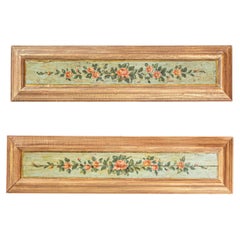
Pair of Decorative 19th Century Floral Painted Panels With New Distressed Frames
Located in Atlanta, GA
This pair of 19th-century decorative floral painted panels offers a beautiful glimpse into traditional craftsmanship, featuring delicate hand-painted floral motifs of soft pink and o...
Category

19th Century French French Provincial Antique Painted Decorative Art

Materials

Paint, Pine

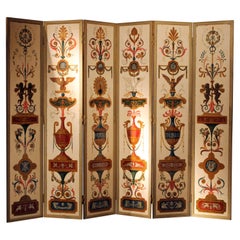
19th Century Italian Painted Wood Empire Folding Screen in Gilt Bronze Frame
Located in Firenze, IT
This one-of-a-kind antique Italian Empire Period folding screen is a masterpiece of early 19th-century craftsmanship, dating most likely from 1801 during the Republic of Lucca. Pain...
Category

Early 19th Century Italian Empire Antique Painted Decorative Art

Materials

Bronze, Ormolu