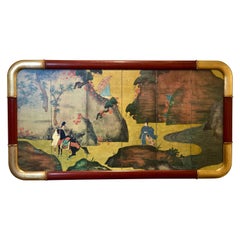
Japanese Wall Decorations

to
91
495
460
1,004
44
37
Height
to
Width
to
59
52
10
4
1
1
1
1
46
285
673
81
136
286
152
15
3
13
14
14
81
113
76
39
20
667
290
227
200
122
14,206
36,138
15,319
13,740
10,816
1,085
1,073
1,081
20
12
12
11
8
Place of Origin: Japanese
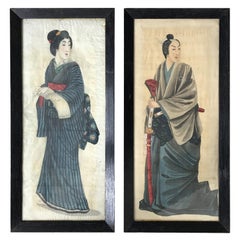
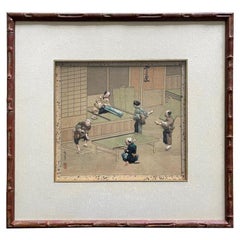
Pair of Japanese Costume Portraits Painted on Silk, 1920 s
Located in London, GB
Two portraits of Japanese man and women in traditional costume painted on silk, circa 1920, in their original frames. Details show the exquisite tradit...
Category

1920s Art Deco Vintage Japanese Wall Decorations

Materials

Wood

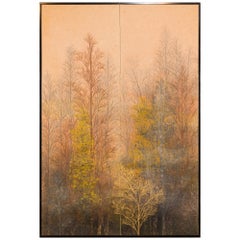
Japanese Two Panel Screen Late Autumn Forest, Rare Obara Paper Art Screen
Located in Hudson, NY
A masterful landscape made entirely of carefully arranged mulberry paper fibers in a Japanese art practice called Obara. Accented with gold leaf. Incredible craftsmanship and a wonderful rendering of bare trees. Made by Yamauchi Issei (b. 1929), stamped in the corner. Issei is well known throughout Japan as the leading artist in Obara Paper Art. Starting in 1948, he apprenticed with Fuji Tatsukichi, a leading proponent of the arts and crafts movement in Japan who worked to Revive many cultural traditions on the brink of extinction. Issei started exhibiting in the Nitten in 1953, won the Gold Medal in 1963, and eventually became a juror. His artwork was given as a gift to the Showa Emperor of Japan, as well as dignitaries such as General Douglas MacArthur...
Category

Mid-20th Century Showa Japanese Wall Decorations

Materials

Gold Leaf

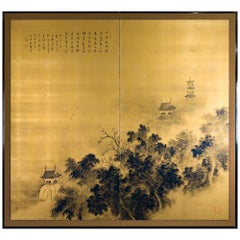
Japanese Two-Panel Screen Temples Through Misty Forest
Located in Hudson, NY
Japanese two-panel screen: Temples Through Misty Forest. Chinese School landscape ink painting on gilded silk by Yukimatsu Shunpo, signed and dated 1924. Yukimatsu Shunpo was born in...
Category

1920s Taisho Vintage Japanese Wall Decorations

Materials

Silk, Wood

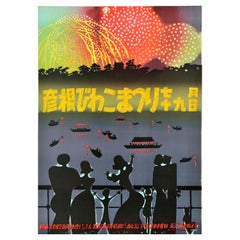
Original Vintage Travel Poster Hikone Biwako Firework Festival Japan Lake Biwa
Located in London, GB
Original vintage travel poster for the Hikone Biwako Great Firework Festival featuring silhouettes of people including children and a cat watching the colo...
Category

1950s Vintage Japanese Wall Decorations

Materials

Paper

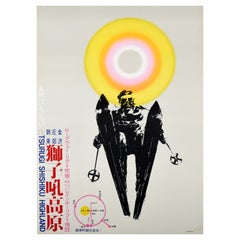
Original Vintage Winter Sport Poster Tsurugi Shishiku Highland Skiing Travel Art
Located in London, GB
Original vintage ski travel poster for the Tsurugi Shishiku Highland featuring a dynamic image of a skier in black in front of a colourful grey, white, pink...
Category

1960s Vintage Japanese Wall Decorations

Materials

Paper

Framed Japanese Oshi-E Textile Art Meiji Period
Located in Atlanta, GA
On offer is the last one of the set of seven framed Japanese textile art called Oshi-E circa Meiji Period (1868-1912). This rare set consists ...
Category

1890s Japonisme Antique Japanese Wall Decorations

Materials

Giltwood, Silk

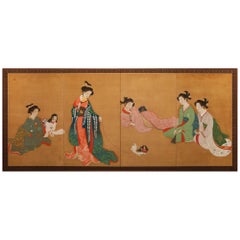
Meiji Period Japanese Four Panel Screen Bijin At Leisure
Located in Hudson, NY
Japanese four panel screen: Bijin At Leisure. Ladies in a tea house with a small dog. Seal reads "Ensan dai" (drawn by Ensan). Meiji Period (1868 - 1912) pa...
Category

Late 19th Century Meiji Antique Japanese Wall Decorations

Materials

Silk, Wood

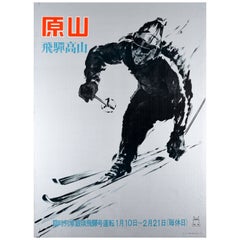
Original Vintage Winter Sport Travel Poster Ski Japan Harayama Hida Takayama
Located in London, GB
Original vintage Japanese winter sport railway travel poster promoting the Harayama Hida Takayama alpine national park in the Hida Province Temporary (...
Category

1960s Vintage Japanese Wall Decorations

Materials

Paper

Framed Antique Japanese Embroidery Fukusa Panel Takasago Legend
Located in Atlanta, GA
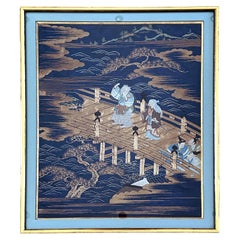
A finely embroidered Japanese silk Fukusa panel presented in a beautiful silk-lined giltwood frame (newly framed and glazed), circa late 19th century of Meiji Period. Fukusa is a traditional Japanese textile art used to wrap and present gifts at important occasions. Depending on the occasion, the panel itself can be a very fine textile art on its own. On the deep blue background, this elaborate textile art depicts an old couple standing on a bridge with three bystanders, flanked by pine trees with hills afar. The couple is Jotomba (Joo and Uba are their respective names), characters in the Legend of Takasago, one of the oldest Japanese mythologies, who are associated with old pines. The legend goes as: "At Takasago Shrine there is a very old pine tree, the trunk of which is bifurcated; in it dwells the spirit of the Maiden of Takasago who was seen once by the son of Izanagi who fell in love and wedded her. Both lived to a very great age, dying at the same hour on the same day, and since then their spirits abide in the tree, but on moonlight nights they return to human shape to revisit the scene of their earthly felicity and pursue their work of gathering pine needles. His pine tree is called “The Pine of Suminoe” while hers is "Takasago pine". In Japan, Takasago couple...
Category

Late 19th Century Meiji Antique Japanese Wall Decorations

Materials

Silk, Wood

Japanese Two Panel Screen: Mandarin Ducks Among Dry Lotus
Located in Hudson, NY
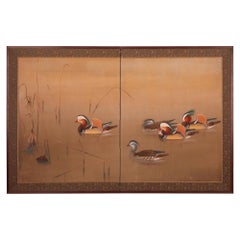
Natural scene of Mandarin ducks gliding gracefully amongst the water. Mineral pigments on silk with silk brocade border and natural wood trim. Seal reads: Kei.
Category

Early 20th Century Japanese Wall Decorations
Materials

Silk, Wood

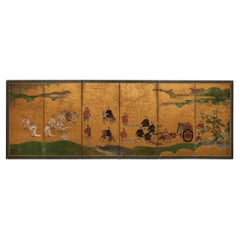
Japanese Six Panel Screen Battle of Uji Bridge
Located in Hudson, NY
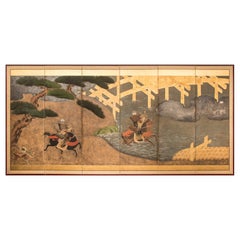
The first battle at Uji was in 1180 and was the beginning of the Heike Wars. This screen depicts a famous scene from the Heike Wars. Two Heike generals, Sasaki Takatsuna and Kajiwa...
Category

Early 19th Century Edo Antique Japanese Wall Decorations

Materials

Gold Leaf

Kumi Sugaï, “Crossing 4”, 1978 — Signed Numbered Silkscreen
By Kumi Sugai
Located in Weesp, NL
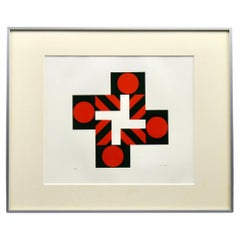
Kumi Sugaï, “Crossing 4”, 1978 — Signed & Numbered Silkscreen Printed by Ryoichi Ishida Studio Offered here is a striking limited edition silkscreen by renowned Japanese-French artist Kumi Sugaï (1919–1996), titled “Crossing 4”, created in 1978. Known for his refined visual language merging Zen philosophy, Japanese calligraphy, and European modernism, Sugaï’s work resonates with clarity, movement, and meditative strength. This particular work was printed by the prestigious Ryoichi Ishida printing company in Tokyo, a studio celebrated for its collaborations with contemporary masters including Andy Warhol. The print is hand-signed and numbered by the artist in pencil, marked 237/250, and was originally sold by Sarani Gallery in Tokyo in 1978 or 1979. Title: Crossing 4 Date: 1978 Medium: Silkscreen on paper Edition: 237/250, signed and numbered in pencil Printer: Ryoichi Ishida Studio, Tokyo Provenance: Sarani Gallery, Tokyo Sheet size (unframed): 18 x 18 cm / 7.1 x 7.1 in Condition: Excellent vintage condition, vibrant colors and sharp impression Sugaï’s works are part of major international collections, including MoMA (New York), the Centre Pompidou (Paris), and The National Museum of Modern Art (Tokyo). His “Crossing” series is particularly admired for its rhythmic balance of form and color—embodying motion, intersection, and harmony. This is a rare opportunity to acquire a signed print by a postwar master who bridged Eastern minimalism and Western abstraction, produced by one of the most respected printing studios of the 20th century. Price includes frame. The Art will be shipped insured overseas in a custom made wooden case. Transport to the US, Euro 275, is case included. Kumi Sugaï, one of the most internationally acclaimed Japanese painters of the twentieth century. Colors may slightly vary due to photographic lighting sources or your monitor settings. KUMI SUGAÏ, JAPAN (1919 - 1996) Kumi Sugaï was a painter, sculptor and print maker born in 1919 in Kobe, Japan. Sugaï first experimented with oil painting at age nine and became a student at the Osaka School of Fine Arts in 1933 when he was fourteen. He met with the Gutai Art Association founder, Jiro Yoshihara which had a huge impact on his further artistic development and experimentalism. He was part of the first generation of 20th-century Japanese artists to become acquainted with Western painting techniques (under the instructions of Yoshihara), but he also explored both typography and Japanese calligraphy, important in his subsequent work. Sugaï left art school prematurely to work in commercial advertising for Hankyu electric rail company from 1937 to 1945. These formative years of practicing Western and traditional Japanese mediums gave a dual foundation to his future work. He dedicated himself to painting and moved to Paris in 1952, enrolling at the Académie de la grand chaumière, being one of the first generation of the post-war Japanese artists to join the international avant-garde art scene. Sugai was immediately noticed in Paris for his delicate touch and use of abstract gestures resembling primitive forms. He had his first solo show at Galerie Craven in 1954. In 1955 he made his first work in edition (Diable Rouge, a lithograph) and decided that from now on print work (lithographs, etchings and later silkscreens) was going to be an important part of his oeuvre. One of the reasons was to make his work more accessible. Between 1955 and 1996 Sugaï produced a little under 400 works in edition. Considered part of the École de Paris (School of Paris) and the Nouveau Réalisme (New Realism) movements, in 1962 he began to move from calligraphic, mainly monochromatic, organic motifs to more hard-edge geometric forms painted with clear colors. This aesthetic was more often than not influenced by speeding the curves of the freeways surrounding Paris in his beloved Porsche. He was possessed with speed and in a lot of his work we find abstracted roads (The S shape) details of roadsigns, parkings and in general an abstract visual language inspired by what he would see through his window moving at great speed. City and rural Landscapes transformed into simple colored compositions. Sugaï found great joy in the act of repetition and some iconic shapes have been appearing in his work throughout his whole career, first loosely and soft in his early etchings, paintings and lithographs, later hard edged and straight in his silkscreens. Sugai died in Kobe in 1996. His artworks were shown in numerous exhibitions around the world and most of his paintings are in the collections of well-known museums (Such as MOMA, the Guggenheim and Centre Pompidou) and important collectors. Vintage Objects...
Category

1970s Mid-Century Modern Vintage Japanese Wall Decorations

Materials

Paper

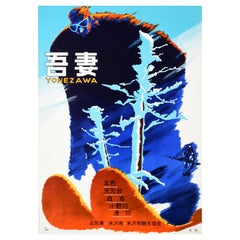
Original Vintage Winter Sport Poster Yonezawa Skiing Japan Travel Snow Skier Art
Located in London, GB
Original vintage winter sport travel poster for the Yonezawa ski resort in the Yamagata Prefecture featuring dynamic artwork depicting a skier skiing down a mountain through the powder snow...
Category

1960s Vintage Japanese Wall Decorations

Materials

Paper

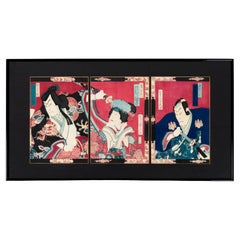
19th Century Japanese Woodblock Framed Triptych Scene Of A Kabuki Performance
Located in London, GB
Japanese Woodblock Triptych Scene Of A Kabuki Theatrical Performance Toyohara Kunichika (1835 - 1900) Framed, each woodblock print: 23 ...
Category

19th Century Antique Japanese Wall Decorations

Materials

Paper

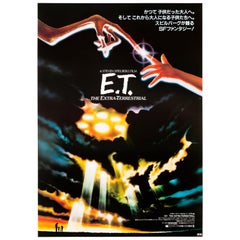
E.T. The Extra Terrestrial Original Vintage Japanese Movie Poster, 1982
Located in Devon, GB
Steven Spielberg's timeless tear jerking tale of a young boy's friendship with a stranded extraterrestrial was both widely critically acclaimed and enormously commercially successful...
Category

1980s Modern Vintage Japanese Wall Decorations

Materials

Paper

Japanese Six Panel Screen: Courtiers Festival
Located in Hudson, NY
Courtiers are those that are in attendance at a royal court. Beautifuly painted court figures in procession with ancient musical instruments. Tosa School painting in mineral pigments...
Category

Late 18th Century Antique Japanese Wall Decorations

Materials

Gold Leaf

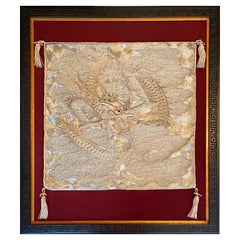
Japanese Fukusa Relief Embroidery Textile Art of Dragon
Located in Atlanta, GA
A visually stunning Japanese fukusa panel with an embroidered dragon on a swirling cloud background, nicely displayed on a scarlet felt matt in a carve...
Category

1890s Japonisme Antique Japanese Wall Decorations

Materials

Silk, Wood

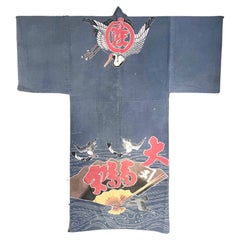
Japanese Fisherman Festival Kimono with Tsutsugaki Design
Located in Atlanta, GA
A Japanese festival Kimono robe circa late 19th to early 20th century (end of Meiji Period) for fishing ritual. Made in a cotton fabric, the kimono was elaborately decorated by Tsuts...
Category

Early 20th Century Meiji Japanese Wall Decorations

Materials

Cotton, Linen

Japanese Six Panel Screen, Snow Scene at Water’s Edge
Located in Hudson, NY
Japanese Six Panel Screen: Snow Scene at Water's Edge with Flowers and Waterfowl. Edo period painting (mid 19th century) of plum, bamboo, white camellias, cranes and mandarin ducks ...
Category

Mid-19th Century Edo Antique Japanese Wall Decorations

Materials

Gold Leaf

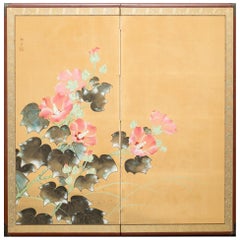
Japanese Two-Panel Screen, Hibiscus In Bloom
Located in Hudson, NY
Japanese Two Panel Screen: Hibiscus in Bloom, Meiji period (1868 - 1912) painting of hibiscus flowers reaching for the sun in full bloom. Mineral pigments on silk with a silk brocad...
Category

Early 1900s Meiji Antique Japanese Wall Decorations

Materials

Silk, Wood, Paper

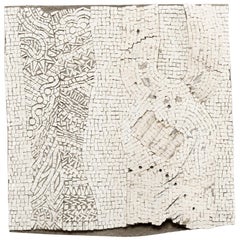
"Flower Near the Staircase" Mosaic by Toyoharu Kii
By Toyoharu Kii
Located in Chicago, IL
A leader of the cross-cultural craft resurgence, Japan-based artist Toyoharu Kii creates his intricate mosaics with handcut Italian marble and smalti, Venetian glass made by the same Italian family for over 400 years. Using traditional Italian techniques, Kii’s art is nonetheless modern. It is monochromatic, abstract, and highly textured and highlights the involved and technical art...
Category

21st Century and Contemporary Minimalist Japanese Wall Decorations

Materials

Marble, Quartz

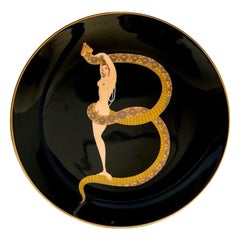
B Plate the Alphabet, Erté After , 1986
Located in Roma, IT
B plate, the alphabet is a beautiful color ceramic plate realized by Erté (after) in 1986, as reported on the back of each plates. This plate reproduces the original painting by E...
Category

1980s Vintage Japanese Wall Decorations

Materials

Porcelain

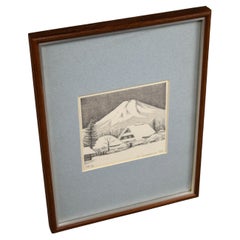
Mount Fuji Traditional Japanese Woodblock Print 46/50
Located in Weesp, NL
T. Sugano (b. 20th c.) — Winter Serenity: Mount Fuji’s Majestic Embrace, 1989 Signed and numbered “46/50” in pencil by the artist Original framed edition, with packaging H.40 × W....
Category

1980s Modern Vintage Japanese Wall Decorations

Materials

Glass, Wood, Paper

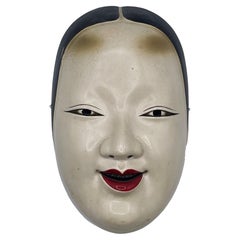
Japanese Noh Theater Ko-Omote Mask, Early 20th Century
Located in New York, NY
Japanese Noh Theater Ko-Omote Mask, Early 20th Century DIMENSIONS: Height: 8.5 inches Width: 4.5 inches Depth: 3 inches ABOUT A finely carved and painted Ko-Omote mask used in trad...
Category

Early 20th Century Japonisme Japanese Wall Decorations

Materials

Wood

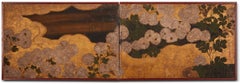
Japanese Two Panel Screen, Chrysanthemums
Located in Hudson, NY
Beautiful white chrysanthemums are emphasized by heavy gold on a soft floral landscape, while gold clouds create a striking and dream-like floral scene. Gold leaf and gofun with min...
Category

Early 18th Century Antique Japanese Wall Decorations

Materials

Gold, Gold Leaf

Japanese Six Panel Screen: Moon Rising Over the Plains of Musashino
Located in Hudson, NY
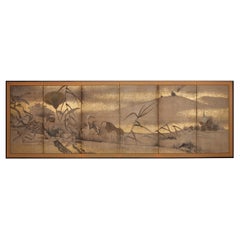
Japanese Six Panel Screen: Moon Rising Over the Plains of Musashino. A classic motif in Japanese art. Japanese artists were used to seeing vistas with mountains, valleys, and fores...
Category

Late 19th Century Antique Japanese Wall Decorations

Materials

Silver Leaf

Antique Brocade Kesa Monk s Patched Robe Edo Period
Located in Atlanta, GA
Kesa, known as "Jiasha" in Chinese and "Kasaya" in Sanskrit, is an out layer garment worn by the ordained Buddhist monks. Bearing a basic rectangular form, it developed originally in...
Category

Late 18th Century Edo Antique Japanese Wall Decorations

Materials

Textile, Brocade

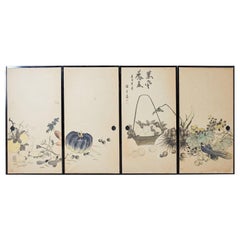
Set of Four Japanese Fusuma Painted Door Panels
Located in Rio Vista, CA
Rare set of four Japanese Showa period door panels known as Fusuma in Japanese architecture. Similar to a Shoji room divider but made of an opaque materia...
Category

20th Century Showa Japanese Wall Decorations

Materials

Brass

Foussa Itaya Surreal City Scene
By Foussa Itaya
Located in Palm Springs, CA
A pretty painting by the Japanese born Painter Foussa Itaya. The artist studied in Japan and went on to exhibit all over the world. This city scene along with another we have listed ...
Category

1960s Vintage Japanese Wall Decorations

Materials

Paint

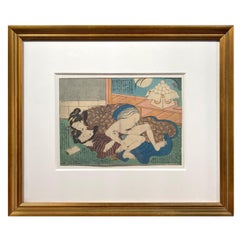
Antique Framed Japanese Shunga Woodblock Print of Two Women Making Love
Located in Yonkers, NY
An antique Japanese Shunga woodblock print in gilt frame depicting two women making love. Created in Japan, this woodblock print called a Shung...
Category

19th Century Antique Japanese Wall Decorations

Materials

Glass, Wood, Paint

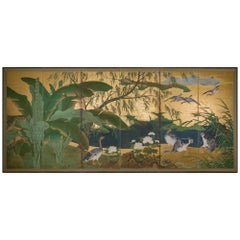
Early 19th Century Japanese Six-Panel Screen, Tropical Garden
Located in Hudson, NY
With a banana leaf palm on the left, at water's edge with geese. Perhaps a scene from the southern islands. Mineral pigments on mulberry paper with gold leaf and a silk brocade border.
Category

Early 19th Century Antique Japanese Wall Decorations

Materials

Gold Leaf

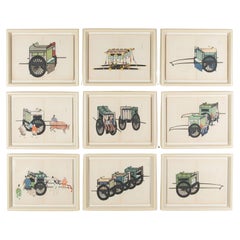
Collection of Nine Early 20th Century Japanese Woodblock Prints
Located in Gloucestershire, GB
A collection of nine original early 20th Century Japanese double page woodblock prints. In sumptuous colours of traditional palanquins and ceremonial carriages published by Yoshikaw...
Category

Early 20th Century Japanese Wall Decorations

Materials

Wood, Paper

Phillip Jeffries Juicy Jute Natural Handmade Grasscloth Wallpaper, Blueberry
Located in Brooklyn, NY
Phillip Jeffries Juicy Jute Natural Handmade Grasscloth Wallpaper, Blueberry. 1 8-yard bolt; Width: 36 IN (91.4CM) Pre-trimmed; Vertical repeat: N/A; ...
Category

21st Century and Contemporary Organic Modern Japanese Wall Decorations

Materials

Jute, Grasscloth

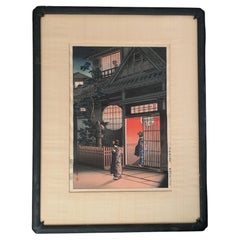
Vintage Japanese Original Woodblock in Stylish Frame by Tsuchiya Kōitsu, 1939
Located in Palm Springs, CA
Please note: this is NOT a copy of a print. It is a real vintage woodblock from Japan and has been see by Auction house. It was purchased from the original owner. A very wealthy Art ...
Category

1930s Chinoiserie Vintage Japanese Wall Decorations

Materials

Paper

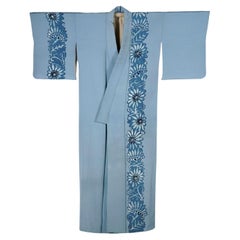
Elegant Vintage Japanese Silk Kimono with Shibori Band Design
Located in Atlanta, GA
A Japanese formal silk Kimono in a light blue color with striking floral design. The garment is hand-stitched from a crepe like silk and dated to circa 1940-60s. The garment is spars...
Category

Mid-20th Century Japonisme Japanese Wall Decorations

Materials

Silk

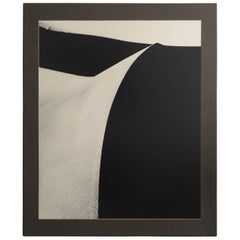
YOSHIKAZ SHIRAKAWA Death Valley 1975 Photograph ~ Signed Mounted
By Yoshikazu Shirakawa
Located in New York, NY
Original photograph by Yoshikazu Shirakawa. Death Valley group, 1975. Printed in Japan. Artist stamp/handwriting on verso. Matted/mounted on wood. Overall dimensions: 16 inches W...
Category

1970s Minimalist Vintage Japanese Wall Decorations

Materials

Wood

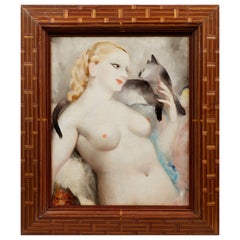
Miçao Kono - "Woman with Cat" (1934) - Huile sur toile
By Micao Kono
Located in NEUILLY-SUR-SEINE, FR
Miçao Kono - "Woman with Cat" (1934) Type : Huile sur toile Signature : Signée et datée 1934 en bas à gauche et au dos de l’œuvre Encadrement : Exceptionnel cadre Art Déco en marqu...
Category

Mid-20th Century Art Deco Japanese Wall Decorations

Materials

Paint

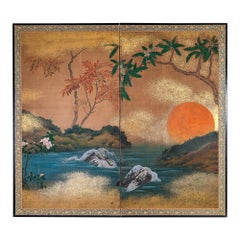
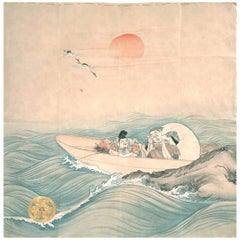
Japanese Two Panel Screen: Sun over Cresting Waves with Golden Clouds
Located in Hudson, NY
Sun rising over cresting waves through tropical trees. Mineral pigments on mulberry paper with gold dust and brocade.
Category

Early 20th Century Japanese Wall Decorations

Materials

Gold

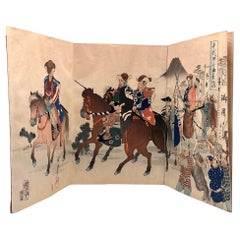
Chikanobu Triptych – Shogun Returns from the Hunt in Koganehara, c.1897
Located in Langweer, NL
Chikanobu Triptych – Shogun Returns from the Hunt in Koganehara, c.1897 This powerful and dynamic triptych by Toyohara Chikanobu (1838–1912) depicts the Shogun and his retinue returning from a falconry hunt across the vast grasslands of Koganehara. The print is part of the celebrated Meiji-era series Chiyoda no Omote (Outer Palace of Chiyoda), which portrayed ceremonial and military scenes from the life of the Tokugawa shogunate. This series blends historical reverence with a modern Meiji sensibility, celebrating Japan’s warrior heritage at a time of rapid transformation. Rendered in rich color and vivid linework, the triptych shows a noble procession in motion: the mounted Shogun at center turns back toward the viewer, while falconers and warriors in elaborate dress surround him. Attendants carry game and falconry equipment, and a dense forest line marks the horizon behind them. The sweeping composition emphasizes both movement and status, with the central figure visually dominant and placed against a pale, open sky. The triptych is signed by Chikanobu with the toshidama cartouche and published by Fukuda Hatsujirō around 1897. Chikanobu, one of the last great ukiyo-e masters, was celebrated for his ability to capture imperial ceremony, samurai culture, and the feminine elegance of the court — often in triptych format for dramatic impact. While the work shows some age-related signs, it retains strong visual appeal and is a compelling historical document of samurai-era tradition as imagined through Meiji eyes. Condition report: Good overall condition considering age. The three sheets are mounted together on old Japanese paper backing (verso), which is loosening slightly along the joins. Light overall toning and minor wrinkling across the panels. Colors remain well preserved with strong impression and no major losses or tears. Margins present, minor handling wear visible. A stable and attractive display piece. Framing tips: We recommend float mounting the full triptych in a custom horizontal frame, allowing the slight backing and joins to remain visible as part of its historical charm. Use a dark walnut or black lacquer frame with an off-white or light beige acid-free mat. Proper archival mounting can help preserve the integrity of the backing while enhancing its display quality. Technique: Woodblock print (ōban triptych) Maker: Toyohara Chikanobu, Japan, c.1897 Publisher: Fukuda Hatsujirō Keywords: Chikanobu triptych, samurai falconry print, Japanese woodblock print, Meiji print, Chiyoda no Omote, shogun artwork, Koganehara, antique Japanese triptych...
Category

1890s Antique Japanese Wall Decorations

Materials

Paper

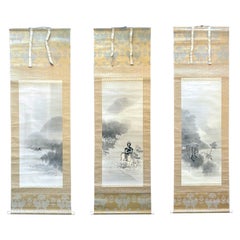
Rare Triptych Scroll Paintings by Watanabe Seitei Meiji Period
Located in Atlanta, GA
A set of three paintings of ink and watercolor on silk mounted within brocade borders as scrolls by Watanabe Seitei (1851-1918). This is a very rare an...
Category

Early 1900s Japonisme Antique Japanese Wall Decorations

Materials

Brocade, Silk, Wood

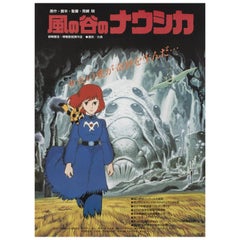
1984 Nausicaa Of The Valley Of The Wind (Japanese) Original Vintage Poster
Located in Winchester, GB
Based on the 1982 manga of the same name, Nausicaa Of The Valley Of The Wind was released in 1984. Written and directed by anime and...
Category

1980s Vintage Japanese Wall Decorations

Materials

Paper

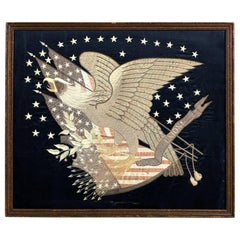
Antique Japanese Export Silk Embroidery Panel of American Union
Located in Atlanta, GA
A rather fascinating silk embroidery panel that depicts an American eagle perched on a shield, with laurel branches and shooting arrows under the...
Category

Late 19th Century Japonisme Antique Japanese Wall Decorations

Materials

Silk, Wood

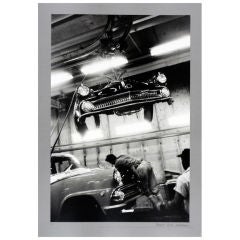
Robert Frank - Flower Is
By Robert Frank
Located in New York, NY
Flower Is… “is one of Frank’s great books (which means it is one of the greatest of photobooks), demonstrating magisterially, as he himself says in the boo...
Category

Late 20th Century Japanese Wall Decorations

Japanese Antique Fukusa Textile Art Meiji Period
Located in Atlanta, GA
A Japanese silk Fukusa panel circa late 19th-early 20th century of Meiji Period. The front was beautifully decorated with Yuzen-zome, a labor intensive resist-dye technique invested ...
Category

Early 20th Century Japonisme Japanese Wall Decorations

Materials

Silk, Beads

Fortress Assault Triptych – 1894 Japanese Meiji War Woodblock by Gekko
Located in Langweer, NL
Fortress Assault Triptych – 1894 Japanese Meiji War Woodblock by Gekko This powerful Meiji-era woodblock triptych by Ogata Gekko (1859–1920) depicts the dramatic assault on a Chines...
Category

1890s Antique Japanese Wall Decorations

Materials

Paper

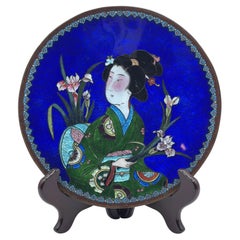
Japanese Meiji Period Ukyoi Cloisonné Plate with Bijin Holding Irises, Ca. 1890
Located in New York, NY
Japanese Meiji Period Ukyoi-style Cloisonné Plate Depicting a Bijin with Irises, Ca. 1890 PERIOD Meiji Period: 1868-1912 DIMENSIONS Diameter: 9.75 inches Depth: 0.5 inches ABOUT ...
Category

1890s Japonisme Antique Japanese Wall Decorations

Materials

Metal

Plates Porcelain Noritake Japan Wall Decor 1977-80ss
By Noritake
Located in Bastogne, BE
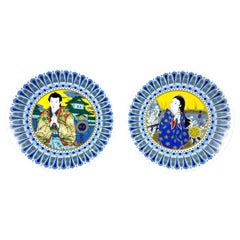
Discontinued Noritake plates have multicolor image with Asian woman and man in center, with gold tone band and highlights. Designed by: Kiyomi Akagi. ...
Category

1970s Neoclassical Vintage Japanese Wall Decorations

Materials

Porcelain

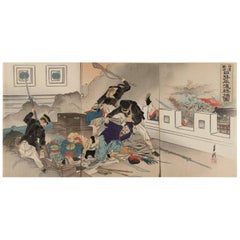
Meiji-Era Triptych of the Battle of Pyongyang in the Sino-Japanese War, 1894
Located in Langweer, NL
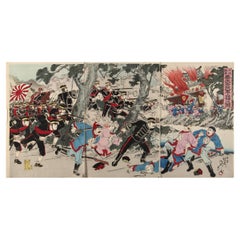
Meiji-Era Triptych of the Battle of Pyongyang in the Sino-Japanese War, 1894 This striking 1894 woodblock triptych by Ogata Gekko (1859–1920) depicts the dramatic Battle of Pyongyan...
Category

1890s Antique Japanese Wall Decorations

Materials

Paper

Japanese Antique Fukusa Textile Art Meiji Period
Located in Atlanta, GA
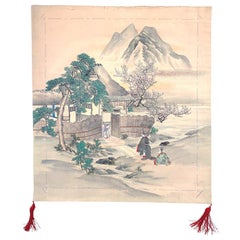
A Japanese silk Fukusa panel circa late 19th-early 20th century of Meiji Period. The front was beautifully decorated with Yuzen-zome, a labor intensive resist-dye technique invested by an artist monk Miyazaki Yuzensai (1654 -1736) of Edo period. The front cover likely depicts a scene from the Tale of Genji, showing a nobleman and his servant pays a visit to a lady in a fenced thatch-roof house under a high peak. The details of blossom trees and pines, as well as the characters, and scenery with a gradual color are astounding. It is telling that the Yuzen dying was used such an mastery. The piece has a red silk backing and still retains two red tassels on the lower corners as well as decorative stitches along the edges. There is a patched design on the back likely a Mon symbol (family crest). Fukusa is a traditional Japanese textile...
Category

Early 20th Century Japonisme Japanese Wall Decorations

Materials

Silk

Antique Japanese Buddhist pagoda hanging scroll /Buddhist painting/Edo
Located in Sammu-shi, Chiba
This is a slightly different Buddhist painting believed to have been created by a Japanese temple monk during the Edo period (late 17th to 19th century). Rendered in ink on paper, th...
Category

18th Century Edo Antique Japanese Wall Decorations

Materials

Paper

Japanese Six Panel Screen, Egrets in Water Landscape with Lotus and Loquats
Located in Hudson, NY
Hasegawa School painting in ink and gold dust accents on mulberry paper.
Category

Mid-19th Century Antique Japanese Wall Decorations

Materials

Gold

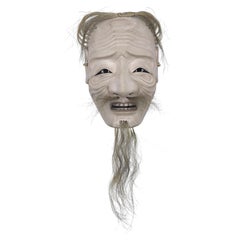
Japanese Edo Period Ko-jo Mask of an Old Man, ca. 1820
Located in New York, NY
Japanese Edo Period Ko-jo Mask of an Old Man, ca. 1820 Edo Period (1603-1868) DIMENSIONS: Length: 15” (with beard) Length: 8” (without beard) Height: 4” Width: 5.5” ABOUT A Japanese Edo Period (1603-1868) Ko-jo Mask of an Old Man refers to a traditional theatrical or ceremonial mask crafted during Japan’s Edo period (1603–1868). Here's a breakdown of what this object typically represents and why it's significant: The term "Ko-jo" (or Kojo) roughly translates to "old man" or "aged person" in Japanese. A Ko-jo mask often portrays the face of an elderly man, typically with exaggerated age features: deep wrinkles, sagging skin, a long nose, bushy eyebrows, and sometimes a beard. These masks are usually used in Noh, Kyogen, or folk performances, and occasionally in Shinto rituals. In Noh theater, masks are used to express character types, moods, and spiritual roles. The Ko-jo mask might represent a wise elder, a spirit of age and wisdom, or even a deity. In Kyogen, which is the comedic counterpart to Noh, old-man masks are used more playfully, often satirizing elderly characters in lighthearted scenes. The Ko-jo mask may also symbolize ancestral reverence or longevity, tying it to folk beliefs and ritual performances. Edo period masks...
Category

1820s Japonisme Antique Japanese Wall Decorations

Materials

Wood

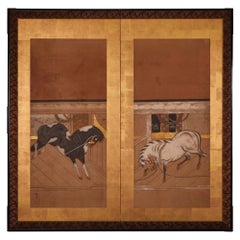
Japanese Two Panel Screen: Horses in Stable
Located in Hudson, NY
A pair of captivating black and white horses, believed to define hard work and power in Japanese mythology, are beautifully rendered in this painting of mineral pigments on mulberry ...
Category

Early 19th Century Antique Japanese Wall Decorations

Materials

Bronze, Gold Leaf

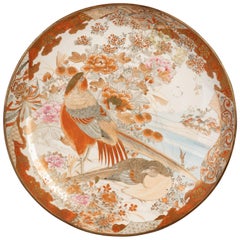
Japanese Porcelain Charger, circa 1880
Located in New York, NY
Category

1880s Antique Japanese Wall Decorations

Materials

Porcelain

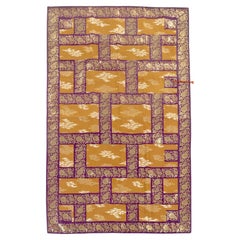
Antique Silk Kesa Monk s Patched Robe Meiji Period
Located in Atlanta, GA
Kesa, known as "Jiasha" in Chinese and "Kasaya" in Sanskrit, is an out-layer garment worn by the ordained Buddhist monks. Bearing a basic rectangular form, it developed originally in...
Category

19th Century Meiji Antique Japanese Wall Decorations

Materials

Textile, Brocade

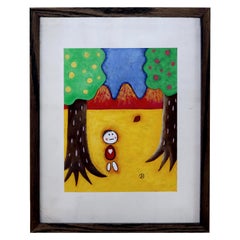
Graphic Yoshihiro Ueda Gouache
By Yoshihiro Ueda
Located in Pasadena, CA
A whimsical yet sentimental scene by Yoshi Ueda with bright colors. It sits in a simple black wood frame. This is an early work of Yoshihiro "Yoshi" Ueda, a Japanese visual artist who went on to garner significant credits as a director for many globally renowned anime series such as Dragon Ball Z...
Category

Late 20th Century Modern Japanese Wall Decorations

Materials

Paper, Wood

Graphic Yoshihiro Ueda Gouache
$224 Sale Price
59% Off
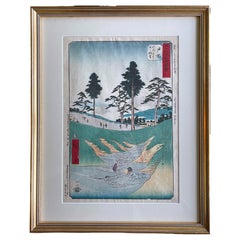
Japanese Woodblock Print the Fifty-Three Stations of the Tokaido by Hiroshige
By Utagawa Hiroshige (Ando Hiroshige)
Located in Atlanta, GA
Artist: Utagawa Hiroshige (1797 - 1858) Series: The Fifty-three Stations of the Tokaido (Upright) Number: 6 Totsuka: View of Fuji from the Mountain Road (Totsuka, Sando yori Fuji chobo) Medium: Woodblock Print Date: 1855 Format: Vertical Oban Size (H x W): 14" x 9.25" print only. Publisher: Tsutaya Kichizo Seals: Aratame and date Signature: Hiroshige hitsu...
Category

1850s Edo Antique Japanese Wall Decorations

Materials

Paper

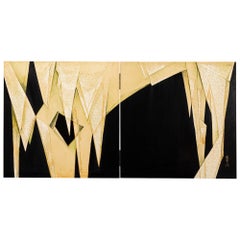
Japanese Two Panel Screen Abstract Design
Located in Hudson, NY
Lacquer on wood. Signature reads: Toshimasa. Solid black lacquer on reverse. Signed original box.
Category

Mid-20th Century Japanese Wall Decorations

Materials

Lacquer

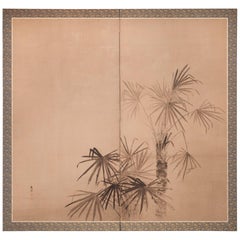
Japanese Two-Panel Screen Ink Painting of Palm Trees on Paper
Located in Hudson, NY
Japanese two-panel screen: ink painting of Palm Trees on paper, Edo period (1787) beautiful painting of Japanese windmill palm trees. Ink paint...
Category

18th Century Edo Antique Japanese Wall Decorations

Materials

Silk, Wood, Paper

Japanese Artist Framed Print The Pass Thru The Mountains by Fukaye Roshu
Located in San Diego, CA
Nicely framed collectible print by listed artist Fukaye Roshu, circa 1960s very nice condition stamped certificate in the back as shown.
Category

20th Century Hollywood Regency Japanese Wall Decorations

Materials

Wood

Read More

Punk Rock and Rebellion Animate London’s Hit Yoshitomo Nara Show

The exhibition includes his portraits of wide-eyed kids with mayhem on their minds, as well as some of the artist’s personal belongings.

Whether Painted or Papered, Muraled Walls Make Bold Statements in the Home

The ancient practice of covering walls in artistic scenery is back.

In Francks Deceus’s ‘Mumbo Jumbo #5,’ the Black Experience Is . . . Complicated

Despite the obstacles, the piece’s protagonist navigates the chaos without losing his humanity.

12 Floral-Accented Rooms with a Handmade, Folkloric Feel

Who needs a flower garden? Just use your imagination — and some beautifully patterned wallpaper or fabric — to bring the outdoors in.

This Wolf Kahn Pastel Is the Epitome of Beauty at Its Most Essential

A longtime admirer of Kahn’s work, 1stDibs editorial director Anthony Barzilay Freund explores why it’s relevant now more than ever.

Why Jules Chéret Was the King of the Modern Poster

The streets of fin-de-siècle Paris were set aglow with colorful poster ads, thanks to the printing techniques invented by Jules Chéret. Now, the Milwaukee Art Museum is celebrating this undersung talent in America's first solo show dedicated his exuberant works.

Anna Condo’s Multifaceted Career Spans Film, Photography and NFTs

From her historic Manhattan townhouse, the talented creator and curator of 1stDibs' latest NFT exhibition tells us about the art in her home and how she got involved with cryptoart.

How Keith Rivers Went from NFL Linebacker to Blue-Chip Art Aficionado

The former football player is as serious about becoming a great contemporary-art patron as he once was about making tackles. Here, Rivers tells us how he got the collecting bug and how his tastes have evolved over the years.

Still Thinking About These?

All Recently Viewed