Giltwood Paintings

to
157
920
183
1,147
4
Height
to
Width
to
69
58
51
47
26
23
19
13
11
9
7
7
7
6
4
3
155
590
402
4
132
111
47
25
6
11
4
11
12
11
9
5
3
9,819
9,167
8,519
8,260
6,496
842
332
182
169
167
1,151
1,151
1,151
17
14
7
4
4
Material: Giltwood
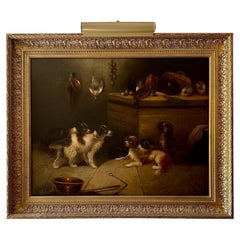
Large 19th Century English Oil Painting -Five Hunting Dogs- signed E. Armfield.
Located in Vero Beach, FL
Large 19th Century English Oil Painting -Five Hunting Dogs- signed E. Armfield. Large, signed painting in oil on canvas. This ...
Category

19th Century English Victorian Antique Giltwood Paintings

Materials

Canvas, Giltwood

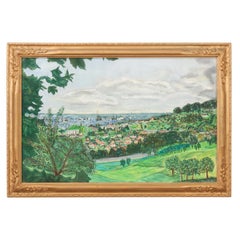
French 20th Century Large Landscape Painting
Located in Baton Rouge, LA
A wonderfully large and vibrant landscape painting from France. Signed in the bottom right corner by the artist. Protected behind antique rolled glass...
Category

20th Century French French Provincial Giltwood Paintings

Materials

Canvas, Wood, Giltwood, Paint

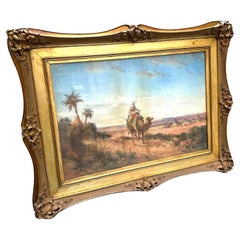
19th C. Orientalist Painting Pastel Arab and Camel, desert landscape fauna Flora
Located in West Hollywood, CA
19th C. Orientalist Painting Pastel Arab and Camel, desert landscape fauna Flora . Beautiful and fine 19th century orientalist Pastel painting of an Arab Man with his camel traveling...
Category

19th Century European Antique Giltwood Paintings

Materials

Wood, Giltwood, Paint, Paper

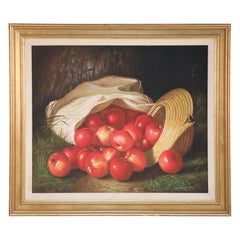
Framed Bag of Apples Still Life Oil Painting
Located in Queens, NY
Vintage (20th Century) still life oil painting of apples spilling from a bag on the forest floor, alongside a straw hat, painted on stretched canvas in a rectangular giltwood frame w...
Category

20th Century American Mid-Century Modern Giltwood Paintings

Materials

Canvas, Wood, Giltwood

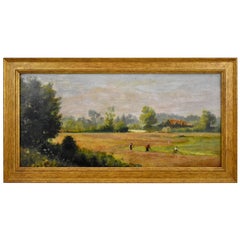
English Afternoon Pastoral Farm Scene Oil on Linen Painting Gold Leaf Wood Frame
Located in Philadelphia, PA
An early 19th century painting, oil on linen, showing an English pastoral farm scene, artist unknown. The right foreground shows three farm workers clearing hay in a meadow. Other figures can be seen in the mid-ground along with a hay laden wagon harnessed to horses. A thatched roof cottage is painted in the distance. In the central background, two horses are grazing in front of split rail fence...
Category

Early 19th Century English Romantic Antique Giltwood Paintings

Materials

Linen, Giltwood

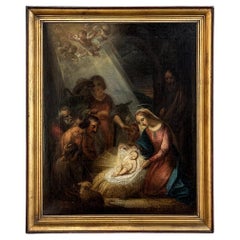
18th Century Framed Oil Painting on Canvas of Nativity ~ Flemish School
Located in Dallas, TX
18th Century Framed Oil Painting on Canvas of Nativity ~ Flemish School is an amazingly inspirational work, displaying the influences of the Old Masters in the setting, composition, ...
Category

Late 18th Century Dutch Aesthetic Movement Antique Giltwood Paintings

Materials

Canvas, Giltwood

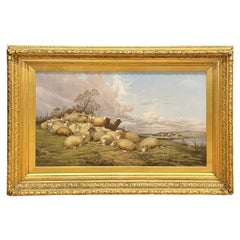
Antique Oil Painting Sheep In Landscape By D.H. Winder
Located in Norwood, NJ
Fine quality early 20th century oil on board of a Herd of sheep in a landscape pasture. Signed and dated 1916 by D.H. Winder. Daniel H Winder (1870 - c.1920) was active/lived in Uni...
Category

Early 20th Century British Giltwood Paintings

Materials

Canvas, Glass, Wood, Giltwood, Paint

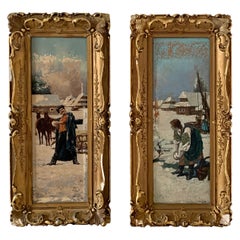
Antique 19th Century Russian Framed Oil on Board Paintings of a Snowball Fight
Located in Elkhart, IN
A gorgeous and charming pair of Victorian framed oil paintings of a snowball fight with a village in the background. Russia, late 19t...
Category

Late 19th Century Russian Victorian Antique Giltwood Paintings

Materials

Giltwood, Paint

Berlin K.P.M. Porcelain Plaque "Der Eremit" The Hermit After Salomon Koninck
Located in Los Angeles, CA
A late 19th early 20th century Berlin K.P.M. Porcelain Plaque titled "Der Eremit" (The Hermit) After the painting by Salomon Koninck (Dutch, 1609-1659)...
Category

Early 1900s German Baroque Antique Giltwood Paintings

Materials

Porcelain, Giltwood

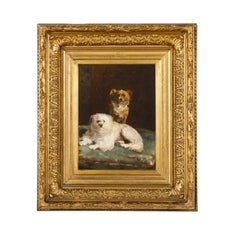
Giltwood Framed Oil on Canvas Dog Painting by Charles Van den Eycken
Located in Atlanta, GA
A Belgian framed oil on canvas painting by Charles Van den Eycken (1859 – 1923), depicting two dogs in an interior. Created in Belgium during th...
Category

19th Century Belgian Antique Giltwood Paintings

Materials

Canvas, Giltwood, Paint

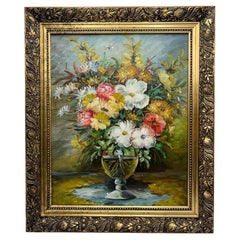
Large Oil Painting "Still Life Floral", Oil on Canvas, Signed, H.61.5xW.51.2cm
Located in Skien, NO
Stunning oil painting framed in an exquisite gilt double wooden frame. Title: “"Still Life Floral"” Medium: Oil on canvas. Year: Second half of the 20th century. Origin: Europe Art...
Category

20th Century European Giltwood Paintings

Materials

Canvas, Pine, Giltwood

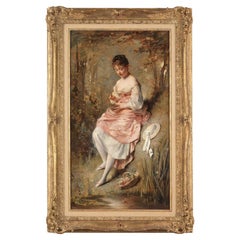
Charles Joshua Chaplin French, 1825-1891 Girl with Bird s Nest Oil on Canvas
By Charles Joshua Chaplin
Located in Los Angeles, CA
Charles Joshua Chaplin (French, 1825-1891) 'The Bird's Nest' A very fine and charming Rococo revival style oil on canvas depicting a young girl, dressed in 18th century costume and r...
Category

19th Century French Rococo Revival Antique Giltwood Paintings

Materials

Canvas, Giltwood

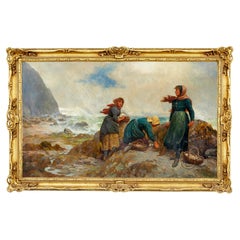
19th century oil painting of yorkshire flither pickers by Robert Farren
Located in Debenham, Suffolk
19th century oil painting of yorkshire flither pickers by robert farren circa 1890. Painted by robert b. Farren (1832-1912) This is a a skilfully executed and coloured oil painting...
Category

Late 19th Century English Victorian Antique Giltwood Paintings

Materials

Wood, Giltwood, Paint

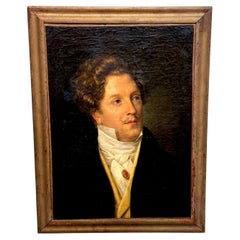
Empire Period Portrait of the Comte Gustave de Galard (1779–1841)
Located in West Palm Beach, FL
19th Century, Empire Period Portrait of the Comte Gustave de Galard (1779–1841), French School, c. 1805, Oil on canvas Canvas: 15.75" W × 21.5" H Framed: 19" W × 24.5" H A refined ...
Category

Early 19th Century French Empire Antique Giltwood Paintings

Materials

Canvas, Giltwood

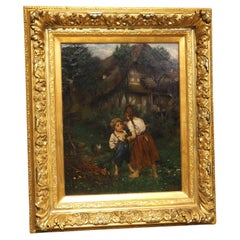
Antique Oil Painting, "Children Eating Cherries in the Garden", 1880
Located in Dallas, TX
A charming oil on canvas genre painting depicting the innocence of youth, the subjects of this scene are two young children on a cherry farm. A young girl with light brown hair in pi...
Category

Late 19th Century Swiss Antique Giltwood Paintings

Materials

Canvas, Wood, Giltwood, Paint

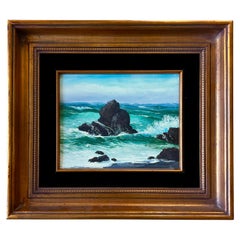
Painting « Crashing Waves » by Virginia Lynn, Oil on Canvas, 20th Century
Located in View Park, CA
Crashing waves: a painting by Virginia Lynn, oil on canvas, 20th century. Expert brushwork from this American artist shows the tide crashing upon basalt ...
Category

Mid-20th Century American Giltwood Paintings

Materials

Canvas, Wood, Giltwood, Paint

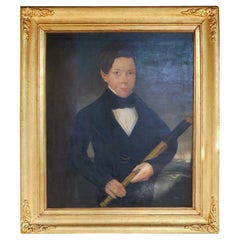
American Oil on Canvas Ship Captain with Spyglass in Orig, Gilt Frame, C. 1840
Located in Charleston, SC
American portrait oil on canvas of a young ship captain holding a spyglass with a sailing ship, crew in rowboat, and gulls in lower background mounted in the original decorative gilt...
Category

1840s American American Empire Antique Giltwood Paintings

Materials

Gesso, Canvas, Wood, Giltwood, Paint

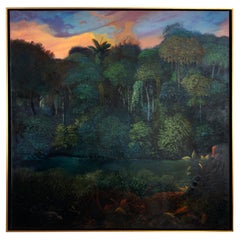
2002 Miguel Mansanet Monumental Landscape Painting, Signed
Located in Miami, FL
Monumental Landscape Painting Signed by the Artist Mansanet and Dated 2002 Offered for sale is a monumental landscape painting of the Cu...
Category

21st Century and Contemporary Spanish Giltwood Paintings

Materials

Canvas, Wood, Giltwood

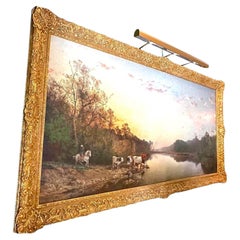
Very Large Landscape Verdure Pastoral Oil on Canvas, Ch. Boulogne Cows Watering
Located in West Hollywood, CA
Very Large Landscape Verdure Pastoral Oil on Canvas, Ch. Boulogne Cows Watering Verdure painting. Signed Artwork. The “Cows Watering by the River at Sunset” 4 feet height x 7 feet &...
Category

19th Century Belgian Antique Giltwood Paintings

Materials

Canvas, Plaster, Wood, Giltwood

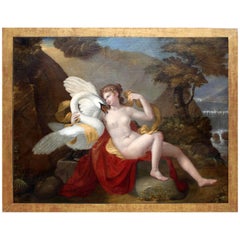
French 19th Century Old Master School Oil on Canvas Titled "Leda and The Swan"
Located in Los Angeles, CA
A fine and large French 19th century old master school oil on canvas titled "Leda and The Swan" within a giltwood frame. Leda and the swan is a motif from Greek mythology, in which Z...
Category

19th Century French Renaissance Revival Antique Giltwood Paintings

Materials

Giltwood, Canvas

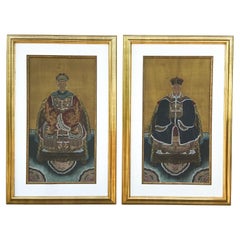
Late 19th-C. Hand Painted Chinese Ancestral Portraits Un Water Gilt Frames - S/2
Located in Kennesaw, GA
This is a set of late 19th century hand painted ancestral portraits depicting a wealthy couple in fabulous robes. I love the muted tones of the paint. The water gilt frames highlight...
Category

Late 19th Century Chinese Chinese Export Antique Giltwood Paintings

Materials

Giltwood, Paper

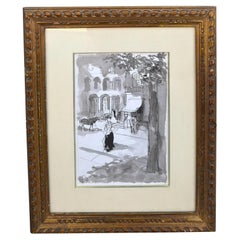
Rare Original Emilio Grau Sala Parisian Street Watercolor Painting
Located in LOS ANGELES, CA
Rare Original Emilio Grau Sala Parisian Street Watercolor Painting.
Category

1970s French Expressionist Vintage Giltwood Paintings

Materials

Giltwood, Paper

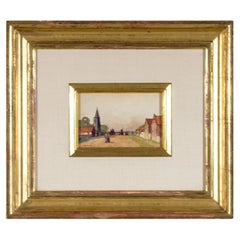
Mrs. Albert Spoor, Watercolor And Gouache On Paper Titled “North Sea Village”
Located in Bridgeport, CT
Watercolor on paper depicting a quiet town scene with two figures walking in the center flanked by a church and structures and sailboats in the distance. Presented in a lavish gilt f...
Category

20th Century Rustic Giltwood Paintings

Materials

Glass, Giltwood, Paper

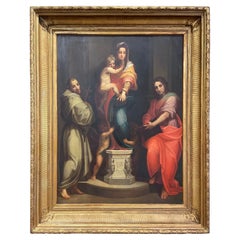
19th C. Religious Oil Painting “Madonna of the Harpies” After Andrea Del Sarto
Located in Dallas, TX
Decorate a library, study, or formal living room with this exceptional 19th-century Italian devotional painting. Created in Italy circa 1850, this large hand-painted oil on canvas i...
Category

Mid-19th Century Italian Neoclassical Antique Giltwood Paintings

Materials

Canvas, Giltwood

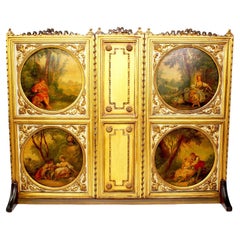
French 19th Century Louis XV Vernis Martin Style Giltwood Fireplace Screen
By Vernis Martin
Located in Los Angeles, CA
A very Fine and rare French 19th century Louis XV style giltwood carved Vernis Martin Stylefl fireplace screen. The rectangular carved giltwood panel surmounted with four circular oil paintings...
Category

Late 19th Century French Louis XV Antique Giltwood Paintings

Materials

Wood, Giltwood

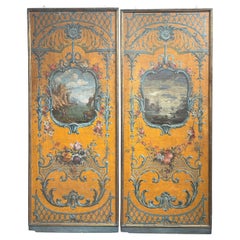
Pair of 19th C. French Louis XV Hand-Painted Panels with Vernet Harbor Scenes
By Claude-Joseph Vernet
Located in Dallas, TX
Decorate a living room or grand entryway with this elegant pair of antique painted panels. Crafted in France circa 1830, each panel—measuring seven feet in height—is mounted within a...
Category

Early 19th Century French Louis XV Antique Giltwood Paintings

Materials

Canvas, Giltwood

17th Century Spanish Colonial Cusco School Painting
Located in Middleburg, VA
A rare and evocative example of Spanish Colonial art from the Cusco School, this 17th-century oil on wood panel captures the iconic biblical scene of Sain...
Category

17th Century Peruvian Antique Giltwood Paintings

Materials

Wood, Paint, Giltwood

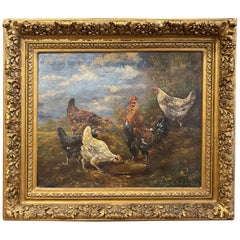
19th Century Oil on Canvas Chicken Painting in Gilt Frame Signed H. Schouten
Located in Dallas, TX
Decorate a study or a den with this antique chicken painting composition. Created in Belgium circa 1890, and set in the original thick carved giltwood frame, this large painting depi...
Category

Late 19th Century Belgian Antique Giltwood Paintings

Materials

Canvas, Giltwood

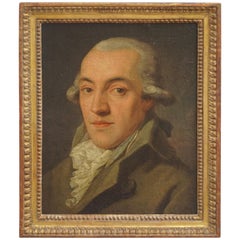
Portrait Painting of a Bewigged Gentleman, Prague, circa 1780
Located in Kinderhook, NY
A fine quality circa 1780 oil on canvas portrait painting of a gentleman in powdered wig, coat, waistcoat, and frilled shirt housed in a period giltwood frame having bead and lamb's tongue design. Red wax seal collection...
Category

Late 18th Century Austrian Antique Giltwood Paintings

Materials

Canvas, Giltwood, Paint

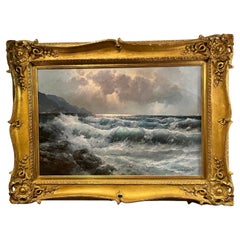
20th Century Sea Scape (1911-1995) By Alexander Dzigurski
Located in Scottsdale, AZ
20th Century Sea Scape (1911-1995) By Alexander Dzigurski Beautiful painting purchased in France. Age appropriate wear, see detailed photos or message us with questions.
Category

20th Century French American Classical Giltwood Paintings

Materials

Giltwood, Paint

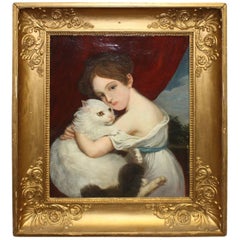
Beautiful Early 19th Century Portrait
Located in Stockbridge, GA
Beautiful early 19th century portrait dated and signed at the back. Portrait attributed to Berthon, student of David "The young girl and the c...
Category

Early 19th Century French Empire Antique Giltwood Paintings

Materials

Canvas, Giltwood

After Raffaello Sanzio 1483-1520 Raphael La Madonna della Seggiola Oil on Canvas
Located in Los Angeles, CA
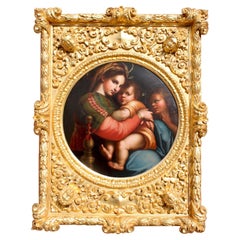
A Fine Italian 19th Century Oil Painting on Canvas "La Madonna della Seggiola" after Raphael (Raffaello Sanzio da Urbino 1483-1520). The circular painted canvas depicting a seated Madonna holding an infant Jesus Christ next to a child Saint John the Baptist, all within a massive carved gilt wood and gesso frame, which is identical to the frame on Raphael's original artwork. This painting is a 19th Century copy of Raphael's Madonna della Seggiola painted in 1514 and currently exhibited and part of the permanent collection at the Palazzo Pitti, Galleria Palatina, Florence, Italy. The bodies of the Virgin, Christ, and the boy Baptist fill the whole picture. The tender, natural looking embrace of the Mother and Child, and the harmonious grouping of the figures in the round, have made this one of Raphael's most popular Madonnas. The isolated chair leg is reminiscent of papal furniture, which has led to the assumption that Leo X himself commissioned the painting. A retailer's label reads " Fred K/ Keer's Sons - Framers and Fine Art Dealers - 917 Broad St. Newark, N.J." - Another label from the gilder reads "Carlo Bartolini - Doratore e Verniciatori - Via Maggio 1924 - Firenze". Circa: 1890-1900. Subject: Religious painting Canvas diameter: 28 inches (71.1 cm) Frame height: 54 inches (137.2 cm) Frame width: 42 1/2 inches (108 cm) Frame depth: 5 1/2 inches (14 cm) Raffaello Sanzio da Urbino (Italian, March 28 or April 6, 1483 - April 6, 1520), known as Raphael, was an Italian painter and architect of the High Renaissance. His work is admired for its clarity of form, ease of composition, and visual achievement of the Neoplatonic ideal of human grandeur. Together with Michelangelo and Leonardo da Vinci, he forms the traditional trinity of great masters of that period. Raphael was enormously productive, running an unusually large workshop and, despite his death at 37, leaving a large body of work. Many of his works are found in the Vatican Palace, where the frescoed Raphael Rooms were the central, and the largest, work of his career. The best known work is The School of Athens in the Vatican Stanza della Segnatura. After his early years in Rome much of his work was executed by his workshop from his drawings, with considerable loss of quality. He was extremely influential in his lifetime, though outside Rome his work was mostly known from his collaborative printmaking. After his death, the influence of his great rival Michelangelo was more widespread until the 18th and 19th centuries, when Raphael's more serene and harmonious qualities were again regarded as the highest models. His career falls naturally into three phases and three styles, first described by Giorgio Vasari: his early years in Umbria, then a period of about four years (1504–1508) absorbing the artistic traditions of Florence, followed by his last hectic and triumphant twelve years in Rome, working for two Popes and their close associates. Raphael was born in the small but artistically significant central Italian city of Urbino in the Marche region, where his father Giovanni Santi was court painter to the Duke. The reputation of the court had been established by Federico III da Montefeltro, a highly successful condottiere who had been created Duke of Urbino by the Pope - Urbino formed part of the Papal States - and who died the year before Raphael was born. The emphasis of Federico's court was rather more literary than artistic, but Giovanni Santi was a poet of sorts as well as a painter, and had written a rhymed chronicle of the life of Federico, and both wrote the texts and produced the decor for masque-like court entertainments. His poem to Federico shows him as keen to show awareness of the most advanced North Italian painters, and Early Netherlandish artists as well. In the very small court of Urbino he was probably more integrated into the central circle of the ruling family than most court painters. Federico was succeeded by his son Guidobaldo da Montefeltro, who married Elisabetta Gonzaga, daughter of the ruler of Mantua, the most brilliant of the smaller Italian courts for both music and the visual arts. Under them, the court continued as a centre for literary culture. Growing up in the circle of this small court gave Raphael the excellent manners and social skills stressed by Vasari. Court life in Urbino at just after this period was to become set as the model of the virtues of the Italian humanist court through Baldassare Castiglione's depiction of it in his classic work The Book of the Courtier, published in 1528. Castiglione moved to Urbino in 1504, when Raphael was no longer based there but frequently visited, and they became good friends. He became close to other regular visitors to the court: Pietro Bibbiena and Pietro Bembo, both later cardinals, were already becoming well known as writers, and would be in Rome during Raphael's period there. Raphael mixed easily in the highest circles throughout his life, one of the factors that tended to give a misleading impression of effortlessness to his career. He did not receive a full humanistic education however; it is unclear how easily he read Latin. Early Life and Works His mother Màgia died in 1491 when Raphael was eight, followed on August 1, 1494 by his father, who had already remarried. Raphael was thus orphaned at eleven; his formal guardian became his only paternal uncle Bartolomeo, a priest, who subsequently engaged in litigation with his stepmother. He probably continued to live with his stepmother when not staying as an apprentice with a master. He had already shown talent, according to Vasari, who says that Raphael had been "a great help to his father". A self-portrait drawing from his teenage years shows his precocity. His father's workshop continued and, probably together with his stepmother, Raphael evidently played a part in managing it from a very early age. In Urbino, he came into contact with the works of Paolo Uccello, previously the court painter (d. 1475), and Luca Signorelli, who until 1498 was based in nearby Città di Castello. According to Vasari, his father placed him in the workshop of the Umbrian master Pietro Perugino as an apprentice "despite the tears of his mother". The evidence of an apprenticeship comes only from Vasari and another source, and has been disputed—eight was very early for an apprenticeship to begin. An alternative theory is that he received at least some training from Timoteo Viti, who acted as court painter in Urbino from 1495.Most modern historians agree that Raphael at least worked as an assistant to Perugino from around 1500; the influence of Perugino on Raphael's early work is very clear: "probably no other pupil of genius has ever absorbed so much of his master's teaching as Raphael did", according to Wölfflin. Vasari wrote that it was impossible to distinguish between their hands at this period, but many modern art historians claim to do better and detect his hand in specific areas of works by Perugino or his workshop. Apart from stylistic closeness, their techniques are very similar as well, for example having paint applied thickly, using an oil varnish medium, in shadows and darker garments, but very thinly on flesh areas. An excess of resin in the varnish often causes cracking of areas of paint in the works of both masters. The Perugino workshop was active in both Perugia and Florence, perhaps maintaining two permanent branches. Raphael is described as a "master", that is to say fully trained, in December 1500. His first documented work was the Baronci altarpiece for the church of Saint Nicholas of Tolentino in Città di Castello, a town halfway between Perugia and Urbino. Evangelista da Pian di Meleto, who had worked for his father, was also named in the commission. It was commissioned in 1500 and finished in 1501; now only some cut sections and a preparatory drawing remain. In the following years he painted works for other churches there, including the Mond Crucifixion (about 1503) and the Brera Wedding of the Virgin (1504), and for Perugia, such as the Oddi Altarpiece. He very probably also visited Florence in this period. These are large works, some in fresco, where Raphael confidently marshals his compositions in the somewhat static style of Perugino. He also painted many small and exquisite cabinet paintings in these years, probably mostly for the connoisseurs in the Urbino court, like the Three Graces and St. Michael, and he began to paint Madonnas and portraits. In 1502 he went to Siena at the invitation of another pupil of Perugino, Pinturicchio, "being a friend of Raphael and knowing him to be a draughtsman of the highest quality" to help with the cartoons, and very likely the designs, for a fresco series in the Piccolomini Library in Siena Cathedral. He was evidently already much in demand even at this early stage in his career. Influence of Florence Raphael led a "nomadic" life, working in various centres in Northern Italy, but spent a good deal of time in Florence, perhaps from about 1504. Although there is traditional reference to a "Florentine period...
Category

Early 1900s Italian Baroque Antique Giltwood Paintings

Materials

Canvas, Giltwood

19th Century, Gustave Doens Painting on Celluloid of A French Nude Beauty
Located in Atlanta, GA
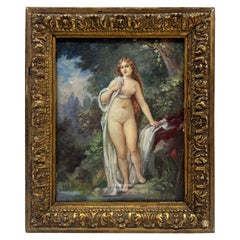
Gustave Doens (French, 19th century). This very fine quality antique painting features a beautiful young lady, delicately disrobed under a rich and vibrant landscape. She appears to...
Category

19th Century French Antique Giltwood Paintings

Materials

Giltwood

Pair of 18th Century Louis XVI Watercolors in Original Giltwood Frames
Located in Dallas, TX
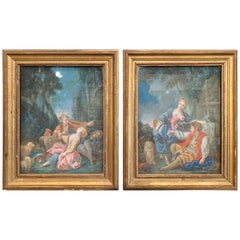
These antique colorful watercolors were crafted in France circa 1780, set in the original giltwood frames with glass protection, each art work depicts a courting scene with a young g...
Category

Late 18th Century French Louis XVI Antique Giltwood Paintings

Materials

Glass, Giltwood, Paper

19th Century French Signed Oil on Board Landscape Painting in Carved Gilt Frame
Located in Dallas, TX
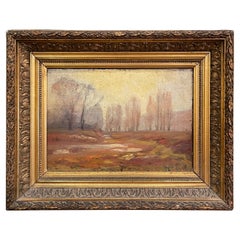
This charming antique Barbizon painting was created in France, circa 1880. Set in the original carved gilt frame, the artwork painted on boar...
Category

Late 19th Century French Antique Giltwood Paintings

Materials

Wood, Giltwood

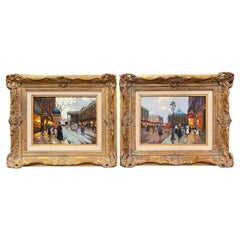
Pair of Mid-Century Paris Street Scenes Paintings by Robert Lebron, Framed
Located in Dallas, TX
Executed on canvas and presented in ornate carved giltwood frames, this exquisite pair of mid-century paintings by American Impressionist Robert Lebron (1928–2013) captures the roman...
Category

Mid-20th Century American Giltwood Paintings

Materials

Canvas, Giltwood

Antique River Landscape Painting, English School, Art, Oil on Canvas, Edwardian
Located in Hele, Devon, GB
This is an antique river landscape. An English, gilt framed oil on canvas picture, dating to the Edwardian period, circa 1907. Appealing example from the English School at the turn...
Category

Early 20th Century British Edwardian Giltwood Paintings

Materials

Canvas, Giltwood, Paint

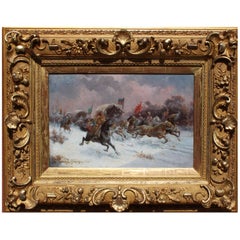
Adolf Constantin Baumgartner Stoiloff Oil on Board Cossacks Warriors on Horsback
By Adolf Constantin Baumgartner-Stoiloff
Located in Los Angeles, CA
Adolf Constantin Baumgartner Stoiloff (Austrian/Russian, 1850-1924) a fine oil on board "Charging Cossack Warriors on Horseback" within an ornate giltwood frame, circa 1890 Born in 1850 in Linz (Austria) Stoiloff died in Vienna in 1924. According to a research of Russian literature, he studied in the 1880s at St. Petersburg Imperial Academy of Fine Arts. He was very well known for his Russian horse...
Category

Late 19th Century Russian Baroque Antique Giltwood Paintings

Materials

Gesso, Canvas, Giltwood, Paint

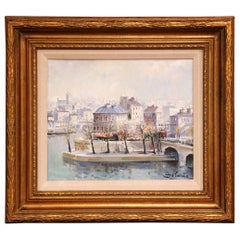
Midcentury Framed Oil Painting "L Ile Saint-Louis, Paris" Signed L. Delarue
Located in Dallas, TX
Keep a view of Paris in your home with this oil on canvas painting by French painter, Lucien Delarue (circa 1970). Set inside a carved gilt frame, this detailed, architectural painti...
Category

Mid-20th Century French Giltwood Paintings

Materials

Canvas, Giltwood

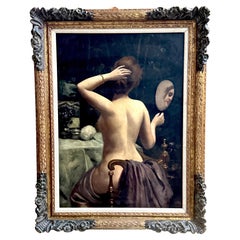
19th Century French School Oil on Canvas After the Bath
Located in West Palm Beach, FL
19th Century French School Oil on Canvas 'After the Bath' France, circa 1890s, apparently unsigned A captivating 19th-century French School oil on canvas titled After the Bath, France, circa 1890s. Measuring 36 inches high by 26 inches wide, this painting exemplifies the elegance and sophistication of a late 19th-century gentleman’s painting...
Category

Late 19th Century French Antique Giltwood Paintings

Materials

Canvas, Giltwood

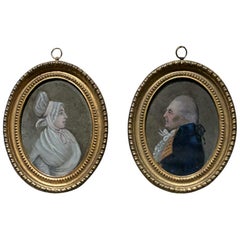
Pair of Miniature Portraits in Giltwood Frames
Located in Huntington, NY
2 portraits, late 18th century, oil on board.
Category

1790s English George III Antique Giltwood Paintings

Materials

Pine, Giltwood

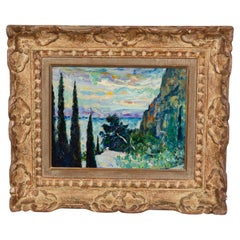
Oil On Canvas Landscape By Luigi Corbellini
Located in Essex, MA
Born in Italy and lived mainly in France. He was an Italian post impressionist painter. He exhibited at the Societe des Artistes Inde'pendants and later at Salon des Tuileries and Sa...
Category

1950s French Vintage Giltwood Paintings

Materials

Canvas, Giltwood

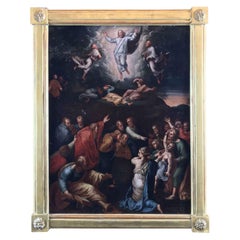
16th Century Old Masters Nicolo Cercignani the Transfiguration after Raphael
By Niccolò Circignani
Located in Milano, MI
A late 16th century oil on copper painting by Nicolò Cercignani, an Italian Old Masters artist of the late-Renaissance or Mannerist period, depicting the Raphaelesque transfiguration...
Category

16th Century Italian Renaissance Antique Giltwood Paintings

Materials

Copper

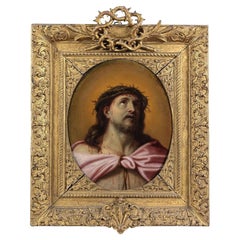
Italian 17th Century Oil on Canvas Head of Christ Crowned with Thorns, Mignard
By (circle of) Pierre Mignard
Located in Los Angeles, CA
A very fine Italian 17th century oval oil on canvas "Head of Christ Crowned with Thorns" Circle of Pierre Mignard (French, 1612-1695) within...
Category

17th Century French Baroque Antique Giltwood Paintings

Materials

Canvas, Giltwood

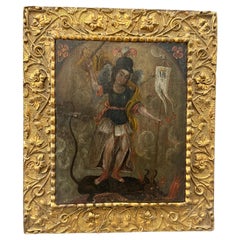
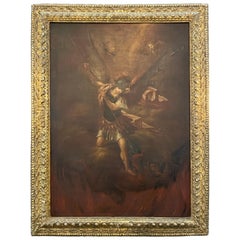
18th Century Spanish Oil Painting On Canvas Of Saint Michael Slaying The Demon
Located in Round Top, TX
Beautifully painted oil on canvas of the Archangel Saint Michael slaying the demon… It’s set in a gold gilt wood carved frame from the same period. Some of the gilded parts show worn...
Category

18th Century Spanish Antique Giltwood Paintings

Materials

Canvas, Giltwood

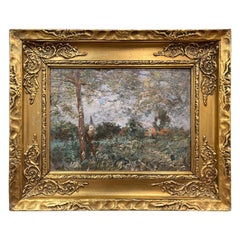
19th Century French Oil on Board Painting Signed H. D. Lemaitre
Located in Dallas, TX
Painted on board and dressed on in the original carved gilt frame, the artwork depict a pastoral and landscape scene with village in the background, in the post-impressionist manner....
Category

Late 19th Century French Antique Giltwood Paintings

Materials

Giltwood

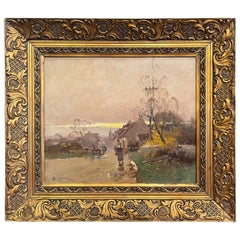
19th C. French Village Street Scene by Eugène Galien-Laloue, Signed “E. Lefevre”
Located in Dallas, TX
Decorate a study, living room, or library with this elegant and atmospheric antique oil on canvas painting. Created in France circa 1890 and set in a richly carved giltwood frame, th...
Category

Late 19th Century French Antique Giltwood Paintings

Materials

Giltwood

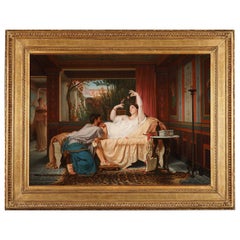
Painting "Le Moineau de Lesbie" by C.G. Brun, French School, 1860
By Charles Guillaume Brun
Located in PARIS, FR
Dimensions with frame : Height : 116 cm (45.7 in.) ; Width : 144 cm (56.7 in.) Dimensions without frame : Height : 85 cm (33.5 in.) ; Width : 118 cm (46.5 in.) Atrium with a rich Pompeian decor in which a young woman lying on a bed is playing with a sparrow, not paying attention to the man sat at her feet. This painting is a major work of art of C. G. Brun, well-know for the precision of his technic, by the elegance of its composition, the pureness of the colors, the refinement of the touch and the expressivity of the characters. This rare intimist scene in a interior decorated in the Pompeian style perfectly illustrates the taste of the time for the discovery of the villas of Pompei, thanks to the archeological excavations of the 18th century and the books published about them. To arrange its interiors based on the models of the Pompeian villas is then a trend that the most important people of that time will follow, as the Prince Napoléon, cousin of the Emperor Napoléon III, who orders the construction of a splendid Pompeian villa on the Avenue Montaigne, of which nothing remains but a few pictures and a painting by Gustave Boulanger, dated 1861 and called Répétition du « Joueur de flûte » et de la « Femme de Diomède » chez le Prince Napoléon. This painting illustrates the poem « Fletus passeris Lesbiae » from the collection « Carmina » written by Catulle (87-54 av. J.-C.) : in his work, the author, in love with Lesbie, a married woman living in Rome, puts on a show a sparrow as the main center of interest of its mistress who neglects her suitor. This theme has been represented many times in painting, like the version by Raphaël Poggi exposed at the Salon of 1865, or Lawrence Alma-Tadema in 1866 or Edward Poynter in 1907. Painting exposed, as reference number 467, at the Salon of 1861 on the picture rail of the Palais des Champs-Elysées Charles Guillaume Brun, born in Montpellier in 1825 and died in Paris in 1908, was registered in 1847 at the Paris Beaux-Arts school, where he studied under the direction of François- Edouard Picot (1786-1868) and of Alexandre Cabanel (1823-1889). His participation in the Paris Salon began in 1851 with genre subjects (Young girl doing her morning prayer), but as soon as 1853, he regularly sent Orientalist scenes, located in Algeria (Prayer in 1859, Rendez-vous in Constantine in 1861, Moorish woman...
Category

1860s French Napoleon III Antique Giltwood Paintings

Materials

Giltwood, Canvas

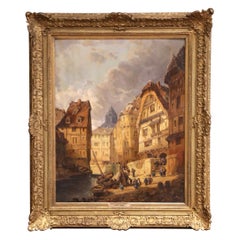
19th Century Belgium Harbor Scene Oil on Canvas Painting Signed Jules Bahieu
By Jules Bahieu
Located in Dallas, TX
Bring the energy of a bustling 19th-century European port into your home with this masterful oil on canvas. Painted circa 1880 and signed in the lower left corner by the artist Jules...
Category

Late 19th Century Belgian Antique Giltwood Paintings

Materials

Giltwood

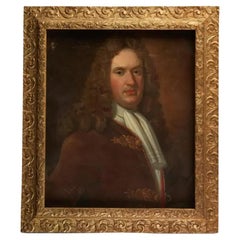
Antique 18c British School Portrait of a Gentleman
Located in LOS ANGELES, CA
Antique 18c British School Portrait of a Gentleman.
Category

18th Century British Louis XV Antique Giltwood Paintings

Materials

Canvas, Giltwood

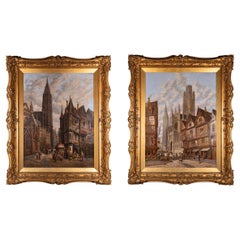
Pair of Late 19th Century Cathedral Oil Paintings By English Artist A. Bentley
Located in Dublin, IE
A magnificent pair of large oil paintings of cathedral city scenes by Augustus Bentley (British, fl. 1880–1910), each finely detailed work depicting bustling continental street scene...
Category

19th Century English Romantic Antique Giltwood Paintings

Materials

Canvas, Giltwood

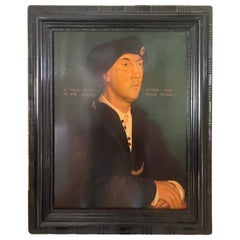
Oil on board portrait of a 16th style gentleman. Very stately.
Located in Buchanan, MI
Oil on board portrait of a 16th style gentleman in the manner of Hans Holbein. Very stately.
Category

19th Century Italian Gothic Antique Giltwood Paintings

Materials

Giltwood

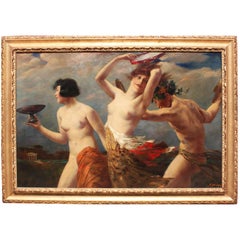
19th Century Oil on Canvas Bacchante Group Attributed to Leopold Schmutzler
Located in Los Angeles, CA
A large 19th century oil on canvas Bacchante group depicting two allegorical young semi-nude maidens dancing with pan, attributed to Leopold Schmutzler...
Category

Early 20th Century German Greco Roman Giltwood Paintings

Materials

Canvas, Giltwood

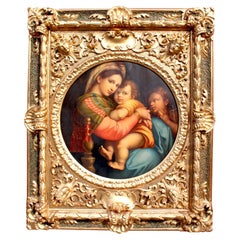
After Raffaello Sanzio 1483-1520 Raphael La Madonna della Seggiola Oil on Canvas
Located in Los Angeles, CA
A Fine Italian 19th Century Oil Painting on Canvas "La Madonna della Seggiola" after Raphael (Raffaello Sanzio da Urbino 1483-1520). The circular painted canvas depicting a seated Madonna holding an infant Jesus Christ next to a child Saint John the Baptist, all within a massive carved two-tone gilt wood, gilt-patinated and gesso frame, which is identical to the frame on Raphael's original artwork. This painting is a 19th Century copy of Raphael's Madonna della Seggiola painted in 1514 and currently exhibited and part of the permanent collection at the Palazzo Pitti, Galleria Palatina, Florence, Italy. The bodies of the Virgin, Christ, and the boy Baptist fill the whole picture. The tender, natural looking embrace of the Mother and Child, and the harmonious grouping of the figures in the round, have made this one of Raphael's most popular Madonnas. The isolated chair leg is reminiscent of papal furniture, which has led to the assumption that Leo X himself commissioned the painting. Circa: 1890-1900. Subject: Religious painting Painting diameter: 28 inches (71.1 cm) Frame height: 55 1/8 inches (140 cm) Frame width: 46 inches (116.8 cm) Frame depth: 5 1/8 inches (13 cm) Raffaello Sanzio da Urbino (Italian, March 28 or April 6, 1483 - April 6, 1520), known as Raphael, was an Italian painter and architect of the High Renaissance. His work is admired for its clarity of form, ease of composition, and visual achievement of the Neoplatonic ideal of human grandeur. Together with Michelangelo and Leonardo da Vinci, he forms the traditional trinity of great masters of that period. Raphael was enormously productive, running an unusually large workshop and, despite his death at 37, leaving a large body of work. Many of his works are found in the Vatican Palace, where the frescoed Raphael Rooms were the central, and the largest, work of his career. The best known work is The School of Athens in the Vatican Stanza della Segnatura. After his early years in Rome much of his work was executed by his workshop from his drawings, with considerable loss of quality. He was extremely influential in his lifetime, though outside Rome his work was mostly known from his collaborative printmaking. After his death, the influence of his great rival Michelangelo was more widespread until the 18th and 19th centuries, when Raphael's more serene and harmonious qualities were again regarded as the highest models. His career falls naturally into three phases and three styles, first described by Giorgio Vasari: his early years in Umbria, then a period of about four years (1504–1508) absorbing the artistic traditions of Florence, followed by his last hectic and triumphant twelve years in Rome, working for two Popes and their close associates. Raphael was born in the small but artistically significant central Italian city of Urbino in the Marche region, where his father Giovanni Santi was court painter to the Duke. The reputation of the court had been established by Federico III da Montefeltro, a highly successful condottiere who had been created Duke of Urbino by the Pope - Urbino formed part of the Papal States - and who died the year before Raphael was born. The emphasis of Federico's court was rather more literary than artistic, but Giovanni Santi was a poet of sorts as well as a painter, and had written a rhymed chronicle of the life of Federico, and both wrote the texts and produced the decor for masque-like court entertainments. His poem to Federico shows him as keen to show awareness of the most advanced North Italian painters, and Early Netherlandish artists as well. In the very small court of Urbino he was probably more integrated into the central circle of the ruling family than most court painters. Federico was succeeded by his son Guidobaldo da Montefeltro, who married Elisabetta Gonzaga, daughter of the ruler of Mantua, the most brilliant of the smaller Italian courts for both music and the visual arts. Under them, the court continued as a centre for literary culture. Growing up in the circle of this small court gave Raphael the excellent manners and social skills stressed by Vasari. Court life in Urbino at just after this period was to become set as the model of the virtues of the Italian humanist court through Baldassare Castiglione's depiction of it in his classic work The Book of the Courtier, published in 1528. Castiglione moved to Urbino in 1504, when Raphael was no longer based there but frequently visited, and they became good friends. He became close to other regular visitors to the court: Pietro Bibbiena and Pietro Bembo, both later cardinals, were already becoming well known as writers, and would be in Rome during Raphael's period there. Raphael mixed easily in the highest circles throughout his life, one of the factors that tended to give a misleading impression of effortlessness to his career. He did not receive a full humanistic education however; it is unclear how easily he read Latin. Early Life and Works His mother Màgia died in 1491 when Raphael was eight, followed on August 1, 1494 by his father, who had already remarried. Raphael was thus orphaned at eleven; his formal guardian became his only paternal uncle Bartolomeo, a priest, who subsequently engaged in litigation with his stepmother. He probably continued to live with his stepmother when not staying as an apprentice with a master. He had already shown talent, according to Vasari, who says that Raphael had been "a great help to his father". A self-portrait drawing from his teenage years shows his precocity. His father's workshop continued and, probably together with his stepmother, Raphael evidently played a part in managing it from a very early age. In Urbino, he came into contact with the works of Paolo Uccello, previously the court painter (d. 1475), and Luca Signorelli, who until 1498 was based in nearby Città di Castello. According to Vasari, his father placed him in the workshop of the Umbrian master Pietro Perugino as an apprentice "despite the tears of his mother". The evidence of an apprenticeship comes only from Vasari and another source, and has been disputed—eight was very early for an apprenticeship to begin. An alternative theory is that he received at least some training from Timoteo Viti, who acted as court painter in Urbino from 1495.Most modern historians agree that Raphael at least worked as an assistant to Perugino from around 1500; the influence of Perugino on Raphael's early work is very clear: "probably no other pupil of genius has ever absorbed so much of his master's teaching as Raphael did", according to Wölfflin. Vasari wrote that it was impossible to distinguish between their hands at this period, but many modern art historians claim to do better and detect his hand in specific areas of works by Perugino or his workshop. Apart from stylistic closeness, their techniques are very similar as well, for example having paint applied thickly, using an oil varnish medium, in shadows and darker garments, but very thinly on flesh areas. An excess of resin in the varnish often causes cracking of areas of paint in the works of both masters. The Perugino workshop was active in both Perugia and Florence, perhaps maintaining two permanent branches. Raphael is described as a "master", that is to say fully trained, in December 1500. His first documented work was the Baronci altarpiece for the church of Saint Nicholas of Tolentino in Città di Castello, a town halfway between Perugia and Urbino. Evangelista da Pian di Meleto, who had worked for his father, was also named in the commission. It was commissioned in 1500 and finished in 1501; now only some cut sections and a preparatory drawing remain. In the following years he painted works for other churches there, including the Mond Crucifixion (about 1503) and the Brera Wedding of the Virgin (1504), and for Perugia, such as the Oddi Altarpiece. He very probably also visited Florence in this period. These are large works, some in fresco, where Raphael confidently marshals his compositions in the somewhat static style of Perugino. He also painted many small and exquisite cabinet paintings in these years, probably mostly for the connoisseurs in the Urbino court, like the Three Graces and St. Michael, and he began to paint Madonnas and portraits. In 1502 he went to Siena at the invitation of another pupil of Perugino, Pinturicchio, "being a friend of Raphael and knowing him to be a draughtsman of the highest quality" to help with the cartoons, and very likely the designs, for a fresco series in the Piccolomini Library in Siena Cathedral. He was evidently already much in demand even at this early stage in his career. Influence of Florence Raphael led a "nomadic" life, working in various centres in Northern Italy, but spent a good deal of time in Florence, perhaps from about 1504. Although there is traditional reference to a "Florentine period...
Category

Early 1900s Italian Baroque Antique Giltwood Paintings

Materials

Canvas, Giltwood

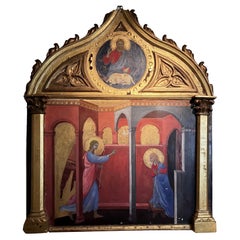
Italian Renaissance Style Religious Tempera Painting on Gold Ground Wood Panel
Located in Firenze, IT
This Italian tempera painted on gilt wood gold ground panel is a Tuscan religious artwork in the style of late Renaissance - early Gothic period. The sc...
Category

19th Century Italian Renaissance Antique Giltwood Paintings

Materials

Gold Leaf

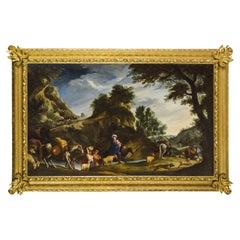
17th Century, Italian Painting by Pier Francesco Cittadini, Jacob and his Family
Located in IT
Pier Francesco Cittadini (Milan, 1616-Bologna, 1681) "Jacob and his family go to Egypt" Oil on canvas, cm 109 x 190 (canvas only) The valuable painting, made in oil on canvas, depicts Jacob and his family go to Egypt and we believe it can be, given the high quality painting, autograph work of Italian Pier Francesco Cittadini (Italy Milan, 1616 - Bologna, 1681) made after 1647. The work, in excellent condition is accompanied by a coeval frame in wood finely carved and golden. The scene depicted, which was confused with the Flight to Egypt in the past years, is instead identified with the biblical episode of Jacob’s journey. In the foreground, reading the painting from left to right, we see a caravan composed of animals, including donkeys, dromedaries, goats, dogs and horses and people, women, men and slaves, who carry on their journey along the banks of a river, following a path that to the right, would seem to lead to the through of a bridge. In addition to the watercourse is described an environment characterized by large rocks and impervious come far to cover the entire verticality of the canvas. On the left, in the distance, we see the tail of the caravan that runs along the steep path. Large trees enliven and harmonize the environment, as well as white and grey clouds characterize the predominantly clear sky and illuminated on the right by sunlight. The story is told in the Bible, Book of Genesis, 30, 25, passage in which is described the flight of Jacob from Haran after the contrasts with Laban, father of his wife Rachel. Jacob is the third great patriarch of the Bible. From his descendants originate the twelve generations of the people of Israel. He is the son of Isaac and Rebekah, who led him to flee from the wrath of Esau to Haran to seek refuge from his brother, Laban. At his uncle’s house Jacob met his daughter Rachel. As soon as he saw his cousin, Jacob was taken. Jacob will stay seven years in the service of Laban to marry his beloved Rachel. But Laban, with a deception, will give him in marriage first Lia, the least beautiful eldest daughter, and only after another seven years the splendid Rachel. From his first wife he will have several children, while Rachel will give birth to the beloved son, Joseph, who will become viceroy of Egypt. After years of service, Jacob asked to be paid with every dark-coloured garment among the sheep and every spotted and dotted garment among the goats. Laban accepted and sent away from his sons all the leaders of that kind. So Jacob took fresh branches of poplar, almond and plane tree, and flayed them, and put them in the troughs. The optical suggestion induced the goats and the sheep to conceive and give birth to dark, striped and dotted garments. He also ensured that all the strongest and healthiest leaders of the flock of Laban would drink near the barked branches, thus assuring a genetic superiority to his part of the flock. His flocks grew numerous and strong and he became richer than his relative, arousing envy. It was clear that Laban would not respect him much longer. At the suggestion of the Lord, Jacob decided to return to Canaan. Trying to avoid any possible dispute, he left with his family while Laban was absent for shearing sheep. But when, three days later, his uncle returned home, he became angry, feeling offended because Jacob had gone secretly and had not allowed him to greet his daughters and grandchildren. In addition, his teraphim, statuettes, or idols, which depicted the family deities, had disappeared. After 7 days of pursuit, Laban and his men reached Jacob’s group on Mount Gilead, in the mountainous region west of the Euphrates River, where his uncle and grandson had a stormy conversation. The younger man was outraged at being accused of stealing idols and told Labano to rummage through his family’s tents at will. Neither of them could know or even imagine that it was Rachel who took the idols and hid them in the saddle of the camel. During the search, she sat down firmly on the saddle, apologizing for not being able to get up, «because I usually have what happens to women» (Gen 31:35). So the loot wasn’t discovered. The author of this work was inspired by the composition of an engraving by Stefano Della Bella (1610-1664) of circa 1647. The engraving by Stefano della Bella bears the title "Iacob sur ses vieux jours quitte sans fascherie pour voir son filz Ioseph, sa terre et sa patrie" and is signed on the bottom left "Stef. of the Beautiful In. et fe." while on the right it is declared "Cum privil. Regis", that is with license of the king. Stefano Della Bella (Italy - Florence, May 18, 1610-Florence, July 12, 1664) was born in a family of painters, sculptors and goldsmiths and was left early orphan of his father sculptor, he dedicated himself first to the art of goldsmith at the school of Giovanni Benedetto Castiglione and Gasparo Mola, then turning his attention to drawing and engraving. He soon began drawing figures and copying the etchings of Jacques Callot, which inspired his early works. Under the protection of the Medici, in particular of Don Lorenzo, cadet son of Grand Duke Ferdinand I, Della Bella has the opportunity to make study trips to Rome, where he stayed from 1633-1636; In Rome he met French engravers and publishers of prints such as Israël Henriet and François Langlois, who influenced his decision to move to Paris in 1639, four years after the death of Callot. In Paris he soon reached, thanks to the engravings commissioned by Cardinal Richelieu, the success also worldly; he frequented courtiers, theatre artists and writers, while refusing too oppressive honors. In 1646-1647 he continued his travels in the Netherlands to Amsterdam, Antwerp and Dordrecht. He returned to Florence in 1650 and resumed working under the protection of the Medici court, working for his patrons. In 1656 he became a member of the Academy of Apatists. The painting object of this study is reasonably attributable to Pier Francesco Cittadini, or Pierfrancesco Cittadini, called the Milanese or the Franceschino (Italy - Milan, 1616-Bologna, 1681) as some exemplary stylistic comparisons proposed to follow can prove. Pier Francesco Cittadini was an Italian baroque painter, mainly active in Bologna. His artistic training first took place with the painter Daniele Crespi...
Category

Mid-17th Century European Baroque Antique Giltwood Paintings

Materials

Canvas, Giltwood

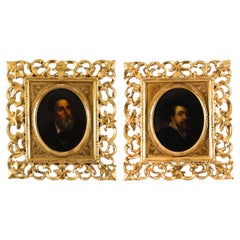
Antique Pair Self Portraits Rubens Titian Florentine Frames 19th Century
Located in London, GB
A lovely pair of Italian School oil on oval panel Florentine carved giltwood framed paintings, early 19th Century in date. One a self portrait of the artist after Peter Paul Rubens ...
Category

Early 19th Century Italian Antique Giltwood Paintings

Materials

Giltwood

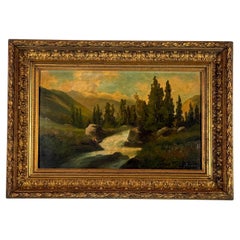
Late 19th Century Barbizon Style Landscape
Located in Scottsdale, AZ
Late 19th Century Barbizon Style Landscape. Beautiful Giltwood frame. Piece was purchased in France. Age appropriate wear, see detailed photos or message us with questions.
Category

Late 19th Century French Barbizon School Antique Giltwood Paintings

Materials

Giltwood, Paint

Émile René MENARD (1862-1930) Adam et Eve, Monumental Oil on Canvas, 1923
Located in Saint-Ouen, FR
Adam and Eve Oil on canvas signed below left «E.R. Ménard 1923» Labels on the back, including one from the Carnegie Institute in Pittsburgh, Pennsylvania in 1925. Titled in a cartou...
Category

1920s French Aesthetic Movement Vintage Giltwood Paintings

Materials

Canvas, Giltwood

Robert Duffy (American, 1928-2015), Painting of a Harbor Fisherman in Newport
Located in Atlanta, GA
Robert Duffy (American, 1928-2015). Oil On Canvas "Robert “Bob” Duffy is a “Plein Air Artist” who paints primarily in New England. Frequently, he can be seen in Northern Vermont ar...
Category

20th Century American Modern Giltwood Paintings

Materials

Canvas, Giltwood, Paint

Still Thinking About These?

All Recently Viewed