Meiji Wall Decorations

MEIJI STYLE

From 1868 to 1912, Emperor Mutsuhito oversaw an era of transformation in Japan. Formerly a country of feudalism and isolation, Japan entered an age of modernization influenced by newly established trade and exchange with the West. The Meiji period, or period of “enlightened rule,” also saw the global impact of the East Asian country’s culture. Japanese Meiji furniture was exhibited at expositions from Paris to San Francisco and created for export.

Prior to the Meiji era, furniture was mostly made by commission for the ruling class; now there were new domestic and international markets. European styles like Japonisme appropriated Japanese design while craftsmen in places like Wales and England employed japanning, a varnishing technique that approximated the appearance of lacquer for the surfaces of furnishings.

Meiji furniture made for Japanese homes and buildings constructed in Western styles resulted in taller tables, chairs, cabinets with large drawers and other features. The government invested in areas such as transportation and communication, and because people could freely choose occupations after the restrictions of feudalism, industries of various types were energized by expressive new ideas during those years. Art schools were formed and, for the first time, design was an area of study in the country, leading to the evolution of professional design as a career by the 1890s.

The work of Japanese designers was transmitted widely through lavishly illustrated pattern books that included designs for screens and lacquerware for the home. While screens today may be of use as decorative accents or partitions to ensure privacy in one’s space, Japanese screens were adorned with paintings and were featured in performing arts such as concerts, tea ceremonies and more. The color illustrations that characterize Meiji woodblock prints, a genre of Japanese art that grew out of 17th-century developments in printing and book publishing, depicted the sweeping changes that the era brought to East Asia.

Although it was a time of societal and cultural shifts, a bolstered interest in art and design elevated Japanese craft traditions. From colorful porcelain table lamps with silk shades and hardwood tables decorated with dark lacquer to cabinets featuring iron hardware and inlaid with mother-of-pearl, Meiji furniture showcased Japan’s artistic heritage to the world.

Find a collection of antique Japanese Meiji period case pieces and storage cabinets, decorative objects, wall decorations and more furniture on 1stDibs.

to
17
64
25
112
18
Height
to
Width
to
7,885
6,903
2,154
1,489
944
889
746
573
539
309
293
286
245
200
198
178
161
145
75
37
18
31
2
8
1
64
54
45
44
28
127
126
125
1
130
130
130
5
2
2
2
1
Style: Meiji
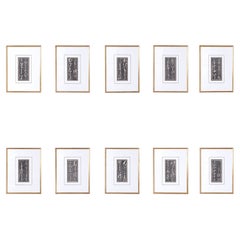
Set of Ten Antique Calligraphy Woodblock Panels
Located in Palm Beach, FL
Rare and remarkable set of ten 19th century Japanese calligraphy prints on paper executed in a woodblock technique and presented under glass in a gi...
Category

Late 19th Century Japanese Antique Meiji Wall Decorations

Materials

Paper

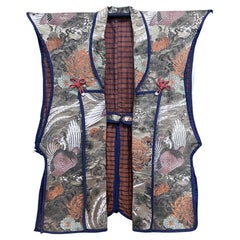
Japanese Ceremonial Brocade Jinbaori Vest Jacket
Located in Atlanta, GA
Made entirely from luxuriant woven brocade (kinran) for the exterior, this Japanese sleeveless jacket is called Jinbaori. Commonly worn by the Samurai warriors during 16th century when warfare was common in feudal Japan, this type of loose jacket, as a surcoat on top the armor, served as an extra protection, and more importantly as an identification in the battlefield with its bright colors and often Mons. In Edo period, the society was stabilized and Jinbaori gradually shifted toward a pure ceremonial function. The jacket on offer was unusual as it was tailored entirely from the bright Chinese brocade...
Category

19th Century Japanese Antique Meiji Wall Decorations

Materials

Silk, Brocade

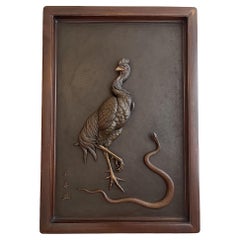
19th Century Japanese Iron and Mixed Metal Wall Panel
Located in North Miami, FL
A rare Meiji period 1868-1912 iron and mixed metal panel by a highly important early Meiji period artist. The ironwork panel housed within its original hardwood frame depicts the charming subject of a roaster fighting with snake, this particular early Meiji period panel demonstrates all the skills of a leading Mito school metalworker more used to making tsuba and sword fittings for the shogunate and now adapting his unique skills to satisfy the emerging western market, the naive charm and inspiration for this study is probably from an earlier Japanese or even Chinese painting, artists with such breathtaking metalworking skills as this artist could simply replace an artists paintbrush...
Category

19th Century Japanese Antique Meiji Wall Decorations

Materials

Metal, Brass, Bronze, Iron

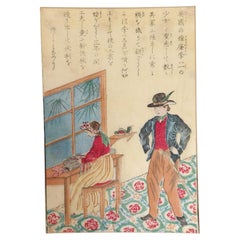
Antique Japanese Woodblock Print, William Lee Inventor of the Knitting Machine
Located in Amsterdam, Noord Holland
Antique Japanese Woodblock – William Lee Inventor of the Knitting Machine “Lives of Great People of the Occident ca. 1870 William Lee [1563–1614]: Inventor of the Knitting Machine (...
Category

19th Century Japanese Antique Meiji Wall Decorations

Materials

Paper

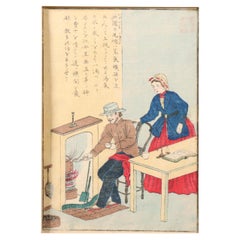
Japanese Woodblock Print, Lives of Great People of the Occident James Watt
Located in Amsterdam, Noord Holland
Antique Japanese Woodblock – Lives of Great People of the Occident James Watt (1736–1819) ca. 1873 attributed to Utagawa Kuniteru II The Englishman James Watt Experimenting with st...
Category

19th Century Japanese Antique Meiji Wall Decorations

Materials

Paper

Kanban, Japanese Shop Sign, Meiji Period, 1868-1912
Located in Camden, ME
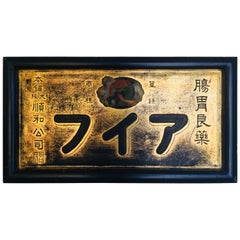
This 19th century Japanese Pharmacy sign advertises a popular stomach medicine, Aifu from the Juwa Co. in Osaka. The hand-painted registered trademark of the world looking through bi...
Category

19th Century Japanese Antique Meiji Wall Decorations

Materials

Lacquer

Framed Japanese Futon Cover Textile Art with Resist Yuzen Dye
Located in Atlanta, GA
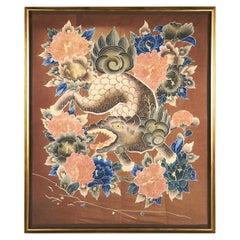
A large piece of framed Japanese textile circa late 19th to early 20th century, end of Meiji period. Seamed together from four vertical sectio...
Category

Early 20th Century Japanese Meiji Wall Decorations

Materials

Cotton, Wood

Gilt and Patinated Bronze Plaque, Japan, circa 1900
Located in Buenos Aires, Buenos Aires
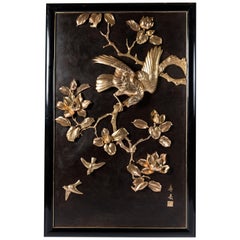
Gilt and patinated bronze plaque. Japan, circa 1900.
Category

Early 1900s Japanese Antique Meiji Wall Decorations

Materials

Bronze

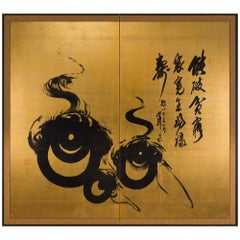
Japanese Two-Panel Screen Three Jewels of Buddhism
Located in Hudson, NY
Japanese two-panel screen: Three Jewels of Buddhism. Meiji period (1868-1912) painting. The three jewels of Buddhism are the teacher, the lesson, and the ...
Category

Late 19th Century Japanese Antique Meiji Wall Decorations

Materials

Silk, Wood, Paper

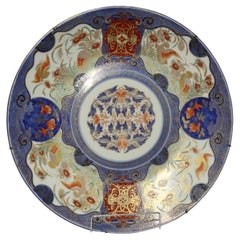
A Large Japanese Meiji Period Porcelain Charger, Circa 1890
Located in Central England, GB
A Superb Large Japanese Meiji Period Porcelain Charger, Circa 1890 This large scale Japanese porcelain charger is finely hand-painted in rich c...
Category

19th Century Japanese Antique Meiji Wall Decorations

Materials

Porcelain

Meiji wall decorations for sale on 1stDibs.

Find a broad range of unique Meiji wall decorations for sale on 1stDibs. Many of these items were first offered in the 21st Century and Contemporary, but contemporary artisans have continued to produce works inspired by this style. If you’re looking to add vintage wall decorations created in this style to your space, the works available on 1stDibs include wall decorations, asian art and furniture, decorative objects and other home furnishings, frequently crafted with wood, fabric and other materials. If you’re shopping for used Meiji wall decorations made in a specific country, there are Asia, East Asia, and Japan pieces for sale on 1stDibs. While there are many designers and brands associated with original wall decorations, popular names associated with this style include Toyohara Chikanobu, Shunyu, and Toyonobu Utagawa. It’s true that these talented designers have at times inspired knockoffs, but our experienced specialists have partnered with only top vetted sellers to offer authentic pieces that come with a buyer protection guarantee. Prices for wall decorations differ depending upon multiple factors, including designer, materials, construction methods, condition and provenance. On 1stDibs, the price for these items starts at $400 and tops out at $95,000 while the average work can sell for $4,000.