Silk Tapestries
to
94
443
409
689
219
15
Height
to
Width
to
108
41
12
12
9
7
7
6
5
4
3
3
3
2
1
205
283
201
234
71
83
33
16
1
9
3
4
2
9
8
6
3
4,215
2,878
966
923
233
455
409
283
149
126
923
782
820
74
45
43
21
14
Material: Silk
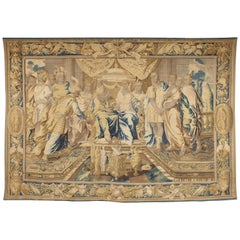
Huge 17th C. Regal Flemish baroque Historical tapestry Royal court Antique LA CA
Located in West Hollywood, CA
Huge 17th C. Regal Flemish baroque Historical tapestry Royal court Antique LA CA . The period followed Renaissance and preceded Rococo and Neoclassical styles. The movement exuberant...
Category
17th Century Belgian Antique Silk Tapestries
Materials
Wool, Silk, Paint

$119,250 Sale Price
25% Off
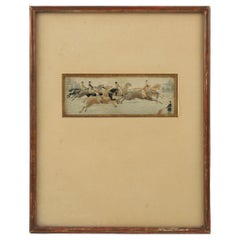
Napoleon III Silk Embroidery Artwork with Horse Race Scene, circa 1880
Located in Atlanta, GA
Boost your private interior with the timeless elegance of this exquisite Napoleon III embroidery artwork, a rare masterpiece crafted in France during the late 19th century. Showcasin...
Category
Late 19th Century French Napoleon III Antique Silk Tapestries
Materials
Fabric, Silk, Glass, Wood
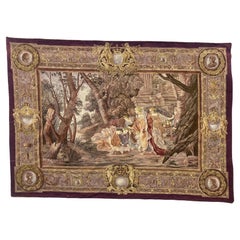
Pretty vintage French needlepoint tapestry, « Moses saved from the Nile »
Located in Saint Ouen, FR
"Experience the timeless elegance of this exquisite French Aubusson style tapestry, capturing the essence of a biblical episode, where Moses in his cradle is pulled from the waters o...
Category
Mid-20th Century French Aubusson Silk Tapestries
Materials
Wool, Silk
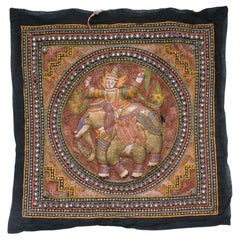
Burmese Kalaga Embroidered Tapestry Circa 1930’s
Located in Ottawa, Ontario
Burmese Kalaga Embroidered Tapestry
Circa 1930’s
A celestial dancer ‘Apsara’, riding on a white elephant.
Elaborately worked tapestry padded and textu...
Category
Mid-20th Century Burmese Other Silk Tapestries
Materials
Silk
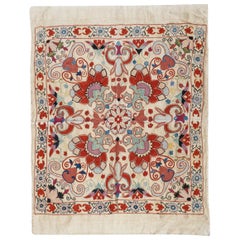
26x35 in 100% Silk Wall Hanging. Hand Embroidered Tablecloth. Modern Throw
Located in Spring Valley, NY
Celebrate the rich heritage of Asian craftsmanship with this exquisite 100% silk Suzani textile, meticulously hand-embroidered by skilled artisans. A true work of art, this piece emb...
Category
2010s Central Asian Suzani Silk Tapestries
Materials
Silk
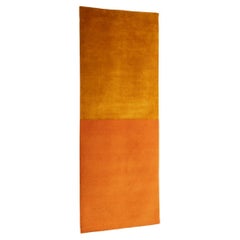
Gold/Orange Handwoven Tapestry by Calyah
Located in Geneve, CH
Gold/Orange handwoven tapestry by Calyah
Unique piece
Materials: Tibetan wool and silk.
Dimensions: 170 x 65 x 1 cm
Colour: gold/orange.
Also available in red/yellow, white/blue...
Category
2010s Nepalese Post-Modern Silk Tapestries
Materials
Wool, Silk
$2,898 / item
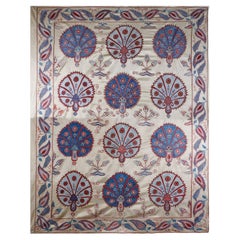
Ottoman Silk Carnation Garden Hand Embroidered Suzani Tapestry
Located in London, GB
Discover the epitome of luxury with our Ottoman Carnation Motif Hand Embroidered Silk Suzani Tapestry. This exquisite piece features intricate carnation motifs, meticulously hand-emb...
Category
2010s Turkish Suzani Silk Tapestries
Materials
Silk
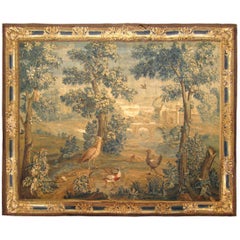
Antique 18th Century French Landscape Verdure Tapestry, with Birds in the Woods
Located in New York, NY
An antique 18th century French Beauvais landscape verdure tapestry, size 12'1 H x 10'1 W. This tapestry features a group of birds in a verdant woodland setting near a bridge, with th...
Category
18th Century Belgian Antique Silk Tapestries
Materials
Wool, Silk
Antique French Aubusson Tapestry, Greenery 19th century - W1m84xH2m20 - N° 1465
Located in Paris, FR
This Tapestry has been Cleaned by our artisan workshop
Epoch: 19th century
Style: Greenery
Condition: Perfect condition (Revised by our artisan workshop)
Material: Wool
Width: 184 cm...
Category
19th Century French Antique Silk Tapestries
Materials
Wool, Silk
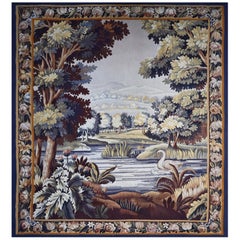
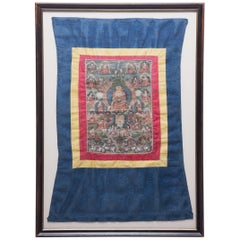
Tibetan Thangka of Sakyamuni with Silk Brocade, C. 1880
Located in Chicago, IL
Historically in Buddhist Tibet, patrons and monks commissioned thangka art, or sacred painting, to focus their meditations and prayers. This 19th-century Tibetan Thangka, painted in rich red, green, and blue pigments, still maintains incredible vibrancy. The central figure is the Sakyamuni Buddha, seated in the diamond position with alms bowl...
Category
Late 19th Century Tibetan Tibetan Antique Silk Tapestries
Materials
Linen, Silk
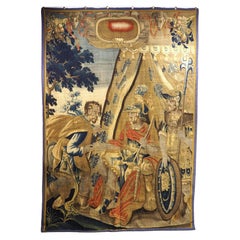
17th Century Brussels Silk and Wool Tapestry Depicting a Roman Scene
Located in Dallas, TX
Hand-woven in the 1600s in Brussels, Belgium, this silk and wool tapestry depicts a citizen paying homage to a Roman general. During the 17th century, Brussels tapestries were highly...
Category
17th Century Belgian Antique Silk Tapestries
Materials
Wool, Linen, Silk
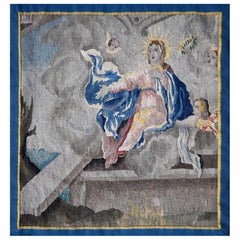
Tapestry Fragment, Flanders 17th Century – The Assumption Of Mary - No. 1565
Located in Paris, FR
Tapestry Fragment, Flanders 17th Century – The Assumption Of Mary - No. 1565
Artist: Manufacture Des Flandres 17 ème Siècle
Period: 17th century
Condition: Perfect condition
Material...
Category
17th Century French French Provincial Antique Silk Tapestries
Materials
Wool, Silk
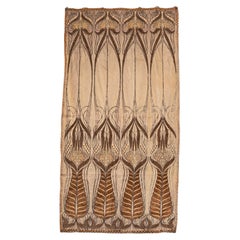
Art Nouveau Embroidery, early 20th C. France
Located in Istanbul, TR
A rare item to comedy, has some over all ware., some structural damages. No lining.
Category
Early 20th Century French Art Nouveau Silk Tapestries
Materials
Metallic Thread
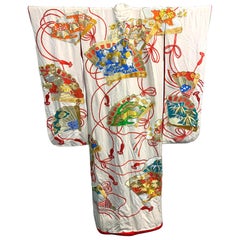
Exceptional Embroidered Vintage Japanese Ceremonial Kimono
Located in Atlanta, GA
A visually striking vintage Uchikake Wedding Kimono/Robe for ceremonial occasion, circa 1930s-1950s in the Oriental Art Deco style. The bridal garment...
Category
20th Century Japanese Japonisme Silk Tapestries
Materials
Cotton, Silk
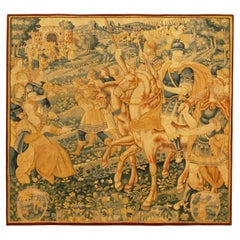
17th Century Flemish Historical Tapestry with the Roman General Coriolanus
Located in New York, NY
A Flemish historical tapestry panel from the 17th century, featuring the famed Roman general, Gaeus Marcius, now called Coriolanus, returning triumphantly from the battle in which he captured the Volscian town of Corioli, arriving on horseback with his Volscian prisoners in tow, and greeted by his domineering mother, Volumnia, as well as the cheering Roman townspeople. Enclosed within a narrow monochrome border. Wool with silk inlay. Measures: 8’6” H x 7’10” W.
Hanging: The tapestry comes ready for hanging, with linen backing and a strip of hook and loop tape at the top end, which can be connected to the opposite side of the supplied hook and loop tape, which could be tacked to your wall. For those who prefer the use of a tapestry rod...
Category
Early 17th Century Belgian Antique Silk Tapestries
Materials
Wool, Silk
$25,996 Sale Price
20% Off
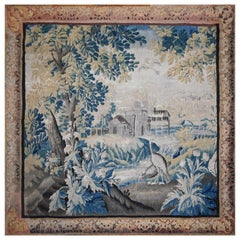
Greenery tapestry Flanders Oudenaarde - 18th century Dim 2.42x2.52 - No. 1346
Located in Paris, FR
specialized in the Purchase, Sale, Traditional Cleaning, Restoration - Conservation, Expertise - Estimation of Old and also Contemporary Tapestries, Carpets, Kilims and Textiles. We ...
Category
1760s French Aubusson Antique Silk Tapestries
Materials
Wool, Silk
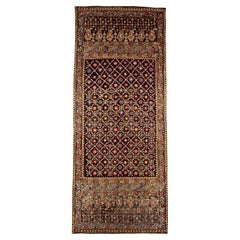
Antique Rare Ceremonial Shoulder Cloth (Kain Nyulam), South Sumatra
Located in Point Richmond, CA
Antique Rare Ceremonial Shoulder Cloth (Kain Nyulam), South Sumatra
This fully embellished and intricately embroidered shoulder cloth (kain nyulam) is a rare and unique example of t...
Category
Early 20th Century Indonesian Tribal Silk Tapestries
Materials
Cotton, Silk, Sequins
Bobyrug’s pretty antique French needlepoint chair cover tapestry
Located in Saint Ouen, FR
Exquisite late 19th-century French needlepoint tapestry originally from a chair cover but can be also use for cushions, or frames. Adorned with a captivating floral design from the N...
Category
Late 19th Century French Aubusson Antique Silk Tapestries
Materials
Wool, Silk
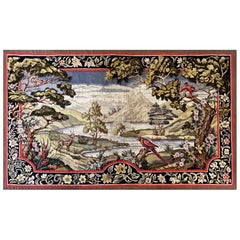
1930 Royal Manufacture Aubusson Animal Forest Tapestry Silk Wool Red Green
Located in Paris, FR
🌿 What Is a Greenery (Verdure) Tapestry?
A greenery tapestry (French: verdure) typically features:
Lush landscapes with stylized trees, foliage, plants, and flowers
Often includes...
Category
1930s French Aubusson Vintage Silk Tapestries
Materials
Wool, Silk
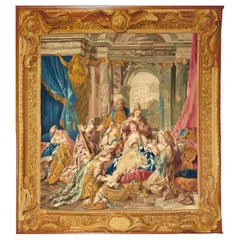
Tapestry Royal Manufacture of Aubusson, Louis XVI period 1738 at the Gobelins
Located in Madrid, ES
Tapestry from the Royal Manufacture of Aubusson, Louis XVI period , made in 1738 at the Gobelins
One panel from a series of Gobelins tapestries depicting the History of Esther, illustrating Esther seated and attended by handmaidens, one washing her feet in golden basin, another fastening a bracelet, another offering a mirror, all observed by Mordecai, woven in the workshop of Michele Audran after a design by J. F. de Troy.
The Toilet of Esther c.1778-85.Royal Collection Trust-Queens Audience Chamber
Windsor Castle
The Sketches for the Esther Cycle by Jean-François de Troy (1736)
“and the maid was fair and beautiful; whom Mor’decai, ..., took for his own daughter.” (Est. 2:7)
A supple and undulating genius, both a flattering portraitist and a prolix history painter, as well as a brilliant genre painter, in a gallant or worldly vein, Jean-François de Troy (Paris, 1679 – Rome, 1752), solicited, although he had passed the threshold of old age, a new royal commission up to his ambitions. To obtain it, he submitted – successfully - for the approval of the Bâtiments du roi (administration), seven modelli painted in 1736 with his usual alacrity.
Inspired by one of the most novelistic texts of the Old Testament, the Book of Esther, these sketches in a rapid and virtuoso manner were transformed by the artist, between 1737 and 1740 into large cartoons intended to serve as models for the weavers of the Gobelins factory. Showing undeniable ease and skill in the composition in perfect harmony with the sensitivities of the times, the tapestry set met with great success.
The Story of Esther perfectly corresponded to the plan of the Bâtiments du roi to renew the repertoire of tapestry models used for the weavers of the royal factories while it also conformed to the tastes of Louis XV’s subjects for a fantastical Orient, the set for a dramatic tale in which splendour, love and death were combined. Indeed, no tapestry set was woven in France during the 18th century as often as that of Esther.
The series of modelli painted by de Troy during the year 1736 looks to the history of French painting and decoration under Louis XV as much as it does the history of the Gobelins. It probably counts among the most important rococo pictorial groups to have remained in private hands. First the Biblical source illustrated by De Troy which constitutes the base of one of the richest iconographical traditions of Western art will be considered. Then the circumstances and specific character of French civilisation during the reigns of Louis XIV and Louis XV which contributed to making the theme of Esther a relevant subject, both attractive to contemporaries and remarkably in line with the sensitivities of the time will be elucidated.
An examination of the exceptional series of sketches united here, the cartoons and the tapestries that they anticipate as well as a study of their reception will close this essay. The Book of Esther: A scriptural source at the source of rich iconography.
The origin of the Esther tapestry set by Jean-François de Troy – origin and creation of a masterpiece
According to the evidence of one of the artist’s early biographers, the chevalier de Valory, author of a posthumous elegy of the master, read at the Académie royale de peinture et de sculpture on 6 February 1762, it was apparently due to early16 rivalry with François Lemoyne (1688-1737), his younger colleague who had precisely just been appointed First Painter to the King in 1736, that had encouraged François de Troy to seek a commission allowing him to show off his ease and his promptitude at the expense of a rival who was notoriously laborious: “M. De Troy, retaining some resentment of the kind of disadvantage which he believed to have suffered compared with his emulator looked to regain some territory by making use of the facility his rival did not possess.
Lemoyne was excessively long in the creation of his works,and M. De Troy of a rare celerity: consequently, with this particular talent, the latter offered to the court to make paintings appropriate to be executed at the Gobelins Factory; and it is to this circumstance that we owe the beautiful series of the Story of Esther, which would be sufficient alone to give him a great reputation.”17 Beyond the suspicion inspired by the topos, which still constitutes, more or less, a tale of rivalries between artists in ancient literature, there is probably some truth in what Valory reports although A.-J. Dezalier d’Argenville (who indicates rather spitefully that de Troy did not hesitate to “cut prices” to impose himself, benefitting from the productivity assured by the unlikely rapidity of his brush)18 proves to be more evasive: “As he looked to busy himself, he had offered to make the paintings that serve as models for the King’s tapestries cheaply: which did not please his colleagues.
He was given a choice of two tapestry series to be made and he took the Story of Esther and that of Jason”.19 Whether or not the choice was actually left to de Troy (which would appear rather casual on the royal administration’s part all the same), it seems likely that the artist, whose contemporaries extol his “fire”, as the faculty of invention was then called, must have ardently aspired to the possibility of using on a very large scale the “creative genius” with which Dezallier d’Argenville credits him. The decoration of the private apartments, the fashion for which Louis XV had promoted at Versailles and Fontainebleau, offered little opportunity to excel in this area. Other than painting for altarpieces, only tapestries could allow comparison with Lemoyne who had been granted – unfortunately for him – a major decoration: the enormous ceiling of the Hercules Room at Versailles. Favoured by the recent improvement in France’s financial situation, the revival of patronage offered de Troy a commission fitting for him, in a field in which, however, he had hardly any experience.
Anxious to renew the repertoire of models available to the Gobelins factory, the Duc d’Antin, surintendant des Bâtiments du roi from 1708 to 1736 followed by his successor, Philibert Orry comte de Vignory, gave him the task of producing seven large cartoons inspired by the Book of Esther corresponding to the brilliant sketches or modelli which de Troy had produced in one go, or almost (very few preparatory drawings can in fact be linked to the Esther cycle and all seem to be at the execution stage of the cartoons).20 Subjected to the approval of the Administration des Bâtiments according to the procedure in use for projects being planned for the Gobelins, sketches made rapidly during 1736 were approved and the project launched immediately. Thereupon came the news of François Lemoyne’s death, who, ground down by work and a victim of his private torment, committed suicide on 4 June 1737.
Against all expectations, de Troy did not replace his rival in the position of First Painter (which remained vacant until the appointment of Charles Coypel in January 1747), which would perhaps have made him too obviously the beneficiary of the drama. The awarding of the position of Director of the French Academy in Rome came to console him while he had already produced (or he was in the process of finishing), in Paris, three of the seven cartoons of the cycle (The Fainting of Esther finished in 1737 and the Toilet and Coronation of Esther, both finished in 1738).
De Troy, we can see, did not follow the order of the narrative but began with the subjects which apparently offered the least difficulty because he had already depicted them, or because they fall into a strong pictorial tradition (such is the case especially for the Fainting of Esther). He had hardly settled at the Palazzo Mancini in August 1738, when his first task which awaited the new director of the French Academy naturally consisted of honouring the royal commission and finishing without delay the final cartoons of the Story of Esther after the sketches he must have taken with him. As prompt as ever, de Troy discharged himself of the execution of the four remaining cartoons in only two years, by beginning with the largest format which allowed him to strike the imagination and to impose himself as soon as he arrived on the Roman stage: the Triumph of Mor’decai which was finished in 1739 (like Esther’s Banquet).
The following year, the Mor’decai's Disdain and The Sentencing of Haman were brought to an end in the same Neo-Venetian style, obviously tributary to Veronese with its choice of “open” monumental architecture which is characteristic of the entire cycle.21 The series, it should be noted, was almost augmented with some additional scenes in the mid 1740s. Indeed, the first tapestry set finished at the Gobelins in 1744 proved to be unsuitable for the arrangement of the Dauphine’s apartments at Versailles for which it had been intended to decorate the walls the following year (cf infra). Informed of this, de Troy, considering that the story of Esther offered “several good subjects,” immediately offered to illustrate one or new subject among those “which could appear to be the most interesting”.
The directeur des Bâtiments Orry, who managed the State’s accounts, obviously judged it less costly to have one of the tapestries widened to fill in the end of the Dauphine’s bedroom,22 which has probably deprived us of very original compositions, because de Troy had already illustrated the most famous themes, those that benefitted from a strongly established iconographical tradition and from which it was not easy to deviate
The Tapestry Set of the Story of Esther
Placed on the tapestry looms of the Gobelins at the end of the 1730s in Michel Audran’s workshop, the cycle created by de Troy aroused true infatuation. The few hundred tapestries made between 1738 and 1797 – all in high-warp tapestry and woven in wool and silk except for four in low-warp made in Neilson’s workshop – show the impressive success of a tapestry set that was without any doubt the most frequently woven of the 18th century in France.
29 Only three cartoons had been delivered by de Troy in 1738 when the first tapestry set was begun by Audran under the expert eye of Jean-Baptiste Oudry to whom the Directeur général des bâtiments, Philibert Orry had assigned the (weekly) supervision of the weaving. During the summer of 1738, the piece of the Fainting of Esther, which Oudry judged to be admirable, was finished.
During the winter of 1742, Oudry informed Orry that about two ells of the Triumph of Mor’decai had been made “with no faults”,that the Coronation of Esther was finished and that the Esther at her Toilet “a very gracious tapestry” was “a little over half” finished. Exhibited at Versailles in 1743, these two last pieces were admired by Louis XV and the Court.
On 3 December 1744, the set of seven tapestries was finally delivered to the Garde Meuble. It was intended, the honour was not slight, to decorate the apartments of the Infanta Maria Teresa Rafaela of Spain whose marriage to the young Dauphin Louis-Ferdinand had been fixed for the following year (it took place on 23 February 1745). Apparently it was thought that the theme of Esther the biblical heroine and wife of a foreign sovereign was appropriate for the apartments of the Spanish Dauphine.
As early as the month of March, the architect Ange-Jacques Gabriel informed de Troy that her grand cabinet was decorated with the “Esther tapestry set” specifying however that “for lack of two small or one large piece, we have not been able to decorate the end of the room”. This difficulty led immediately to the Banquet episode being woven a second time in two parts (they were delivered to the Garde-Meuble on 30 December 1746) to garnish the panels on each side of the bed of the Dauphine who would hardly enjoy them (she died on 22 July 1746 and the decoration was installed for the new Dauphine Maria Josepha of Saxony).
The appearance of the set’s remarkable border, which imitated a richly sculpted wooden frame, should be mentioned. Conceived in 1738 by the ornamentalist Pierre Josse-Perrot and used in the later weavings until 1768, it tended to reinforce the resolutely painterly appearance of the tapestry set which, in this regard, pushed the art of tapestry as far as its ultimate mimetic possibilities. With the exception of Mor’decai's Disdain which had been removed earlier, the “editio princeps” of the story of Esther (from then on in nine pieces) remained at Versailles until the Revolution. Of the eight surviving tapestries, four are at the chateau of Compiègne and four belong today to the Mobilier National. No less than seven tapestry sets reputed to be complete (one of them in fact only had six tapestries) would be produced officially at the Gobelins up to 1772.
Literature:
1- The Œuvres mêlées of an emulator of Racine, the Abbé Augustin NADAL thus include an Esther. Divertissement spiritual which is exactly contemporary with Jean François de Troy’s cycle since it was performed in 1735 and published in Paris three years later.
2-Le Siècle de Louis XIV, 1751, 1785 ed., p. 96-97 for French ed.
3- Lemoyne and de Troy had been obliged to share the First Prize in the competition organised in 1727 between the most prominent history painters of the Académie Royale.
4- Mémoires…, pub. L. DUSSIEUX et al., 1854, II, p.265.
5-The fact that de Troy, at the risk of falling out with his colleagues, did not hesitate to make use of prices in order to convince the new directeur des Bâtiments Philibert Orry, is confirmed by Mariette who adds tersely “it caused much shouting” (pub. 1851-1860, II, p. 103).
6- Abrégé de la vie des plus fameux peintres…, ed. 1762, IV, p. 368-369 20 Early comments on the painter are inclined to present him as a kind of “pure painter”, doing without the medium of drawing, a few intermediary studies between the Esther sketches and the large cartoons at the Louvre nevertheless show that de Troy used red chalk (see in the catalogue, the notice for the Meal of Esther and Ahasuerus under the entry drawing) to change one or other figure.
7-C. GASTINEL-COURAL (cat. exp. PARIS, 1985, p. 9-13) as well as the article by J. VITTET, exh. cat. LA ROCHE-GUYON, 2001, p. 51-55.
8-The Hermitage in St. Petersburg conserves five tapestries of these two royal gifts whose provenance still awaits elucidation (as far as we are aware). In 1766, the Grand Marshal of Russia, Count Razumovski (or Razamowski), acquired the Fainting and the Banquet extracted from the sixth weaving (J. VITTET, 2001, p. 53).
9- Lettres écrites de Suisse, d’Italie…,quoted by J. VITTET, op. cit., p. 54.
10-The tapestry set remained in the hands of a branch of the Hapsburg-Lorraine family until 1933 (ibid. P. 54).
11-Quoted by Chr. LERIBAULT, 2002, p. 97, note 269.
12-Y. CANTAREL-BESSON, 1992, p. 241.
Catalogue
The Esther at her Toilet
Oil on canvas, 57 x 51 cm Provenance: Painted in 1736 at the same time as the six other modelli of the Story of Esther intended to be presented, for approval, to the direction des Bâtiments du Roi; perhaps identifiable among a lot of sketches by Jean-François de Troy in the post mortem inventory of the amateur, historian and critic Claude-Henri Watelet (1718-1786) drawn up on 13 January 1786 and following days (A.N. T 978, n° 30) then in the sale of the property of the deceased, Paris, 12 June 1786, n° 33; Paris, François Marcille Collection (who owned a series of six sketches from which the Triumph of Mor’decai was missing, see infra); Paris, Marcille Sale, Hôtel Drouot, 12-13 January 1857, n° 36; Asnières, Mme de Chavanne de Palmassy ( ?) collection; Paris, Galerie Cailleux; Paris, Humbert de Wendel collection (acquired from the Galerie Cailleux in 1928); by inheritance in the same family; Paris, Sotheby’s, 23 June 2011, n° 61. In order not to add unnecessarily to the technical commentary on each work, the catalogue raisonné by Chr. Leribault which contains a substantial bibliography on the series should be referred to. The other bibliographical references only concern the publications and exhibitions to have appeared and been presented more recently. Bibliography and Exhibitions: Chr. LERIBAULT, 2002, n° P. 247 (repr.); E. LIMARDO DATURI, 2004, p. 28; Exh. cat. NANTES, 2011, p. 138, n° 34, referred to in note 1; Sotheby’s catalogue, Tableaux anciens et du XIXe siècle, 23 June 2011, n° 61 (repr.).
Related Works:
Tapestry cartoon: The cartoon (oil on canvas, 329 x 320 cm), the third made by the artist in Paris after the sketches had been approved by the direction des Bâtiments, is in the Louvre (Inv. 8315). It previously bore the painter’s signature and the date 1738 (inscriptions which are found on the tapestries). The royal administration paid 1600 livres for it on 21 June 1738 and it was exhibited at the Salon in the year of its creation.
Summary Biography
1679 (27 January): Baptism in Paris (Parish of St. Nicolas du Chardonnet) of Jean-François de Troy, son of the painter François de Troy and Jeanne Cotelle, sister of the painter Jean II Cotelle.
1696-1698: Studies (apparently rather turbulent) at the Académie royale de peinture et de sculpture.
1698-1708: First trip to Italy. Is obliged to leave Rome in January 1711 after a tempestuous affair (a duel?), de Troy extends the traditional Roman experience as a pensionnaire at the Académie de France by also visiting Tuscany where he stays for a long time, Venice (his art in face has a strongly Venetian character) and Genoa.
1708: De Troy (whose father had been elected Director of the Académie royale de peinture et de sculpture on 7 July) is agréé and immediately received at the Académie with Apollo and Diana Piercing with their Arrows the Children of Niobe (Montpellier, Musée Fabre) on 28 July.
1710: First royal commission, paid for on 10 May (a sketch representing “the Promotion of the Order of the Holy Spirit” for the tapestry series of the History of the King).
1716: Jean-François de Troy is elected Assistant Professor at the Academy.
1720: He is appointed Professor.
1723: The artist creates the double portrait of Louis XV...
Category
Early 18th Century French Baroque Antique Silk Tapestries
Materials
Wool, Silk
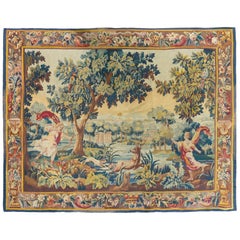
Antique 19th Century French Verdure Landscape Tapestry
Located in New York, NY
Antique 19th Century French Verdure tapestry depicting a pristine and lovely landscape on the banks of a river with cupid hunting deer. The scene is surrounded by verdant and floral ...
Category
19th Century French Aubusson Antique Silk Tapestries
Materials
Tapestry, Wool, Silk
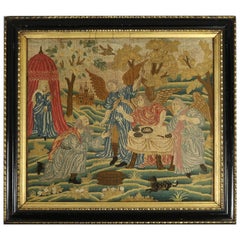
Early 18th Century Needlework Picture Depicting Angels
Located in Chelmsford, Essex
Early 18th Century Antique Silkwork Embroidery Picture. The embroidery is worked in silk on linen ground, in tent stitch or petit point. Colours pinks, blues, cream, gold, greens and...
Category
1730s Antique Silk Tapestries
Materials
Silk
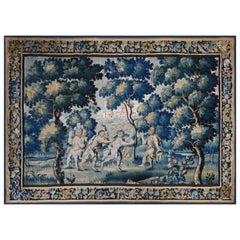
Flanders tapestry 17th century - Children
s games - L3m55xH2m40 - No. 1367
Located in Paris, FR
A stone's throw from the Eiffel Tower We are a family business specializing in the purchase, sale and
expertise of old, modern and contemporary tapestries, rugs, kilims and textiles....
Category
17th Century French Aubusson Antique Silk Tapestries
Materials
Wool, Silk
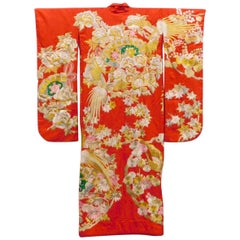
Exceptional Embroidered Japanese Ceremonial Kimono
Located in Atlanta, GA
A visually striking antique Uchikake Wedding Kimono/Robe for ceremonial occasion, circa end of Meiji to Taisho period 1910s-1930s. This bridal outer garment is of a bright red color ...
Category
20th Century Japanese Japonisme Silk Tapestries
Materials
Brocade, Silk
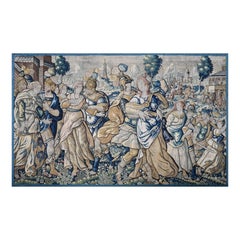
Rape of the Sabine women, antique Flemish Tapestry End of 16th century - N° 1473
Located in Paris, FR
Rape of the Sabine Women, Flanders Tapestry, Late 16th Century - L4m22xh2m35 - No. 1473
Manufacture Des Flandres
Epoque: 16th century
Style: Haute époque-Renaissance-Louis XIII
Condi...
Category
16th Century French French Provincial Antique Silk Tapestries
Materials
Wool, Silk
$22,720 Sale Price
27% Off
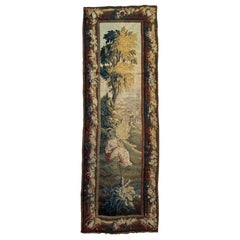
19th Century French Aubusson Verdure Tapestry
Located in New York, NY
Place this long and narrow antique tapestry in a staircase or in between two windows for a pop of color. Handwoven in Aubusson, France in the 19th Century, this lovely verdure wall p...
Category
Mid-19th Century French Aubusson Antique Silk Tapestries
Materials
Tapestry, Wool, Silk
$2,720 Sale Price
20% Off
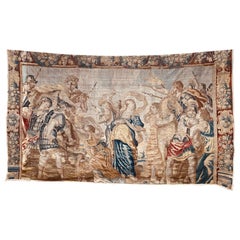
17th Century Tapestry/Gobelein Alexander The Great And Darius III Persian King
Located in Berlin, DE
Monumental Museum tapestry/Gobelein 17th century Battle scene Alexander the Great and Darius III Persian King
The characters are depicted in life size. An absolute museum unique.
Dimension: 530x320 cm
Description:
Monumental tapestry...
Category
17th Century French Antique Silk Tapestries
Materials
Wool, Silk
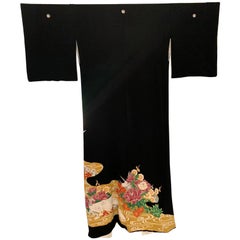
Vintage Japanese Formal Black Silk Kimono
Located in Atlanta, GA
A vintage Japanese silk Kuro Tomesode Kimono, circa 1960s-1980s. Kuro Tomesode is a dress for married woman for the most formal occasions, equivalent of the evening gowns in the west. It is overall black, decorated only with patterns of bright colors on the bottom. This kimono has three Mon family crests on the front and back shoulder. It is lined with white silk in its interior. On the front, it features exposed white stitches around neck and breast, a very subtle and elegant touch. The bottom part of the kimono is decorated with lavish woven design with embroidery accents that depicts a group of pheasants among peonies and other blossoms along a flowing stream. Great contrast in the colors and attention to details. An very elegant textile for wall...
Category
Mid-20th Century Japanese Japonisme Silk Tapestries
Materials
Silk
1870 Antique French Tapestry Wool
Silk Tapestry Beige Handmade Tapestry
Located in New York, NY
Amazing Rare Antique French Tapestry Fine Wool & Silk
Beige
5'2" x 8"
158cm x249cm
Circa 1870
"This is a very fine Authentic Antique French Tapestry in Wool & Silk....
Category
1870s French Antique Silk Tapestries
Materials
Silk
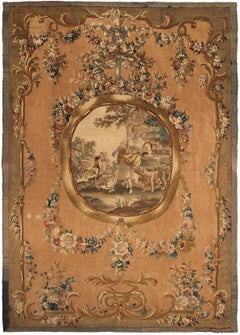
Flemish 17th-18th Century Baroque Historical Tapestry Fragment "A Royal Family"
Located in Los Angeles, CA
A fine and large Flemish 17th-18th century Baroque figural historical tapestry fragment. The large tapestry depicting an allegorical Royal family scene of a warrior meeting his new b...
Category
18th Century Belgian Baroque Antique Silk Tapestries
Materials
Wool, Silk
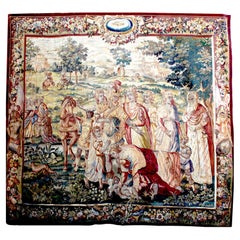
$38,000 Sale Price
20% Off
French Royal Aubusson Tapestry 18th century - Homage to Psyche - N° 1613
Located in Paris, FR
Tapestry, Royal Aubusson Manufactory, 18th century - Homage to Psyche after Isaac Moillon - 358cm W x 240cm H - No. 1613
Homage to Psyche
After a cartoon by Isaac Moillon
An elega...
Category
18th Century French Aubusson Antique Silk Tapestries
Materials
Wool, Silk
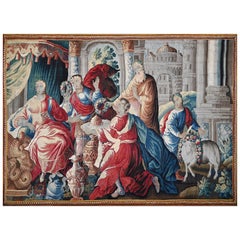
Framed Antique Chinese Embroidery Qing Dynasty Provenance
Located in Atlanta, GA
A Chinese antique embroidery presented in a museum quality frame, originally purchased from Galerie Du Monde in Hongkong. Originally, the te...
Category
19th Century Chinese Chinese Export Antique Silk Tapestries
Materials
Linen, Silk, Wood
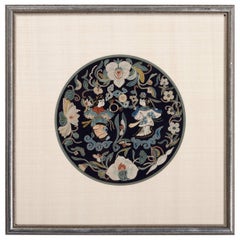
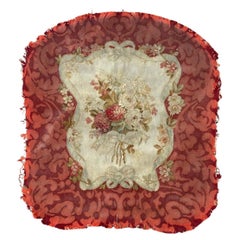
Antique french Aubusson tapestry for Cushion Chair Cover
Located in Saint Ouen, FR
Very beautiful late 19th century Aubusson tapestry originally made for covering the seat of an armchair with a beautiful floral design and nice natural colours, entirely and finely h...
Category
Late 19th Century French Aubusson Antique Silk Tapestries
Materials
Wool, Silk
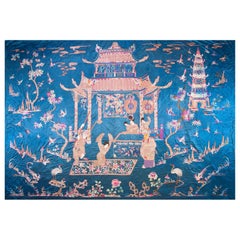
Early 20th Century Chinese Silk Embroidery ( 16
6" x 22
- 503 x 670 )
Located in New York, NY
Early 20th Century Chinese Silk Embroidery ( 16'6" x 22' - 503 x 670 )
Category
Early 1900s Chinese Antique Silk Tapestries
Materials
Silk
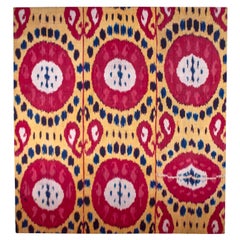
Antique Central Asian Silk Ikat Panel, Uzbekistan
Located in Point Richmond, CA
Antique Central Asian Silk Ikat Panel, Uzbekistan
A large mounted silk and cotton ‘adras’ ikat panel with a dynamic 4-color design of large red rings with white centers surrounded b...
Category
Early 20th Century Uzbek Tribal Silk Tapestries
Materials
Cotton, Silk
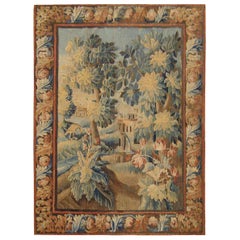
17th Century Flemish Verdure Landscape Tapestry, with Trees, Bushes and Flowers
Located in New York, NY
A Flemish verdure landscape tapestry from the 17th century, depicting verdant hills with two large blossoming trees in the foreground, a stream and a large domicile in the middle gro...
Category
17th Century European Antique Silk Tapestries
Materials
Wool, Silk
$7,996 Sale Price
20% Off
18th Century French Felletin Verdure Landscape Tapestry, with Birds and Trees
Located in New York, NY
An antique 18th century French Felletin verdure landscape tapestry, size 8'10 H x 9'7 W. This handwoven antique wall hanging feat...
Category
18th Century French Antique Silk Tapestries
Materials
Wool, Silk
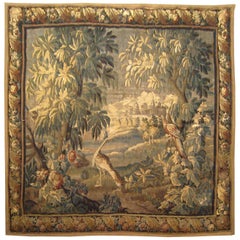
$11,995 Sale Price
20% Off
Bobyrug’s Wonderful Fine Antique French Aubusson Tapestry
Located in Saint Ouen, FR
Very beautiful and fine Aubusson tapestry with a nice design of the royal court with knights, and very beautiful colors, entirely and finely handwoven with wool and silk, at the famo...
Category
Early 20th Century French Aubusson Silk Tapestries
Materials
Wool, Silk
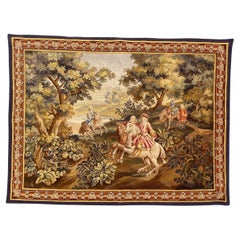
French Tapestry Signed By The Aubusson Factory, Circa 1860 - 278lx200h - No 1474
Located in Paris, FR
French Tapestry Signed By The Aubusson Factory, Circa 1860 - 278lx200h - No. 1474
This tapestry is a fine example of the 19th century Aubusson verdure. This type of tapestry is char...
Category
1860s French Aubusson Antique Silk Tapestries
Materials
Wool, Silk
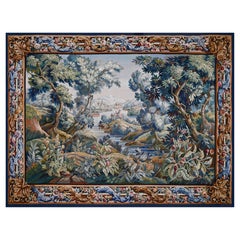
Chinese Silk Brocade Chair Panel with Pagoda
Crane, c. 1850
Located in Chicago, IL
This framed silk brocade tapestry is one half of a magnificent Qing-dynasty chair panel, or chair strip. Because traditional Chinese seating was not upho...
Category
Mid-19th Century Chinese Qing Antique Silk Tapestries
Materials
Silk
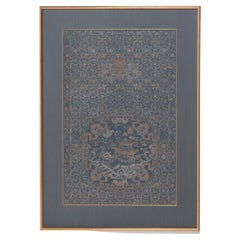
19x62 in Embroidered 100% Silk Wall Hanging. Modern Table Runner. Tablecloth
Located in Spring Valley, NY
Celebrate the rich heritage of Asian craftsmanship with this exquisite 100% silk Suzani textile, meticulously hand-embroidered by skilled artisans. A true work of art, this piece emb...
Category
2010s Central Asian Suzani Silk Tapestries
Materials
Silk
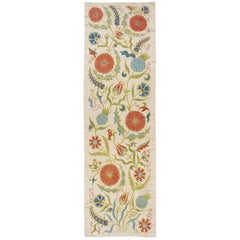
Greenery Tapestry from the Aubusson Factory, 210lx170h - No. 1478
Located in Paris, FR
Period: 19th century
Condition: Perfect condition
Material: Wool & Silk
Width: 210 cm
Height: 170 cm
Depth: 0.5 cm
Located a stone's throw from the Eiffel Tower in Paris, we are a F...
Category
1880s French Aubusson Antique Silk Tapestries
Materials
Wool, Silk
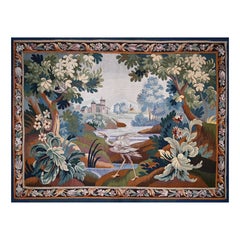
28x30 in 100% Silk Wall Hanging. Modern Embroidered Tablecloth. Decorative Throw
Located in Spring Valley, NY
Celebrate the rich heritage of Asian craftsmanship with this exquisite 100% silk Suzani textile, meticulously hand-embroidered by skilled artisans. A true work of art, this piece emb...
Category
2010s Central Asian Suzani Silk Tapestries
Materials
Silk
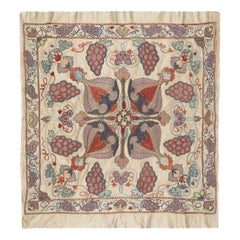
Near Pair of Antique 17th C. Belgium Flemish Tapestry Portière (Border) Panels
By Flemish
Located in West Palm Beach, FL
A Near Pair of Antique 17th-C. Belgium Flemish Tapestry Portière (Border) Panels
Belgium, 17th century
Presenting a rare and exquisite pair...
Category
Late 17th Century French Renaissance Antique Silk Tapestries
Materials
Fabric, Wool, Cotton, Silk
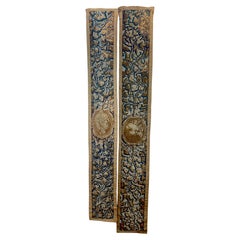
$3,840 Sale Price / set
20% Off
Antique 18th Century English Aubusson Garden Tapestry
By Mortlake
Located in New York, NY
Charming 18th Century English Aubusson Tapestry, handwoven in wool and silk at the famous Mortlake workshop. It depicts a scene from the well known "Bacchanalia and Playing Boys" se...
Category
18th Century English Aubusson Antique Silk Tapestries
Materials
Tapestry, Wool, Silk
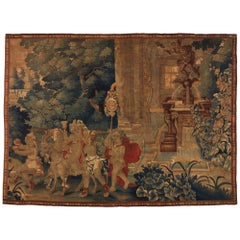
A Monumental 17th Century Flemish Tapestry – The Battle of Jerusalem
Located in Tarzana, CA
Monumental 17th Century Flemish Tapestry – The Battle of Jerusalem
Brussels or Oudenaarde, Circa 1680–1700
Wool and silk, polychrome weave
After designs in the French Baroque tradit...
Category
18th Century and Earlier Belgian Antique Silk Tapestries
Materials
Wool, Silk, Tapestry
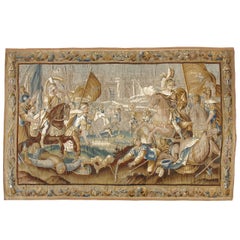
Framed Antique Japanese Silk Embroidery Fukusa Textile Panel
Located in Atlanta, GA
A Japanese Fukusa Panel with tassels displayed in a gilt frame circa Meiji Period. Fukusa is a traditional Japanese textile art used as a...
Category
Late 19th Century Japanese Meiji Antique Silk Tapestries
Materials
Silk, Wood

Antique Flemish Tapestry 91cm×122cm Musical 3x4 Decorative Panel Tapestry c.1650
Located in New York, NY
This exquisite 17th-century Flemish tapestry depicts a seated musical figure surrounded by scrolling foliage, floral motifs, and a richly detailed border. The wool and silk weave sti...
Category
17th Century Belgian Art Nouveau Antique Silk Tapestries
Materials
Wool, Silk
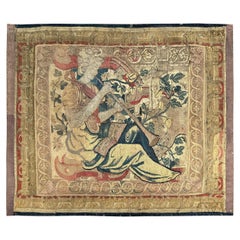
Flemish Tapestry 18th - The Swiss Guard, Pastoral Passage of the Pope - N° 1483
Located in Paris, FR
18th Century Flanders Tapestry - The Swiss Guard, Pastoral Passage of the Pope - No. 1483
Period: 18th century
Condition: Perfect condition
Material: Wool & silk
Width: 275 cm
Height...
Category
18th Century French French Provincial Antique Silk Tapestries
Materials
Wool, Silk
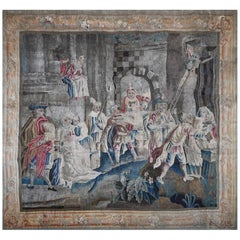
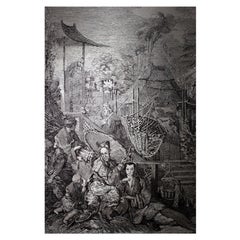
Wall Decoration In Style of François Boucher Silk Handmade Embroidered Tapestry
By Alexander
s Collection, François Boucher
Located in Hong Kong, HK
Wall Decoration In Style of François Boucher Silk Handmade Embroidered Tapestry
Add a touch of timeless elegance to your home decor with our exquisite tapestry inspired by the works ...
Category
2010s Hong Kong Chinoiserie Silk Tapestries
Materials
Silk
$6,720 Sale Price
20% Off
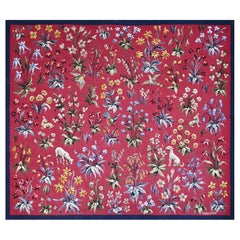
Mille-Fleurs Tapestry signed by Aubusson Manufacture – 19th Century – No. 1562
Located in Paris, FR
Mille-Fleurs Tapestry signed Manufacture Aubusson - 19th century - 152Lx125H - No. 1562
Artist: Aubusson Manufactory
Era: 19th century
Style: High period - Renaissance - Louis XIII
C...
Category
19th Century French Aubusson Antique Silk Tapestries
Materials
Wool, Silk
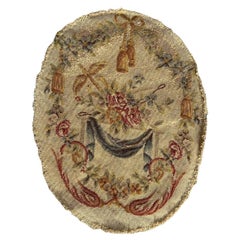
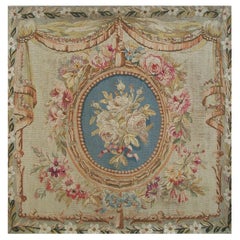
Pierre Adrien Chabal, Louis XVI Style Beauvais Tapestry Panel, France, C.1855
Located in Chatham, ON
PIERRE ADRIEN CHABAL-DUSSURGEY (1819-1902) Designer - BEAUVAIS TAPESTRY MANUFACTORY Maker - Important Antique Louis XVI style floral tapestry chair back - the floral tapestry finely woven in wool and silk threads with garlands and swags and tassels - all centered by a powder blue ground cartouche with white roses within an oval frame - suitable for framing - France - circa 1855.
Excellent antique condition - minor fading and loss - areas of wear/thinning - no apparent restoration - minor stains and soiling with signs of age and use.
Size/Dimensions - 20" (51 cm.) Wide x 19 1/2" (49.5 cm.) High.
PIERRE ADRIEN CHABAL-DUSSURGEY - born Pierre Adrien Chabal in 1819 in Charlieu and adopting the professional name of CHABAL-DUSSURGEY - well known for his paintings and studies of flowers in gouache and oils - attended the School of Fine Arts in Lyon - exhibited at the Paris and Lyon salons - he worked with the Gobelins Tapestry Manufactory and the Beauvais Tapestry Manufactory after 1849 designing tapestries, rugs and tapestry covers for seating - he designed tapestries for the Élysée Palace and worked with Empress Eugenie on furnishings for the small salon at the Élysée Palace and two salons in the palace of the Empress in Biarritz - tapestry covered furniture...
Category
Mid-19th Century French Louis XVI Antique Silk Tapestries
Materials
Wool, Silk
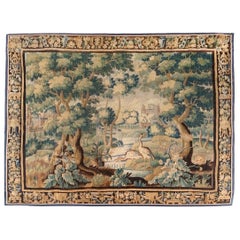
SHAHKAR Early 17th Century French Verdure Landscape Tapestry 8.11 x 11.3 ft
Located in New York, NY
This is a gorgeous antique Early 17th century Flemish Verdure landscape tapestry depicting a beautiful and rich summer scene of a countryside with lush trees and vegetation, and bird...
Category
17th Century Dutch Baroque Antique Silk Tapestries
Materials
Silk
Bobyrug’s Wonderful palace size antique French Aubusson tapestry
Located in Saint Ouen, FR
Exquisite Early 20th Century French Tapestry Fit for Royalty!
Discover a remarkable and exceedingly rare large antique French tapestry, dating back to the early 20th century. This masterpiece is believed to have been commissioned for a grand castle, featuring a design reminiscent of 18th or 17th-century tapestries. The artwork is a true visual marvel, portraying royal figures in regal attire standing before an imposing castle backdrop. The colors are simply stunning.
This tapestry is a testament to meticulous craftsmanship, as it was entirely handwoven using a blend of wool and silk on a sturdy cotton foundation. At the bottom, you'll find the inscription "Aubusson tapestry A.B," adding to its historical allure.
Perhaps it captures a royal court scene with the king standing tall, the queen seated...
Category
Early 20th Century French Aubusson Silk Tapestries
Materials
Wool, Silk
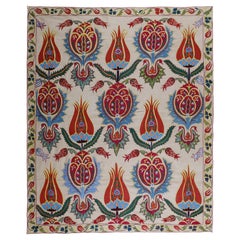
Ottoman Silk Red Tulip Hand Embroidered Suzani Tapestry
Located in London, GB
Suzani tapestries are a type of embroidered textile that originated in Central Asia, and were popular throughout the Ottoman Empire. These decorative textiles were hand-crafted by sk...
Category
21st Century and Contemporary Turkish Suzani Silk Tapestries
Materials
Cotton, Silk
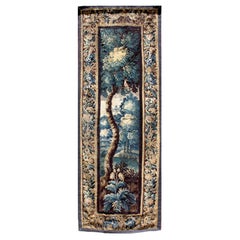
Flemish 18th-19th Century Verdure Landscape Tapestry Panel Centered with a Tree
Located in Los Angeles, CA
A fine flemish 18th-19th century Verdure landscape tapestry, the wool and silk tapestry centered by a scene of a tall tree within a forest background and a foliage border. Circa: 180...
Category
Early 19th Century Belgian Baroque Antique Silk Tapestries
Materials
Wool, Silk
$6,895 Sale Price
30% Off
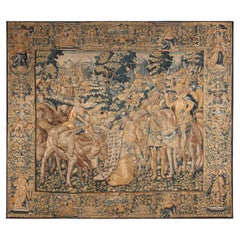
16th Century Antique Flemish Tapestry. 11 ft 4 inx12 ft 10in
Located in New York, NY
16th Century Antique Flemish King Solomon Tapestry, Country Of Origin: Belgium, Circa Date: 16th Century. Size: 11 ft 4 in x 12 ft 10 in (3.45 m x 3.91 m)
Category
16th Century Belgian Renaissance Antique Silk Tapestries
Materials
Wool, Silk
Antique Japanese Brocade Monk
s Robe Kesa Meiji Period
Located in Atlanta, GA
A Japanese Kesa (Monk's Vestment) made from thirteen columns of patchworks of shimmering woven brocades. The elaborate motifs feature repetitive elaborat...
Category
Late 19th Century Japanese Meiji Antique Silk Tapestries
Materials
Brocade, Silk
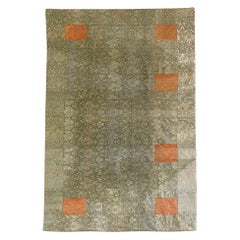
1900
s Chinese Silk Tapestry with Qing Style
Located in Dallas, TX
71052 Rare Antique Chinese Silk Tapestry, 02'11 x 04'08. This exceptional antique handwoven Chinese silk tapestry is a masterwork of textile artistry—an exceedingly rare example of Q...
Category
Early 20th Century Chinese Qing Silk Tapestries
Materials
Silk
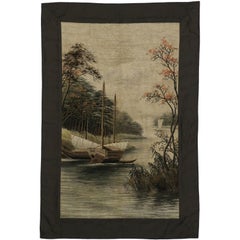
Venus Visiting Vulcan, Achilles Brussels Tapestry Atelier Van Der Borcht - 1455
Located in Paris, FR
Venus Visiting Vulcan, Achilles - Brussels Tapestry, Atelier Van Der Borcht No. 1455
Artist: In the Taste of Jan Van Orley (1488 – 1541)
Period: 18th century
Style: mythological
Cond...
Category
18th Century French Antique Silk Tapestries
Materials
Wool, Silk
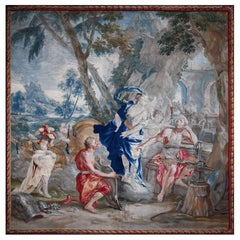
$70,790 Sale Price
20% Off
Still Thinking About These?
All Recently ViewedMore Ways To Browse
Mid Century Tv Console
Midcentury Marble Plant Stands
Ming Dynasty Bowl
Ming Lions
Ming Style Stool
Miniature Porcelain Animals
Minton Chinoiserie
Mirror 1953
Mobelfabrik Bed
Modern Tansu
Moet Champagne
Moon Pot
Moreau Cherubs
Moroccan Flask
Moroccan Leather Boxes
Moroccan Tile Table
Moser Purple
Mother Of Pearl Caviar Spoons