Carved Wall Decorations

to
206
1,112
616
1,622
151
25
Height
to
Width
to
94
84
81
71
68
62
43
41
34
25
23
19
17
11
11
8
6
3
294
705
623
176
199
214
64
32
11
19
23
13
27
35
17
12
8
1,552
395
335
295
281
1,289
410
362
172
154
1,798
1,707
1,767
33
18
17
8
8
Technique: Carved
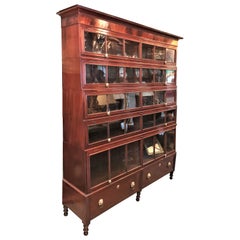
19th Century Regency Mahogany Lawyers Bookcase Wall Cabinet Biotech, 1811-1819
Located in West Hollywood, CA
19th Century Regency Mahogany Lawyers Bookcase Wall Cabinet Biotech, 1811-1819 . Rare early 19th century Regency graduated lawyer’s bookcase cabinet . Tapered scale 13" depth to 17" at the base, which gives it a lot of charm and takes away the heavy look of some other bookcases. All the original hardware still intact in lions head knobs with a ring This antique library bookcase has the original glass with one cracked that we never replace . Each shelf opens upward. 4 Regular size and the shelf on top of the Two lower drawers is for larger items to be exhibited and stored away. Perfect for a library, lawyers office...
Category

Early 19th Century English Regency Antique Carved Wall Decorations

Materials

Glass, Mahogany, Wood

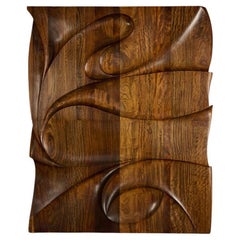
Michael Coffey, Galaxy II, Monumental Walnut Wall Sculpture, United States, 2021
Located in New York, NY
Sculpted from walnut, Galaxy II is an exceptional wall-mounted sculpture that exhibits the skill of artist and master woodworker Michael Coffey. It is ...
Category

Late 20th Century American Carved Wall Decorations

Materials

Walnut

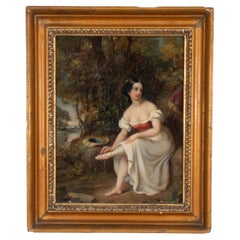
Early 19th Century European Oil on Board Portrait of a Woman with Tired Feet
Located in Chicago, IL
This charming oil on mahogany board depicts a portrait of a young woman in typical early 19th-century fashion surrounded by foliage while she sits on a rock tending to her shoe. Hous...
Category

Early 19th Century Early Victorian Antique Carved Wall Decorations

Materials

Mahogany, Paint

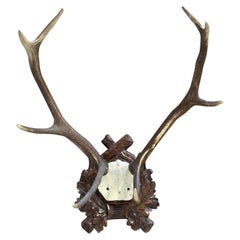
19th Century French Mounted Deer Antler Trophy on Carved Walnut Plaque
Located in Dallas, TX
Create a rustic style in your hunting lodge or ranch house with this large wall-mounted deer antler plaque. Bought in the Loire Valley of France, the ant...
Category

Mid-19th Century French Antique Carved Wall Decorations

Materials

Antler, Walnut

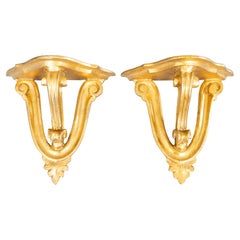
Pair of Italian Florentine Neoclassical Giltwood Wall Brackets Shelves, c. 1950
Located in Pearland, TX
A lovely pair of vintage Italian gilded wood wall brackets or shelves from Florence, Italy, circa 1950. These stylish brackets have hand carved scroll designs and beautiful gilt pati...
Category

1950s Italian Vintage Carved Wall Decorations

Materials

Giltwood

Stylish Antique Eastern Style Wooden Wall Hanging Cabinet with Intricate Details
Located in Lisse, NL
Very rare and excellent condition, This all-handcrafted cabinet with a stunning decor of foliate carving and inlaid, Eastern style motifs is completely original and can be used for all kinds of purposes. It must have taken a highly skilled artisan several weeks to design and create this architecture inspired piece of wall furniture. It also comes with Arabic calligraphy on the drawer, but unfortunately we don't know the meaning of the word(s) or phrase. This unique, single door cabinet with its beautiful patina and its marvelous look and feel is as stable/strong as the day it was made and the pair of metal hooks on the back makes it very safe and easy to mount on your wall. If you are decorating a home or business with an Eastern interior then this late 1800s cabinet...
Category

Late 19th Century Spanish Spanish Colonial Antique Carved Wall Decorations

Materials

Glass, Wood

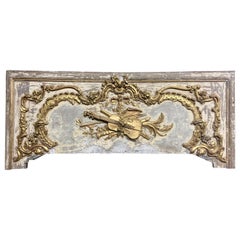
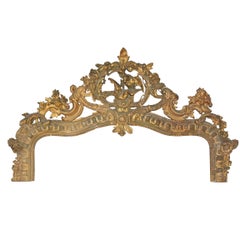
19th Century French Large Decorative Hand Carved Gilt Wood Element or Headboard
Located in Sofia, BG
Exceptional large massive hand carved and hand painted decorative element which was placed over a grand fireplace more than 150 years ago. There were no restorations so far and it is...
Category

Mid-19th Century French Louis XVI Antique Carved Wall Decorations

Materials

Wood

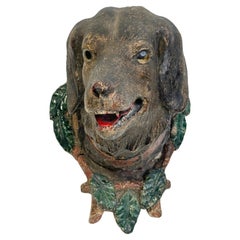
Hunting Dog Head Black Forest Hand Carved Folk Art Wooden Trophy, 19th Century
Located in Nuernberg, DE
A great looking hand carved original wooden Folk Art Dog head with glass eyes, wall decoration. A great piece for a suitable ambiance in a trophy room or the office of a Hunter or Woodsman. More than likely one of the Folk Art items made between 1860 and the late 1890s. In remarkably good as found condition with only a few small paint lost on the trophy plaque. Found at an estate sale in Wels, Austria. We think this will be a nice addition to your Collection of Black Forest items...
Category

Late 19th Century Austrian Black Forest Antique Carved Wall Decorations

Materials

Wood

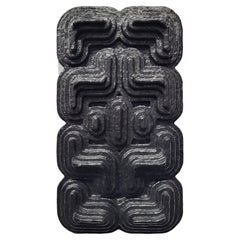
Wall Sculpture Black Contemporary Geometric Totem Brutalist Wood Paper Pulp
Located in Seville, ES
TERRITORIO 2.3.74 - V We worked with paper pulp for the first time a few years ago. We were testing ways of optimising the recycled paper until we achieved an almost clay-like pulp t...
Category

21st Century and Contemporary Spanish Modern Carved Wall Decorations

Materials

Composition

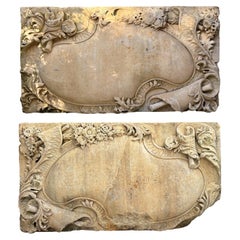
18th Century German Pair of Similar Antique Baroque Sandstone Wall Reliefs
Located in West Palm Beach, FL
A rectangular, antique pair of similar German Baroque wall reliefs with centered cartouche, made of hand carved sandstone in good condition. The large detailed panels are particulari...
Category

18th Century German Baroque Antique Carved Wall Decorations

Materials

Sandstone

Egyptian Mother of Pearl Inlaid Wall Cabinet
Located in New York, NY
19th Century wall cabinet with architectural inspired form having intricate marquetry inlay in walnut with contrasting wood mother of pearl and ebonized wood. The upper tier fine pie...
Category

19th Century Egyptian Antique Carved Wall Decorations

Materials

Wood, Walnut

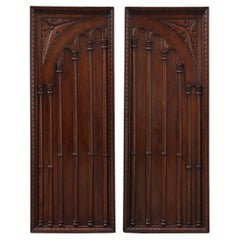
Pair large carved Portuguese oak wall panels, ca. 1850
Located in Meulebeke, BE
Portugal / 1850 / 2 wall panels / oak / Rustic / Mid-century Two large beautiful hand carved Portuguese decorative wall panels from an altarpiece with nice patina. Crafted of solid ...
Category

Mid-19th Century Portuguese Rustic Antique Carved Wall Decorations

Materials

Oak

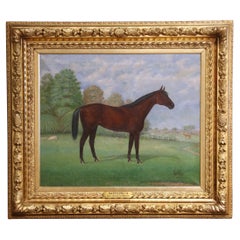
Early 20th C. Oil on Canvas Horse Painting in Gilt Frame by Thomas Toher, 1925
Located in Dallas, TX
Decorate an office or study with this striking oil on canvas equestrian portrait. Titled “Baffling – 4”, signed and dated 1925 by Thomas M. Toher (American, 1868–1929), the work pres...
Category

Early 20th Century American Carved Wall Decorations

Materials

Giltwood, Canvas

Pair of Carved Wooden Wall Sconces
Located in Annville, PA
These stylish and elegant, hand sculpted, Pair of Carved Wooden Wall Sconces bring a classic look to any home decor setting. It’s the perfect...
Category

2010s Renaissance Carved Wall Decorations

Materials

Wood

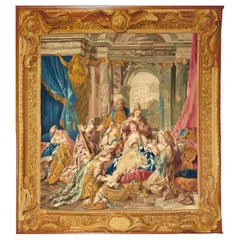
Tapestry Royal Manufacture of Aubusson, Louis XVI period 1738 at the Gobelins
Located in Madrid, ES
Tapestry from the Royal Manufacture of Aubusson, Louis XVI period , made in 1738 at the Gobelins One panel from a series of Gobelins tapestries depicting the History of Esther, illustrating Esther seated and attended by handmaidens, one washing her feet in golden basin, another fastening a bracelet, another offering a mirror, all observed by Mordecai, woven in the workshop of Michele Audran after a design by J. F. de Troy. The Toilet of Esther c.1778-85.Royal Collection Trust-Queens Audience Chamber Windsor Castle The Sketches for the Esther Cycle by Jean-François de Troy (1736) “and the maid was fair and beautiful; whom Mor’decai, ..., took for his own daughter.” (Est. 2:7) A supple and undulating genius, both a flattering portraitist and a prolix history painter, as well as a brilliant genre painter, in a gallant or worldly vein, Jean-François de Troy (Paris, 1679 – Rome, 1752), solicited, although he had passed the threshold of old age, a new royal commission up to his ambitions. To obtain it, he submitted – successfully - for the approval of the Bâtiments du roi (administration), seven modelli painted in 1736 with his usual alacrity. Inspired by one of the most novelistic texts of the Old Testament, the Book of Esther, these sketches in a rapid and virtuoso manner were transformed by the artist, between 1737 and 1740 into large cartoons intended to serve as models for the weavers of the Gobelins factory. Showing undeniable ease and skill in the composition in perfect harmony with the sensitivities of the times, the tapestry set met with great success. The Story of Esther perfectly corresponded to the plan of the Bâtiments du roi to renew the repertoire of tapestry models used for the weavers of the royal factories while it also conformed to the tastes of Louis XV’s subjects for a fantastical Orient, the set for a dramatic tale in which splendour, love and death were combined. Indeed, no tapestry set was woven in France during the 18th century as often as that of Esther. The series of modelli painted by de Troy during the year 1736 looks to the history of French painting and decoration under Louis XV as much as it does the history of the Gobelins. It probably counts among the most important rococo pictorial groups to have remained in private hands. First the Biblical source illustrated by De Troy which constitutes the base of one of the richest iconographical traditions of Western art will be considered. Then the circumstances and specific character of French civilisation during the reigns of Louis XIV and Louis XV which contributed to making the theme of Esther a relevant subject, both attractive to contemporaries and remarkably in line with the sensitivities of the time will be elucidated. An examination of the exceptional series of sketches united here, the cartoons and the tapestries that they anticipate as well as a study of their reception will close this essay. The Book of Esther: A scriptural source at the source of rich iconography. The origin of the Esther tapestry set by Jean-François de Troy – origin and creation of a masterpiece According to the evidence of one of the artist’s early biographers, the chevalier de Valory, author of a posthumous elegy of the master, read at the Académie royale de peinture et de sculpture on 6 February 1762, it was apparently due to early16 rivalry with François Lemoyne (1688-1737), his younger colleague who had precisely just been appointed First Painter to the King in 1736, that had encouraged François de Troy to seek a commission allowing him to show off his ease and his promptitude at the expense of a rival who was notoriously laborious: “M. De Troy, retaining some resentment of the kind of disadvantage which he believed to have suffered compared with his emulator looked to regain some territory by making use of the facility his rival did not possess. Lemoyne was excessively long in the creation of his works,and M. De Troy of a rare celerity: consequently, with this particular talent, the latter offered to the court to make paintings appropriate to be executed at the Gobelins Factory; and it is to this circumstance that we owe the beautiful series of the Story of Esther, which would be sufficient alone to give him a great reputation.”17 Beyond the suspicion inspired by the topos, which still constitutes, more or less, a tale of rivalries between artists in ancient literature, there is probably some truth in what Valory reports although A.-J. Dezalier d’Argenville (who indicates rather spitefully that de Troy did not hesitate to “cut prices” to impose himself, benefitting from the productivity assured by the unlikely rapidity of his brush)18 proves to be more evasive: “As he looked to busy himself, he had offered to make the paintings that serve as models for the King’s tapestries cheaply: which did not please his colleagues. He was given a choice of two tapestry series to be made and he took the Story of Esther and that of Jason”.19 Whether or not the choice was actually left to de Troy (which would appear rather casual on the royal administration’s part all the same), it seems likely that the artist, whose contemporaries extol his “fire”, as the faculty of invention was then called, must have ardently aspired to the possibility of using on a very large scale the “creative genius” with which Dezallier d’Argenville credits him. The decoration of the private apartments, the fashion for which Louis XV had promoted at Versailles and Fontainebleau, offered little opportunity to excel in this area. Other than painting for altarpieces, only tapestries could allow comparison with Lemoyne who had been granted – unfortunately for him – a major decoration: the enormous ceiling of the Hercules Room at Versailles. Favoured by the recent improvement in France’s financial situation, the revival of patronage offered de Troy a commission fitting for him, in a field in which, however, he had hardly any experience. Anxious to renew the repertoire of models available to the Gobelins factory, the Duc d’Antin, surintendant des Bâtiments du roi from 1708 to 1736 followed by his successor, Philibert Orry comte de Vignory, gave him the task of producing seven large cartoons inspired by the Book of Esther corresponding to the brilliant sketches or modelli which de Troy had produced in one go, or almost (very few preparatory drawings can in fact be linked to the Esther cycle and all seem to be at the execution stage of the cartoons).20 Subjected to the approval of the Administration des Bâtiments according to the procedure in use for projects being planned for the Gobelins, sketches made rapidly during 1736 were approved and the project launched immediately. Thereupon came the news of François Lemoyne’s death, who, ground down by work and a victim of his private torment, committed suicide on 4 June 1737. Against all expectations, de Troy did not replace his rival in the position of First Painter (which remained vacant until the appointment of Charles Coypel in January 1747), which would perhaps have made him too obviously the beneficiary of the drama. The awarding of the position of Director of the French Academy in Rome came to console him while he had already produced (or he was in the process of finishing), in Paris, three of the seven cartoons of the cycle (The Fainting of Esther finished in 1737 and the Toilet and Coronation of Esther, both finished in 1738). De Troy, we can see, did not follow the order of the narrative but began with the subjects which apparently offered the least difficulty because he had already depicted them, or because they fall into a strong pictorial tradition (such is the case especially for the Fainting of Esther). He had hardly settled at the Palazzo Mancini in August 1738, when his first task which awaited the new director of the French Academy naturally consisted of honouring the royal commission and finishing without delay the final cartoons of the Story of Esther after the sketches he must have taken with him. As prompt as ever, de Troy discharged himself of the execution of the four remaining cartoons in only two years, by beginning with the largest format which allowed him to strike the imagination and to impose himself as soon as he arrived on the Roman stage: the Triumph of Mor’decai which was finished in 1739 (like Esther’s Banquet). The following year, the Mor’decai's Disdain and The Sentencing of Haman were brought to an end in the same Neo-Venetian style, obviously tributary to Veronese with its choice of “open” monumental architecture which is characteristic of the entire cycle.21 The series, it should be noted, was almost augmented with some additional scenes in the mid 1740s. Indeed, the first tapestry set finished at the Gobelins in 1744 proved to be unsuitable for the arrangement of the Dauphine’s apartments at Versailles for which it had been intended to decorate the walls the following year (cf infra). Informed of this, de Troy, considering that the story of Esther offered “several good subjects,” immediately offered to illustrate one or new subject among those “which could appear to be the most interesting”. The directeur des Bâtiments Orry, who managed the State’s accounts, obviously judged it less costly to have one of the tapestries widened to fill in the end of the Dauphine’s bedroom,22 which has probably deprived us of very original compositions, because de Troy had already illustrated the most famous themes, those that benefitted from a strongly established iconographical tradition and from which it was not easy to deviate The Tapestry Set of the Story of Esther Placed on the tapestry looms of the Gobelins at the end of the 1730s in Michel Audran’s workshop, the cycle created by de Troy aroused true infatuation. The few hundred tapestries made between 1738 and 1797 – all in high-warp tapestry and woven in wool and silk except for four in low-warp made in Neilson’s workshop – show the impressive success of a tapestry set that was without any doubt the most frequently woven of the 18th century in France. 29 Only three cartoons had been delivered by de Troy in 1738 when the first tapestry set was begun by Audran under the expert eye of Jean-Baptiste Oudry to whom the Directeur général des bâtiments, Philibert Orry had assigned the (weekly) supervision of the weaving. During the summer of 1738, the piece of the Fainting of Esther, which Oudry judged to be admirable, was finished. During the winter of 1742, Oudry informed Orry that about two ells of the Triumph of Mor’decai had been made “with no faults”,that the Coronation of Esther was finished and that the Esther at her Toilet “a very gracious tapestry” was “a little over half” finished. Exhibited at Versailles in 1743, these two last pieces were admired by Louis XV and the Court. On 3 December 1744, the set of seven tapestries was finally delivered to the Garde Meuble. It was intended, the honour was not slight, to decorate the apartments of the Infanta Maria Teresa Rafaela of Spain whose marriage to the young Dauphin Louis-Ferdinand had been fixed for the following year (it took place on 23 February 1745). Apparently it was thought that the theme of Esther the biblical heroine and wife of a foreign sovereign was appropriate for the apartments of the Spanish Dauphine. As early as the month of March, the architect Ange-Jacques Gabriel informed de Troy that her grand cabinet was decorated with the “Esther tapestry set” specifying however that “for lack of two small or one large piece, we have not been able to decorate the end of the room”. This difficulty led immediately to the Banquet episode being woven a second time in two parts (they were delivered to the Garde-Meuble on 30 December 1746) to garnish the panels on each side of the bed of the Dauphine who would hardly enjoy them (she died on 22 July 1746 and the decoration was installed for the new Dauphine Maria Josepha of Saxony). The appearance of the set’s remarkable border, which imitated a richly sculpted wooden frame, should be mentioned. Conceived in 1738 by the ornamentalist Pierre Josse-Perrot and used in the later weavings until 1768, it tended to reinforce the resolutely painterly appearance of the tapestry set which, in this regard, pushed the art of tapestry as far as its ultimate mimetic possibilities. With the exception of Mor’decai's Disdain which had been removed earlier, the “editio princeps” of the story of Esther (from then on in nine pieces) remained at Versailles until the Revolution. Of the eight surviving tapestries, four are at the chateau of Compiègne and four belong today to the Mobilier National. No less than seven tapestry sets reputed to be complete (one of them in fact only had six tapestries) would be produced officially at the Gobelins up to 1772. Literature: 1- The Œuvres mêlées of an emulator of Racine, the Abbé Augustin NADAL thus include an Esther. Divertissement spiritual which is exactly contemporary with Jean François de Troy’s cycle since it was performed in 1735 and published in Paris three years later. 2-Le Siècle de Louis XIV, 1751, 1785 ed., p. 96-97 for French ed. 3- Lemoyne and de Troy had been obliged to share the First Prize in the competition organised in 1727 between the most prominent history painters of the Académie Royale. 4- Mémoires…, pub. L. DUSSIEUX et al., 1854, II, p.265. 5-The fact that de Troy, at the risk of falling out with his colleagues, did not hesitate to make use of prices in order to convince the new directeur des Bâtiments Philibert Orry, is confirmed by Mariette who adds tersely “it caused much shouting” (pub. 1851-1860, II, p. 103). 6- Abrégé de la vie des plus fameux peintres…, ed. 1762, IV, p. 368-369 20 Early comments on the painter are inclined to present him as a kind of “pure painter”, doing without the medium of drawing, a few intermediary studies between the Esther sketches and the large cartoons at the Louvre nevertheless show that de Troy used red chalk (see in the catalogue, the notice for the Meal of Esther and Ahasuerus under the entry drawing) to change one or other figure. 7-C. GASTINEL-COURAL (cat. exp. PARIS, 1985, p. 9-13) as well as the article by J. VITTET, exh. cat. LA ROCHE-GUYON, 2001, p. 51-55. 8-The Hermitage in St. Petersburg conserves five tapestries of these two royal gifts whose provenance still awaits elucidation (as far as we are aware). In 1766, the Grand Marshal of Russia, Count Razumovski (or Razamowski), acquired the Fainting and the Banquet extracted from the sixth weaving (J. VITTET, 2001, p. 53). 9- Lettres écrites de Suisse, d’Italie…,quoted by J. VITTET, op. cit., p. 54. 10-The tapestry set remained in the hands of a branch of the Hapsburg-Lorraine family until 1933 (ibid. P. 54). 11-Quoted by Chr. LERIBAULT, 2002, p. 97, note 269. 12-Y. CANTAREL-BESSON, 1992, p. 241. Catalogue The Esther at her Toilet Oil on canvas, 57 x 51 cm Provenance: Painted in 1736 at the same time as the six other modelli of the Story of Esther intended to be presented, for approval, to the direction des Bâtiments du Roi; perhaps identifiable among a lot of sketches by Jean-François de Troy in the post mortem inventory of the amateur, historian and critic Claude-Henri Watelet (1718-1786) drawn up on 13 January 1786 and following days (A.N. T 978, n° 30) then in the sale of the property of the deceased, Paris, 12 June 1786, n° 33; Paris, François Marcille Collection (who owned a series of six sketches from which the Triumph of Mor’decai was missing, see infra); Paris, Marcille Sale, Hôtel Drouot, 12-13 January 1857, n° 36; Asnières, Mme de Chavanne de Palmassy ( ?) collection; Paris, Galerie Cailleux; Paris, Humbert de Wendel collection (acquired from the Galerie Cailleux in 1928); by inheritance in the same family; Paris, Sotheby’s, 23 June 2011, n° 61. In order not to add unnecessarily to the technical commentary on each work, the catalogue raisonné by Chr. Leribault which contains a substantial bibliography on the series should be referred to. The other bibliographical references only concern the publications and exhibitions to have appeared and been presented more recently. Bibliography and Exhibitions: Chr. LERIBAULT, 2002, n° P. 247 (repr.); E. LIMARDO DATURI, 2004, p. 28; Exh. cat. NANTES, 2011, p. 138, n° 34, referred to in note 1; Sotheby’s catalogue, Tableaux anciens et du XIXe siècle, 23 June 2011, n° 61 (repr.). Related Works: Tapestry cartoon: The cartoon (oil on canvas, 329 x 320 cm), the third made by the artist in Paris after the sketches had been approved by the direction des Bâtiments, is in the Louvre (Inv. 8315). It previously bore the painter’s signature and the date 1738 (inscriptions which are found on the tapestries). The royal administration paid 1600 livres for it on 21 June 1738 and it was exhibited at the Salon in the year of its creation. Summary Biography 1679 (27 January): Baptism in Paris (Parish of St. Nicolas du Chardonnet) of Jean-François de Troy, son of the painter François de Troy and Jeanne Cotelle, sister of the painter Jean II Cotelle. 1696-1698: Studies (apparently rather turbulent) at the Académie royale de peinture et de sculpture. 1698-1708: First trip to Italy. Is obliged to leave Rome in January 1711 after a tempestuous affair (a duel?), de Troy extends the traditional Roman experience as a pensionnaire at the Académie de France by also visiting Tuscany where he stays for a long time, Venice (his art in face has a strongly Venetian character) and Genoa. 1708: De Troy (whose father had been elected Director of the Académie royale de peinture et de sculpture on 7 July) is agréé and immediately received at the Académie with Apollo and Diana Piercing with their Arrows the Children of Niobe (Montpellier, Musée Fabre) on 28 July. 1710: First royal commission, paid for on 10 May (a sketch representing “the Promotion of the Order of the Holy Spirit” for the tapestry series of the History of the King). 1716: Jean-François de Troy is elected Assistant Professor at the Academy. 1720: He is appointed Professor. 1723: The artist creates the double portrait of Louis XV...
Category

Early 18th Century French Baroque Antique Carved Wall Decorations

Materials

Wool, Silk

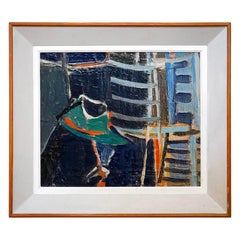
20th Century Blue-Green Abstract Books, French Painting by Daniel Clesse
Located in West Palm Beach, FL
A French blue, green abstract portrait of books, oil on wood in canvas by Daniel Clesse, painted in France, signed and dated in 1964. Measures: Without the frame: 18" H x 21.5" W x ...
Category

Mid-20th Century French Mid-Century Modern Carved Wall Decorations

Materials

Canvas, Wood, Paint

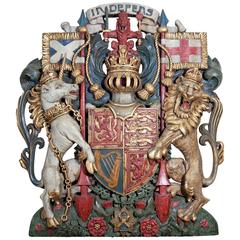
19th Century Royal Coat of Arms of the United Kingdom
Located in London, by appointment only
Scottish, after 1837. This particular carving of the Coat of Arms of the United Kingdom as used in Scotland is marvellous for the tremendous vitality of the Unicorn and Lions. It ...
Category

Late 19th Century British Early Victorian Antique Carved Wall Decorations

Materials

Wood, Paint

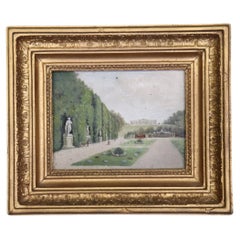
Antique Mini Neoclassical Grand Tour Style Oil Painting On Board of A Landscape
Located in Swedesboro, NJ
Dimensions: (FRAME)-H: 7 3/4in W: 9 1/8in D: 1 3/4in (PAINTING)- H: 4 1/2in W: 5 7/8in D: 1 3/4in This Miniature Antique Neoclassical Grand Tour Style Oil Painting On Board of A ...
Category

Early 20th Century German Neoclassical Carved Wall Decorations

Materials

Wood, Paint

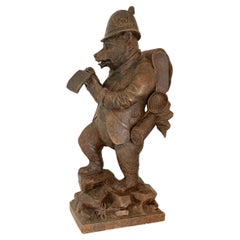
Antique Monumental Black Forest Bear Statue as Mountain Walker or Naturalist
Located in Nuernberg, DE
A great looking hand carved original wooden Folk Art Bear Statue. A great piece for a suitable ambiance in a Cabin room or the office of a Hunter or Wood...
Category

Late 19th Century Austrian Black Forest Antique Carved Wall Decorations

Materials

Wood

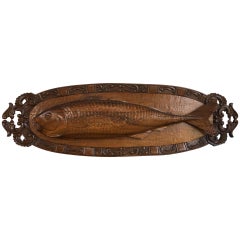
19th Century Black Forest Carved Wood Fish Trophy Wall Plaque
Located in Austin, TX
Oversize and spectacular 19th century Black Forest carved wood trophy wall plaque with a large fish. Beautiful carved border with acanthus leaves. Measur...
Category

1880s French Black Forest Antique Carved Wall Decorations

Materials

Wood

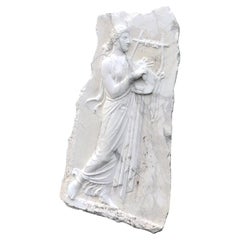
20th Century European Statuario Marble Relief of Euterpe - Antique Wall Panel
Located in West Palm Beach, FL
An antique elongated wall relief in white Statuario marble featuring Euterpe the Greek Goddess of muse of lyric poetry, in good condition. Minor fading, scratches due to age. Wear co...
Category

Early 20th Century European Carved Wall Decorations

Materials

Statuary Marble

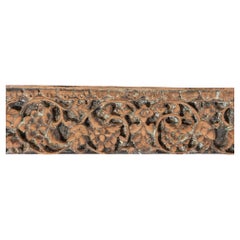
Antique Carved Wooden Panel with Traces of Color
Located in Alessandria, Piemonte
Hand carved wooden Indian panel with flowers. Perhaps it was once painted because it still bears traces of color in the carving of the flowers. Teak wood is not woodworm. ref. M/214.
Category

Late 19th Century Indian Agra Antique Carved Wall Decorations

Materials

Hardwood

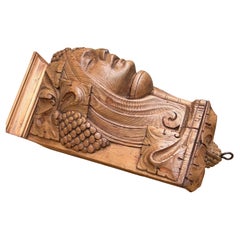
Rare Art Nouveau Era Corner Bracket / Shelf with Amphictyonis Mask / Sculpture
Located in Lisse, NL
Amazing and hand carved pine wood corner shelf, depicting Amphictyonis, the goddess of wine. The Greek god of wine Dionysos or Bacchus as he was known in Rome, probably is much be...
Category

Early 20th Century European Jugendstil Carved Wall Decorations

Materials

Pine

18th Century Neoclassical Carved and Gilded Frame
Located in Pasadena, CA
This is a finely carved late 18th century Italian frame featuring traditional carved and gilded neoclassical elements. The frame is in remarkably good condition considering its nearl...
Category

Late 18th Century Antique Carved Wall Decorations

Materials

Gold Leaf

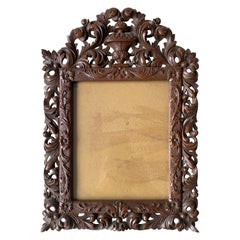
Richly Carved Baroque Revival Italian Picture Frame with Scrolling Leaves Vase
Located in Lisse, NL
Stunning antique picture or photograph wall picture frame from the mid 1800's. This stylish and all handcrafted picture frame will make great decoration on your wall and with a work...
Category

Mid-19th Century Italian Baroque Revival Antique Carved Wall Decorations

Materials

Wood

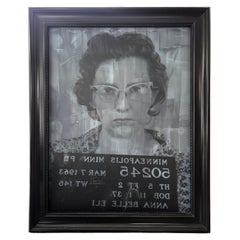
Anna Belle, Emulsion Oil, Monumetal 7 x9 Lightbox, Blaine Halvorson, 2008
Located in Culver City, CA
Anna Belle (2008) Emulsion and oil on screen 7 x 9 ft Hand-carved frame with integrated lightbox + remote Meet Anna Belle. She’s got the kind of stare that follows you across a ro...
Category

Early 2000s American Carved Wall Decorations

Materials

Hardwood

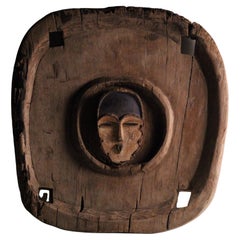
Wabi-Sabi Sculptural Assemblage: African Mitsogo Mask and Tofu grinder base
Located in London, GB
Wabi-Sabi Assemblage: Tofu Grinder Sculpture with Mitsogo Mask Indonesia & Gabon, Early 20th Century This striking sculptural assemblage unites two objects from different tradition...
Category

Early 20th Century Indonesian Organic Modern Carved Wall Decorations

Materials

Wood

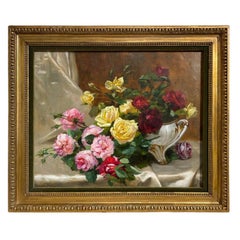
19th Century French Still Life Oil on Canvas Painting by Dominique Hubert Rozier
By Dominique Hubert Rozier
Located in West Palm Beach, FL
A pink-yellow, antique French still life oil on canvas painting, depicting a white ceramic vase with many roses, painted by Dominique Hubert Rozier in a handcrafted, original gilded ...
Category

Late 19th Century French Antique Carved Wall Decorations

Materials

Canvas, Giltwood

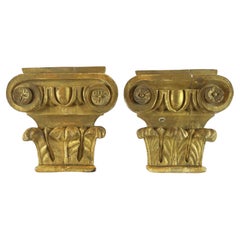
Pair of Gilded Italian Capitals With Corinthian-Ionic Intaglio 19th Century
Located in Milano, MI
Pair Of Gilded 1800s Gilded Capitals in carved poplar wood, originally part of a larger decorative complex. Of composite style, Ionic and Corinthian, they have under the abacus in th...
Category

Early 19th Century Italian Classical Greek Antique Carved Wall Decorations

Materials

Gold Leaf

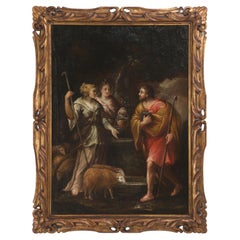
French Oil Painting c1700 s Biblical Story of Rebekah and Abraham s Servant
Located in BENSENVILLE, IL
Our French Oil Painting is from the 1700's depicts the Biblical Story of Rebekah and Abraham's Servant, Rebekah is seen offering water to the servant and his camels as a true test of...
Category

1750s French Rococo Antique Carved Wall Decorations

Materials

Canvas, Wood, Paint

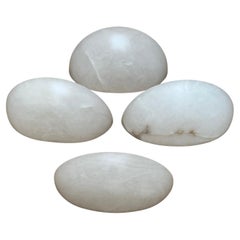
MidCentury Modern Italian Set of 4, Art Deco Style Large Alabaster Wall Sconces
Located in Lisse, NL
Last 4 of an original set of 16 wall fixtures. Set of four really large and great looking, half-moon shape, easy to mount and beautifully handcrafted alabaster wall lights. In all ...
Category

Mid-20th Century Italian Art Deco Carved Wall Decorations

Materials

Alabaster, Metal

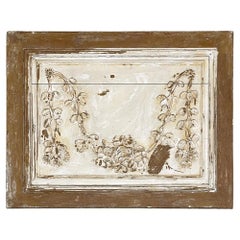
19th Century French Framed, Carved and Painted Panel
Located in Dallas, TX
19th century French Framed, Carved and Painted Panel is a superlative decorative element that was hand carved by a particularly talented sculptor out of dense, old-growth white oak. ...
Category

1870s French Louis XVI Antique Carved Wall Decorations

Materials

Oak

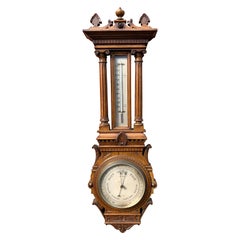
Large, Good Condition and Stylish Antique English Victorian Oak Wall Barometer
Located in Lisse, NL
Stunning design and top quality executed antique barometer. This late 19th-early 20th century, English manufactured wall barometer has everything that makes an antique worthwhile. F...
Category

Early 20th Century English Victorian Carved Wall Decorations

Materials

Brass

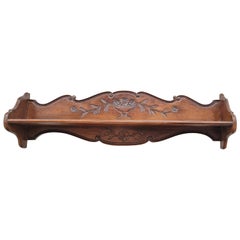
Large Vintage Carved Walnut French Wall Shelf
Located in Germantown, MD
Large 47 inches Vintage, hand carved walnut French wall shelf. Numbered item made in France exclusively for Bloomingdale in the 1960s. Very good ...
Category

Mid-20th Century French French Provincial Carved Wall Decorations

Materials

Walnut

Victorian Rococo Giltwood Top
Located in Sheffield, MA
The Victorian Rococo giltwood top of mirror frame is hand-carved with flowers, leaves and scrolls. The centre oval contains two birds without stretched wings and a nest and eggs...
Category

Mid-19th Century Unknown High Victorian Antique Carved Wall Decorations

Materials

Giltwood

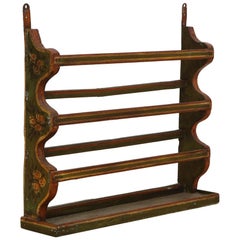
Gustavian, 18th Century Plate Rack with Original Rosemåling Painting
Located in New York, NY
Gustavian Swedish 18th century plate rack with original gorgeous rosemåling painting, circa 1800, origin: Northern Sweden.
Category

18th Century Swedish Gustavian Antique Carved Wall Decorations

Materials

Wood

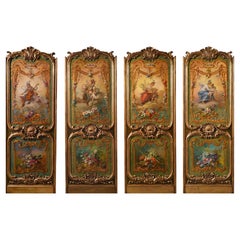
Set of Four Panels decorated with Allegories of art, France, Circa 1865
Located in PARIS, FR
Set of Four Panels Decorated with Allegories of Arts France Circa 1865 Height. : 180 cm (70,9 in.) ; Width : 63,5 cm (25 in.) ; Depth : 12 cm (4,7 in.) Set of four large painted panels, in carved and gilded wood. The upper part of each panel is decorated with allegories of the arts, representing music...
Category

19th Century French Napoleon III Antique Carved Wall Decorations

Materials

Giltwood, Paint

18th Century Italian Hand Carved Giltwood Display Wall Bracket Console
Located in Dallas, TX
Display a bust or a vase on this elegant antique wall corbel; crafted in Italy, circa 1760, the large gilt wood wall bracket features hand carved scroll and acanthus leaf motifs thro...
Category

Mid-18th Century Italian Louis XV Antique Carved Wall Decorations

Materials

Giltwood

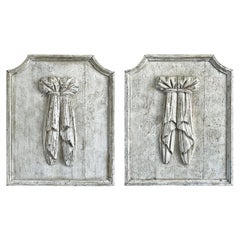
19th Century French Pair of Provincial Pinewood Wall Panels - Antique Reliefs
Located in West Palm Beach, FL
An antique French Provincial pair of vertical decorative wall panels made of hand crafted Pinewood, depicting bundles of tied cloth, in good condition. The reliefs have a light-grey ...
Category

19th Century French French Provincial Antique Carved Wall Decorations

Materials

Pine

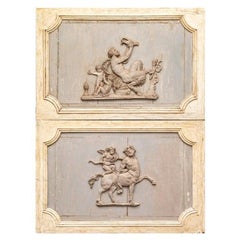
Pair Of Antique Neoclassical Carved and Painted Plaques
Located in Bridgeport, CT
Rare and extraordinary and early pair of Neoclassical plaques. One having a carved and painted Bacchic relief plaque with putti joining Pan drinking from a jar. The antique plaques m...
Category

Early 19th Century Neoclassical Antique Carved Wall Decorations

Materials

Wood

Vintage Hand Carved Sun Burst Architectural Wood Wall Hanging
Located in Delray Beach, FL
Beautiful hand carving wall hanging made from wood, with sun burst motif, hand painted in light peachy colour, very nice patina. Great object of art for wall display.
Category

1960s Thai Vintage Carved Wall Decorations

Materials

Wood

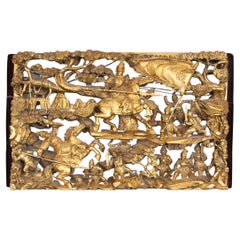
Chinese Carved Wooden Gilted Panel Wall Decoration
Located in Vienna, AT
Relief made of carved and gilded wood, with applications in different materials. Some chip and repairs. Differences in shade. Wear due to age and use.
Category

1930s Chinese Vintage Carved Wall Decorations

Materials

Softwood

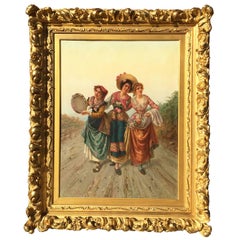
Pietro Gabrini Large Oil on Canvas "Three Singing Italian Beauties on The Road"
Located in Los Angeles, CA
Pietro Gabrini (Italian, 1856-1926) a very fine and large oil on canvas "Three Singing Italian Beauties on The Road" depicting three cheerful Village young maidens walking through a ...
Category

Late 19th Century Italian Baroque Revival Antique Carved Wall Decorations

Materials

Canvas, Wood

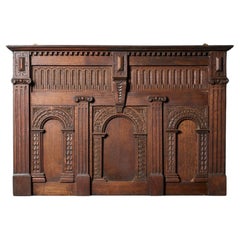
Antique Jacobean Style Decorative Oak Wall Panel
Located in Wormelow, Herefordshire
A large and impressive late 19th century Jacobean style decorative oak wall hanging panel, handcarved with three ornate arches, neoclassical columns, dentils and geometric patterns throughout. Formerly a fireplace overmantel...
Category

Late 19th Century English Jacobean Antique Carved Wall Decorations

Materials

Wood, Oak

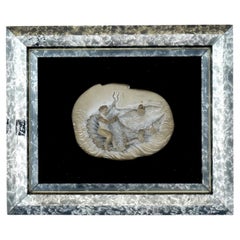
Antique 19Th C Neoclassical Stone Lava Cameo Relief Plaque
Located in Long Island City, NY
An antique 19th-century Western European hand-carved lava rock bas-relief plaque. The piece represents Venus on a swan-drawn chariot. Unsigned. Black velvet mat, wooden frame. Collec...
Category

19th Century European Neoclassical Antique Carved Wall Decorations

Materials

Lava

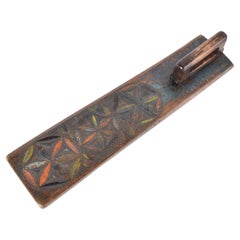
Antique Danish 1841 Mangle Board Wedding Love Gift Colorful Hand-Carved Wood
Located in Silkeborg, Silkeborg
Antique Danish or Scandinavian mangle board (clothing and bedding press) dated 1941. It has this text cut into it: KM JDR 1841 and a short text painted on both sides of the handle. I...
Category

1840s Scandinavian Folk Art Antique Carved Wall Decorations

Materials

Wood

MID-19th CENTURY PORTRAIT OIL ON CANVAS OF A YOUNG GIRL
Located in Firenze, FI
A beautiful painting of modest size, made in oil on canvas and framed in a carved and gilded wooden frame. The painting depicts the portrait of a young woman with her hair gathered a...
Category

Mid-19th Century Italian Antique Carved Wall Decorations

Materials

Canvas, Wood, Paint

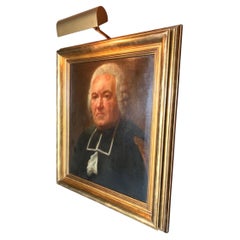
18th C. Portrait of a Lawyer Circle of Jacques Aved French School Oil on Canvas
Located in West Hollywood, CA
18th C. Portrait of a Lawyer Circle of Jacques Aved French School Oil on Canvas . Circle of Jacques-Andre-Joseph-Camelot Aved Portrait of a lawyer 1702-1766 French school mid-18th c...
Category

18th Century French Antique Carved Wall Decorations

Materials

Canvas, Wood, Paint

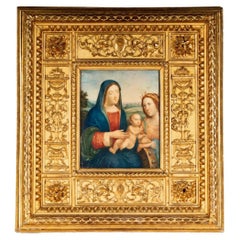
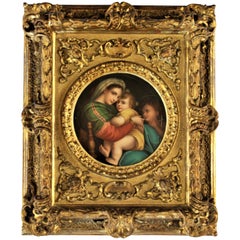
Antique Italian Hand Painted Religious Porcelain Panel with Carved Wood Frame
Located in Hamilton, Ontario
This antique hand painted porcelain panel is unsigned but was done in Italy in circa 1890 in the Roccoco style. The hand painted porcelain disc of La Madonna della Sedia, after Rafael Sanzio...
Category

Late 19th Century Italian Rococo Revival Antique Carved Wall Decorations

Materials

Porcelain, Wood

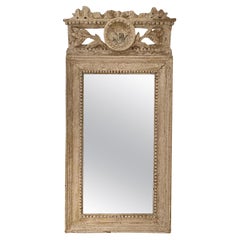
18th Century Swedish Gustavian Pinewood Wall Glass Mirror - Scandinavian Décor
Located in West Palm Beach, FL
A late 18th Century, antique Swedish Gustavian wall mirror made of hand crafted Pinewood with its original mirrored glass, in good condit...
Category

18th Century Swedish Gustavian Antique Carved Wall Decorations

Materials

Pine

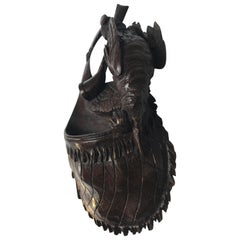
Antique Hand Carved Black Forest Game Hunter s Bag with Woodcock, Rifle Horn
Located in Rothley, Leicestershire
Black Forest antique hand carved miniature wall pocket of a fringed game hunter's bag with woodcock, rifle and horn Rich, dark patina and very we...
Category

Early 20th Century German Black Forest Carved Wall Decorations

Materials

Oak

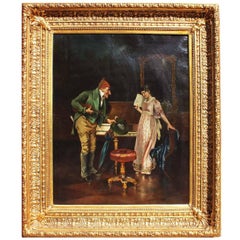
Italian 19th Century Oil on Canvas "The Music Professor" Carlo Sassi
By Carlo Sassi
Located in Los Angeles, CA
Italian 19th century oil on canvas titled "The Music Professor" depicting a mid-19th century music-room scene of an elder man, the music professor, holding his violin, hat and umbrel...
Category

19th Century Italian Other Antique Carved Wall Decorations

Materials

Gesso, Canvas, Wood

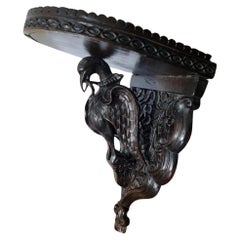
19th Century Anglo-Indian / Burmese Wall Bracket / Shelf
Located in Hoddesdon, GB
An extremely rare intricately carved 19th-century Anglo-Indian wall bracket or shelf. This exquisite piece is beautifully made . Intricately carved throughout with breathtaking d...
Category

19th Century Indian Anglo-Indian Antique Carved Wall Decorations

Materials

Hardwood

Winter Landscape Snow Scene Country Road Painting Oil on Canvas Framed Argnegger
Located in West Hollywood, CA
Winter Landscape Snow Scene Country Road Painting Oil on Canvas Framed Argnegger . Late 19th-early 20th century winter landscape / snow scene, by...
Category

Early 20th Century Austrian Carved Wall Decorations

Materials

Canvas, Giltwood, Wood, Paint

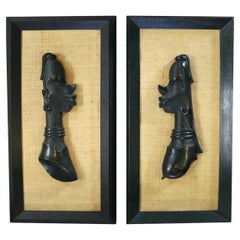
Central African Bust Wall Sculptures Male and Female
Located in Pasadena, CA
One of a kind pair of beautifully-carved wooden wall sculptures of an African couple. Most probably from a region in DR Congo in Central Africa. One o...
Category

Mid-20th Century Congolese Tribal Carved Wall Decorations

Materials

Rattan, Wood

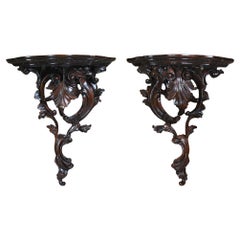
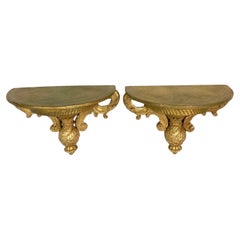
Pair Of Italian Carved And Giltwood Wall Brackets
Located in Bradenton, FL
Pair of Italian carved and giltwood wall brackets. Beautifully carved with acanthus leaves and scrollwork. Nice wide shelf atop a base that cumulates into a pineapple-like shape at b...
Category

19th Century Italian Baroque Antique Carved Wall Decorations

Materials

Giltwood

Monumental 1930s Wood No Smoking Sign from New York City
Located in Los Angeles, CA
Monumental hand carved wood sign from the 1930s. Made by H.H. Upham & Co. Interestingly, this company owned a huge sign manufacturing business in the ...
Category

1930s American Vintage Carved Wall Decorations

Materials

Wood

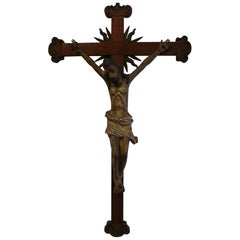
18th Century Carved Wooden Representing Christ on the Cross Folk Art
Located in Buenos Aires, Olivos
Latin American 1700s wooden crucifix. Carved face and body features. Beautiful patina. Jesus on the Cross Folk Art. We have specialized in the sale of Art Deco and Art Nouveau and V...
Category

Mid-18th Century Paraguayan Folk Art Antique Carved Wall Decorations

Materials

Wood

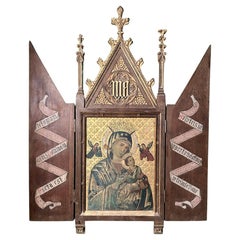
19th Century Italian Religious Icon Oil Painting in Gothic Revival Cabinet Frame
Located in London, GB
Antique Religious Oil Painting, Antique Religious Icon, Antique Gothic Revival Religious Painting, Antique Gothic Revival Cabinet, Reli...
Category

1890s Italian Gothic Revival Antique Carved Wall Decorations

Materials

Copper

Baroque Bronze Mermaid Door Knocker Mounted on Lucite Stand, German 1680-1700
Located in Haddonfield, NJ
Early German baroque bronze mermaid door knocker on frosted lucite stand. This door knocker is a work of art; heavy bronze with original patina, ...
Category

Early 1700s German Baroque Antique Carved Wall Decorations

Materials

Bronze

Read More

Punk Rock and Rebellion Animate London’s Hit Yoshitomo Nara Show

The exhibition includes his portraits of wide-eyed kids with mayhem on their minds, as well as some of the artist’s personal belongings.
Whether Painted or Papered, Muraled Walls Make Bold Statements in the Home

The ancient practice of covering walls in artistic scenery is back.

In Francks Deceus’s ‘Mumbo Jumbo #5,’ the Black Experience Is . . . Complicated

Despite the obstacles, the piece’s protagonist navigates the chaos without losing his humanity.

12 Floral-Accented Rooms with a Handmade, Folkloric Feel

Who needs a flower garden? Just use your imagination — and some beautifully patterned wallpaper or fabric — to bring the outdoors in.

This Wolf Kahn Pastel Is the Epitome of Beauty at Its Most Essential

A longtime admirer of Kahn’s work, 1stDibs editorial director Anthony Barzilay Freund explores why it’s relevant now more than ever.

Why Jules Chéret Was the King of the Modern Poster

The streets of fin-de-siècle Paris were set aglow with colorful poster ads, thanks to the printing techniques invented by Jules Chéret. Now, the Milwaukee Art Museum is celebrating this undersung talent in America's first solo show dedicated his exuberant works.

Anna Condo’s Multifaceted Career Spans Film, Photography and NFTs

From her historic Manhattan townhouse, the talented creator and curator of 1stDibs' latest NFT exhibition tells us about the art in her home and how she got involved with cryptoart.

How Keith Rivers Went from NFL Linebacker to Blue-Chip Art Aficionado

The former football player is as serious about becoming a great contemporary-art patron as he once was about making tackles. Here, Rivers tells us how he got the collecting bug and how his tastes have evolved over the years.

Still Thinking About These?

All Recently Viewed