Gilt Wall Decorations

to
144
710
355
1,049
48
19
Height
to
Width
to
68
65
61
53
47
41
33
30
21
20
15
12
11
6
5
4
3
185
460
404
67
115
139
45
18
6
15
12
8
27
22
9
11
8
860
339
284
272
258
844
305
237
145
133
1,116
1,089
1,113
13
8
5
5
4
Technique: Gilt
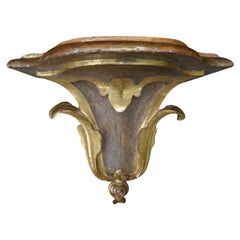
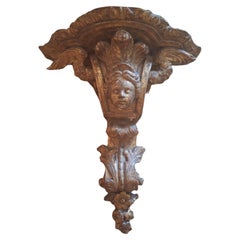
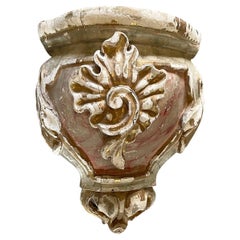
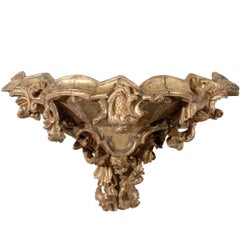
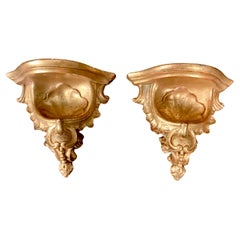
Italian Baroque Style Painted And Gilt Wall Bracket
Located in Houston, TX
Large Italian Baroque Style Painted And Gilt Wall Bracket. This stunning Italian Baroque style carved wood has a beautiful painted and parcel gilt finish and a large top surface area...
Category

1920s Italian Baroque Vintage Gilt Wall Decorations

Materials

Wood

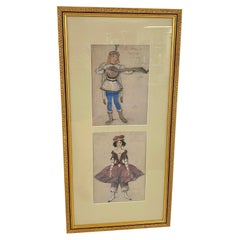
Art Deco Framed Prints, Signed, Fashion Models Work, Gilt Framed, France, 1933
Located in Auribeau sur Siagne, FR
Giltwood framed prints, representing, a stylist work for clothes, on models. Dated 1933, with a marie louise.
Category

1930s French Vintage Gilt Wall Decorations

Materials

Wood, Paper

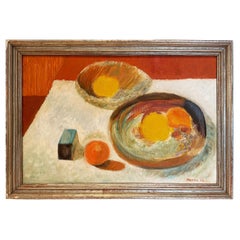
1974 French Impressionist Abstract Still-life Painting by Farmor
Located in Miami, FL
1974 French Impressionist Abstract Still-life Painting by Farmor Offered for sale is a signed 1974 abstract French impressionist table-scape still life painting signed Farmor. The p...
Category

1970s Vintage Gilt Wall Decorations

Materials

Giltwood, Paint

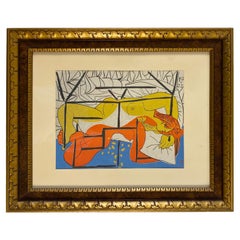
Picasso Style Mid-Century Modern Print
Located in Miami, FL
Artist/ School: French School, late 20th century. Print, signed in the plate. Subject: The Nude Models, in the style of Picasso Framed measurements: Depth 1.63 in. x Width 21.50 i...
Category

20th Century French Mid-Century Modern Gilt Wall Decorations

Materials

Wood, Paper

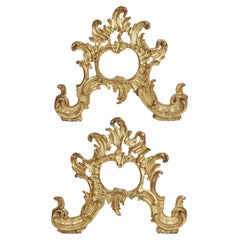
Coppia di Decorazioni da Parete Italiane Rococò 1750 Intaglio Fogliato e Dorato
Located in Milano, MI
Coppia di Fregi Dorati Italiani 1750 circa Intaglio Rococò a Volute, dorate in foglia d'oro su una preparazione di bolo rosso armeno. Sono molto probabilmete cimase di specchiere a...
Category

Mid-18th Century Italian Rococo Antique Gilt Wall Decorations

Materials

Gold Leaf

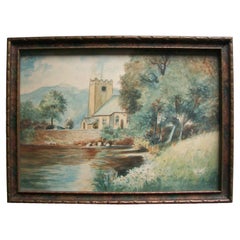
Victorian British School Watercolor Painting - Framed - Unsigned -19th Century
Located in Chatham, ON
Victorian British school watercolor landscape painting on paper - featuring a country church by a lake - original glass and frame with gilde...
Category

Late 19th Century English Country Antique Gilt Wall Decorations

Materials

Glass, Wood, Paint, Paper

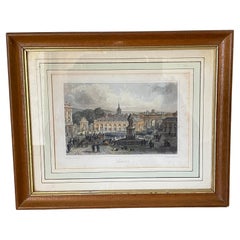
Engraving in Color, Architectural Place in Nancy with Characters, France 18th
Located in Auribeau sur Siagne, FR
This is an engraving, in colors. With a large frame in wood. Representing an architectural place in Nancy. It has been made in France in the 18th century. The engraving has no glass...
Category

18th Century French American Classical Antique Gilt Wall Decorations

Materials

Wood, Paper

19thc Antique French Louis XVI LG Carved Wood Cherub Wall Bracket Gilt Remnants
Located in Opa Locka, FL
19thc French Antique Louis XVI style Carved Wood Large Wall Shelf Bracket. Remnants of gilt. Very beautiful cherub with wing detail. French Estate.
Category

1850s French Louis XVI Antique Gilt Wall Decorations

Materials

Wood

Pair of 19th Century Flemish Oil on Copper Paintings in Gilt Frame after Teniers
By David Teniers
Located in Dallas, TX
Decorate an office or a study with this elegant pair of antique paintings on copper. Created in Holland circa 1860 and set in their original carved gilt frames, each painting depicts...
Category

Mid-19th Century Belgian Antique Gilt Wall Decorations

Materials

Copper

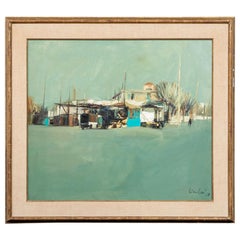
Nicola Simbari (Italian, 1927-2012) Oil On Canvas Depicting A Landscape
Located in Bridgeport, CT
Nicola Simbari, Italian painter of semi-abstract impressionist works known for using colors and favoring brilliant tones, especially with a palette knife. Considered by many to be It...
Category

20th Century Italian Mid-Century Modern Gilt Wall Decorations

Materials

Canvas, Wood

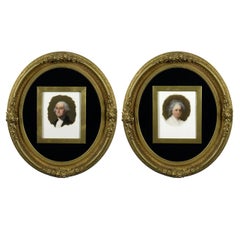
Fine Pair of 19th Century Porcelain Plaques of George and Martha Washington
Located in Los Angeles, CA
A fine pair of Continental 19th century porcelain plaques each depicting George Washington, the first President of the United States and his wife Martha Washington within an ornate V...
Category

Late 19th Century German American Colonial Antique Gilt Wall Decorations

Materials

Porcelain, Gesso, Giltwood

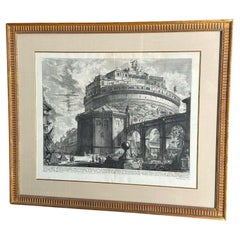
Early Giovanni Battista Piranesi Castel Sant Angelo Veduti Di Roma Wall Decor
Located in West Hollywood, CA
Early Giovanni Battista Piranesi Castel Sant'Angelo Veduti Di Roma Wall Decor . Large 18th Century Etching / Engraving Of The Ruins Of Rome An Early Print Of Castle Saint Angelo By G...
Category

18th Century Italian Antique Gilt Wall Decorations

Materials

Paper, Wood

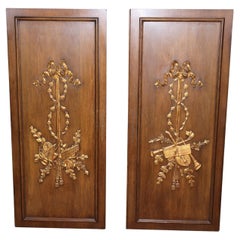
Pair of Louis XVI Style Carved Gilt Accent Neoclassical Wall Panels
Located in Swedesboro, NJ
Dimensions - H: 57 1/2 in W: 24 3/4 in D: 1 in Elevate your interior with this stunning pair of 20th-century Louis XVI style carved wood and gilt accent wall panels, exquisitely cr...
Category

20th Century Unknown Louis XVI Gilt Wall Decorations

Materials

Wood

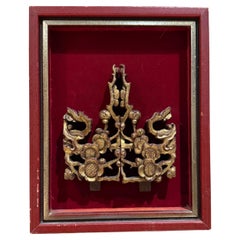
Chinese Lattice Framed Wall Art James Mont Hollywood Regency Era
Located in Chula Vista, CA
For your consideration, a framed art of lattice crown. Hand carved and finished with Gilt. Wood frame in red and gilt color. Stamp from the frame maker on the back. China circa the 1...
Category

1940s Chinese Hollywood Regency Vintage Gilt Wall Decorations

Materials

Wood

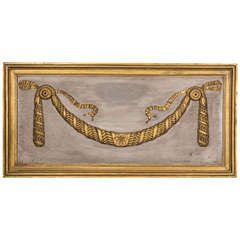
Italian, 18th Century Decorative Panel
By Bonzanigo
Located in New York, NY
A neoclassical painted and gilded overdoor panel in the manner of Giuseppe Maria Bonzanigo, circa 1790.
Category

1790s Italian Neoclassical Antique Gilt Wall Decorations

Materials

Wood

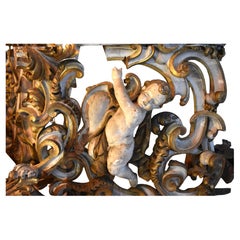
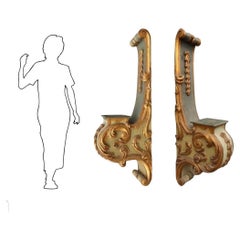
Balustrade with (decorative) corbels, of an ancient choir lofts 18th 18th Century
Located in Cesena, FC
Large sculptures, 18th century baroque balcony (balustrade) The Baroque chancel that is the subject of this description represents a fine example of art and craftsmanship, dating ba...
Category

18th Century Italian Baroque Antique Gilt Wall Decorations

Materials

Gold Leaf

18th Century French Provincial Watercolor
Located in Middleburg, VA
18th Century French Provincial Watercolor. Depicting a Lady and Gentleman riding horses in the original gilt frame, circa 1790. Pencil and watercolor on toned paper. Sight Size: 8"...
Category

18th Century French French Provincial Antique Gilt Wall Decorations

Materials

Glass, Paper

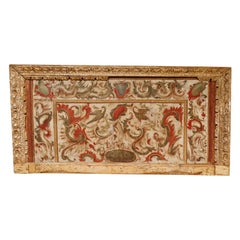
17th Century Portuguese Baroque Gilded Pinewood Wall fragment - Antique Décor
Located in West Palm Beach, FL
A single, antique Portuguese Baroque architectural wall fragment or sconce made of hand carved partly gilded Pinewood, in good condition. Authentic and naturally aged patina. Minor f...
Category

17th Century Portuguese Baroque Antique Gilt Wall Decorations

Materials

Pine, Giltwood

Louis Vuitton Eiffel Tower Trunks Monogram Art Print in Gold Frame
Located in Haddonfield, NJ
Louis Vuitton Print from Paris, France framed in a vintage European gold leaf frame. Artwork features the iconic Louis Vuitton suitcases artistically formed in the shape of the Eiffe...
Category

Mid-20th Century French Empire Gilt Wall Decorations

Materials

Wood, Giltwood, Paper

Italian 18th Century Richly Carved Gilt Wood Rococo Style Wall Bracket
Located in Atlanta, GA
An Italian 18th century gilded bracket. This large size Italian Rococo style bracket features an abundance of decor associated to a very curvy Silhouet...
Category

18th Century Italian Rococo Antique Gilt Wall Decorations

Materials

Wood

Early 19th Century Carved Chinese Sign
Located in Los Angeles, CA
Elaborately Carved and Finely Detailed Double Sided Gilded Chinese Sign that Announces the Mid Autumn Chinese Festival (a.k.a. Moon Cakes Festival).
Category

19th Century Chinese Antique Gilt Wall Decorations

Materials

Mirror, Wood

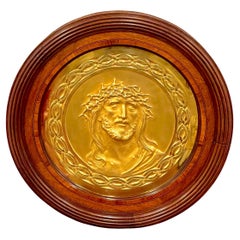
19th Century French Gilt Bronze Portrait Plaque of Jesus with Crown of Thorns
Located in West Palm Beach, FL
19th century French Gilt Bronze Portrait Plaque of Jesus with Crown of Thorns France, circa 1890s Of circular form a finely cast portrait of Jesus with the crown of thorns...
Category

Late 19th Century French Late Victorian Antique Gilt Wall Decorations

Materials

Bronze

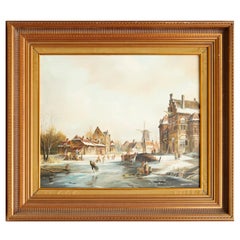
Large Framed 20th Century Dutch School Winter Scene, John Haanstra, Oil on Board
Located in Morristown, NJ
John Haanstra (Dutch, b. 1940), signed and dated 1985 on lower right. A charming oil painting, showing a winter landscape. Skaters are enjoying seasonal fun on a frozen canal while others go about their daily activities. A typical Dutch windmill can be seen in the background. Typical Dutch style housing can be seen in the foreground. The sky seems to be laden with more snow, creating the sense of more winter fun...
Category

1980s Dutch Modern Vintage Gilt Wall Decorations

Materials

Wood, Paint

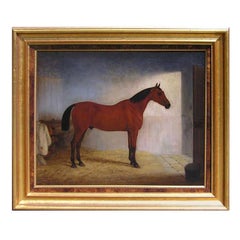
English Oil on Canvas Horse Portrait in Burl Walnut Gilt Frame, Signed. C. 1866
Located in Charleston, SC
English oil on canvas horse portrait in burl walnut giltwood and beaded molded edge frame. Signed & Dated by Artist "J. Brown Coventry 1866"
Category

1860s English William IV Antique Gilt Wall Decorations

Materials

Canvas, Wood, Giltwood, Paint

18th Century French Pair of Antique Oakwood Wall Reliefs Rocaille
Located in West Palm Beach, FL
A set of two French wall reliefs made of hand crafted Oakwood, in good condition. These partial ornaments were part of a library, original gilt and...
Category

Early 18th Century French Antique Gilt Wall Decorations

Materials

Oak, Giltwood

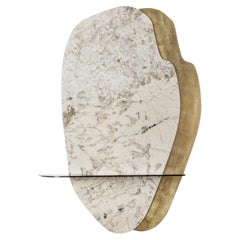
Mid-Century Modern Ignis Wall Decor Piece, Patagonia, Handmade Greenapple
Located in Lisboa, PT
Mid-Century Modern Ignis Wall Decor Piece, Contemporary Collection, Handcrafted in Portugal - Europe by Greenapple. The Ignis modern wall decor is inspired by the inner fire that fu...
Category

21st Century and Contemporary Portuguese Mid-Century Modern Gilt Wall Decorations

Materials

Onyx, Granite, Marble, Carrara Marble, Stainless Steel, Gold Leaf, Brass
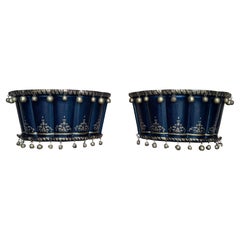
Pair of English Regency Chinoiserie Exotic Wall Brackets with Gilt Orb Tassels
Located in West Palm Beach, FL
Pair of English Regency Chinoiserie Exotic Wall Brackets with Gilt Orb Tassels England 20th Century This exquisite, large-scale pair of English Regency-style Chinoiserie wall brackets, made in the 20th century, embodies the exotic elegance reminiscent of the famed Brighton Pavilion. Each blackened and gilt bracket showcases a scalloped demilune...
Category

20th Century English Regency Gilt Wall Decorations

Materials

Metal

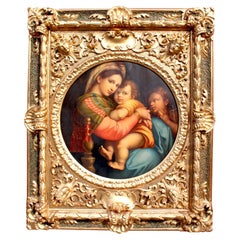
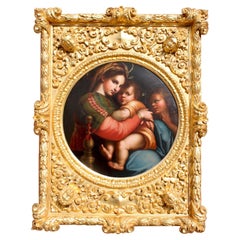
After Raffaello Sanzio 1483-1520 Raphael La Madonna della Seggiola Oil on Canvas
Located in Los Angeles, CA
A Fine Italian 19th Century Oil Painting on Canvas "La Madonna della Seggiola" after Raphael (Raffaello Sanzio da Urbino 1483-1520). The circular painted canvas depicting a seated Madonna holding an infant Jesus Christ next to a child Saint John the Baptist, all within a massive carved two-tone gilt wood, gilt-patinated and gesso frame, which is identical to the frame on Raphael's original artwork. This painting is a 19th Century copy of Raphael's Madonna della Seggiola painted in 1514 and currently exhibited and part of the permanent collection at the Palazzo Pitti, Galleria Palatina, Florence, Italy. The bodies of the Virgin, Christ, and the boy Baptist fill the whole picture. The tender, natural looking embrace of the Mother and Child, and the harmonious grouping of the figures in the round, have made this one of Raphael's most popular Madonnas. The isolated chair leg is reminiscent of papal furniture, which has led to the assumption that Leo X himself commissioned the painting. Circa: 1890-1900. Subject: Religious painting Painting diameter: 28 inches (71.1 cm) Frame height: 55 1/8 inches (140 cm) Frame width: 46 inches (116.8 cm) Frame depth: 5 1/8 inches (13 cm) Raffaello Sanzio da Urbino (Italian, March 28 or April 6, 1483 - April 6, 1520), known as Raphael, was an Italian painter and architect of the High Renaissance. His work is admired for its clarity of form, ease of composition, and visual achievement of the Neoplatonic ideal of human grandeur. Together with Michelangelo and Leonardo da Vinci, he forms the traditional trinity of great masters of that period. Raphael was enormously productive, running an unusually large workshop and, despite his death at 37, leaving a large body of work. Many of his works are found in the Vatican Palace, where the frescoed Raphael Rooms were the central, and the largest, work of his career. The best known work is The School of Athens in the Vatican Stanza della Segnatura. After his early years in Rome much of his work was executed by his workshop from his drawings, with considerable loss of quality. He was extremely influential in his lifetime, though outside Rome his work was mostly known from his collaborative printmaking. After his death, the influence of his great rival Michelangelo was more widespread until the 18th and 19th centuries, when Raphael's more serene and harmonious qualities were again regarded as the highest models. His career falls naturally into three phases and three styles, first described by Giorgio Vasari: his early years in Umbria, then a period of about four years (1504–1508) absorbing the artistic traditions of Florence, followed by his last hectic and triumphant twelve years in Rome, working for two Popes and their close associates. Raphael was born in the small but artistically significant central Italian city of Urbino in the Marche region, where his father Giovanni Santi was court painter to the Duke. The reputation of the court had been established by Federico III da Montefeltro, a highly successful condottiere who had been created Duke of Urbino by the Pope - Urbino formed part of the Papal States - and who died the year before Raphael was born. The emphasis of Federico's court was rather more literary than artistic, but Giovanni Santi was a poet of sorts as well as a painter, and had written a rhymed chronicle of the life of Federico, and both wrote the texts and produced the decor for masque-like court entertainments. His poem to Federico shows him as keen to show awareness of the most advanced North Italian painters, and Early Netherlandish artists as well. In the very small court of Urbino he was probably more integrated into the central circle of the ruling family than most court painters. Federico was succeeded by his son Guidobaldo da Montefeltro, who married Elisabetta Gonzaga, daughter of the ruler of Mantua, the most brilliant of the smaller Italian courts for both music and the visual arts. Under them, the court continued as a centre for literary culture. Growing up in the circle of this small court gave Raphael the excellent manners and social skills stressed by Vasari. Court life in Urbino at just after this period was to become set as the model of the virtues of the Italian humanist court through Baldassare Castiglione's depiction of it in his classic work The Book of the Courtier, published in 1528. Castiglione moved to Urbino in 1504, when Raphael was no longer based there but frequently visited, and they became good friends. He became close to other regular visitors to the court: Pietro Bibbiena and Pietro Bembo, both later cardinals, were already becoming well known as writers, and would be in Rome during Raphael's period there. Raphael mixed easily in the highest circles throughout his life, one of the factors that tended to give a misleading impression of effortlessness to his career. He did not receive a full humanistic education however; it is unclear how easily he read Latin. Early Life and Works His mother Màgia died in 1491 when Raphael was eight, followed on August 1, 1494 by his father, who had already remarried. Raphael was thus orphaned at eleven; his formal guardian became his only paternal uncle Bartolomeo, a priest, who subsequently engaged in litigation with his stepmother. He probably continued to live with his stepmother when not staying as an apprentice with a master. He had already shown talent, according to Vasari, who says that Raphael had been "a great help to his father". A self-portrait drawing from his teenage years shows his precocity. His father's workshop continued and, probably together with his stepmother, Raphael evidently played a part in managing it from a very early age. In Urbino, he came into contact with the works of Paolo Uccello, previously the court painter (d. 1475), and Luca Signorelli, who until 1498 was based in nearby Città di Castello. According to Vasari, his father placed him in the workshop of the Umbrian master Pietro Perugino as an apprentice "despite the tears of his mother". The evidence of an apprenticeship comes only from Vasari and another source, and has been disputed—eight was very early for an apprenticeship to begin. An alternative theory is that he received at least some training from Timoteo Viti, who acted as court painter in Urbino from 1495.Most modern historians agree that Raphael at least worked as an assistant to Perugino from around 1500; the influence of Perugino on Raphael's early work is very clear: "probably no other pupil of genius has ever absorbed so much of his master's teaching as Raphael did", according to Wölfflin. Vasari wrote that it was impossible to distinguish between their hands at this period, but many modern art historians claim to do better and detect his hand in specific areas of works by Perugino or his workshop. Apart from stylistic closeness, their techniques are very similar as well, for example having paint applied thickly, using an oil varnish medium, in shadows and darker garments, but very thinly on flesh areas. An excess of resin in the varnish often causes cracking of areas of paint in the works of both masters. The Perugino workshop was active in both Perugia and Florence, perhaps maintaining two permanent branches. Raphael is described as a "master", that is to say fully trained, in December 1500. His first documented work was the Baronci altarpiece for the church of Saint Nicholas of Tolentino in Città di Castello, a town halfway between Perugia and Urbino. Evangelista da Pian di Meleto, who had worked for his father, was also named in the commission. It was commissioned in 1500 and finished in 1501; now only some cut sections and a preparatory drawing remain. In the following years he painted works for other churches there, including the Mond Crucifixion (about 1503) and the Brera Wedding of the Virgin (1504), and for Perugia, such as the Oddi Altarpiece. He very probably also visited Florence in this period. These are large works, some in fresco, where Raphael confidently marshals his compositions in the somewhat static style of Perugino. He also painted many small and exquisite cabinet paintings in these years, probably mostly for the connoisseurs in the Urbino court, like the Three Graces and St. Michael, and he began to paint Madonnas and portraits. In 1502 he went to Siena at the invitation of another pupil of Perugino, Pinturicchio, "being a friend of Raphael and knowing him to be a draughtsman of the highest quality" to help with the cartoons, and very likely the designs, for a fresco series in the Piccolomini Library in Siena Cathedral. He was evidently already much in demand even at this early stage in his career. Influence of Florence Raphael led a "nomadic" life, working in various centres in Northern Italy, but spent a good deal of time in Florence, perhaps from about 1504. Although there is traditional reference to a "Florentine period...
Category

Early 1900s Italian Baroque Antique Gilt Wall Decorations

Materials

Canvas, Giltwood

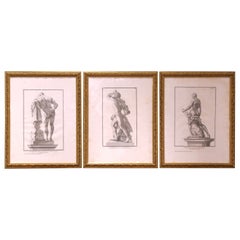
18th Century Italian Framed Neoclassical Hercules Statues Engravings, Set of 3
Located in Dallas, TX
Add classical gravitas to your space with this elegant set of three antique engravings depicting views of ancient Hercules sculptures. Printed in Rome in the 18th century, each print...
Category

Late 18th Century Italian Neoclassical Antique Gilt Wall Decorations

Materials

Glass, Giltwood, Paper

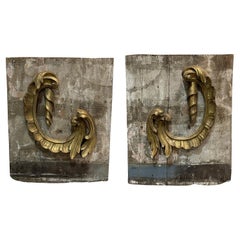
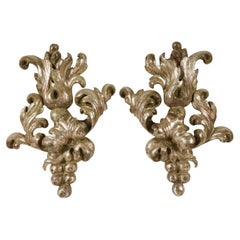
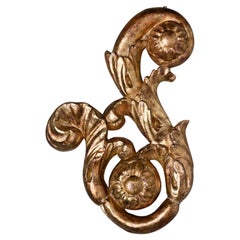
Large Robust Set of Carved Silver Gilt Acanthus Wall Appliqué s or Trophies
Located in Nashville, TN
Set or pair of robustly carved silver Giltwood wall trophies or wall appliqués .In the baroque style with dramatic acanthus scrolls and flourishes .Of wood with iron hangers on back....
Category

Early 20th Century Italian Baroque Gilt Wall Decorations

Materials

Wood

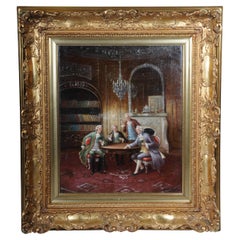
Rococo Oil Painting Signed Bruno Blatter Around 1890
Located in Berlin, DE
Rococo oil painting signed Bruno Blätter around 1890 Oil on canvas painting. Rococo scene. Three gentlemen seated at the table, playing cards a...
Category

1890s German Rococo Revival Antique Gilt Wall Decorations

Materials

Canvas, Wood

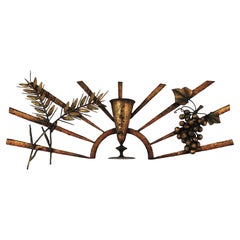
Spanish Gilt Iron Wheat, Chalice Grapes Holy Communion Wall Decoration / Crest
Located in Barcelona, ES
Beautiful hand forged iron wheat, chalice and grapes religious Eucharistic wall Pediment, Spain, 1940s. This finely hand-hammered unique crest / cornice ...
Category

20th Century Spanish Gilt Wall Decorations

Materials

Iron, Wrought Iron, Gold Leaf

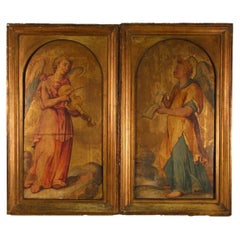
18th Century French Pair of Oils on Gold Leaf Panels
Located in North Miami, FL
18th century French pair of oils on gold leaf panels. One is depicting an angel playing the violin, and the other one is holding the music book.
Category

18th Century French Baroque Antique Gilt Wall Decorations

Materials

Gold Leaf

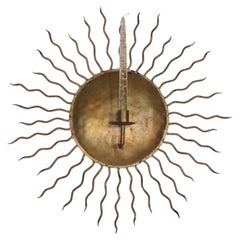
Gold Gilt Sun Burst Sconce Made in Italy c. 1970 s
Located in New York, NY
Exceptional Italian sun burst candle sconce in original gold gilt finish. The sconce features repeating wrought iron rays, which radiate from the domed metal center. A single candle...
Category

1970s Italian Brutalist Vintage Gilt Wall Decorations

Materials

Wrought Iron

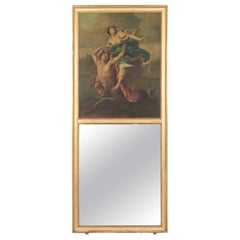
18th Century French Trumeau Mirror with Greek Myth Painting
Located in Winter Park, FL
An 18th century French Louis XVI style trumeau mirror with a large oil painting depicting The Abduction of Deianira after Guido Reni. Gilded wood frame with bright gilt finish is in ...
Category

Late 18th Century French Louis XV Antique Gilt Wall Decorations

Materials

Canvas, Mirror, Giltwood

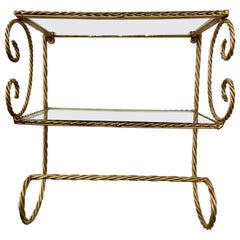
Italian Gilt Rope Two-Tier Wall Shelf Towel Bar
Located in New York, NY
Italian Gilt Rope Two-Tier Wall Shelf Towel Bar with new glass shelves. Scrolled sides. Perfect for bathroom, has towel bar below shelves. Very sturd...
Category

1960s Italian Hollywood Regency Vintage Gilt Wall Decorations

Materials

Metal

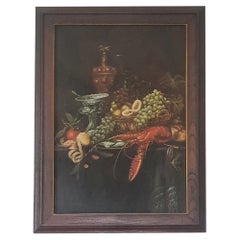
A Large imposing Edwardian still life Oil Painting in original Mahogany frame
Located in London, GB
This is a beautiful, elegant and striking still life oil painting of a Lobster with fruit on an overflowing laid table with silverware, basket or fruit, foliage an upturned crab and ...
Category

Early 1900s European Edwardian Antique Gilt Wall Decorations

Materials

Canvas, Mahogany, Giltwood, Paint

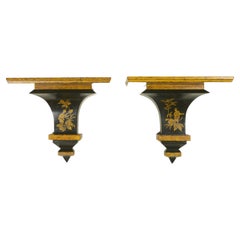
Pair of Chinoiserie Black and Gilt Brackets
Located in New York, NY
Each decorated with a Chinoiserie figure engaged in a leisurely pursuit; with black banding throughout.
Category

Late 20th Century Unknown Chinoiserie Gilt Wall Decorations

Materials

Wood

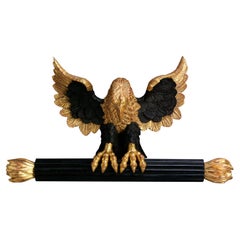
Regency Eagle Over-Door
Located in Sturminster Marshall, Dorset
A carved wood and parcel gilt over-door. The richly carved eagle, with outstretched wings, grasps the turned and reeded column in its talons. Bespoke sizing, design adaptations and f...
Category

21st Century and Contemporary British Regency Gilt Wall Decorations

Materials

Mahogany

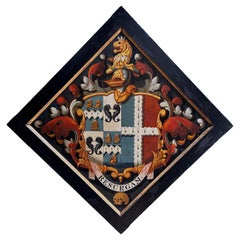
18th Century Oil on Canvas Heraldic Funerary Hatchment Painting
Located in London, GB
18th Century Oil on Canvas Heraldic Funerary Hatchment Painting, Memento Mori Painting, Vanitas Skull Painting, Vanitas Painting. A large high quality 1...
Category

Mid-18th Century British Gothic Antique Gilt Wall Decorations

Materials

Canvas, Wood, Paint

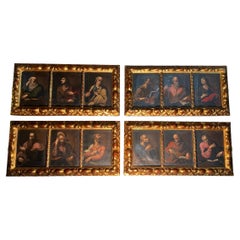
Set of Four Triptychs Oil Paintings on Canvas of the Twelve Apostles
Located in Guaynabo, PR
These are a set of Four “triptychs” oil paintings on canvas of the twelve apostles. Each one of the “triptychs” are rectangular shaped, divided i...
Category

19th Century Spanish Renaissance Revival Antique Gilt Wall Decorations

Materials

Wood

Agnes Slott-Møller, Summer Residence "Villa Nostra", Signed
Located in Kastrup, DK
Agnes Slott-Møller, 1862-1937. Summer Residence "Villa Nostra," oil on canvas, in a contemporary gilded wooden frame designed by the artist. Signed: Agnes Slott-Møller 1909-11. "Vi...
Category

Early 20th Century European Other Gilt Wall Decorations

Materials

Canvas, Wood

Huge Pair of 18th Century French Consoles Louis XVI
Located in Buxton, GB
This exceptional pair of Italian console shelves from the 18th century that exude elegance and grandeur. The intricate design and craftsmanship of these shelves are a testament to th...
Category

18th Century French Baroque Antique Gilt Wall Decorations

Materials

Wood, Giltwood, Lacquer

Pair of European Gilt Wall Brackets of Ho Ho Birds
Located in Chicago, IL
These lavish gilt wall brackets are crafted in a Chinoiserie-meets-Rococo style with a whimsical design of Ho Ho birds perched on scrolled branches. A Western interpretation of the mythical phoenix of Chinese and Japanese decorative arts, the Ho Ho bird is often depicted like an eagle and was a common motif in French and English furniture design beginning in the 18th century. The head and wings of each Ho Ho bird support a small flat shelf...
Category

20th Century European Chinoiserie Gilt Wall Decorations

Materials

Resin

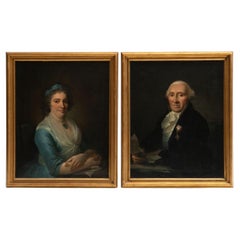
Pair of Noble Portraits, Late 18th Century
Located in Kastrup, DK
A distinguished pair of noble portraits Likely painted by Hans Hansen (1769–1829) or another artist from Circle of Jens Juel. These portraits are masterfull...
Category

Late 18th Century Danish Louis XVI Antique Gilt Wall Decorations

Materials

Canvas, Wood

After Raffaello Sanzio 1483-1520 Raphael La Madonna della Seggiola Oil on Canvas
Located in Los Angeles, CA
A Fine Italian 19th Century Oil Painting on Canvas "La Madonna della Seggiola" after Raphael (Raffaello Sanzio da Urbino 1483-1520). The circular painted canvas depicting a seated Madonna holding an infant Jesus Christ next to a child Saint John the Baptist, all within a massive carved gilt wood and gesso frame, which is identical to the frame on Raphael's original artwork. This painting is a 19th Century copy of Raphael's Madonna della Seggiola painted in 1514 and currently exhibited and part of the permanent collection at the Palazzo Pitti, Galleria Palatina, Florence, Italy. The bodies of the Virgin, Christ, and the boy Baptist fill the whole picture. The tender, natural looking embrace of the Mother and Child, and the harmonious grouping of the figures in the round, have made this one of Raphael's most popular Madonnas. The isolated chair leg is reminiscent of papal furniture, which has led to the assumption that Leo X himself commissioned the painting. A retailer's label reads " Fred K/ Keer's Sons - Framers and Fine Art Dealers - 917 Broad St. Newark, N.J." - Another label from the gilder reads "Carlo Bartolini - Doratore e Verniciatori - Via Maggio 1924 - Firenze". Circa: 1890-1900. Subject: Religious painting Canvas diameter: 28 inches (71.1 cm) Frame height: 54 inches (137.2 cm) Frame width: 42 1/2 inches (108 cm) Frame depth: 5 1/2 inches (14 cm) Raffaello Sanzio da Urbino (Italian, March 28 or April 6, 1483 - April 6, 1520), known as Raphael, was an Italian painter and architect of the High Renaissance. His work is admired for its clarity of form, ease of composition, and visual achievement of the Neoplatonic ideal of human grandeur. Together with Michelangelo and Leonardo da Vinci, he forms the traditional trinity of great masters of that period. Raphael was enormously productive, running an unusually large workshop and, despite his death at 37, leaving a large body of work. Many of his works are found in the Vatican Palace, where the frescoed Raphael Rooms were the central, and the largest, work of his career. The best known work is The School of Athens in the Vatican Stanza della Segnatura. After his early years in Rome much of his work was executed by his workshop from his drawings, with considerable loss of quality. He was extremely influential in his lifetime, though outside Rome his work was mostly known from his collaborative printmaking. After his death, the influence of his great rival Michelangelo was more widespread until the 18th and 19th centuries, when Raphael's more serene and harmonious qualities were again regarded as the highest models. His career falls naturally into three phases and three styles, first described by Giorgio Vasari: his early years in Umbria, then a period of about four years (1504–1508) absorbing the artistic traditions of Florence, followed by his last hectic and triumphant twelve years in Rome, working for two Popes and their close associates. Raphael was born in the small but artistically significant central Italian city of Urbino in the Marche region, where his father Giovanni Santi was court painter to the Duke. The reputation of the court had been established by Federico III da Montefeltro, a highly successful condottiere who had been created Duke of Urbino by the Pope - Urbino formed part of the Papal States - and who died the year before Raphael was born. The emphasis of Federico's court was rather more literary than artistic, but Giovanni Santi was a poet of sorts as well as a painter, and had written a rhymed chronicle of the life of Federico, and both wrote the texts and produced the decor for masque-like court entertainments. His poem to Federico shows him as keen to show awareness of the most advanced North Italian painters, and Early Netherlandish artists as well. In the very small court of Urbino he was probably more integrated into the central circle of the ruling family than most court painters. Federico was succeeded by his son Guidobaldo da Montefeltro, who married Elisabetta Gonzaga, daughter of the ruler of Mantua, the most brilliant of the smaller Italian courts for both music and the visual arts. Under them, the court continued as a centre for literary culture. Growing up in the circle of this small court gave Raphael the excellent manners and social skills stressed by Vasari. Court life in Urbino at just after this period was to become set as the model of the virtues of the Italian humanist court through Baldassare Castiglione's depiction of it in his classic work The Book of the Courtier, published in 1528. Castiglione moved to Urbino in 1504, when Raphael was no longer based there but frequently visited, and they became good friends. He became close to other regular visitors to the court: Pietro Bibbiena and Pietro Bembo, both later cardinals, were already becoming well known as writers, and would be in Rome during Raphael's period there. Raphael mixed easily in the highest circles throughout his life, one of the factors that tended to give a misleading impression of effortlessness to his career. He did not receive a full humanistic education however; it is unclear how easily he read Latin. Early Life and Works His mother Màgia died in 1491 when Raphael was eight, followed on August 1, 1494 by his father, who had already remarried. Raphael was thus orphaned at eleven; his formal guardian became his only paternal uncle Bartolomeo, a priest, who subsequently engaged in litigation with his stepmother. He probably continued to live with his stepmother when not staying as an apprentice with a master. He had already shown talent, according to Vasari, who says that Raphael had been "a great help to his father". A self-portrait drawing from his teenage years shows his precocity. His father's workshop continued and, probably together with his stepmother, Raphael evidently played a part in managing it from a very early age. In Urbino, he came into contact with the works of Paolo Uccello, previously the court painter (d. 1475), and Luca Signorelli, who until 1498 was based in nearby Città di Castello. According to Vasari, his father placed him in the workshop of the Umbrian master Pietro Perugino as an apprentice "despite the tears of his mother". The evidence of an apprenticeship comes only from Vasari and another source, and has been disputed—eight was very early for an apprenticeship to begin. An alternative theory is that he received at least some training from Timoteo Viti, who acted as court painter in Urbino from 1495.Most modern historians agree that Raphael at least worked as an assistant to Perugino from around 1500; the influence of Perugino on Raphael's early work is very clear: "probably no other pupil of genius has ever absorbed so much of his master's teaching as Raphael did", according to Wölfflin. Vasari wrote that it was impossible to distinguish between their hands at this period, but many modern art historians claim to do better and detect his hand in specific areas of works by Perugino or his workshop. Apart from stylistic closeness, their techniques are very similar as well, for example having paint applied thickly, using an oil varnish medium, in shadows and darker garments, but very thinly on flesh areas. An excess of resin in the varnish often causes cracking of areas of paint in the works of both masters. The Perugino workshop was active in both Perugia and Florence, perhaps maintaining two permanent branches. Raphael is described as a "master", that is to say fully trained, in December 1500. His first documented work was the Baronci altarpiece for the church of Saint Nicholas of Tolentino in Città di Castello, a town halfway between Perugia and Urbino. Evangelista da Pian di Meleto, who had worked for his father, was also named in the commission. It was commissioned in 1500 and finished in 1501; now only some cut sections and a preparatory drawing remain. In the following years he painted works for other churches there, including the Mond Crucifixion (about 1503) and the Brera Wedding of the Virgin (1504), and for Perugia, such as the Oddi Altarpiece. He very probably also visited Florence in this period. These are large works, some in fresco, where Raphael confidently marshals his compositions in the somewhat static style of Perugino. He also painted many small and exquisite cabinet paintings in these years, probably mostly for the connoisseurs in the Urbino court, like the Three Graces and St. Michael, and he began to paint Madonnas and portraits. In 1502 he went to Siena at the invitation of another pupil of Perugino, Pinturicchio, "being a friend of Raphael and knowing him to be a draughtsman of the highest quality" to help with the cartoons, and very likely the designs, for a fresco series in the Piccolomini Library in Siena Cathedral. He was evidently already much in demand even at this early stage in his career. Influence of Florence Raphael led a "nomadic" life, working in various centres in Northern Italy, but spent a good deal of time in Florence, perhaps from about 1504. Although there is traditional reference to a "Florentine period...
Category

Early 1900s Italian Baroque Antique Gilt Wall Decorations

Materials

Canvas, Giltwood

18th Century Catholic Altar Front
Located in Brecht, BE
A rare find this 18th century Spanish altar front, original gilt on chestnut, hand painted, highly decorative wall art, different, genuine, love t...
Category

Mid-18th Century Spanish Antique Gilt Wall Decorations

Materials

Chestnut

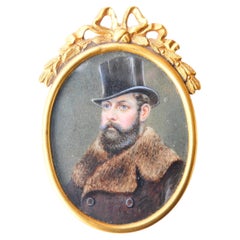
Antique Miniature Portrait of a Man Tempera Painting
Located in Malmö, SE
European Tempera hand-painting of a Man, not signed. Gilt Bronze Frame with original Glass cover. The frame is sealed. To be hanged. Sized: frame 8.2 cm x 5.6 cm x 6 mm deep / paint...
Category

1880s European Arts and Crafts Antique Gilt Wall Decorations

Materials

Gold, Bronze

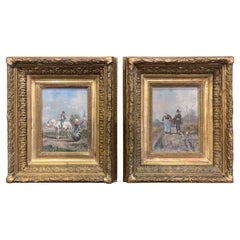
Pair of 19th Century French Signed Pastoral Paintings in Carved Giltwood Frames
Located in Dallas, TX
Decorate an office or study with this elegant pair of antique paintings. Crafted in France circa 1870, the artworks hand painted on board, are set inside the original beautiful carve...
Category

Mid-19th Century French Antique Gilt Wall Decorations

Materials

Giltwood

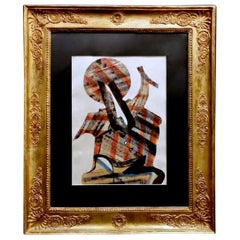
Empire Frame Gold Leaf France with Russian Constructivism Painting
Located in Prato, Tuscany
We kindly suggest you read the whole description, because with it we try to give you detailed technical and historical information to guarantee the authenticity of our objects. Our owner Beatrice Tronci, passionate art collector and established interior design, wanted to propose an article with a daring but engaging temporal contrast; a French gold leaf frame of 1855 and inside a painting of Russian Constructivism...
Category

Mid-19th Century French Napoleon III Antique Gilt Wall Decorations

Materials

Wood, Paper

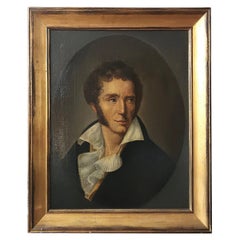
LATE 18th-EARLY 19th CENTURY PORTRAIT OF A YOUNG POET
Located in Firenze, FI
Magnificent almond-shaped portrait of a young poet, painted in oil on canvas and framed in a fine carved and gilded wooden frame. At the cente...
Category

Late 18th Century Italian Antique Gilt Wall Decorations

Materials

Canvas, Wood, Paint

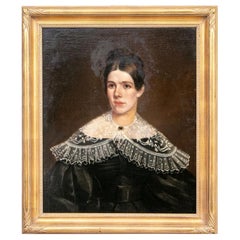
19th C. Oil on Panel, Portrait of a Lady with Lace Collar
Located in Bridgeport, CT
Unsigned. Ca. mid-19th c. portrait of a lovely seated lady wearing a black dress with a fine broad lace collar, a sign of her high status in socie...
Category

19th Century Victorian Antique Gilt Wall Decorations

Materials

Canvas, Wood

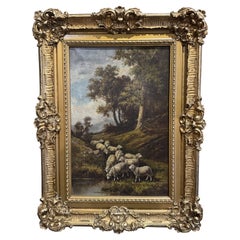
19th Century Italian Sheep Oil Painting in Carved Gilt Frame Signed G. Milone
Located in Dallas, TX
Decorate an office or study with this beautiful antique pastoral painting. Hand painted in Italy circa 1870, the painting depicts a tranquil ...
Category

Mid-19th Century Italian Antique Gilt Wall Decorations

Materials

Giltwood, Canvas

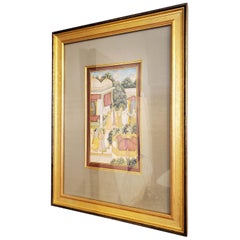
Mid-18th Century Indian Court Painting of Krishna and Radha, Gouache with Gold
Located in Middleburg, VA
A superbly detailed mid-18th-century Indian miniature court painting, executed in gouache heightened with gold on handmade paper. Originating from Rajasthan circa 1760, this exquisite artwork captures a serene palace scene featuring the Hindu deity Krishna with Radha and accompanying Gopis in a lush, architectural setting. The composition is rich in symbolism, narrative depth, and emotional subtlety, hallmarks of classical Rajput painting. The figures are adorned with traditional garments, rendered in delicate pastel tones with intricate patterns and gilt accents. The architectural elements, marble pavilions, domes, carved screens, and floral gardens, are meticulously executed, offering a vivid impression of royal leisure and divine romance. Set against a tree-lined courtyard with peacocks and floral motifs, the visual rhythm is both vibrant and harmonious. The painting is professionally mounted in a deep tan linen mat and presented in an elegant gold-gilt frame with black detailing, complementing the composition's refined warmth and historic gravitas. A rare and captivating example of classical Indian court painting...
Category

Mid-18th Century Indian Antique Gilt Wall Decorations

Materials

Gold Leaf

Pair of Italian Gold Gilt Wall Brackets
Located in Bradenton, FL
A Pair of Italian Rococo Style Gold Gilt Wall Brackets. Brackets feature impressive gold scrolling with floral motif. Top of shelf is painted black. Hangers in place on reverse side....
Category

19th Century Italian Rococo Antique Gilt Wall Decorations

Materials

Resin

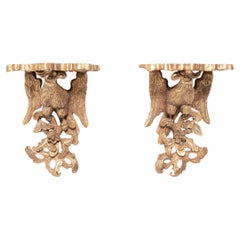
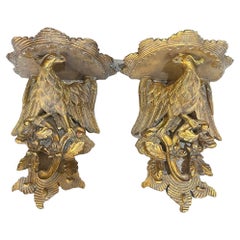
Pair Italian Giltwood Eagle Wall Shelves
Located in Houston, TX
Elevate your decor with a stunning pair of Italian carved giltwood eagle wall sconces or shelves. Meticulously crafted, these majestic eagles showcase intri...
Category

20th Century Italian American Classical Gilt Wall Decorations

Materials

Wood

Antique Gilded Wooden Frieze
Located in Alessandria, Piemonte
Ancient gilded wooden frieze carved with leaves and flowers. Another example of the rich French woodwork of the 18th century. ref. O/7347.
Category

Late 17th Century French Baroque Antique Gilt Wall Decorations

Materials

Fruitwood

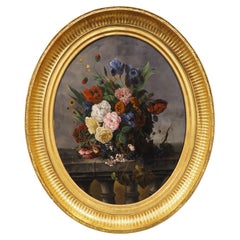
Large and Striking Antique French Oval Nature Morte Floral Oil Painting, C. 1850
Located in Dallas, TX
A master-level painting surrounded by a thick and detailed gold leaf frame, this large oval oil on canvas has an impressive scale for a nature morte (still-life) painting. The painting, which dates to circa 1850, is by an unknown, yet extremely talented French artist. In stark contrast to the dark gray background, the subject of the painting is a brightly colored floral bouquet. The vibrant flowers (blue, red, yellow, pink, and white) reside in a brown woven basket that sits atop a stone baluster railing. A cluster of darkly colored grapes is strewn across the top of the railing, next to the basket, as two butterflies flutter above the bouquet. If you look closely, you will even see a third butterfly perched on one of the large green leaves that accompany the irises, carnations, and sunflowers. The equally impressive original frame is adorned with rings of beading, foliate rinceaux, and spiral fluting, with a deep convex molding carved with additional fluting. In 19th-century France, an entire school devoted to floral still-life paintings emerged, located in Lyon, which was the capital of floral design. Although originally still-life art was classified as unimportant, acceptance by art historians of the 20th century elevated the public opinion of nature mortes. A painting such as our large and striking oval floral...
Category

Mid-19th Century French Antique Gilt Wall Decorations

Materials

Textile, Canvas, Wood, Giltwood, Paint
19th Century Oil Painting of a French Coast by Emile Godchaux (1860-1938)
Located in NICE, FR
Imagine the radiant serenity of a sunny day on the Côte d'Azur, captured with exceptional sensitivity by the famous artist Emile Godchaux (1860-1938) at the beginning of the 20th cen...
Category

19th Century French Napoleon III Antique Gilt Wall Decorations

Materials

Bronze

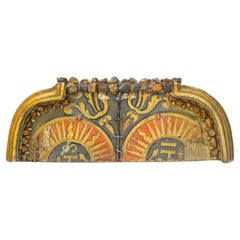
17th Century Italian Architectural Fragment with Carnelian Pebbles and Raw Agate
Located in Dublin, Dalkey
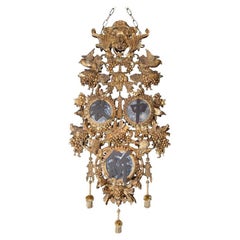
17th century Italian hand-painted ecclesiastical architectural element adorned with carnelian pebbles, gold-plated crystals, blue and yellow raw agate, and b...
Category

17th Century Italian Baroque Antique Gilt Wall Decorations

Materials

Agate, Quartz, Rock Crystal, Metal, Gold Leaf
Read More

Punk Rock and Rebellion Animate London’s Hit Yoshitomo Nara Show

The exhibition includes his portraits of wide-eyed kids with mayhem on their minds, as well as some of the artist’s personal belongings.

Whether Painted or Papered, Muraled Walls Make Bold Statements in the Home

The ancient practice of covering walls in artistic scenery is back.

In Francks Deceus’s ‘Mumbo Jumbo #5,’ the Black Experience Is . . . Complicated

Despite the obstacles, the piece’s protagonist navigates the chaos without losing his humanity.

12 Floral-Accented Rooms with a Handmade, Folkloric Feel

Who needs a flower garden? Just use your imagination — and some beautifully patterned wallpaper or fabric — to bring the outdoors in.

This Wolf Kahn Pastel Is the Epitome of Beauty at Its Most Essential

A longtime admirer of Kahn’s work, 1stDibs editorial director Anthony Barzilay Freund explores why it’s relevant now more than ever.

Why Jules Chéret Was the King of the Modern Poster

The streets of fin-de-siècle Paris were set aglow with colorful poster ads, thanks to the printing techniques invented by Jules Chéret. Now, the Milwaukee Art Museum is celebrating this undersung talent in America's first solo show dedicated his exuberant works.

Anna Condo’s Multifaceted Career Spans Film, Photography and NFTs

From her historic Manhattan townhouse, the talented creator and curator of 1stDibs' latest NFT exhibition tells us about the art in her home and how she got involved with cryptoart.

How Keith Rivers Went from NFL Linebacker to Blue-Chip Art Aficionado

The former football player is as serious about becoming a great contemporary-art patron as he once was about making tackles. Here, Rivers tells us how he got the collecting bug and how his tastes have evolved over the years.

Still Thinking About These?

All Recently Viewed