Hand-Carved Wall Decorations

to
128
707
481
1,110
120
20
Height
to
Width
to
68
59
55
54
37
36
32
29
24
20
18
17
15
11
9
5
4
1
251
452
407
140
134
145
49
17
7
14
10
11
25
29
14
10
4
1,079
215
215
210
176
909
270
257
109
103
1,250
1,182
1,233
32
18
8
8
7
Technique: Hand-Carved
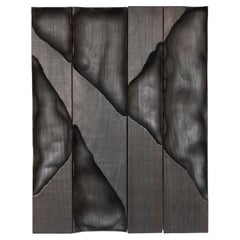
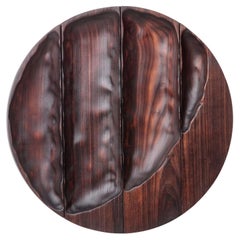
Contemporary burned soft wood Ukiyo 032 wall piece by Katrien Doms
Located in 1204, CH
The loss of craft at its purist form due to economic circumstances of the last centuries. Going back to basics in a chaotic world where social media takes over. Where expectations an...
Category

2010s Hand-Carved Wall Decorations

Materials

Softwood

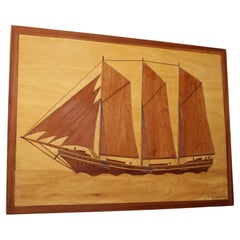
Gorgeous! Teak Wood Carved Ship Wall Art Danish Modern Arts Crafts Nggaard
Located in Peoria, AZ
TEAK & BIRCH HAND CARVED DANISH SHIP WALL ART! BEAUTIFUL! SIGNED NGGAARD Circa 1955 Mid Century Danish Modern Expressionism Dimensions: This mid century carved wood ship art is...
Category

Mid-20th Century American Mid-Century Modern Hand-Carved Wall Decorations

Materials

Wood, Birch, Teak

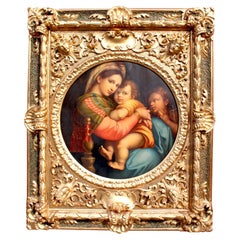
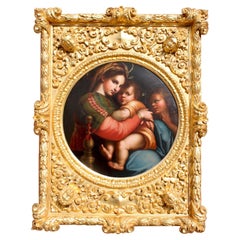
After Raffaello Sanzio 1483-1520 Raphael La Madonna della Seggiola Oil on Canvas
Located in Los Angeles, CA
A Fine Italian 19th Century Oil Painting on Canvas "La Madonna della Seggiola" after Raphael (Raffaello Sanzio da Urbino 1483-1520). The circular painted canvas depicting a seated Madonna holding an infant Jesus Christ next to a child Saint John the Baptist, all within a massive carved two-tone gilt wood, gilt-patinated and gesso frame, which is identical to the frame on Raphael's original artwork. This painting is a 19th Century copy of Raphael's Madonna della Seggiola painted in 1514 and currently exhibited and part of the permanent collection at the Palazzo Pitti, Galleria Palatina, Florence, Italy. The bodies of the Virgin, Christ, and the boy Baptist fill the whole picture. The tender, natural looking embrace of the Mother and Child, and the harmonious grouping of the figures in the round, have made this one of Raphael's most popular Madonnas. The isolated chair leg is reminiscent of papal furniture, which has led to the assumption that Leo X himself commissioned the painting. Circa: 1890-1900. Subject: Religious painting Painting diameter: 28 inches (71.1 cm) Frame height: 55 1/8 inches (140 cm) Frame width: 46 inches (116.8 cm) Frame depth: 5 1/8 inches (13 cm) Raffaello Sanzio da Urbino (Italian, March 28 or April 6, 1483 - April 6, 1520), known as Raphael, was an Italian painter and architect of the High Renaissance. His work is admired for its clarity of form, ease of composition, and visual achievement of the Neoplatonic ideal of human grandeur. Together with Michelangelo and Leonardo da Vinci, he forms the traditional trinity of great masters of that period. Raphael was enormously productive, running an unusually large workshop and, despite his death at 37, leaving a large body of work. Many of his works are found in the Vatican Palace, where the frescoed Raphael Rooms were the central, and the largest, work of his career. The best known work is The School of Athens in the Vatican Stanza della Segnatura. After his early years in Rome much of his work was executed by his workshop from his drawings, with considerable loss of quality. He was extremely influential in his lifetime, though outside Rome his work was mostly known from his collaborative printmaking. After his death, the influence of his great rival Michelangelo was more widespread until the 18th and 19th centuries, when Raphael's more serene and harmonious qualities were again regarded as the highest models. His career falls naturally into three phases and three styles, first described by Giorgio Vasari: his early years in Umbria, then a period of about four years (1504–1508) absorbing the artistic traditions of Florence, followed by his last hectic and triumphant twelve years in Rome, working for two Popes and their close associates. Raphael was born in the small but artistically significant central Italian city of Urbino in the Marche region, where his father Giovanni Santi was court painter to the Duke. The reputation of the court had been established by Federico III da Montefeltro, a highly successful condottiere who had been created Duke of Urbino by the Pope - Urbino formed part of the Papal States - and who died the year before Raphael was born. The emphasis of Federico's court was rather more literary than artistic, but Giovanni Santi was a poet of sorts as well as a painter, and had written a rhymed chronicle of the life of Federico, and both wrote the texts and produced the decor for masque-like court entertainments. His poem to Federico shows him as keen to show awareness of the most advanced North Italian painters, and Early Netherlandish artists as well. In the very small court of Urbino he was probably more integrated into the central circle of the ruling family than most court painters. Federico was succeeded by his son Guidobaldo da Montefeltro, who married Elisabetta Gonzaga, daughter of the ruler of Mantua, the most brilliant of the smaller Italian courts for both music and the visual arts. Under them, the court continued as a centre for literary culture. Growing up in the circle of this small court gave Raphael the excellent manners and social skills stressed by Vasari. Court life in Urbino at just after this period was to become set as the model of the virtues of the Italian humanist court through Baldassare Castiglione's depiction of it in his classic work The Book of the Courtier, published in 1528. Castiglione moved to Urbino in 1504, when Raphael was no longer based there but frequently visited, and they became good friends. He became close to other regular visitors to the court: Pietro Bibbiena and Pietro Bembo, both later cardinals, were already becoming well known as writers, and would be in Rome during Raphael's period there. Raphael mixed easily in the highest circles throughout his life, one of the factors that tended to give a misleading impression of effortlessness to his career. He did not receive a full humanistic education however; it is unclear how easily he read Latin. Early Life and Works His mother Màgia died in 1491 when Raphael was eight, followed on August 1, 1494 by his father, who had already remarried. Raphael was thus orphaned at eleven; his formal guardian became his only paternal uncle Bartolomeo, a priest, who subsequently engaged in litigation with his stepmother. He probably continued to live with his stepmother when not staying as an apprentice with a master. He had already shown talent, according to Vasari, who says that Raphael had been "a great help to his father". A self-portrait drawing from his teenage years shows his precocity. His father's workshop continued and, probably together with his stepmother, Raphael evidently played a part in managing it from a very early age. In Urbino, he came into contact with the works of Paolo Uccello, previously the court painter (d. 1475), and Luca Signorelli, who until 1498 was based in nearby Città di Castello. According to Vasari, his father placed him in the workshop of the Umbrian master Pietro Perugino as an apprentice "despite the tears of his mother". The evidence of an apprenticeship comes only from Vasari and another source, and has been disputed—eight was very early for an apprenticeship to begin. An alternative theory is that he received at least some training from Timoteo Viti, who acted as court painter in Urbino from 1495.Most modern historians agree that Raphael at least worked as an assistant to Perugino from around 1500; the influence of Perugino on Raphael's early work is very clear: "probably no other pupil of genius has ever absorbed so much of his master's teaching as Raphael did", according to Wölfflin. Vasari wrote that it was impossible to distinguish between their hands at this period, but many modern art historians claim to do better and detect his hand in specific areas of works by Perugino or his workshop. Apart from stylistic closeness, their techniques are very similar as well, for example having paint applied thickly, using an oil varnish medium, in shadows and darker garments, but very thinly on flesh areas. An excess of resin in the varnish often causes cracking of areas of paint in the works of both masters. The Perugino workshop was active in both Perugia and Florence, perhaps maintaining two permanent branches. Raphael is described as a "master", that is to say fully trained, in December 1500. His first documented work was the Baronci altarpiece for the church of Saint Nicholas of Tolentino in Città di Castello, a town halfway between Perugia and Urbino. Evangelista da Pian di Meleto, who had worked for his father, was also named in the commission. It was commissioned in 1500 and finished in 1501; now only some cut sections and a preparatory drawing remain. In the following years he painted works for other churches there, including the Mond Crucifixion (about 1503) and the Brera Wedding of the Virgin (1504), and for Perugia, such as the Oddi Altarpiece. He very probably also visited Florence in this period. These are large works, some in fresco, where Raphael confidently marshals his compositions in the somewhat static style of Perugino. He also painted many small and exquisite cabinet paintings in these years, probably mostly for the connoisseurs in the Urbino court, like the Three Graces and St. Michael, and he began to paint Madonnas and portraits. In 1502 he went to Siena at the invitation of another pupil of Perugino, Pinturicchio, "being a friend of Raphael and knowing him to be a draughtsman of the highest quality" to help with the cartoons, and very likely the designs, for a fresco series in the Piccolomini Library in Siena Cathedral. He was evidently already much in demand even at this early stage in his career. Influence of Florence Raphael led a "nomadic" life, working in various centres in Northern Italy, but spent a good deal of time in Florence, perhaps from about 1504. Although there is traditional reference to a "Florentine period...
Category

Early 1900s Italian Baroque Antique Hand-Carved Wall Decorations

Materials

Canvas, Giltwood

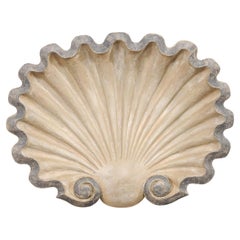
Shell Wall Plaque, Carved Painted Wood
Located in Atlanta, GA
A shell wall plaque, three dimensionally carved from wood, with custom painted finish. This decorative clamshell wall plaque, nicely sized at approximately 2 feet in width, is sure t...
Category

21st Century and Contemporary Asian Hand-Carved Wall Decorations

Materials

Wood, Paint

20th Century Chinese Assimetrical Pair of Hand Carved and Decorated Teak Panels
Located in Sofia, BG
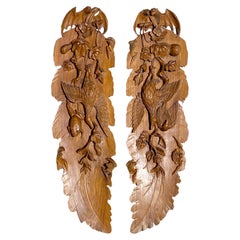
20th Century Chinese pair of long hand carved teak panels decorated with bats, birds and frogs in a very vivid way. Very good original condition without restorations.
Category

Early 20th Century Chinese Hand-Carved Wall Decorations

Materials

Teak

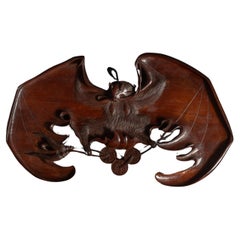
Art Nouveau Fruitwood Bat Plaque by Gabriel Viardot
Located in Palm Beach, FL
Note: We highly recommend shipping through 1stDibs for its cost effectiveness, full insurance coverage, and reliable handling. While standard parcel services are an option, the defau...
Category

Early 1900s French Art Nouveau Antique Hand-Carved Wall Decorations

Materials

Fruitwood

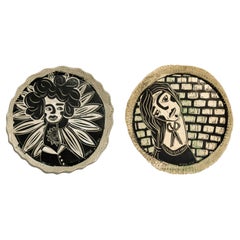
Inherent Light and Chin Up Diptych, Portrait, Carved Porcelain Wall Sculpture.
By Alex Hodge
Located in Miami Beach, FL
Her poetic porcelain plates examine and reimagine the history of art in a way that values ​​women not only in body, but in wholeness, power, and love. Focusing on the narrative quali...
Category

2010s American Modern Hand-Carved Wall Decorations

Materials

Ceramic, Clay

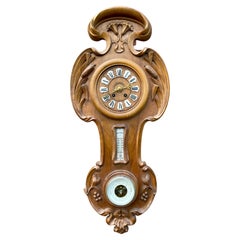
Unique Art Nouveau L ecole Nancy Style Carved Wall Clock Thermometer Barometer
Located in Lisse, NL
Early 20th century, good size Art Nouveau wall clock. This antique weather station hand carved and stunning Art Nouveau clock has a beautiful...
Category

Early 20th Century French Art Nouveau Hand-Carved Wall Decorations

Materials

Glass, Wood

19th Century French Black Forest Hand Carved Hunt Scene Wall Decor
Located in Dallas, TX
Decorate a ranch, hunting lodge or simply a man's office with this elegant antique wall decor. Crafted in France circa 1870, the hand carved artwork...
Category

Mid-19th Century French Black Forest Antique Hand-Carved Wall Decorations

Materials

Walnut

José María Navascués Architectural Sculpture, 1970s
Located in Pasadena, CA
José María Navascués (Madrid, 1934 – Oviedo, 1979) The work of the sculptor and painter José María Navascués was of vital importance in the artistic Asturias of the Sixties and seve...
Category

1970s Spanish Other Vintage Hand-Carved Wall Decorations

Materials

Pine

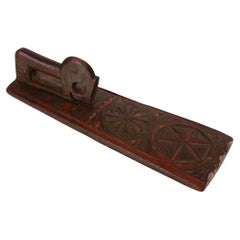
Kid Size Antique Danish Wooden Mangle Board a Wedding Love Gift with Horse
Located in Silkeborg, Silkeborg
Small size version of a Danish mangle board (clothing and bedding press) dated from ca. 1750-1800. Made of wood richly decorated with hand-carved geometric patterns and a horse as ...
Category

Late 18th Century Scandinavian Folk Art Antique Hand-Carved Wall Decorations

Materials

Wood

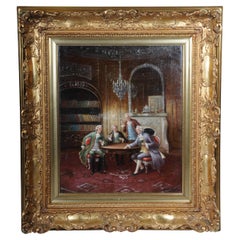
Rococo Oil Painting Signed Bruno Blatter Around 1890
Located in Berlin, DE
Rococo oil painting signed Bruno Blätter around 1890 Oil on canvas painting. Rococo scene. Three gentlemen seated at the table, playing cards a...
Category

1890s German Rococo Revival Antique Hand-Carved Wall Decorations

Materials

Canvas, Wood

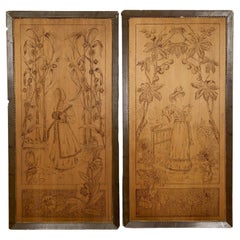
Pair of Pyrographed Panels, The Seasons: Autumn Winter, Art Nouveau, France
Located in VÉZELAY, FR
Pair of Pyrographed Panels – The Seasons: Autumn & Winter – Art Nouveau, France, circa 1900 An elegant Belle Époque diptych, this pair of pyrographed panels delicately embodies the...
Category

Early 1900s French Art Nouveau Antique Hand-Carved Wall Decorations

Materials

Wood

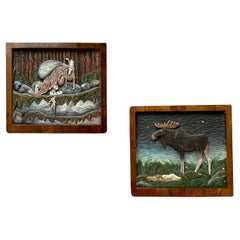
A Pair Of John Bauer Wooden Carved Wall Sculptures
Located in Haddonfield, NJ
A pair of wooden carved and hand painted birch wood panels representing a moose and a troll with a child. These figures were taken from the famous Swedish painter and illustrator Joh...
Category

1930s Swedish Folk Art Vintage Hand-Carved Wall Decorations

Materials

Birch

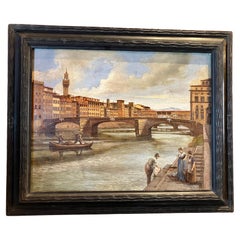
19th Century Italian Oil on Panel Landscape Painting Florence View Black Frame
Located in Firenze, IT
This late 19th century oil on wooden panel offers a captivating glimpse of historic Florence, expertly rendered with meticulous architectural detail and atmospheric quality typical o...
Category

19th Century Italian Romantic Antique Hand-Carved Wall Decorations

Materials

Wood, Lacquer

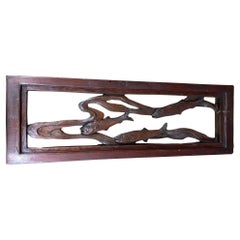
Asian Style Koi Fish Wall Hanging Cherry Wood Sculpture, Signed
Located in Van Nuys, CA
Asian-style Koi fish Wall Sculpture beautifully handcrafted in a red cherry wood carving capturing the fluid motion of Koi fish swimming upstream. Each fish is intricately detailed, ...
Category

1980s American Other Vintage Hand-Carved Wall Decorations

Materials

Cherry

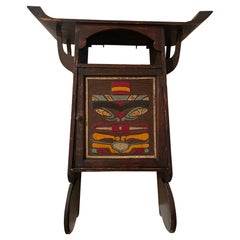
Hand-Painted Northwest Coast Totem Motif Studio-Made Wall Cabinet
Located in Northport, MI
A rare and expressive wall-mounted cabinet crafted by an unknown studio artisan, likely in the Pacific Northwest, and dating from the mid-20th century. This one-of-a-kind piece maste...
Category

1960s American Folk Art Vintage Hand-Carved Wall Decorations

Materials

Wood, Paint

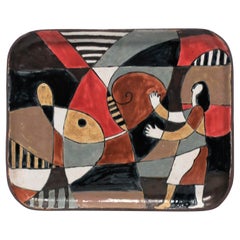
Abstract Artwork Painting Pottery Tray
Located in New York, NY
A very beautiful hand-crafted pottery artwork tray with abstract and figural design. A beautiful piece for a wall, table, vanity, or other. Colors include black, white, red/burgundy/...
Category

Late 20th Century Hand-Carved Wall Decorations

Materials

Ceramic, Terracotta, Pottery

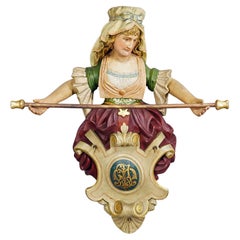
Expressive Carved Wooden Lady Towel Holder ca. 1900
Located in Berghuelen, DE
Expressive Carved Wooden Lady Towel Holder ca. 1900 Item e7351 A large unique towel rail, hand carved and painted. Modeled as a beautiful Victorian maid carrying a bar as a towel hol...
Category

Early 20th Century German Victorian Hand-Carved Wall Decorations

Materials

Wood

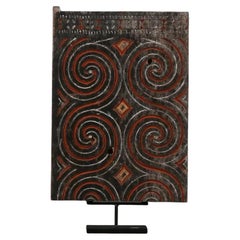
Primitive Toraja Carved Wooden Panel – Colorful M Size
Located in Saint-Ouen, FR
This primitive Toraja carved wooden panel in colorful M size is a unique architectural fragment from traditional houses in South Sulawesi, Indonesia. Handcrafted by skilled artisans,...
Category

20th Century Indonesian Rustic Hand-Carved Wall Decorations

Materials

Hardwood

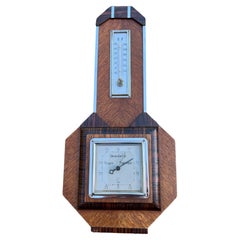
Antique Hand Crafted Dutch Art Deco Barometer Thermometer W. Great Details
Located in Lisse, NL
Highly stylish and marvelous design Art Deco wall barometer. This stylish antique from the early 1900s is a dream of anyone with an Art Deco (inspired) interior. This design could...
Category

Early 20th Century Dutch Art Deco Hand-Carved Wall Decorations

Materials

Metal, Brass, Zinc, Chrome

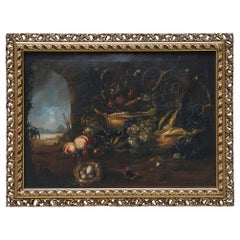
Italian Still Life Painting Oil on Canvas in Flemish Style
Located in Alessandria, Piemonte
Charming still life old Italian painting with beautiful details, in a vintage Italian carved wooden frame Interesting for a study room . If You don't want the frame for the paintin...
Category

Mid-20th Century Italian Baroque Hand-Carved Wall Decorations

Materials

Giltwood

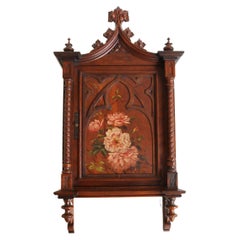
Antique Small Wall Cabinet Gothic Revival Hand-Carved Oak Painted Twist Church
Located in Ijzendijke, NL
Antique Wooden Carved Hand Painted Neo-Gothic Small Wall Cabinet France 19th Century Pediment Twisted Medicine Cabinet Gothic Revival Truly a beautiful rare and stunning antique hanging cabinet. Late antique 19th-century French gothic style hand carved solid oak one-door small wall cabinet. With a romantic hand painted door with flowers, and inside a nice layout. Twisted columns and is topped by gothic-like spires. And lots of more decorative details! In good authentic antique condition, with some normal traces of use and wear. Please see pictures and video, they are part of the description. This breathtaking antique showpiece...
Category

Late 19th Century French Gothic Revival Antique Hand-Carved Wall Decorations

Materials

Oak

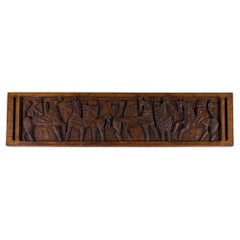
Evelyn Ackerman Horsemen Wood Carved Panel
Located in Los Angeles, CA
Wood carving by California artist, Evelyn Ackerman, c.1964, USA. This plaque features five mounted horsemen. Dimensions  39" width x 1" depth x 9.25" height. Condition Good vintage...
Category

1960s American Mid-Century Modern Vintage Hand-Carved Wall Decorations

Materials

Wood

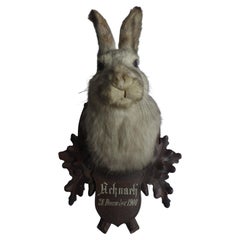
Hunting trophy – Mountain hare 1900 Blackforest
Located in Vienna, AT
Description: Historic hunting trophy depicting a mountain hare (Lepus timidus), mounted in the Black Forest tradition and dated by inscription to 1900. The hare features original gla...
Category

Early 1900s Austrian International Style Antique Hand-Carved Wall Decorations

Materials

Antler, Wood

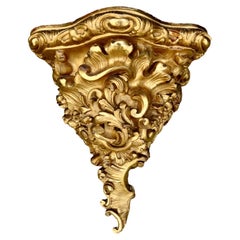
19th Century Italian Giltwood and Gesso Wall Bracket
Located in Los Angeles, CA
Nicely detailed. Made of Gesso and giltwood. Hand carved and hand painted.
Category

Late 19th Century Italian Rococo Antique Hand-Carved Wall Decorations

Materials

Gesso, Giltwood

Contemporary burned soft wood Rising Sun by Katrien Doms
Located in 1204, CH
The loss of craft at its purist form due to economic circumstances of the last centuries. Going back to basics in a chaotic world where social media takes over. Where expectations an...
Category

2010s Hand-Carved Wall Decorations

Materials

Softwood

Antique sculpted oak frieze or wall ornament, France ca. 1900
Located in Meulebeke, BE
France / 1900 / sculpted frieze / oak / Antique / Baroque / Rococo A beautiful baroque style frieze or wall ornament in oak. Hand carved in France around 1900. A very decorative p...
Category

Early 1900s French Baroque Antique Hand-Carved Wall Decorations

Materials

Oak

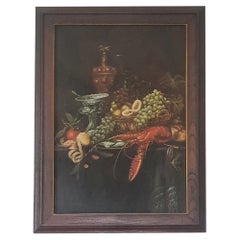
A Large imposing Edwardian still life Oil Painting in original Mahogany frame
Located in London, GB
This is a beautiful, elegant and striking still life oil painting of a Lobster with fruit on an overflowing laid table with silverware, basket or fruit, foliage an upturned crab and ...
Category

Early 1900s European Edwardian Antique Hand-Carved Wall Decorations

Materials

Canvas, Mahogany, Giltwood, Paint

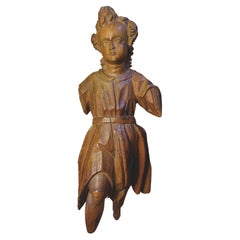
Baroque Period Bohemian Wooden Angel Sculpture Fragment
Located in Leesburg, VA
Rococo Period Bohemian Wooden Angel Sculpture Fragment Anonymous Bohemia; ca. 1700 Oak Approximate size: 17 (h) x 7 (w) x 4.75 (d) in. The present oakwood sculpture, with its cinc...
Category

Early 1700s Czech Rococo Antique Hand-Carved Wall Decorations

Materials

Oak

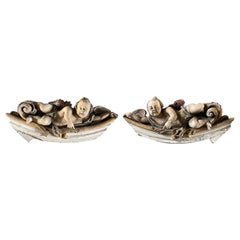
17th Century Portuguese Pair of Baroque Cherub Fragments - Antique Reliefs
Located in West Palm Beach, FL
An antique pair of Portuguese Baroque carved architectural wall fragments or reliefs depicting cherubs and scrolls from the 17th Century, original painted patina, in good condition. ...
Category

17th Century Portuguese Baroque Antique Hand-Carved Wall Decorations

Materials

Wood

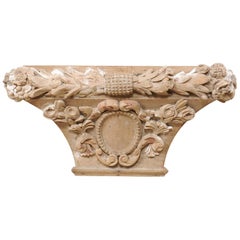
Spanish Carved-Wood Capital Decorative Architectural Wall Bracket, 19th Century
Located in Atlanta, GA
A Spanish carved-wood capital wall bracket from the 19th century. This antique architectural wall ornament from Spain features a rectangula...
Category

19th Century Spanish Antique Hand-Carved Wall Decorations

Materials

Wood

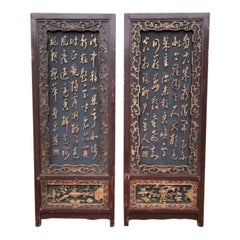
19th Century Calligraphy Panels - A Pair
Located in Sarasota, FL
A pair of wooden Chinese Calligraphy panels dating from the early 19th Century. Gold calligraphy is set in ornately carved frames.
Category

Early 19th Century Chinese Antique Hand-Carved Wall Decorations

Materials

Wood

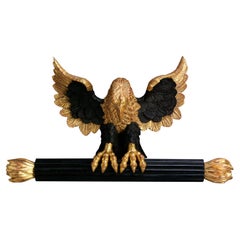
Regency Eagle Over-Door
Located in Sturminster Marshall, Dorset
A carved wood and parcel gilt over-door. The richly carved eagle, with outstretched wings, grasps the turned and reeded column in its talons. Bespoke sizing, design adaptations and f...
Category

21st Century and Contemporary British Regency Hand-Carved Wall Decorations

Materials

Mahogany

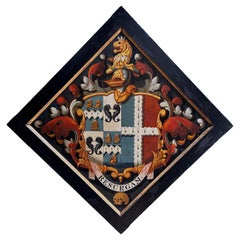
18th Century Oil on Canvas Heraldic Funerary Hatchment Painting
Located in London, GB
18th Century Oil on Canvas Heraldic Funerary Hatchment Painting, Memento Mori Painting, Vanitas Skull Painting, Vanitas Painting. A large high quality 1...
Category

Mid-18th Century British Gothic Antique Hand-Carved Wall Decorations

Materials

Canvas, Wood, Paint

Massive Hand Painted High School Track and Field Sign
Located in Los Angeles, CA
Vintage track and field sign from the early 1970s. Hand painted red sign with yellow lettering. Taken down from a California high school. Horizontal wo...
Category

1970s American Vintage Hand-Carved Wall Decorations

Materials

Wood, Paint

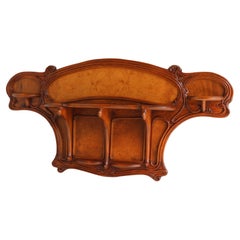
Rare Art Nouveau Wall Shelf by Eugene Gaillard France 1900 Jugendstil Walnut
Located in Ijzendijke, NL
Exquisite & most rare! This French Art Nouveau wall shelf designed by art nouveau grandmaster Eugene Gaillard circa 1900. Superb organic design...
Category

Early 1900s French Art Nouveau Antique Hand-Carved Wall Decorations

Materials

Fruitwood, Walnut

The Virgin Mary Handing an Apple to Jesus as a Child, 19th Century, Carved-Wood
Located in North Miami, FL
Early 19th Century Italian carved-wood in high relief composed of various types of woods set into a marquetry panel with flat inlaid scrolling fruit tree foliage. The piece is compri...
Category

19th Century Italian Neoclassical Antique Hand-Carved Wall Decorations

Materials

Acrylic, Lucite, Wood, Mahogany, Maple, Walnut, Burl
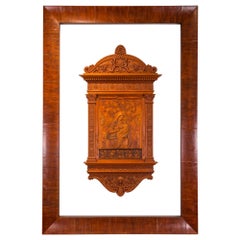
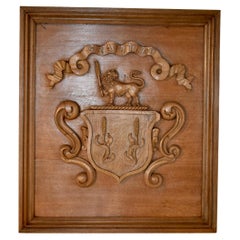
19th Century Framed English Armorial
Located in High Point, NC
19th century oak hand carved framed armorial from England. The central design is of a shield with two wheat shafts, flanked by decorative scrolls, and topped with a regal standing li...
Category

19th Century English Victorian Antique Hand-Carved Wall Decorations

Materials

Oak

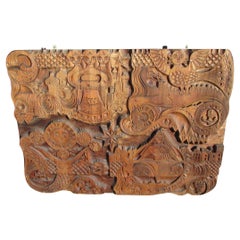
Large and Impressive Eastern European Folk Art Carved Panel Mermaid Siren Sun
Located in Ferndale, MI
Large impressive Eastern European Folk Art carved Cedar panel. Large panel feature mythical creatures and symbols. Mermaids, Sirens, anchors,...
Category

Mid-20th Century Ukrainian Folk Art Hand-Carved Wall Decorations

Materials

Cedar

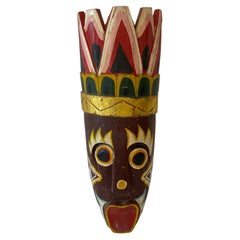
Hand-Carved Painted Wooden Tribal Mask
Located in Miami, FL
A hand-carved, hand-painted wooden tribal mask. Hand-carved and painted this decorative mask that would look great in a western or country themed ...
Category

20th Century American Tribal Hand-Carved Wall Decorations

Materials

Wood, Paint

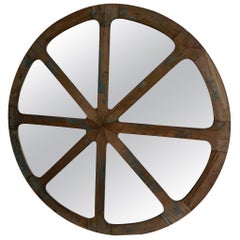
19th Century French Round Industrial Wooden Wall Mirror - Antique Wall Décor
Located in West Palm Beach, FL
A round, antique French monumental sized industrial wooden wall mirror with its original mirror glass, in good condition. Minor fading, scrat...
Category

Late 19th Century French Industrial Antique Hand-Carved Wall Decorations

Materials

Mirror, Wood

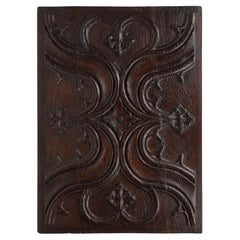
Hand-crafted Gothic 16th century panel in oak, Belgium
Located in Meulebeke, BE
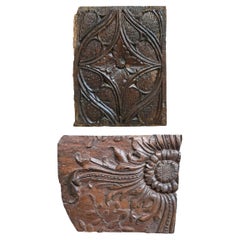
Belgium / 16th century / wooden sculpted panel / oak / Gothic / Rustic / Antique A panel in oak wood enriched with Gothic graphic carvings. Hand carved in Belgium in the 16th centur...
Category

16th Century Belgian Gothic Antique Hand-Carved Wall Decorations

Materials

Oak

After Raffaello Sanzio 1483-1520 Raphael La Madonna della Seggiola Oil on Canvas
Located in Los Angeles, CA
A Fine Italian 19th Century Oil Painting on Canvas "La Madonna della Seggiola" after Raphael (Raffaello Sanzio da Urbino 1483-1520). The circular painted canvas depicting a seated Madonna holding an infant Jesus Christ next to a child Saint John the Baptist, all within a massive carved gilt wood and gesso frame, which is identical to the frame on Raphael's original artwork. This painting is a 19th Century copy of Raphael's Madonna della Seggiola painted in 1514 and currently exhibited and part of the permanent collection at the Palazzo Pitti, Galleria Palatina, Florence, Italy. The bodies of the Virgin, Christ, and the boy Baptist fill the whole picture. The tender, natural looking embrace of the Mother and Child, and the harmonious grouping of the figures in the round, have made this one of Raphael's most popular Madonnas. The isolated chair leg is reminiscent of papal furniture, which has led to the assumption that Leo X himself commissioned the painting. A retailer's label reads " Fred K/ Keer's Sons - Framers and Fine Art Dealers - 917 Broad St. Newark, N.J." - Another label from the gilder reads "Carlo Bartolini - Doratore e Verniciatori - Via Maggio 1924 - Firenze". Circa: 1890-1900. Subject: Religious painting Canvas diameter: 28 inches (71.1 cm) Frame height: 54 inches (137.2 cm) Frame width: 42 1/2 inches (108 cm) Frame depth: 5 1/2 inches (14 cm) Raffaello Sanzio da Urbino (Italian, March 28 or April 6, 1483 - April 6, 1520), known as Raphael, was an Italian painter and architect of the High Renaissance. His work is admired for its clarity of form, ease of composition, and visual achievement of the Neoplatonic ideal of human grandeur. Together with Michelangelo and Leonardo da Vinci, he forms the traditional trinity of great masters of that period. Raphael was enormously productive, running an unusually large workshop and, despite his death at 37, leaving a large body of work. Many of his works are found in the Vatican Palace, where the frescoed Raphael Rooms were the central, and the largest, work of his career. The best known work is The School of Athens in the Vatican Stanza della Segnatura. After his early years in Rome much of his work was executed by his workshop from his drawings, with considerable loss of quality. He was extremely influential in his lifetime, though outside Rome his work was mostly known from his collaborative printmaking. After his death, the influence of his great rival Michelangelo was more widespread until the 18th and 19th centuries, when Raphael's more serene and harmonious qualities were again regarded as the highest models. His career falls naturally into three phases and three styles, first described by Giorgio Vasari: his early years in Umbria, then a period of about four years (1504–1508) absorbing the artistic traditions of Florence, followed by his last hectic and triumphant twelve years in Rome, working for two Popes and their close associates. Raphael was born in the small but artistically significant central Italian city of Urbino in the Marche region, where his father Giovanni Santi was court painter to the Duke. The reputation of the court had been established by Federico III da Montefeltro, a highly successful condottiere who had been created Duke of Urbino by the Pope - Urbino formed part of the Papal States - and who died the year before Raphael was born. The emphasis of Federico's court was rather more literary than artistic, but Giovanni Santi was a poet of sorts as well as a painter, and had written a rhymed chronicle of the life of Federico, and both wrote the texts and produced the decor for masque-like court entertainments. His poem to Federico shows him as keen to show awareness of the most advanced North Italian painters, and Early Netherlandish artists as well. In the very small court of Urbino he was probably more integrated into the central circle of the ruling family than most court painters. Federico was succeeded by his son Guidobaldo da Montefeltro, who married Elisabetta Gonzaga, daughter of the ruler of Mantua, the most brilliant of the smaller Italian courts for both music and the visual arts. Under them, the court continued as a centre for literary culture. Growing up in the circle of this small court gave Raphael the excellent manners and social skills stressed by Vasari. Court life in Urbino at just after this period was to become set as the model of the virtues of the Italian humanist court through Baldassare Castiglione's depiction of it in his classic work The Book of the Courtier, published in 1528. Castiglione moved to Urbino in 1504, when Raphael was no longer based there but frequently visited, and they became good friends. He became close to other regular visitors to the court: Pietro Bibbiena and Pietro Bembo, both later cardinals, were already becoming well known as writers, and would be in Rome during Raphael's period there. Raphael mixed easily in the highest circles throughout his life, one of the factors that tended to give a misleading impression of effortlessness to his career. He did not receive a full humanistic education however; it is unclear how easily he read Latin. Early Life and Works His mother Màgia died in 1491 when Raphael was eight, followed on August 1, 1494 by his father, who had already remarried. Raphael was thus orphaned at eleven; his formal guardian became his only paternal uncle Bartolomeo, a priest, who subsequently engaged in litigation with his stepmother. He probably continued to live with his stepmother when not staying as an apprentice with a master. He had already shown talent, according to Vasari, who says that Raphael had been "a great help to his father". A self-portrait drawing from his teenage years shows his precocity. His father's workshop continued and, probably together with his stepmother, Raphael evidently played a part in managing it from a very early age. In Urbino, he came into contact with the works of Paolo Uccello, previously the court painter (d. 1475), and Luca Signorelli, who until 1498 was based in nearby Città di Castello. According to Vasari, his father placed him in the workshop of the Umbrian master Pietro Perugino as an apprentice "despite the tears of his mother". The evidence of an apprenticeship comes only from Vasari and another source, and has been disputed—eight was very early for an apprenticeship to begin. An alternative theory is that he received at least some training from Timoteo Viti, who acted as court painter in Urbino from 1495.Most modern historians agree that Raphael at least worked as an assistant to Perugino from around 1500; the influence of Perugino on Raphael's early work is very clear: "probably no other pupil of genius has ever absorbed so much of his master's teaching as Raphael did", according to Wölfflin. Vasari wrote that it was impossible to distinguish between their hands at this period, but many modern art historians claim to do better and detect his hand in specific areas of works by Perugino or his workshop. Apart from stylistic closeness, their techniques are very similar as well, for example having paint applied thickly, using an oil varnish medium, in shadows and darker garments, but very thinly on flesh areas. An excess of resin in the varnish often causes cracking of areas of paint in the works of both masters. The Perugino workshop was active in both Perugia and Florence, perhaps maintaining two permanent branches. Raphael is described as a "master", that is to say fully trained, in December 1500. His first documented work was the Baronci altarpiece for the church of Saint Nicholas of Tolentino in Città di Castello, a town halfway between Perugia and Urbino. Evangelista da Pian di Meleto, who had worked for his father, was also named in the commission. It was commissioned in 1500 and finished in 1501; now only some cut sections and a preparatory drawing remain. In the following years he painted works for other churches there, including the Mond Crucifixion (about 1503) and the Brera Wedding of the Virgin (1504), and for Perugia, such as the Oddi Altarpiece. He very probably also visited Florence in this period. These are large works, some in fresco, where Raphael confidently marshals his compositions in the somewhat static style of Perugino. He also painted many small and exquisite cabinet paintings in these years, probably mostly for the connoisseurs in the Urbino court, like the Three Graces and St. Michael, and he began to paint Madonnas and portraits. In 1502 he went to Siena at the invitation of another pupil of Perugino, Pinturicchio, "being a friend of Raphael and knowing him to be a draughtsman of the highest quality" to help with the cartoons, and very likely the designs, for a fresco series in the Piccolomini Library in Siena Cathedral. He was evidently already much in demand even at this early stage in his career. Influence of Florence Raphael led a "nomadic" life, working in various centres in Northern Italy, but spent a good deal of time in Florence, perhaps from about 1504. Although there is traditional reference to a "Florentine period...
Category

Early 1900s Italian Baroque Antique Hand-Carved Wall Decorations

Materials

Canvas, Giltwood

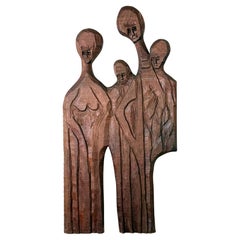
Mid Century Carved Wood Figural Wall Hanging Sculpture by Jean Claude Gaugy
Located in Troy, MI
Mid Century abstract expressionist wood carving by French American artist Jean-Claude Gaugy circa 1970s Modernist figures hand carved from a single panel and signed lower left 36 i...
Category

1970s Mid-Century Modern Vintage Hand-Carved Wall Decorations

Materials

Wood

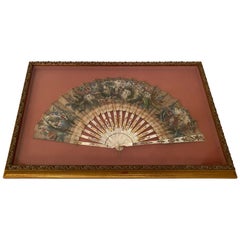
19th Century French Painted Paper and Mother of Pearl Fan
Located in Brea, CA
19th century French painted paper and mother of pearl fan, shadow-box framed antique ladies fan, made of mother of pearl with a hand embellished re...
Category

1850s French French Provincial Antique Hand-Carved Wall Decorations

Materials

Mother-of-Pearl

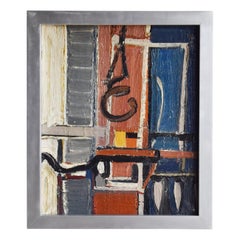
20th Century Blue-Red French Abstract Painting by Daniel Clesse
Located in West Palm Beach, FL
A blue-red French abstract painting, oil on wood by Daniel Clesse, painted in France, signed and dated circa in 1963. Daniel Clesse was a French painter born in 1932, in Paris, Fran...
Category

Mid-20th Century French Mid-Century Modern Hand-Carved Wall Decorations

Materials

Canvas, Wood, Paint

Set of 16th and 18th Century French Carved Panels on Custom Wall Mounts
Located in Chicago, IL
This exquisite set of two carved walnut architectural panels from France showcases the evolution of artistic styles from the 16th to the 18th century. The 18th-century panel, adorned...
Category

16th Century French Gothic Antique Hand-Carved Wall Decorations

Materials

Walnut

Gothic oak sculpted panel from the 16th century, Belgium
Located in Meulebeke, BE
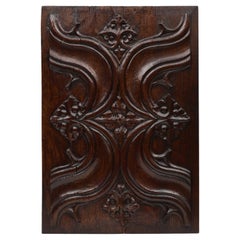
Belgium / 16th century / wooden sculpted panel / oak / Gothic / Rustic / Antique A panel in oak wood enriched with Gothic graphic carvings. Hand carved in Belgium in the 16th centur...
Category

16th Century Belgian Gothic Antique Hand-Carved Wall Decorations

Materials

Oak

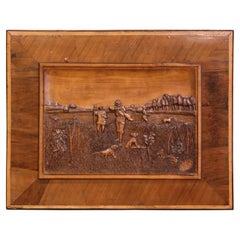
Medieval Style Bas Relief in Polychrome Carved Wood, Spain, 1950s
Located in Barcelona, ES
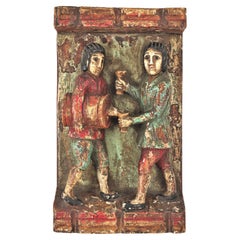
Mid-Century Modern Medieval Inspired Bas Relief Wall Decoration in Polychromed Carved Wood. Spain, 1950s. Beautifully hand-carved bas relief depicting genre scene. Two standing men f...
Category

20th Century Spanish Mid-Century Modern Hand-Carved Wall Decorations

Materials

Wood

Pair of 19th Century French Signed Pastoral Paintings in Carved Giltwood Frames
Located in Dallas, TX
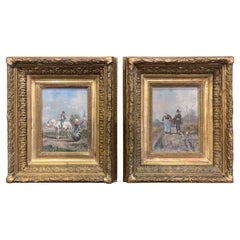
Decorate an office or study with this elegant pair of antique paintings. Crafted in France circa 1870, the artworks hand painted on board, are set inside the original beautiful carve...
Category

Mid-19th Century French Antique Hand-Carved Wall Decorations

Materials

Giltwood

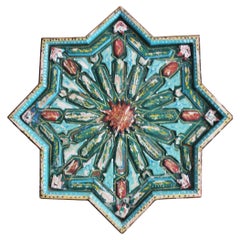
Mid Century Moroccan 8-Pointed Star Wall Art. Wood Starburst Sunburst Rare.
Located in Peoria, AZ
Wow! Incredibly Rare Mid Century Modern 8 pointed Star Wall Sculpture Moroccan Art Large & Impressive 32" wide This is a marvelous and rare example of Moroccan artistry and arts ...
Category

Mid-20th Century Hand-Carved Wall Decorations

Materials

Wood, Paint

Mid-Century Modern Unique Wall Decor Piece, Handmade Portugal Greenapple
Located in Lisboa, PT
Mid-Century Modern Unique Wall Decor Piece, contemporary collection, handcrafted in Portugal - Europe by Greenapple. The Unique wall decor is a tribute to individuality, embracing t...
Category

21st Century and Contemporary Portuguese Mid-Century Modern Hand-Carved Wall Decorations

Materials

Art Glass, Fiberglass, Paint, Wood

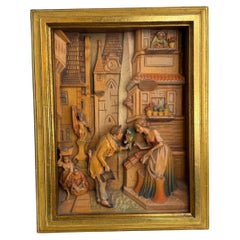
The eternal wedding man by Carl Spitzweg Vintage Anri Moroder Carving
By ANRI
Located in Nuernberg, DE
This vintage ANRI Carl Spitzweg wood carving is a beautiful piece of art that captures the essence of a wedding proposal. Crafted circa 1960s, this relief carved wood figurine is a t...
Category

1960s Italian Baroque Vintage Hand-Carved Wall Decorations

Materials

Wood

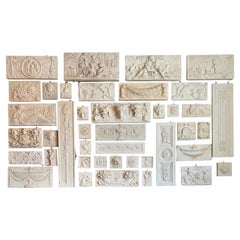
Antique Statuary Carrara marble mantelpiece tablets/panels, English and Irish.
Located in Tyrone, Northern Ireland
A collection of antique Statuary Carrara marble chimneypiece/mantelpiece tablets from the 18th and 19th century’s. The collection consists of 41 carved elements, including centre ta...
Category

Late 18th Century English Neoclassical Antique Hand-Carved Wall Decorations

Materials

Statuary Marble

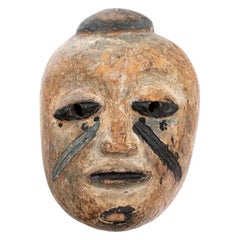
Older Yoruba African Carved and Painted Mask, Labeled
Located in Bridgeport, CT
An older small scale mask carved and painted white (now worn) with painted blue and black features and a black top knot. Marked on interior tape, “Yoruba”. The Mask with good age, fa...
Category

Mid-20th Century African Tribal Hand-Carved Wall Decorations

Materials

Wood

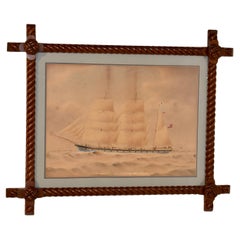
19th Century Print in Hand Carved Rope Frame
Located in High Point, NC
19th century hand colored print of the Noddleburn of Glasgow, which was a three masted sailing cargo ship. The ship went missing in 1895 on its voyage to Chile, transporting a shipm...
Category

1880s English Victorian Antique Hand-Carved Wall Decorations

Materials

Oak, Paper

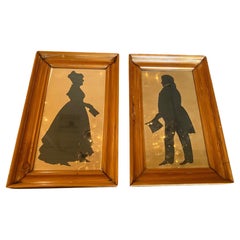
Wall Decoration Art Pair Silhouettes Black Framed Antique Los Angeles Gallery
Located in West Hollywood, CA
Wall Decoration Art Pair Silhouettes Black Framed Antique Los Angeles Gallery . Pair of silhouettes portrays the 19th century Lady and Gentleman With his Hat. This pair has been well taken care of and has minor wear consistent with the age. Wall art Silhouette of a Lady and a Gentleman framed in possible hand carved pine wood or fruitwood Frame. Charming elegant profile depicts high status man at ease with himself ensured his place in hierarchy looking sharp and same goes for the Lady holding what appears to be a document. The subjects are dapperly dressed with his top hat in his hand, trimmed haircut, leather boots and the lady with a nice Hairdo and an elaborate dress. An original continental French or British silhouette in a period fruitwood light color frames and are beveled. Antique dealer Los Angeles West Hollywood La Cienega Melrose Ave. The watercolor and paper cut silhouettes...
Category

19th Century European Antique Hand-Carved Wall Decorations

Materials

Metal

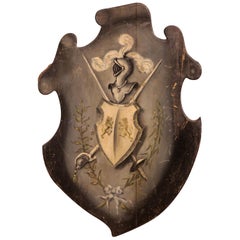
19th Century French Painted Wooden Heraldic Shield with Lions and Armor
Located in Dallas, TX
Add a noble touch to your study or library with this elegant 19th-century heraldic plaque. Crafted in France circa 1870, the antique wooden shield features a beautifully hand-painted...
Category

Late 19th Century French Medieval Antique Hand-Carved Wall Decorations

Materials

Wood

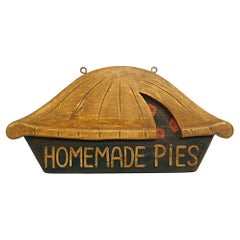
Lovely Bakery Pie Hand Carved Folk Art Sign
Located in Buenos Aires, Olivos
Lovely Bakery Pie Hand Carved Folk Art Sign. The Age of it is not certain, it was a barn find. It´s a hand carved and painted sign. This pie-shaped sign is such a charming piece—it r...
Category

20th Century American Country Hand-Carved Wall Decorations

Materials

Wood

Read More

Punk Rock and Rebellion Animate London’s Hit Yoshitomo Nara Show

The exhibition includes his portraits of wide-eyed kids with mayhem on their minds, as well as some of the artist’s personal belongings.

Whether Painted or Papered, Muraled Walls Make Bold Statements in the Home

The ancient practice of covering walls in artistic scenery is back.

In Francks Deceus’s ‘Mumbo Jumbo #5,’ the Black Experience Is . . . Complicated

Despite the obstacles, the piece’s protagonist navigates the chaos without losing his humanity.

12 Floral-Accented Rooms with a Handmade, Folkloric Feel

Who needs a flower garden? Just use your imagination — and some beautifully patterned wallpaper or fabric — to bring the outdoors in.

This Wolf Kahn Pastel Is the Epitome of Beauty at Its Most Essential

A longtime admirer of Kahn’s work, 1stDibs editorial director Anthony Barzilay Freund explores why it’s relevant now more than ever.

Why Jules Chéret Was the King of the Modern Poster

The streets of fin-de-siècle Paris were set aglow with colorful poster ads, thanks to the printing techniques invented by Jules Chéret. Now, the Milwaukee Art Museum is celebrating this undersung talent in America's first solo show dedicated his exuberant works.

Anna Condo’s Multifaceted Career Spans Film, Photography and NFTs

From her historic Manhattan townhouse, the talented creator and curator of 1stDibs' latest NFT exhibition tells us about the art in her home and how she got involved with cryptoart.

How Keith Rivers Went from NFL Linebacker to Blue-Chip Art Aficionado

The former football player is as serious about becoming a great contemporary-art patron as he once was about making tackles. Here, Rivers tells us how he got the collecting bug and how his tastes have evolved over the years.

Still Thinking About These?

All Recently Viewed