Austin - Asian Art and Furniture

to
2
11,208
5,374
363
3
2
1
130
100
133
3
74
43
13
33
6
7
9
2
1
8
5
2
1
157
125
95
88
70
358
279
153
101
60
366
366
366
2
1
1
1
1
Item Ships From: Austin
Large Chinese Late Republic Period Famille Jaune et Rose Porcelain Vase
Located in Austin, TX
A large Chinese famille rose et jaune porcelain vase, with a six character Da Qing Guangxu Nian Zhi mark, but late Republic Period, circa 1940. Of unusual fo...
Category

1940s Chinese Qing Vintage Austin - Asian Art and Furniture

Materials

Porcelain

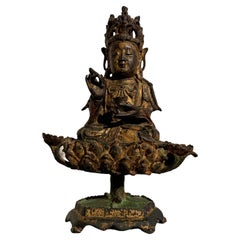
Chinese Ming Dynasty Bronze Nanhai Guanyin, 16th/17th Century, China
Located in Austin, TX
A decidingly charming Chinese polychromed and gilt cast bronze figure of Nanhai Guanyin, Guanyin of the South Sea, Ming Dynasty, 16th/17th century, China. Guanyin, the bodhisattva of compassion, is portrayed here as a beatific figure seated upon a raised lotus pedestal over waves. Guanyin is dressed in heavy robes, and wears an elaborate headdress. The small figure of Amitabha Buddha in the headdress positively identifies this figure as Guanyin. Guanyin rests one hand in his lap, holding a cup of pure water said to be able to alleviate all suffering. His other hand is raised, holding a willow branch which is used to sprinkle the healing waters. The two lotus blossoms to either side of Guanyin would originally have supported figures of the acolytes...
Category

Early 1600s Chinese Ming Antique Austin - Asian Art and Furniture

Materials

Bronze

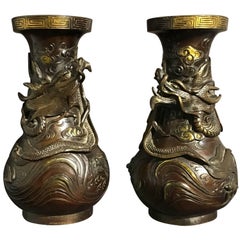
Pair of Japanese Edo Period Parcel-Gilt Bronze Dragon Vases, Early 19th Century
Located in Austin, TX
A pair of well cast and dramatic Japanese parcel gilt bronze dragon vases, Edo period, early 19th century. The heavy bronze vases of pear shape, each with a single writhing dragon cast in high relief...
Category

Early 19th Century Japanese Edo Antique Austin - Asian Art and Furniture

Materials

Bronze

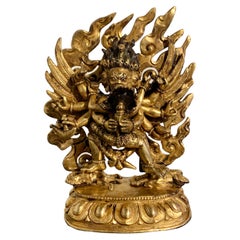
Sino-Tibetan Gilt Bronze Hayagriva with Consort Vajravarahi, circa 1800, Tibet
Located in Austin, TX
A fantastic and powerful Sino-Tibetan gilt bronze figure of Hayagriva and his consort Vajravarahi, created in Tibet for the Chinese market, 18th/19th century, Tibet. The wrathful...
Category

Early 1800s Tibetan Tibetan Antique Austin - Asian Art and Furniture

Materials

Bronze

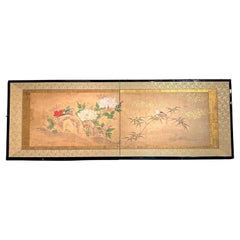
Japanese "Magpie and Peony" Two Panel Screen, Edo Period, 18th/19th century
Located in Austin, TX
A sublime Japanese two panel "Magpie and Peony" screen, ink and color on paper, Edo Period, late 18th or early 19th century, circa 1800, Japan. The two panel screen features a wond...
Category

Early 19th Century Japanese Edo Antique Austin - Asian Art and Furniture

Materials

Copper

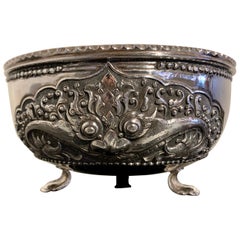
Vintage Yogya Silver Kala Bowl by Tom s Silver, circa 1960 s, Indonesia
Located in Austin, TX
A bold and well crafted Indonesian Yogya (Jogja, Djokja) silver bowl by Tom's Silver, Yogyakarta, Java, Indonesia, circa 1960's. The elegant bowl features a striking design of a Kala face, a protective monster often found above temple doors, and representative of time, death, and rebirth. A pair of makara flank the wide open, smiling mouth. A stylized foliate design surrounds the Kala. Kala are analogous with the Kirtimukha, or face of glory, originating in India and associated with Shiva. Both beings are devourers of evil and tasked with protection The bowl features two beaded borders, and a scalloped rim. The bowl set on three short out-swept feet. Stamped mark to the underside reading "TOM" "800" "DELUX". TOM stands for Tom's Silver, perhaps the most famous silver workshop in Yogyakarta. 800 is the purity of the silver (80%). DELUX is a common mark on Yogya silver...
Category

1960s Javanese Vintage Austin - Asian Art and Furniture

Materials

Silver

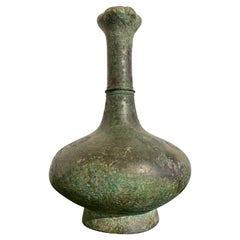
Chinese Western Han Dynasty Bronze Garlic Head Vase, 206 BC - 25 AD
Located in Austin, TX
A rare and attractive Chinese bronze "garlic head" vase with an encrusted patina, Western Han Dynasty, 206 BC - 25 AD, China. Of classic form, the bronze vase is set on a short, s...
Category

15th Century and Earlier Chinese Han Antique Austin - Asian Art and Furniture

Materials

Bronze

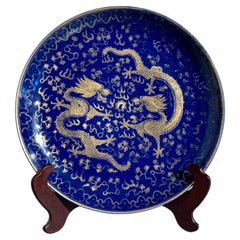
Chinese Porcelain Powder Blue Gilt Dragon Charger, Late Qing Dynasty, China
Located in Austin, TX
A magnificent Chinese powder blue glazed porcelain charger with painted gilt decoration, late Qing Dynasty, circa 1900, China. The large and impressive Chinese porcelain charger gla...
Category

Early 1900s Chinese Qing Antique Austin - Asian Art and Furniture

Materials

Porcelain

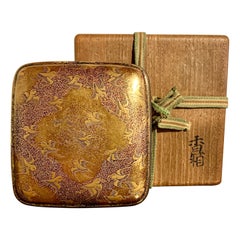
Japanese Lacquer Incense Box, Kogo, Momoyama or Edo Period, 16th/17th Century
Located in Austin, TX
A wonderful Japanese lacquer incense box, kogo, with a design of plovers in flight, late Momoyama or early Edo Period, circa 1600, Japan. The small box, called a kogo, was used to s...
Category

Early 17th Century Japanese Edo Antique Austin - Asian Art and Furniture

Materials

Gold, Pewter

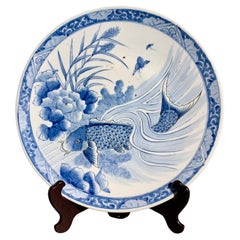
Large Japanese Blue and White Arita Porcelain Charger, Edo Period, 19th C, Japan
Located in Austin, TX
A large Japanese blue and white decorated Arita porcelain charger, Edo Period, early 19th century, Japan. The large and shallow blue and white Arita porcelain charger measures 18 ...
Category

Early 19th Century Japanese Edo Antique Austin - Asian Art and Furniture

Materials

Porcelain

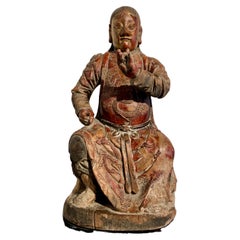
Chinese Carved and Lacquered Figure of Zhenwu, Qing Dynasty, 19th century, China
Located in Austin, TX
A powerful Chinese figure of the Taoist diety Zhenwu (Xuanwu), carved and lacquered wood with applied lacquer details, Qing Dynasty, 19th century or earlier, China. Zhenwu, also kno...
Category

19th Century Chinese Qing Antique Austin - Asian Art and Furniture

Materials

Wood, Hardwood

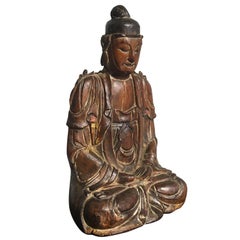
Small Song Dynasty Carved Wood Bodhisattva, 13th Century, China
Located in Austin, TX
A small and very fine Chinese carved sandalwood figure of a bodhisattva, possibly Avalokiteshvara (Guan Yin), Song Dynasty (960 to 1276), circa 13th ...
Category

15th Century and Earlier Chinese Antique Austin - Asian Art and Furniture

Materials

Hardwood

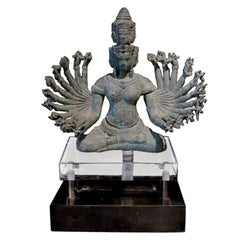
Khmer Bronze Figure of Prajnaparamita with Eleven Faces
Located in Austin, TX
The embodiment of transcendental wisdom, Prajnaparamita is often referred to as the mother of all Buddhas. In this extremely rare tantric form, she is portrayed seated in the half lotus position. Her eleven faces are arranged in two tiers (seven on the first, with an additional four above), all surmounted by a rising conical chignon. Each face has an associated pair of arms which radiate outwards, each hand holding a discreet attribute. Careful attention has been paid to her clothing and jewelry. She wears a heavily pleated sampot with a cross hatch pattern, elegantly turned down at the waist and tied with an ornate belt...
Category

18th Century and Earlier Cambodian Antique Austin - Asian Art and Furniture

Materials

Bronze

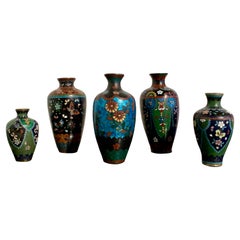
Group of 5 Small Japanese Cloisonne and Ginbari Vases, Early 20th Century, Japan
Located in Austin, TX
A charming group of five Japanese cloisonné and ginbari foiled vases, Meiji period, early 20th century, Japan. The group consists of one vase with cloisonné chrysanthemum blossoms against bold and bright turquoise ginbari foil background, two similar vases of primarily black and burgundy cloisonné - one with a butterfly motif, the other with a floral motif, and two similar vases of primarily dark blue and green cloisonné, both with floral and butterfly motifs. Turquoise ginbari vase...
Category

Early 20th Century Japanese Meiji Austin - Asian Art and Furniture

Materials

Copper, Enamel, Foil, Wire

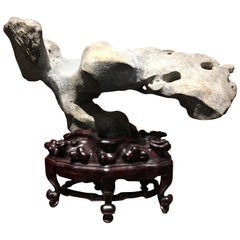
Chinese Gray Lingbi Scholar Stone, Early 20th Century
Located in Austin, TX
A fantastic Chinese scholar's stone, called gongshi, of gray lingbi limestone, mounted on a hardwood stand, late Qing or early Republic, early 20th century, circa 1910, China . The ...
Category

Early 20th Century Chinese Qing Austin - Asian Art and Furniture

Materials

Limestone

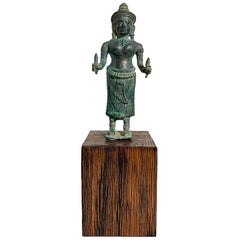
Khmer Bronze Uma, Angkor Wat Style, 12th Century, Cambodia
Located in Austin, TX
A small Khmer bronze figure of the Hindu goddess Uma, Angkor Period, Style of Angkor Wat, circa 12th century, Cambodia. This small Khmer bronze devotiona...
Category

15th Century and Earlier Cambodian Antique Austin - Asian Art and Furniture

Materials

Bronze

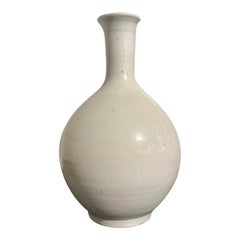
Korean White Glazed Porcelain Bottle Vase, Joseon Dynasty, 18th Century
Located in Austin, TX
A quiet and elegant Korean white glazed bottle vase, Joseon Dynasty, late 18th century, Korea. The graceful vase beautifully proportioned, resting on a short recessed foot, with a...
Category

Late 18th Century Korean Antique Austin - Asian Art and Furniture

Materials

Porcelain

Chinese Export Coromandel Lacquer Cabinet on Stand, Mid-19th Century, China
Located in Austin, TX
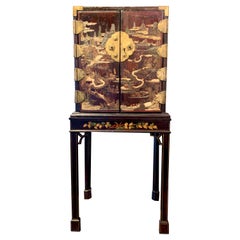
A delightful Chinese coromandel brown lacquer cabinet on stand, made for the export market, early to mid-19th century, China, presented on an early 20th century custom fitted stand. The gem of a cabinet is fitted with doors and drawers, and decorated on all sides. The top, back and sides with lacquer painted scenes of birds and flowers. The front of the cabinet featuring a pair of stunning coromandel doors carved with a shanshui (mountain and water) landscape scene, complete with temples and pagodas, boats and bridges, and figures, all set against craggy mountains shrouded in clouds and rippling water. The cabinet mounted with brass hinges and lock plates (key included) and a pair of carrying handles. Opening the doors reveals eleven wondrous black lacquer drawers...
Category

Mid-19th Century Chinese Chinese Export Antique Austin - Asian Art and Furniture

Materials

Brass

Large Himalayan Inlaid Bronze Vajra with Wrathful Faces, 15th-16th Century
Located in Austin, TX
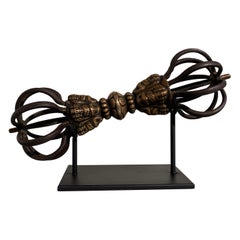
A large and unusual Himalayan bronze and mixed metal nine prong vajra featuring wrathful faces. In the style of the Tangut (Western Xia) Kingdom (1038 to 1227), but probably later, most likely 15th-16th century. The body of the vajra crafted from a copper alloy, with five wrathful faces on either side and gold and silver inlays to the center. The prongs crafted of iron, with each side having eight prongs arcing outwards around a central prong before coming back to a copper alloy point. The vajra is meditational tool...
Category

16th Century Mongolian Antique Austin - Asian Art and Furniture

Materials

Iron, Gold, Silver, Bronze

Japanese Lacquer Smoking Box, Tabako Bon, Edo Period, 19th Century
Located in Austin, TX
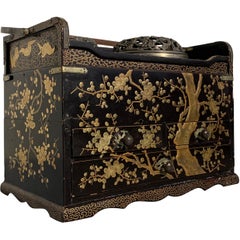
A very fine Japanese maki-e lacquer decorated tabako bon, or smoking box, late Edo Period, mid-19th century, Japan. The elegant smoking box of black lacquer decorated with a wonderful gold lacquer takamaki-e design of a gnarled and elegantly twisted plum tree with branches in full bloom. A border of golden cranes in flight to the top. The smoking box, called a tabako bon, is comprised of an open section at the top with inset with two cylindrical metal canisters...
Category

Mid-19th Century Japanese Edo Antique Austin - Asian Art and Furniture

Materials

Lacquer

Chinese Yueyao Celadon Glazed Jar Guan , Five Dynasties, 10th Century
Located in Austin, TX
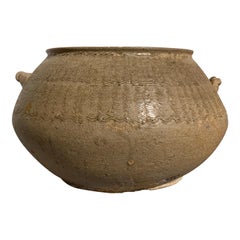
A sublime Chinese Yueyao glazed guan jar with incised decoration and applied handles, five dynasties period (907- 979 AD), China. The vessel of somewhat flattened globular form, w...
Category

15th Century and Earlier Chinese Tang Antique Austin - Asian Art and Furniture

Materials

Stoneware

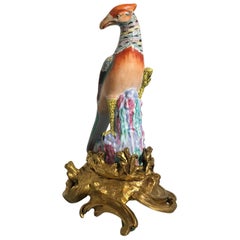
Chinese Export Famille Rose Pheasant With Ormolu Mounts, Late 19th Century
Located in Austin, TX
A gorgeous Chinese export famille rose enameled porcelain model of a pheasant mounted on an ormolu stand. The elegant bird is portrayed perched on a ...
Category

Late 19th Century Chinese Chinese Export Antique Austin - Asian Art and Furniture

Materials

Ormolu

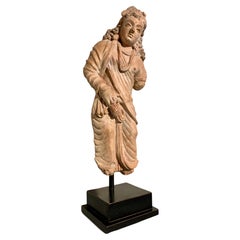
Gandharan Terracotta Figure of the Bodhisattva Maitreya, 4th-6th Century
Located in Austin, TX
A very rare and decidedly charming half-scale terracotta sculpture of the bodhisattva Maitreya, the Buddha of the Future, ancient region of Gandha...
Category

15th Century and Earlier Pakistani Antique Austin - Asian Art and Furniture

Materials

Terracotta

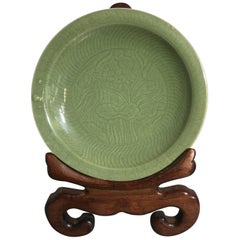
Chinese Celadon Glazed Lotus Charger, Qing Dynasty, 18th Century
Located in Austin, TX
A sublime Chinese celadon glazed shallow dish or charger, Qing Dynasty, mid 18th century, China. Beautifully glazed, with a carved decoration of a group of lotus, leaves, stalks and blossoms. The interior wall with radiating S-shaped lines, a motif that is repeated on the wide rim of the dish. The back undecorated. Glazed all-over with an even bright celadon glaze, with some attractive areas of crackle. Ex. Butterfield's, San Francisco. Plate stand for display...
Category

Mid-18th Century Chinese Qing Antique Austin - Asian Art and Furniture

Materials

Porcelain

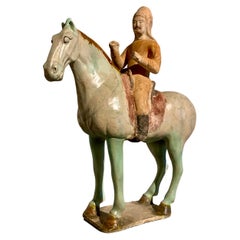
Chinese Tang Dynasty Sancai Glazed Horse and Rider, TL Tested, China
Located in Austin, TX
A fine and unusual Chinese Tang Sancai glazed model of a horse and rider, Tang Dynasty (618 to 906 CE), early 8th century, China. This fantastic sculpture portrays a male figures se...
Category

15th Century and Earlier Chinese Tang Antique Austin - Asian Art and Furniture

Materials

Earthenware, Pottery

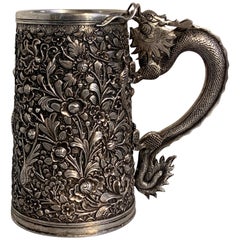
Peranakan Chinese Export Silver Tankard with Dragon Handle, 19th Century
Located in Austin, TX
A heavy and well cast Chinese export silver tankard with a dragon handle, made of the Southeast Asian market, mid-late 19th century, China. The double walled mug or tankard featur...
Category

Late 19th Century Chinese Chinese Export Antique Austin - Asian Art and Furniture

Materials

Silver

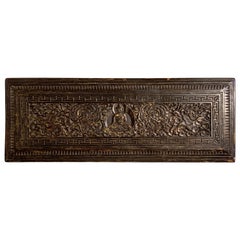
Nepalese Carved and Painted Buddhist Manuscript Cover, 15th Century
Located in Austin, TX
A fine and unusual wooden book or manuscript cover with a carved exterior and painted interior, 15th century, Nepal. The exterior of the manuscript cover exuberantly carved with ...
Category

15th Century and Earlier Nepalese Tibetan Antique Austin - Asian Art and Furniture

Materials

Wood

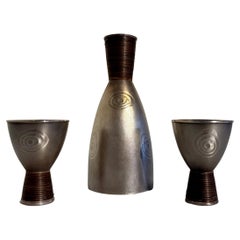
Vintage Japanese Art Deco Jungin Silver Sake Bottle and Cups, circa 1930 s
Located in Austin, TX
A fun and elegant vintage Japanese Art Deco hammered and brushed silver sake set, comprised of a tokkuri bottle and two stemmed cups, all marked "jungin" for 95% silver, Showa Era, c...
Category

1930s Japanese Art Deco Vintage Austin - Asian Art and Furniture

Materials

Silver, Bronze

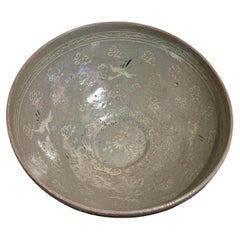
Korean Goryeo Celadon Glazed Sangam Inlaid Bowl, 12th/13th Century, Korea
Located in Austin, TX
A charming Korean celadon glazed stoneware bowl with white and black sangam inlay, Goryeo Dynasty, 12th - 13th century, Korea. The celadon glazed stoneware bowl of generous propor...
Category

15th Century and Earlier Korean Antique Austin - Asian Art and Furniture

Materials

Stoneware

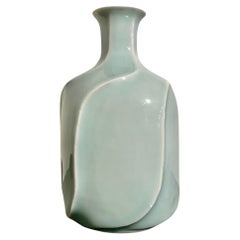
Miyanaga Tozan III Seihakuji Glazed Tokkuri, Showa Era, Japan
Located in Austin, TX
A sublime and elegant seihakuji (qingbai or celadon) glazed porcelain tokkuri (sake bottle) by Miyanaga Tozan III, also known as Miyanaga Rikichi, (b. 1935), Showa Period, circa 1980...
Category

1980s Japanese Showa Vintage Austin - Asian Art and Furniture

Materials

Porcelain

Chinese Bronze Scholar Vase with Taotie, Ming/Qing Dynasty, 17th century, China
Located in Austin, TX
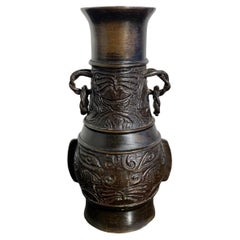
A small and interesting cast bronze archaistic scholar vase with loose ring handles and taotie mask design, late Ming or early Qing Dynasty, mid 17th century, China. The small vase of archaistic hu form, and cast with archaistic designs. Sitting on a tall splayed ring foot, the round body is cast with a large band featuring a ferocious taotie (ogre) mask. The taotie mask in this case id decidedly feline, with a ruyi shaped snout above a whiskered mouth. Two flanges stick out to either side of the mask, reminiscent of ears. A wide, tall neck rises from the body, terminating in a slightly everted mouth. The archaistic cast design on the neck is not as clear, but most likely represents Fusang, a mythical island in the Eastern Sea where the legendary Fusang tree grows. The Fusang tree, home to the mythical Sun Bird...
Category

Mid-17th Century Chinese Qing Antique Austin - Asian Art and Furniture

Materials

Bronze

Chinese Qing Dynasty Lacquered Wood Guanyin, 18th Century, Southern China
Located in Austin, TX
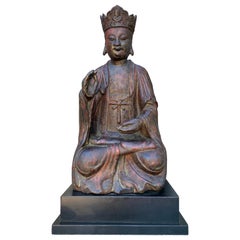
A Chinese early Qing Dynasty carved and lacquered wood figure of Guanyin, Southern China, 17th/18th century. Guanyin, the Bodhisattva of Compassion and Mercy, is portrayed seated in dhyanasana, one hand raised in viktara mudra, the gesture of teaching and discourse. The great bodhisattva is dressed in heavy, loose robes tied at the chest, with a mantle draped over his shoulders. He looks serenely outwards from heavily lidded eyes. Guanyin's face carved beautifully with somewhat feminine features. A large five pointed crown sits upon his head. The larger leaves of the crown carved with indistinct images of the Buddha. The statue was originally fully lacquered in the deep red gilt lacquer typical of Southern Chinese Buddhist sculpture...
Category

Early 18th Century Chinese Qing Antique Austin - Asian Art and Furniture

Materials

Wood

Large Satsuma Chin Jukan Parasol Form Bowl, Meiji Period, circa 1890, Japan
Located in Austin, TX
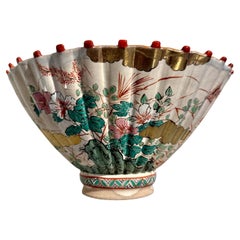
An unusual and very attractive large Satsuma parasol shaped bowl signed Chin Jukan and attributed to Chin Jukan XII (1835 - 1906), Meiji Period, circa 1890, Japan. The bowl of whims...
Category

1890s Japanese Meiji Antique Austin - Asian Art and Furniture

Materials

Ceramic, Stoneware

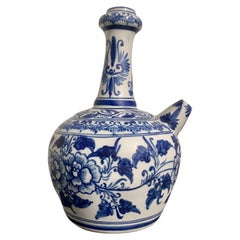
Chinese Blue and White Porcelain Kendi, Transitional Period, 17th Century, China
Located in Austin, TX
A fine Chinese shipwreck blue and white decorated large porcelain kendi, or pouring vessel, Transitional Period, late Ming or early Qing Dynasty, mid...
Category

17th Century Chinese Qing Antique Austin - Asian Art and Furniture

Materials

Porcelain

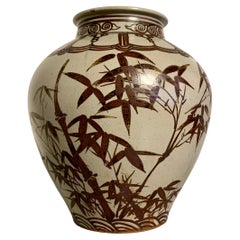
Large Korean Iron Red Glazed Bamboo and Plum Vase, 20th Century, Korea
Located in Austin, TX
A large and boldly painted Korean "Bamboo and Plum" underglaze iron brown porcelain vase, 20th century, Korea. The large porcelain vase of baluster vase form with generous proportions. The bulbous body with high, wide shoulders, tapering down to a flat recessed foot. The body decorated in underglaze iron brown with large designs of tall, leafy bamboo stalks to one side. The opposite side with gnarled branches of blossoming plum. Bamboo is revered in Korea, and Asia in general for its strength, flexibility and quick growing nature. Plum is invested with similar ideals, representing strength and resilience, as it flowers in the depth of winter. The neck and shoulders featuring a design of stylized clouds. The base with a band of stylized waves. All in underglaze iron brown. The vase with a transparent overglaze of bluish white. The vase modeled after a 16th century Joseon vase...
Category

20th Century Korean Austin - Asian Art and Furniture

Materials

Porcelain

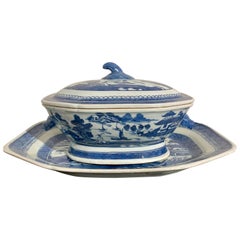
Chinese Export Blue and White Porcelain Covered Tureen and Platter, 19th Cenutry
Located in Austin, TX
A traditional and timeless Chinese Export "Canton" pattern blue and white porcelain tureen and cover with associated large platter, late 19th ce...
Category

Late 19th Century Chinese Chinese Export Antique Austin - Asian Art and Furniture

Materials

Porcelain

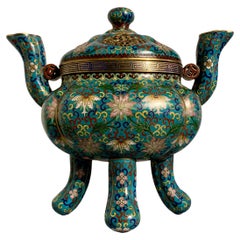
Chinese Cloisonne Incense Burner, circa 1960 s, China
Located in Austin, TX
A fine and beautifully enameled Chinese cloisonne incense burner, censer, with pierced cover, mid 20th century, circa 1960's, China. The ce...
Category

1960s Chinese Qing Vintage Austin - Asian Art and Furniture

Materials

Copper, Enamel

Japanese Lacquer Sake Cups, Set of 3, Meiji Period, Early 20th Century, Japan
Located in Austin, TX
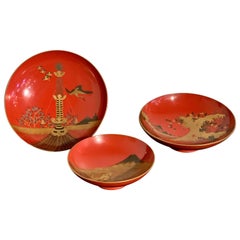
A finely decorated set of 3 red lacquer sake cups, sakazuki, featuring views of Mt. Fuji, Meiji period, circa 1900, Japan. The lacquer sake cups, called sakazuki, of traditional p...
Category

Early 1900s Japanese Meiji Antique Austin - Asian Art and Furniture

Materials

Lacquer

Japanese Carved Cinnabar Lacquer Inro, Meiji Period, late 19th c, Japan
Located in Austin, TX
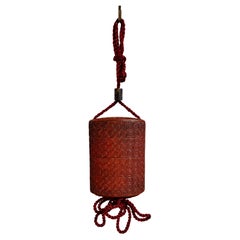
A good Japanese carved cinnabar three case inro with mixed metal ojime, Meiji period, late 19th century, Japan. The three case inro of standard form, comprised of three container se...
Category

Late 19th Century Japanese Meiji Antique Austin - Asian Art and Furniture

Materials

Silver, Copper

Japanese Satsuma Incense Burner, Koro, Meiji Period, Late 19th Century, Japan
Located in Austin, TX
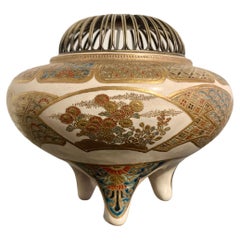
A fine and elegant Japanese Satsuma tripod incense burner, koro, with pierced metal lid, signed Eizan (?) Meiji Period, late 19th century, Japan. The koro, or censer, features a stoneware body of slightly compressed globular form, supported on three short and squat legs. The wide mouth with a recessed metal rim, and topped by an openwork metal lid topped with overlapping chrysanthemum blossoms of silver repousse. The body of the koro finely painted with fan shaped cartouches. The fans in the foreground with sprays of blossoming chrysanthemum. The fans in the background with intricate geometric brocade designs. The shoulder of the incense burner decorated with cartouches formed as stylized chrysanthemum petals, and intricately decorated with geometric and floral brocade designs. The painting finely done in raised gilt and polychrome enamels, including the highly desirable gosu blue...
Category

Late 19th Century Japanese Meiji Antique Austin - Asian Art and Furniture

Materials

Silver, Metal

Chinese Hardstone Carved Mythical Beast Rhyton Vessel, 20th Century
Located in Austin, TX
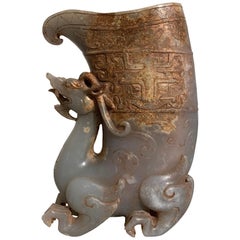
An early 20th century Chinese Republic period carved hardstone drinking vessel, called a rhyton, in the form of a mythical pixiu. The archaistic vessel carved in the Han Dynasty style from a single block of lavender gray nephrite and featuring a large horn-shaped cup being supported by a mythical pixiu. The pixiu carved with a nice sense of motion, head reared back, mouth open, and claws bared. The cup bearing a design of large horned taotie ogre masks on either side. The stone with areas of artificial "calcified" patination.  The pixiu is an ancient beast from...
Category

Early 20th Century Chinese Han Austin - Asian Art and Furniture

Materials

Jade

Thai Lopburi Cast Bronze Seated Buddha, 13th Century
Located in Austin, TX
A fine early Thai Lopburi figure of a crowned and adorned Buddha, cast bronze, mid-13th century. The unusual figure of the Buddha sits in virasana upon a stylized lotus pedestal. He is dressed in the traditional monastic robes, but also adorned with a crown and jewelry, including earrings, a necklace, and jeweled belt. His hands in an atypical combination of mudras. His right hand in bhumisparsha mudra, reaching down to touch the earth, while his left hand held somewhat outwards, seemingly in varada mudra, the gesture of granting favours or wishes. The palm of his outstretched hand marked with the dharmachakra, the Wheel of the Law, representing Buddhist teaching. The bronze with a beautiful silvery patina. Lopburi was an independent Mon kingdom with strong ties to the Khmer Angkor...
Category

15th Century and Earlier Thai Antique Austin - Asian Art and Furniture

Materials

Bronze

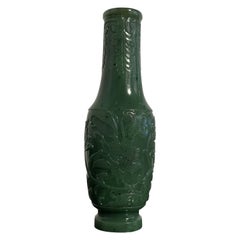
Chinese Spinach Green Jade Incense Tool Vase, Qing Dynasty, 18th/19th Century
Located in Austin, TX
A fine and well carved Chinese spinach jade incense tool vase, Qing Dynasty, Qianlong or Jiaqing Period, 18th/19th century, China. The small jade vase ...
Category

Early 19th Century Chinese Qing Antique Austin - Asian Art and Furniture

Materials

Jade

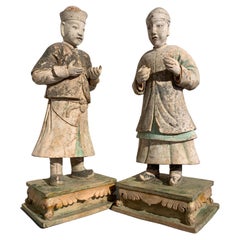
Pair Large Chinese Ming Dynasty Glazed and Painted Pottery Figures, 16th Century
Located in Austin, TX
A striking pair of large Chinese glazed and painted pottery figures, Ming Dynasty (1368 to 1644), circa 16th century, China. The impressive and realistically modeled figures each portrayed standing upright upon a sancai (three color) glazed pedestal of kang table form. The man is dressed in a short black surcoat over a long robe and pants, a smart cap upon his head. His face is warm and welcoming, with wide eyes and a slight smile on his lips. He holds his hands out in front of him, palms up, almost as if shrugging, though presumably originally holding an object or offering, now lost. The woman of slightly smaller stature, and dressed in a longer surcoat over a long robe and skirt. She wears a fitted cap upon her head. Her hands also held out in front, grasping long lost objects. Her face is slightly more severe, with a somewhat pinched look, and slight frown upon her lips. The size of these figures is remarkable, as is the realism and attention to detail, almost as if they were modeled after real people, as opposed to the more common and generic Ming Dynasty pottery...
Category

16th Century Chinese Ming Antique Austin - Asian Art and Furniture

Materials

Pottery

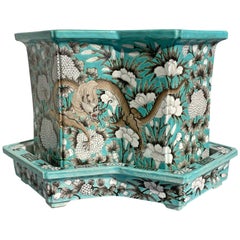
Chinese Turquoise Dayazhai Style Double Lozenge Jardiniere, Mid-20th Century
Located in Austin, TX
A finely painted Chinese Dayazhai style turquoise glazed double lozenge shaped porcelain jardiniere and underplate with grisaille and gilt decoration,...
Category

Mid-20th Century Asian Qing Austin - Asian Art and Furniture

Materials

Porcelain

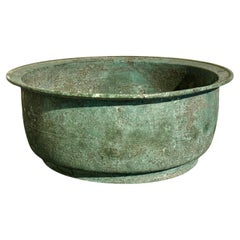
Korean Goryeo Bronze Basin, Goryeo Dynasty, 12th - 14th century, Korea
Located in Austin, TX
A sublime Korean bronze ritual basin with incredible patina, Goryeo Dynasty (918 to 1392 AD), 12th - 14th century, Korea. The Goryeo bronze basin of shallow bowl form, set on a sho...
Category

15th Century and Earlier Korean Antique Austin - Asian Art and Furniture

Materials

Bronze

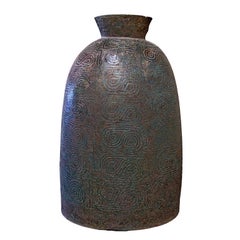
Large Dong Son Culture Ritual Bronze Bell
Located in Austin, TX
A large and finely cast ritual bronze bell from the Dong Son Culture (circa 1000 BC-200 AD). Of unusually large size, the thinness of the bronze speaks to the advanced techniques ...
Category

15th Century and Earlier Vietnamese Antique Austin - Asian Art and Furniture

Materials

Bronze

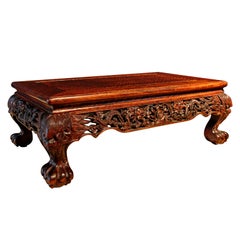
Chinese Carved Longyan Wood Stand, Late Qing Dynasty
Located in Austin, TX
An exquisite late Qing dynasty display Stand of longyan wood, carved as a miniature "kang" table. The center panel features an amazing grain that delights the eye, while a soft glo...
Category

Early 1900s Chinese Qing Antique Austin - Asian Art and Furniture

Materials

Fruitwood

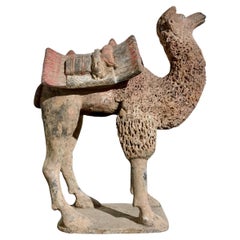
Chinese Pottery Camel, Northern Wei Dynasty (386 - 535 AD), China, TL Tested
Located in Austin, TX
A delightful and rare Chinese painted high fired gray pottery model of a wooly camel, Northern Wei Dynasty (386 - 535 AD), China, with TL test. The charming camel is portrayed stand...
Category

15th Century and Earlier Chinese Antique Austin - Asian Art and Furniture

Materials

Pottery

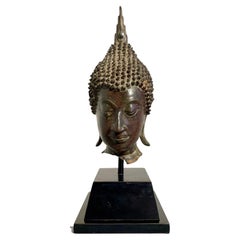
Thai Sukhothai Cast Bronze Buddha Head, 15th/16th Century, Thailand
Located in Austin, TX
An exquisite Thai cast bronze Buddha head, Sukhothai kingdom, circa 15th century, Thailand. The Buddha's pleasing face, with its narrow, oval ...
Category

15th Century and Earlier Thai Antique Austin - Asian Art and Furniture

Materials

Bronze

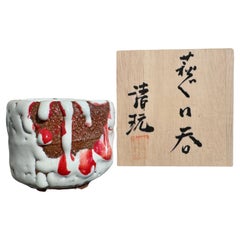
Small Japanese Oni Hagi Chawan (Tea Bowl) by Seigan Yamane, circa 2010, Japan
Located in Austin, TX
A small but powerful Japanese white oni hagi yaki chawan (teabowl) by renowned contemporary master potter Seigan Yamane (b. 1952), circa 2010, Japan. The small tea bowl of typical t...
Category

2010s Japanese Austin - Asian Art and Furniture

Materials

Pottery

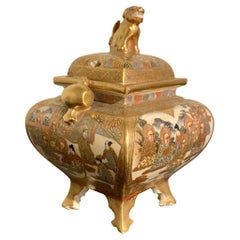
Small Japanese Satsuma Incense Burner, Koro, Meiji Period, Late 19th Century
Located in Austin, TX
A fine Japanese Satsuma stoneware incense burner, koro, Meiji Period, late 19th century, Japan. The koro of square shape with curved sides,...
Category

1890s Antique Austin - Asian Art and Furniture

Materials

Enamel

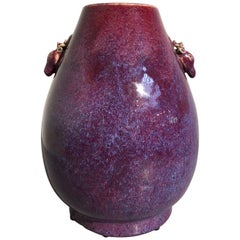
Chinese Qing Dynasty Flambe Glazed Archaistic Hu Vase with Deer Head Handles
Located in Austin, TX
A gorgeous Chinese flambe glazed vase with molded deer head handles, Qing dynasty, 19th century. The vase of pear shaped archaistic "hu" fo...
Category

19th Century Chinese Qing Antique Austin - Asian Art and Furniture

Materials

Stoneware

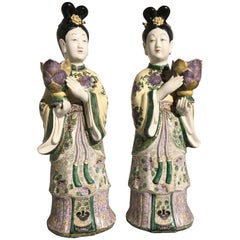
Pair of Chinese Export Porcelain Court Lady Candle Holders, Mid-20th Century
Located in Austin, TX
A lovely pair of Chinese export porcelain candle holders in the form of court ladies holding lotus blossoms, mid 20th century, circa 1960's, China. Modeled after 18th century Qianlo...
Category

Mid-20th Century Chinese Qing Austin - Asian Art and Furniture

Materials

Porcelain

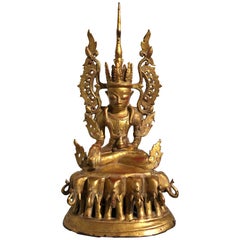
Burmese Arakan Lacquered and Gilt Bronze Healing Buddha, 18th Century
Located in Austin, TX
An unusual 18th century Burmese Arakan style red lacquered and richly gilt cast bronze figure of the Crowned Medicine Buddha, commonly referred to as Bhaishajyaguru. The Supreme Healer is portrayed seated in vajrasana (full lotus position) upon a throne of nine elephants, symbolizing the practice of samatha, or calming the mind (mindfulness) - specifically the nine stages of calm abiding. The hand in his lap holds a jar of healing salve. His other hand rests gently on his knee in varada mudra, the gesture of wish fulfilling, offering a myrobalan seed, a fruit said to be capable of healing emotional ills. The Healing Buddha...
Category

Mid-18th Century Burmese Antique Austin - Asian Art and Furniture

Materials

Bronze

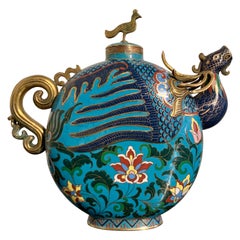
Chinese Cloisonne Phoenix Head Tea or Wine Pot, Mid 20th Century, China
Located in Austin, TX
A delightful and unusual Chinese cloisonne enamel copper wine or tea pot in the form of a phoenix, late Republic Period, or post Republic, mid 20th century, China. The wine pot in t...
Category

Mid-20th Century Qing Austin - Asian Art and Furniture

Materials

Copper, Enamel

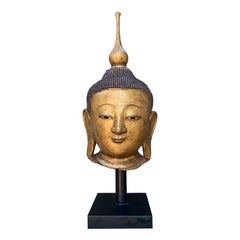
Monumental Shan Burmese Gilt Lacquer Buddha Head, Early 20th Century
Located in Austin, TX
A Burmese gilt dry lacquer monumental head of the Buddha, Shan States, Myanmar (Burma), early 20th century. This monumental dry lacquer and gilt head ...
Category

Early 20th Century Burmese Austin - Asian Art and Furniture

Materials

Shell, Lacquer

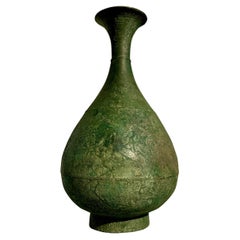
Korean Goryeo Bronze Bottle Vase with Green Patina, 12th/13th Century
Located in Austin, TX
An elegant and unusually large Korean Goryeo bronze bottle vase with green patina, Goryeo Dynasty, 12th/13th century, Korea. The graceful vase of typical bottle form, with a bulbous...
Category

15th Century and Earlier Korean Antique Austin - Asian Art and Furniture

Materials

Bronze

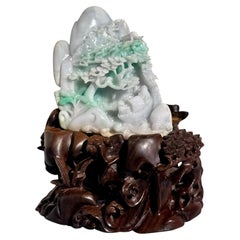
Chinese Carved Jadeite Boulder Grotto on Hardwood Stand, 20th Century, China
Located in Austin, TX
A fine Chinese carved grayish white and green jadeite (fei cui) boulder with a mountain and grotto scene, presented on a fitted carved nanmu hardwood stand, mid to late 20th century,...
Category

Late 20th Century Chinese Qing Austin - Asian Art and Furniture

Materials

Jade

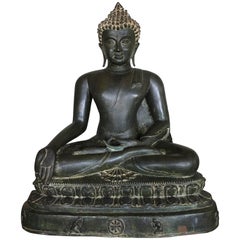
Large Burmese Bronze Medicine Buddha, Pagan Style, Late 19th Century
Located in Austin, TX
A large and magnificent cast bronze image of the Medicine Buddha, Bhaisajyaguru, rendered in the Burmese Pagan style, and most likely based on a period example that was either damaged or lost, 19th century, Burma or Thailand. He can be identified as the Medicine Buddha by the hand that rests in his lap, with his middle finger touching the thumb. A medicine pot or fruit stem would originally have been placed in his upturned palm. The face of this Buddha has been sculpted masterfully. He has a beautiful heart shaped face topped by hair neatly arranged in the typical "snail shell curls", and surmounted by a high ushnisha. Long, pendulous earlobes frame his face, a symbol of his princely past. He gazes serenely outwards from heavily lidded, downcast eyes, a content smile upon his full, lush lips. The Buddha is portrayed seated in vajrasana (full lotus position), his elegant hands displayed in varada mudra, the gesture of granting favors and fulfilling wishes. Long, exquisite fingers extended, the thumb and middle finger touching in a gesture of compassion. He is clothed in a simple kasaya wrapped around his body and over one shoulder, leaving the shoulder and part of his chest bare. The diaphanous garment clings to his body, outlining his well proportioned and graceful, almost sensuous, form. The excess material pooled in neat pleats in front of him. A sash thrown over his shoulder. He sits upon a double lotus base upon a raised platform. The platform features two kneeling attendants, usually interpreted as the monks Ananda and Kasyapa. Between them is a circular disc representing the Wheel of Dharma. Contained in the disk is a flower with eight petals, symbolizing the eightfold path, one of the principle teachings of the Buddha. The sides and back of the platform featuring a series of singha, or lions, representative of the Buddha's royal past. An applied lacquer patina covers the entirety of the image. Large deposits of ash (from incense) are present between the curls of the hair, as well as some the other crevices, indicating this image was the subject of worship for many years. Bhaisajyaguru, also called the Medicine Buddha, or Buddha of Healing, is a revered figure in the Buddhist pantheon as a master able to cure suffering, both physical and spiritual, through his teachings. The Pagan Empire ruled most of present day Burma (Myanmar) from 849 to 1297. The capital, Bagan, served as a both the center of government and religion, where Buddhism reigned supreme. Bagan was also at a crossroads of the Buddhist world, with influence from India, Nepal, Tibet, China, and even Indonesia shaping their culture. As such, Pagan Buddha...
Category

Late 19th Century Burmese Antique Austin - Asian Art and Furniture

Materials

Bronze

Still Thinking About These?

All Recently Viewed